1. Introduction
The accelerated proliferation of unmanned aerial vehicles (UAVs), particularly mini and commercial drones (COTS), has generated significant transformations in several sectors, including agriculture, logistics, aerial surveillance, defense, and entertainment. However, their growth has also introduced significant security and regulatory challenges that need to be addressed. Drones are increasingly present in restricted areas, conducting espionage activities and causing problems for public safety and critical infrastructure [
1]. These risks require the implementation of detection strategies and systems, along with the implementation of rapid mitigation measures at an affordable price.
Drone detection technologies typically rely on acoustic, electro-optical/infrared (EO/IR), radio frequency (RF), radar, or hybrid sensor systems, but RF detection has proven to offer distinct operational advantages [
2,
3,
4,
5]. Unlike optical or radar systems, RF sensors offer increased reliability in adverse or variable weather conditions due to their resistance to environmental factors such as light, fog, or precipitation [
6]. In addition, RF-based systems facilitate passive broadband monitoring, enabling the simultaneous detection of multiple emissions from drones over large areas. This passive nature makes RF detection particularly well-suited for continuous spectrum monitoring and the protection of sensitive areas. RF-based monitoring capabilities are further enhanced when implemented on SDR platforms [
7,
8]. SDR technology offers real-time reconfigurability, flexible signal analysis, and adaptability [
9,
10,
11] to the ever-evolving communication protocols of UAVs.
The performance of SDR-based systems for electromagnetic spectrum monitoring in dynamic environments has also been highlighted in recent research studies. One such paper [
12] presents an SDR system that demonstrated remarkable accuracy in detecting drone signals in the 2.4 GHz and 5.8 GHz ISM bands, even for low power levels down to −120 dBm. The system used RF signal fingerprinting and machine learning algorithms to differentiate between UAV control signals, Wi-Fi, and Bluetooth, demonstrating high classification accuracy even in environments with different signals. An important feature of the system is that monitoring and classification are performed offline based on recorded signals.
Advanced systems based on SDR technology also use real-time processing and FPGA acceleration to improve spectral analysis capabilities. In the paper [
13], the author implemented the Welch method on a Zynq-7000 FPGA, achieving a real-time bandwidth of 96 MHz and analysis times of less than one millisecond for each acquired frequency window. The system enabled the detection of short-duration pulse signals and frequency-hopping signals that traditional spectrum analyzers might have missed. Despite the system’s ability to process each segment in real time, sequential spectrum tuning is required to monitor wider bandwidths, thus implementing a high-speed scanning method.
The integration of machine learning further improves the performance of SDRs. The experimental work [
14] demonstrated that convolutional neural networks (CNNs), trained on spectrograms extracted from data obtained with a low-cost SDR, achieved a classification accuracy of greater than 85% at SNR levels greater than −12 dB and an accuracy of greater than 80% in real-world tests.
SDR systems are used not only for signal monitoring but also for signal localization. The SDR-based DF system proposed by the authors in the paper [
15] operates exclusively in the 2.4 GHz ISM band and has demonstrated high performance at distances of up to 160 m. Using a USRP X310 with four phase-synchronized channels and the MUSIC algorithm, the system achieved average angular errors of 1.15° (static) and 1.86° (dynamic), confirming high accuracy in direction estimation. Although the system’s sensitivity was not specified, the detection of the drone’s 10 MHz OFDM signal at 2.427 GHz confirms the effective operation of the system according to typical Wi-Fi-based UAV transmission parameters.
Another study [
16] introduces a hybrid signal discrimination approach implemented on the Adalm-Pluto SDR platform for the detection of mini/micro-UAVs in environments with interference also in the 2.4 GHz ISM band. Using a hybrid method combining Wi-Fi decoding and Pulse-on-Pulse (PoP) algorithms, the system reduced the center frequency deviation from 103 ppm to 28.5 ppm and accurately corrected bandwidth estimates that were previously distorted by overlapping signals. However, the SDR used has limitations, offering a maximum instantaneous bandwidth of 56 MHz and relatively low sensitivity, with a minimum detectable signal level of only −90 dBm.
Moreover, in the 2.4 GHz ISM band, another paper [
17] presents a drone detection sensor based on low-cost SDR technology, specifically LimeSDR-USB and FPGA acceleration to achieve continuous monitoring of the entire ISM band between 2.4 and 2.483 GHz, thereby exceeding the 40 MHz limit of typical SDRs and achieving a maximum real-time bandwidth of 83 MHz. The use of hardware-accelerated FFT, filtering, and adaptive thresholding facilitates low-latency spectral analysis and simultaneously reduces data transfer requirements. Under laboratory conditions, the sensor achieved a detection threshold of 10 dB SNR at a signal level of −94 dBm, while the USRP B210 achieved the same detection at a lower level of −103 dBm, demonstrating superior sensitivity. However, the system provides accurate spectrograms (with an accuracy of approximately 1 dB compared to the USRP), making it suitable for creating machine learning datasets of different signal types.
The following paper [
18] presents the DronEnd system, an SDR-based drone detection and protection platform that uses the USRP X310 with 2 Twin-RX modules (frequency range 10–6000 MHz). The system achieves a sensitivity of only −82 dBm using advanced energy detection algorithms and covers the 2.4 GHz and 5 GHz ISM bands. The system detects, locates (via AoA), and neutralizes drones through directional RF jamming at a distance of 40 m. The maximum bandwidth that can be analyzed per scan is approximately 100 MHz, with concatenation limited by the instantaneous bandwidth of the Twin-RX modules, which is 80 MHz.
A recent article [
19] presents a drone detection system based on SDR technology using the USRP B210, selected for its wide frequency range and 50 MHz sampling rate. Operating in the 2.4 GHz and 5.8 GHz bands, the system applies STFT and PSD analysis to detect signals emitted by the DJI Mini2 drone and OcuSync 2.0 communication protocol. A key innovation is the use of the non-parametric amplitude quantization method (NPAQM), which improves sensitivity in variable noise conditions. The system successfully identifies the spectral signature of drones with a measured bandwidth of approximately 9 MHz, but this is insufficient for real-time detection.
Based on an analysis of the latest experimental research, the present study focuses on RF-based detection, which identifies UAVs by analyzing the communication signals exchanged with ground control stations. The majority of commercial drones utilize unlicensed ISM bands, predominantly at 2.4 GHz and 5.8 GHz [
20]. Although certain systems function within sub-GHz bands, such as 433 MHz [
21] or 915 MHz [
22], 2.4 GHz and 5.8 GHz bands are typically the most significant in practical applications. However, these bands are populated with legitimate users, which renders simple power-based detection unreliable in many cases. The monitoring of UAV emissions is a task that demands a detection system that meets several strict criteria:
Signal detection shall be performed using a broadband system: The system shall be capable of identifying UAV transmissions in a congested electromagnetic environment. This includes detection of communication channels—real-time monitoring band of 84 MHz at 2.4 GHz and 150 MHz at 5.8 GHz. The data channel used by the latest DJI drones and which could be detected is a maximum of 40 MHz.
High sensitivity: The receiver must have sufficient sensitivity to detect signals from drones operating at significant distances. Reliable detection of a UAV more than 2 km away typically requires a system sensitivity better than −110 dBm.
Signal characterization: Once a channel is detected, the system must acquire high-resolution signal samples to enable accurate classification of the communication protocol used by the UAV.
The experimental work further presents the implementation of a software application for monitoring the electromagnetic spectrum in the 2.4 GHz and 5.8 GHz ISM bands. The objective of this implementation is to identify drone-specific transmissions, as well as beacon-type signals with identification and telemetry data transmitted by the drone. The application is developed in GNU Radio, using the RFNoC architecture for primary processing in FPGA on the USRP X310 platform equipped with UBX-160 and TwinRX 80 MHz modules.
2. The Development of UAV Systems: A New Challenge in Electromagnetic Spectrum Monitoring
Electromagnetic spectrum monitoring is of the utmost importance for ensuring secure and reliable use of the radiofrequency environment across a wide range of applications. Monitoring supports the detection of unauthorized or anomalous emissions and helps maintain the integrity and availability of wireless services, including communications, radar, and navigation systems. In civilian contexts, spectrum monitoring preserves the integrity and availability of critical communication and control systems, such as public safety networks, air traffic control, emergency services, and key infrastructure (e.g., airports, hospitals, and power grids), by identifying and mitigating interference. Furthermore, monitoring facilitates surveillance and security operations by detecting unauthorized drones, hostile equipment, and illicit transmissions in restricted areas. Additionally, it provides resilient communications support during crises and disasters, facilitating a coordinated response and continuity of operations.
Spectrum monitoring is also central to regulatory compliance and orderly spectrum management. All spectrum users have a responsibility to avoid causing harmful interference to the services of others, while regulatory authorities enforce allocated usage and technical standards to prevent congestion and misuse. AI-driven techniques have been instrumental in facilitating real-time signal detection [
23], classification [
24], and localization [
25], thereby enhancing protection against electromagnetic threats and facilitating civilian advancements such as 5G/6G and large-scale IoT [
26]. Despite the existence of divergent priorities—defense systems emphasizing threat detection and civilian systems focusing on interference mitigation and regulation—spectrum monitoring remains fundamental to secure communications, electromagnetic compatibility, and technological innovation.
Electromagnetic spectrum monitoring is a key capability for detecting and characterizing unauthorized UAV activity in restricted environments. By analyzing electromagnetic signatures using highly sensitive monitoring systems with advanced real-time processing, different types of signals, including those emitted by drones, can be identified and classified [
27,
28]. Continuous monitoring of waveforms and signal characteristics is necessary, even when drones use techniques such as frequency hopping to avoid detection. The recognition of these spectral signatures [
29] enables immediate action, facilitating early detection and timely countermeasures to protect critical infrastructure and maintain operational security.
2.1. Overview of UAV-Specific Waveforms
Drones are widely used in civil and defense applications due to their versatility and cost-effectiveness [
30]. In tactical operations, they have transformed the way surveillance and reconnaissance are conducted, providing real-time information without endangering human lives and covering vast areas from different altitudes [
31]. Advances in endurance, onboard intelligence, sensors, and radio links have further expanded UAV capabilities and availability. This growth also increases the likelihood of unauthorized or non-compliant UAV activity in restricted environments. To reduce the security risks associated with drones, responsible entities have developed counter-UAV (C-UAS) systems that use a range of techniques, from jamming to physical interception, to ensure public safety and airspace security [
32,
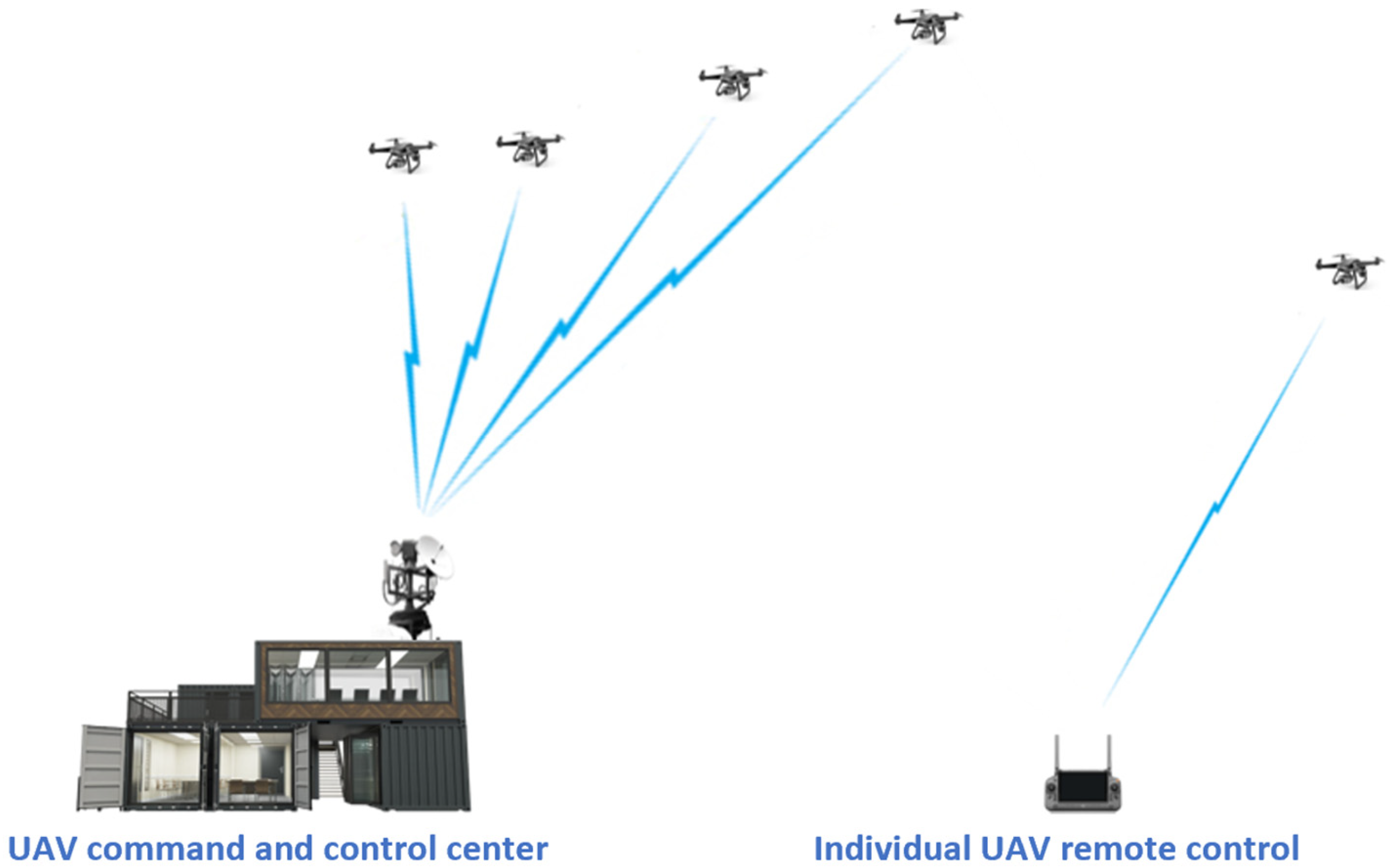
33]. From an architectural standpoint, UAV systems consist of two fundamental parts (
Figure 1): the command and control (C2) center and the drone/aircraft.
Early commercial drones and RC models used low-frequency bands like 27 MHz and 49 MHz, which are not good for modern video-controlled platforms because they have limited data rates [
34]. Most modern systems use the 2.4 GHz and 5.8 GHz ISM bands, which support faster C2 and video links [
35]. On the other hand, sub-GHz bands like 433 MHz (for example, in Europe) and 915 MHz (for example, in the US and some parts of Asia) are used for long-range telemetry and C2 when the rules allow it. In Europe, the 868 MHz SRD/ISM band is also used for UAV telemetry, and some platforms use 1.2–1.3 GHz and 5.8 GHz for analog FPV and enhanced video transmission, sometimes not following strict IEEE 802.11 (Wi-Fi) rules [
36,
37]. Overall, the architecture of typical civilian drones combines unlicensed ISM bands, licensed amateur radio bands, and SRD bands. These frequencies are often separated for C2, telemetry, and FPV/video to improve robustness and reduce mutual interference.
Most UAVs rely on RF transmissions to facilitate communication between the UAV and the remote control (RC) [
38]. This two-way communication includes both an uplink channel (commands sent by the controller) and a downlink channel (data sent by the UAV), ensuring a seamless exchange of information. In addition, the system can transmit mission details, acknowledgements, and protocol-specific data, extending control beyond basic speed and direction. Multiple communication protocols, including Wi-Fi, Enhanced Wi-Fi, Lightbridge, and OcuSync, are used to establish the RF link between the UAV and RC [
39,
40]. The choice of protocol has a significant impact on key performance parameters such as distance, video quality, latency, and available control frequencies.
In terms of transmission techniques, most drones rely on OFDM and spread spectrum techniques, particularly FHSS (Frequency Hopping Spread Spectrum) and DSSS (Direct Sequence Spread Spectrum) [
41]. For data links, modulation schemes such as DSSS or OFDM are commonly used to enhance signal robustness and reduce interference [
42]. The control link (uplink), used to transmit commands from the remote control to the drone, typically operates on narrowband channels of up to 5 MHz using FHSS modulation [
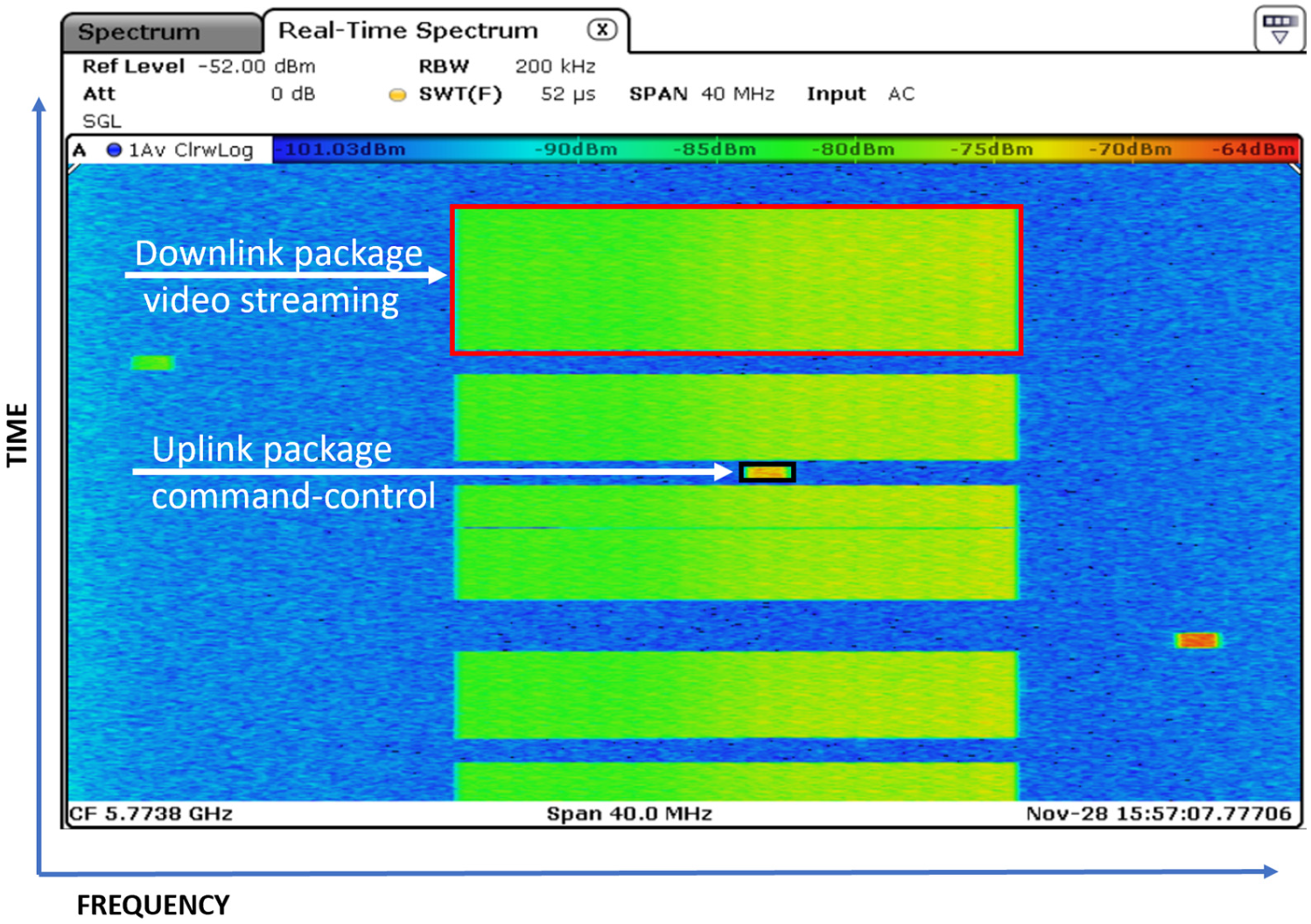
43]. The uplink hop duration is typically in the tens of milliseconds, which improves resistance to interference and jamming. As shown in
Figure 2, transmission is usually achieved using OFDM radio transmission technology for the downlink channel and frequency hopping for the uplink.
2.2. Technical Challenges of Spectrum Monitoring Systems for Wideband Waveforms
The transition from narrowband to broadband communications, in conjunction with rapid advancements in wireless standards, has resulted in a substantial increase in spectrum occupancy and competition for limited RF resources. These developments have rendered efficient spectrum allocation and interference avoidance more challenging, creating a demand for advanced monitoring systems that provide continuous, real-time measurements of spectrum usage for improved management.
To monitor and analyze broadband standards in real time, including 5G channels up to 100 MHz and Wi-Fi 6/7 (802.11ax/be) channels up to 160/320 MHz, modern receivers must instantly acquire large bandwidths. The recommendation is for these systems to perform IQ data acquisition for these large bands, which allows for a detailed understanding of signal characteristics [
44]. This is also essential for detecting and classifying a wide range of modulation schemes.
The design of spectrum monitoring receivers should focus on a fully open hardware architecture, providing a flexible platform for optimizing hardware resources using software-defined applications. It is also important that receivers have programmable RF blocks, including adjustable attenuation and preamplifier and preselection filters, to automatically manage signal power and reduce interference.
Another important receiver parameter is dynamic range, which describes the ability to process weak signals in the presence of strong ones. In practice, the usable dynamic range for accurate amplitude reproduction is often reduced by impairments introduced by the mixer, which is inherently a nonlinear device. As a result, it is essential to control the mixer input level to prevent nonlinear distortion and the generation of intermodulation products. In the case of digital receivers, the dynamic range is limited by the maximum SNR of the ADC [
45] (the ratio between the maximum signal level that can be represented on a number N of bits and the quantization noise level). Higher-resolution ADCs (e.g., minimum 14, 16 bits) offer a wider dynamic range, allowing weak signals to be detected with minimal distortion or quantization noise, thereby improving the overall sensitivity of the system.
Spectrum monitoring systems must be sufficiently sensitive to detect weak emissions while maintaining sufficient dynamic range to avoid compression or distortion from strong in-band or adjacent signals. The minimum detectable signal at the receiver input can be estimated as follows:
where
kTB—represents thermal noise: k is Boltzmann’s constant 1.38 × 10⁻²³ JK−1, B represents the receiver’s passband, and T is the temperature in degrees Kelvin;
NF—is the amount of noise introduced by the receiver above the thermal noise level (kTB);
SNRmin—represents the minimum signal-to-noise ratio required at the receiver input (dB) for reliable detection (or demodulation), depending on the selected criterion.
Modern spectrum monitoring uses distributed sensor nodes that send data to a control center or cloud system, relying on a powerful network (low-latency connections, cloud storage, and distributed processing) to combine multiple sources into a comprehensive picture of spectrum usage. Keeping costs low and ensuring portability for field use are essential, and a modular design enables the addition or update of sensors, analysis tools, and coverage without replacing the entire system.
The need for multi-channel simultaneous reception systems is becoming increasingly apparent, particularly in contexts where conventional spectrum analyzers are unable to provide the real-time bandwidth required to adequately cover wide frequency ranges. For example, spectrum analyzers with real-time acquisition bandwidths of up to hundreds of MHz come with a high purchase price, which limits the scalability of the system. To achieve optimal performance in reception systems specific to new technologies, it is essential that the reception system has multiple simultaneous reception channels. These should include a wideband channel for continuous monitoring, narrowband channels for signal demodulation, and IQ (in-phase and quadrature) acquisition channels for detailed signal post-processing.
Although spectrum analyzers can scan a wide range of frequencies, they have limitations regarding IQ data acquisition and storage capacity. This results in an inability to record signals continuously over long periods of time. Most have a recording/storage limit of only a few seconds. For instance, the R&S PR200 reception system shows that bandwidth significantly influences the duration of IQ data recording. With a 500 kHz bandwidth, the recording time is 1.2 min; with a 40 MHz bandwidth, it is limited to 1.31 s [
46]. To cope with new communication technologies in monitoring, future reception system developments aim to increase real-time bandwidth and improve storage capacity and data compression techniques. This will overcome storage restrictions without compromising signal integrity.
3. Materials and Methods
The objectives of the experimental research are based on recent advances in UAV signal detection. Current research in this field mainly uses SDR platforms, which are often limited by insufficient real-time acquisition bandwidth, restricting their ability to detect drone emissions in real time. In addition, most existing approaches operate on a single channel with a bandwidth of up to 100 MHz, usually limited to monitoring the 2.4 GHz ISM band. Furthermore, the sensitivity of many drone detection systems remains inadequate, falling short of the high-performance reception capabilities required for long-range detection, which often spans several kilometers. This limited sensitivity also affects the quality of the spectrograms used in the subsequent classification of signals, which are rarely enhanced by software-based techniques to match the performance of state-of-the-art professional equipment. Based on these considerations, the main objectives of this study are as follows:
To define and design the architecture of an SDR system based on USRP X310 (Ettus Research, Austin, TX, USA), which includes three acquisition channels: two broadband channels of 160 MHz and 80 MHz, respectively, and one narrowband channel of 1 MHz. It will allow for the simultaneous monitoring of large segments of the spectrum in real time and is adapted to current requirements for monitoring and analyzing the electromagnetic spectrum.
To configure a processing system capable of supporting cumulative bandwidths of over 200 MHz of the USRP X310 SDR in real time, using a high-performance hardware configuration that includes a state-of-the-art processor, fast storage, GPU acceleration, and fiber optic connectivity to ensure stable, lossless transfer of large volumes of data.
To develop the applications and software scripts needed to acquire, process, and visualize data in real time in the frequency domain (spectrum) and time–frequency domain (spectrogram), using languages such as Python 3.12.9, or specialized platforms (e.g., GNU Radio v3.10.12.0, UHD API v4.8.0.HEAD-release).
To optimize the processing resources (CPU/GPU/RAM) of the advanced system to support in real time the large volumes of data generated by SDR, without packet loss or degradation of system performance.
To evaluate the performance of the developed system in real operating conditions, through tests targeting spectral resolution, sensitivity, signal fidelity, as well as the ability to identify the communication channels used by UAVs and to visualize the transmitted data packets for the purpose of traffic analysis and characterization of the protocols used.
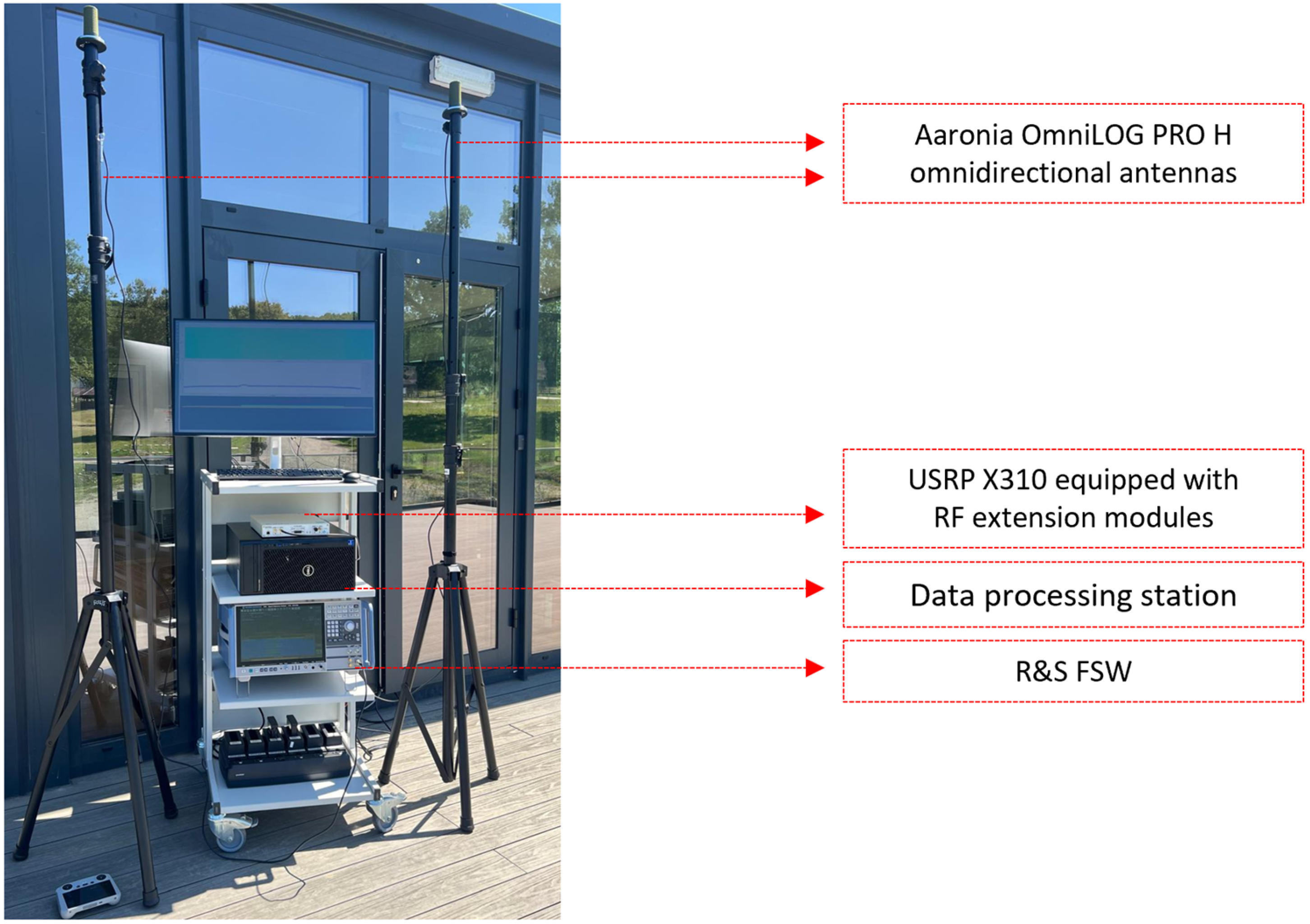
The monitoring and detection system implemented and used in laboratory and field tests (
Figure 3) is based on an SDR USRP X310 platform equipped with two extension modules, UBX-160 (Ettus Research, Austin, TX, USA) and TwinRx 80 + 80 MHz (Ettus Research, Austin, TX, USA). The system is supported by a high-performance station for real-time data processing, and the R&S FSW 26.5 GHz professional spectrum analyzer (Rohde & Schwarz, Munich, Germany) was used for system parameterization and comparative evaluation of the obtained results. The following section presents the primary technical specifications of each component.
The main components of the monitoring system are presented below:
The monitoring system was implemented and tested on the USRP X310 platform manufactured by Ettus Research [
47]. The platform is a high-performance SDR transceiver designed for applications requiring high bandwidth, spectral fidelity, and configuration flexibility for implementing various radio protocols. The X310 is equipped with a high-performance FPGA (Kintex-7), a high-speed communication interface (10 Gigabit Ethernet), and two dedicated slots for equipping the platform with daughterboards, which allow the platform to be adapted to the requirements of the application.
The X310 platform was used with two types of cards: UBX-160 and TwinRX 80 + 80 MHz. The UBX-160 board offers an extended frequency range from 10 MHz to 6 GHz with an instantaneous acquisition bandwidth of up to 160 MHz, making it suitable for full-duplex transmissions and receptions specific to complex RF signals [
48]. The other daughterboard attached to the platform, TwinRX (2 × 80 MHz), is designed for RF signal reception and supports two reception channels with synchronized phase between them. It operates over a wide frequency range, from 10 MHz to 6 GHz, and offers a real-time acquisition bandwidth of 80 MHz/channel [
49]. This makes it suitable for tasks such as beamforming, direction of arrival (DoA) detection, and electromagnetic spectrum monitoring.
GNU Radio was used to generate, process, and analyze digital signals, as well as to interface with the X310 hardware via the UHD (USRP Hardware Driver).
RFNoC allows a significant portion of signal processing to be offloaded from the workstation processor to reconfigurable FPGA blocks, reducing latency and improving the efficiency of real-time applications. This modular and scalable architecture facilitates the integration of new custom blocks, enabling the development of advanced applications such as FFT processing directly in the FPGA, selective spectral filtering, or RF detection algorithms.
Equipped with additional UBX-160 and TwinRX daughterboards, the X310 platform, supported by GNU Radio and RFNoC (UHD v4.8.0.HEAD-release) software tools, offers a flexible and powerful experimental setup suitable for various applications in the field of radio communications and electromagnetic spectrum analysis.
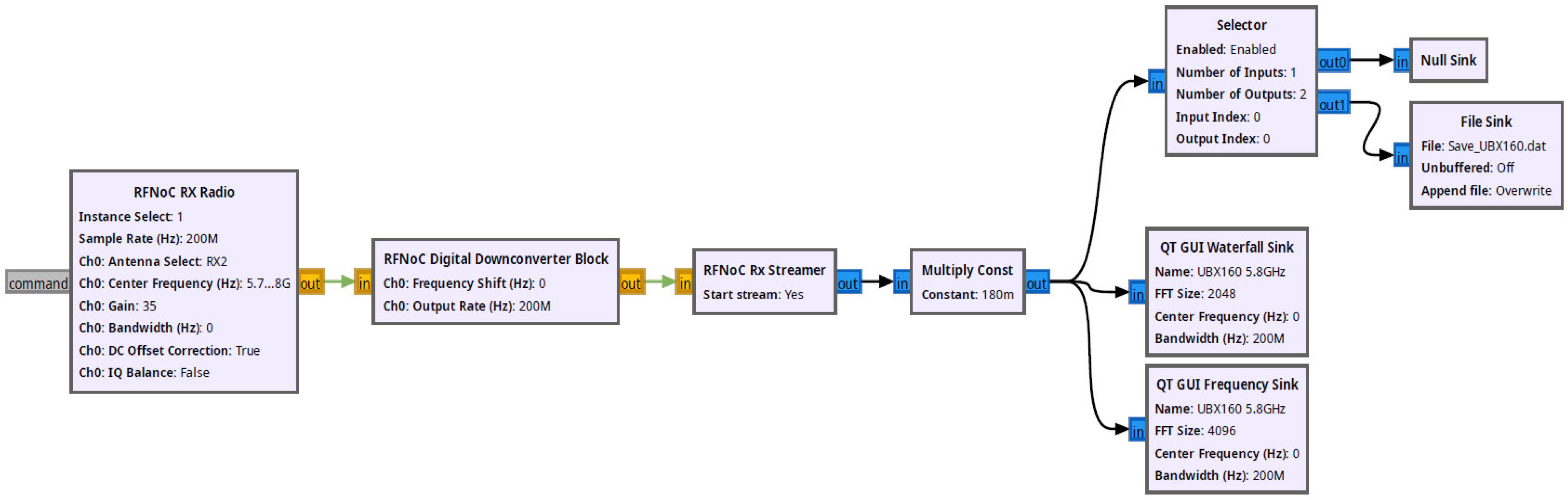
In the experiments, the UBX-160 board was used to receive RF signals in the 5.8 GHz band with a real-time acquisition bandwidth of 200 MHz. Initial control was performed directly on the X310 platform FPGA v39.3 using the RFNoC architecture. The process corresponding to signal reception is illustrated in
Figure 4 (GNU Radio block diagram).
The flow on the receiver is initiated by the RFNoC RX Radio block, where the UBX-160 daughterboard is configured to receive signals from the antenna connected to the RX2 port. The receiver is set to a center frequency of 5.8 GHz, a gain of 35 dB, and a sampling rate of 200 MS/s. To improve the quality of the received signal, the RFNoC RX Radio block applies DC offset correction and IQ imbalance compensation.
The signal is then directed to the RFNoC Digital Downconverter (DDC) block, which performs digital downconversion of the signal without frequency shift and without changing the sampling frequency. The RFNoC Rx Streamer block takes the converted signal and transfers it to the processing station (host) via the communication interface.
At the processing station, the received signal is first adjusted using a multiply block with a constant factor of 150 m. This factor was determined through calibration with a professional signal generator. The processed signal is then displayed using two GNU Radio graphical tools: The QT GUI Waterfall Sink presents a time–frequency view of the signal spectrum, and the QT GUI Frequency Sink displays the real-time Fourier transform of the signal. Both are centered at 5.78 GHz and configured with a high-resolution FFT size over a 200 MHz bandwidth, allowing for detailed observation of the signal’s spectral characteristics.
In addition to the UBX-160 board, the TwinRX 80 MHz board was also used in the experiments.
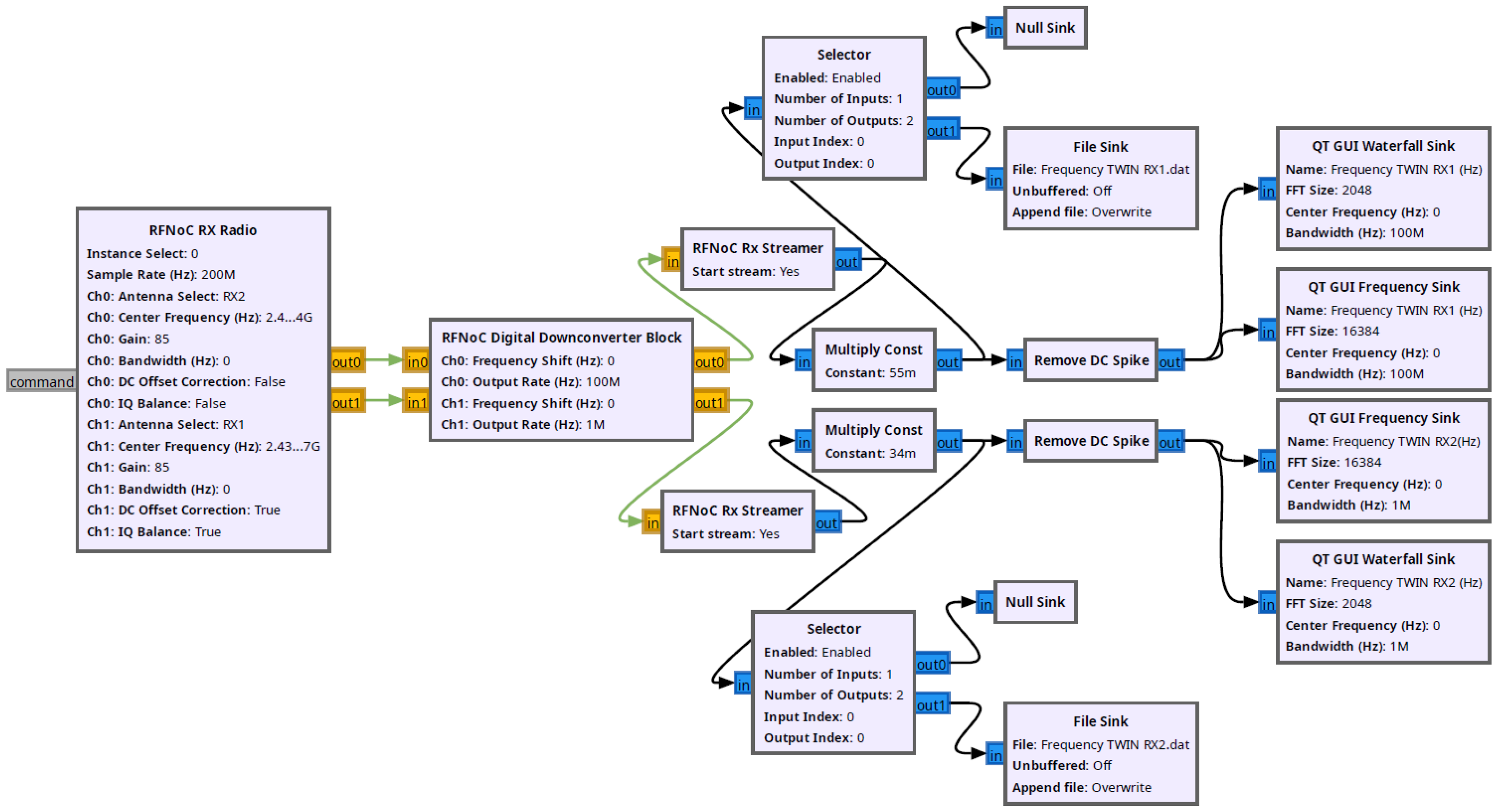
Figure 5 shows the reception flow of the two channels (RX1 and RX2) on the TwinRX board.
The RFNoC RX Radio block is used to configure the TwinRX secondary board for dual-channel reception. Channel 0 (CH0) is set to a center frequency of 2.44 GHz, with a bandwidth of 80 MHz and a gain of 85 dB, with reception on the RX2 port. Channel 1 (CH1) is dedicated to acquiring a narrowband signal and is configured to a center frequency of 2.437 GHz with a bandwidth of 1 MHz, using the RX1 port for input. To maintain spectral accuracy and signal fidelity, both channels use DC offset correction and IQ imbalance compensation.
The signals received on the two channels are then routed to the RFNoC Digital Downconverter block, where each channel is processed separately. For CH0, the sampling rate is maintained at 100 MS/s, and for CH1 it is reduced to 1 MS/s, with no frequency shift. This difference in resolution allows simultaneous analysis of a wideband signal and a very narrow signal within the same reception session, an operational advantage facilitated by the TwinRX module in combination with the RFNoC Digital Downconverter.
The digitized data from both channels is transferred to the processing station using two separate instances of the RFNoC RX Streamer block, each corresponding to a reception channel. The signals are then normalized in amplitude using Multiply Const blocks, applying scaling factors of 55 m and 150 m, respectively, to adjust the signal amplitudes and ensure the amplitude coherence of the received signals with respect to a signal emitted by a professional signal generator.
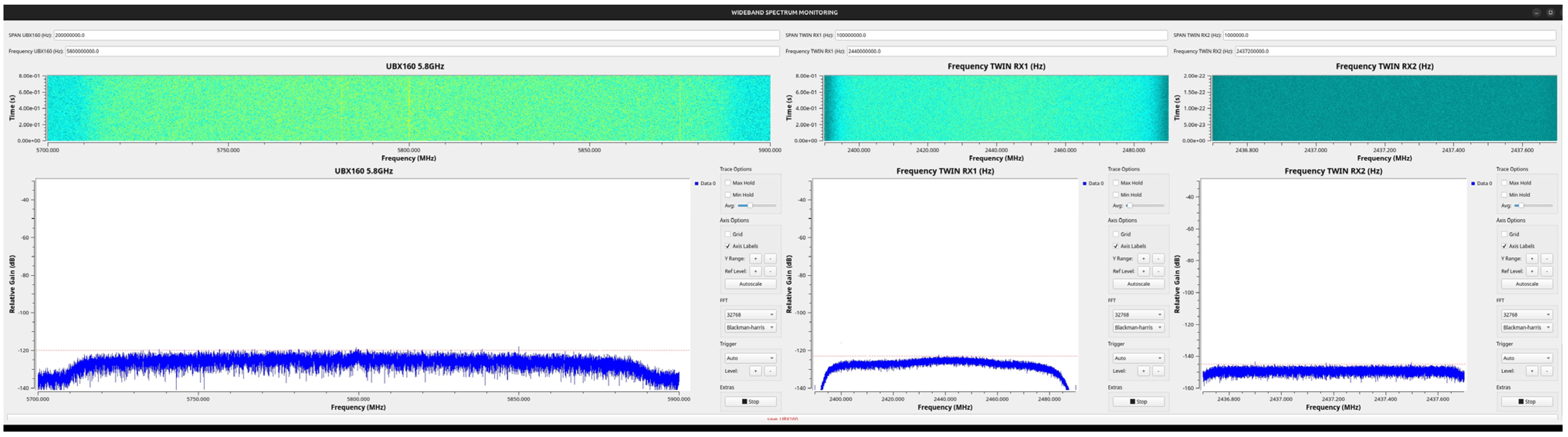
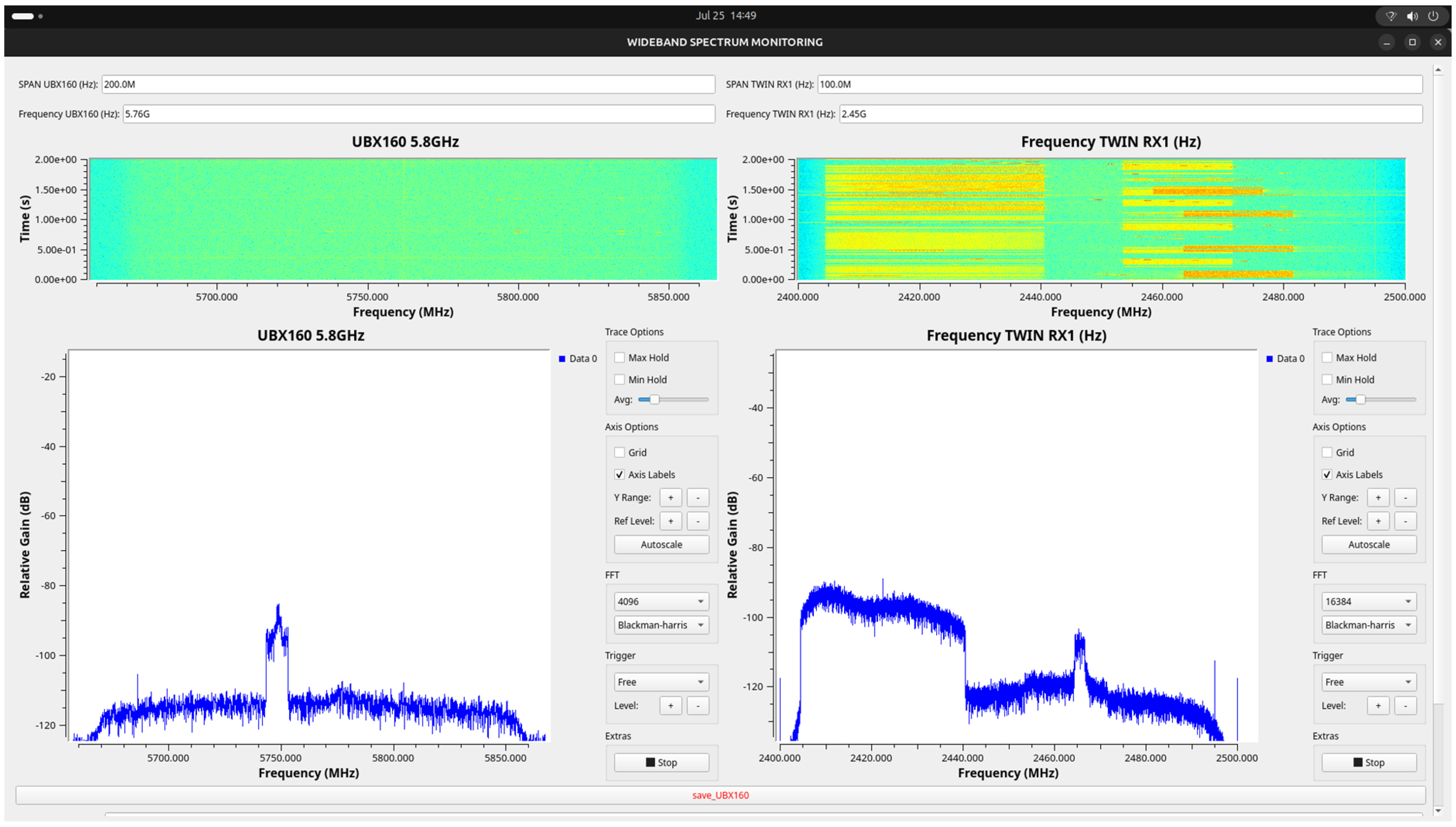
The processed signals are visualized using the QT GUI Waterfall Sink and QT GUI Frequency Sink graphical interfaces (
Figure 6). For channel CH0, the spectrum is centered at 2.44 GHz with a width of 100 MHz and for CH1 at 2.437 GHz with a width of 1 MHz. The FFT dimensions differ depending on the desired resolution, being 2048 points for the spectrogram and 16,384 for the frequency domain representation.
- 2.
Overview of the data processing station
In modern SDR-based systems, especially those designed for monitoring broadband waveforms, the processing station plays an important role in ensuring real-time digital signal processing and preliminary data analysis. The USRP X310 is a high-performance platform capable of handling large bandwidths with appropriate expansion cards and high-capacity data streams. To take full advantage of the entire range of functions, especially in scenarios requiring continuous, real-time monitoring over extended frequency ranges, it is necessary to integrate the platform with a powerful processing station.
The primary function of the workstation in this context is to serve as a host for receiving, processing, analyzing, and visualizing the complex baseband (I/Q) signals acquired by the USRP X310. The transmission of this data is facilitated by high-speed interfaces, including 10GbE or PCIe. These interfaces require substantial computing power for real-time management. Spectrum estimation, demodulation, filtering, and signal classification are all data-intensive processes. They require not only a powerful central processing unit (CPU), but also fast memory access and significant I/Q performance.
To meet these requirements, the processing station used in the development of this system is equipped with an Intel Core i9-12900K processor, with 16 cores and 24 execution units (threads), with a maximum Turbo Boost frequency of 5.2 GHz. This multi-core architecture allows parallel execution of computation threads, which is particularly beneficial in digital signal processing (DSP) implementations that include FFT transformations, adaptive filtering, and decimation stages. Furthermore, the 128 GB DDR5 memory operating at 3600 MHz, distinguished by its high speed, provides sufficient bandwidth to manage substantial signal buffers and enable multiple simultaneous processing chains without inducing bottlenecks.
Another component is the integration of an NVMe solid-state drive with high write/read capabilities, which supports high-speed data recording and retrieval. This is particularly relevant when handling raw I/Q data for post-processing or detailed spectrum analysis. In addition, the integration of an NVIDIA RTX A5000 graphics processing unit (GPU) with 24 GB of GDDR6 memory facilitates GPU-accelerated signal processing with AI/deep learning integration capabilities. Libraries such as CUDA, PyTorch, and TensorFlow can offload FFT calculations and enable real-time inference of neural networks used in signal classification or anomaly detection modules.
In terms of system stability and thermal management, a liquid cooling system ensures that the processor operates under sustained load without overheating, a condition that would otherwise compromise real-time processing capabilities. The system also includes a Platinum-certified 1000 W power supply and multiple PCIe expansion slots, allowing for future upgrades such as additional network interfaces or co-processing boards.
In conclusion, the performance characteristics of the processing station are not only complementary to the USRP X310, but fundamental to achieving the goals of the real-time broadband signal monitoring system. The demanding data transfer and processing requirements of high-bandwidth SDR applications call for a hardware platform that can support continuous data acquisition, processing, and visualization without interruption. In such contexts, investing in a high-performance processing station is not merely a choice but rather an essential element for ensuring the system’s functionality and reliability.
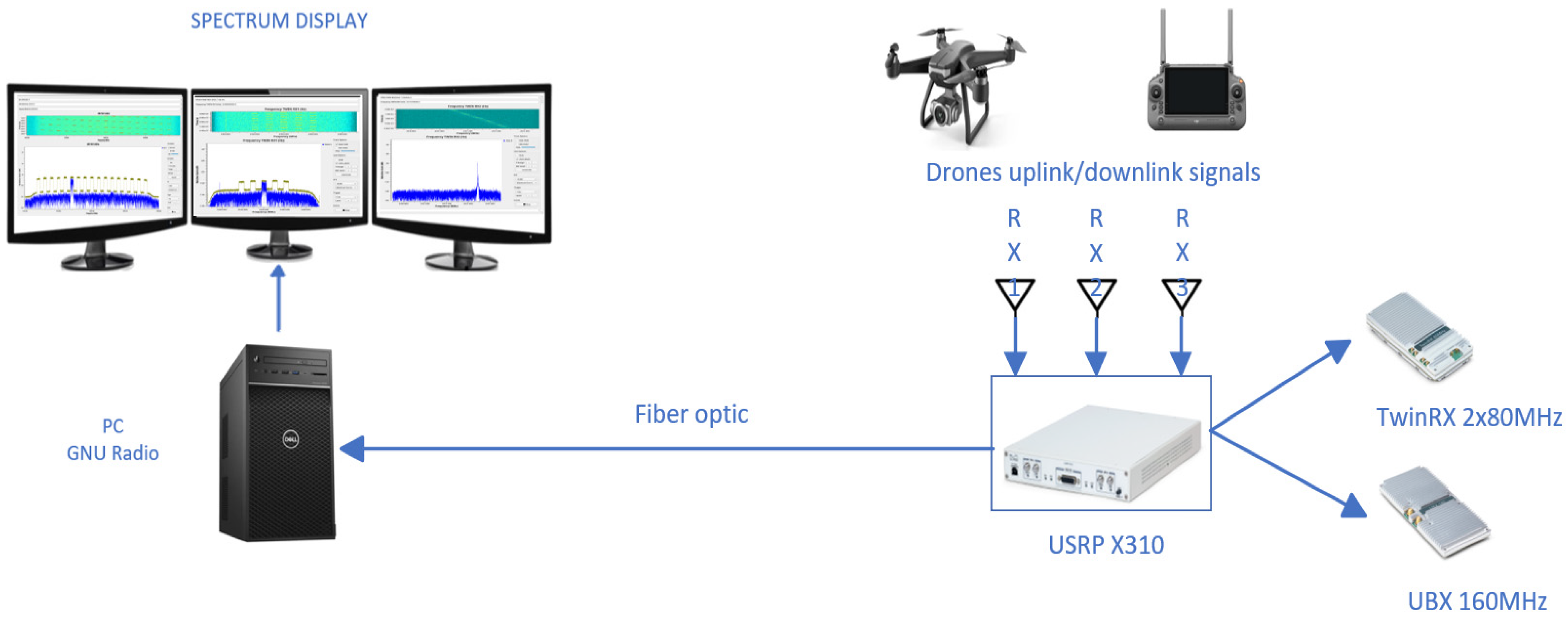
For clarity,
Figure 7 consolidates the elements described in points 1 and 2 and presents an end-to-end overview of the implemented architecture of the proposed monitoring system for detecting drone-specific signal emissions.
- 3.
Technical characteristics of the R&S FSW26 spectrum analyzer used as a reference instrument
The proposed monitoring system was parameterized and evaluated using a Rohde and Schwarz FSW spectrum analyzer. FSW is a state-of-the-art instrument in the field of RF test equipment. FSW addresses a wide range of applications in the aerospace, defense, telecommunications, electronics manufacturing, and scientific research sectors, being designed for high performance, modular expansion, and precision measurements. FSW is more than a conventional spectrum analyzer. It is a high-performance signal analysis instrument capable of real-time signal acquisition and processing, equipped with dedicated software options tailored to a wide range of measurement applications.
One of the most impressive features of the FSW series is its frequency range. The different models cover 2 Hz to 90 GHz with various options and extensions. Furthermore, depending on the installed options, the FSW supports analysis bandwidths from the standard 28 MHz up to 8.3 GHz and in real-time mode up to 800 MHz.
Real-time FSW analysis enables up to 2.4 million FFTs per second with a POI of 0.46 µs, allowing continuous detection of transient RF events. This is essential for detecting short-duration signals such as frequency hops, radar pulses, or EMC anomalies, events often missed by traditional sweep analyzers. The instrument is particularly well suited for applications specific to 5G NR technology (up to 400 MHz channel), ultra-wideband (UWB), and pulsed RF systems, where instantaneous and uninterrupted signal acquisition is essential.
In terms of amplitude accuracy and sensitivity, the analyzer achieves an amplitude accuracy of better than ±0.3 dB and up to ±0.1 dB with proper alignment. With the FSW-B24 preamplifier, the displayed average noise level (DANL) is [
50]:
- -
−165 dBm/Hz below 1 GHz;
- -
−160 dBm/Hz from 1 to 10 GHz;
- -
−155 dBm/Hz above 10 GHz.
This high sensitivity is essential for analyzing spurious signals, preliminary EMI compliance testing, and detecting low-level signals in noisy environments.
Key parameters defining linearity and dynamic range include:
- -
Third-order intermodulation product (TOI): up to +30 dBm;
- -
1 dB compression point: typically +15 dBm;
- -
Noise-free dynamic range: greater than 100 dB.
The FSW supports remote control via SCPI commands and is compatible with Python, LabVIEW, and MATLAB. Connectivity is available via LAN, USB, and GPIB interfaces. A built-in SCPI command logging module and a web-based graphical interface simplify automation and remote diagnostics. In automated production environments, remote control is essential. The FSW’s flexible integration capabilities allow for seamless incorporation into complex test systems [
50].
The R&S FSW is a high-performance spectrum analyzer designed to meet the advanced needs of modern RF engineering. It serves as a reference tool for engineers and researchers developing state-of-the-art RF systems, providing high-resolution signal analysis across a wide range of applications.
Table 1 provides a concise comparison between the key parameters of the SDR-based system and those of the FSW spectral analyzer.
4. Results and Discussions: Tests Performed Under Controlled Laboratory Conditions
4.1. Evaluation of the Operating Frequency Range
In electromagnetic spectrum monitoring systems, the stability and accuracy of the local frequency are important in defining the useful working range. Frequency offset, or the difference between the nominal reception frequency and the actual frequency at which the system is centered, can significantly impact measurement accuracy, demodulated signal fidelity, and spectrum interpretation in signal detection and analysis applications. This section analyzes the operating range of two platforms: the USRP X310 and the R&S FSW analyzer. It considers the technical specifications and functional impact in experimental scenarios.
Frequency deviation is mainly determined by the accuracy of the internal reference oscillator and directly affects system performance. In RF receivers and spectrum analyzers, this deviation leads to incorrect spectral alignment, miscalculation of the carrier frequency, faulty synchronization in phase-locked or synchronization-sensitive systems, and the accumulation of deviation-induced errors in long-term measurements.
The Ettus USRP X310 SDR platform features an internal oscillator with an accuracy of ±2.5 ppm corresponding to a frequency deviation of ±2.5 kHz at 1 GHz. While adequate for typical applications, this level of accuracy is insufficient for calibration or high-precision measurements. Integrating the optional GPS Disciplined Oscillator (GPSDO) improves the X310′s frequency stability to ±0.01 ppm, reducing the deviation to ±10 Hz at 1 GHz. This level of accuracy is considered sufficient for precision measurements and synchronization of multiple systems. In the default configuration, the X310 uses software-based frequency correction to compensate for deviation, which may limit performance in applications requiring precise carrier identification.
The R&S FSW spectrum analyzer features a highly stable internal reference oscillator with standard accuracy of ±1 ppm. With the FSW-B4 OCXO option, the device’s long-term stability improves to ±0.1 ppm. This corresponds to a frequency deviation of approximately ±100 Hz at 1 GHz. This configuration enables extremely stable spectrum measurements and eliminates the need for external correction. Depending on the model, the FSW facilitates signal analysis across the entire frequency range (up to 44 GHz) with minimal center frequency deviation. This makes it suitable for compliance testing, transmitter characterization, and high-precision monitoring of the electromagnetic spectrum in industrial and defense applications.
A comparative analysis of the USRP X310 and R&S FSW in terms of frequency offset reveals two distinct approaches to design. The USRP X310 prioritizes flexibility and reconfigurability; however, it relies on software compensation or optional hardware (e.g., GPSDO or external source) for accurate frequency measurements. In contrast, the R&S FSW employs an architecture that offers inherently superior frequency stability in the standard version, a feature that is essential for spectral accuracy and industrial compliance testing. In summary, FSW provides a reduced and more predictable range of frequency deviations, while the X310 remains a viable and cost-effective solution in adaptable environments where frequency deviation can be corrected in software, depending on the application.
4.2. Displayed Average Noise Level Evaluation (DANL)
Sensitivity evaluation is an essential aspect of RF receiver characterization, particularly for spectral acquisition and monitoring systems. A fundamental parameter in this context is the displayed average noise level (DANL), which is the minimum detectable signal level in the absence of an RF input signal. DANL is influenced by several factors, including frequency resolution (RBW), RF front-end architecture (e.g., preamplification and filtering), sampling rate, and associated digital post-processing algorithms, as well as operating frequency and ambient temperature.
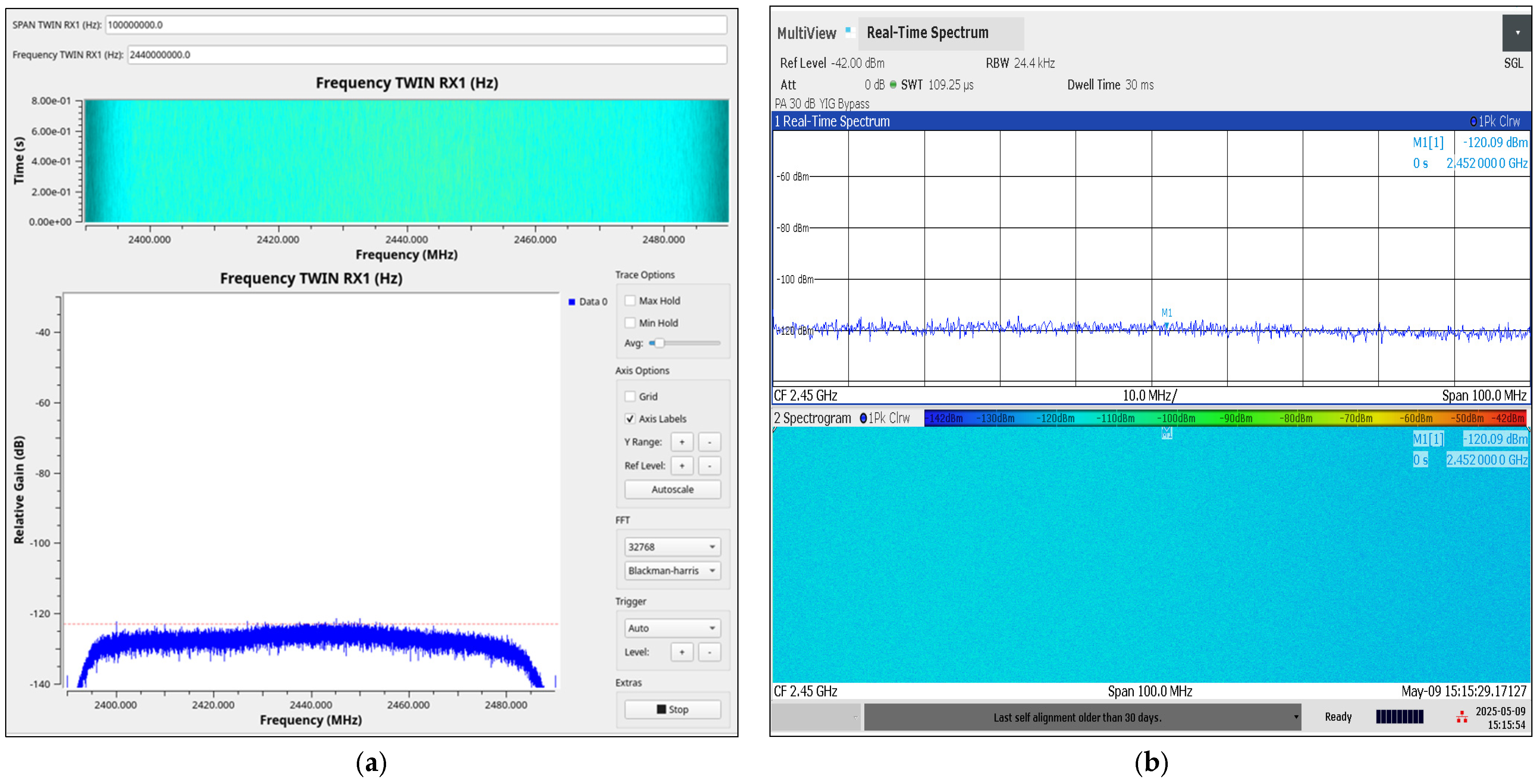
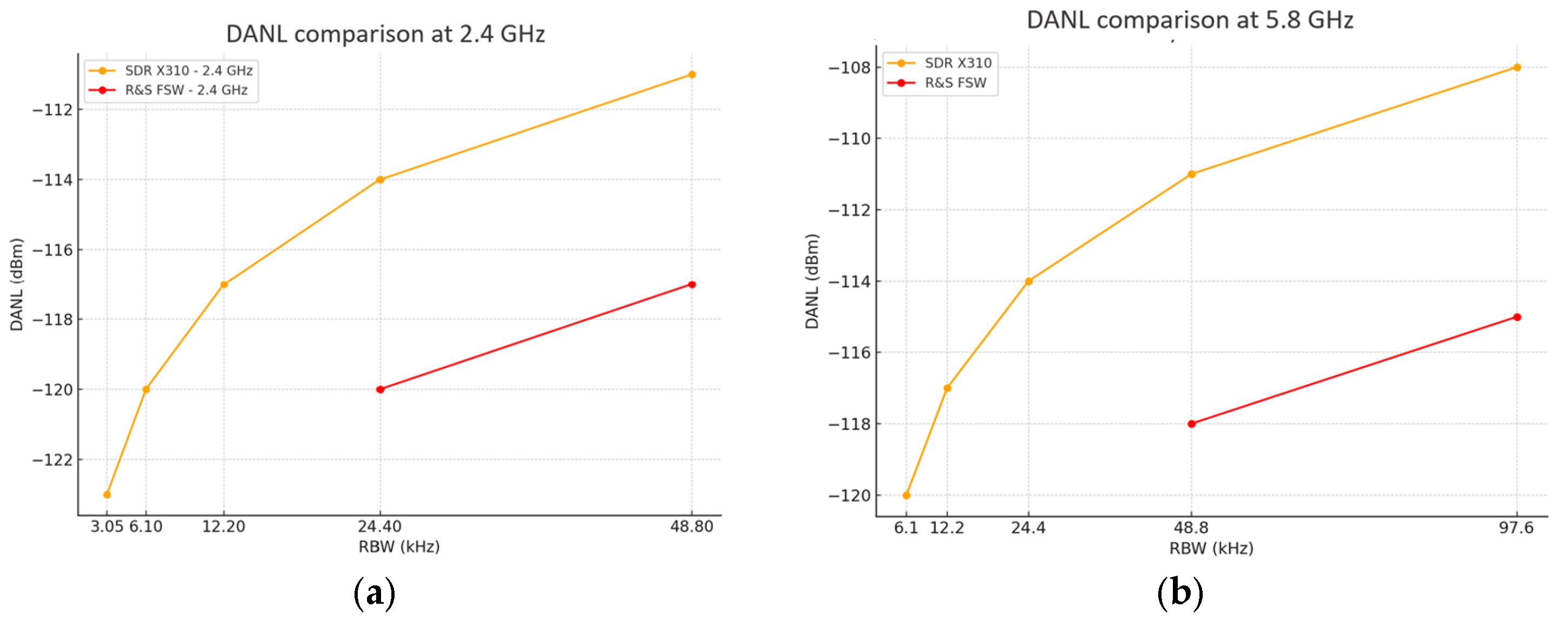
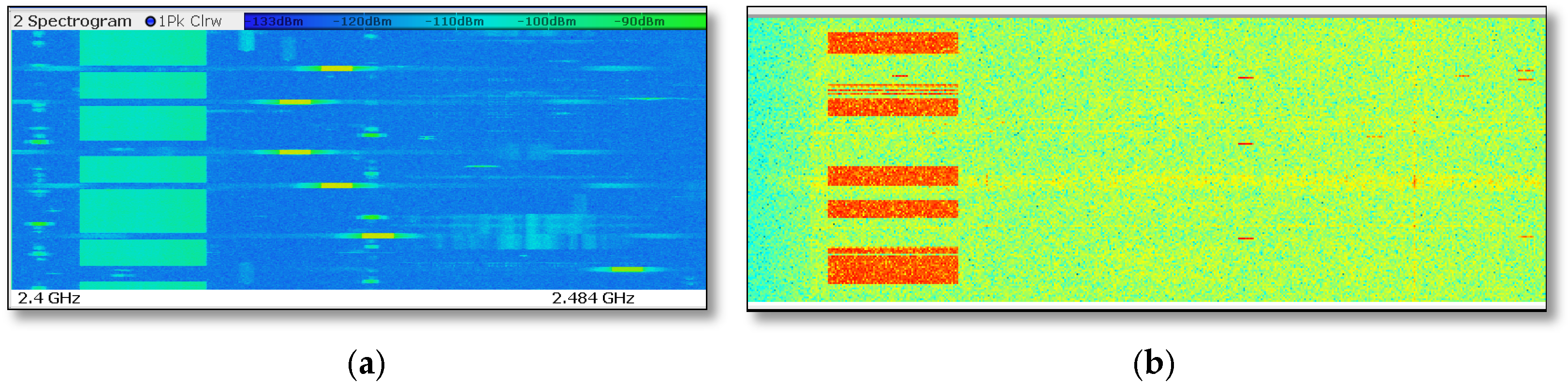
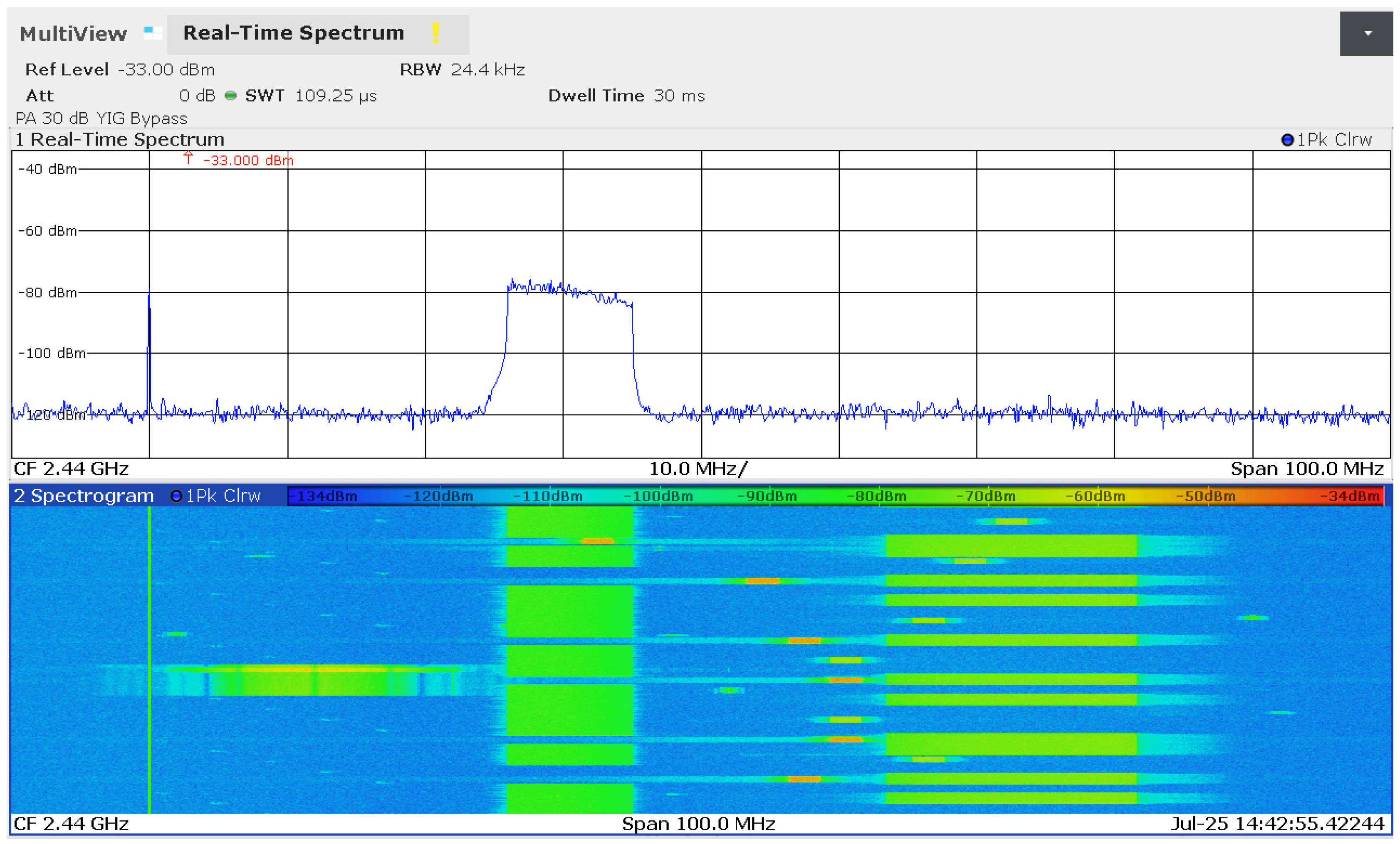
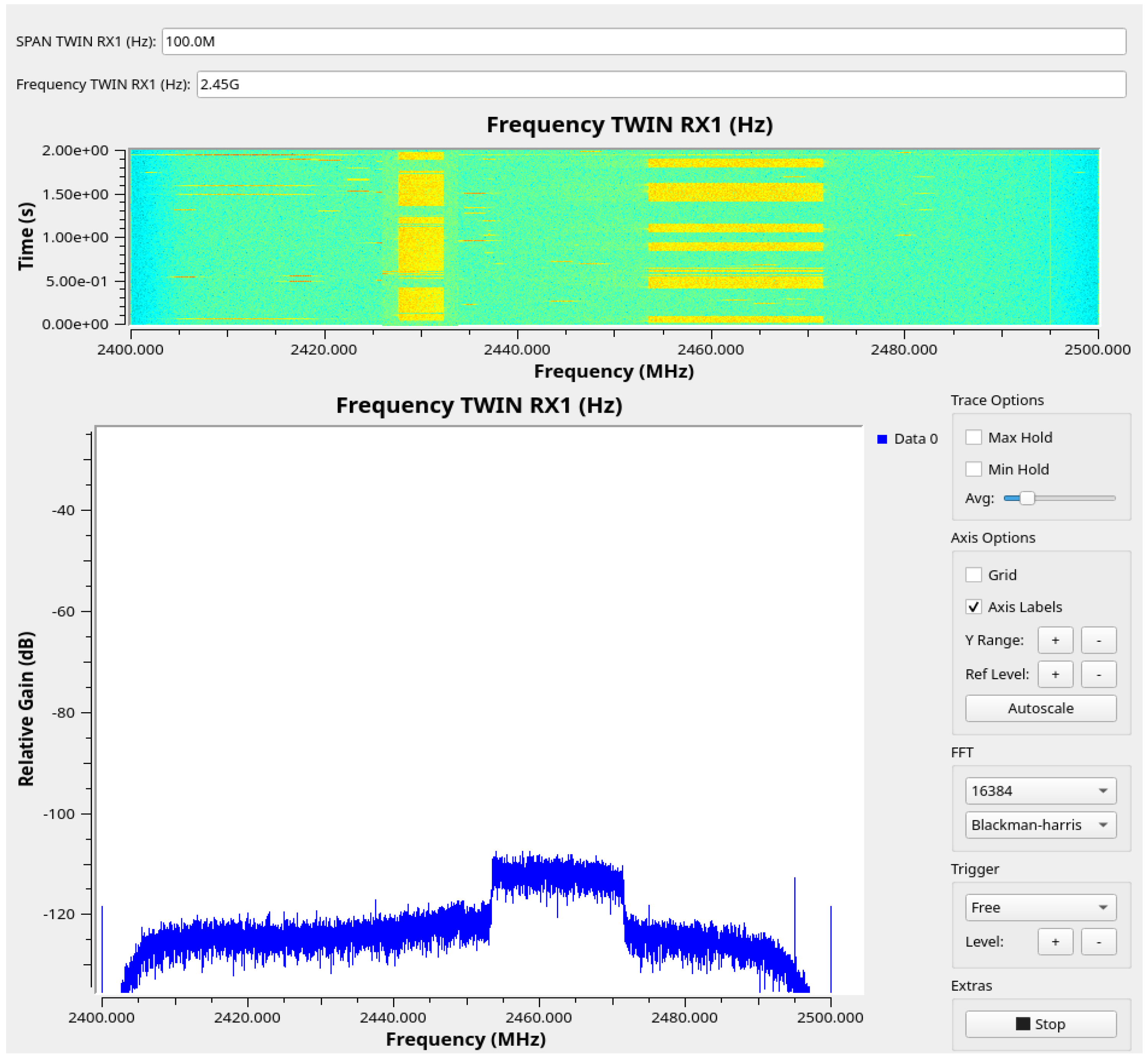
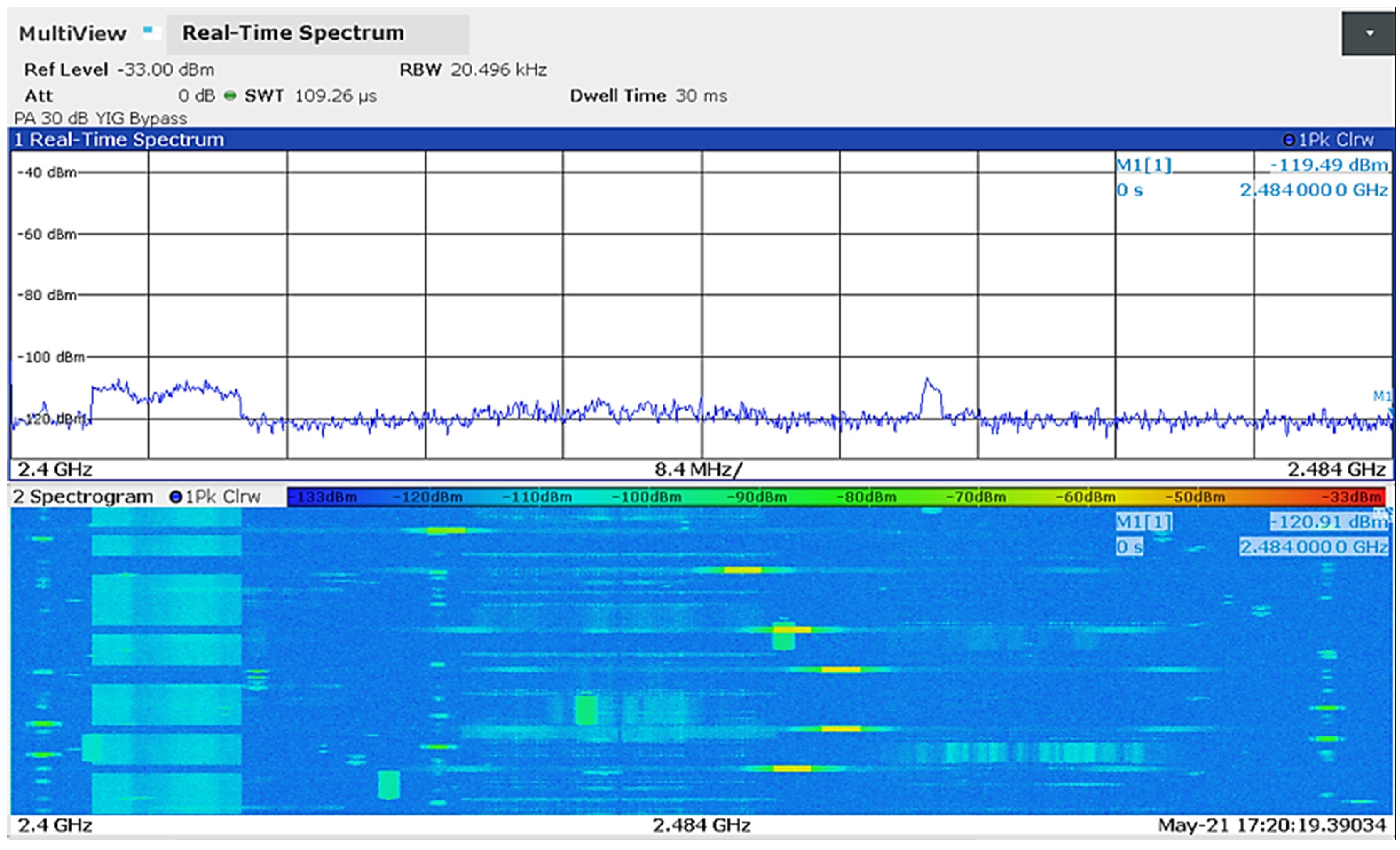
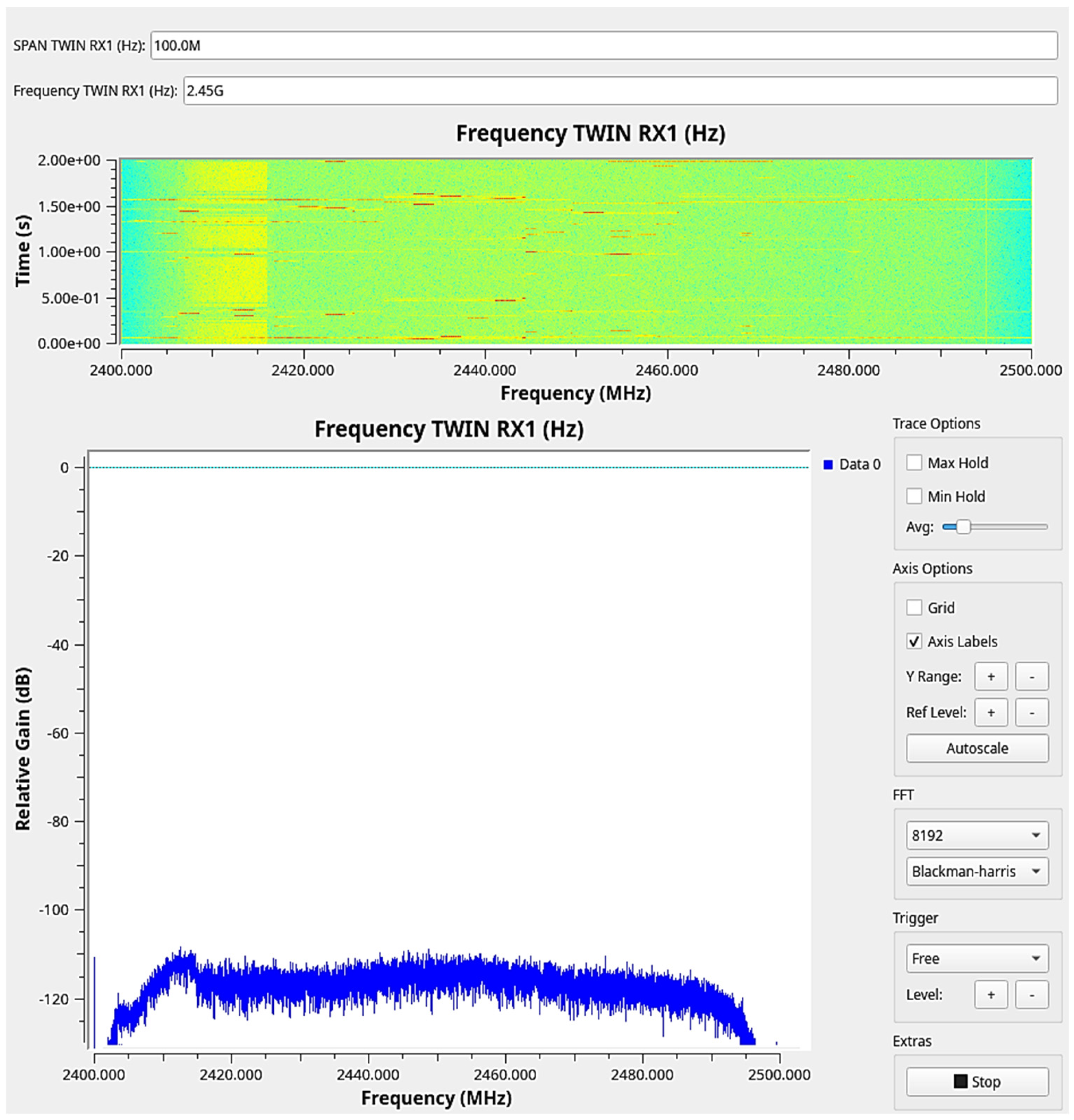
To this end, measurements were performed under controlled laboratory conditions to determine the noise threshold for both the USRP X310 platform equipped with UBX160 and TwinRX daughterboards and configured for wideband monitoring (100 MHz at 2.4 GHz and 200 MHz at 5.8 GHz, respectively) and the R&S FSW spectrum analyzer. To ensure accurate reference values, a 50-ohm termination was attached to each RF input. The objective of the evaluation was to determine the DANL, which is essential for analyzing the sensitivity of the receiver and its ability to detect the lowest possible signal levels. Measurements were performed for different frequency resolutions ranging from 3.05 kHz to 97.6 kHz (depending on the capabilities of each system) in both the 2.4 GHz and 5.8 GHz frequency bands. The measurement results are displayed in
Figure 8 and
Figure 9a for the 2.4 GHz range and in
Figure 9b for the 5.8 GHz range.
In this configuration, the USRP X310 platform was set up for real-time monitoring of a 100 MHz bandwidth with a minimum possible resolution of 3.05 kHz. In contrast, the R&S FSW spectrum analyzer supports a minimum RBW of 24.4 kHz in real time for the same bandwidth. As a result, the SDR system demonstrates higher sensitivity, reaching a DANL of −123 dBm at 3.05 kHz RBW, in comparison to −120 dBm for the FSW at the minimum supported RBW.
For tests performed in the 5.8 GHz band, the USRP X310 system was configured to instantly acquire a 200 MHz bandwidth while allowing substantial modification of the RBW value from 6.1 to 97.6 kHz. Similarly, the R&S FSW spectrum analyzer was used within its hardware capabilities to provide relevant data for RBWs of 48.8 kHz and 97.6 kHz.
Figure 9b summarizes the test results for the average noise level displayed by the two monitoring systems. As can be seen, the FSW analyzer shows lower noise floor values than the USRP X310 platform for frequency resolutions of 48.8 kHz and 97.6 kHz, a trend also observed in the 2.4 GHz band. SDR’s advantage is its support for much lower frequency resolutions of up to 6.1 kHz, unavailable on FSW in standard real-time mode. Consequently, the X310 achieves a DANL of −120 dBm at 6.1 kHz, a value unattainable by the FSW under these conditions. This demonstrates the superior flexibility of SDR and its suitability for low-level signal analysis. Proper configuration of SDR can approach the sensitivity performance of a state-of-the-art spectrum analyzer.
In conclusion, the R&S FSW spectrum analyzer is the preferred choice in metrology, compliance testing, and laboratories with strict noise and calibration requirements due to its high accuracy and superior measurement stability. In contrast, although the USRP X310 is more sensitive to noise variations and dependent on the capabilities of the host station, it offers improved flexibility and sensitivity thanks to its support for lower frequency resolutions. These features make it ideal for adaptive signal analysis, dynamic monitoring of low-level signals, and radio system prototyping. Therefore, the choice between the two platforms depends on the application. The FSW excels in standardized, precision-focused contexts, while the USRP X310 offers a reconfigurable and scalable solution for flexible and constantly evolving RF environments.
4.3. Amplitude Dynamic Range Evaluation
The dynamic range of a receiver is defined as the interval between the minimum detectable signal and the maximum input level that can be measured without significant distortion or nonlinearity. This section compares the dynamic range performance of the two systems evaluated in previous analyses.
For this analysis (
Table 2), test signals ranging from −123 to 20 dBm were emitted from the R&S SMBV100A generator in 5- and 10-dB steps, evaluating both platforms at the 2.4 and 5.8 GHz frequency ranges. For the USRP X310, input power was limited to a maximum of −20 dBm to prevent front-end saturation and ensure linear operation, as specified in the technical documentation.
4.4. Experimental Test: Sweep Signal with TwinRX Module at 2.44 GHz Center Frequency
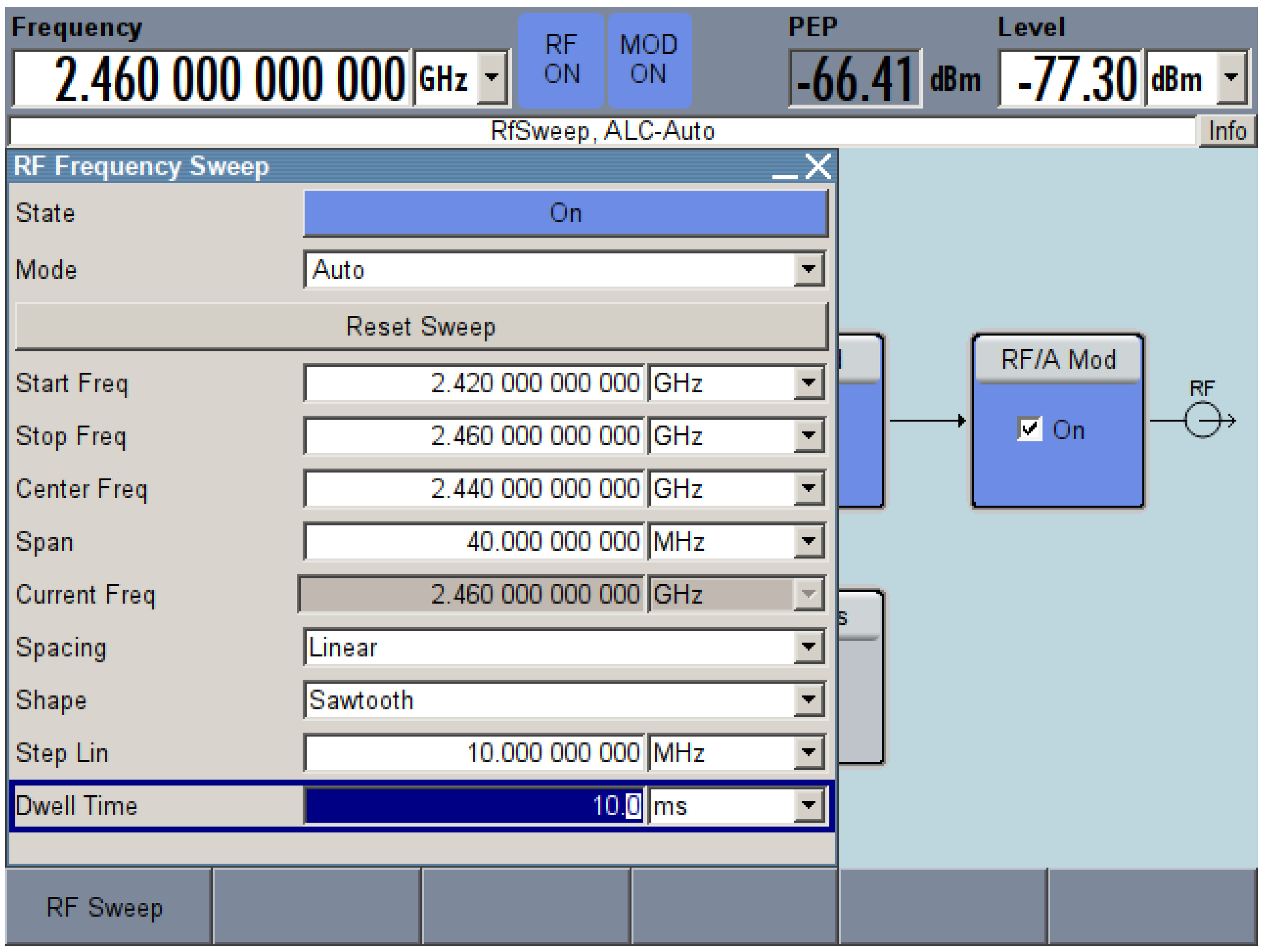
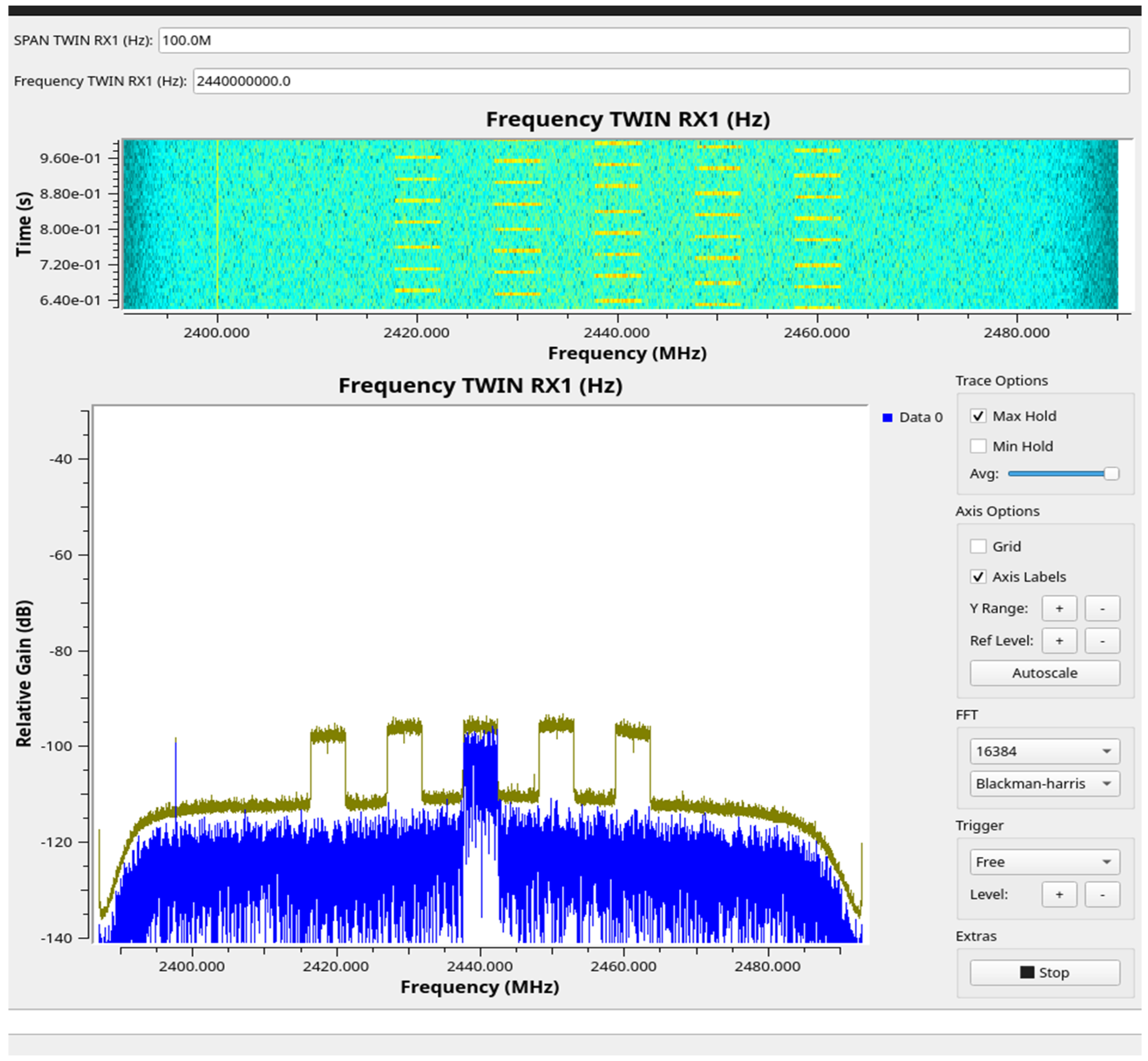
Test scenario description: Real-time acquisition is an essential requirement for the monitoring system. It characterizes the system’s ability to acquire signals with high temporal variability in real time. To evaluate the capability of two monitoring systems (USRP X310 and FSW), a test signal with the following characteristics was used: a sweep signal in the frequency range of 2420 to 2460 MHz, a frequency step of 10 MHz, and a dwell time of 10 ms.
Figure 10 shows the parameters of the generated test signal.
Figure 11 shows the result of receiving the sweep signal in the QT GUI interface of GNU Radio, using the TwinRX board configured on the RX1 channel, centered on the 2.44 GHz frequency for a real-time acquisition bandwidth of 100 MHz. The spectrogram mode allows high-precision detection of all generated sweep frequencies, the sweep duration of each frequency, and the power level according to color. The bottom part of the application shows the signal spectrum in the frequency domain, and the Max Hold option was activated to capture even the frequencies spaced at 10 MHz on which the sweep is performed.
The experimental results confirm the reliability of the SDR system for receiving and visualizing the generated swept signal. Both the spectrogram and the frequency domain representation accurately reflect the signal structure and 10 MHz bandwidth. The TwinRX receiver demonstrates high spectral resolution, low latency, and fast carrier detection capabilities.
4.5. Experimental Test: Beacon Signal Monitoring
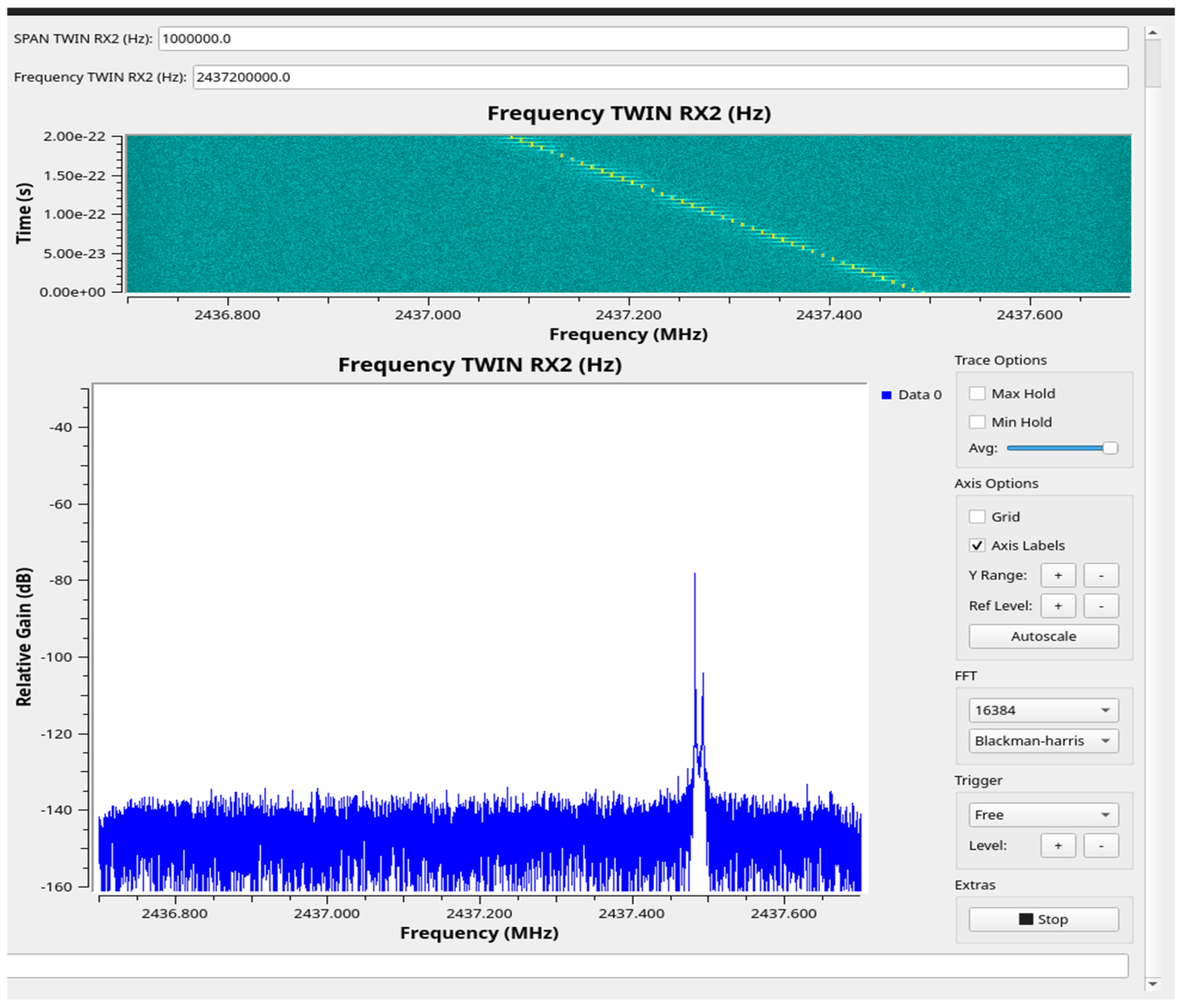
The subsequent experimental scenario presents the parameters of the beacon signal, similar to that present in the channel 6 band specific to the Wi-Fi standard, with a center frequency of 2.437 GHz. This type of signal, identified in the 2.4 GHz band, is used by drones to transmit identification information, GPS position, speed, and other telemetry data, in accordance with the regulatory framework specific to the Remote ID standard. The sweep signal was generated within a frequency range of 800 kHz, with a frequency step of 10 kHz and a dwell time of 10 ms. The result of signal reception on the RX2 channel of the TwinRX board is shown in
Figure 12. The board has been configured for a narrow real-time bandwidth of only 1 MHz with a center frequency of 2.437 GHz.
In both spectrogram and frequency domain representations, the presence of the sweep signal in the 800 kHz band, with a 10 kHz step size, can be accurately detected. Given the limited frequency range of interest, both frequency and time resolution are significantly enhanced, and the increase in reception sensitivity (below −140 dBm) enables the identification of the signal at the lowest possible power level.
4.6. Experimental Test: RF Signal Generated with Sweep and Reception with the UBX-160 Extension Board
To test the performance of the USRP-based broadband communications system equipped with the UBX-160 extension board, the following experiment was conducted using a signal generator. A sweep test signal was applied to the reception system in the 5.72–5.88 GHz frequency range with a 10 MHz frequency step and a 10 ms dwell time.
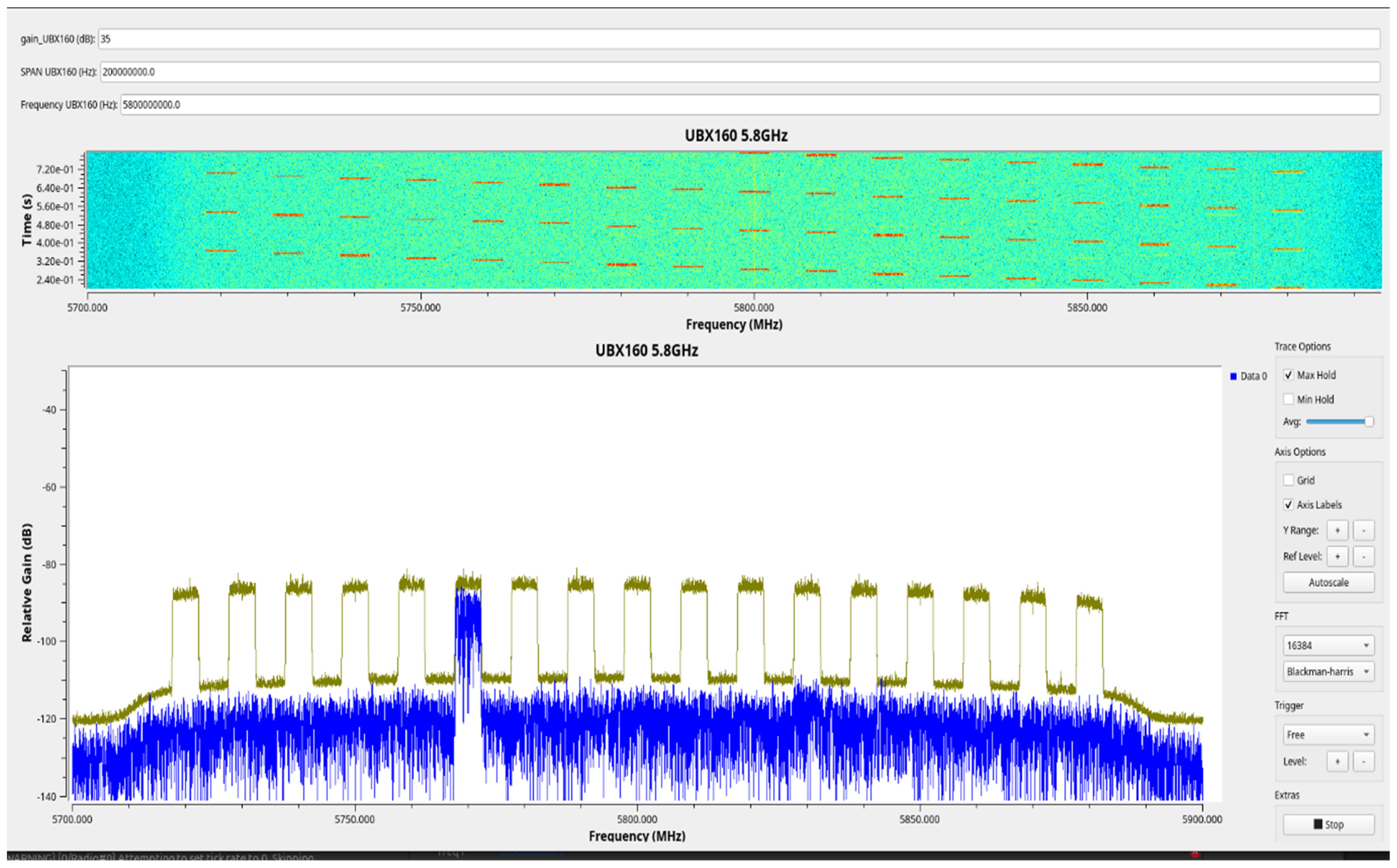
The UBX-160-based broadband reception system, configured with a center frequency of 5.8 GHz, a real-time acquisition bandwidth of 200 MHz, and an RF gain of 35 dB, was able to monitor the generated test signal, as can be seen in
Figure 13. To capture each carrier frequency spaced 10 MHz apart between 5.72 and 5.88 GHz, the Max Hold display mode was enabled at the bottom of the application. Unlike TwinRX, which is suitable for monitoring smaller bandwidths with synchronization between channels, the UBX-160 offers the advantage of real-time wideband reception, ideal for monitoring variable signals, such as wideband frequency hopping.
4.7. Controlled Testing of Spectrogram Quality Based on Signal-to-Noise Ratio for OFDM Downlink (DJI Mini 3)
A laboratory testing procedure was used to comparatively evaluate the influence of the signal-to-noise ratio (SNR) on the quality of the spectrogram associated with the OFDM video downlink. This procedure kept the radio geometry (i.e., drone position and orientation, polarization, and multipath) constant throughout the acquisitions. Received signals came from a DJI Mini 3 drone and included the OFDM downlink component (video) and emissions associated with the control channel (frequency hopping). This analysis focused exclusively on the broadband OFDM component, ignoring hopping events.
The reception was performed in the 2.4 GHz band using an 80 MHz TwinRx channel. An 8192-point FFT with a frequency resolution of approximately 9.77 kHz per bin was used for spectral processing. This resolution was determined by the ratio of the span to the number of FFT points (80 MHz ÷ 8192). To ensure a fair comparison between tests, the frequency domain and spectrogram analysis parameters were kept identical for all acquisitions. This included using the same span, FFT configuration, effective RBW/windowing settings, detector, and display logic. Therefore, differences observed between spectrograms can predominantly be attributed to the controlled change in SNR rather than variations in settings.
The noise level was modified by adding an artificial noise source generated in GNU Radio and combined with the received signal. Using a slider control, the noise level was gradually adjusted, allowing several SNR regimes to be tested without repositioning the drone or changing the RF chain. Four experimental conditions were defined, characterized by differences of approximately 5, 10, 20, and 40 dB between the signal and noise levels. These corresponded to the four analyzed captures.
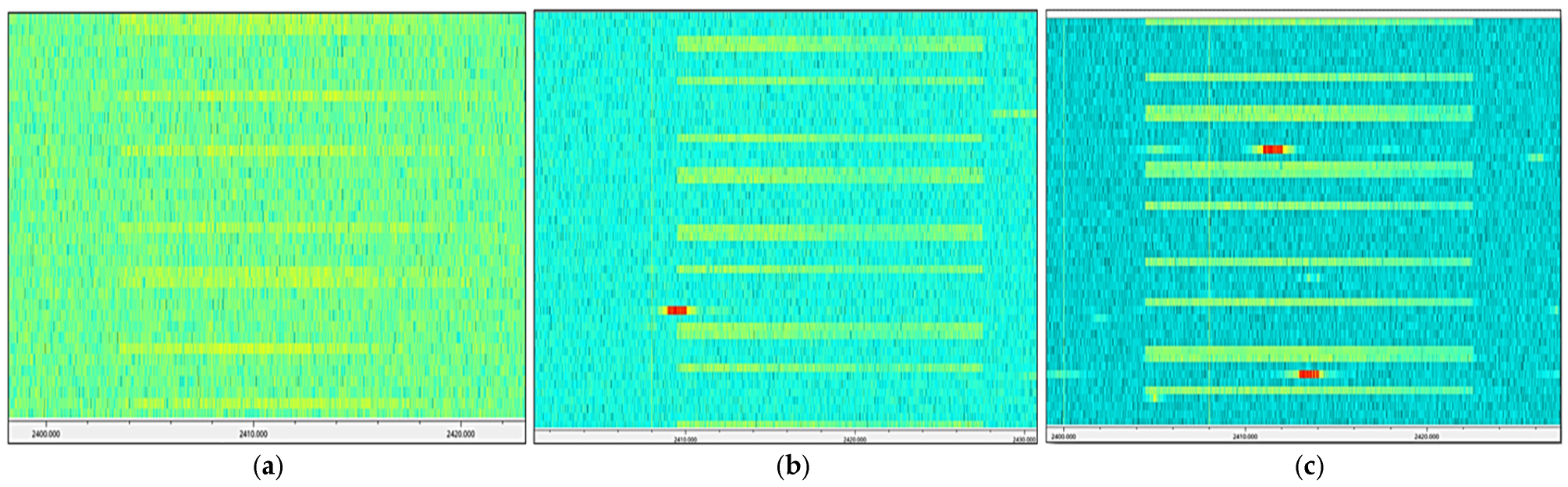
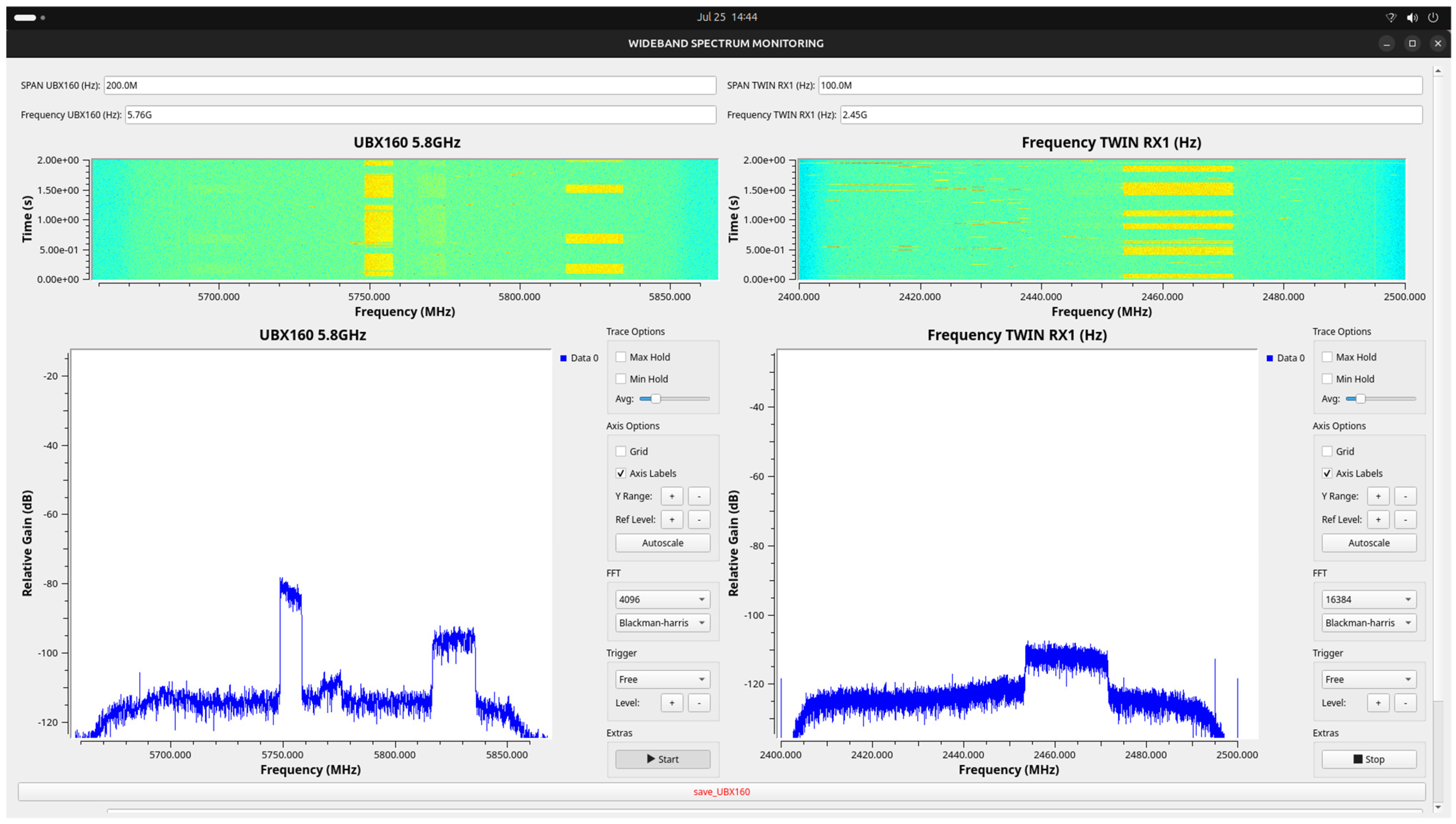
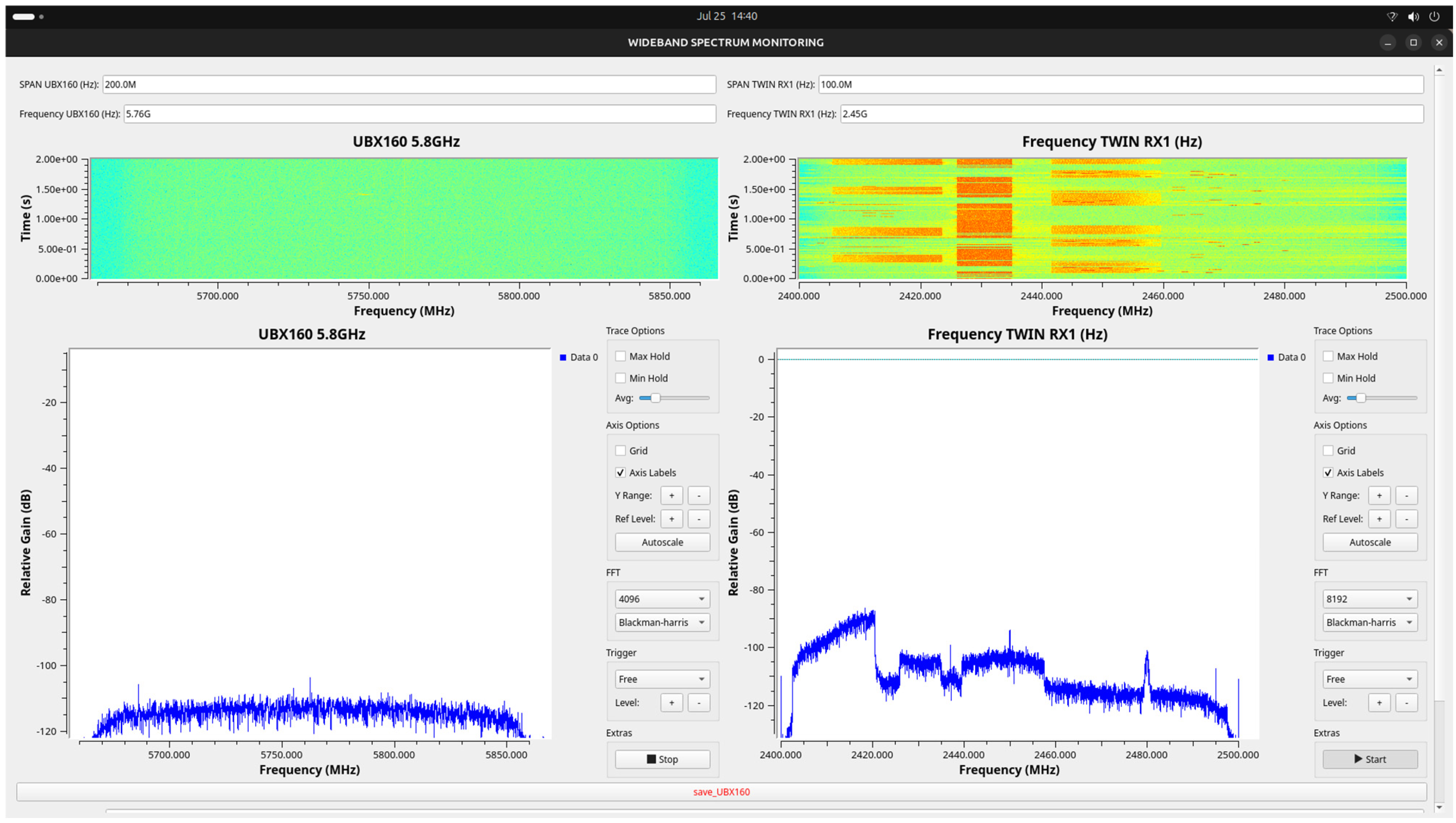
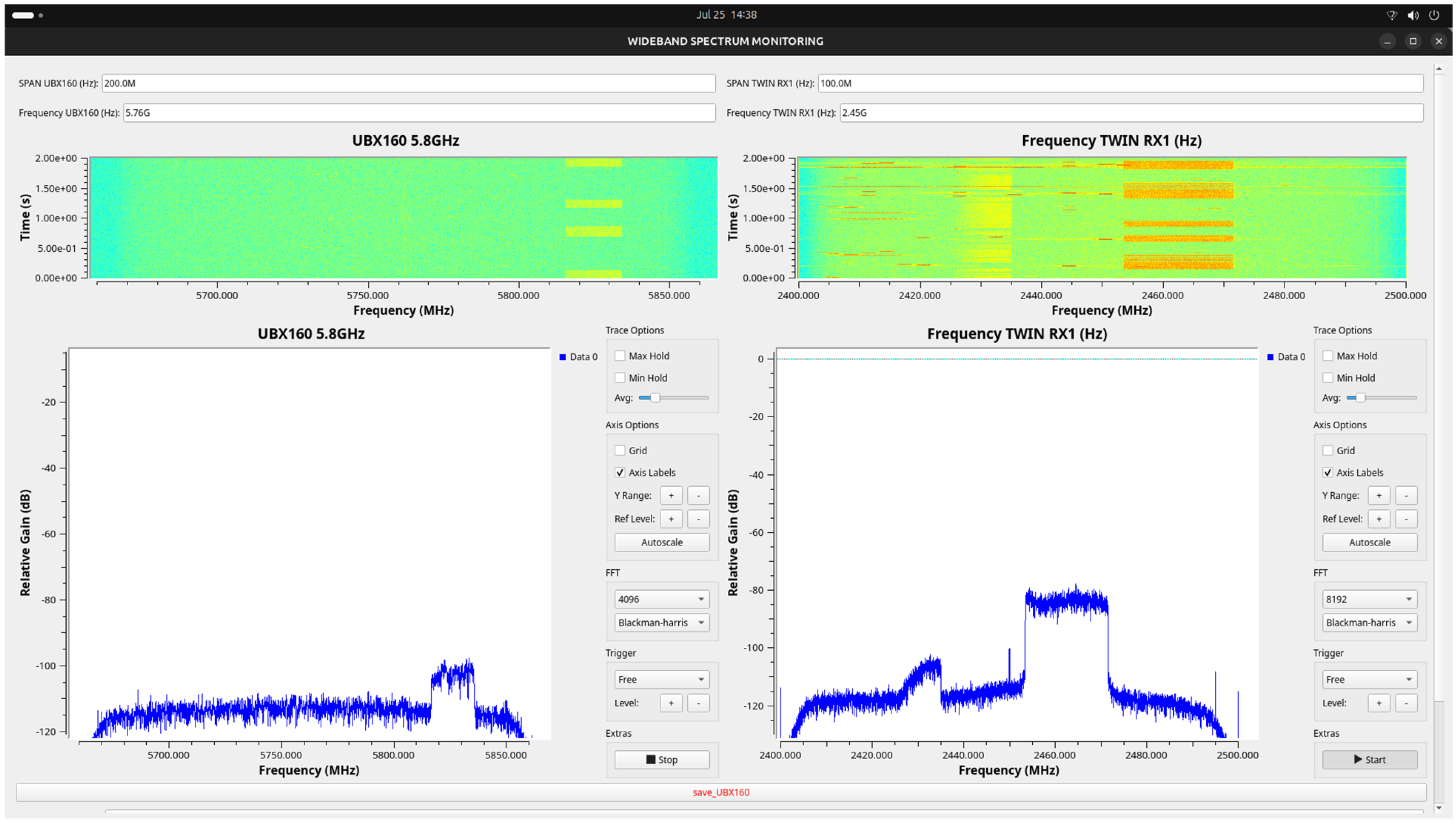
A qualitative analysis of spectrograms reveals a clear correlation between SNR and the visual distinction of the OFDM band from the noise floor. Additionally, there is a correlation between SNR and the stability of the spectral contour over time. The approximate 5 dB difference (
Figure 14a) causes the specific energy of the OFDM signal to blend with the stochastic variations of the noise. This results in a grainy spectrogram with reduced contrast. Under these conditions, the occupied band can only be recognized intermittently and with uncertainty. Estimates of bandwidth and temporal occupancy become unstable because detection thresholds are strongly influenced by background fluctuations.
At around 10 dB, the OFDM signal becomes consistently visible along the time axis, and the occupied band begins to exhibit recognizable boundaries (
Figure 14b). However, the spectral edges remain relatively diffuse and background level variation continues to affect bandwidth and occupancy estimates when simple energy detection methods are employed. From the perspective of using the spectrogram for identification and tracking purposes, this level represents a practical threshold of usefulness. While the emission structure can be observed and tracked, fine measurements of the spectral contour are still susceptible to noise.
At approximately 20 dB, the spectrogram distinctly exhibits the OFDM band (
Figure 14c). The distinction between the in-band and out-of-band levels facilitates the effective separation of the background signal. The spectral contour stabilizes, thus enabling reliable interpretation of the in-band energy distribution within the context of a broadband OFDM signal. Within this range, the spectrogram facilitates robust identification and repeatable measurement of the occupied bandwidth and temporal dynamics, exhibiting significantly reduced sensitivity to threshold selection.
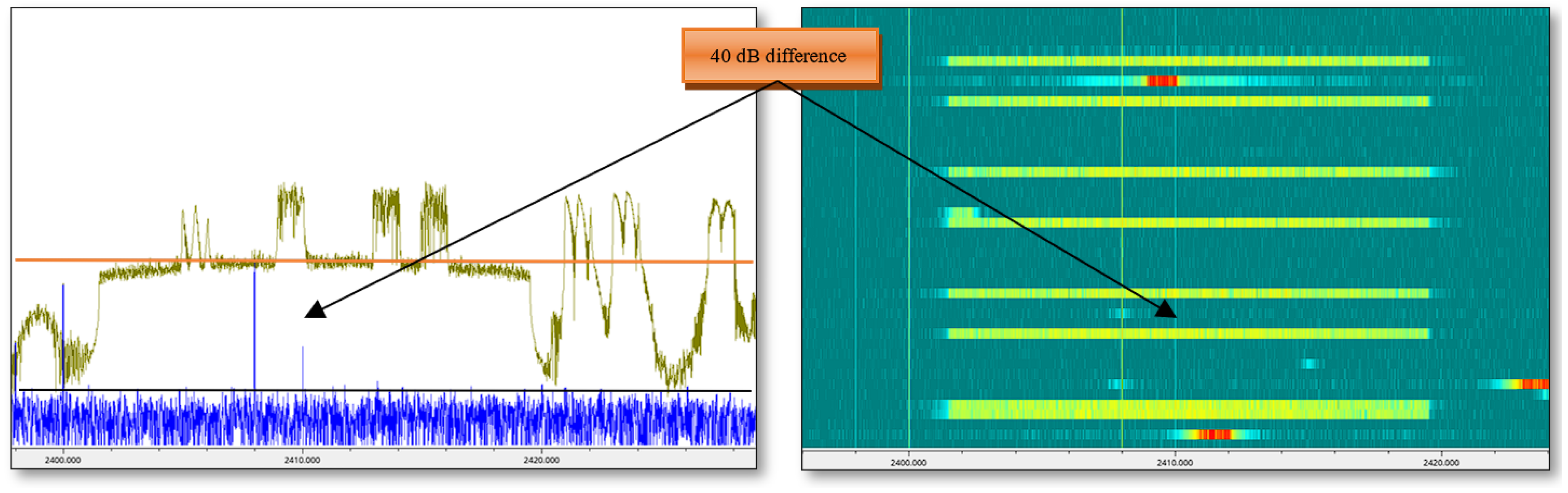
As illustrated in
Figure 15, at approximately 40 dB, the spectrogram closely resembles the reference case, where the signal clearly dominates the noise and the energy structure of the band is evident and stable. In this regime, limitations in the analysis are more frequently imposed by instrumentation and display settings (e.g., color scale dynamics or detector behavior) than by added noise. Consequently, this case can be utilized as a benchmark for the “ideal” appearance of the emission under optimal reception conditions.
It is important to note that the method of degrading the SNR by adding noise in GNU Radio offers the advantages of control and repeatability. However, maintaining the processing chain in linear mode is required to avoid clipping or compression distortions that would alter the purely additive nature of the noise. As long as the addition of AWGN remains in the complex baseband domain and before saturation-prone stages, any observed degradation in the spectrogram can be directly attributed to the decrease in SNR.
The results of controlled testing on four signal-to-noise difference levels demonstrate a clear transition: from a marginally interpretable spectrogram (approximately 5 dB) to a spectrogram that is useful for identification and tracking (approximately 10 dB); then, to a robust regime for measurements and spectral interpretation of the OFDM downlink (approximately 20 dB); and finally, to a reference condition where the signal is reproduced with high fidelity (approximately 40 dB). By maintaining constant analysis parameters (e.g., span, effective FFT/RBW, and detector) and manipulating noise through artificial addition, the disparities among the four spectrograms can be exclusively ascribed to the SNR effect. This provides a solid basis for determining the operating thresholds necessary for reliably evaluating the spectral characteristics of the broadband OFDM downlink.
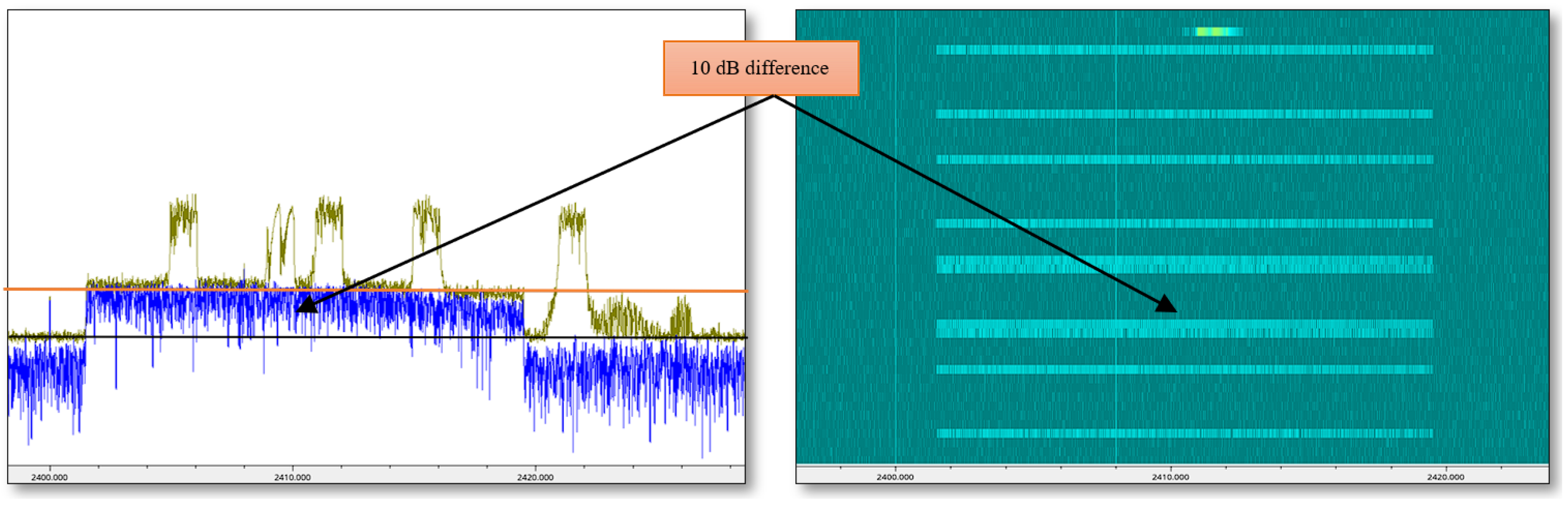
Previous tests revealed that when artificial noise is added in GNU Radio, the noise floor becomes dominant in the spectrogram, decreasing the contrast between the wideband OFDM downlink and the background compared to the reference case (without added noise). Initially, the minimum level parameter was set to the noise level in the baseline condition. Under these conditions, the increased noise fills the display scale, compressing the color differences and making the signal more difficult to distinguish visually, even though it is still present. To evaluate the influence of the display scale on interpretability, the case with a 10 dB SNR difference was repeated with the minimum level adjusted to the new noise floor (
Figure 16).
Although this recalibration does not improve the actual SNR, it optimizes the mapping of amplitudes to colors. The background becomes more uniform and less predominant, and the bands corresponding to the OFDM emission are more clearly separated from the noise. This makes them easier to track over time.
The main conclusion is that under low-SNR conditions, spectrogram quality degradation is determined not only by the physical decrease in SNR, but also by the display scale setting. When the minimum level is set to the measured noise floor in a favorable case and the noise level subsequently increases, the background within the same dynamic window also increases. Consequently, noise dominates the spectrogram visually, compressing the contrast and reducing the interpretability of the OFDM signal, even when it is still detectable.
Consequently, in real monitoring, where the noise level can vary due to changes in the RF environment, temperature, gains, interference, or propagation conditions, it is necessary to automatically adjust the minimum level parameter to the current noise floor. A self-calibration function continuously estimates the noise floor in regions without a signal and dynamically repositions the minimum level, maintaining stable visual contrast and ensuring a consistently interpretable representation without manual intervention. Thus, integrating an automatic minimum level adjustment mechanism into a monitoring system is a useful and practical requirement because it enhances the robustness of spectrogram analysis and mitigates the risk of relevant signals being masked by noise variations.
7. Conclusions
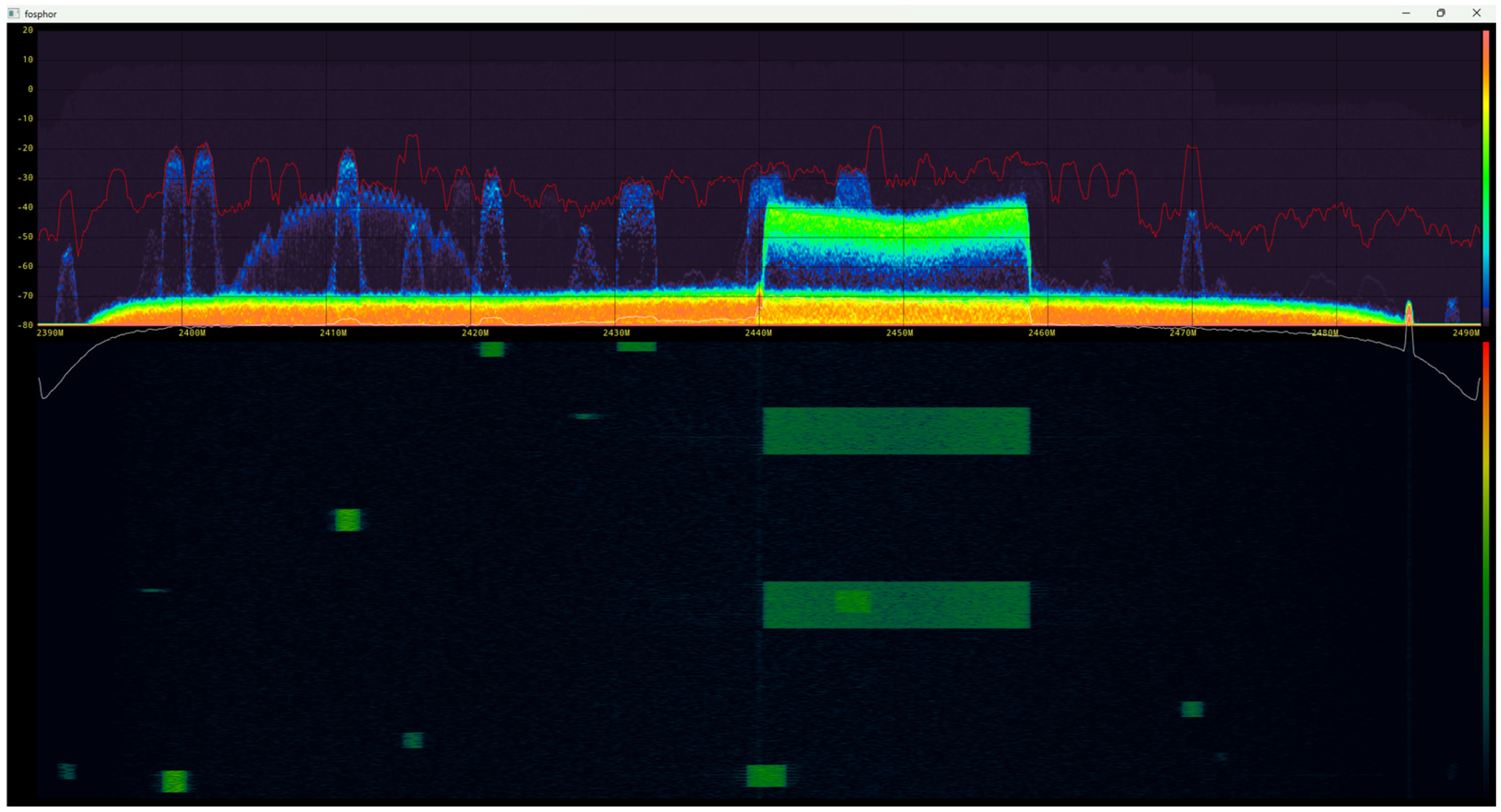
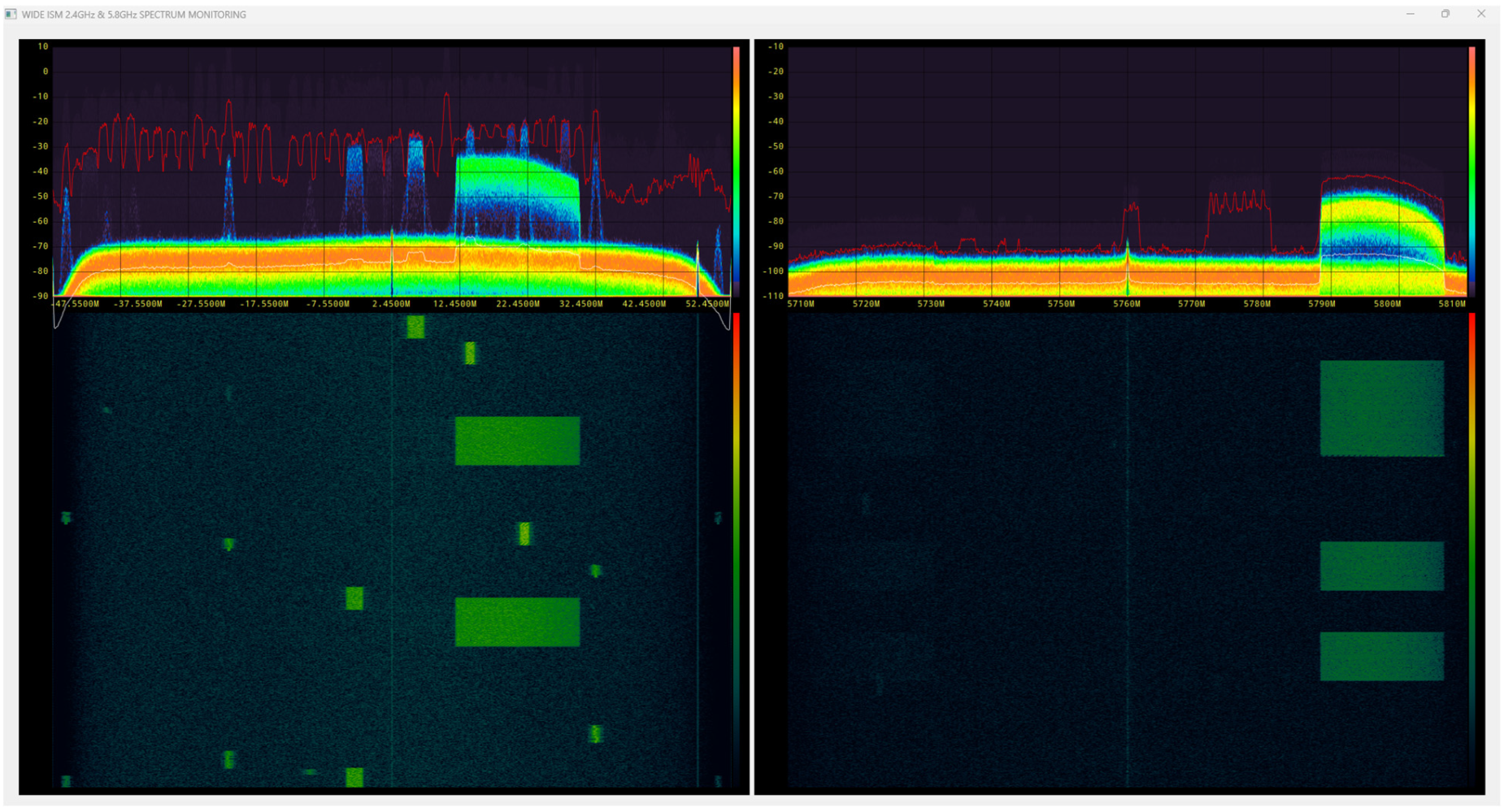
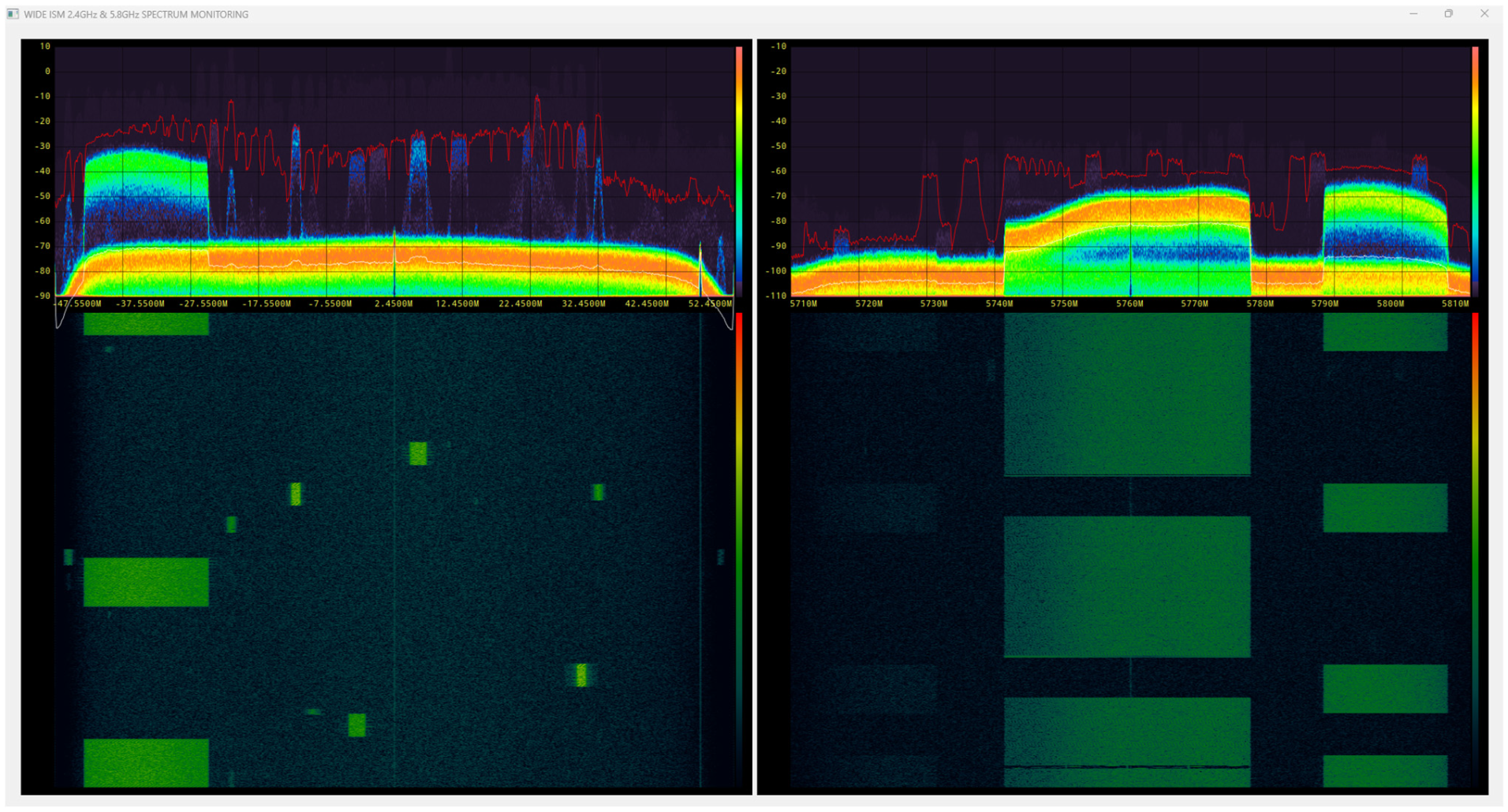
The experimental study presents the design and implementation of a high-performance broadband monitoring system designed for real-time detection and analysis of UAV communications in congested ISM bands, particularly in the 2.4 GHz and 5.8 GHz bands. Built on the USRP X310 platform with UBX-160 and TwinRX expansion boards, the multichannel system can simultaneously acquire two broadband channels and one narrowband channel at 2437 MHz. Using RFNoC for FPGA-based signal processing and integrating GPU-accelerated Fosphor visualization into GNU Radio enables the system to achieve high sensitivity and improved frequency and time resolution. This allows for real-time spectrogram analysis comparable to professional spectrum analyzers. Integrating Fosphor resolves limitations related to temporal sampling granularity, enabling persistent, high-resolution visualization of signal distribution in amplitude, time, and frequency. This visualization is essential for tracking the rapidly varying signals specific to UAVs.
The novelty of this experimental work lies not in the use of individual hardware SDR elements, but in the system-level integration of a multichannel SDR architecture that enables simultaneous, real-time monitoring of over 200 MHz on UAV ISM bands. The proposed implementation integrates RFNoC-based FPGA offloading with GPU-accelerated spectrogram rendering. This integration aims to reduce end-to-end latency and eliminate the temporal discontinuities associated with sequential scanning/retuning operations. In contrast to the SDR-based approaches documented in earlier experimental studies, which frequently exhibit limitations such as single-channel detection, constrained instantaneous bandwidth, real-time wideband coverage achieved through fast sweep acquisition, or offline/post-processed analysis, the presented platform provides continuous multiband observation and simultaneous identification functionality within a unified processing interface. Field tests have confirmed the system’s capacity to detect drone signals in a range of operational scenarios. This capability is primarily attributable to the system’s remarkably sensitive reception, which has been shown to reach a sensitivity of -130 dBm. This performance level significantly surpasses the results reported in existing literature and is comparable to the capabilities of cutting-edge instruments. In addition, the system successfully identified the RDID signal at 2437 MHz, enabling subsequent decoding of OpenDroneID data through a parallel Wi-Fi monitoring configuration.
The experimental tests further highlighted the performance limitations of the proposed monitoring system compared to state-of-the-art equipment. Although the proposed SDR-based monitoring chain is extremely flexible, it typically lacks the metrological accuracy and guaranteed RF performance of receivers or analyzers dedicated to spectrum monitoring. State-of-the-art instruments offer factory calibration, specified amplitude accuracy, stable detector behavior, low phase noise, and strong interference performance. In an SDR configuration, however, absolute power readings and spectral purity depend more on front-end selection, gain plan, and calibration. Therefore, results are often best interpreted as relative until the system is finalized and calibrated to applicable standards.
A second practical limitation is robustness in harsh RF environments. Professional equipment usually includes optimized preselection, stepped attenuators, protection, and a wide dynamic range that can tolerate strong in-band and out-of-band interference better. SDR systems can more easily reach ADC compression or saturation, which raises the noise floor and creates intermodulation products that mask weak signals. Finally, multichannel broadband monitoring is often limited by host throughput, storage write speed for recording, and real-time computation load. Next-generation platforms, however, tend to offer more scanning, triggering, reporting, and long-term operational stability.
Overall, the developed system represents a flexible and extensible platform for advanced spectrum monitoring applications. The high sensitivity and ability to operate multiple monitoring channels in parallel not only enable real-time signal detection but also pave the way for advanced signal classification, provided that adequate processing performance is maintained. Furthermore, the system architecture allows for rapid reconfiguration, making it suitable for monitoring a wide range of signal types beyond those associated with drones.