
Article

An Experimental Investigation by Particle Image Velocimetry of the Active Flow Control of the Stall Inception of an Axial Compressor †

1
Univ. Lille, CNRS, ONERA, Arts et Metiers Institute of Technology, Centrale Lille, UMR 9014—LMFL—Laboratoire de Mécanique des Fluides de Lille—Kampé de Fériet, F-59000 Lille, France
2
AMVALOR, Arts et Métiers Institute of Technology, 8 Boulevard Louis XIV, F-59000 Lille, France
*
Author to whom correspondence should be addressed.
This manuscript is a revised version of our meeting paper published in the Proceedings of the 16th European Turbomachinery Conference, Hannover, Germany, 24–28 March 2025.
Int. J. Turbomach. Propuls. Power 2025, 10(4), 40; https://doi.org/10.3390/ijtpp10040040
Submission received: 10 June 2025 / Revised: 26 June 2025 / Accepted: 4 August 2025 / Published: 3 November 2025

Abstract

This paper presents results from active flow control experiments carried out on a single stage axial compressor. The flow under various forced conditions has been investigated using 2D 2C particle image velocimetry (PIV) on three radial planes along the blades’ span and two different operating points corresponding to the minimum mass flow at which the compressor naturally stalls, and to the lower stability limit reached with the control system activated. In particular, a control strategy using continuous blowing is compared with a pulsed one using the same injected mass flow. Comparison is performed with the base flow without control (when available), or with each other, based on the PIV results in the form of relative velocity maps or inlet/outlet flow characteristics.

1. Introduction

Axial compressors are at the heart of many key industrial applications, starting from aircraft propulsion systems to ground-based power generation devices. They are still highly studied [1], being, on the one hand, the components shaping the efficiency of the systems they belong to [2], and, on the other hand, stability-sensitive machines prone to stall and surge [3]. High pressure ratios and a strong operating stability are needed to ensure a performant and safe use of the ingested fuel, making all research works on this topic relevant in these times of environmental emergency.
Even if the flow mechanisms leading to stall have been highlighted thanks to the decades-long research work of the community [4,5,6], their knowledge remains imperfect, especially for transient operations and in abnormal situations such as distorted inlet flows [7,8,9] or harsh weather conditions [10,11,12]. Aircraft engine manufacturers, for instance, still apply consequent safety “surge” margins to cope with these uncertainties. It is relevant here to recall some previous works of Tahara et al. [13], which state that halving the surge margin (from 20% to 10%) can be equivalent to removing 2 stages from a 10-stage compressor.
In addition to optimization methods deployed during stage design, many other methods are proposed in the literature with the aim of improving the stability of the machines and reducing the surge margin. Two categories are often opposed, namely passive methods (mainly casing treatments [14,15,16]) and active ones relying on flow control techniques (essentially tip blowing [17,18,19]). The former are effective in delaying stall but can be accompanied with performance decrease and cannot adapt to change in the operating conditions of the compressor. On the other hand, the latter can do that, but they are plagued with technical complexity (energy consumption, added mass, reliability…) which makes them complex to implement in real engine applications [20]. Consequently, such active methods, while being promising, must be several orders of magnitude more effective compared to their passive counterparts to be worth being embedded in-flight. This is obviously an appeal for the research community to push further in this direction.
Recently, results have been presented by authors on detailed flow measurements using PIV inside a single stage compressor [21]. This communication focused on a particular control configuration with high stability improvement, but at the cost of a relatively high injected mass flow (2.5% of the compressor mass flow rate at stall). This dataset was considered interesting from the physics point of view, with clear effects on the flow topology. To sum up the observed phenomena for such a control method, it appears that the flow is accelerated inside the rotor, mainly at the tip region, while no effect is visible close to the root compared to the case without control. It is accompanied by the creation of a swirling flow in a plane transversal to the rotor axis, which induces local increase in the tangential velocity in the upper parts of the blade. This produces additional work, at the cost of an increased separation on the suction side of the blade. In the end, this strategy allows the compressor blades to operate at a higher angle of attack, with a massive separation, in normally stalled operating points. From an applicative point of view, a control strategy with smaller injected mass flow could be appealing, relying on reduced flow rates or pulsed actuation [22,23,24]. Such configurations were also explored on the lab single stage axial compressor and are presented for the first time in this paper, which is a revised version of our meeting paper [25].
After this introduction, Section 2 of the paper will present the experimental setup, including the test machine and its control system, and some detail about the PIV measurement system. Section 3 will constitute the core of the paper, detailing the measurements realized at various radial locations with several control strategies, and it will be followed by some concluding remarks in Section 4.

2. Experimental Setup

The experimental support for the present research work is the CME2 axial compressor located at Arts et Métiers Institute of Technology (Lille, France). This is a single stage machine with a 30 blade rotor followed by a 40 blade stator. The casing diameter is 550 mm, and it is usually operated at 3200 rev.min−1. Corresponding design mass flow and total-to-static pressure ratio are 5.3 kg.s−1 and 1.03, respectively. Typical stall mass flow is, at this rotational velocity, around 4.2 kg.s−1. Additional characteristics are reported in Figure 1a. The machine is installed on a test bench with a throttling valve allowing the flow rate to be varied (see Figure 1b).
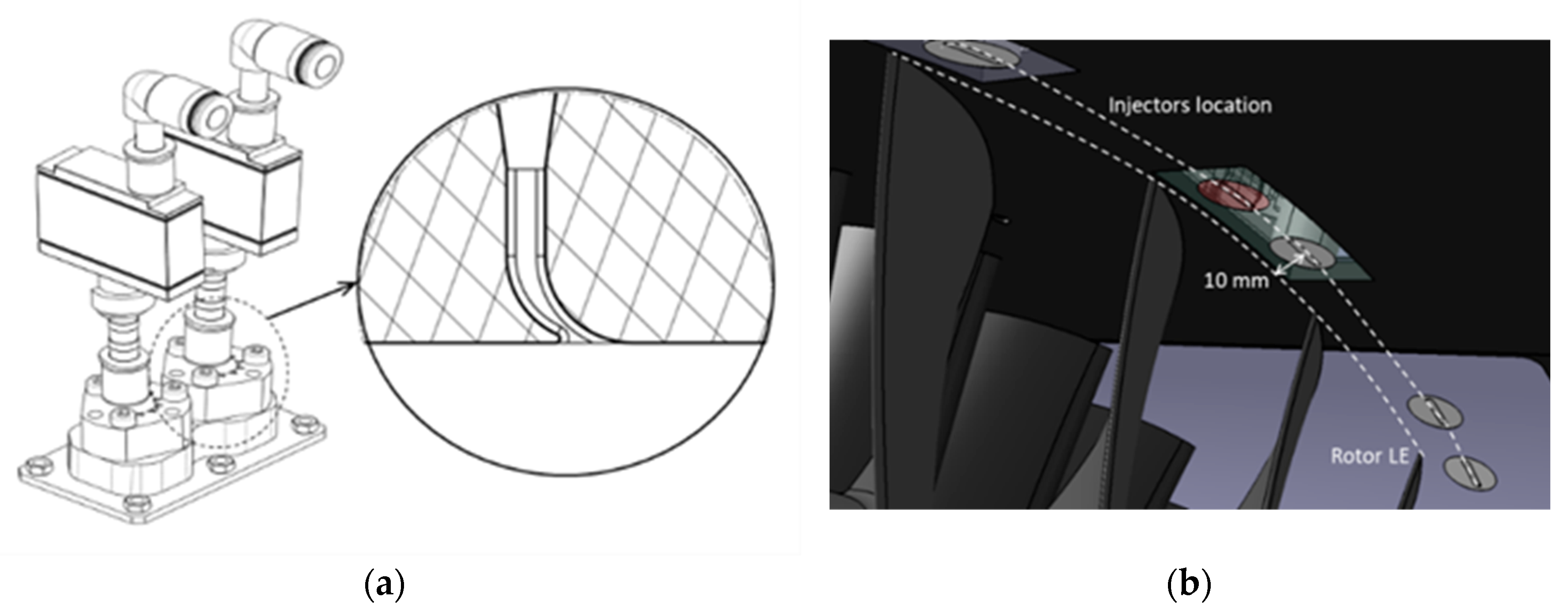
The compressor is equipped with a pulsed-jets control system composed of 40 individual injectors (10 × 0.5 mm2 slots) linked to magnetic valves (see Figure 2a). The injection ports are 3D-printed parts relying on Coandă effect to blow tangentially along the casing toward the tip gap. Pressurized air is provided by an external source, and injected mass flow can be set up to 2.5% of the stall mass flow rate of the compressor. Injection can be pulsatile up to 500 Hz using a square signal to command the valve opening. As depicted on the CAD view below (Figure 2b), injectors are located 10 mm upstream of the rotor leading edge, and arranged in pairs. A couple of injectors is spaced by 5°, and each pair is separated by 13°, azimuthally speaking. More technical details are available in previously cited journal articles [19,24].
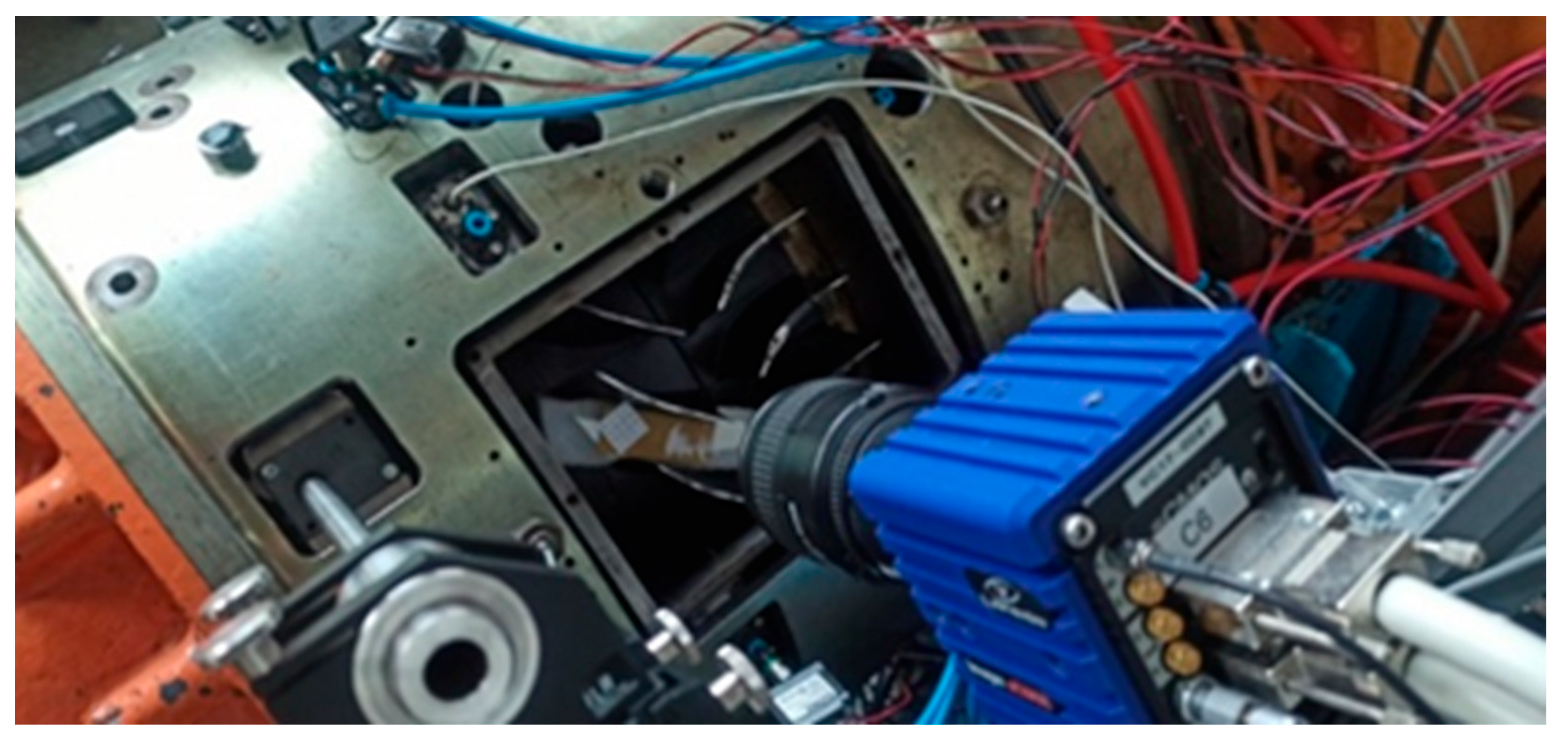
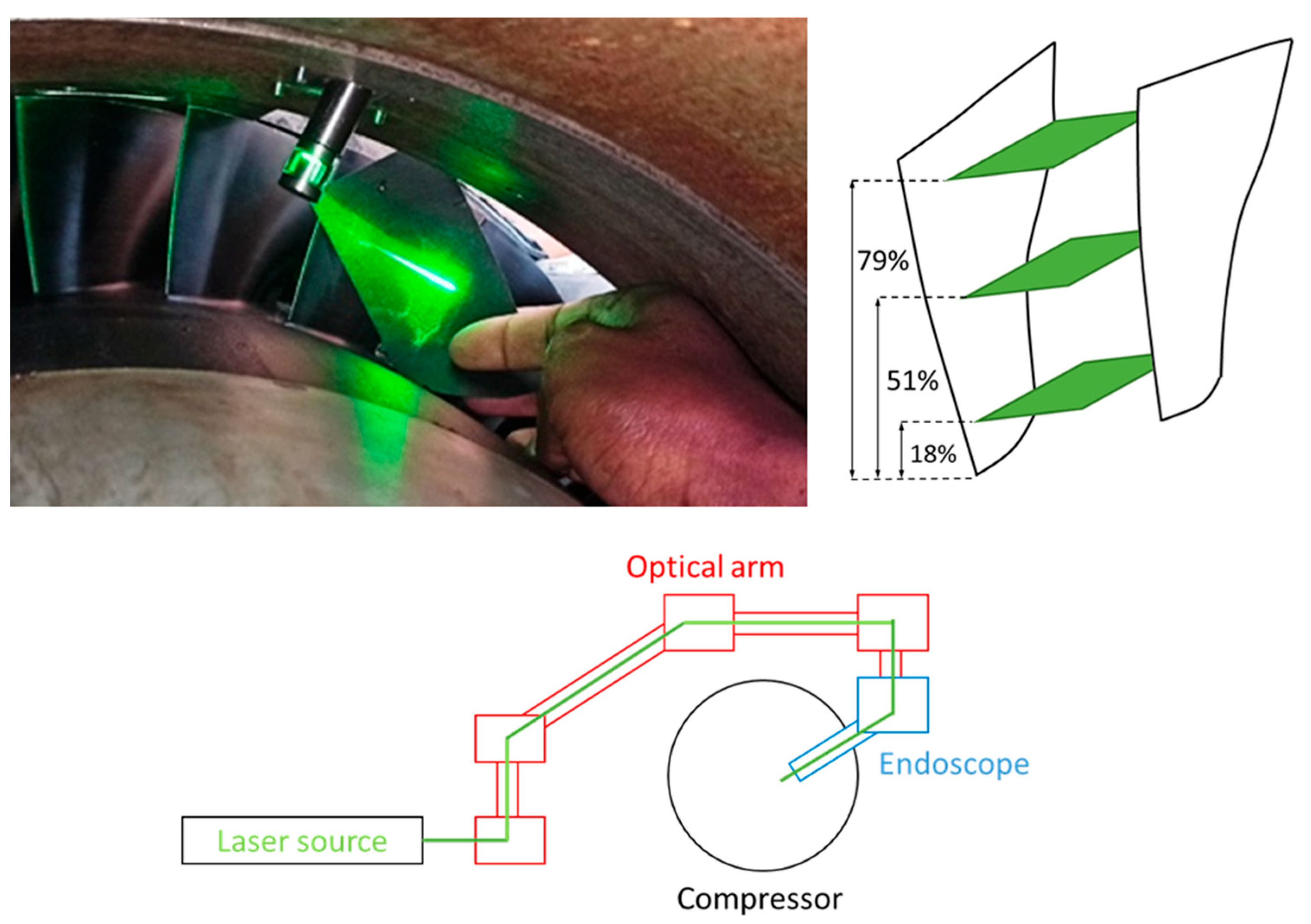
The main measuring equipment used during this test campaign is a 2D 2C PIV measurement system allowing the extraction of planar velocity fields at three different radii through a transparent window above the stage (see Figure 3 and Figure 4). A laser sheet is produced by a multi-pulse laser (Spitlight Compact 400 PIV from InnoLas Laser GmbH, Germany) whose beam is conducted in the stage by an articulated mirror arm associated with an endoscope. Flow is seeded using a smoke generator placed at the inlet section of the compressor. Pairs of images are recorded using a sCMOS camera (Imager 2560 × 2160 pixels from LaVision GmbH, Germany) fitted with a 60 mm lens and with an acquisition frequency of 5 Hz. Image recording is synchronized with the wheel thanks to the encoder signal. A field of view of 64 × 76 mm2 is achieved, with a limited optical distortion thanks to the large radius of curvature of the stage. Associated with the limited angular extension of the laser sheet (6°), it also limits the projection error on the tangential velocity (less than 1%). Velocity fields are computed with an in-house algorithm performing multi-pass correlations. In the present study, subsequent interrogation windows are 64 × 64, 32 × 32 and finally 64 × 64 pixels2 with 50% overlap, leading to 0.5 mm spacing between each vector. Up to 100 pairs of images are acquired for each of the configurations investigated. Regarding the measurement uncertainty, maximum combined error (including calibration, peak locking and other noise sources) is estimated to be 3% for the velocity field. An error propagation calculation was carried out to compute the resulting uncertainty in the relative angle, which was estimated at 2.3%.
Other measuring devices are single channel pressure sensors (BTE5000 series from First Sensor AG, Germany), recording the mass flow rate and the pressure increase in the compressor with an uncertainty of +/− 0.6% and +/− 12.5 Pa, respectively. More specifically, the mass flow rate in the compressor is estimated by measuring the dynamic pressure at the end of the converging section, by differentiating local static pressure gathered with a circle or pressure tapes around the section and the total pressure in the inlet tranquilization chamber (see [26]). The flow velocity in the latter, along with pressure loses in the converging section, are assumed to be negligible, and calibration performed with a normalized perforated plate at the compressor outlet confirms these assumptions. Finally, a flowmeter also measures the injected mass flow with an uncertainty close to 3%.

3. Results

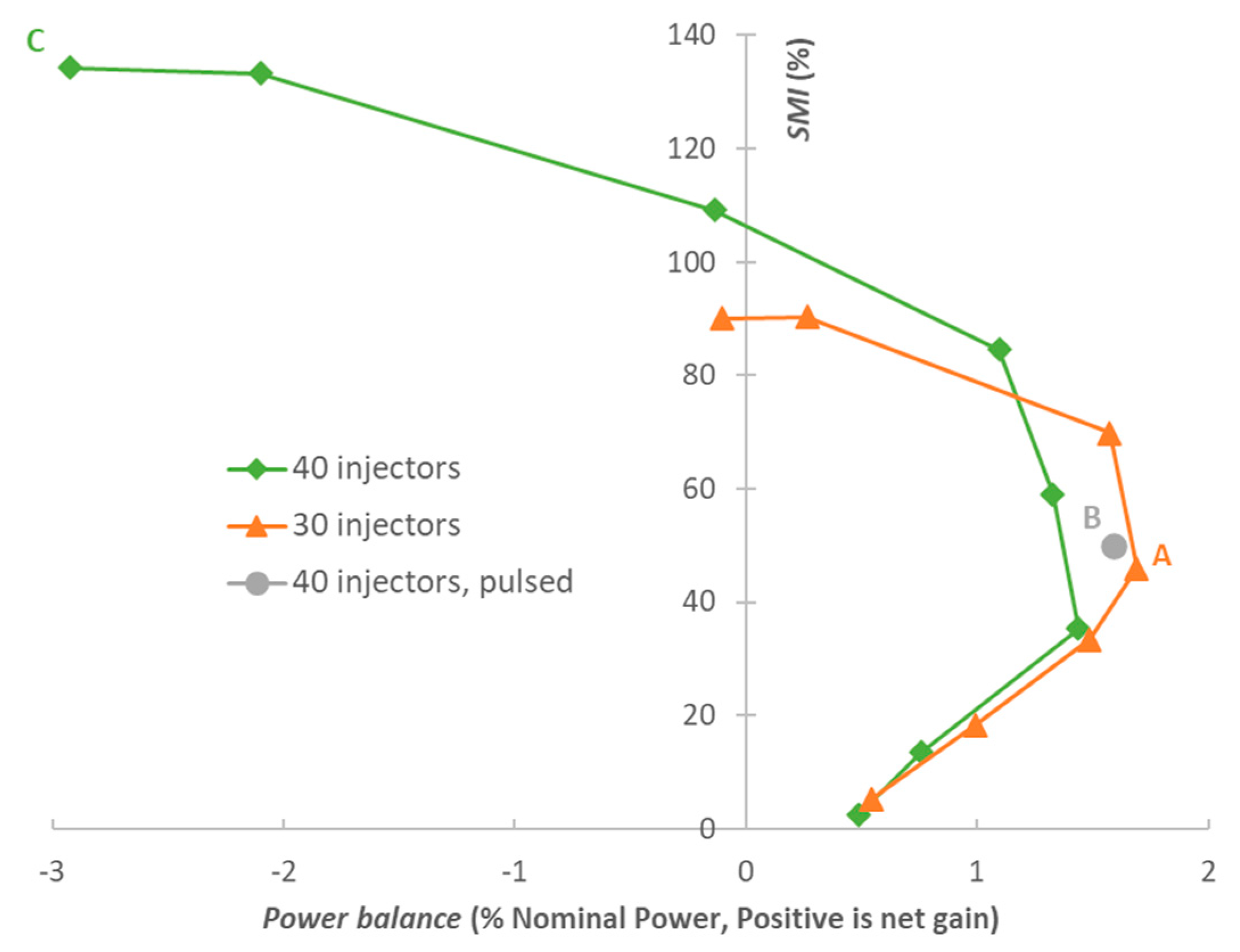
In the following, two different configurations are compared with the base one, corresponding specifically to points A and B in Figure 5, adapted from [24]. These configurations are of primary interest because they offer a fairly good stability increase with an SMI in the order of 50%, and a positive power balance, which is an indicator of the energy budget of the control strategy. In contrast, the case examined with PIV in reference [21] (point C in Figure 5) presents an exceptional stability increase at the cost of an important net energy consumption. A positive power balance indicates that the power cost of the control (i.e., the kinetic power added to the flow by the jets) is inferior to the power gain, which is the supplementary power available in the fluid downstream of the compressor thanks to the jet. This calculation method is detailed in [24].
More specifically, the cases considered in the present communication are as follows:
  • A controlled configuration with continuous blowing at a reduced injected mass flow (Qinj = 0.82% of the stall mass flow) compared to the results previously presented in [21] (Qinj = 2.5%). It corresponds to point A in Figure 5 and is labelled SFC in the following. Please note that this configuration involves switching off five pairs of actuators, compared with [21]. Deactivated pairs of actuators are evenly distributed around the casing (one pair every four pairs);
  • A controlled configuration with nearly the same reduced injected mass flow (Qinj = 0.83%) but operated in pulsed blowing. It corresponds with point B in Figure 5 and is labelled SFP in the following. Please note that frequency (f = 424 Hz) and duty cycle (DC = 0.7) were chosen accordingly to obtain this particular mass flow.
The reduced injected mass flow of the SFC configuration is achieved by using only a limited number of actuators (30 versus 40), while it is limited using adjustment of the duty cycle (DC, i.e., the blowing time over a pulsed cycle) in the SFP configuration. In both cases, injectors are rotated by an absolute angle of −30°, the minus sign indicating that blowing is directed in the opposite direction compared with the rotation of the blades. One recalls that, based on previous work [24], this angle has been found to be optimal as it corresponds to a relative blowing direction close to the stagger angle of the rotor blades.
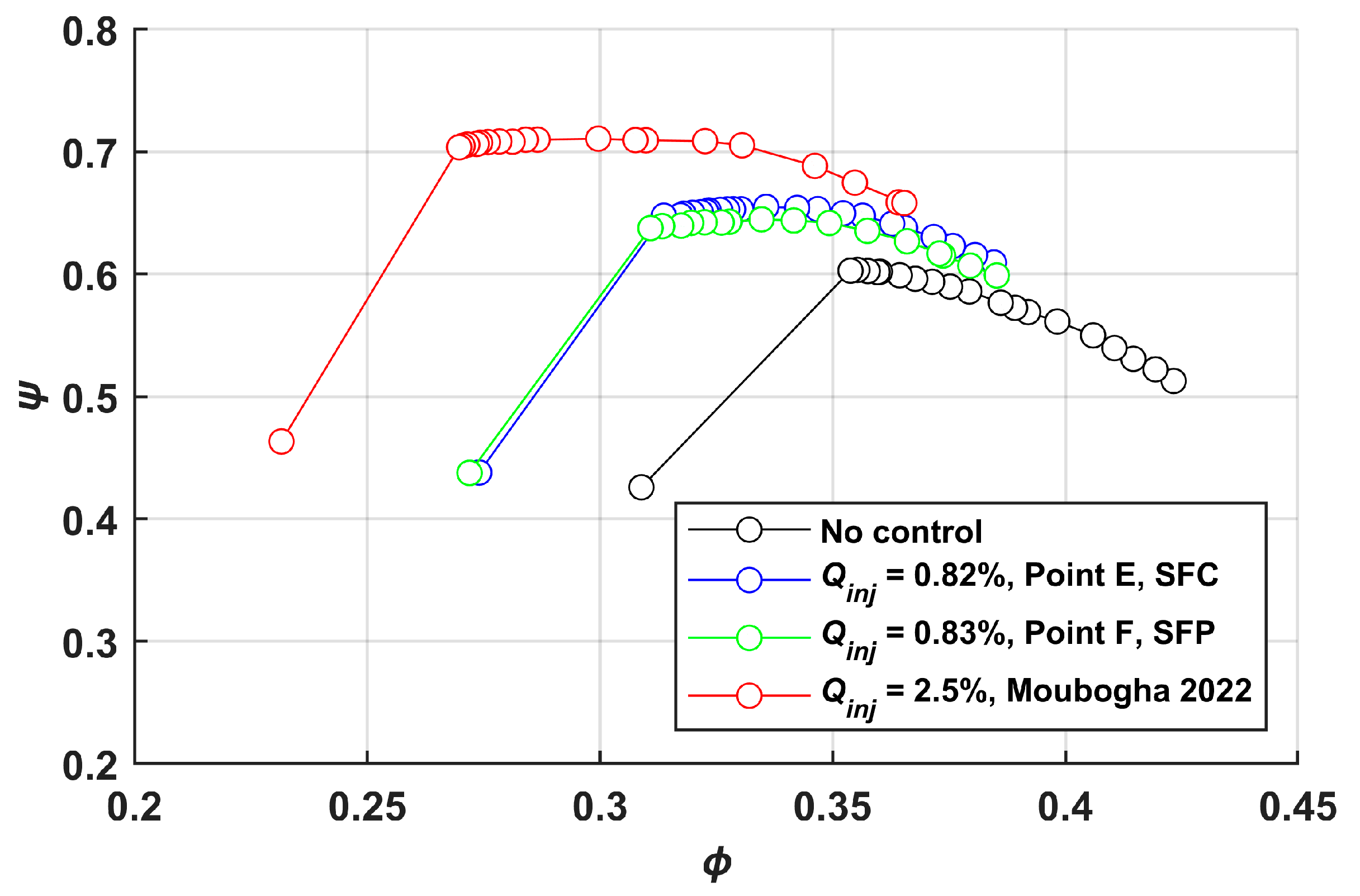
The corresponding performance curves are reported in dimensionless form in Figure 6, with the following conventions (1) and (2):
Φ = V X U
and
Ψ = Δ P TS 0.5 ρ U 2
where VX is the axial velocity for a given operating point, U the tip rotational velocity, ΔPTS the total-to-static pressure rise and ρ the air density.
A comparison is performed for two different flow rates: q = 4.2 kg.s−1 ( ϕ = 0.35 ), corresponding to the lower stability limit of the compressor without control, and q = 3.7 kg.s−1, ( ϕ = 0.31 ) which is the lowest flow rate reached in stable operations with the two controlled configurations.
One should also recall some details about the following PIV results. The axial velocity component is directly the VX velocity component provided by the PIV measurements. VY is a projection of the tangential velocity component whose projection error is negligible (of the order of 1%, as stated before) and is considered as the tangential component in the following. Maps of relative velocity are also presented; this value being computed as follows (3):
W m a g = V x 2 + ( V y ω r ) 2

3.1. Last “Natural” Stable Point with and Without Control

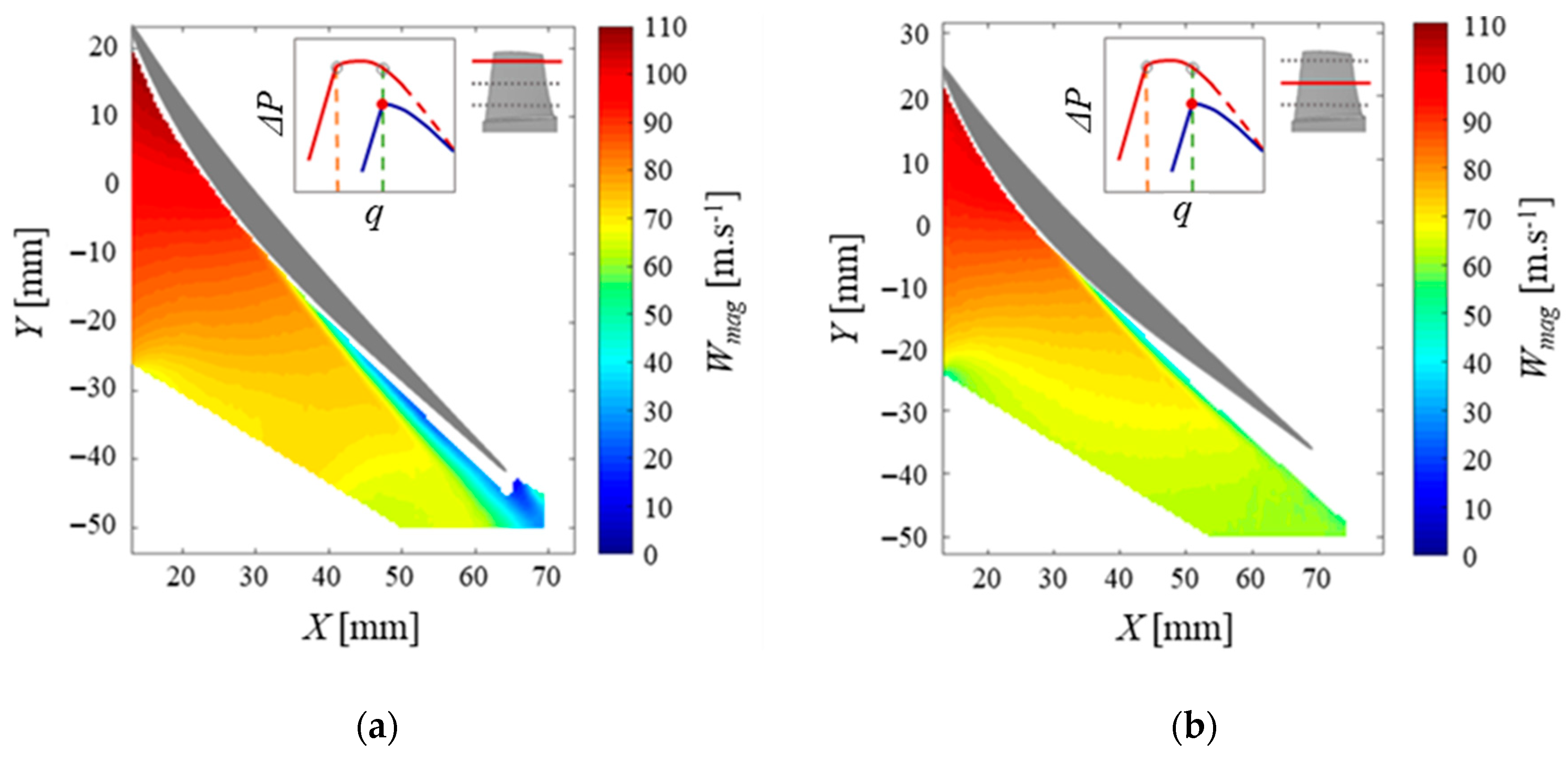
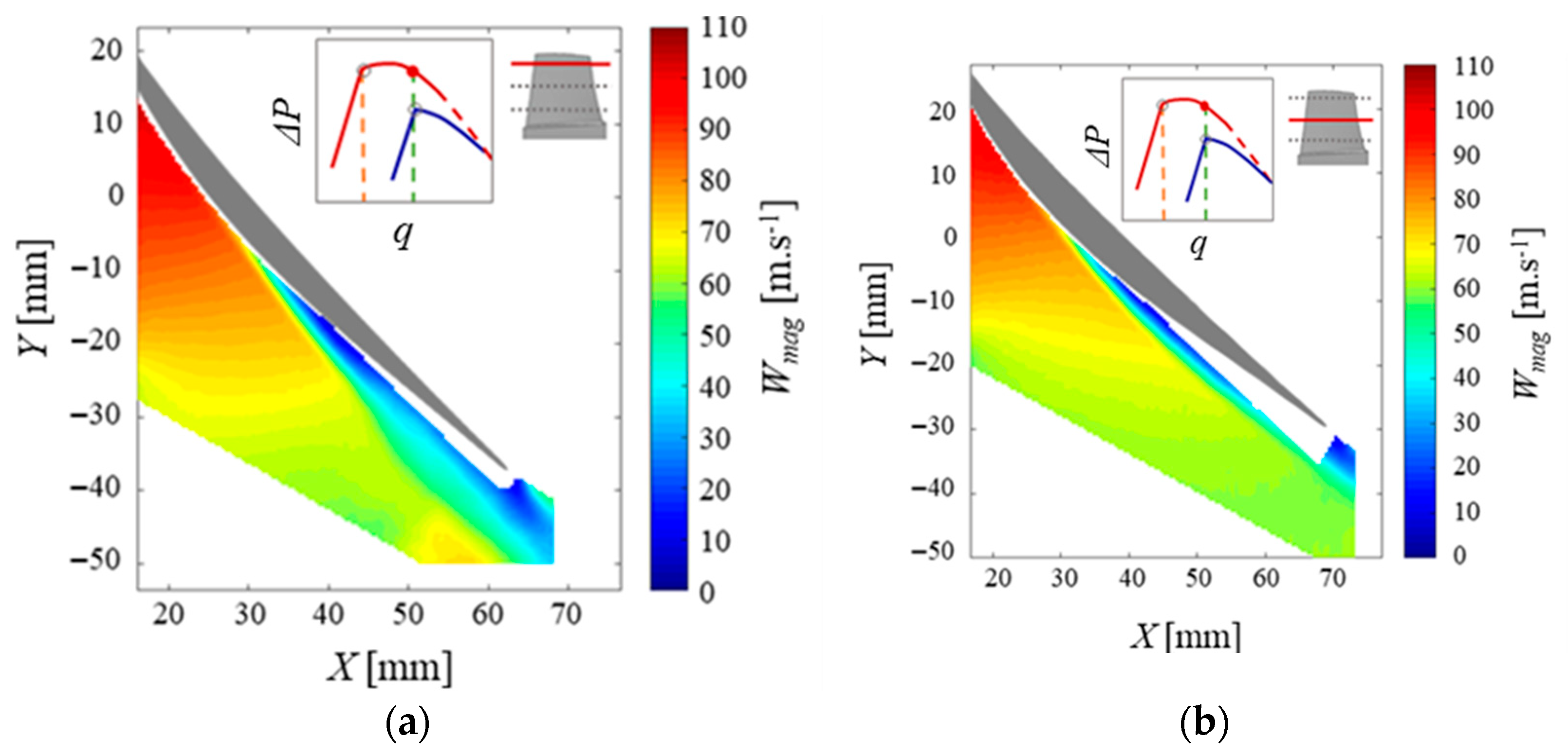
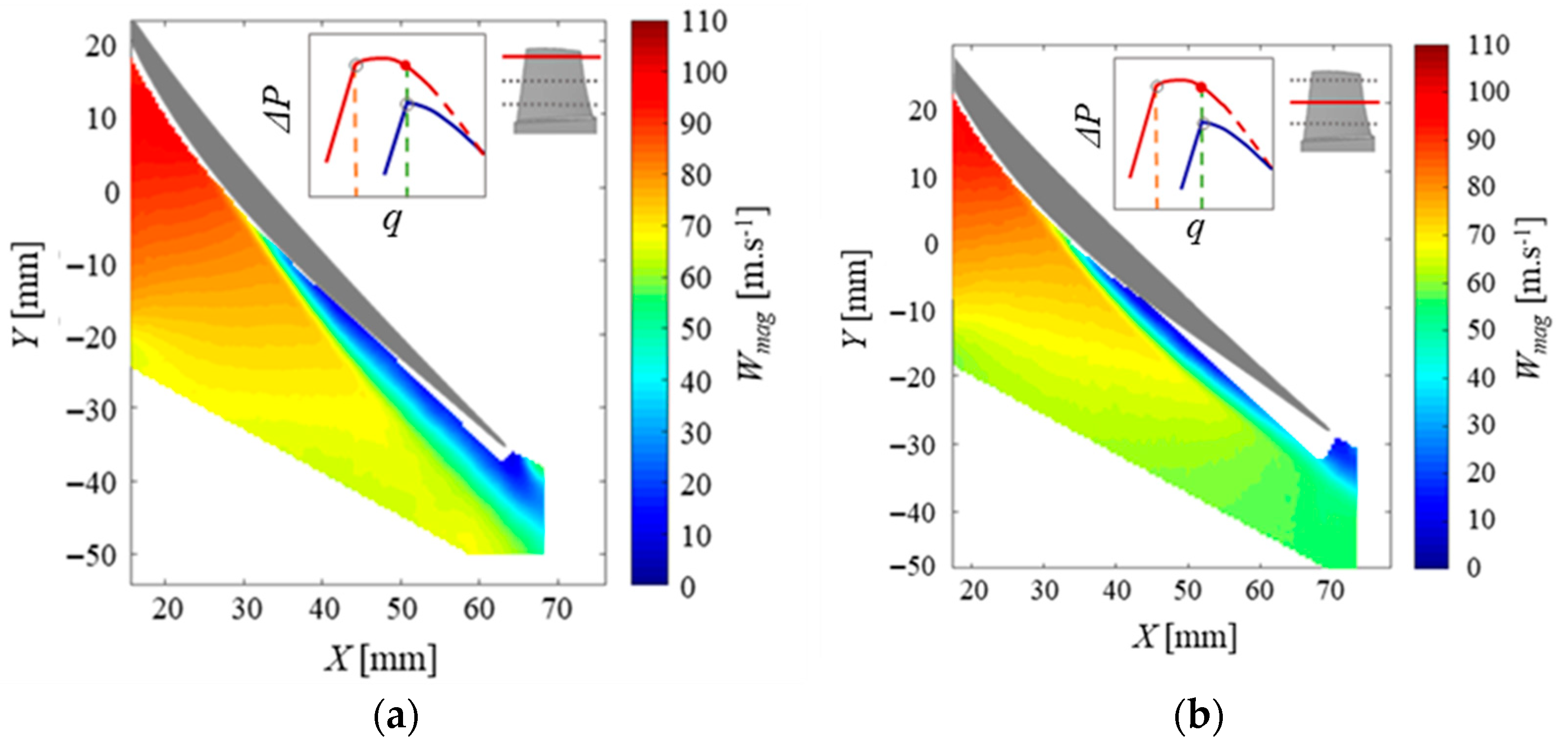
For the sake of completeness, maps of relative velocity have been redrawn and are presented in Figure 7 to facilitate the comparison with the controlled configurations. In Figure 7 and in other figures presenting velocity maps, a schematic drawing of the blade indicates the radial position of the map, along with the considered operating point. On this last drawing, the blue curve is the baseline without control, and the red curve is the controlled one with the control system activated resulting in increased performance and a lower stability limit, as in Figure 6 [19]. In line with the conclusions of [21], only the results for the mid plane (51% of blade height) and for the top plane (79%) are presented as, unless stated, there is no visible effect from the activation of the system control near the hub.
According to previous observations, velocity maps show classic behavior for an axial machine, exhibiting a decrease in the relative velocity as the flow goes along the channel. Remembering that this operating point is far from the nominal (q = 5.3 kg.s−1), it is not surprising to see a separation developing in the trailing edge region, particularly visible near the blade tip. However, it remains limited, as this machine is tip critical and further instabilities at the tip region prevent this separation from developing further in the spanwise direction when again reducing the flow rate. Near the hub (not presented here), the separation is barely visible.
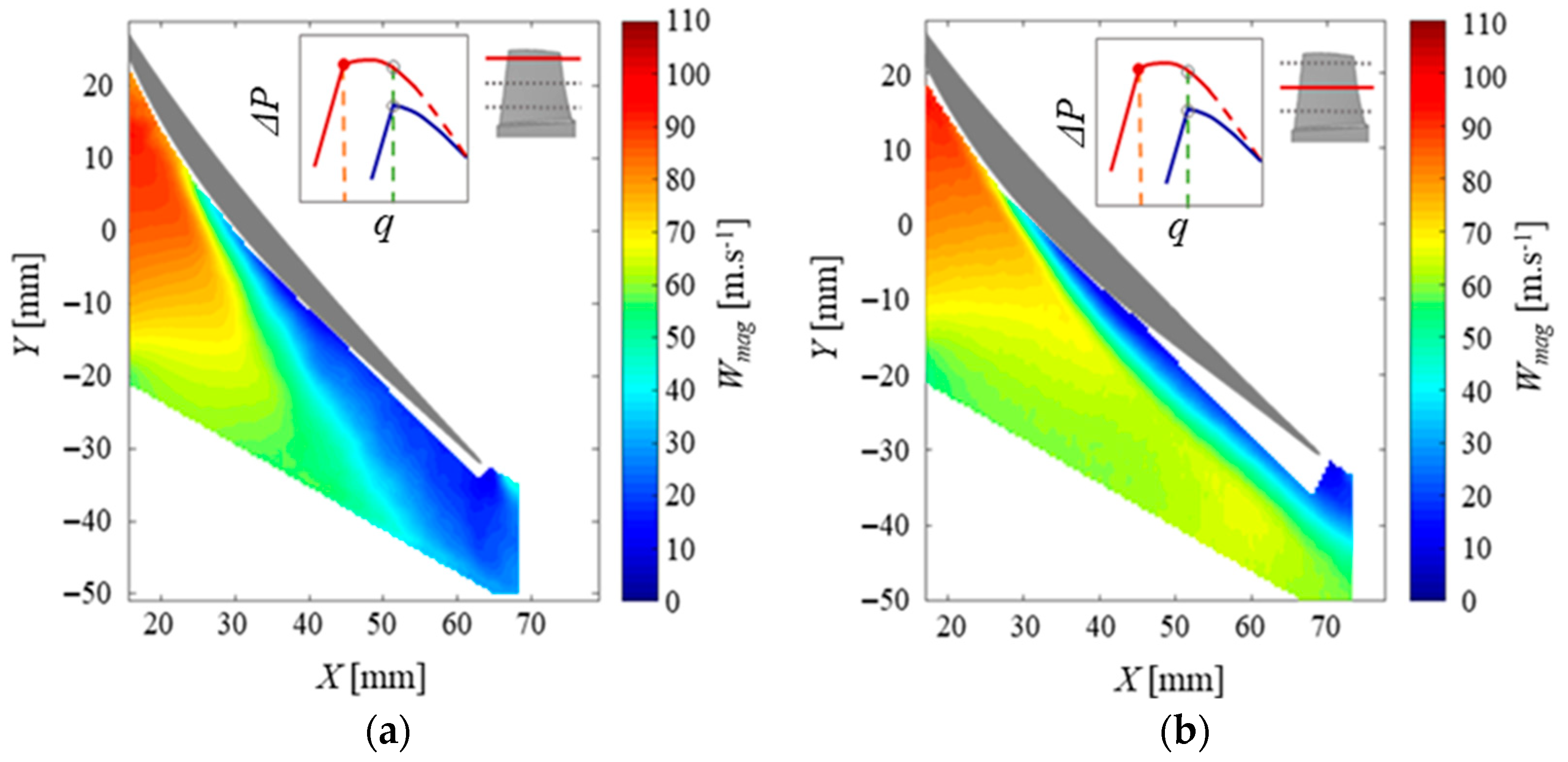
Considering right now the controlled configuration with continuous blowing in Figure 8, it appears that the control enlarges the separation area near the tip region. It is however less pronounced than the case presented in [21] at higher injected mass flow, as here the channel is not completely blocked. It allows the flow to redistribute locally at the same radius, as an acceleration is visible near the exit of the blade channel. Comparing flow topology near the middle height (Figure 7b and Figure 8b), it also appears that separation has grown spanwise. Please note that the separation is not entirely visible after the mid chord, the laser sheet being blocked by the blade curvature (white triangular area). This is again consistent with the observations carried out when blowing with higher intensity is applied to the stage [21]. The emerging jet creates some local blockage, disturbing the flow near the tip and enlarging the already existing separation. Less injected mass flow introduces here a lesser effect, as the separation appears to be smaller.
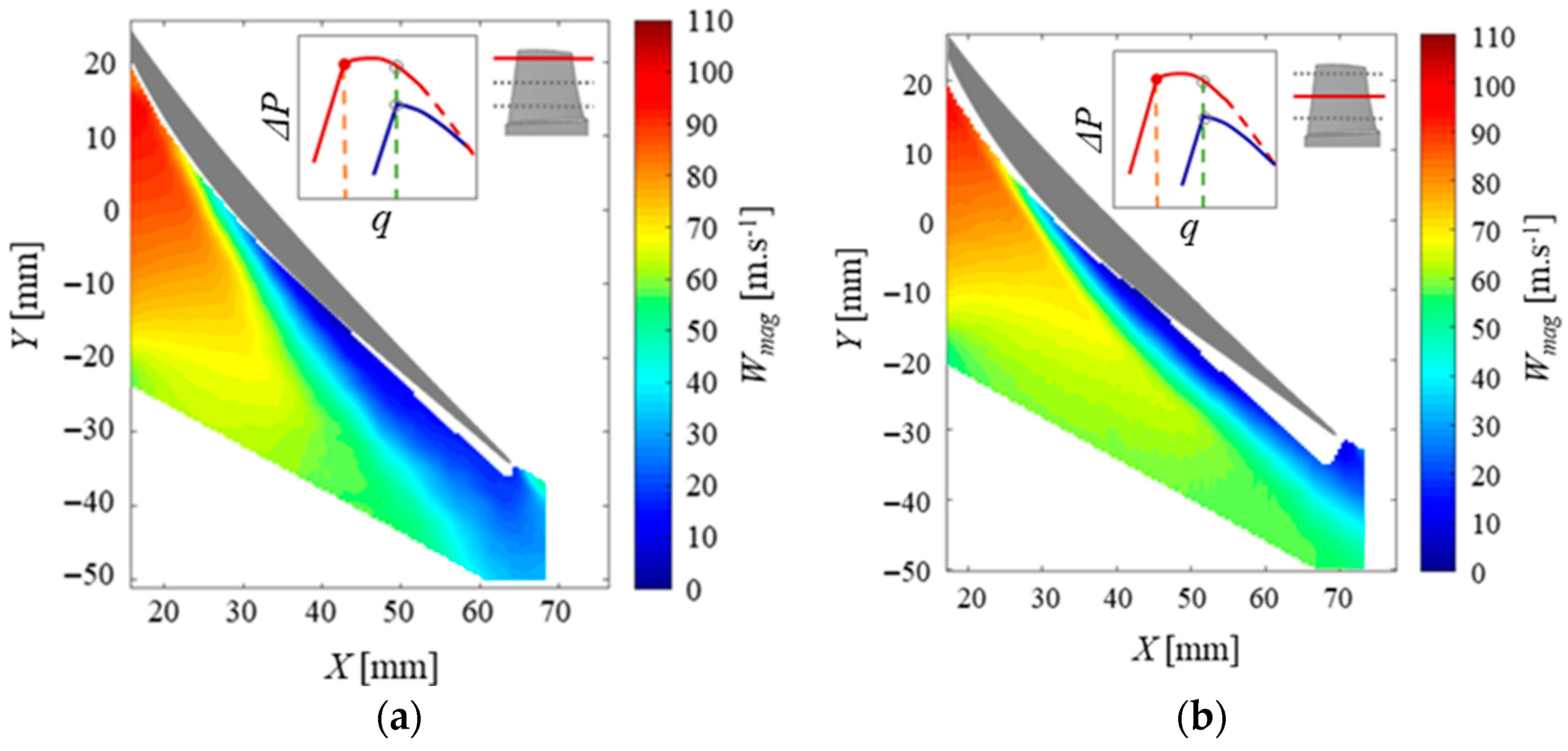
Observing Figure 9, it seems that a different story can be told if the pulsated blowing is considered. Close to the tip, separation is still present, but it seems at the same time more intense and more confined close to the extrados of the blade, the velocity deficit being stronger in this area as seen by comparing Figure 8a with Figure 9a. The flow behavior in the non-blocked area is also different, with the local acceleration near the channel exit being replaced with a more progressive acceleration. One can hypothesize that the flow is, on average, less disturbed by the pulsating injection and goes in a smoother way across the rotor. At middle height, flow topology is globally similar whatever the control strategy (SFP or SFC) used but with a slightly enlarged separation when pulsating blowing is applied.
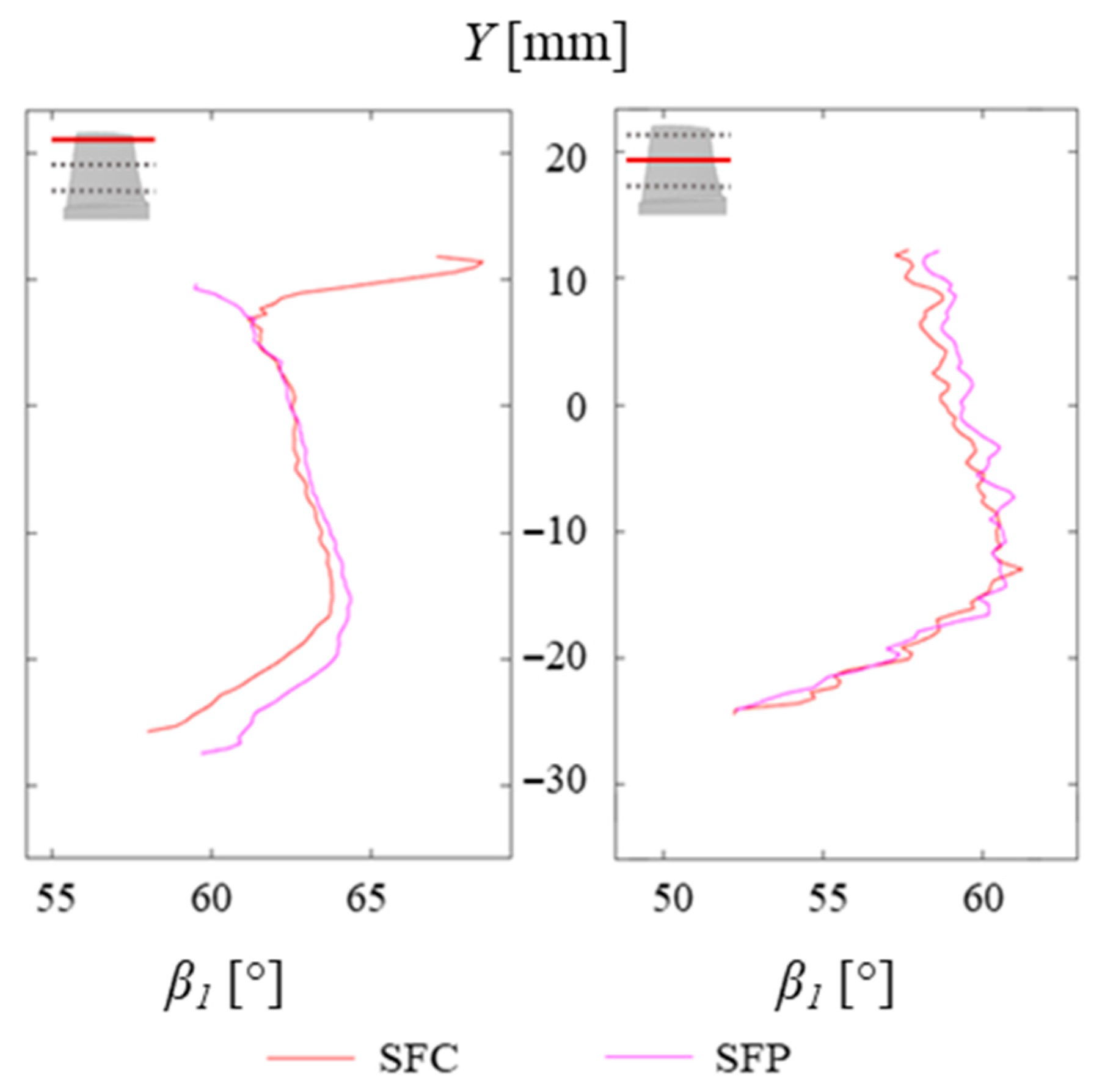
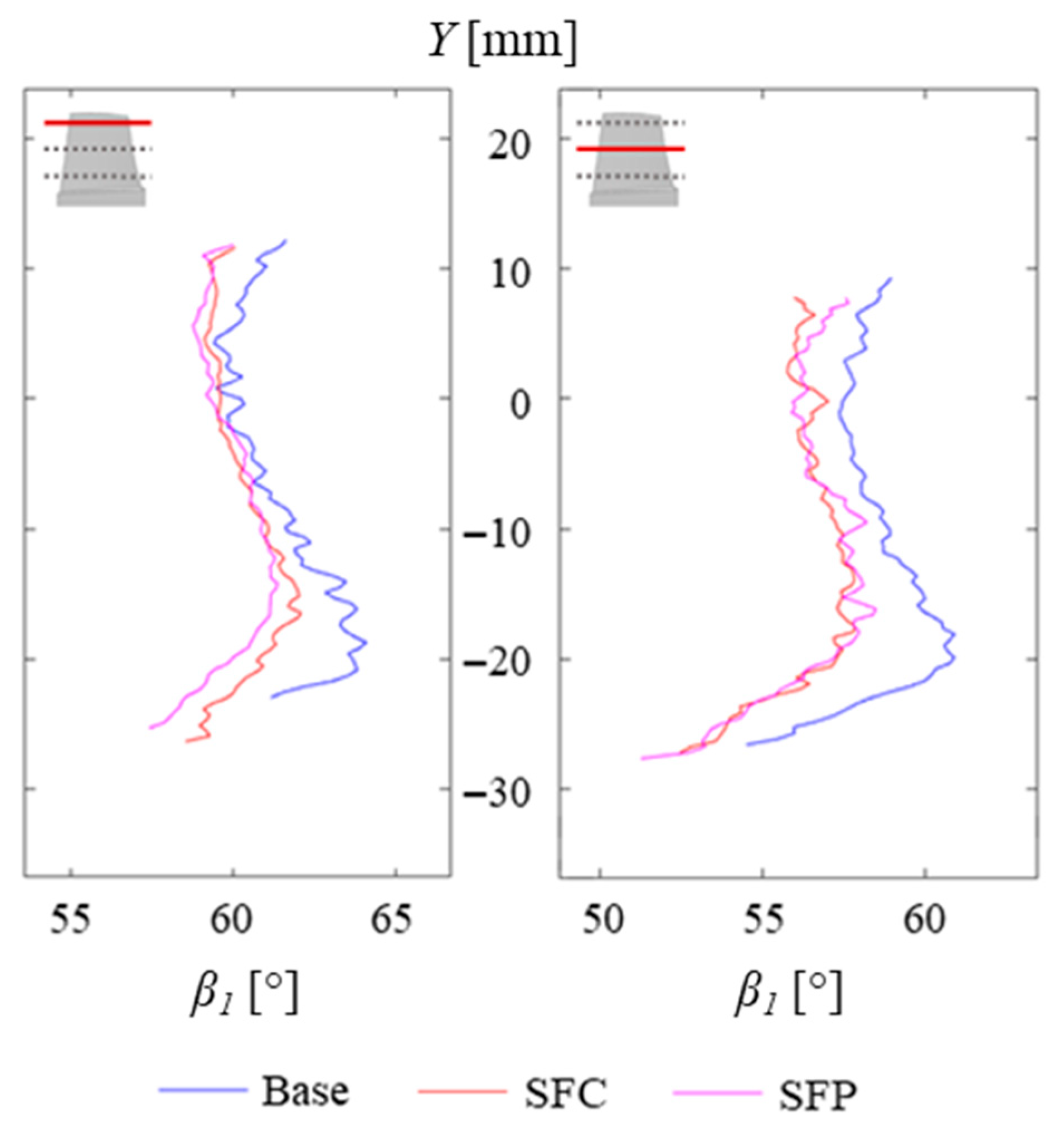
To support the previous statements and to propose a more quantitative analysis, some relevant profiles have been extracted from the data, starting with the inlet (X/CX = 0.16) relative angle in both planes for the three considered cases (Base, SFC, SFP). In the data presented in Figure 10 (left), one observes a decrease in the relative inlet angle at the tip when control is activated, whatever control mode is used, compared with the base flow. Considering a rotor blade angle of β1 ≈ 65° at the tip leading edge, it explains the presence of a separation in the base case due to misadaptation, along with its enlargement when control is activated. Comparing SFC and SFP configurations, a slightly smaller relative angle in the bottom part of the channel (pink curve for Y < −10 mm in Figure 10, left) is also consistent with the stronger and more concentrated separated area. At the middle plane level, the relative inlet angle is reduced in both controlled configurations (consistent with enlarged separation) compared to the local rotor blade angle at the leading edge (β1 ≈ 63°), but differences between both controlled cases are barely visible. This is not surprising, as both controlled cases have the same global performance in terms of SMI (see Figure 1), differences being only visible at the top of the blade where the control is effectively localized.
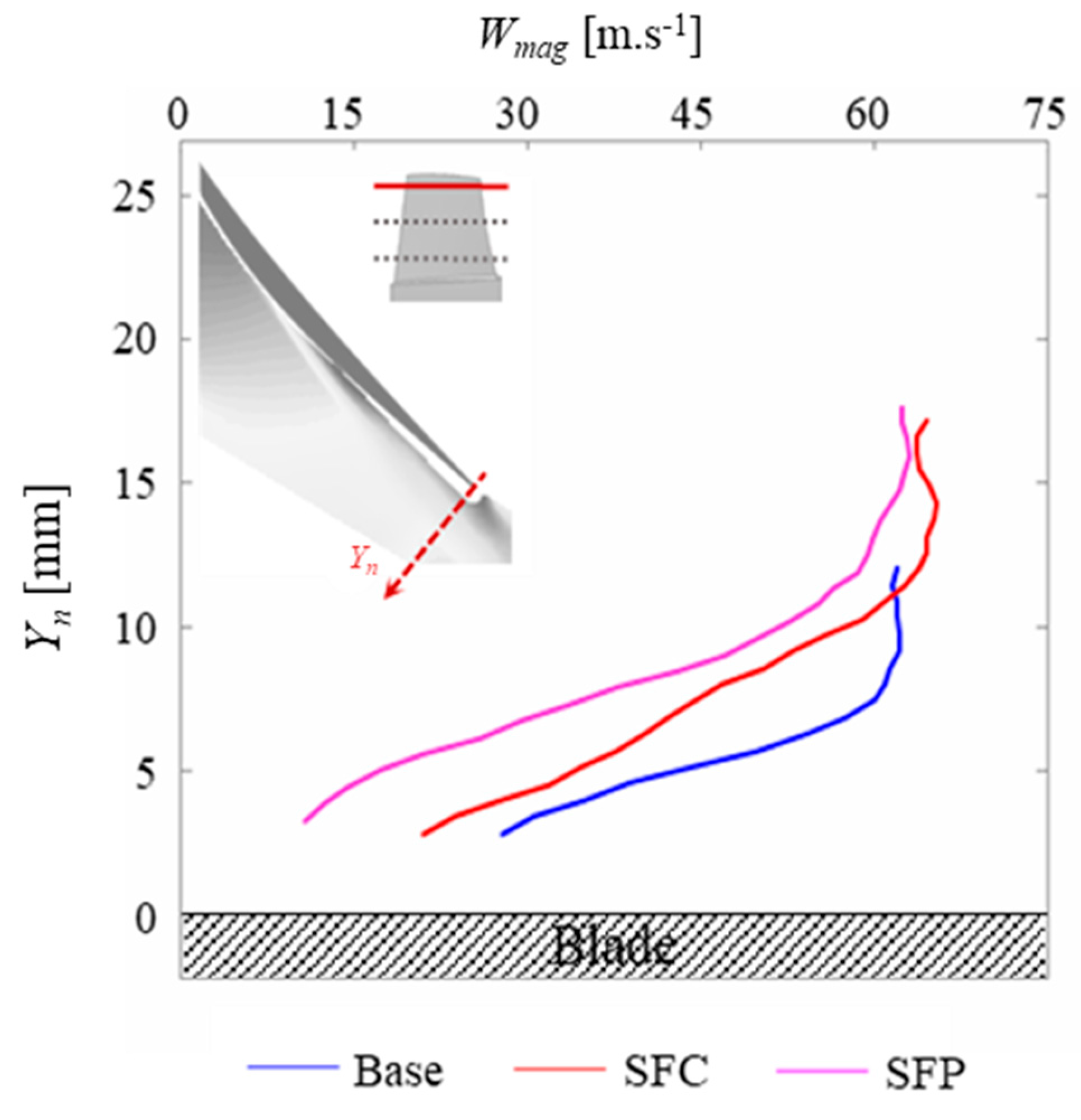
Relative velocity profiles have also been extracted from the PIV velocity maps in the trailing edge region to obtain a better insight of the observed flow redistribution (see Figure 11). Please note that these profiles have been extracted normally at the blade chord close to the trailing edge.
The flow redistribution is clearly visible comparing base and controlled cases, with lower velocities close to the blade extrados, and higher velocity in the other part of the channel. Differences are less pronounced comparing pulsed and continuous blowing configurations, but confirm the previous observations on the velocity maps. Velocity deficit is stronger on the pulsating case (consistent with a stronger separation), while the acceleration in the lower part of the channel is stronger with continuous blowing.
To sum up the observations for this first operating point, the physics associated with SFC and SFP appears to be different from the point of view of the mean flow topology. The first reason coming to mind is obviously the dynamics added by the pulsation, which could change many things. As recently written by a senior researcher of the flow control community [27], it is important to keep in mind that integral quantities (momentum coefficient, mass flow rate…) are not sufficient for analyzing flow control strategies if different spatiotemporal parameters are involved. In the present case, even if continuous and pulsed blowing present the same effect in terms of stability improvement (both stall at the same flow rate), it could be interesting to look deeper at other compressor characteristics (especially the losses across the stage) to identify the associated drawbacks of one or the other control strategy.

3.2. Last Stable Point with Control

In this section, a comparison is now performed only between the two controlled configurations (SFC and SFP) at the minimum flow rate that was reached during the experiments. One recalls that, interestingly, both configurations stall at the same flow rate (q = 3.7 kg.s−1). No configuration without control is used here and the compressor is naturally stalled at this operating point. Examining first Figure 12a, a massive separation is visible at the tip level, occupying the whole interblade channel, with a sufficient spanwise expansion visible on the mid plane (Figure 12b).
Even though the injected flow rate is more than twice lower compared with previously published results [21], and the stall mass flow lower, the physics seem here rather similar for continuous blowing at a lesser intensity. Using a pulsating injection with a similar injected mass flow (Figure 13), one can observe also a large, separated area at the tip level, extending also spanwise as visible in Figure 13b. But comparing Figure 12a with Figure 13a, it is clearly visible that the separated area is less extended, the channel being blocked as early as Y = 50 mm with continuous blowing compared to Y = 60 mm with pulsating blowing. Interestingly, this observation is reversed when compared to the previously studied operating point, for which the separation appears stronger in the SFP configuration. In the middle plane region, however, observations converge as the flow topology is quite similar with a separated area obstructing half the channel in both cases.
As performed for the first operating point, some data are extracted at inlet and outlet sections to support these observations. Figure 14 presents first the inlet relative angle profiles extracted at X/CX = 0.16. Interestingly, at the top of the blade, the inlet angle is effectively closer to the blade angle with pulsed blowing for this operating point in the lower part of the channel, which is consistent with a smaller separation as observed on the relative velocity maps. In the middle plane, the differences are barely noticeable, which seems in line with the quite similar separated area topology. This observation leads to the hypothesis that the swirling mechanism identified in reference [21] and summarized in the introduction, potentially induced by blowing, is less pronounced here with pulsed blowing for a given injected mass flow. Once again, dynamic effects can explain this phenomenon, as the swirling structure has some time to weaken or even vanish during the non-blowing phase.
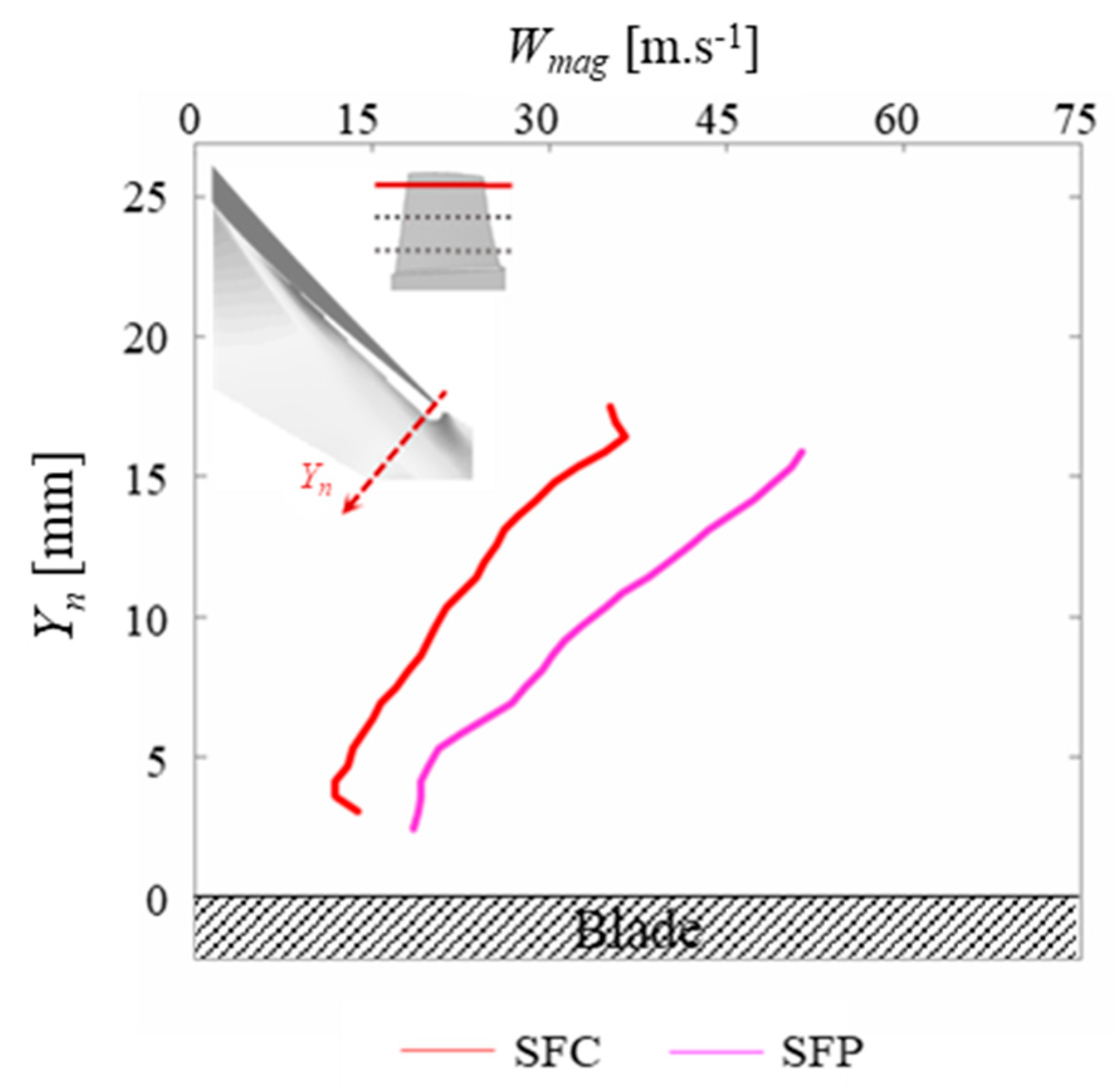
At the outlet section, one has chosen again to plot the profiles’ relative velocity magnitude across the separation (see Figure 15). The stronger separation under continuous blowing conditions is immediately visible, the red plot being shifted to the left. This is opposed to Figure 11, where this red plot is shifted to the right, indicating a less intense separation.

4. Conclusions and Perspectives

This paper reports some still unpublished results obtained experimentally in a rarely seen setup where the effect of active flow control with pulsed jets is investigated with PIV in an axial compressor stage. If a dataset was already disclosed and published before, the present ones may constitute valuable cases from an applicative point of view, as they present a positive energy balance (at the cost of a lesser SMI), as opposed to the results presented in [21], where both energy consumption and SMI are high.
In addition, two quite different flow control configurations have been selected, one with continuous blowing, and the other one with pulsed actuation. To allow some degree of comparison, the configurations selected have the same injected mass flow rate, and present the same stall mass flow. Two different operating points were compared, consisting of the last “natural” stable point (at which the compressor normally stalls without external intervention), and the very last stable point which was artificially reached with the help of the flow control system.
As for the previously disclosed results, activation of the control enlarges separation at tip compared to the base flow at the last natural stable point. But this separation is reduced, as there is still some flow going through the channel. When further reducing the compressor flow, thanks to the active control, separation becomes more enlarged and blocks all the channel, in a qualitatively similar manner to that previously observed in [21].
If globally similar, the effects on the flow depend on the strategy (continuous or pulsed) that is used to inject the additional mass flow into the compressor. At the last natural stable point, separation is slightly more intense with pulsed jets, while the flow velocity area is reduced at the lower stability limit of the operating range under forced conditions.
The comparison between pulsed and continuous actuations, even if they present flow topologies that can be different, seems to be based, at least on average, on similar mechanisms. However, it appears that pulsed control mode (at a similar flow rate to continuous mode) makes it possible to obtain a similar SMI at a lower energy cost by concentrating the momentum injected over short blowing times.

Author Contributions

Conceptualization, P.J. and A.D.; methodology, P.J., O.R. and A.D.; software, O.A.; validation, P.J. and A.D.; formal analysis, O.A.; investigation, O.A. and P.J.; resources, O.R.; data curation, O.A.; writing—original draft preparation, P.J.; writing—review and editing, P.J., O.R. and A.D.; visualization, O.A.; supervision, A.D.; project administration, A.D. and P.J.; funding acquisition, A.D., P.J. and O.R. All authors have read and agreed to the published version of the manuscript.

Funding

This research was funded by European Union’s Horizon 2020 research and innovation program, grant number 886352, ACONIT project.

Data Availability Statement

Data available upon reasonable request.

Acknowledgments

The authors warmly thank the laboratory members who were involved in the setting of these challenging experiments.

Conflicts of Interest

The authors declare no conflicts of interest.

References

  1. Day, I.J. Stall, Surge, and 75 Years of Research. J. Turbomach. 2016, 138, 011001. [Google Scholar] [CrossRef]
  2. Farokhi, S. Aircraft Propulsion: Cleaner, Leaner, and Greener, 3rd ed.; Wiley: Hoboken, NJ, USA, 2022; ISBN 978-1-119-71864-2. [Google Scholar]
  3. Camp, T.R.; Day, I.J. A Study of Spike and Modal Stall Phenomena in a Low-Speed Axial Compressor. In Volume 1: Aircraft Engine; Marine; Turbomachinery; Microturbines and Small Turbomachinery; American Society of Mechanical Engineers: Orlando, FL, USA, 1997; p. V001T03A109. [Google Scholar] [CrossRef]
  4. Day, I.J. Stall Inception in Axial Flow Compressors. J. Turbomach. 1993, 115, 1–9. [Google Scholar] [CrossRef]
  5. Pullan, G.; Young, A.M.; Day, I.J.; Greitzer, E.M.; Spakovszky, Z.S. Origins and Structure of Spike-Type Rotating Stall. J. Turbomach. 2015, 137, 051007. [Google Scholar] [CrossRef]
  6. Hewkin-Smith, M.; Pullan, G.; Grimshaw, S.D.; Greitzer, E.M.; Spakovszky, Z.S. The Role of Tip Leakage Flow in Spike-Type Rotating Stall Inception. J. Turbomach. 2019, 141, 061010. [Google Scholar] [CrossRef]
  7. Cousins, W.T. History, Philosophy, Physics, and Future Directions of Aircraft Propulsion System/Inlet Integration. In Volume 2: Turbo Expo 2004; ASMEDC: Vienna, Austria, 2004; pp. 305–320. [Google Scholar] [CrossRef]
  8. Spakovszky, Z.S.; Weigl, H.J.; Paduano, J.D.; Van Schalkwyk, C.M.; Suder, K.L.; Bright, M.M. Rotating Stall Control in a High-Speed Stage with Inlet Distortion: Part I—Radial Distortion. J. Turbomach. 1999, 121, 510–516. [Google Scholar] [CrossRef]
  9. Spakovszky, Z.S.; Van Schalkwyk, C.M.; Weigl, H.J.; Paduano, J.D.; Suder, K.L.; Bright, M.M. Rotating Stall Control in a High-Speed Stage with Inlet Distortion: Part II—Circumferential Distortion. J. Turbomach. 1999, 121, 517–524. [Google Scholar] [CrossRef]
  10. Obermüller, M.; Schmidt, K.; Schulte, H.; Peitsch, D. Some Aspects on Wet Compression—Physical Effects and Modeling Strategies Used in Engine Performance Tools. In LTH—Luftfahrttechnisches Handbuch/Aeronautical Engineering Handbook; LTH-Koordinierungsstelle at IABG mbH: Ottobrunn, Germany, 2012. [Google Scholar]
  11. Liu, L.; Zhang, H.; Li, J.; Yu, C.; Lin, F.; Nie, C. Measurements and Visualization of Process From Steady State to Stall in an Axial Compressor with Water Ingestion. In Volume 6C: Turbomachinery; American Society of Mechanical Engineers: San Antonio, TX, USA, 2013; p. V06CT42A032. [Google Scholar] [CrossRef]
  12. Yang, L.; Zhang, H.; Lin, A. Effects of Water In-gestion on the Tip Clearance Flow in Compressor Rotors. Proc. Inst. Mech. Eng. Part G J. Aerosp. Eng. 2019, 233, 4235–4246. [Google Scholar] [CrossRef]
  13. Tahara, N.; Kurosaki, M.; Ohta, Y.; Outa, E.; Nakajima, T.; Nakakita, T. Early Stall Warning Technique for Axial-Flow Compressors. J. Turbomach. 2007, 129, 448–456. [Google Scholar] [CrossRef]
  14. Hathaway, M.D. Passive Endwall Treatments for Enhancing Stability; NASA: Houston, TX, USA, 2007; NASA/TM-2007-214409.
  15. Cumpsty, N.A. Part-Circumference Casing Treatment and the Effect on Compressor Stall. In Volume 1: Turbomachinery; American Society of Mechanical Engineers: Toronto, ON, Canada, 1989; p. V001T01A110. [Google Scholar]
  16. Smith, G.D.J.; Cumpsty, N.A. Flow Phenomena in Compressor Casing Treatment. J. Eng. Gas Turbines Power 1984, 106, 532–541. [Google Scholar] [CrossRef]
  17. Cassina, G.; Beheshti, B.H.; Kammerer, A.; Abhari, R.S. Parametric Study of Tip Injection in an Axial Flow Compressor Stage. In Volume 6: Turbo Expo 2007, Parts A and B; AS-MEDC: Montreal, QC, Canada, 2007; pp. 137–145. [Google Scholar] [CrossRef]
  18. Li, J.; Du, J.; Nie, C.; Zhang, H. Review of Tip Air Injection to Improve Stall Margin in Axial Compressors. Prog. Aerosp. Sci. 2019, 106, 15–31. [Google Scholar] [CrossRef]
  19. Margalida, G.; Joseph, P.; Roussette, O.; Dazin, A. Active Flow Control in an Axial Compressor for Stability Improvement: On the Effect of Flow Control on Stall Inception. Exp. Fluids 2021, 62, 12. [Google Scholar] [CrossRef]
  20. Stößel, M.; Bindl, S.; Niehuis, R. Ejector Tip Injection for Active Compressor Stabilization. In Volume 2A: Turbomachinery; American Society of Mechanical Engineers: Düsseldorf, Germany, 2014; p. V02AT37A004. [Google Scholar] [CrossRef]
  21. Moubogha Moubogha, J.; Joseph, P.; Roussette, O.; Dazin, A. Experimental Flow Investigation Inside an Axial Compressor with Active Flow Control. In Volume 10A: Turbomachinery—Axial Flow Fan and Compressor Aerodynamics; American Society of Mechanical Engineers: Rotterdam, The Netherlands, 2022; p. V10AT29A022. [Google Scholar] [CrossRef]
  22. D’Andrea, R.; Behnken, R.L.; Murray, R.M. Rotating Stall Control of an Axial Flow Compressor Using Pulsed Air Injection. J. Turbomach. 1997, 119, 742–752. [Google Scholar] [CrossRef]
  23. Kefalakis, M.; Papailiou, K.D. Active Flow Control for Increasing the Surge Margin of an Axial Flow Compressor. In Volume 6: Turbomachinery, Parts A and B; ASMEDC: Barcelona, Spain, 2006; pp. 101–111. [Google Scholar] [CrossRef]
  24. Moubogha Moubogha, J.; Margalida, G.; Joseph, P.; Roussette, O.; Dazin, A. Stall Margin Improvement in an Axial Compressor by Continuous and Pulsed Tip Injection. Int. J. Turbomach. Propuls. Power 2022, 7, 10. [Google Scholar] [CrossRef]
  25. Alekseik, O.; Joseph, P.; Roussette, O.; Dazin, A. Experimental investigation by Particle Image Velocimetry of the active flow control of the stall inception of an axial compressor. In Proceedings of the 16th European Turbomachinery Conference, paper n. ETC2025-143, Hannover, Germany, 24–28 March 2025; Available online: https://www.euroturbo.eu/publications/conference-proceedings-repository/ (accessed on 9 June 2025).
  26. Baretter, A.; Joseph, P.; Roussette, O.; Dazin, A.; Romanò, F. Scaling Laws at Stall in an Axial Compressor with an Upstream Perturbation. J. Propuls. Power 2025, 41, 1. [Google Scholar] [CrossRef]
  27. Wygnanski, I. On the Need to Reassess the Design Tools for Active Flow Control. Prog. Aerosp. Sci. 2024, 146, 100995. [Google Scholar] [CrossRef]
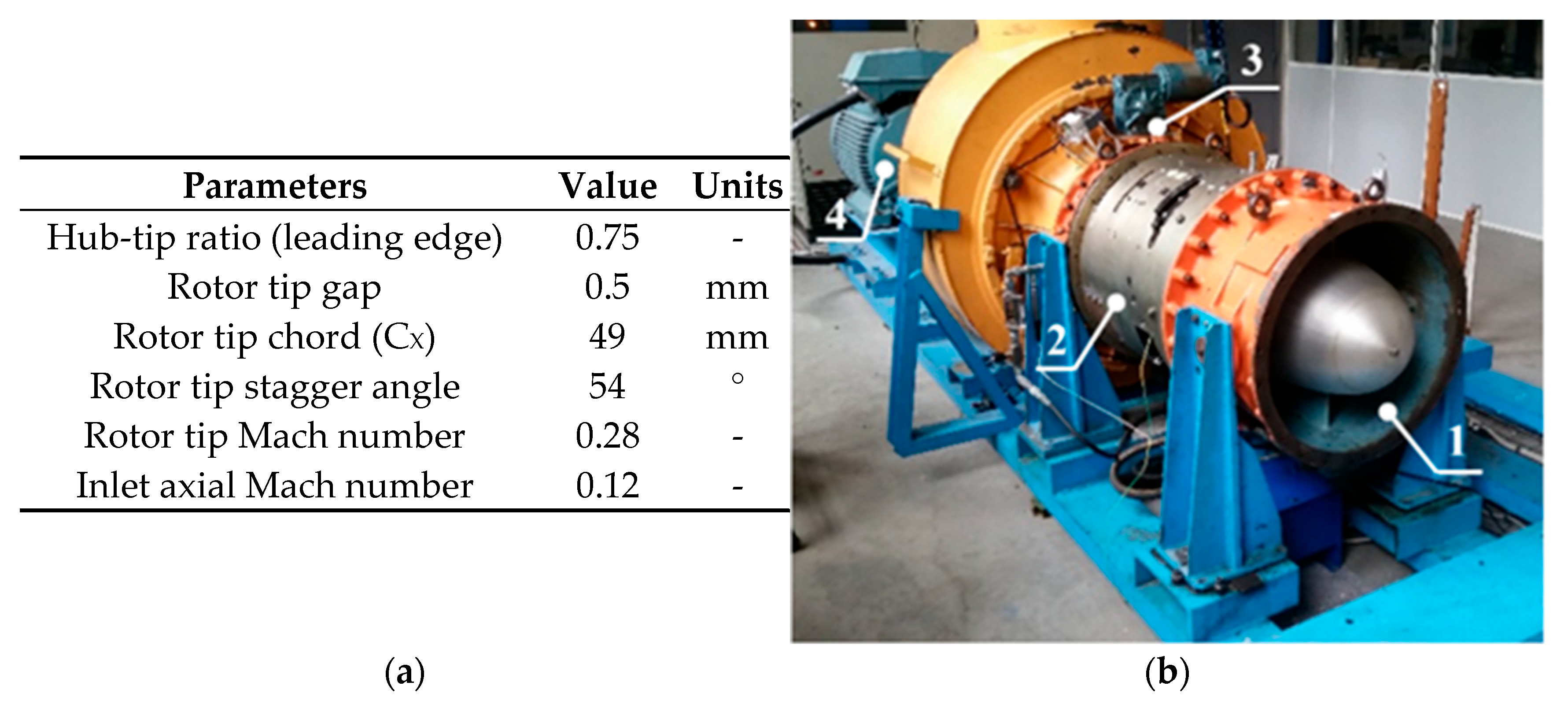
Figure 1. (a) CME2 characteristics at design point (3200 RPM) and (b) CME2 compressor and its throttling valve (inlet filter dismounted) with: 1: air inlet, 2: stage casing, 3: throttling valve, 4: electric drive.
Ijtpp 10 00040 g001
Figure 2. (a) CAD view of a pair of injectors (left), with a sectional view of an injection port (right) and (b) CAD view of the compressor rotor and injector outlets.
Ijtpp 10 00040 g002
Figure 3. Transparent window used to perform PIV measurements.
Ijtpp 10 00040 g003
Figure 4. Details of the laser beam setup: endoscope picture (top left), location of the measurement plans (top right) and schematic description of the optical path (bottom).
Ijtpp 10 00040 g004
Figure 5. Adapted and completed from reference [24]: flow control configurations tested on the compressor sorted by SMI and Power balance (points A and B are specifically considered in this paper).
Ijtpp 10 00040 g005
Figure 6. Dimensionless performance curves for the base flow, SFC and SFP configurations, and for the dataset previously examined in reference [21].
Ijtpp 10 00040 g006
Figure 7. Maps of relative velocity magnitude (Wmag) obtained at (a) 79% and (b) 51% of the blade height without control at the last natural stable point (red dot on blue curve).
Ijtpp 10 00040 g007
Figure 8. Maps of relative velocity magnitude (Wmag) obtained at (a) 79% and (b) 51% of the blade height with continuous (SFC) blowing (0.82% of design mass flow) at the last natural stable point (red dot on red curve).
Ijtpp 10 00040 g008
Figure 9. Maps of relative velocity magnitude (Wmag) obtained at (a) 79% and (b) 51% of the blade height with pulsed (SFP) blowing (0.83% of design mass flow) at the last natural stable point (red dot on red curve).
Ijtpp 10 00040 g009
Figure 10. Profiles of inlet relative angle (β1) measured at X/CX = 0.16 in the upper plane (79% of the blade height, left) and in the middle plane (51% of the blade height, right) for the base case, continuous blowing (SFC) and pulsed blowing (SFP), ϕ = 0.35 .
Ijtpp 10 00040 g010
Figure 11. Profiles of outlet relative velocity magnitude (Wmag) in the upper plane (79% of the blade height) for the base case, continuous blowing (SFC) and pulsed blowing (SFP), ϕ = 0.35 .
Ijtpp 10 00040 g011
Figure 12. Maps of relative velocity magnitude (Wmag) obtained at (a) 79% and (b) 51% of the blade height with continuous blowing (0.82% of design mass flow) at the last stable point with control.
Ijtpp 10 00040 g012
Figure 13. Maps of relative velocity magnitude (Wmag) obtained at (a) 79% and (b) 51% of the blade height with pulsed blowing (0.83% of design mass flow) at the last stable point with control.
Ijtpp 10 00040 g013
Figure 14. Profiles of inlet relative angle (β1) measured at X/CX = 0.16 in the upper plane (79% of the blade height, left) and in the middle plane (51% of the blade height, right) for the base case, continuous blowing (SFC) and pulsed blowing (SFP), ϕ = 0.31 .
Ijtpp 10 00040 g014
Figure 15. Profiles of outlet relative velocity magnitude (Wmag) in the upper plane (79% of the blade height) for the base case, continuous blowing (SFC) and pulsed blowing (SFP), ϕ = 0.31 .
Ijtpp 10 00040 g015
Disclaimer/Publisher’s Note: The statements, opinions and data contained in all publications are solely those of the individual author(s) and contributor(s) and not of MDPI and/or the editor(s). MDPI and/or the editor(s) disclaim responsibility for any injury to people or property resulting from any ideas, methods, instructions or products referred to in the content.