3.2. Parameter Sensitivity Analysis
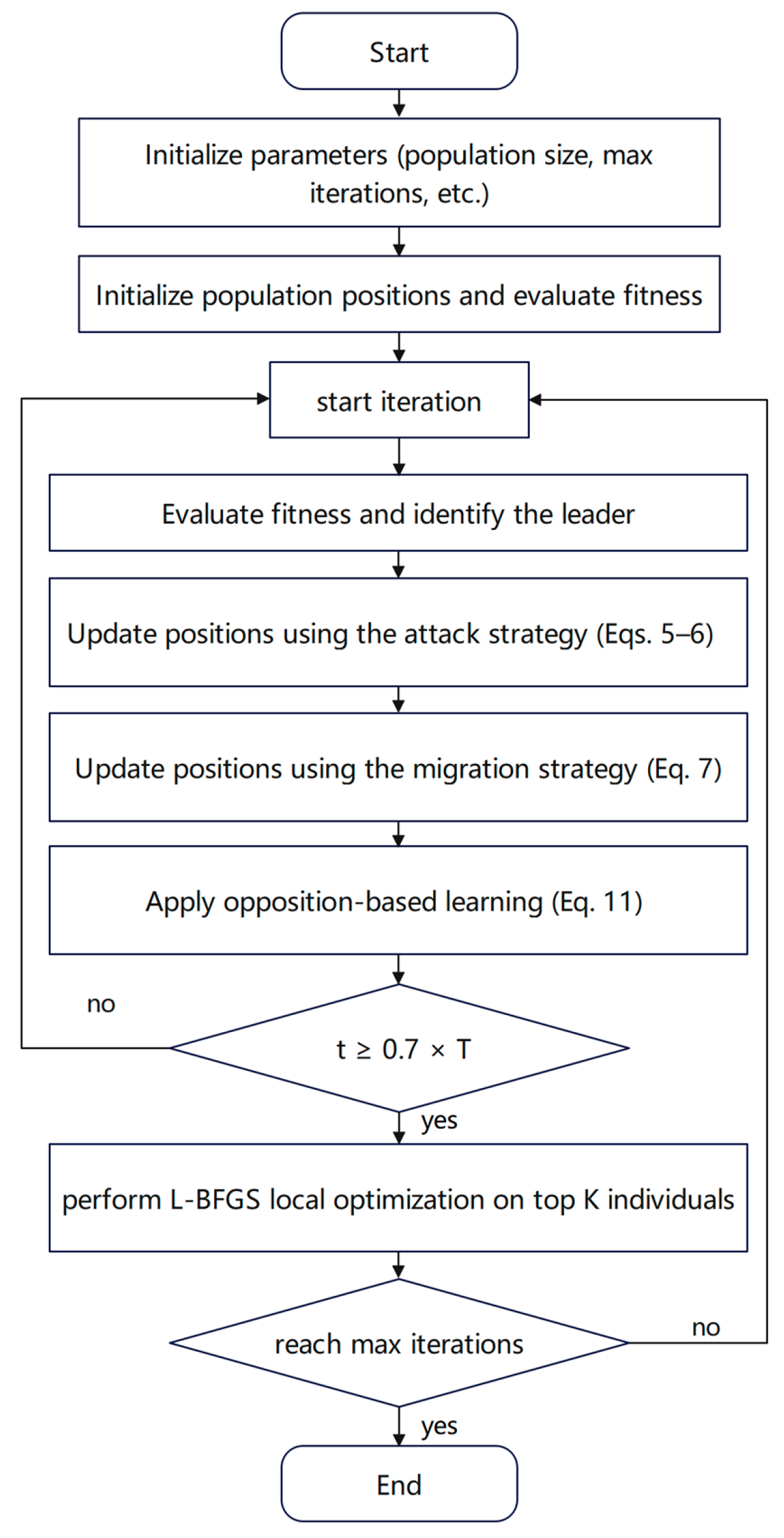
Among the key parameters in OQBKA, the L-BFGS activation threshold
(i.e., L-BFGS is triggered when
) has a significant impact on the balance between exploration and exploitation. To determine its optimal value, we evaluate
on selected CEC2022 benchmark functions (F1, F4, F7, F10) in 10 dimensions over 30 independent runs. These functions represent four distinct types of optimization landscapes: the unimodal F1, the multimodal F4, the hybrid F7, and the composition function F10, ensuring a comprehensive evaluation. As summarized in
Table 2,
consistently achieves the best performance in terms of solution accuracy and convergence stability. Smaller values lead to premature convergence due to early local search, while larger values delay refinement and result in suboptimal final solutions. Therefore,
is adopted in the final algorithm.
In addition, the number of elite individuals refined by the L-BFGS local search is set to
, as a larger value would lead to significantly higher computational overhead, while a smaller value may result in insufficient local exploitation and premature convergence. The scaling factor
in the MOBL strategy adopts the original formulation
, which has been validated in the original study and confirmed effective by our preliminary experiments.
3.3. Ablation Experiments on CEC2017
To evaluate the effectiveness of each improvement strategy, ablation experiments are conducted on 29 benchmark functions from the CEC2017 test suite. Among these functions, F1–F3 are unimodal functions mainly used to test the convergence accuracy of the algorithm; F4–F11 are multimodal functions designed to assess the algorithm’s global search capability in escaping local optima; F12–F20 are hybrid functions, and F21–F29 are composition functions with higher overall complexity, which are employed to comprehensively evaluate the algorithm’s adaptability to complex optimization problems.
Based on the original BKA, two variants were developed by separately incorporating the L-BFGS and MOBL strategies. The algorithm integrated with the L-BFGS strategy is denoted as LBKA, while the one incorporating the MOBL strategy is denoted as OBKA. These two variants, along with the OQBKA and the original BKA, are compared in this experiment. By statistically analyzing the mean fitness values, standard deviations, and average rankings of each algorithm across all benchmark functions, the contribution of each strategy to the overall performance is evaluated.
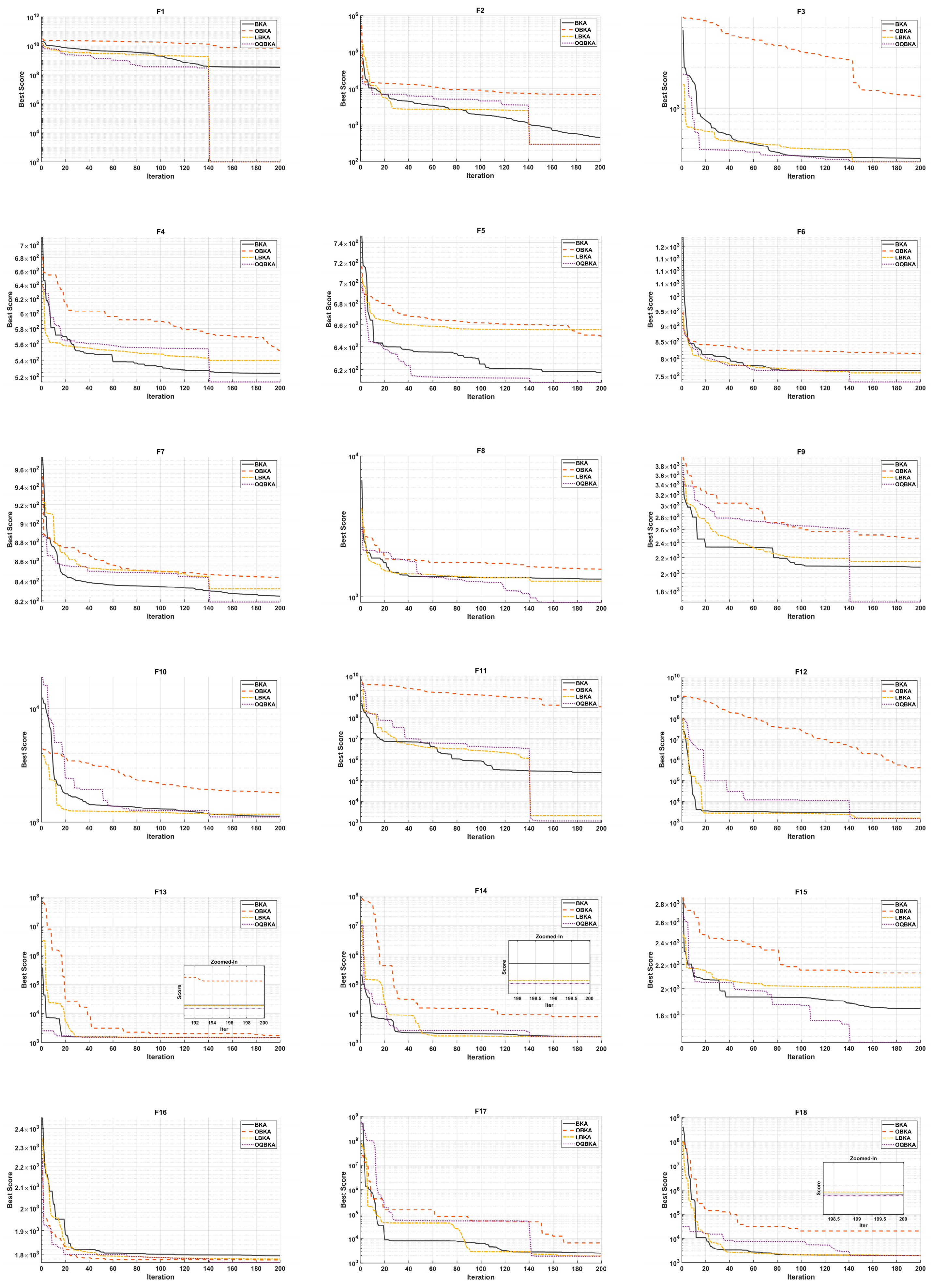
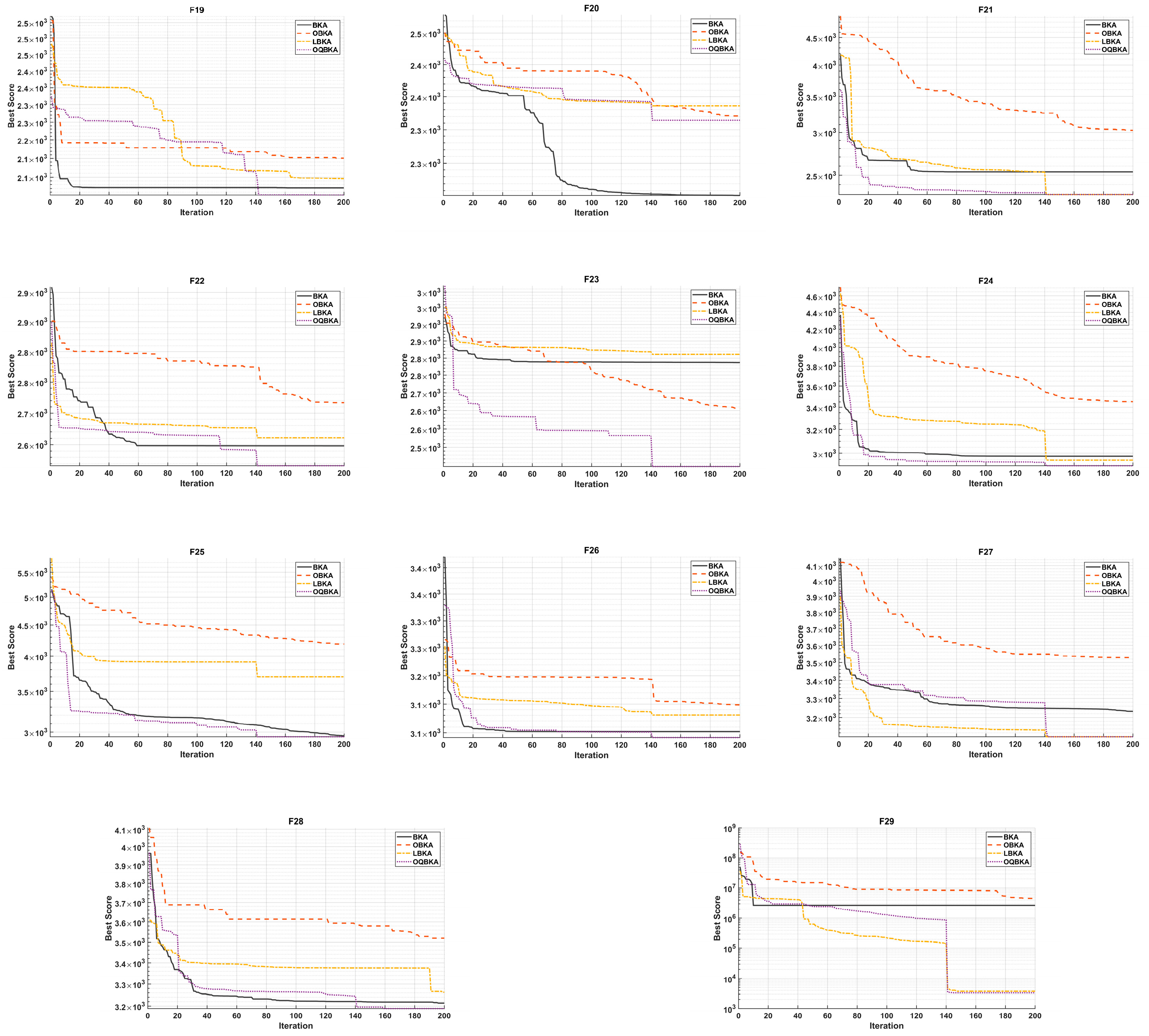
All experiments were conducted strictly following the parameter settings recommended in the original papers of each algorithm. The maximum number of iterations was uniformly set to 200, and each experiment was independently run 30 times to ensure the reliability and statistical validity of the results. The statistical outcomes are summarized in
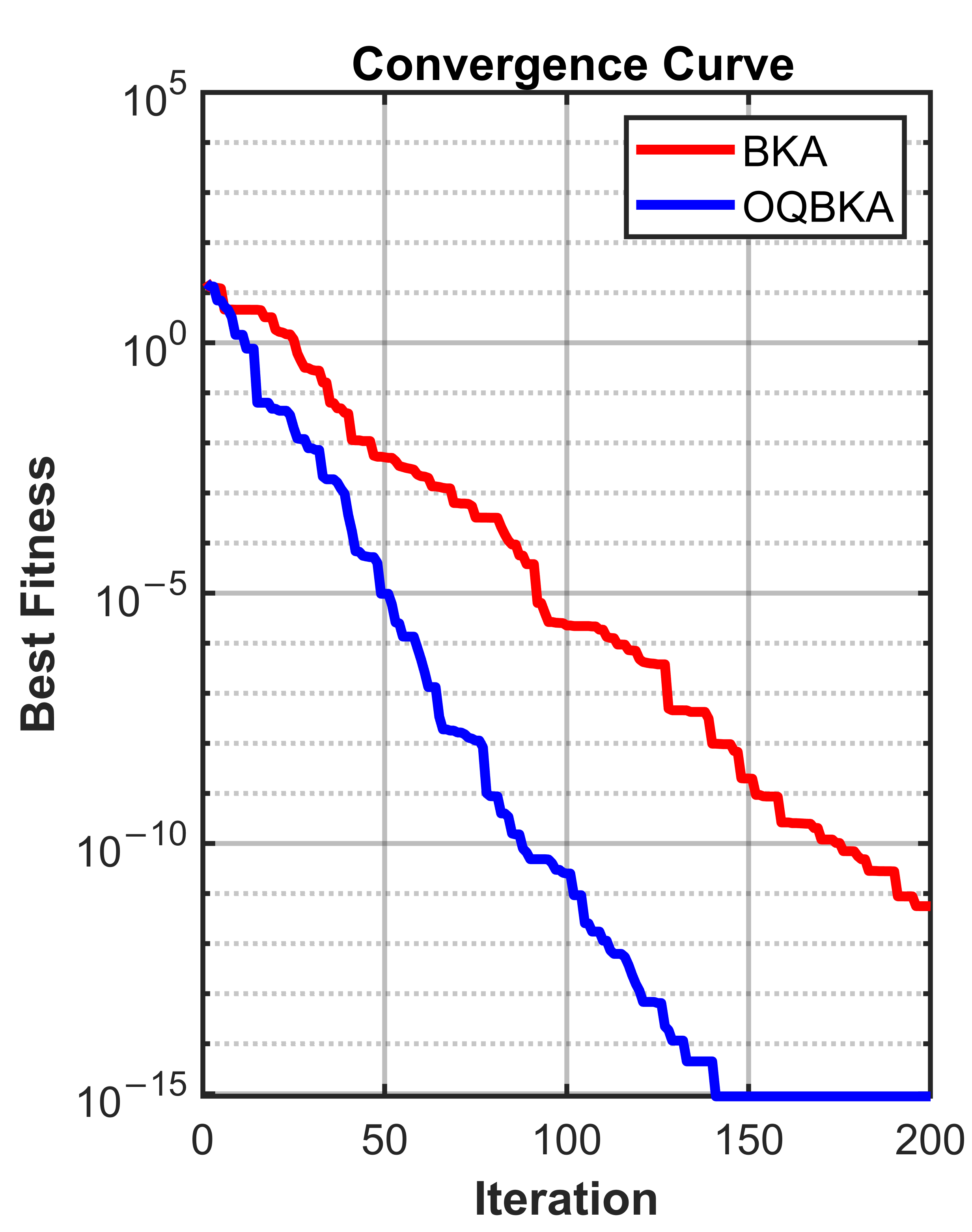
Table 3, where bold values indicate the best results, and the convergence behavior of the algorithms is illustrated in
Figure 2.
According to the experimental results, the following conclusions can be drawn:
- (1)
For complex functions such as F5, F6, F8, F9, F11, F14, F17, and F18, OBKA performs significantly better than BKA, indicating that the incorporation of the MOBL strategy effectively enhances the algorithm’s global search capability, particularly when dealing with complex multimodal functions.
- (2)
LBKA achieves a substantially better average ranking than BKA and obtains optimal or near-optimal results on functions F1, F3, F11, F12, F14, F17, and F18, demonstrating that the quasi-Newton strategy improves the algorithm’s local search efficiency and convergence accuracy, thereby strengthening its ability to locate high-quality solutions.
- (3)
The OQBKA algorithm, which integrates both improvement strategies, demonstrates overall performance that far surpasses either variant using a single strategy. It achieves the best results on 20 benchmark functions, with an average ranking of 1.34, significantly outperforming OBKA, LBKA, and the original BKAs. Specifically, OQBKA and LBKA exhibit comparable performance on the unimodal functions F1–F3, both clearly outperforming the other algorithms; OQBKA achieves the best performance on six out of seven multimodal benchmark functions F4–F10; it ranks first on seven out of ten hybrid functions F11–F20, showing a distinct advantage particularly on F14–F19; and it obtains the best results on seven out of nine composite functions F21–F29.These findings indicate that the integration of the two strategies produces a complementary effect: the MOBL strategy enhances the algorithm’s ability to explore a broader solution space, while the L-BFGS strategy improves solution accuracy and convergence speed. As a result, OQBKA demonstrates superior optimization performance across various types of benchmark functions, particularly excelling in solving multimodal and complex optimization problems.
- (4)
In terms of standard deviation, OQBKA exhibits strong stability across most functions. Notably, for F7, F15, and F25, the standard deviations are exceptionally small, indicating that the algorithm produces stable and reliable results.
3.4. Comparison Experiments on CEC2022
The CEC2022 test suite encompasses a variety of complex optimization problems and is widely used for standardized evaluation of swarm intelligence algorithms. The suite contains 12 functions, which can be categorized into four types based on their characteristics: F1–F2 are unimodal functions used to test the algorithm’s local search accuracy and convergence speed; F3–F5 are multimodal functions designed to assess the algorithm’s ability to escape local optima; F6–F8 are hybrid functions that combine multiple basic functions to increase problem complexity and evaluate the algorithm’s adaptability in non-uniform search spaces; F9–F12 are composition functions in which multiple functions with different characteristics are nested and integrated, providing a comprehensive assessment of the algorithm’s global search capability and robustness.
On the CEC2022 test suite, the proposed OQBKA algorithm is evaluated against the original BKA and several mainstream swarm intelligence algorithms. The comparison algorithms include four classical swarm intelligence algorithms: PSO, HHO, GWO, and SSA; three recently proposed algorithms: ALA, MSO, and WMA; and two improved variants of BKA: SCBKA and IBKA. In addition, to verify the statistical significance of the results, the performance of each algorithm on the test functions is analyzed using the Wilcoxon rank-sum test.
All algorithms are compared under a unified parameter configuration:
for population size and
for maximum number of iterations. To ensure statistical reliability, each algorithm is independently executed 30 times on the 12 test functions, with the best fitness value recorded for each run, and the global best results highlighted in bold. The experimental results are presented in
Table 4 and
Table 5, showing the performance of OQBKA compared with the 10 benchmark algorithms on the CEC2022 test suite.
To comprehensively evaluate algorithm performance, a multi-dimensional evaluation metric system is employed, including:
- (1)
Statistical significance test: The Wilcoxon rank-sum test (significance level
) is used to evaluate differences in algorithm performance. In the results, the symbols “−”, “=“, and “+” indicate that a comparison algorithm is statistically significantly worse than, equivalent to, or significantly better than OQBKA, respectively.
- (2)
Solution ranking: Algorithms are ranked based on their average fitness values on the test functions, with lower fitness values corresponding to higher ranks. When average fitness values are equal, the algorithm with the smaller standard deviation receives a higher rank, providing a comprehensive reflection of solution quality and algorithm stability. Moreover, the Wilcoxon test is not involved in the ranking process. It is used solely for post hoc analysis to assess whether the observed performance differences are statistically significant.
- (3)
Convergence efficiency analysis: The convergence curves are used to compare the dynamic optimization capabilities of the algorithms throughout the iteration process.
As shown in
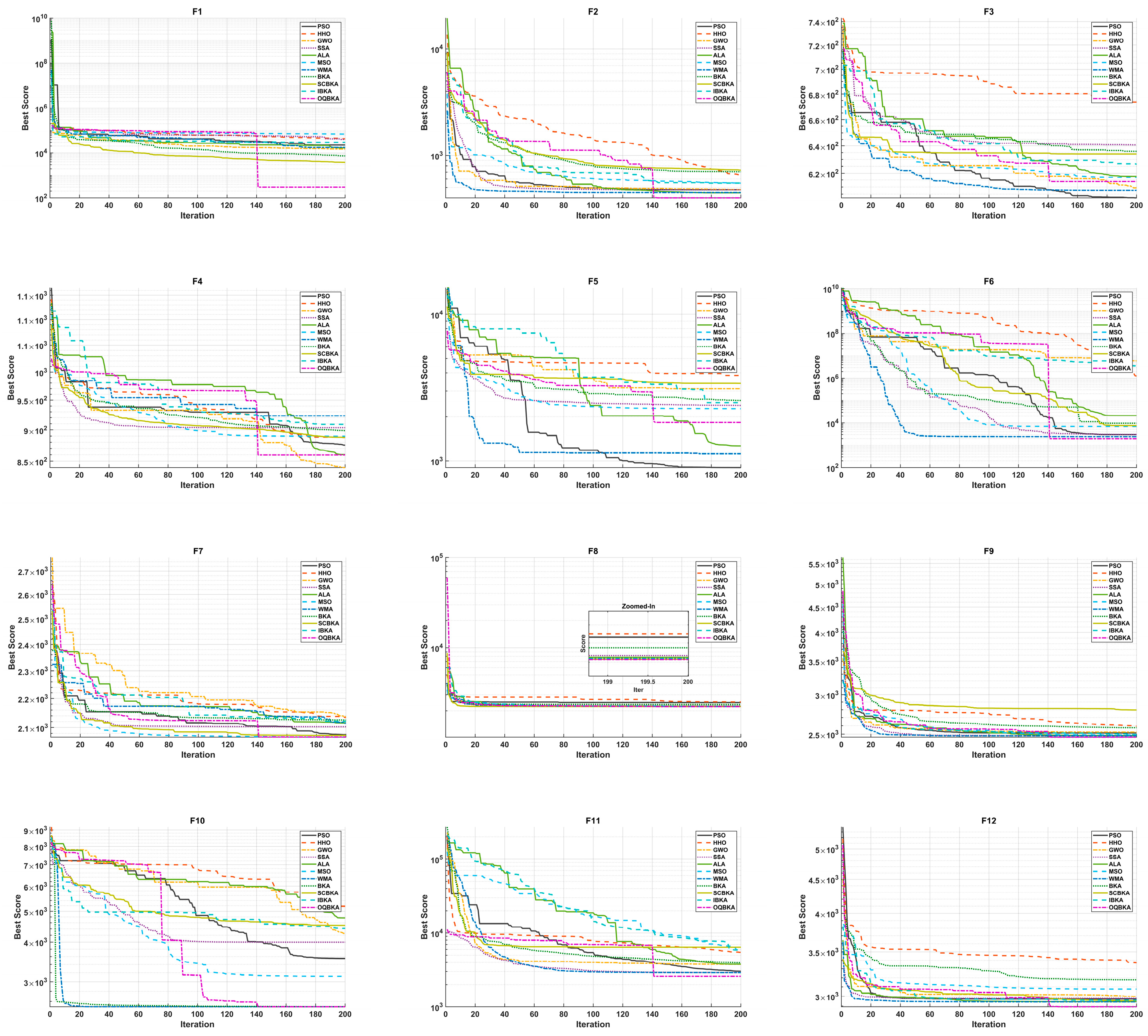
Table 4, which presents the experimental results on the 10-dimensional test functions, OQBKA achieves the best rankings on eight functions: F1, F2, F6, F8, F9, F10, F11, and F12, with an overall average ranking of 2.5. Although it does not obtain the best fitness value on F10, the Wilcoxon rank-sum test indicates that the difference between OQBKA and the best-performing algorithm is not statistically significant. On F1, F2, and F11, OQBKA successfully converges to the theoretical global optimum, demonstrating its precise search capability in high-dimensional complex spaces. Convergence curve analysis shows that OQBKA exhibits the fastest convergence speed on all functions except F3–F5. In particular, for functions F6–F12, the slopes of OQBKA’s convergence curves are significantly steeper than those of the comparison algorithms, indicating that the integrated strategies effectively accelerate the population’s convergence toward the optimal regions. To further illustrate the convergence behavior,
Figure 3 shows the detailed convergence curves of OQBKA. The algorithm exhibits a distinct “two-stage decline” pattern: during the early iterations, the MOBL strategy enables it to rapidly reduce the fitness value, achieving efficient global exploration; in the middle and later stages, as the mirror factor gradually converges and triggers the L-BFGS local search, OQBKA maintains a slow yet steady downward trend, demonstrating strong local exploitation and continuous convergence capability. This pattern indicates that OQBKA achieves a good dynamic balance between exploration and exploitation
Table 5 presents the experimental results of different algorithms on 20-dimensional optimization problems. The results show that OQBKA achieves the best rankings on eight test functions. Although it performs slightly worse than PSO on F7, its best fitness value is close to that of PSO, remaining highly competitive. Furthermore, as the problem dimensionality increases, OQBKA maintains a leading advantage, particularly demonstrating excellent optimization capability on unimodal functions and complex composition functions.
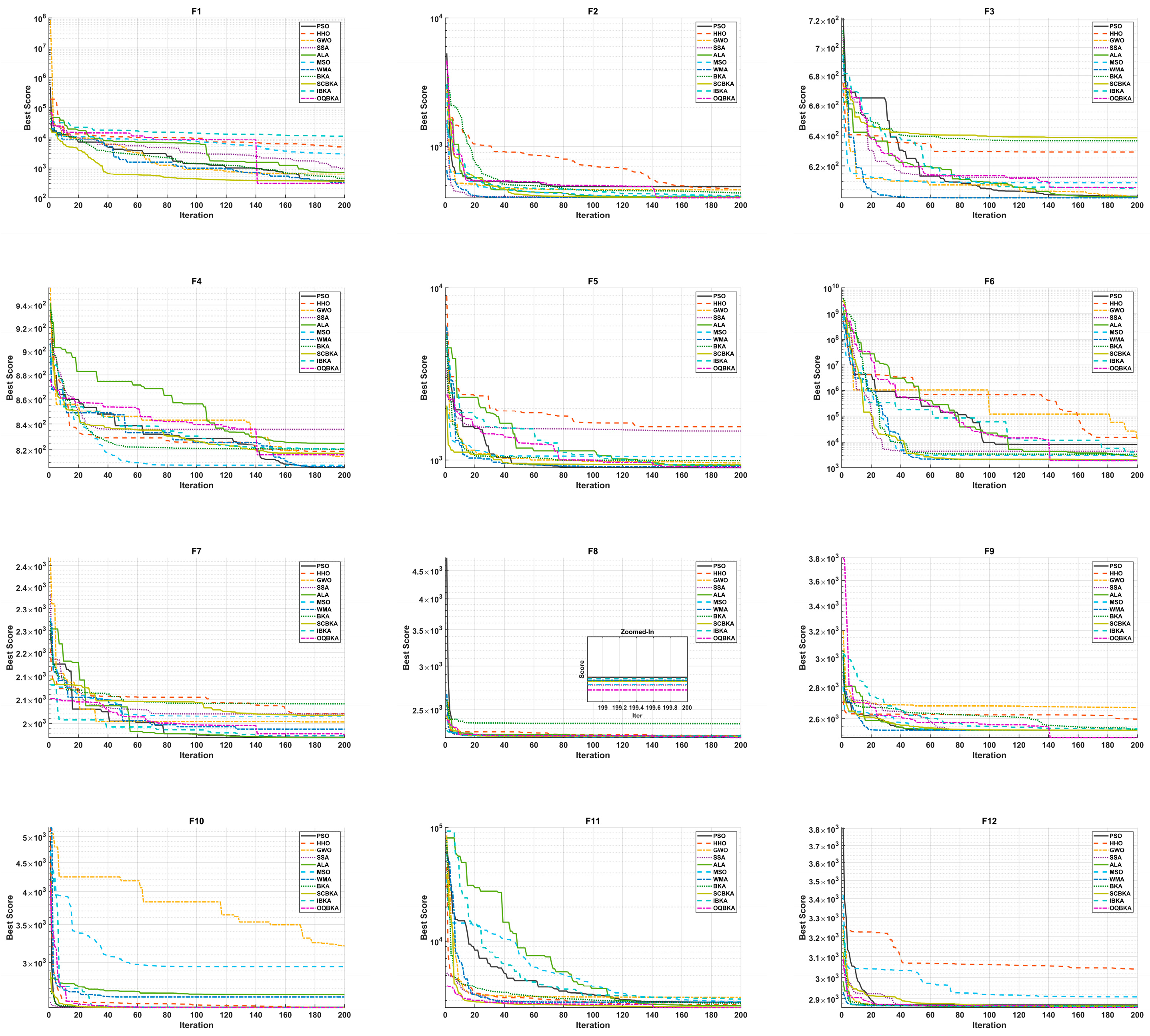
In terms of stability, OQBKA achieves the lowest standard deviation on more than half of the test functions, indicating that its optimization results are more consistent and can maintain high reproducibility across multiple independent runs. As shown by the convergence curves in
Figure 4, OQBKA demonstrates faster convergence on all test functions except F3–F5, with slopes significantly steeper than those of the comparison algorithms, further confirming its efficient global search and local exploitation capabilities.
Moreover, the convergence curves of OQBKA exhibit a distinct “two-stage descent” pattern: in the early iterations, the MOBL strategy enables the algorithm to rapidly reduce the fitness value, achieving efficient global exploration; in the middle-to-late stages, as the mirror factor gradually converges and triggers the L-BFGS local search, the algorithm maintains a slow yet steady descent, demonstrating strong local exploitation and sustained convergence capability. This behavior indicates that OQBKA achieves a well-balanced dynamic trade-off between exploration and exploitation.
In terms of statistical significance analysis, the Wilcoxon rank-sum test results indicate that OQBKA demonstrates a significant advantage over the other algorithms on most test functions. In particular, for functions F1, F2, F6, and F8–F12, OQBKA performs significantly better than the comparison algorithms, clearly highlighting its superior capability in handling high-dimensional complex optimization problems.
3.5. Search Dynamics Visualization
To quantitatively analyze the impact of the proposed enhancement strategies on population diversity and convergence behavior, comparative experiments are conducted on representative unimodal and multimodal benchmark functions. The diversity curves and convergence trajectories of BKA and OQBKA are presented for analysis.
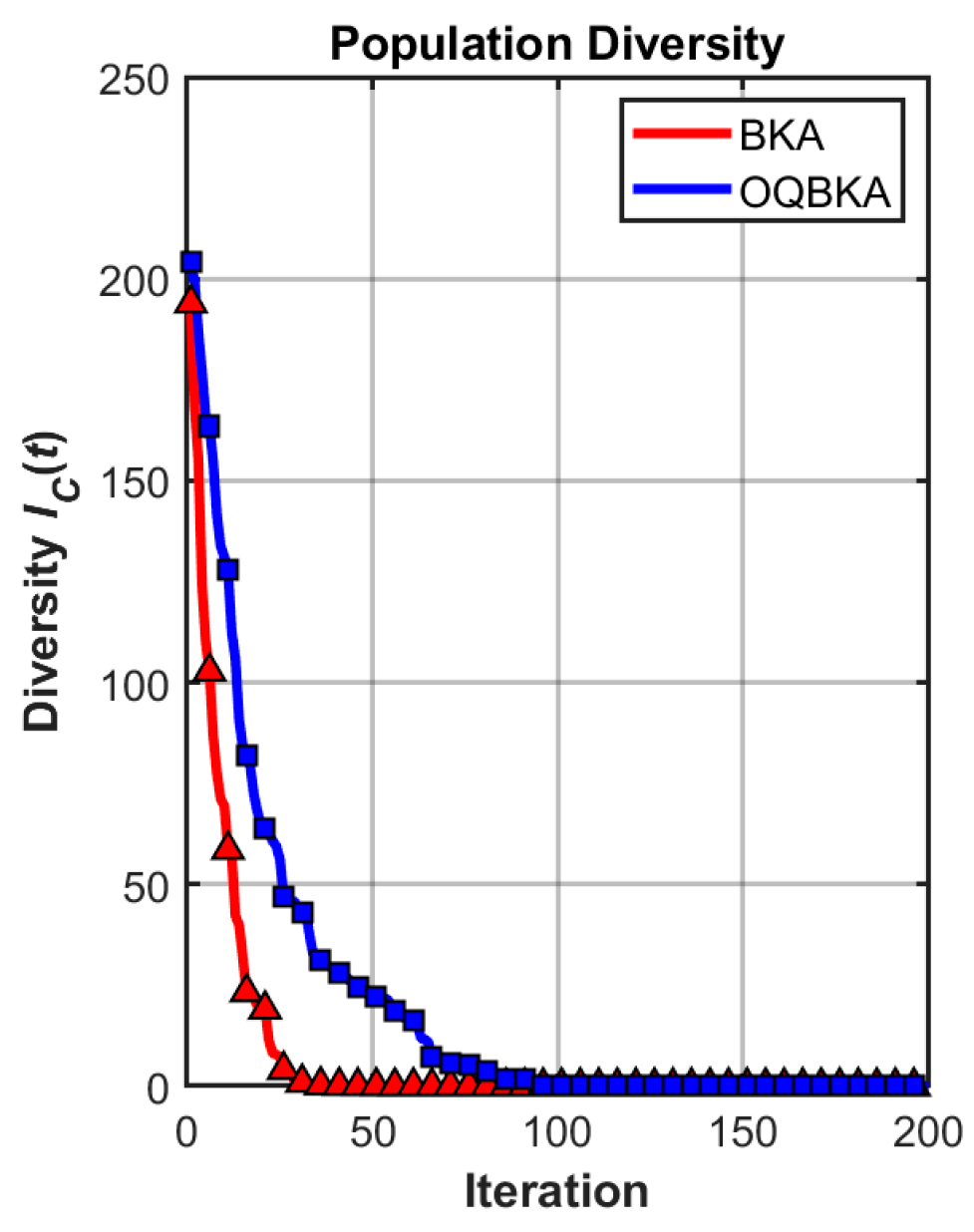
As shown in
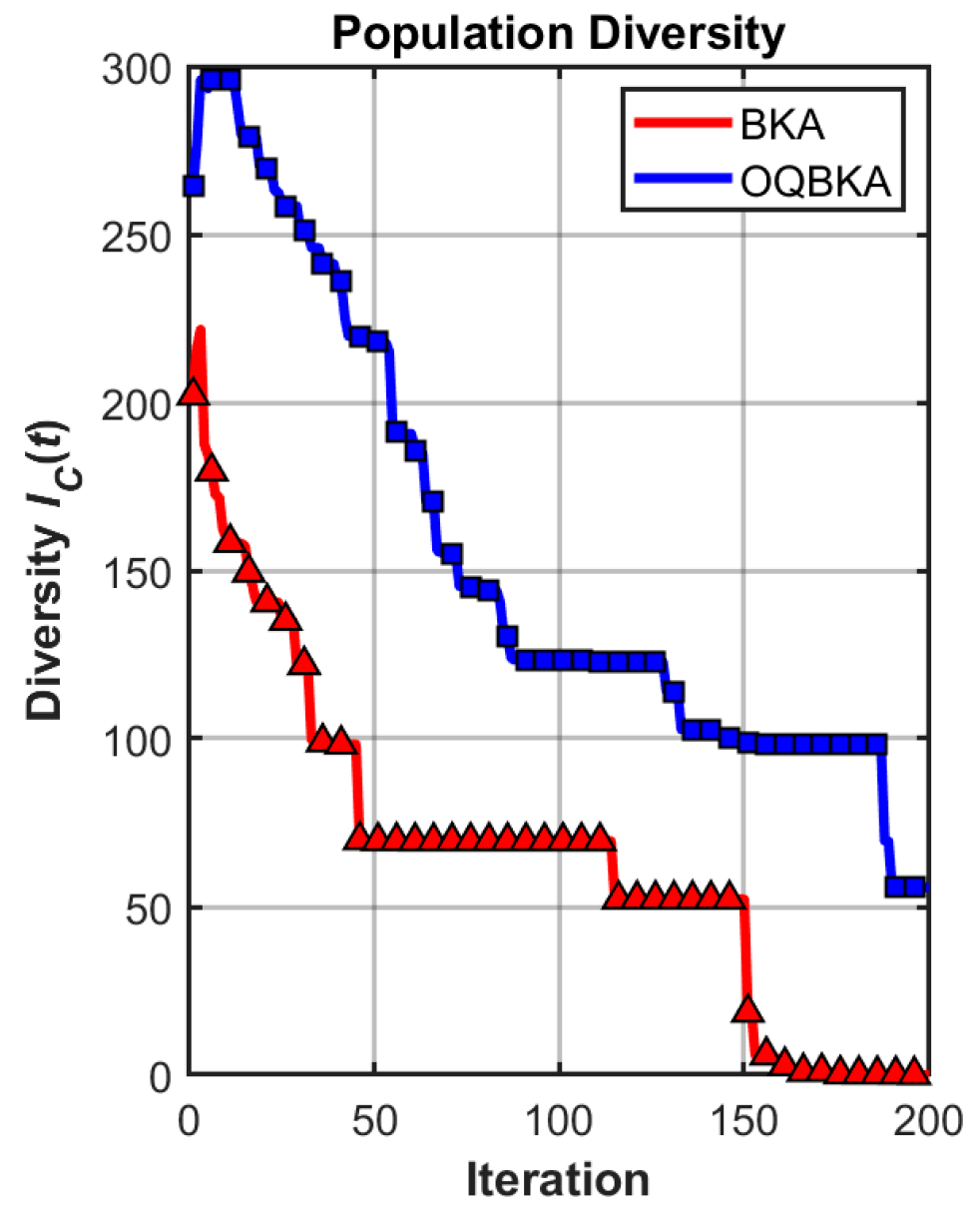
Figure 5 and
Figure 6, OQBKA consistently maintains significantly higher population diversity than BKA throughout the optimization process. The diversity metric adopted in this study, denoted as
, is defined as the average Euclidean distance among individuals in the population and is used to characterize the spatial distribution of the population. This metric remains at a relatively high level during the middle and late stages of OQBKA, indicating that the incorporation of the MOBL strategy effectively suppresses premature convergence and preserves the global exploration capability of the algorithm.
In contrast, the population diversity of BKA decreases rapidly after approximately 50 iterations, revealing an evident early stagnation phenomenon. This issue becomes more pronounced in the multimodal case, as shown in
Figure 6, where the diversity of BKA collapses sharply around iteration 150, whereas OQBKA is able to maintain a relatively stable diversity level until convergence.The corresponding convergence curves, as shown in
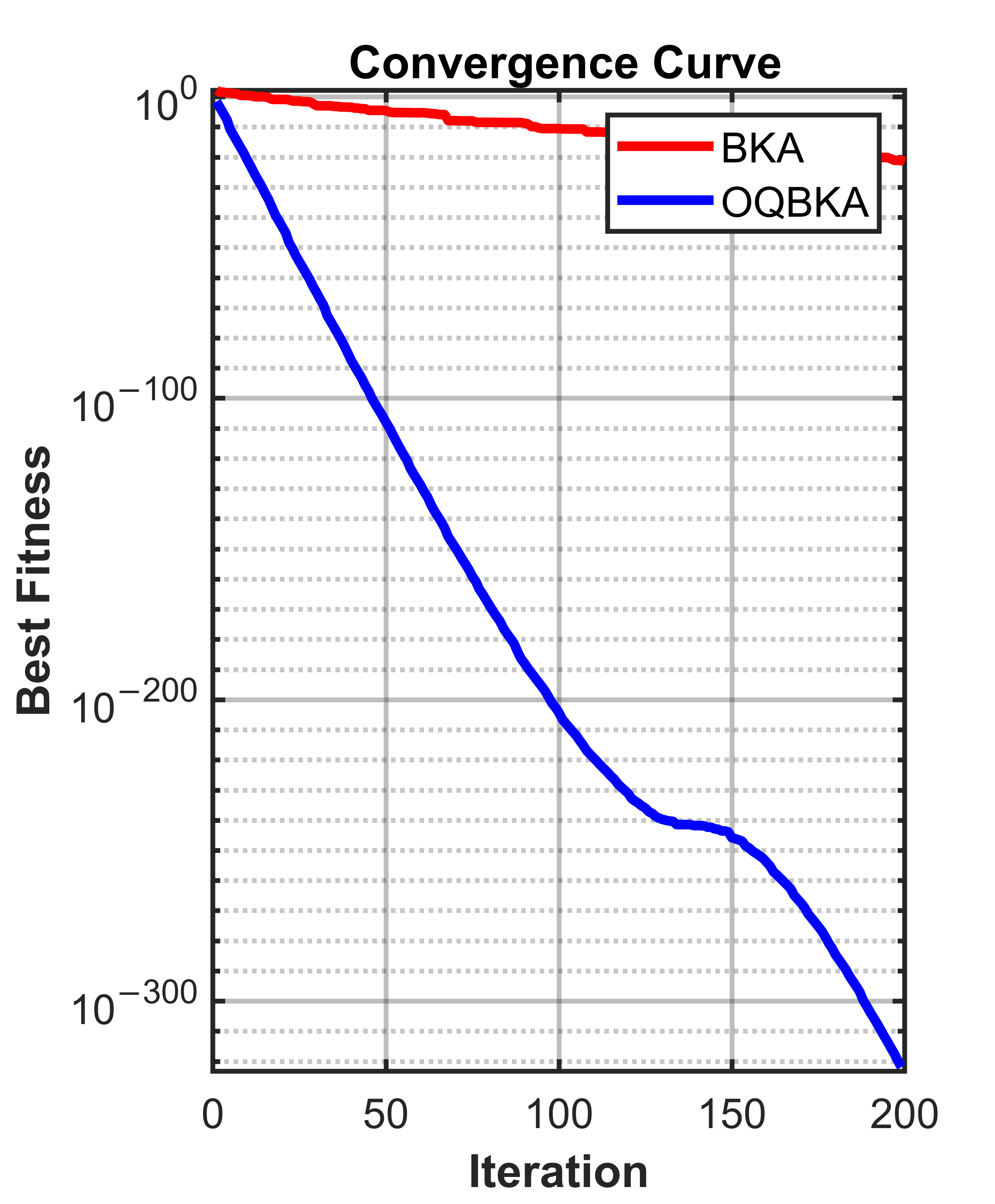
Figure 7 and
Figure 8, further demonstrate that higher population diversity can be translated into superior solution quality and more stable convergence behavior. OQBKA exhibits a smoother convergence process and achieves lower final fitness values than BKA on both types of functions. In particular, in the multimodal scenario, BKA tends to be trapped in local optima, while OQBKA continues to improve and ultimately approaches the global optimum.
Figure 5.
Population diversity curve on unimodal functions.
Figure 5.
Population diversity curve on unimodal functions.
Figure 6.
Population diversity curve on multimodal functions.
Figure 6.
Population diversity curve on multimodal functions.
Figure 7.
Convergence curve on unimodal functions.
Figure 7.
Convergence curve on unimodal functions.
Figure 8.
Convergence curve on multimodal functions.
Figure 8.
Convergence curve on multimodal functions.
3.6. Engineering Design Problems
For general nonlinear constraints in engineering problems, a penalty-based objective function is adopted: infeasible solutions are penalized by adding a large constant to their fitness value, effectively guiding the search toward the feasible region.
(1) Step-Cone Pulley Problem
A step-cone pulley is a stepped conical structure composed of a series of pulleys. They are used in pairs to change the speed ratio between shafts. Power is transmitted from one shaft to another distant shaft by a belt or rope running over the pulleys. The primary objective of this problem is to minimize the weight of a four-step conical pulley using five design variables: four variables corresponding to the diameters of each step and a fifth variable representing the pulley width. The problem includes 11 nonlinear constraints to ensure that the transmitted power equals
. The mathematical formulation of the problem is defined as follows:
where
denotes the weight of the four-step step-cone pulley;
denotes the material density;
denotes the radial width of the pulley, with range
;
denotes the diameter of the
pulley, with range
;
is the input rotational speed; and
is the output rotational speed of the
pulley.
The constraints are as follows:
where
,
,
represent the nonlinear equality constraints;
represents the nonlinear inequality constraints;
is the belt length of the
pulley;
is the tension on the
pulley;
is the power transmitted to the
pulley;
is the center distance of the pulleys, representing the distance between the centers of the two pulleys, with a value of
;
is the permissible material strength, with a value of
;
is the axial thickness of the pulley, with a value of
;
is the coefficient of dynamic friction, with a value of
.
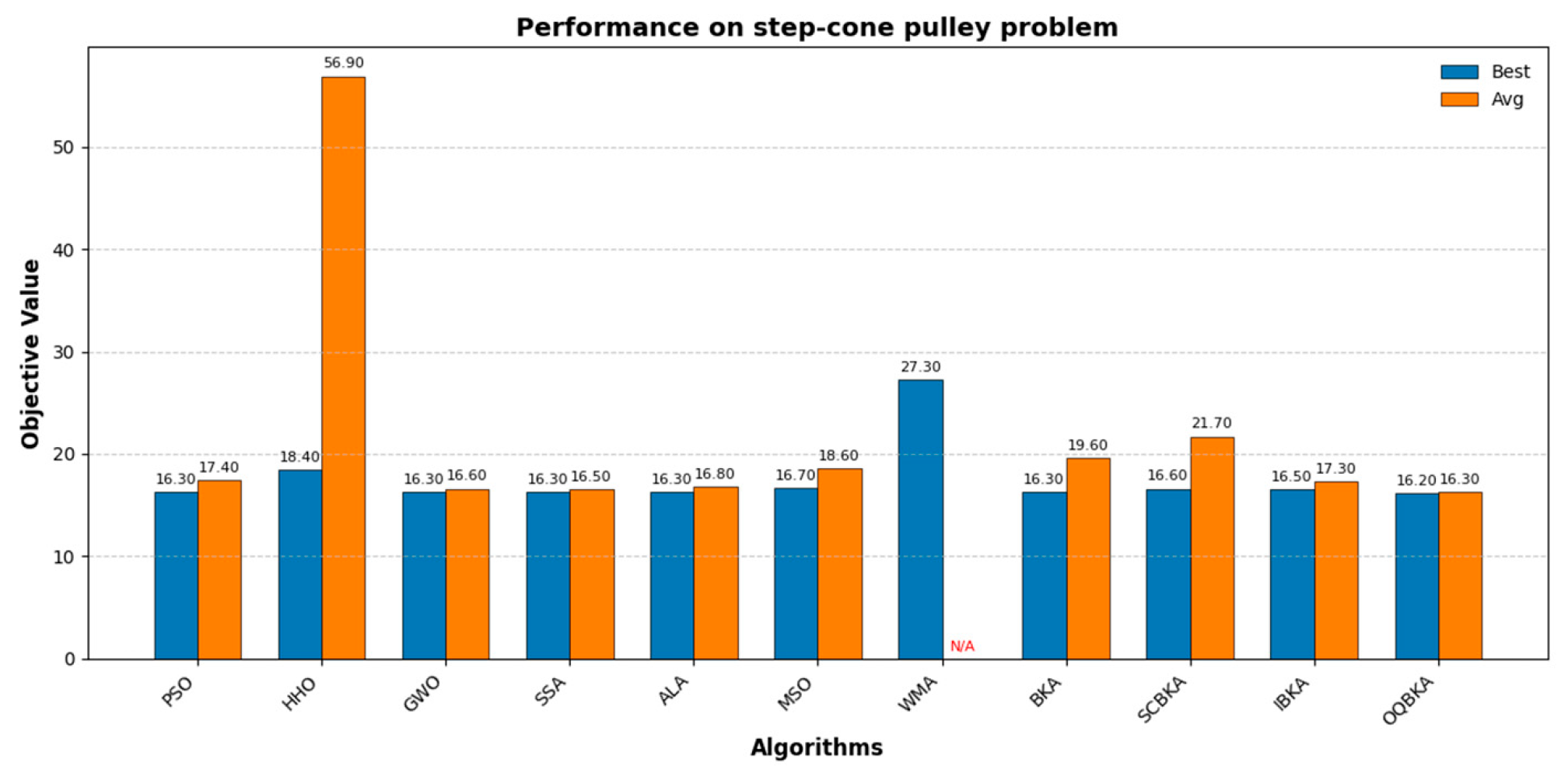
Table 6 and
Figure 9 presents the performance of 11 algorithms in solving the step-cone pulley problem. Each algorithm was independently executed 20 times, and the best value, worst value, standard deviation, and mean value were recorded. It can be observed that the OQBKA algorithm achieved the best results among all algorithms across the 20 independent runs, significantly outperforming the other compared methods. The extremely small standard deviation indicates that OQBKA exhibits high stability with minimal result fluctuations across multiple runs. Moreover, its worst performance also remains at a relatively high level, fully demonstrating the superior optimization accuracy, stability, and robustness of the OQBKA algorithm.
Figure 9.
Performance on step-cone pulley problem.
Figure 9.
Performance on step-cone pulley problem.
(2) Corrugated Bulkhead Design
The corrugated bulkhead design problem involves four design variables, denoted as
,
,
and
. The optimization objective is to minimize the weight of the corrugated bulkhead of the tanker. The mathematical model for this problem is as follows:
The constraints are as follows:
where
,
,
,
represent the width, depth, length, and thickness of the corrugated bulkhead plate, respectively;
represents the nonlinear inequality constraints.
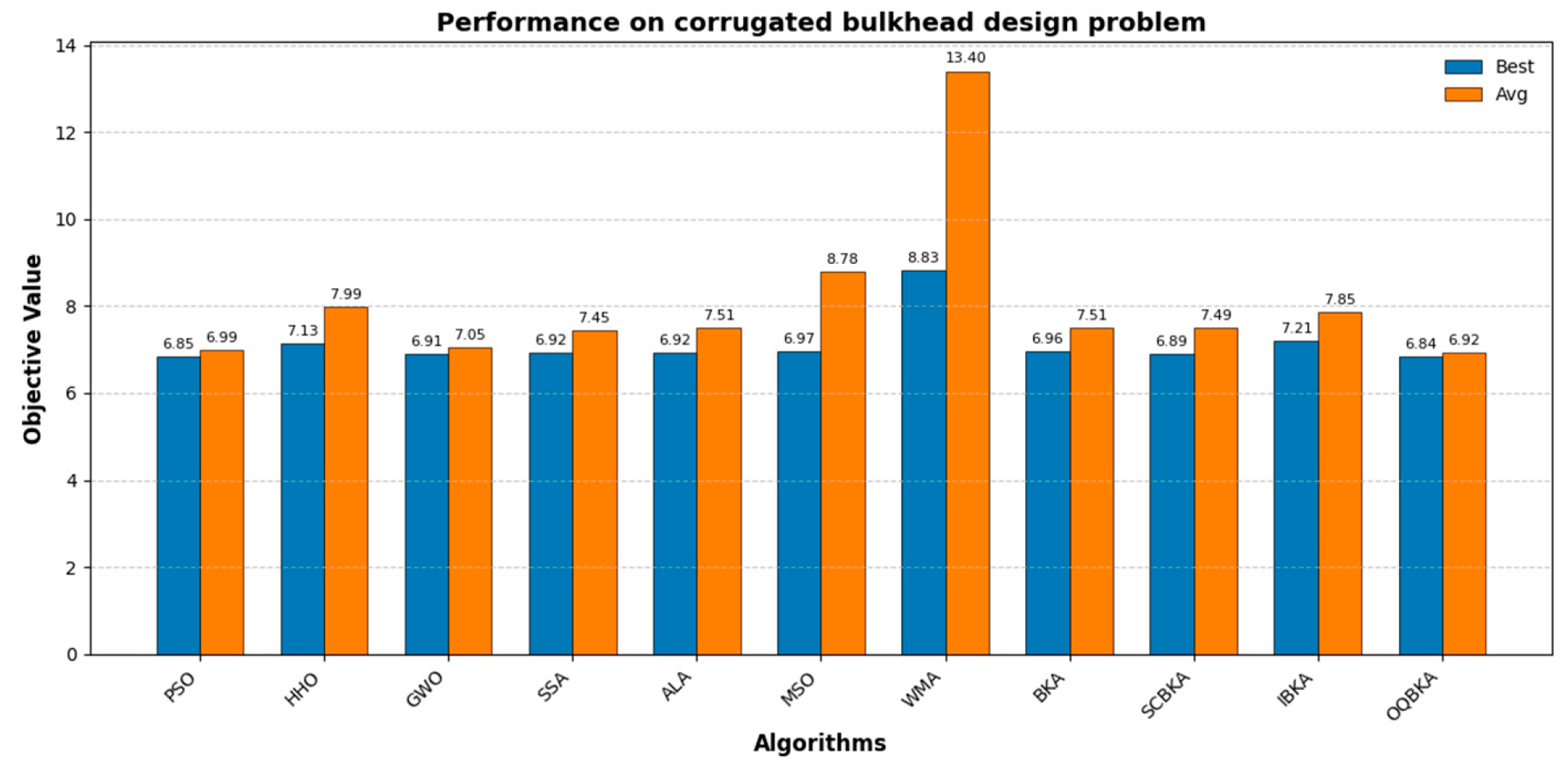
Table 7 and
Figure 10 present the experimental results. From the results, it can be observed that OQBKA consistently achieved excellent optimal values and relatively low worst values across multiple independent runs, with a very small standard deviation, demonstrating good optimization accuracy, stability, and robustness.
Figure 10.
Performance on corrugated bulkhead design problem.
Figure 10.
Performance on corrugated bulkhead design problem.
(3) Reactor Network Design
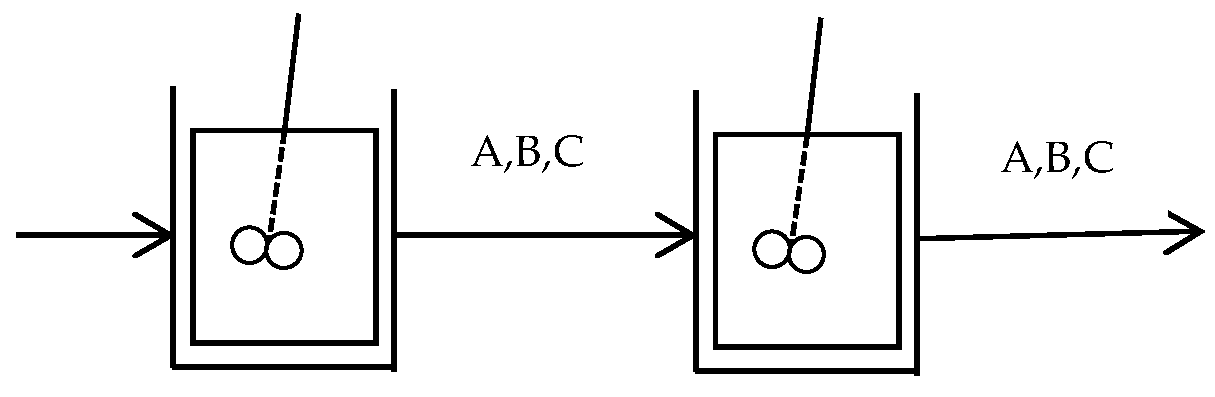
The optimization of a two-stage continuous stirred-tank reactor (CSTR) system aims to maximize the concentration of substance B in the second reactor by adjusting the reactor parameters. As illustrated in
Figure 11, species A is fed into the first reactor, where it is sequentially converted into intermediate B and final product C. The outlet streams from each reactor contain mixtures of species A, B, and C, as indicated by the labels on the connecting arrows. The mathematical model of the system can be formulated as follows:
The constraints are as follows:
where
denotes nonlinear equality constraint functions and
denotes nonlinear inequality constraint functions.
and
represent the concentrations of substances A and B in the first vessel, respectively, with ranges
.
and
represent the concentrations of substances A and B in the second vessel, respectively, with ranges
.
and
denote the volumes of the first and second reactor vessels, respectively, with ranges
.
and
denote the rate constants for the conversion of substance A to substance B in the first and second reactor vessels, respectively, with values
and
.
and
are additional rate constants in the first and second reactor vessels, respectively, with values
and
.
As shown in
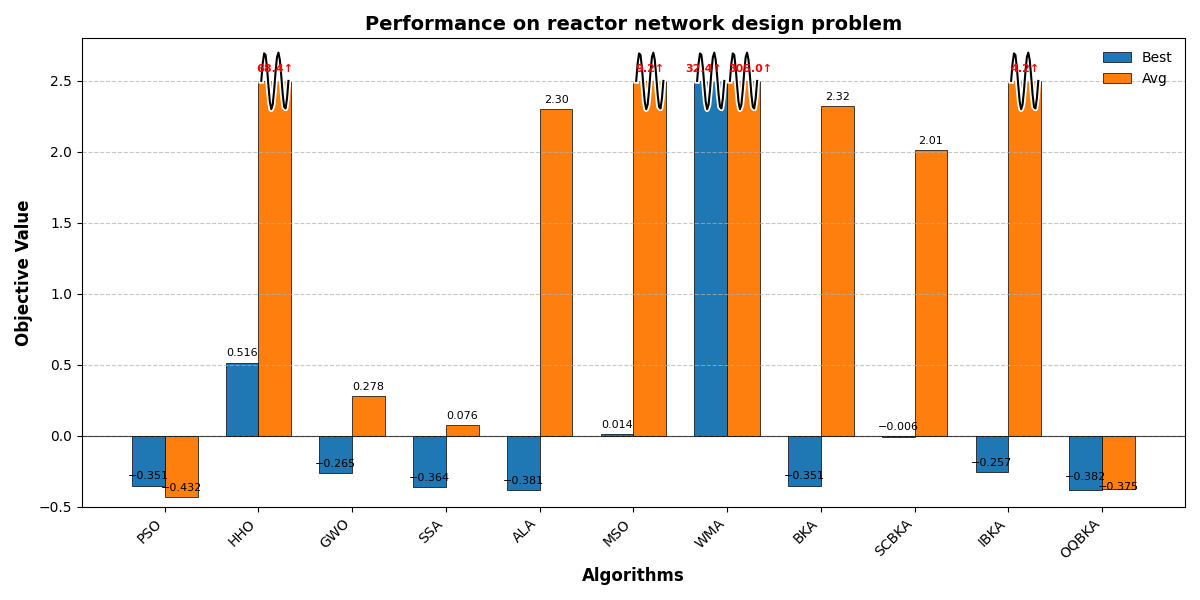
Table 8, all listed values correspond to the objective function value of
. Since the original objective function is
, maximizing
is equivalent to minimizing
. From the table, it can be observed that the OQBKA algorithm not only achieves the objective function value closest to the theoretical optimum but also outperforms other algorithms in terms of mean and standard deviation, demonstrating excellent stability. As shown in
Figure 12, certain algorithms such as HHO, MSO, and WMA yield results that deviate significantly from the theoretical optimal range, suggesting that these methods may have failed to strictly satisfy all feasibility constraints during the optimization process, resulting in solutions that violate the mathematical model definitions. In contrast, the OQBKA algorithm consistently produces output values within a reasonable negative range throughout the optimization process, indicating stronger constraint-handling capability and higher solution reliability.
Figure 12.
Performance on reactor network design problem. Red values with wavy lines and arrows indicate abnormally high objective values due to algorithmic divergence or poor performance.
Figure 12.
Performance on reactor network design problem. Red values with wavy lines and arrows indicate abnormally high objective values due to algorithmic divergence or poor performance.