

Dry Fractionation in the Production of Andean Grain Protein Concentrates: Future Trends in Food Sustainability

 ,
,  ,
,
Abstract
1. Introduction
2. Methodology
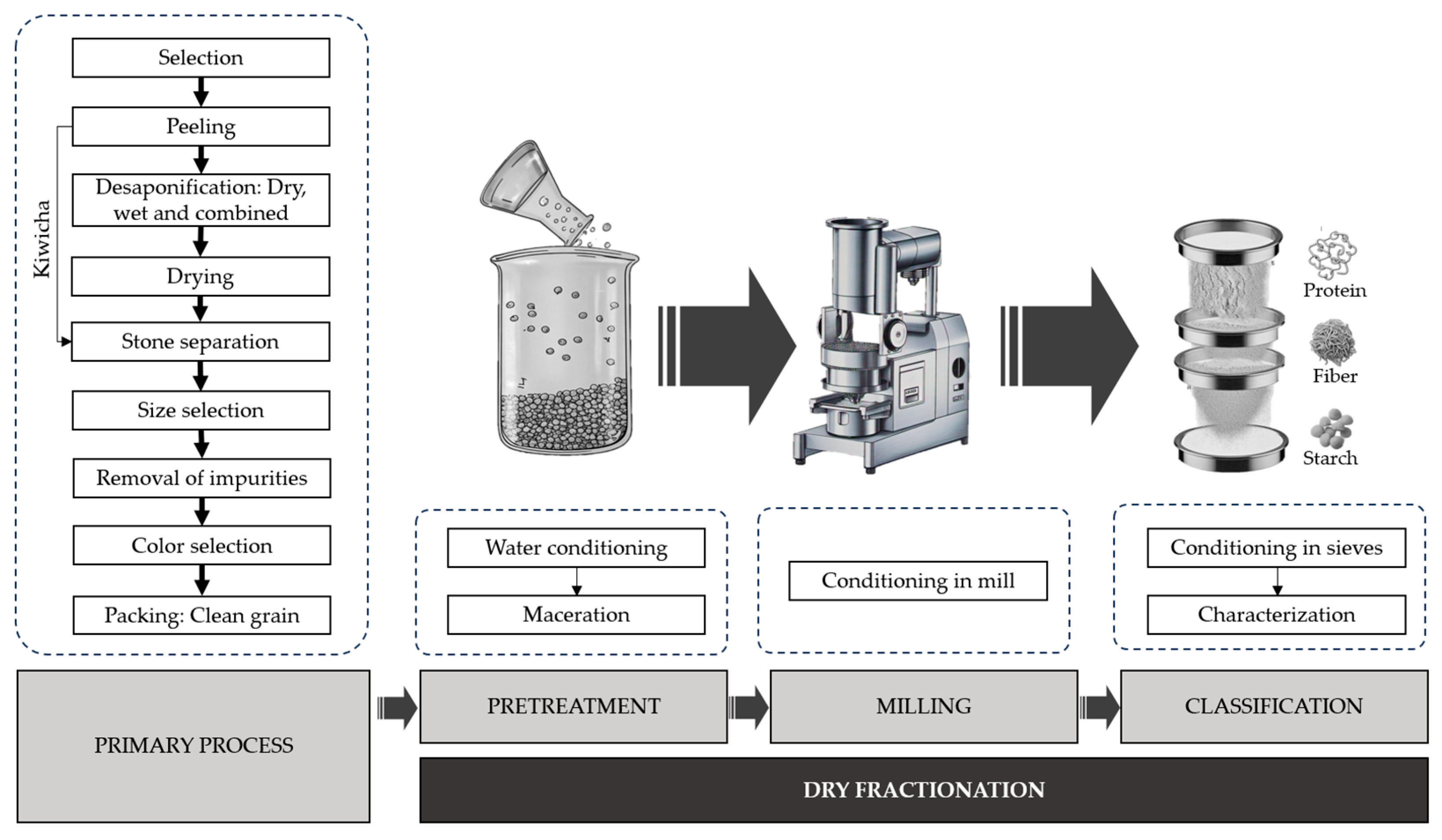
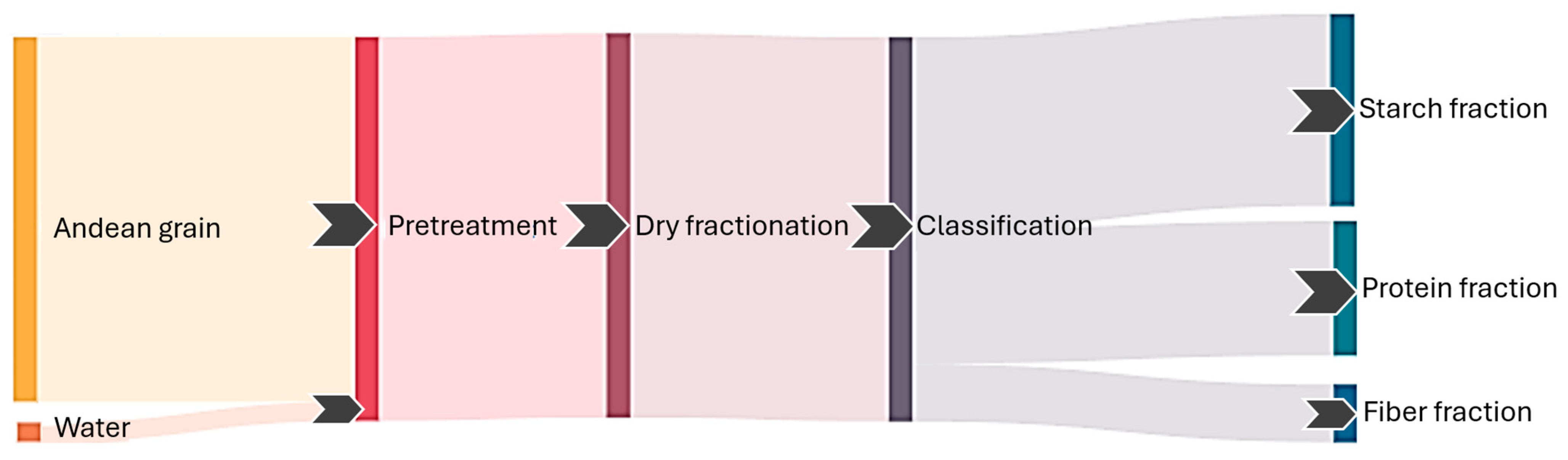
3. Dry Fractionation in Andean Grains
3.1. Primary Processing
3.2. Pretreatment
3.3. Milling
3.4. Classification
4. Effects of Dry Fractionation on Andean Grains
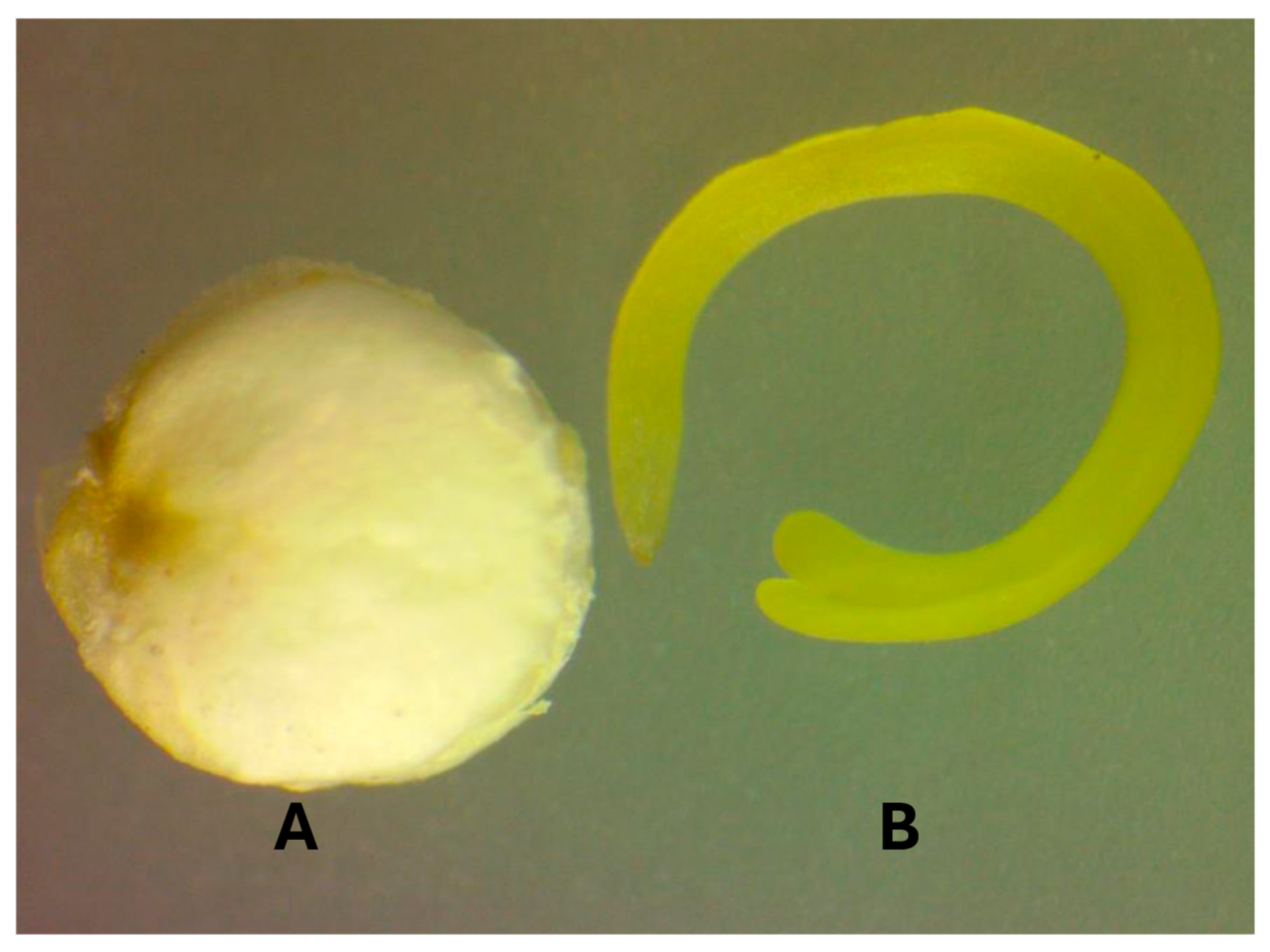
4.1. Characteristics of the Fractions Obtained from Andean Grains
4.2. Functional and Technological Properties of Protein Fractions Obtained by Dry Fractionation
4.3. The Potential Applications of the Fractions

| Andean Grain | Characteristics of Fractions | Protein Content in the Fraction (%) | Water-Holding Capacity (g/g) | Oil Retention Capacity (g/g) | Solubility Index (%) | Foaming Capacity (%) | Pasting Temperature (°C) | Emulsification Capacity (%) | References |
|---|---|---|---|---|---|---|---|---|---|
| Quinoa | Protein concentrate (germ concentrate) | 35.43 ± 0.15 | 2.78 | 3.10 | >60 (pH 12) | The foaming capacity of germ concentrate was greater than that of other germ fractions with smaller particle sizes at pH levels: 2, 6, and 12. | -- | The emulsification capacity and stability of germ concentrate were greater than those of other germ fractions with smaller particle sizes, even at different pH levels (pH levels: 2, 6, and 12). | [55] |
| Quinoa | Protein fraction (germ) | 32.36 ± 0.23 | -- | -- | -- | -- | >70 | -- | [52] |
| Quinoa | Protein fraction | 33.55 ± 0.25 | 1.93 ± 0.13 | 1.15 ± 0.16 | 9.12 ± 0.20 | 8.93 (pH 2) 18.03 (pH 12) | 50 ± 0.3 °C | -- | [58] |
| Fiber fraction | 14.78 ± 0.22 | 3.25 ± 0.12 | 2.11 ± 0.11 | 7.17 ± 0.18 | -- | 50 ± 0.3 | -- | ||
| Starch fraction | 8.11 ± 0.26 | 2.13 ± 0.08 | 1.57 ± 0.14 | 7.56 ± 0.16 | 9.09 (pH 2) 19 (pH 12) | 73.9 ± 0.4 | -- | ||
| Quinoa | Protein fraction (middle fraction) | 23.54 ± 1.50 | 1.6 ± 0.03 | 2.56 ± 0.17 | -- | 5 ± 2 (mL) | 79.8 ± 0.2 | 55.0 ± 4.0 (80 °C) 50 ± 0.0 (25 °C) | [61] |
| Quinoa | Protein fraction | 32.7 ± 1.95 (Atlas) 32.0 ± 0.42 (Riobamba) | 5 (20–60 °C) | -- | Maximum solubility at 30 (40 °C) in both varieties | -- | -- | -- | [62] |
| Kiwicha | Protein fraction (Coarse fraction of the seed with the highest protein content) | 20.5 ± 0.5 | 410 ± 0.02 | 215 ± 0.45 | 17.93 ± 0.81 (30 °C) | -- | -- | -- | [56] |
| Lupin | Protein content | 32.7 ± 0.1 | 2.7 ± 0.0 | -- | 14.9 ± 0.4 | 54.4 ± 0.3 | -- | 51.6 ± 0.4 | [100] |
| Green lentil flour | Protein content | 23.13 ± 0.06 | 1.18 ± 0.10 | 0.68 ± 0.05 | 1.78 ± 0.00 | 26.11 ± 0.96 | -- | 47.93 ± 0.27 | [101] |
| Black-eyed beans flour | Protein content | 22.10 ± 0.10 | 1.18 ± 0.10 | 0.72 ± 0.02 | 2.61 ± 0.00 | 48.89 ± 1.93 | -- | 49.08 ± 0.46 | |
| Pea | Protein concentrate | 46.72 ±1.12 | 1.06 ± 0.01 | 1.11 ± 0.02 | 90.21 ± 1.85 (pH 7) 27.3 ± 1.58 (pH 3) | 52.6 ± 0.02 | -- | 66.0 ± 1.25 | [102] |
| Pea | Protein content in flour | 25.30 ± 0.98 | 0.94 ± 0.03 | 1.08 ± 0.02 | 70.51 ± 2.54 (pH 7) | 49.20 ± 0.12 | -- | -- |
5. Impact of Dry Fractionation of Andean Grains on Food Security and Sustainability
6. Research and Future Perspectives
7. Conclusions
Author Contributions
Funding
Institutional Review Board Statement
Informed Consent Statement
Data Availability Statement
Acknowledgments
Conflicts of Interest
References
- UNFPA Demographic Trends. Available online: https://www.unfpa.org/es/tendencias-demogr%C3%A1ficas#readmore-expand (accessed on 26 February 2025).
- Fernando, S. Production of Protein-Rich Pulse Ingredients through Dry Fractionation: A Review. LWT 2021, 141, 110961. [Google Scholar] [CrossRef]
- Oppon, E.; Koh, S.C.L.; Eufrasio, R.; Nabayiga, H.; Donkor, F. Towards Sustainable Food Production and Climate Change Mitigation: An Attributional Life Cycle Assessment Comparing Industrial and Basalt Rock Dust Fertilisers. Int. J. Life Cycle Assess. 2024, 29, 2257–2268. [Google Scholar] [CrossRef]
- Gustafson, J.P.; Raven, P.H. World Food Supply: Problems and Prospects; CABI: Oxfordshire, UK, 2021; ISBN 9781789249101. [Google Scholar]
- Liang, S.; Xi, S.-Z.; Liu, J.-Y.; Tang, G.-C.; Zhang, W.-G.; Guo, X.-R.; Yang, C.; Zhang, C.; Cai, G.-Y. Global Burden and Cross-Country Inequalities of Nutritional Deficiencies in Adults Aged 65 Years and Older, 1990–2021: Population-Based Study Using the GBD 2021. BMC Geriatr. 2025, 25, 74. [Google Scholar] [CrossRef]
- Fang, B.; Peng, Z.; Chen, B.; Rao, J. Unconventional Sources of Vegetable Proteins: Technological Properties. Curr. Opin. Food Sci. 2024, 57, 101150. [Google Scholar] [CrossRef]
- Rajpurohit, B.; Li, Y. Overview on Pulse Proteins for Future Foods: Ingredient Development and Novel Applications. J. Future Foods 2023, 3, 340–356. [Google Scholar] [CrossRef]
- Boukid, F.; Kumari, S.; Khan, Z.S. Plant Protein-Based Foods, Trend from a Business Perspective: Market, Consumers’ Challenges, and Opportunities in Future. In Novel Plant Protein Processing; CRC Press: Boca Raton, FL, USA, 2023; ISBN 9781003812678. [Google Scholar]
- Goyal, N.; Thakur, R.; Yadav, B.K. Physical Approaches for Modification of Vegan Protein Sources: A Review. Food Bioprocess Technol. 2024, 17, 4405–4428. [Google Scholar] [CrossRef]
- Hertzler, S.R.; Lieblein-Boff, J.C.; Weiler, M.; Allgeier, C. Plant Proteins: Assessing Their Nutritional Quality and Effects on Health and Physical Function. Nutrients 2020, 12, 3704. [Google Scholar] [CrossRef]
- Tomić, J.; Škrobot, D.; Pojić, M. Shift to Plant-Based Proteins: Environmental, Economic, and Social Implications. In Future Proteins; Academic Press: Cambridge, MA, USA, 2023; ISBN 9780323917391. [Google Scholar]
- Nikbakht Nasrabadi, M.; Sedaghat Doost, A.; Mezzenga, R. Modification Approaches of Plant-Based Proteins to Improve Their Techno-Functionality and Use in Food Products. Food Hydrocoll 2021, 118, 106789. [Google Scholar] [CrossRef]
- Yeasmen, N.; Orsat, V. Industrial Processing of Chickpeas (Cicer arietinum) for Protein Production. Crop Sci. 2025, 65, e21361. [Google Scholar] [CrossRef]
- Carrasco-Valencia, R.R.; Vidaurre-Ruiz, J.M. Quinoa, Kañiwa, Amaranth, and Lupin as Ingredients in Gluten-Free Baking. In Native Crops in Latin America; CRC Press: Boca Raton, FL, USA, 2022; ISBN 9781000541502. [Google Scholar]
- Jiménez, M.D.; Salinas Alcón, C.E.; Lobo, M.O.; Sammán, N. Andean Crops Germination: Changes in the Nutritional Profile, Physical and Sensory Characteristics. A Review. Plant Foods Hum. Nutr. 2024, 79, 551–562. [Google Scholar] [CrossRef]
- Lobo, M.O.; Miranda, R.M.; Calliope, S.R.; Segundo, C.N.; Sammán, N.C. Andean Grain and Tuber Starch: Characteristics, Modifications, and Industrial Applications. In Advanced Research in Starch; Springer: Singapore, 2024; ISBN 9789819995271. [Google Scholar]
- Haros, C.M.; Reguera, M.; Sammán, N.; Paredes-López, O. Latin-American Seeds: Agronomic, Processing and Health Aspects; CRC Pres: Boca Raton, FL, USA, 2023; ISBN 9781000837261. [Google Scholar]
- Vidaurre-Ruiz, J.; Bender, D.; Schönlechner, R. Exploiting Pseudocereals as Novel High Protein Grains. J. Cereal Sci. 2023, 114, 103795. [Google Scholar] [CrossRef]
- Schutyser, M.A.I.; Pelgrom, P.J.M.; van der Goot, A.J.; Boom, R.M. Dry Fractionation for Sustainable Production of Functional Legume Protein Concentrates. Trends Food Sci. Technol. 2015, 45, 327–335. [Google Scholar] [CrossRef]
- Schutyser, M.; Novoa, S.C.; Wetterauw, K.; Politiek, R.; Wilms, P. Dry Fractionation for Sustainable Production of Functional, Nutritional and Palatable Grain Legume Protein Ingredients. Food Eng. Rev. 2025, 17, 344–358. [Google Scholar] [CrossRef]
- Wang, Y.; Zhu, H.; Li, Z.; Tong, L. Research Progress on Dry Fractionation of Plant-Based Protein. J. Chin. Inst. Food Sci. Technol. 2021, 21, 315–324. [Google Scholar] [CrossRef]
- Meenakshi Sundaram, G.S.; Das, D.; Emiola-Sadiq, T.; Sajeeb Khan, A.; Zhang, L.; Meda, V. Developments in the Dry Fractionation of Plant Components: A Review. Separations 2024, 11, 332. [Google Scholar] [CrossRef]
- Assatory, A.; Vitelli, M.; Rajabzadeh, A.R.; Legge, R.L. Dry Fractionation Methods for Plant Protein, Starch and Fiber Enrichment: A Review. Trends Food Sci. Technol. 2019, 86, 340–351. [Google Scholar] [CrossRef]
- Eze, C.R.; Kwofie, E.M.; Adewale, P.; Lam, E.; Ngadi, M. Advances in Legume Protein Extraction Technologies: A Review. Innov. Food Sci. Emerg. Technol. 2022, 82, 103199. [Google Scholar] [CrossRef]
- Pulivarthi, M.K.; Buenavista, R.M.; Bangar, S.P.; Li, Y.; Pordesimo, L.O.; Bean, S.R.; Siliveru, K. Dry Fractionation Process Operations in the Production of Protein Concentrates: A Review. Compr. Rev. Food Sci. Food Saf. 2023, 22, 4670–4697. [Google Scholar] [CrossRef]
- Rivera, J.; Siliveru, K.; Li, Y. A Comprehensive Review on Pulse Protein Fractionation and Extraction: Processes, Functionality, and Food Applications. Crit. Rev. Food Sci. Nutr. 2024, 64, 4179–4201. [Google Scholar] [CrossRef]
- Teixeira, R.F.; Balbinot Filho, C.A.; Oliveira, D.D.; Zielinski, A.A.F. Prospects on Emerging Eco-Friendly and Innovative Technologies to Add Value to Dry Bean Proteins. Crit. Rev. Food Sci. Nutr. 2024, 64, 10256–10280. [Google Scholar] [CrossRef] [PubMed]
- Opazo-Navarrete, M.; Tagle Freire, D.; Boom, R.M.; Janssen, A.E.M. The Influence of Starch and Fibre on In Vitro Protein Digestibility of Dry Fractionated Quinoa Seed (Riobamba Variety). Food Biophys. 2019, 14, 49–59. [Google Scholar] [CrossRef]
- Wang, S.; Zhang, X.; Fan, Y.; Wang, Y.; Yang, R.; Wu, J.; Xu, J.; Tu, K. Effect of Magnetic Field Pretreatment on Germination Characteristics, Phenolic Biosynthesis, and Antioxidant Capacity of Quinoa. Plant Physiol. Biochem. 2024, 212, 108734. [Google Scholar] [CrossRef]
- Silventoinen-Veijalainen, P.; Jokinen, I.; Holopainen-Mantila, U.; Rosa-Sibakov, N. Factors Improving Dry Fractionation of Bambara Groundnut Aiming at Production of Protein-Rich Ingredients with Elevated Nutritional and Technological Quality. Food Chem. 2025, 478, 143645. [Google Scholar] [CrossRef] [PubMed]
- Burrieza, H.P.; López-Fernández, M.P.; Maldonado, S. Analogous Reserve Distribution and Tissue Characteristics in Quinoa and Grass Seeds Suggest Convergent Evolution. Front Plant Sci. 2014, 5, 546. [Google Scholar] [CrossRef] [PubMed]
- Mufari, J.R.; Miranda-Villa, P.P.; Calandri, E.L. Quinoa Germ and Starch Separation by Wet Milling, Performance and Characterization of the Fractions. LWT 2018, 96, 527–534. [Google Scholar] [CrossRef]
- Ninfali, P.; Panato, A.; Bortolotti, F.; Valentini, L.; Gobbi, P. Morphological Analysis of the Seeds of Three Pseudocereals by Using Light Microscopy and ESEM-EDS. Eur. J. Histochem. 2020, 64, 3075. [Google Scholar] [CrossRef] [PubMed]
- Preetham Kumar, K.V.; Dharmaraj, U.; Sakhare, S.D.; Inamdar, A.A. Preparation of Protein and Mineral Rich Fraction from Grain Amaranth and Evaluation of Its Functional Characteristics. J. Cereal Sci. 2016, 69, 358–362. [Google Scholar] [CrossRef]
- Gaur, M.; Yadav, S.; Soni, A.; Tomar, D.; Jangra, A.; Joia, S.; Kumar, A.; Mehra, R.; Trajkovska Petkoska, A. Quinoa (Chenopodium quinoa Willd.): Nutritional Profile, Health Benefits, and Sustainability Considerations. Discov. Food 2025, 5, 172. [Google Scholar] [CrossRef]
- Pereira, E.; Encina-Zelada, C.; Barros, L.; Gonzales-Barron, U.; Cadavez, V.; Ferreira, I.C.F.R. Chemical and Nutritional Characterization of Chenopodium quinoa Willd (Quinoa) Grains: A Good Alternative to Nutritious Food. Food Chem. 2019, 280, 110–114. [Google Scholar] [CrossRef]
- Ramos-Pacheco, B.S.; Ligarda-Samanez, C.A.; Choque-Quispe, D.; Choque-Quispe, Y.; Solano-Reynoso, A.M.; Choque-Quispe, K.; Palomino-Rincón, H.; Taipe-Pardo, F.; Peralta-Guevara, D.E.; Moscoso-Moscoso, E.; et al. Study of the Physical–Chemical, Thermal, Structural, and Rheological Properties of Four High Andean Varieties of Germinated Chenopodium quinoa. Polymers 2025, 17, 312. [Google Scholar] [CrossRef]
- Ramírez-López, S.; Ditchfield, C.; Moraes, I.C.F. Physicochemical Properties of Grain and Starch from Kanihua (Chenopodium pallidicaule) Compared with Quinoa (Chenopodium quinoa) Originated from Peru. Chem. Eng. Trans. 2023, 102, 49–54. [Google Scholar] [CrossRef]
- Manzanilla-Valdez, M.L.; Boesch, C.; Orfila, C.; Montaño, S.; Hernández-Álvarez, A.J. Unveiling the Nutritional Spectrum: A Comprehensive Analysis of Protein Quality and Antinutritional Factors in Three Varieties of Quinoa (Chenopodium quinoa Willd.). Food Chem. X 2024, 24, 101814. [Google Scholar] [CrossRef]
- Ali, A.A.; Ali, A.H.; Nassar, M.A.; Elgeilany, S.M.; Ezzat, S.M. Quinoa as a Functional Crop with Emphasis on Distribution, Nutritional Composition, and Biological Effects. Discov. Food 2025, 5, 285. [Google Scholar] [CrossRef]
- Luna-Mercado, G.I.; Repo-Carrasco-Valencia, R. Gluten-Free Bread Applications: Thermo-Mechanical and Techno-Functional Characterization of Kañiwa Flour. Cereal Chem. 2021, 98, 474–481. [Google Scholar] [CrossRef]
- Segura-Jiménez, M.E.; Jacobo-Velázquez, D.A. Amaranthus Spp.: A Multifunctional Crop at the Nexus of Nutrition, Health, and Sustainable Innovation. J. Agric. Food Res. 2025, 24, 102322. [Google Scholar] [CrossRef]
- Das, D.; Sheikh, M.A.; Mir, N.A. Exploring the Potential of Amaranth Proteins: Composition, Functional Characteristics, Modifications, Bioactive Peptides, and Possible Applications in Food and Packaging Industries. J. Food Compos. Anal. 2025, 139, 107146. [Google Scholar] [CrossRef]
- Martinez-Lopez, A.; Millan-Linares, M.C.; Rodriguez-Martin, N.M.; Millan, F.; Montserrat-de la Paz, S. Nutraceutical Value of Kiwicha (Amaranthus caudatus L.). J. Funct. Foods 2020, 65, 103735. [Google Scholar] [CrossRef]
- Repo-Carrasco-Valencia, R.; Peña, J.; Kallio, H.; Salminen, S. Dietary Fiber and Other Functional Components in Two Varieties of Crude and Extruded Kiwicha (Amaranthus caudatus). J. Cereal Sci. 2009, 49, 219–224. [Google Scholar] [CrossRef]
- Ray, A.; Inamdar, A.A.; Sakhare, S.D.; Srivastava, A.K. Development of Physical Process for Quinoa Fractionation and Targeted Separation of Germ with Physical, Chemical and SEM Studies. LWT 2021, 141, 110957. [Google Scholar] [CrossRef]
- Manjarres-Hernández, E.H.; De la cruz, R. Phenotyping of Colombian Quinoa Cultivars by Seed Morphobiometry. Euphytica 2025, 221, 33. [Google Scholar] [CrossRef]
- Abalone, R.; Cassinera, A.; Gastón, A.; Lara, M.A. Some Physical Properties of Amaranth Seeds. Biosyst. Eng. 2004, 89, 109–117. [Google Scholar] [CrossRef]
- Suleiman, R.; Xie, K.; Rosentrater, K.A. Physical and Thermal Properties of Chia, Kañiwa, Triticale, and Farro Seeds as a Function of Moisture Content. Appl. Eng. Agric. 2019, 35, 417–429. [Google Scholar] [CrossRef]
- Almaayta, A.; Al-Maseimi, O.; Abu-Alruz, K. Enrichment of Taboun Bread with Quinoa Seeds as a Functional Ingredient. Curr. Res. Nutr. Food Sci. 2023, 11, 844–865. [Google Scholar] [CrossRef]
- Tumpaung, R.; Thobunluepop, P.; Kongsil, P.; Onwimol, D.; Lertmongkol, S.; Sarobol, E.; Chitbanchong, W.; Pawelzik, E. Comparison of Grain Processing Techniques on Saponin Content and Nutritional Value of Quinoa (Chenopodium quinoa Cv. Yellow Pang-Da) Grain. Pak. J. Biol. Sci. 2021, 24, 821–829. [Google Scholar] [CrossRef]
- Ray, A.; Muhammed Muneer, B.M.; Sakhare, S.D. Analysis of Quinoa Roller Millstreams: Physical, Chemical, and Functional Properties. J. Cereal Sci. 2024, 117, 103890. [Google Scholar] [CrossRef]
- Guo, H.; Hao, Y.; Yang, X.; Ren, G.; Richel, A. Exploration on Bioactive Properties of Quinoa Protein Hydrolysate and Peptides: A Review. Crit. Rev. Food Sci. Nutr. 2023, 63, 2896–2909. [Google Scholar] [CrossRef]
- Föste, M.; Elgeti, D.; Brunner, A.K.; Jekle, M.; Becker, T. Isolation of Quinoa Protein by Milling Fractionation and Solvent Extraction. Food Bioprod. Process. 2015, 96, 20–26. [Google Scholar] [CrossRef]
- Bilal Mk, M.M.; Ray, A.; Sakhare, S.D. Unveiling a New Protein Concentrate Derived from Quinoa Germ: Exploring a Plant-Based Alternative Protein. J. Cereal Sci. 2025, 123, 104154. [Google Scholar] [CrossRef]
- Sakhare, S.D.; Inamdar, A.A.; Preetham Kumar, K.V.; Dharmaraj, U. Evaluation of Roller Milling Potential of Amaranth Grains. J. Cereal Sci. 2017, 73, 55–61. [Google Scholar] [CrossRef]
- Schoenlechner, R.; Bender, D.; D’Amico, S.; Kinner, M.; Tömösközi, S.; Yamsaengsung, R. Dry Fractionation and Gluten-Free Sourdough Bread Baking from Quinoa and Sorghum. Foods 2023, 12, 3125. [Google Scholar] [CrossRef]
- Ray, A.; Sakhare, S.D.; Srivastava, A.K. Novel Nutrient Dense Quinoa Fractions: Physical, Functional, Thermal and Rheological Characterisation for Potential Industry Application. Int. J. Food Sci. Technol. 2023, 58, 6530–6540. [Google Scholar] [CrossRef]
- Ortiz-Gómez, V.; Nieto-Calvache, J.E.; Roa-Acosta, D.F.; Solanilla-Duque, J.F.; Bravo-Gómez, J.E. Preliminary Characterization of Structural and Rheological Behavior of the Quinoa Hyperprotein-Defatted Flour. Front. Sustain. Food Syst. 2022, 6, 852332. [Google Scholar] [CrossRef]
- Coțovanu, I.; Batariuc, A.; Mironeasa, S. Characterization of Quinoa Seeds Milling Fractions and Their Effect on the Rheological Properties of Wheat Flour Dough. Appl. Sci. 2020, 10, 7225. [Google Scholar] [CrossRef]
- Solaesa, Á.G.; Villanueva, M.; Vela, A.J.; Ronda, F. Protein and Lipid Enrichment of Quinoa (Cv.Titicaca) by Dry Fractionation. Techno-Functional, Thermal and Rheological Properties of Milling Fractions. Food Hydrocoll. 2020, 105, 105770. [Google Scholar] [CrossRef]
- Opazo-Navarrete, M.; Tagle Freire, D.; Boom, R.M.; Janssen, A.E.M.; Schutyser, M.A.I. Dry Fractionation of Quinoa Sweet Varieties Atlas and Riobamba for Sustainable Production of Protein and Starch Fractions. J. Food Compos. Anal. 2018, 74, 95–101. [Google Scholar] [CrossRef]
- Opazo-Navarrete, M.; Schutyser, M.A.I.; Boom, R.M.; Janssen, A.E.M. Effect of Pre-Treatment on in Vitro Gastric Digestion of Quinoa Protein (Chenopodium quinoa Willd.) Obtained by Wet and Dry Fractionation. Int. J. Food Sci. Nutr. 2018, 69, 1–11. [Google Scholar] [CrossRef]
- Avila Ruiz, G.; Arts, A.; Minor, M.; Schutyser, M. A Hybrid Dry and Aqueous Fractionation Method to Obtain Protein-Rich Fractions from Quinoa (Chenopodium quinoa Willd.). Food Bioprocess Technol. 2016, 9, 1502–1510. [Google Scholar] [CrossRef]
- Coţovanu, I.; Mironeasa, S. Features of Bread Made from Different Amaranth Flour Fractions Partially Substituting Wheat Flour. Appl. Sci. 2022, 12, 897. [Google Scholar] [CrossRef]
- Roa, D.F.; Santagapita, P.R.; Buera, M.P.; Tolaba, M.P. Amaranth Milling Strategies and Fraction Characterization by FT-IR. Food Bioprocess Technol. 2014, 7, 711–718. [Google Scholar] [CrossRef]
- Roa-Acosta, D.F.; Bravo-Gómez, J.E.; García-Parra, M.A.; Rodríguez-Herrera, R.; Solanilla-Duque, J.F. Hyper-Protein Quinoa Flour (Chenopodium quinoa Willd.): Monitoring and Study of Structural and Rheological Properties. LWT 2020, 121, 108952. [Google Scholar] [CrossRef]
- Wang, C.; Cao, H.; Wang, P.; Dai, Z.; Guan, X.; Huang, K.; Zhang, Y.; Song, H. Changes of Components and Organizational Structure Induced by Different Milling Degrees on the Physicochemical Properties and Cooking Characteristics of Quinoa. Food Struct. 2023, 36, 100316. [Google Scholar] [CrossRef]
- Coțovanu, I.; Mironeasa, S. Buckwheat Seeds: Impact of Milling Fractions and Addition Level on Wheat Bread Dough Rheology. Appl. Sci. 2021, 11, 1731. [Google Scholar] [CrossRef]
- Madhumathi, R.; Prashanth, K.V.H.; Inamdar, A.A. Fractionation of Roller-Milled Quinoa: Evaluation of Functional and Nutritional Properties of Different Fractions. J. Food Meas. Charact. 2025, 19, 4191–4202. [Google Scholar] [CrossRef]
- Boye, J.; Zare, F.; Pletch, A. Pulse Proteins: Processing, Characterization, Functional Properties and Applications in Food and Feed. Food Res. Int. 2010, 43, 414–431. [Google Scholar] [CrossRef]
- Ray, A.; Srivastava, A.K.; Sakhare, S.D. Quinoa Germ–Enriched Pasta: Technological, Nutritional, Textural, and Morphological Properties. J. Food Sci. 2023, 88, 4907–4917. [Google Scholar] [CrossRef]
- Choque Delgado, G.T.; Carlos Tapia, K.V.; Pacco Huamani, M.C.; Hamaker, B.R. Peruvian Andean Grains: Nutritional, Functional Properties and Industrial Uses. Crit. Rev. Food Sci. Nutr. 2023, 63, 9634–9647. [Google Scholar] [CrossRef] [PubMed]
- Jan, N.; Hussain, S.Z.; Naseer, B.; Bhat, T.A. Amaranth and Quinoa as Potential Nutraceuticals: A Review of Anti-Nutritional Factors, Health Benefits and Their Applications in Food, Medicinal and Cosmetic Sectors. Food Chem. X 2023, 18, 100687. [Google Scholar] [CrossRef]
- Cauvain, S.P.; Young, L.S. Chemical and Physical Deterioration of Bakery Products. In Chemical Deterioration and Physical Instability of Food and Beverages; Woodhead Publishing: Sawston, UK, 2010; pp. 381–412. [Google Scholar] [CrossRef]
- Bugarín, R.; Gómez, M. Can Citrus Fiber Improve the Quality of Gluten-Free Breads? Foods 2023, 12, 1357. [Google Scholar] [CrossRef]
- Verkhivker, Y.G.; Myroshnichenko, E.M.; Petkova, O.V. Water in bakery production technology products with delayed bakery. Pis. Sist./Food Syst. 2021, 4, 31–39. [Google Scholar] [CrossRef]
- Quevedo-Olaya, J.L.; Schmiele, M.; Correa, M.J. Potential of Andean Grains as Substitutes for Animal Proteins in Vegetarian and Vegan Diets: A Nutritional and Functional Analysis. Foods 2025, 14, 2987. [Google Scholar] [CrossRef]
- Abebe, W.; Collar, C.; Ronda, F. Impact of Variety Type and Particle Size Distribution on Starch Enzymatic Hydrolysis and Functional Properties of Tef Flours. Carbohydr. Polym. 2015, 115, 260–268. [Google Scholar] [CrossRef]
- Tanha, S.R.; Kiani, H.; Yarmand, M.S.; Mousavi, M.; Labbafi, M.; Parandi, E. Ultrasound-Combined Alkaline PH-Shifting for the Modification of Sesame Cake Protein: Structural Characterisation, Techno-Functional and Antioxidant Properties. Int. J. Biol. Macromol. 2025, 322, 147008. [Google Scholar] [CrossRef]
- Lv, J.; Zhao, Y.; Wang, J.; Ouyang, J.; Wang, F. Effects of Environmental Factors on Functional Properties of Chinese Chestnut (Castanea mollissima) Protein Isolates. Eur. Food Res. Technol. 2015, 240, 463–469. [Google Scholar] [CrossRef]
- Wang, Y.; Wang, S.; Li, R.; Wang, Y.; Xiang, Q.; Li, K.; Bai, Y. Effects of Combined Treatment with Ultrasound and PH Shifting on Foaming Properties of Chickpea Protein Isolate. Food Hydrocoll. 2022, 124, 107351. [Google Scholar] [CrossRef]
- Gai, N.; Kett, A.P.; Ponchon, P.; O’Regan, J.; Goulding, D.A. The Impact of Oil Source on the Foaming Properties of Model Infant Formula Emulsions. Int. J. Dairy Technol. 2025, 78, e70042. [Google Scholar] [CrossRef]
- Huppertz, T. Foaming Properties of Milk: A Review of the Influence of Composition and Processing. Int. J. Dairy Technol. 2010, 63, 477–488. [Google Scholar] [CrossRef]
- Van de Vondel, J.; Janssen, F.; Wouters, A.G.B.; Delcour, J.A. Air-Water Interfacial and Foaming Properties of Native Protein in Aqueous Quinoa (Chenopodium quinoa Willd.) Extracts: Impact of PH- and Heat-Induced Aggregation. Food Hydrocoll. 2023, 144, 108945. [Google Scholar] [CrossRef]
- Liao, J.; Zhao, R.; Liu, Q.; Liu, W.; Liu, S.; Wei, S.; Hu, H. Effect and Underlying Mechanism of Degree of Gelatinization of Potato Starch on Emulsion Stability. Shipin Kexue/Food Sci. 2025, 46, 107–118. [Google Scholar] [CrossRef]
- Yin, P.; Bi, X.; Xu, Y.; Zhu, T.; Yin, Q.; Wang, Q.; Wu, M. Study on the Synergistic Effect and Mechanism of Octenyl Succinic Anhydride-Modified Starch on the Stability of Myofibrillar Protein Emulsion. Chemistry 2025, 7, 113. [Google Scholar] [CrossRef]
- Liu, B.; Yang, H.; Zhu, C.; Xiao, J.; Cao, H.; Simal-Gandara, J.; Li, Y.; Fan, D.; Deng, J. A Comprehensive Review of Food Gels: Formation Mechanisms, Functions, Applications, and Challenges. Crit. Rev. Food Sci. Nutr. 2024, 64, 760–782. [Google Scholar] [CrossRef]
- Farrokhi, M.; Ramos, I.N.; Silva, C.L.M. Effects of Ultrasonication and High Hydrostatic Pressure on Functional, Thermal, Structural, Rheological, and Pasting Properties of Gluten-Free Substitutes for Enhanced Breadmaking. Trends Food Sci. Technol. 2025, 165, 105349. [Google Scholar] [CrossRef]
- Hu, B.; Zhang, Y.; Han, L.; Zhao, Y.; Zhang, C.; Cao, J.; Yang, J.; Fang, Y. Large Deformation of Food Gels: Influencing Factors, Theories, Models, and Applications—A Review. Food Res. Int. 2025, 204, 115933. [Google Scholar] [CrossRef] [PubMed]
- Funke, M.; Boom, R.; Weiss, J. Dry Fractionation of Lentils by Air Classification-Composition, Interfacial Properties and Behavior in Concentrated O/W Emulsions. LWT 2022, 154, 112718. [Google Scholar] [CrossRef]
- Hopf, A.; Agarwal, D.; Skylas, D.; Whiteway, C.; Buckow, R.; Dehghani, F. Techno-Functional Properties of Dry and Wet Fractionated Pulse Protein Ingredients. Legume Sci. 2024, 6, e70005. [Google Scholar] [CrossRef]
- Chang, J.; Zhao, Y.; Xu, J. Conformational, Physiochemical, and Functional Properties of Quinoa Protein Isolate Influenced by Thermal Treatment. J. Food Sci. 2025, 90, e70051. [Google Scholar] [CrossRef]
- Muñoz-Pabon, K.S.; Parra-Polanco, A.S.; Roa-Acosta, D.F.; Hoyos-Concha, J.L.; Bravo-Gomez, J.E. Physical and Paste Properties Comparison of Four Snacks Produced by High Protein Quinoa Flour Extrusion Cooking. Front. Sustain. Food Syst. 2022, 6, 852224. [Google Scholar] [CrossRef]
- Sreechithra, T.V.; Ray, A.; Sakhare, S.D. Effect of a Novel High-Fibre Component from Quinoa on the Properties of Bread-Making. Int. J. Food Sci. Technol. 2024, 59, 6421–6430. [Google Scholar] [CrossRef]
- Córdoba-Cerón, D.M.; Bravo-Gómez, J.E.; Agudelo-Laverde, L.M.; Roa-Acosta, D.F.; Nieto-Calvache, J.E. Techno-Functional Properties of Gluten-Free Pasta from Hyperprotein Quinoa Flour. Heliyon 2023, 9, e18539. [Google Scholar] [CrossRef]
- Huamán, E.V.; Hurtado, V.P.; Prieto, J.M.; Pinto, E.M. Cooking Quality, Color, and Texture Profile Analysis of a Quinoa and Lentil Pasta | Análise de Qualidade de Cozimento, Cor e Perfil de Textura de Uma Pasta de Quinoa e Lentilha. Cienc. Agrotecnologia 2024, 48, e015623. [Google Scholar] [CrossRef]
- Itusaca-Maldonado, Y.M.; Apaza-Humerez, C.R.; Pumacahua-Ramos, A.; Mayta Pinto, E. Technological and Textural Properties of Gluten-Free Quinoa-Based Pasta (Chenopodium quinoa Willd.). Heliyon 2024, 10, e28363. [Google Scholar] [CrossRef]
- Castaño-Ángel, C.C.; Tarapues-Cuasapud, J.A.; Bravo-Gómez, J.E.; Solanilla-Duque, J.F.; Roa-Acosta, D.F. Preliminary Study of Physicochemical, Thermal, Rheological, and Interfacial Properties of Quinoa Oil. F1000Research 2023, 12, 1477. [Google Scholar] [CrossRef]
- Náthia-Neves, G.; Getachew, A.T.; Jacobsen, C. Enhancing Lupin Protein Extraction and Functionality through Defatting: Impact of Different Solvents. Food Chem. 2025, 495, 146378. [Google Scholar] [CrossRef]
- Otoo, E.; Aryee, A.N.A. Characterization of Flours Derived from Lentils, Quinoa, and Black-Eyed Beans: Investigating Key Physicochemical, Nutritional, and Techno-Functional Properties. Cereal Chem. 2025, 102, 781–800. [Google Scholar] [CrossRef]
- Bhuiyan, M.H.R.; Liu, L.; Samaranayaka, A.; Ngadi, M. Characterization of Pea Composites and Feasibility of Heat-Modulated Meat Analogs Production. Food Chem. 2025, 463, 141282. [Google Scholar] [CrossRef] [PubMed]
- FAO; FIDA; OMS; PMA; UNICEF. Versión Resumida de El Estado de La Seguridad Alimentaria y La Nutrición En El Mundo 2025; FAO: Roma, Italy, 2025. [Google Scholar]
- Senarathna, S.; Mel, R.; Malalgoda, M. Utilization of Cereal-Based Protein Ingredients in Food Applications. J. Cereal Sci. 2024, 116, 103867. [Google Scholar] [CrossRef]
- Malik, M.; Sindhu, R.; Dhull, S.B.; Bou-Mitri, C.; Singh, Y.; Panwar, S.; Khatkar, B.S. Nutritional Composition, Functionality, and Processing Technologies for Amaranth. J. Food Process. Preserv. 2023, 2023, 1753029. [Google Scholar] [CrossRef]
- Abdel-Aal, E.-S.M. Insights into Grain Milling and Fractionation Practices for Improved Food Sustainability with Emphasis on Wheat and Peas. Foods 2024, 13, 1532. [Google Scholar] [CrossRef] [PubMed]
- Mondor, M.; Hernández-álvarez, A.J. Processing Technologies to Produce Plant Protein Concentrates and Isolates. In Plant Protein Foods; Springer International Publishing: Cham, Switzerland, 2022; ISBN 9783030912062. [Google Scholar]
- Araújo, R.G.; Chavez-Santoscoy, R.A.; Parra-Saldívar, R.; Melchor-Martínez, E.M.; Iqbal, H.M.N. Agro-Food Systems and Environment: Sustaining the Unsustainable. Curr. Opin. Environ. Sci. Health 2023, 31, 100413. [Google Scholar] [CrossRef]
- Lie-Piang, A.; Yang, J.; Schutyser, M.A.I.; Nikiforidis, C.V.; Boom, R.M. Mild Fractionation for More Sustainable Food Ingredients. Annu. Rev. Food Sci. Technol. 2023, 14, 473–493. [Google Scholar] [CrossRef]
- Schutyser, M.A.I.; van der Goot, A.J. The Potential of Dry Fractionation Processes for Sustainable Plant Protein Production. Trends Food Sci. Technol. 2011, 22, 154–164. [Google Scholar] [CrossRef]
- De Angelis, D.; Latrofa, V.; Squeo, G.; Pasqualone, A.; Summo, C. Techno-Functional, Rheological, and Chemical Properties of Plant-Based Protein Ingredients Obtained with Dry Fractionation and Wet Extraction. Curr. Res. Food Sci. 2024, 9, 100906. [Google Scholar] [CrossRef]
- Kurambhatti, C.; Kumar, D.; Singh, V. Impact of Fractionation Process on the Technical and Economic Viability of Corn Dry Grind Ethanol Process. Processes 2019, 7, 578. [Google Scholar] [CrossRef]
- Politiek, R.G.A.; He, S.; Wilms, P.F.C.; Keppler, J.K.; Bruins, M.E.; Schutyser, M.A.I. Effect of Relative Humidity on Milling and Air Classification Explained by Particle Dispersion and Flowability. J. Food Eng. 2023, 358, 111663. [Google Scholar] [CrossRef]
- Allotey, D.K.; Kwofie, E.M.; Adewale, P.; Samaranayaka, A.G.P.; Rajagopalan, N.; Asavajaru, P.; Klassen, D.; Ngadi, M. Techno-Eco-Environmental Assessment of Dry Fractionation of Protein Concentrates from Yellow Peas with Different Pre-Treatment Methods: An Eco-Efficiency Approach. J. Clean. Prod. 2024, 457, 142298. [Google Scholar] [CrossRef]
- Bedoya, M.G.; Montoya, D.R.; Tabilo-Munizaga, G.; Pérez-Won, M.; Lemus-Mondaca, R. Promising Perspectives on Novel Protein Food Sources Combining Artificial Intelligence and 3D Food Printing for Food Industry. Trends Food Sci. Technol. 2022, 128, 38–52. [Google Scholar] [CrossRef]
- Pereira, N.I.A.; Oliveira, M.d.S.; Reis, B.C.C.; Nascimento, B.L.; Carneiro, C.R.; Arruda, T.R.; Vieira, E.N.R.; Leite Junior, B.R.d.C. Unconventional Sourced Proteins in 3D and 4D Food Printing: Is It the Future of Food Processing? Food Res. Int. 2024, 192, 114849. [Google Scholar] [CrossRef]


| Andean Grain | Moisture (%) | Protein (%) | Total Carbohydrates (%) | Dietary Fiber (%) | Lipids (%) | Ash (%) | References |
|---|---|---|---|---|---|---|---|
| White Quinoa | 5.1–12.0 | 10.0–24.0 | 54.0–75.3 | 2.1–11.9 | 1.5–14.6 | 1.5–3.7 | [35,36,37,38] |
| Red Quinoa | 9.0–9.6 | 12.2–20.2 | 71.0–75.3 | 9.0–16.1 | 5.8- 6.4 | 1.9–2.8 | [36,37,38,39] |
| Black Quinoa | 5.4–9.3 | 12.5–20.9 | 71.2–77.0 | 9.0–22.9 | 5.9–6.0 | 2.2–2.6 | [36,37,38,39] |
| Kañiwa (Cañihua) | 5.6–12.0 | 14.4–19.5 | 61.9–72.5 | 4.3–11.1 | 7.6–9.7 | 2.8–4.6 | [38,40,41] |
| Kiwicha (Amaranto) | 7.9–9.8 | 12.0–18.3 | 49.5–65.5 | 6.0–16.3 | 2.2–10.1 | 1.9–2.8 | [42,43,44,45] |
| Grain Type (% Initial Protein) | Primary Process/Pretreatment | Milling: Equipment | Milling: Parameters | Classification | Protein content in the Protein Fraction (%) | References |
|---|---|---|---|---|---|---|
| Quinoa (NS) | Polished and hulled/Conditioned in water for 100 min to a moisture content of 14–16% | Roller mill: Buhler Laboratory Mill (MLU-202) | NS | Manual | 35.43 ± 0.15 | [55] |
| Quinoa (15.58) | Hulling, steam washing, and drying/Water conditioning to a moisture content of 15.50% | Roller Mill: Buhler Laboratory Scale (MLU-202) | NS | Manual | 32.36 ± 0.23 | [52] |
| Quinoa (11.30) | NS | Roller Mill: E8, Haubelt Laborgeräte GmbH, Istanbul | NS | Vibrating screens | 18.01 | [57] |
| Quinoa (14.78 ± 0.22) in whole wheat flour | Cleaning and removal of foreign matter/Water conditioning to a moisture content of 14–16% | Buhler Laboratory Roller Mill (MLU-202) | NS | Manual | 33.55± 0.25 | [58] |
| Quinoa (NS) Tunkahuan Variety | NS | Continuous flow mill—MAVIMAR, Popayán | NS | Manual | 31.5 | [59] |
| Quinoa (16.09 ± 0.29) | Polished hull 8%/Conditioned with water for 100 min to reach a moisture content of 14–16% | Buhler Laboratory Roller Mill (MLU-202) | NS | Manual | 34.78 ± 0.18 | [46] |
| Quinoa (14.12) | NS/No pretreatment | Laboratory mill—Grain mill, KitchenAid, model 5KGM, Whirlpool Corporation | NS | Retsch AS 200 basic vibrating sieve (Haan) | 18.86 ± 0.05 | [60] |
| Quinoa (15.58 ± 0.94) Titicaca variety | Saponins removed by polishing/No pretreatment | Ball mill Pulverisette 6, Fritsch | NS | Manual | 23.54 ± 1.50 | [61] |
| Quinoa (14.1 ± 0.6) Riobamba variety | NS/No pretreatment | Laboratory mill—Fritsch Mill Pulverisette 14, Idar-Oberstein | Rotor speed: 4000 g, with a feed rate of ∼20 g/min | Air-jet sieving (Alpine200 LS-N, Hosokawa-Alpine, Augsburg, Germany) with various sieves (0.800, 0.630, and 0.315 mm) at 1500 Pa for 2.5 min | 32.0 ± 0.3 | [28] |
| Quinoa (NS) Atlas and Riobamba varieties | NS/No pretreatment | Laboratory mill—Fritsch Mill Pulverisette 14, Idar-Oberstein | Rotor speed: 4000 g, with a feed rate of ∼20 g/min | Air-jet sieve (Alpine200 LS-N, Hosokawa-Alpine, Augsburg, Germany) with various sieve sizes (0.800, 0.630, and 0.315 mm) at 1500 Pa for 2.5 min | 32.7 ± 1.95 (Atlas) 32.0 ± 0.42 (Riobamba) | [62] |
| Quinoa (11.6) | NS/No pretreatment | Laboratory mill (Fritsch Mill Pulverisette 14, Idar-Oberstein, Germany) with mesh sizes of 1.5 and 2.0 mm | Rotor speed: 6000 g, with a feed rate of ∼20 g/min | Air-jet sieve (Alpine 200 LS-N, Hosokawa-Alpine, Augsburg, Germany) with various sieve sizes (1, 0.85, 0.63, 0.5, and 0.315 mm) at 1500 Pa for 2.5 min. 27.8 ± 0.0 | 27.8 ± 0.0 | [63] |
| Quinoa (NS) tall varieties | NS/No pretreatment | Rotor mill (brand not specified) | Air flow rate of 40 m3/h and 2.0 mm sieve opening | ATP50 classifier (Hosokawa-Alpine, Augsburg, Germany) with a classifying wheel speed of 1000 rpm and an air flow rate of 80 m3/h. | 23.5 | [64] |
| Quinoa (11.75) Real variety from Bolivia | NS/Conditioning with water to 15% moisture content for 20 h | Roller mill: Brabender Quadrumat Junior -Duisburg | NS | Chamber sieve from Bühler GmbH (Braunschweig, Germany) with a set of graduated standard sieves | 27.78 ± 1.10 | [54] |
| Kiwicha (NS) | NS/No pretreatment | Laboratory grain mill (Kitchenaid, Whirlpool Corporation, Benton Harbor) | NS | Retsch AS 200 basic vibrating screen (Haan, Germany) for 30 min at an amplitude of 70 Hz | 29.36 ± 0.01 | [65] |
| Kiwicha (14.8 ± 0.13) variety K432 | Removal of foreign matter/Water conditioning to 18% moisture content | Laboratory-scale roller mill (Buhler, Switzerland) | Feed rate: 6 kg/h. Roller gap: 0.61–0.13 mm | 200 μm laboratory hand sieve | 20.5 ± 0.5 | [56] |
| Kiwicha (14.60 ± 0.361) variety K432 | Removal of foreign matter/Conditioning with water to 16% moisture content for 24 h | Roller mill: (Buhler, MLU-202) Laboratory scale | NS | Manual | 17.81 ± 0.26 | [34] |
| Kiwicha (16.8 ± 0.1) | Removal of foreign matter/NS | Suzuki MT95 Laboratory Rice Mill Suzuki, São Paulo | NS | Manual | 46.6 ± 0.2 | [66] |
| Aspect | Dry Fractionation | Wet Fractionation | References |
|---|---|---|---|
| Environmental Impact | Lower environmental impact due to minimal use of water and chemicals. | Greater environmental impact due to intensive use of water, energy, and chemicals. | [109,110,111] |
| Energy Consumption | Much lower, even in mechanical processes without complex treatments. | High energy consumption during heating and drying processes. | [109,110,111] |
| Protein Functionality | Minimal processing. Preserves the protein’s native functionality. | Often produces denatured proteins, reducing or altering their functionality. | [110,111] |
| Yield and Purity | Generally, lower protein yield and purity. | Higher protein yield and purity. | [109,111] |
| Capital and operating costs | Capital and operating costs are typically lower in subdivisions located in dry areas, making them more attractive from an economic perspective. | Generally, they have higher capital and operating costs due to their intensive use of water and energy. | [112] |
| Sustainability | More sustainable due to lower resource use. | Less sustainable due to high resource consumption. | [109,110] |
| Challenges | Dispersibility and flowability problems with high humidity during pretreatment. | High environmental impact and loss of functionality of native proteins. | [113] |
Disclaimer/Publisher’s Note: The statements, opinions and data contained in all publications are solely those of the individual author(s) and contributor(s) and not of MDPI and/or the editor(s). MDPI and/or the editor(s) disclaim responsibility for any injury to people or property resulting from any ideas, methods, instructions or products referred to in the content. |
© 2026 by the authors. Licensee MDPI, Basel, Switzerland. This article is an open access article distributed under the terms and conditions of the Creative Commons Attribution (CC BY) license.
Share and Cite
Mayta-Pinto, E.; Igartúa, D.E.; Ramos-Diaz, J.M.; Cabezas, D.M. Dry Fractionation in the Production of Andean Grain Protein Concentrates: Future Trends in Food Sustainability. Foods 2026, 15, 120. https://doi.org/10.3390/foods15010120
Mayta-Pinto E, Igartúa DE, Ramos-Diaz JM, Cabezas DM. Dry Fractionation in the Production of Andean Grain Protein Concentrates: Future Trends in Food Sustainability. Foods. 2026; 15(1):120. https://doi.org/10.3390/foods15010120
Chicago/Turabian StyleMayta-Pinto, Edgar, Daniela Edith Igartúa, José Martín Ramos-Diaz, and Dario Marcelino Cabezas. 2026. "Dry Fractionation in the Production of Andean Grain Protein Concentrates: Future Trends in Food Sustainability" Foods 15, no. 1: 120. https://doi.org/10.3390/foods15010120
APA StyleMayta-Pinto, E., Igartúa, D. E., Ramos-Diaz, J. M., & Cabezas, D. M. (2026). Dry Fractionation in the Production of Andean Grain Protein Concentrates: Future Trends in Food Sustainability. Foods, 15(1), 120. https://doi.org/10.3390/foods15010120