


Abstract
Background: The genus Nocardia is a cause of infection in the lungs, skin, brain, cerebrospinal fluid, eyes, joints and kidneys. Nocardia isolation from polymicrobial specimens is difficult due to its slow growth. Several methods have been reported for Nocardia isolation from clinical samples. In the current study, we used three Methods: paraffin baiting technique, paraffin agar, and conventional media for Nocardia isolation from various clinical specimens from Iranian patients. Methods: In this study, we examined 517 samples from various clinical specimens such as: sputum of patients with suspected tuberculosis, bronchoalveolar lavage, sputum of patients with cystic fibrosis, tracheal aspirate, cutaneous and subcutaneous abscesses, cerebrospinal fluid, dental abscess, mycetoma, wound, bone marrow biopsy, and gastric lavage. All collected specimens were cultured on carbon-free broth tubes (paraffin baiting technique), paraffin agar, Sabouraud dextrose agar, and Sabouraud dextrose agar with cycloheximide and were incubated at 35 °C for one month. Results: Seven Nocardia spp. were isolated with paraffin baiting technique, compared with 5 positive results with the paraffin agar technique and 3 positive results with Sabouraud dextrose agar with and without cycloheximide. The prevalence of nocardial infections in our specimens was 5.28%. Conclusions: In the present study, the use of the paraffin baiting technique appeared to be more effective than other methods for Nocardia isolation from various clinical specimens.
Introduction
Nocardia spp. belong to a diverse group of bacteria known as aerobic actinomycetes, characterized as being Gram-positive rods with partially acid-fast, non-motile, filamentous branches; other properties include being catalase-positive and methenamine silver-positive [1,2,3]
Some members of the genus are opportunistic pathogens [2] that can be found around natural environments. This bacterium is not part of normal microbial flora in humans or in animals [1,4,5] and there is no report of person to person transmission [4]. These microorganisms were first described by Edmond Nocard in 1888 [1,5]. Nocardia species are acquired via inhalation of aerosols or skin damage [6] and can cause serious infections in different parts of the body especially in the lungs and skin [5].
In recent years, the rate of nocardiosis has increased in patients with immune disorder diseases such as pemphigus disorder, Behçet’s disease, malignancy and organ transplantation [7,8,9]. Clinical diagnosis in nocardiosis is controversial and clinical signs are not specific for the bacteria. Recently, isolation and identification of Nocardia from clinical specimens has improved [10,11]. Conventional approaches for detection of nocardial infection are isolation and identification of the bacterium by microbiological tests [11,12]. Nocardia members are slow growing bacteria and their isolation from polymicrobial specimens such as sputum is difficult in the clinical microbiology laboratory [13] therefore decontamination procedures are required for polymicrobial specimens, but these procedures may be toxic and hoarse [5,14]. Paraffin baiting technique, paraffin agar, and media with or without anti-bacterial and anti-fungal agents [13,15,16,17,18] were all used for isolation of Nocardia spp. The paraffin baiting technique was reported as being successful for the isolation of Nocardia from various clinical specimens especially polymicrobial samples such as sputum [13,17].
This study is unique for two reasons. The first aim of this study was efficacy and comparison of paraffin baiting technique with other methods such as conventional media including Sabouraud dextrose agar, Sabouraud dextrose agar with cycloheximide, and paraffin agar, to isolate Nocardia from various clinical specimens. The second aim was to estimate the prevalence of Nocardia infection in Iranian patients. There are few case reports of Nocardia infection and there is no comprehensive database of nocardiosis, therefore, it is essential to better assess the prevalence of infection with this bacteria.
Methods
Sample Collection
Five hundred and seventeen various clinical specimens such as sputum of patients with suspected tuberculosis, sputum of patients with cystic fibrosis, bronchoalveolar lavage (BAL), cutaneous and subcutaneous abscesses, cerebrospinal fluid (CSF), dental abscess, mycetoma, wound, bone marrow biopsy, gastric lavage and tracheal aspirate were collected from 28 February 2011 to 8 March 2013 (Table 1). All clinical specimens except for CSF and bone marrow biopsy were homogenized and centrifuged at 10,000 rpm for 10 min and the supernatant was discarded.
Table 1.
Comparative results of paraffin baiting technique and conventional techniques of direct culture on Sabouraud dextrose agar (SDA), Sabouraud dextrose agar with cycloheximide and paraffin agar (PA) in the isolation of Nocardia spp. from various clinical specimens.
Culture on Different Media
The sediment of specimens was inoculated on Sabouraud dextrose agar, Sabouraud dextrose agar (Merck, Germany) with cycloheximide (Sigma-Aldrich, USA), paraffin agar (0.05 g FeSO4, 0.05 g MgSO4·7H2O, 1 g K2HPO4, 5 g NH4Cl, 0.05 g ZnSO4, 1 g NH4NO3, 0.05 g MnSO4, 3 g KH2PO4, 17 g Bacto Agar and 1 L distilled water) and McClung’s carbon-free broth tube (0.5 g MgSO4·7H, 2 mg ZnSO4, 10 mg FeCl3, 8 mg MnCl2·4H2O, 0.8 g K2HPO4, 2 g NaNO3, 1 L distilled water, pH 7.2) with placement of a paraffin coated glass rod. The pH was arranged with HCl (1N) and NaOH (1N). The tubes were incubated at 35 °C for one month with daily control [13,16,18].
Cream to white-colored colonies appearing on the paraffin-coated glass rod were selected and subcultured on nutrient agar, and were then purified and stained with Gram, modified Kinyoun acid-fast (partially acid-fast) and Kinyoun acid-fast (cold procedure). The difference between modified Kinyoun acid-fast and Kinyoun acid-fast resides in decolorization [5,19]. Some of the phenotypic tests and growth to lysozyme broth were used for identification of the genus Nocardia [20,21].
Results
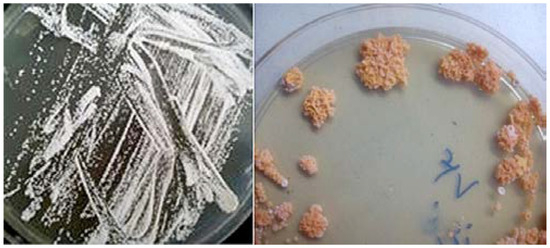
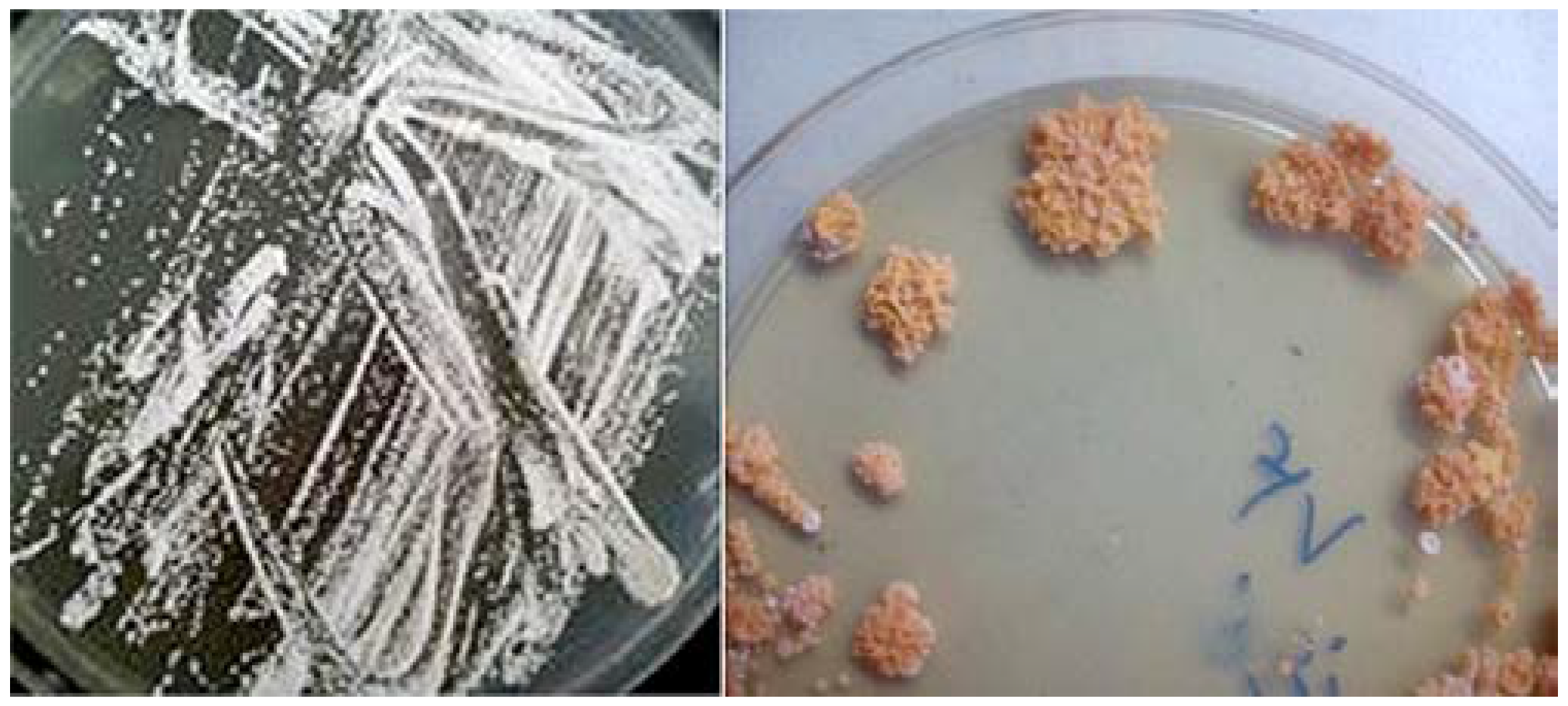
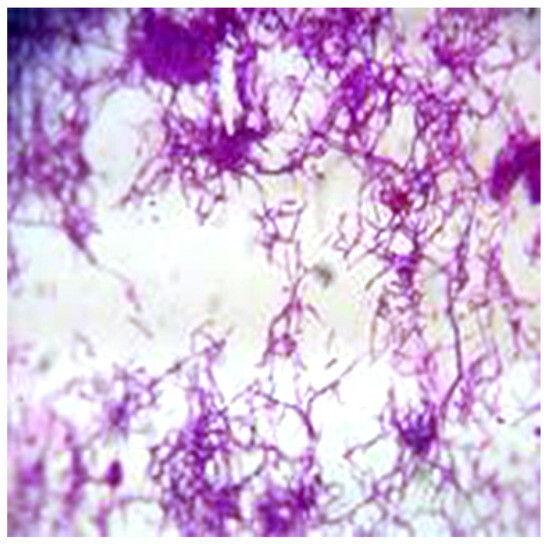
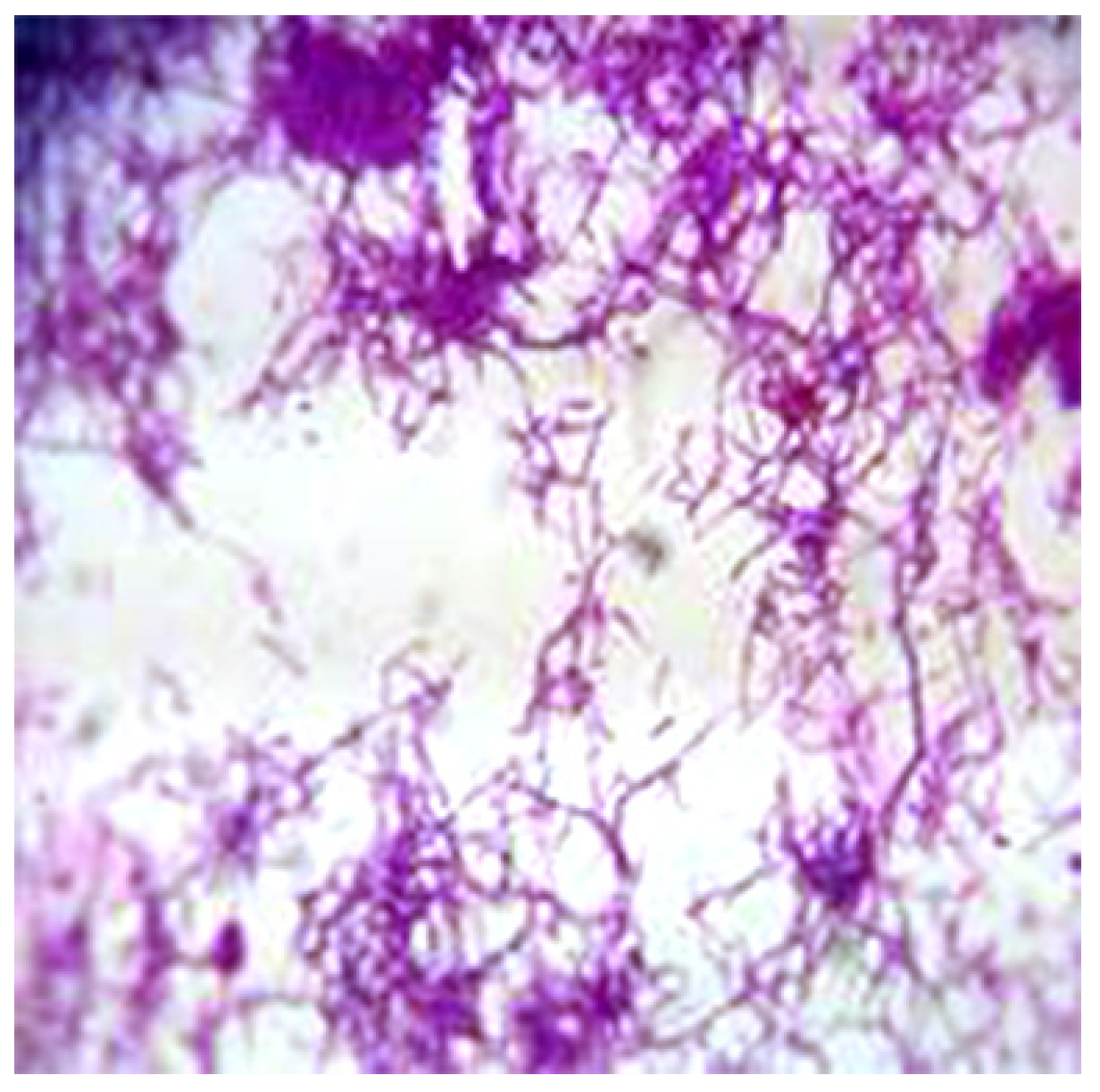
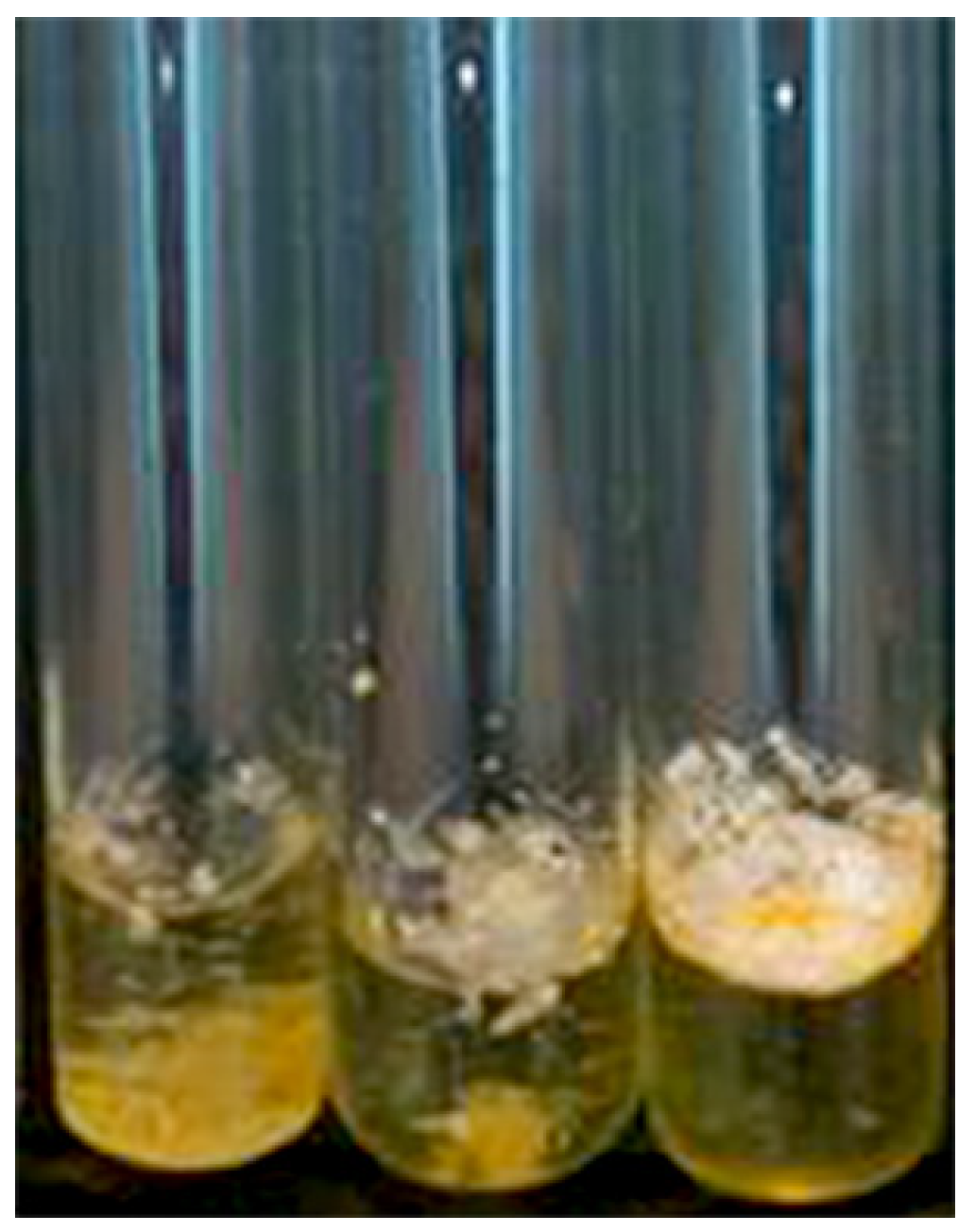
In McClung’s method, cream to white-colored colonies appeared on the paraffin-coated glass rod. Colonies were cultured on nutrient agar and were purified (Figure 1). Smears performed from the colonies revealed Gram-positive microorganisms; partially acid-fast stains (modified Kinyoun acid-fast) were also positive (Figure 2) but Kinyoun stains were negative in all isolates. Colony morphology was similar to that of the genus Nocardia and all clinical isolates were grown in lysozyme broth medium (Figure 3). Seven strains were isolated with paraffin baiting technique as compared with Sabouraud dextrose agar, Sabouraud dextrose agar with cycloheximide and paraffin agar (Table 1). The prevalence of nocardiosis is shown in Table 2. In our study, we also isolated one Nocardia spp. from a cutaneous abscess in a patient with pemphigus disorder.
Figure 1.
Nocardia grown on nutrient agar medium.
Figure 2.
Partially acid-fast staining of Nocardia.
Figure 3.
Growth of Nocardia in lysozyme broth.
Table 2.
Prevalence of nocardiosis in clinical samples.
Discussion
Nowadays nocardiosis occurs more frequently in patients with weak immune systems and the most common form is pulmonary nocardiosis, displaying symptoms that mimic tuberculosis, but requiring a different type of treatment [1,7,8,9] In scientific literature, some documents recommend the use of paraffin baiting technique for isolation of Nocardia spp. from polymicrobial specimens such as sputum, because Nocardia utilizes paraffin wax as the sole carbon source [22,23]. In a study by Mishra and colleagues in 1969, they investigated 555 clinical specimens such as sputum, BAL, and gastric lavage by paraffin baiting technique and found results of 10, 1 and 1 respectively for Nocardia spp. [16]. Singh et al. surveyed 1510 sputum specimens and their results showed that paraffin baiting method had higher efficacy compared to Sabouraud dextrose agar [18]. In another study by Venugopal et al. 350 sputum, BAL, pleural fluid, pus and biopsy specimens were examined and 15 isolates were recovered [24]. In this study paraffin baiting method was more suitable than other methods for Nocardia isolation. Eshraghi et al. in 2001 evaluated the efficiency of Sabouraud dextrose agar and paraffin agar for nocardial isolation from 142 sputum specimens and just one specimen was positive but in our study, 4 specimens (of 291 sputum samples) were positive [25]. The results show that nocardiosis appears to be increasing in Iranian patients and this should be investigated further in future studies. In the present study, noticeably, no statistical differences among methods were observed. This is mainly because statistical tests severely focus on sample size, and don’t analyze things from microbiological perspective. However, in microbiology, based on the observation that there is a certain difference among these methods, the paraffin bating technique can be considered the best method. Biochemical tests and molecular methods such as polymerase chain reaction-restriction fragment length polymorphism (PCR-RFLP) and PCR-sequencing are also important for accurate identification of genus and species of Nocardia [5,26,27].
Conclusions
In comparison to various media, paraffin baiting technique appeared to be effective and specific for Nocardia spp. isolation from various clinical specimens, especially polymicrobial samples.
Acknowledgments
This study was supported by the Tehran University of Medical Sciences, Deputy of Research.
Conflicts of Interest
The authors declare no conflict of interest.
References
- Bafghi, M.F.; Eshraghi, S.S.; Heidarieh, P.; Habibnia, S.; Nasab, M.R. Nocardiosis in immune disorder disease. Malays. J. Med. Sci. 2014, 21, 75–76. [Google Scholar]
- Budzik, J.M.; Hosseini, M.; Mackinnon, A.C., Jr.; Taxy, J.B. Disseminated Nocardia farcinica: Literature review and fatal outcome in an immunocompetent patient. Surg. Infect. Larchmt 2012, 13, 163–170. [Google Scholar] [CrossRef] [Scilit] [PubMed]
- Hollick, G.E. Nocardiosis. Clin. Microbiol. Newsl. 1988, 10, 105–109. [Google Scholar] [CrossRef] [Scilit]
- Stevens, D.A.; Pier, A.C.; Beaman, B.L.; Morozumi, P.A.; Lovett, I.S.; Houang, E.T. Laboratory evaluation of an outbreak of nocardiosis in immunocompromised hosts. Am. J. Med. 1981, 71, 928–934. [Google Scholar] [CrossRef] [Scilit]
- Brown-Elliott, B.A.; Brown, J.M.; Conville, P.S.; Wallace, R.J., Jr. Clinical and laboratory features of the Nocardia spp. based on current molecular taxonomy. Clin. Microbiol. Rev. 2006, 19, 259–282. [Google Scholar] [CrossRef] [Scilit]
- Patel, M.P.; Kute, V.B.; Gumber, M.R.; et al. Successful treatment of Nocardia pneumonia with cytomegalovirus retinitis coinfection in a renal transplant recipient. Int. Urol. Nephrol. 2013, 45, 581–585. [Google Scholar] [CrossRef] [Scilit]
- Poonwan, N.; Kusum, M.; Mikami, Y.; et al. Pathogenic Nocardia isolated from clinical specimens including those of AIDS patients in Thailand. Eur. J. Epidemiol. 1995, 11, 507–512. [Google Scholar] [CrossRef] [Scilit] [PubMed]
- Srifuengfung, S.; Poonwan, N.; Tribuddharat, C.; Chokephaibulkit, K. Prevalence of Nocardia species isolated from patients with respiratory tract infections at Siriraj Hospital, Thailand. J. Infect. Dis. Antimicrob. Agents 2007, 24, 1–6. [Google Scholar]
- Sahathevan, M.; Harvey, F.A.; Forbes, G.; et al. Epidemiology, bacteriology and control of an outbreak of Nocardia asteroides infection on a liver unit. J. Hosp. Infect. 1991, 18 (Suppl. A), 473–480. [Google Scholar] [CrossRef] [Scilit]
- Das, D.K. Actinomycosis in fine needle aspiration cytology. Cytopathology 1994, 5, 243–250. [Google Scholar] [CrossRef] [Scilit]
- Wada, R.; Itabashi, C.; Nakayama, Y.; Ono, Y.; Murakami, C.; Yagihashi, S. Chronic granulomatous pleuritis caused by Nocardia: PCR based diagnosis by nocardial 16S rDNA in pathological specimens. J. Clin. Pathol. 2003, 56, 966–969. [Google Scholar] [CrossRef] [Scilit] [PubMed]
- Gupta, N.; Srinivasan, R.; Kumar, R.; Chakrabarti, A. Two cases of nocardiosis diagnosed by fine-needle aspiration cytology: Role of special stains. Diagn. Cytopathol. 2011, 39, 363–364. [Google Scholar] [CrossRef] [Scilit] [PubMed]
- Shawar, R.M.; Moore, D.G.; LaRocco, M.T. Cultivation of Nocardia spp. on chemically defined media for selective recovery of isolates from clinical specimens. J. Clin. Microbiol. 1990, 28, 508–512. [Google Scholar] [CrossRef] [Scilit]
- Murray, P.R.; Heeren, R.L.; Niles, A.C. Effect of decontamination procedures on recovery of Nocardia spp. J. Clin. Microbiol. 1987, 25, 2010–2011. [Google Scholar] [CrossRef] [Scilit]
- Bafghi, M.F.; Nasab, M.R.; Habibnia, S.; Heidarieh, P.; Eshraghi, S.S. Which method is more suitable for Nocardia isolation of polymicrobial site? Bangladesh J. Med. Microbiol. 2013, 7, 1. [Google Scholar] [CrossRef] [Scilit]
- Mishra, S.K.; Randhawa, H.S. Application of paraffin bait technique to the isolation of Nocardia asteroides from clinical specimens. Appl. Microbiol. 1969, 18, 686–687. [Google Scholar] [CrossRef] [PubMed]
- Garrett, M.A.; Holmes, H.T.; Nolte, F.S. Selective buffered charcoal-yeast extract medium for isolation of nocardiae from mixed cultures. J. Clin. Microbiol. 1992, 30, 1891–1892. [Google Scholar] [CrossRef] [Scilit]
- Singh, M.; Sandhu, R.S.; Randhawa, H.S. Comparison of paraffin baiting and conventional culture techniques for isolation of Nocardia asteroides from sputum. J. Clin. Microbiol. 1987, 25, 176–177. [Google Scholar] [CrossRef] [Scilit]
- Saubolle, M.A.; Sussland, D. Nocardiosis: Review of clinical and laboratory experience. J. Clin. Microbiol. 2003, 41, 4497–4501. [Google Scholar] [CrossRef] [Scilit]
- Goodfellow, M. Characterisation of Mycobacterium, Nocardia, Corynebacterium and related taxa. Ann. Soc. Belg. Med. Trop. 1973, 53, 287–298. [Google Scholar]
- Goodfellow, M.; Lind, A.; Mordaraska, H.; Pattyn, S.; Tsukamura, M. A co-operative numerical analysis of cultures considered to belong to the ‘rhodochrous’ taxon. J. Gen. Microbiol. 1974, 85, 291–302. [Google Scholar] [CrossRef] [Scilit] [PubMed]
- Yu, C.; Chua, J. Nocardiosis. Phil J. Microbiol. Infect. Dis. 2001, 30, 56–61. [Google Scholar]
- Narang, P.; Dey, S.; Mendiratta, D. Paraffin slide culture technique for “baiting” non-tuberculous mycobacteria. Indian. J. Tuberc. 2000, 47, 219–222. [Google Scholar]
- Venugopal, P.V.; Venugopal, T.V.; Subramanian, S.; Arumugam, S. Nocardia species from bronchopulmonary infections and mycetomas. Sabouraudia. 1980, 18, 11–18. [Google Scholar] [CrossRef] [Scilit]
- Eshraghi, S.; Amin, M. Nocardia asteroides complex in patient with symptomatic pulmonary nocardiosis in a patient with bronchiectasis. Iran. J. Public. Health. 2001, 30, 99–102. [Google Scholar]
- Bafghi, M.F.; Heidarieh, P.; Habibnia, S.; et al. Phenotypic and molecular properties of the Nocardia species. Avecinna J. Clin. Microb. Infect. 2014, 1, e19215. [Google Scholar] [CrossRef] [Scilit]
- Bafghi, M.F.; Eshraghi, S.; Heidarieh, P.; Habibnia, S.; Nasab, M.R. DNA extraction from Nocardia species for special genes analysis using PCR. N. Am. J. Med. Sci. 2014, 6, 231–233. [Google Scholar] [PubMed]

© GERMS 2015.