Abstract
Introduction: Meningitis is a commonly seen disease in the daily practice of emergency departments. Cerebrospinal fluid (CSF) examination including Gram stain and culture are crucial for identifying between bacterial and viral meningitis and should be completed prior to antibiotic administration. Hypoglycorrhachia is one of the certain independent predictors of bacterial meningitis. Case report: A 69-year-old male having a past medical history of alcoholism and liver cirrhosis presented to the emergency department with intermittent fever and chills for one day. Sudden onset of a tonic-clonic seizure for a few minutes with agitation, and neck stiffness on physical examination were noted. Lumbar puncture was performed and xanthochromic turbid cerebrospinal fluid (CSF) was retrieved. CSF analysis showed pleocytosis with a white blood cell count of 4608/cm2; the neutrophil-to- lymphocyte ratio was 96:4. The CSF also showed extreme hypoglycorrhachia (4 mg/dL) and high protein levels (865 mg/dL) were noted. Bacterial meningitis was diagnosed. The CSF yielded Klebsiella pneumoniae on the third day of admission. After 4 weeks of meropenem complete treatment, the patient recovered uneventfully without any neurological deficit and was discharged one1 month later. Discussion: Hypoglycorrhachia is one of the certain independent predictors of bacterial meningitis. Elevated CSF protein over 150 mg/dL may turn normal crystal-clear CSF into yellowish or turbid CSF. Aerobic Gram-negative bacteria like Klebsiella species are uncommon community-acquired pathogens and are more likely to occur after neurosurgical procedures complicated with pyogenic liver abscess and septic endophthalmitis. The appropriate antibiotic should be monitored and adjusted clinically. Conclusions: In febrile patients, epileptic episodes may hint towards an inflammatory process in the central nervous system. Grossly turbid and xanthochromic CSF with hypoglycorrhachia raise the concern for bacterial meningitis. Adequate antibiotic adjustment according to CSF culture results can also lead to the successful outcome without neurologic deficits.
Introduction
Meningitis is a commonly seen disease in the daily practice of emergency departments. Classic symptoms of meningitis include fever, headache and presence of meningeal signs. Cerebrospinal fluid (CSF) examination including Gram stain and culture are crucial for identifying between bacterial and viral meningitis and should be performed prior to antibiotic administration. Hypoglycorrhachia is one of the certain independent predictors of bacterial meningitis.
Case report
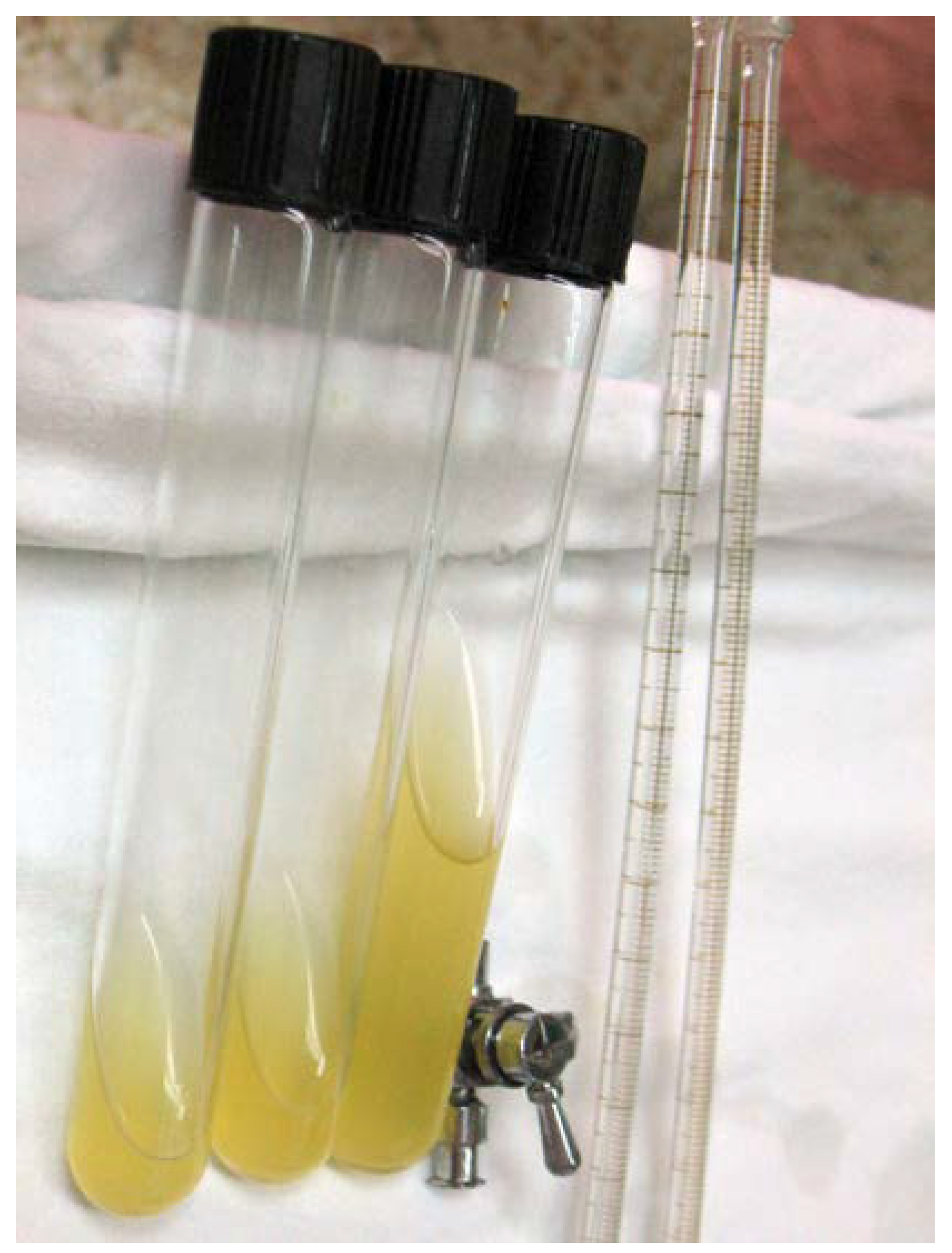
A 69-year-old male having a past medical history of alcoholism and liver cirrhosis presented to the emergency department with intermittent fever and chills for one day. At the emergency department, sudden onset of a tonic-clonic seizure for a few minutes with agitation and neck stiffness on physical examination were noted. Benzodiazepine as 5 mg of diazepam was given intravenously and his seizure was stopped immediately. Magnetic resonance imaging (MRI) was done and showed pus formation over sulci and ventricle, compatible with bacterial meningoencephalitis with ventriculitis. Lumbar puncture was performed and xanthochromic turbid cerebrospinal fluid (CSF) was found (Figure 1). CSF analysis showed pleocytosis with a white blood cell count of 4608/cm2; the neutrophil-to-lymphocyte ratio was 96:4. CSF also showed extreme hypoglycorrhachia (4 mg/dL for a serum glucose level of 97 mg/dL) and high protein levels (865 mg/dL) were noted. Bacterial meningitis was diagnosed. Empirical treatment was started with intravenous antibiotics: 2 g of ceftriaxone every 12 hours and 1 g of vancomycin every 8 hours. Worsening of the consciousness level and motor response occurred after admission and the antibiotic was changed to 1 g of meropenem every 12 hours, one the CSF yielded Klebsiella pneumoniae on the third day of admission. After 4 weeks of meropenem complete treatment, the patient recovered uneventfully without any neurological deficit and was discharged.
Figure 1.
The cerebrospinal fluid was turbid and xanthochromic with extreme hypoglycorrhachia after analysis.
Discussion
Classic symptoms of meningitis include fever, headache and meningism [1]. Less than half of patients present the classic triad and the median symptoms duration before admission is generally one day [2]. Atypical presentation of acute bacterial meningitis and failure to recognize it early on, result in serious morbidities, such as focal neurologic complications as mono- or hemi-paresis, visual defects, cognitive impairment and high fatality [2]. Cerebrospinal fluid (CSF) examination including Gram stain and culture are crucial for identifying between bacterial and viral meningitis and should be completed prior to antibiotic administration. Hypoglycorrhachia is one of the certain independent predictors of bacterial meningitis. Other independent foretellers of bacterial meningitis with greater than 99% certainty include decreased CSF glucose to serum glucose ratio, elevated protein concentrations and pleocytosis [1]. Elevated CSF protein over 150 mg/dL may turn normal crystal-clear CSF into xanthochromic or turbid CSF [3]. Streptococcus pneumoniae (57%) and Neisseria meningitidis (14%) are the most commonly seen pathogens in acute bacterial meningitis.4 Aerobic Gram-negative bacteria (GNB) such as Klebsiella species are uncommon community-acquired pathogens and more likely occur after neurosurgical procedures complicated with pyogenic liver abscess and septic endophthalmitis [1,4]. Some Klebsiella pneumoniae meningitis cases reported from Asian countries occurred in patients with diabetes, alcoholism and chronic liver disease [5]. The therapy to cover aerobic GNB after meningitis following neurosurgical procedures includes vancomycin and ceftazidime, cefepime, or meropenem [4]. The global data revealed increasing resistance to third generation cephalosporins, imipenem, and meropenem in Klebsiella pneumoniae meningitis. The appropriate antibiotic should be monitored and adjusted clinically [4]. Adequate antibiotic adjustment according to CSF culture can also lead to the successful outcome without any neurologic deficit.
Conclusions
In febrile patients, epileptic episodes may hint towards an inflammatory process in the central nervous system. Grossly turbid and xanthochromic CSF with hypoglycorrhachia raise the concern for bacterial meningitis. Adequate antibiotic adjustment according to CSF culture results can also lead to the successful outcome without neurologic deficits.
Consent
Written informed consent was obtained from the patient for publication of this case report and the accompanying images.
Author Contributions
N.H.L. wrote the draft. Y.J.S. designed the study, revised and corresponded. All authors collected data and discussed together. All authors read and approved the final version of the manuscript.
Funding
This research received no external funding.
Conflicts of interest
The authors declare no conflict of interest.
References
- Bartt, R. Acute bacterial and viral meningitis. Continuum (Minneap Minn) 2012, 18, 1255–1270. [Google Scholar] [CrossRef] [PubMed]
- van de Beek, D.; de Gans, J.; Spanjaard, L.; Weisfelt, M.; JB, R.; Vermeulen, M. Clinical features and prognostic factors in adults with bacterial meningitis. N Engl J Med 2004, 351, 1849–1859. [Google Scholar] [CrossRef] [PubMed]
- Seehusen, D.A.; Reeves, M.M.; Fomin, D.A. Cerebrospinal fluid analysis. Am Fam Physician 2003, 68, 1103–1108. [Google Scholar] [PubMed]
- Brouwer, M.C.; Tunkel, A.R.; van de Beek, D. Epidemiology, diagnosis, and antimicrobial treatment of acute bacterial meningitis. Clin Microbiol Rev 2010, 23, 467–492. [Google Scholar] [CrossRef] [PubMed]
- Huang, C.R.; Lu, C.H.; Chang, H.W.; Lee, P.Y.; Lin, M.W.; Chang, W.N. Community-acquired spontaneous bacterial meningitis in adult diabetic patients: an analysis of clinical characteristics and prognostic factors. Infection 2002, 30, 346–350. [Google Scholar] [CrossRef] [PubMed]
© GERMS 2025.