Mechanism of Gas Control and Fracturing Release in Mid-Shallow High-Rank Coal Reservoirs and Its Engineering Practice


Abstract
1. Introduction
2. Pore Structure and Occurrence Characteristics of Mid-Shallow in China High-Rank Coal Seams
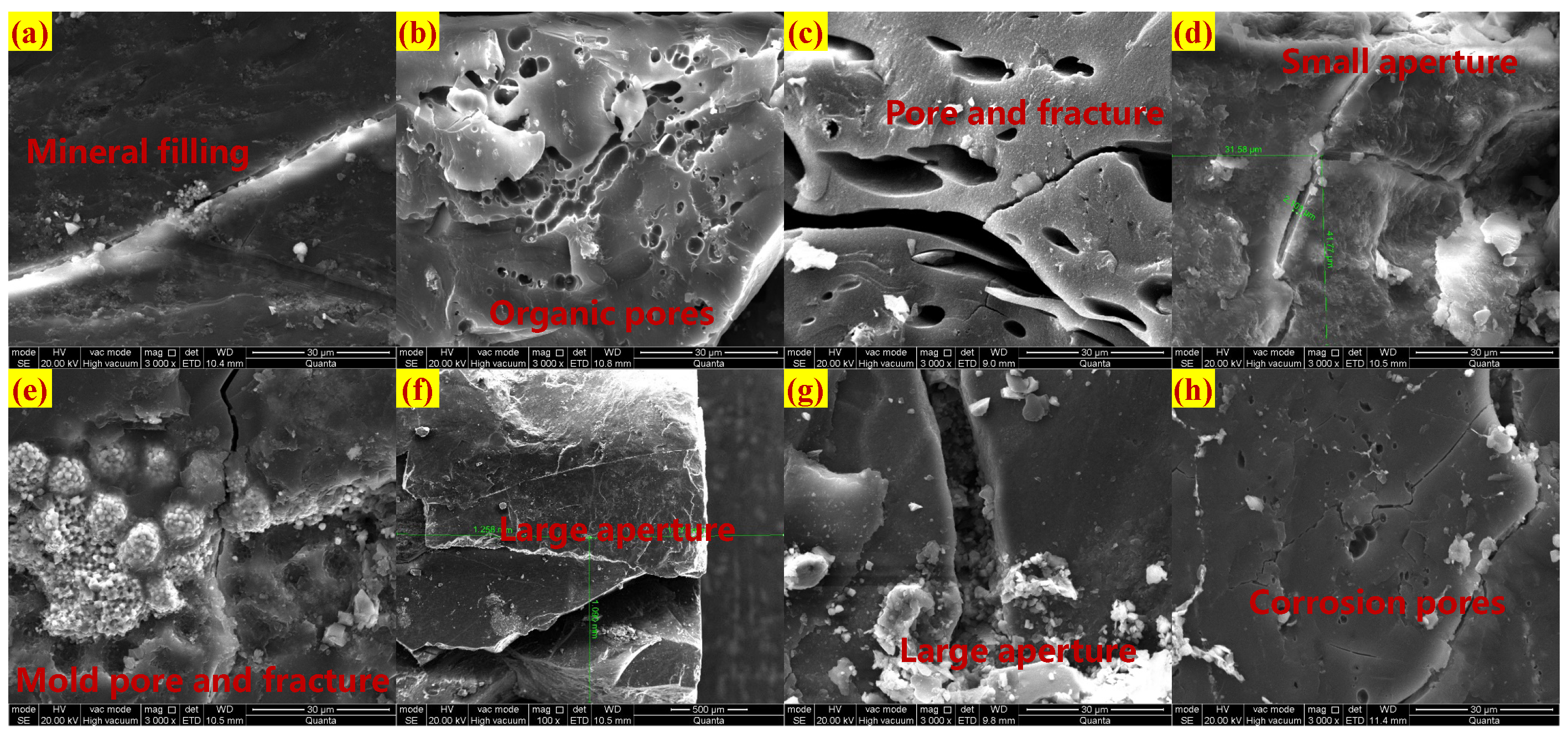
2.1. Pore Structure and Distribution Patterns of Coal Rock Before Hydration
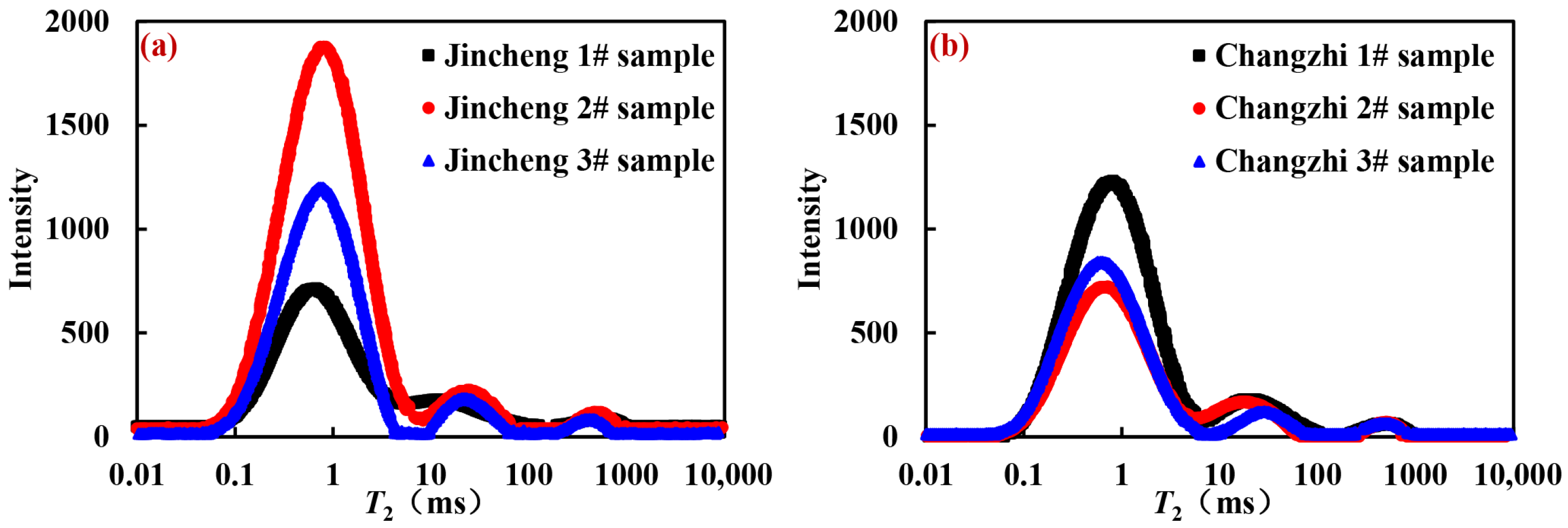
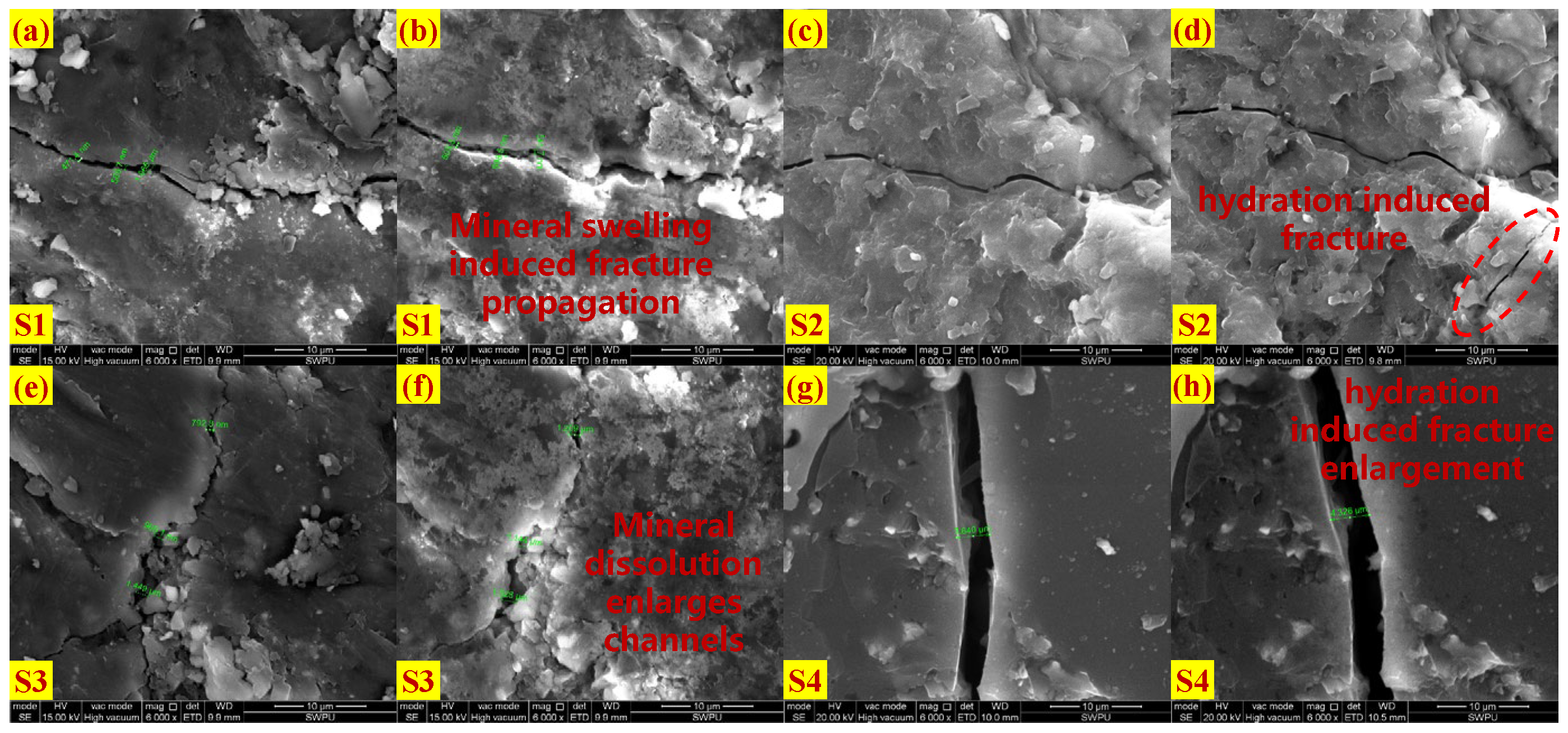
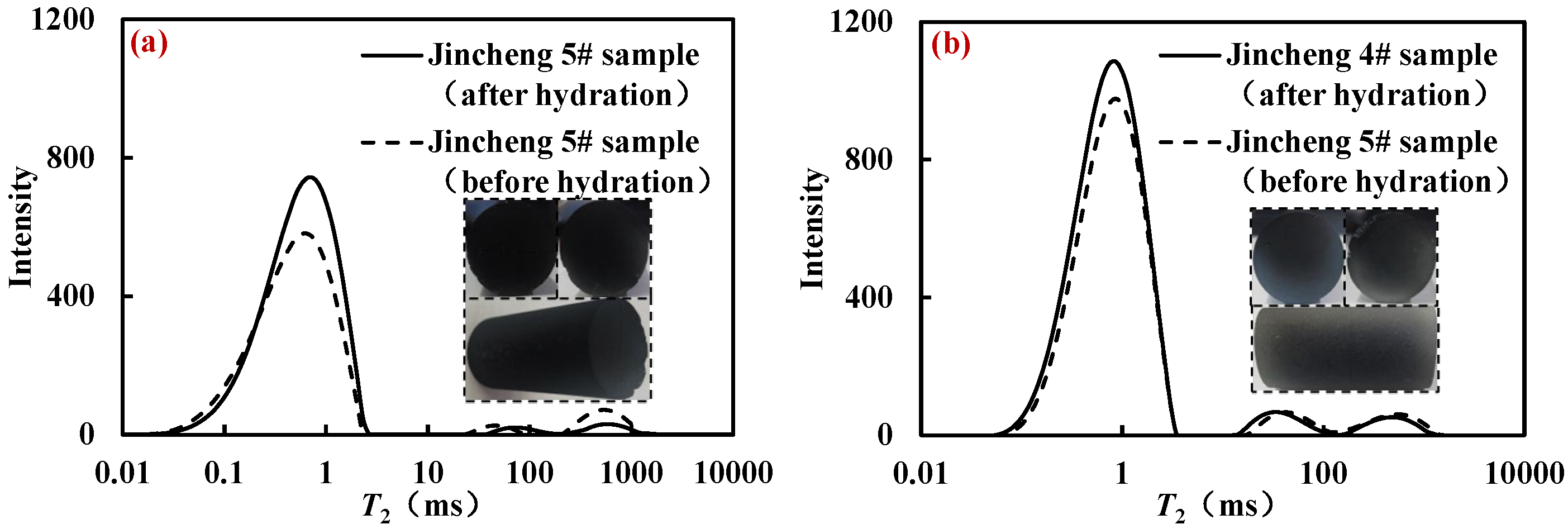
2.2. Pore Structure and Distribution Patterns of Coal Rock After Hydration
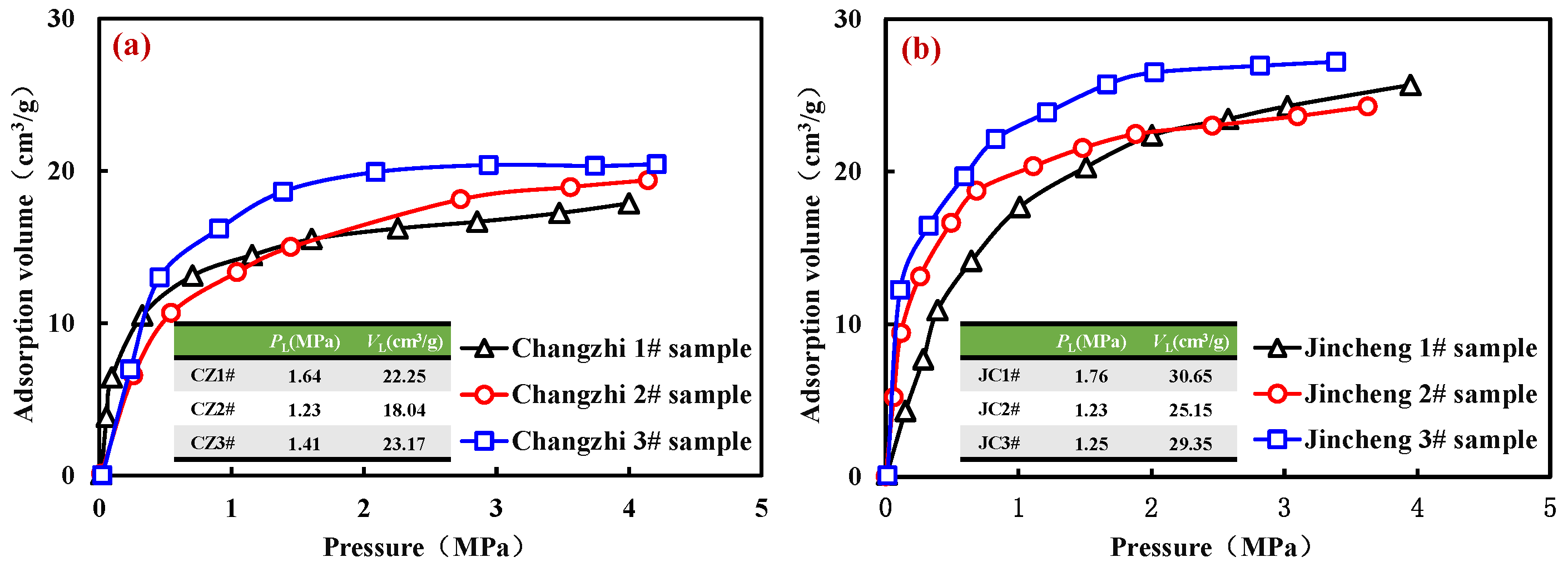
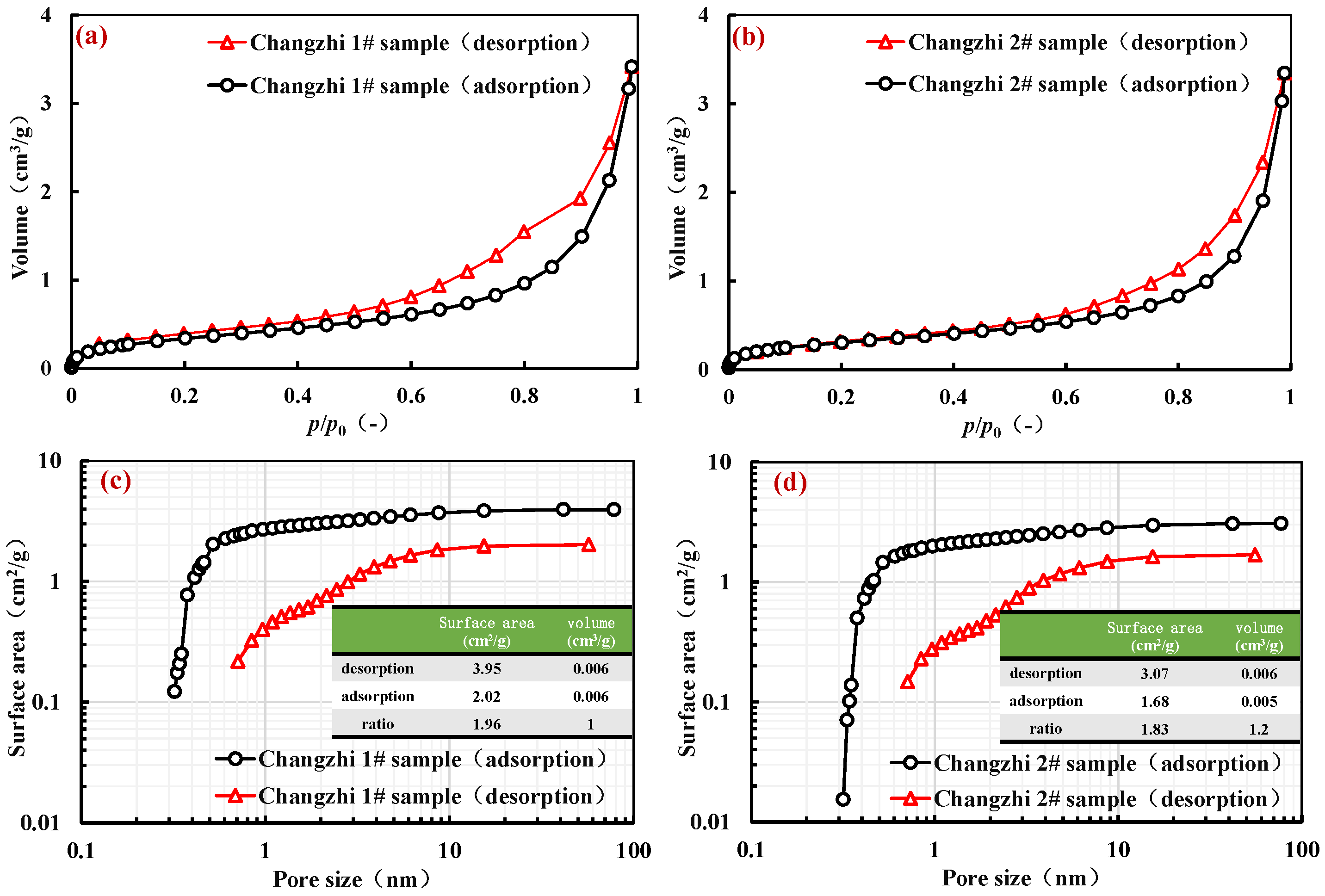
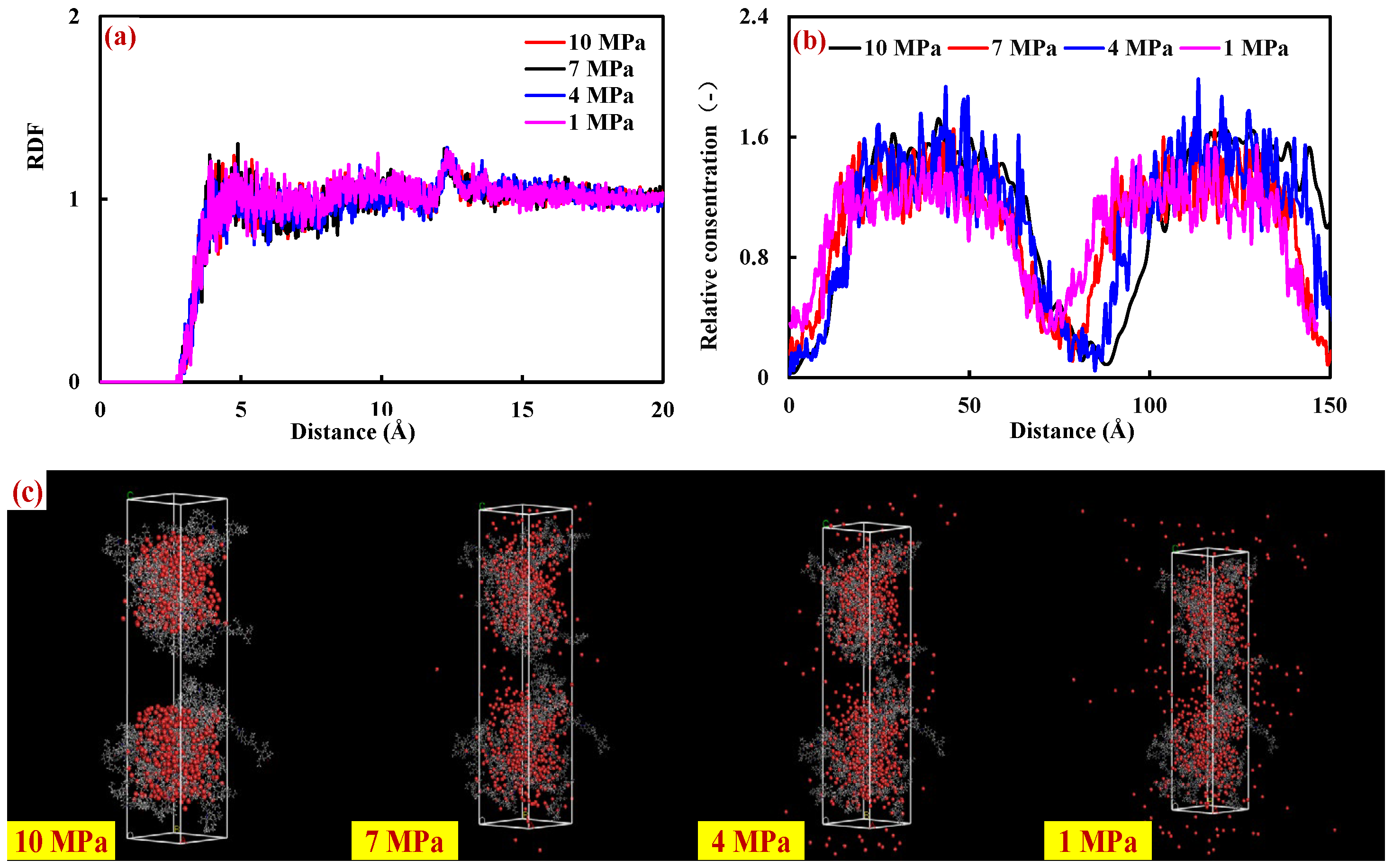
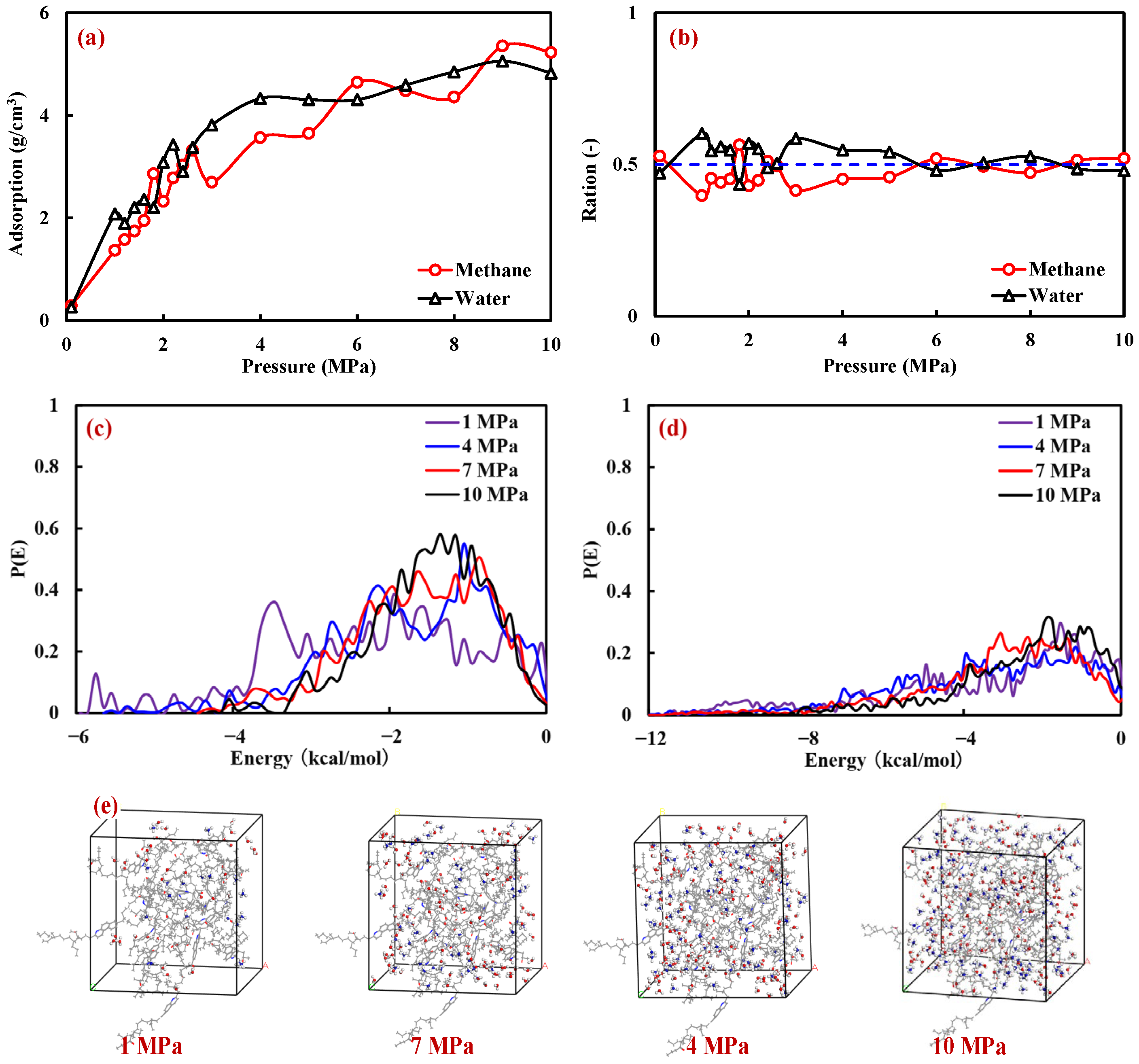
2.3. Methane/Nitrogen Isothermal Adsorption Patterns
3. Mechanisms for Efficient Release of CBM in Mid-Shallow High-Rank Coal
3.1. “Hydration-Enhanced Pore Expansion” for Fully Releasing Bound Methane and Maximizing Recovery Potential
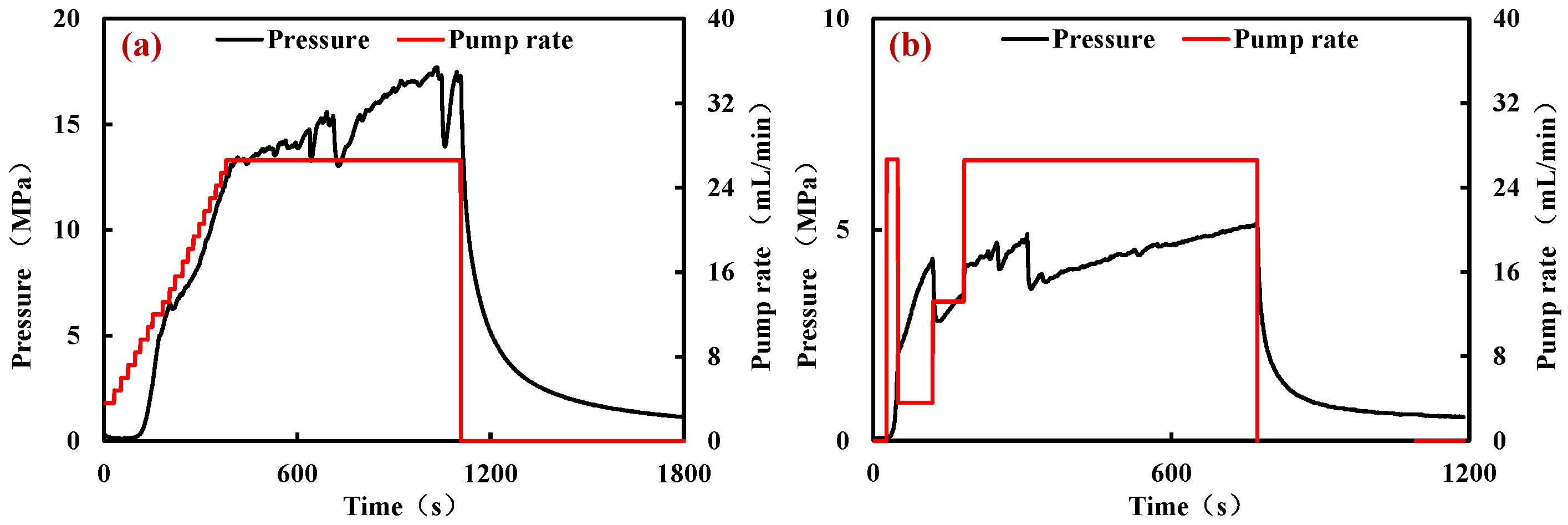
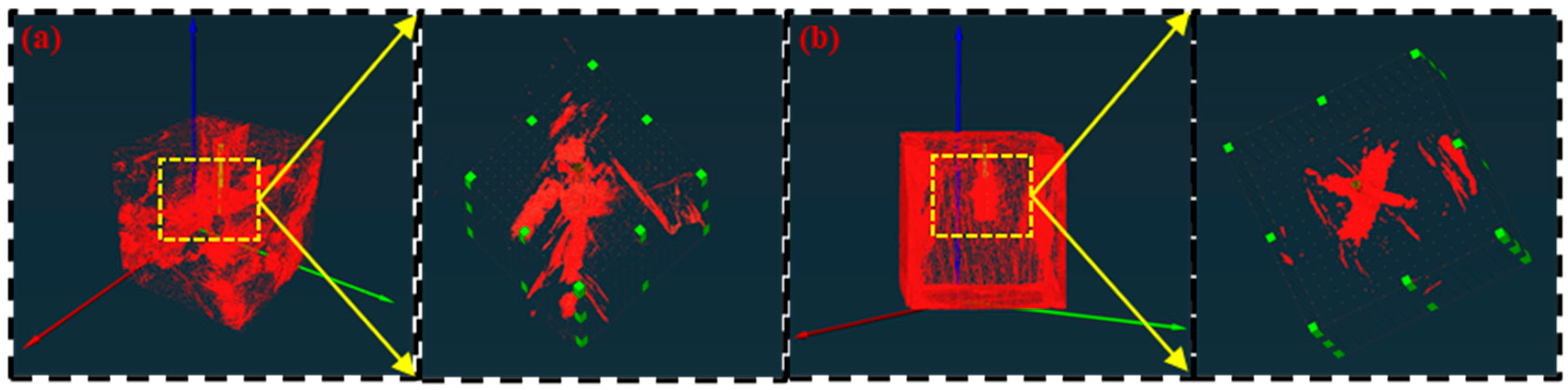
3.2. “Ultra-Long Pad + Stepwise Slow Ramp-Up Rate” Forms a Complex Fracture Network and Connects Matrix Pores
4. Engineering Practice for Efficient Development of Mid-Shallow High-Rank Coalbed Methane
4.1. Technical System for High-Rank Coalbed Methane Fracturing Stimulation
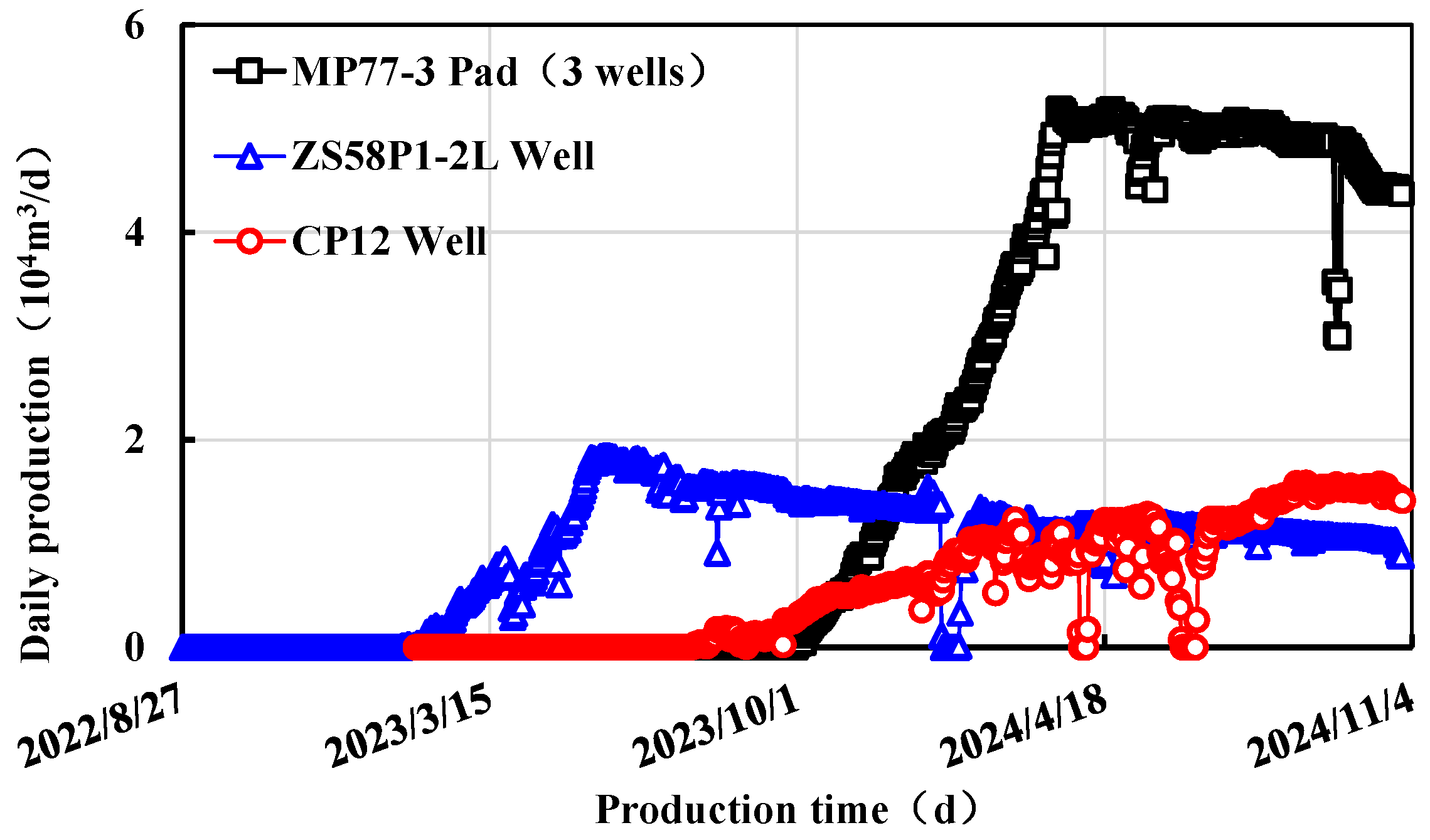
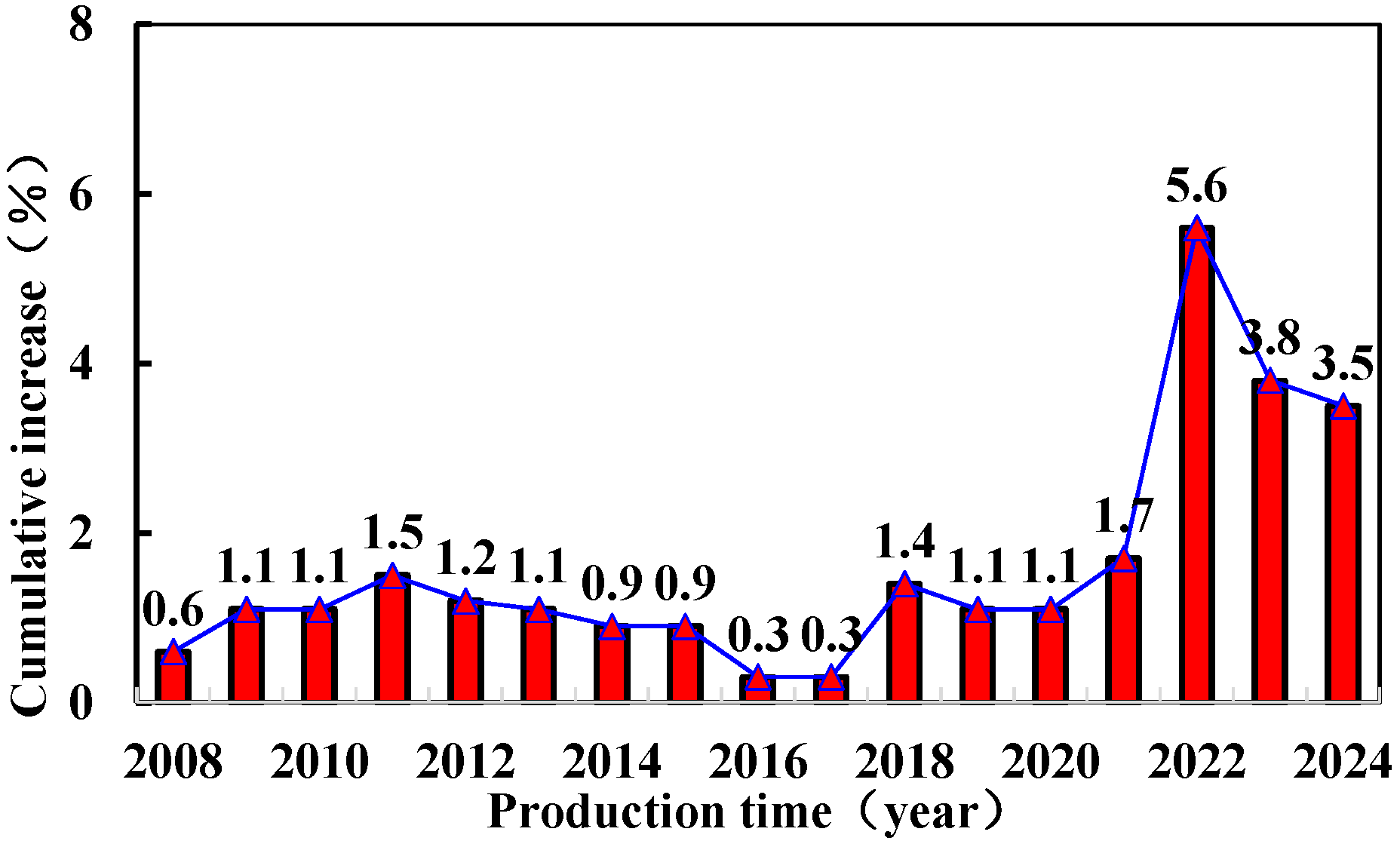
4.2. Production Practice of “Channeled” Fracturing for High-Rank Coalbed Methane
5. Prospects for Efficient Development Technologies of Mid-Shallow High-Rank Coalbed Methane
5.1. Focus on Developing “High-Rank Coal Geology–Engineering Integrated Sweet Spot Evaluation Technology”
5.2. Deepen and Strengthen the “Competitive Adsorption Mechanism for Efficient Micropore Methane Release”
5.3. Accelerate the Establishment of a “Low-Temperature, Low-Damage Integrated Variable-Viscosity Fracturing System”
5.4. Continuously Improve the “Concept of Collaborative Fracturing Stimulation for Horizontal Well Clusters”
6. Conclusions
- (1)
- The methane occurrence characteristics of the pore structure in high-rank coal from the Qinshui Basin, Shanxi were analyzed through scanning electron microscopy and nuclear magnetic resonance experiments. The improvement effect of hydration on the nanopores of the coal seam matrix was revealed; simultaneously, based on nitrogen adsorption experiments, it was demonstrated that the micropore filling effect inhibits the efficient release of methane.
- (2)
- Utilizing molecular simulation, numerical simulation, and large-scale physical modeling of fracturing experiments, the efficient release mechanism of hydraulic fracturing on mid-shallow high-rank coalbed methane was revealed, showing that it shortens the low-speed diffusion stage and enhances high-speed linear seepage. It was clarified that adopting the construction technology of large-scale pad water injection and stepwise slow production increase can fully leverage the dual mechanical and physicochemical effects of water. This established a stimulation approach that fully modifies the coal seam, achieving efficient release of both “bound-state” and surface-adsorbed methane in the coal seam.
- (3)
- Based on the efficient release mechanism of mid-shallow high-rank coal, a technical system centered around “channeled” fracturing stimulation has been developed. This system has achieved favorable field application results in the Qinshui Basin, Shanxi, with the MP well group maintaining a stable daily production exceeding 50,000 m3/d. This strongly supports confidence in the efficient development of mid-shallow high-rank coal seams and solidifies the foundation for the continuous production increase and stable production of mid-shallow high-rank coalbed methane in the Qinshui Basin.
- (4)
- Technical directions for the comprehensive upgrade of the “channeled” fracturing stimulation system were proposed, including: developing the “high-rank coal geology–engineering integrated sweet spot evaluation technology”, solidifying the “competitive adsorption mechanism for efficient micropore methane release”, establishing the “low-temperature, low-damage integrated variable-viscosity fracturing system”, and refining the “concept of collaborative fracturing stimulation for horizontal well clusters”.
Author Contributions
Funding
Data Availability Statement
Conflicts of Interest
References
- Qin, Y.; Moore, T.A.; Shen, J.; Yang, Z.; Shen, Y.; Wang, G. Resources and geology of coalbed methane in China: A review. Int. Geol. Rev. 2018, 60, 777–812. [Google Scholar] [CrossRef]
- Zou, C.; Ma, F.; Pan, S.; Lin, M.; Zhang, G.; Xiong, B.; Wang, Y.; Liang, Y.; Yang, Z. Earth energy evolution, human development and carbon neutral strategy. Pet. Explor. Dev. 2022, 49, 411–428. [Google Scholar] [CrossRef]
- Sun, Q.; Zhao, Q.; Jiang, X.; Mu, F.; Kang, L.; Wang, M.; Yang, Q.; Zhao, Y. Prospects and strategies of CBM exploration and development in China under the new situation. J. China Coal Soc. 2021, 46, 65–76. [Google Scholar]
- Yang, R.; Hong, C.; Huang, Z.; Song, X.; Zhang, S.; Wen, H. Coal breakage using abrasive liquid nitrogen jet and its implications for coalbed methane recovery. Appl. Energy 2019, 253, 113485. [Google Scholar] [CrossRef]
- Xu, F.; Yan, X.; Lin, Z.; Li, S.; Xiong, X.; Yan, D.; Wang, H.; Zhang, S.; Xu, B.; Ma, X.; et al. Research progress and development direction of key technologies for efficientcoalbed methane development in China. Coal Geol. Explor. 2022, 50, 2. [Google Scholar]
- Zhu, Q.; Wang, N.; Zhang, X.; Yao, H.; Yang, Y.; Zou, X.; Wang, J.; Sun, X. Single-phase water flow quasi-steady-state drainage model and its application effect analysis in coal-bed methane wells. J. China Coal Soc. 2020, 45, 1116–1124. [Google Scholar]
- Liu, S.; Sang, S.; Liu, H.; Zhu, Q.P. Growth characteristics and genetic types of pores and fractures in a high-rank coal reservoir of the southern Qinshui Basin. Ore Geol. Rev. 2015, 64, 140–151. [Google Scholar] [CrossRef]
- Clarkson, C.R.; Solano, N.; Bustin, R.M.; Bustin, A.M.M.; Chalmers, G.R.; He, L.; Melnichenko, Y.B.; Radliński APBlach, T.P. Pore structure characterization of North American shale gas reservoirs using USANS/SANS, gas adsorption, and mercury intrusion. Fuel 2013, 103, 606–616. [Google Scholar] [CrossRef]
- Wang, B.; Jiang, B.; Liu, L.; Zheng, G.Q.; Yong, Q.I.N.; Wang, H.; Liu, H.; Li, G.-Z. Physical simulation of hydrodynamic conditions in high rank coalbed methane reservoir formation. Min. Sci. Technol. 2009, 19, 435–440. [Google Scholar] [CrossRef]
- Liu, S.; Sang, S.; Zhu, Q.; Zhang, J.; Gao, H.; Liu, H.; Lin, L. Triple medium physical model of post fracturing high-rank coal reservoir in southern Qinshui Basin. J. Earth Sci. 2015, 26, 407–415. [Google Scholar] [CrossRef]
- Zhao, X.; Liu, S.; Sang, S.; Pan, Z.; Zhao, W.; Yang, Y.; Hu, Q.; Yang, Y. Characteristics and generation mechanisms of coal fines in coalbed methane wells in the southern Qinshui Basin, China. J. Nat. Gas Sci. Eng. 2016, 34, 849. [Google Scholar] [CrossRef]
- Yang, Y.; Wang, Y.; Liu, Z.; Biwu, C.; Chunsheng, W.; Xueying, Z.; Qing, D. Strategy and practice of high-efficiency development of high-rank coalbed methane in the southern Qinshui Basin. China Pet. Explor. 2024, 29, 17–30. [Google Scholar]
- Yang, Y.; Wang, Y.; Chen, L.; Wang, X.; Liu, C.; Zhagn, C.; Fan, H. Optimization technology of efficient CBM productivity areas in Qinnanxi-Mabidong Block, Qinshui Basin, Shanxi, China. J. China Coal Soc. 2018, 43, 1620–1626. [Google Scholar]
- Yao, Y.; Wang, H.; Yang, Y.; Liu, D.; Lu, X.; Cao, L. Evaluation of the hydro-fracturing potential for coalbed methane reservoir: A case study of Zhengzhuang CBM field. Coal Geol. Explor. 2021, 49, 119–129. [Google Scholar]
- Zhu, Q.; Lu, X.; Yang, Y.; Zhang, Q. Coupled activation technology for low-efficiency productivity zones of high-rank coalbed methane in Zhengzhuang block, Shanxi, China. J. China Coal Soc. 2019, 44, 2547–2555. [Google Scholar]
- Yang, C.; Chang, H.; Shao, X.; Hao, C.; Tian, Q.; Wu, J.; Liu, M.; Ji, C.; Jia, J. Study on micro-pore characteristics of structural coal indifferent coal bodies under scanning electron microscopy. Coal Sci. Technol. 2019, 47, 194–200. [Google Scholar]
- Sun, Y.; Zhai, C.; Xu, J.; Qin, L.; Tang, W. A method for accurate characterisation of the pore structure of a coal mass based on two-dimensional nuclear magnetic resonance T1-T2. Fuel 2020, 262, 116574. [Google Scholar] [CrossRef]
- Xue, D.J.; Liu, T.; Zhou, J.; Sun, X.T. Visualization of helium-water flow in tight coal by the low-field NMR imaging: An experimental observation. J. Pet. Sci. Eng. 2020, 188, 106862. [Google Scholar] [CrossRef]
- Wen, H.; Wei, G.; Ma, L.; Li, Z.; Lei, C.; Hao, J. Damage characteristics of coal icrostructure with liquid CO2 freezing-thawing. Fuel 2019, 249, 169–177. [Google Scholar] [CrossRef]
- Meng, Z.P.; Liu, S.S.; Wang, B.Y.; Tian, Y.D.; Wu, J. Adsorption capacity and its pore structure of coals with different coal body structure. J. China Coal Soc. 2015, 40, 1865–1870. [Google Scholar]
- Liu, Y.; Hao, C.; Wang, Z.; Xie, J.; Zhao, W.; Meng, F.; Han, Y. Micropore distribution and methane adsorption process and mechanism in bituminous coals: A molecular dynamics simulation study. J. Environ. Chem. Eng. 2024, 12, 112139. [Google Scholar] [CrossRef]
- Wang, L.; Wu, S.; Han, S.; Hu, B.; Wang, Q.; Zhang, K.; Song, T. Fractal Analysis of Coal Pore Structure Based on Low-Pressure Gas Adsorption and Its Influence on Methane Adsorption Capacity: A Perspective from Micropore Filling Model. Energy Fuels 2024, 38, 4031–4046. [Google Scholar] [CrossRef]
- Liu, J.; Ji, H.; Peng, X.; Mao, Y.; Wang, Z. Influence of small organic molecules on methane adsorption on coal: A molecular simulation study. Int. J. Oil Gas Coal Technol. 2024, 35, 182–204. [Google Scholar] [CrossRef]
- Yuan, B.; Su, Y.; Moghanloo, R.G.; Rui, Z.; Wang, W.; Shang, Y. A new analytical multi-linear solution for gas flow toward fractured horizontal wells with different fracture intensity. J. Nat. Gas Sci. Eng. 2015, 23, 227–238. [Google Scholar] [CrossRef]
- Williams-Kovacs, J.D.; Clarkson, C.R. A modified approach for modeling two-phase flowback from multi-fractured horizontal shale gas wells. J. Nat. Gas Sci. Eng. 2016, 30, 127–147. [Google Scholar] [CrossRef]
- Zhu, Q. Theoretical basis of dredging and efficient development of high-rank coalbed methane in China: A case study of the Qinshui Basin. Coal Geol. Explor. 2022, 50, 82–91. [Google Scholar]
- Zhu, Q. Key technologies and practices for efficient development of high-rank CBM in the Qinshui Basin. Nat. Gas Ind. 2022, 42, 87–96. [Google Scholar]




Disclaimer/Publisher’s Note: The statements, opinions and data contained in all publications are solely those of the individual author(s) and contributor(s) and not of MDPI and/or the editor(s). MDPI and/or the editor(s) disclaim responsibility for any injury to people or property resulting from any ideas, methods, instructions or products referred to in the content. |
© 2026 by the authors. Licensee MDPI, Basel, Switzerland. This article is an open access article distributed under the terms and conditions of the Creative Commons Attribution (CC BY) license.
Share and Cite
Yang, Y.; Li, Z.; Jin, H.; Lu, X.; Zhao, Z.; Wang, Y. Mechanism of Gas Control and Fracturing Release in Mid-Shallow High-Rank Coal Reservoirs and Its Engineering Practice. Processes 2026, 14, 1031. https://doi.org/10.3390/pr14071031
Yang Y, Li Z, Jin H, Lu X, Zhao Z, Wang Y. Mechanism of Gas Control and Fracturing Release in Mid-Shallow High-Rank Coal Reservoirs and Its Engineering Practice. Processes. 2026; 14(7):1031. https://doi.org/10.3390/pr14071031
Chicago/Turabian StyleYang, Yanhui, Zongyuan Li, Haozeng Jin, Xiuqin Lu, Zhihong Zhao, and Yuting Wang. 2026. "Mechanism of Gas Control and Fracturing Release in Mid-Shallow High-Rank Coal Reservoirs and Its Engineering Practice" Processes 14, no. 7: 1031. https://doi.org/10.3390/pr14071031
APA StyleYang, Y., Li, Z., Jin, H., Lu, X., Zhao, Z., & Wang, Y. (2026). Mechanism of Gas Control and Fracturing Release in Mid-Shallow High-Rank Coal Reservoirs and Its Engineering Practice. Processes, 14(7), 1031. https://doi.org/10.3390/pr14071031