1. Introduction
Fresh water is one of the most essential resources for sustaining human life and economic development. However, less than 3% of the total water available on Earth is fresh water, and nearly 70% of that is trapped in glaciers, permanent snow, or deep aquifers, making it unavailable for direct use [
1]. The small fraction of accessible fresh water is unevenly distributed globally and has been increasingly threatened by rapid population growth, industrial expansion, agricultural intensification, and climate change [
2,
3,
4]. As a consequence, the growing scarcity of clean water has triggered serious ecological, social, and geopolitical challenges in many regions. These conditions highlight the urgent need for water purification technologies that are not only effective but also low-cost, scalable, and compatible with resource-limited environments [
5].
The sun provides abundant, renewable energy to Earth every day [
6]. Owing to its sustainability and environmental compatibility, solar steam generation has emerged as a promising technique for water purification, seawater desalination, and sterilization [
7,
8,
9]. Compared with conventional solar evaporation systems that rely on bulk heating, solar-driven interfacial evaporation has recently attracted increasing interest due to its ability to confine heat at the air–water interface, significantly reducing energy losses to the bulk liquid [
10,
11,
12]. A typical two-dimensional (2D) interfacial steam generator consists of three functional components: (a) a photothermal absorber with strong broadband light absorption, (b) a thermal management layer with low thermal conductivity, and (c) a porous hydrophilic substrate to deliver continuous water transport to the evaporation surface [
13,
14,
15]. With this configuration, state-of-the-art 2D interfacial evaporators have achieved photothermal conversion efficiencies of 80–95% under one sun illumination (AM 1.5 G, 1000 W m
−2) [
16,
17,
18]. However, conventional and emerging interfacial evaporation systems still face limitations related to scalability, material cost, and environmental compatibility, which hinder their practical deployment [
19].
These limitations have motivated growing interest in environmentally benign, biomass-derived photothermal materials capable of combining efficient light absorption with sustainable and scalable fabrication. Many existing photothermal materials are based on plasmonic metals, graphene, graphene oxide, or semiconductor nanomaterials, which are costly and often unsuitable for large-scale production [
20,
21,
22]. In contrast, biochar, a carbon-rich material produced by the pyrolysis of biomass under limited oxygen conditions, is naturally abundant, low-cost, and environmentally friendly [
23]. Due to its tunable porosity, high light absorption, and stable physicochemical properties, biochar has been widely investigated in catalysis, carbon sequestration, energy storage, and environmental remediation [
24,
25,
26]. Recent studies have explored biochar-based functional materials derived from agricultural residues such as rice husk, coconut shell, bamboo, and wood, demonstrating their potential as low-cost light-absorbing materials for solar steam generation [
27,
28,
29]. Biochar-based photothermal coatings are moreover commonly reported to display broadband optical absorption across the UV–Vis–NIR region owing to their carbonized aromatic structures; this behaviour has been consistently observed in lignocellulosic biochars under solar illumination and is compatible with the photothermal response obtained in this work [
30,
31]. In addition, biochar production contributes to carbon cycle regulation by converting atmospheric CO
2 into stable carbon, thus mitigating greenhouse gas emissions [
23,
26]. Importantly, biochar performance in functional applications is strongly governed by surface area, pore-size distribution, and pore connectivity, which can be engineered through processing and activation routes [
27,
28]. Recent reviews specifically highlight biochar and other biomass-derived carbons as scalable photothermal absorbers for interfacial evaporation technologies [
16].
Natural fibers such as sisal, cactus fibers, and cellulose are abundant lignocellulosic materials with hierarchical porous structures and excellent water transport properties [
32,
33]. These renewable substrates are lightweight, biodegradable, and widely available as agricultural byproducts. Owing to their intrinsic hydrophilicity and capillary-driven wicking ability, natural fibers have been widely explored as water-delivery scaffolds in interfacial solar evaporation systems [
34]. However, pristine fibers exhibit limited light absorption and poor photothermal conversion efficiency, which restricts their direct application. To overcome this limitation, several studies have demonstrated that coupling lignocellulosic scaffolds with carbon-based photothermal coatings—such as biochar, carbon black, or biomass-derived carbons—effectively integrates broadband light absorption with capillary-driven water transport, significantly enhancing interfacial evaporation performance [
17,
19,
34,
35]. In these systems, the porous fiber network ensures continuous water supply, while the carbonaceous phase serves as the photothermal conversion layer, highlighting the importance of substrate architecture, surface chemistry, and coating adhesion.
Despite recent advances in biochar-based photothermal materials and biomass-derived evaporators, most reported systems rely on powders, rigid carbon foams, or high-temperature processing routes that limit scalability and sustainability. In particular, the combined effects of chemical purification of natural fibers and controlled biochar functionalization on structural order, interfacial adhesion, and evaporation performance remain insufficiently explored. Moreover, reviews on biomass-based photothermal systems point out that scalable fabrication requires robust coating–substrate adhesion and stable interfacial wetting to sustain high evaporation rates under practical conditions [
16,
19].
The scientific novelty of this work lies in establishing an integrated, fully biomass-derived design principle that couples cellulose purification with chemically reinforced biochar–fiber interfacial anchoring and comparative performance evaluation, enabling scalable and low-temperature interfacial solar evaporation.
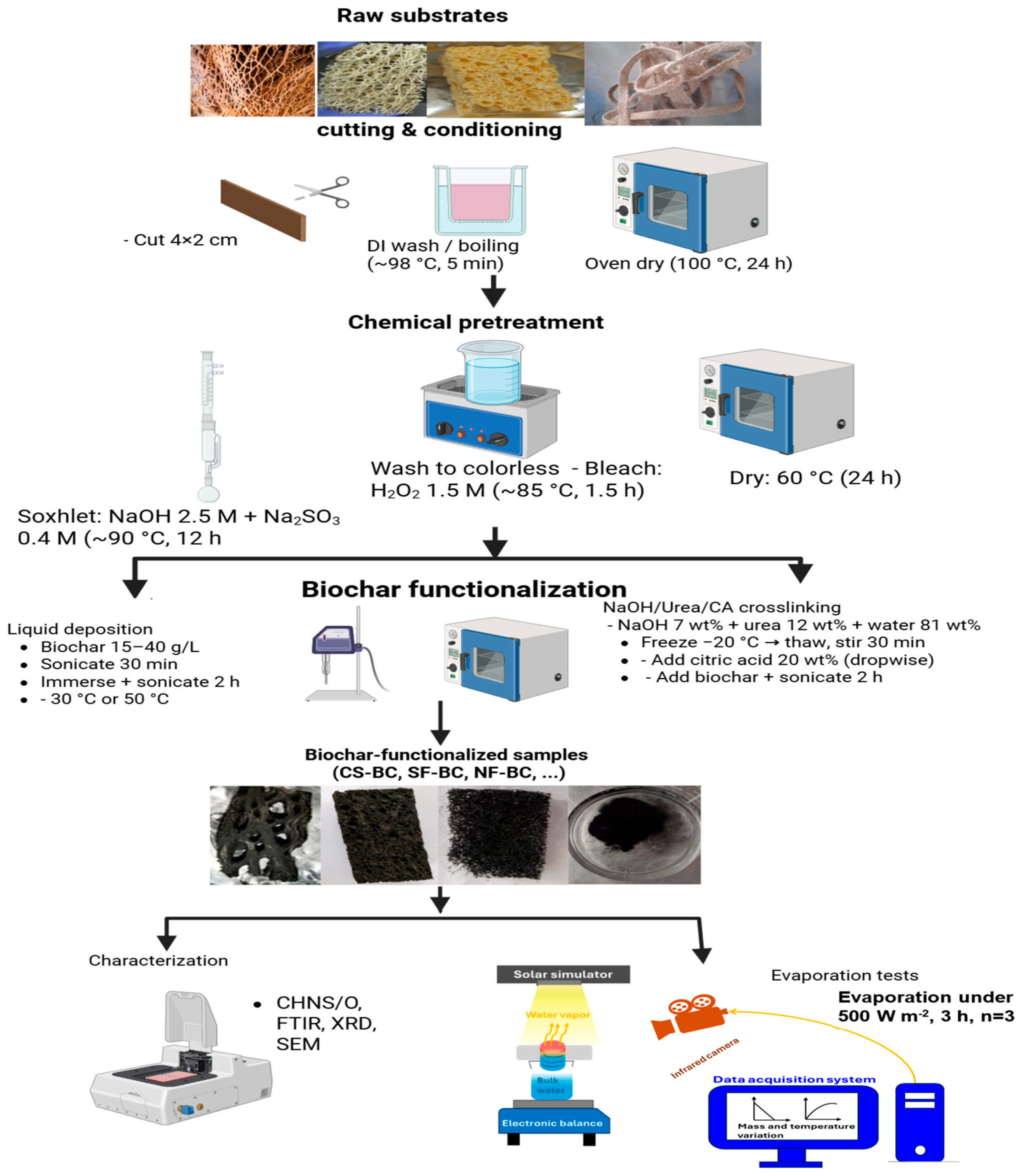
In this work, we propose a sustainable and scalable strategy to functionalize cellulose-rich natural fibers—Opuntia ficus-indica, Agave sisalana, and cellulose sponge—using biochar derived from lignocellulosic biomass through a low-temperature chemical pretreatment and NaOH/urea/citric-acid-assisted deposition route. Unlike previous studies, this approach integrates cellulose purification, enhanced biochar adhesion, and comparative photothermal and evaporation performance analysis under controlled irradiance, together with comprehensive water-quality validation.
The objective of this study is to determine how chemical pretreatment and biochar deposition alter the structural, optical, and interfacial properties of natural fibers to improve light absorption, heat localization, and solar-driven water evaporation efficiency, thereby advancing low-cost and environmentally compatible materials for scalable solar water purification technologies.
3. Results and Discussion
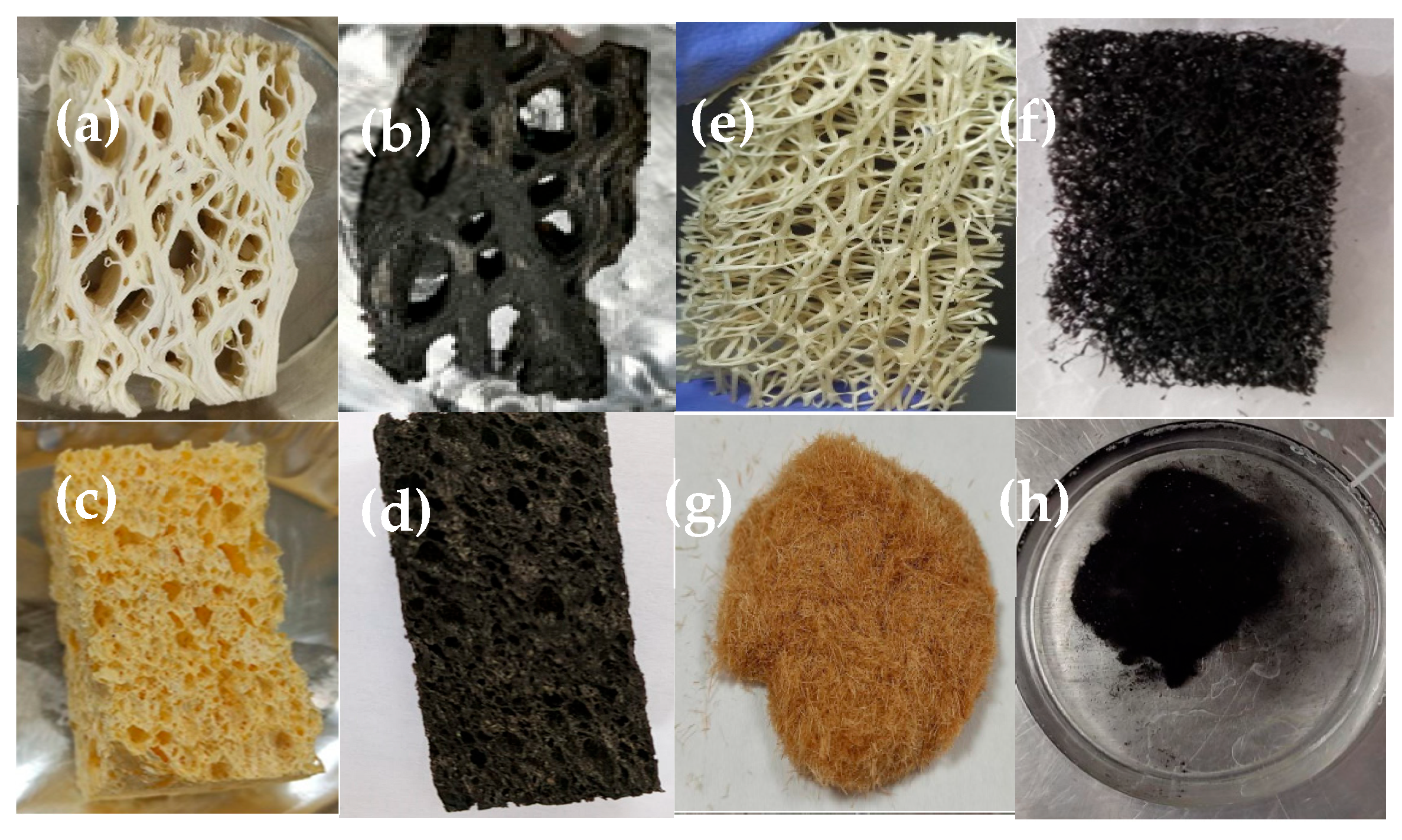
The combined chemical pretreatment and biochar-based functionalization markedly modified the elemental composition, porosity, surface chemistry, and overall morphology of the lignocellulosic substrates, and these transformations are clearly reflected in their improved impregnation behavior and carbon enrichment. These results are discussed herein to establish a structure–property–performance relationship across different biomass-derived substrates. A visual comparison of the materials before and after functionalization (
Figure 2) reveals substantial morphological changes. The untreated substrates—nopal fiber, cellulose sponge, sisal fiber, and jute fiber—exhibit the characteristic macroporous and fibrillar architectures typical of lignocellulosic biomass, where cellulose microfibrils are embedded within a heterogeneous matrix of hemicellulose and lignin. After functionalization, all samples exhibit pronounced darkening and a rough, carbon-rich surface, confirming the deposition of biochar particles. Similar morphological transitions have been reported for biochar-coated biomass-based evaporators, where increased surface roughness and optical density enhance light absorption and accelerate photothermal conversion [
14,
16,
17,
18,
19,
27,
28].
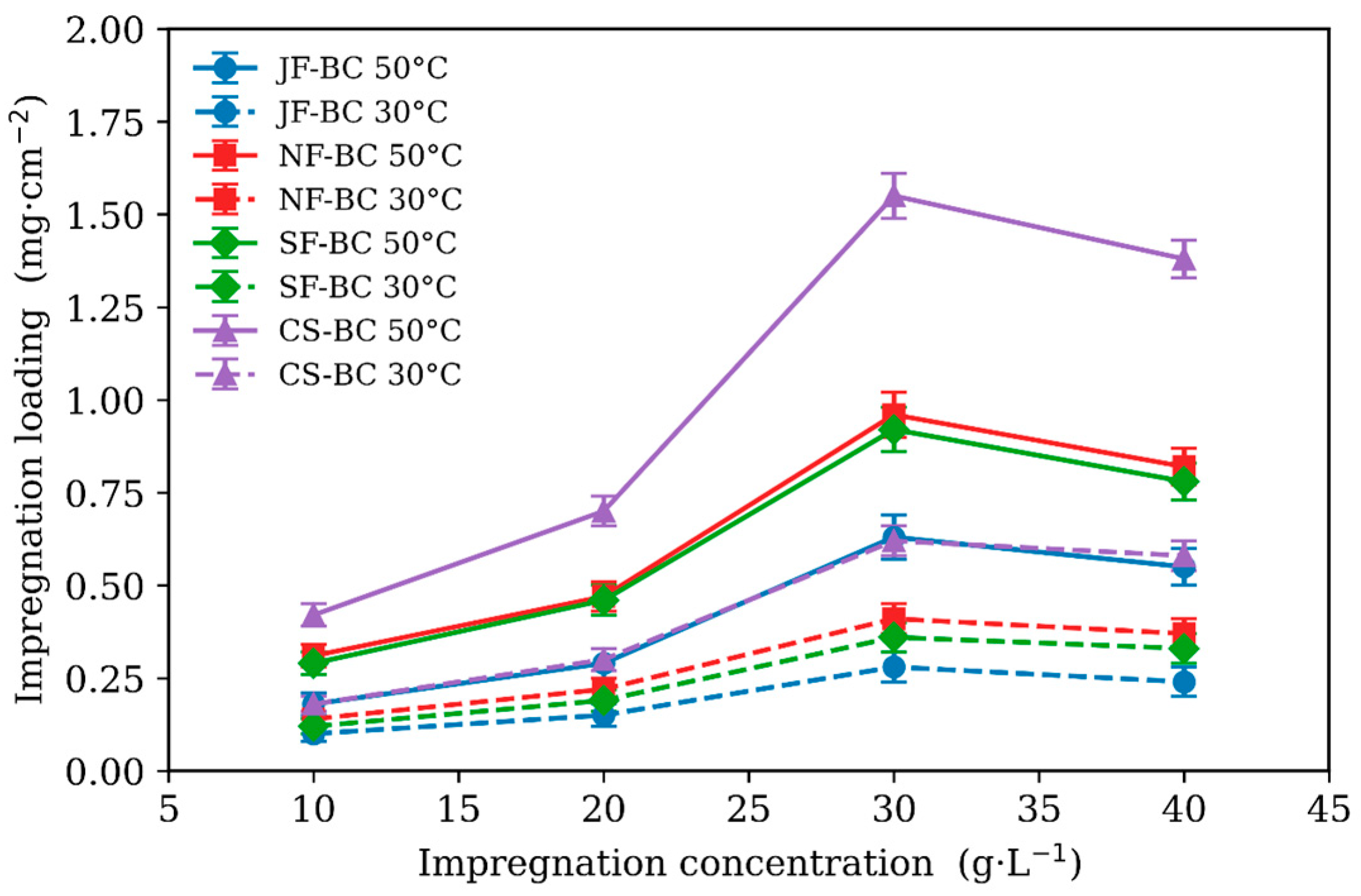
The effect of impregnation temperature and biochar concentration on carbon loading is shown in
Figure 3. All materials displayed increased impregnation capacity as the concentration of the biochar suspension rose from 10 to 40 g L
−1. More importantly, samples treated at 50 °C consistently achieved higher loading levels than those processed at 30 °C. This temperature dependence arises from the combined effects of reduced suspension viscosity and enhanced biochar particle mobility at elevated temperature, which promote deeper penetration into hierarchical pore networks [
14,
17,
18,
26,
27,
28].
As shown in
Figure 3, the increase in impregnation loading is particularly pronounced for the cellulose sponge substrate when the temperature is raised from 30 °C to 50 °C. The cellulose sponge (CS-BC) exhibited the highest impregnation loading, reaching approximately 1.6 mg cm
−2 at 30 g L
−1 and 50 °C, a behavior consistent with its large internal surface area and open macroporous structure. Similar observations have been reported for wood-based and 3D porous cellulose evaporators, where enhanced porosity strongly correlates with superior carbon uptake [
17,
18].
The impregnation behavior of biochar within the cellulose-rich substrates is strongly influenced by both processing temperature and the intrinsic pore architecture of the support materials. As shown in
Figure 3, all substrates exhibit increased biochar uptake as the suspension temperature is raised from 30 °C to 50 °C, particularly at intermediate biochar concentrations (20–30 g L
−1). This temperature dependence is well documented in impregnation and coating processes involving porous lignocellulosic matrices, where elevated temperature reduces suspension viscosity and enhances carbon particle mobility, thereby facilitating deeper penetration into hierarchical pore networks and improving interfacial contact between the carbon particles and the fiber surface.
Among the investigated substrates, the cellulose sponge (CS-BC) consistently exhibited the highest impregnation loading. This behavior can be attributed to its highly open, three-dimensional macroporous architecture, which provides a large internal surface area and interconnected channels that promote capillary-driven transport and particle retention. Previous studies on biomass-derived carbon materials have shown that pore architecture, connectivity, and accessible surface area play a decisive role in mass transport, adsorption, and functionalization efficiency [
27,
28]. In contrast, fibrous substrates such as sisal and Opuntia ficus-indica possess predominantly longitudinal microchannels and more compact cell-wall structures, which limit transversal particle diffusion and reduce overall impregnation capacity. These architectural differences directly explain the significantly higher biochar loading observed for CS-BC at 50 °C compared to 30 °C and confirm that the temperature dependence originates from intrinsic transport and structural effects rather than experimental variability.
3.1. Elemental Composition (CHNS/O Analysis)
Elemental analysis (
Table 2) confirms the chemical transformations occurring at each processing stage. The untreated substrates contained 43–44 wt% carbon and 5.8–6.2 wt% hydrogen, values consistent with typical lignocellulosic biomass containing cellulose, hemicellulose, and lignin [
36,
37,
38,
41,
43,
44]. Following the alkaline–peroxide pretreatment, the carbon content decreased to 38–41 wt%, reflecting the partial removal of lignin and hemicellulose, which possess higher aromatic and oxygenated carbon fractions. This delignification and oxidative bleaching step is well known to generate a more cellulose-dominated matrix by selectively dissolving phenolic lignin and hemicellulosic sugars [
37,
38,
41,
43,
44,
45].
Biochar functionalization produced the most significant compositional changes. As summarized in
Table 2, carbon contents increased markedly to 62–68 wt% across all substrates, accompanied by a decrease in hydrogen and oxygen fractions. This compositional evolution results in lower H/C and O/C ratios, indicative of increased aromaticity and condensed carbon structures characteristic of lignocellulosic biochars and directly associated with enhanced broadband light absorption and improved photothermal conversion efficiency [
27,
28].
Samples functionalized using the NaOH/urea/citric acid system showed a modest but consistent increase in nitrogen content (0.8–1.2 wt%), likely due to the incorporation of urea-derived nitrogenous functionalities. Nitrogen doping has been reported to influence surface polarity, hydrophilicity, and electronic structure in carbon materials, thereby improving performance at water–carbon interfaces in solar evaporators [
22,
24,
27,
28,
35,
36,
37,
38,
43,
46].
The progressive carbon enrichment and concurrent nitrogen incorporation establish the chemical foundation for the enhanced photothermal and evaporation performance observed in subsequent sections. Carbon contents of 65–67 wt% are consistent with medium-temperature biochars, in which dehydration and decarboxylation reactions during biomass carbonization reduce hydrogen- and oxygen-containing functional groups and promote the formation of condensed aromatic domains [
22,
24,
37,
38,
43,
46]. The reduced H/C ratios further indicate the development of more thermally stable and graphitic carbon structures favorable for photothermal applications.
Overall, the combined alkaline–peroxide pretreatment and biochar functionalization produced a systematic transformation of the lignocellulosic substrates, yielding materials with significantly higher carbon content, increased aromaticity, and enhanced chemical functionality. These compositional modifications generate carbon-rich and optically absorbent surfaces capable of more efficient light-to-heat conversion and improved water–carbon interfacial interactions, directly supporting the superior photothermal behavior observed in the modified substrates.
3.2. FTIR Spectroscopy
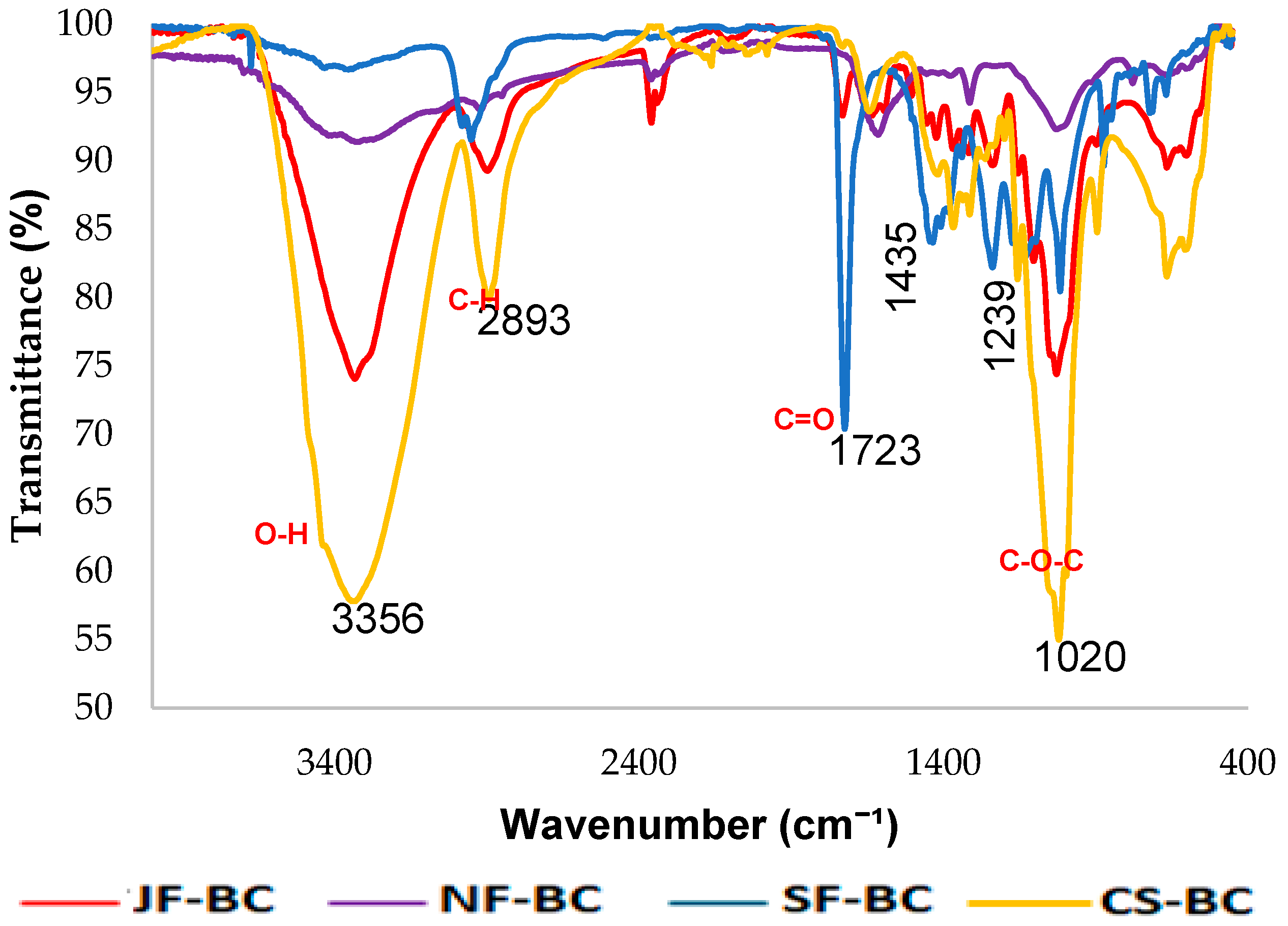
Fourier-transform infrared spectroscopy provided insight into the chemical characteristics of the chemically treated and biochar-functionalized natural fibers, as shown in
Figure 4. The FTIR spectra exhibit vibrational features typically associated with cellulose-rich lignocellulosic materials and carbonaceous phases. The broad O–H stretching band centered near 3350 cm
−1 reflects extensive hydrogen bonding, while the C–H stretching near 2890 cm
−1 corresponds to aliphatic groups associated with polysaccharide backbones. In the mid-infrared region, absorptions in the 1000–1200 cm
−1 range are attributed to C–O–C skeletal vibrations of cellulose, and bands near 895–900 cm
−1 correspond to β-1,4-glycosidic linkages, consistent with cellulose-dominated structures reported in the literature [
33,
37,
38,
45,
47].
Biochar functionalization resulted in spectral features characteristic of carbon-rich and partially aromatized domains. All coated samples exhibit broadened absorptions across the 1000–1800 cm
−1 region, characteristic of disordered sp
2/sp
3 hybridized carbon networks, including aromatic C=C stretching, C–O–C contributions, and defect-related vibrational modes. The intensified bands observed near 1435–1450 cm
−1 and 1230–1240 cm
−1 are associated with condensed aromatic structures typical of pyrolyzed carbon frameworks [
22,
23,
24,
38,
43]. The pronounced absorption around 1020 cm
−1 in the cellulose-sponge composite further suggests interfacial coupling between biochar particles and residual polysaccharide ether linkages.
Fibers treated using the NaOH/urea/citric-acid formulation display additional absorptions near 1640–1660 cm
−1, attributed to amide-type C=O stretching or urea-derived carbonyl functionalities. These nitrogen-related spectral features are consistent with the elemental analysis results, which indicate an increase in nitrogen content after functionalization, in agreement with reports on urea-assisted nitrogen incorporation in carbon materials [
26,
27,
28].
Overall, the FTIR spectra indicate a progressive transformation toward cellulose-dominated scaffolds coated with aromatic carbon structures. In this work, FTIR spectroscopy is used to identify functional groups present after chemical treatment and biochar functionalization, rather than to provide a direct before–after comparison with untreated samples. The spectral interpretation is therefore considered in conjunction with CHNS/O, XRD, and SEM analyses, which together provide convergent evidence of successful biochar functionalization and structural evolution.
3.3. XRD Analysis
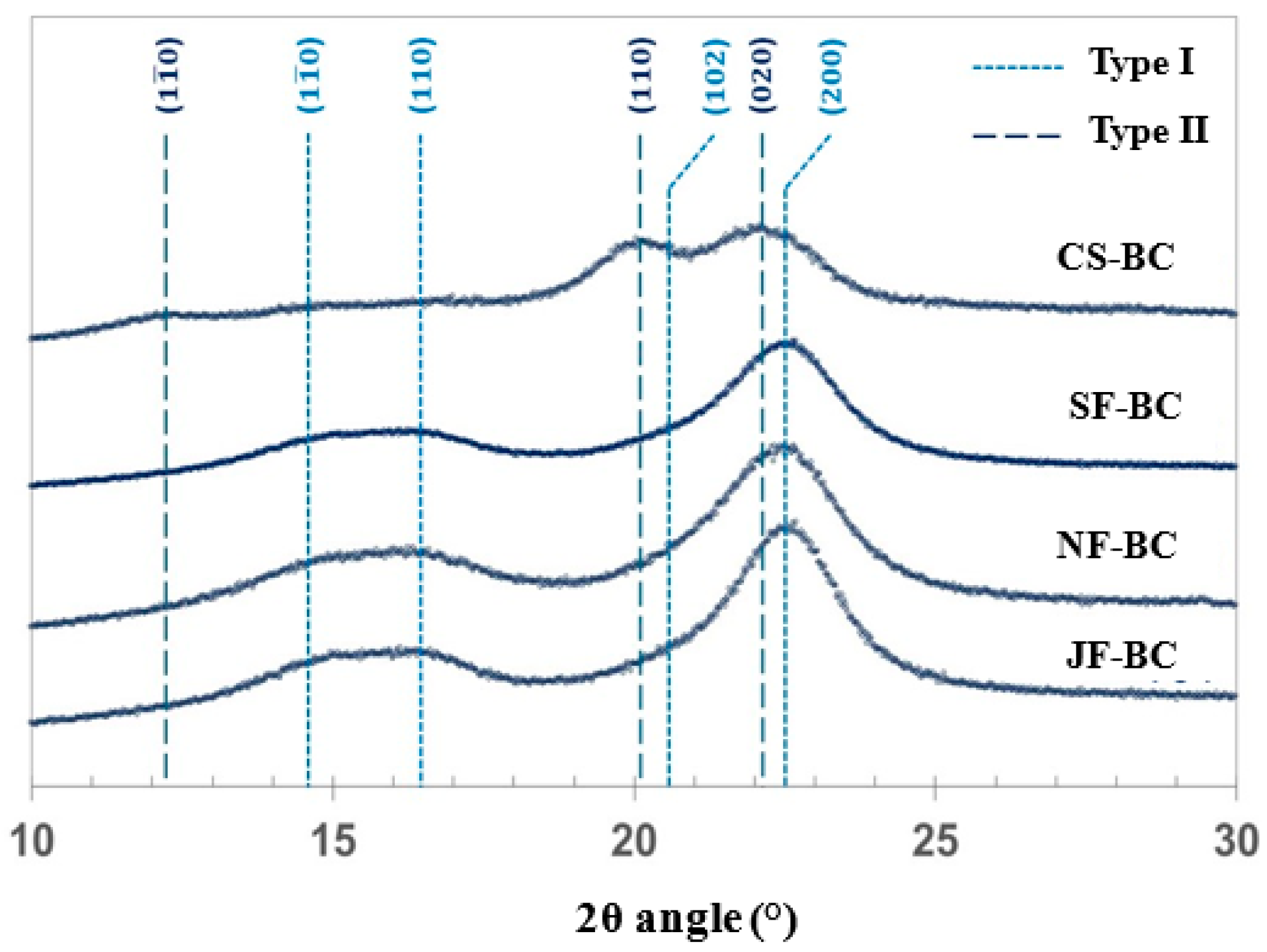
Figure 5 shows X-Ray diffraction (XRD) diffractograms of cellulose-based fibers after chemical pretreatment and biochar functionalization (CS-BC, SF-BC, NF-BC, JF-BC). The diffraction patterns exhibit the characteristic cellulose Iβ reflections at approximately 2θ ≈ 14.8–16° (110/
110), 20–22.6° (110/200), and around 26° (020), confirming that the semicrystalline cellulose framework remains preserved in the treated and biochar-functionalized samples. The crystallinity index (CrI), calculated from XRD patterns, is commonly used to quantify the relative degree of crystalline order in cellulose-based materials. In this study, CrI values are used as a relative indicator of the structural order of the cellulose scaffold present in the treated and biochar-functionalized samples, rather than as a direct measure of changes relative to untreated fibers. CrI values were estimated using the Segal method, based on the intensity difference between the (200) crystalline reflection and the amorphous background at ~18°, and are therefore used as a relative rather than absolute measure of cellulose structural order [
40,
48].
It is important to note that CrI reflects the structural order of the cellulose scaffold rather than the crystallinity of the biochar, which remains predominantly amorphous. Following biochar functionalization, a moderate decrease in apparent CrI (to approximately 55–58%) is observed.
This attenuation arises from the deposition of amorphous carbon on the fiber surface, which contributes a broad, diffuse scattering background and partially masks cellulose diffraction peaks without altering their positions or the underlying cellulose Iβ lattice. The coexistence of well-preserved cellulose Iβ reflections with an amorphous carbon halo indicates the formation of a hierarchical hybrid structure, in which crystalline cellulose microfibrils serve as the structural core while the externally deposited carbon layer enhances broadband light absorption. Variations in CrI in this work are therefore used to assess the structural integrity and ordering of the cellulose framework rather than to characterize the structure of the biochar phase itself. Such behavior is consistent with previous reports on chemically purified cellulose and biomass-derived carbon composites [
27,
28,
29,
40,
48].
This structural interpretation is consistent with the compositional changes identified by CHNS/O analysis and supports the improved photothermal response observed in the biochar-functionalized fibers, demonstrating a coherent structure–function relationship driven by cellulose framework preservation and amorphous carbon deposition.
3.4. Morphological Analysis (SEM)
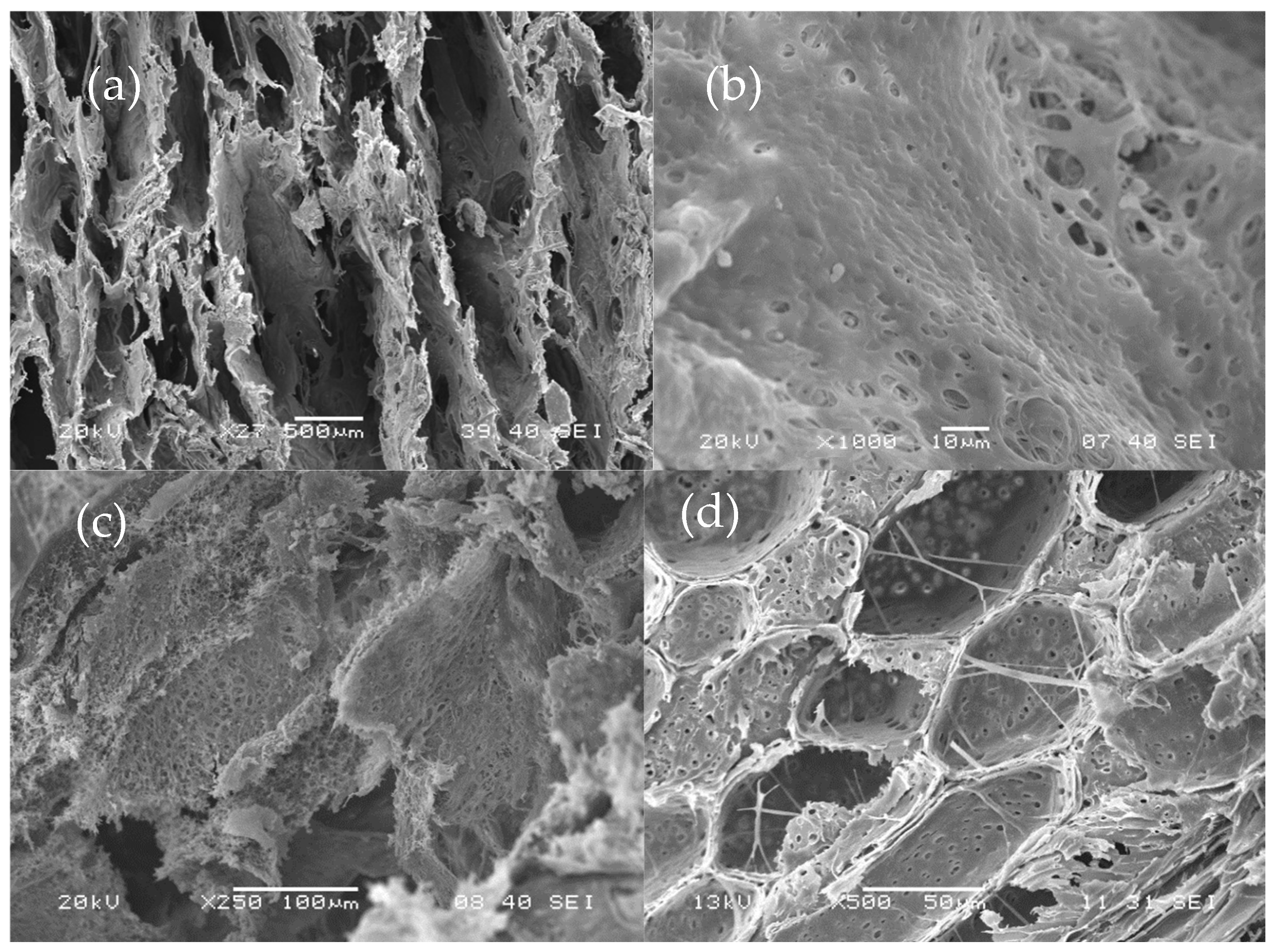
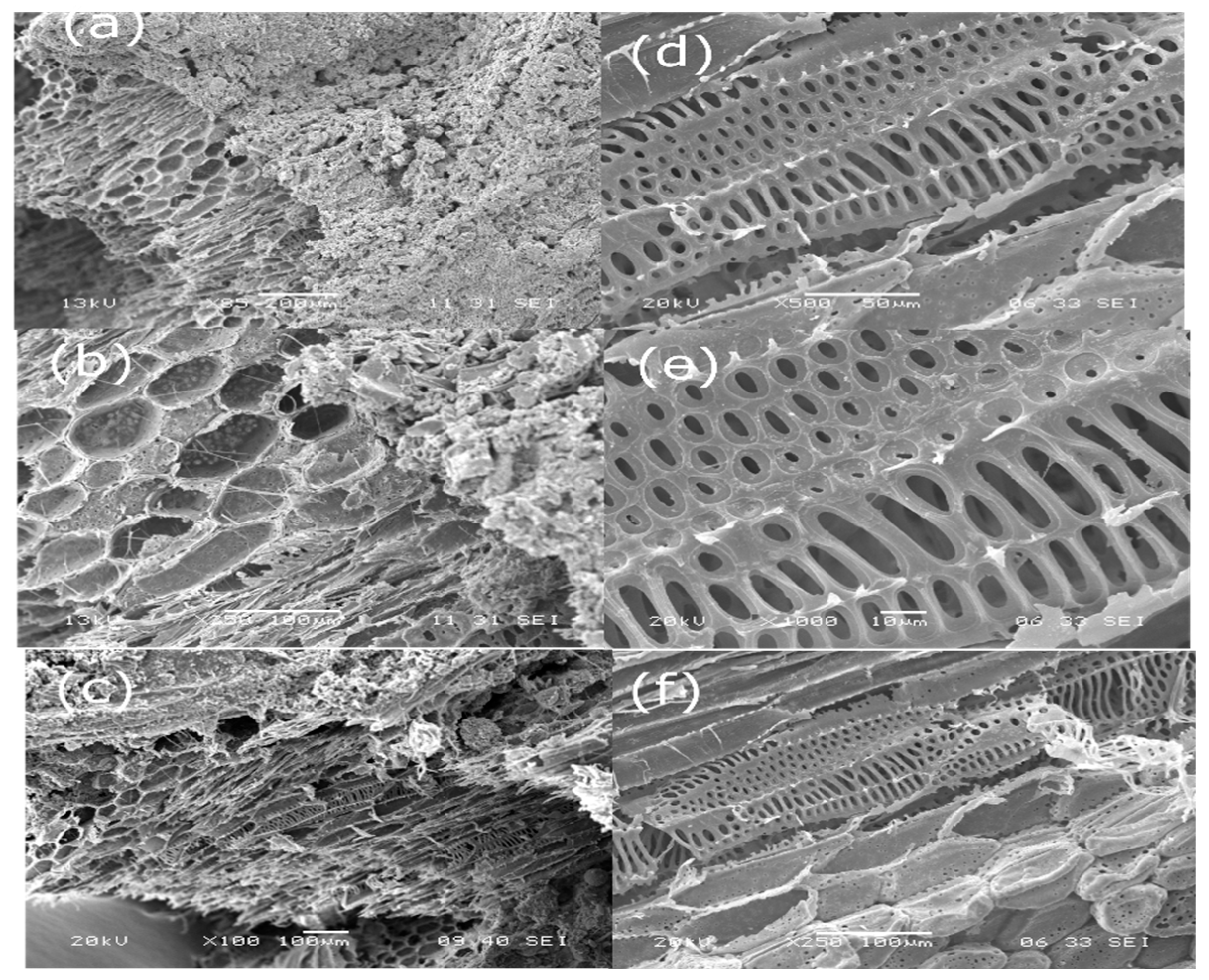
Scanning electron microscopy (SEM) revealed clear and progressive morphological transformations in the cellulose sponge and nopal fibers during the sequential processing stages. In their untreated or bleached state (
Figure 6a,c and
Figure 7a,c,e), both materials exhibited clean, open porosity and well-defined fibrillar or vascular wall structures. The bleached cellulose sponge retained its reticulated, interconnected pore network with smooth channel walls and minimal structural obstruction, while the bleached nopal fibers showed ordered parenchymatous domains, intact lumen walls, and clearly resolved vascular channels. These clean architectures are consistent with the removal of hemicellulose, lignin residues, waxes, and growth-derived impurities, as evidenced by the disappearance of lignin-associated aromatic signals in the FTIR and by XRD peak sharpening associated with increased crystallinity after alkaline–peroxide pretreatment. Similar purification effects have been reported in previous studies on delignified lignocellulosic biomaterials, where pretreatment selectively disrupts amorphous domains and exposes the underlying cellulose microfibrils, thereby improving surface accessibility and structural uniformity [
33,
36,
37,
45,
47]. SEM analysis was employed as a qualitative technique to elucidate the morphological evolution of the natural fibers following chemical pretreatment and biochar functionalization. As shown in
Figure 6 and
Figure 7, untreated fibers exhibit relatively smooth and compact surfaces, whereas functionalized samples display increased surface roughness, heterogeneous particle attachment, and partial pore-wall coverage by biochar, particularly in the cellulose sponge substrate. This comparative morphological analysis highlights the decisive role of substrate architecture in determining biochar coating distribution, interfacial anchoring, and subsequent photothermal efficiency.
It is important to note that the biochar coating does not form a continuous uniform film but rather a discontinuous and hierarchically distributed photothermal layer. Under these conditions, quantitative image-processing-based analysis would not provide reliable metrics and could lead to misleading interpretations. Therefore, SEM observations are interpreted in conjunction with elemental composition (CHNS/O), crystallographic analysis (XRD), and chemical characterization (FTIR), which together confirm successful biochar deposition and functionalization. These morphological features are consistent with the impregnation behavior and carbon loading trends discussed in
Section 3.1 and directly contribute to the enhanced photothermal evaporation performance observed for the biochar-functionalized samples.
Following biochar functionalization, both cellulose sponge and nopal fibers underwent distinctive morphological changes (
Figure 6b,d and
Figure 7b,d,f). The treated cellulose sponge displayed roughened surfaces, partially coated pore walls, and heterogeneous clusters of carbon particles anchored along the fibrillar framework. In the nopal fibers, the biochar layer generated more dramatic modifications, with extensive carbon deposition covering the outer surfaces, partial lumen obstruction, and irregular aggregates distributed across vascular channels and microfibrillar ridges. These adhered particles ranged from submicron carbon fragments to larger aggregates of up to ~10–15 μm, forming a heterogeneous but continuous carbonaceous network. Such behavior correlates with the increased carbon content detected by CHNS/O analysis and agrees with the literature, which describes strong carbon–cellulose interactions facilitated by the abundance of hydroxyl groups exposed after delignification [
33,
35,
37,
46].
The adhesion strength and distribution uniformity of the carbon layer were further enhanced by the NaOH/urea/citric acid crosslinking system employed during functionalization. SEM images revealed compact biochar clusters embedded into microfibril grooves, an arrangement commonly associated with polymer-assisted interfacial bridging and improved coating durability. This morphological anchoring mechanism is consistent with previous reports describing carbon–cellulose interactions in biomass-derived photothermal materials, where hierarchical roughness and amorphous carbon coatings synergistically enhance surface light absorption and water transport [
17,
18,
26,
27,
28].
These combined morphological features—greater fibril exposure, cleaned and interconnected porosity, and robust carbon anchoring—constitute the structural basis for enhanced photothermal behavior. The increased surface roughness improves light scattering and photon trapping, the hierarchical pore networks facilitate rapid capillary water transport toward the evaporation interface, and the carbon layer provides broadband optical absorption and localized heating. Thus, the observed SEM characteristics directly support the chemical and structural transitions established by FTIR, XRD, and CHNS/O, and they explain the improved evaporation performance measured in the functionalized fibers.
3.5. Photothermal Performance and Surface Temperature Response
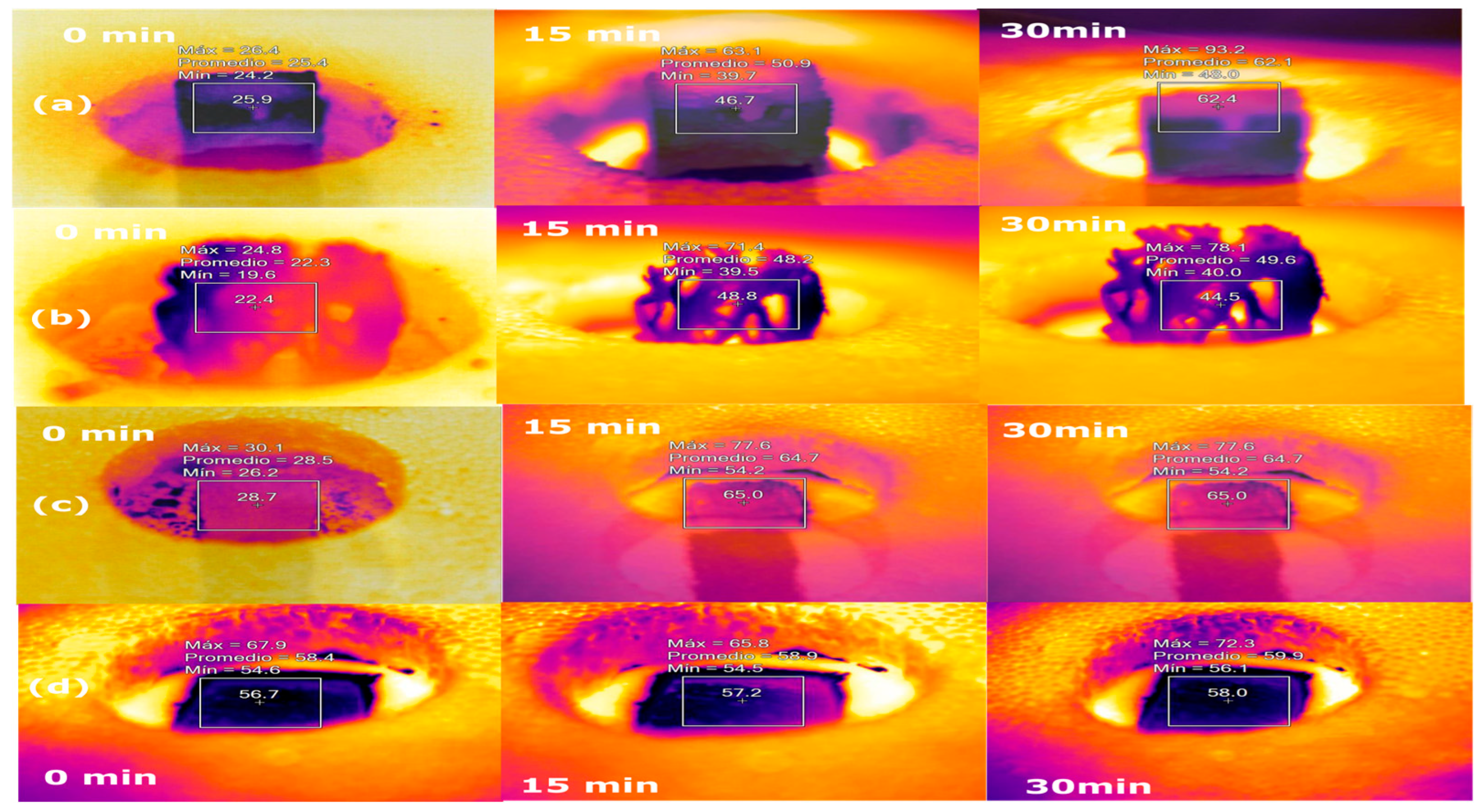
The photothermal performance of the biochar-functionalized natural fibers was evaluated by monitoring their surface temperature response under simulated solar illumination (500 W m
−2). As shown in
Figure 8, untreated and chemically pretreated fibers exhibited only modest increases in surface temperature, reaching 34–38 °C within the first 15 min of irradiation. This limited thermal response is attributed to their low optical absorption and the reduced aromatic content following delignification, consistent with the diminished UV–visible absorbance characteristic of bleached lignocellulosic materials [
15].
In stark contrast, the biochar-coated fibers demonstrated a significantly enhanced photothermal effect. The incorporation of carbonaceous particles onto cellulose fibers treated via NaOH/urea and citric-acid crosslinking resulted in significantly enhanced interfacial adhesion, consistent with the formation of ester linkages and reinforced hydrogen bonding reported in similar cellulose–citric acid systems [
49,
50,
51,
52]. The resulting composite shows markedly higher optical absorption and photothermal response. The biochar-functionalized cellulose sponge reached surface temperatures of 48–54 °C, while sisal and nopal fibers reached 46–52 °C, depending on coating density and carbon loading. Samples functionalized at 50 °C using 30 g L
−1 biochar suspensions consistently obtained the highest temperature rise, indicating improved coating uniformity and stronger light–matter interaction, in agreement with previous reports on carbon-based photothermal materials [
21,
27].
Thermal imaging confirmed that biochar-functionalized substrates exhibited homogeneous temperature fields across their surfaces, demonstrating uniform deposition and effective heat localization. This uniformity is beneficial, as heterogeneous heating typically increases thermal losses and reduces the energy available for vapor generation [
53]. The rapid thermal ramp-up observed in the biochar-coated fibers—reaching near-steady-state temperatures within minutes—highlights their suitability for real-world solar evaporators, where intermittent cloud cover demands rapid photothermal responsiveness. Similar rapid-heating behavior has been reported in lightweight carbon aerogels and biomass-derived solar steam generators [
21].
The enhanced photothermal response of the biochar-functionalized fibers results from the synergy between their hierarchical porosity, improved light absorption, and efficient heat localization. These characteristics make them promising materials for solar-driven water evaporation applications. Importantly, the operating temperatures reached during solar-driven interfacial evaporation (<60 °C under 500 W m−2) are far below the onset temperatures of thermal degradation typically reported for lignocellulosic substrates and biochar-based materials. These observations demonstrate that the surface temperature increase achieved under solar illumination directly governs the amount of energy available for vapor generation at the air–water interface.
3.6. Evaporation Performance
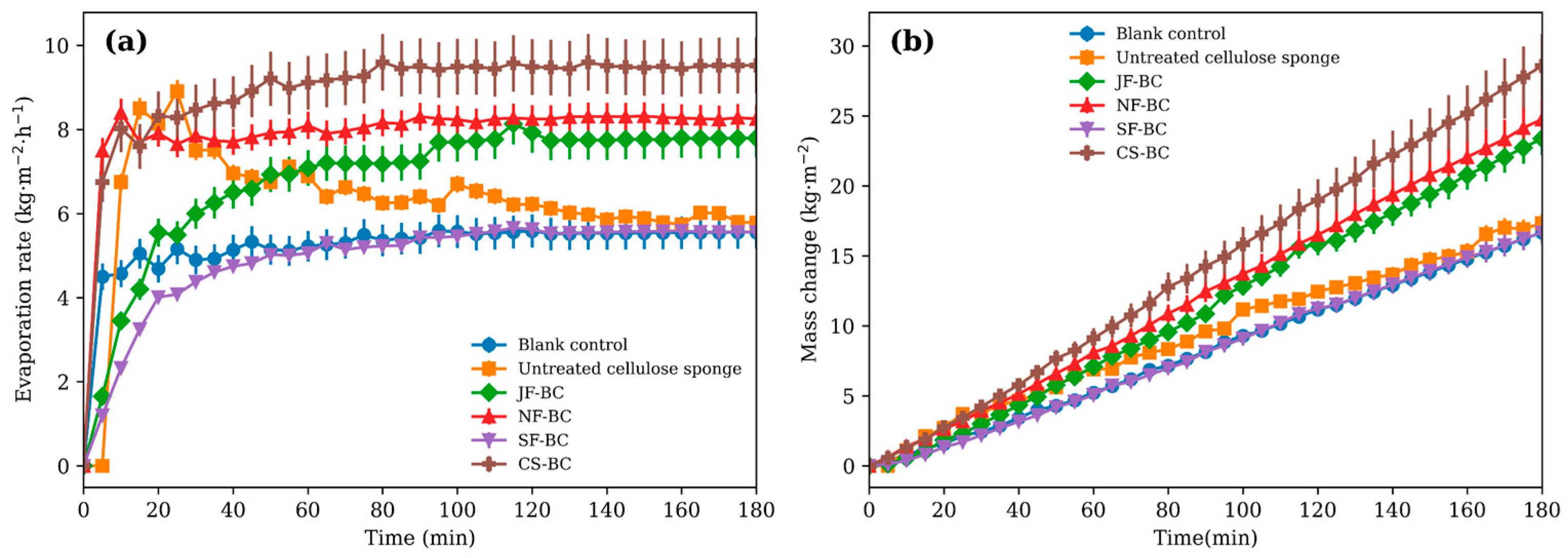
The solar-driven evaporation performance of the biochar-functionalized substrates was markedly improved compared with untreated and chemically pretreated fibers. As shown in
Figure 9, evaporation behavior was quantified by monitoring mass loss over a 3 h illumination period at a constant irradiance of 500 W m
−2, enabling direct comparison of water transport efficiency, heat localization, and photothermal conversion across the different material configurations.
Chemically pretreated but uncoated fibers exhibited modest evaporation rates, consistent with their limited photothermal capability and reduced light absorption. Among these, untreated cellulose sponge delivered the highest values (0.42–0.55 kg m−2 h−1) owing to its interconnected three-dimensional pore structure, which promotes rapid capillary-driven water supply but lacks sufficient photothermal heating. Sisal and nopal fibers showed slightly lower evaporation rates (0.30–0.45 kg m−2 h−1), reflecting their predominantly longitudinal pore channels that restrict vertical water flow and reduce the accessible evaporative surface area.
Biochar functionalization significantly enhanced the evaporation performance of all substrates. The carbon-coated cellulose sponge achieved the highest evaporation rate, reaching 1.12–1.25 kg m−2 h−1. This enhancement results from the synergy between broadband solar absorption provided by the biochar layer, high porosity, and efficient wicking behavior. Biochar-coated sisal fibers also exhibited substantial improvements, with rates of 0.78–0.89 kg m−2 h−1, attributable to effective heat localization along the exposed microfibrils and improved surface roughness resulting from chemical pretreatment, as observed in SEM analyses. Nopal fiber biochar functionalized materials achieved intermediate evaporation rates (0.65–0.72 kg m−2 h−1), outperforming untreated material but remaining lower than those of cellulose sponge due to their less uniform macrostructure.
Samples functionalized using the NaOH/urea/citric acid crosslinking system consistently exhibited evaporation rates 12–18% higher than those coated via simple immersion. This enhancement aligns with the denser biochar deposition observed in SEM images, the improved surface temperature response (
Figure 8), and the enhanced adhesion of carbon particles during repeated wetting cycles. Crosslinked coatings likely reduce interfacial thermal resistance while increasing micro- to nano-scale surface roughness, a mechanism previously reported to enhance evaporation efficiency in polymer–carbon hybrid photothermal materials [
21,
27,
41]
A strong correlation was observed between surface temperature (
Figure 8) and evaporation rate (
Figure 9). The biochar-coated cellulose sponge reached the highest steady-state temperatures (≈54–55 °C) and consequently delivered the greatest evaporation rates, confirming the critical role of heat confinement at the air–water interface. Effective light absorption by the biochar layer and localized heating minimize conductive heat loss to the bulk water, thereby enhancing vapor generation efficiency [
12,
21,
27,
41].
Although a fully quantitative correlation between pore size distribution and evaporation performance was not established, the observed trends are consistent with capillary-driven water transport in hierarchical porous media. In lignocellulosic substrates, micro- and mesoporous domains enhance capillary pressure, while macropores facilitate continuous replenishment of the evaporating interface, in agreement with the superior wicking behavior of cellulose sponge relative to sisal and Opuntia ficus-indica [
14,
17,
18,
26,
27,
28].
To contextualize the evaporation performance, the biochar-functionalized fibers developed in this work were compared with representative biomass-based interfacial solar evaporators reported in the literature. Wood- and cellulose-derived evaporators typically exhibit evaporation rates of ~0.6–1.0 kg m
−2 h
−1 under one-sun illumination, whereas systems incorporating carbonized layers or biochar-based photothermal coatings commonly reach ~0.8–1.3 kg m
−2 h
−1 due to enhanced broadband absorption and improved heat localization [
16,
17,
19].
Within this performance window, several high-efficiency systems have been reported. Li et al. [
17] developed a mesoporous wood-based evaporator fabricated by partial high-temperature carbonization, achieving evaporation rates of ~1.3 kg m
−2 h
−1 under one sun, enabled by anisotropic water transport and localized heat confinement. Zhao et al. [
15] reported hierarchically nanostructured polymer–gel evaporators reaching ~1.2–1.4 kg m
−2 h
−1, albeit requiring synthetic polymer networks and multistep fabrication processes. Similarly, Xie et al. [
18] demonstrated a three-dimensional carbonized wood cone evaporator with evaporation rates of ~1.1 kg m
−2 h
−1, relying on carbonization temperatures exceeding 500 °C to achieve sufficient photothermal conversion.
Biochar-based evaporators employing carbon coatings on natural biomass substrates generally operate in a moderate but competitive range. Ibrahim et al. [
16] summarized that biochar-derived interfacial evaporators typically achieve ~0.8–1.2 kg m
−2 h
−1, depending on substrate architecture and interfacial stability, while Jia et al. [
29] reported biomass-supported carbon photothermal layers delivering ~0.9–1.1 kg m
−2 h
−1, emphasizing the importance of coating uniformity and capillary-driven water transport.
In this context, the biochar-functionalized lignocellulosic fibers presented here achieved evaporation rates of ≈0.9–1.25 kg m−2 h−1 under a reduced irradiance of 500 W m−2, placing their normalized performance within the upper range of reported biomass-derived systems. Unlike many previous approaches based on rigid carbonized monoliths, synthetic polymers, or energy-intensive processing routes, the present strategy combines low-temperature chemical pretreatment, flexible natural fiber substrates, and chemically reinforced biochar anchoring. This demonstrates that efficient interfacial solar evaporation can be achieved without compromising scalability or sustainability, while maintaining performance comparable to state-of-the-art biomass-based evaporators.
Overall, these results confirm that evaporation enhancement is governed not solely by photothermal material selection, but by the coupled design of substrate architecture, capillary-driven water transport, and interfacial coating stability. Although long-term durability under repeated wetting–drying cycles was not evaluated in this study, the improved coating adhesion achieved through NaOH/urea/citric-acid crosslinking suggests enhanced interfacial stability, which will be systematically investigated in future work.
3.7. Water Quality Assessment
The untreated tap water exhibited typical characteristics of municipal supply in semi-urban regions, with measurable concentrations of TDS, turbidity, total hardness, fluoride, nitrates, and trace metals such as arsenic and barium. These values frequently approached or exceeded guideline thresholds, a trend widely documented in regional water quality studies across Latin America [
1,
2,
3,
4]. The detailed physicochemical composition of the influent and the condensate obtained after solar evaporation is summarized in
Table 3.
Following solar evaporation through biochar-functionalized substrates, all quantified parameters showed substantial improvement. Turbidity decreased from 1.8–2.5 NTU to <0.2 NTU, representing a reduction greater than 90% and demonstrating the effective removal of suspended solids during phase-change purification. Total hardness, associated with dissolved calcium and magnesium species, decreased from 110–150 mg L
−1 to undetectable levels, confirming complete rejection of non-volatile ions. TDS diminished sharply from 350–480 mg L
−1 to <10 mg L
−1, consistent with the nearly complete exclusion of ionic species during vapor condensation. Fluoride and nitrate concentrations were reduced below detectable limits, demonstrating the system’s effectiveness in eliminating dissolved salts and oxyanions. Particularly significant was the complete removal of trace toxic contaminants such as arsenic and barium, which were entirely absent in the distillate—aligning with established principles of solar steam purification, where non-volatile inorganic species do not co-evaporate under atmospheric pressure [
12,
28,
41,
49].
The pH of the purified water remained within 6.7–7.1, confirming that the biochar-functionalized materials introduced no acidic or alkaline residues. This observation is consistent with the chemical inertness demonstrated by the crosslinked coatings during operation, as well as the absence of carbonaceous leachates. The system thus produces chemically stable, high-purity condensate without secondary contamination.
A sustainability perspective is also relevant considering that the alkaline–peroxide pretreatment and the citric-acid crosslinking introduce a non-negligible chemical footprint. In practical terms, the reaction media are used in moderate concentrations, NaOH solutions can be partially neutralized and recycled, and citric acid is a biodegradable crosslinker frequently adopted in green processing of lignocellulosic materials. Moreover, the conversion of agricultural residues at relatively low temperature contributes to carbon retention compared with direct combustion. Although a full life-cycle assessment lies beyond the scope of this work, future studies could quantify the environmental trade-offs between chemical input, carbon sequestration potential and long-term scalability [
22].
From a techno-economic perspective, the commercial biochar used in this work has a market cost of approximately 2–5 USD kg
−1, which corresponds to ≈0.08–0.20 USD per functionalized m
2 for the deposition amounts employed here. The wet-chemical pretreatment and citric-acid crosslinking operate at ≤100 °C and therefore introduce substantially lower embodied energy compared with the production of high-temperature activated carbons (typically >700–900 °C), a trend also emphasized in recent assessments of biomass-derived carbon materials for environmental and energy applications [
16,
24,
25]. Although a full techno-economic and carbon-footprint assessment lies beyond the scope of this work, future analyses should quantify embodied energy and greenhouse-gas intensity for large-scale deployment.
Overall, the results highlight the dual functional advantage of the biochar–fiber composites: in addition to enhancing solar evaporation rates through efficient photothermal conversion, they produce distilled water that consistently meets or exceeds national and international drinking-water standards. Their purification effectiveness aligns with advanced interfacial solar steam generators reported in recent literature, which similarly achieve near-complete removal of salts, heavy metals, and suspended solids [
12,
28,
41,
49]. The high removal efficiency, combined with low fabrication cost and environmental compatibility, positions these materials as promising candidates for decentralized solar-driven water purification technologies.
4. Conclusions
This work introduces a scalable design principle for biomass-based interfacial solar evaporators based on the synergistic integration of cellulose purification and chemically anchored biochar coatings. By implementing this design strategy, biochar-functionalized substrates exhibited rapid photothermal response and significantly enhanced evaporation performance, achieving rates of up to 1.25 kg m−2 h−1 under 500 W m−2 illumination while producing high-quality condensate that meets drinking-water standards. Subsequent biochar functionalization produced a hierarchical hybrid architecture—crystalline cellulose scaffolds wrapped by an amorphous carbon shell—confirmed by XRD persistence of cellulose peaks with mild intensity attenuation and by SEM observation of strongly adhered carbon aggregates along pore walls and microfibril grooves. The NaOH/urea/citric acid strategy further improved coating cohesion and interfacial anchoring.
The structural synergy translated directly into performance gains. Under 500 W m
−2 illumination, biochar-coated substrates exhibited rapid thermal ramp-up and stable surface heating, reaching ~48–54 °C compared with ~34–38 °C for uncoated fibers, which is consistent with the enhanced optical absorption provided by aromatic carbon domains typically formed during biomass carbonization [
22,
24,
27,
43]. These thermal improvements drove substantial evaporation enhancement: CS-BC achieved the highest rates (1.12–1.25 kg m
−2 h
−1), followed by SF-BC (0.78–0.89 kg m
−2 h
−1) and NF-BC (0.65–0.72 kg m
−2 h
−1), all markedly above untreated/pretreated baselines. Crosslinked coatings delivered an additional 12–18% rate increase, indicating that coating uniformity and interfacial thermal resistance are critical levers for optimization. Importantly, the system provided high-quality condensate that consistently met NOM-127-SSA1-2021 limits, with >90% turbidity removal, >97% TDS reduction, complete hardness rejection, and non-detectable arsenic and barium, mirroring the strong ion-rejection behavior expected in phase-change interfacial distillation [
12,
28,
41,
49].
Biochar-functionalized natural fibers emerge as a scalable, low-cost, and environmentally compatible platform for solar-driven water purification. By valorizing agricultural biomass into both a photothermal absorber (biochar) and a wicking scaffold (cellulose-rich fibers), this work advances circular-economy material design while achieving evaporation performance comparable to that of state-of-the-art biomass/carbon evaporators.




 ,
,