


Abstract
The presence of pathogens, toxic substances, and excess nutrients in rivers is due to the combination of industrial, agricultural, and livestock farming activities, as well as the absence of wastewater treatment plants and sewerage networks. River degradation is the result of these factors. The results from four monitoring campaigns of water quality, carried out between November 2023 and August 2024, in the rivers of northern Urabá, Colombia, are presented in this paper, and the relationships between physicochemical and microbiological parameters are assessed. Water samples from 16 sites, upstream, downstream, and within urban centers, as well as at the mouths of the Hobo, Zapata, and Damaquiel rivers, and two water bodies flowing into the coastal lagoon of Bahía El Uno are presented. Five water quality factors were analyzed at using Spearman’s correlation analysis (p = 0.005). The results revealed negative correlations between dissolved oxygen (DO) and coliforms (−0.49), and positive correlations between temperature and total dissolved solids (TDS) (0.365). The elevated content coliforms exceeding permissible Colombian standards to total coliforms (˂200 MPN/mL) and thermotolerance (1000 MPN/mL) reached 8,400,000 and 24,000,000 MPN/mL, respectively, indicating that urban discharges increase microbial loads and induce degradation of conditions in the study area.
1. Introduction
Rivers are dynamic ecosystems whose physicochemical and biological compositions are determined by their interaction with the atmosphere, soil, and biota. However, the combination of industrial, agricultural and livestock activities, mining, deforestation, among many others, exerts increasing pressure on these systems, affecting their quality and availability [1,2,3].
The environmental state of a region is often reflected in its rivers, as they carry, or are depositories of, large amounts of waste generated by anthropogenic activities, which may cause varying degrees of alteration [4]. However, natural events such as hurricanes, volcanic eruptions, earthquakes, floods, and erosion also contribute materials and substances to rivers that, together with runoff, are transported and eventually deposited in the marine environment [5,6,7]. Globally, about 80% of all industrial and domestic wastewater is discharged with no prior treatment, bringing detrimental effects to the water bodies receiving it [8]. This is due to a lack of adequate wastewater treatment plants and sewage networks, and means that pathogens, toxic substances, and excess nutrients enter rivers. Wastewater discharges are among the main drivers of impacts associated with aquatic ecosystem degradation, increasing the risk of disease and diminishing the water quality [8,9,10]. The resulting ecological imbalances lead to a significant reduction in global biodiversity and negative effects on socio-economic growth [10], as aquatic ecosystems provide a wide variety of goods and services, many of which are irreplaceable [11,12].
When wastewater enters an aquatic environment, biotic and abiotic parameters are affected; the concentration of dissolved oxygen (DO) can be reduced by the presence of organic and microbiological pollutants [13]. This parameter provides information related to biological and biochemical reactions in the aquatic environment and is therefore important in determining the quality of water [14].
Water quality can also be analyzed by assessing the presence of organisms, thermo-tolerant coliforms being a reference, as they are indicators of fecal contamination, and their presence is associated with risks to aquatic life and human health [15]. A high load of coliforms in a water body can represent a health risk, as it not only alters the balance of the ecosystem, but also affects the uses to which water can be put, making it unviable for human consumption, recreation, and other activities, such as agriculture and domestic use [16]. In the Urabá region, wastewater treatment is often lacking, and microorganisms of fecal origin are commonplace, meaning that water quality is compromised.
Although there is a variety of research on the coastal ecosystem of the Gulf of Urabá, specific studies addressing water quality in the region’s rivers are scarce [17], especially for the Urabá region of Antioquia. The physicochemical and microbiological characteristics of the surface waters of 10 rivers in Urabá were recently evaluated, along with the influence of agro-industrial activities and human intervention on water quality [17]. However, the northeast rivers of this region were not included in this study.
Considering the above, there is an imperative to assess the water quality in rivers located in the eastern sector of the Gulf of Urabá and to investigate current river water pollution. The objectives of the present research were to provide baseline data on the water quality based on physicochemical characteristics and assessments of microbial contamination.
2. Materials and Methods
2.1. Study Area
The study area lies close to the Gulf of Urabá, in the state of Antioquia, northern Colombia. It has a tropical climate, with marked seasonal variations, determined by the movements of the Intertropical Convergence Zone, giving two main seasons: a dry season, with lower rainfall and higher temperatures, and a wet season, with higher rainfall and runoff [18]. The dry season typically runs from December to April, while the rainy season lasts from May to November [19].
In the Gulf of Urabá, the temperature ranges from 19 to 40 °C, with a mean annual of 27 °C, while rainfall is between 40 and 100 mm/month [20], and the relative humidity is approximately 85.9%, climatic characteristics of a tropical rainforest [21]. The seasonal variations of various parameters in surface waters were analyzed.
Four sampling campaigns were carried out, the first in November 2023 (dry season, DS), the others in January (DS), April, and August 2024 (wet season, WS).
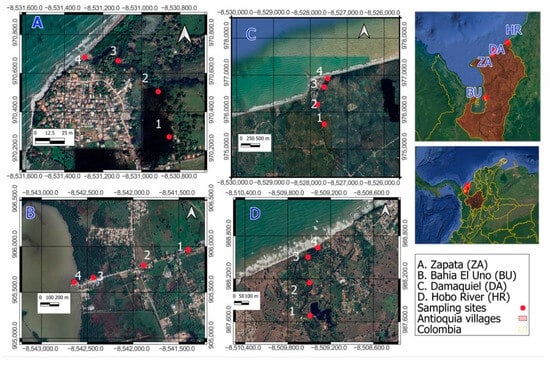
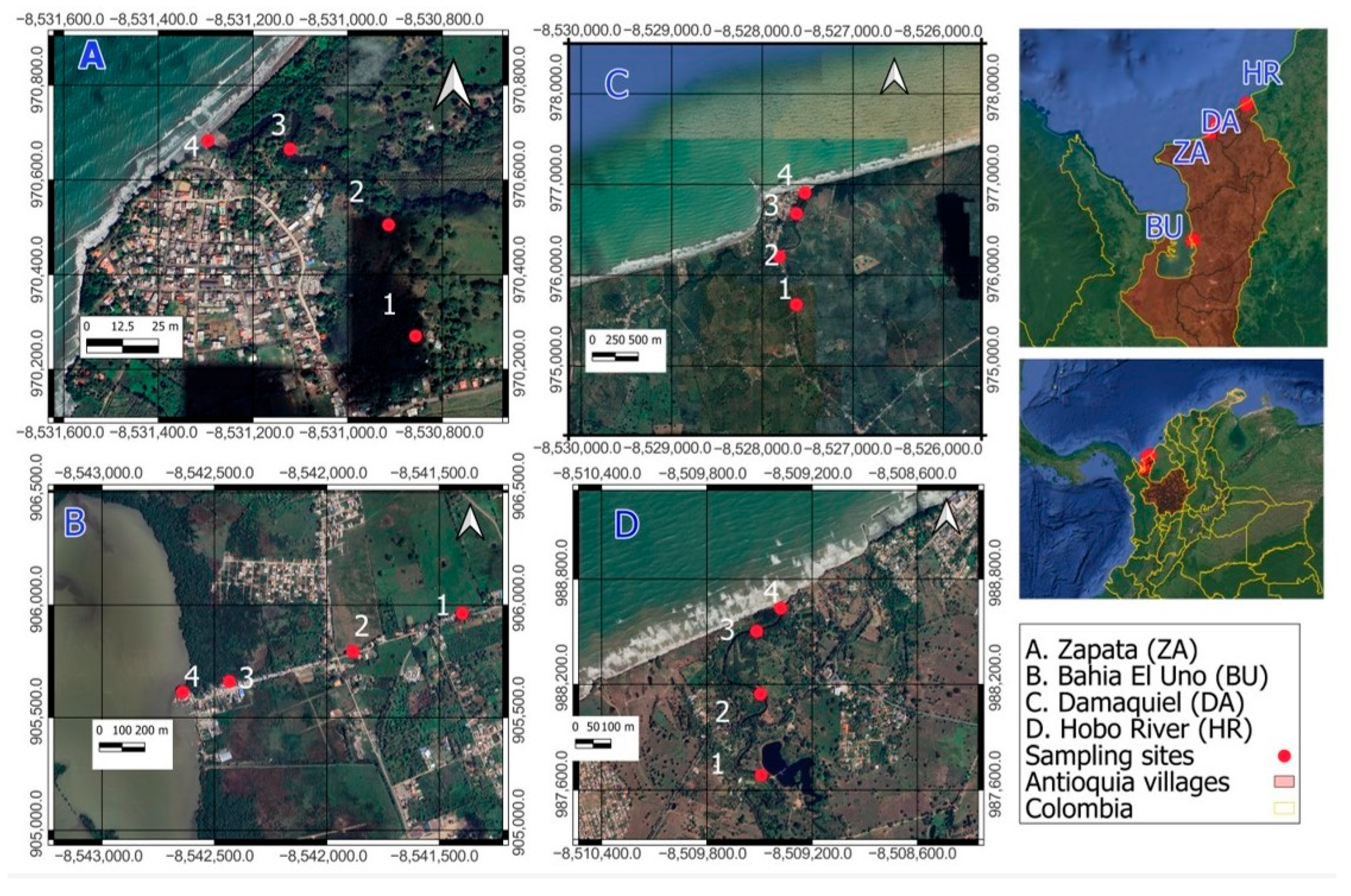
Sixteen sampling sites were selected, four each on the Zapata, Damaquiel, and Hobo rivers, and in the streams of Bahía el Uno (Figure 1), including sites influenced by the villages of Zapata, Damaquiel, Hobo River, and Bahía el Uno, respectively (Table 1).
Figure 1.
Location of the study area, and sampling sites in the water bodies in Urabá.
Table 1.
Location of sampling sites.
These sites were chosen so as to evaluate the possible influence of urban discharges, considering areas before, within, and after the settlements on each tributary, as well as at its mouth.
In the case of Bahía el Uno, two streams running into the lagoon were sampled, upstream and downstream of the village; the coastal lagoon registers a change in the location of its natural entrance, currently located in the northern area, with greater influence from the mouth of the Turbo River.
2.2. Analytical Protocols
The analytical protocols implemented are based on Standard Methods [22], and the quality controls applied to each sample batch (20) are as follows: determination and application of the method limit of quantification, analysis of the reagent or method blank (MBB), analysis of controls, laboratory control standard/laboratory-fortified blank, laboratory-enriched matrix, and analysis of duplicate samples/laboratory-fortified matrix duplicates (LFMD).
Sampling was carried out based on the “Water Monitoring and Tracking Protocol” [23] and, like the laboratory analyses, is accredited by the Institute of Hydrology, Meteorology, and Environmental Studies—IDEAM.
2.3. Sampling
Quality controls related to the measurement of in situ parameters were performed directly in the water body, following the order of recording: temperature (T), dissolved oxygen (DO), potential hydrogen (pH), and dissolved solids (DS). Given that spot sampling was carried out, at least one duplicate sample was taken for these parameters.
Physicochemical parameters were measured in situ, and surface water samples were collected for laboratory analysis, following the methodology of the Standard Methods [22]. Temperature, DO, pH, and total dissolved solids (TDS) were recorded using a multi-parameter probe (HQ40D, Hach, Loveland, CO, USA).
For each of the four sampling campaigns, spot samples were collected at all 16 established sampling sites. Water samples were also taken using Winkler bottles for laboratory determination of DO (Winkler method), fixing the samples in situ.
For the evaluation of microbiological quality (total coliforms and thermotolerant coliforms), water samples were taken using previously sterilized Schott glass containers of 250 mL capacity, which were submerged and opened under water, filling them partially.
Each sample was properly labelled, sealed, and stored for transport to the analytical laboratory at a temperature of approximately 4 °C. The method used for the determination of total coliforms (TC) and thermotolerant coliforms (TTC) was the most probable number (MPN).
2.4. Data Analysis
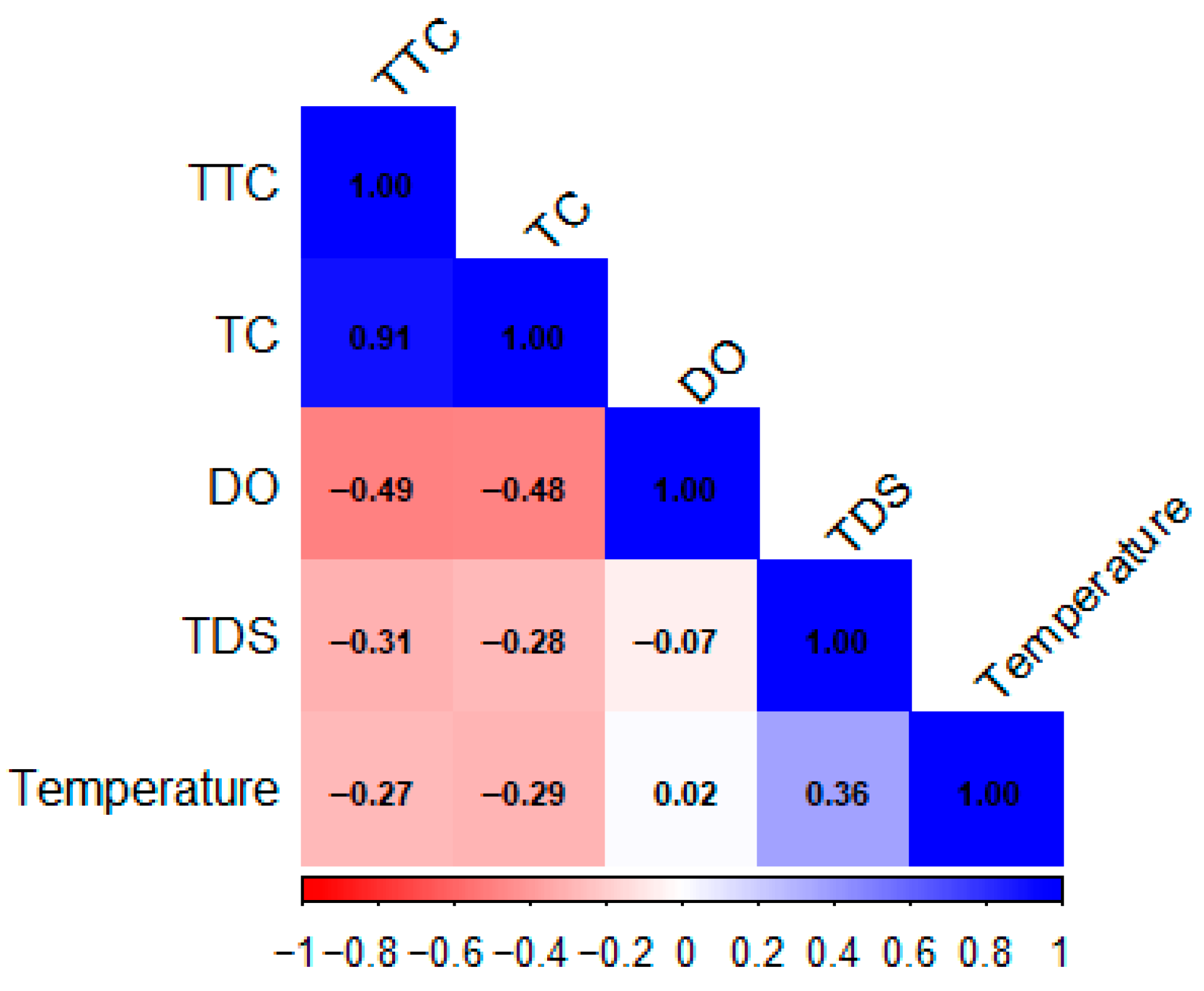
An analysis of the data was carried out using the Lilliefors test (Kolmogórov–Smirnov, p < 0.05), establishing that the data were not distributed normally. Therefore, Spearman’s non-parametric correlation tests were used to evaluate the relationship between DO, temperature, and coliforms. Correlation analysis determines whether the relationship between two variables is present or absent, and that two variables are associated to a degree, and the significance is based on a p-value of less than 0.05. The Spearman Correlation Analysis for the parameters evaluated was visualized with a heatmap.
For seasonal analysis (wet versus dry), water bodies were compared using the Mann–Whitney U test (p < 0.05).
Statistical analyses and graphs representing the distribution of the data were performed using IBM SPSS Statistics 30.0 (Infórmese SPSS Andino, Bogotá, Colombia) and RStudio 2025.05.1 Build 513 (free version and open source for general use) to generate the heatmap and principal component analysis (PCA).
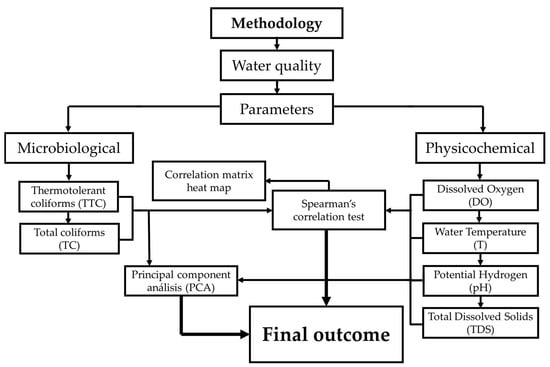
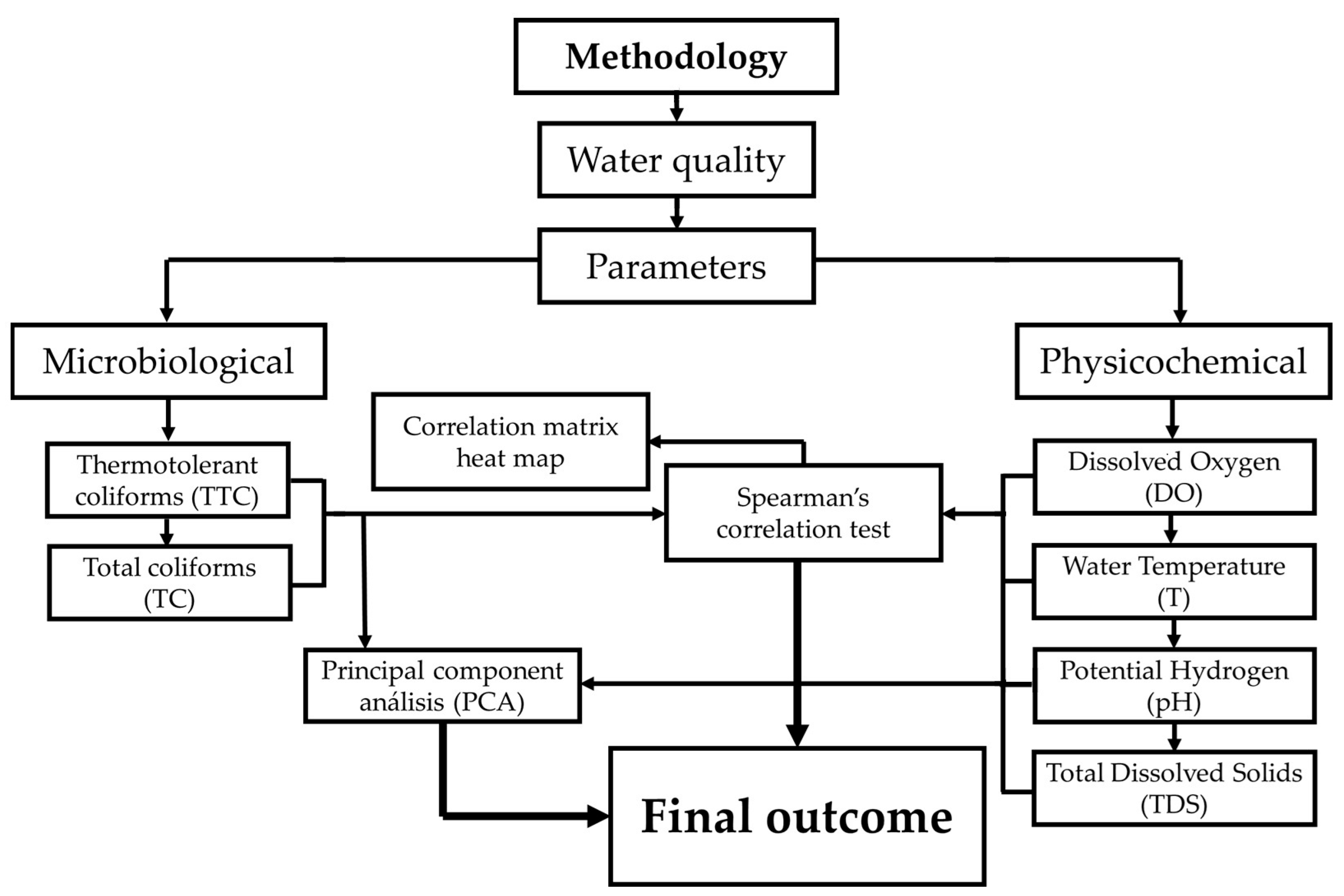
Figure 2 shows the methodological framework used in this study. The results obtained were compared with the values established in the Colombian environmental and health regulations to determine the extent to which they adhere to the standards regarding possible risks associated with the use of water.
Figure 2.
Methodological framework used in the current study.
Resolution [24] establishes that coliforms should not be recorded in water intended for human consumption. Decree [25] establishes water quality criteria for agricultural use, under which total coliforms (TC) must not exceed 5000 MPN/100 mL and 1000 MPN/100 mL for thermotolerant coliforms (TTC). The same decree establishes recreational levels of 1000 MPN/100 mL for TC and 2000 MPN/100 mL for TTC. Regarding the admissible quality criteria for the final use of water, for human and domestic consumption, concentrations lower than 200 MPN/100 mL for TC and 1000 MPN/100 mL for TTC are established.
Decree [26] adapts the single regulatory decree on the environment and sustainable development in Colombia [27] for the admissible quality criteria for the end use of water, for human and domestic consumption.
3. Results
3.1. Physicochemical Variables
The results obtained for the parameters evaluated are provided in Appendix A. Table 2 shows the descriptive statistic values for each of the study variables, along with the reference values specified in the Colombian regulations.
Table 2.
Variation of the physicochemical and microbiological parameters assessed at the sampling sites. Descriptive statistics for water temperature (T), dissolved oxygen (DO), pH, total dissolved solids (TDS), thermotolerant coliforms (TTC), and total coliforms (TC).
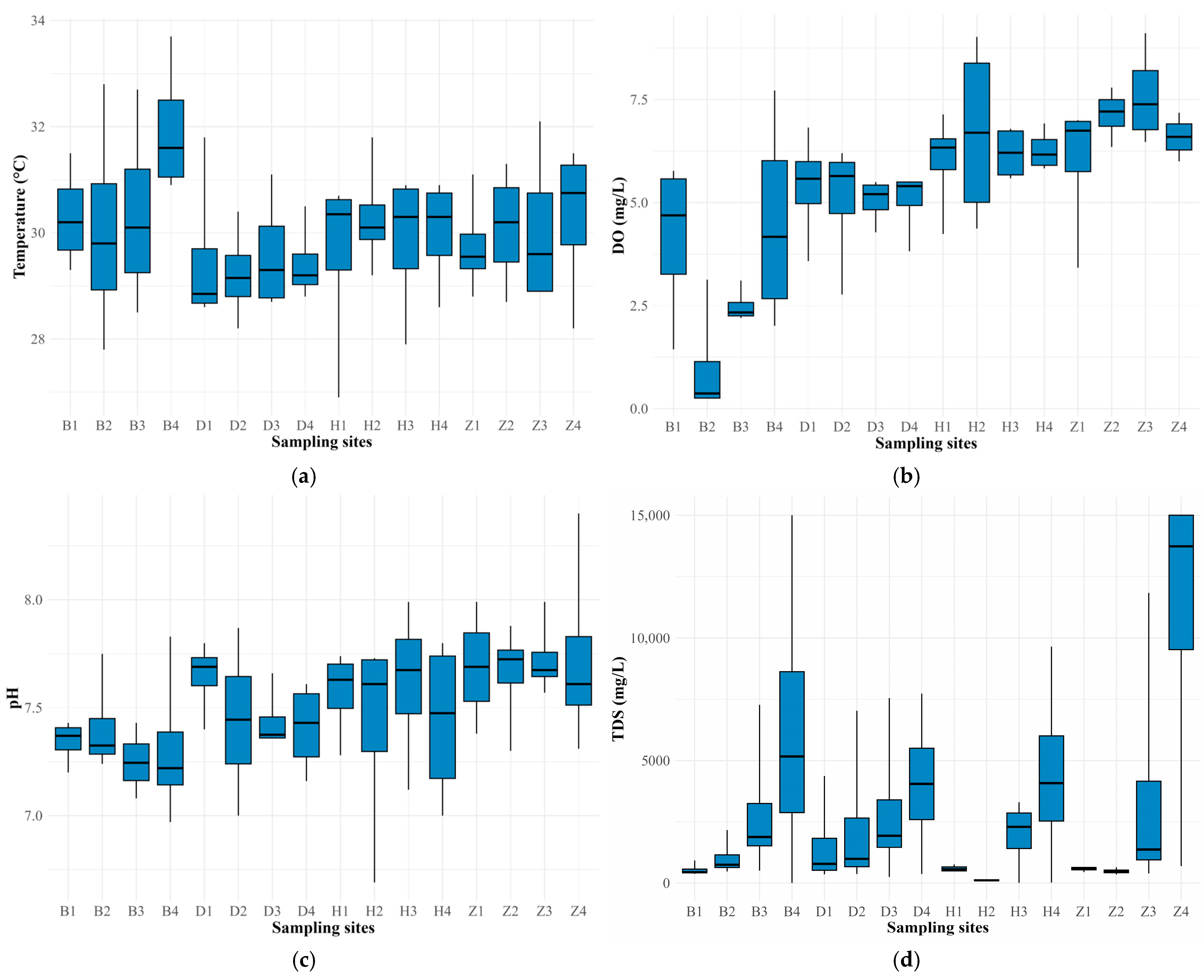
The highest surface temperature recorded was at the river mouth Bahía el Uno (B4) (33.7 °C) in the last sampling, corresponding to the wet season (August), while the lowest record (26.9 °C) was obtained in the Hobo River in the first sampling, in the dry season (November). The temperature variation was lowest in April (29.8–32.8 °C) and highest in August (29.0–33.7 °C); both periods correspond to the wet season.
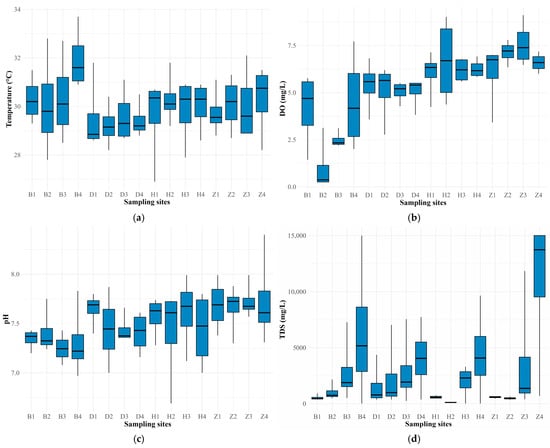
There was greatest variability in the second and fourth sampling, both of which are related to changes in weather conditions between seasons (Figure 3). Sites in Bahía El Uno had the highest temperatures (Figure 3a); in contrast, sites on the Damaquiel River (D1–D4) had low temperatures and less variability.
Figure 3.
Distribution of physicochemical parameters recorded at the sampling sites: (a) temperature (°C), (b) dissolved oxygen (mg/L), (c) pH, (d) total dissolved solids (mg/L).
There was significant variability between sampling points in the concentration of dissolved oxygen (DO), 0.25 mg/L to 9.11 mg/L, in Bahía el Uno during the January sampling and in the Zapata River, respectively, with both data corresponding to the dry season (DS1). In Bahía el Uno, sites B2 and B3 had the lowest values, 3.3 mg/L and 3.11 mg/L, respectively. In contrast, sites on the Hobo River (H2) and Zapata River (Z2 and Z3) had the highest concentrations, 9.02 mg/L and 9.11 mg/L (Figure 3b).
Regarding the pH of the water, relatively stable values were seen for all the sampling sites, varying between 6.69 and 8.40 (Figure 3c), values within the acceptable range according to environmental regulations in Colombia (4.0–9.0). The values recorded in November (DS1) were the most extreme, with a minimum and maximum of 6.69 and 8.4, respectively. In the last sampling corresponding to WS2 there was less variation (7.31–7.87).
The values for total dissolved solids (TDS) varied greatly, with a minimum concentration of 3.73 mg/L and a maximum of over 15,000 mg/L (Figure 3d). In the first sampling, the recorded concentrations were 79.7–15,000 mg/L; in the second, from 125.8 to 12,470 mg/L; in the third, 3.73–699 mg/L; and in the fourth sampling, values ranged from 98.8 to >15,000 mg/L.
TDS values were particularly high at sites established at river mouths and in the village centers. A wide variability was presented in TDS concentration, with levels over 14,000 mg/L at sites B4 and Z4. In contrast, sites such as D1, H1, H2, Z1, Z2, and to a lesser extent B1, had low and stable concentrations.
3.2. Microbiological Variables
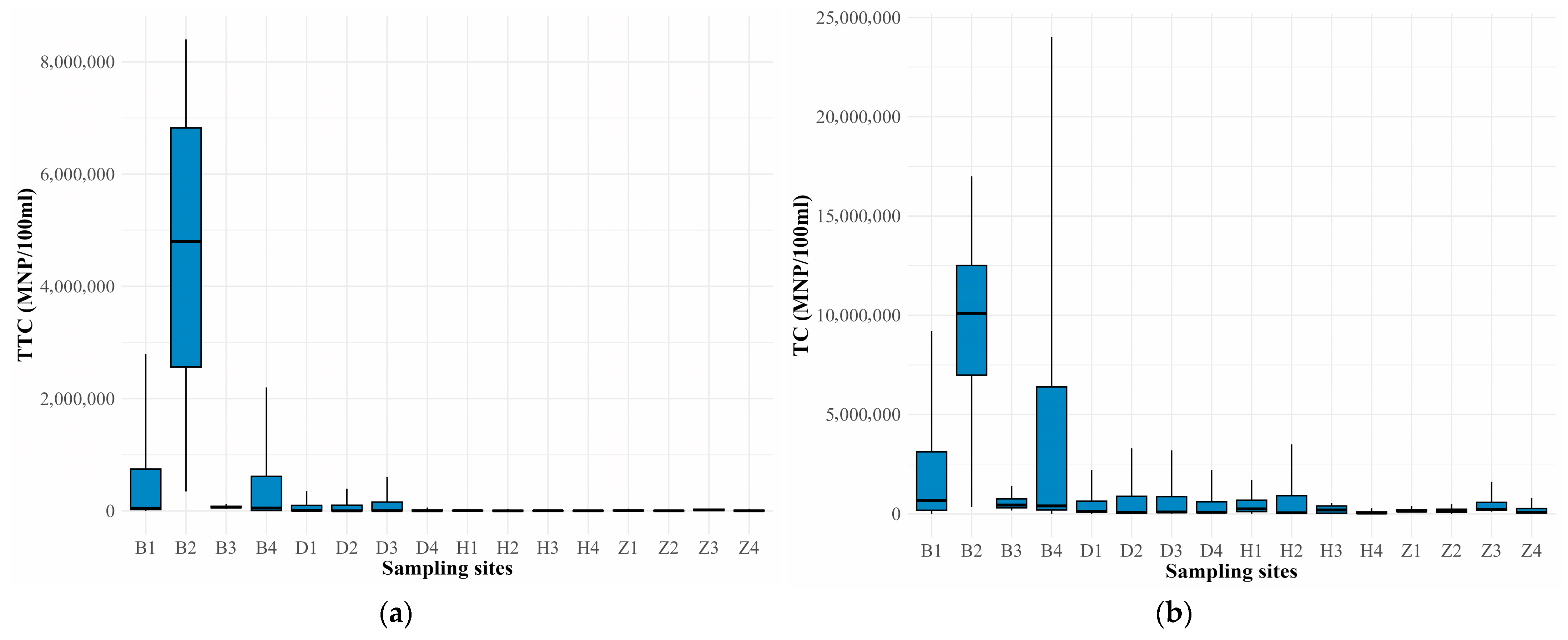
Table 2 shows the values recorded in microbiological variables at the sampling sites, and the reference values given in Colombian regulations. The concentrations of thermotolerant coliforms (TTC) ranged from 20 to 8,400,000 NMP/100 mL (Figure 4a), recorded in the DS1 (H2) and WS1 (B2), respectively. The highest concentrations and most variability were in Bahía el Uno, while in the Hobo River, especially, the concentrations were substantially lower.
Figure 4.
Distribution of coliforms recorded at the sampling sites: (a) thermotolerant coliforms (MPN/100 mL), (b) total coliforms (MPN/100 mL).
With respect to total coliform (TC) values, expressed in NMP/100 mL, it is seen that the sites in Bahía el Uno (B1, B2, and B4) had the highest concentrations, especially the site at the river mouth (B4), the one with the greatest variability (Figure 4b).
3.3. Mann–Whitney U Test
The seasonal analysis (wet versus dry) for each water body (Table 3), showed significant differences for the TDS in the Damaquiel River (p = 0.012).
Table 3.
Mann–Whitney U test for the parameters evaluated.
3.4. Spearman Correlation Analysis
Of the parameters evaluated, only the temperature values had a normal distribution (p > 0.05), which is why Spearman’s correlation coefficient was used to evaluate the relationships between the variables. The results obtained from this analysis are presented in Table 4.
Table 4.
Spearman Correlation Analysis for the parameters evaluated.
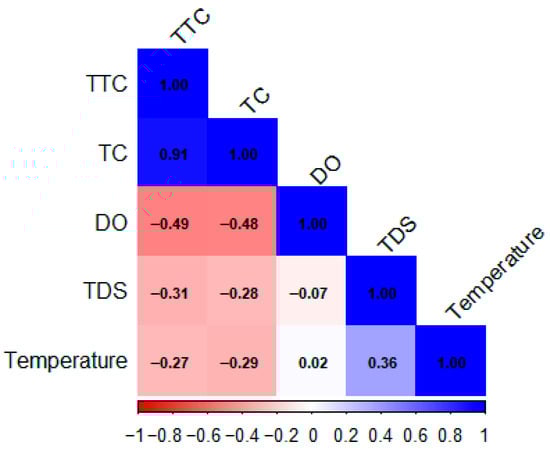
A moderate negative correlation was identified between DO and thermotolerant coliforms (r = −0.495; p < 0.05), as well as with total coliforms (r = −0.484; p < 0.05), indicating that higher bacterial loads are associated with lower oxygen levels. Negative and significant correlations were also identified between coliforms and TDS (r = −0.277; r = −0.307; p < 0.05), and with temperature (r = −0.294; r = −0.270; p < 0.05); however, no significant correlation was observed between temperature and DO (r = 0.017; p = 0.892). In contrast, TDS and temperature showed a moderate positive correlation (r = 0.365; p = 0.003) (Figure 5).
Figure 5.
Correlation matrix heat map of physicochemical and microbiological parameters evaluated, and Spearman’s correlation values (within the colored squares).
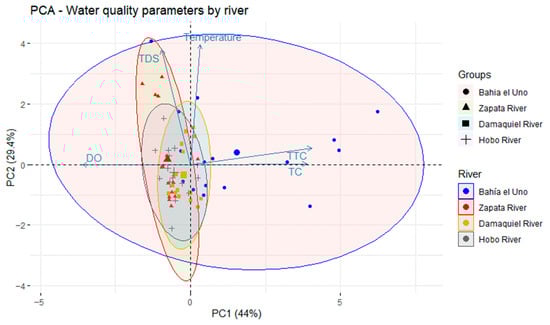
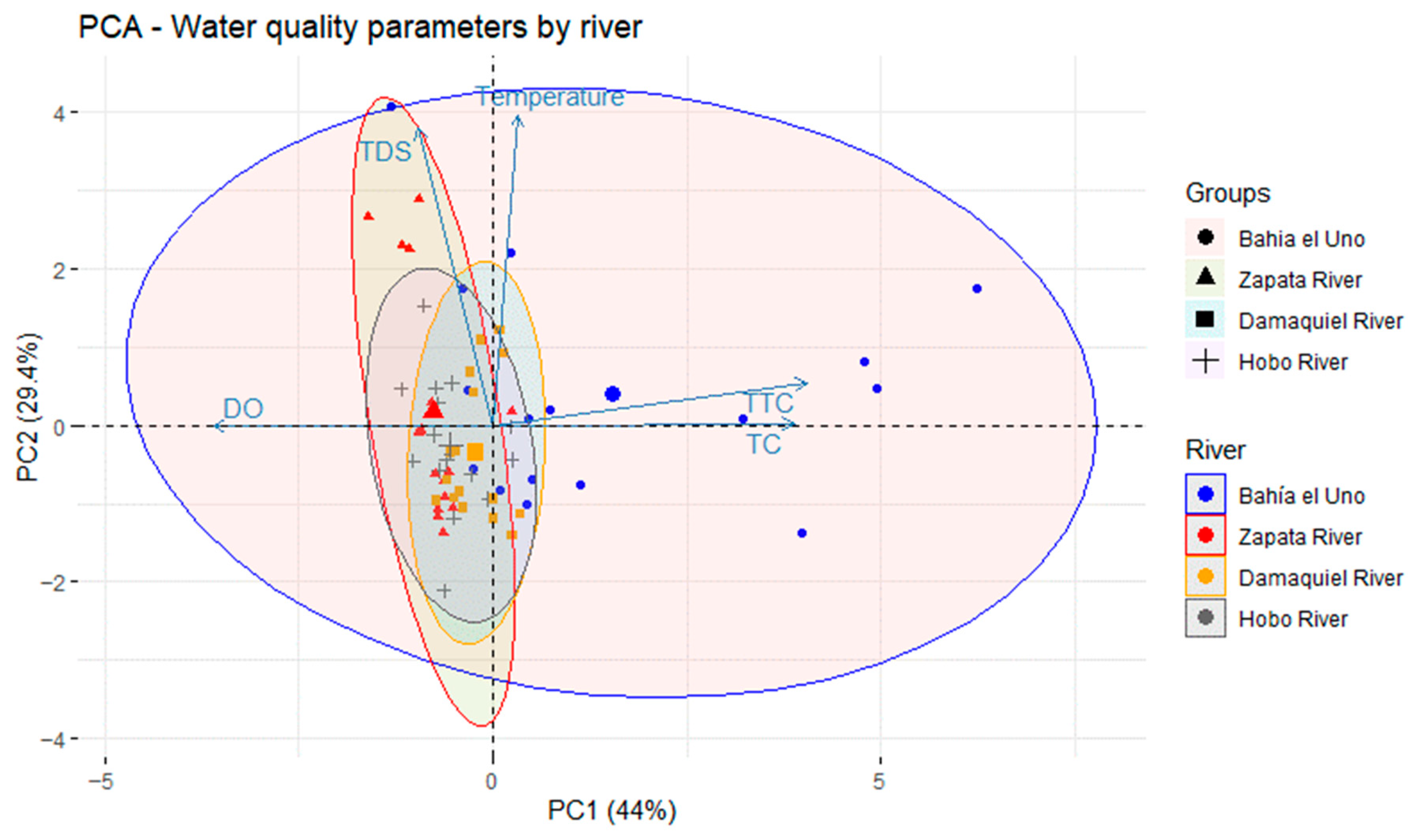
Principal component analysis (PCA) identified the gradients of variation in the physicochemical and microbiological parameters of the evaluated water bodies (Figure 6).
Figure 6.
Spatial and temporal distribution of the seasons according to the parameters evaluated in both seasons of the year (dry and wet).
The first principal component (PC1) accounts for 44% of the variance, which was determined primarily by total coliforms (TC) and thermotolerant coliforms (TTC), whose vectors were oriented toward the positive values of the axis, and by dissolved oxygen (DO), which was located at the opposite extreme. On the other hand, the second principal component (PC2), which accounted for 12.4% of the variance, was associated with temperature and total dissolved solids (TDS), both of which exhibited vectors directed toward the positive values on the axis.
Bahía el Uno presented a wider dispersion, suggesting greater variability in the conditions of the analyzed variables. The Bahía el Uno sites presented increases in microbiological variables and decreases in dissolved oxygen.
The Zapata River, for its part, clustered in the central area of the biplot, indicating moderate coliform values (TC and TTC) and a more marked relationship with total dissolved solids (TDS) and temperature compared to the Hobo River.
For the Zapata River, the ellipse suggests less internal variability among its sampling points. In contrast, the Hobo River concentrated toward the negative sector of PC1, notable for its greater association with dissolved oxygen and lower microbiological load. The Damaquiel River, although less dispersed, was located in an intermediate position, showing influence from both dissolved solids and temperature, but with a lower presence of coliforms compared to Bahía el Uno and Zapata.
4. Discussion
The release of raw and improperly treated wastewater into watercourses has both short- and long-term effects on the environment and human health [28] because the inadequate disposal of human and animal excreta can contaminate water resources, causing high nutrients, decreased oxygen levels, and an increase in the number of pathogens in the water body [29,30].
The discharge of wastewater may have different effects on the microscopic species that comprise the foundation of water ecosystems [31]. These changes are directly reflected in the environment and, consequently, in water quality. This is particularly true in many developing countries, where sewage is often discharged directly into water courses due to the total, or partial, lack of sewage networks and treatment plants in many urban centers, as is the case in the coastal municipalities of Urabá, where the discharge of wastewater into natural watercourses deteriorates the water resource quality.
4.1. Physicochemical Parameters
For the water bodies evaluated, the variation of physicochemical and microbiological parameters showed differences between sites and between climatic periods, with the greatest variations seen in the data from the sampling sites in Bahía el Uno, except for pH, which varied more at sites in the Hobo River, and in the Zapata River mouth.
The pH data were stable within the normative range (4.0–9.0), with values between 6.69 and 8.1, neutral and slightly alkaline, as described for other rivers in Urabá, where the values recorded were 7.1 and 8.2 [17]. There was little variability between the sampling sites, suggesting that this variable is not a critical risk factor in the water bodies evaluated.
In rivers, the temperature is largely controlled by incoming solar radiation [32,33]. The temperature data ranged from 26.9 to 33.7 °C, reflecting the climatic conditions of the region, and variations that occur in lotic systems, where this parameter fluctuates on daily, seasonal [34,35], and interannual time scales, and along the longitudinal axis of the channel [35], and is also influenced by latitude and tends to correlate with air temperature [33,36,37].
The highest temperatures were recorded in August 2024 (WS2), reaching values from 29.0 to 33.7 °C. Such temperatures generate favorable conditions for microbial proliferation, increasing bacterial activity. According to [38], the environmental conditions of high temperatures and high concentrations of nutrients in tropical aquatic ecosystems could favor the proliferation of E. coli.
The lowest variability in temperature was seen in the DS2 (3.0 °C), followed by the WS1 (3.3 °C).
Temperature behavior was influenced by an El Niño event, starting in the second half of 2023. According to [34], the phenomenon reached its peak between November 2023 and January 2024 before dissipating and extending its influence until March [39,40]. In all periods evaluated during the present study, a precipitation deficit was recorded in the Colombian southern Caribbean [41,42,43,44] according to the reference values for this region [45].
Temperature has a direct or indirect effect on various physical and chemical processes, which are determinant in the distribution of organisms [46,47,48]. Its effect on the saturation constants of dissolved gases means that high temperatures reduce the concentration of these gases, which can intensify the effects of pollution [49]. In this way, DO responds to temperature variations, but also to oxygenation processes that include wind action, interaction with the atmosphere, and the activity of photosynthetic organisms.
Throughout the samplings, the average DO was 5.32 ± 2.05 mg/L, indicating that in general terms, the concentrations remained at acceptable levels for aquatic life (≥4.0 mg/L). The greatest variations and the lowest concentrations were found in the water bodies of Bahía el Uno. However, DO was not significantly correlated with temperature, despite the fact that Bahía el Uno recorded high temperatures and low DO concentrations, contrary to the behavior reported by [50], which reported a significant negative correlation between temperature and dissolved oxygen (DO) in Mexican water bodies.
This difference could be attributed to the high loads of organic matter derived from untreated wastewater in the systems evaluated here, which alter the typical physico-chemical dynamics. In these water bodies, the DO seems to be conditioned by factors such as microbial activity associated with pollution, rather than by thermal variations.
The lowest variability in DO was seen in April (WS), followed by November (DS), with the lowest records equivalent to 0.25 mg/L, determined during January (DS) and August (WS) at various sampling sites. DO results were relatively stable, except for the sampling sites in Bahía el Uno (Figure 3), where the low concentrations recorded could compromise aquatic life, and therefore the equilibrium of these water bodies.
In Bahía el Uno, there is a significant contribution of wastewater, which alters the oxygen balance of the water, with B2 being the most critical site, recording very low DO levels (0.25 mg/L). These conditions also limit the possible use of water due to the presence of bacteria, including coliform groups. These bacteria increase dissolved oxygen consumption, which is also affected by the presence of decomposer microorganisms. Both situations increase anaerobic conditions, leading to increased survival of bacteria, such as coliforms in water contaminated with fecal matter [51].
In a riverbed, oxygen consumption is relevant to biological and chemical processes, and very important in the decomposition of organic matter and with the sediments pre-sent at the bottom of a river [52]. Oxygen consumption also varies due to the presence of microorganisms, which influences the availability of oxygen, and therefore its study, as it allows for understanding the relationship between the physical and microbiological parameters of water.
4.2. Microorganisms—Coliforms
Microorganisms constitute the fundamental compartments of aquatic ecosystems because of their high concentration and activities [53]. However, pathogenic contamination of water contains significant health risks to aquatic environments and human beings. The microbiological results gave the highest concentrations of thermotolerant coliforms (8,400,000 NMP/100 mL) and total coliforms (24,000,000 NMP/100 mL) in January (DS2) and November (DS1), respectively, with an average of 399,812 ± 1,405,339 NMP/100 mL for thermotolerant coliforms and 1,542,043 ± 4,097,424 NMP/100 mL for total coliforms. These values far exceed the maximums allowed in Colombian regulations (200 and 1000 NMP/100 mL, respectively), evidencing high fecal contamination in the water bodies evaluated.
The high concentrations of coliforms in Bahía El Uno (especially at B2 and B3) indicate the considerable load of fecal contamination associated with the direct discharge of untreated domestic wastewater. Similar findings were shown in other studies [15,54,55,56], which identified urban areas as the main sources of microbiological deterioration in tropical rivers.
The highest records of coliforms occurred during the dry season, a period in which high water temperatures prevail, a behavior that has been reported in various studies [57]. However, elevated concentrations of coliforms in surface waters are often observed during periods of high precipitation, generated by processes such as sediment resuspension, microbial reactivation, surface runoff, and stormwater inputs [58,59,60,61].
Seasonal variation and population growth influence coliform bacteria concentrations, as is the case in Bahía el Uno and other water bodies. A temporal analysis of the Brunei River showed significant increases in total coliform concentrations during the rainy season, along with persistent background contamination during the dry season [56].
In Colombia, the relationship between water pollution and the proliferation of waterborne diseases mainly affects infants under one year of age and children from 1 to 4 years of age [62], a problem related to the inappropriate use of water resources affected by the discharge of effluents receiving fecal matter, which increase the bacterial load in the water bodies.
Coliforms can grow in natural surface waters due to the large amount of organic matter and high temperatures [63,64]. Bahía el Uno receives a significant amount of wastewater discharges, not only from homes in this area, but also from a sector of the municipality of Turbo, through a natural drain that receives wastewater and was channeled to this sector, causing further deterioration.
For the remaining sites, the highest coliform concentrations occurred in April (WS1). This behavior is related to the carryover of stagnant water in some sectors due to the low rainfall recorded from the second half of 2023 to March 2024. These waters are carried away by rainfall, increasing the concentration of microorganisms in the receiving water bodies.
4.3. Eutrophication Conditions—Urbanization
Wastewater and other waste discharges generate excessive organic matter, and also promote eutrophication processes, that bring an increase in the concentration of nutrients and thereby, of phytoplanktonic organisms. This leads to mortality, and growth of aerobic microorganisms that consume oxygen, and reduces the availability of this gas in the eco-system [65,66]. In Bahía el Uno, OD concentrations of far less than 2.0 mg/L were record-ed, and these conditions hinder the survival of many species.
The increase in eutrophication and associated hypoxia/anoxia (hypoxia < 2.0 mg/L, anoxia < 0.5 mg/L), influenced by rising temperatures combined with the acidification of susceptible waterbodies, is detrimental to ecosystem function [67,68]. The results indicate that among the study sites, Bahía el Uno was the only sector that recorded anoxic (B2) and hypoxic conditions, except during the sampling carried out in the WS corresponding to April, demonstrating the repercussions of inadequate wastewater management on the trophic state of the water bodies in this sector.
Sampling sites in Bahía el Uno feature shallow waters with low circulation; this causes changes in the trophic status of water bodies, resulting in greater deterioration in this sector compared to sites established on rivers. It is worth noting that the contribution of organic matter is significant after prolonged periods of little or no rainfall since when it occurs, much of the accumulated material is removed and transported to these bodies of water.
This material is primarily composed of domestic waste. The pollutant load is represented by high percentages of organic matter and microorganisms of fecal origin. The ability of fecal bacteria to survive in water indicates that their presence in this environment is associated with recent infections or with the presence of suitable conditions (pH, temperature, humidity, and organic matter) [69].
The organic load generated by household waste contains organic carbon, nitrogen, and pathogens attached to particles such as sand [70]. The entry of this contaminant load requires oxygen for decomposition and respiration processes, which explains the moder-ate negative correlation determined between DO and coliform concentrations. Fecal contamination favors microbial activity and reduces DO availability, as has been recorded in other water bodies in [13,71].
On the other hand, the differences in TDS concentration among the sampling sites suggest that their sources may respond to specific local conditions, such as the presence of sites with a higher degree of urbanization, the amount of wastewater discharged, and the self-purification capacity of each water body.
TDS data show a positive, significant correlation with temperature, coinciding with results reported by [72], which attributed this relationship to evaporation processes that increase the concentration of solutes in the water. This suggests that the higher ionic con-centration generated during warmer periods could favor eutrophication processes or alter microbial dynamics. This parameter is highly variable (19.85–>15,000 mg/L), with an average of 2777 ± 3964 mg/L. The highest levels were recorded in the DS (November) and WS (August), suggesting a significant contribution of organic load and pollutants of anthropogenic origin in both periods.
The high concentrations of TDS determined directly affect the availability of oxygen present in water bodies. This is related to the fact that the highest TDS records were found at sites with the highest incidence of urbanization.
The relationship between the variables evaluated shows a pattern with high temperatures, coliform concentrations, and TDS, and a tendency toward low DO levels, favoring bacterial growth processes that accentuate deoxygenation and negatively affect water quality.
4.4. Implications, Limitations, and Priorities
The interaction between variables underlines the need for monitoring that generates information on the ecological status of water bodies, and an integrated approach that simultaneously considers microbiological, physicochemical, pollutant, and climatic factors. In this regard, expanding the analysis of the group of microorganisms that indicate contamination would be extremely useful for characterizing these environments, as would implementing methods that offer greater specificity and speed compared to traditional culture methods, which are available in the two accredited laboratories in the region.
Overall, the results reflect deterioration and contamination in most of the water bodies analyzed. On the other hand, the criteria established in Colombian regulations are not met, especially for coliforms, which represent risks to the ecosystem and public health. Unfortunately, this situation is also seen in other water bodies across the country, as re-ported by [73]. However, several municipalities in the region are currently demanding re-sources to implement projects to expand sewage systems and install wastewater treatment plants, essential actions for proper wastewater management and environmental protection.
5. Conclusions
This study analyzed the relationship between physicochemical and microbiological water parameters and their impact on resource quality. Fecal contamination was identified in the assessed water bodies due to the discharge of untreated wastewater. The parameters analyzed showed deterioration, particularly dissolved oxygen (DO) concentration. Bahía el Uno was the sector’s greatest impact by wastewater influence. The high concentration of coliforms detected poses a serious threat to human health. Therefore, there is a necessity for steps to reduce this contamination and improve water quality to protect the community from extensive waterborne diseases, and also, to restore the quality of these aquatic environments. The results highlight the need to implement adequate wastewater management and treatment measures in these sectors.
Author Contributions
Conceptualization, S.T.P.-G., M.M.Z.-O. and V.G.T.-V.; Methodology, S.T.P.-G., M.M.Z.-O. and V.G.T.-V.; Software, S.T.P.-G.; Validation, S.T.P.-G. and M.M.Z.-O.; Formal analysis, S.T.P.-G. and M.M.Z.-O.; Investigation, S.T.P.-G., M.M.Z.-O. and V.G.T.-V.; Resources, V.G.T.-V.; Data curation, S.T.P.-G.; Writing—original draft, S.T.P.-G. and M.M.Z.-O.; Writing—review & editing, M.M.Z.-O. and V.G.T.-V.; Supervision, M.M.Z.-O.; Project administration, V.G.T.-V.; Funding acquisition, V.G.T.-V. All authors have read and agreed to the published version of the manuscript.
Funding
This research was funded by the General System of Royalties (SGR): “Implementation of a rural citizen network to monitor environmental and biological variables associated with high prevalence diseases in coastal communities of Turbo, Necoclí, Arboletes and San Juan de Urabá—Red COCO, Department of Antioquia” (BPIN-2021000100254) and “Implementation of strategies for the construction and social appropriation of knowledge on biodiversity in Urabá, Antioquia” (BPIN-2020000100304). Additionally, the authors would also like to thank microbiologist María Alejandra Carrillo and Dr. Catalina Inés Cortés for their contributions. The APC was funded by the General System of Royalties (SGR): Red COCO.
Data Availability Statement
The raw data supporting the conclusions of this article will be made available by the authors on request.
Conflicts of Interest
The authors declare no conflicts of interest.
Abbreviations
The following abbreviations are used in this manuscript:
| TC | Total coliforms |
| TTC | Thermotolerant coliforms |
| °C | Centigrade degrees |
| SD | Standard deviation |
| GISMAC | Marine and coastal systems research group |
| IDEAM | Colombian Institute of Hydrology, Meteorology, and Environmental Studies (Instituto de hidrología, meteorología y estudios ambientales de Colombia). |
| mL | Milliliter |
| mm/month | Millimeters per month |
| mg/L | Milligrams per liter |
| MPN | Most probable number |
| MPN/100 mL | Most probable number per 100 milliliters |
| DO | Dissolved oxygen |
| TDS | Total dissolved solids |
Appendix A
Table A1.
Physicochemical and microbiological parameters assessed at the sampling sites in Bahia el Uno: water temperature (T), dissolved oxygen (DO), potential hydrogen (pH), total dissolved solids (TDS), thermotolerant coliforms (TTC), and total coliforms (TC).
Table A2.
Physicochemical and microbiological parameters assessed at the sampling sites in Zapata River: water temperature (T), dissolved oxygen (DO), potential hydrogen (pH), total dissolved solids (TDS), thermotolerant coliforms (TTC), and total coliforms (TC).
Table A3.
Physicochemical and microbiological parameters assessed at the sampling sites in Hobo River: water temperature (T), dissolved oxygen (DO), potential hydrogen (pH), total dissolved solids (TDS), thermotolerant coliforms (TTC), and total coliforms (TC).
Table A4.
Physicochemical and microbiological parameters assessed at the sampling sites in Damaquiel River: water temperature (T), dissolved oxygen (DO), potential hydrogen (pH), total dissolved solids (TDS), thermotolerant coliforms (TTC), and total coliforms (TC).
References
- Peters, N.E.; Meybeck, M.; Chapman, D.V. Effects of Human Activities on Water Quality. In Encyclopedia of Hydrological Sciences, 1st ed.; Anderson, M.G., McDonnell, J.J., Eds.; John Wiley & Sons, Ltd.: Hoboken, NJ, USA, 2005; pp. 1409–1425. [Google Scholar] [CrossRef] [Scilit]
- Hale, R.L.; Grimm, N.B.; Vörösmarty, C.J.; Fekete, B. Nitrogen and phosphorus fluxes from wátersheds of the northern U.S. from 1930 to 2000: Role of anthropogenic nutrient inputs, infrastructure, and runoff. Glob. Biochem. Cycles 2015, 29, 341–356. [Google Scholar] [CrossRef] [Scilit]
- Derfoufi, H.; Legssyer, M.; Belbachir, C.; Legssyer, B. Effect of physicochemical and microbiological parameters on the water quality of wadi Zegzel. Mater. Today Proc. 2019, 13, 730–738. [Google Scholar] [CrossRef] [Scilit]
- Camara, M.; Jamil, N.R.; Abdullah, A.F.B. Impact of land uses on water quality in Malaysia: A review. Ecol. Process. 2019, 8, 10. [Google Scholar] [CrossRef] [Scilit]
- Chester, R. The transport of material to the oceans: The river pathway. In Marine Geochemistry; Chester, R., Ed.; Springer: Dordrecht, The Netherlands, 1990; pp. 14–82. [Google Scholar] [CrossRef] [Scilit]
- Umaña, G. Characterization of some Golfo Dulce drainage basin rivers (Costa Rica). Rev. Biol. Trop. 1998, 46, 125–135. Available online: https://archivo.revistas.ucr.ac.cr/index.php/rbt/article/view/29651 (accessed on 24 March 2025).
- Calvo, G.; Mora, J. Preliminary evaluation and classification of water quality in the Tárcoles and Reventazón river basins. Part IV: Statistical analysis of variables related to water quality. Tecnol. Marcha 2009, 22, 57–64. Available online: https://revistas.tec.ac.cr/index.php/tec_marcha/article/view/196/194 (accessed on 24 March 2025).
- du Plessis, A. Persistent degradation: Global water quality challenges and required actions. One Earth 2022, 5, 129–131. [Google Scholar] [CrossRef] [Scilit]
- Ciobotaru, A. Influence of human activities on water quality of rivers and groundwaters from Brǎila Country. Ann. Univ. Oradea Geogr. Ser. 2015, 1, 5–13. [Google Scholar]
- Gianoli, A.; Hung, A.; Shiva, C. Relationship between total and thermotolerant coliforms with water physicochemical factors in six beaches of Sechura-Piura Bay 2016–2017. Salud Tecnol. Vet. 2018, 2, 62–71. [Google Scholar] [CrossRef] [Scilit]
- Covich, A.P.; Austen, M.C.; Bärlocher, F.; Chauvet, E.; Cardinale, B.J.; Biles, C.L.; Inchausti, P.; Dangles, O.; Solan, M.; Gessner, M.O.; et al. The role of biodiversity in the functioning of freshwater and marine benthic ecosystems. BioScience 2004, 54, 767–775. [Google Scholar] [CrossRef] [Scilit]
- Faghihinia, M.; Xu, Y.; Liu, D.; Wu, N. Freshwater biodiversity at different habitats: Research hotspots with persistent and emerging themes. Ecol. Indic. 2021, 129, 107926. [Google Scholar] [CrossRef] [Scilit]
- Banerjee, A.; Chakrabarty, M.; Rakshit, N.; Bhowmick, A.R.; Ray, S. Environmental factors as indicators of dissolved oxygen concentration and zooplankton abundance: Deep learning versus traditional regression approach. Ecol. Indic. 2019, 100, 99–117. [Google Scholar] [CrossRef] [Scilit]
- Jadhav, D.A.; Chendake, A.D.; Ghosal, D.; Mathuriya, A.S.; Kumar, S.S.; Pandit, S. Advanced microbial fuel cell for biosensor applications to detect quality parameters of pollutants. In Bioremedation, Nutrient, and Other Valuable Produc Recovery; Singh, L., Madhab Mahapatra, D.M., Thakur, S., Eds.; Elsevier: Amsterdam, The Netherlands, 2021; pp. 125–139. [Google Scholar] [CrossRef] [Scilit]
- Braga, F.H.R.; Dutra, M.L.S.; Lima, N.S.; Silva, G.M.; Miranda, R.C.M.; Firmo, W.C.A.; Moura, A.R.L.; Monteiro, A.S.; Silva, L.C.N.; Silva, D.F.; et al. Study of the Influence of Physicochemical Parameters on the Water Quality Index (WQI) in the Maranhão Amazon. Brazil. Water 2022, 14, 1546. [Google Scholar] [CrossRef] [Scilit]
- Vázquez Zapata, G.; Herrera, L.; Cantera, J.; Galvis, A.; Cardona, D.; Hurtado, I. Methodology to Determine Eutrophication Levels in Aquatic Ecosystems. Rev. Asoc. Colomb. Cienc. Biológicas 2012, 24, 112–128. Available online: https://www.revistaaccb.org/r/index.php/accb/article/view/81/81 (accessed on 24 March 2025).
- Aristizabal-Tique, V.H.; Gomez-Gallego, D.D.; Ramos-Hernandez, I.T.; Arcos-Arango, Y.; Polanco-Echeverry, D.N.; Velez-Hoyos, F.J. Assessing the Physicochemical and Microbiological Condition of Surface Waters in Urabá-Colombia: Impact of Human Activities and Agro-Industry. Water Air Soil Pollut. 2024, 235, 260. [Google Scholar] [CrossRef] [Scilit]
- Ordoñez-Zuñiga, A.; Peña-Mejía, C.; Bastidas-Salamanca, M.; Ricaurte-Villota, C. Region 8: Sinú-Urabá. In Oceanographic Regionalisation: A Dynamic Vision of the Caribbean, 1st ed.; INVEMAR Special Publications Series#14; Ricaurte-Villota, C., Bastidas-Salamanca, M., Eds.; Marine and Coastal Research Institute José Benito Vives De Andréis (INVEMAR): Santa Marta, Colombia, 2017; pp. 140–155. Available online: https://www.invemar.org.co/en/publicaciones (accessed on 7 April 2025).
- Toro-Valencia, V.G.; Mosquera, W.; Barrientos, N.; Bedoya, Y. Ocean circulation of the Gulf of Urabá using high temporal resolution wind fields. Bol. Cient. CIOH 2019, 38, 41–56. [Google Scholar] [CrossRef] [Scilit]
- Roldan, P.; Gómez., E.; Toro., F. Mean circulation pattern in Colombia Bay in the two extreme climatic epochs. In Proceedings of the XXIII Latin American Hydraulics Congress, Cartagena de Indias, Colombia, 2–6 September 2008. Available online: https://repositorio.unal.edu.co/bitstream/handle/unal/8096/Roldan.Toro.pdf?sequence=1&isAllowed=y (accessed on 10 March 2025).
- Campillo, A.; Taupin, J.D.; Betancur, T.; Patris, N.; Vergnaud, V.; Paredes, V.; Villegas, P. A multi-tracer approach for understanding the functioning of heterogeneous phreatic coastal aquifers in humid tropical zones. Hydrolog. Sci. J. 2021, 66, 600–621. [Google Scholar] [CrossRef] [Scilit]
- American Public Health Association-APHA; American Water Works Association-AWWA; Water Environmental Federation-WEF. Standard Methods for the Examination of Water and Wastewater, 24th ed.; APHA Press: Washington, DC, USA, 2023. [Google Scholar]
- Masindi, T.K.; Gyedu-Ababio, T.; Mpenyana-Monyatsi, L. Pollution of Sand River by Wastewater Treatment Works in the Bushbuckridge Local Municipality, South Africa. Pollutants 2022, 2, 510–530. [Google Scholar] [CrossRef] [Scilit]
- Institute of Hydrology, Meteorology, and Environmental Studies—Ideam; Marine and Coastal Research Institute “Jose Benito Vives de Andreis”—Invemar. Water Monitoring and Tracking Protocol; US Environmental Protection Agency: Washington, DC, USA, 2021; 631p. [Google Scholar]
- Ministry of Environment, Housing and Territorial Development; Ministry of Social Protection. Resolution Number (2115), 22 June 2007. Through Which the Characteristics, Basic Instruments and Frequencies of the Water Quality Control and Monitoring System for Human Consumption Are Identified, 2007; 37p. Available online: https://minvivienda.gov.co/normativa/resolucion-2115-2007 (accessed on 9 October 2025).
- Ministry of Health. Decree 1594 of 26 June 1984. In Partially Regulating Title I of Law 9 of 1979, as well as Chapter II of Title VI—Part III—Book II and Title III of Part III—Book I—of Decree-Law 2811 of 1974 Regarding the Use of Water and Liquid Waste; Ministry of Health: Bogotá, Colombia, 1984. Available online: https://www.funcionpublica.gov.co/eva/gestornormativo/norma.php?i=18617 (accessed on 9 October 2025).
- Ministry of the Environment and Sustainable Development Sector. Decree 703 of 20 April 2018. By Which Some Adjustments Are Made to Decree 1076 of 2015, by Means of Which the Single Regulatory Decree of the Environment and Sustainable Development Sector Is Issued, and Other Provisions are Dictated, Bogotá, Colombia. 2018. Available online: https://www.funcionpublica.gov.co/eva/gestornormativo/norma.php?i=85980 (accessed on 9 October 2025).
- Ministry of the Environment. Decree 1076 of 26 May 2015. Issuing the Single Regulatory Decree for the Environment and Sustainable Development Sector, Bogotá, Colombia. 2015. Available online: https://www.funcionpublica.gov.co/eva/gestornormativo/norma.php?i=78153 (accessed on 9 October 2025).
- Ríos-Tobón, S.; Agudelo-Cadavid, R.M.; Gutiérrez-Builes, L.A. Pathogens and microbiological indicators of water quality for human consumption. Rev. Fac. Nac. Salud Publica 2017, 35, 236–247. [Google Scholar] [CrossRef] [Scilit]
- Griffin, N.J.; Palmer, C.G.; Scherman, P.A. Critical Analysis of Environmental Water Quality in South Africa: Historic and Current Trends Report to the Water Research Commission; Water Research Commission: Pretoria, South Africa, 2014. [Google Scholar]
- Bienfang, P.K.; Defelice, S.V.; Laws, E.A.; Brand, L.E.; Bidigare, R.R.; Christensen, S.; Trapido-Rosenthal, H.; Hemscheidt, T.K.; McGillicuddy, D.J.; Anderson, D.M.; et al. Prominent human health impacts from several marine microbes: History, ecology, and public health implications. Int. J. Microbiol. 2010, 2011, 152815. [Google Scholar] [CrossRef] [Scilit]
- Caissie, D. The thermal regime of rivers: A review. Freshw. Biol. 2006, 51, 1389–1406. [Google Scholar] [CrossRef] [Scilit]
- Evans, E.C.; Mcgregor, G.R.; Petts, G.E. River energy budgets with special reference to river bed processes. Hydrol. Process. 1998, 12, 575–595. [Google Scholar] [CrossRef]
- Johnson, M.F.; Albertson, L.K.; Algar, A.C.; Dugdale, S.J.; Edwards, P.; England, J.; Gibbins, C.; Kazama, S.; Komori, D.; MacColl, A.D.C.; et al. Rising water temperature in rivers: Ecological impacts and future resilience. WIREs Water 2024, 11, e1724. [Google Scholar] [CrossRef] [Scilit]
- Webb, B.W.; Hannah, D.M.; Moore, R.D.; Brown, L.E.; Nobilis, F. Recent advances in stream and river temperature research. Hydrol. Process. 2008, 22, 902–918. [Google Scholar] [CrossRef] [Scilit]
- Webb, B.W.; Clack, P.D.; Walling, D.E. Water-air temperature relationships in a Devon River system and the role of flow. Hydrol. Process. 2003, 17, 3069–3084. [Google Scholar] [CrossRef] [Scilit]
- Mohseni, O.; Stefan, H.G. Stream temperature/air temperature relationship: A physical interpretation. J. Hydrol. 1999, 218, 128–141. [Google Scholar] [CrossRef] [Scilit]
- Larrea-Murrell, J.A.; Rojas-Badía, M.M.; Romeu-Álvarez, B.; Rojas-Hernández, N.M.; Heydrich-Pérez, M. Indicator bacteria of fecal contamination in water quality assessment: A literature review. Rev. CENIC Cienc. Biol. 2013, 44, 24–34. Available online: https://www.redalyc.org/articulo.oa?id=181229302004 (accessed on 21 May 2025).
- World Metrological Organization—WMO. Update Predicts 60% Chance of La Niña. Press Release. 11 September 2024. Available online: https://wmo.int/news/media-centre/wmo-update-predicts-60-chance-of-la-nina (accessed on 10 March 2025).
- Ruiz, J.F.; Melo, J.Y. Short, Medium, and Long-Term Climate Prediction Report in Colombia; Time and Climate Modeling Group, Meteorology Subdirectorate—IDEAM: Bogotá, Colombia, 2024; 12p. [Google Scholar]
- Ortiz Trujillo, J.; Ramos De La Hoz, I.; Garavito Mahecha, J.D. Monthly Meteomarine Bulletin of the Colombian Caribbean No. 131/November 2023 Cartagena de Indias D.T. and C.; Colombia General Maritime Directorate: Bogotá, Colombia, 2023; Available online: https://mindefensa.primo.exlibrisgroup.com/discovery/fulldisplay?docid=alma991299828707231&context=L&vid=57MDN_INST:CECOLDO&lang=es&adaptor=Local%20Search%20Engine (accessed on 15 September 2025).
- Ortiz Trujillo, J.; Llorente Valderrama, A.J. Monthly Meteomarine Bulletin of the Colombian Caribbean No.133/January 2024 Cartagena de Indias D.T. y C.; Colombia General Maritime Directorate: Bogotá, Colombia, 2024; Available online: https://mindefensa.primo.exlibrisgroup.com/discovery/fulldisplay?docid=alma991299827207231&context=L&vid=57MDN_INST:CECOLDO&lang=es&adaptor=Local%20Search%20Engine (accessed on 15 September 2025).
- Llorente Valderrama, A.J.; Ramos De La Hoz, I.; Garavito Mahecha, J.D. Monthly Meteomarine Bulletin of the Colombian Caribbean No.136/Abril 2024 Cartagena de Indias D.T. y C.; Colombia General Maritime Directorate: Bogotá, Colombia, 2024; Available online: https://mindefensa.primo.exlibrisgroup.com/discovery/fulldisplay?docid=alma991312108607231&context=L&vid=57MDN_INST:CECOLDO&lang=es&adaptor=Local%20Search%20Engine (accessed on 15 September 2025).
- Ortiz Trujillo, J.A.; Ramos De La Hoz, I.; Garavito Mahecha, J.D. Monthly Meteomarine Bulletin of the Colombian Caribbean No.140/Agosto 2024 Cartagena de Indias D.T. y C.; Colombia General Maritime Directorate: Bogotá, Colombia, 2024; Available online: https://mindefensa.primo.exlibrisgroup.com/discovery/fulldisplay?docid=alma991318571907231&context=L&vid=57MDN_INST:CECOLDO&lang=es&adaptor=Local%20Search%20Engine (accessed on 15 September 2025).
- Dirección General Marítima—Dimar; Centro de Investigaciones Oceanográficas e Hidrográficas del Caribe—CIOH; Servicio Hidrográfico Nacional—SHN. Derrotero de las Costas y Áreas Insulares del Caribe Colombiano; Dimar: Bogotá, Colombia, 2020; Volume 1. [Google Scholar]
- Poole, G.C.; Berman, C.H. An Ecological Perspective on In-Stream Temperature: Natural Heat Dynamics and Mechanisms of Human-Caused Thermal Degradation. Environ. Manag. 2001, 27, 787–802. [Google Scholar] [CrossRef] [Scilit]
- Pérez-Castillo, A.C.; Rodríguez, A. Physicochemical index of water quality for the management of tropical flooded lagoons. Rev. Biol. Trop. 2008, 56, 1905–1918. Available online: http://www.scielo.sa.cr/scielo.php?script=sci_arttext&pid=S0034-77442008000400026&lng=en (accessed on 10 March 2025).
- Shrestha, A.K.; Basnet, N.B. The correlation and regression analysis of physicochemical parameters of river water for the evaluation of percentage contribution to electrical conductivity. J. Chem. 2018, 9, 8369613. [Google Scholar] [CrossRef] [Scilit]
- Fusi, M.; Daffonchio, D.; Booth, J.; Giomi, F. Dissolved Oxygen in Heterogeneous Environments Dictates the Metabolic Rate and Thermal Sensitivity of Tropical Aquatic Crab. Fron. Mar. Sci. 2021, 8, 767471. [Google Scholar] [CrossRef] [Scilit]
- Muñoz., H.; Orozco., S.; Vera., A.; Suárez., J.; García., E.; Mercedes., N.; Jiménez, J. Relationship between dissolved oxygen, rainfall and temperature: Zahuapan river, Tlaxcala, Mexico. Tecnol. Cienc. Agua 2015, 6, 59–74. Available online: http://www.scielo.org.mx/scielo.php?script=sci_arttext&pid=S2007-24222015000500005&lng=es&tlng= (accessed on 7 July 2025).
- Roslev., P.; Bjergbaek. L., A.; Hesselsoe, M. Effect of oxygen on survival of faecal pollution indicators in drinking water. J. Appl. Microbiol. 2004, 96, 938–945. [Google Scholar] [CrossRef] [Scilit]
- Geldreich, E.E. Microbiological Quality of Source Waters for Water Supply. In Drinking Water Microbiology; McFeters, G.A., Ed.; Springer: New York, NY, USA, 1990; pp. 3–31. [Google Scholar] [CrossRef] [Scilit]
- Benjumea Hoyos, C.A.; Álvarez Montes, G. Oxygen demand by sediments in different stretches of the Negro Rionegro River. Antioquia. Colombia. Producción Limpia 2017, 12, 131–146. [Google Scholar] [CrossRef] [Scilit]
- Aguilar Martínez, S.; Solano Pardo, G.A. Evaluation of the Impact of Domestic Wastewater Discharges. Through the Application of the Contamination Index (ICOMO) in Caño Grande. Bachelor’s Thesis, Faculty of Environmental Engineering, Santo Tomas University, Villavicencio, Colombia, 2018. Available online: https://repository.usta.edu.co/items/06ab0e76-a7b9-4b29-8765-33efdfe4cd10 (accessed on 5 June 2025).
- Olds, H.T.; Corsi, S.R.; Dila, D.K.; Halmo, K.M.; Bootsma, M.J.; McLellan, S.L. High levels of sewage contamination released from urban areas after storm events: A quantitative survey with sewage specific bacterial indicators. PLoS Med. 2018, 15, e1002614. [Google Scholar] [CrossRef] [Scilit] [PubMed]
- Onifade, O.; Lawal, Z.K.; Shamsuddin, N.; Abas, P.E.; Lai, D.T.C.; Gӧdeke, S.H. Impact of Seasonal Variation and Population Growth on Coliform Bacteria Concentrations in the Brunei River: A Temporal Analysis with Future Projection. Water 2025, 17, 1069. [Google Scholar] [CrossRef] [Scilit]
- Reitter, C.; Petzoldt, H.; Korth, A.; Schwab, F.; Stange, C.; Hambsch, B.; Tiehm, A.; Lagkouvardos, I.; Gescher, J.; Hügler, M. Seasonal dynamics in the number and composition of coliform bacteria in drinking water reservoirs. Sci. Total Environ. 2021, 787, 147539. [Google Scholar] [CrossRef] [Scilit]
- Ahmed, W.; Hamilton, K.; Toze, S.; Cook, S.; Page, D. A review on microbial contaminants in stormwater runoff and outfalls: Potential health risks and mitigation strategies. Sci. Total Environ. 2019, 692, 1304–1321. [Google Scholar] [CrossRef] [Scilit]
- Bodus, B.; O’Malley, K.; Dieter, G.; Gunawardana, C.; McDonald, W. Review of emerging contaminants in green stormwater infrastructure: Antibiotic resistance genes, microplastics, tire wear particles, PFAS, and temperature. Sci. Total Environ. 2024, 906, 167195. [Google Scholar] [CrossRef] [Scilit]
- Tornevi, A.; Bergstedt, O.; Forsberg, B. Precipitation effects on microbial pollution in a river: Lag structures and seasonal effect modification. PLoS ONE 2014, 9, e98546. [Google Scholar] [CrossRef] [Scilit]
- Buckerfield, S.J.; Quilliam, R.S.; Waldron, S.; Naylor, L.A.; Li, S.; Oliver, D.M. Rainfall-driven E. coli transfer to the stream-conduit network observed through increasing spatial scales in mixed land-use paddy farming karst terrain. Water Res. X 2019, 5, 100038. [Google Scholar] [CrossRef] [Scilit]
- National Institute of Health. Public Health Surveillance Protocol. In Morbidity Due to Acute Diarrhoeal Disease; National Institute of Health: Bogotá, Colombia, 2024. Available online: https://www.ins.gov.co/buscador-eventos/Lineamientos/Pro_EDA%202024.pdf (accessed on 9 October 2025).
- Ahumada-Santos, Y.P.; Báez-Flores, M.E.; Díaz-Camacho, S.P.; Uribe-Beltrán, M.J.; López-Angulo, G.; Vega-Aviña, R.; Chávez-Duran, F.A.; Montes-Avila, J.; Carranza-Díaz, O.; Möder, M.; et al. Distribución espaciotemporal de la contaminación bacteriana del agua residual agrícola y doméstica descargada a un canal de drenaje (Sinaloa, México). Cienc. Mar. 2014, 40, 277–289. [Google Scholar] [CrossRef] [Scilit]
- Kulkarni, S.A. Review on Research and Studies on Dissolved Oxygen and Its Affecting Parameters. Int. J. Res. 2016, 3, 18–22. Available online: https://www.ijrrjournal.com/IJRR_Vol.3_Issue.8_Aug2016/IJRR004.pdf (accessed on 7 July 2025).
- Kitsiou, D.; Karydis, M. Coastal marine eutrophication assessment: A review on data analysis. Environ. Int. 2011, 37, 778–801. [Google Scholar] [CrossRef] [Scilit]
- Tao, Y.; Yu, J.; Lei, G.; Xue, B.; Zhang, F.; Yao, S. Indirect influence of eutrophication on air—water exchange fluxes, sinking fluxes, and occurrence of polycyclic aromatic hydrocarbons. Water Res. 2017, 122, 512–525. [Google Scholar] [CrossRef] [Scilit] [PubMed]
- Kennish, M.J. Eutrophication of Estuarine and Coastal Marine Environments: An Emerging Climatic-Driven Paradigm Shift. Open J. Ecol. 2025, 15, 289–324. [Google Scholar] [CrossRef]
- Rabalais, N.N.; Cai, W.J.; Carstensen, J.; Conley, D.J.; Fry, B.; Hu, X.; Quiñones-Rivera, Z.; Rosenberg, R.; Slomp, C.P.; Turner, R.E.; et al. Eutrophication-driven deoxygenation in the coastal ocean. Oceanography 2014, 27, 172–183. [Google Scholar] [CrossRef] [Scilit]
- Arcos Pulido, M.P.; Ávila de Navia, S.L.; Estupiñán Torres, S.M.; Gómez Prieto, A.C. Microbiological indicators of contamination of the water sources. Nova 2005, 3, 69–79. [Google Scholar] [CrossRef] [Scilit]
- Rivera Gutiérrez, J.V. Determination of oxidation rates, nitrification and sedimentation in the process of self-purification of a mountain river. Ingeniare. Rev. Chil. Ing. 2016, 24, 314–326. [Google Scholar] [CrossRef] [Scilit]
- Pauta-Calle, G.; Velazco, M.; Gutiérrez, D.; Vázquez, G.; Rivera, S.; Morales, O.; Abril, A. Water quality assessment of rivers in the city of Cuenca in Ecuador. Maskana 2019, 10, 76–88. [Google Scholar] [CrossRef] [Scilit]
- Salinas, N.; Briones, N.; Quiroz, S.; Peña, D.; Ortiz, Y. Characterization and Analysis of Water Quality in Urban Environments through the implementation of an Embedded System with IoT Technology. Rev. Tecnol. ESPOL—RTE 2024, 36, 98–112. [Google Scholar] [CrossRef] [Scilit]
- Sánchez, A.; Vásquez, M.; Velandia, G. Evaluation of the Microbiological Quality of Water for Human Consumption in the Villages of El Alto del Águila and El Tunal in the Municipality of Zipaquirá, Cundinamarca. Bachelor’s Thesis, Universidad Colegio Mayor de Cundinamarca, Bogotá, Colombia, 2020. Available online: https://repositorio.universidadmayor.edu.co/bitstream/handle/unicolmayor/5719/Documento%20Proyecto%20de%20Grado.pdf?sequence=14&isAllowed=y (accessed on 15 July 2025).


Disclaimer/Publisher’s Note: The statements, opinions and data contained in all publications are solely those of the individual author(s) and contributor(s) and not of MDPI and/or the editor(s). MDPI and/or the editor(s) disclaim responsibility for any injury to people or property resulting from any ideas, methods, instructions or products referred to in the content. |
© 2025 by the authors. Licensee MDPI, Basel, Switzerland. This article is an open access article distributed under the terms and conditions of the Creative Commons Attribution (CC BY) license.