


Abstract
This study explores the synergistic effects of recycled carbon fiber (RCF) and recycled carbon fiber powder (RCFP) on the performance of conductive asphalt mixtures (CAMs). Laboratory tests were conducted to evaluate optimal asphalt content (OAC), electrical and heating behavior, and key pavement properties, including rutting, cracking, and freeze–thaw resistance. Results showed that OAC increased with RCF and RCFP dosage due to their high surface area and strong asphalt absorption. The composite achieved stable conductivity, where RCF formed a macro-scale skeleton and RCFP established a micro-bridging network, reducing resistivity to a minimum of 1.60 Ω·m. This dual conductive mechanism significantly enhanced heating efficiency, with a peak rate of 4.85 °C/min at 0.5% RCF + 3% RCFP. Mechanically, RCF provided three-dimensional reinforcement while RCFP improved cohesion, together enhancing high-temperature and freeze–thaw performance. However, low-temperature cracking resistance exhibited a parabolic trend due to the risk of material agglomeration at excessive dosages. Multi-indicator TOPSIS analysis identified 0.4% RCF + 3% RCFP as the optimal composition. Critically, this optimal mixture is also technically and economically feasible, demonstrating an excellent balance characterized by a low specific energy consumption of 2.38 W·h/°C and a competitive cost (≈CNY 528.4/t). This study provides a sustainable, energy-efficient, and multi-functional solution for pavement heating and de-icing in cold regions.
1. Introduction
The road icing phenomenon constitutes a significant global threat to both traffic safety and operational efficiency. Under snowy and icy conditions, the pavement friction coefficient can plummet below 0.35—a reduction representing a mere 12% to 54% of the friction observed on dry, clean pavements [1]. This severely diminished friction markedly escalates the risks of vehicle skidding, braking failure, and subsequent loss of steering control. Road hazards related to snow and ice reportedly account for approximately 15–30% of all annual traffic accidents, resulting in significant casualties and substantial economic losses [2]. Conventional de-icing strategies, such as mechanical snow removal, chemical de-icers, and passive anti-icing coatings, have been widely deployed to mitigate these pervasive risks [3,4]. However, each approach has inherent limitations. For instance, mechanical snow removal risks damaging pavement infrastructure and lacks timely efficacy under severe weather conditions [3]. Chemical de-icers (e.g., NaCl, CaCl2) are highly corrosive to steel structures and reinforcing bars, leading to soil salinization and groundwater contamination [4,5]. Additionally, prolonged de-icer application reduces the service life of asphalt pavements [6]. Furthermore, while passive hydrophobic or superhydrophobic coatings can delay ice formation by minimizing droplet adhesion, their delicate micro-/nano-structured surfaces degrade easily under heavy snowfall or repeated freeze–thaw cycles—this renders them rapidly ineffective for anti-icing [7,8]. In China, these challenges are particularly pronounced in certain regions, which highlights the potential application of conductive asphalt mixtures [9,10]. Northeastern cities such as Harbin and Shenyang face severe winter icing, where active de-icing via conductive asphalt can improve driving safety. High-altitude mountainous highways in Guizhou and Yunnan experience frequent ice formation, and conductive asphalt can help reduce both icing risks and maintenance frequency. Strategic locations such as Beijing Capital Airport and high-cold test sections in northeastern highways provide opportunities to verify the electrical heating efficiency and long-term durability of conductive pavements, demonstrating their suitability for new road construction projects. Consequently, there is an urgent need to develop environmentally friendly, highly efficient, and durable de-icing and snow-melting approaches to effectively address the challenges of winter road maintenance.
Conductive asphalt mixtures (CAMs) have emerged as a highly promising active snow-melting technology, exploiting the Joule heating effect of conductive materials. To achieve this functionality, conductive fillers—such as graphite, carbon nanotubes (CNTs), and carbon fibers (CFs)—are incorporated into conventional asphalt mixtures, which facilitates the formation of a continuous conductive network [11,12]. When an external power source is connected to this network, it enables the efficient conversion of electrical energy into thermal energy, a process that directly melts ice and snow accumulated on the pavement surface [4,12]. This approach not only avoids the environmental hazards associated with chemical de-icers but also overcomes the mechanical damage caused by traditional snow removal methods. Furthermore, the snow-melting efficiency can be readily adjusted by controlling the input power, making CAMs suitable for winter road maintenance across diverse climatic regions. Currently, conductive materials used in CAMs are generally classified into two major categories: (i) carbon-based materials (e.g., CFs [13], CNTs [14], carbon fiber powder [1] (CFP), graphite [15], carbon black [16], and carbon-based aggregates [17]) and (ii) metal-based materials (e.g., steel fibers [18], steel slag [19], copper slag [20], and iron tailings [21]). For instance, Wang et al. developed a CAM incorporating coke aggregates that exhibited sufficient mechanical performance while achieving a bulk resistivity below 1.5 Ω·m [17]. Moreover, both carbon fiber and graphite were employed to fabricate single-phase and two-phase CAMs, and an electrical resistivity range of 0.7–2.7 Ω·m was further identified as a viable target for the design resistivity of such mixtures [22]. Similarly, Jiao et al. prepared CAMs using 60% steel slag, which reduced the electrical snow-melting time by 22–29 min and improved snow-melting efficiency by 13.2–14.7% compared with conventional asphalt mixtures [23]. A two-phase CAM containing copper slag and CF was also investigated, showing significantly enhanced electrical conductivity compared with mixtures containing CF [20]. Among conductive additives, carbon-based materials are the most commonly used due to their high conductivity, good compatibility with asphalt, and wide availability [11]. However, different types of carbon materials have a substantial impact on both the performance and cost of CAMs. Graphite is inexpensive and disperses well, but its lubricating effect can reduce fatigue resistance and low-temperature crack resistance of CAMs [24]. While CNTs exhibit excellent electrical conductivity, their prohibitive cost severely restricts large-scale application. Even the lowest-cost CNT products are priced at $100–200 per kilogram [25]. Similarly, virgin CFs simultaneously improve both the electrical and mechanical properties of CAMs [3]. However, despite their market price (approximately $20–30 per kilogram) being significantly lower than that of CNTs, this cost remains relatively high for widespread adoption in road infrastructure. Overall, research on CAms is focused on balancing electrical performance, road performance, and economic cost.
To address the economic and environmental concerns of virgin conductive fillers, recycled carbon fibers (RCFs) have recently emerged as a significant research focus. RCFs are primarily sourced from discarded carbon fiber-reinforced polymer (CFRP) products, such as decommissioned aircraft components, wind turbine blades, and sporting goods [26,27]. Given the rapid expansion of the CFRP industry, the global annual volume of CFRP waste exceeds 500,000 tons [28]. Disposal methods like landfilling and incineration not only result in resource depletion but also lead to severe environmental pollution [29]. Consequently, sustainable management via the appropriate recovery and reuse of these waste carbon fiber materials is a critical and sustainable solution. These waste materials can be efficiently converted into chopped CFs through mechanical crushing. Notably, RCFs retain 80–90% of the mechanical strength and electrical conductivity of virgin CFs while being available at only 1/3 to 1/2 of the cost [30,31]. Existing research has successfully validated the feasibility of incorporating RCFs into asphalt mixtures. For example, Zhang et al. demonstrated that RCFs effectively enhance the rutting resistance and mechanical properties of asphalt mixtures [32]. Furthermore, a study reported the fabrication of a CAM using recycled carbon fibers, graphite powder, and steel slag, achieving an electrical resistivity of 2.51 Ω·m [19]. Separately, Ye et al. used RCFs to prepare a CAM for strengthening the electromagnetic induction heating repair of asphalt pavement cracks, yielding promising results [33,34]. Beyond fiber form, RCFs can be further processed into recycled carbon fiber powder (RCFP) through mechanical grinding and sieving. RCFP, characterized by a smaller particle size and larger specific surface area, holds potential as an auxiliary conductive filler capable of forming a denser conductive network [35]. When incorporated into asphalt mastic, RCFP significantly interacts with the asphalt binder, thereby effectively improving the mastic’s high-temperature and fatigue resistance [36]. Due to its stable and excellent dielectric loss characteristics, RCFP also substantially enhances the induction heating self-healing capability of asphalt mixtures, concurrently leading to significant improvements in low-temperature cracking resistance [26]. However, current research predominantly focuses on RCFs or RCFP in isolation, neglecting the synergistic effects of RCFs and RCFP composite incorporation in CAMs. A systematic investigation is yet to be conducted into the balanced relationship between conductive efficiency and pavement performance (e.g., high-temperature rutting and moisture stability) for such composite doping scenarios. Additionally, previous optimization efforts for two-phase modified CAMs have often been limited to a single performance indicator (such as resistivity), lacking a comprehensive optimization framework that integrates the multi-performance requirements of practical pavement engineering.
The primary objective of the present study is to develop a performance-optimized CAM incorporating both RCFs and RCFP. Extensive laboratory experiments were conducted to systematically evaluate the effects of RCF and RCFP content on the overall pavement performance. A comprehensive optimization approach was employed to achieve a synergistic enhancement of both electrical conductivity and comprehensive road performance under the combined incorporation of RCFs and RCFP. This study provides a feasible strategy for the RCFs utilization and offers valuable guidance for advancing the practical application of CAMs in active snow-melting technologies.
2. Experimental Materials and Methods
2.1. Raw Materials
2.1.1. Asphalt & Aggregate
The binder used in this study was 70# asphalt, with its basic technical properties provided in Table 1. Basalt coarse aggregates were selected in three size fractions: 10–15 mm, 5–10 mm, and 3–5 mm. The fine aggregate was 0–3 mm manufactured basalt sand, and the mineral powder was derived from limestone. The technical properties of these aggregates and limestone mineral powder are summarized in Table 2. All of these coarse aggregates, fine aggregates, and mineral powder were sourced from Weining County, Bijie City, Guizhou Province, China.

Table 1.
The basic technical performance of 70# original asphalt.
Table 2.
The basic technical performance of mineral powder and coarse and fine aggregate.
2.1.2. Conductive Materials
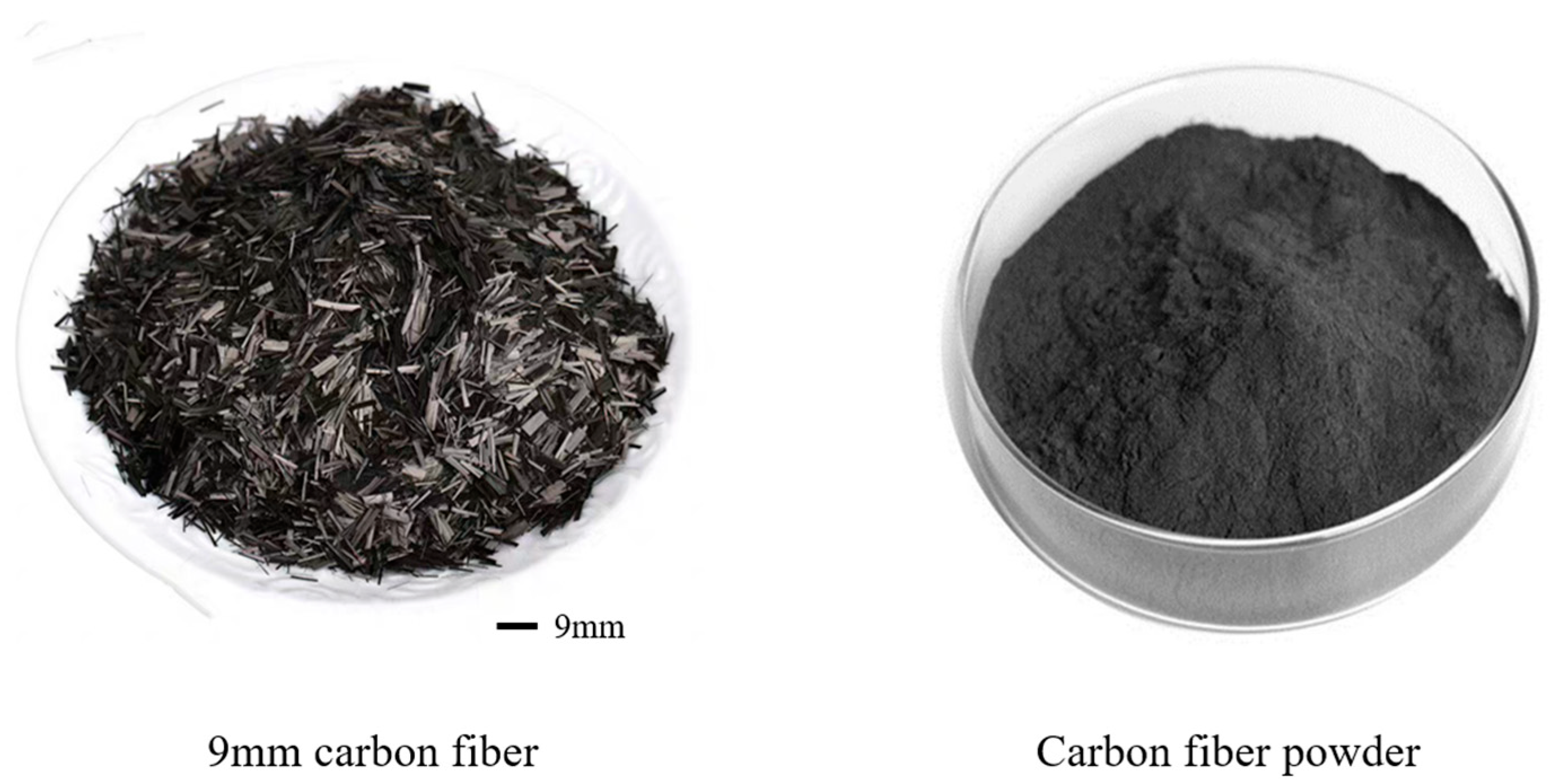
The RCF and RCFP (presented in Figure 1) used as conductive materials were obtained from Beijing Juzhi technology Co., Ltd. (Beijing, China), and their key technical specifications are presented in Table 3.

Figure 1.
Carbon fiber and power.
Table 3.
The basic technical performance of RCF and RCFP.
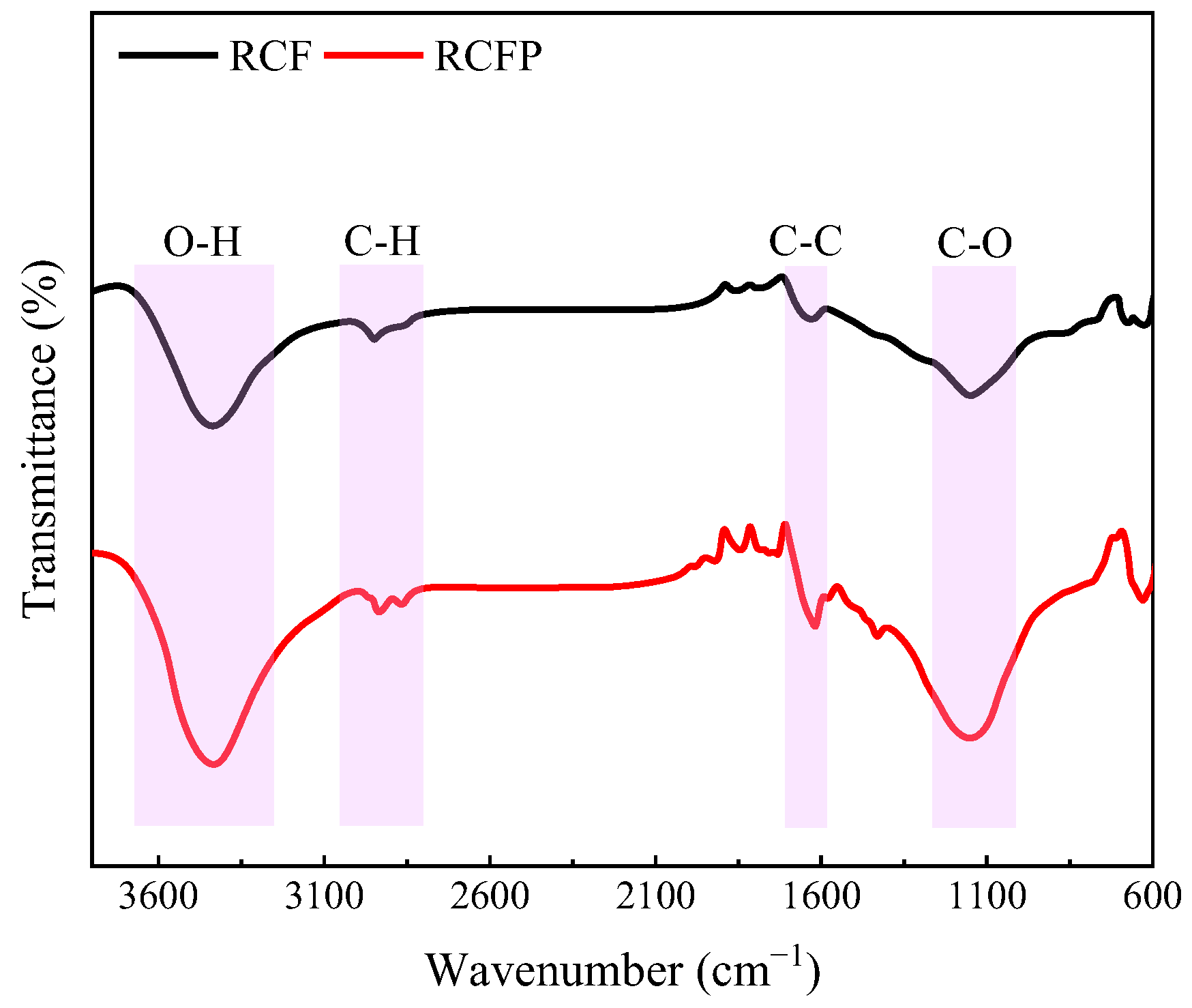
The Fourier Transform Infrared Spectroscopy (FTIR) results of RCF and RCFP were present in Figure 2. As shown in the FTIR spectra, both RCF and RCFP exhibit absorption features indicative of surface oxygen-containing functional groups. A broad peak near 3420 cm−1 corresponds to the O–H stretching vibration, reflecting the presence of hydroxyl groups introduced during recycling and oxidative treatment. The peaks observed in the 2800–2980 cm−1 region are assigned to the C–H stretching vibrations of methyl and methylene groups, while the moderate peak intensity in the 1580–1700 cm−1 range is attributed to C=C stretching. Additionally, the distinct absorption near 1100 cm−1 represents the C–O stretching vibration, further confirming the presence of oxygenated surface groups. These functional groups increase the surface polarity of RCF and RCFP, thereby enhancing intermolecular interactions (e.g., hydrogen bonding and dipole interactions) with the polar components of the asphalt binder. This indicates that the recycled carbon fillers contribute to stronger binder–filler interfacial adhesion, promoting the formation of a more continuous stress-transfer network within the composite mastic.

Figure 2.
The FTIR results of RCF and RCFP.
2.2. Mixture Design
2.2.1. Aggregate Gradation
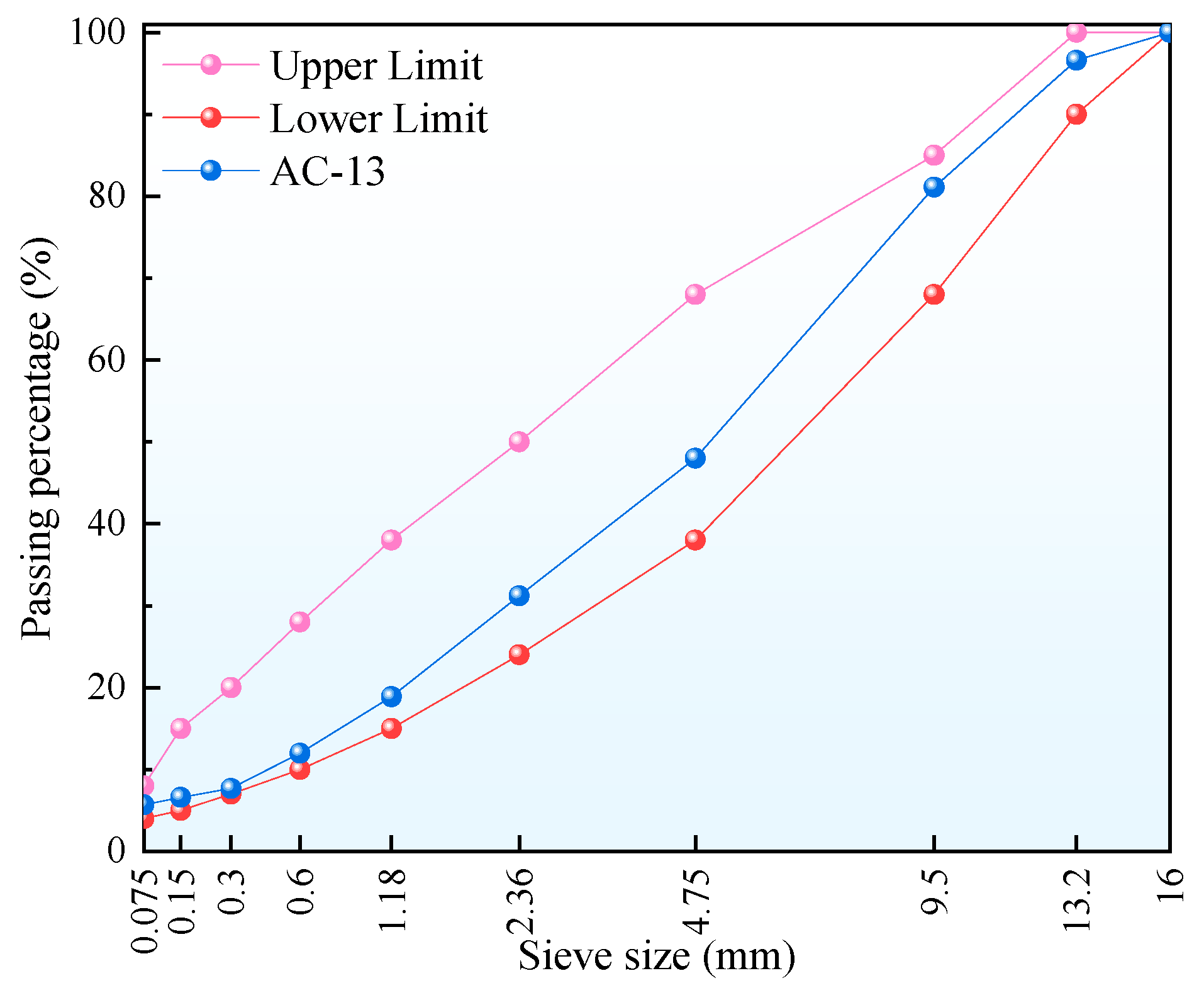
In this study, a dense-graded asphalt mixture (AC-13) was utilized for the fabrication of the CAMs. The aggregate gradation curve for the AC-13 CAM is illustrated in Figure 3.

Figure 3.
Gradation curve of AC-13 CAM.
2.2.2. CAM Preparation
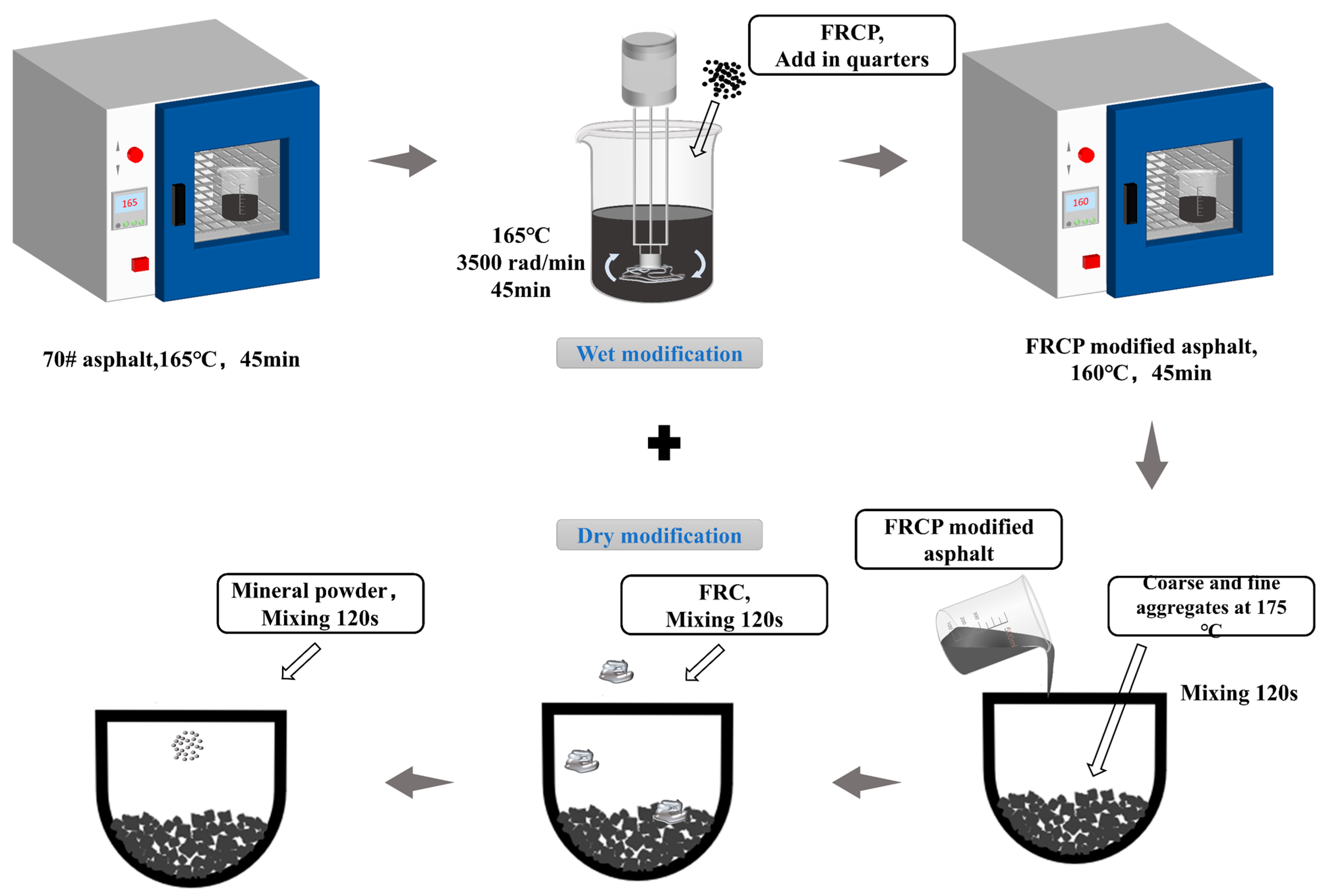
This study prepared CAMs through a combined approach involving both RCF and RCFP. Specifically, 9 mm RCF was incorporated into the mixtures using the dry mixing method at dosages of 0.3%, 0.4%, and 0.5% by the total aggregate mass. Meanwhile, RCFP was introduced via the wet modification method at contents of 0%, 1%, 2%, and 3% by the mass of the 70# asphalt binder. These combinations resulted in twelve composite mix designs. The CAM preparation procedure is detailed below and schematically illustrated in Figure 4.

Figure 4.
Preparation process of AC-13 CAM.
- (a)
- Binder Preparation: A predetermined mass of 70# asphalt was heated in an oven at 165 °C for 45 min until it achieved a fluid consistency.
- (b)
- RCFP Modification (Wet Method): At 165 °C, RCFP was added slowly in four incremental stages. The mixture was then subjected to high-speed shearing at 3500 r/min for 45 min. The resulting modified asphalt was placed in an oven at 160 °C for 1 h to facilitate full material diffusion and expansion, yielding the RCFP-modified asphalt binder.
- (c)
- Mixing: Coarse and fine aggregates, preheated to 175 °C, were first mixed with the RCFP-modified asphalt for 120 s to ensure uniform coating of the aggregate surfaces.
- (d)
- RCF Incorporation (Dry Method): The RCF was subsequently added, and mixing was continued for an additional 120 s (final mixing stage) to ensure adequate fiber dispersion within the mixture.
- (e)
- Final Step: The mineral power was added, and the mixture was agitated for an additional 120 s until it was visually homogeneous.
2.2.3. Determination of Optimum Asphalt Content (OAC)
The OAC for each CAM, incorporating different RCF and RCFP contents, was determined via the Marshall Mix Design method, following the guidelines of the Chinese Technical Specification for Construction of Highway Asphalt Pavement (JTG F40-2004) [37]. First, five trial asphalt contents (4.4%, 4.8%, 5.2%, 5.6%, and 6.0%) were chosen to fabricate Marshall specimens. Subsequently, following the Chinese Standard Test Methods of Bitumen and Bituminous Mixtures for Highway Engineering (JTG 3410-2025), six volumetric and mechanical parameters were measured for each set of specimens [38]. These parameters included bulk specific gravity, air voids (VV), voids in mineral aggregate (VMA), voids filled with asphalt (VFA), Marshall Stability, and flow value. Finally, the OAC for each specific conductive mixture was determined based on the analysis of these comprehensive test results.
2.3. Performance Evaluation Method
2.3.1. Resistivity Test
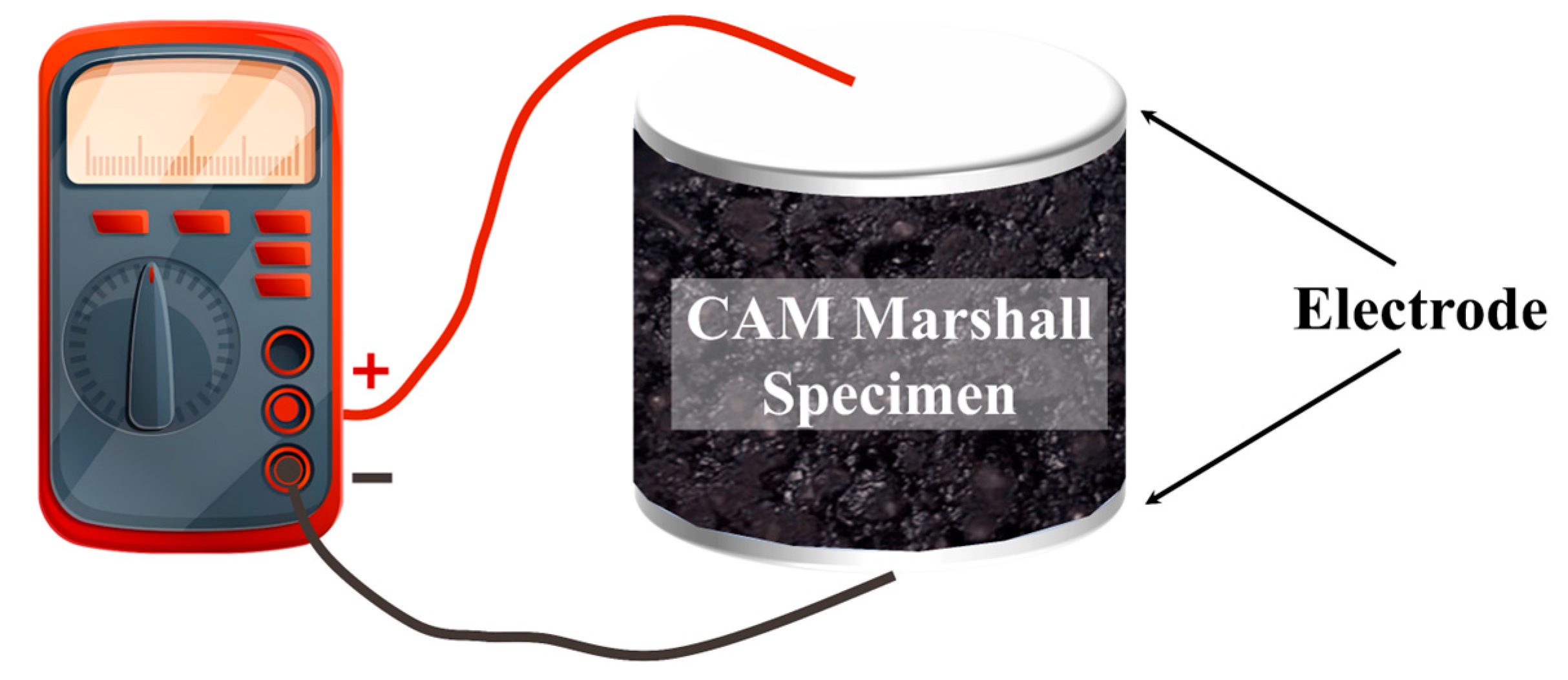
The electrical properties of the CAM Marshall specimens were measured using the two-electrode method at 25 °C [1]. As shown in Figure 5, two external copper plate electrodes were connected to a multimeter to complete the testing circuit. Volume resistivity, calculated using Equation (1), was used to evaluate the CAMs’ conductive performance.
where ρ is the volume resistivity, R is the measured electrical resistance, A is the effective cross-sectional area of the specimen, and L is the distance between the two electrodes.

Figure 5.
Schematic diagram of two-electrode test method.
Although the two-electrode method is prone to contact resistance at the electrode–specimen interface, which may slightly overestimate bulk resistivity, embedding internal probes for a four-probe measurement is challenging due to specimen compaction and heterogeneous composition. For practicality and consistency with established CAM characterization protocols, the two-electrode method was employed. To mitigate contact resistance effects, a thin layer of graphite powder was applied at the electrode–specimen interfaces, and constant contact pressure was maintained. Despite the potential overestimation, this approach reliably captures relative conductivity variations among specimens, providing sufficient accuracy for comparative analysis. Moreover, the method is widely used in similar CAM studies, ensuring that the results are directly comparable with previous literature [1,39,40].
It is important to note that lower resistivity corresponds to higher electrical conductivity and, consequently, greater self-heating efficiency. According to previous studies and practical applications, CAMs suitable for active snow- and ice-melting typically exhibit resistivities between 0.7 Ω·m and 3.0 Ω·m. Values exceeding this range generally indicate inadequate conductivity for effective Joule heating, whereas values below it reflect sufficient conductive performance. In engineering evaluations, resistivity differences exceeding approximately 10–20% are typically considered significant for assessing the influence of material composition and fiber content on the electrical behavior of CAMs.
2.3.2. Heating Test Method
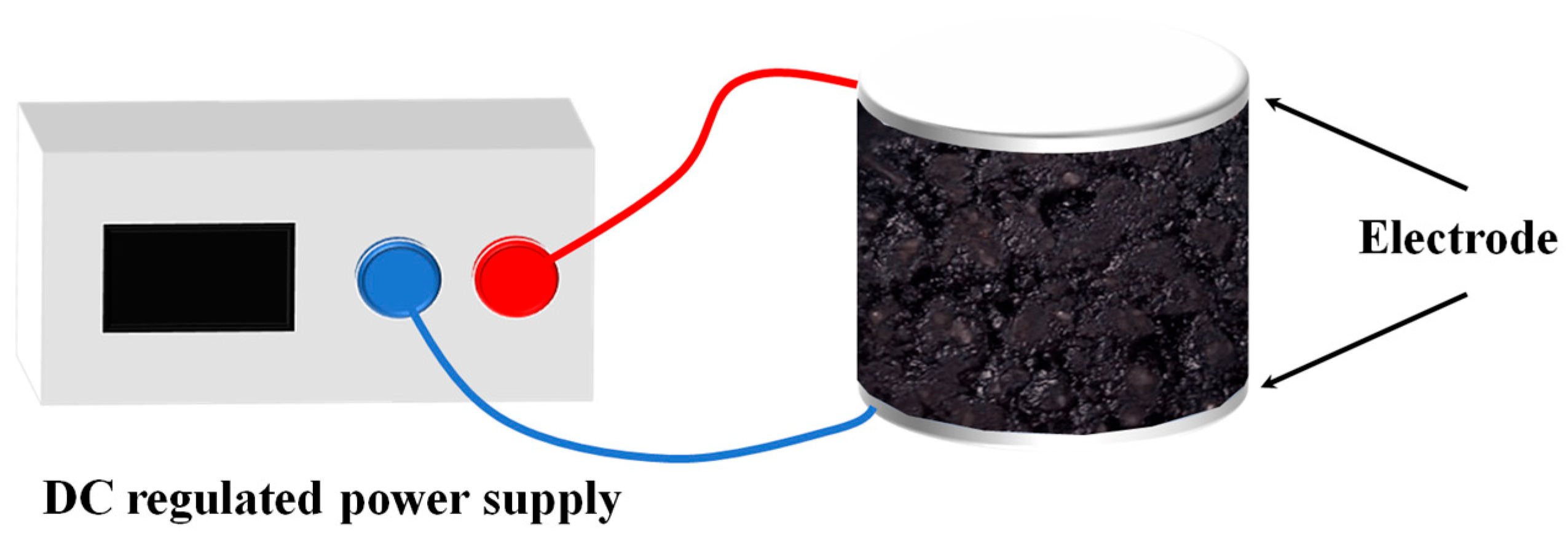
Laboratory heating tests were conducted to evaluate the temperature response of the CAM Marshall specimens under an applied voltage, based on the electrothermal conversion effect. All specimens were environmentally preconditioned at 0 °C for 16 h prior to testing. This process ensured equilibrium of temperature and moisture between the specimen interior and exterior, thereby minimizing potential interference from initial environmental differences. During the heating tests, an industrial-grade DC regulated power supply provided a stable voltage of 24 V. The testing environment was maintained consistent with the preconditioning stage. The temperature of each CAM specimen was recorded after a 5 min heating period, and the heating rate was subsequently calculated using Equation (2). The schematic diagram of the heating test is shown in Figure 6.
where v, T and t are the heating rate, test temperature, and heating time, respectively.

Figure 6.
Schematic diagram of laboratory heating test method.
2.3.3. High-Temperature Rutting Test
The rutting test was employed to simulate the permanent deformation of asphalt mixtures under repeated loading in high-temperature summer conditions. This study adopted the procedure specified in Section T0719 of Standard JTG 3410-2025 to effectively characterize the in-service performance of CAMs under high temperatures [38]. During the test, the loading temperature was set to 60 °C, the contact pressure was 0.7 MPa, and the loading frequency was 42 cycles/min. The 300 × 300 × 50 mm (length × width × thickness) rutting specimen was subjected to constant pressure and temperature throughout the testing cycle. The high-temperature rutting resistance of the CAM asphalt mixture was quantitatively evaluated by calculating the dynamic stability (DS) using Equation (3).
where t1 and t2 are specified as 45 min and 60 min, respectively, with d1 and d2 representing the corresponding deformations at these time points. The experimental coefficients C1 and C2 are both assigned a value of 1.0.
2.3.4. Low-Temperature Cracking Test
To evaluate the low-temperature cracking resistance of the CAM specimens in a cold winter environment, the three-point bending test method specified in Section T0715 of Standard JTG 3410-2025 was utilized [38]. This test simulates the actual flexural tension state experienced by asphalt pavement under low-temperature conditions. The beam specimens used had dimensions of 250 × 30 × 35 mm (length × width × thickness), with a span of 200 mm. The test was conducted at a temperature of −10 °C using displacement control at a constant loading rate of 5 mm/min. The low-temperature anti-cracking ability was characterized by the maximum flexural tensile strain (εB), which was calculated using Equation (4).
where d is the mid-span deflection of the specimen at failure; L, b, and h are the span length, the width, and the height of the central section of the beam specimen, respectively.
2.3.5. Freeze–Thaw Splitting Test
Freeze–thaw cycling is a critical environmental factor that accelerates moisture-induced damage and compromises the structural integrity of asphalt mixtures. Accordingly, the freeze–thaw durability of the CAM specimens was evaluated following the procedure specified in Section T0729 of Standard JTG 3410-2025. Cylindrical Marshall specimens with dimensions of 101.6 mm × 63.5 mm (diameter × height) were used for testing [38].
The specimens were randomly divided into two groups, each containing at least four specimens. The first group was placed on a flat platform and stored at room temperature as the control group. The second group was subjected to vacuum saturation according to the T0717 Standard Water Saturation Method. Under a vacuum pressure of 97.3–98.7 kPa, the specimens were maintained for 15 min, followed by immersion under atmospheric pressure for an additional 0.5 h. Each specimen was then sealed in a plastic bag containing approximately 10 mL of water and frozen at −18 ± 2 °C for 16 ± 1 h. After freezing, the specimens were immediately removed from the plastic bags and placed in a thermostatic water bath maintained at 60 ± 0.5 °C for 24 h.
Upon completion of the freeze–thaw conditioning, both the conditioned and unconditioned specimens were immersed in a water bath at 25 ± 0.5 °C for 2 h prior to testing. The splitting tensile strength was then measured at a loading rate of 50 mm/min. The resistance to freeze–thaw damage was quantified by the tensile strength ratio (TSR), as calculated using Equation (5). A higher TSR indicates superior freeze–thaw durability and moisture resistance of the CAM, with TSR values above 75% generally considered acceptable according to JTG F40-2004.
where R1 and R2 denote the average splitting strength values measured prior to and following the freeze–thaw cycling process, respectively.
2.3.6. Technique for Order Preference by Similarity to Ideal Solution (TOPSIS)
The TOPSIS method is a widely adopted multi-criteria decision-making method. It is particularly suitable for comprehensive evaluations involving multiple performance indicators due to its advantages of simple computational procedures, clear geometric interpretation, and minimal data constraints [41]. In this study, the TOPSIS method was applied through the following steps:
- (1)
- Data normalization
To eliminate the influence of varying units and magnitudes across the six measured CAM performance indicators, the raw data were standardized using the range normalization method. This process rescaled all indicator values to the interval [0, 1], thereby constructing a normalized data matrix. The normalization formula is given in Equations (6) and (7). After normalization, all indicators were adjusted such that larger numerical values consistently correspond to better performance, enabling the data to be directly used for subsequent analysis.
where zij is the standardized value of the j-th indicator for the i-th CAM; xij is the raw value of the j-th indicator for the i-th CAM; max(xj) and min(xj) are the maximum and minimum values of the j-th indicator, respectively.
- (2)
- Determination of ideal and negative-ideal solutions
In this study, all performance indicators were assigned equal weights. Accordingly, the ideal solution (Z+) was defined as the maximum value of each performance indicator in the standardized matrix, while the negative-ideal solution (Z−) was defined as the corresponding minimum value. This relationship is formally expressed in Equation (8):
- (3)
- Calculation of Euclidean distance to the ideal and negative-ideal solutions
The Euclidean distances between the i-th evaluation combination and the ideal solution (Z+), as well as between this combination and the negative-ideal solution (Z−), were calculated. The corresponding formula is shown in Equation (9):
- (4)
- Calculation of Relative Closeness and Ranking
The relative closeness (Ci) of each type of CAM to the ideal solution was computed using Equation (10):
The value of Ci ranges from 0 to 1. A larger Ci value indicates that the combination is closer to the ideal optimal level, reflecting superior overall performance. The final ranking of all CAM combinations was determined by sorting their calculated Ci values in descending order.
3. Results and Discussion
3.1. Optimum Asphalt Content
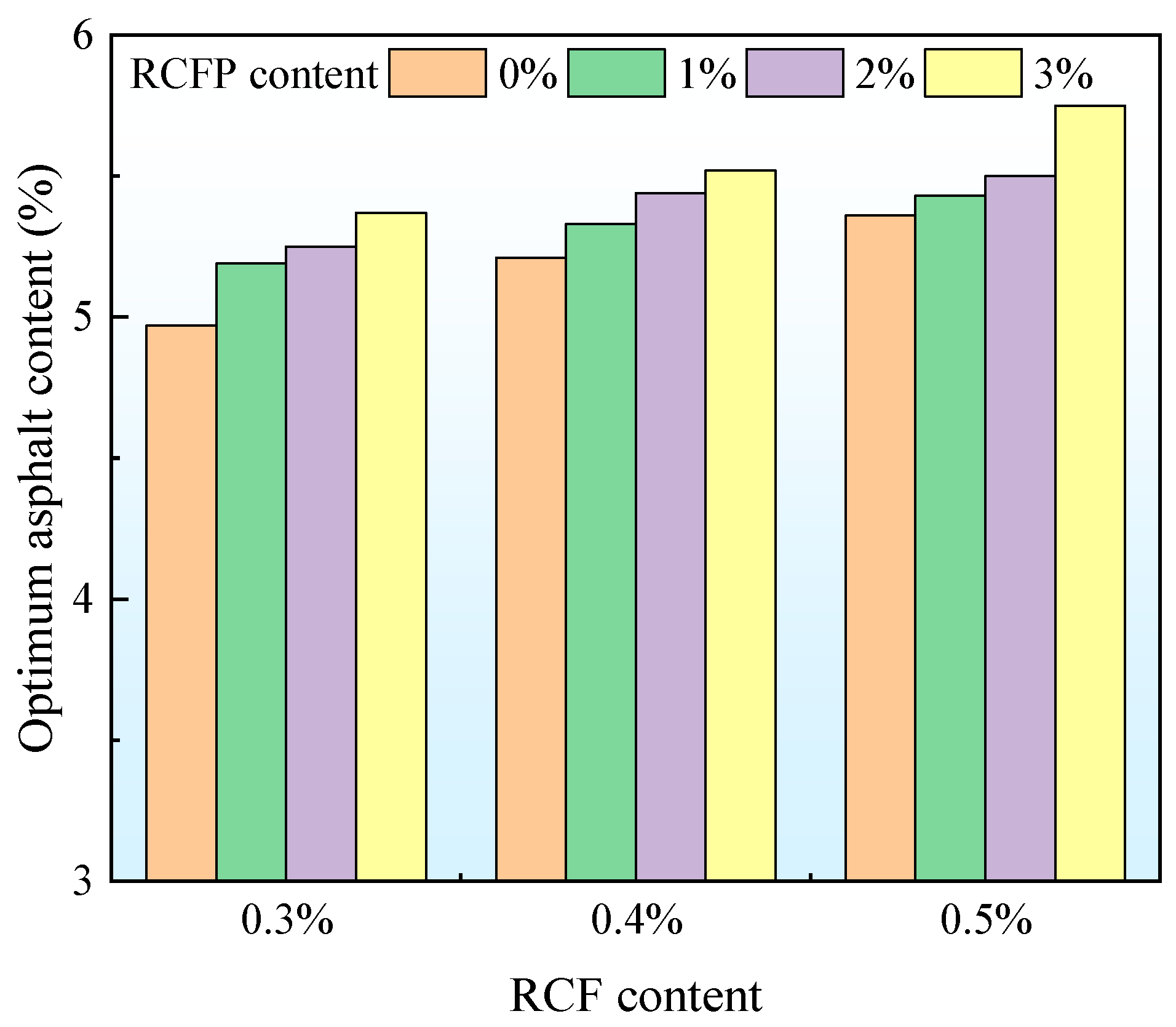
The OAC results for the composite-modified CAMs, as shown in Figure 7, exhibit a clear and consistent upward trend with increasing dosages of both RCF and RCFP. At a fixed RCF dosage, the OAC progressively increased with higher RCFP content, with average values of 5.20%, 5.38%, and 5.51% corresponding to RCF contents of 0.3%, 0.4%, and 0.5%, respectively. Specifically, the OAC increased by 0.40% (from 4.97% to 5.37%) at 0.3% RCF, by 0.31% (from 5.21% to 5.52%) at 0.4% RCF, and by 0.39% (from 5.36% to 5.75%) at 0.5% RCF. A similar trend was observed when the RCFP content was held constant, as the OAC consistently increased with higher RCF dosages. This increase in OAC can be attributed to the substantially higher bitumen absorption capacity of RCF and RCFP [42]. As shown in Table 3, the oil absorption values of RCF and RCFP reach 4.53 g and 5.14 g, respectively. The combination of large effective surface area and the porous, rough microstructure promote strong asphalt adsorption and retention. In addition to physical absorption, the surface of carbon fibers contains oxygen-containing functional groups that enhance interfacial adhesion through van der Waals forces and polar interactions [43]. These effects increase the viscosity and structural rigidity of the asphalt mastic, reducing its free fluidity and necessitating a greater asphalt content to achieve complete coating and lubrication within the aggregate–fiber skeleton. Therefore, as the dosages of RCF and RCFP increase, more asphalt is required to establish a dense and stable binder–fiber–aggregate interface, resulting in higher OAC.

Figure 7.
The OAC results of different CAM samples.
3.2. Resistivity Performance
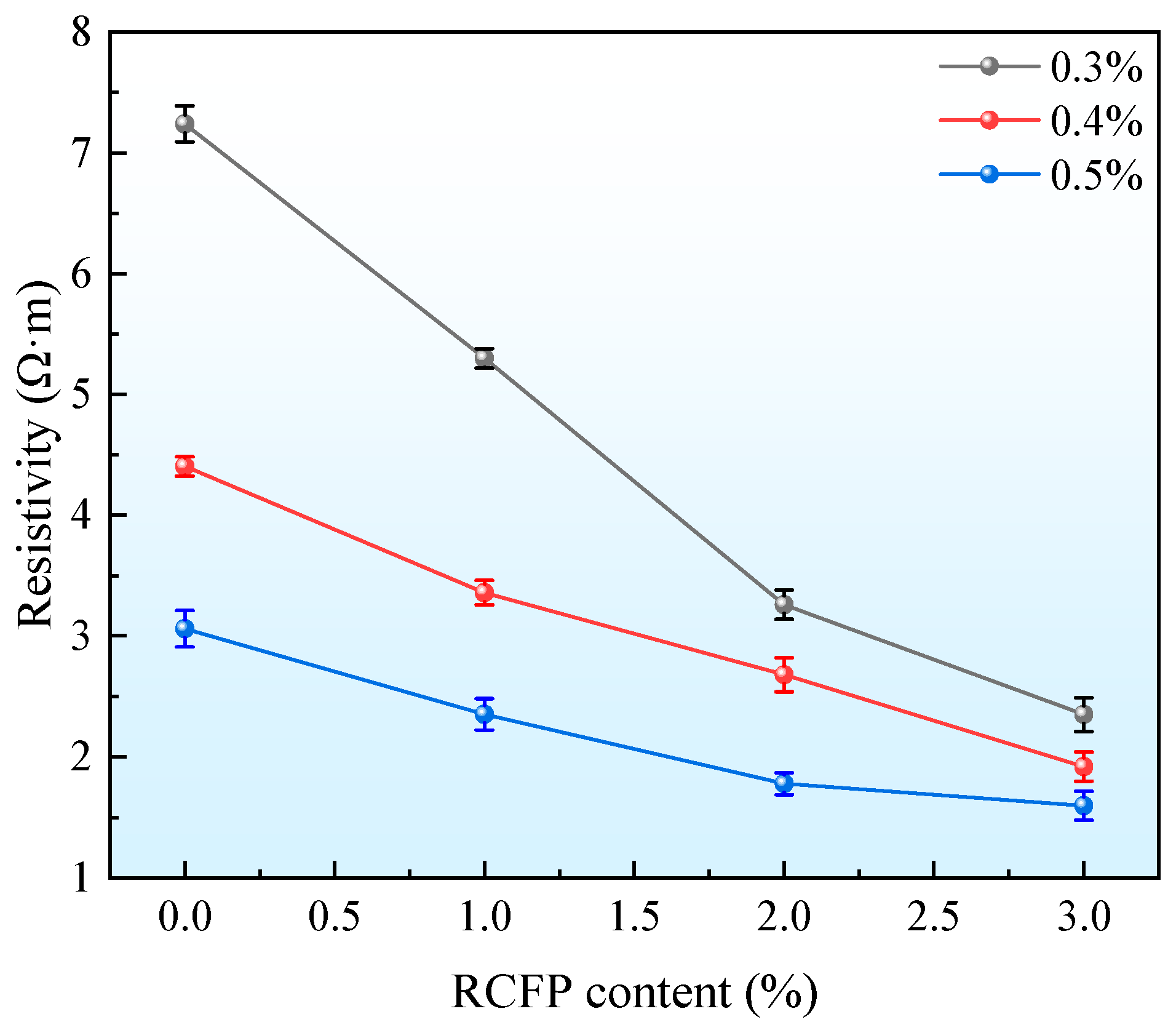
Figure 8 shows the resistivity results of composite-modified CAMs. The resistivity of RCFP-free mixtures decreased markedly with increasing RCF content, confirming a steady improvement in electrical conductivity. RCF functions as the primary conductive framework, with the fibers establishing an interconnected, three-dimensional network—a prerequisite structure for surpassing the percolation threshold and realizing a marked drop in resistivity [19]. The most significant reduction was observed when the RCF dosage increased from 0.3% to 0.4%, resulting in a sharp 39.2% decrease in resistivity. Nevertheless, even at a 0.5% RCF content, the resistivity persisted above 3.0 Ω m, indicating that the efficiency of the conductive network formed solely by RCF was limited by the insulating characteristics of the asphalt.

Figure 8.
The resistivity results of different CAM samples.
Furthermore, increasing the RCFP dosage significantly improves the connectivity and integrity of the conductive network, consequently lowering electron transport resistance. Across all tested RCF concentrations, the incorporation of RCFP consistently led to a substantial reduction in resistivity, with the minimum value observed at a notable 1.60 Ω m. Each 1% increment in RCFP dosage resulted in an average resistivity reduction of 22.5%, 18.8%, and 16.0% for the 0.3%, 0.4%, and 0.5% RCF mixtures, respectively. These outcomes demonstrate that the composite modification technology of RCF and RCFP effectively regulates the volume resistivity of the CAM, achieving a marked transition from an insulating state to a conductive one [44]. This enhanced conductivity arises from the formation of a macro-skeleton–micro-bridging conductive network. The RCF provides a continuous macro-scale conductive skeleton, establishing the primary electron transport pathways [24,35]. Meanwhile, the RCFP, with its ultra-fine particle size, disperses into the asphalt mastic and fills the inter-fiber gaps, thereby increasing the number of conductive contact points and reducing the effective electron path length [26]. This micro-bridging effect promotes the formation of additional parallel conduction channels and facilitates a denser percolation network, which is consistent with established percolation and contact-conduction models for fiber-reinforced conductive composites [13,45,46]. The resistivity results (minimum 1.60 Ω·m) confirm that the improved electrical performance is governed by the enhanced continuity of the conductive network. However, as the RCFP dosage increased from 2% to 3%, the incremental reduction in resistivity decreased, indicating that the network structure approached a percolation saturation state.
3.3. Heating Rate
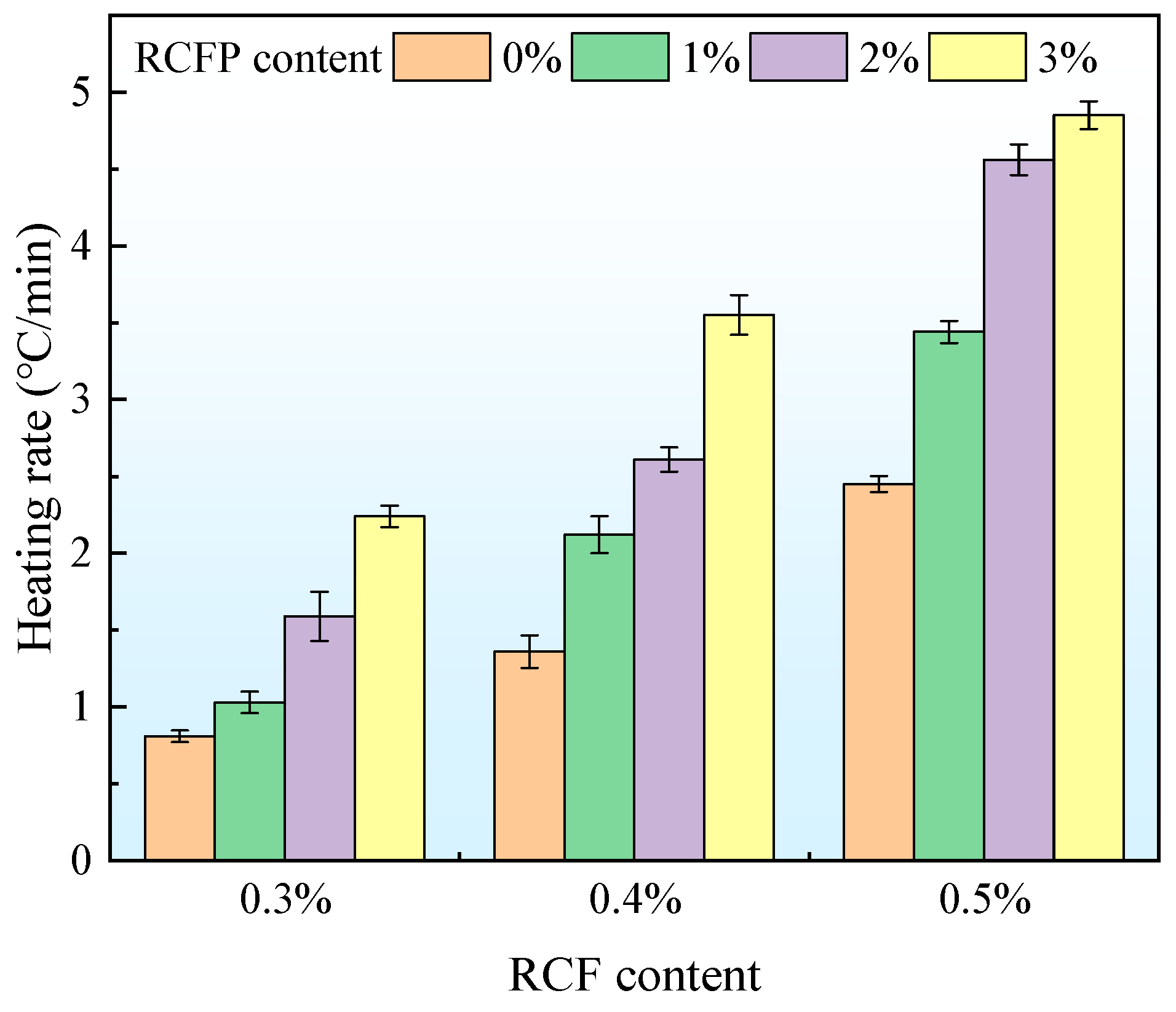
Figure 9 illustrates the influence of RCF and RCFP dosages on the heating performance of CAMs. The heating rate is the core functional metric for measuring the electrothermal conversion efficiency of CAMs. At a fixed RCF dosage, the heating rate increased dramatically as RCFP content rose from 0% to 3%. Specifically, for CAMs modified with 0.3%, 0.4%, and 0.5% RCF, the heating rates increased by 176.5%, 161.0%, and 98.0%, respectively. This result confirms that the material design facilitates a qualitative shift in the mixture’s thermal behavior—transitioning from slow warming to rapid heat generation [20]. This sharp enhancement in heating rate is directly attributed to increased heating power, which arises from the formation of the composite conductive network.

Figure 9.
The temperature curves of different CAM samples.
Furthermore, at a constant RCFP dosage, the heating rate of CAMs also increased continuously with higher RCF content. As RCF dosage increased from 0.3% to 0.5%, the heating rate rose by 202.5%, 136.9%, 186.8%, and 151.1% for mixtures containing 0%, 1%, 2%, and 3% RCFP, respectively. This significant increase demonstrates that the composite incorporation of RCF and RCFP significantly improves the electrothermal conversion efficiency of asphalt mixtures, fundamentally driven by a conductive–thermal dual-network synergistic effect. RCF forms a macroscopic thermal conduction skeleton within the mixture, enhancing both heat generation and conduction via the Joule heating effect [30]. RCFP fills gaps between RCF segments, forming continuous conductive pathways that channel most current through more efficient microscopic routes—thereby substantially boosting the conversion efficiency of electrical energy to thermal energy [26,36]. As the dosage of both conductive materials increases, the connectivity of the network improves, leading to simultaneous increases in heat generation efficiency and transfer rate. The maximum heating rate of 4.85 °C/min was achieved with the combination of 0.50% RCF and 3.00% RCFP.
3.4. Rutting Resistance
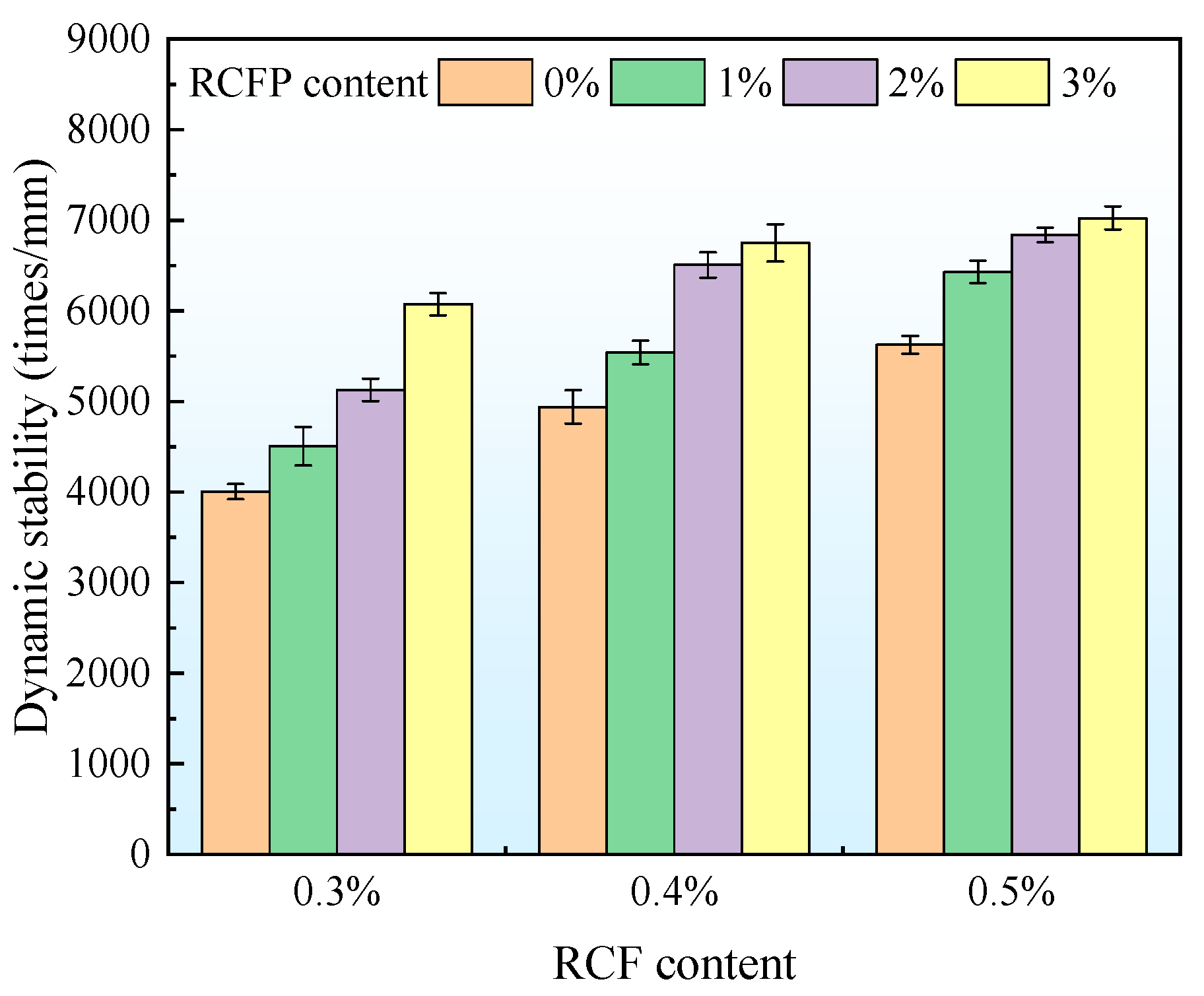
Figure 10 demonstrates that varying RCF and RCFP dosages substantially enhanced the DS value of the composite-modified CAMs, significantly improving their high-temperature rutting resistance [47]. The RCF incorporation markedly improved the high-temperature stability, with the average DS increasing by 20.2%, 21.3%, 16.7%, and 7.8% at RCFP dosages of 0%, 1%, 2%, and 3%, respectively. Furthermore, increasing the RCFP dosage led to a nearly linear increase in DS, reaching its maximum at 3.0% RCFP. Compared with the control, the DS values for mixtures containing 0.3%, 0.4%, and 0.5% RCF increased by 51.7%, 36.7%, and 24.8%, respectively. This enhancement reflects a synergistic effect: RCF provides the macro-scale load-bearing framework that restricts aggregate movement [48]. while the increased OAC associated with higher RCFP contents thickens the asphalt film and enables RCFP to adsorb light components of the binder, forming a more viscous and cohesive composite mastic [36]. The combined macro-reinforcement (RCF) and micro-stiffening (RCFP-modified mastic) behaviors jointly enhance shear resistance, resulting in superior high-temperature rutting performance.

Figure 10.
The DS results of different CAM samples.
3.5. Cracking Resistance
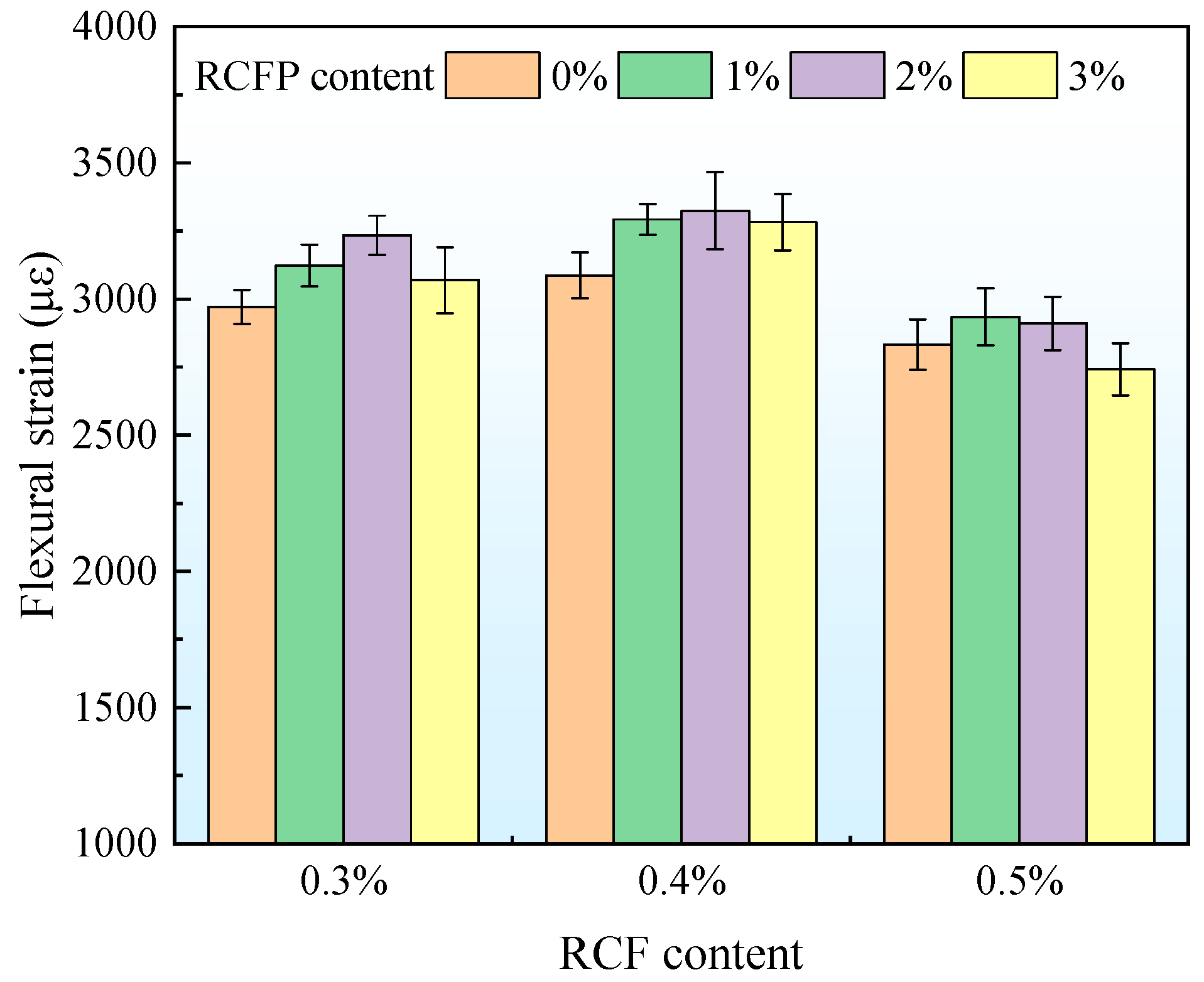
Figure 11 illustrates the effect of RCF and RCFP dosages on the low-temperature cracking resistance of the CAM specimens. The bending strain exhibits a clear “strengthening–then–deterioration” trend with increasing additive content. At fixed RCF contents of 0.3%, 0.4%, and 0.5%, the incorporation of optimal RCFP dosages led to peak bending strain increases of 8.8%, 7.6%, and 3.6%, respectively, compared with mixtures without RCFP, indicating that a moderate amount of RCFP enhances interfacial bonding and facilitates a more continuous stress-transfer network. Across mixtures containing 0–3% RCFP, the highest bending strain was consistently observed at 0.4% RCF, with corresponding increases of 3.9%, 5.4%, 2.8%, and 6.9%, confirming the synergistic toughening effect between RCF and RCFP [49]. This finding consistent with the conclusions of Ren et al. [26].

Figure 11.
The low-temperature bending strain results of different CAM samples.
This enhancement arises from two coupled mechanisms: (i) RCF acts as a bridging reinforcement that restrains microcrack propagation, and (ii) RCFP fills interfacial voids and improves mastic cohesion, promoting more effective stress dissipation at low temperatures. However, when RCF and RCFP exceed the optimal range, performance deteriorates. Excessive fiber content can cause fiber agglomeration, generating localized stress concentrations [13,35]. Simultaneously, high RCFP levels increase the filler-to-binder ratio and raise the glass transition temperature (Tg) of the asphalt mastic, reducing molecular mobility and flexibility at −10 °C [50]. This thermorheological stiffening, combined with increased binder adsorption, increases mixture brittleness and compromises cracking resistance. Consequently, the optimal low-temperature performance is achieved at 0.4% RCF combined with 2% RCFP.
3.6. Freeze–Thaw Resistance
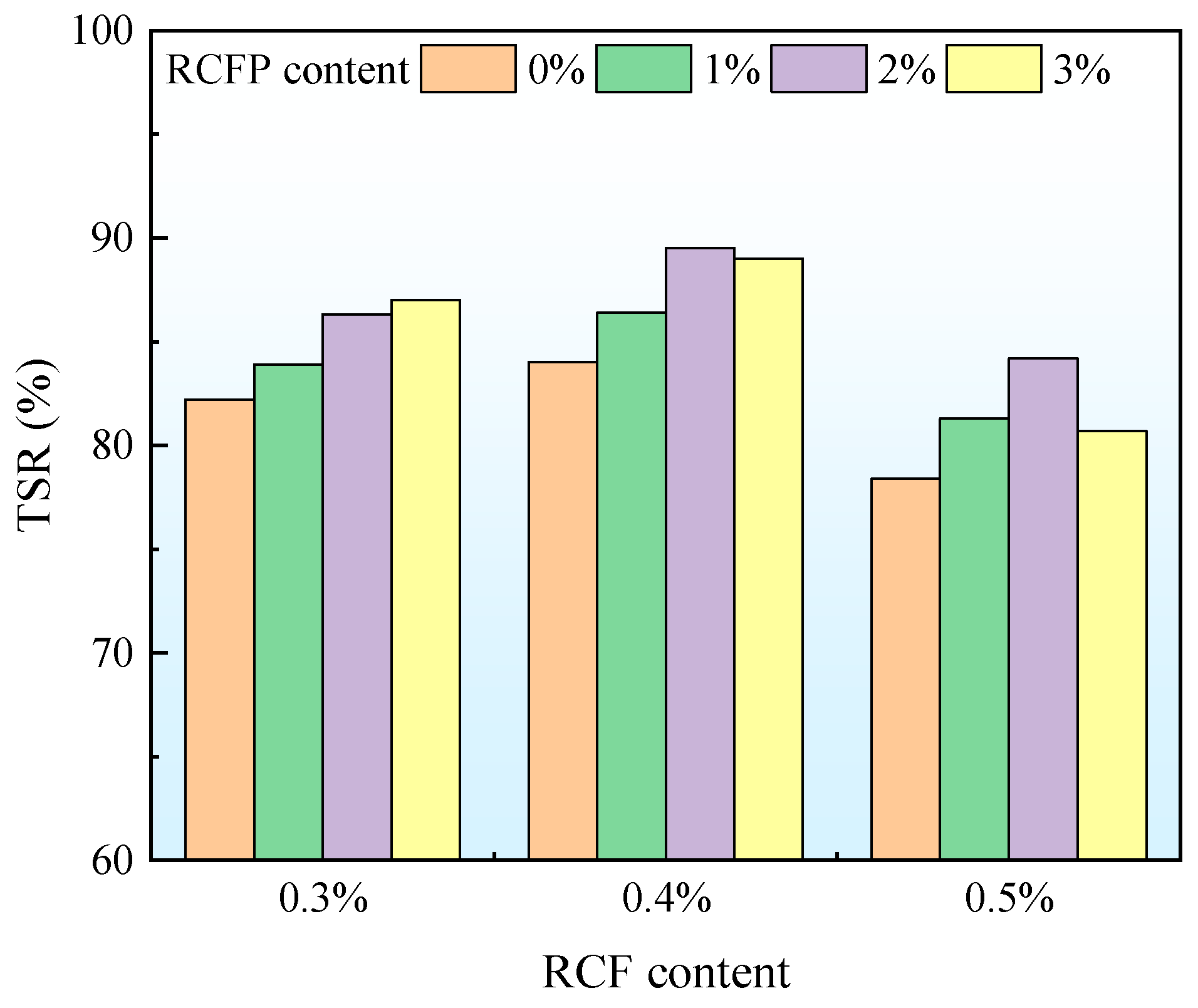
Figure 12 presents the freeze–thaw splitting test results for the composite-modified CAMs. The RCFP exhibits a pronounced influence on the freeze–thaw durability of the RCF-modified mixtures. For CAM specimens containing 0.3% RCF, the TSR value increased steadily with higher RCFP dosages, peaking at 87.0%, which represents a 5.8% improvement. This enhancement can be attributed to the synergistic effects of the RCFP’s micro-filling action and the RCF’s fiber-bridging capability, which together densify the asphalt film and strengthen interfacial bonding, thereby effectively reducing moisture infiltration and interfacial stripping during freeze–thaw cycling [32,34].

Figure 12.
The TSR results of different CAM samples.
For the 0.4% RCF-modified mixtures, the TSR followed a parabolic trend with increasing RCFP content, achieving a maximum rise of 6.5%. At this fiber dosage, the RCFs were uniformly dispersed, reinforcing aggregate cohesion and maintaining the integrity of the fiber–asphalt composite interface. However, when the RCFP dosage reached 3%, a slight TSR decline was observed, likely due to the formation of microdefects caused by excessive powder addition [16].
In contrast, specimens containing 0.5% RCF exhibited inferior freeze–thaw performance, with an overall lower TSR compared to those with 0.3% and 0.4% RCF. The average TSR values for the 0.3%, 0.4%, and 0.5% RCF mixtures were 84.8%, 87.2%, and 81.2%, respectively. While this 81.2% result meets the minimum TSR requirement of 75% for modified asphalt mixtures stipulated by the Chinese Technical Specification (JTG F40-2004), it indicates that the 0.5% RCF dosage operates with a minimal safety margin. The reduced performance can be attributed to fiber agglomeration and the generation of interfacial voids, which weaken the asphalt film and exacerbate stripping under cyclic freeze–thaw conditions [15]. Nevertheless, the 0.5% RCF-modified mixture still exhibited a peak TSR improvement of 7.4% with 2% RCFP addition.
Overall, the composite modification with RCF and RCFP demonstrates a distinct synergistic effect compared with RCF alone. This synergy promotes the formation of a dense asphalt film and a continuous reinforcement network, enhancing interfacial bonding strength and significantly improving resistance to moisture damage and freeze–thaw degradation.
3.7. TOPSIS Analysis
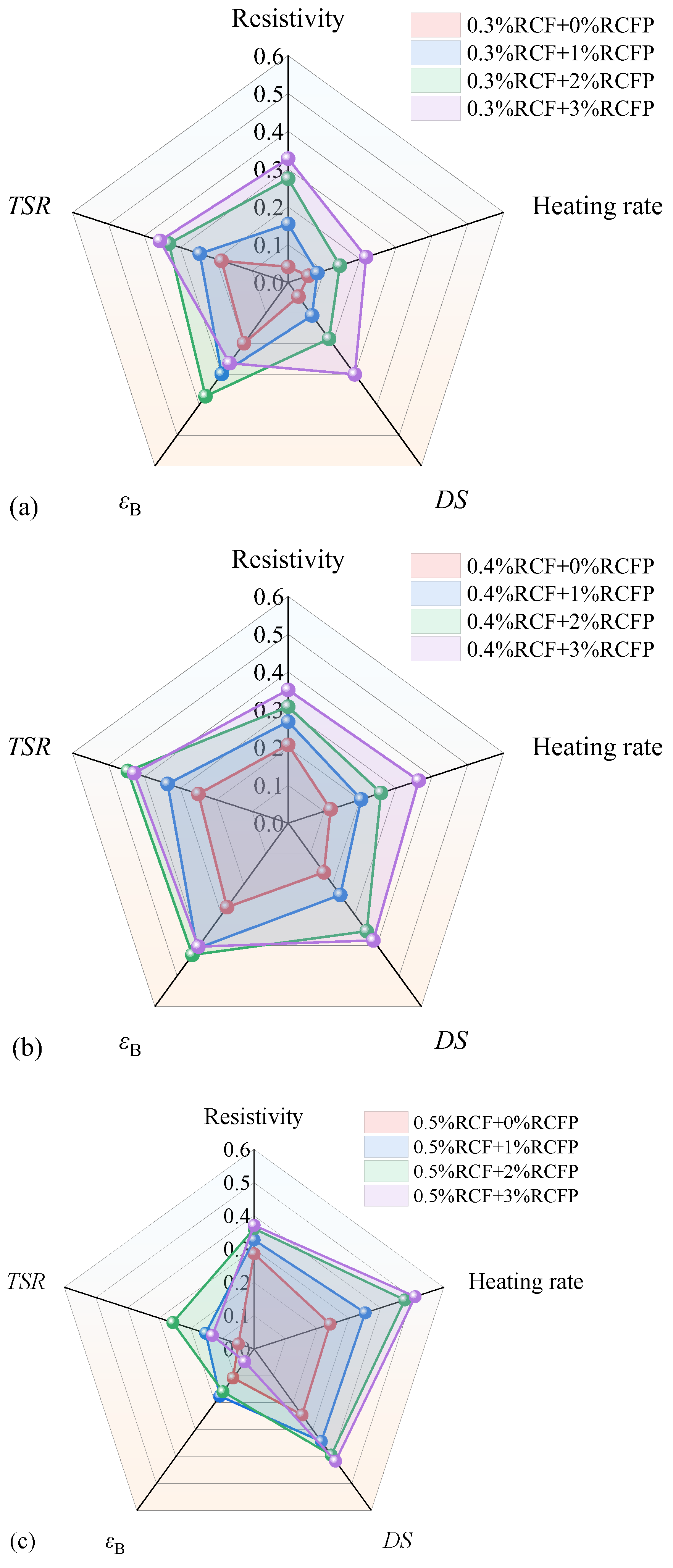
As demonstrated by the preceding analyses, both RCF and RCFP significantly influence the service performance of CAM specimens. To identify the optimal RCF/RCFP-modified CAM, the TOPSIS method was employed using five key performance indicators: electrical resistivity (ρ), heating rate (v), dynamic stability (DS), maximum bending strain (εB), and freeze–thaw splitting tensile strength ratio (TSR). Three differentiated weighting schemes (Scheme A–C) were applied to evaluate the robustness of the multi-criteria assessment, as summarized in Table 4. The selected weight ranges are informed by established engineering standards (JTG F40-2004 [37]; JTG 3410-2025 [38]) and previous multi-criteria studies on asphalt mixtures [17,30], ensuring alignment with recognized evaluation practices.
Table 4.
The indicator weight setting scheme.
Mechanical indicators—DS, εB, and TSR—reflect structural integrity and are therefore emphasized in Scheme B [48], while Scheme C prioritizes electrical resistivity and heating rate to capture electrothermal functionality relevant to conductive pavements [10,11]. Scheme A applies equal weights as a neutral baseline. Collectively, these schemes represent realistic engineering scenarios and provide a robust, justified basis for sensitivity analysis of the CAM performance rankings.
Furthermore, a performance radar chart illustrating the comparative performance of different CAM types is presented in Figure 13. Clearly, RCFP/RCF-modified CAMs exhibit superior and more balanced overall pavement performance in comparison to their RCF-only modified counterparts.

Figure 13.
Radar charts of different CAM samples (a–c) (TOPSIS indicators equally weighted).
The TOPSIS results of three distinct weighting sets presented in Table 5 highlight the pronounced influence of varying RCF and RCFP dosages on the overall performance of the asphalt mixtures. The relative closeness (Ci) serves as a key indicator, representing the proximity of each mixture to the ideal solution, with higher Ci values reflecting superior overall performance [41].
Table 5.
The TOPSIS results of three distinct weighting sets.
Analysis of the TOPSIS results confirms the exceptional robustness of the performance rankings, even when subjected to substantial shifts in weighting schemes. The 0.4% RCF + 3% RCFP mixture consistently attained the top rank across all evaluation scenarios (Ci range: 0.96–0.98), persuasively underscoring a strong synergistic effect between RCF and RCFP as well as an optimal balance across key performance indicators. Similarly, the 0.4% RCF + 2% RCFP blend reliably retained the second position (Ci range: 0.88–0.90). Conversely, the 0.3% RCF + 0% RCFP control mixture (without RCFP incorporation) remained anchored at the bottom of the rankings (Ci range: 0.05–0.09). These findings validate the superior overall performance, engineering applicability, and reliability of the core recommended dosage range—0.4% RCF combined with 2–3% RCFP—across diverse operational priorities [1,44].
Furthermore, although the 0.3% RCF group exhibited performance improvement—with the Ci value increasing from 0.05 to 0.72 (raising Rank 12 to Rank 4) as the RCFP dosage rose from 0% to 3%—its overall performance remained markedly lower than that of the 0.4% RCF group. This indicates that the reinforcing capacity of RCF reaches a ceiling when its content is insufficient. Conversely, in the 0.5% RCF group, the Ci value declined from 0.84 to 0.65 (dropping Rank 3 to Rank 6) once the RCFP dosage exceeded 2%, suggesting that excessively high fiber content can lead to uneven fiber dispersion and thus compromise the overall comprehensive performance [33]. Overall, the TOPSIS method effectively quantifies the multi-indicator experimental results, providing a robust basis for ranking the performance of different CAM samples. The analysis clearly identifies the optimal composite dosage range for RCF and RCFP, recommending 0.4% RCF combined with 2–3% RCFP to achieve superior overall performance of the composite-modified CAMs.
3.8. Engineering Feasibility
3.8.1. Economic Analysis
To evaluate the economic feasibility of the CAM, the material costs of the recommended 0.4% RCF + 3% RCFP composition were calculated. The mix proportions and unit prices are summarized in Table 6. The base asphalt, RCFP, RCF, and basalt aggregate contribute CNY 165.6, 82.8, 180.0, and 100.0 per ton, respectively, yielding a total cost of approximately 528.4 CNY/t. For comparison, the modified asphalt mixture using SBS-modified asphalt and basalt fiber results in a slightly lower cost of 374.8 CNY/t, demonstrating the practical feasibility of the composite-modified CAM. The increased cost associated with RCF and RCFP is offset by their multi-functional performance improvements, including enhanced electrical conductivity, thermal efficiency, and mechanical durability. This cost–benefit balance supports the potential application of the CAM in winter-prone and high-altitude regions, where its self-heating and conductive properties can reduce maintenance costs and improve pavement safety.
Table 6.
The economic feasibility analysis results.
3.8.2. Technical Feasibility
Table 7 summarizes the key electrothermal parameters. The CAM incorporating 0.4% RCF and 3.0% RCFP exhibited markedly superior electrothermal performance compared with previously reported conductive asphalt systems. Under a low supply voltage of 24 V over a 90 min heating period, the specimen achieved a significant surface temperature rise (ΔT) of 12.1 °C. This performance corresponds to a calculated power density of approximately 526 W·m−2 and a remarkably low specific energy consumption of 2.38 W·h/°C. When compared against literature values, the RCF/RCFP system demonstrates an excellent balance between heating capacity and energy demand. This synergistic effect—combining high power density with low energy consumption per degree Celsius—suggests that the dual-network structure formed by RCF and RCFP is highly effective. The structure appears to efficiently channel electrical current through continuous conductive pathways, thereby maximizing the electrothermal conversion efficiency and resulting in rapid and localized surface heating. Consequently, this material system demonstrates strong technical potential for low-voltage pavement heating and de-icing applications.
Table 7.
Comparison of heating performance among different CAMs.
4. Conclusions
This study comprehensively investigated the influence of RCF and RCFP on the road performances of CAMs. Based on extensive laboratory testing and multi-criteria evaluation, the key findings are summarized as follows:
- (1)
- The OAC increased consistently with higher RCF and RCFP dosages. Specifically, at RCF dosages of 0.3%, 0.4%, and 0.5%, the OAC rose from 4.97% to 5.37%, 5.21% to 5.52%, and 5.36% to 5.75%, respectively, as RCFP content increased.
- (2)
- The combined incorporation of RCF and RCFP establishes an efficient macro-skeleton–micro-bridging conductive network, substantially reducing resistivity and improving electrothermal conversion efficiency, with a minimum resistivity of 1.60 Ω·m and a maximum heating rate of 4.85 °C/min.
- (3)
- The synergistic effect of RCF and RCFP enhances both high- and low-temperature performance and freeze–thaw resistance. RCF provides a load-bearing framework and crack-bridging effect, while RCFP improves binder cohesion and stress transfer, leading to superior rutting resistance, low-temperature ductility, and TSR values within optimal dosage ranges.
- (4)
- Multi-indicator TOPSIS analysis identifies 0.4% RCF combined with 3% RCFP as the optimal composition, followed by 0.4% RCF + 2% RCFP and 0.5% RCF + 2% RCFP, indicating that rational dosage range achieves the best overall balance of electrical, thermal, mechanical, and durability properties of composite modified CAMs.
- (5)
- The optimal mixture (0.4% RCF + 3.0% RCFP) achieves an exceptional balance between performance and cost (CNY 528.4/t). Crucially, this mixture demonstrates superior electrothermal efficiency, characterized by a high power density (526 W·m−2) and a low specific energy consumption (2.38 W·h/°C) under low-voltage application, confirming its strong potential for practical implementation.
5. Limitations and Future Work
This study assessed heating performance using a simplified protocol with a single temperature measurement after a fixed duration, providing a practical comparative indicator of electro-thermal efficiency. However, this approach does not capture transient heating behavior or allow precise calculation of thermal efficiency and specific heat capacity. Future work will implement dynamic temperature monitoring to obtain full temperature–time curves and investigate heat transfer kinetics, energy conversion efficiency, as well as large-scale field validation and long-term durability, to support the practical implementation of intelligent pavement systems. Overall, the results confirm that combined RCF and RCFP incorporation is an effective strategy for developing conductive asphalt mixtures with enhanced electrical, thermal, and mechanical properties.
Author Contributions
Conceptualization, H.L. and Y.P. methodology, X.Z., and Y.P.; investigation, X.Z. and Y.P.; Resources, H.L. and X.D.; writing—original draft preparation, X.Z.; writing—review and editing, X.Z. and Y.P.; funding acquisition, X.D. All authors have read and agreed to the published version of the manuscript.
Funding
This work was supported by Scientific and Technological Project (2023-GS005) funded by the Guizhou Mountain Highway Intelligent Operation and Maintenance Engineering Research Center.
Data Availability Statement
Data is contained within the article.
Conflicts of Interest
The authors declare no conflicts of interest.
References
- Li, X.; Zhang, Z.; Zhang, H.; Ma, H.; Shi, F. Preparation of Conductive Asphalt Concrete Based on the Action Mechanism of Conductive Phase Materials. Coatings 2024, 14, 512. [Google Scholar] [CrossRef]
- Wang, X.; Zhao, C.; Ning, T.; Zhu, P.; Liu, H.; Chen, C. Mechanical and Electrical Properties of Multilayer Graphene Composite Conductive Concrete. J. Cold Reg. Eng. 2023, 37, 04023015. [Google Scholar] [CrossRef]
- Xu, G.; Sturges, L.; Chapman, M.; Albrecht, C.; Bergner, D.; Shi, X. Snow Removal Performance Metrics: Past, Present, and Future. Transp. Res. Rec. 2017, 2613, 61–70. [Google Scholar] [CrossRef]
- Anis, M.; Abdel-Raheem, M. A Review of Electrically Conductive Cement Concrete Pavement for Sustainable Snow-Removal and Deicing: Road Safety in Cold Regions. Transp. Res. Rec. 2024, 2678, 50–71. [Google Scholar] [CrossRef]
- Lotfi, A.; Virk, M.S. Railway operations in icing conditions: A review of issues and mitigation methods. Public Transp. 2023, 15, 747–765. [Google Scholar] [CrossRef]
- Özgan, E.; Serin, S.; Gerengi, H.; Arslan, İ. Multi-faceted investigation of the effect of de-icer chemicals on the engineering properties of asphalt concrete. Cold Reg. Sci. Technol. 2013, 87, 59–67. [Google Scholar] [CrossRef]
- Bharathidasan, T.; Kumar, S.V.; Bobji, M.S.; Chakradhar, R.P.S.; Basu, B.J. Effect of wettability and surface roughness on ice-adhesion strength of hydrophilic, hydrophobic and superhydrophobic surfaces. Appl. Surf. Sci. 2014, 314, 241–250. [Google Scholar] [CrossRef]
- Lin, Y.; Chen, H.; Wang, G.; Liu, A. Recent Progress in Preparation and Anti-Icing Applications of Superhydrophobic Coatings. Coatings 2018, 8, 208. [Google Scholar] [CrossRef]
- Liu, Z.Z.; Zhang, Y.W.; Ji, P.Y.; Hao, Y.Z. A review of research on electric melting snow pavement technology. J. Chang. Univ. (Nat. Sci. Ed.) 2022, 42, 14–25. [Google Scholar] [CrossRef]
- Tan, Y.Q.; Zhang, C.; Xu, H.N.; Tian, D. A review of research on the characteristics of active snow and ice removal on road surfaces and road performance. China J. Highw. Transp. 2019, 32, 1–17. [Google Scholar] [CrossRef]
- Yousafzai, A.K.; Sutanto, M.H.; Khan, M.I.; Yaro, N.S.A.; Memon, A.M.; Khan, M.T.; Arshad, M.A. A review of conductive additives for enhancing the electrical properties of self-sensing asphalt. IOP Conf. Ser. Earth Environ. Sci. 2024, 1347, 012043. [Google Scholar] [CrossRef]
- Yousafzai, A.K.; Sutanto, M.H.; Khan, M.I.; Yaro, N.S.A.; Baarimah, A.O.; Khan, N.; Memon, A.M.; Sani, A. Systematic Literature Review and Scientometric Analysis on the Advancements in Electrically Conductive Asphalt Technology for Smart and Sustainable Pavements. Transp. Res. Rec. 2024, 2679, 33–67. [Google Scholar] [CrossRef]
- Wang, Y.-Y.; Tan, Y.-Q.; Liu, K.; Xu, H.-N. Preparation and electrical properties of conductive asphalt concretes containing graphene and carbon fibers. Constr. Build. Mater. 2022, 318, 125875. [Google Scholar] [CrossRef]
- Yu, X.; Zadshir, M.; Yan Jessie, R.; Yin, H. Morphological, Thermal, and Mechanical Properties of Asphalt Binders Modified by Graphene and Carbon Nanotube. J. Mater. Civ. Eng. 2022, 34, 04022047. [Google Scholar] [CrossRef]
- Tan, Y.; Wang, W.; Xu, Y.; Xing, C.; Liang, Z.; Zhang, J. Investigation on preparation and properties of carbon fiber graphite tailings conductive asphalt mixture: A new approach of graphite tailings application. Constr. Build. Mater. 2023, 402, 133057. [Google Scholar] [CrossRef]
- Cong, P.; Xu, P.; Chen, S. Effects of carbon black on the anti aging, rheological and conductive properties of SBS/asphalt/carbon black composites. Constr. Build. Mater. 2014, 52, 306–313. [Google Scholar] [CrossRef]
- Wang, Y.; Li, Y.; Hu, W.; Xiao, R.; Zhou, H.; Huang, B. Electrically conductive hot mix asphalt mixtures for salt-free snow/ice-melting pavements heated with direct electric energy: A comparison between utilizing carbon-based aggregate and fiber. J. Clean. Prod. 2025, 489, 144738. [Google Scholar] [CrossRef]
- Dong, S.; Zhang, W.; D’Alessandro, A.; Han, B. Developing highly conductive asphalt concrete by incorporating stainless steel fibers/wires for smart pavement. J. Mater. Sci. 2023, 58, 11062–11084. [Google Scholar] [CrossRef]
- Alarcon-Balabarca, A.Z.; Hermida, J.L.; Santillan, N.; Torrents, J.M.; Querol, N.; Vergel, P.; Segura, I. Development of electrically conductive asphalt mixtures through incorporation of industrial by-products. Constr. Build. Mater. 2024, 450, 138591. [Google Scholar] [CrossRef]
- Hu, C.; Zhao, Q.; Li, P.; Feng, C.; Zhu, Y. Study on electrical conductivity of hot mix asphalt with copper slag and carbon fiber. Constr. Build. Mater. 2023, 395, 132366. [Google Scholar] [CrossRef]
- Gabriel Bastidas-Martínez, J.; Camapum de Carvalho, J.; Lucena Cristhiane, L.; Muniz de Farias, M.; Alexander Rondón-Quintana, H. Effects of Iron Ore Tailing on Performance of Hot-Mix Asphalt. J. Mater. Civ. Eng. 2022, 34, 04021405. [Google Scholar] [CrossRef]
- Wang, Y.; Chen, X.; Lu, H.; Xiao, R.; Hu, W.; Jiang, X.; Zhou, H.; Huang, B. Laboratory investigation on electrical and mechanical properties of asphalt mixtures for potential snow-melting and deicing pavements. Constr. Build. Mater. 2024, 413, 134901. [Google Scholar] [CrossRef]
- Jiao, W.; Sha, A.; Liu, Z.; Li, W.; Jiang, W.; Qin, W.; Hu, Y. Study on thermal properties of steel slag asphalt concrete for snow-melting pavement. J. Clean. Prod. 2020, 277, 123574. [Google Scholar] [CrossRef]
- Huang, B.; Chen, X.; Shu, X. Effects of Electrically Conductive Additives on Laboratory-Measured Properties of Asphalt Mixtures. J. Mater. Civ. Eng. 2009, 21, 612–617. [Google Scholar] [CrossRef]
- Crandall, B.S.; Naughton, M.; Park, S.; Yu, J.; Zhang, C.; Mahtabian, S.; Wang, K.; Liang, X.; Fu, K.; Jiao, F. Transforming CO2 into advanced 3D printed carbon nanocomposites. Nat. Commun. 2024, 15, 10568. [Google Scholar] [CrossRef] [PubMed]
- Ren, X.; Sha, A.; Li, J.; Jiang, W.; Jiao, W.; Wu, W.; Ling, X. Carbon fiber powder in sustainable asphalt pavements: Improving microwave self-healing capacity and low-temperature performance. J. Clean. Prod. 2024, 440, 140828. [Google Scholar] [CrossRef]
- Balaji, A.B.; Rudd, C.; Liu, X. Recycled Carbon Fibers (rCF) in Automobiles: Towards Circular Economy. Mater. Circ. Econ. 2020, 2, 4. [Google Scholar] [CrossRef]
- Lefeuvre, A.; Garnier, S.; Jacquemin, L.; Pillain, B.; Sonnemann, G. Anticipating in-use stocks of carbon fiber reinforced polymers and related waste flows generated by the commercial aeronautical sector until 2050. Resour. Conserv. Recycl. 2017, 125, 264–272. [Google Scholar] [CrossRef]
- Malvar, L.J.; Joshi, N.R.; Beran, J.A.; Novinson, T. Environmental Effects on the Short-Term Bond of Carbon Fiber-Reinforced Polymer (CFRP) Composites. J. Compos. Constr. 2003, 7, 58–63. [Google Scholar] [CrossRef]
- Shehab, E.; Meiirbekov, A.; Amantayeva, A.; Suleimen, A.; Tokbolat, S.; Sarfraz, S. A Cost Modelling System for Recycling Carbon Fiber-Reinforced Composites. Polymers 2021, 13, 4208. [Google Scholar] [CrossRef]
- Cheng, H.; Wang, H.; Zhou, J.; Guo, L.; Wang, Q.; Tang, M. Performance analysis of recycled carbon fiber under recycling process parameters optimized using response surface methodology. J. Compos. Mater. 2023, 57, 2857–2872. [Google Scholar] [CrossRef]
- Zhang, K.; Lim, J.; Nassiri, S.; Englund, K.; Li, H. Reuse of carbon fiber composite materials in porous hot mix asphalt to enhance strength and durability. Case Stud. Constr. Mater. 2019, 11, e00260. [Google Scholar] [CrossRef]
- Ye, X.; Li, X.; Chen, Y.; Yang, H.; Xiang, Y.; Ye, Z.; Hu, C. Optimum moment to heal cracks in asphalt pavement by means of waste carbon fiber-enhanced electromagnetic induction heating during multiple damage-healing cycles. J. Clean. Prod. 2024, 470, 143265. [Google Scholar] [CrossRef]
- Ye, X.; Xiao, Z.; He, C.; Li, W.; Lin, P.; Meng, Y.; Hu, C. Roles of waste carbon fibers on the efficiency of multiple induction heating healing behavior in asphalt mixture for sustainable infrastructure. J. Clean. Prod. 2023, 423, 138694. [Google Scholar] [CrossRef]
- Huang, Y.; Kormakov, S.; He, X.; Gao, X.; Zheng, X.; Liu, Y.; Sun, J.; Wu, D. Conductive Polymer Composites from Renewable Resources: An Overview of Preparation, Properties, and Applications. Polymers 2019, 11, 187. [Google Scholar] [CrossRef] [PubMed]
- Ren, X.; Sha, A.; Jiang, W.; Jiao, W.; Li, J.; Wu, W.; Ling, X.; Li, J. Carbon Fiber Powder as a Microwave-Sensitive Filler in Asphalt Mastic: Improving High-Temperature and Fatigue Resistance Properties. J. Mater. Civ. Eng. 2025, 37, 04025111. [Google Scholar] [CrossRef]
- JTG F40-2004; Technical Standards of the Chinese Technical Specifications for Construction of Highway Asphalt Pavements. China Communications Press: Beijing, China, 2004.
- JTG 3410-2025; Standard Test Methods of Bitumen and Bituminous Mixtures for Highway Engineering. China Communications Press: Beijing, China, 2025.
- Luan, L.Q.; Wang, Q.P. Thermal stability analysis of carbon nanotube asphalt mixture based on thermal oxygen aging. J. Funct. Mater. 2025, 56, 2229–2236. [Google Scholar] [CrossRef]
- Liu, X.; Wu, S. Study on the graphite and carbon fiber modified asphalt concrete. Constr. Build. Mater. 2011, 25, 1807–1811. [Google Scholar] [CrossRef]
- Çelikbilek, Y.; Tüysüz, F. An in-depth review of theory of the TOPSIS method: An experimental analysis. J. Manag. Anal. 2020, 7, 281–300. [Google Scholar] [CrossRef]
- Upadhya, A.; Thakur, M.S.; Sihag, P. Predicting Marshall Stability of Carbon Fiber-Reinforced Asphalt Concrete Using Machine Learning Techniques. Int. J. Pavement Res. Technol. 2024, 17, 102–122. [Google Scholar] [CrossRef]
- Wu, S.; Haji, A.; Adkins, I. State of art review on the incorporation of fibres in asphalt pavements. Road Mater. Pavement Des. 2023, 24, 1559–1594. [Google Scholar] [CrossRef]
- Fu, X.; Wang, N.; Wu, J.; Liu, Y.; Zhang, H.; He, Q.; Wang, Y.; Zhang, M.; Feng, H.; Wang, J. Electrical and mechanical performance of carbon fiber-carbon fiber powder conductive asphalt concrete. Mater. Res. Express 2025, 12, 085604. [Google Scholar] [CrossRef]
- Bauhofer, W.; Kovacs, J.Z. A review and analysis of electrical percolation in carbon nanotube polymer composites. Compos. Sci. Technol. 2009, 69, 1486–1498. [Google Scholar] [CrossRef]
- Li, Z.; Guo, T.; Chen, Y.; Wang, Y.; Niu, X.; Tang, D.; Hao, M.; Zhao, X.; Liu, J. Preparation and Properties of Composite Graphene/Carbon Fiber Pouring Conductive Asphalt Concrete. Polymers 2023, 15, 1864. [Google Scholar] [CrossRef]
- Geckil, T.; Ahmedzade, P. Effects of Carbon Fibre on Performance Properties of Asphalt Mixtures. Balt. J. Road Bridge Eng. 2020, 15, 49–65. [Google Scholar] [CrossRef]
- Xing, C.; Tang, S.; Chang, Z.; Han, Z.; Li, H.; Zhu, B. A comprehensive review on the plant-mixed cold recycling technology of emulsified asphalt: Raw materials and factors affecting performances. Constr. Build. Mater. 2024, 439, 137344. [Google Scholar] [CrossRef]
- Zhang, K.; Liu, Y.; Nassiri, S.; Li, H.; Englund, K. Performance evaluation of porous asphalt mixture enhanced with high dosages of cured carbon fiber composite materials. Constr. Build. Mater. 2021, 274, 122066. [Google Scholar] [CrossRef]
- Li, H.; Xing, C.; Zhu, B.; Zhang, X.; Gao, Y.; Tang, S.; Cheng, H. Comparative analysis of four styrene-butadiene-styrene (SBS) structure repair agents in the rejuvenation of aged SBS-modified bitumen. Constr. Build. Mater. 2025, 476, 141232. [Google Scholar] [CrossRef]
- Wang, C.X.; Wang, J.; Gao, Y.; Li, S.P.; Wu, P.H. Effects of different additives on the snowmelt performance of asphalt concrete pavemen. Sci. Technol. Eng. 2018, 18, 241–245. [Google Scholar]
- Huang, W.; Yang, Y.; Song, P.; Guo, J.; Zhong, X.; He, X. Study on electrothermal property of rGO-CF conductive asphalt concrete. New Chem. Mater. 2021, 8, 269–273. [Google Scholar]
Disclaimer/Publisher’s Note: The statements, opinions and data contained in all publications are solely those of the individual author(s) and contributor(s) and not of MDPI and/or the editor(s). MDPI and/or the editor(s) disclaim responsibility for any injury to people or property resulting from any ideas, methods, instructions or products referred to in the content. |
© 2025 by the authors. Licensee MDPI, Basel, Switzerland. This article is an open access article distributed under the terms and conditions of the Creative Commons Attribution (CC BY) license (https://creativecommons.org/licenses/by/4.0/).