Toll of Chronic Metabolic Acidosis at Molecular, Cellular, and Systemic Levels: A Conceptual Framework to Revisit Type 2 Diabetes (T2D) Pathophysiology


Abstract
1. Introduction
2. Normal Body pH
2.1. The Consequences of Chronic Metabolic Acidosis
2.2. Systemic and Metabolic Effects of Acidosis


3. Local Effects of Acidosis on Individual Tissues/Organs
- (a)
- Gut luminal pH and gut microbiota/microbiome: The microbiome includes bacteria, bacteriophages, fungi, protozoa, and viruses that inhabit the gut, collectively known as the microbiota. Although commonly used interchangeably, ‘microbiota’ refers to a population of microbes, and ‘microbiome’ encompasses their genomes. Gut pH alteration is known to affect gut microbiota (GM) [131,136] as shown in Fecal Enrichment Cultures and experimental animals, respectively. Equally, some clues suggest that GM contributes to CMAD, IR, and T2D development and progression [3]. The relationship between GM and CMAD is further discussed under the subtitle “The gut luminal pH and drug absorption”.
- (b)
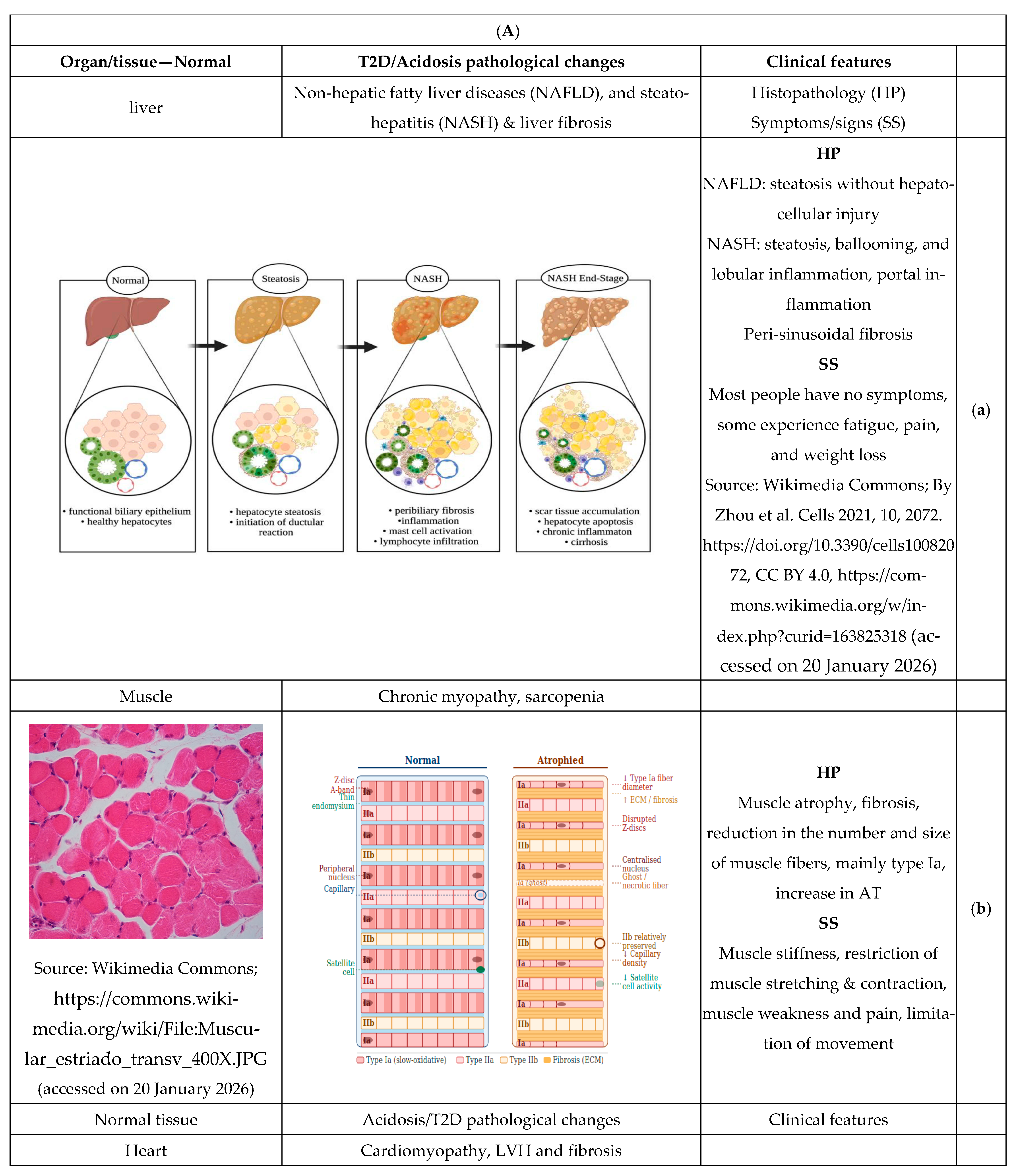
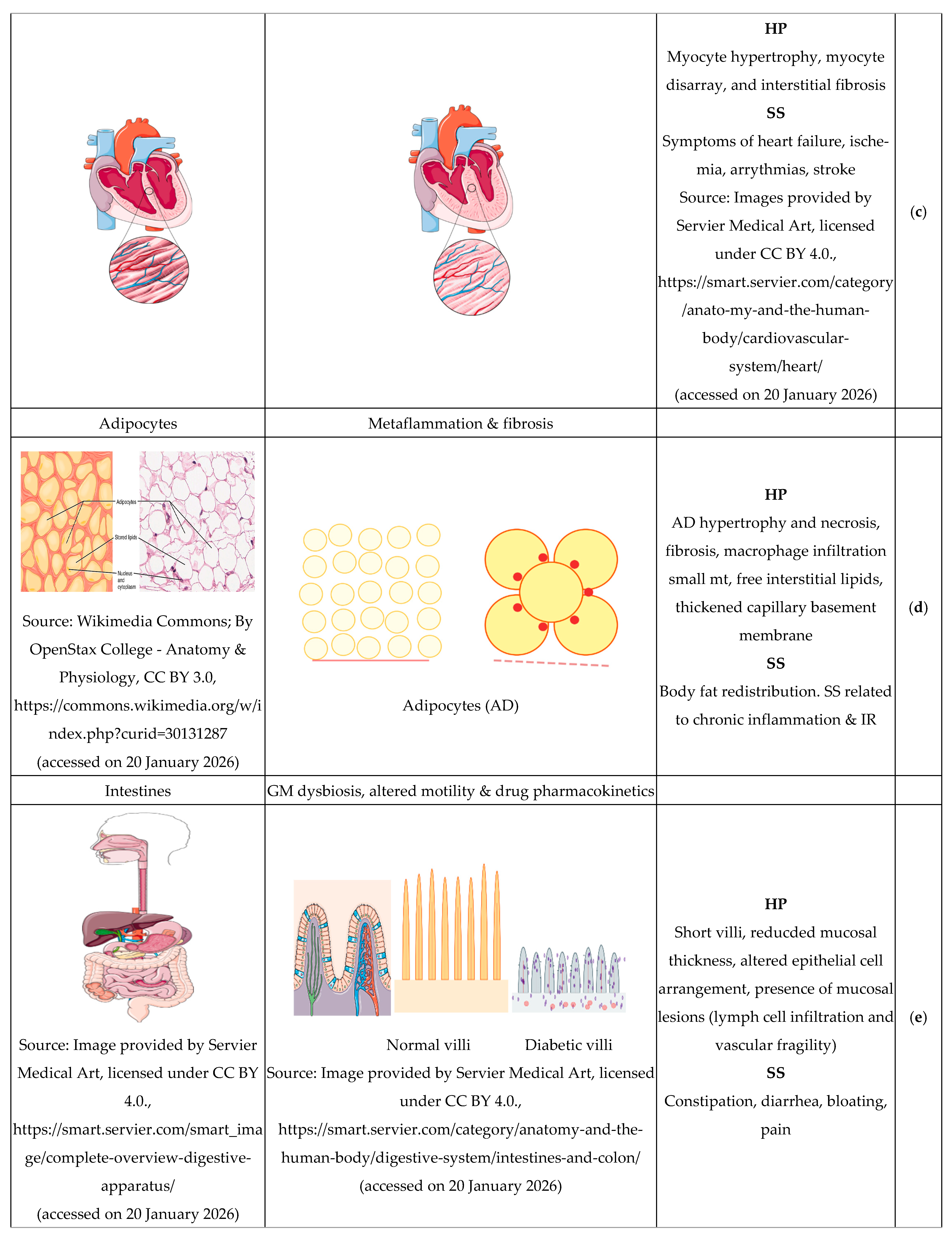
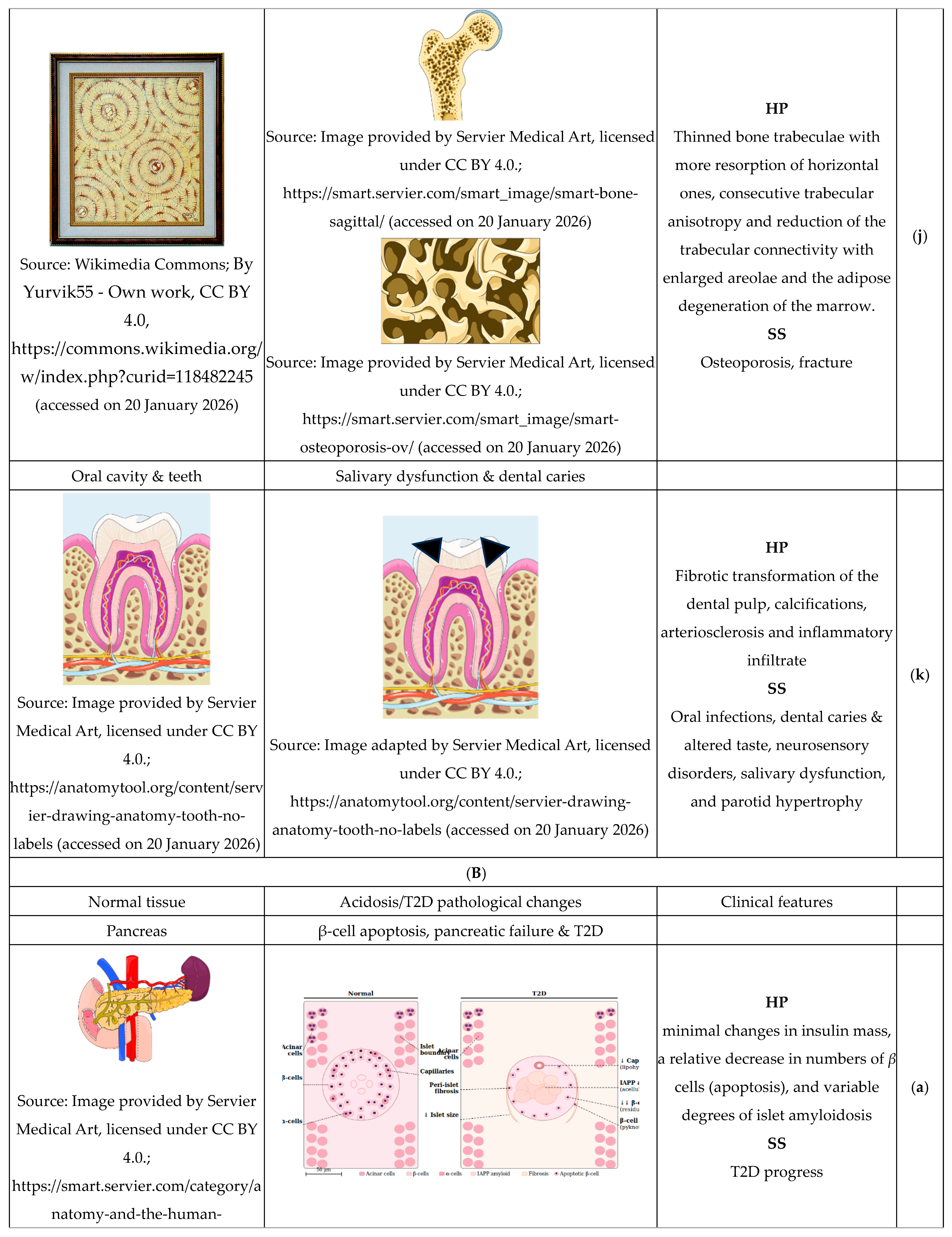
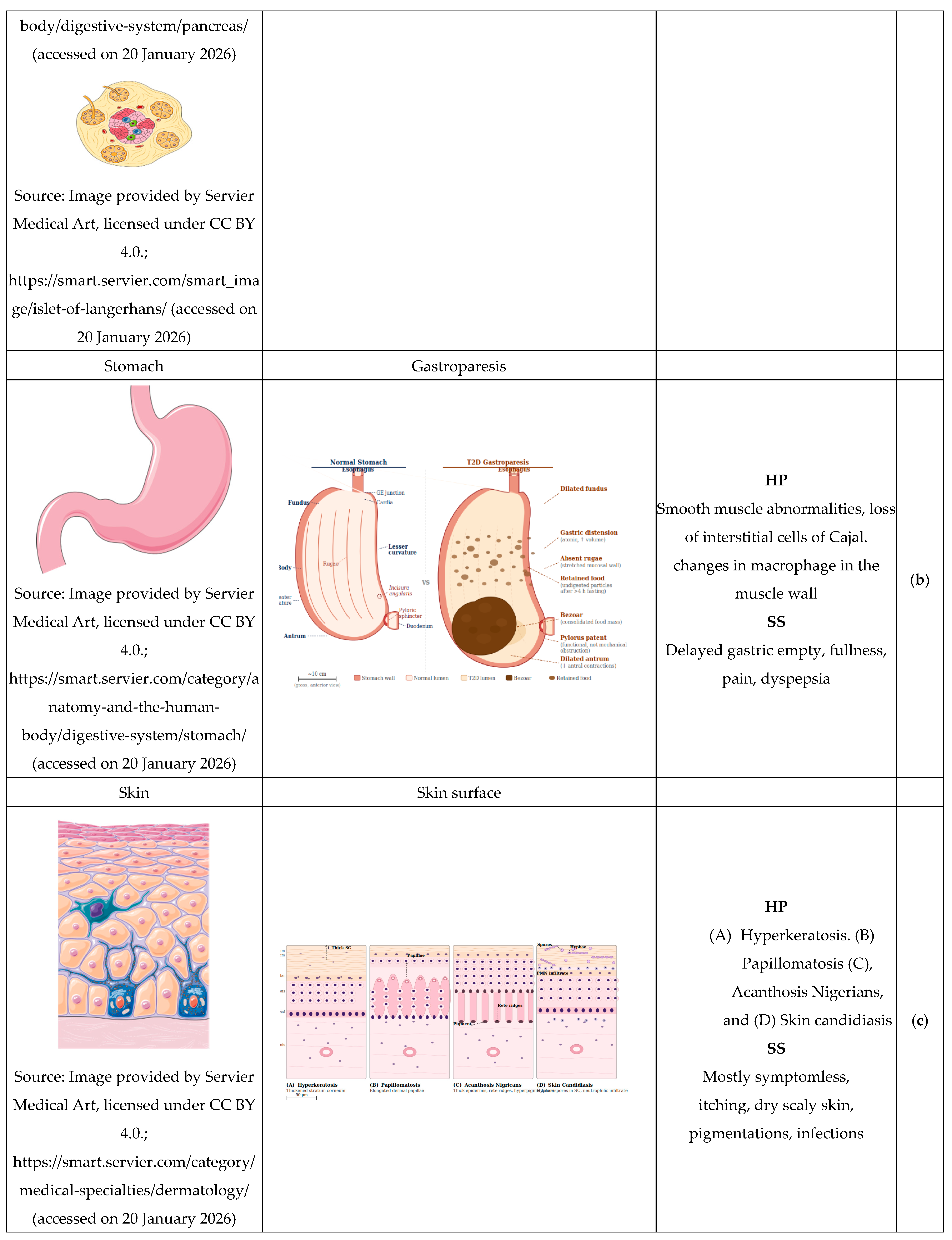
- Gut luminal pH and gut motility: It was previously shown that hyperosmolar solutions and HCl induce more frequent and large amplitude segmental gut contractions, whereas lipid and bile induce fewer and smaller amplitude contractions in humans [137]. The compartmentalization strategy of the esophagogastroduodenal region is to restrict high acid content to the stomach and to control acid passage to the duodenum via the lower esophageal sphincter (LES) and pyloric sphincters [138]. Both sphincters are under the control of neural reflexes involving acid-sensitive neurons that adjust the tone of the sphincters to balance the levels of acid present in the esophagus, stomach, and duodenum with the mucosal defense in these compartments [138,139]. If excessive gastric acid enters the duodenum, a duodenopylorogastric reflex is elicited, leading to contraction of the pylorus and inhibition of gastric motility, an effect that halts further gastric emptying. These coordinated motor reactions are governed by acid-sensitive neurons that, in turn, activate multiple neural circuits involving enteric, sympathetic, and vagal nerve pathways [139]. The activity of the LES is determined by two different motor programs initiated by the presence of acid in the esophagus. The first promotes esophageal peristalsis and transport of its content towards the stomach, and the second program leads to relaxation of the LES [139]. The association between delayed gastric emptying (GE) and diabetes has been known for almost a century [140]. It has been reported that 28–65% of diabetic patients experience delayed GE, which leads to a 300% longer gastric transit time in diabetic patients when compared with healthy subjects [141] (Figure 3B(b)). The significant changes in gastric motility and gastric transit time can impact the extent of absorption of diet and orally administered drugs [141]. Other changes in gut motility can lead to constipation, diarrhea, bloating, and abdominal pains (Figure 3A(e)). The positive responses of these symptoms to proton pump inhibitors (PPIs) suggest a possible major role for CMAD in gut motility disturbances in T2D.
- (c)
- Gut luminal pH and drug absorption: As mentioned before, T2D alters gut pH and consequently affects drug absorption. Changes in aboral pH can impair the disintegration and dissolution of coated drugs, particularly those incorporating pH-sensitive materials. However, modern enteric coating materials are insoluble at normal gastric pH but begin to dissolve rapidly above a pH of 5 [142]. Gut pH and drug pKa (dissociation constant) define the ionization of a drug in the human body, and the Henderson-Hasselbalch equation forms the basis for the impact of pH-pKa on drug ionization and its absorption, distribution, metabolism, excretion, and toxicity (ADMET) [16]. Upon administration of a weak base, an acidic stomach contributes to its solubilization and supersaturation upon gut transfer, generating a higher compound concentration gradient, absorption, and exposure throughout the gut. However, raised stomach pH in humans due to T2D or proton pump inhibitor (PPI) intake lowers drug solubilization and supersaturation upon gut transfer and decreases downstream absorption [143].
4. Therapeutic Potentials of pH Correction in T2D
5. Revisiting T2D Pathophysiology
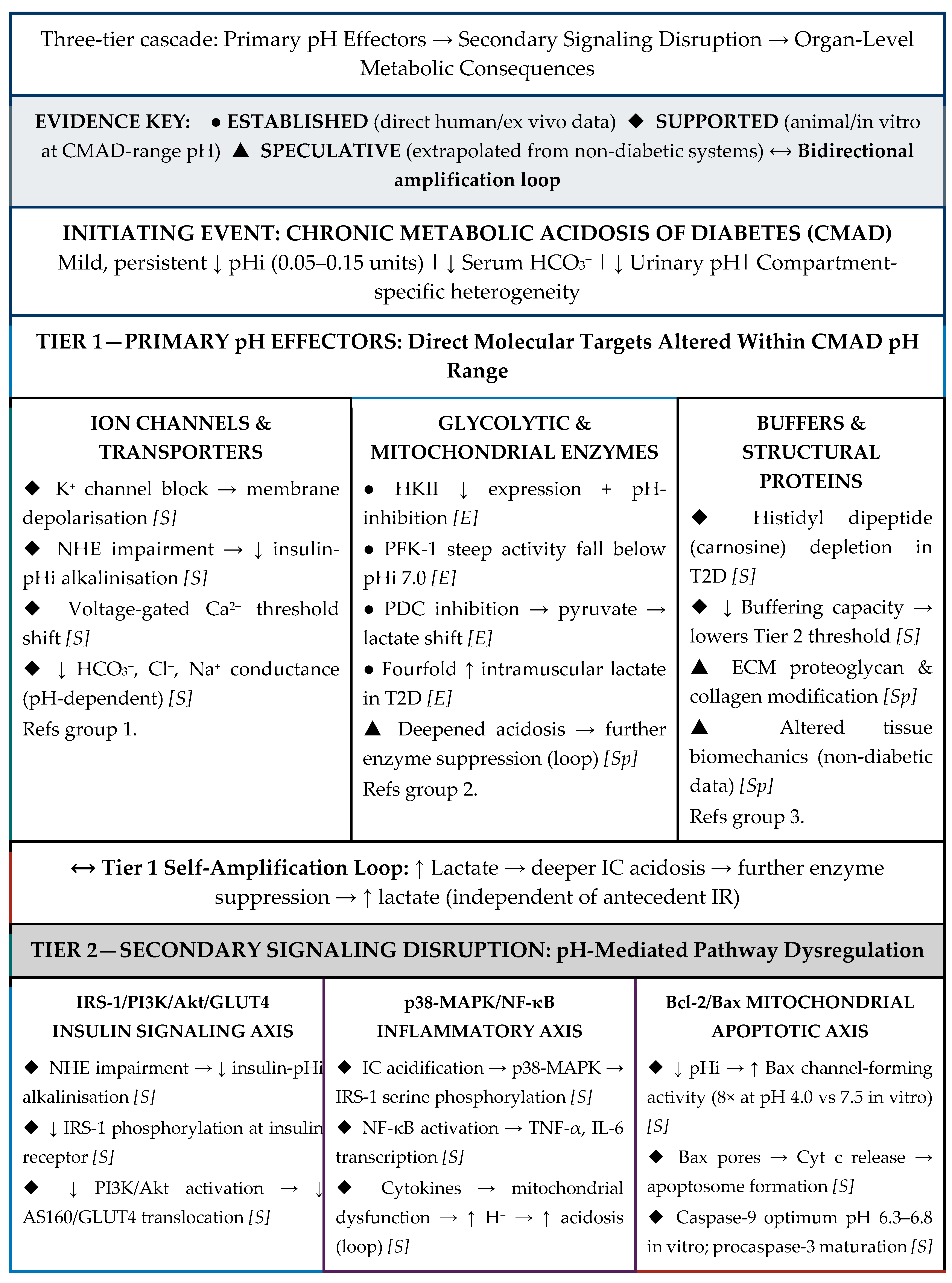
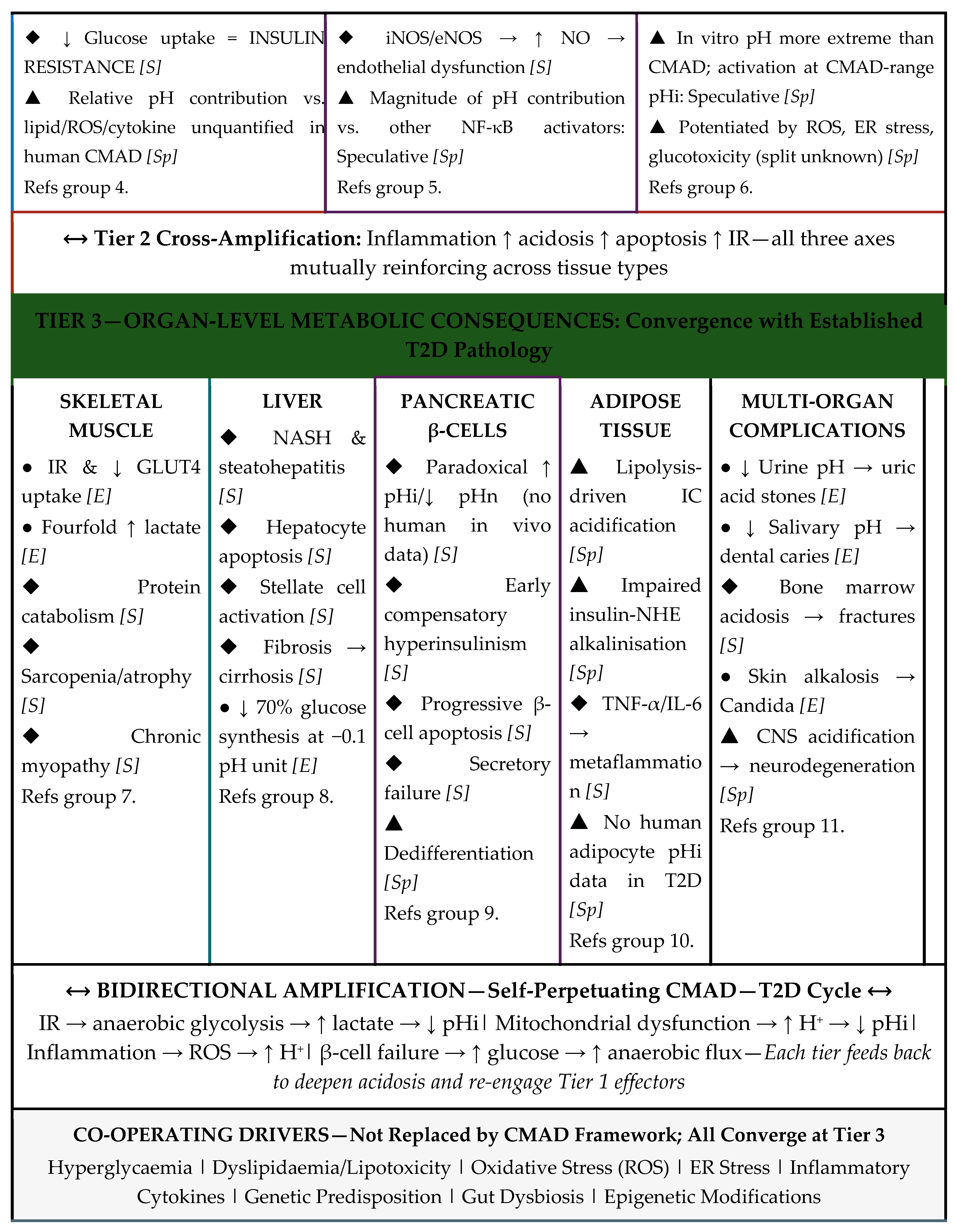
5.1. Integrative Mechanistic Framework: pH Shifts, Signaling Pathway Disruption, and Metabolic Consequences in T2D
5.2. Current Evidence and Limitations
6. Conclusions
Supplementary Materials
Author Contributions
Funding
Institutional Review Board Statement
Informed Consent Statement
Data Availability Statement
Acknowledgments
Conflicts of Interest
References
- Sun, H.; Saeedi, P.; Karuranga, S.; Pinkepank, M.; Ogurtsova, K.; Duncan, B.B.; Stein, C.; Basit, A.; Chan, J.C.; Mbanya, J.C.; et al. IDF Diabetes Atlas: Global, regional and country-level diabetes prevalence estimates for 2021 and projections for 2045. Diabetes Res. Clin. Pract. 2022, 183, 109119, Erratum in Diabetes Res. Clin. Pract. 2023, 204, 110945. https://doi.org/10.1016/j.diabres.2023.110945. PMID: 34879977. [Google Scholar] [CrossRef] [Scilit]
- Franks, P.W.; Pearson, E.; Florez, J.C. Gene-environment and gene-treatment interactions in type 2 diabetes: Progress, pitfalls, and prospects. Diabetes Care 2013, 36, 1413–1421. [Google Scholar] [CrossRef] [Scilit] [PubMed]
- Giha, H.A. Hidden chronic metabolic acidosis of diabetes type 2 (CMAD): Clues, causes and consequences. Rev. Endocr. Metab. Disord. 2023, 24, 735–750. [Google Scholar] [CrossRef] [Scilit] [PubMed]
- Souto, G.; Donapetry, C.; Calviño, J.; Adeva, M.M. Metabolic acidosis-induced insulin resistance and cardiovascular risk. Metab. Syndr. Relat. Disord. 2011, 9, 247–253. [Google Scholar] [CrossRef] [Scilit]
- Farwell, W.R.; Taylor, E.N. Serum bicarbonate, anion gap and insulin resistance in the National Health and Nutrition Examination Survey. Diabet. Med. 2008, 25, 798–804. [Google Scholar] [CrossRef] [Scilit]
- Morgan, B.J.; Chai, S.Y.; Albiston, A.L. GLUT4 associated proteins as therapeutic targets for diabetes. Recent Pat. Endocr. Metab. Immune Drug Discov. 2011, 5, 25–32. [Google Scholar] [CrossRef] [Scilit]
- Aoi, W.; Marunaka, Y. The importance of regulation of body fluid pH in the development and progression of metabolic diseases. In Advances in Medicine and Biology; Berhardt, L.V., Ed.; Nova Publishers: Hauppauge, NY, USA, 2014; Volume 77, pp. 177–189. [Google Scholar]
- Aoi, W.; Marunaka, Y. Importance of pH homeostasis in metabolic health and diseases: Crucial role of membrane proton transport. Biomed Res. Int. 2014, 2014, 598986. [Google Scholar] [CrossRef] [Scilit] [PubMed]
- Boron, W.F. Ventilation and perfusion of the lungs. In Medical Physiology: A Cellular and Molecular Approach, 2nd ed.; Boron, W.F., Boulpaep, E.L., Eds.; Saunders Elsevier: Philadelphia, PA, USA, 2009; pp. 700–724. [Google Scholar]
- Giebisch, G.; Windhager, E. Transport of acids and bases. In Medical Physiology: A Cellular and Molecular Approach; Boron, W.F., Boulpaep, E.L., Eds.; Saunders Elsevier: Philadelphia, PA, USA, 2009; pp. 851–865. [Google Scholar]
- Madshus, I.H. Regulation of intracellular pH in eukaryotic cells. Biochem. J. 1988, 250, 1–8. [Google Scholar] [CrossRef] [Scilit]
- Marunaka, Y. Roles of interstitial fluid pH in diabetes mellitus: Glycolysis and mitochondrial function. World J. Diabetes 2015, 6, 125–135. [Google Scholar] [CrossRef] [Scilit] [PubMed]
- Mitchell, R.A.; Carman, C.T.; Severinghaus, J.W.; Richardson, B.W.; Singer, M.M.; Shnider, S. Stability of cerebrospinal fluid pH in chronic acid-base disturbances in blood. J. Appl. Physiol. 1965, 20, 443–452. [Google Scholar] [PubMed]
- Liao, C.C.; Hou, T.H.; Yu, H.P.; Li, A.; Liu, F.C. Cerebrospinal fluid electrolytes and acid-base in diabetic patients. Transl. Neurosci. 2021, 12, 448–455. [Google Scholar] [CrossRef] [Scilit] [PubMed]
- Greenwald, D.; Nakamura, R.; diZerega, G. Determination of pH and pKa in human peritoneal fluid. Curr. Surg. 1988, 45, 217–218. [Google Scholar] [PubMed]
- Gaohua, L.; Miao, X.; Dou, L. Crosstalk of physiological pH and chemical pKa under the umbrella of physiologically based pharmacokinetic modeling of drug absorption, distribution, metabolism, excretion, and toxicity. Expert Opin. Drug Metab. Toxicol. 2021, 17, 1103–1124. [Google Scholar] [CrossRef] [Scilit] [PubMed]
- Treuhaft, P.S.; MCCarty, D.J. Synovial fluid pH, lactate, oxygen and carbon dioxide partial pressure in various joint diseases. Arthritis Rheum. 1971, 14, 475–484. [Google Scholar] [CrossRef] [Scilit] [PubMed]
- Abelson, M.B.; Udell, I.J.; Weston, J.H. Normal human tear pH by direct measurement. Arch. Ophthalmol. 1981, 99, 301. [Google Scholar] [CrossRef] [Scilit] [PubMed]
- Yamada, M.; Mochizuki, H.; Kawai, M.; Yoshino, M.; Mashima, Y. Fluorophotometric measurement of pH of human tears in vivo. Curr. Eye Res. 1997, 16, 482–486. [Google Scholar] [CrossRef] [Scilit] [PubMed]
- Mieno, H.; Marunaka, Y.; Inaba, T.; Kojima, K.; Yoneda, K.; Nagata, K.; Sotozono, C. pH balance and lactic acid increase in the vitreous body of diabetes mellitus patients. Exp. Eye Res. 2019, 188, 107789. [Google Scholar] [CrossRef] [Scilit] [PubMed]
- Veselovský, J.; Oláh, Z.; Veselá, A.; Gressnerová, S. The pH reaction in aqueous humor to antiglaucoma agents of various concentrations and pH levels. Cesk Slov. Oftalmol. 2001, 57, 291–297. [Google Scholar] [PubMed]
- Baliga, S.; Mugilkar, S.; Kale, R. Salivary pH: A diagnostic biomarker. J. Indian. Soc. Periodontol. 2013, 17, 461–465. [Google Scholar] [CrossRef] [Scilit]
- Prathibha, K.M.; Johnson, P.; Ganesh, M.; Subhashini, A.S. Evaluation of Salivary Profile among Adult Type 2 Diabetes Mellitus Patients in South India. J. Clin. Diagn. Res. 2013, 7, 1592–1595. [Google Scholar] [CrossRef] [Scilit]
- Sutor, D.J.; Wilkie, L.I. Diurnal variations in the pH of pathological gallbladder bile. Gut 1976, 17, 971–974. [Google Scholar] [CrossRef] [Scilit] [PubMed]
- Nugent, S.G.; Kumar, D.; Rampton, D.S.; Evans, D.F. Intestinal luminal pH in inflammatory bowel disease: Possible determinants and implications for therapy with aminosalicylates and other drugs. Gut 2001, 48, 571–577. [Google Scholar] [CrossRef] [Scilit] [PubMed]
- Dotevall, G. Gastric secretion of acid in diabetes mellitus during basal conditions and after maximal histamine stimulation. Acta Med. Scand. 1961, 170, 59–69. [Google Scholar] [CrossRef] [Scilit] [PubMed]
- Fallingborg, J. Intraluminal pH of the human gastrointestinal tract. Dan. Med. Bull. 1999, 46, 183–196. [Google Scholar]
- Rodrigues, C.F.; Rodrigues, M.E.; Henriques, M. Candida sp. Infections in Patients with Diabetes Mellitus. J. Clin. Med. 2019, 8, 76. [Google Scholar] [CrossRef] [Scilit] [PubMed]
- Lu, X.; Huang, Y.; Zhang, H.; Zhao, J. Effect of diabetes mellitus on the quality and cytokine content of human semen. J. Reprod. Immunol. 2017, 123, 1–2. [Google Scholar] [CrossRef] [Scilit] [PubMed]
- Maalouf, N.M.; Cameron, M.A.; Moe, O.W.; Sakhaee, K. Metabolic basis for low urine pH in type 2 diabetes. Clin. J. Am. Soc. Nephrol. 2010, 5, 1277–1281. [Google Scholar] [CrossRef] [Scilit]
- Asokan, A.; Cho, M.J. Exploitation of intracellular pH gradients in the cellular delivery of macromolecules. J. Pharm. Sci. 2002, 91, 903–913. [Google Scholar] [CrossRef] [Scilit]
- Nunes, P.; Guido, D.; Demaurex, N. Measuring Phagosome pH by Ratiometric Fluorescence Microscopy. J. Vis. Exp. 2015, 106, e53402. [Google Scholar] [PubMed]
- Porcelli, A.M.; Ghelli, A.; Zanna, C.; Pinton, P.; Rizzuto, R.; Rugolo, M. pH difference across the outer mitochondrial membrane measured with a green fluorescent protein mutant. Biochem. Biophys. Res. Commun. 2005, 326, 799–804. [Google Scholar] [CrossRef] [Scilit]
- Kellokumpu, S. Golgi pH, Ion and Redox Homeostasis: How Much Do They Really Matter? Front. Cell Dev. Biol. 2019, 7, 93. [Google Scholar] [CrossRef] [Scilit] [PubMed]
- Vincent, A.M.; TenBroeke, M.; Maiese, K. Neuronal intracellular pH directly mediates nitric oxide-induced programmed cell death. J. Neurobiol. 1999, 40, 171–184. [Google Scholar] [CrossRef] [Scilit] [PubMed]
- Valkovič, L.; Clarke, W.T.; Schmid, A.I.; Raman, B.; Ellis, J.; Watkins, H.; Robson, M.D.; Neubauer, S.; Rodgers, C.T. Measuring inorganic phosphate and intracellular pH in the healthy and hypertrophic cardiomyopathy hearts by in vivo 7T 31P-cardiovascular magnetic resonance spectroscopy. J. Cardiovasc. Magn. Reson. 2019, 21, 19. [Google Scholar] [CrossRef] [Scilit] [PubMed]
- Park, R.; Leach, W.J.; Arieff, A.I. Determination of liver intracellular pH in vivo and its homeostasis in acute acidosis and alkalosis. Am. J. Physiol.-Ren. Physiol. 1979, 236, F240–F245. [Google Scholar] [CrossRef] [Scilit]
- Brown, M.R.; Holmes, H.; Rakshit, K.; Javeed, N.; Her, T.K.; Stiller, A.A.; Sen, S.; Shull, G.E.; Prakash, Y.; Romero, M.F.; et al. Electrogenic sodium bicarbonate cotransporter NBCe1 regulates pancreatic β cell function in type 2 diabetes. J. Clin. Investig. 2021, 131, e142365. [Google Scholar] [CrossRef] [Scilit] [PubMed]
- Sahlin, K. Intracellular pH and energy metabolism in skeletal muscle of man. Acta Physiol. Stand. Suppl. 1978, 455, 56. [Google Scholar]
- Posa, D.K.; Baba, S.P. Intracellular pH Regulation of Skeletal Muscle in the Milieu of Insulin Signaling. Nutrients 2020, 12, 2910. [Google Scholar] [CrossRef] [Scilit] [PubMed]
- Reni, C.; Mangialardi, G.; Meloni, M.; Madeddu, P. Diabetes Stimulates Osteoclastogenesis by Acidosis-Induced Activation of Transient Receptor Potential Cation Channels. Sci. Rep. 2016, 6, 30639. [Google Scholar] [CrossRef] [Scilit] [PubMed]
- Lambers, H.; Piessens, S.; Bloem, A.; Pronk, H.; Finkel, P. Natural skin surface pH is on average below 5, which is beneficial for its resident flora. Int. J. Cosmet. Sci. 2006, 28, 359–370. [Google Scholar] [CrossRef] [Scilit]
- Braun-Falco, O.; Korting, H.C. Normal pH value of human skin. Hautarzt 1986, 37, 126–129. [Google Scholar] [PubMed]
- Yosipovitch, G.; Tur, E.; Cohen, O.; Rusecki, Y. Skin surface pH in intertriginous areas in NIDDM patients: Possible correlation to candidal intertrigo. Diabetes Care 1993, 16, 560–563. [Google Scholar] [CrossRef] [Scilit] [PubMed]
- Juel, C. Lactate/proton co-transport in skeletal muscle: Regulation and importance for pH homeostasis. Acta Physiol. Scand. 1996, 156, 369–374. [Google Scholar] [CrossRef] [Scilit] [PubMed]
- Bonen, A.; Baker, S.K.; Hatta, H. Lactate transport and lactate transporters in skeletal muscle. Can. J. Appl. Physiol. 1997, 22, 531–552. [Google Scholar] [CrossRef] [Scilit] [PubMed]
- Eledrisi, M.S.; Alshanti, M.S.; Shah, M.F.; Brolosy, B.; Jaha, N. Overview of the diagnosis and management of diabetic ketoacidosis. Am. J. Med. Sci. 2006, 331, 243–251. [Google Scholar] [CrossRef] [Scilit]
- Loh, S.H.; Chen, W.H.; Chiang, C.H.; Tsai, C.S.; Lee, G.C.; Jin, J.S.; Cheng, T.H.; Chen, J.J. Intracellular pH regulatory mechanism in human atrial myocardium: Functional evidence for Na+/H+ exchanger and Na+/HCO3−symporter. J. Biomed. Sci. 2002, 9, 198–205. [Google Scholar] [CrossRef] [Scilit]
- Reshkin, S.J.; Greco, M.R.; Cardone, R.A. Role of pH(i), and proton transporters in oncogene-driven neoplastic transformation. Philos. Trans. R. Soc. Lond. B Biol. Sci. 2014, 369, 20130100. [Google Scholar] [CrossRef] [Scilit]
- Lagadic-Gossmann, D.; Huc, L.; Lecureur, V. Alterations of intracellular pH homeostasis in apoptosis: Origins and roles. Cell Death Differ. 2004, 11, 953–961. [Google Scholar] [CrossRef] [Scilit]
- Berlanga-Acosta, J.A.; Guillén-Nieto, G.E.; Rodríguez-Rodríguez, N.; Mendoza-Mari, Y.; Bringas-Vega, M.L.; Berlanga-Saez, J.O.; Herrera, D.G.d.B.; Martinez-Jimenez, I.; Hernandez-Gutierrez, S.; Valdés-Sosa, P.A. Cellular Senescence as the Pathogenic Hub of Diabetes-Related Wound Chronicity. Front. Endocrinol. 2020, 11, 573032. [Google Scholar] [CrossRef] [Scilit] [PubMed Central]
- Sartori, R.; Romanello, V.; Sandri, M. Mechanisms of muscle atrophy and hypertrophy: Implications in health and disease. Nat. Commun. 2021, 12, 330. [Google Scholar] [CrossRef] [Scilit] [PubMed]
- Marchetti, P.; Suleiman, M.; De Luca, C.; Baronti, W.; Bosi, E.; Tesi, M.; Marselli, L. A direct look at the dysfunction and pathology of the β cells in human type 2 diabetes. Semin. Cell Dev. Biol. 2020, 103, 83–93. [Google Scholar] [CrossRef] [Scilit]
- Giha, H.A.; Sater, M.S.; Al Qarni, A.A. Chronic metabolic acidosis of diabetes (CMAD): Clinical features, diagnosis, and therapeutic potentials of pH correction. Minerva Endocrinol. 2025, 51, 63–87. [Google Scholar] [CrossRef] [Scilit] [PubMed]
- Cande, C.; Cohen, I.; Daugas, E.; Ravagnan, L.; Larochette, N.; Zamzami, N.; Kroemer, G. Apoptosis-inducing factor (AIF): A novel caspase-independent death effector released from mitochondria. Biochimie 2002, 84, 215–222. [Google Scholar] [CrossRef] [Scilit]
- Barry, M.A.; Eastman, A. Identification of deoxyribonuclease II as an endonuclease involved in apoptosis. Arch. Biochem. Biophys. 1993, 300, 440–450. [Google Scholar] [CrossRef] [Scilit]
- Altairac, S.; Zeggai, S.; Perani, P.; Courtois, Y.; Torriglia, A. Apoptosis induced by Na+/H+ antiport inhibition activates the LEI/L-DNase II pathway. Cell Death Differ. 2003, 10, 548–557. [Google Scholar] [CrossRef] [Scilit]
- Soltani, N. Beta-Cell Function and Failure. In Type 1 Diabetes; InTech: Rijeka, Croatia, 2013. [Google Scholar] [CrossRef] [Scilit]
- Matsuyama, S.; Reed, J.C. Mitochondria-dependent apoptosis and cellular pH regulation. Cell Death Differ. 2000, 7, 1155–1165. [Google Scholar] [CrossRef] [Scilit]
- Furlong, I.J.; Ascaso, R.; Lopez Rivas, A.; Collins, M.K. Intracellular acidification induces apoptosis by stimulating ICE-like protease activity. J. Cell Sci. 1997, 110, 653–661. [Google Scholar] [CrossRef] [Scilit] [PubMed]
- Roy, S.; Bayly, C.I.; Gareau, Y.; Houtzager, V.M.; Kargman, S.; Keen, S.L.; Rowland, K.; Seiden, I.M.; Thornberry, N.A.; Nicholson, D.W. Maintenance of caspase-3 proenzyme dormancy by an intrinsic ‘safety catch’ regulatory tripeptide. Proc. Natl. Acad. Sci. USA 2001, 98, 6132–6137. [Google Scholar] [CrossRef] [Scilit] [PubMed]
- Segal, M.S.; Beem, E. Effect of pH, ionic charge, and osmolality on cytochrome c-mediated caspase-3 activity. Am. J. Physiol. Cell Physiol. 2001, 281, C1196–C1204. [Google Scholar] [CrossRef] [Scilit] [PubMed]
- Araki, T.; Hayashi, M.; Watanabe, N.; Kanuka, H.; Yoshino, J.; Miura, M.; Saruta, T. Down-regulation of Mcl-1 by inhibition of the PI3-K/Akt pathway is required for cell shrinkage-dependent cell death. Biochem. Biophys. Res. Commun. 2002, 290, 1275–1281. [Google Scholar] [CrossRef] [Scilit]
- Antonsson, B.; Conti, F.; Ciavatta, A.; Montessuit, S.; Lewis, S.; Martinou, I.; Bernasconi, L.; Bernard, A.; Mermod, J.-J.; Mazzei, G.; et al. Inhibition of Bax channel-forming activity by Bcl-2. Science 1997, 277, 370–372. [Google Scholar] [CrossRef] [Scilit]
- Kubasiak, L.A.; Hernandez, O.M.; Bishopric, N.H.; Webster, K.A. Hypoxia and acidosis activate cardiac myocyte death through the Bcl-2 family protein BNIP3. Proc. Natl. Acad. Sci. USA 2002, 99, 12825–12830. [Google Scholar] [CrossRef] [Scilit]
- Sawada, M.; Nakashima, S.; Kiyono, T.; Yamada, J.; Hara, S.; Nakagawa, M.; Shinoda, J.; Sakai, N. Acid sphingomyelinase activation requires caspase-8 but not p53 nor reactive oxygen species during Fas-induced apoptosis in human glioma cells. Exp. Cell Res. 2002, 273, 157–168. [Google Scholar] [CrossRef] [Scilit] [PubMed]
- Curthoys, N.P.; Tang, A.; Gstraunthaler, G. pH regulation of renal gene expression. Novartis Found. Symp. 2001, 240, 100–111, discussion 111–114. [Google Scholar]
- Karmazyn, M.; Avkiran, M.; Fliegel, L. (Eds.) The Sodium–Hydrogen Exchanger. From Molecule to Its Role in Disease; Kluwer Academic Publishers: Dordrecht, The Netherlands, 2003; p. 318. [Google Scholar]
- Thomas, H.E.; McKenzie, M.D.; Angstetra, E.; Campbell, P.D.; Kay, T.W. Beta cell apoptosis in diabetes. Apoptosis 2009, 14, 1389–1404. [Google Scholar] [CrossRef] [Scilit] [PubMed]
- Sugimoto, K.; Wang, C.C.; Rakugi, H. Sarcopenia in Diabetes Mellitus. In Musculoskeletal Disease Associated with Diabetes Mellitus; Springer: Tokyo, Japan, 2016; pp. 237–252. [Google Scholar]
- Tolkovsky, A. Apoptosis in diabetic neuropathy. Int. Rev. Neurobiol. 2002, 50, 145–159. [Google Scholar] [PubMed]
- van der Kallen, C.J.; van Greevenbroek, M.M.; Stehouwer, C.D.; Schalkwijk, C.G. Endoplasmic reticulum stress-induced apoptosis in the development of diabetes: Is there a role for adipose tissue and liver? Apoptosis 2009, 14, 1424–1434. [Google Scholar] [CrossRef] [Scilit]
- Wagener, F.A.D.T.G.; Dekker, D.; Berden, J.H.; Scharstuhl, A.; van der Vlag, J. The role of reactive oxygen species in apoptosis of the diabetic kidney. Apoptosis 2009, 14, 1451–1458. [Google Scholar] [CrossRef] [Scilit]
- Ryan, A.; Murphy, M.; Godson, C.; Hickey, F.B. Diabetes mellitus and apoptosis: Inflammatory cells. Apoptosis 2009, 14, 1435–1450. [Google Scholar] [CrossRef] [Scilit]
- Liu, D.; Martino, G.; Thangaraju, M.; Sharma, M.; Halwani, F.; Shen, S.H.; Patel, Y.C.; Srikant, C.B. Caspase-8-mediated intracellular acidification precedes mitochondrial dysfunction in somatostatin-induced apoptosis. J. Biol. Chem. 2000, 275, 9244–9250. [Google Scholar] [CrossRef] [Scilit]
- Robinson, P.K. Enzymes: Principles and biotechnological applications. Essays Biochem. 2015, 59, 1–41, Erratum in Essays Biochem. 2015, 59, 75. [Google Scholar] [CrossRef] [Scilit] [PubMed]
- Gerson, D.F. Intracellular pH: Its Measurement, Regulation, and Utilization in Cellular Functions; Nuccitelli, R., Deamer, D.W., Eds.; Alan R. Liss: New York, NY, USA, 1982; pp. 375–383. [Google Scholar]
- Alberty, R.A. Effect of pH and metal ion concentration on the equilibrium hydrolysis of adenosine triphosphate to adenosine diphosphate. J. Biol. Chem. 1968, 243, 1337–1343. [Google Scholar] [CrossRef] [Scilit] [PubMed]
- Winkler, M.M. Intracellular pH: Its Measurement, Regulation and Utilization in Cellular Functions; Nuccitelli, R., Deamer, D.W., Eds.; Alan R. Liss: New York, NY, USA, 1982; pp. 325–340. [Google Scholar]
- Moore, R.D. Stimulation of Na:H exchange by insulin. Biophys. J. 1981, 33, 203–210. [Google Scholar] [CrossRef] [Scilit] [PubMed]
- Fidelman, M.L.; Seeholzer, S.H.; Walsh, K.B.; Moore, R.D. Intracellular pH mediates action of insulin on glycolysis in frog skeletal muscle. Am. J. Physiol.-Cell Physiol. 1982, 242, C87–C93. [Google Scholar] [CrossRef] [Scilit] [PubMed]
- DiNicolantonio, J.J.; O’Keefe, J.H. Low-grade metabolic acidosis as a driver of insulin resistance. Open Heart 2021, 8, e001788. [Google Scholar] [CrossRef] [Scilit] [PubMed]
- Giha, H.A.; Alamin, O.A.O.; Sater, M.S. Diabetic sarcopenia: Metabolic and molecular appraisal. Acta Diabetol. 2022, 59, 989–1000. [Google Scholar] [CrossRef] [Scilit]
- Moody, W., Jr. Effects of intracellular H+ on the electrical properties of excitable cells. Annu. Rev. Neurosci. 1984, 7, 257–278. [Google Scholar] [CrossRef]
- Wanke, E.; Carbone, E.; Testa, P.L. K+ conductance modified by a titratable group accessible to protons from the intracellular side of the squid axon membrane. Biophys. J. 1979, 26, 319–324. [Google Scholar] [CrossRef] [Scilit]
- Moody, W.J., Jr. Intracellular pH: Its Measurement, Regulation, & Utilization in Cellular Functions; Nuccitelli, R., Deamer, D.W., Eds.; Alan R. Liss: New York, NY, USA, 1982; pp. 427–433. [Google Scholar]
- Rosario, L.M.; Rojas, E. Modulation of K+ conductance by intracellular pH in pancreatic β-cells. FEBS Lett. 1986, 200, 203–209. [Google Scholar] [CrossRef] [Scilit]
- Pace, C.S.; Tarvin, J.T.; Smith, J.S. Intracellular pH: Its Measurement, Regulation, and Utilization in Cellular Functions; Nuccitelli, R., Deamer, D.W., Eds.; Alan R. Liss: New York, NY, USA, 1982; pp. 483–512. [Google Scholar]
- Al-Nahdi, A.M.T.; John, A.; Raza, H. Cytoprotective Effects of N-Acetylcysteine on Streptozotocin-Induced Oxidative Stress and Apoptosis in RIN-5F Pancreatic β-Cells. Cell. Physiol. Biochem. 2018, 51, 201–216. [Google Scholar] [CrossRef] [Scilit]
- Cerf, M.E. Beta cell physiological dynamics and dysfunctional transitions in response to islet inflammation in obesity and diabetes. Metabolites 2020, 10, 452. [Google Scholar] [CrossRef] [Scilit]
- Erra Díaz, F.; Dantas, E.; Geffner, J. Unravelling the Interplay between Extracellular Acidosis and Immune Cells. Mediat. Inflamm. 2018, 2018, 1218297. [Google Scholar] [CrossRef] [Scilit] [PubMed] [PubMed Central]
- Römer, A.; Linn, T.; Petry, S.F. Lipotoxic Impairment of Mitochondrial Function in β-Cells: A Review. Antioxidants 2021, 10, 293. [Google Scholar] [CrossRef] [Scilit] [PubMed]
- Back, S.H.; Kaufman, R.J. Endoplasmic reticulum stress and type 2 diabetes. Annu. Rev. Biochem. 2012, 81, 767–793. [Google Scholar] [CrossRef] [Scilit] [PubMed]
- Bruni, A.; Bornstein, S.; Linkermann, A.; Shapiro, A.M.J. Regulated Cell Death Seen through the Lens of Islet Transplantation. Cell Transplant. 2018, 27, 890–901. [Google Scholar] [CrossRef] [Scilit] [PubMed]
- Fang, Y.; Feng, H.; Zhang, B.; Zhang, S.; Zhou, Y.; Hao, P.; Zhou, Z.; Zhou, S.; Li, N.; Hui, Y.; et al. Cytosolic pH is a direct nexus in linking environmental cues with insulin processing and secretion in pancreatic β cells. Cell Metab. 2024, 36, 1237–1251.e4. [Google Scholar] [CrossRef] [Scilit] [PubMed]
- Rougée, L.R.; Mohutsky, M.A.; Bedwell, D.W.; Ruterbories, K.J.; Hall, S.D. The Impact of the Hepatocyte-to-Plasma pH Gradient on the Prediction of Hepatic Clearance and Drug-Drug Interactions for CYP2D6 Substrates. Drug Metab. Dispos. 2016, 44, 1819–1827. [Google Scholar] [PubMed]
- Kashiwagura, T.; Deutsch, C.J.; Taylor, J.; Erecińska, M.; Wilson, D.F. Dependence of gluconeogenesis, urea synthesis, and energy metabolism of hepatocytes on intracellular pH. J. Biol. Chem. 1984, 259, 237–243. [Google Scholar] [CrossRef] [Scilit]
- Renner, E.L.; Lake, J.R.; Persico, M.; Scharschmidt, B.F. Na+-H+ exchange activity in rat hepatocytes: Role in regulation of intracellular pH. Am. J. Physiol.-Gastrointest. Liver Physiol. 1989, 256, G44–G52. [Google Scholar] [CrossRef] [Scilit]
- Soltoff, S.P.; Cantley, L.C. Mitogens and ion fluxes. Annu. Rev. Physiol. 1988, 50, 207–223. [Google Scholar] [CrossRef]
- Fitz, J.G.; Lidofsky, S.D.; Xie, M.H.; Scharschmidt, B.F. Transmembrane electrical potential difference regulates Na+/HCO3- cotransport and intracellular pH in hepatocytes. Proc. Natl. Acad. Sci. USA 1992, 89, 4197–4201. [Google Scholar] [CrossRef] [Scilit]
- Meier, P.J.; Knickelbein, R.; Moseley, R.H.; Dobbins, J.W.; Boyer, J.L. Evidence for carrier-mediated chloride/bicarbonate exchange in canalicular rat liver plasma membrane vesicles. J. Clin. Investig. 1985, 75, 1256–1263. [Google Scholar] [CrossRef] [Scilit]
- Younossi, Z.M.; Golabi, P.; de Avila, L.; Paik, J.M.; Srishord, M.; Fukui, N.; Qiu, Y.; Burns, L.; Afendy, A.; Nader, F. The global epidemiology of NAFLD and NASH in patients with type 2 diabetes: A systematic review and meta-analysis. J. Hepatol. 2019, 71, 793–801. [Google Scholar] [CrossRef] [Scilit] [PubMed]
- Lomonaco, R.; Godinez Leiva, E.; Bril, F.; Shrestha, S.; Mansour, L.; Budd, J.; Romero, J.P.; Schmidt, S.; Chang, K.-L.; Samraj, G.; et al. Advanced Liver Fibrosis Is Common in Patients With Type 2 Diabetes Followed in the Outpatient Setting: The Need for Systematic Screening. Diabetes Care 2021, 44, 399–406. [Google Scholar] [CrossRef] [Scilit] [PubMed]
- Bica, C.; Sandu, C.; Suceveanu, A.I.; Sarbu, E.; Stoica, R.A.; Gherghiceanu, F.; Bohiltea, R.E.; Stefan, S.D.; Stoian, A.P. Non-alcoholic fatty liver disease: A major challenge in type 2 diabetes mellitus (Review). Exp. Ther. Med. 2020, 20, 2387–2391. [Google Scholar] [CrossRef] [Scilit]
- Zhang, C.Y.; Yuan, W.G.; He, P.; Lei, J.H.; Wang, C.X. Liver fibrosis and hepatic stellate cells: Etiology, pathological hallmarks and therapeutic targets. World J. Gastroenterol. 2016, 22, 10512–10522. [Google Scholar] [CrossRef] [Scilit] [PubMed]
- Peak, M.; al-Habori, M.; Agius, L. Regulation of glycogen synthesis and glycolysis by insulin, pH and cell volume. Interactions between swelling and alkalinization in mediating the effects of insulin. Biochem. J. 1992, 282, 797–805. [Google Scholar] [CrossRef] [Scilit]
- Vestergaard, H.; Bjørbaek, C.; Hansen, T.; Larsen, F.S.; Granner, D.K.; Pedersen, O. Impaired activity and gene expression of hexokinase II in muscle from non-insulin-dependent diabetes mellitus patients. J. Clin. Investig. 1995, 96, 2639–2645. [Google Scholar] [CrossRef] [Scilit]
- Ducluzeau, P.H.; Perretti, N.; Laville, M.; Andreelli, F.; Vega, N.; Riou, J.P.; Vidal, H. Regulation by insulin of gene expression in human skeletal muscle and adipose tissue. Evidence for specific defects in type 2 diabetes. Diabetes 2001, 50, 1134–1142. [Google Scholar] [CrossRef] [Scilit]
- Goodpaster, B.H.; Bertoldo, A.; Ng, J.M.; Azuma, K.; Pencek, R.R.; Kelley, C.; Price, J.C.; Cobelli, C.; Kelley, D.E. Interactions among glucose delivery, transport, and phosphorylation that underlie skeletal muscle insulin resistance in obesity and type 2 Diabetes: Studies with dynamic PET imaging. Diabetes 2014, 63, 1058–1068. [Google Scholar] [CrossRef] [Scilit]
- Trivedi, B.; Danforth, W.H. Effect of pH on the kinetics of frog muscle phosphofructokinase. J. Biol. Chem. 1966, 241, 4110–4112. [Google Scholar] [CrossRef] [Scilit]
- Jeoung, N.H.; Harris, C.R.; Harris, R.A. Regulation of pyruvate metabolism in metabolic-related diseases. Rev. Endocr. Metab. Disord. 2014, 15, 99–110. [Google Scholar] [CrossRef] [Scilit] [PubMed]
- Avogaro, A.; Toffolo, G.; Miola, M.; Valerio, A.; Tiengo, A.; Cobelli, C.; Del Prato, S. Intracellular lactate- and pyruvate-interconversion rates are increased in muscle tissue of non-insulin-dependent diabetic individuals. J. Clin. Investig. 1996, 98, 108–115. [Google Scholar] [CrossRef] [Scilit] [PubMed]
- Petersen, M.C.; Shulman, G.I. Mechanisms of Insulin Action and Insulin Resistance. Physiol. Rev. 2018, 98, 2133–2223. [Google Scholar] [CrossRef] [Scilit]
- Wellen, K.E.; Hotamisligil, G.S. Inflammation, stress, and diabetes. J. Clin. Investig. 2005, 115, 1111–1119. [Google Scholar] [CrossRef] [Scilit] [PubMed]
- He, C.; Bassik, M.C.; Moresi, V.; Sun, K.; Wei, Y.; Zou, Z.; An, Z.; Loh, J.; Fisher, J.; Sun, Q.; et al. Exercise-induced BCL2-regulated autophagy is required for muscle glucose homeostasis. Nature 2012, 481, 511–515. [Google Scholar] [CrossRef] [Scilit]
- Abe, H. Role of histidine-related compounds as intracellular proton buffering constituents in vertebrate muscle. Biochemistry 2000, 65, 757–765. [Google Scholar]
- Mannion, A.F.; Jakeman, P.M.; Dunnett, M.; Harris, R.C.; Willan, P.L.T. Carnosine and anserine concentrations in the quadriceps femoris muscle of healthy humans. Eur. J. Appl. Physiol. Occup. Physiol. 1992, 64, 47–50. [Google Scholar] [CrossRef] [Scilit]
- Culbertson, J.Y.; Kreider, R.B.; Greenwood, M.; Cooke, M. Effects of beta-alanine on muscle carnosine and exercise performance: A review of the current literature. Nutrients 2010, 2, 75–98. [Google Scholar] [CrossRef] [Scilit]
- Scheuermann-Freestone, M.; Madsen, P.L.; Manners, D.; Blamire, A.M.; Buckingham, R.E.; Styles, P.; Radda, G.K.; Neubauer, S.; Clarke, K. Abnormal cardiac and skeletal muscle energy metabolism in patients with type 2 diabetes. Circulation 2003, 107, 3040–3046. [Google Scholar] [CrossRef] [Scilit]
- Marunaka, Y. Relationship between ionic surroundings and insulin actions on glucose transport and Na, K-pump in muscles. Comp. Biochem. Physiol. A Physiol. 1988, 89, 103–112. [Google Scholar]
- Condeelis, J.S.; Taylor, D.L. The contractile basis of amoeboid movement: V. The control of gelation, solation, and contraction in extracts from Dictyostelium discoideum. J. Cell Biol. 1977, 74, 901–927. [Google Scholar] [CrossRef] [Scilit] [PubMed]
- Regula, C.S.; Pfeiffer, J.R.; Berlin, R.D. Microtubule assembly and disassembly at alkaline pH. J. Cell Biol. 1981, 89, 45–53. [Google Scholar] [CrossRef] [Scilit] [PubMed]
- Giha, H.A.; Sater, M.S.; Alamin, O.A.O. Diabetes mellitus tendino-myopathy: Epidemiology, clinical features, diagnosis and management of an overlooked diabetic complication. Acta Diabetol. 2022, 59, 871–883. [Google Scholar] [CrossRef] [Scilit] [PubMed]
- Miki, T.; Yuda, S.; Kouzu, H.; Miura, T. Diabetic cardiomyopathy: Pathophysiology and clinical features. Heart Fail. Rev. 2013, 18, 149–166. [Google Scholar] [CrossRef] [Scilit]
- Caputo, T.; Gilardi, F.; Desvergne, B. From chronic overnutrition to metaflammation and insulin resistance: Adipose tissue and liver contributions. FEBS Lett. 2017, 591, 3061–3088. [Google Scholar] [CrossRef] [Scilit]
- Edlow, D.W.; Sheldon, W.H. The pH of inflammatory exudates. Proc. Soc. Exp. Biol. Med. 1971, 137, 1328–1332. [Google Scholar] [CrossRef] [Scilit]
- Klip, A.; Ramlal, T.; Koivisto, U.M. Stimulation of Na+/H+ exchange by insulin and phorbol ester during differentiation of 3T3-L1 cells. Relation to hexose uptake. Endocrinology 1988, 123, 296–304. [Google Scholar] [CrossRef] [Scilit]
- Cummings, J.H.; Macfarlane, G.T. The control and consequences of bacterial fermentation in the human colon. J. Appl. Bacteriol. 1991, 70, 443–459. [Google Scholar] [CrossRef] [Scilit]
- Hasler, W.L.; Coleski, R.; Chey, W.D.; Koch, K.L.; McCallum, R.W.; Wo, J.M.; Kuo, B.; Sitrin, M.D.; Katz, L.A.; Hwang, J.; et al. Differences in intragastric pH in diabetic vs. idiopathic gastroparesis: Relation to degree of gastric retention. Am. J. Physiol.-Gastrointest. Liver Physiol. 2008, 294, G1384–G1391. [Google Scholar] [CrossRef] [Scilit]
- Nowak, T.V.; Johnson, C.P.; Kalbfleisch, J.H.; Roza, A.M.; Wood, C.M.; Weisbruch, J.P.; Soergel, K.H. Highly variable gastric emptying in patients with insulin dependent diabetes mellitus. Gut 1995, 37, 23–29. [Google Scholar] [CrossRef] [Scilit]
- Ilhan, Z.E.; Marcus, A.K.; Kang, D.W.; Rittmann, B.E.; Krajmalnik-Brown, R. pH-Mediated Microbial and Metabolic Interactions in Fecal Enrichment Cultures. mSphere 2017, 2, e00047-17. [Google Scholar] [CrossRef] [Scilit] [PubMed]
- Rasmussen, L.; Oster-Jørgensen, E.; Qvist, N.; Pedersen, S.A. The effects of omeprazole on intragastric pH, intestinal motility, and gastric emptying rate. Scand. J. Gastroenterol. 1999, 34, 671–675. [Google Scholar] [CrossRef] [Scilit] [PubMed]
- Tottey, W.; Feria-Gervasio, D.; Gaci, N.; Laillet, B.; Pujos, E.; Martin, J.F.; Sebedio, J.-L.; Sion, B.; Jarrige, J.-F.; Alric, M.; et al. Colonic Transit Time Is a Driven Force of the Gut Microbiota Composition and Metabolism: In Vitro Evidence. J. Neurogastroenterol. Motil. 2017, 23, 124–134. [Google Scholar] [CrossRef] [Scilit] [PubMed]
- Iida, M.; Ikeda, M.; Kishimoto, M.; Tsujino, T.; Kaneto, H.; Matsuhisa, M.; Kajimoto, Y.; Watarai, T.; Yamasaki, Y.; Hori, M. Evaluation of gut motility in type II diabetes by the radiopaque marker method. J. Gastroenterol. Hepatol. 2000, 15, 381–385. [Google Scholar] [CrossRef] [Scilit]
- Wirth, R.; Bódi, N.; Maróti, G.; Bagyánszki, M.; Talapka, P.; Fekete, É.; Bagi, Z.; Kovács, K.L. Regionally distinct alterations in the composition of the gut microbiota in rats with streptozotocin-induced diabetes. PLoS ONE 2014, 9, e110440. [Google Scholar] [CrossRef] [Scilit]
- Rhee, S.H.; Pothoulakis, C.; Mayer, E.A. Principles and clinical implications of the brain–gut–enteric microbiota axis. Nat. Rev. Gastroenterol. Hepatol. 2009, 6, 306–314. [Google Scholar] [CrossRef] [Scilit]
- Rao, S.S.C.; Safadi, R.; Lu, C.; Schulze-Delrieu, K. Manometric responses of human duodenum during infusion of HCl, hyperosmolar saline, bile and oleic acid. Neurogastroenterol. Motil. 1996, 8, 35–43. [Google Scholar] [CrossRef] [Scilit]
- Holzer, P. Taste receptors in the gastrointestinal tract. V. Acid sensing in the gastrointestinal tract. Am. J. Physiol.-Gastrointest. Liver Physiol. 2007, 292, G699–G705. [Google Scholar] [CrossRef] [Scilit]
- Holzer, P. Role of sensory neurons in mucosal protection from acid-induced lesions in the foregut. In Experimental and Clinical: Pharmacology of Gastroesophageal Reflux-Induced Asthma; Dal Negro, R.W., Geppetti, P., Morice, A.H., Eds.; Pacini: Pisa, Italy, 2002; pp. 25–33. [Google Scholar]
- Krishnasamy, S.; Abell, T.L. Diabetic Gastroparesis: Principles and Current Trends in Management. Diabetes Ther. 2018, 9, 1–42. [Google Scholar] [CrossRef] [Scilit] [PubMed]
- Triantafyllou, K.; Kalantzis, C.; Papadopoulos, A.A.; Apostolopoulos, P.; Rokkas, T.; Kalantzis, N.; Ladas, S. Video-capsule endoscopy gastric and small bowel transit time and completeness of the examination in patients with diabetes mellitus. Dig. Liver Dis. 2007, 39, 575–580. [Google Scholar] [CrossRef] [Scilit]
- Charman, W.N.; Porter, C.J.H.; Mithani, S.; Dressman, J.B. Physicochemical and physiological mechanisms for the effects of food on drug absorption: The role of lipids and pH. J. Pharm. Sci. 1997, 86, 269–282. [Google Scholar] [CrossRef] [Scilit]
- Abuhelwa, A.Y.; Foster, D.J.R.; Upton, R.N. A Quantitative Review and Meta-models of the Variability and Factors Affecting Oral Drug Absorption—Part II: Gastrointestinal Transit Time. AAPS J. 2016, 18, 1322–1333. [Google Scholar] [CrossRef] [Scilit] [PubMed]
- Franzosa, E.A.; Huang, K.; Meadow, J.F.; Gevers, D.; Lemon, K.P.; Bohannan, B.J.M.; Huttenhower, C. Identifying personal microbiomes using metagenomic codes. Proc. Natl. Acad. Sci. USA 2015, 112, E2930–E2938. [Google Scholar] [CrossRef] [Scilit] [PubMed]
- Huttenhower, C.; Gevers, D.; Knight, R.; Abubucker, S.; Badger, J.H.; Chinwalla, A.T.; Creasy, H.H.; Earl, A.M.; Fitzgerald, M.G.; Fulton, R.S.; et al. Structure, function and diversity of the healthy human microbiome. Nature 2012, 486, 207–214. [Google Scholar] [CrossRef] [Scilit] [PubMed]
- James, K.R.; Gomes, T.; Elmentaite, R.; Kumar, N.; Gulliver, E.L.; King, H.W.; Stares, M.D.; Bareham, B.R.; Ferdinand, J.R.; Petrova, V.N.; et al. Distinct microbial and immune niches of the human colon. Nat. Immunol. 2020, 21, 343–353. [Google Scholar] [CrossRef] [Scilit]
- Walsh, J.; Gheorghe, C.E.; Lyte, J.M.; van de Wouw, M.; Boehme, M.; Dinan, T.G.; Cryan, J.F.; Griffin, B.T.; Clarke, G.; Hyland, N.P. Gut microbiome-mediated modulation of hepatic cytochrome P450 and P-glycoprotein: Impact of butyrate and fructo-oligosaccharide-inulin. J. Pharm. Pharmacol. 2020, 72, 1072–1081. [Google Scholar] [CrossRef] [Scilit]
- Björkholm, B.; Bok, C.M.; Lundin, A.; Rafter, J.; Hibberd, M.L.; Pettersson, S. Intestinal microbiota regulate xenobiotic metabolism in the liver. PLoS ONE 2009, 4, e6958. [Google Scholar] [CrossRef] [Scilit] [PubMed]
- Roager, H.M.; Hansen, L.B.S.; Bahl, M.I.; Frandsen, H.L.; Carvalho, V.; Gøbel, R.J.; Dalgaard, M.D.; Plichta, D.R.; Sparholt, M.H.; Vestergaard, H.; et al. Colonic transit time is related to bacterial metabolism and mucosal turnover in the gut. Nat. Microbiol. 2016, 1, 16093. [Google Scholar] [CrossRef] [Scilit] [PubMed]
- Waldmann, R.; Champigny, G.; Bassilana, F.; Heurteaux, C.; Lazdunski, M. A proton-gated cation channel involved in acid-sensing. Nature 1997, 386, 173–177. [Google Scholar] [CrossRef] [Scilit]
- Park, H.J.; Rajbhandari, I.; Yang, H.S.; Lee, S.; Cucoranu, D.; Cooper, D.S.; Klein, J.D.; Sands, J.M.; Choi, I. Neuronal expression of sodium/bicarbonate cotransporter NBCn1 (SLC4A7) and its response to chronic metabolic acidosis. Am. J. Physiol. Cell Physiol. 2010, 298, C1018–C1028. [Google Scholar] [CrossRef] [Scilit]
- Wolosker, H.; Rocha, J.B.T.; Engelender, S.; Panizzutti, R.; De Miranda, J.; de Meis, L. Sarco/endoplasmic reticulum Ca2+-ATPase isoforms: Diverse responses to acidosis. Biochem. J. 1997, 321, 545–550. [Google Scholar] [CrossRef] [Scilit]
- McDonald, J.W.; Bhattacharyya, T.; Sensi, S.L.; Lobner, D.; Ying, H.S.; Canzoniero, L.M.; Choi, D.W. Extracellular acidity potentiates AMPA receptor-mediated cortical neuronal death. J. Neurosci. 1998, 18, 6290–6299. [Google Scholar] [CrossRef] [Scilit]
- Chesler, M. Regulation and modulation of pH in the brain. Physiol. Rev. 2003, 83, 1183–1221. [Google Scholar] [CrossRef] [Scilit] [PubMed]
- Ruffin, V.A.; Salameh, A.I.; Boron, W.F.; Parker, M.D. Intracellular pH regulation by acid-base transporters in mammalian neurons. Front. Physiol. 2014, 5, 43. [Google Scholar] [CrossRef] [Scilit] [PubMed]
- Hormuzdi, S.G.; Filippov, M.A.; Mitropoulou, G.; Monyer, H.; Bruzzone, R. Electrical synapses: A dynamic signaling system that shapes the activity of neuronal networks. Biochim. Biophys. Acta Biomembr. 2004, 1662, 113–137. [Google Scholar] [CrossRef] [Scilit] [PubMed]
- Cheng, G.; Huang, C.; Deng, H.; Wang, H. Diabetes as a risk factor for dementia and mild cognitive impairment: A meta-analysis of longitudinal studies. Intern. Med. J. 2012, 42, 484–491. [Google Scholar] [CrossRef] [Scilit]
- Biessels, G.J.; Staekenborg, S.; Brunner, E.; Brayne, C.; Scheltens, P. Risk of dementia in diabetes mellitus: A systematic review. Lancet Neurol. 2006, 5, 64–74. [Google Scholar] [CrossRef] [Scilit]
- Demetrius, L.A.; Simon, D.K. An inverse-Warburg effect and the origin of Alzheimer’s disease. Biogerontology 2012, 13, 583–594. [Google Scholar] [CrossRef] [Scilit]
- Mattson, M.P.; Pedersen, W.A.; Duan, W.; Culmsee, C.; Camandola, S. Cellular and molecular mechanisms underlying perturbed energy metabolism and neuronal degeneration in Alzheimer’s and Parkinson’s diseases. Ann. N. Y. Acad. Sci. 1999, 893, 154–175. [Google Scholar] [CrossRef] [Scilit]
- Vergo, S.; Craner, M.J.; Etzensperger, R.; Attfield, K.; Friese, M.A.; Newcombe, J.; Esiri, M.; Fugger, L. Acid-sensing ion channel 1 is involved in both axonal injury and demyelination in multiple sclerosis and its animal model. Brain 2011, 134, 571–584. [Google Scholar] [CrossRef] [Scilit]
- Pirchl, M.; Marksteiner, J.; Humpel, C. Effects of acidosis on brain capillary endothelial cells and cholinergic neurons: Relevance to vascular dementia and Alzheimer’s disease. Neurol. Res. 2006, 28, 657–664. [Google Scholar] [CrossRef] [Scilit] [PubMed]
- Huang, C.C.; Chung, C.M.; Leu, H.B.; Lin, L.Y.; Chiu, C.C.; Hsu, C.Y.; Chiang, C.-H.; Huang, P.-H.; Chen, T.-J.; Lin, S.-J.; et al. Diabetes mellitus and the risk of Alzheimer’s disease: A nationwide population-based study. PLoS ONE 2014, 9, e87095. [Google Scholar] [CrossRef] [Scilit] [PubMed]
- Das, R.R.; Unger, M.M. Diabetes and Parkinson disease: A sweet spot? Neurology 2018, 90, 869–870. [Google Scholar] [CrossRef] [Scilit] [PubMed]
- Angelova, P.R.; Abramov, A.Y. Role of mitochondrial ROS in the brain: From physiology to neurodegeneration. FEBS Lett. 2018, 592, 692–702. [Google Scholar] [CrossRef] [Scilit]
- Kniep, E.M.; Roehlecke, C.; Ozkucur, N.; Steinberg, A.; Reber, F.; Knels, L.; Funk, R.H.W. Inhibition of apoptosis and reduction of intracellular pH decrease in retinal neural cell cultures by a blocker of carbonic anhydrase. Investig. Ophthalmol. Vis. Sci. 2006, 47, 1185–1192. [Google Scholar] [CrossRef] [Scilit]
- Díez-Manglano, J.; Asìn Samper, U. Pulmonary function tests in type 2 diabetes: A meta-analysis. ERJ Open Res. 2021, 7, 00371–02020. [Google Scholar] [CrossRef] [Scilit] [PubMed]
- Yang, J.L.; Tan, Y.; Ma, Z.S.; Miao, L.N.; Zhao, F.L.; Cai, L. Lung fibrosis in experimental type 1 diabetic mouse model: Role of oxidative stress and inflammation. Diabetes 2010, 59, A245. [Google Scholar]
- Kolahian, S.; Leiss, V.; Nürnberg, B. Diabetic lung disease: Fact or fiction? Rev. Endocr. Metab. Disord. 2019, 20, 303–319. [Google Scholar] [CrossRef] [Scilit]
- Taylor, E.N.; Curhan, G.C. Body size and 24-hour urine composition. Am. J. Kidney Dis. 2006, 48, 905–915. [Google Scholar] [CrossRef] [Scilit]
- Maalouf, N.M.; Cameron, M.A.; Moe, O.W.; Adams-Huet, B.; Sakhaee, K. Low urine pH: A novel feature of the metabolic syndrome. Clin. J. Am. Soc. Nephrol. 2007, 2, 883–888. [Google Scholar] [CrossRef] [Scilit]
- Daudon, M.; Traxer, O.; Conort, P.; Lacour, B.; Jungers, P. Type 2 diabetes increases the risk for uric acid stones. J. Am. Soc. Nephrol. 2006, 17, 2026–2033. [Google Scholar] [CrossRef] [Scilit] [PubMed]
- Cameron, M.A.; Maalouf, N.M.; Adams-Huet, B.; Moe, O.W.; Sakhaee, K. Urine composition in type 2 diabetes: Predisposition to uric acid nephrolithiasis. J. Am. Soc. Nephrol. 2006, 17, 1422–1428. [Google Scholar] [CrossRef] [Scilit] [PubMed]
- Jadoon, S.; Karim, S.; Akram, M.R.; Kalsoom Khan, A.; Zia, M.A.; Siddiqi, A.R.; Murtaza, G. Recent developments in sweat analysis and its applications. Int. J. Anal. Chem. 2015, 2015, 164974. [Google Scholar] [CrossRef] [Scilit] [PubMed]
- Dikstein, S.; Zlotogorski, A. Skin surface hydrogen ion concentration, p.H. In Cutaneous Investigation in Health and Disease; Leveque, J.L., Ed.; Dekker: New York, NY, USA, 1989; pp. 59–77. [Google Scholar]
- Schmid-Wendtner, M.H.; Korting, H.C. The pH of the skin surface and its impact on the barrier function. Skin Pharmacol. Physiol. 2006, 19, 296–302. [Google Scholar] [CrossRef] [Scilit]
- Aly, R.; Shirley, C.; Cunico, B.; Maibach, H. Effect of prolonged occlusion on the microbial flora, pH carbon dioxide and transepidermal water loss on human skin. J. Investig. Dermatol. 1978, 71, 378–381. [Google Scholar] [CrossRef] [Scilit]
- Odds, F.C. Ecology of Candida and epidemiology of candidosis. In Candida and Candidosis: A Review and Bibliography, 2nd ed.; Odds, F.C., Ed.; Balliere Tindall: Paris, France, 1988; pp. 88–89. [Google Scholar]
- Buffo, J.; Herman, M.A.; Soll, D.R. A characterization of pH regulated dimorphism in Candida albicans. Mycopathologia 1984, 85, 21–30. [Google Scholar] [CrossRef] [Scilit]
- Dunaif, A.; Green, G.; Phelps, R.G.; Leibwohl, M.; Futterweit, W.; Lewy, L. Acanthosis nigricans, insulin action and hyperandrogenism, clinical, histological and biochemical findings. J. Clin. Endocrinol. Metab. 1991, 73, 590–595. [Google Scholar] [CrossRef] [Scilit]
- Bushinsky, D.A.; Krieger, N.S. Effects of acid on bone. Kidney Int. 2022, 101, 1160–1170. [Google Scholar] [CrossRef] [Scilit]
- Idris, A.I.; Landao-Bassonga, E.; Ralston, S.H. The TRPV1 ion channel antagonist capsazepine inhibits osteoclast and osteoblast differentiation in vitro and ovariectomy induced bone loss in vivo. Bone 2010, 46, 1089–1099. [Google Scholar] [CrossRef] [Scilit]
- Lieben, L.; Carmeliet, G. The Involvement of TRP Channels in Bone Homeostasis. Front. Endocrinol. 2012, 3, 99. [Google Scholar] [CrossRef] [Scilit] [PubMed]
- Boyle, W.J.; Simonet, W.S.; Lacey, D.L. Osteoclast differentiation and activation. Nature 2003, 423, 337–342. [Google Scholar] [CrossRef] [Scilit]
- Arnett, T.R. Acidosis, hypoxia and bone. Arch. Biochem. Biophys. 2010, 503, 103–109. [Google Scholar] [CrossRef] [Scilit]
- Leslie, W.D.; Rubin, M.R.; Schwartz, A.V.; Kanis, J.A. Type 2 diabetes and bone. J. Bone Miner. Res. 2012, 27, 2231–2237, Erratum in J. Bone Miner. Res. 2017, 32, 2319. [Google Scholar] [CrossRef] [Scilit] [PubMed]
- Wittrant, Y.; Gorin, Y.; Woodruff, K.; Horn, D.; Abboud, H.E.; Mohan, S.; Abboud-Werner, S. High d(+)glucose concentration inhibits RANKL-induced osteoclastogenesis. Bone 2008, 42, 1122–1130. [Google Scholar] [CrossRef] [Scilit] [PubMed]
- Vestergaard, P. Discrepancies in bone mineral density and fracture risk in patients with type 1 and type 2 diabetes—A meta-analysis. Osteoporos. Int. 2007, 18, 427–444. [Google Scholar] [CrossRef] [Scilit]
- Seethalakshmi, C.; Reddy, R.C.; Asifa, N.; Prabhu, S. Correlation of Salivary pH, Incidence of Dental Caries and Periodontal Status in Diabetes Mellitus Patients: A Cross-sectional Study. J. Clin. Diagn. Res. 2016, 10, ZC12–ZC14. [Google Scholar] [PubMed]
- Hariharavel, V.P.; Rao, A.P.V.; Venugopal, R.N.; Peter, J. Diabetes, diet and dental caries. Int. J. Diabetes Dev. Ctries. 2017, 37, 94. [Google Scholar] [CrossRef] [Scilit]
- Finlayson, G.R.; Smith, J.G.; Moore, M.J. Effects of chronic acidosis on connective tissue. JAMA 1964, 187, 659–662. [Google Scholar] [CrossRef] [Scilit]
- Garret, R.H.; Grisham, C.M. Biochemistry; Saunders College Publishing: Orlando, FL, USA, 1995; pp. 345–350. [Google Scholar]
- Schett, G.; Kleyer, A.; Perricone, C.; Sahinbegovic, E.; Iagnocco, A.; Zwerina, J.; Aschenbrenner, F.; Berenbaum, F.; D’Agostino, M.-A.; Willeit, J.; et al. Diabetes is an independent predictor for severe osteoarthritis: Results from a longitudinal cohort study. Diabetes Care 2013, 36, 403–409. [Google Scholar]
- Naude, D.F. Chronic Sub-Clinical Systemic Metabolic Acidosis—A Review with Implications for Clinical Practice. J. Evid. Based Integr. Med. 2022, 27, 2515690X221142352. [Google Scholar]
- Geborek, P.; Saxne, T.; Pettersson, H.; Wollheim, F.A. Synovial fluid acidosis correlates with radiological joint destruction in rheumatoid arthritis knee joints. J. Rheumatol. 1989, 16, 468–472. [Google Scholar]
- van Velden, D.P.; Reuter, H.; Kidd, M.; Müller, F.O. Non-allopathic adjuvant management of osteoarthritis by alkalinisation of the diet. Afr. J. Prim. Health Care Fam. Med. 2015, 7, 780. [Google Scholar] [CrossRef] [Scilit] [PubMed]
- Wu, M.H.; Urban, J.P.; Cui, Z.F.; Cui, Z.; Xu, X. Effect of extracellular ph on matrix synthesis by chondrocytes in 3D agarose gel. Biotechnol. Prog. 2007, 23, 430–434. [Google Scholar] [CrossRef] [Scilit] [PubMed]
- Celotto, A.C.; Restini, C.B.; Capellini, V.K.; Bendhack, L.M.; Evora, P.R. Acidosis induces relaxation mediated by nitric oxide and potassium channels in rat thoracic aorta. Eur. J. Pharmacol. 2011, 656, 88–93. [Google Scholar] [CrossRef] [Scilit] [PubMed]
- Crimi, E.; Taccone, F.S.; Infante, T.; Scolletta, S.; Crudele, V.; Napoli, C. Effects of intracellular acidosis on endothelial function: An overview. J. Crit. Care 2012, 27, 108–118. [Google Scholar] [CrossRef] [Scilit]
- Iwata, M.; Inoue, T.; Asai, Y.; Hori, K.; Fujiwara, M.; Matsuo, S.; Tsuchida, W.; Suzuki, S. The protective role of localized nitric oxide production during inflammation may be mediated by the heme oxygenase-1/carbon monoxide pathway. Biochem. Biophys. Rep. 2020, 23, 100790. [Google Scholar] [CrossRef] [Scilit] [PubMed]
- Ray, S.C.; Baban, B.; Tucker, M.A.; Seaton, A.J.; Chang, K.C.; Mannon, E.C.; Sun, J.; Patel, B.; Wilson, K.; Musall, J.B.; et al. Oral NaHCO3 Activates a Splenic Anti-Inflammatory Pathway: Evidence That Cholinergic Signals Are Transmitted via Mesothelial Cells. J. Immunol. 2018, 200, 3568–3586. [Google Scholar] [CrossRef] [Scilit]
- Guo, H.; Zhang, Q.; Yuan, H.; Zhou, L.; Li, F.F.; Wang, S.M.; Shi, G.; Wang, M. Nitric Oxide Mediates Inflammation in Type II Diabetes Mellitus through the PPARγ/eNOS Signaling Pathway. PPAR Res. 2020, 2020, 8889612. [Google Scholar] [CrossRef] [Scilit] [PubMed]
- de Brito-Ashurst, I.; Varagunam, M.; Raftery, M.J.; Yaqoob, M.M. Bicarbonate supplementation slows progression of CKD and improves nutritional status. J. Am. Soc. Nephrol. 2009, 20, 2075–2084. [Google Scholar] [CrossRef] [Scilit]
- Raphael, K.L.; Murphy, R.A.; Shlipak, M.G.; Satterfield, S.; Huston, H.K.; Sebastian, A.; Sellmeyer, D.E.; Patel, K.V.; Newman, A.B.; Sarnak, M.J.; et al. Bicarbonate concentration, acid-base status, and mortality in the Health, Aging, and Body Composition Study. Clin. J. Am. Soc. Nephrol. 2016, 11, 308–316. [Google Scholar] [CrossRef] [Scilit]
- Murakami, K.; Sasaki, S.; Takahashi, Y.; Okubo, H.; Hirota, N.; Notsu, A.; Fukui, M.; Date, C. Association between dietary acid-base load and cardiometabolic risk factors in young Japanese women. Br. J. Nutr. 2008, 100, 642–651. [Google Scholar] [CrossRef] [Scilit] [PubMed]
- Fagherazzi, G.; Vilier, A.; Bonnet, F.; Lajous, M.; Balkau, B.; Boutron-Ruault, M.-C.; Clavel-Chapelon, F. Dietary acid load and risk of type 2 diabetes: The E3N-EPIC cohort study. Diabetologia 2014, 57, 313–320. [Google Scholar] [CrossRef] [Scilit] [PubMed]
- Wolfe, M.M.; Sachs, G. Acid suppression: Optimizing therapy for gastroduodenal ulcer healing, gastroesophageal reflux disease, and stress-related erosive syndrome. Gastroenterology 2000, 118, S9–S31. [Google Scholar] [CrossRef] [Scilit] [PubMed]
- Peng, C.C.-H.; Tu, Y.-K.; Lee, G.Y.; Chang, R.H.-E.; Huang, Y.; Bukhari, K.; Tsai, Y.-C.; Fu, Y.; Huang, H.-K.; Munir, K.M. Effects of Proton Pump Inhibitors on Glycemic Control and Incident Diabetes: A Systematic Review and Meta-analysis. J. Clin. Endocrinol. Metab. 2021, 106, 3354–3366. [Google Scholar] [CrossRef] [Scilit] [PubMed]
- Gao, W.; Zhang, Y.; Zhang, Q.; Zhang, L. Nanoparticle-based local antimicrobial drug delivery and pH-modulation strategies. Adv. Drug Deliv. Rev. 2016, 110–111, 2–19. [Google Scholar]
- Webb, B.A.; Chimenti, M.; Jacobson, M.P.; Barber, D.L. Dysregulated pH: A perfect storm for cancer progression. Nat. Rev. Cancer 2011, 11, 671–677. [Google Scholar] [CrossRef] [Scilit]
- Seifter, J.L. Integration of acid–base and electrolyte disorders. N. Engl. J. Med. 2014, 371, 1821–1831. [Google Scholar] [CrossRef] [Scilit]
- Berend, K.; de Vries, A.P.J.; Gans, R.O.B. Physiological approach to assessment of acid–base disturbances. N. Engl. J. Med. 2014, 371, 1434–1445. [Google Scholar] [CrossRef] [Scilit]
- Kaye, M.; Somerville, P.J.; Lowe, G.; Ketis, M.; Schneider, W. Hypocalcemic tetany and metabolic alkalosis in a dialysis patient: An unusual event. Am. J. Kidney Dis. 1997, 30, 440–444. [Google Scholar] [CrossRef] [Scilit] [PubMed]
- Gennari, F.J. Hypokalemia. N. Engl. J. Med. 1998, 339, 451–458. [Google Scholar] [CrossRef] [Scilit]
- Bushinsky, D.A. Tolerance to Sodium in Patients With CKD-Induced Metabolic Acidosis: Does the Accompanying Anion Matter? Am. J. Kidney Dis. 2019, 73, 858–865. [Google Scholar] [CrossRef] [Scilit] [PubMed]
- Zannad, F.; Rossignol, P. Cardiorenal syndrome revisited. Circulation 2018, 138, 929–944. [Google Scholar] [CrossRef] [Scilit]
- Cundy, T.; Mackay, J. Proton pump inhibitors and severe hypomagnesaemia. Curr. Opin. Gastroenterol. 2011, 27, 180–185. [Google Scholar] [CrossRef] [Scilit] [PubMed]
- Lam, J.R.; Schneider, J.L.; Zhao, W.; Corley, D.A. Proton pump inhibitor and histamine 2 receptor antagonist use and vitamin B12 deficiency. JAMA 2013, 310, 2435–2442. [Google Scholar] [CrossRef] [Scilit] [PubMed]
- Arriola, V.; Tischendorf, J.; Musuuza, J.; Barker, A.; Rozelle, J.W.; Safdar, N. Assessing the risk of hospital-acquired Clostridium difficile infection with proton pump inhibitor use: A meta-analysis. Infect. Control Hosp. Epidemiol. 2016, 37, 1408–1417. [Google Scholar] [CrossRef] [Scilit] [PubMed]
- Lazarus, B.; Chen, Y.; Wilson, F.P.; Sang, Y.; Chang, A.R.; Coresh, J.; Grams, M.E. Proton pump inhibitor use and the risk of chronic kidney disease. JAMA Intern. Med. 2016, 176, 238–246. [Google Scholar] [CrossRef] [Scilit]
- Inzucchi, S.E.; Lipska, K.J.; Mayo, H.; Bailey, C.J.; McGuire, D.K. Metformin in patients with type 2 diabetes and kidney disease: A systematic review. JAMA 2014, 312, 2668–2675. [Google Scholar] [CrossRef] [Scilit]
- Goldenberg, R.M.; Berard, L.D.; Cheng, A.Y.Y.; Gilbert, J.D.; Verma, S.; Woo, V.C.; Yale, J.-F. SGLT2 inhibitor–associated diabetic ketoacidosis: Clinical review and recommendations for prevention and diagnosis. Clin. Ther. 2016, 38, 2654–2664.e1. [Google Scholar] [CrossRef] [Scilit]
- Palmer, B.F. Managing hyperkalemia caused by inhibitors of the renin–angiotensin–aldosterone system. N. Engl. J. Med. 2004, 351, 585–592. [Google Scholar] [CrossRef] [Scilit]
- Galla, J.H. Metabolic alkalosis. J. Am. Soc. Nephrol. 2000, 11, 369–375. [Google Scholar] [CrossRef] [Scilit]
- Boedtkjer, E.; Pedersen, S.F. The acidic tumor microenvironment as a driver of cancer. Annu. Rev. Physiol. 2020, 82, 103–126. [Google Scholar] [CrossRef] [Scilit]
- Zheng, M.; Reynolds, C.; Jo, S.H.; Wersto, R.; Han, Q.; Xiao, R.P. Intracellular acidosis-activated p38 MAPK signaling and its essential role in cardiomyocyte hypoxic injury. FASEB J. 2005, 19, 109–111. [Google Scholar] [CrossRef] [Scilit] [PubMed]
- Wang, Q.; Paulson, O.B.; Lassen, N.A. Effect of nitric oxide blockade by NG-nitro-L-arginine on cerebral blood flow response to changes in carbon dioxide tension. J. Cereb. Blood Flow Metab. 1992, 12, 947–953. [Google Scholar] [CrossRef] [Scilit]
- Casey, J.R.; Grinstein, S.; Orlowski, J. Sensors and regulators of intracellular pH. Nat. Rev. Mol. Cell Biol. 2010, 11, 50–61. [Google Scholar] [CrossRef] [Scilit]



| Fluid | Normal | T2D | ||||
|---|---|---|---|---|---|---|
| pH | Source | References | pH Change | Source | References | |
| ICF | 7.0–7.4 | Eukaryotes | [11] | ↔ | Human | [12] |
| ISF | 6.6–7.6 | Human | [12] | ↓ | Human | [12] |
| CSF | 7.30–7.36 | Human | [13] | ↔ | Human | [14] |
| Pleural fluid | Approx. 7.6 | Human | ECLI 2022 | NK | ||
| Peritoneal fluid | 7.5–8.0 | Human | [15] | NK | ||
| Synovial fluid | 7.31–7.64 7.4–7.8 | Human Human | [16,17] | NK | ||
| Tear | 6.5–7.6 7.50 (±0.23) | Human Human | [18,19] | NK | ||
| Vitreous humor | 7.0–7.4 7.25 ± 0.02 | Human | [20] | ↔ | Human | [20] |
| Aqueous humour | 7.1–7.4 | Human | [21] | NK | ||
| Saliva | 6.2–7.6 | Human | [22] | ↓ | Human | [23] |
| Sweat | 4.0–6.8 | Human | [16] | NK | ||
| GB bile CBD bile | 6.80–7.65 7.50–8.05 | Human Human | [24] | NK NK | ||
| Gastric secretion | 1.0–3.5 | Human | [25] | ↑ | Human | [26] |
| Intestine content | 1.7–9.0 | Human Human | [25,27] | ↓ | ||
| Vaginal secretions | 3.5–4.0 | Human | [16] | ↓ | Human | [28] |
| Seminal fluid | 7.2–8.0 | Human | [16] | ↓ | Human | [29] |
| Urine (UB) | 4.8–8.4 | Human | [30] | ↓ | Human | [30] |
| Stool | 6.5–7.5 | Human | CTC, 2022 | ↓ | NK | |
| Tissue (ICF) | Normal pH | T2D | ||||
|---|---|---|---|---|---|---|
| 7.0–7.4 | Source | References | pH Change | Sources | References | |
| Brain | 7.2 | Human | [16] | NK | ||
| Neuron cells | ~7.03–7.46 | Rat | [35] | NK | ||
| Eye retinal neuron | NK | ↓ | Non-human | [3] | ||
| Heart | 7.00 ± 0.06 7.1–7.2 | Human Human | [16,36] | NK | ||
| Lung | 6.7 | Human | [16] | NK | ||
| Liver | 7.0 7.0 (6.8–7.2) | Human In vitro | [16,37] | NK | ||
| Pancreas β-cells | 7.5–8 8.0–8.3 | Human In vitro * | [16,38] | NK ↑ | In vitro * | [38] |
| Kidney | 7.0–7.3 5–7.3 | Human | [16] | NK | ||
| Adipocytes | NK | NK | ||||
| Skeletal muscle | 7.00 ± 0.06 | Human | [39] | ↓ | In vivo/vitro * | [40] |
| Bones | 7.4 | Human | [16] | ↓ | Mice | [41] |
| Skin surface | 4.7 5.4–5.9 | Human Human | [42,43] | ↑ | Human | [44] |
Disclaimer/Publisher’s Note: The statements, opinions and data contained in all publications are solely those of the individual author(s) and contributor(s) and not of MDPI and/or the editor(s). MDPI and/or the editor(s) disclaim responsibility for any injury to people or property resulting from any ideas, methods, instructions or products referred to in the content. |
© 2026 by the authors. Licensee MDPI, Basel, Switzerland. This article is an open access article distributed under the terms and conditions of the Creative Commons Attribution (CC BY) license.
Share and Cite
Sater, M.S.; Giha, H.A. Toll of Chronic Metabolic Acidosis at Molecular, Cellular, and Systemic Levels: A Conceptual Framework to Revisit Type 2 Diabetes (T2D) Pathophysiology. Biomedicines 2026, 14, 901. https://doi.org/10.3390/biomedicines14040901
Sater MS, Giha HA. Toll of Chronic Metabolic Acidosis at Molecular, Cellular, and Systemic Levels: A Conceptual Framework to Revisit Type 2 Diabetes (T2D) Pathophysiology. Biomedicines. 2026; 14(4):901. https://doi.org/10.3390/biomedicines14040901
Chicago/Turabian StyleSater, Mai S., and Hayder A. Giha. 2026. "Toll of Chronic Metabolic Acidosis at Molecular, Cellular, and Systemic Levels: A Conceptual Framework to Revisit Type 2 Diabetes (T2D) Pathophysiology" Biomedicines 14, no. 4: 901. https://doi.org/10.3390/biomedicines14040901
APA StyleSater, M. S., & Giha, H. A. (2026). Toll of Chronic Metabolic Acidosis at Molecular, Cellular, and Systemic Levels: A Conceptual Framework to Revisit Type 2 Diabetes (T2D) Pathophysiology. Biomedicines, 14(4), 901. https://doi.org/10.3390/biomedicines14040901