Microbiota–Gut–Brain Axis in Alzheimer’s Disease: Linking Oxidative Stress, Mitochondrial Dysfunction and Amyloid Pathology—A Systematic Review


 ,
,
Abstract
1. Introduction
2. Methods
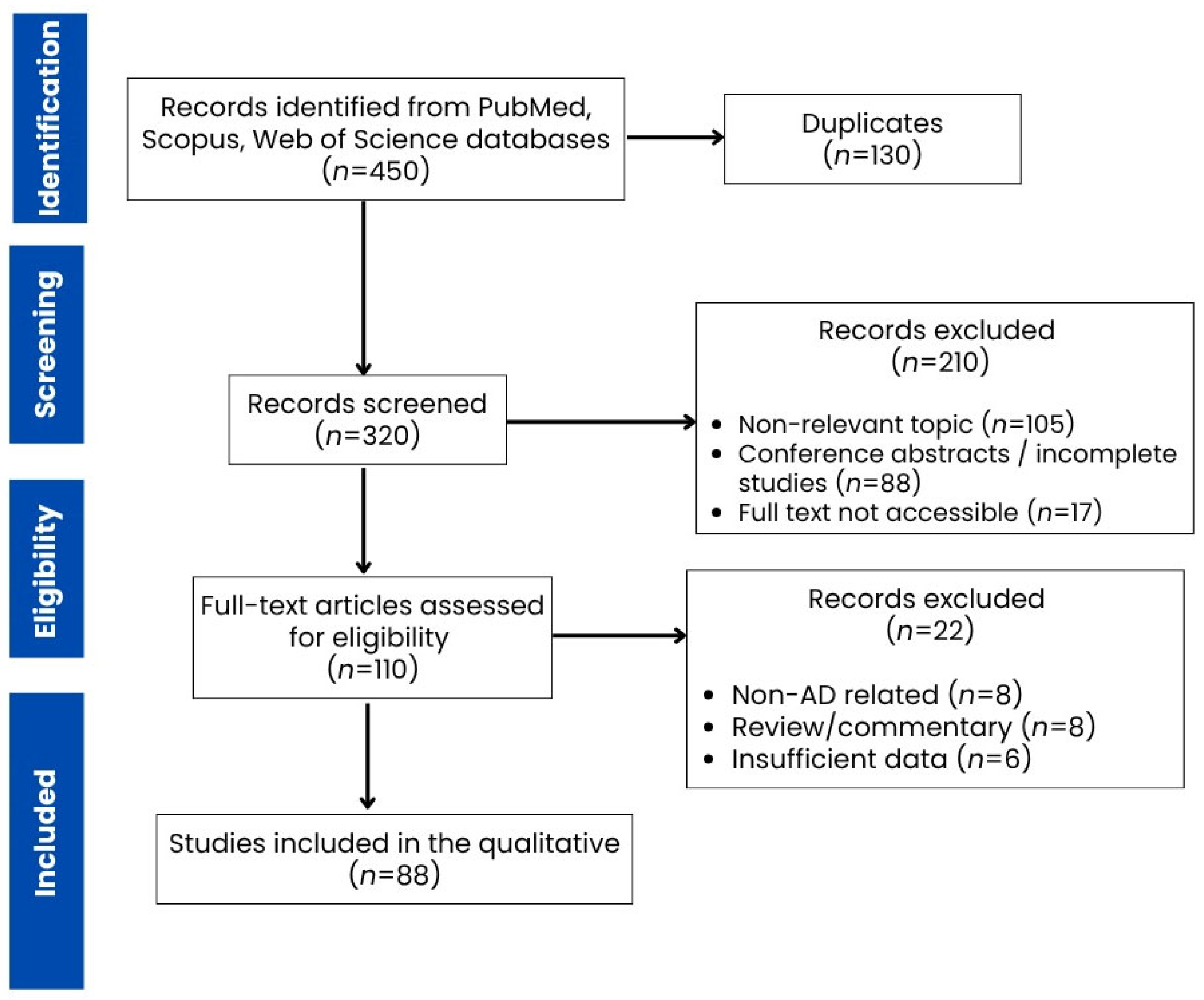
2.1. Search Strategy
2.2. Eligibility Criteria
- (i)
- Investigated the relationship between gut microbiota and Alzheimer’s disease;
- (ii)
- Examined oxidative stress, mitochondrial dysfunction, or amyloid pathology;
- (iii)
- Were original research articles (clinical and preclinical studies);
- (iv)
- Were published in English.
- (i)
- Were unrelated to Alzheimer’s disease or gut microbiota;
- (ii)
- Lacked full-text availability;
- (iii)
- Were conference abstracts, editorials, or duplicate publications.
2.3. Study Selection Process
2.4. Data Extraction and Synthesis
2.5. Reporting Standards
3. Alzheimer’s Disease Pathophysiology in Context
4. Evidence of Gut Dysbiosis in Alzheimer’s Disease
4.1. Human Clinical Studies
4.2. Animal Model Findings
5. Mechanistic Intersections: Gut Microbiota and AD Pathways
5.1. Oxidative Stress
5.2. Mitochondrial Dysfunction
5.3. Amyloid Pathology
5.4. Neuroinflammation and Blood–Brain Barrier (BBB) Integrity
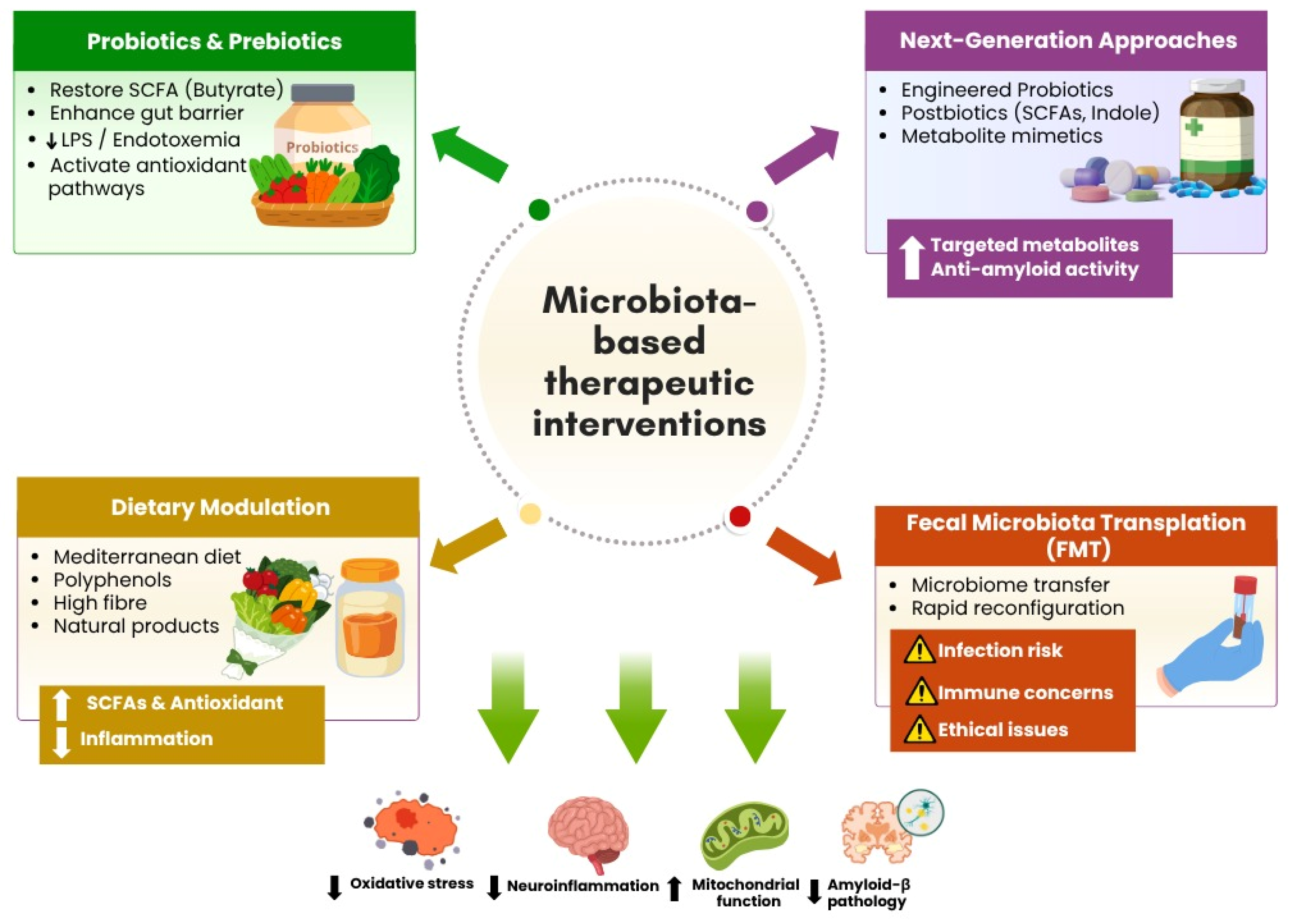
6. Microbiota-Based Therapeutic Interventions
6.1. Probiotics & Prebiotics—Antioxidant and Anti-Amyloid Effects
6.2. Dietary Modulation—Polyphenols, Mediterranean Diet, Stingless Bee Honey, Fibre
6.3. Faecal Microbiota Transplantation (FMT)—Evidence, Risks, Ethics
6.4. Next-Generation Approaches—Engineered Probiotics, Postbiotics, Metabolite Mimetics
7. Biomarker and Translational Frontiers
7.1. Microbiota-Derived Metabolites as Biomarkers
7.2. Multi-Omics Integration
7.3. Circulating vs. Faecal Biomarkers
7.4. AI and Machine Learning Predictive Models
8. Challenges and Future Perspectives
8.1. Individual Variability: Genetics, Diet, Environment
8.2. Translational Barriers: From Animal Models to Human Disease
8.3. Regulatory and Safety Issues: FMT, Engineered Microbes, Live Biotherapeutics
8.4. Personalized Microbiome Medicine: Path to Prevention and Therapy
8.5. Research Infrastructure and Standardization Needs
8.6. Final Perspective
9. Conclusions
Supplementary Materials
Author Contributions
Funding
Data Availability Statement
Acknowledgments
Conflicts of Interest
Abbreviations
| AD | Alzheimer’s Disease |
| AI | Artificial Intelligence |
| APC | Article Processing Charge |
| APOE | Apolipoprotein E |
| APP | Amyloid Precursor Protein |
| ARIA | Amyloid-Related Imaging Abnormalities |
| ATP | Adenosine Triphosphate |
| BA | Bile Acids |
| BBB | Blood-Brain Barrier |
| CNS | Central Nervous System |
| CSF | Cerebrospinal Fluid |
| DNA | Deoxyribonucleic Acid |
| FMT | Fecal Microbiota Transplantation |
| FOS | Fructooligosaccharides |
| GF | Germ-Free |
| GI | Gastrointestinal |
| GPT | Generative Pre-trained Transformer |
| GSH | Glutathione |
| LPS | Lipopolysaccharide |
| MCI | Mild Cognitive Impairment |
| ML | Machine Learning |
| NADPH | Nicotinamide Adenine Dinucleotide Phosphate (Reduced Form) |
| RAGE | Receptor for Advanced Glycation End-products |
| ROS | Reactive Oxygen Species |
| SBH | Stingless Bee Honey |
| SCFA | Short-Chain Fatty Acids |
| TCA | Tricarboxylic Acid Cycle |
| TMAO | Trimethylamine N-oxide |
| URL | Uniform Resource Locator |
| XAI | Explainable Artificial Intelligence |
References
- World Health Organization. Available online: https://www.who.int/news-room/fact-sheets/detail/dementia (accessed on 16 July 2025).
- Shajahan, S.R.; Kumar, S.; Ramli, M.D.C. Unravelling the Connection between COVID-19 and Alzheimer’s Disease: A Comprehensive Review. Front. Aging Neurosci. 2024, 15, 1274452. [Google Scholar] [CrossRef] [PubMed]
- Long, J.M.; Holtzman, D.M. Alzheimer Disease: An Update on Pathobiology and Treatment Strategies. Cell 2019, 179, 312–339. [Google Scholar] [CrossRef] [PubMed]
- Zhang, H.; Wei, W.; Zhao, M.; Ma, L.; Jiang, X.; Pei, H.; Cao, Y.; Li, H. Review Interaction between Aβ and Tau in the Pathogenesis of Alzheimer’s Disease. Int. J. Biol. Sci. 2021, 17, 2181–2192. [Google Scholar] [CrossRef] [PubMed]
- Shajahan, S.R.; Hein, Z.M.; Muhammad, H.; Mustafa, M.Z.; Kumari, Y.; Jazuli, I.; Zulkapli, A.; Shari, N.; Nassir, C.M.N.C.M.; Ramli, M.D.C. Stingless Bee Honey Alleviates Cognitive Deficits and Hippocampal Neurodegeneration in an Alzheimer’s Model: Behavioural, Neurochemical, and Histological Analyses. AIMS Neurosci. 2026, 13, 1–28. [Google Scholar] [CrossRef]
- Jurcau, M.C.; Jurcau, A.; Diaconu, R.G. Oxidative Stress in the Pathogenesis of Neurodegenerative Diseases. Stresses 2024, 4, 827–849. [Google Scholar] [CrossRef]
- Chen, Q.; Shi, J.; Yu, G.; Xie, H.; Yu, S.; Xu, J.; Liu, J.; Sun, J. Gut Microbiota Dysbiosis in Patients with Alzheimer’s Disease and Correlation with Multiple Cognitive Domains. Front. Aging Neurosci. 2024, 16, 1478557. [Google Scholar] [CrossRef]
- Artime-Naveda, F.; Hevia, D.; Alonso-Arias, R.; Martínez, C.; Quirós-González, I.; Cernuda-Cernuda, R.; Alvarez-Artime, A.; Menéndez-Valle, I.; Sainz, R.M.; Mayo, J.C. Interplay between Oxidative Stress, Neuroinflammatory Cytokines and Melatonin in Alzheimer’s Disease: Insights from Cerebrospinal Fluid Analysis. Heliyon 2025, 11, e41841. [Google Scholar] [CrossRef]
- Loh, J.S.; Mak, W.Q.; Tan, L.K.S.; Ng, C.X.; Chan, H.H.; Yeow, S.H.; Foo, J.B.; Ong, Y.S.; How, C.W.; Khaw, K.Y. Microbiota–Gut–Brain Axis and Its Therapeutic Applications in Neurodegenerative Diseases. Signal Transduct. Target. Ther. 2024, 9, 37. [Google Scholar] [CrossRef]
- Zainal Abidin, Z.; Hein, Z.M.; Che Mohd Nassir, C.M.N.; Shari, N.; Che Ramli, M.D. Pharmacological Modulation of the Gut-Brain Axis: Psychobiotics in Focus for Depression Therapy. Front. Pharmacol. 2025, 16, 1665419. [Google Scholar] [CrossRef]
- Chandra, S.; Vassar, R.J. Gut Microbiome-Derived Metabolites in Alzheimer’s Disease: Regulation of Immunity and Potential for Therapeutics. Immunol. Rev. 2024, 327, 33–42. [Google Scholar] [CrossRef]
- Ansari, F.; Neshat, M.; Pourjafar, H.; Jafari, S.M.; Samakkhah, S.A.; Mirzakhani, E. The Role of Probiotics and Prebiotics in Modulating of the Gut-Brain Axis. Front. Nutr. 2023, 10, 1173660. [Google Scholar] [CrossRef] [PubMed]
- Ren, J.; Wang, Q.; Hong, H.; Tang, C. Fecal Microbiota Transplantation in Alzheimer’s Disease: Mechanistic Insights Through the Microbiota–Gut–Brain Axis and Therapeutic Prospects. Microorganisms 2025, 13, 1956. [Google Scholar] [CrossRef] [PubMed]
- Lin, C.; Zhao, S.; Zhu, Y.; Fan, Z.; Wang, J.; Zhang, B.; Chen, Y. Microbiota-Gut-Brain Axis and Toll-like Receptors in Alzheimer’s Disease. Comput. Struct. Biotechnol. J. 2019, 17, 1309–1317. [Google Scholar] [CrossRef] [PubMed]
- Behl, C. In 2024, the Amyloid-Cascade-Hypothesis Still Remains a Working Hypothesis, No Less but Certainly No More. Front. Aging Neurosci. 2024, 16, 1459224. [Google Scholar] [CrossRef]
- Wu, M.; Cheng, Y.; Zhang, R.; Han, W.; Jiang, H.; Bi, C.; Zhang, Z.; Ye, M.; Lin, X.; Liu, Z. Molecular Mechanism and Therapeutic Strategy of Bile Acids in Alzheimer’s Disease from the Emerging Perspective of the Microbiota–Gut–Brain Axis. Biomed. Pharmacother. 2024, 178, 117228. [Google Scholar] [CrossRef]
- Jurcău, M.C.; Andronie-Cioara, F.L.; Jurcău, A.; Marcu, F.; Ţiț, D.M.; Pașcalău, N.; Nistor-Cseppentö, D.C. The Link between Oxidative Stress, Mitochondrial Dysfunction and Neuroinflammation in the Pathophysiology of Alzheimer’s Disease: Therapeutic Implications and Future Perspectives. Antioxidants 2022, 11, 2167. [Google Scholar] [CrossRef]
- Seo, D.O.; Holtzman, D.M. Current Understanding of the Alzheimer’s Disease-Associated Microbiome and Therapeutic Strategies. Exp. Mol. Med. 2024, 56, 86–94. [Google Scholar] [CrossRef]
- Agrawal, M.; Singhal, M.; Mir, K.B.; Singh, T.G.; Kumar, D.; Kumar, M. Neuroprotective Potential of Synephrine against Aluminium Chloride (AlCl3) Induced Cognitive Impairment & Neuronal Damage in Rats. Pharmacol. Res.-Mod. Chin. Med. 2025, 16, 100680. [Google Scholar] [CrossRef]
- Bustamante-Barrientos, F.A.; Luque-Campos, N.; Araya, M.J.; Lara-Barba, E.; de Solminihac, J.; Pradenas, C.; Molina, L.; Herrera-Luna, Y.; Utreras-Mendoza, Y.; Elizondo-Vega, R.; et al. Mitochondrial Dysfunction in Neurodegenerative Disorders: Potential Therapeutic Application of Mitochondrial Transfer to Central Nervous System-Residing Cells. J. Transl. Med. 2023, 21, 613. [Google Scholar] [CrossRef]
- Hua, M.; Chen, W.-Y.; Ma, A.-J.; Cheng, M.-Y.; Meng, J. Circulating Follistatin-like 1 associates with inflammation, cognitive decline, and amyloid pathology in Alzheimer’s disease and promotes Aβ-induced neuronal ferroptosis via PI3K/Akt signaling. Eur. J. Med. Res. 2026, 31, 468. [Google Scholar] [CrossRef]
- Swer, N.M.; Venkidesh, B.S.; Murali, T.S.; Mumbrekar, K.D. Gut Microbiota-Derived Metabolites and Their Importance in Neurological Disorders. Mol. Biol. Rep. 2023, 50, 1663–1675. [Google Scholar] [CrossRef] [PubMed]
- Page, M.J.; McKenzie, J.E.; Bossuyt, P.M.; Boutron, I.; Hoffmann, T.C.; Mulrow, C.D.; Shamseer, L.; Tetzlaff, J.M.; Akl, E.A.; Brennan, S.E.; et al. The PRISMA 2020 statement: An updated guideline for reporting systematic reviews. BMJ 2021, 372, n71. [Google Scholar] [CrossRef] [PubMed]
- Sasmita, A.O.; Ong, E.C.; Nazarenko, T.; Mao, S.; Komarek, L.; Thalmann, M.; Hantakova, V.; Spieth, L.; Berghoff, S.A.; Barr, H.J.; et al. Parental Origin of Transgene Modulates Amyloid-β Plaque Burden in the 5xFAD Mouse Model of Alzheimer’s Disease. Neuron 2025, 113, 838–846.e4. [Google Scholar] [CrossRef] [PubMed]
- D’Haese, P.-F.; Ranjan, M.; Song, A.; Haut, M.W.; Carpenter, J.; Dieb, G.; Najib, U.; Wang, P.; Mehta, R.I.; Chazen, J.L.; et al. β-Amyloid Plaque Reduction in the Hippocampus After Focused Ultrasound-Induced Blood–Brain Barrier Opening in Alzheimer’s Disease. Front. Hum. Neurosci. 2020, 14, 593672. [Google Scholar] [CrossRef]
- Zhang, J.; Zhang, Y.; Wang, J.; Xia, Y.; Zhang, J.; Chen, L. Recent Advances in Alzheimer’s Disease: Mechanisms, Clinical Trials and New Drug Development Strategies. Signal Transduct. Target. Ther. 2024, 9, 211. [Google Scholar] [CrossRef]
- Chen, Z.-R.; Huang, J.-B.; Yang, S.-L.; Hong, F.-F. Role of Cholinergic Signaling in Alzheimer’s Disease. Molecules 2022, 27, 1816. [Google Scholar] [CrossRef]
- Chiroma, S.M.; Baharuldin, M.T.H.; Mat Taib, C.N.; Amom, Z.; Jagadeesan, S.; Ilham Adenan, M.; Mahdi, O.; Moklas, M.A.M. Centella Asiatica Protects D-Galactose/AlCl3 Mediated Alzheimer’s Disease-Like Rats via PP2A/GSK-3β Signaling Pathway in Their Hippocampus. Int. J. Mol. Sci. 2019, 20, 1871. [Google Scholar] [CrossRef]
- Avgerinos, K.I.; Manolopoulos, A.; Ferrucci, L.; Kapogiannis, D. Critical Assessment of Anti-Amyloid-β Monoclonal Antibodies Effects in Alzheimer’s Disease: A Systematic Review and Meta-Analysis Highlighting Target Engagement and Clinical Meaningfulness. Sci. Rep. 2024, 14, 25741. [Google Scholar] [CrossRef]
- Kanunnikova, N.P.; Moiseenok, A.G. Nitrosative/Oxidative Stress, Mitochondrial Dysfunction, and Redox Balance in the Mechanisms of Neurodegenerative Pathology and Aging. Adv. Neurol. 2025, 025100021. [Google Scholar] [CrossRef]
- Zhao, Y.; Chen, D.; Wang, H. Effects of Bile Acids on Growth Performance, Hepatopancreatic Antioxidant Capacity, Intestinal Immune-Related Gene Expression, and Gut Microbiota of Penaeus vannamei. Animals 2025, 15, 240. [Google Scholar] [CrossRef]
- Peña-Cearra, A.; Castelo, J.; Lavín, J.L.; Gonzalez-Lopez, M.; Pascual-Itoiz, M.A.; Fuertes, M.; Gutiérrez de Juan, V.; Bárcena, L.; Martín-Ruiz, I.; Pellón, A.; et al. Mitochondrial Dysfunction-Associated Microbiota Establishes a Transmissible Refractory Response to Anti-TNF Therapy during Ulcerative Colitis. Gut Microbes 2023, 15, 2266626. [Google Scholar] [CrossRef]
- Jimenez-García, A.M.; Villarino, M.; Arias, N. A Systematic Review and Meta-Analysis of Basal Microbiota and Cognitive Function in Alzheimer’s Disease: A Potential Target for Treatment or a Contributor to Disease Progression? Alzheimer’s Dement. Diagn. Assess. Dis. Monit. 2024, 16, e70057. [Google Scholar] [CrossRef]
- Fan, K.C.; Lin, C.C.; Liu, Y.C.; Chao, Y.P.; Lai, Y.J.; Chiu, Y.L.; Chuang, Y.F. Altered Gut Microbiota in Older Adults with Mild Cognitive Impairment: A Case-Control Study. Front. Aging Neurosci. 2023, 15, 1162057. [Google Scholar] [CrossRef]
- López-Villodres, J.A.; Escamilla, A.; Mercado-Sáenz, S.; Alba-Tercedor, C.; Rodriguez-Perez, L.M.; Arranz-Salas, I.; Sanchez-Varo, R.; Bermúdez, D. Microbiome Alterations and Alzheimer’s Disease: Modeling Strategies with Transgenic Mice. Biomedicines 2023, 11, 1846. [Google Scholar] [CrossRef] [PubMed]
- Zhao, Q.; Baranova, A.; Cao, H.; Zhang, F. Evaluating Causal Effects of Gut Microbiome on Alzheimer’s Disease. J. Prev. Alzheimer’s Dis. 2024, 11, 1843–1848. [Google Scholar] [CrossRef] [PubMed]
- Jung, J.H.; Kim, G.; Byun, M.S.; Lee, J.H.; Yi, D.; Park, H.; Lee, D.Y. Gut Microbiome Alterations in Preclinical Alzheimer’s Disease. PLoS ONE 2022, 17, e0278276. [Google Scholar] [CrossRef] [PubMed]
- Kang, J.W.; Khatib, L.A.; Heston, M.B.; Dilmore, A.H.; Labus, J.S.; Deming, Y.; Schimmel, L.; Blach, C.; McDonald, D.; Gonzalez, A.; et al. Gut Microbiome Compositional and Functional Features Associate with Alzheimer’s Disease Pathology. Alzheimer’s Dement. 2025, 21, e70417. [Google Scholar] [CrossRef]
- Singh, H.; Chopra, C.; Singh, H.; Malgotra, V.; Khurshid Wani, A.; Singh Dhanjal, D.; Sharma, I.; Nepovimova, E.; Alomar, S.; Singh, R.; et al. Gut-Brain Axis and Alzheimer’s Disease: Therapeutic Interventions and Strategies. J. Funct. Foods 2024, 112, 105915. [Google Scholar] [CrossRef]
- Zahir, F.; Alhewairini, S.S.; Mahamood, M. The Gut-Brain Axis, Cognition and Honey. In Therapeutic Applications of Honey and Its Phytochemicals; Springer: Singapore, 2020; Volume 1, pp. 331–343. ISBN 9789811567995. [Google Scholar]
- Abdol Samat, H.N.; Razali, N.N.; Mahadzir, H.; Tengku Muhammad, T.S.; Ling, K.-H.; Mansor, N.I.; Abidin, S.Z. The Interplay of Inflammation and Gut-Microbiota Dysbiosis in Alzheimer’s Disease: Mechanisms and Therapeutic Potential. Int. J. Mol. Sci. 2025, 26, 8905. [Google Scholar] [CrossRef]
- Jain, A.; Madkan, S.; Patil, P. The Role of Gut Microbiota in Neurodegenerative Diseases: Current Insights and Therapeutic Implications. Cureus 2023, 15, e47861. [Google Scholar] [CrossRef]
- Ghimire, A.; Rehman, S.A.; Subhani, A.; Khan, M.A.; Rahman, Z.; Iqubal, M.K.; Iqubal, A. Mechanism of Microglia-Mediated Neuroinflammation, Associated Cognitive Dysfunction, and Therapeutic Updates in Alzheimer’s Disease. hLife 2025, 3, 64–81. [Google Scholar] [CrossRef]
- Bello-Medina, P.C.; Hernández-Quiroz, F.; Pérez-Morales, M.; González-Franco, D.A.; Cruz-Pauseno, G.; García-Mena, J.; Díaz-Cintra, S.; Pacheco-López, G. Spatial Memory and Gut Microbiota Alterations Are Already Present in Early Adulthood in a Pre-Clinical Transgenic Model of Alzheimer’s Disease. Front. Neurosci. 2021, 15, 595583. [Google Scholar] [CrossRef] [PubMed]
- Palermo, F.; Marrocco, N.; Dacomo, L.; Grisafi, E.; Moresi, V.; Sanna, A.; Massimi, L.; Musella, M.; Maugeri, L.; Bukreeva, I.; et al. Investigating Gut Alterations in Alzheimer’s Disease: In-Depth Analysis with Micro-and Nano-3D X-Ray Phase Contrast Tomography. Sci. Adv. 2025, 11, eadr8511. [Google Scholar] [CrossRef] [PubMed]
- Palanivelu, L.; Chang, C.W.; Li, S.J.; Liang, Y.W.; Lo, Y.C.; Chen, Y.Y. Interplay of Neuroinflammation and Gut Microbiota Dysbiosis in Alzheimer’s Disease Using Diffusion Kurtosis Imaging Biomarker in 3 × Tg-AD Mouse Models. ACS Chem. Neurosci. 2025, 16, 1511–1528. [Google Scholar] [CrossRef]
- Marizzoni, M.; Coppola, L.; Festari, C.; Luongo, D.; Salamone, D.; Naviglio, D.; Soricelli, A.; Mirabelli, P.; Salvatore, M.; Cattaneo, A.; et al. Circulating Short Chain Fatty Acids in Alzheimer’s Disease: A Cross-Sectional Observational Study. J. Alzheimers Dis. 2025, 106, 38–43. [Google Scholar] [CrossRef]
- Yang, J.; Liang, J.; Hu, N.; He, N.; Liu, B.; Liu, G.; Qin, Y. The Gut Microbiota Modulates Neuroinflammation in Alzheimer’s Disease: Elucidating Crucial Factors and Mechanistic Underpinnings. CNS Neurosci. Ther. 2024, 30, e70091. [Google Scholar] [CrossRef]
- Zeng, H.; Zhou, K.; Zhuang, Y.; Li, A.; Luo, B.; Zhang, Y. Unraveling the Connection between Gut Microbiota and Alzheimer’s Disease: A Two-Sample Mendelian Randomization Analysis. Front. Aging Neurosci. 2023, 15, 1273104. [Google Scholar] [CrossRef]
- Angelucci, F.; Cechova, K.; Amlerova, J.; Hort, J. Antibiotics, Gut Microbiota, and Alzheimer’s Disease. J. Neuroinflamm. 2019, 16, 108. [Google Scholar] [CrossRef]
- Rashid, S.M.; Razak, R.; Tantray, A.K.; James, A.W.; Showkat, N.; Shehjar, F.; Jan, F.; Ahmad, S.B.; Khan, A.; Shah, Z.A. Unraveling Alzheimer’s: Exploring the Gut Microbiota–Brain Axis as a New Frontier in Understanding. J. Dement. Alzheimer’s Dis. 2024, 1, 22–47. [Google Scholar] [CrossRef]
- Mateo, D.; Carrión, N.; Cabrera, C.; Heredia, L.; Marquès, M.; Forcadell-Ferreres, E.; Pino, M.; Zaragoza, J.; Moral, A.; Cavallé, L.; et al. Gut Microbiota Alterations in Alzheimer’s Disease: Relation with Cognitive Impairment and Mediterranean Lifestyle. Microorganisms 2024, 12, 2046. [Google Scholar] [CrossRef]
- Loffredo, L.; Ettorre, E.; Zicari, A.M.; Inghilleri, M.; Nocella, C.; Perri, L.; Spalice, A.; Fossati, C.; De Lucia, M.C.; Pigozzi, F.; et al. Oxidative Stress and Gut-Derived Lipopolysaccharides in Neurodegenerative Disease: Role of NOX2. Oxid. Med. Cell. Longev. 2020, 2020, 8630275. [Google Scholar] [CrossRef] [PubMed]
- González-Bosch, C.; Boorman, E.; Zunszain, P.A.; Mann, G.E. Short-Chain Fatty Acids as Modulators of Redox Signaling in Health and Disease. Redox Biol. 2021, 47, 102165. [Google Scholar] [CrossRef] [PubMed]
- Soriano, S.; Curry, K.; Wang, Q.; Chow, E.; Treangen, T.J.; Villapol, S. Fecal Microbiota Transplantation Derived from Alzheimer’s Disease Mice Worsens Brain Trauma Outcomes in Wild-Type Controls. Int. J. Mol. Sci. 2022, 23, 4476. [Google Scholar] [CrossRef] [PubMed]
- Do, H.Q.; Hewetson, A.; Borcik, C.G.; Hastert, M.C.; Whelly, S.; Wylie, B.J.; Sutton, R.B.; Cornwall, G.A. Cross-Seeding between the Functional Amyloidogenic CRES and CRES3 Family Members and Their Regulation of Aβ Assembly. J. Biol. Chem. 2021, 296, 100250. [Google Scholar] [CrossRef]
- Yan, L.; Li, H.; Qian, Y.; Zhang, J.; Cong, S.; Zhang, X.; Wu, L.; Wang, Y.; Wang, M.; Yu, T. Transcutaneous Vagus Nerve Stimulation: A New Strategy for Alzheimer’s Disease Intervention through the Brain-Gut-Microbiota Axis? Front. Aging Neurosci. 2024, 16, 1334887. [Google Scholar] [CrossRef] [PubMed]
- Liu, S.; Gao, J.; Zhu, M.; Liu, K.; Zhang, H.-L. Gut Microbiota and Dysbiosis in Alzheimer’s Disease: Implications for Pathogenesis and Treatment. Mol. Neurobiol. 2020, 57, 5026–5043. [Google Scholar] [CrossRef] [PubMed]
- Squillace, S.; Salvemini, D. Toll-like Receptor-Mediated Neuroinflammation: Relevance for Cognitive Dysfunctions. Trends Pharmacol. Sci. 2022, 43, 726–739. [Google Scholar] [CrossRef]
- Wachamo, S.; Gaultier, A. The Emerging Role of Microbiota Derived SCFAs in Neurodegenerative Disorders. Brain Behav. Immun. Health 2025, 46, 101012. [Google Scholar] [CrossRef]
- Zou, X.; Zou, G.; Zou, X.; Wang, K.; Chen, Z. Gut Microbiota and Its Metabolites in Alzheimer’s Disease: From Pathogenesis to Treatment. PeerJ 2024, 12, 2–32. [Google Scholar] [CrossRef]
- Shajahan, S.R.; Muhammad, H.; Mustafa, M.Z.; Kumari, Y.; Jazuli, I.; Zulkapli, A.; SK, N.; Hamdan, A.N.A.; Wahid, N.S.; Ramli, M.D.C. Role of Stingless Bee Honey in Ameliorating Cognitive Dysfunction in an Aluminium Chloride and D-Galactose Induced Alzheimer’s Disease Model in Rats. Nat. Life Sci. Commun. 2025, 24, e20250. [Google Scholar] [CrossRef]
- Zulkifli, N.A.; Hassan, Z.; Mustafa, M.Z.; Azman, W.N.W.; Hadie, S.N.H.; Ghani, N.; Mat Zin, A.A. The Potential Neuroprotective Effects of Stingless Bee Honey. Front. Aging Neurosci. 2023, 14, 1048028. [Google Scholar] [CrossRef] [PubMed]
- Wu, S.; Liu, X.; Jiang, R.; Yan, X.; Ling, Z. Roles and Mechanisms of Gut Microbiota in Patients with Alzheimer’s Disease. Front. Aging Neurosci. 2021, 13, 650047. [Google Scholar] [CrossRef] [PubMed]
- Noreña, C.P.Z.; Brandelli, A. The Rise of Probiotics as Adjuvant Therapeutics in Alzheimer’s Disease. Discov. Food 2025, 5, 214. [Google Scholar] [CrossRef]
- Prajapati, S.K.; Wang, S.; Mishra, S.P.; Jain, S.; Yadav, H. Protection of Alzheimer’s Disease Progression by a Human-Origin Probiotics Cocktail. Sci. Rep. 2025, 15, 1589. [Google Scholar] [CrossRef]
- Zhang, T.; Gao, G.; Kwok, L.Y.; Sun, Z. Gut Microbiome-Targeted Therapies for Alzheimer’s Disease. Gut Microbes 2023, 15, 2271613. [Google Scholar] [CrossRef]
- Akbari, E.; Asemi, Z.; Kakhaki, R.D.; Bahmani, F.; Kouchaki, E.; Tamtaji, O.R.; Hamidi, G.A.; Salami, M. Effect of Probiotic Supplementation on Cognitive Function and Metabolic Status in Alzheimer’s Disease: A Randomized, Double-Blind and Controlled Trial. Front. Aging Neurosci. 2016, 8, 256. [Google Scholar] [CrossRef]
- Li, X.; Lv, C.; Song, J.; Li, J. Effect of Probiotic Supplementation on Cognitive Function and Metabolic Status in Mild Cognitive Impairment and Alzheimer’s Disease: A Meta-Analysis. Front. Nutr. 2021, 8, 757673. [Google Scholar] [CrossRef]
- Widyadharma, I.P.E.; Hendellyn, A.; de Liyis, B.G.; Putri, N.L.P.S.W.; Indrayani, A.W.; Darwinata, A.E.; Sujaya, I.N. The Effects of Probiotic Supplementation on Cerebral Cognitive Function: A Systematic Review. Egypt. J. Neurol. Psychiatry Neurosurg. 2024, 60, 65. [Google Scholar] [CrossRef]
- Xiao, B.; Fu, L.; Yang, Z.; Yu, G. Effect of Probiotics on Cognitive Function and Cardiovascular Risk Factors in Mild Cognitive Impairment and Alzheimer’s Disease: An Umbrella Meta-Analysis. J. Health Popul. Nutr. 2025, 44, 109. [Google Scholar] [CrossRef]
- Kim, J.H.; Choi, Y.; Lee, S.; Oh, M.S. Probiotics as Potential Treatments for Neurodegenerative Diseases: A Review of the Evidence from in Vivo to Clinical Trial. Biomol. Ther. 2025, 33, 54–74. [Google Scholar] [CrossRef]
- Chen, T.; Chen, H.; Qiu, Y.; Liu, Y.; Xie, M.; Huang, S.; Feng, K.; Zhuang, J.; Chen, L.; Chen, Y.; et al. Effects and Mechanisms of Probiotics, Prebiotics, Synbiotics, and Postbiotics for the Prevention and Management of Alzheimer’s Disease: A Narrative Review. Antioxidants 2026, 15, 347. [Google Scholar] [CrossRef]
- Kobayashi, Y.; Sugahara, H.; Shimada, K.; Mitsuyama, E.; Kuhara, T.; Yasuoka, A.; Kondo, T.; Abe, K.; Xiao, J.Z. Therapeutic Potential of Bifidobacterium breve Strain A1 for Preventing Cognitive Impairment in Alzheimer’s Disease. Sci. Rep. 2017, 7, 13510. [Google Scholar] [CrossRef] [PubMed]
- Kobayashi, Y.; Kinoshita, T.; Matsumoto, A.; Yoshino, K.; Saito, I.; Xiao, J.Z. Bifidobacterium breve A1 Supplementation Improved Cognitive Decline in Older Adults with Mild Cognitive Impairment: An Open-Label, Single-Arm Study. J. Prev. Alzheimers Dis. 2019, 6, 70–75. [Google Scholar] [CrossRef] [PubMed]
- Abdelhamid, M.; Jung, C.G.; Zhou, C.; Inoue, R.; Chen, Y.; Sento, Y.; Hida, H.; Michikawa, M. Potential Therapeutic Effects of Bifidobacterium breve MCC1274 on Alzheimer’s Disease Pathologies in AppNL-G-F Mice. Nutrients 2024, 16, 538. [Google Scholar] [CrossRef] [PubMed]
- Kim, C.S.; Cha, L.; Sim, M.; Jung, S.; Chun, W.Y.; Baik, H.W.; Shin, D.M. Probiotic Supplementation Improves Cognitive Function and Mood with Changes in Gut Microbiota in Community- Dwelling Older Adults: A Randomized, Double-Blind, Placebo-Controlled, Multicenter Trial. J. Gerontol.-Ser. A Biol. Sci. Med. Sci. 2021, 76, 32–40. [Google Scholar] [CrossRef]
- Assad, A.; Jonhson, S.L.; Reichard, R.A. Probiotic Supplementation Improves the Clinical Measures of Cognition in Patients with Mild Cognitive Impairment. Cureus 2025, 17, e89302. [Google Scholar] [CrossRef]
- Baek, H.I.; Kwon, S.Y.; Noh, H.J.; Son, S.Y.; Joo, J.C.; Park, S.J. Efficacy and Safety of Lactobacillus delbrueckii Subsp. Lactis CKDB001 Supplementation on Cognitive Function in Mild Cognitive Impairment: A Randomized, Double-Blind, Placebo-Controlled Clinical Trial. Nutrients 2025, 17, 3313. [Google Scholar] [CrossRef]
- Jiang, J.; Wang, D.; Jiang, Y.; Yang, X.; Sun, R.; Chang, J.; Zhu, W.; Yao, P.; Song, K.; Chang, S.; et al. The Gut Metabolite Indole-3-Propionic Acid Activates ERK1 to Restore Social Function and Hippocampal Inhibitory Synaptic Transmission in a 16p11.2 Microdeletion Mouse Model. Microbiome 2024, 12, 66. [Google Scholar] [CrossRef]
- Liu, M.; Li, T.; Liang, H.; Zhong, P. Herbal Medicines in Alzheimer’s Disease and the Involvement of Gut Microbiota. Front. Pharmacol. 2024, 15, 1416502. [Google Scholar] [CrossRef]
- Xie, L.; Wu, Q.; Li, K.; Khan, M.A.S.; Zhang, A.; Sinha, B.; Li, S.; Chang, S.L.; Brody, D.L.; Grinstaff, M.W.; et al. Tryptophan Metabolism in Alzheimer’s Disease with the Involvement of Microglia and Astrocyte Crosstalk and Gut-Brain Axis. Aging Dis. 2024, 15, 2168–2190. [Google Scholar] [CrossRef]
- Qiu, Y.; Hou, Y.; Gohel, D.; Zhou, Y.; Xu, J.; Bykova, M.; Yang, Y.; Leverenz, J.B.; Pieper, A.A.; Nussinov, R.; et al. Systematic Characterization of Multi-Omics Landscape between Gut Microbial Metabolites and GPCRome in Alzheimer’s Disease. Cell Rep. 2024, 43, 114128. [Google Scholar] [CrossRef]
- Zhao, H.; Zhou, X.; Song, Y.; Zhao, W.; Sun, Z.; Zhu, J.; Yu, Y. Multi-Omics Analyses Identify Gut Microbiota-Fecal Metabolites-Brain-Cognition Pathways in the Alzheimer’s Disease Continuum. Alzheimer’s Res. Ther. 2025, 17, 36. [Google Scholar] [CrossRef]
- Basgaran, A.; Lymberopoulos, E.; Burchill, E.; Reis-Dehabadi, M.; Sharma, N. Machine Learning Determines the Incidence of Alzheimer’s Disease Based on Population Gut Microbiome Profile. Brain Commun. 2025, 7, fcaf059. [Google Scholar] [CrossRef]
- D’Urso, F.; Broccolo, F. Applications of Artificial Intelligence in Microbiome Analysis and Probiotic Interventions—An Overview and Perspective Based on the Current State of the Art. Appl. Sci. 2024, 14, 8627. [Google Scholar] [CrossRef]
- Libiger, O.; Shaw, L.M.; Watson, M.H.; Nairn, A.C.; Umaña, K.L.; Biarnes, M.C.; Canet-Avilés, R.M.; Jack, C.R.; Breton, Y.A.; Cortes, L.; et al. Longitudinal CSF Proteomics Identifies NPTX2 as a Prognostic Biomarker of Alzheimer’s Disease. Alzheimer’s Dement. 2021, 17, 1976–1987. [Google Scholar] [CrossRef]
- Konopelski, P.; Mogilnicka, I. Biological Effects of Indole-3-Propionic Acid, a Gut Microbiota-Derived Metabolite, and Its Precursor Tryptophan in Mammals’ Health and Disease. Int. J. Mol. Sci. 2022, 23, 1222. [Google Scholar] [CrossRef]
- Pourahmad, R.; Saleki, K.; Zare Gholinejad, M.; Aram, C.; Soltani Farsani, A.; Banazadeh, M.; Tafakhori, A. Exploring the Effect of Gut Microbiome on Alzheimer’s Disease. Biochem. Biophys. Rep. 2024, 39, 101776. [Google Scholar] [CrossRef]



| Study | Model (Human/Animal) | Microbial Change (↑/↓) | Associated Pathology (Cognition, Aβ, Inflammation) |
|---|---|---|---|
| [34] | Human, AD patients vs. controls | ↓ Faecalibacterium, ↓ Roseburia, ↓ Bifidobacterium; ↑ Escherichia/Shigella, ↑ Enterobacteriaceae | Reduced SCFAs, ↑ systemic inflammation, ↑ oxidative stress |
| [44] | Human, metagenomics | ↓ Butyrate-producing bacteria; ↑ Ruminococcus gnavus | ↑ Pro-inflammatory cytokines, cognitive decline |
| [45,46] | Human cohort, plasma microbiome link | Dysbiosis → ↑ LPS load, ↓ antioxidant taxa | ↑ Systemic inflammation, ↑ oxidative damage, worsened amyloid pathology |
| [47] | Human, metabolomic profiling | ↓ Butyrate, ↓ propionate | Impaired mitochondrial function, reduced antioxidant defenses |
| [7] | Human, fecal microbiome linked with CSF biomarkers | Altered microbiota correlated with ↑ tau, ↓ Aβ42 | Potential biomarker for AD progression |
| [43] | Human, post-mortem brain & plasma | ↑ Gram-negative taxa derived LPS | LPS co-localized with amyloid plaques, ↑ microglial activation |
| [9] | Germ-free AD transgenic mice | Absence of microbiota → ↓ amyloid burden | GF mice show reduced Aβ deposition vs. colonized mice |
| [48] | APP/PS1 mice, antibiotic treatment | Depletion of gut microbiota | ↓ Amyloid plaques, ↓ neuroinflammation, improved cognition |
| [49] | Faecal microbiota transplantation (FMT) from AD patients to GF mice | AD-FMT → ↑ dysbiotic taxa | ↑ Amyloid load, mitochondrial dysfunction, impaired memory |
| [29] | Mouse AD model, metabolite analysis | ↑ Secondary bile acids, ↑ tryptophan catabolites | Disrupted BBB, ↑ microglial activation, ↑ neurodegeneration |
| Pathway | Microbial Link | Mechanistic Outcome in AD | Representative Studies |
|---|---|---|---|
| Oxidative Stress | ↓ SCFA-producing bacteria (Faecalibacterium, Roseburia) ↑ Gram-negative taxa (↑ LPS, TMAO producers) | Impaired Nrf2 antioxidant defense, ↑ ROS, lipid peroxidation, DNA damage → accelerates amyloidogenesis | [52,53,54] |
| Mitochondrial Dysfunction | ↑ LPS and bacterial amyloids ↓ Indole derivatives & SCFAs | Mitochondrial permeability transition, ATP depletion, impaired oxidative phosphorylation, ↑ ROS and Aβ aggregation | [17,32,55] |
| Amyloid Pathology | ↑ Escherichia/Shigella, ↑ bacterial amyloids (curli fibres) ↑ Secondary bile acids | Cross-seeding of bacterial amyloids with host Aβ, tau hyperphosphorylation, prion-like seeding, accelerated plaque formation | [31,56] |
| Neuroinflammation & BBB Integrity | ↑ LPS, ↑ pro-inflammatory cytokines ↓ SCFA-producing bacteria | TLR4-mediated microglial activation, cytokine storm, BBB disruption (↓ tight junctions), vagus nerve dysregulation | [14,53,57] |
| Intervention | Mechanisms of Action | Preclinical Evidence | Clinical Evidence | Advantages | Limitations/Challenges |
|---|---|---|---|---|---|
| Probiotics (Lactobacillus rhamnosus, L. plantarum C29, Bifidobacterium breve A1, B. longum, multi-strain blends) | ↑ SCFAs (butyrate), ↓ ROS & LPS, ↑ Nrf2/GSH antioxidant defense, ↓ microglial activation, ↓ Aβ aggregation | Improved cognition, reduced hippocampal oxidative stress, ↓ amyloid burden in transgenic AD mouse models (APP/PS1) and rodent studies [45] | Small RCTs show modest cognitive improvement (MMSE) and reduced oxidative/inflammatory biomarkers; strain-dependent effects [49,61] | Non-invasive, safe, widely accessible | Strain-specific variability, inconsistent outcomes, lack of large-scale RCTs |
| Prebiotics (inulin, GOS, FOS, resistant starch, arabinoxylans) | Promote SCFA-producing taxa (e.g., Faecalibacterium), enhance gut barrier integrity, ↓ systemic inflammation and endotoxemia | Improved synaptic plasticity, reduced ROS, and tau pathology, enhanced mitochondrial function in AD models [8,58] | Limited human data; some improvements in metabolic and inflammatory markers, minimal cognitive endpoints | Can synergize with probiotics (synbiotics), dietary-based approach | Inter-individual microbiome variability, GI intolerance, limited cognitive evidence |
| Dietary Modulation (Mediterranean diet, polyphenols, stingless bee honey, high-fiber diets) | ↑ Antioxidant capacity, ↑ SCFAs, ↓ pro-inflammatory taxa, polyphenol metabolites cross BBB, SBH acts as antioxidant & prebiotic | Mediterranean diet & polyphenols reduce oxidative stress, improve mitochondrial function, ↓ Aβ in AD models [48,62] | Epidemiological evidence of reduced AD risk; small clinical trials show biomarker and cognitive improvements [16,63,64] | Safe, long-term, culturally adaptable, scalable | Requires long-term adherence, individualized response, trial durations are long |
| Fecal Microbiota Transplantation (FMT) | Rapid microbiome reconstitution, ↑ SCFA production, ↓ neuroinflammation, ↓ Aβ/tau pathology | FMT from healthy donors improves cognition and reduces amyloid/oxidative burden; AD donor FMT transfers pathology [13,49] | Very limited exploratory data in neurodegeneration, high safety concerns [61] | Strong causal evidence from preclinical studies, system-wide effects | Risk of pathogen transfer, immune reactions, ethical and regulatory barriers, still experimental |
| Next-Generation Approaches (engineered probiotics, postbiotics such as butyrate, indole derivatives, microbial metabolites) | Targeted delivery of neuroprotective metabolites, modulation of mitochondrial function, antioxidant signaling, amyloid degradation | Engineered strains and postbiotics improve neuronal survival, ↓ oxidative stress, restore mitochondrial bioenergetics [17,45,60] | Limited or no AD-specific clinical trials; early-phase studies ongoing | Precision-based, safer than live microbes, scalable as therapeutics | Translational barriers (bioavailability, CNS penetration, pharmacokinetics) |
| Intervention (Probiotic/Prebiotic) | Study Model/Patients | Study Duration | Target Effects | Proposed Mechanisms | Reference |
|---|---|---|---|---|---|
| Multispecies probiotic (Lactobacillus + Bifidobacterium strains) | 60 AD patients (RCT) | 12 weeks | Improved MMSE scores, reduced malondialdehyde and hs-CRP | Anti-inflammatory effects, improved antioxidant capacity | [68,69] |
| Probiotic mixture (Lactobacillus acidophilus, Bifidobacterium bifidum, L. fermentum, L. casei) | 52 AD patients | 12 weeks | Improved cognitive function and metabolic profiles | Reduced oxidative stress, modulation of gut microbiota | [68,70,71] |
| Synbiotic formulation (probiotic + prebiotic fiber) | Mild cognitive impairment patients | 12 weeks | Improved memory performance and metabolic biomarkers | Increased SCFA production and reduced systemic inflammation | [72,73] |
| Bifidobacterium breve A1 | Older adults with MCI | 16 weeks | Improved episodic memory and cognitive scores | Gut–brain axis modulation, anti-inflammatory activity | [74,75,76] |
| Lactobacillus plantarum C29 | Elderly individuals with MCI | 12 weeks | Improved cognitive performance and attention | Reduced neuroinflammation, improved gut barrier function | [77,78,79] |
| Probiotic-fermented milk (Lactobacillus + Bifidobacterium) | AD patients | 12 weeks | Improved cognitive scores and insulin metabolism | Gut microbiota modulation, metabolic regulation | [68,78] |
| Prebiotic supplementation (inulin/FOS-based) | Older adults/MCI | 12–24 weeks | Improved metabolic and inflammatory markers (limited cognitive improvement) | SCFA-mediated anti-inflammatory effects | [12] |
| Synbiotic (multi-strain + FOS/inulin) | Elderly subjects with cognitive decline | 12 weeks | Improved cognitive performance and gut microbiota diversity | Synergistic microbiome modulation | [73,80] |
| Biomarker/Modality | Biological Source | Mechanistic Link to AD | Translational Potential | Representative Studies |
|---|---|---|---|---|
| Short-chain fatty acids (SCFAs: butyrate, propionate) | Faecal, plasma | ↓ Butyrate/propionate → impaired Nrf2 antioxidant signalling, ↑ ROS, reduced synaptic resilience | Early diagnostic marker; therapeutic monitoring for dietary/probiotic interventions | [47] |
| Bile acids (secondary BAs: deoxycholic acid, lithocholic acid) | Plasma, CSF | ↑ Secondary bile acids → mitochondrial stress, Aβ aggregation, hippocampal atrophy | Plasma BA ratios as non-invasive metabolic markers; adjunct to CSF Aβ/tau | [16] |
| Tryptophan catabolites (kynurenine/indole pathway) | Plasma, CSF | ↑ Kynurenine: tryptophan ratio → excitotoxicity, neuroinflammation; ↓ indole-3-propionate → loss of antioxidant defense | Predictive marker of cognitive decline; stratification for immuno-metabolic interventions | [80,82] |
| Multi-omics integration (metagenomics + metabolomics + lipidomics + proteomics) | Faecal, plasma, CSF | Dysbiotic microbial gene pathways linked to host lipid metabolism and mitochondrial dysfunction | Outperforms CSF Aβ/tau in early detection; systems-level biomarker panels | [83,84] |
| Circulating vs. faecal biomarkers (dual approach) | Faecal (composition, SCFAs, BAs); plasma (SCFAs, tryptophan metabolites) | Faecal: local dysbiosis; Circulating: systemic metabolic consequences | Combined profiles capture gut and systemic pathology; clinically scalable | [13,60] |
| AI & machine learning classifiers (microbiome-based) | High-dimensional microbiota and multi-omics datasets | Identification of key microbial taxa/metabolites driving AD pathology | >85% accuracy in classifying AD vs. controls; XAI models provide interpretability | [85,86] |
Disclaimer/Publisher’s Note: The statements, opinions and data contained in all publications are solely those of the individual author(s) and contributor(s) and not of MDPI and/or the editor(s). MDPI and/or the editor(s) disclaim responsibility for any injury to people or property resulting from any ideas, methods, instructions or products referred to in the content. |
© 2026 by the authors. Licensee MDPI, Basel, Switzerland. This article is an open access article distributed under the terms and conditions of the Creative Commons Attribution (CC BY) license.
Share and Cite
Shajahan, S.R.; Hamid, N.; Okunsai, B.; Shari, N.; Ramli, M.D.C. Microbiota–Gut–Brain Axis in Alzheimer’s Disease: Linking Oxidative Stress, Mitochondrial Dysfunction and Amyloid Pathology—A Systematic Review. Biomedicines 2026, 14, 860. https://doi.org/10.3390/biomedicines14040860
Shajahan SR, Hamid N, Okunsai B, Shari N, Ramli MDC. Microbiota–Gut–Brain Axis in Alzheimer’s Disease: Linking Oxidative Stress, Mitochondrial Dysfunction and Amyloid Pathology—A Systematic Review. Biomedicines. 2026; 14(4):860. https://doi.org/10.3390/biomedicines14040860
Chicago/Turabian StyleShajahan, Shah Rezlan, Nurhidayah Hamid, Blaire Okunsai, Norshafarina Shari, and Muhammad Danial Che Ramli. 2026. "Microbiota–Gut–Brain Axis in Alzheimer’s Disease: Linking Oxidative Stress, Mitochondrial Dysfunction and Amyloid Pathology—A Systematic Review" Biomedicines 14, no. 4: 860. https://doi.org/10.3390/biomedicines14040860
APA StyleShajahan, S. R., Hamid, N., Okunsai, B., Shari, N., & Ramli, M. D. C. (2026). Microbiota–Gut–Brain Axis in Alzheimer’s Disease: Linking Oxidative Stress, Mitochondrial Dysfunction and Amyloid Pathology—A Systematic Review. Biomedicines, 14(4), 860. https://doi.org/10.3390/biomedicines14040860