Radiofrequency, Cryoablation, and Pulsed Field Ablation for Atrial Fibrillation: Mechanisms, Preclinical Evidence, and Clinical Outcomes

 , , and
Abstract
1. Introduction
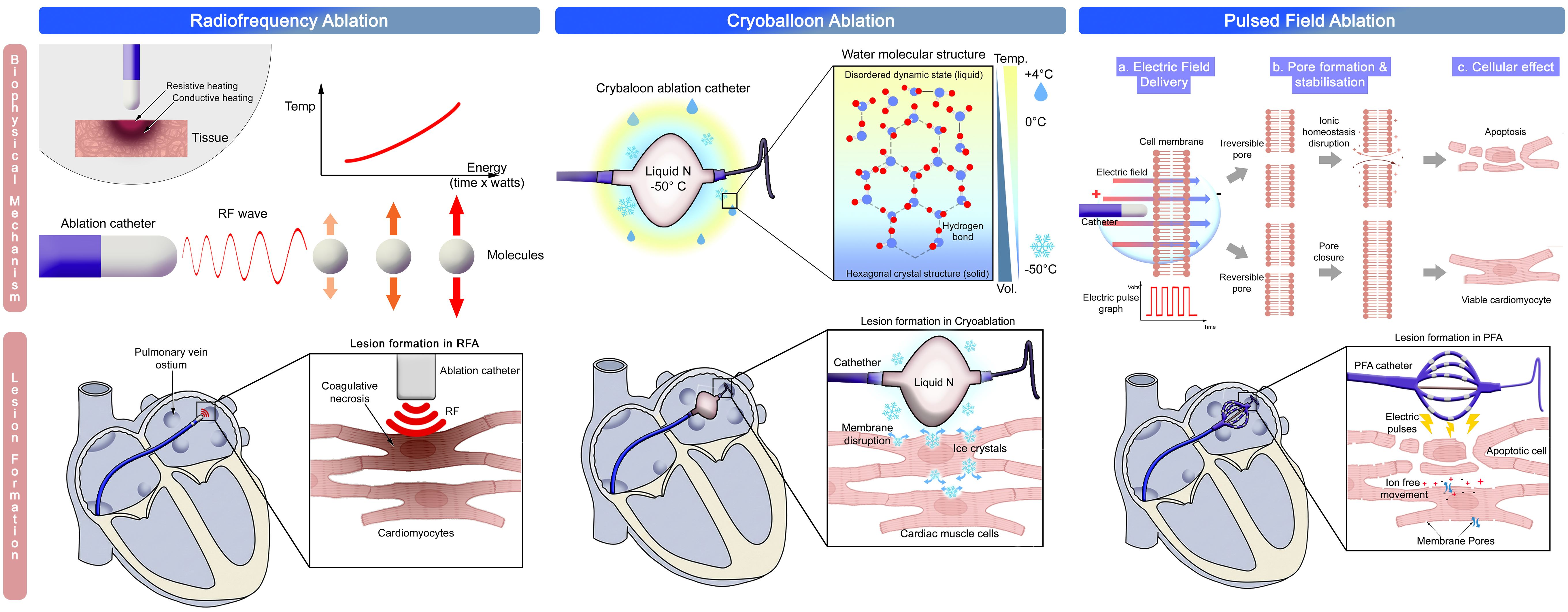
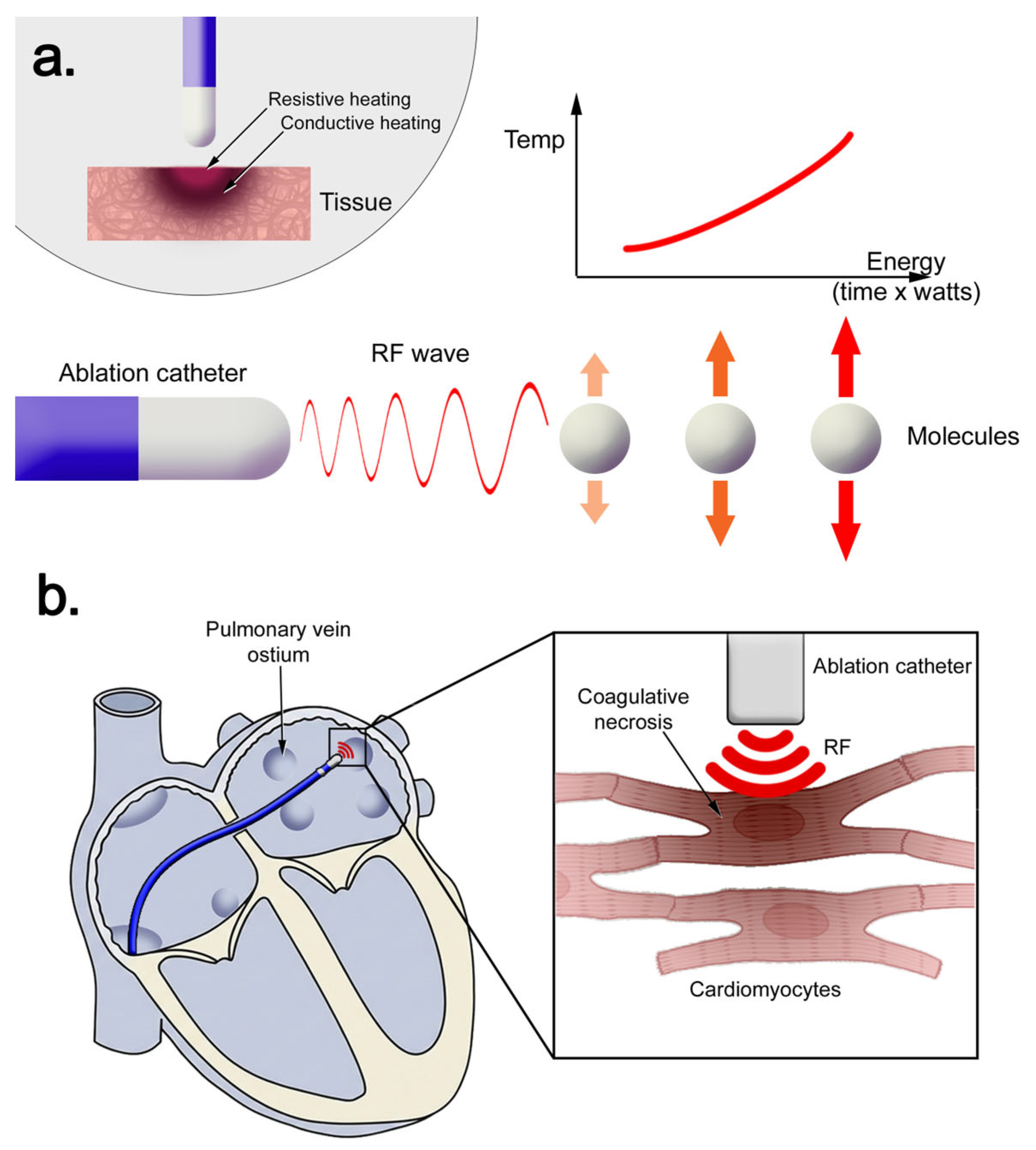
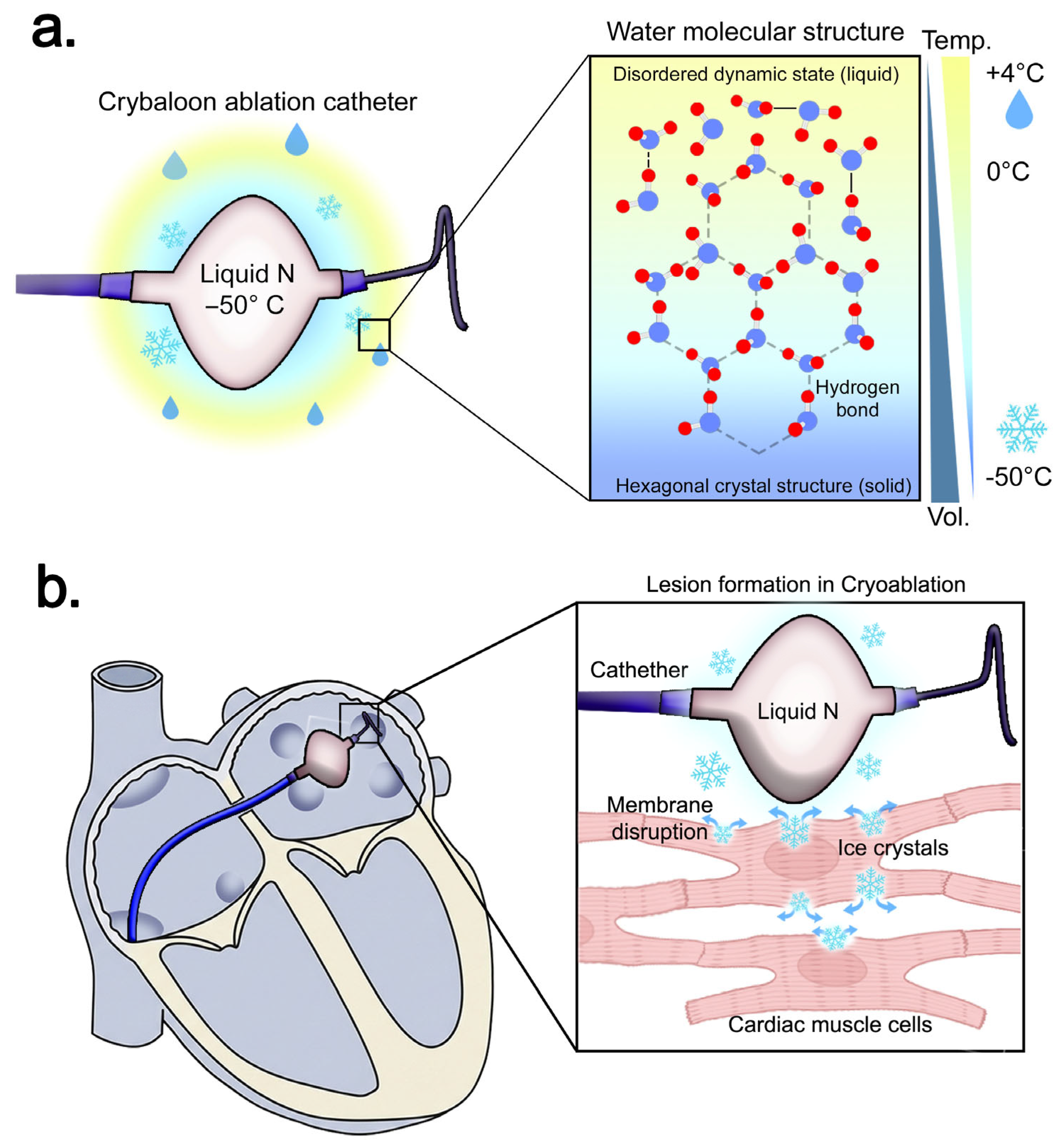
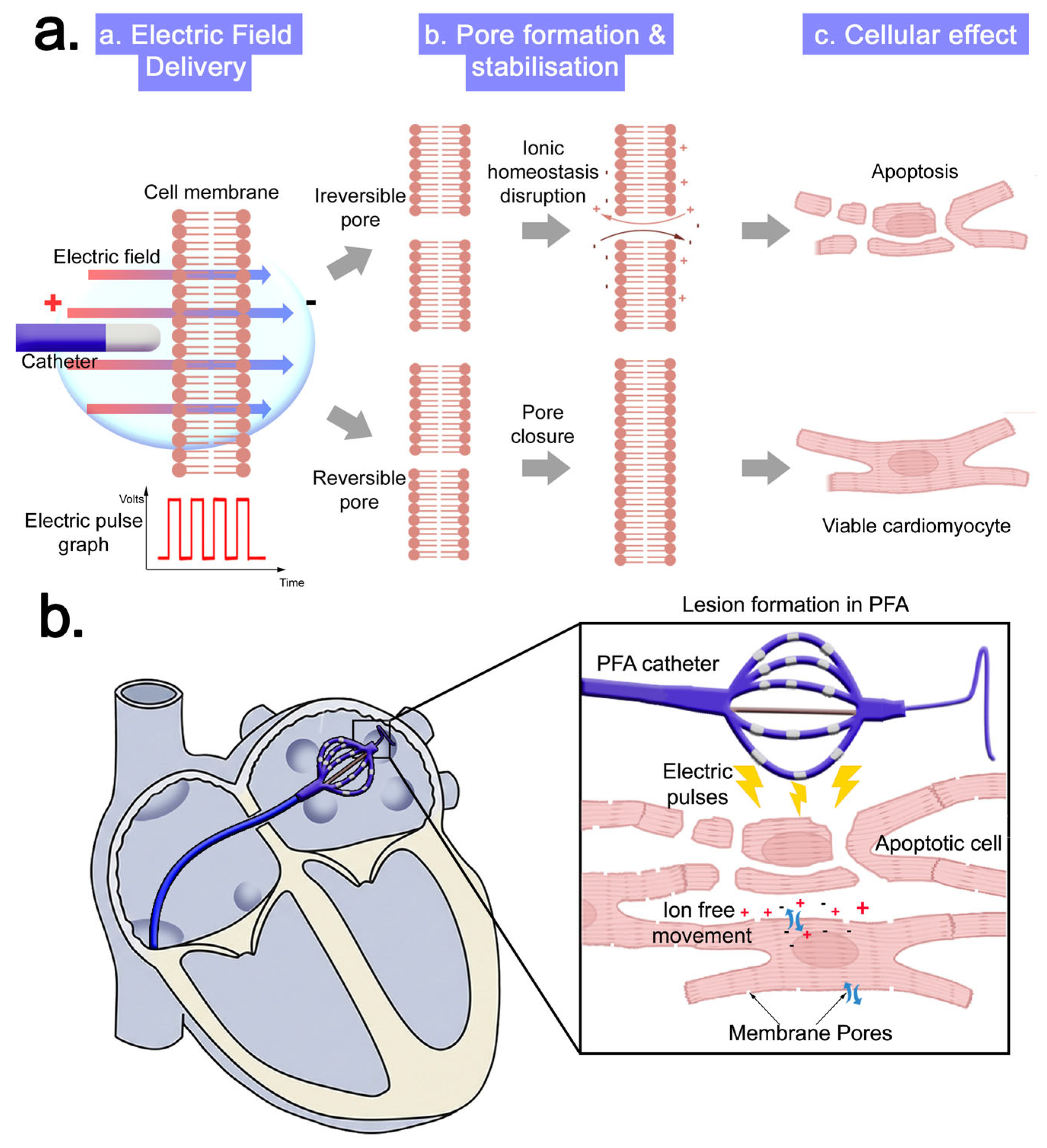
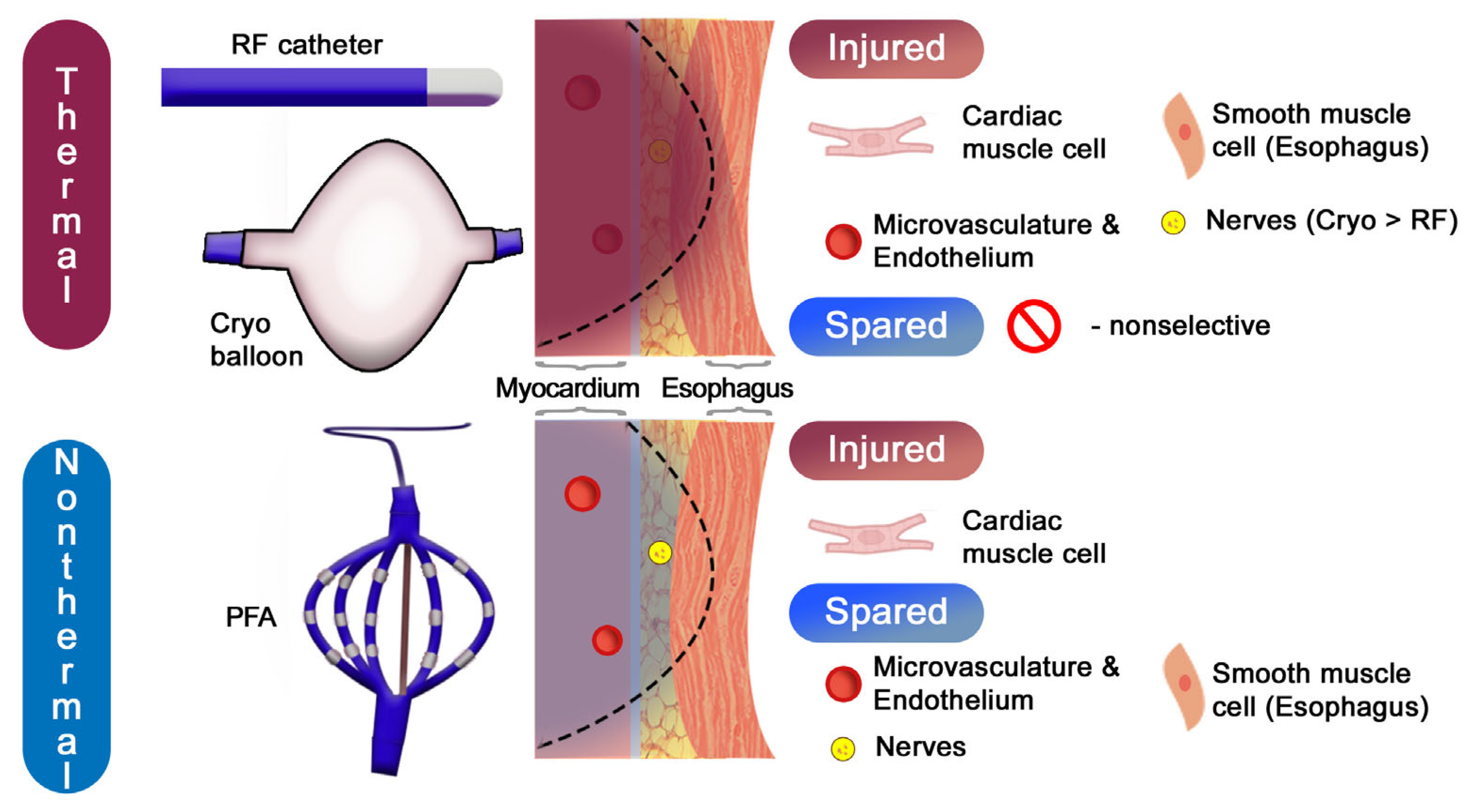
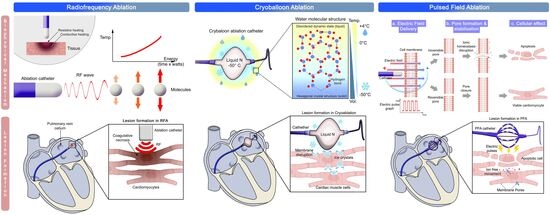
2. Biophysical Mechanisms of Lesion Formation
3. Preclinical Evidence from Animal Models
3.1. Radiofrequency: Animal Studies
3.2. Cryoablation: Animal Studies
3.3. Pulsed Field Ablation: Animal Studies
4. Clinical Outcomes of Catheter Ablation for Atrial Fibrillation
4.1. Radiofrequency: Clinical Studies
4.2. Cryoablation: Clinical Studies
4.3. Pulsed Field Ablation: Clinical Studies
5. Clinical Outcomes: Comparative Evidence and Meta-Analyses
5.1. Observational Comparisons
5.2. Head-to-Head Randomized Trials
5.3. Meta-Analyses of Randomized Controlled Trials
6. Conclusions
Author Contributions
Funding
Institutional Review Board Statement
Informed Consent Statement
Data Availability Statement
Acknowledgments
Conflicts of Interest
Abbreviations
| AF | Atrial fibrillation |
| CBA | Cryoballoon ablation |
| Cryo | Cryoablation |
| ECM | Extracellular matrix |
| N | Nitrogen |
| PFA | Pulsed field ablation |
| PV | Pulmonary veins |
| PVI | Pulmonary vein isolation |
| RF | Radiofrequency |
| RFA | Radiofrequency ablation |
| Temp | Temperature |
| Vol | Volume |
References
- Chugh, S.S.; Havmoeller, R.; Narayanan, K.; Singh, D.; Rienstra, M.; Benjamin, E.J.; Gillum, R.F.; Kim, Y.H.; McAnulty, J.H., Jr.; Zheng, Z.J.; et al. Worldwide epidemiology of atrial fibrillation: A global burden of disease 2010 study. Circulation 2014, 129, 837–847. [Google Scholar] [CrossRef]
- Hindricks, G.; Potpara, T.; Dagres, N.; Arbelo, E.; Bax, J.J.; Blomström-Lundqvist, C.; Boriani, G.; Castella, M.; Dan, G.A.; Dilaveris, P.E.; et al. 2020 ESC Guidelines for the diagnosis and management of atrial fibrillation developed in collaboration with the European Association for Cardio-Thoracic Surgery (EACTS): The Task Force for the diagnosis and management of atrial fibrillation of the Europan Heart Rhythm Association (EHRA) of the ESC. Eur. Heart J. 2021, 42, 373–498. [Google Scholar]
- Wilber, D.J.; Pappone, C.; Neuzil, P.; De Paola, A.; Marchlinski, F.; Natale, A.; Macle, L.; Daoud, E.G.; Calkins, H.; Hall, B.; et al. Comparison of Antiarrhythmic Drug Therapy and Radiofrequency Catheter Ablation in Patients With Paroxysmal Atrial Fibrillation: A Randomized Controlled Trial. JAMA 2010, 303, 333–340. [Google Scholar] [CrossRef]
- Morillo, C.A.; Verma, A.; Connolly, S.J.; Kuck, K.H.; Nair, G.M.; Champagne, J.; Sterns, L.D.; Beresh, H.; Healey, J.S.; Natale, A. Radiofrequency Ablation vs Antiarrhythmic Drugs as First-Line Treatment of Paroxysmal Atrial Fibrillation (RAAFT-2). JAMA 2014, 311, 692, Erratum in JAMA 2021, 326, 360. [Google Scholar] [CrossRef]
- Marrouche, N.F.; Brachmann, J.; Andresen, D.; Siebels, J.; Boersma, L.; Jordaens, L.; Merkely, B.; Pokushalov, E.; Sanders, P.; Proff, J.; et al. Catheter Ablation for Atrial Fibrillation with Heart Failure. N. Engl. J. Med. 2018, 378, 417–427. [Google Scholar] [CrossRef]
- Haïssaguerre, M.; Jaïs, P.; Shah, D.C.; Takahashi, A.; Hocini, M.; Quiniou, G.; Garrigue, S.; Le Mouroux, A.; Le Métayer, P.; Clémenty, J. Spontaneous Initiation of Atrial Fibrillation by Ectopic Beats Originating in the Pulmonary Veins. N. Engl. J. Med. 1998, 339, 659–666. [Google Scholar] [CrossRef] [PubMed]
- Oral, H.; Knight, B.P.; Tada, H.; Özaydin, M.; Chugh, A.; Hassan, S.; Scharf, C.; Lai, S.W.; Greenstein, R.; Pelosi, F.; et al. Pulmonary vein isolation for paroxysmal and persistent atrial fibrillation. Circulation 2002, 105, 1077–1081. [Google Scholar] [CrossRef] [PubMed]
- Haines, D.E.; Watson, D.D. Tissue Heating During Radiofrequency Catheter Ablation: A Thermodynamic Model and Observations in Isolated Perfused and Superfused Canine Right Ventricular Free Wall. Pacing Clin. Electrophysiol. 1989, 12, 962–976. [Google Scholar] [CrossRef]
- Nath, S.; Di Marco, J.P.; Haines, D.E. Basic aspects of radiofrequency catheter ablation. J. Cardiovasc. Electrophysiol. 1994, 5, 863–876. [Google Scholar] [CrossRef] [PubMed]
- Haines, D.E. Determinants of Lesion Size During Radiofrequency Catheter Ablation: The Role of Electrode-Tissue Contact Pressure and Duration of Energy Delivery. J. Cardiovasc. Electrophysiol. 1991, 2, 509–515. [Google Scholar] [CrossRef]
- Cappato, R.; Calkins, H.; Chen, S.A.; Davies, W.; Iesaka, Y.; Kalman, J.; Kim, Y.H.; Klein, G.; Packer, D.; Skanes, A. Worldwide survey on the methods, efficacy, and safety of catheter ablation for human atrial fibrillation. Circulation 2005, 111, 1100–1105. [Google Scholar] [CrossRef]
- Gage, A.A.; Baust, J. Mechanisms of Tissue Injury in Cryosurgery. Cryobiology 1998, 37, 171–186. [Google Scholar] [CrossRef]
- Lustgarten, D.L.; Keane, D.; Ruskin, J. Cryothermal ablation: Mechanism of tissue injury and current experience in the treatment of tachyarrhythmias. Prog. Cardiovasc. Dis. 1999, 41, 481–498. [Google Scholar] [CrossRef]
- Kuck, K.H.; Brugada, J.; Fürnkranz, A.; Metzner, A.; Ouyang, F.; Chun, K.R.J.; Elvan, A.; Arentz, T.; Bestehorn, K.; Pocock, S.J.; et al. Cryoballoon or Radiofrequency Ablation for Paroxysmal Atrial Fibrillation. N. Engl. J. Med. 2016, 374, 2235–2245. [Google Scholar] [CrossRef]
- Sacher, F.; Monahan, K.H.; Thomas, S.P.; Davidson, N.; Adragao, P.; Sanders, P.; Hocini, M.; Takahashi, Y.; Rotter, M.; Rostock, T.; et al. Phrenic Nerve Injury After Atrial Fibrillation Catheter Ablation: Characterization and Outcome in a Multicenter Study. J. Am. Coll. Cardiol. 2006, 47, 2498–2503. [Google Scholar] [CrossRef]
- Andrade, J.G.; Wells, G.A.; Deyell, M.W.; Bennett, M.; Essebag, V.; Champagne, J.; Roux, J.-F.; Yung, D.; Skanes, A.; Khaykin, Y.; et al. Cryoablation or Drug Therapy for Initial Treatment of Atrial Fibrillation. N. Engl. J. Med. 2021, 384, 305–315. [Google Scholar] [CrossRef] [PubMed]
- Andrade, J.G.; Dubuc, M.; Ferreira, J.; Guerra, P.G.; Landry, E.; Coulombe, N.; Rivard, L.; Macle, L.; Thibault, B.; Talajic, M.; et al. Histopathology of cryoballoon ablation-induced phrenic nerve injury. J. Cardiovasc. Electrophysiol. 2014, 25, 187–194. [Google Scholar] [CrossRef] [PubMed]
- Neumann, E.; Schaefer-Ridder, M.; Wang, Y.; Hofschneider, P.H. Gene transfer into mouse lyoma cells by electroporation in high electric fields. EMBO J. 1982, 1, 841–845. [Google Scholar] [CrossRef] [PubMed]
- Miklavčič, D.; Beravs, K.; Šemrov, D.; Čemažar, M.; Demšar, F.; Serša, G. The importance of electric field distribution for effective in vivo electroporation of tissues. Biophys. J. 1998, 74, 2152. [Google Scholar] [CrossRef]
- Wittkampf, F.H.M.; van Es, R.; Neven, K. Electroporation and its Relevance for Cardiac Catheter Ablation. JACC Clin. Electrophysiol. 2018, 4, 977–986. [Google Scholar] [CrossRef]
- Du Pré, B.C.; Van Driel, V.J.; Van Wessel, H.; Loh, P.; Doevendans, P.A.; Goldschmeding, R.; Wittkampf, F.H.; Vink, A. Minimal coronary artery damage by myocardial electroporation ablation. EP Eur. 2013, 15, 144–149. [Google Scholar] [CrossRef]
- Van Driel, V.J.H.M.; Neven, K.G.E.J.; Van Wessel, H.; Du Pré, B.C.; Vink, A.; Doevendans, P.A.F.M.; Wittkampf, F.H. Pulmonary Vein Stenosis After Catheter Ablation. Circ. Arrhythmia Electrophysiol. 2014, 7, 734–738. [Google Scholar] [CrossRef]
- Koruth, J.; Kuroki, K.; Iwasawa, J.; Enomoto, Y.; Viswanathan, R.; Brose, R.; Buck, E.D.; Speltz, M.; Dukkipati, S.R.; Reddy, V.Y. Preclinical Evaluation of Pulsed Field Ablation: Electrophysiological and Histological Assessment of Thoracic Vein Isolation. Circ. Arrhythmia Electrophysiol. 2019, 12, e007781. [Google Scholar] [CrossRef]
- Koruth, J.S.; Kuroki, K.; Iwasawa, J.; Viswanathan, R.; Brose, R.; Buck, E.D.; Donskoy, E.; Dukkipati, S.R.; Reddy, V.Y. Endocardial ventricular pulsed field ablation: A proof-of-concept preclinical evaluation. EP Eur. 2020, 22, 434–439. [Google Scholar] [CrossRef]
- Reddy, V.Y.; Koruth, J.; Jais, P.; Petru, J.; Timko, F.; Skalsky, I.; Hebeler, R.; Labrousse, L.; Barandon, L.; Kralovec, S.; et al. Ablation of Atrial Fibrillation With Pulsed Electric Fields. JACC Clin. Electrophysiol. 2018, 4, 987–995. [Google Scholar] [CrossRef]
- Reddy, V.Y.; Gerstenfeld, E.P.; Natale, A.; Whang, W.; Cuoco, F.A.; Patel, C.; Mountantonakis, S.E.; Gibson, D.N.; Harding, J.D.; Ellis, C.R.; et al. Pulsed Field or Conventional Thermal Ablation for Paroxysmal Atrial Fibrillation. N. Engl. J. Med. 2023, 389, 1660–1671. [Google Scholar] [CrossRef] [PubMed]
- Badertscher, P.; Du Fay de Lavallaz, J.; Reichlin, T.; Roten, L.; Kueffer, T.; Jordan, F.; Knecht, S.; Mahfoud, F.; Sticherling, C.; Kühne, M. Pulsed-field ablation vs. thermal ablation for paroxysmal atrial fibrillation: A systematic review and meta-analysis of randomized controlled trials. Europace 2025, 27, euaf179. [Google Scholar] [CrossRef] [PubMed]
- Kaddoura, R.; Abushanab, D.; Asaad, N. Pulsed-field ablation versus radiofrequency or cryoballoon thermal ablation in atrial fibrillation: A systematic review and meta-analysis. Postgrad. Med. J. 2025, 101, 690–703, Erratum in Postgrad. Med. J. 2025, 101, 775. [Google Scholar] [CrossRef]
- Maurhofer, J.; Kueffer, T.; Madaffari, A.; Stettler, R.; Stefanova, A.; Seiler, J.; Thalmann, G.; Kozhuharov, N.; Galuszka, O.; Servatius, H.; et al. Pulsed-field vs. cryoballoon vs. radiofrequency ablation: A propensity score matched comparison of one-year outcomes after pulmonary vein isolation in patients with paroxysmal atrial fibrillation. J. Interv. Card. Electrophysiol. 2024, 67, 389–397. [Google Scholar] [CrossRef]
- Khairy, P.; Chauvet, P.; Lehmann, J.; Lambert, J.; Macle, L.; Tanguay, J.F.; Sirois, M.G.; Santoianni, D.; Dubuc, M. Lower incidence of thrombus formation with cryoenergy versus radiofrequency catheter ablation. Circulation 2003, 107, 2045–2050. [Google Scholar] [CrossRef] [PubMed]
- Kongsgaard, E.; Foerster, A.; Aass, H.; Madsen, S.; Amlie, J.P. Power and temperature guided radiofrequency catheter ablation of the right atrium in pigs. Pacing Clin. Electrophysiol. 1994, 17, 1610–1620. [Google Scholar] [CrossRef] [PubMed]
- Saul, J.P.; Hulse, J.E.; Papagiannis, J.; Van Praagh, R.; Walsh, E.P. Late enlargement of radiofrequency lesions in infant lambs: Implications for ablation procedures in small children. Circulation 1994, 90, 492–499. [Google Scholar] [CrossRef]
- Haines, D.E.; Verow, A.F. Observations on electrode-tissue interface temperature and effect on electrical impedance during radiofrequency ablation of ventricular myocardium. Circulation 1990, 82, 1034–1038. [Google Scholar] [CrossRef]
- Perna, F.; Heist, E.K.; Danik, S.B.; Barrett, C.D.; Ruskin, J.N.; Mansour, M. Assessment of catheter tip contact force resulting in cardiac perforation in swine atria using force sensing technology. Circ. Arrhythmia Electrophysiol. 2011, 4, 218–224. [Google Scholar] [CrossRef] [PubMed]
- Weiss, C.; Antz, M.; Eick, O.; Eshagzaiy, K.; Meinertz, T.; Willems, S. Radiofrequency catheter ablation using cooled electrodes: Impact of irrigation flow rate and catheter contact pressure on lesion dimensions. Pacing Clin. Electrophysiol. 2002, 25, 463–469. [Google Scholar] [CrossRef]
- Yokoyama, K.; Nakagawa, H.; Shah, D.C.; Lambert, H.; Leo, G.; Aeby, N.; Ikeda, A.; Pitha, J.V.; Sharma, T.; Lazzara, R.; et al. Novel contact force sensor incorporated in irrigated radiofrequency ablation catheter predicts lesion size and incidence of steam pop and thrombus. Circ. Arrhythmia Electrophysiol. 2008, 1, 354–362. [Google Scholar] [CrossRef]
- Mittleman, R.S.; Huang, S.K.S.; Tan De Guzman, W.; Cuénoud, H.; Wagshal, A.B.; Pires, L.A. Use of the saline infusion electrode catheter for improved energy delivery and increased lesion size in radiofrequency catheter ablation. Pacing Clin. Electrophysiol. 1995, 18, 1022–1027. [Google Scholar] [CrossRef]
- Nakagawa, H.; Yamanashi, W.S.; Pitha, J.V.; Arruda, M.; Wang, X.; Ohtomo, K.; Beckman, K.J.; McClelland, J.H.; Lazzara, R.; Jackman, W.M. Comparison of in vivo tissue temperature profile and lesion geometry for radiofrequency ablation with a saline-irrigated electrode versus temperature control in a canine thigh muscle preparation. Circulation 1995, 91, 2264–2273. [Google Scholar] [CrossRef]
- Ruffy, R.; Imran, M.A.; Santel, D.J.; Wharton, J.M. Radiofrequency delivery through a cooled catheter tip allows the creation of larger endomyocardial lesions in the ovine heart. J. Cardiovasc. Electrophysiol. 1995, 6, 1089–1096. [Google Scholar] [CrossRef]
- Fieguth, H.G.; Wahlers, T.; Borst, H.G. Inhibition of atrial fibrillation by pulmonary vein isolation and auricular resection—Experimental study in a sheep model. Eur. J. Cardio-Thorac. Surg. 1997, 11, 714–721. [Google Scholar] [CrossRef] [PubMed]
- Kowalski, M.; Grimes, M.M.; Perez, F.J.; Kenigsberg, D.N.; Koneru, J.; Kasirajan, V.; Wood, M.A.; Ellenbogen, K.A. Histopathologic characterization of chronic radiofrequency ablation lesions for pulmonary vein isolation. J. Am. Coll. Cardiol. 2012, 59, 930–938. [Google Scholar] [CrossRef]
- Ripley, K.L.; Gage, A.A.; Olsen, D.B.; Van Vleet, J.F.; Lau, C.P.; Tse, H.F. Time course of esophageal lesions after catheter ablation with cryothermal and radiofrequency ablation: Implication for atrio-esophageal fistula formation after catheter ablation for atrial fibrillation. J. Cardiovasc. Electrophysiol. 2007, 18, 642–646. [Google Scholar] [CrossRef]
- Enomoto, Y.; Nakamura, K.; Ishii, R.; Toyoda, Y.; Asami, M.; Takagi, T.; Hashimoto, H.; Hara, H.; Sugi, K.; Moroi, M.; et al. Lesion size and adjacent tissue damage assessment with high power and short duration radiofrequency ablation: Comparison to conventional radiofrequency ablation power setting. Heart Vessel. 2021, 36, 1438–1444. [Google Scholar] [CrossRef]
- Dubuc, M.; Roy, D.; Thibault, B.; Ducharme, A.; Tardif, J.C.; Villemaire, C.; Leung, T.; Talajic, M. Transvenous catheter ice mapping and cryoablation of the atrioventricular node in dogs. PACE—Pacing Clin. Electrophysiol. 1999, 22, 1488–1498. [Google Scholar] [CrossRef] [PubMed]
- Avitall, B.; Urboniene, D.; Rozmus, G.; Lafontaine, D.; Helms, R.; Urbonas, A. New cryotechnology for electrical isolation of the pulmonary veins. J. Cardiovasc. Electrophysiol. 2003, 14, 281–286. [Google Scholar] [CrossRef]
- Sarabanda, A.V.; Bunch, T.J.; Johnson, S.B.; Mahapatra, S.; Milton, M.A.; Leite, L.R.; Bruce, G.K.; Packer, D.L. Efficacy and Safety of Circumferential Pulmonary Vein Isolation Using a Novel Cryothermal Balloon Ablation System. J. Am. Coll. Cardiol. 2005, 46, 1902–1912. [Google Scholar] [CrossRef]
- Andrade, J.G.; Dubuc, M.; Guerra, P.G.; Landry, E.; Coulombe, N.; Leduc, H.; Rivard, L.; Macle, L.; Thibault, B.; Talajic, M.; et al. Pulmonary vein isolation using a second-generation cryoballoon catheter: A randomized comparison of ablation duration and method of deflation. J. Cardiovasc. Electrophysiol. 2013, 24, 692–698. [Google Scholar] [CrossRef]
- Evonich, R.F.; Nori, D.M.; Haines, D.E. A randomized trial comparing effects of radiofrequency and cryoablation on the structural integrity of esophageal tissue. J. Interv. Card. Electrophysiol. 2007, 19, 77–83. [Google Scholar] [CrossRef] [PubMed]
- Neven, K.; Van Driel, V.; Van Wessel, H.; Van Es, R.; Doevendans, P.A.; Wittkampf, F. Myocardial Lesion Size After Epicardial Electroporation Catheter Ablation After Subxiphoid Puncture. Circ. Arrhythmia Electrophysiol. 2014, 7, 728–733. [Google Scholar] [CrossRef] [PubMed]
- Neven, K.; Van Es, R.; Van Driel, V.; Van Wessel, H.; Fidder, H.; Vink, A.; Doevendans, P.; Wittkampf, F. Acute and Long-Term Effects of Full-Power Electroporation Ablation Directly on the Porcine Esophagus. Circ. Arrhythmia Electrophysiol. 2017, 10, e004672. [Google Scholar] [CrossRef]
- Van Driel, V.J.H.M.; Neven, K.; Van Wessel, H.; Vink, A.; Doevendans, P.A.F.M.; Wittkampf, F.H.M. Low vulnerability of the right phrenic nerve to electroporation ablation. Heart Rhythm 2015, 12, 1838–1844. [Google Scholar] [CrossRef]
- Edd, J.F.; Horowitz, L.; Davalos, R.V.; Mir, L.M.; Rubinsky, B. In vivo results of a new focal tissue ablation technique: Irreversible electroporation. IEEE Trans. Biomed. Eng. 2006, 53, 1409–1415. [Google Scholar] [CrossRef]
- Lavee, J.; Onik, G.; Mikus, P.; Rubinsky, B. A novel nonthermal energy source for surgical epicardial atrial ablation: Irreversible electroporation. Heart Surg. Forum 2007, 10, 96–101. [Google Scholar] [CrossRef]
- Wittkampf, F.H.; Van Driel, V.J.; Van Wessel, H.; Vink, A.; Hof, I.E.; GrÜndeman, P.F.; Hauer, R.N.; Loh, P. Feasibility of electroporation for the creation of pulmonary vein ostial lesions. J. Cardiovasc. Electrophysiol. 2011, 22, 302–309. [Google Scholar] [CrossRef]
- Hsu, J.C.; Gibson, D.; Banker, R.; Doshi, S.K.; Gidney, B.; Gomez, T.; Berman, D.; Datta, K.; Govari, A.; Natale, A. In vivo porcine characterization of atrial lesion safety and efficacy utilizing a circular pulsed-field ablation catheter including assessment of collateral damage to adjacent tissue in supratherapeutic ablation applications. J. Cardiovasc. Electrophysiol. 2022, 33, 1480–1488. [Google Scholar] [CrossRef]
- Fedorov, V.V.; Kostecki, G.; Hemphill, M.; Efimov, I.R. Atria are more susceptible to electroporation than ventricles: Implications for atrial stunning, shock-induced arrhythmia and defibrillation failure. Heart Rhythm 2008, 5, 593–604. [Google Scholar] [CrossRef]
- Wazni, O.M.; Marrouche, N.F.; Martin, D.O.; Verma, A.; Bhargava, M.; Saliba, W.; Bash, D.; Schweikert, R.; Brachmann, J.; Gunther, J.; et al. Radiofrequency ablation vs antiarrhythmic drugs as first-line treatment of symptomatic atrial fibrillation: A randomized trial. JAMA 2005, 293, 2634–2640. [Google Scholar] [CrossRef]
- Pappone, C.; Augello, G.; Sala, S.; Gugliotta, F.; Vicedomini, G.; Gulletta, S.; Paglino, G.; Mazzone, P.; Sora, N.; Greiss, I.; et al. A Randomized Trial of Circumferential Pulmonary Vein Ablation Versus Antiarrhythmic Drug Therapy in Paroxysmal Atrial Fibrillation: The APAF Study. J. Am. Coll. Cardiol. 2006, 48, 2340–2347. [Google Scholar] [CrossRef] [PubMed]
- Karch, M.R.; Zrenner, B.; Deisenhofer, I.; Schreieck, J.; Ndrepepa, G.; Dong, J.; Lamprecht, K.; Barthel, P.; Luciani, E.; Schömig, A.; et al. Freedom from atrial tachyarrhythmias after catheter ablation of atrial fibrillation: A randomized comparison between 2 current ablation strategies. Circulation 2005, 111, 2875–2880. [Google Scholar] [CrossRef] [PubMed]
- Neuzil, P.; Reddy, V.Y.; Kautzner, J.; Petru, J.; Wichterle, D.; Shah, D.; Lambert, H.; Yulzari, A.; Wissner, E.; Kuck, K.-H. Electrical Reconnection After Pulmonary Vein Isolation Is Contingent on Contact Force During Initial Treatment. Circ. Arrhythmia Electrophysiol. 2013, 6, 327–333. [Google Scholar] [CrossRef] [PubMed]
- Packer, D.L.; Kowal, R.C.; Wheelan, K.R.; Irwin, J.M.; Champagne, J.; Guerra, P.G.; Dubuc, M.; Reddy, V.; Nelson, L.; Holcomb, R.G. Cryoballoon ablation of pulmonary veins for paroxysmal atrial fibrillation: First results of the North American arctic front (STOP AF) pivotal trial. J. Am. Coll. Cardiol. 2013, 61, 1713–1723. [Google Scholar] [CrossRef]
- Wazni, O.M.; Dandamudi, G.; Sood, N.; Hoyt, R.; Tyler, J.; Durrani, S.; Niebauer, M.; Makati, K.; Halperin, B.; Gauri, A.; et al. Cryoballoon Ablation as Initial Therapy for Atrial Fibrillation. N. Engl. J. Med. 2021, 384, 316–324. [Google Scholar] [CrossRef] [PubMed]
- Assaf, A.; Bhagwandien, R.; Szili-Torok, T.; Yap, S.C. Comparison of procedural efficacy, balloon nadir temperature, and incidence of phrenic nerve palsy between two cryoballoon technologies for pulmonary vein isolation: A systematic review and meta-analysis. J. Cardiovasc. Electrophysiol. 2021, 32, 2424–2431. [Google Scholar] [CrossRef]
- Reddy, V.Y.; Dukkipati, S.R.; Neuzil, P.; Anic, A.; Petru, J.; Funasako, M.; Cochet, H.; Minami, K.; Breskovic, T.; Sikiric, I.; et al. Pulsed Field Ablation of Paroxysmal Atrial Fibrillation: 1-Year Outcomes of IMPULSE, PEFCAT, and PEFCAT II. JACC Clin. Electrophysiol. 2021, 7, 614–627. [Google Scholar] [CrossRef] [PubMed]
- Verma, A.; Haines, D.E.; Boersma, L.V.; Sood, N.; Natale, A.; Marchlinski, F.E.; Calkins, H.; Sanders, P.; Packer, D.L.; Kuck, K.-H.; et al. Pulsed Field Ablation for the Treatment of Atrial Fibrillation: PULSED AF Pivotal Trial. Circulation 2023, 147, 1422–1432. [Google Scholar] [CrossRef]
- Jais, P.; Neuzil, P.; Scherr, D.; Frison, E.; Knecht, S.; Boveda, S.; Deisenhofer, I.; Maury, P.; Deneke, T.; Cochet, H.; et al. Pulsed field vs radiofrequency ablation for paroxysmal atrial fibrillation: The BEAT PAROX-AF trial. Eur. Hear. J. 2026, 47, 1527–1537. [Google Scholar] [CrossRef] [PubMed]
- Turagam, M.K.; Aryana, A.; Day, J.D.; Dukkipati, S.R.; Hounshell, T.; Nair, D.; Natale, A.; Weiner, S.; Cheung, J.W.; Chinitz, L.; et al. Multicenter Study on the Safety of Pulsed Field Ablation in Over 40,000 Patients: MANIFEST-US. J. Am. Coll. Cardiol. 2026, 87, 172–193. [Google Scholar] [CrossRef]
- Reichlin, T.; Kueffer, T.; Badertscher, P.; Jüni, P.; Knecht, S.; Thalmann, G.; Kozhuharov, N.; Krisai, P.; Jufer, C.; Maurhofer, J.; et al. Pulsed Field or Cryoballoon Ablation for Paroxysmal Atrial Fibrillation. N. Engl. J. Med. 2025, 392, 1497–1507. [Google Scholar] [CrossRef]



| Feature | RF Ablation | Cryoablation | Pulsed Field Ablation |
|---|---|---|---|
| Energy type | Thermal (heat) | Thermal (cold) | Electrical (non-thermal) |
| Primary injury | Protein denaturation | Ice crystals + ischemia | Membrane electroporation |
| Cell death | Coagulative necrosis | Necrosis + apoptosis | Apoptosis/necrosis |
| ECM preservation | No | Yes | Yes |
| Tissue selectivity | No | No | Yes (myocyte predominant) |
| Lesion speed | Seconds–minutes | Minutes | Seconds |
| Lesion Characteristics | Non-homogenous, with extensive fibrosis | More homogeneous, well-demarcated | Homogenous, contiguous, low fibrosis |
| Collateral injury risk | Higher | Moderate | Lowest (current data) |
| Study | Comparators | Primary Efficacy Endpoint | Efficacy Result | Major Safety Endpoint(s) | Safety Result |
|---|---|---|---|---|---|
| Maurhofer et al. 2024 [29] (Observational, propensity score-matched study) | PFA vs. RFA vs. CBA | Freedom from atrial tachyarrhythmia at 12 months | No difference for PFA vs. thermal; Numerical trend favors PFA. | Pericardial tamponade | 2 cases in PFA group |
| ADVENT Trial, 2023 [26] (RCT) | PFA vs. RFA and CBA | Freedom from arial tachyarrhythmia recurrence at 12 months | PFA non-inferior to thermal ablation | Composite of serious procedure or device-related adverse events (death, stroke or transient ischemic attack, cardiac tamponade, pulmonary vein stenosis, atrio-esophageal fistula, or other major complications) | PFA non-inferior to thermal ablation; numerically fewer esophageal/PV injuries with PFA; 1 death in PFA group. |
| SINGLE SHOT CHAMPION Trial, 2025 [68] (RCT) | PFA vs. CBA | Freedom from atrial tachyarrhythmia recurrence at 12 months assessed with rhythm monitoring | PFA non-inferior to CBA | Composite safety endpoint at 30 days (cardiac tamponade requiring intervention, persistent phrenic nerve injury, major vascular complications, stroke or transient ischemic attack, atria-esophageal fistula, or death) | Low rates of serious adverse events; no excess of major complications with PFA |
| BEAT PAROX-AF Trial, 2026 [66] (RCT) | PFA vs. RFA | Single-procedure success at 12 months (freedom from documented atrial tachyarrhythmia without the need for repeat ablation or escalation of antiarrhythmic therapy) | PFA demonstrated comparable efficacy to RFA (criteria for PFA superiority were not met) | Serious adverse events (tamponade, stroke, phrenic nerve injury, or other major complications) | No statistically significant difference; serious adverse events numerically lower in the PFA group (3.4% with PFA vs. 7.6% with RFA) |
| Meta-Analysis | Comparators | Primary Efficacy Endpoint | Efficacy Result | Major Safety Endpoint(s) | Safety Result |
|---|---|---|---|---|---|
| Badertscher et al. 2025 [27] | PFA vs. thermal ablation (RFA ± CBA) | Freedom from atrial arrhythmia at 12 months | Non-inferior PFA vs. thermal | Composite serious adverse events (tamponade, stroke, PV stenosis, death) | No significant difference |
| Kaddoura et al. 2025 [28] | PFA vs. RFA and CBA | Arrhythmia recurrence/freedom from AF | Comparable efficacy across modalities | Major complications; procedure-related injury | Comparable overall safety; numerically fewer esophageal/PV injuries with PFA |
Disclaimer/Publisher’s Note: The statements, opinions and data contained in all publications are solely those of the individual author(s) and contributor(s) and not of MDPI and/or the editor(s). MDPI and/or the editor(s) disclaim responsibility for any injury to people or property resulting from any ideas, methods, instructions or products referred to in the content. |
© 2026 by the authors. Licensee MDPI, Basel, Switzerland. This article is an open access article distributed under the terms and conditions of the Creative Commons Attribution (CC BY) license.
Share and Cite
Mihordea, A.; Puiu, M.; Simu, G.; Minciuna, I.-A.; Rosu, R.; Gusetu, G.; Pop, D.; Cismaru, G. Radiofrequency, Cryoablation, and Pulsed Field Ablation for Atrial Fibrillation: Mechanisms, Preclinical Evidence, and Clinical Outcomes. Biomedicines 2026, 14, 825. https://doi.org/10.3390/biomedicines14040825
Mihordea A, Puiu M, Simu G, Minciuna I-A, Rosu R, Gusetu G, Pop D, Cismaru G. Radiofrequency, Cryoablation, and Pulsed Field Ablation for Atrial Fibrillation: Mechanisms, Preclinical Evidence, and Clinical Outcomes. Biomedicines. 2026; 14(4):825. https://doi.org/10.3390/biomedicines14040825
Chicago/Turabian StyleMihordea, Andrei, Mihai Puiu, Gelu Simu, Ioan-Alexandru Minciuna, Radu Rosu, Gabriel Gusetu, Dana Pop, and Gabriel Cismaru. 2026. "Radiofrequency, Cryoablation, and Pulsed Field Ablation for Atrial Fibrillation: Mechanisms, Preclinical Evidence, and Clinical Outcomes" Biomedicines 14, no. 4: 825. https://doi.org/10.3390/biomedicines14040825
APA StyleMihordea, A., Puiu, M., Simu, G., Minciuna, I.-A., Rosu, R., Gusetu, G., Pop, D., & Cismaru, G. (2026). Radiofrequency, Cryoablation, and Pulsed Field Ablation for Atrial Fibrillation: Mechanisms, Preclinical Evidence, and Clinical Outcomes. Biomedicines, 14(4), 825. https://doi.org/10.3390/biomedicines14040825