Genome-Wide Dissection of the Neutrophil-to-Lymphocyte Ratio Uncovers Polygenic Determinants Linked to Inflammatory Gastrointestinal Disorder Susceptibility
 and
and
Abstract
1. Introduction
2. Method
2.1. Study Cohort and GWAS Analysis
2.2. Disease Definitions
2.3. Colocalization and Transcriptome-Wide Association Study
2.4. LD Score Regression
2.5. Polygenic Risk Score and Statistical Analyses
3. Results
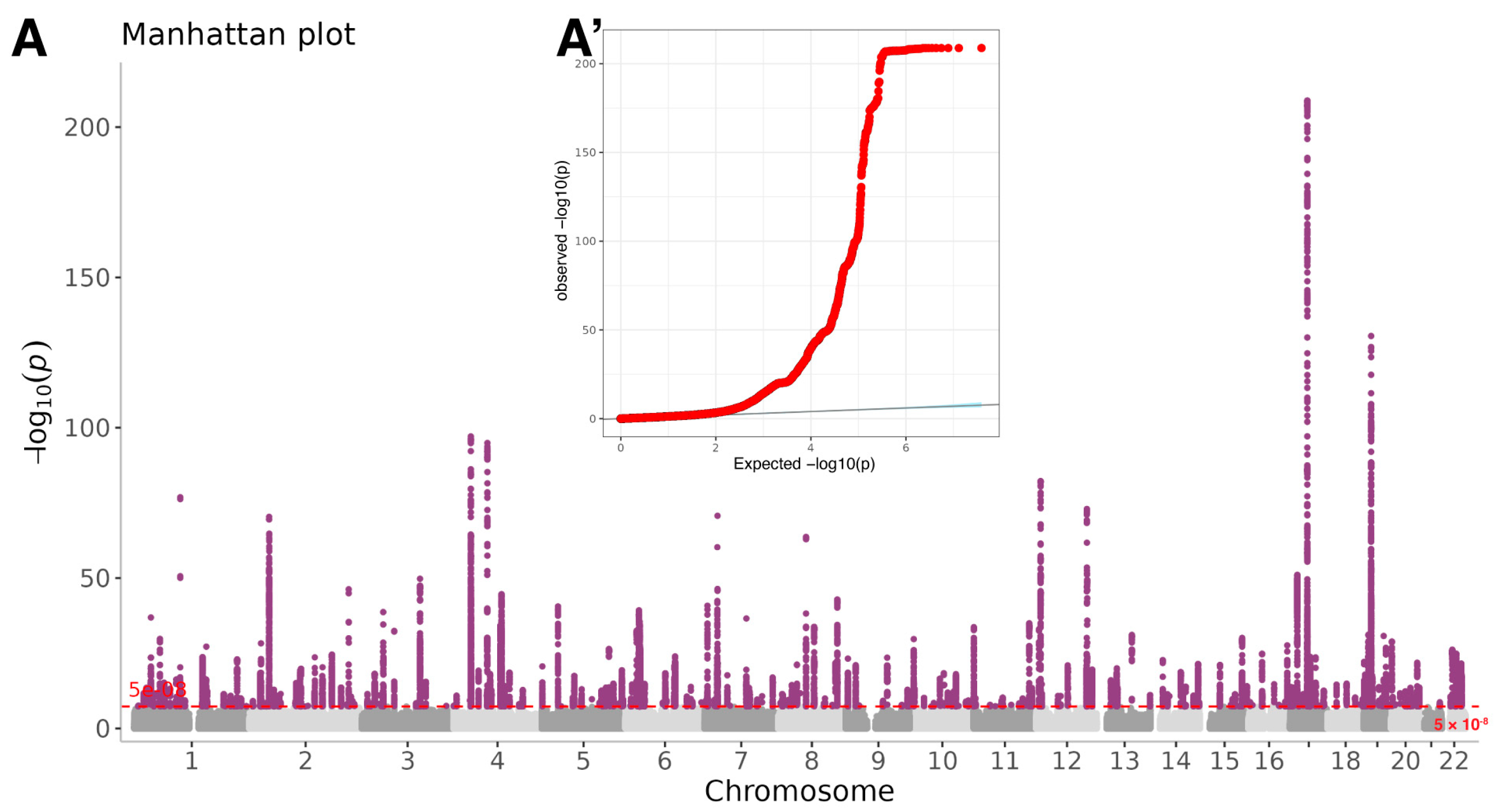
3.1. GWAS of NLR
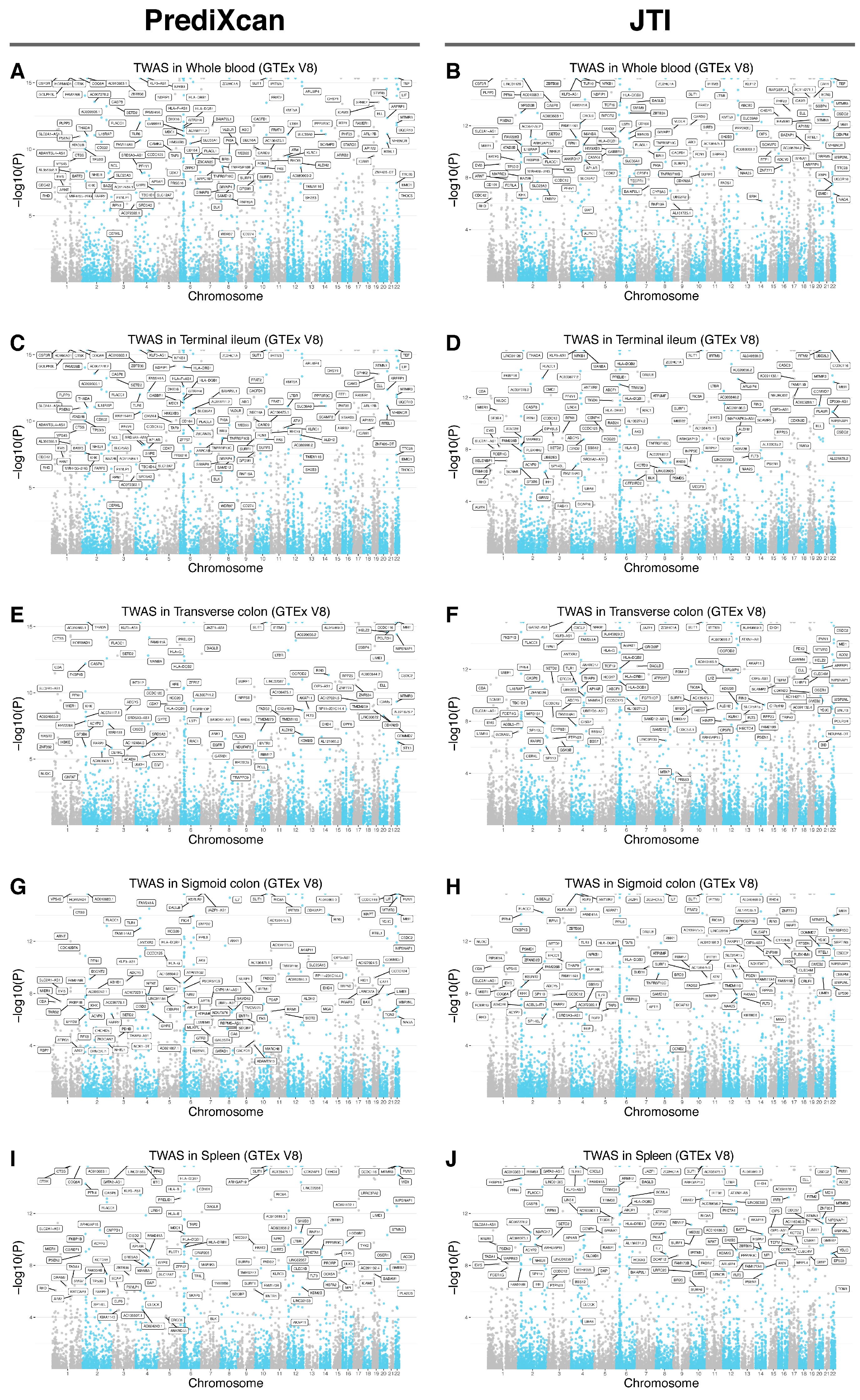
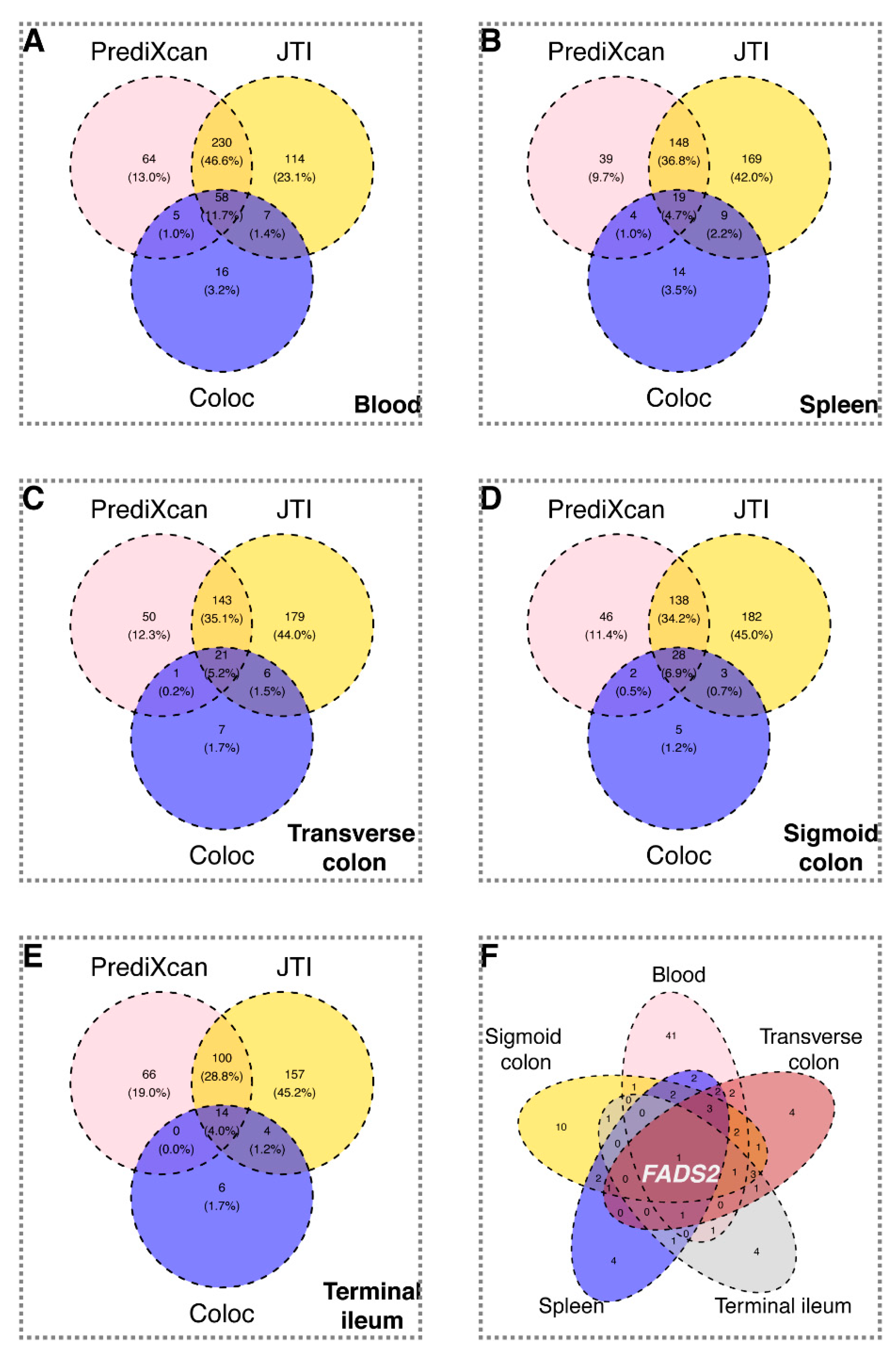
3.2. Colocalization and Transcriptome-Wide Association Study
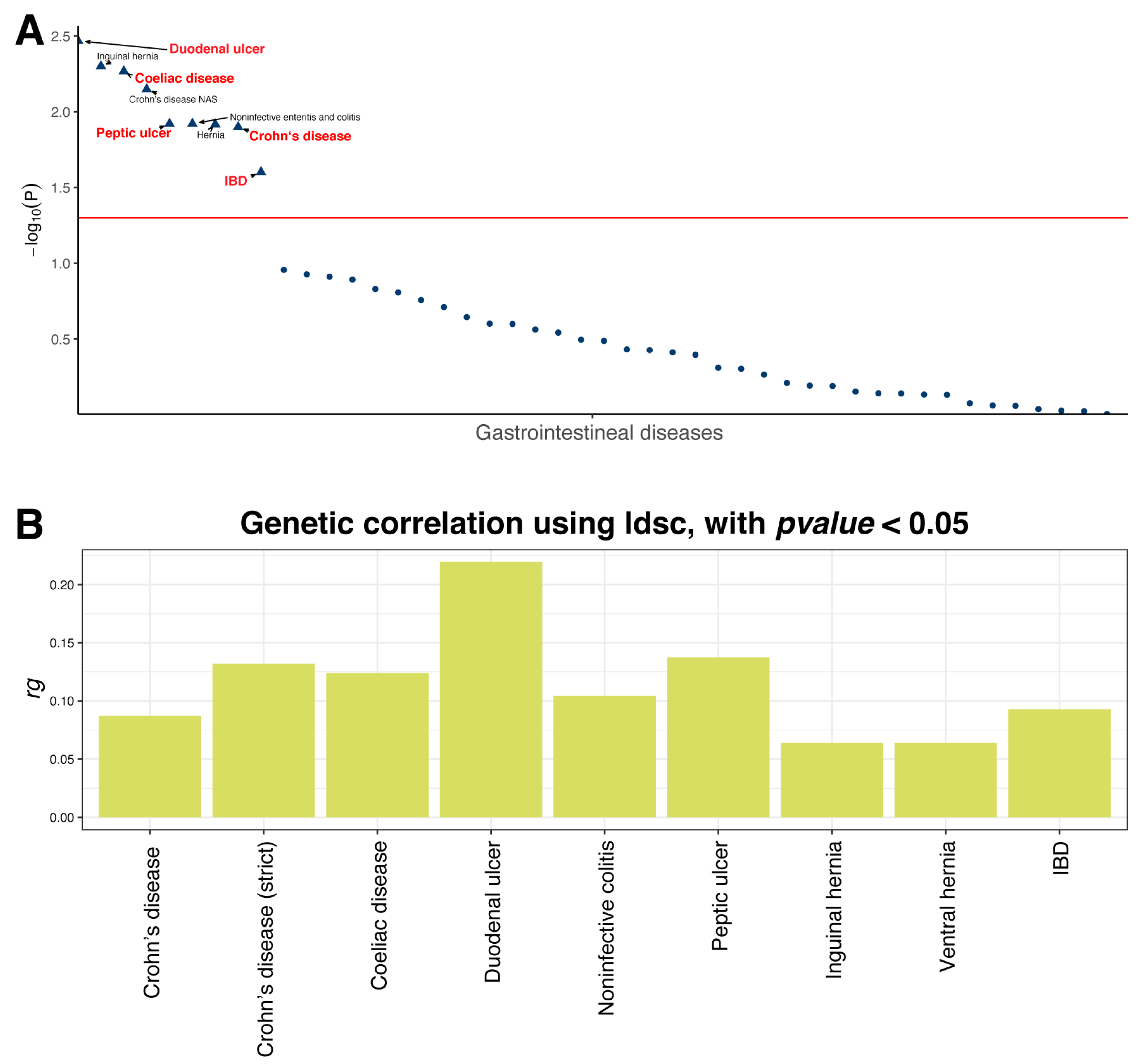
3.3. LD Score Regression
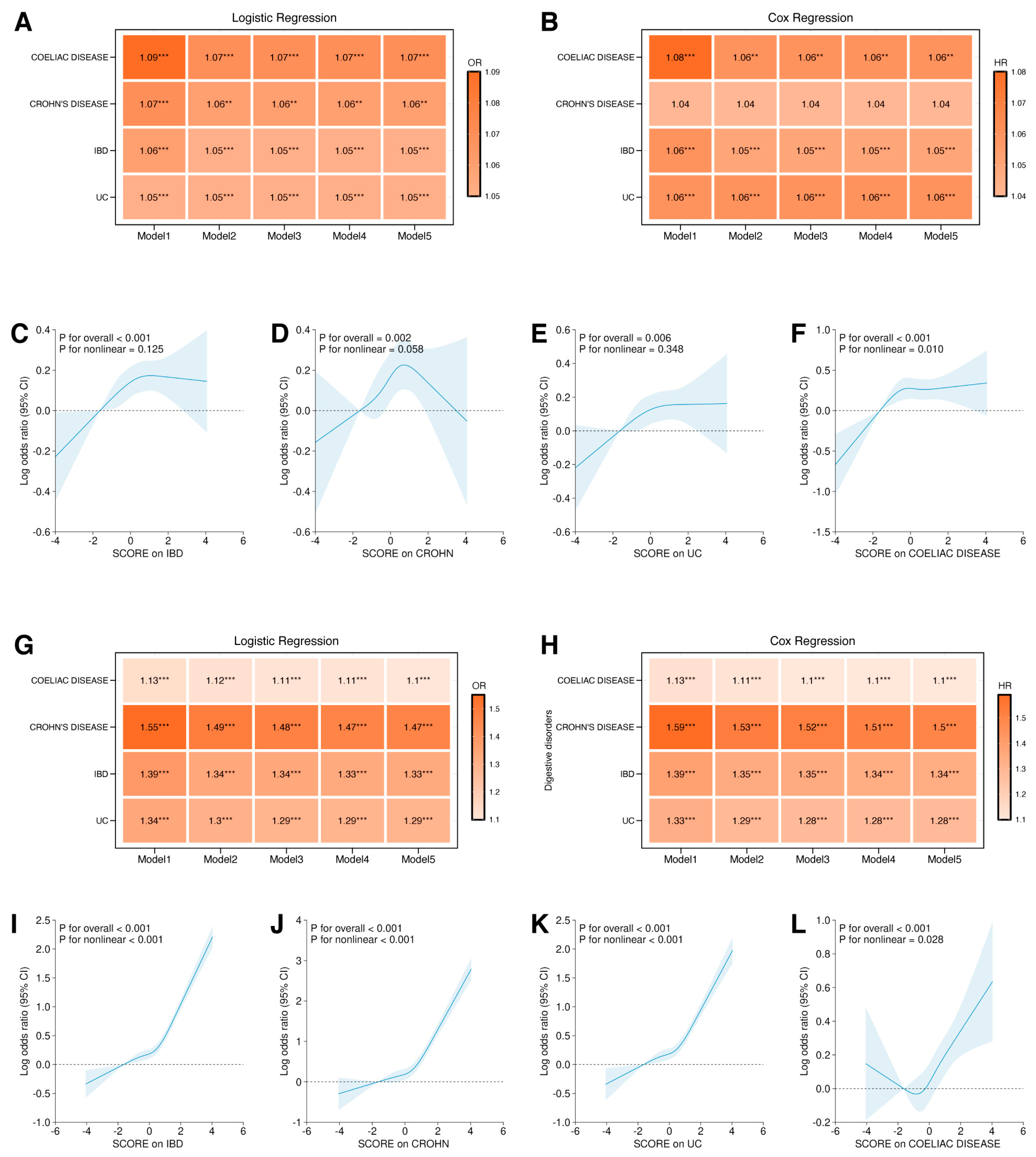
3.4. NLR PRS, NLR Measure and Inflammatory Gastrointestinal Disorders
3.5. Gene–Environment Interaction Analyses
4. Discussion
5. Conclusions
Supplementary Materials
Author Contributions
Funding
Institutional Review Board Statement
Informed Consent Statement
Data Availability Statement
Acknowledgments
Conflicts of Interest
References
- Idowu, O.K.; Ding, Q.; Taktak, A.F.; Chandrasekar, C.R.; Yin, Q. Clinical implication of pretreatment neutrophil to lymphocyte ratio in soft tissue sarcoma. Biomarkers 2012, 17, 539–544. [Google Scholar] [CrossRef] [PubMed]
- Rutkowski, P.; Kaminska, J.; Kowalska, M.; Ruka, W.; Steffen, J. Cytokine serum levels in soft tissue sarcoma patients: Correlations with clinico-pathological features and prognosis. Int. J. Cancer 2002, 100, 463–471. [Google Scholar] [CrossRef] [PubMed]
- Grivennikov, S.I.; Greten, F.R.; Karin, M. Immunity, inflammation, and cancer. Cell 2010, 140, 883–899. [Google Scholar] [CrossRef]
- Templeton, A.J.; McNamara, M.G.; Seruga, B.; Vera-Badillo, F.E.; Aneja, P.; Ocana, A.; Leibowitz-Amit, R.; Sonpavde, G.; Knox, J.J.; Tran, B.; et al. Prognostic role of neutrophil-to-lymphocyte ratio in solid tumors: A systematic review and meta-analysis. J. Natl. Cancer Inst. 2014, 106, dju124. [Google Scholar] [CrossRef] [PubMed]
- Mei, Z.; Shi, L.; Wang, B.; Yang, J.; Xiao, Z.; Du, P.; Wang, Q.; Yang, W. Prognostic role of pretreatment blood neutrophil-to-lymphocyte ratio in advanced cancer survivors: A systematic review and meta-analysis of 66 cohort studies. Cancer Treat. Rev. 2017, 58, 1–13. [Google Scholar] [CrossRef]
- Tomizawa, M.; Shinozaki, F.; Hasegawa, R.; Shirai, Y.; Motoyoshi, Y.; Sugiyama, T.; Yamamoto, S.; Ishige, N. Immunosuppressive agents are associated with peptic ulcer bleeding. Exp. Ther. Med. 2017, 13, 1927–1931. [Google Scholar] [CrossRef]
- Zhang, C.; Shu, W.; Zhou, G.; Lin, J.; Chu, F.; Wu, H.; Liu, Z. Anti-TNF-alpha Therapy Suppresses Proinflammatory Activities of Mucosal Neutrophils in Inflammatory Bowel Disease. Mediators Inflamm. 2018, 2018, 3021863. [Google Scholar] [CrossRef]
- Drury, B.; Hardisty, G.; Gray, R.D.; Ho, G.T. Neutrophil Extracellular Traps in Inflammatory Bowel Disease: Pathogenic Mechanisms and Clinical Translation. Cell Mol. Gastroenterol. Hepatol. 2021, 12, 321–333. [Google Scholar] [CrossRef]
- Oikonomou, K.A.; Kapsoritakis, A.N.; Theodoridou, C.; Karangelis, D.; Germenis, A.; Stefanidis, I.; Potamianos, S.P. Neutrophil gelatinase-associated lipocalin (NGAL) in inflammatory bowel disease: Association with pathophysiology of inflammation, established markers, and disease activity. J. Gastroenterol. 2012, 47, 519–530. [Google Scholar] [CrossRef]
- Moran, C.J.; Kolman, O.K.; Russell, G.J.; Brown, I.S.; Mino-Kenudson, M. Neutrophilic infiltration in gluten-sensitive enteropathy is neither uncommon nor insignificant: Assessment of duodenal biopsies from 267 pediatric and adult patients. Am. J. Surg. Pathol. 2012, 36, 1339–1345. [Google Scholar] [CrossRef] [PubMed]
- Halldorsson, B.V.; Eggertsson, H.P.; Moore, K.H.S.; Hauswedell, H.; Eiriksson, O.; Ulfarsson, M.O.; Palsson, G.; Hardarson, M.T.; Oddsson, A.; Jensson, B.O.; et al. The sequences of 150,119 genomes in the UK Biobank. Nature 2022, 607, 732–740. [Google Scholar] [CrossRef]
- Chang, S.; Yin, T.; He, F.; Ding, J.; Shang, Y.; Yang, J. CaMK4 promotes abortion-related Th17 cell imbalance by activating AKT/mTOR signaling pathway. Am. J. Reprod. Immunol. 2020, 84, e13315. [Google Scholar] [CrossRef]
- Wang, Z.; Hu, J.; Li, G.; Qu, L.; He, Q.; Lou, Y.; Song, Q.; Ma, D.; Chen, Y. PHF23 (plant homeodomain finger protein 23) negatively regulates cell autophagy by promoting ubiquitination and degradation of E3 ligase LRSAM1. Autophagy 2014, 10, 2158–2170. [Google Scholar] [CrossRef]
- Awla, D.; Abdulla, A.; Zhang, S.; Roller, J.; Menger, M.D.; Regner, S.; Thorlacius, H. Lymphocyte function antigen-1 regulates neutrophil recruitment and tissue damage in acute pancreatitis. Br. J. Pharmacol. 2011, 163, 413–423. [Google Scholar] [CrossRef]
- Liu, W.; Li, T.; Wang, P.; Liu, W.; Liu, F.; Mo, X.; Liu, Z.; Song, Q.; Lv, P.; Ruan, G.; et al. LRRC25 plays a key role in all-trans retinoic acid-induced granulocytic differentiation as a novel potential leukocyte differentiation antigen. Protein Cell 2018, 9, 785–798. [Google Scholar] [CrossRef]
- Nguyen, T.A.; Smith, B.R.C.; Tate, M.D.; Belz, G.T.; Barrios, M.H.; Elgass, K.D.; Weisman, A.S.; Baker, P.J.; Preston, S.P.; Whitehead, L.; et al. SIDT2 Transports Extracellular dsRNA into the Cytoplasm for Innate Immune Recognition. Immunity 2017, 47, 498–509.e496. [Google Scholar] [CrossRef]
- Li, B.; Wang, L.; Zhang, G.; Mo, L.; Cao, Z.; Du, M.; He, H. Sidt2 ameliorates TNF-alpha-induced apoptosis and inflammation by promoting autophagic flux via p65 signaling. Int. Immunopharmacol. 2025, 165, 115451. [Google Scholar] [CrossRef] [PubMed]
- Esposito, E.; Napolitano, G.; Pescatore, A.; Calculli, G.; Incoronato, M.R.; Leonardi, A.; Ursini, M.V. COMMD7 as a novel NEMO interacting protein involved in the termination of NF-kappaB signaling. J. Cell Physiol. 2016, 231, 152–161. [Google Scholar] [CrossRef] [PubMed]
- Zou, J.; Xia, H.; Zhang, C.; Xu, H.; Tang, Q.; Zhu, G.; Li, J.; Bi, F. Casp8 acts through A20 to inhibit PD-L1 expression: The mechanism and its implication in immunotherapy. Cancer Sci. 2021, 112, 2664–2678. [Google Scholar] [CrossRef]
- Xu, X.; Lv, X.; Zeng, R.; Huang, Z.; Huang, Z.; Han, B.; Lin, G.; Lin, J.; Li, S.; Fan, J.; et al. Elevated levels of IRF1 and CASP1 as pyroptosis-related biomarkers for intestinal epithelial cells in Crohn’s disease. Front. Immunol. 2025, 16, 1551547. [Google Scholar] [CrossRef] [PubMed]
- Starokadomskyy, P.; Gluck, N.; Li, H.; Chen, B.; Wallis, M.; Maine, G.N.; Mao, X.; Zaidi, I.W.; Hein, M.Y.; McDonald, F.J.; et al. CCDC22 deficiency in humans blunts activation of proinflammatory NF-kappaB signaling. J. Clin. Investig. 2013, 123, 2244–2256. [Google Scholar] [CrossRef]
- Che, Y.; Wang, G.; Xia, Q. CDK2AP1 influences immune infiltrates and serves as a prognostic indicator for hepatocellular carcinoma. Front. Genet. 2022, 13, 937310. [Google Scholar] [CrossRef]
- Okuyama, Y.; Nagashima, H.; Ushio-Fukai, M.; Croft, M.; Ishii, N.; So, T. IQGAP1 restrains T-cell cosignaling mediated by OX40. FASEB J. 2020, 34, 540–554. [Google Scholar] [CrossRef] [PubMed]
- Zhang, T.; Jiang, J.; Liu, J.; Xu, L.; Duan, S.; Sun, L.; Zhao, W.; Qian, F. MK2 Is Required for Neutrophil-Derived ROS Production and Inflammatory Bowel Disease. Front. Med. 2020, 7, 207. [Google Scholar] [CrossRef] [PubMed]
- Chami, B.; Martin, N.J.J.; Dennis, J.M.; Witting, P.K. Myeloperoxidase in the inflamed colon: A novel target for treating inflammatory bowel disease. Arch. Biochem. Biophys. 2018, 645, 61–71. [Google Scholar] [CrossRef] [PubMed]
- Koelink, P.J.; Overbeek, S.A.; Braber, S.; Morgan, M.E.; Henricks, P.A.; Abdul Roda, M.; Verspaget, H.W.; Wolfkamp, S.C.; te Velde, A.A.; Jones, C.W.; et al. Collagen degradation and neutrophilic infiltration: A vicious circle in inflammatory bowel disease. Gut 2014, 63, 578–587. [Google Scholar] [CrossRef]
- Li, G.; Lin, J.; Zhang, C.; Gao, H.; Lu, H.; Gao, X.; Zhu, R.; Li, Z.; Li, M.; Liu, Z. Microbiota metabolite butyrate constrains neutrophil functions and ameliorates mucosal inflammation in inflammatory bowel disease. Gut Microbes 2021, 13, 1968257. [Google Scholar] [CrossRef]
- Larmonier, C.B.; Midura-Kiela, M.T.; Ramalingam, R.; Laubitz, D.; Janikashvili, N.; Larmonier, N.; Ghishan, F.K.; Kiela, P.R. Modulation of neutrophil motility by curcumin: Implications for inflammatory bowel disease. Inflamm. Bowel Dis. 2011, 17, 503–515. [Google Scholar] [CrossRef]
- Saez, A.; Gomez-Bris, R.; Herrero-Fernandez, B.; Mingorance, C.; Rius, C.; Gonzalez-Granado, J.M. Innate Lymphoid Cells in Intestinal Homeostasis and Inflammatory Bowel Disease. Int. J. Mol. Sci. 2021, 22, 7618. [Google Scholar] [CrossRef]
- Pelczar, P.; Witkowski, M.; Perez, L.G.; Kempski, J.; Hammel, A.G.; Brockmann, L.; Kleinschmidt, D.; Wende, S.; Haueis, C.; Bedke, T.; et al. A pathogenic role for T cell-derived IL-22BP in inflammatory bowel disease. Science 2016, 354, 358–362. [Google Scholar] [CrossRef]
- Hu, J.; Wang, W.; Wang, M.; Wu, C.; Jiao, Y.; Li, Y.; Zhang, W.; Liang, C.; Lin, Z.; Yu, Y.; et al. Immunological pathogenesis of inflammatory bowel disease: Focus on tissue resident memory T cells. Front. Immunol. 2025, 16, 1591584. [Google Scholar] [CrossRef]
- Bagheri, N.; Shirzad, H.; Elahi, S.; Azadegan-Dehkordi, F.; Rahimian, G.; Shafigh, M.; Rashidii, R.; Sarafnejad, A.; Rafieian-Kopaei, M.; Faridani, R.; et al. Downregulated regulatory T cell function is associated with increased peptic ulcer in Helicobacter pylori-infection. Microb. Pathog. 2017, 110, 165–175. [Google Scholar] [CrossRef]
- Arnold, I.C.; Hitzler, I.; Muller, A. The immunomodulatory properties of Helicobacter pylori confer protection against allergic and chronic inflammatory disorders. Front. Cell Infect. Microbiol. 2012, 2, 10. [Google Scholar] [CrossRef]
- Sorini, C.; Tripathi, K.P.; Wu, S.; Higdon, S.M.; Wang, J.; Cheng, L.; Banerjee, S.; Reinhardt, A.; Kreslavsky, T.; Thorell, A.; et al. Metagenomic and single-cell RNA-Seq survey of the Helicobacter pylori-infected stomach in asymptomatic individuals. JCI Insight 2023, 8, e161042. [Google Scholar] [CrossRef]
- Delbue, D.; Cardoso-Silva, D.; Branchi, F.; Itzlinger, A.; Letizia, M.; Siegmund, B.; Schumann, M. Celiac Disease Monocytes Induce a Barrier Defect in Intestinal Epithelial Cells. Int. J. Mol. Sci. 2019, 20, 5597. [Google Scholar] [CrossRef]
- Balamtekin, N.; Baysoy, G.; Uslu, N.; Orhan, D.; Akcoren, Z.; Ozen, H.; Gurakan, F.; Saltik-Temizel, I.N.; Yuce, A. Fecal calprotectin concentration is increased in children with celiac disease: Relation with histopathological findings. Turk. J. Gastroenterol. 2012, 23, 503–508. [Google Scholar] [CrossRef]
- Yates, C.M.; Calder, P.C.; Ed Rainger, G. Pharmacology and therapeutics of omega-3 polyunsaturated fatty acids in chronic inflammatory disease. Pharmacol. Ther. 2014, 141, 272–282. [Google Scholar] [CrossRef]
- Costea, I.; Mack, D.R.; Lemaitre, R.N.; Israel, D.; Marcil, V.; Ahmad, A.; Amre, D.K. Interactions between the dietary polyunsaturated fatty acid ratio and genetic factors determine susceptibility to pediatric Crohn’s disease. Gastroenterology 2014, 146, 929–931. [Google Scholar] [CrossRef] [PubMed]
- Marton, L.T.; Goulart, R.A.; Carvalho, A.C.A.; Barbalho, S.M. Omega Fatty Acids and Inflammatory Bowel Diseases: An Overview. Int. J. Mol. Sci. 2019, 20, 4581. [Google Scholar] [CrossRef] [PubMed]
- Cai, J.; Zhou, X.; Zhuang, Y.; Cui, L.; Ma, R.; Chen, Y.; Yang, N.; Chen, Q.; Wang, Y.; Zhu, P.; et al. Reprogramming of Fatty Acid Metabolism via PPARalpha-Orchestrated FADS2 in Keratinocytes Modulates Skin Inflammation in Psoriasis. Adv. Sci. 2025, 12, e17049. [Google Scholar] [CrossRef] [PubMed]
- He, J.; Luo, X.; Xin, H.; Lai, Q.; Zhou, Y.; Bai, Y. The Effects of Fatty Acids on Inflammatory Bowel Disease: A Two-Sample Mendelian Randomization Study. Nutrients 2022, 14, 2883. [Google Scholar] [CrossRef] [PubMed]
- Zhou, Y.; Zhou, Z. Unraveling the causal link: Fatty acids and inflammatory bowel disease. Front. Immunol. 2024, 15, 1405790. [Google Scholar] [CrossRef]
- Pang, X.; Yang, H.; Li, M.; Suarez-Farinas, M.; Tian, S. To explore the causal association between the serum lipid profile and inflammatory bowel disease using bidirectional Mendelian randomisation analysis. eGastroenterology 2024, 2, e100034. [Google Scholar] [CrossRef]
- Little, R.D.; Jayawardana, T.; Koentgen, S.; Zhang, F.; Connor, S.J.; Boussioutas, A.; Ward, M.G.; Gibson, P.R.; Sparrow, M.P.; Hold, G.L. Pathogenesis and precision medicine for predicting response in inflammatory bowel disease: Advances and future directions. eGastroenterology 2024, 2, e100006. [Google Scholar] [CrossRef] [PubMed]
- Ariaee, A.; Koentgen, S.; Wardill, H.R.; Hold, G.L.; Prestidge, C.A.; Armstrong, H.K.; Joyce, P. Prebiotic selection influencing inflammatory bowel disease treatment outcomes: A review of the preclinical and clinical evidence. eGastroenterology 2024, 2, e100055. [Google Scholar] [CrossRef] [PubMed]



| Sex (N) | Female (N = 216,607) | Male (N = 185,907) | |||||||
|---|---|---|---|---|---|---|---|---|---|
| Name | Levels | Q1 (N = 72,271) | Q2 (N = 72,009) | Q3 (N = 72,327) | p | Q1 (N = 61,901) | Q2 (N = 62,162) | Q3 (N = 61,844) | p |
| BMI | Mean ± SD | 27.2 ± 5.3 | 27.0 ± 5.1 | 26.9 ± 5.1 | <0.001 | 27.9 ± 4.2 | 27.8 ± 4.2 | 27.8 ± 4.2 | <0.001 |
| Weight | Mean ± SD | 71.9 ± 14.3 | 71.4 ± 13.9 | 71.0 ± 13.8 | <0.001 | 86.1 ± 14.3 | 86.0 ± 14.3 | 85.8 ± 14.3 | <0.001 |
| age | Mean ± SD | 56.3 ± 8.0 | 56.5 ± 8.0 | 56.4 ± 8.0 | <0.001 | 56.6 ± 8.2 | 56.8 ± 8.2 | 56.8 ± 8.2 | <0.001 |
| Ethnics | European | 63,924 (88.5%) | 66,861 (92.9%) | 66,758 (92.3%) | <0.001 | 55,254 (89.3%) | 58,010 (93.3%) | 57,463 (92.9%) | <0.001 |
| non-European | 8347 (11.5%) | 5148 (7.1%) | 5569 (7.7%) | 6647 (10.7%) | 4152 (6.7%) | 4381 (7.1%) | |||
| alcohol | frequent alcohol intake | 26,150 (36.2%) | 26,810 (37.2%) | 26,765 (37%) | <0.001 | 31,648 (51.1%) | 32,505 (52.3%) | 32,027 (51.8%) | <0.001 |
| infrequent or no alcohol intake | 46,121 (63.8%) | 45,199 (62.8%) | 45,562 (63%) | 30,253 (48.9%) | 29,657 (47.7%) | 29,817 (48.2%) | |||
| smoking | Current | 6574 (9.1%) | 6434 (8.9%) | 6346 (8.8%) | 0.019 | 7719 (12.5%) | 7773 (12.5%) | 7681 (12.4%) | 0.138 |
| Never | 43,155 (59.7%) | 42,613 (59.2%) | 43,116 (59.6%) | 30,349 (49%) | 30,158 (48.5%) | 30,440 (49.2%) | |||
| Previous | 22,542 (31.2%) | 22,962 (31.9%) | 22,865 (31.6%) | 23,833 (38.5%) | 24,231 (39%) | 23,723 (38.4%) | |||
| Triglycerides | Mean ± SD | 1.5 ± 0.9 | 1.6 ± 0.9 | 1.6 ± 0.9 | 0.271 | 2.0 ± 1.2 | 2.0 ± 1.1 | 2.0 ± 1.1 | <0.001 |
| HbA1C | Mean ± SD | 36.0 ± 6.1 | 35.8 ± 5.9 | 35.6 ± 5.9 | <0.001 | 36.7 ± 7.8 | 36.4 ± 7.2 | 36.4 ± 7.4 | <0.001 |
| CRP | Mean ± SD | 2.7 ± 4.2 | 2.7 ± 4.5 | 2.7 ± 4.4 | 0.038 | 2.4 ± 4.3 | 2.5 ± 4.3 | 2.5 ± 4.4 | 0.011 |
| Townsend_deprivation_index | Mean ± SD | −1.3 ± 3.1 | −1.4 ± 3.0 | −1.5 ± 3.0 | <0.001 | −1.2 ± 3.2 | −1.4 ± 3.1 | −1.4 ± 3.1 | <0.001 |
| DmT2_all | No | 66,850 (92.5%) | 67,106 (93.2%) | 67,374 (93.2%) | <0.001 | 54,019 (87.3%) | 54,587 (87.8%) | 54,208 (87.7%) | 0.011 |
| Yes | 5421 (7.5%) | 4903 (6.8%) | 4953 (6.8%) | 7882 (12.7%) | 7575 (12.2%) | 7636 (12.3%) | |||
| HyperLip_all | No | 57,128 (79%) | 57,146 (79.4%) | 57,922 (80.1%) | <0.001 | 42,220 (68.2%) | 42,957 (69.1%) | 42,858 (69.3%) | <0.001 |
| Yes | 15,143 (21%) | 14,863 (20.6%) | 14,405 (19.9%) | 19,681 (31.8%) | 19,205 (30.9%) | 18,986 (30.7%) | |||
| SCORE | Mean ± SD | −1.1 ± 0.5 | 0.0 ± 0.2 | 1.1 ± 0.5 | <0.001 | −1.1 ± 0.5 | 0.0 ± 0.2 | 1.1 ± 0.5 | <0.001 |
| FI_score | Mean ± SD | 0.1 ± 0.1 | 0.1 ± 0.1 | 0.1 ± 0.1 | 0.523 | 0.1 ± 0.1 | 0.1 ± 0.1 | 0.1 ± 0.1 | 0.185 |
| MetS_Score | Mean ± SD | 0.0 ± 0.8 | 0.0 ± 0.8 | −0.0 ± 0.8 | <0.001 | 0.8 ± 0.8 | 0.8 ± 0.8 | 0.8 ± 0.8 | 0.075 |
| cci | Mean ± SD | 0.2 ± 0.7 | 0.2 ± 0.7 | 0.2 ± 0.7 | 0.226 | 0.2 ± 0.7 | 0.2 ± 0.7 | 0.3 ± 0.8 | 0.001 |
| metabolic_status_category | Healthy Metabolism | 38,952 (53.9%) | 38,844 (53.9%) | 39,310 (54.4%) | 0.021 | 22,845 (36.9%) | 22,854 (36.8%) | 23,072 (37.3%) | 0.151 |
| Unhealthy Metabolism | 30,113 (41.7%) | 29,758 (41.3%) | 29,723 (41.1%) | 36,656 (59.2%) | 36,785 (59.2%) | 36,324 (58.7%) | |||
| Unknown | 3206 (4.4%) | 3407 (4.7%) | 3294 (4.6%) | 2400 (3.9%) | 2523 (4.1%) | 2448 (4%) | |||
| INFLA_score | Mean ± SD | −1.9 ± 6.5 | −1.2 ± 6.6 | −0.4 ± 6.7 | <0.001 | −2.8 ± 6.4 | −1.9 ± 6.4 | −1.1 ± 6.4 | <0.001 |
| PA_category | High | 21,473 (29.7%) | 21,620 (30%) | 21,555 (29.8%) | 0.019 | 22,006 (35.6%) | 22,112 (35.6%) | 21,927 (35.5%) | 0.063 |
| Low | 9880 (13.7%) | 9933 (13.8%) | 9890 (13.7%) | 9761 (15.8%) | 9717 (15.6%) | 9743 (15.8%) | |||
| Moderate | 23,368 (32.3%) | 23,566 (32.7%) | 23,709 (32.8%) | 19,548 (31.6%) | 20,070 (32.3%) | 19,791 (32%) | |||
| Unknown | 17,550 (24.3%) | 16,890 (23.5%) | 17,173 (23.7%) | 10,586 (17.1%) | 10,263 (16.5%) | 10,383 (16.8%) | |||
| healthy_diet_status | Mean ± SD | 4.2 ± 1.1 | 4.2 ± 1.1 | 4.2 ± 1.1 | 0.080 | 3.6 ± 1.2 | 3.6 ± 1.2 | 3.6 ± 1.2 | 0.653 |
| Cardioprotective_diet | Mean ± SD | 3.5 ± 1.2 | 3.5 ± 1.2 | 3.5 ± 1.2 | 0.134 | 2.9 ± 1.2 | 2.9 ± 1.2 | 2.9 ± 1.2 | 0.390 |
Disclaimer/Publisher’s Note: The statements, opinions and data contained in all publications are solely those of the individual author(s) and contributor(s) and not of MDPI and/or the editor(s). MDPI and/or the editor(s) disclaim responsibility for any injury to people or property resulting from any ideas, methods, instructions or products referred to in the content. |
© 2026 by the authors. Licensee MDPI, Basel, Switzerland. This article is an open access article distributed under the terms and conditions of the Creative Commons Attribution (CC BY) license.
Share and Cite
Miao, D.; Ge, Y.; Liu, Z.; Wan, Z.; Chen, H.; Bai, X.; Mi, J. Genome-Wide Dissection of the Neutrophil-to-Lymphocyte Ratio Uncovers Polygenic Determinants Linked to Inflammatory Gastrointestinal Disorder Susceptibility. Biomedicines 2026, 14, 814. https://doi.org/10.3390/biomedicines14040814
Miao D, Ge Y, Liu Z, Wan Z, Chen H, Bai X, Mi J. Genome-Wide Dissection of the Neutrophil-to-Lymphocyte Ratio Uncovers Polygenic Determinants Linked to Inflammatory Gastrointestinal Disorder Susceptibility. Biomedicines. 2026; 14(4):814. https://doi.org/10.3390/biomedicines14040814
Chicago/Turabian StyleMiao, Da, Yao Ge, Zhengye Liu, Ziqi Wan, Haotian Chen, Xiaoyin Bai, and Jiarui Mi. 2026. "Genome-Wide Dissection of the Neutrophil-to-Lymphocyte Ratio Uncovers Polygenic Determinants Linked to Inflammatory Gastrointestinal Disorder Susceptibility" Biomedicines 14, no. 4: 814. https://doi.org/10.3390/biomedicines14040814
APA StyleMiao, D., Ge, Y., Liu, Z., Wan, Z., Chen, H., Bai, X., & Mi, J. (2026). Genome-Wide Dissection of the Neutrophil-to-Lymphocyte Ratio Uncovers Polygenic Determinants Linked to Inflammatory Gastrointestinal Disorder Susceptibility. Biomedicines, 14(4), 814. https://doi.org/10.3390/biomedicines14040814