From Metabolic Syndrome to Cardiovascular–Kidney–Metabolic Syndrome (CKM): A Clinical and Pathophysiological Continuum

Abstract
1. Introduction
2. The Conceptual Framework of Cardiovascular–Kidney–Metabolic Syndrome
3. Epidemiology and Global Burden of the CKM Continuum
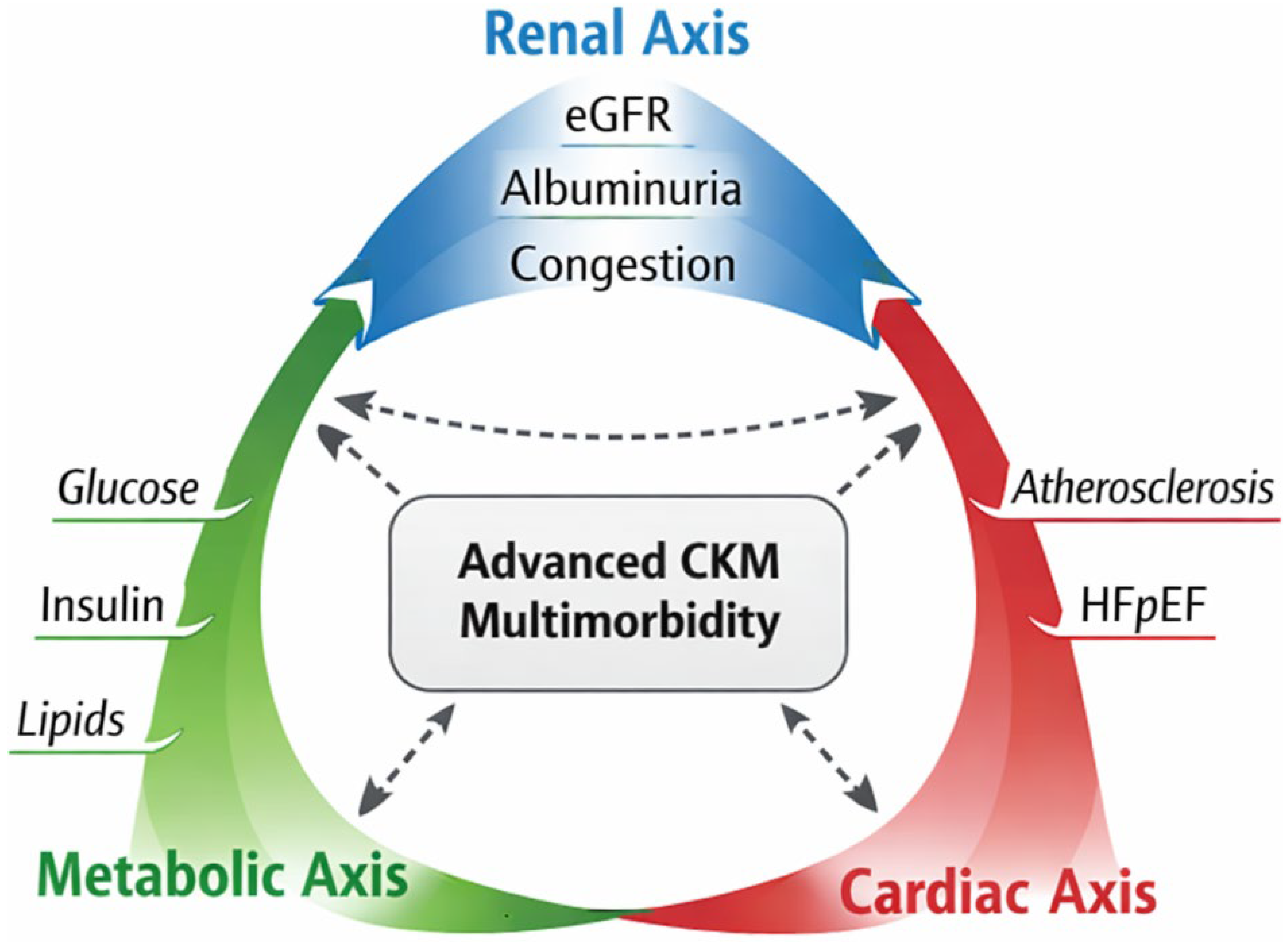
4. Integrated Pathophysiology of CKM
4.1. Dysfunctional Adiposity
4.2. MASLD as the Hepatic Component of the CKM Continuum
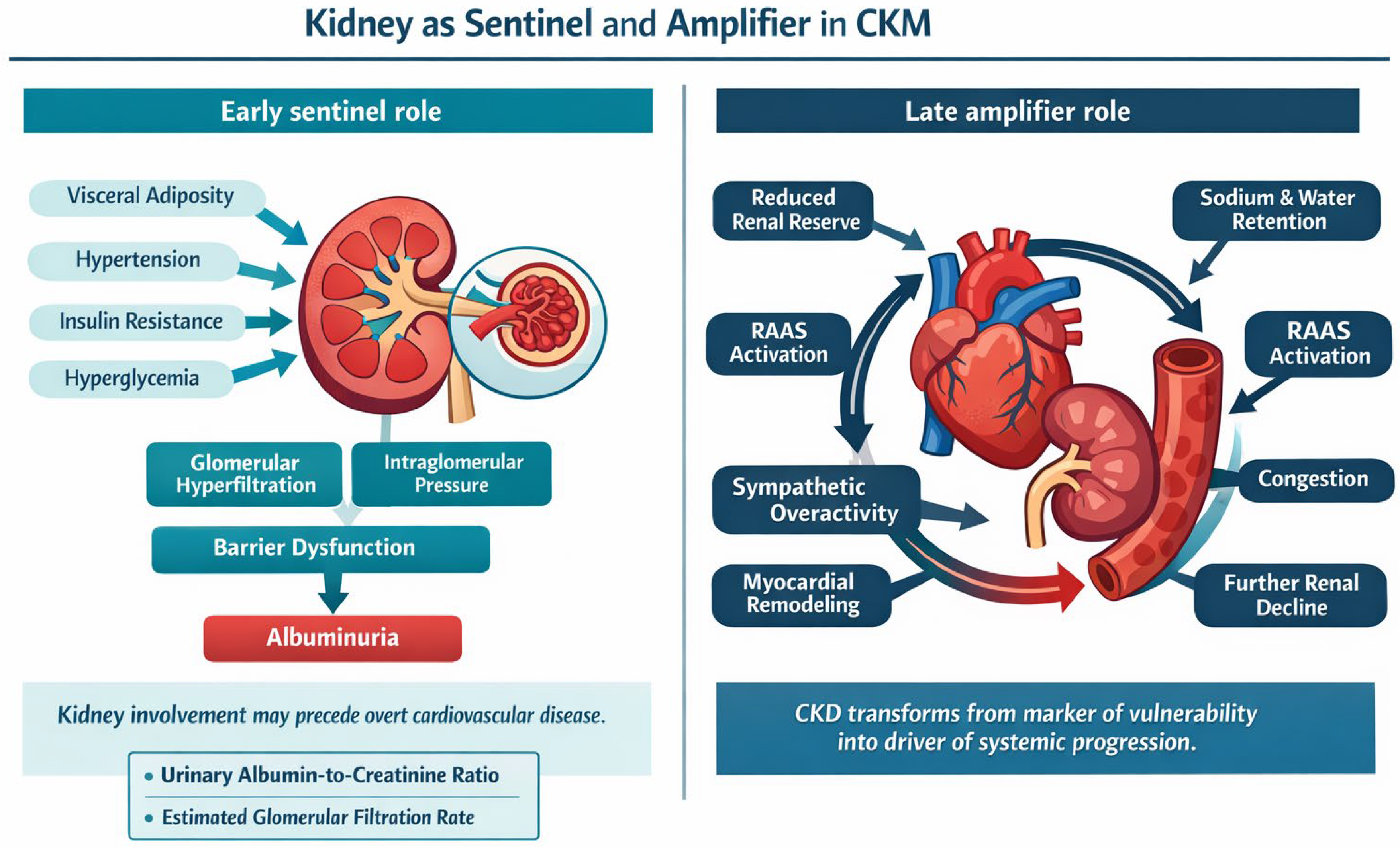
4.3. The Kidney as a Sentinel Organ and Amplifier
4.4. Cardiovascular Manifestations of the CKM Continuum
5. Social Determinants of Health and the Life-Course Perspective
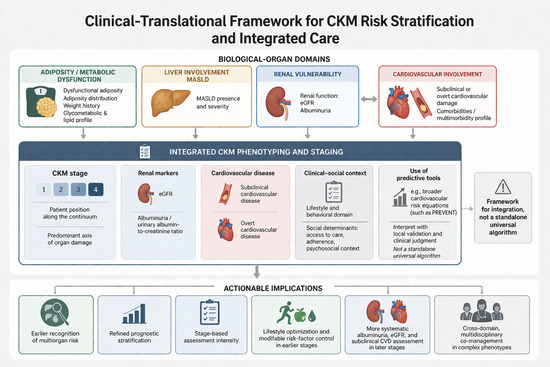
6. Clinical Implications of the CKM Model
7. Limitations of the CKM Model
8. Future Perspectives
Author Contributions
Funding
Institutional Review Board Statement
Informed Consent Statement
Data Availability Statement
Conflicts of Interest
References
- Swarup, S.; Ahmed, I.; Grigorova, Y.; Zeltser, R. Metabolic Syndrome. In StatPearls; StatPearls Publishing: Treasure Island, FL, USA, 2025. Available online: http://www.ncbi.nlm.nih.gov/books/NBK459248/ (accessed on 14 January 2026). [PubMed]
- Alberti, K.G.M.M.; Eckel, R.H.; Grundy, S.M.; Zimmet, P.Z.; Cleeman, J.I.; Donato, K.A.; Fruchart, J.C.; James, W.P.T.; Loria, C.M.; Smith, S.C., Jr. Harmonizing the metabolic syndrome: A joint interim statement of the International Diabetes Federation Task Force on Epidemiology and Prevention; National Heart, Lung, and Blood Institute; American Heart Association; World Heart Federation; International Atherosclerosis Society; and International Association for the Study of Obesity. Circulation 2009, 120, 1640–1645. [Google Scholar] [CrossRef] [PubMed]
- Eckel, R.H.; Grundy, S.M.; Zimmet, P.Z. The metabolic syndrome. Lancet 2005, 365, 1415–1428. [Google Scholar] [CrossRef] [PubMed]
- Caturano, A.; Morciano, C.; Zielińska, K.; Russo, V.; Perrone, M.A.; Berra, C.C.; Conte, C. Rethinking the Diabetes–Cardiovascular Disease Continuum: Toward Integrated Care. J. Clin. Med. 2025, 14, 6678. [Google Scholar] [CrossRef] [PubMed]
- Rangaswami, J.; Bhalla, V.; Blair, J.E.; Chang, T.I.; Costa, S.; Lentine, K.L.; Lerma, E.V.; Mezue, K.; Molitch, M.; Mullens, W.; et al. Cardiorenal Syndrome: Classification, Pathophysiology, Diagnosis, and Treatment Strategies: A Scientific Statement from the American Heart Association. Circulation 2019, 139, e840–e878. [Google Scholar] [CrossRef] [PubMed]
- Ndumele, C.E.; Rangaswami, J.; Chow, S.L.; Neeland, I.J.; Tuttle, K.R.; Khan, S.S.; Coresh, J.; Mathew, R.O.; Baker-Smith, C.M.; Carnethon, M.R.; et al. Cardiovascular-Kidney-Metabolic Health: A Presidential Advisory from the American Heart Association. Circulation 2023, 148, 1606–1635, Erratum in Circulation 2024, 149, e1023. [Google Scholar] [CrossRef] [PubMed]
- Kahn, R.; Buse, J.; Ferrannini, E.; Stern, M. The metabolic syndrome: Time for a critical appraisal. Diabetologia 2005, 48, 1684–1699. [Google Scholar] [CrossRef] [PubMed]
- Khan, S.S.; Coresh, J.; Pencina, M.J.; Ndumele, C.E.; Rangaswami, J.; Chow, S.L.; Palaniappan, L.P.; Sperling, L.S.; Virani, S.S.; Ho, J.E.; et al. Novel Prediction Equations for Absolute Risk Assessment of Total Cardiovascular Disease Incorporating Cardiovascular-Kidney-Metabolic Health: A Scientific Statement from the American Heart Association. Circulation 2023, 148, 1982–2004. [Google Scholar] [CrossRef] [PubMed]
- Stevens, P.E.; Ahmed, S.B.; Carrero, J.J.; Foster, B.; Francis, A.; Hall, R.K.; Herrington, W.G.; Hill, G.; Inker, L.A.; Kazancıoğlu, R.; et al. KDIGO 2024 Clinical Practice Guideline for the Evaluation and Management of Chronic Kidney Disease. Kidney Int. 2024, 105, S117–S314. [Google Scholar] [CrossRef] [PubMed]
- Lloyd-Jones, D.M.; Ning, H.; Labarthe, D.; Brewer, L.; Sharma, G.; Rosamond, W.; Foraker, R.E.; Black, T.; Grandner, M.A.; Allen, N.B.; et al. Status of Cardiovascular Health in US Adults and Children Using the American Heart Association’s New “Life’s Essential 8” Metrics: Prevalence Estimates from the National Health and Nutrition Examination Survey (NHANES), 2013 Through 2018. Circulation 2022, 146, 822–835. [Google Scholar] [CrossRef] [PubMed]
- Ronco, C.; Haapio, M.; House, A.A.; Anavekar, N.; Bellomo, R. Cardiorenal syndrome. J. Am. Coll. Cardiol. 2008, 52, 1527–1539. [Google Scholar] [CrossRef] [PubMed]
- Acierno, C.; Nevola, R.; Barletta, F.; Zielińska, K.; Rinaldi, L.; Sasso, F.C.; Conte, C.; Adinolfi, L.E.; Caturano, A. The transition from NAFLD to MASLD: Implications for Diagnosis, Prognosis, and Clinical Management. Explor. Med. 2025, 6, 1001365. [Google Scholar] [CrossRef]
- Ndumele, C.E.; Neeland, I.J.; Tuttle, K.R.; Chow, S.L.; Mathew, R.O.; Khan, S.S.; Coresh, J.; Baker-Smith, C.M.; Carnethon, M.R.; Després, J.-P.; et al. A Synopsis of the Evidence for the Science and Clinical Management of Cardiovascular-Kidney-Metabolic (CKM) Syndrome: A Scientific Statement from the American Heart Association. Circulation 2023, 148, 1636–1664. [Google Scholar] [CrossRef] [PubMed]
- Levin, A.; Ahmed, S.B.; Carrero, J.J.; Foster, B.; Francis, A.; Hall, R.K.; Herrington, W.G.; Hill, G.; Inker, L.A.; Kazancıoğlu, R.; et al. Executive summary of the KDIGO 2024 Clinical Practice Guideline for the Evaluation and Management of Chronic Kidney Disease: Known knowns and known unknowns. Kidney Int. 2024, 105, 684–701. [Google Scholar] [CrossRef]
- Benzing, T.; Salant, D. Insights into Glomerular Filtration and Albuminuria. N. Engl. J. Med. 2021, 384, 1437–1446. [Google Scholar] [CrossRef] [PubMed]
- Kittelson, K.S.; Junior, A.G.; Fillmore, N.; da Silva Gomes, R. Cardiovascular-kidney-metabolic syndrome—An integrative review. Prog. Cardiovasc. Dis. 2014, 87, 26–36. [Google Scholar] [CrossRef]
- Mutruc, V.; Bologa, C.; Șorodoc, V.; Ceasovschih, A.; Morărașu, B.C.; Șorodoc, L.; Catar, O.E.; Lionte, C. Cardiovascular–Kidney–Metabolic Syndrome: A New Paradigm in Clinical Medicine or Going Back to Basics? J. Clin. Med. 2025, 14, 2833. [Google Scholar] [CrossRef] [PubMed]
- Cases, A.; Broseta, J.J.; Marqués, M.; Cigarrán, S.; Julián, J.C.; Alcázar, R.; Ortiz, A. Cardiovascular-kidney-metabolic syndrome definition and its role in the prevention, risk staging, and treatment. An opportunity for the Nephrology. Nefrologia 2024, 44, 771–783. [Google Scholar] [CrossRef] [PubMed]
- Bansal, N.; Weiner, D.; Sarnak, M. Cardiovascular-Kidney-Metabolic Health Syndrome. J. Am. Soc. Nephrol. 2024, 35, 649–652. [Google Scholar] [CrossRef] [PubMed] [PubMed Central]
- Ostrominski, J.W.; Arnold, S.V.; Butler, J.; Fonarow, G.C.; Hirsch, J.S.; Palli, S.R.; Donato, B.M.K.; Parrinello, C.M.; O’cOnnell, T.; Collins, E.B.; et al. Prevalence and Overlap of Cardiac, Renal, and Metabolic Conditions in US Adults, 1999–2020. JAMA Cardiol. 2023, 8, 1050–1060. [Google Scholar] [CrossRef] [PubMed] [PubMed Central]
- Aggarwal, R.; Ostrominski, J.W.; Vaduganathan, M. Prevalence of Cardiovascular-Kidney-Metabolic Syndrome Stages in US Adults, 2011–2020. JAMA 2024, 331, 1858–1860. [Google Scholar] [CrossRef] [PubMed] [PubMed Central]
- GBD 2021 Adult BMI Collaborators. Global, regional, and national prevalence of adult overweight and obesity, 1990-2021, with forecasts to 2050: A forecasting study for the Global Burden of Disease Study 2021. Lancet Lond Engl. 2025, 405, 813–838. [Google Scholar] [CrossRef] [PubMed] [PubMed Central]
- GBD 2021 Diabetes Collaborators. Global, regional, and national burden of diabetes from 1990 to 2021, with projections of prevalence to 2050: A systematic analysis for the Global Burden of Disease Study 2021. Lancet Lond Engl. 2023, 402, 203–234. [Google Scholar] [CrossRef] [PubMed] [PubMed Central]
- GBD 2023 Chronic Kidney Disease Collaborators. Global, regional, and national burden of chronic kidney disease in adults, 1990-2023, and its attributable risk factors: A systematic analysis for the Global Burden of Disease Study 2023. Lancet Lond Engl. 2025, 406, 2461–2482. [Google Scholar] [CrossRef] [PubMed]
- Khan, S.S.; Matsushita, K.; Sang, Y.; Ballew, S.H.; Grams, M.E.; Surapaneni, A.; Blaha, M.J.; Carson, A.P.; Chang, A.R.; Ciemins, E.; et al. Development and Validation of the American Heart Association’s PREVENT Equations. Circulation 2024, 149, 430–449. [Google Scholar] [CrossRef]
- Acierno, C.; Nevola, R.; Rinaldi, L.; Sasso, F.C.; Adinolfi, L.E.; Caturano, A. The Intestinal Thread of Fate: How the Microbiota Shapes the Story of Liver Disease. Livers 2025, 5, 17. [Google Scholar] [CrossRef]
- Xu, Z.; Yang, S.; Tan, Y.; Zhang, Q.; Wang, H.; Tao, J.; Liu, Q.; Wang, Q.; Feng, W.; Li, Z.; et al. Inflammation in cardiovascular-kidney-metabolic syndrome: Key roles and underlying mechanisms–a comprehensive review. Mol. Cell. Biochem. 2025, 480, 6039–6075. [Google Scholar] [CrossRef]
- Petersen, M.C.; Shulman, G.I. Mechanisms of Insulin Action and Insulin Resistance. Physiol. Rev. 2018, 98, 2133–2223. [Google Scholar] [CrossRef] [PubMed] [PubMed Central]
- Portincasa, P.; Khalil, M.; Mahdi, L.; Perniola, V.; Idone, V.; Graziani, A.; Baffy, G.; Di Ciaula, A. Metabolic Dysfunction–Associated Steatotic Liver Disease: From Pathogenesis to Current Therapeutic Options. Int. J. Mol. Sci. 2024, 25, 5640. [Google Scholar] [CrossRef]
- Powell-Wiley, T.M.; Poirier, P.; Burke, L.E.; Després, J.-P.; Gordon-Larsen, P.; Lavie, C.J.; Lear, S.A.; Ndumele, C.E.; Neeland, I.J.; Sanders, P.; et al. Obesity and Cardiovascular Disease: A Scientific Statement from the American Heart Association. Circulation 2021, 143, e984–e1010. [Google Scholar] [CrossRef] [PubMed] [PubMed Central]
- Ouchi, N.; Parker, J.L.; Lugus, J.J.; Walsh, K. Adipokines in inflammation and metabolic disease. Nat. Rev. Immunol. 2011, 11, 85–97. [Google Scholar] [CrossRef] [PubMed] [PubMed Central]
- Kawai, T.; Autieri, M.V.; Scalia, R. Adipose tissue inflammation and metabolic dysfunction in obesity. Am. J. Physiol.-Cell Physiol. 2021, 320, C375–C391. [Google Scholar] [CrossRef] [PubMed] [PubMed Central]
- Mirabelli, M.; Misiti, R.; Sicilia, L.; Brunetti, F.S.; Chiefari, E.; Brunetti, A.; Foti, D.P. Hypoxia in Human Obesity: New Insights from Inflammation towards Insulin Resistance—A Narrative Review. Int. J. Mol. Sci. 2024, 25, 9802. [Google Scholar] [CrossRef]
- Ferrara, D.; Montecucco, F.; Dallegri, F.; Carbone, F. Impact of different ectopic fat depots on cardiovascular and metabolic diseases. J. Cell Physiol. 2019, 234, 21630–21641. [Google Scholar] [CrossRef] [PubMed]
- Després, J.P. Body fat distribution and risk of cardiovascular disease: An update. Circulation 2012, 126, 1301–1313. [Google Scholar] [CrossRef] [PubMed]
- Yazıcı, D.; Sezer, H. Insulin Resistance, Obesity and Lipotoxicity. Adv. Exp. Med. Biol. 2017, 960, 277–304. [Google Scholar] [CrossRef] [PubMed]
- Neeland, I.J.; Ross, R.; Després, J.-P.; Matsuzawa, Y.; Yamashita, S.; Shai, I.; Seidell, J.; Magni, P.; Santos, R.D.; Arsenault, B.; et al. Visceral and ectopic fat, atherosclerosis, and cardiometabolic disease: A position statement. Lancet Diabetes Endocrinol. 2019, 7, 715–725. [Google Scholar] [CrossRef] [PubMed]
- Cesaro, A.; De Michele, G.; Fimiani, F.; Acerbo, V.; Scherillo, G.; Signore, G.; Rotolo, F.P.; Scialla, F.; Raucci, G.; Panico, D.; et al. Visceral adipose tissue and residual cardiovascular risk: A pathological link and new therapeutic options. Front. Cardiovasc. Med. 2023, 10, 1187735. [Google Scholar] [CrossRef] [PubMed] [PubMed Central]
- Yang, D.R.; Wang, M.Y.; Zhang, C.L.; Wang, Y. Endothelial dysfunction in vascular complications of diabetes: A comprehensive review of mechanisms and implications. Front. Endocrinol. 2024, 15, 1359255. [Google Scholar] [CrossRef]
- Romero-García, T.; Vázquez-Jiménez, J.G.; Sánchez-Hernández, R.; Olivares-Reyes, J.A.; Rueda, A. Insulin resistance, Ca2+ signaling alterations and vascular dysfunction in prediabetes and metabolic syndrome. Front. Physiol. 2025, 16, 1535153. [Google Scholar] [CrossRef] [PubMed] [PubMed Central]
- Kang, Y.S. Obesity Associated Hypertension: New Insights into Mechanism. Electrolytes Blood Press. 2013, 11, 46–52. [Google Scholar] [CrossRef] [PubMed] [PubMed Central]
- Choe, H.J.; Almas, T.; Neeland, I.J.; Lim, S.; Després, J.P. Obesity phenotypes and atherogenic dyslipidemias. Eur. J. Clin. Investig. 2025, 56, e70151. [Google Scholar] [CrossRef] [PubMed]
- Lincoff, A.M.; Brown-Frandsen, K.; Colhoun, H.M.; Deanfield, J.; Emerson, S.S.; Esbjerg, S.; Hardt-Lindberg, S.; Hovingh, G.K.; Kahn, S.E.; Kushner, R.F.; et al. Semaglutide and Cardiovascular Outcomes in Obesity without Diabetes. N. Engl. J. Med. 2023, 389, 2221–2232. [Google Scholar] [CrossRef] [PubMed]
- Bull, F.C.; Al-Ansari, S.S.; Biddle, S.; Borodulin, K.; Buman, M.P.; Cardon, G.; Carty, C.; Chaput, J.-P.; Chastin, S.; Chou, R.; et al. World Health Organization 2020 guidelines on physical activity and sedentary behaviour. Br. J. Sports Med. 2020, 54, 1451–1462. [Google Scholar] [CrossRef] [PubMed] [PubMed Central]
- Lazarus, J.V.; Newsome, P.N.; Francque, S.M.; Kanwal, F.; Terrault, N.A.; Rinella, M.E. A multisociety Delphi consensus statement on new fatty liver disease nomenclature. J. Hepatol. 2023, 79, 1542–1556. [Google Scholar] [CrossRef] [PubMed]
- Heo, J.H.; Lee, M.Y.; Kim, S.H.; Zheng, M.-H.; Byrne, C.D.; Targher, G.; Sung, K.-C. Comparative associations of non-alcoholic fatty liver disease and metabolic dysfunction-associated steatotic liver disease with risk of incident chronic kidney disease: A cohort study. Hepatobiliary Surg. Nutr. 2024, 13, 801–813. [Google Scholar] [CrossRef] [PubMed] [PubMed Central]
- Miller, D.M.; McCauley, K.F.; Dunham-Snary, K.J. Metabolic Dysfunction-Associated Steatotic Liver Disease (MASLD): Mechanisms, Clinical Implications and Therapeutic Advances. Endocrinol. Diabetes Metab. 2025, 8, e70132. [Google Scholar] [CrossRef] [PubMed] [PubMed Central]
- Mellemkjær, A.; Kjær, M.B.; Haldrup, D.; Grønbæk, H.; Thomsen, K.L. Management of cardiovascular risk in patients with metabolic dysfunction-associated steatotic liver disease. Eur. J. Intern. Med. 2024, 122, 28–34. [Google Scholar] [CrossRef] [PubMed]
- Katsiki, N.; Kolovou, G.; Vrablik, M. Metabolic Dysfunction Associated-Steatotic Liver Disease (MASLD) and Cardiovascular Risk: Embrace All Facets of the Disease. Curr. Cardiol. Rep. 2025, 27, 19. [Google Scholar] [CrossRef] [PubMed]
- Mustafa, A.; Kite, C.; Lagojda, L.; Dallaway, A.; Chatha, K.K.; Ni Than, N.; Kassi, E.; Kyrou, I.; Randeva, H.S. Cardiovascular Disease in the Context of Metabolic Dysfunction-Associated Steatotic Liver Disease (MASLD): A Comprehensive Narrative Review. Int. J. Mol. Sci. 2025, 26, 11275. [Google Scholar] [CrossRef] [PubMed] [PubMed Central]
- Maior, M.D.R.M.S.; Ribeiro, N.d.L.I.; Silva, H.V.V.; Lopes, E.P.; Costa, E.C. Metabolic Dysfunction-Associated Steatotic Liver Disease as a Risk Factor for Chronic Kidney Disease: A Narrative Review. Biomedicines 2025, 13, 2162. [Google Scholar] [CrossRef]
- Mantovani, A.; Petracca, G.; Beatrice, G.; Csermely, A.; Lonardo, A.; Schattenberg, J.M.; Tilg, H.; Byrne, C.D.; Targher, G. Non-alcoholic fatty liver disease and risk of incident chronic kidney disease: An updated meta-analysis. Gut 2022, 71, 156–162. [Google Scholar] [CrossRef] [PubMed]
- Lonardo, A. Association of NAFLD/NASH, and MAFLD/MASLD with chronic kidney disease: An updated narrative review. Metab. Target Organ Damage 2024, 4, 16. [Google Scholar] [CrossRef]
- Bilson, J.; Mantovani, A.; Byrne, C.D.; Targher, G. Steatotic liver disease, MASLD and risk of chronic kidney disease. Diabetes Metab. 2024, 50, 101506. [Google Scholar] [CrossRef] [PubMed]
- Tacke, F.; Horn, P.; Wong, V.W.-S.; Ratziu, V.; Bugianesi, E.; Francque, S.; Zelber-Sagi, S.; Valenti, L.; Roden, M.; Schick, F.; et al. EASL–EASD–EASO Clinical Practice Guidelines on the management of metabolic dysfunction-associated steatotic liver disease (MASLD). J. Hepatol. 2024, 81, 492–542. [Google Scholar] [CrossRef] [PubMed]
- Helal, I.; Fick-Brosnahan, G.M.; Reed-Gitomer, B.; Schrier, R.W. Glomerular hyperfiltration: Definitions, mechanisms and clinical implications. Nat. Rev. Nephrol. 2012, 8, 293–300. [Google Scholar] [CrossRef] [PubMed]
- Tonneijck, L.; Muskiet, M.H.; Smits, M.M.; van Bommel, E.J.; Heerspink, H.J.; van Raalte, D.H.; Joles, J.A. Glomerular Hyperfiltration in Diabetes: Mechanisms, Clinical Significance, and Treatment. J. Am. Soc. Nephrol. 2017, 28, 1023–1039. [Google Scholar] [CrossRef] [PubMed] [PubMed Central]
- Márquez, D.F.; Ruiz-Hurtado, G.; Segura, J.; Ruilope, L. Microalbuminuria and cardiorenal risk: Old and new evidence in different populations. F1000Research 2019, 8, F1000. [Google Scholar] [CrossRef] [PubMed] [PubMed Central]
- Lin, X.; Song, W.; Zhou, Y.; Gao, Y.; Wang, Y.; Wang, Y.; Liu, Y.; Deng, L.; Liao, Y.; Wu, B.; et al. Elevated urine albumin creatinine ratio increases cardiovascular mortality in coronary artery disease patients with or without type 2 diabetes mellitus: A multicenter retrospective study. Cardiovasc. Diabetol. 2023, 22, 203. [Google Scholar] [CrossRef] [PubMed] [PubMed Central]
- Ortiz, A.; Wanner, C.; Gansevoort, R.; ERA Council. Chronic kidney disease as cardiovascular risk factor in routine clinical practice: A position statement by the Council of the European Renal Association. Eur. J. Prev. Cardiol. 2022, 29, 2211–2215. [Google Scholar] [CrossRef] [PubMed]
- Gnanaraj, J.F.; von Haehling, S.; Anker, S.D.; Raj, D.S.; Radhakrishnan, J. The relevance of congestion in the cardio-renal syndrome. Kidney Int. 2013, 83, 384–391. [Google Scholar] [CrossRef] [PubMed]
- Vasquez, F.; Tiscornia, C.; Lorca-Ponce, E.; Aicardi, V.; Vasquez, S. Cardiorenal Syndrome: Molecular Pathways Linking Cardiovascular Dysfunction and Chronic Kidney Disease Progression. Int. J. Mol. Sci. 2025, 26, 7440. [Google Scholar] [CrossRef]
- Portolés, J.; Martín, L.; Broseta, J.J.; Cases, A. Anemia in Chronic Kidney Disease: From Pathophysiology and Current Treatments, to Future Agents. Front. Med. 2021, 8, 642296. [Google Scholar] [CrossRef] [PubMed] [PubMed Central]
- Marx-Schütt, K.; Cherney, D.Z.I.; Jankowski, J.; Matsushita, K.; Nardone, M.; Marx, N. Cardiovascular disease in chronic kidney disease. Eur. Heart J. 2025, 46, 2148–2160. [Google Scholar] [CrossRef]
- Ferdinand, K.C. An overview of cardiovascular-kidney-metabolic syndrome. Am. J. Manag. Care 2024, 30, S181–S188. [Google Scholar] [CrossRef] [PubMed]
- Ormazabal, V.; Nair, S.; Elfeky, O.; Aguayo, C.; Salomon, C.; Zuñiga, F.A. Association between insulin resistance and the development of cardiovascular disease. Cardiovasc. Diabetol. 2018, 17, 122. [Google Scholar] [CrossRef] [PubMed] [PubMed Central]
- Naderi-Meshkin, H.; Setyaningsih, W.A.W. Endothelial Cell Dysfunction: Onset, Progression, and Consequences. Front. Biosci. 2024, 29, 223. [Google Scholar] [CrossRef] [PubMed]
- Borlaug, B.A.; Jensen, M.D.; Kitzman, D.W.; Lam, C.S.P.; Obokata, M.; Rider, O.J. Obesity and heart failure with preserved ejection fraction: New insights and pathophysiological targets. Cardiovasc. Res. 2022, 118, 3434–3450. [Google Scholar] [CrossRef] [PubMed] [PubMed Central]
- Arnett, D.K.; Blumenthal, R.S.; Albert, M.A.; Buroker, A.B.; Goldberger, Z.D.; Hahn, E.J.; Himmelfarb, C.D.; Khera, A.; Lloyd-Jones, D.; McEvoy, J.W.; et al. 2019 ACC/AHA Guideline on the Primary Prevention of Cardiovascular Disease: A Report of the American College of Cardiology/American Heart Association Task Force on Clinical Practice Guidelines. Circulation 2019, 140, e596–646. [Google Scholar] [CrossRef] [PubMed] [PubMed Central]
- Packer, M.; Kitzman, D.W. Obesity-Related Heart Failure With a Preserved Ejection Fraction: The Mechanistic Rationale for Combining Inhibitors of Aldosterone, Neprilysin, and Sodium-Glucose Cotransporter-2. JACC Heart Fail. 2018, 6, 633–639. [Google Scholar] [CrossRef] [PubMed]
- Jung, M.H.; Shin, M.S. Obesity-related heart failure with preserved ejection fraction: Diagnostic and therapeutic challenges. Korean J. Intern. Med. 2023, 38, 157–166. [Google Scholar] [CrossRef] [PubMed] [PubMed Central]
- Zheng, W.; Qi, Q.; Li, J.; He, C.; Fan, H. Heart failure with preserved ejection fraction and obesity: Emerging metabolic therapeutic strategies. Diabetol. Metab. Syndr. 2025, 17, 336. [Google Scholar] [CrossRef]
- Borlaug, B.A.; Sharma, K.; Shah, S.J.; Ho, J.E. Heart Failure With Preserved Ejection Fraction: JACC Scientific Statement. J. Am. Coll. Cardiol. 2023, 81, 1810–1834. [Google Scholar] [CrossRef] [PubMed]
- Rao, V.N.; Fudim, M.; Mentz, R.J.; Michos, E.D.; Felker, G.M. Regional adiposity and heart failure with preserved ejection fraction. Eur. J. Heart Fail. 2020, 22, 1540–1550. [Google Scholar] [CrossRef] [PubMed] [PubMed Central]
- Cai, X.; Li, T. Social Determinants of Health in the Development of Cardiovascular-kidney-metabolic Syndrome. Rev. Cardiovasc. Med. 2025, 26, 26580. [Google Scholar] [CrossRef] [PubMed] [PubMed Central]
- Belay, K.E.; Feleke, Y.; Alemneh, T.A.; Haile, A.M.; Abebe, D.G. Social Determinants of Health for Cardiovascular-Kidney-Metabolic Syndrome Among Patients With Diabetes. J. Endocr. Soc. 2024, 9, bvae208. [Google Scholar] [CrossRef] [PubMed] [PubMed Central]
- Zhu, R.; Wang, R.; He, J.; Wang, L.; Chen, H.; Niu, X.; Sun, Y.; Guan, Y.; Gong, Y.; Zhang, L.; et al. Prevalence of Cardiovascular-Kidney-Metabolic Syndrome Stages by Social Determinants of Health. JAMA Netw. Open 2024, 7, e2445309. [Google Scholar] [CrossRef] [PubMed] [PubMed Central]
- Lloyd-Jones, D.M.; Allen, N.B.; Anderson, C.A.; Black, T.; Brewer, L.C.; Foraker, R.E.; Grandner, M.A.; Lavretsky, H.; Perak, A.M.; Sharma, G.; et al. Life’s Essential 8: Updating and Enhancing the American Heart Association’s Construct of Cardiovascular Health: A Presidential Advisory from the American Heart Association. Circulation 2022, 146, e18–e43. [Google Scholar] [CrossRef] [PubMed] [PubMed Central]
- Kershaw, K.N.; Magnani, J.W.; Roux, A.V.D.; Camacho-Rivera, M.; Jackson, E.A.; Johnson, A.E.; Magwood, G.S.; Morgenstern, L.B.; Salinas, J.J.; Sims, M.; et al. Neighborhoods and Cardiovascular Health: A Scientific Statement from the American Heart Association. Circ. Cardiovasc. Qual. Outcomes 2024, 17, e000124. [Google Scholar] [CrossRef] [PubMed]
- Xia, M.; An, J.; Safford, M.M.; Colantonio, L.D.; Sims, M.; Reynolds, K.; Moran, A.E.; Zhang, Y. Cardiovascular Risk Associated With Social Determinants of Health at Individual and Area Levels. JAMA Netw. Open 2024, 7, e248584. [Google Scholar] [CrossRef] [PubMed] [PubMed Central]
- Direksunthorn, T. Sleep and Cardiometabolic Health: A Narrative Review of Epidemiological Evidence, Mechanisms, and Interventions. Int. J. Gen. Med. 2025, 18, 5831–5843. [Google Scholar] [CrossRef] [PubMed] [PubMed Central]
- Pedamallu, H.; Zmora, R.; Perak, A.M.; Allen, N.B. Life Course Cardiovascular Health: Risk Factors, Outcomes, and Interventions. Circ. Res. 2023, 132, 1570–1583. [Google Scholar] [CrossRef] [PubMed]
- Filigrana, P.; Moon, J.; Gallo, L.C.; Fernández-Rhodes, L.; Perreira, K.M.; Daviglus, M.L.; Thyagarajan, B.; Garcia-Bedoya, O.L.; Cai, J.; Xue, X.; et al. LifeCourse Socioeconomic Position and Ideal Cardiovascular Health in Hispanic/Latino Adults of the Hispanic Community Health Study/Study of Latinos. J. Am. Heart Assoc. 2024, 13, e035503. [Google Scholar] [CrossRef] [PubMed] [PubMed Central]
- Shahid, I.; Philip, J.; Avenatti, E.; Laddu, D.; Shapiro, M.D.; Khera, A.; Pandey, A.; Ndumele, C.E.; Gulati, M.; Nasir, K.; et al. Lifestyle Interventions in Cardiovascular-Kidney-Metabolic Syndrome JACC: Advances Expert Panel. JACC Adv. 2025, 4, 101788. [Google Scholar] [CrossRef] [PubMed] [PubMed Central]
- de Boer, I.H.; Khunti, K.; Sadusky, T.; Tuttle, K.R.; Neumiller, J.J.; Rhee, C.M.; Rosas, S.E.; Rossing, P.; Bakris, G. Diabetes Management in Chronic Kidney Disease: A Consensus Report by the American Diabetes Association (ADA) and Kidney Disease: Improving Global Outcomes (KDIGO). Diabetes Care 2022, 45, 3075–3090. [Google Scholar] [CrossRef] [PubMed] [PubMed Central]
- Matsushita, K.; Van Der Velde, M.; Astor, B.C.; Woodward, M.; Levey, A.S.; De Jong, P.E.; Coresh, J.; Gansevoort, R.T. Association of estimated glomerular filtration rate and albuminuria with all-cause and cardiovascular mortality in general population cohorts: A collaborative meta-analysis. Lancet 2010, 375, 2073–2081. [Google Scholar] [CrossRef] [PubMed]
- Matsushita, K.; Coresh, J.; Sang, Y.; Chalmers, J.; Fox, C.; Guallar, E.; Jafar, T.; Jassal, S.K.; Landman, G.W.D.; Muntner, P.; et al. Estimated glomerular filtration rate and albuminuria for prediction of cardiovascular outcomes: A collaborative meta-analysis of individual participant data. Lancet Diabetes Endocrinol. 2015, 3, 514–525. [Google Scholar] [CrossRef] [PubMed] [PubMed Central]
- Claudel, S.E.; Verma, A. Albuminuria in Cardiovascular, Kidney, and Metabolic Disorders: A State-of-the-Art Review. Circulation 2025, 151, 716–732. [Google Scholar] [CrossRef] [PubMed] [PubMed Central]
- Adelhoefer, S.; Uddin, S.M.I.; Osei, A.D.; Obisesan, O.H.; Blaha, M.J.; Dzaye, O. Coronary Artery Calcium Scoring: New Insights into Clinical Interpretation-Lessons from the CAC Consortium. Radiol. Cardiothorac. Imaging 2020, 2, e200281. [Google Scholar] [CrossRef] [PubMed] [PubMed Central]
- Maron, D.J.; Budoff, M.J.; Sky, J.C.; Bommer, W.J.; Epstein, S.D.; Fisher, D.A.; Stock, E.O.; Taylor, A.J.; Wong, N.D.; DeMaria, A.N. Coronary Artery Calcium Staging to Guide Preventive Interventions: A Proposal and Call to Action. JACC Adv. 2024, 3, 101287. [Google Scholar] [CrossRef] [PubMed] [PubMed Central]
- Golub, I.S.; Termeie, O.G.; Kristo, S.; Schroeder, L.P.; Lakshmanan, S.; Shafter, A.M.; Hussein, L.; Verghese, D.; Aldana-Bitar, J.; Manubolu, V.S.; et al. Major Global Coronary Artery Calcium Guidelines. JACC Cardiovasc. Imaging 2023, 16, 98–117. [Google Scholar] [CrossRef] [PubMed]
- SCORE2 working group and ESC Cardiovascular risk collaboration. SCORE2 risk prediction algorithms: New models to estimate 10-year risk of cardiovascular disease in Europe. Eur. Heart J. 2021, 42, 2439–2454. [Google Scholar] [CrossRef] [PubMed] [PubMed Central]
- Visseren, F.L.; Mach, F.; Smulders, Y.M.; Carballo, D.; Koskinas, K.C.; Bäck, M.; Benetos, A.; Biffi, A.; Boavida, J.-M.; Capodanno, D.; et al. 2021 ESC Guidelines on cardiovascular disease prevention in clinical practice: Developed by the Task Force for cardiovascular disease prevention in clinical practice with representatives of the European Society of Cardiology and 12 medical societies With the special contribution of the European Association of Preventive Cardiology (EAPC). Rev. Espanola Cardiol. Engl. Ed. 2022, 75, 429. [Google Scholar] [CrossRef] [PubMed]
- Gunnarsson, S.; Vito, O.; Unwin, R.J. Cardiovascular-kidney-metabolic syndrome: Prevalence, risks, disease trajectories, and early-stage management. Am. J. Physiol. Cell Physiol. 2026, 330, C1–C8. [Google Scholar] [CrossRef] [PubMed]
- Singh, A.; Kesani, H.; Verma, S.; Saleh, T.M.; Rai, M. Cardio-Renal Metabolic Syndrome: An Integrated Approach to Prevention and Management. Cureus 2025, 17, e94134. [Google Scholar] [CrossRef] [PubMed] [PubMed Central]
- Fravel, M.A.; Ernst, M.E.; Woods, R.L.; Orchard, S.G.; Ganjali, S.; Wetmore, J.B.; Reid, C.; Ryan, J.; Polkinghorne, K.R.; Wolfe, R.; et al. Performance of the American Heart Association PREVENT Cardiovascular Risk Equations in Older Adults. Circ. Cardiovasc. Qual. Outcomes 2025, 18, e011719. [Google Scholar] [CrossRef] [PubMed] [PubMed Central]
- Zhou, H.; Zhang, Y.; Zhou, M.M.; Choi, S.K.; Reynolds, K.; Harrison, T.N.; Bellows, B.K.; Moran, A.E.; Colantonio, L.D.; Allen, N.B.; et al. Evaluation and Comparison of the PREVENT and Pooled Cohort Equations for 10-Year Atherosclerotic Cardiovascular Risk Prediction. J. Am. Heart Assoc. 2025, 14, e039454. [Google Scholar] [CrossRef] [PubMed] [PubMed Central]
- Yan, X.; Bacong, A.M.; Huang, Q.; Husby, H.; Dudum, R.; Jose, P.; Palaniappan, L.; Rodriguez, F. Performance of the American Heart Association’s PREVENT Equations Among Disaggregated Racial and Ethnic Subgroups. JAMA Cardiol. 2025, 10, 876–885. [Google Scholar] [CrossRef] [PubMed] [PubMed Central]
- Caturano, A.; Galiero, R.; Simeon, V.; Acierno, C.; Nilo, D.; Marrone, A.; Trotta, M.C.; Vetrano, E.; Sardu, C.; Russo, V.; et al. Impact of empagliflozin as add-on to metformin vs. metformin continuation on MASLD progression in type 2 diabetes: The IMAGIN Study. Nutr. Metab. Cardiovasc. Dis. 2026, 36, 104284. [Google Scholar] [CrossRef] [PubMed]
- Bakris, G.L.; Agarwal, R.; Anker, S.D.; Pitt, B.; Ruilope, L.M.; Rossing, P.; Kolkhof, P.; Nowack, C.; Schloemer, P.; Joseph, A.; et al. Effect of Finerenone on Chronic Kidney Disease Outcomes in Type 2 Diabetes. N. Engl. J. Med. 2020, 383, 2219–2229. [Google Scholar] [CrossRef] [PubMed]
- Pitt, B.; Filippatos, G.; Agarwal, R.; Anker, S.D.; Bakris, G.L.; Rossing, P.; Joseph, A.; Kolkhof, P.; Nowack, C.; Schloemer, P.; et al. Cardiovascular Events with Finerenone in Kidney Disease and Type 2 Diabetes. N. Engl. J. Med. 2021, 385, 2252–2263. [Google Scholar] [CrossRef] [PubMed]
- Acierno, C.; Barletta, F.; Caturano, A.; Nevola, R.; Sasso, F.C.; Adinolfi, L.E.; Rinaldi, L. Alcohol Consumption and Liver Metabolism in the Era of MASLD: Integrating Nutritional and Pathophysiological Insights. Nutrients 2025, 17, 2229. [Google Scholar] [CrossRef] [PubMed]
- Acierno, C.; Nevola, R.; Barletta, F.; Rinaldi, L.; Sasso, F.C.; Adinolfi, L.E.; Caturano, A. Multidrug-Resistant Infections and Metabolic Syndrome: An Overlooked Bidirectional Relationship. Biomedicines 2025, 13, 1343. [Google Scholar] [CrossRef] [PubMed]



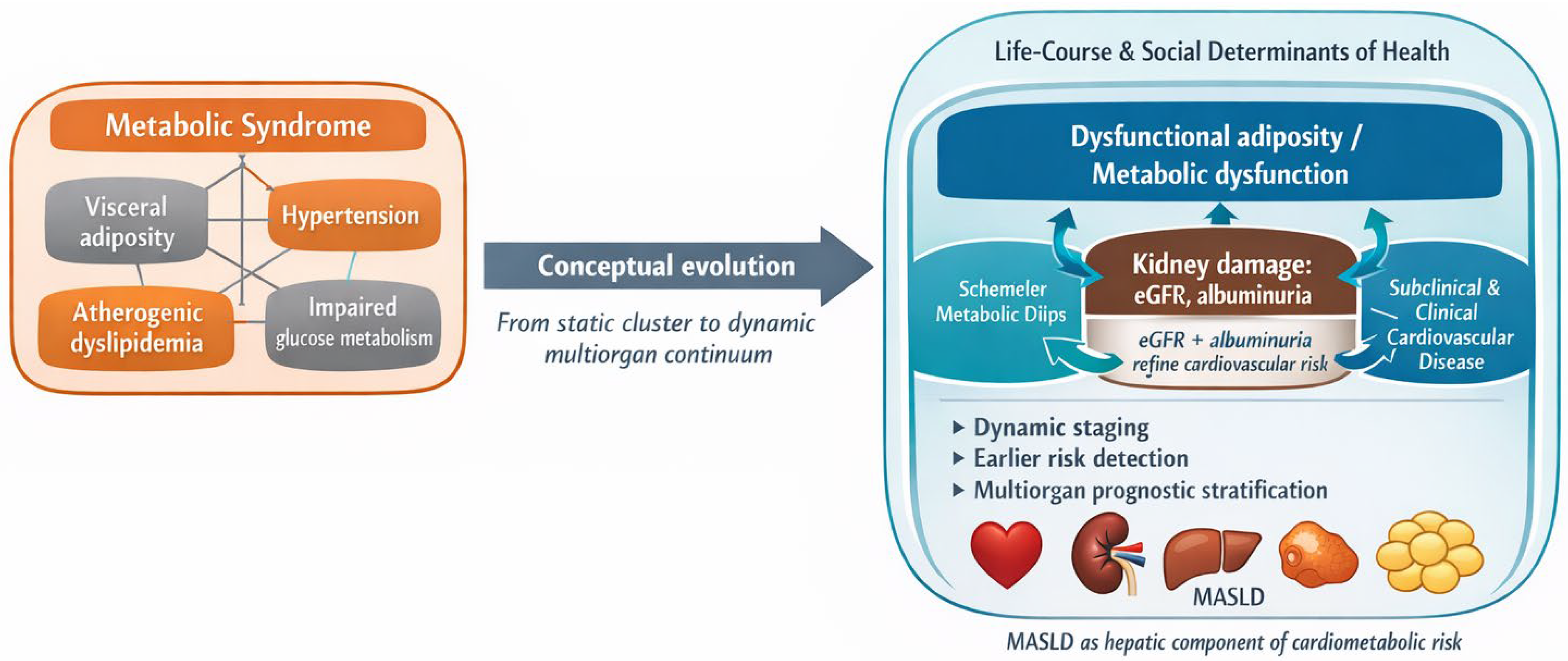
| Dimension | Metabolic Syndrome | CKM Framework | Added Clinical Value | References |
|---|---|---|---|---|
| Conceptual focus | Cluster of cardiometabolic risk factors used pragmatically for risk communication | Unified clinical-prognostic framework linking adiposity, metabolic dysfunction, kidney disease, and cardiovascular disease | Shifts the focus from factor clustering to integrated multiorgan risk interpretation | [1,2,6,13] |
| Disease model | Predominantly descriptive construct | Dynamic continuum from early dysmetabolism to overt renal and cardiovascular organ damage | Better reflects progression rather than a static coexistence of abnormalities | [6,13] |
| Organ involvement | Mainly centered on visceral adiposity, blood pressure, lipids, and glucose metabolism | Explicitly incorporates kidney involvement, subclinical and clinical cardiovascular disease, and MASLD within the same continuum | Broadens clinical reading of cardiorenometabolic multimorbidity | [1,2,6,8,9,11,12] |
| Risk interpretation | Identifies subjects at increased risk of diabetes and cardiovascular disease | Reinterprets risk as a shared prognostic trajectory shaped by interdependent metabolic, renal, and cardiovascular domains | Provides a more biologically coherent and clinically realistic reading of vulnerability | [1,2,6,8,13] |
| Renal dimension | Not structurally centered on renal markers | Integrates eGFR and albuminuria into risk definition and stratification | Enables earlier recognition of clinically relevant organ damage and refines prognostic assessment | [8,9,13] |
| Cardiovascular dimension | Mainly oriented toward future cardiovascular risk in broad terms | Includes subclinical cardiovascular disease and heart failure, not only atherosclerotic disease | Improves recognition of intermediate and advanced stages of disease progression | [6,8,9] |
| Longitudinal view | Does not frame patients within an explicit stage-based continuum | Places the patient along a potentially modifiable stage-based trajectory over time | Supports a more progressive and longitudinal interpretation of disease evolution | [8,9,13] |
| Contextual and life-course perspective | Largely absent from the traditional construct | Explicitly acknowledges cumulative exposures, life transitions, and social determinants of health | Makes risk assessment more consistent with real-world heterogeneity and progression | [6,8,10,13] |
| Practical clinical usefulness | Useful for identifying clustered metabolic risk | Useful for reorganizing multiorgan risk without claiming to be a new autonomous disease or a self-sufficient algorithm | Offers a more integrated framework for risk stratification while remaining compatible with clinical judgment and validated tools | [6,8,17,19,20] |
| Epidemiological/Prognostic Domain | Key Message from the Review | Clinical/Public Health Implication | Interpretive Caution Or Limitation | References |
|---|---|---|---|---|
| Nature of CKM epidemiology | CKM should be read as an integrated framework that reorganizes highly prevalent and overlapping metabolic, renal, and cardiovascular conditions, rather than as a new autonomous disease entity. | Supports a multiorgan reading of multimorbidity and helps interpret burden as a continuum rather than as isolated disorders. | Epidemiological estimates reflect the way existing conditions are clustered and staged, not the incidence of a distinct nosological entity. | [6,19,20] |
| Main source of current staging data | The most direct estimates of CKM burden come from application of CKM staging to US adults in NHANES 2011–2020. | Provides an initial population-level picture of how the continuum is distributed across stages. | Current staging estimates are derived mainly from US cohorts and should not be generalized without external validation. | [10,20] |
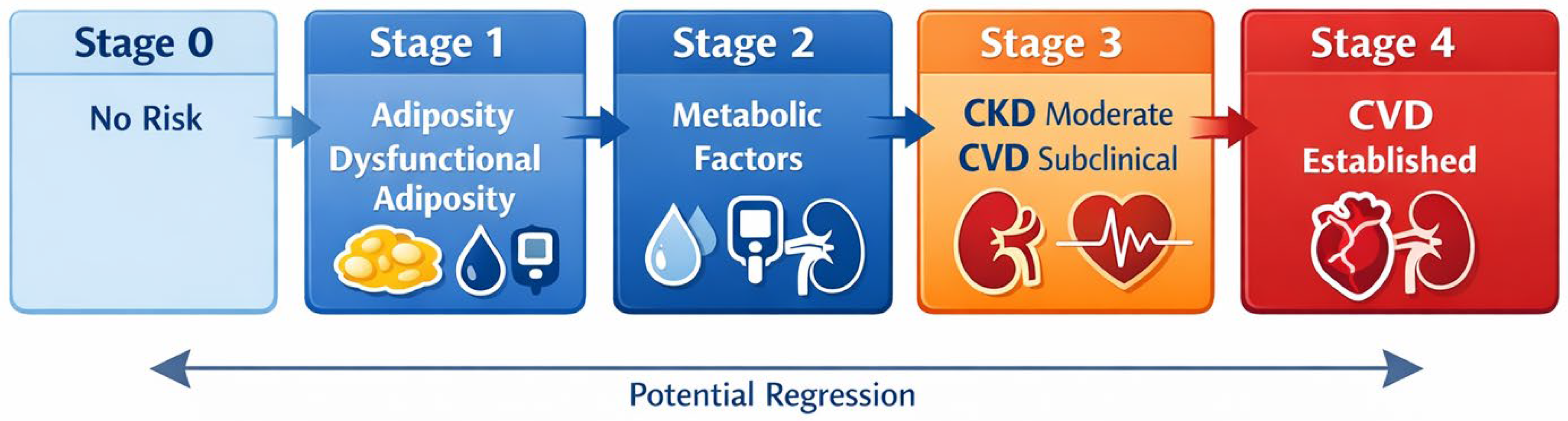
| Stage distribution and burden concentration | Only a minority of adults are classified as stage 0, whereas most burden is concentrated in stages 1–2; a non-negligible proportion is already in stages 3–4. | Indicates that much of the burden lies in early or intermediate phases, before overt cardiovascular disease, with relevant implications for prevention and reclassification. | Stage distribution depends on how stages are operationalized and on availability of renal and subclinical cardiovascular assessments. | [9,21] |
| Public health meaning of stages 1–2 | Early and intermediate stages already include excess or dysfunctional adiposity, metabolic risk factors, and in stage 2 also CKD at moderate-to-high risk. | These stages are highly relevant because they represent a large pool of individuals in whom progression may still be modified through earlier recognition and prevention. | Their apparent prevalence may vary according to screening intensity and cohort characteristics. | [8,9,10,21] |
| Prognostic meaning of CKD, eGFR, and albuminuria | CKD, reduced eGFR, and albuminuria identify phenotypes at higher risk than suggested by a purely factor-centered interpretation. | Renal markers add prognostic depth and help identify clinically relevant vulnerability before overt cardiovascular events. | Their contribution to stage assignment and risk interpretation depends on consistent measurement and on the definitions adopted. | [8,10,19,21,25] |
| Relevance of subclinical cardiovascular disease | Subclinical cardiovascular disease contributes substantially to CKM burden by identifying a transition from risk-factor clustering to organ damage. | Improves prognostic stratification and highlights patients already on a more advanced trajectory despite absence of overt clinical events. | Detection is influenced by the availability and intensity of instrumental screening across settings. | [8,10,19,21,25] |
| Global burden convergence of obesity, diabetes, and CKD | Global trends show rising burden of overweight/obesity, diabetes, and CKD, reinforcing the epidemiological relevance of CKM as a convergent multiorgan continuum. | CKM is useful because it frames these common conditions as interacting drivers of shared long-term burden, not as separate epidemics only. | Global component trends do not automatically define uniform CKM-stage distributions across regions or systems. | [22,23,24] |
| Dependence on operational definitions and screening intensity | The prevalence of CKM stages depends on operational criteria, cohort composition, and the availability of measures such as eGFR, albuminuria, and markers of subclinical cardiovascular damage. | Reminds clinicians and researchers that staging-based burden estimates are method-dependent. | Comparisons across studies or settings may be distorted if ascertainment strategies differ. | [8,21] |
| Transferability across settings | US-derived estimates cannot be automatically transferred to other geographical or healthcare contexts. | Encourages context-aware interpretation of stage prevalence and prognostic meaning. | Differences in adiposity, diabetes, CKD, MASLD, access to care, and healthcare structure may alter both distribution and meaning of stages. | [8,10,19,21,25] |
| Need for external validation and local calibration | Broader validation in non-North American populations and local calibration of predictive tools are needed to preserve the robustness of the model. | Necessary before CKM-based epidemiological or prognostic tools are applied broadly across different populations. | Without validation and calibration, inappropriate generalization may weaken interpretive reliability. | [8,25,26] |
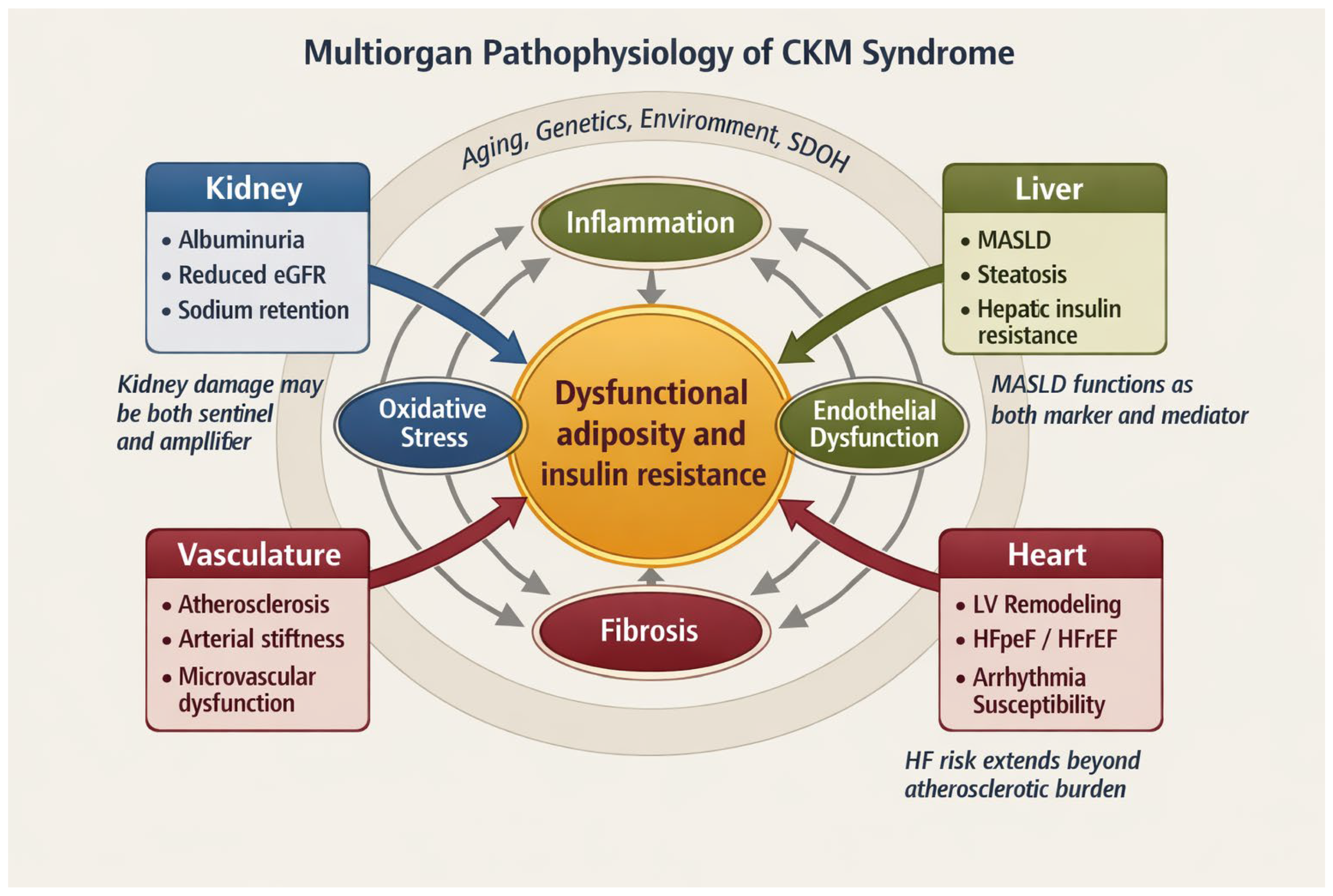
| Biological Node/Organ Domain | Main Pathophysiological Mechanisms | Systemic/Inter-Organ Effects | Role in CKM Progression | References |
|---|---|---|---|---|
| Dysfunctional adiposity | Loss of endocrine, immunometabolic, and vascular competence of adipose tissue; adipocyte hypertrophy, tissue hypoxia, macrophage infiltration, adipokine dysregulation, increased lipolysis, increased free fatty acid flux | Promotes hepatic and peripheral insulin resistance, chronic low-grade inflammation, endothelial dysfunction, oxidative stress, vascular and myocardial remodeling; contributes to hypertension, MASLD, glomerular hyperfiltration, and early vascular damage | Biological trigger of the continuum; transforms early adiposity-related risk into multiorgan vulnerability even before overt diabetes, CKD, or clinical heart disease | [13,28,31,32,33,34,35,36,37,38,39,40,41,43,44] |
| Insulin resistance/metabolic-inflammatory hub | Shared disturbance linking adiposity, altered glucose and lipid metabolism, lipotoxicity, oxidative stress, neurohormonal activation, and fibroinflammatory remodeling | Connects adipose tissue, liver, kidney, vasculature, and myocardium through self-amplifying metabolic-inflammatory circuits rather than isolated lesions | Central integrative hub that sustains transition from metabolic-inflammatory vulnerability to subclinical organ damage across CKM domains | [13,17,27,28,29,36,37,38,47,48] |
| MASLD/hepatic component | Excess lipid flux to the liver, hepatic triglyceride accumulation, insulin resistance, lipotoxicity, oxidative stress, mitochondrial dysfunction, altered fatty acid metabolism, increased gluconeogenesis, intrahepatic inflammation | Steatotic liver acts not only as target but also as effector organ; amplifies systemic dysmetabolism, lipotoxicity, inflammatory and vascular signaling through cross-talk with adipose tissue, endothelium, kidney, and myocardium | Hepatic biological node of CKM, contributing to propagation of systemic damage and to a less favorable cardiorenal profile | [12,13,29,45,46,47,48,49,50,51,52,53,54,55] |
| Kidney as early sentinel | Convergence of dysfunctional adiposity, hypertension, insulin resistance, hyperglycemia, endothelial dysfunction, and hemodynamic stress; glomerular hyperfiltration, increased intraglomerular pressure, barrier dysfunction, albuminuria | Early renal abnormalities signal broader endothelial and microvascular dysfunction; eGFR reduction and albuminuria refine cardiovascular and renal risk before overt CVD | Sentinel organ that detects early organ vulnerability and makes CKM risk clinically visible at a pre-overt stage | [6,13,15,18,19,56,57,58,59,60] |
| Kidney as late amplifier | Reduced renal reserve, sodium and water retention, congestion, RAAS activation, sympathetic overactivity; associated anemia, mineral metabolism disorders, and metabolic acidosis | Amplifies vasoconstriction, afterload, inflammation, fibrosis, myocardial and vascular remodeling, and further renal decline | Converts renal involvement from early marker into active driver of systemic cardiorenal progression | [11,13,18,61,62,63,64] |
| Vascular dysfunction and subclinical cardiovascular damage | Endothelial dysfunction, arterial stiffness, microvascular disease, pressure overload, lipotoxicity, systemic inflammation, hemodynamic alterations | Represents translation of metabolic and renal vulnerability into progressive organ damage; anticipates major cardiovascular events and documents established continuum progression | Intermediate but clinically relevant phase linking risk factors to overt cardiovascular disease | [6,8,13,18,65,66,67,68] |
| Myocardial remodeling/HF-prone phenotype | Combined pressure and volume overload, altered energy metabolism, ectopic fat accumulation, inflammation, microvascular dysfunction, renal impairment, congestion | Promotes ventricular hypertrophy, increased wall stiffness, altered ventriculo-arterial coupling, reduced functional reserve, and a substrate favorable to heart failure, especially HFpEF-related phenotypes | Cardiac expression of integrated CKM biology, not limited to ischemic disease; highlights heart failure as a central manifestation of the continuum | [42,66,68,70,71,72,73,74] |
| Self-reinforcing multiorgan feedback circuits | Shared dynamic circuits of inflammation, oxidative stress, endothelial dysfunction, neurohormonal activation, lipotoxicity, and fibroinflammatory remodeling operating across adipose tissue, liver, kidney, vasculature, and myocardium | Bidirectional cross-talk among organs perpetuates dysmetabolism, early renal damage, vascular injury, and cardiac remodeling | Explains why CKM is an integrated biological condition rather than the sum of separate comorbidities, and why progression is network-based rather than rigidly linear | [13,16,17,19,27,28,29,65] |
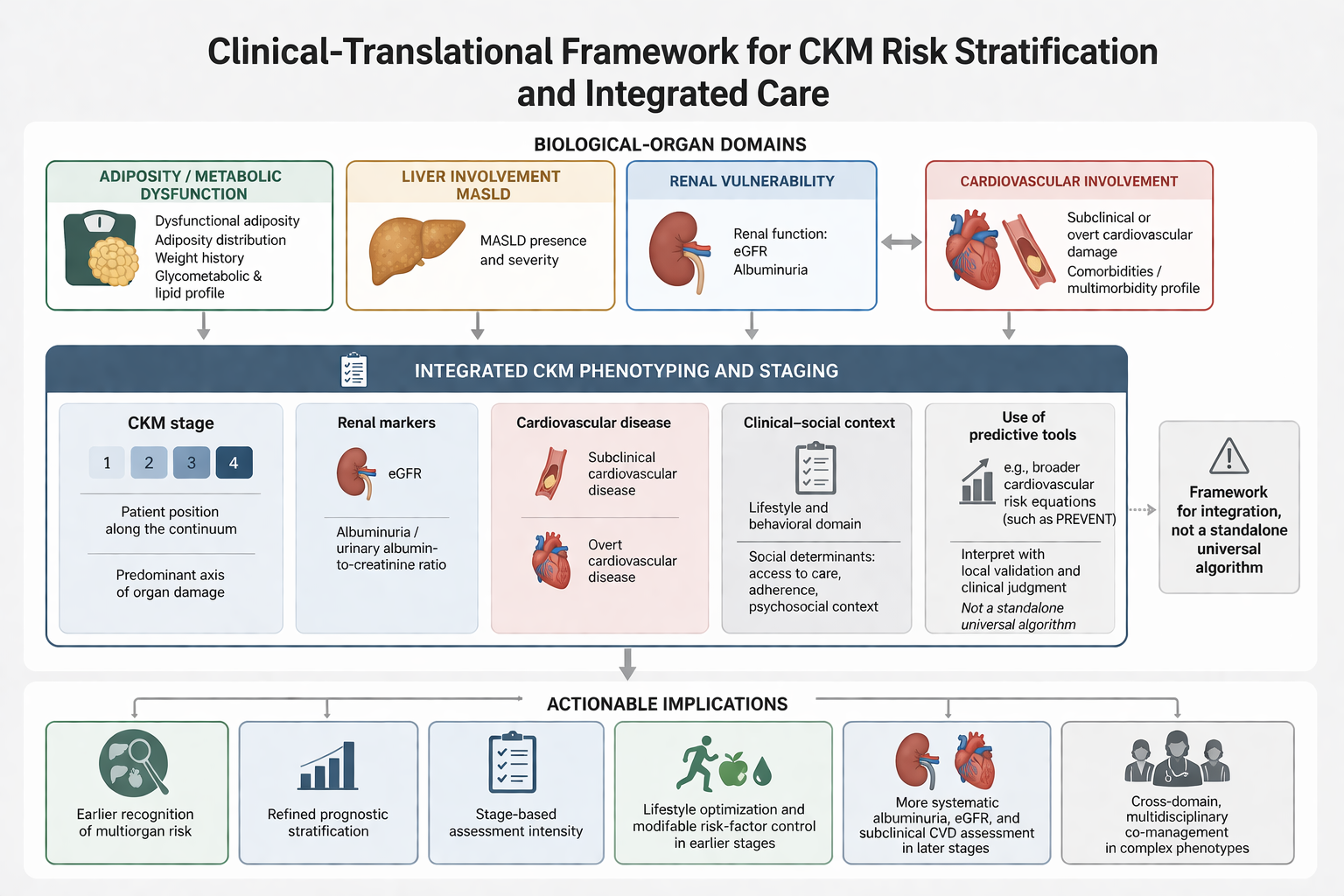
| Clinical Domain | Minimum Elements to Assess | Why it Matters in CKM | Practical Contribution to Integrated Evaluation | References |
|---|---|---|---|---|
| Anthropometry and adiposity profile | Weight history; adiposity distribution | Dysfunctional adiposity is an early driver of the continuum and may signal biologically relevant risk beyond a simple descriptive metabolic cluster | Helps position the patient along the continuum from early vulnerability to more advanced multiorgan involvement; supports phenotyping beyond isolated diagnoses | [6,13,16,18] |
| Blood pressure and hemodynamic profile | Blood pressure; overall hemodynamic profile | Hemodynamic load interacts with metabolic dysfunction and renal vulnerability, contributing to progression across CKM domains | Refines interpretation of vascular and cardiorenal burden within a multidimensional assessment | [6,8,13] |
| Glycemic and lipid-metabolic domain | Glycometabolic profile; lipid profile; presence of diabetes or prediabetes | Dysmetabolism remains a core axis of CKM and contributes to transition from metabolic risk to organ damage | Supports stage definition and integrated phenotyping of the metabolic component of multimorbidity | [2,6,8,13] |
| Renal assessment | Renal function with estimation of glomerular filtration rate; albuminuria | The renal axis is a distinctive prognostic component of CKM; early renal damage may identify vulnerable phenotypes underestimated by metabolic syndrome alone | Improves risk refinement, detects early organ involvement, and anchors multiorgan assessment to cardiorenal vulnerability | [6,9,15,19,86,87,88] |
| Cardiovascular assessment | Clinical or instrumental evidence of subclinical or overt cardiovascular damage | CKM explicitly includes subclinical cardiovascular disease and overt cardiovascular disease within the same continuum | Distinguishes intermediate versus advanced disease expression and improves staging-oriented interpretation of risk | [8,13,16,18,89,90,91] |
| Liver-related metabolic dysfunction | Presence and severity of MASLD | MASLD is integrated as a hepatic component of systemic metabolic dysfunction rather than an accessory comorbidity | Broadens CKM phenotyping and helps capture multiorgan burden more coherently | [45] |
| Comorbidities and multimorbidity profile | Associated comorbidities | CKM is clinically useful because it integrates coexisting metabolic, renal, cardiovascular, and related conditions within one framework | Prevents fragmented reading by single disease and supports recognition of the predominant axis of damage | [6,8,16,18] |
| Ongoing treatment and tolerability | Current therapies; tolerability | Clinical interpretation of CKM should be contextualized to the intensity of intervention required and to real-world patient complexity | Contributes to pragmatic phenotyping and to a realistic assessment of implementability in routine care | [13,16,18] |
| Lifestyle and behavioral domain | Lifestyle habits | CKM progression is shaped not only by biological damage but also by modifiable behavioral exposures | Adds practical context to risk interpretation and supports a less reductionist evaluation of disease trajectory | [6,8,13] |
| Social and contextual modifiers | Access to care; therapeutic adherence; psychosocial context; main social determinants of health | Social and contextual factors influence prevention, early diagnosis, and the actual possibility of effective care across the continuum | Completes multidimensional risk assessment by identifying factors that modulate staging expression, prognosis, and real-world vulnerability | [13,75,76,84,85] |
| Integrated risk interpretation | CKM stage integrated with patient position along the continuum, predominant axis of organ damage, and multidimensional clinical context | Staging alone is not self-sufficient; CKM has value when combined with refined phenotyping and validated tools interpreted within context | Synthesizes burden, organ involvement, and subclinical vulnerability into a clinically coherent cardiorenal-metabolic reading | [6,8,13,16,18,92,93] |
Disclaimer/Publisher’s Note: The statements, opinions and data contained in all publications are solely those of the individual author(s) and contributor(s) and not of MDPI and/or the editor(s). MDPI and/or the editor(s) disclaim responsibility for any injury to people or property resulting from any ideas, methods, instructions or products referred to in the content. |
© 2026 by the authors. Licensee MDPI, Basel, Switzerland. This article is an open access article distributed under the terms and conditions of the Creative Commons Attribution (CC BY) license.
Share and Cite
Acierno, C.; Orio, M.; Schiavo, L.; Saracino, A.; Stabile, E. From Metabolic Syndrome to Cardiovascular–Kidney–Metabolic Syndrome (CKM): A Clinical and Pathophysiological Continuum. Biomedicines 2026, 14, 790. https://doi.org/10.3390/biomedicines14040790
Acierno C, Orio M, Schiavo L, Saracino A, Stabile E. From Metabolic Syndrome to Cardiovascular–Kidney–Metabolic Syndrome (CKM): A Clinical and Pathophysiological Continuum. Biomedicines. 2026; 14(4):790. https://doi.org/10.3390/biomedicines14040790
Chicago/Turabian StyleAcierno, Carlo, Marcello Orio, Luigi Schiavo, Angelo Saracino, and Eugenio Stabile. 2026. "From Metabolic Syndrome to Cardiovascular–Kidney–Metabolic Syndrome (CKM): A Clinical and Pathophysiological Continuum" Biomedicines 14, no. 4: 790. https://doi.org/10.3390/biomedicines14040790
APA StyleAcierno, C., Orio, M., Schiavo, L., Saracino, A., & Stabile, E. (2026). From Metabolic Syndrome to Cardiovascular–Kidney–Metabolic Syndrome (CKM): A Clinical and Pathophysiological Continuum. Biomedicines, 14(4), 790. https://doi.org/10.3390/biomedicines14040790