Jionoside B1 Sensitizes TNBC to Cisplatin by Inhibiting SIRT3-Mediated Oxidative Stress Defense

Abstract
1. Introduction
2. Materials and Methods
- Reagents and antibodies
- Bioinformation analysis
- The molecular docking-based virtual screening
- Molecular dynamics
- Microscale thermophoresis
- Cell lines and cell culture
- CCK-8
- Assays
- Intracellular ROS assay
- Mitochondrial membrane potential (MMP) measurement
- Flow cytometry measurement of cell cycle
- Flow cytometry measurement of apoptosis cells
- Protein extraction and Western blot analysis
- Antitumor activity in vivo
- Immunohistochemical analysis
- Statistical analysis
3. Results
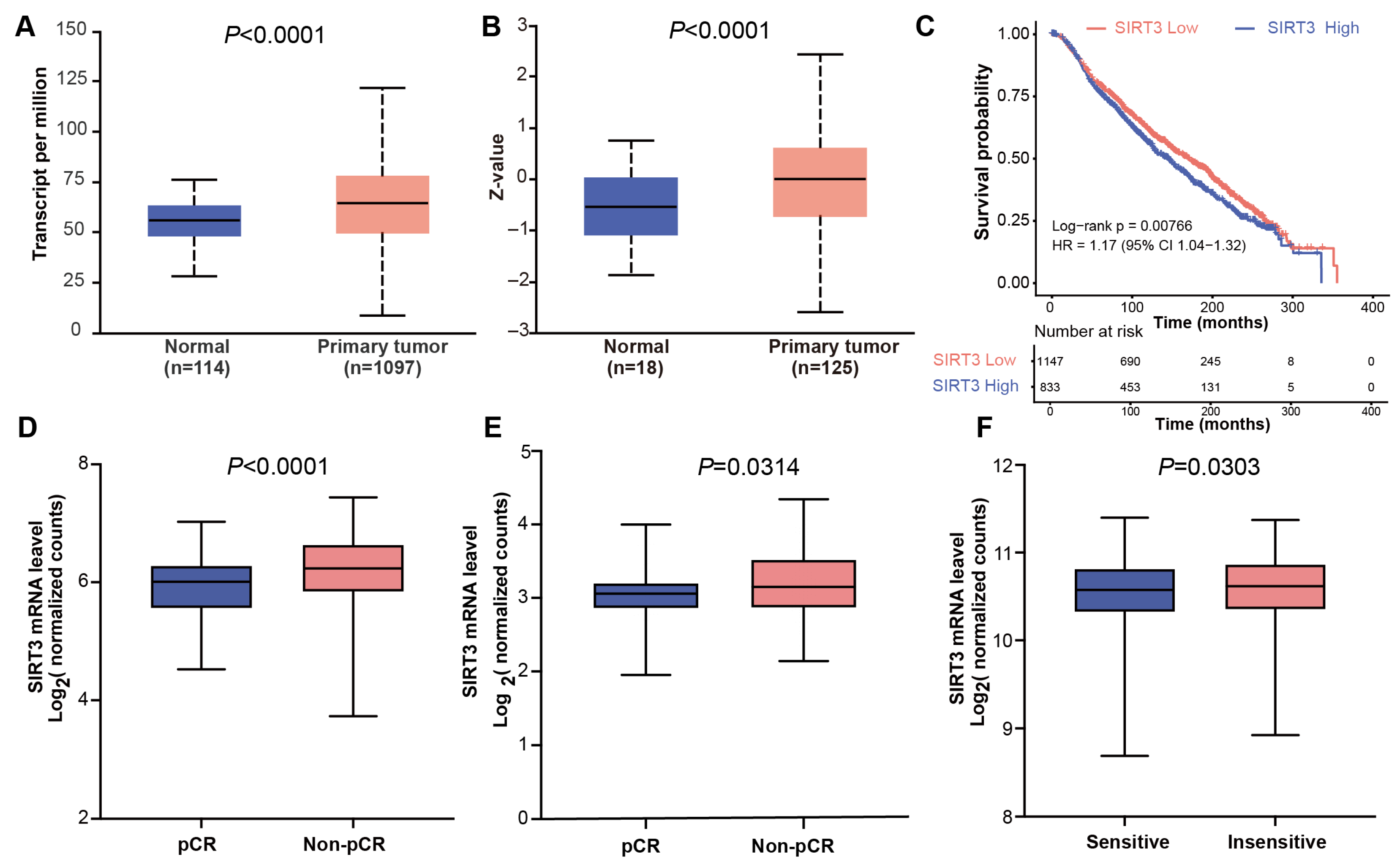
3.1. SIRT3 Is Overexpressed in BRCA and Is Associated with Poor Overall Survival and Chemotherapy Sensitivity
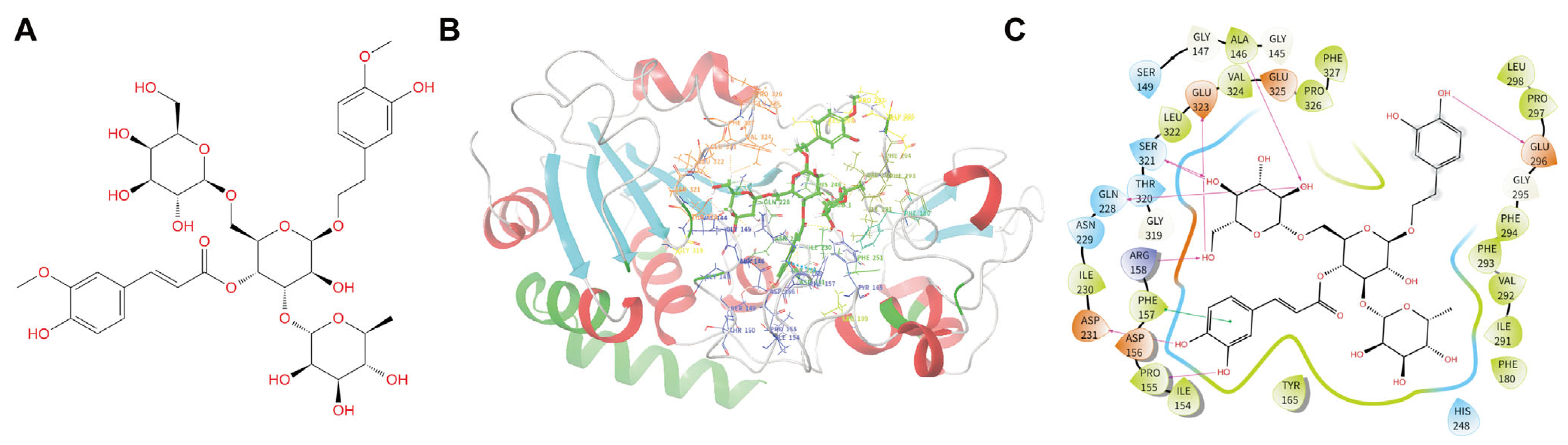
3.2. Molecular Docking-Based Virtual Screening for SIRT3 Inhibitor
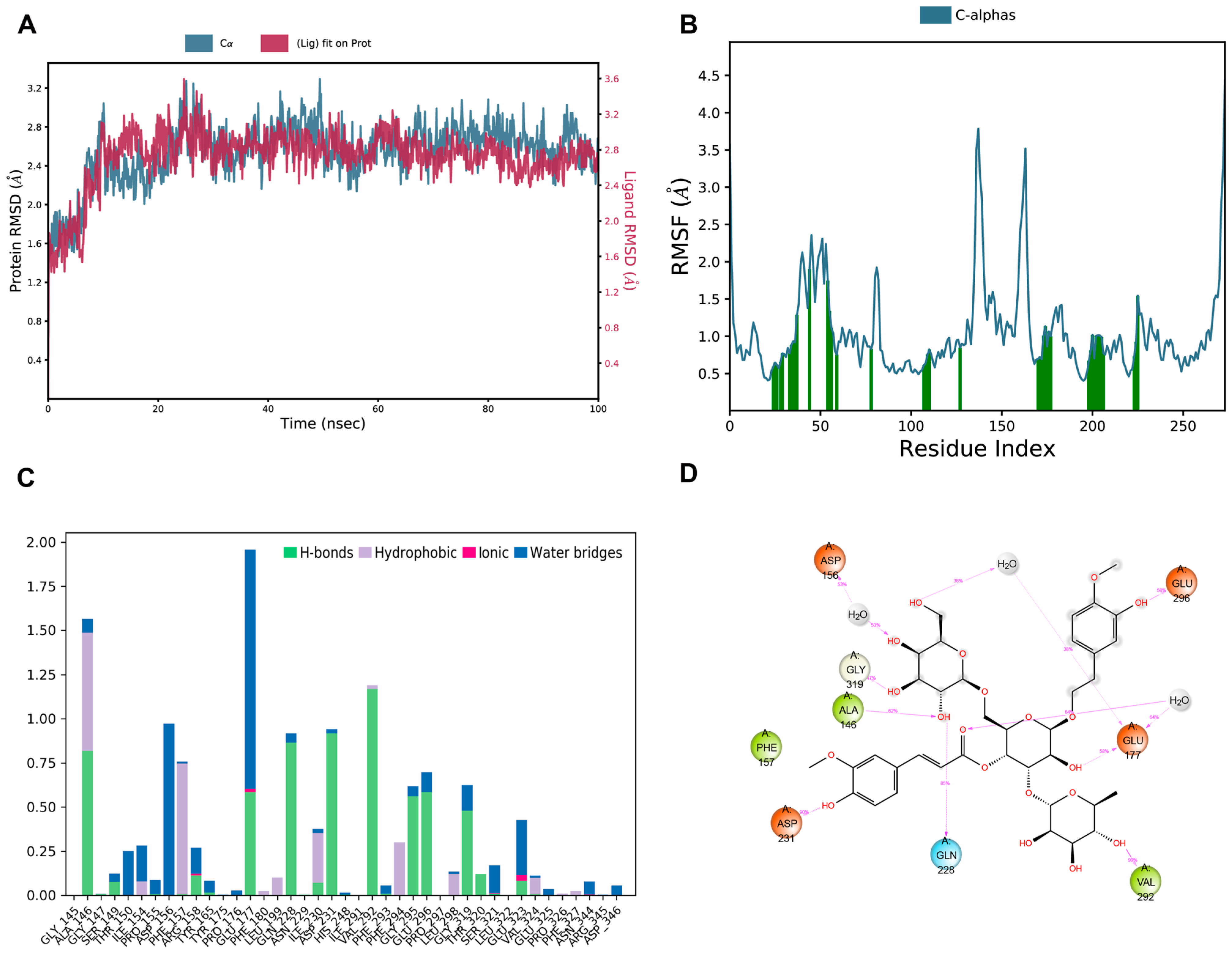
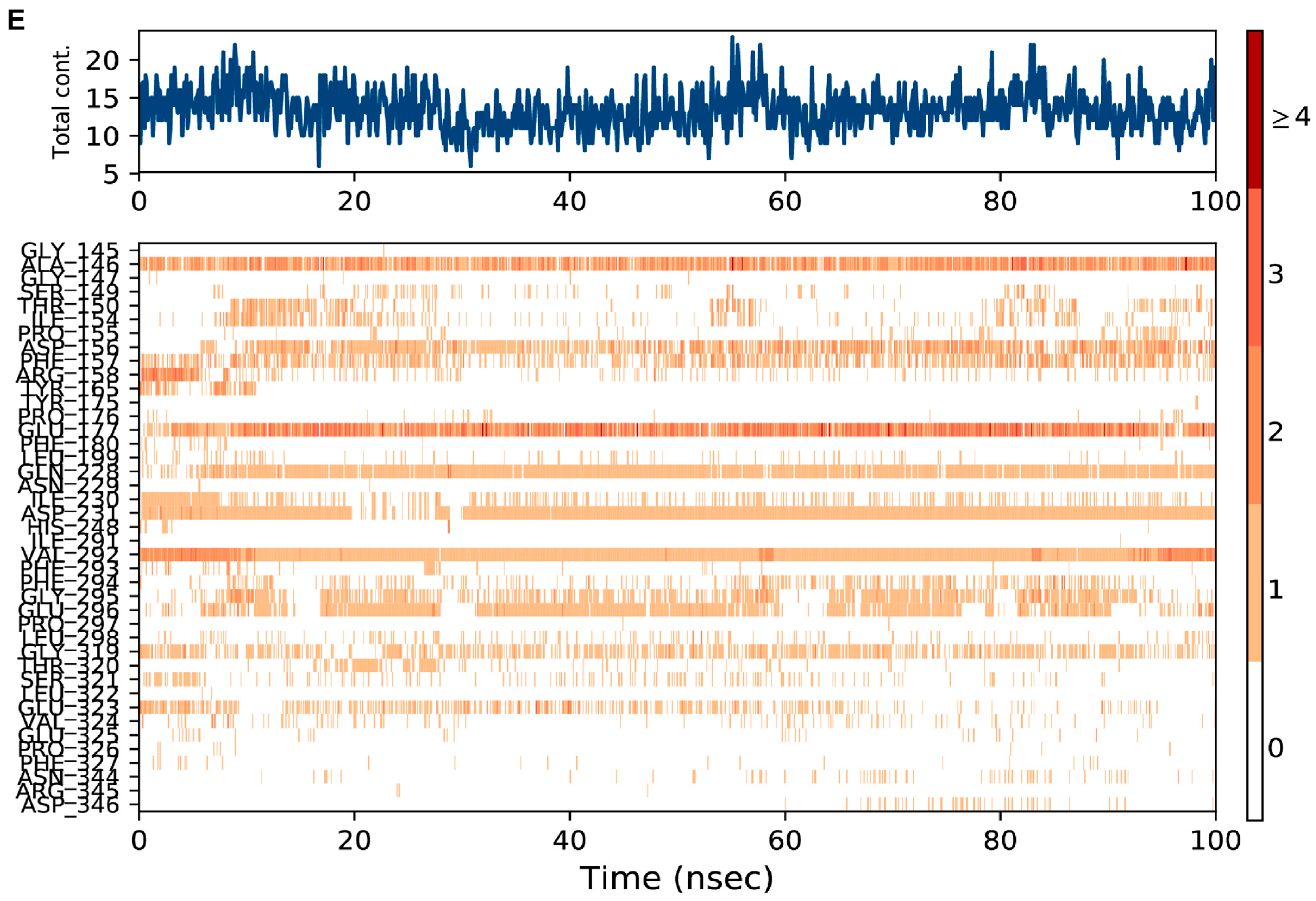
3.3. Molecular Dynamics Simulation Analysis
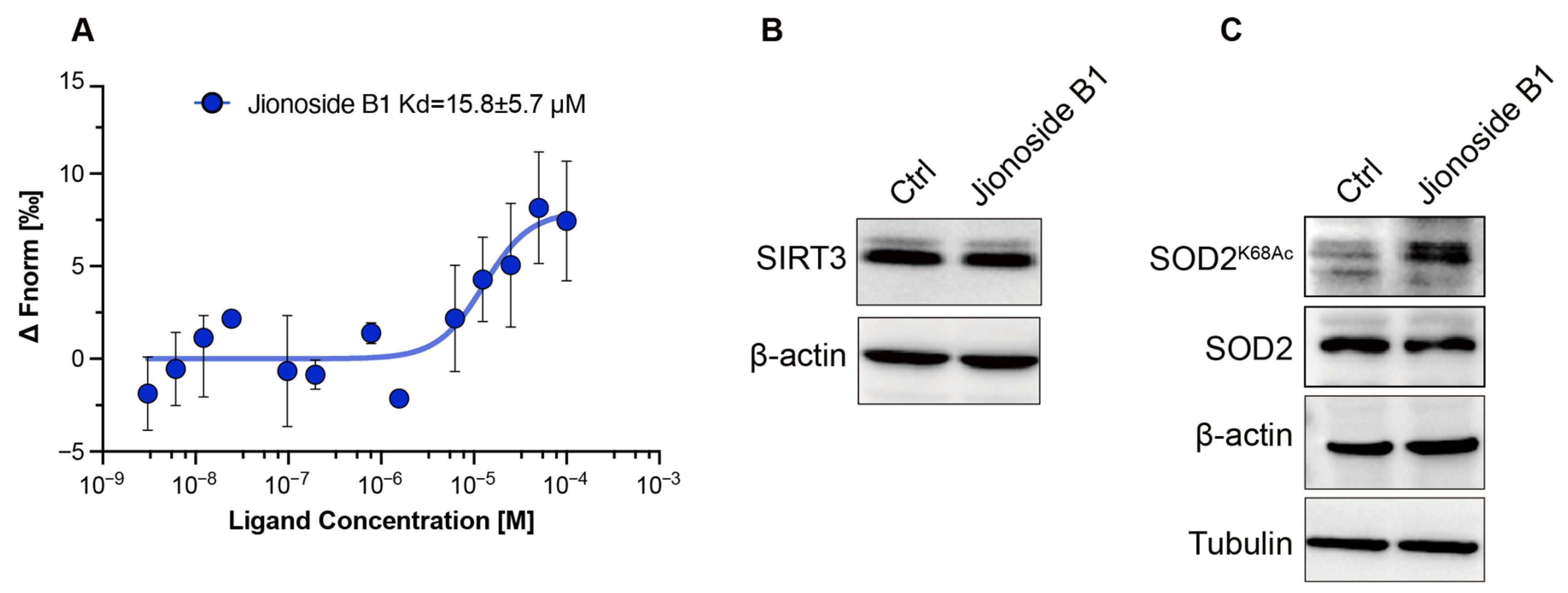
3.4. Jionoside B1 Binds SIRT3 with High Affinity and Inhibits Its Enzymatic Activity
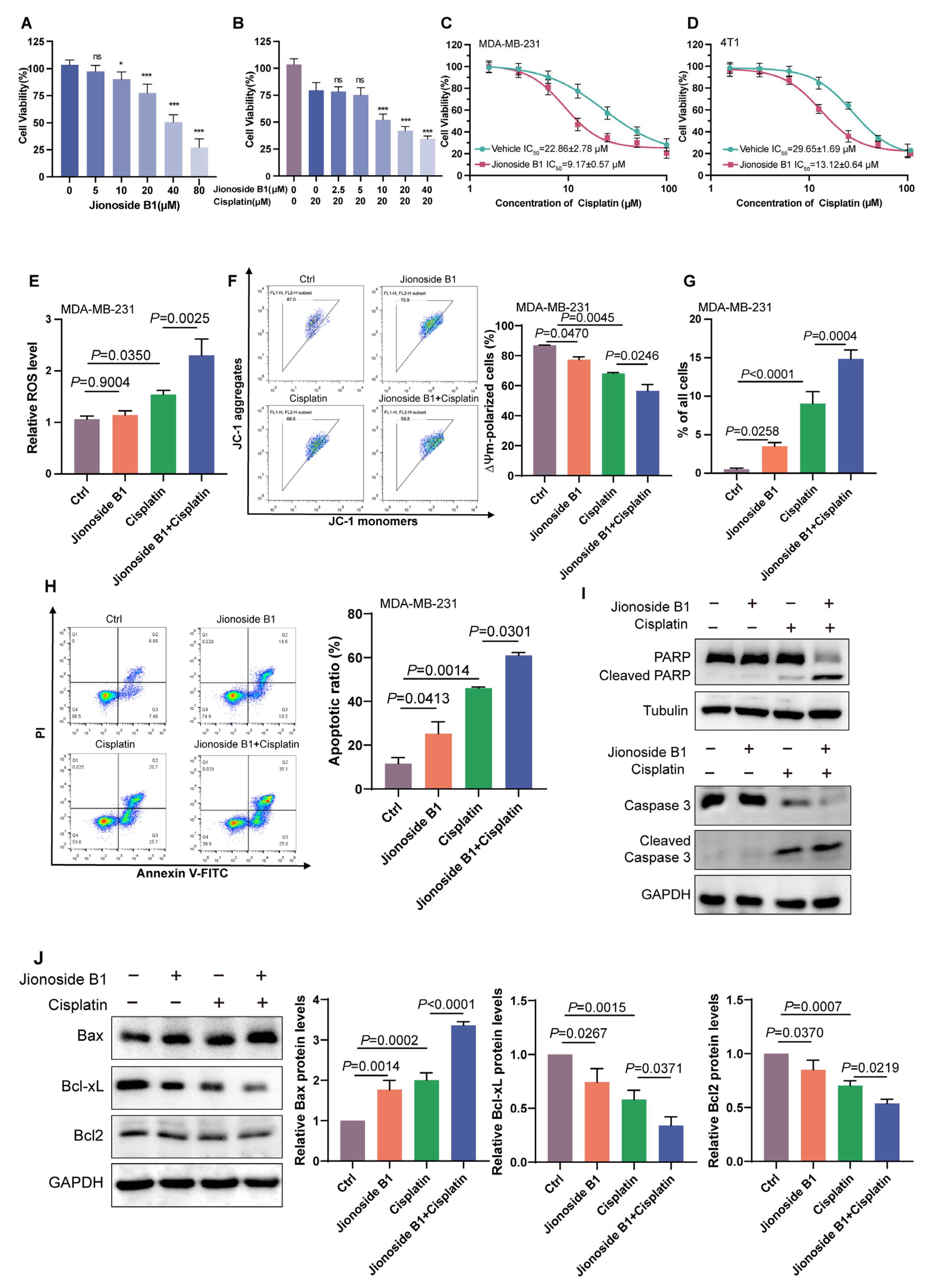
3.5. Jionoside B1 Enhances Cisplatin Sensitivity In Vitro
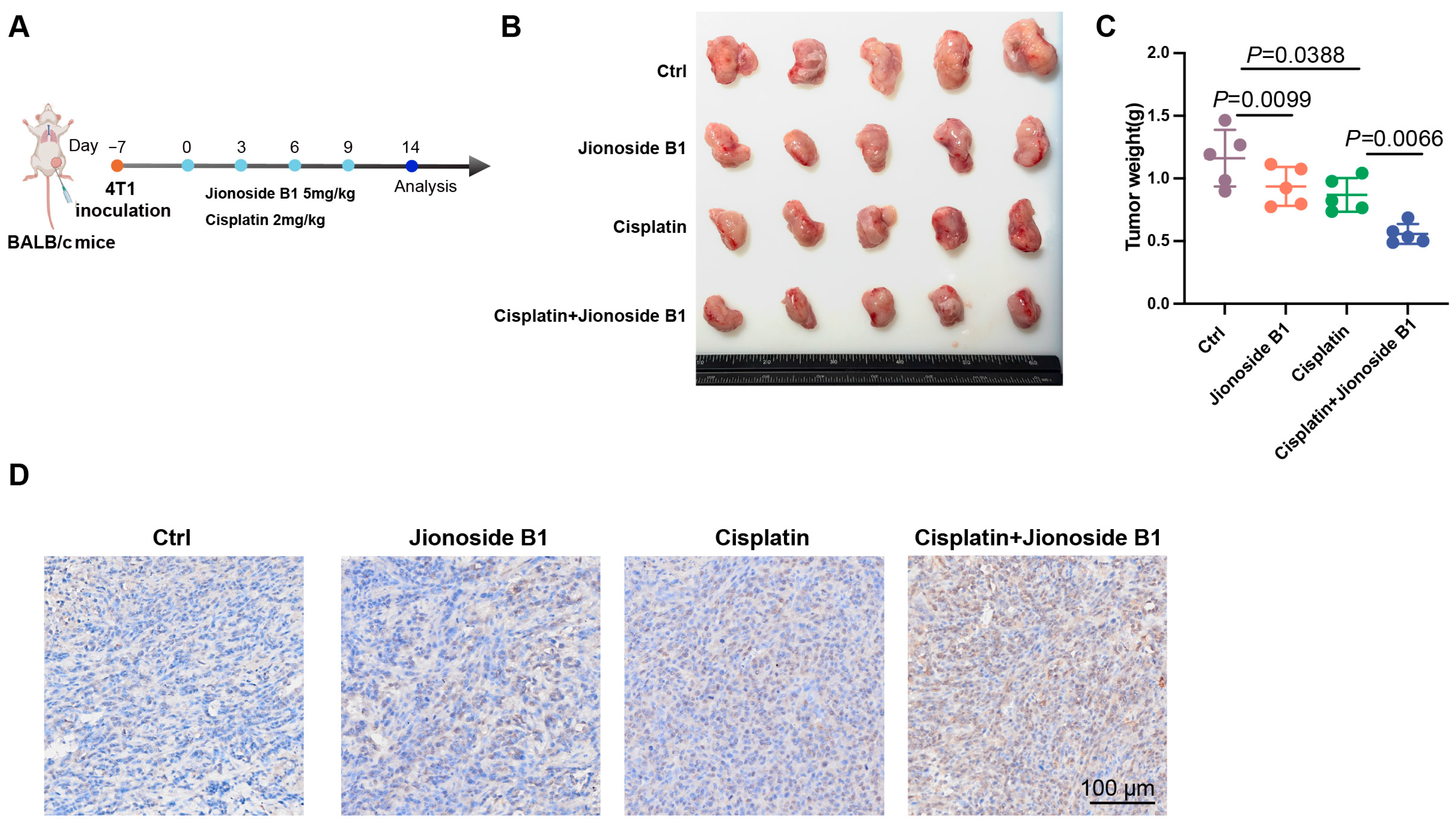
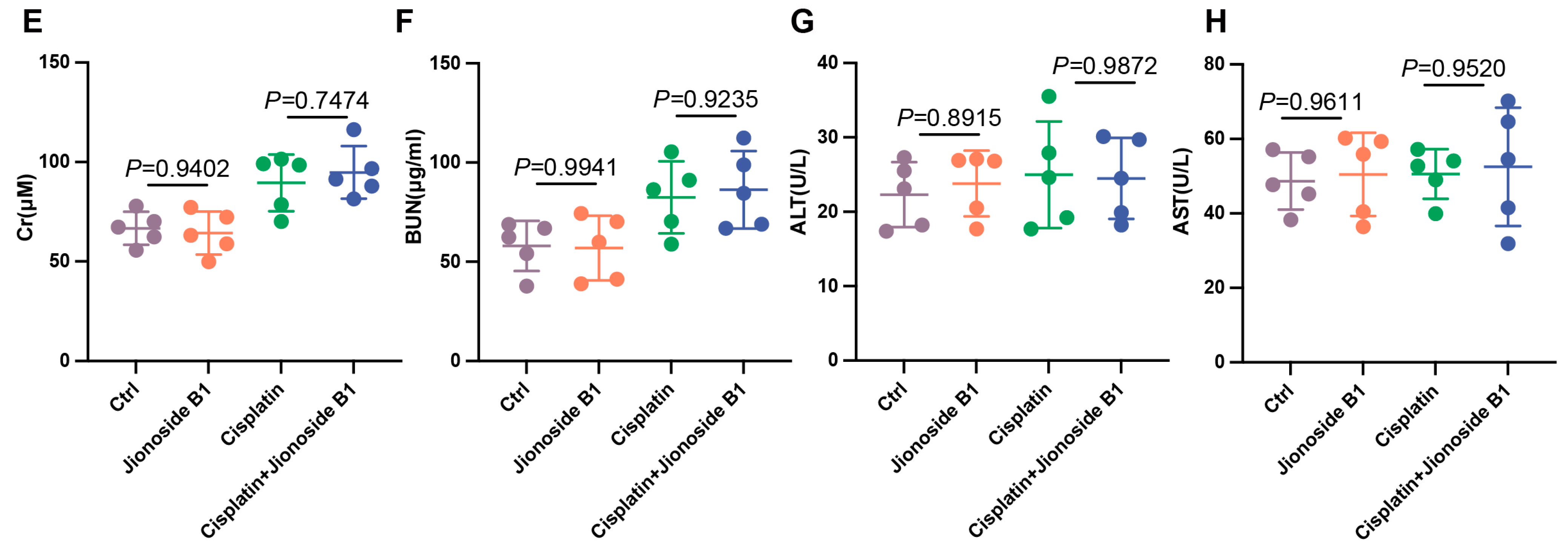
3.6. Jionoside B1 Enhances Cisplatin Sensitivity In Vivo
4. Discussion
Supplementary Materials
Author Contributions
Funding
Institutional Review Board Statement
Data Availability Statement
Conflicts of Interest
References
- Garrido-Castro, A.C.; Lin, N.U.; Polyak, K. Insights into Molecular Classifications of Triple-Negative Breast Cancer: Improving Patient Selection for Treatment. Cancer Discov. 2019, 9, 176–198. [Google Scholar] [CrossRef]
- Leon-Ferre, R.A.; Goetz, M.P. Advances in systemic therapies for triple negative breast cancer. BMJ 2023, 381, e071674. [Google Scholar] [CrossRef] [PubMed]
- Cheng, Y.; Zhao, A.; Li, Y.; Li, C.; Miao, X.; Yang, W.; Wang, Y. Roles of SIRT3 in cardiovascular and neurodegenerative diseases. Ageing Res. Rev. 2025, 104, 102654. [Google Scholar] [CrossRef] [PubMed]
- Zhang, J.; Ye, J.; Zhu, S.; Han, B.; Liu, B. Context-dependent role of SIRT3 in cancer. Trends Pharmacol. Sci. 2024, 45, 173–190. [Google Scholar] [CrossRef] [PubMed]
- Ning, Y.; Dou, X.; Wang, Z.; Shi, K.; Wang, Z.; Ding, C.; Sang, X.; Zhong, X.; Shao, M.; Han, X.; et al. SIRT3: A potential therapeutic target for liver fibrosis. Pharmacol. Ther. 2024, 257, 108639. [Google Scholar] [CrossRef]
- Zhou, L.; Pinho, R.; Gu, Y.; Radak, Z. The Role of SIRT3 in Exercise and Aging. Cells 2022, 11, 2596. [Google Scholar] [CrossRef]
- Chen, J.; Chen, S.; Zhang, B.; Liu, J. SIRT3 as a potential therapeutic target for heart failure. Pharmacol. Res. 2021, 165, 105432. [Google Scholar] [CrossRef]
- Shen, H.; Qi, X.; Hu, Y.; Wang, Y.; Zhang, J.; Liu, Z.; Qin, Z. Targeting sirtuins for cancer therapy: Epigenetics modifications and beyond. Theranostics 2024, 14, 6726–6767. [Google Scholar] [CrossRef]
- Chouhan, S.; Muhammad, N.; Usmani, D.; Khan, T.H.; Kumar, A. Molecular Sentinels: Unveiling the Role of Sirtuins in Prostate Cancer Progression. Int. J. Mol. Sci. 2024, 26, 183. [Google Scholar] [CrossRef]
- Alhazzazi, T.Y.; Kamarajan, P.; Verdin, E.; Kapila, Y.L. SIRT3 and cancer: Tumor promoter or suppressor? Biochim. Biophys. Acta 2011, 1816, 80–88. [Google Scholar] [CrossRef]
- Xiong, Y.; Wang, M.; Zhao, J.; Wang, L.; Li, X.; Zhang, Z.; Jia, L.; Han, Y. SIRT3 is correlated with the malignancy of non-small cell lung cancer. Int. J. Oncol. 2017, 50, 903–910. [Google Scholar] [CrossRef] [PubMed]
- Shen, H.; Ma, W.; Hu, Y.; Liu, Y.; Song, Y.; Fu, L.; Qin, Z. Mitochondrial Sirtuins in Cancer: A Revisited Review from Molecular Mechanisms to Therapeutic Strategies. Theranostics 2024, 14, 2993–3013. [Google Scholar] [CrossRef] [PubMed]
- Chen, Y.; Fu, L.L.; Wen, X.; Wang, X.Y.; Liu, J.; Cheng, Y.; Huang, J. Sirtuin-3 (SIRT3), a therapeutic target with oncogenic and tumor-suppressive function in cancer. Cell Death Dis. 2014, 5, e1047. [Google Scholar] [CrossRef] [PubMed]
- Chen, X.; He, J.; Ge, G.; Ma, S.; Chen, Z.; Zhang, L.; Gao, F.; Zhang, J. Eriocalyxin B induces ferroptosis through SIRT3 inhibition in triple-negative breast cancer. Phytomedicine 2025, 148, 157257. [Google Scholar] [CrossRef]
- Torrens-Mas, M.; Pons, D.G.; Sastre-Serra, J.; Oliver, J.; Roca, P. SIRT3 Silencing Sensitizes Breast Cancer Cells to Cytotoxic Treatments Through an Increment in ROS Production. J. Cell. Biochem. 2017, 118, 397–406. [Google Scholar] [CrossRef]
- Ashraf, N.; Zino, S.; Macintyre, A.; Kingsmore, D.; Payne, A.P.; George, W.D.; Shiels, P.G. Altered sirtuin expression is associated with node-positive breast cancer. Br. J. Cancer 2006, 95, 1056–1061. [Google Scholar] [CrossRef]
- Fan, X.; He, Y.; Wu, G.; Chen, H.; Cheng, X.; Zhan, Y.; An, C.; Chen, T.; Wang, X. Sirt3 activates autophagy to prevent DOX-induced senescence by inactivating PI3K/AKT/mTOR pathway in A549 cells. Biochim. Biophys. Acta Mol. Cell Res. 2023, 1870, 119411. [Google Scholar] [CrossRef]
- Lee, A.Y.; Christensen, S.M.; Duong, N.; Tran, Q.A.; Xiong, H.M.; Huang, J.; James, S.; Vallabh, D.; Talbott, G.; Rose, M.; et al. Sirt3 Pharmacologically Promotes Insulin Sensitivity through PI3/AKT/mTOR and Their Downstream Pathway in Adipocytes. Int. J. Mol. Sci. 2022, 23, 3740. [Google Scholar] [CrossRef]
- Liu, L.; Li, Y.; Cao, D.; Qiu, S.; Li, Y.; Jiang, C.; Bian, R.; Yang, Y.; Li, L.; Li, X.; et al. SIRT3 inhibits gallbladder cancer by induction of AKT-dependent ferroptosis and blockade of epithelial-mesenchymal transition. Cancer Lett. 2021, 510, 93–104. [Google Scholar] [CrossRef]
- Xu, K.; He, Y.; Moqbel, S.A.A.; Zhou, X.; Wu, L.; Bao, J. SIRT3 ameliorates osteoarthritis via regulating chondrocyte autophagy and apoptosis through the PI3K/Akt/mTOR pathway. Int. J. Biol. Macromol. 2021, 175, 351–360. [Google Scholar] [CrossRef]
- Chen, H.; Zhang, D.M.; Zhang, Z.P.; Li, M.Z.; Wu, H.F. SIRT3-mediated mitochondrial unfolded protein response weakens breast cancer sensitivity to cisplatin. Genes. Genom. 2021, 43, 1433–1444. [Google Scholar] [CrossRef] [PubMed]
- Ning, L.; Xie, N. SIRT3 Expression Predicts Overall Survival and Neoadjuvant Chemosensitivity in Triple-Negative Breast Cancer. Cancer Manag. Res. 2024, 16, 137–150. [Google Scholar] [CrossRef] [PubMed]
- Chen, Y.X.; Yang, H.; Wang, D.S.; Chen, T.T.; Qi, X.L.; Tao, L.; Chen, Y.; Shen, X.C. Gastrodin alleviates mitochondrial dysfunction by regulating SIRT3-mediated TFAM acetylation in vascular dementia. Phytomedicine 2024, 128, 155369. [Google Scholar] [CrossRef] [PubMed]
- Deng, Z.; He, M.; Hu, H.; Zhang, W.; Zhang, Y.; Ge, Y.; Ma, T.; Wu, J.; Li, L.; Sun, M.; et al. Melatonin attenuates sepsis-induced acute kidney injury by promoting mitophagy through SIRT3-mediated TFAM deacetylation. Autophagy 2024, 20, 151–165. [Google Scholar] [CrossRef]
- Hao, Y.; Zhou, Z.; Liu, R.; Shen, S.; Liu, H.; Zhou, Y.; Sun, Y.; Mao, Q.; Zhang, T.; Li, S.T.; et al. Mitochondria-localized MBD2c facilitates mtDNA transcription and drug resistance. Nat. Chem. Biol. 2025, 21, 926–938. [Google Scholar] [CrossRef]
- Lei, Y.; Wang, X.; Wu, H.; Gao, M.; Xu, T.; Lin, H. SiO2 NP promotes allergic gastritis induced by degranulation of mouse MC9 cell through AQP4-mediated impairment of SIRT3-TFAM deacetylation and mitochondrial autophagy. J. Hazard. Mater. 2025, 497, 139721. [Google Scholar] [CrossRef]
- Liang, N.N.; Guo, Y.Y.; Zhang, X.Y.; Ren, Y.H.; He, Y.Z.; Liu, Z.B.; Xu, D.X.; Xu, S. Mitochondrial Dysfunction-Evoked DHODH Acetylation is Involved in Renal Cell Ferroptosis during Cisplatin-Induced Acute Kidney Injury. Adv. Sci. 2024, 11, e2404753. [Google Scholar] [CrossRef]
- O’Brien, C.; Ling, T.; Berman, J.M.; Culp-Hill, R.; Reisz, J.A.; Rondeau, V.; Jahangiri, S.; St-Germain, J.; Macwan, V.; Astori, A.; et al. Simultaneous inhibition of Sirtuin 3 and cholesterol homeostasis targets acute myeloid leukemia stem cells by perturbing fatty acid β-oxidation and inducing lipotoxicity. Haematologica 2023, 108, 2343–2357. [Google Scholar] [CrossRef]
- Li, M.; Chiang, Y.L.; Lyssiotis, C.A.; Teater, M.R.; Hong, J.Y.; Shen, H.; Wang, L.; Hu, J.; Jing, H.; Chen, Z.; et al. Non-oncogene Addiction to SIRT3 Plays a Critical Role in Lymphomagenesis. Cancer Cell 2019, 35, 916–931.e9. [Google Scholar] [CrossRef]
- Pushpakom, S.; Iorio, F.; Eyers, P.A.; Escott, K.J.; Hopper, S.; Wells, A.; Doig, A.; Guilliams, T.; Latimer, J.; McNamee, C.; et al. Drug repurposing: Progress, challenges and recommendations. Nat. Rev. Drug Discov. 2019, 18, 41–58. [Google Scholar] [CrossRef]
- Jin, G.; Wong, S.T. Toward better drug repositioning: Prioritizing and integrating existing methods into efficient pipelines. Drug Discov. Today 2014, 19, 637–644. [Google Scholar] [CrossRef] [PubMed]
- Chandrashekar, D.S.; Bashel, B.; Balasubramanya, S.A.H.; Creighton, C.J.; Ponce-Rodriguez, I.; Chakravarthi, B.; Varambally, S. UALCAN: A Portal for Facilitating Tumor Subgroup Gene Expression and Survival Analyses. Neoplasia 2017, 19, 649–658. [Google Scholar] [CrossRef] [PubMed]
- Curtis, C.; Shah, S.P.; Chin, S.F.; Turashvili, G.; Rueda, O.M.; Dunning, M.J.; Speed, D.; Lynch, A.G.; Samarajiwa, S.; Yuan, Y.; et al. The genomic and transcriptomic architecture of 2,000 breast tumours reveals novel subgroups. Nature 2012, 486, 346–352. [Google Scholar] [CrossRef] [PubMed]
- Hatzis, C.; Pusztai, L.; Valero, V.; Booser, D.J.; Esserman, L.; Lluch, A.; Vidaurre, T.; Holmes, F.; Souchon, E.; Wang, H.; et al. A genomic predictor of response and survival following taxane-anthracycline chemotherapy for invasive breast cancer. JAMA 2011, 305, 1873–1881. [Google Scholar] [CrossRef]
- Sota, Y.; Seno, S.; Naoi, Y.; Honma, K.; Shimoda, M.; Tanei, T.; Matsuda, H.; Shimazu, K. IRSN-23 gene diagnosis enhances breast cancer subtype classification and predicts response to neoadjuvant chemotherapy: New validation analyses. Breast Cancer 2025, 32, 566–581. [Google Scholar] [CrossRef]
- Park, Y.H.; Lal, S.; Lee, J.E.; Choi, Y.L.; Wen, J.; Ram, S.; Ding, Y.; Lee, S.H.; Powell, E.; Lee, S.K.; et al. Chemotherapy induces dynamic immune responses in breast cancers that impact treatment outcome. Nat. Commun. 2020, 11, 6175. [Google Scholar] [CrossRef]
- Trott, O.; Olson, A.J. AutoDock Vina: Improving the speed and accuracy of docking with a new scoring function, efficient optimization, and multithreading. J. Comput. Chem. 2010, 31, 455–461. [Google Scholar] [CrossRef]
- Van Der Spoel, D.; Lindahl, E.; Hess, B.; Groenhof, G.; Mark, A.E.; Berendsen, H.J. GROMACS: Fast, flexible, and free. J. Comput. Chem. 2005, 26, 1701–1718. [Google Scholar] [CrossRef]
- Yang, K.; Li, Z.; Chen, Y.; Yin, F.; Ji, X.; Zhou, J.; Li, X.; Zeng, T.; Fei, C.; Ren, C.; et al. Na, K-ATPase alpha1 cooperates with its endogenous ligand to reprogram immune microenvironment of lung carcinoma and promotes immune escape. Sci. Adv. 2023, 9, eade5393. [Google Scholar] [CrossRef]
- Wu, J.; Li, Y.; He, Q.; Yang, X. Exploration of the Use of Natural Compounds in Combination with Chemotherapy Drugs for Tumor Treatment. Molecules 2023, 28, 1022. [Google Scholar] [CrossRef]
- Mou, Y.; Wang, J.; Wu, J.; He, D.; Zhang, C.; Duan, C.; Li, B. Ferroptosis, a new form of cell death: Opportunities and challenges in cancer. J. Hematol. Oncol. 2019, 12, 34. [Google Scholar] [CrossRef]
- Rajendran, G.; Taylor, J.A., 3rd; Woolbright, B.L. Natural products as a means of overcoming cisplatin chemoresistance in bladder cancer. Cancer Drug Resist. 2021, 4, 69–84. [Google Scholar] [CrossRef]



| Rank | Title | Docking Score |
|---|---|---|
| 1 | Jionoside B1 | −12.777 |
| 2 | Echinacoside | −12.697 |
| 3 | Magnoloside F | −11.73 |
| 4 | Cassiaside B | −11.7 |
| 5 | Forsythoside F | −11.696 |
| 6 | Cassiaside B2 | −11.65 |
| 7 | Forsythoside B | −11.625 |
| 8 | Dactylorhin A | −11.606 |
| 9 | 1,2,3,6-Tetragalloylglucose | −11.511 |
| 10 | Parishin B | −11.482 |
| 11 | Jionoside A1 | −11.447 |
| 12 | Cistanoside A | −11.427 |
| 13 | Rubrofusarin gentiobioside | −11.37 |
| 14 | Nor-rubrofusarin gentiobioside | −11.369 |
| 15 | Parishin C | −11.323 |
| 16 | Magnoloside B | −11.275 |
| 17 | Tubuloside A | −11.269 |
| 18 | Levomefolic Acid | −11.238 |
| 19 | Poliumoside | −11.205 |
| 20 | Benzoylpaeoniflorin | −11.007 |
| 21 | Pentagalloylglucose | −10.846 |
| 22 | Camelliaside A | −10.838 |
| 23 | Myricoside | −10.833 |
| 24 | 11-oxo-mogroside V | −10.825 |
| 25 | Clerodendrin | −10.802 |
| 26 | Verbascoside | −10.674 |
| 27 | Secoisolariciresinol diglucoside | −10.661 |
| 28 | Angoroside C | −10.653 |
| 29 | Neohesperidin Dihydrochalcone | −10.644 |
| 30 | Naringin dihydrochalcone | −10.569 |
| 31 | Dauricine | −10.488 |
| 32 | Isoliquiritin apioside | −10.427 |
| 33 | Plantagoside | −10.404 |
| 34 | Myricitrin | −10.397 |
| 35 | Brandioside | −10.356 |
| 36 | Terrestrosin D | −10.353 |
| 37 | Complanatoside B | −10.341 |
| 38 | Clitorin | −10.291 |
| 39 | Plantamajoside | −10.238 |
| 40 | Militarine | −10.233 |
Disclaimer/Publisher’s Note: The statements, opinions and data contained in all publications are solely those of the individual author(s) and contributor(s) and not of MDPI and/or the editor(s). MDPI and/or the editor(s) disclaim responsibility for any injury to people or property resulting from any ideas, methods, instructions or products referred to in the content. |
© 2026 by the authors. Licensee MDPI, Basel, Switzerland. This article is an open access article distributed under the terms and conditions of the Creative Commons Attribution (CC BY) license.
Share and Cite
Xu, C.; Chen, Y.; Lin, H.; Chen, Y.; Yin, W. Jionoside B1 Sensitizes TNBC to Cisplatin by Inhibiting SIRT3-Mediated Oxidative Stress Defense. Biomedicines 2026, 14, 421. https://doi.org/10.3390/biomedicines14020421
Xu C, Chen Y, Lin H, Chen Y, Yin W. Jionoside B1 Sensitizes TNBC to Cisplatin by Inhibiting SIRT3-Mediated Oxidative Stress Defense. Biomedicines. 2026; 14(2):421. https://doi.org/10.3390/biomedicines14020421
Chicago/Turabian StyleXu, Chenming, Yan Chen, Hao Lin, Yan Chen, and Wu Yin. 2026. "Jionoside B1 Sensitizes TNBC to Cisplatin by Inhibiting SIRT3-Mediated Oxidative Stress Defense" Biomedicines 14, no. 2: 421. https://doi.org/10.3390/biomedicines14020421
APA StyleXu, C., Chen, Y., Lin, H., Chen, Y., & Yin, W. (2026). Jionoside B1 Sensitizes TNBC to Cisplatin by Inhibiting SIRT3-Mediated Oxidative Stress Defense. Biomedicines, 14(2), 421. https://doi.org/10.3390/biomedicines14020421