Hyaluronic Acid and Sodium Hypochlorite as Adjunctive Therapeutic Options for Patients with Periodontal Disease: A Systematic Review
 , , , and
Abstract
1. Introduction
1.1. Sodium Hypochlorite
1.2. Hyaluronic Acid
1.3. Objective
2. Materials and Methods
2.1. Research Conduct
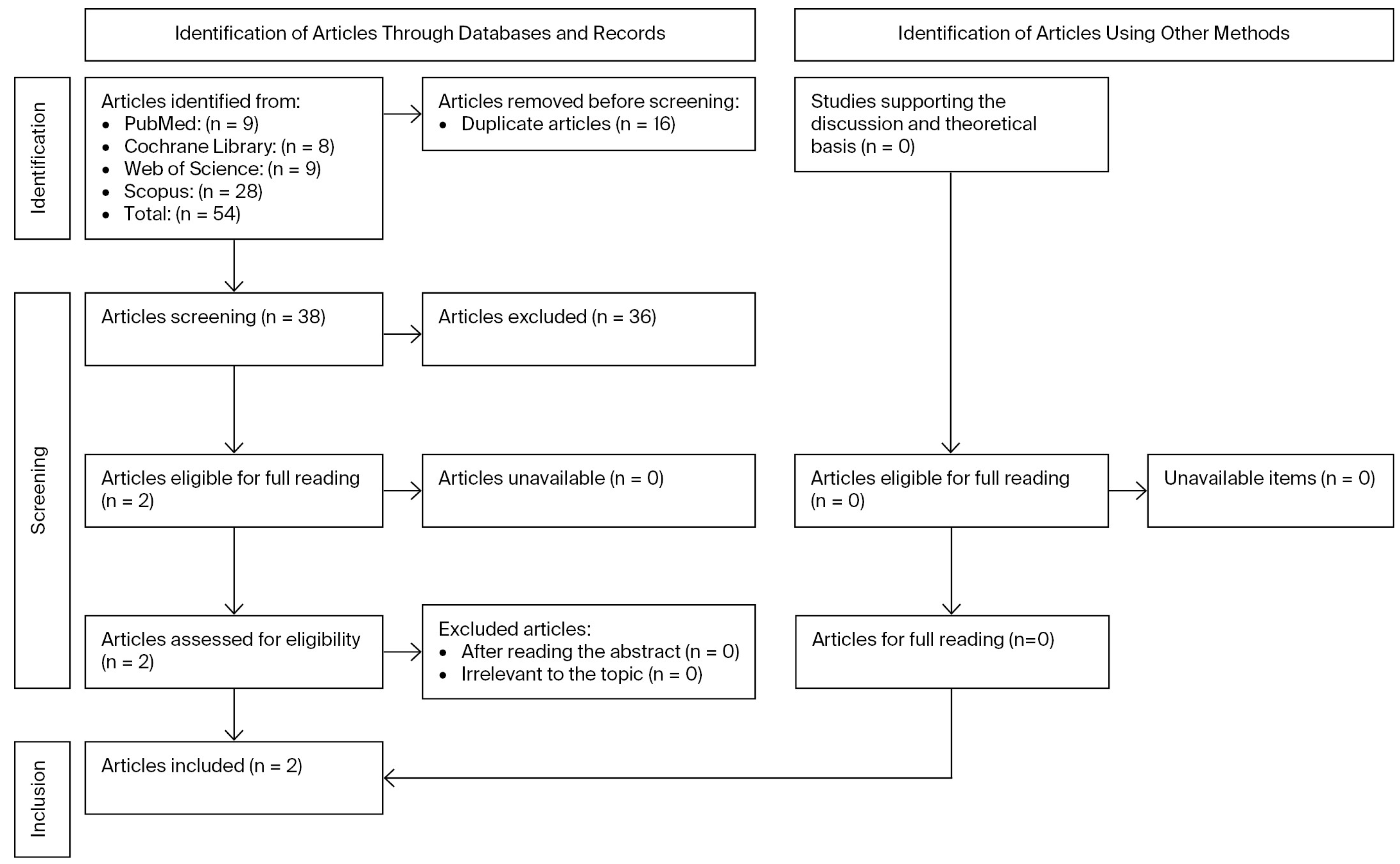
2.2. Study Selection
2.3. Inclusion Criteria
2.4. Exclusion Criteria
2.5. Screening Method
2.6. Extraction of Sample Data and Outcomes
2.7. Study Quality, Characteristics, and Risk of Bias
3. Results
3.1. Studies Characteristics
3.2. Adjuvant Characteristics
3.3. Output Measurement Methods and Results (Table 3)
3.3.1. Pocket Probing Depth (PPD)
3.3.2. Clinical Attachment Level (CAL)
3.3.3. Bleeding on Probing (BOP)
3.3.4. Approximal Plaque Index (API)/Plaque Index (PI)
3.3.5. Gingival Recession (GR)/Recession (REC)
3.3.6. Full Mouth Plaque Index (FMPI)
3.3.7. Full Mouth Bleeding on Probing (FMBOP)
3.4. Risk of Bias Assessment
4. Discussion
5. Conclusions
Author Contributions
Funding
Institutional Review Board Statement
Informed Consent Statement
Data Availability Statement
Conflicts of Interest
Abbreviations
| GR | Gingival recession; |
| PPD | Pocket probing depth; |
| CAL | Clinical attachment level; |
| BOP | Bleeding on probing; |
| PI | Plaque index; |
| FMPI | Full mouth plaque index; |
| FMBOP | Full mouth bleeding on probing; |
| REC | Recession; |
| xHyA | Cross-linked hyaluronic acid gel; |
| NaOCl | Sodium hypochlorite; |
| NSPT | Non-surgical periodontal therapy; |
| SRP | Scaling and root planning. |
Appendix A

| Author | Year | Title | Criteria |
|---|---|---|---|
| P. J. Palma; J. C. Ramos; J. B. Martins; A. Diogenes; M. H. Figueiredo; P. Ferreira; C. Viegas; J. M. Santos | 2017 | Histologic Evaluation of Regenerative Endodontic Procedures with the Use of Chitosan Scaffolds in Immature Dog Teeth with Apical Periodontitis | 2 + 6 |
| D. Diehl; A. Friedmann; P. Liedloff; R. M. Jung; A. Sculean; H. Bilhan | 2022 | Adjunctive Application of Hyaluronic Acid in Combination with a Sodium Hypochlorite Gel for Non-Surgical Treatment of Residual Pocket Reduces the Need for Periodontal Surgery-Retrospective Analysis of a Clinical Case Series | 1 |
| E. Ramanauskaite; V. Machiulskiene; U. M. Dvyliene; M. Eliezer; A. Sculean | 2023 | Clinical Evaluation of a Novel Combination of Sodium Hypochlorite/Amino Acid and Cross-linked Hyaluronic Acid Adjunctive to Non-surgical Periodontal Treatment: A Case Series | 1 |
| D. Irani; G. Jungbauer; A. Sculean; S. Eick | 2024 | Effect of sodium hypochlorite gel on bacteria associated with periodontal disease | 2 + 7 |
| Y. Shirakata; T. Nakamura; F. Setoguchi; T. Imafuji; Y. Shinohara; S. Matsumura; M. Iwata; K. Noguchi; E. Ramanauskaite; A. Sculean | 2024 | Histological evaluation of nonsurgical periodontal treatment with and without the use of sodium hypochlorit/amino acids and cross-linked hyaluronic acid gels in dogs | 2 |
| E. Ramanauskaite; V. M. Visockiene; Y. Shirakata; A. Friedmann; L. Pereckaite; A. Balciunaite; U. M. Dvyliene; A. Vitkauskiene; N. Baseviciene; A. Sculean | 2024 | Microbiological Effects of Sodium Hypochlorite/-Amino Acids and Cross-linked Hyaluronic Acid Adjunctive to Non-surgical Periodontal Treatment | 6 |
| A. Friedmann; R. Jung; H. Bilhan; H. A. Ghawi-Begovic; F. Kauffmann; D. Diehl | 2024 | Reconstructive surgical therapy of peri-implant defects with ribose cross-linked collagen matrix and crosslinked hyaluronic acid—a prospective case series | 1 + 3 |
| L. Ramaglia | 2023 | Treatment of Peri-implant Mucositis by Sodium Hypochlorite Gel and Cross-linked Hyaluronic Acid Gel | 4 |
| D. Diehl | 2024 | Regenerative potential of the combination of a sodium hypochlorite gel and high molecular weight hyaluronic acid as adjuvants in non-surgical periodontitis therapy—a randomized clinical trial | 4 |
| University of Witten/Herdecke | 2024 | Non-surgical Step 3 Periodontal Treatment With/Without Adjunctive Protocol—Pilot RCT | 4 |
| E. Catana | 2024 | Evaluation of the response to a protocol of treatment for severe periodontitis using subgingival instrumentation plus a combination of sodium hypochlorite and hyaluronic acid | 4 |
| K. Ismail | 2025 | Testing Sodium Hypochlorite and Hyaluronic Acid as na Adjunct to Non-Invasive Therapy for Stage III Periodontitis Management | 4 |
| H.A Gloria; M. Nemcová; E. Prikopová; D. Smejkalová; M. Pravda; L. Kucera; V. Velebny | 2012 | Reductive alkylation of hyaluronic acid for the synthesis of biocompatible hydrogels by click chemistry | 6 |
| Fujioka-Kobayashi, M.; Mueller, H.; Mueller, A.; Lussi, A.; Sculean, A.; Schmidlin, P. R.; Miron, R. J. | 2017 | In vitro effects of hyaluronic acid on human periodontal ligament cells | 2 + 7 |
| Mueller, A.; Fujioka-Kobayashi, M.; Mueller, H.; Lussi, A; Sculean, A.; Schmidlin, P. R.; Miron, R. J. | 2017 | Effect of hyaluronic acid on morphological changes to dentin surfaces and subsequent effect on periodontal ligament cell survival, attachment, and spreading | 7 |
| Varghese, J.; Ballal, V. | 2018 | Antimicrobial efficacy of a denovo anti-plaque agent against periodontal pathogens | 6 |
| Madla-Cruz, E.; De la Garza-Ramos, M.; Romo-Sáenz, C. I.; Tamez-Guerra, P.; Garza-Navarro, M. A.; Urrutia-Baca, V.; Martínex-Rodríguez, M. A.; Gomez-Flores, R. | 2020 | Antimicrobial activity and inhibition of biofilm formation in vitro and on human dentine by silver nanoparticles/carboxymethyl-cellulose composites | 6 |
| Mehrabkhani, M.; Parisay, I.; Mastoory, N.; Doghai, V. B. | 2021 | Effect of casein phosphopeptide amorphous calcium phosphate and xylitol chewing gums, and probiotic yogurt on periodontal parameters: A randomized clinical trial | 6 |
| Iorio-Siciliano, V.; Ramaglia, L.; Isola, G.; Blasi, A.; Salvi, G. E.; Sculean, A. | 2021 | Changes in clinical parameters following adjunctive local sodium hypochlorite gel in minimally invasive nonsurgical therapy (MINST) of periodontal pockets: a 6-month randomized controlled clinical trial | 7 |
| Shehatta, O.M.; Osman, A. L.; Elsayed, W. S.; Reddy, S.; Dsouza, J.; Abdelmagyd, H.; Shadroch, D. F. | 2022 | Antimicrobial Efficacy of Chlorhexidine and Hyaluronic Acid Mouthwashes on Streptococcus Viridans: An In-Vitro Study | 2 + 7 |
| Ariel, H.; Kahn, A.; Hila, Z.; Anton, S.; Natan, G.; Kolerman, R. | 2022 | A thermosensitive gel with an active hyaluronic acid ingredient that contains an octenidine preservation system as na adjunct to scaling and root planning: a randomized prospective clinical study | 6 |
| Perelli, M.; Abundo, R.; Semenza, M.; Centracchio, M.; Chiara, S. D.; Monaco, A.; Arduino, P. G. | 2022 | Preliminary Evaluation of a NitrAdine-Based Brushing Solution for Patients Suffering from Gingivitis: A Prospective Clinical Case-Control Study | 1 |
| Ribeiro, J. S.; Sanz, C. K.; Münchow, E. A.; Kalra, N.; Dubey, N.; Suárez, C. E. C.; Fenno, J. C.; Lund, R. G.; Bottino M. C. | 2022 | Photocrosslinkable methacrylated gelatin hydrogel as a cell-friendly injectable delivery system for chlorhexidine in regenerative endodontics | 6 |
| Bertl, K.; Vlachou, S.; Pandis, N.; Zampelis, a.; Stavropoulos, A. | 2024 | Repeated local delivery of hyaluronic acid gel as adjunctive treatment of residual pockets in periodontitis patients undergoing supportive periodontal care. A randomized controlled clinical trial | 7 |
| Portocarrero-Reyes, A.; Asmat-Abanto, A. S.; Ulloa-Cueva, T. V. | 2024 | Conventional and Herbal Mouthwashes in the Treatment of Periodontal Disease | 6 |
| Mišković, I.; Kuiš D.; Špalj, S.; Pupovac, A.; Prpić, J. | 2024 | Periodontal Health Status in Adults Exposed to Tobacco Heating System Aerosol and Cigarette Smoke vs. Non-Smokers: A Cross-Sectional Study | 1 |
| Babina, K.; Salikhova, D.; Makeeva, I.; Zaytsev, A.; Sokhova, I. Musaeva, S.; Polyakova, M.; Novozhilova, N. | 2024 | A Three-Month Probiotic (the Streptococcus salivarius M18 Strain) Supplementation Decreases Gingival Bleeding and Plaque Accumulation: A Randomized Clinical Trial | 6 |
| Ioro-Siciliano, V.; Marasca, D.; Mauriello, L.; Vaia, E.; Stratul, S.; Ramaglia, L. | 2024 | Treatment of peri-implant mucositis using spermidine and calcium chloride as local adjunctive delivery to non-surgical mechanical debridement: a double-blind randomized controlled clinical trial | 6 |
| Meyle, J.; Fischer-Wasels, L. | 2024 | Non-surgical treatment of peri-implantitis | 7 |
| Ioro-Siciliano, V.; Blasi, A.; Mauriello, L.; Salvi, G. E.; Ramaglia, L.; Sculean, A. | 2025 | Non-Surgical Treatment of Moderate Periodontal Intrabony Deffects with Adjunctive Cross-Linked Hyaluronic Acid: A Single-Blinded Randomized Controlled Clinical Trial | 7 |
| Gundogdu Ezer, U.; Gunpinar, S. | 2025 | Local application of 0.8% hyaluronic acid gel as adjunct to minimally invasive nonsurgical treatment of periodontal intrabony deffects—A randomized clinical trial | 7 |
| El Shakhs, R. A. E. A. E. S.; Badran, A. S.; Khattab, N. M. A. | 2025 | Antibacterial Effect of Hyaluronic Acid Compared to Propylene Glycol as Vehicle for Double Antibiotic paste Against Bacterial Strains in Non-Vital Primary Molar (In Vitro Study) | 2 |
| Sales, L.S.; Hewitt, B.; Muchova, M.; Brighenti, F. L.; Kuehne, S. A.; Grant, M. M.; Milward, M. R. | 2025 | Anti-inflammatory, antioxidant and antimicrobial evolution of morin | 6 |
| Al-Abbadi, R.; Shemais, N.; Nawwar, A.; Fawzy El-Sayed, K. M. | 2025 | Non-surgical periodontal therapy with and without hyaluronic acid gel in type 2 diabetic stage-II periodontitis patients: a randomized clinical trial | 7 |
| Saraç Atagün, Ö.; Ceylan-Şen, S.; Ustaoğlu, G.; Özcan, E. | 2025 | Evaluation of the effects of using an interdental brush dipped in 0.2% hyaluronic acid gel on clinical periodontal parameters among patients with periodontitis: a randomized controlled trial | 7 |
| Karkoutly, M.; Abu Hasna, A.; Nam, O. H.; Machado, R.; Al Kurdi, S.; Bshara, N. | 2025 | Clinical and radiographic outcomes after pulpotomies using mineral trioxide aggregate mixed with distilled water or 2.25% sodium hypochlorite gel: a randomized controlled clinical trial | 6 |
References
- Belibasakis, G.N.; Belstrøm, D.; Eick, S.; Gursoy, U.K.; Johansson, A.; Könönen, E. Periodontal microbiology and microbial etiology of periodontal diseases: Historical concepts and contemporary perspectives. Periodontol. 2000 2023, 1–17. [Google Scholar] [CrossRef]
- Borisy, G.G.; Valm, A.M. Spatial scale in analysis of the dental plaque microbiome. Periodontol. 2000 2021, 86, 97–112. [Google Scholar] [CrossRef]
- Sedghi, L.; DiMassa, V.; Harrington, A.; Lynch, S.V.; Kapila, Y.L. The oral microbiome: Role of key organisms and complex networks in oral health and disease. Periodontol. 2000 2021, 87, 107–131. [Google Scholar] [CrossRef] [PubMed]
- Papapanou, P.N.; Sanz, M.; Buduneli, N.; Dietrich, T.; Feres, M.; Fine, D.H.; Flemmig, T.F.; Garcia, R.; Giannobile, W.V.; Graziani, F.; et al. Periodontitis: Consensus report of workgroup 2 of the 2017 World Workshop on the Classification of Periodontal and Peri-Implant Diseases and Conditions. J. Periodontol. 2018, 89, S173–S182. [Google Scholar] [CrossRef] [PubMed]
- Pihlstrom, B.L.; Michalowicz, B.S.; Johnson, N.W. Periodontal diseases. Lancet 2005, 366, 1809–1820. [Google Scholar] [CrossRef] [PubMed]
- Papapanou, P.N. The Prevalence of Periodontitis in the US. J. Dent. Res. 2012, 91, 907–908. [Google Scholar] [CrossRef]
- Kassebaum, N.J.; Smith, A.G.C.; Bernabé, E.; Fleming, T.D.; Reynolds, A.E.; Vos, T.; Murray, C.J.L.; Marcenes, W.; GBD 2015 Oral Health Collaborators. Global, Regional, and National Prevalence, Incidence, and Disability-Adjusted Life Years for Oral Conditions for 195 Countries, 1990–2015: A Systematic Analysis for the Global Burden of Diseases, Injuries, and Risk Factors. J Dent. Res. 2017, 96, 380–387. [Google Scholar] [CrossRef]
- Chung, S.Y.; Song, K.B.; Lee, S.G.; Choi, Y.H. The strength of age effect on tooth loss and periodontal condition in Korean elderly. Arch. Gerontol. Geriatr. 2011, 53, e243–e248. [Google Scholar] [CrossRef]
- Eke, P.I.; Dye, B.A.; Wei, L.; Slade, G.D.; Thornton-Evans, G.O.; Borgnakke, W.S.; Taylor, G.W.; Page, R.C.; Beck, J.D.; Genco, R.J. Update on Prevalence of Periodontitis in Adults in the United States: NHANES 2009 to 2012. J. Periodontol. 2015, 86, 611–622. [Google Scholar] [CrossRef]
- Carasol, M.; Llodra, J.C.; Fernández-Meseguer, A.; Bravo, M.; García-Margallo, M.T.; Calvo-Bonacho, E.; Sanz, M.; Herrera, D. Periodontal conditions among employed adults in Spain. J. Clin. Periodontol. 2016, 43, 548–556. [Google Scholar] [CrossRef]
- König, J.; Holtfreter, B.; Kocher, T. Periodontal health in Europe: Future trends based on treatment needs and the provision of periodontal services—Position paper 1. Eur. J. Dent. Educ. 2010, 14, 4–24. [Google Scholar] [CrossRef]
- Schützhold, S.; Kocher, T.; Biffar, R.; Hoffmann, T.; Schmidt, C.O.; Micheelis, W.; Jordan, R.; Holtfreter, B. Changes in prevalence of periodontitis in two German population-based studies. J. Clin. Periodontol. 2015, 42, 121–130. [Google Scholar] [CrossRef]
- Darveau, R.P.; Curtis, M.A. Oral biofilms revisited: A novel host tissue of bacteriological origin. Periodontol. 2000 2021, 86, 8–13. [Google Scholar] [CrossRef]
- Jakubovics, N.S.; Goodman, S.D.; Mashburn-Warren, L.; Stafford, G.P.; Cieplik, F. The dental plaque biofilm matrix. Periodontol. 2000 2021, 86, 32–56. [Google Scholar] [CrossRef]
- Sanz, M.; Beighton, D.; Curtis, M.A.; Cury, J.A.; Dige, I.; Dommisch, H.; Ellwood, R.; Giacaman, R.A.; Herrera, D.; Herzberg, M.C.; et al. Role of microbial biofilms in the maintenance of oral health and in the development of dental caries and periodontal diseases. Consensus report of group 1 of the Joint EFP/ORCA workshop on the boundaries between caries and periodontal disease. J. Clin. Periodontol. 2017, 44, S5–S11. [Google Scholar] [CrossRef]
- Whittaker, C.J.; Klier, C.M.; Kolenbrander, P.E. Mechanisms of Adhesion by Oral Bacteria. Annu. Rev. Microbiol. 1996, 50, 513–552. [Google Scholar] [CrossRef] [PubMed]
- Filoche, S.; Wong, L.; Sissons, C.H. Oral Biofilms: Emerging Concepts in Microbial Ecology. J. Dent. Res. 2010, 89, 8–18. [Google Scholar] [CrossRef] [PubMed]
- Paster, B.J.; Boches, S.K.; Galvin, J.L.; Ericson, R.E.; Lau, C.N.; Levanos, V.A.; Sahasrabudhe, A.; Dewhirst, F.E. Bacterial Diversity in Human Subgingival Plaque. J. Bacteriol. 2001, 183, 3770–3783. [Google Scholar] [CrossRef] [PubMed]
- Paster, B.J.; Olsen, I.; Aas, J.A.; Dewhirst, F.E. The breadth of bacterial diversity in the human periodontal pocket and other oral sites. Periodontol. 2000 2006, 42, 80–87. [Google Scholar] [CrossRef]
- Becker, M.R.; Paster, B.J.; Leys, E.J.; Moeschberger, M.L.; Kenyon, S.G.; Galvin, J.L.; Boches, S.K.; Dewhirst, F.E.; Griffen, A.L. Molecular Analysis of Bacterial Species Associated with Childhood Caries. J. Clin. Microbiol. 2002, 40, 1001–1009. [Google Scholar] [CrossRef]
- Aas, J.A.; Paster, B.J.; Stokes, L.N.; Olsen, I.; Dewhirst, F.E. Defining the Normal Bacterial Flora of the Oral Cavity. J. Clin. Microbiol. 2005, 43, 5721–5732. [Google Scholar] [CrossRef] [PubMed]
- Aas, J.A.; Griffen, A.L.; Dardis, S.R.; Lee, A.M.; Olsen, I.; Dewhirst, F.E.; Leys, E.J.; Paster, B.J. Bacteria of Dental Caries in Primary and Permanent Teeth in Children and Young Adults. J. Clin. Microbiol. 2008, 46, 1407–1417. [Google Scholar] [CrossRef] [PubMed]
- Preza, D.; Olsen, I.; Aas, J.A.; Willumsen, T.; Grinde, B.; Paster, B.J. Bacterial Profiles of Root Caries in Elderly Patients. J. Clin. Microbiol. 2008, 46, 2015–2021. [Google Scholar] [CrossRef]
- Siddiqui, R.; Badran, Z.; Boghossian, A.; Alharbi, A.M.; Alfahemi, H.; Khan, N.A. The increasing importance of the oral microbiome in periodontal health and disease. Future Sci. OA 2023, 9, FSO856. [Google Scholar] [CrossRef]
- Sanz, M.; Herrera, D.; Kebschull, M.; Chapple, I.; Jepsen, S.; Beglundh, T.; Tonetti, M.S.; EFP Workshop Participants and Methodological Consultants. Treatment of stage I-III periodontitis-The EFP S3 level clinical practice guideline. J. Clin. Periodontol. 2020, 47, 4–60. [Google Scholar] [CrossRef] [PubMed]
- Ramanauskaite, E.; Machiulskiene, V. Antiseptics as adjuncts to scaling and root planing in the treatment of periodontitis: A systematic literature review. BMC Oral Health 2020, 20, 143. [Google Scholar] [CrossRef]
- Salvi, G.E.; Mombelli, A.; Mayfield, L.; Rutar, A.; Suvan, J.; Garrett, S.; Lang, N.P. Local antimicrobial therapy after initial periodontal treatment. J. Clin. Periodontol. 2002, 29, 540–550. [Google Scholar] [CrossRef]
- Smiley, C.J.; Tracy, S.L.; Abt, E.; Michalowicz, B.S.; John, M.T.; Gunsolley, J.; Cobb, C.M.; Rossmann, J.; Harrel, S.K.; Forrest, J.L.; et al. Systematic review and meta-analysis on the nonsurgical treatment of chronic periodontitis by means of scaling and root planing with or without adjuncts. J. Am. Dent. Assoc. 2015, 146, 508–524.e5. [Google Scholar] [CrossRef]
- Heitz-Mayfield, L.J.A.; Trombelli, L.; Heitz, F.; Needleman, I.; Moles, D. A systematic review of the effect of surgical debridement vs non-surgical debridement for the treatment of chronic periodontitis. J. Clin. Periodontol. 2002, 29, 92–102. [Google Scholar] [CrossRef]
- Heitz-Mayfield, L.J.A. How effective is surgical therapy compared with nonsurgical debridement? Periodontol. 2000 2005, 37, 72–87. [Google Scholar] [CrossRef] [PubMed]
- Suvan, J.; Leira, Y.; Moreno Sancho, F.M.; Graziani, F.; Derks, J.; Tomasi, C. Subgingival instrumentation for treatment of periodontitis. A systematic review. J. Clin. Periodontol. 2020, 47, 155–175. [Google Scholar] [CrossRef]
- Diehl, D.; Friedmann, A.; Liedloff, P.; Jung, R.M.; Sculean, A.; Bilhan, H. Adjunctive Application of Hyaluronic Acid in Combination with a Sodium Hypochlorite Gel for Non-Surgical Treatment of Residual Pockets Reduces the Need for Periodontal Surgery—Retrospective Analysis of a Clinical Case Series. Materials 2022, 15, 6508. [Google Scholar] [CrossRef]
- Selam, M.N.; Tegegne, A.M.; Ababu, A.; Matsabisa, M.; Birhanu, G. Surface Disinfection Practice in Public Hospitals in the Era of COVID-19: Assessment of Disinfectant Solution Preparation and Use in Addis Ababa, Ethiopia. Infect. Drug Resist. 2023, 16, 3213–3224. [Google Scholar] [CrossRef]
- Cai, C.; Chen, X.; Li, Y.; Jiang, Q. Advances in the Role of Sodium Hypochlorite Irrigant in Chemical Preparation of Root Canal Treatment. Biomed. Res. Int. 2023, 2023, 8858283. [Google Scholar] [CrossRef] [PubMed]
- Haapasalo, M.; Shen, Y.; Wang, Z.; Gao, Y. Irrigation in endodontics. Br. Dent. J. 2014, 216, 299–303. [Google Scholar] [CrossRef] [PubMed]
- Costa, F.O.; Takenaka-Martinez, S.; Cota, L.O.M.; Ferreira, S.D.; Silva, G.L.M.; Costa, J.E. Peri-implant disease in subjects with and without preventive maintenance: A 5-year follow-up. J. Clin. Periodontol. 2012, 39, 173–181. [Google Scholar] [CrossRef] [PubMed]
- Jurczyk, K.; Nietzsche, S.; Ender, C.; Sculean, A.; Eick, S. In-vitro activity of sodium-hypochlorite gel on bacteria associated with periodontitis. Clin. Oral Investig. 2016, 20, 2165–2173. [Google Scholar] [CrossRef]
- Roos-Jansåker, A.M.; Almhöjd, U.S.; Jansson, H. Treatment of peri-implantitis: Clinical outcome of chloramine as an adjunctive to non-surgical therapy, a randomized clinical trial. Clin. Oral Implant. Res. 2017, 28, 43–48. [Google Scholar] [CrossRef]
- Olczyk, P.; Komosińska-Vassev, K.; Winsz-Szczotka, K.; Kuźnik-Trocha, K.; Olczyk, K. Hyaluronan: Structure, metabolism, functions, and role in wound healing. Postepy Hig. Med. Dosw. 2008, 62, 651–659. [Google Scholar] [PubMed]
- Scully, M.F.; Kakkar, V.V.; Goodwin, C.A.; O’Regan, M. Inhibition of fibrinolytic activity by hyaluronan and its alcohol ester derivatives. Thromb. Res. 1995, 78, 255–258. [Google Scholar] [CrossRef]
- Deed, R.; Rooney, P.; Kumar, P.; Norton, J.D.; Smith, J.; Freemont, A.J.; Kumar, S. Early-response gene signalling is induced by angiogenic oligosaccharides of hyaluronan in endothelial cells. Inhibition by non-angiogenic, high-molecular-weight hyaluronan. Int. J. Cancer 1997, 71, 251–256. [Google Scholar] [CrossRef]
- de Brito Bezerra, B.; Mendes Brazão, M.A.; de Campos, M.L.G.; Casati, M.Z.; Sallum, E.A.; Sallum, A.W. Association of hyaluronic acid with a collagen scaffold may improve bone healing in critical-size bone defects. Clin. Oral Implant. Res. 2012, 23, 938–942. [Google Scholar] [CrossRef] [PubMed]
- Kawano, M.; Ariyoshi, W.; Iwanaga, K.; Okinaga, T.; Habu, M.; Yoshioka, I.; Tominaga, K.; Nishihara, T. Mechanism involved in enhancement of osteoblast differentiation by hyaluronic acid. Biochem. Biophys. Res. Commun. 2011, 405, 575–580. [Google Scholar] [CrossRef]
- Sasaki, T.; Watanabe, C. Stimulation of osteoinduction in bone wound healing by high-molecular hyaluronic acid. Bone 1995, 16, 9–15. [Google Scholar] [CrossRef]
- Jepsen, S.; Berglundh, T.; Genco, R.; Aass, A.M.; Demirel, K.; Derks, J.; Figuero, E.; Giovannoli, J.L.; Goldstein, M.; Lambert, F.; et al. Primary prevention of peri-implantitis: Managing peri-implant mucositis. J. Clin. Periodontol. 2015, 42, S152–S157. [Google Scholar] [CrossRef]
- Iorio-Siciliano, V.; Ramaglia, L.; Isola, G.; Blasi, A.; Salvi, G.E.; Sculean, A. Changes in clinical parameters following adjunctive local sodium hypochlorite gel in minimally invasive nonsurgical therapy (MINST) of periodontal pockets: A 6-month randomized controlled clinical trial. Clin. Oral Investig. 2021, 25, 5331–5340. [Google Scholar] [CrossRef]
- Ramanauskaite, E.; Machiulskiene Visockiene, V.; Shirakata, Y.; Friedmann, A.; Pereckaite, L.; Balciunaite, A.; Dvyliene, U.M.; Vitkauskiene, A.; Baseviciene, N.; Sculean, A. Microbiological Effects of Sodium Hypochlorite/-Amino Acids and Cross-linked Hyaluronic Acid Adjunctive to Non-surgical Periodontal Treatment. Oral Health Prev. Dent. 2024, 22, 171–180. [Google Scholar] [CrossRef]
- Ramanauskaite, E.; Machiulskiene, V.; Shirakata, Y.; Dvyliene, U.M.; Nedzelskiene, I.; Sculean, A. Clinical evaluation of sodium hypochlorite/amino acids and cross-linked hyaluronic acid adjunctive to non-surgical periodontal treatment: A randomized controlled clinical trial. Clin. Oral Investig. 2023, 27, 6645–6656. [Google Scholar] [CrossRef]
- Ramanauskaite, E.; Machiulskiene, V.; Dvyliene, U.M.; Eliezer, M.; Sculean, A. Clinical Evaluation of a Novel Combination of Sodium Hypochlorite/Amino Acid and Cross-linked Hyaluronic Acid Adjunctive to Non-surgical Periodontal Treatment: A Case Series. Oral Health Prev. Dent. 2023, 21, 279–284. [Google Scholar] [CrossRef] [PubMed]
- Benyei, L.; Friedmann, A.; Ostermann, T.; Diehl, D. Non-surgical treatment of residual periodontal pockets using sodium hypochlorite/amino acid gel and cross-linked hyaluronic acid-a 9-month pilot randomized controlled clinical trial. Clin. Oral Investig. 2024, 28, 513. [Google Scholar] [CrossRef]
- Page, M.J.; McKenzie, J.E.; Bossuyt, P.M.; Boutron, I.; Hoffmann, T.C.; Mulrow, C.D.; Shamseer, L.; Tetzlaff, J.M.; Akl, E.A.; Brennan, S.E.; et al. The PRISMA 2020 statement: An updated guideline for reporting systematic reviews. BMJ 2021, 372, n71. [Google Scholar] [CrossRef] [PubMed]
- Alghamdi, A.S.; Almarghlani, A.A. Periodontal pathogenic bacteria among high school children in Saudi Arabia. Ann. Saudi Med. 2019, 39, 244–250. [Google Scholar] [CrossRef]
- Costalonga, M.; Herzberg, M.C. The oral microbiome and the immunobiology of periodontal disease and caries. Immunol. Lett. 2014, 162, 22–38. [Google Scholar] [CrossRef]
- Nędzi-Góra, M.; Kowalski, J.; Górska, R. The Immune Response in Periodontal Tissues. Arch. Immunol. Ther. Exp. 2017, 65, 421–429. [Google Scholar] [CrossRef] [PubMed]
- Stokowa-Sołtys, K.; Wojtkowiak, K.; Jagiełło, K. Fusobacterium nucleatum—Friend or foe? J. Inorg. Biochem. 2021, 224, 111586. [Google Scholar] [CrossRef]
- Megally, A.; Zekeridou, A.; Cancela, J.; Giannopoulou, C.; Mombelli, A. Short ultrasonic debridement with adjunctive low-concentrated hypochlorite/amino acid gel during periodontal maintenance: Randomized clinical trial of 12 months. Clin. Oral Investig. 2020, 24, 201–209. [Google Scholar] [CrossRef]
- Radulescu, V.; Boariu, M.I.; Rusu, D.; Roman, A.; Surlin, P.; Voicu, A.; Didilescu, A.C.; Jentsch, H.; Siciliano, V.I.; Ramaglia, L.; et al. Clinical and microbiological effects of a single application of sodium hypochlorite gel during subgingival re-instrumentation: A triple-blind randomized placebo-controlled clinical trial. Clin. Oral Investig. 2022, 26, 6639–6652. [Google Scholar] [CrossRef]
- Iorio-Siciliano, V.; Blasi, A.; Stratul, S.I.; Ramaglia, L.; Sculean, A.; Salvi, G.E.; Rusu, D. Anti-infective therapy of peri-implant mucositis with adjunctive delivery of a sodium hypochlorite gel: A 6-month randomized triple-blind controlled clinical trial. Clin. Oral Investig. 2020, 24, 1971–1979. [Google Scholar] [CrossRef] [PubMed]
- Asparuhova, M.B.; Kiryak, D.; Eliezer, M.; Mihov, D.; Sculean, A. Activity of two hyaluronan preparations on primary human oral fibroblasts. J. Periodontal Res. 2019, 54, 33–45. [Google Scholar] [CrossRef]
- Asparuhova, M.B.; Chappuis, V.; Stähli, A.; Buser, D.; Sculean, A. Role of hyaluronan in regulating self-renewal and osteogenic differentiation of mesenchymal stromal cells and pre-osteoblasts. Clin. Oral Investig. 2020, 24, 3923–3937. [Google Scholar] [CrossRef]
- Cosyn, J.; Wyn, I.; De Rouck, T.; Sabzevar, M.M. Subgingival Chlorhexidine Varnish Administration as an Adjunct to Same-Day Full-Mouth Root Planing. I. Clinical Observations. J. Periodontol. 2007, 78, 430–437. [Google Scholar] [CrossRef]
- Eliezer, M.; Imber, J.C.; Sculean, A.; Pandis, N.; Teich, S. Hyaluronic acid as adjunctive to non-surgical and surgical periodontal therapy: A systematic review and meta-analysis. Clin. Oral Investig. 2019, 23, 3423–3435. [Google Scholar] [CrossRef]
- Yıldırım, S.; Özener, H.Ö.; Doğan, B.; Kuru, B. Effect of topically applied hyaluronic acid on pain and palatal epithelial wound healing: An examiner-masked, randomized, controlled clinical trial. J. Periodontol. 2018, 89, 36–45. [Google Scholar] [CrossRef]
- Schmidlin, P.R.; Fujioka-Kobayashi, M.; Mueller, H.D.; Sculean, A.; Lussi, A.; Miron, R.J. Effects of air polishing and an amino acid buffered hypochlorite solution to dentin surfaces and periodontal ligament cell survival, attachment, and spreading. Clin. Oral Investig. 2017, 21, 1589–1598. [Google Scholar] [CrossRef] [PubMed]
- Rajan, P.; Dusanapudi, L.; Kumar, C.; Nair, D. Hyaluronic acid—A simple, unusual polysaccharide: A potential mediator for periodontal regeneration. Univers. Res. J. Dent. 2013, 3, 113. [Google Scholar] [CrossRef]
- King, S.R.; Hickerson, W.L.; Proctor, K.G. Beneficial actions of exogenous hyaluronic acid on wound healing. Surgery 1991, 109, 76–84. [Google Scholar] [PubMed]
- Pilloni, A.; Schmidlin, P.R.; Sahrmann, P.; Sculean, A.; Rojas, M.A. Effectiveness of adjunctive hyaluronic acid application in coronally advanced flap in Miller class I single gingival recession sites: A randomized controlled clinical trial. Clin. Oral Investig. 2019, 23, 1133–1141. [Google Scholar] [CrossRef]
- Mueller, A.; Fujioka-Kobayashi, M.; Mueller, H.D.; Lussi, A.; Sculean, A.; Schmidlin, P.R.; Miron, R.J. Effect of hyaluronic acid on morphological changes to dentin surfaces and subsequent effect on periodontal ligament cell survival, attachment, and spreading. Clin. Oral Investig. 2017, 21, 1013–1019. [Google Scholar] [CrossRef] [PubMed]
- Graves, D.T.; Oates, T.; Garlet, G.P. Review of osteoimmunology and the host response in endodontic and periodontal lesions. J. Oral Microbiol. 2011, 3, 5304. [Google Scholar] [CrossRef] [PubMed]
- Shirakata, Y.; Nakamura, T.; Setoguchi, F.; Imafuji, T.; Shinohara, Y.; Matsumura, S.; Iwata, M.; Noguchi, K.; Ramanauskaite, E.; Sculean, A. Histological evaluation of nonsurgical periodontal treatment with and without the use of sodium hypochlorite / amino acids and cross-linked hyaluronic acid gels in dogs. Clin. Oral Investig. 2024, 28, 281. [Google Scholar] [CrossRef]

| Question | Is there a relationship between the recovery of periodontal tissues with the application of hyaluronic acid and sodium hypochlorite in the non-surgical approach to periodontal treatment? |
| P (Population) | Patients with periodontal disease |
| I (Intervention) | Application of hyaluronic acid and sodium hypochlorite as adjunctives in the non-surgical periodontal therapy |
| C (Comparison) | The same non-surgical periodontal treatment without application of any adjuvant |
| O (Outcomes) | Periodontal parameters (BOP, PPD, CAL, RBL) |
| S (Study Design) | Clinical trials and randomized controlled trials |
| Author | Study Design | Study Aim | Inclusion Criteria | Exclusion Criteria | Sample Characteristics | Follow-Up | Analyzed Parameters |
|---|---|---|---|---|---|---|---|
| Benyei L. | RCT | To compare the clinical outcomes obtained in persistent periodontal pockets during a 9-month follow-up of supportive periodontal step 4 treatment performed by either combining subgingival instrumentation with adjunctively used sodium hypochlorite/amino acid gel and cross-linked hyaluronic acid gel (xHyA) or using subgingival instrumentation alone | Systematically, healthy adult individuals who were previously diagnosed with periodontitis according to the clinical practice guideline, who had completed steps 1 and 2 of therapy initially presenting with untreated periodontitis at stage 3 or 4 | - Individuals with unregulated T2DM with HbA1c scores > 7.5% - Chronic conditions such as rheumatoid arthritis - Pregnancy/lactating | 50 stage 3 and 4 periodontitis patients (20 females and 30 males) Control group (group B): SRP alone (n = 25 [14 females and 11 males]) with mean age of 56.4 [SD = 13.5] Test Group (group A): SRP + adjunctive protocol (n = 25 [7 females and 18 males]) with mean age 60.6 [SD = 11.3] | 9 months (T1—baseline; T2—after 3 months; T3—after 9 months) | Primary outcome:CALSecondary outcomes:GRPPDBOP |
| Ramanauskaite E. | RCT | To compare the clinical outcomes obtained after performing mechanical subgingival debridement in conjunction with sodium hypochlorite and amino acids-containing gel, followed by subsequent application of a cross-linked hyaluronic acid gel (xHyA) with mechanical debridement alone. | - Males and females ≥ 18 years old - Periodontitis stages II-III, grades A/B, generalised - Good general health (i.e., absence of systemic diseases and no intake of medication which might affect periodontal health) - Presence of at least 20 teeth (wisdom teeth excluded) - Absence of removable dentures - Patients willing to provide written informed consent and willing to complete the 6-month follow-up study | - Patients already included in other clinical trials - Smokers - Periodontal treatment during the last 12 months - Antibiotic treatment 3 months prior to the start of the trial - Antibiotic prophylaxis required for dental treatment - Ongoing medication that may affect the clinical features of periodontitis - Pregnant/lactating - Allergies to sodium hypochlorite | 48 stage II-III periodontitis patients (13 males and 35 females) Control Group: SRP alone (n = 24 [7 males and 17 females]) with mean age 49.3 [SD = 11.2] Test Group: SRP + NaOCl + HA gels ([6 males and 18 females]) with mean age 47.3 [SD = 10.7] | 6 months (T0—baseline; T1—after 3 months; T2—after 6 months) | Primary Outcome: PPD Secondary Outcomes: CAL PI BOP FMPI FMBOP |
| Study | Follow-Up | Group | Periodontal Parameters | ||
|---|---|---|---|---|---|
| PPD [SD] (mm) | CAL [SD] (mm) | BOP [SD] (%) | |||
| Benyei L. 2024 | Baseline (T1) | Control | 4.69 [1.01] | 6.07 [1.59] | 0.78 [0.42] |
| Test | 4.74 [0.99] | 5.85 [1.42] | 0.78 [0.42] | ||
| 3 Months (T2) | Control | 3.35 [1.08] | 4.85 [1.66] | 0.21 [0.41] | |
| Test | 3.50 [1.03] | 4.44 [1.37] | 0.17 [0.48] | ||
| 9 Months (T3) | Control | 3.14 [1.01] | 4.59 [1.70] | 0.13 [0.34] | |
| Test | 2.94 [0.82] | 3.76 [1.18] | 0.11 [0.32] | ||
| Ramanauskaite E. 2023 | Baseline (T0) | Control | MP:4.8 [0.2] | MP:4.8 [0.3] | 81.8 [16.2] |
| DP:8.0 [0.7] | DP:7.9 [0.6] | ||||
| Test | MP:4.7 [0.2] | MP:4.6 [0.2] | 83.2 [15.5] | ||
| DP:8.2 [0.9] | DP:8.1 [0.7] | ||||
| 3 Months (T1) | Control | MP:2.9 [0.7] | MP:3.1 [0.8] | 39.1 [15.9] | |
| DP:4.4 [1.4] | DP:4.5 [1.2] | ||||
| Test | MP:2.2 [0.4] | MP:2.4 [0.6] | 28.3 [14.6] | ||
| DP:2.9 [0.1] | DP:3.2 [1.4] | ||||
| 6 Months (T2) | Control | MP:3.0 [0.6] | MP:3.1 [0.7] | 48.9 [14.5] | |
| DP:4.3 [1.0] | DP:4.6 [1.0] | ||||
| Test | MP:1.8 [0.4] | MP:2.0 [0.5] | 17.6 [11.5] | ||
| DP:2.4 [1.0] | DP:2.8 [1.3] | ||||
| Study | Design | ROB Tool | D1 | D2 | D3 | D4 | D5 | Overall |
|---|---|---|---|---|---|---|---|---|
| Benyei L. 2024 | RCT | ROB 2 |  | | |  | | |
| Ramanauskaite E. 2023 | RCT | ROB 2 | | | | | | |
Low risk; some concerns. ROB2 domains—D1, randomization process; D2, deviations from the intended interventions; D3, certain outcome data; D4, measurement of the outcome; D5, selection of the reported result.Disclaimer/Publisher’s Note: The statements, opinions and data contained in all publications are solely those of the individual author(s) and contributor(s) and not of MDPI and/or the editor(s). MDPI and/or the editor(s) disclaim responsibility for any injury to people or property resulting from any ideas, methods, instructions or products referred to in the content. |
© 2026 by the authors. Licensee MDPI, Basel, Switzerland. This article is an open access article distributed under the terms and conditions of the Creative Commons Attribution (CC BY) license.
Share and Cite
Infante da Câmara, T.; Abreu, F.; Vasques, M.N.; Faria-Almeida, R.; Ribeiro-Vidal, H. Hyaluronic Acid and Sodium Hypochlorite as Adjunctive Therapeutic Options for Patients with Periodontal Disease: A Systematic Review. Biomedicines 2026, 14, 320. https://doi.org/10.3390/biomedicines14020320
Infante da Câmara T, Abreu F, Vasques MN, Faria-Almeida R, Ribeiro-Vidal H. Hyaluronic Acid and Sodium Hypochlorite as Adjunctive Therapeutic Options for Patients with Periodontal Disease: A Systematic Review. Biomedicines. 2026; 14(2):320. https://doi.org/10.3390/biomedicines14020320
Chicago/Turabian StyleInfante da Câmara, Tomás, Francisca Abreu, Miguel Nunes Vasques, Ricardo Faria-Almeida, and Honorato Ribeiro-Vidal. 2026. "Hyaluronic Acid and Sodium Hypochlorite as Adjunctive Therapeutic Options for Patients with Periodontal Disease: A Systematic Review" Biomedicines 14, no. 2: 320. https://doi.org/10.3390/biomedicines14020320
APA StyleInfante da Câmara, T., Abreu, F., Vasques, M. N., Faria-Almeida, R., & Ribeiro-Vidal, H. (2026). Hyaluronic Acid and Sodium Hypochlorite as Adjunctive Therapeutic Options for Patients with Periodontal Disease: A Systematic Review. Biomedicines, 14(2), 320. https://doi.org/10.3390/biomedicines14020320