The Role of Biomarkers in Personalized Anesthesia: From Physiological Parameters to Molecular Diagnostics

 , , , , , , ,
Abstract
1. Introduction
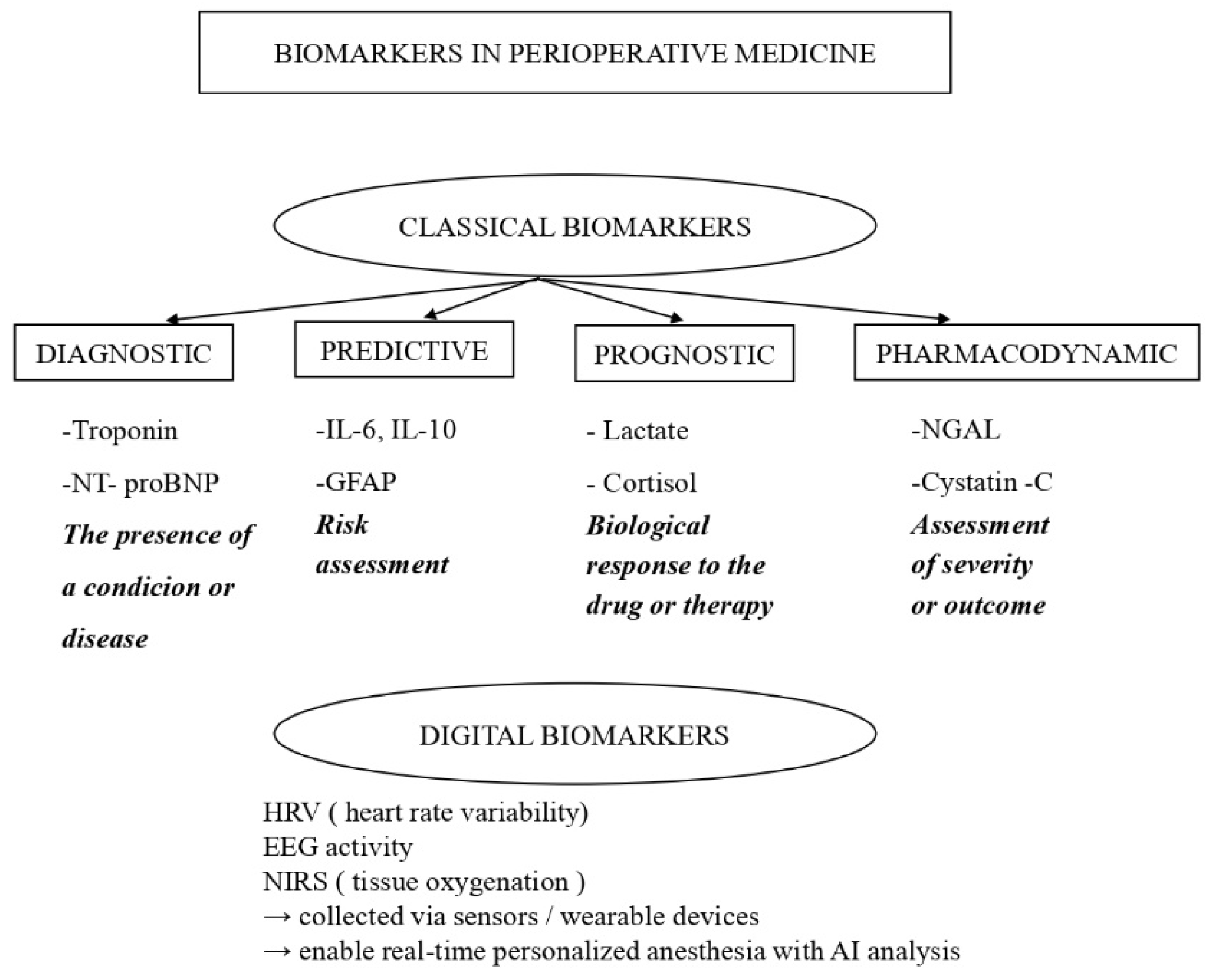
- Diagnostic biomarkers are primarily used to detect disease or subclinical organ dysfunction. In perioperative practice, well-established and validated diagnostic biomarkers include cardiac troponins or N-terminal pro-Brain Natriuretic Peptide (NT-proBNP) for myocardial injury, serum creatinine for acute kidney injury, and lactate as an indicator of global tissue hypoperfusion [6]. These biomarkers are supported by guideline recommendations and are routinely implemented in clinical workflows.
- Predictive biomarkers estimate the likelihood of future complications or differential response to interventions. Inflammatory mediators such as IL-6, IL-10, and procalcitonin have been investigated as predictors of postoperative complications, including infection, delirium, and prolonged recovery [7].
- Prognostic biomarkers provide information on disease severity or long-term outcomes. Examples include NT-proBNP for predicting postoperative cardiovascular risk, glial fibrillary acidic protein (GFAP) for neurological injury and cognitive outcomes, and NGAL and cystatin-C for renal injury [6,7,8]. While some prognostic biomarkers, such as NT-proBNP and troponin, are well validated and incorporated into perioperative risk stratification strategies, others, like GFAP, are supported by growing clinical evidence but are not yet universally standardized.
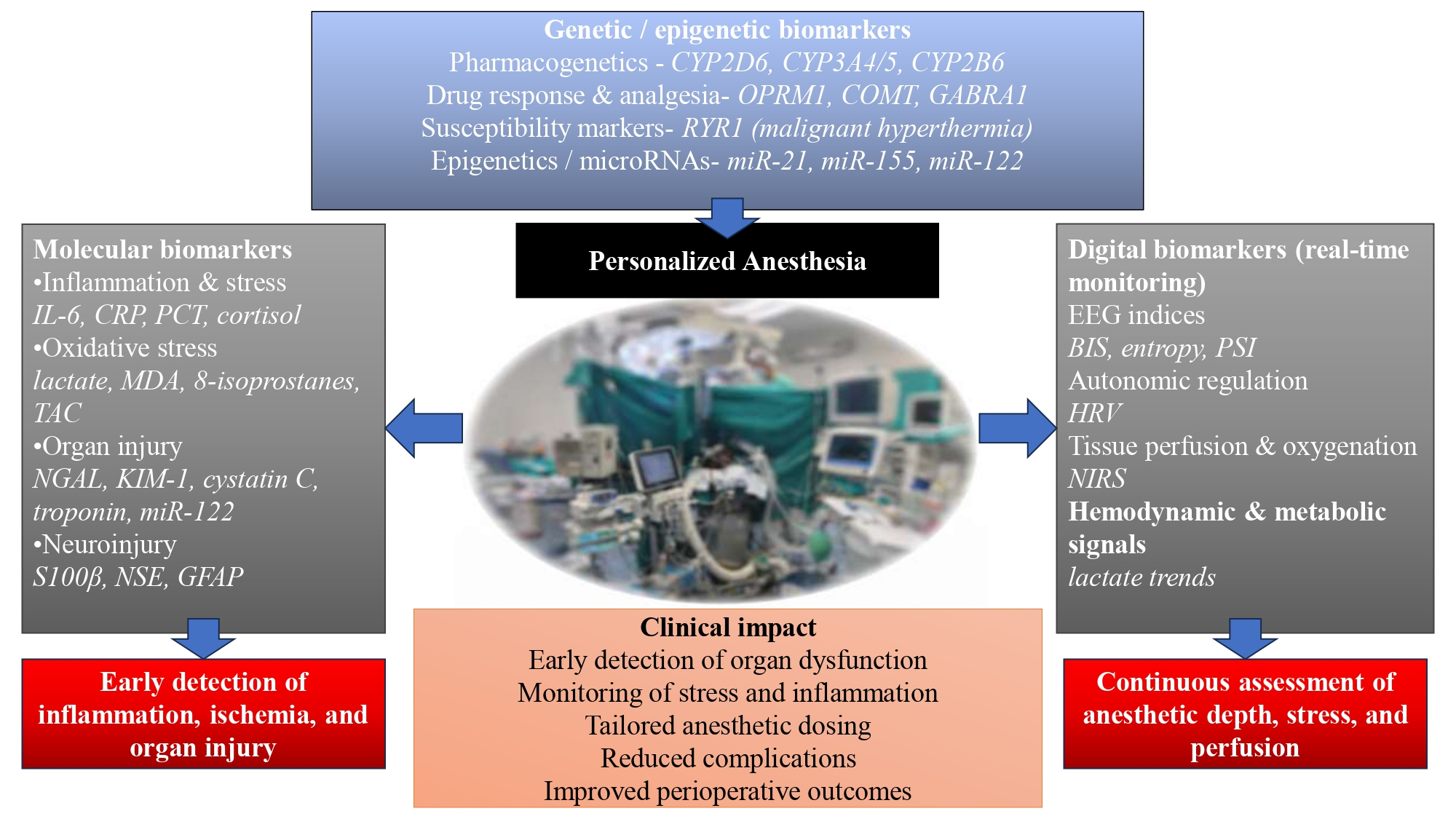
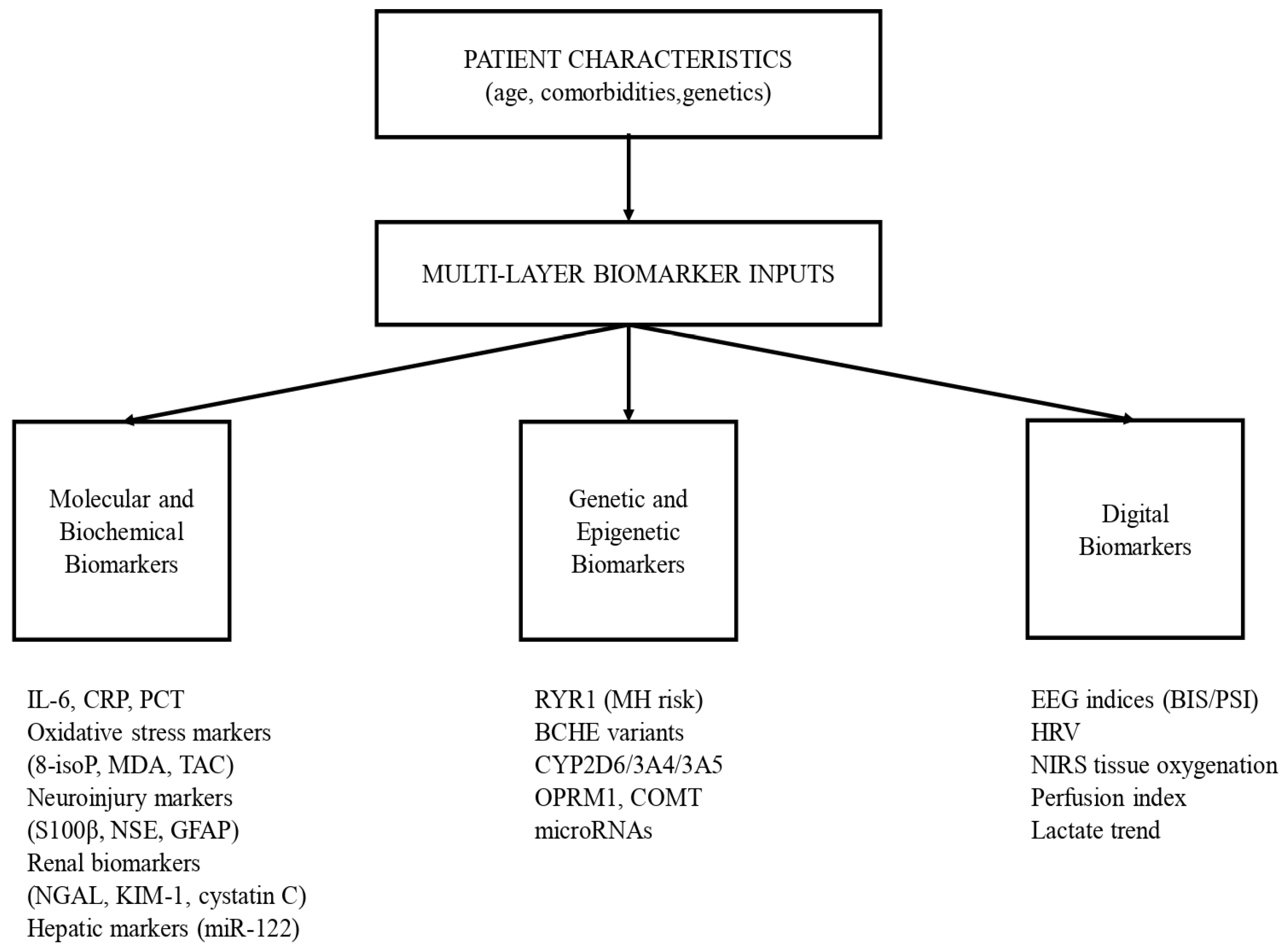
- Monitoring biomarkers shows real-time changes in the body in response to anesthesia and surgery. These include cortisol, glucose, and lactate [9]. Recent focus is on digital biomarkers, such as heart rate changes, brain activity patterns, and tissue oxygen levels measured by near-infrared light. These give real-time insight into stress, anesthesia depth, and blood flow. Using them with molecular markers and artificial intelligence may support personalized anesthesia [10]. Some of these markers are widely used, while others are still being studied and lack clear guidelines.
2. Methods
3. Biomarkers Relevant to Anesthesia
4. Discussion
5. Conclusions
Future Directions
Funding
Data Availability Statement
Conflicts of Interest
References
- Califf, R.M. Biomarker definitions and their applications. Exp. Biol. Med. 2018, 243, 213–221. [Google Scholar] [CrossRef] [Scilit]
- Baskaran, G.; Heo, R.H.; Wang, M.K.; Meyre, P.B.; Park, L.; Blum, S.; Devereaux, P.; Conen, D. Associations of inflammatory biomarkers with morbidity and mortality after noncardiac surgery: A systematic review and meta-analysis. J. Clin. Anesth. 2024, 97, 111540. [Google Scholar] [CrossRef] [Scilit]
- Mosharaf, M.P.; Alam, K.; Gow, J.; Mahumud, R.A. Cytokines and inflammatory biomarkers and their association with post-operative delirium: A meta-analysis and systematic review. Sci. Rep. 2025, 15, 7830. [Google Scholar] [CrossRef] [Scilit] [PubMed]
- Fei, Q.; Zhang, Y.; Liu, C.; Zheng, J.; Fu, Q. Artificial intelligence in anesthesia and perioperative medicine. Anesthesiol. Perioper. Sci. 2025, 3, 24. [Google Scholar] [CrossRef] [Scilit]
- Zou, C.; Wang, C.; Lu, L. Advances in the study of subclinical AKI biomarkers. Front. Physiol. 2022, 13, 960059. [Google Scholar] [CrossRef] [Scilit] [PubMed]
- Schmidt, G.; Frieling, N.; Schneck, E.; Habicher, M.; Koch, C.; Rubarth, K.; Balzer, F.; Aßmus, B.; Sander, M. Preoperative routine measurement of NT-proBNP predicts postoperative morbidity after non-cardiac surgery with intermediate or high surgical risk: An observational study. BMC Anesthesiol. 2024, 24, 113. [Google Scholar] [CrossRef] [Scilit]
- Liu, X.; Wang, Y.; Wu, J.; Ye, C.; Ma, D.; Wang, E. Emergence delirium and postoperative delirium associated with high plasma NfL and GFAP: An observational study. Front. Med. 2023, 10, 1107369. [Google Scholar] [CrossRef] [Scilit]
- Nagy, E.; Abdelfattah, A.H.; Sayed-Ahmed, N.; Ahmed, S. Cystatin C as a predictor of renal recovery and in-hospital mortality in patients with acute kidney injury and liver cirrhosis. BMC Nephrol. 2025, 26, 413. [Google Scholar] [CrossRef] [Scilit]
- Prete, A.; Yan, Q.; Al-Tarrah, K.; Akturk, H.K.; Prokop, L.J.; Alahdab, F.; Foster, M.A.; Lord, J.M.; Karavitaki, N.; Wass, J.A.; et al. The cortisol stress response induced by surgery: A systematic review and meta-analysis. Clin. Endocrinol. 2018, 89, 554–567. [Google Scholar] [CrossRef] [Scilit]
- Li, B.; Mahajan, A.; Powell, D. Advancing perioperative care with digital applications and wearables. NPJ Digit. Med. 2025, 8, 214. [Google Scholar] [CrossRef] [Scilit]
- Bodaghi, A.; Fattahi, N.; Ramazani, A. Biomarkers: Promising and valuable tools toward diagnosis, prognosis and treatment of COVID-19 and other diseases. Heliyon 2023, 9, e13323. [Google Scholar] [CrossRef] [Scilit] [PubMed]
- Roch, P.J.; Ecker, C.; Jäckle, K.; Meier, M.-P.; Reinhold, M.; Klockner, F.S.; Lehmann, W.; Weiser, L. Interleukin-6 as a critical inflammatory marker for early diagnosis of surgical site infection after spine surgery. Infection 2024, 52, 2269–2277. [Google Scholar] [CrossRef] [Scilit] [PubMed]
- Klingebiel, S.; Theil, J.C.; Gosheger, G.; Schneider, K.N.; Timme, M.; Schorn, D.; Liem, D.; Rickert, C. Postoperative trends of serum C-reactive protein levels after primary shoulder arthroplasty: Normal trajectory and influencing factors. J. Clin. Med. 2020, 9, 3893. [Google Scholar] [CrossRef] [Scilit] [PubMed]
- Nicolotti, D.; Grossi, S.; Palermo, V.; Pontone, F.; Maglietta, G.; Diodati, F.; Puntoni, M.; Rossi, S.; Caminiti, C. Procalcitonin for the diagnosis of postoperative bacterial infection after adult cardiac surgery: A systematic review and meta-analysis. Crit. Care 2024, 28, 44. [Google Scholar] [CrossRef] [Scilit]
- Ivascu, R.; Torsin, L.I.; Hostiuc, L.; Nitipir, C.; Corneci, D.; Dutu, M. The surgical stress response and anesthesia: A narrative review. J. Clin. Med. 2024, 13, 3017. [Google Scholar] [CrossRef] [Scilit]
- Albers-Warlé, K.I.; Helder, L.S.; Groh, L.A.; Polat, F.; Panhuizen, I.F.; Snoeck, M.M.J.; Kox, M.; van Eijk, L.; Joosten, L.A.B.; Netea, M.G.; et al. Postoperative innate immune dysregulation, proteomic, and monocyte epigenomic changes after colorectal surgery: A substudy of a randomized controlled trial. Anesth. Analg. 2025, 140, 185–196. [Google Scholar] [CrossRef] [Scilit]
- Chen, P.; Qian, K.; Zhu, K.; Lu, X.; Liu, D. Esketamine modulates postoperative biochemical markers of oxidative stress, inflammation, and immune dysregulation in laparoscopic colorectal cancer surgery. J. Med. Biochem. 2025, 44, 1020–1027. [Google Scholar] [CrossRef] [Scilit]
- Stevens, J.L.; McKenna, H.T.; Filipe, H.; Lau, L.; Fernandez, B.O.; Murray, A.J.; Feelisch, M.; Martin, D.S. Perioperative redox changes in patients undergoing hepato-pancreatico-biliary cancer surgery. Perioper. Med. 2023, 12, 35. [Google Scholar] [CrossRef] [Scilit]
- Vujovic, K.S.; Zivkovic, A.; Dozic, I.; Cirkovic, A.; Medic, B.; Srebro, D.; Vuckovic, S.; Milovanovic, J.; Jotic, A. Oxidative stress and inflammation biomarkers in postoperative pain modulation in surgically treated patients with laryngeal cancer: Pilot study. Cells 2023, 12, 1391. [Google Scholar] [CrossRef] [Scilit]
- Oldman, A.H.; Martin, D.S.; Feelisch, M.; Grocott, M.P.W.; Cumpstey, A.F. Effects of perioperative oxygen concentration on oxidative stress in adult surgical patients: A systematic review. Br. J. Anaesth. 2021, 126, 622–632. [Google Scholar] [CrossRef] [Scilit]
- Greenwood, J.C.; Talebi, F.M.B.; Jang, D.H.; Spelde, A.E.; Gordon, E.K.; Horak, J.; Acker, M.A.; Kilbaugh, T.J.; Shofer, F.S.; Augoustides, J.G.T.; et al. Anaerobic lactate production and microcirculatory blood flow after cardiovascular surgery with bypass. Crit. Care Med. 2024, 52, 1239–1250. [Google Scholar] [CrossRef] [Scilit]
- Biancari, F.; Nappi, F.; Gatti, G.; Perrotti, A.; Hervé, A.; Rosato, S.; D’Errigo, P.; Pettinari, M.; Peterss, S.; Buech, J.; et al. Preoperative arterial lactate and outcome after surgery for type A aortic dissection: The ERTAAD multicenter study. Heliyon 2023, 9, e20702. [Google Scholar] [CrossRef] [Scilit] [PubMed]
- Gołąb, A.; Plicner, D.; Rzucidło-Hymczak, A.; Tomkiewicz-Pająk, L.; Gawęda, B.; Kapelak, B.; Undas, A. 8-isoprostanes and asymmetric dimethylarginine predict mortality after CABG: Long-term follow-up. J. Clin. Med. 2022, 11, 246. [Google Scholar] [CrossRef] [Scilit] [PubMed]
- Intihar, U.; Krasniqi, A.; Djordjevic, A.; Zmazek, J.; Avdagic, H.; Ksela, J.; Antonic, M. Oxidative stress in postoperative atrial fibrillation: Does malondialdehyde hold predictive value? Medicina 2025, 61, 778. [Google Scholar] [CrossRef] [Scilit] [PubMed]
- Kucukosman, G.; Can, M.; Aydin, B.G.; Bilgin, E.; Ayoglu, H. Effects of intraoperative oxygen concentrations on oxidative stress markers: Randomized prospective study. Med. Bull. Haseki 2022, 60, 190–195. [Google Scholar] [CrossRef] [Scilit]
- Tomsič, K.; Nemec Svete, A. Effects of inhalational and intravenous anesthetics on oxidative stress in dogs: Mini-review. Front. Vet. Sci. 2022, 9, 987536. [Google Scholar] [CrossRef] [Scilit]
- Amoo, M.; Henry, J.; O’halloran, P.J.; Brennan, P.; Ben Husien, M.; Campbell, M.; Caird, J.; Javadpour, M.; Curley, G.F. S100B, GFAP, UCH-L1 and NSE predict CT abnormalities after mild TBI: Meta-analysis. Neurosurg. Rev. 2022, 45, 1171–1193. [Google Scholar] [CrossRef] [Scilit]
- Ahangar, M.H.; Aghazadeh-Habashi, K.; Rahi, A.; Torabian, A.; Alavi, I.; Shayesteh, K.A.; Mozaffari, S.M.; Khalaji, A.; Ghezeljeh, M.R.; Rafiei, S.K.S.; et al. S100β and NSE in postoperative cognitive dysfunction following cardiac surgery: Meta-analysis. Eur. J. Med. Res. 2025, 30, 811. [Google Scholar] [CrossRef] [Scilit]
- Liu, F.; Li, H.; Hong, X.; Liu, Y.; Yu, Z. Research progress on neuron-specific enolase in cognitive disorder: Mini review. Front. Hum. Neurosci. 2024, 18, 1392519. [Google Scholar] [CrossRef] [Scilit]
- Frank, A.; Arjomand, J.; Bendig, J.; Delfs, M.; Klingelhoefer, L.; Polanski, W.H.; Akgün, K.; Ziemssen, T.; Falkenburger, B.; Schnalke, N. GFAP reflects early brain injury dynamics and cognitive change after DBS. Sci. Rep. 2025, 15, 16537. [Google Scholar] [CrossRef] [Scilit]
- Pryzmont, M.; Kosciuczuk, U.; Maciejczyk, M. Biomarkers of traumatic brain injury: Narrative review and future prospects. Front. Med. 2025, 12, 1539159. [Google Scholar] [CrossRef] [Scilit]
- Dai, W.-B.; Zhang, X.; Jiang, X.-L.; Zhang, Y.-Z.; Chen, L.-K.; Tian, W.-T.; Zhou, X.-X.; Sun, X.-Y.; Huang, L.-L.; Gu, X.-Y.; et al. Kynurenine pathway via intestinal innate lymphoid cells mediates POCD. Mucosal Immunol. 2025, 18, 53–65. [Google Scholar] [CrossRef] [Scilit] [PubMed]
- Lu, J.; Zhang, Y.; Hao, Q.; Zhou, H.; Zong, Y. IDO–kynurenine–NLRP3 axis mediates postoperative cognitive impairment in aged mice. Int. J. Neurosci. 2024, 134, 1309–1319. [Google Scholar] [CrossRef] [Scilit] [PubMed]
- Heimberger, A.B.; Lukas, R.V. The kynurenine pathway implicated in patient delirium: Indications for IDO inhibitors. J. Clin. Investig. 2023, 133, e164577. [Google Scholar] [CrossRef] [Scilit] [PubMed]
- Pathak, S.; Nadar, R.; Kim, S.; Liu, K.; Govindarajulu, M.; Cook, P.; Alexander, C.S.W.; Dhanasekaran, M.; Moore, T. Influence of kynurenine metabolites on neurodegenerative pathologies. Int. J. Mol. Sci. 2024, 25, 853. [Google Scholar] [CrossRef] [Scilit]
- Yoon, S.Y.; Kim, J.S.; Jeong, K.H.; Kim, S.K. Acute kidney injury: Biomarker-guided diagnosis and management. Medicina 2022, 58, 340. [Google Scholar] [CrossRef] [Scilit]
- Singh, R.; Maclean, W.; Singh, T.; Mackenzie, P.; Rockall, T.; Forni, L.G. Urinary biomarkers of AKI in major abdominal surgery: AKI-biomas study. Crit. Care 2025, 29, 260. [Google Scholar] [CrossRef] [Scilit]
- Larstorp, A.C.K.; Salvador, C.L.; Svensvik, B.A.; Klingenberg, O.; Distante, S. NGAL and cystatin C in AKI after cardiac surgery. Scand. J. Clin. Lab. Investig. 2022, 82, 410–418. [Google Scholar] [CrossRef] [Scilit]
- Pei, Y.; Zhou, G.; Wang, P.; Shi, F.; Ma, X.; Zhu, J. Biomarkers for early prediction of AKI in sepsis. Eur. J. Med. Res. 2022, 27, 39. [Google Scholar] [CrossRef] [Scilit]
- Lan, H.; Liu, X.; Yang, D.; Zhang, D.B.; Wang, L.; Hu, L. Diagnostic accuracy of biomarkers for AKI after major surgery: Network meta-analysis. Medicine 2023, 102, e35284. [Google Scholar] [CrossRef] [Scilit]
- Jou-Valencia, D.; Volbeda, M.; Zijlstra, J.G.; Kootstra-Ros, J.E.; Moser, J.; van Meurs, M.; Koeze, J. Longitudinal NGAL and cystatin C plasma profiles in a mixed ICU population. BMC Nephrol. 2024, 25, 43. [Google Scholar] [CrossRef] [Scilit] [PubMed]
- Zhang, Y.; Ong, C.M.; Lynch, K.; Waksman, J.; Wu, A.H.B. Serum microRNA-122 for acute liver injury in skeletal muscle damage. Lab. Med. 2024, 55, 609–614. [Google Scholar] [CrossRef] [Scilit] [PubMed]
- Colaianni, F.; Zelli, V.; Compagnoni, C.; Miscione, M.S.; Rossi, M.; Vecchiotti, D.; Di Padova, M.; Alesse, E.; Zazzeroni, F.; Tessitore, A. Circulating microRNAs in liver disease and HCC: Focus on miR-122. Genes 2024, 15, 1313. [Google Scholar] [CrossRef] [Scilit] [PubMed]
- Mikulski, D.; Kościelny, K.; Dróżdż, I.; Mirocha, G.; Nowicki, M.; Misiewicz, M.; Perdas, E.; Strzałka, P.; Wierzbowska, A.; Fendler, W. miR-122-5p and miR-125a-5p predict hepatotoxicity in autologous HSCT. Int. J. Mol. Sci. 2024, 25, 4355. [Google Scholar] [CrossRef] [Scilit]
- Tobaruela-Resola, A.L.; Milagro, F.I.; Mogna-Pelaez, P.; Moreno-Aliaga, M.J.; Abete, I.; Zulet, M.A. Circulating miRNAs in MASLD. J. Physiol. Biochem. 2025, 81, 589–609. [Google Scholar] [CrossRef] [Scilit]
- Kalow, W.; Genest, K. Detection of atypical human serum cholinesterase: Dibucaine numbers. Can. J. Biochem. Physiol. 1957, 35, 339–346. [Google Scholar] [CrossRef] [Scilit]
- Nelson, T.E. Malignant hyperthermia: A pharmacogenetic disease of Ca++ regulating proteins. Curr. Mol. Med. 2002, 2, 347–369. [Google Scholar] [CrossRef] [Scilit]
- MacLennan, D.H.; Duff, C.; Zorzato, F.; Fujii, J.; Phillips, M.; Korneluk, R.G.; Frodis, W.; Britt, B.A.; Wortont, R.G. Ryanodine receptor gene as candidate for malignant hyperthermia predisposition. Nature 1990, 343, 559–561. [Google Scholar] [CrossRef] [Scilit]
- Taqi, M.M.; Faisal, M.; Zaman, H. OPRM1 A118G Polymorphisms and Its Role in Opioid Addiction: Implication on Severity and Treatment Approaches. Pharmacogenom. Pers. Med. 2019, 12, 361–368. [Google Scholar] [CrossRef] [Scilit]
- Bilder, R.M.; Volavka, J.; Lachman, H.M.; Grace, A.A. COMT polymorphism and neuropsychiatric phenotypes. Neuropsychopharmacology 2004, 29, 1943–1962. [Google Scholar] [CrossRef] [Scilit]
- Pertovaara, A. Noradrenergic pain modulation. Prog. Neurobiol. 2006, 80, 53–83. [Google Scholar] [CrossRef] [Scilit] [PubMed]
- Binder, W.; Mousa, S.A.; Sitte, N.; Kaiser, M.; Stein, C.; Schäfer, M. Sympathetic activation triggers endogenous opioid release in inflamed tissue. Eur. J. Neurosci. 2004, 20, 92–100. [Google Scholar] [CrossRef] [Scilit] [PubMed]
- Rakvåg, T.T.; Klepstad, P.; Baar, C.; Kvam, T.-M.; Dale, O.; Kaasa, S.; Krokan, H.E.; Skorpen, F. COMT Val158Met polymorphism and morphine requirements in cancer pain. Pain 2005, 116, 73–78. [Google Scholar] [CrossRef] [Scilit] [PubMed]
- Andersen, S.; Skorpen, F. COMT gene variation and pain treatment. Pharmacogenomics 2009, 10, 669–684. [Google Scholar] [CrossRef] [Scilit]
- Lam, Y.W.F.; Cavallari, L.H. Principles of pharmacogenomics. In Handbook of Pharmacogenomics and Stratified Medicine; Academic Press: Cambridge, MA, USA, 2014; pp. 341–364. [Google Scholar] [CrossRef] [Scilit]
- Zobdeh, F.; Eremenko, I.I.; Akan, M.A.; Tarasov, V.V.; Chubarev, V.N.; Schiöth, H.B.; Mwinyi, J. Pharmacogenetics and Pain Treatment with a Focus on Non-Steroidal Anti-Inflammatory Drugs (NSAIDs) and Antidepressants: A Systematic Review. Pharmaceutics 2022, 14, 1190. [Google Scholar] [CrossRef] [Scilit]
- Zubiaur, P.; Figueiredo-Tor, L.; Villapalos-García, G.; Soria-Chacartegui, P.; Navares-Gómez, M.; Novalbos, J.; Matas, M.; Calleja, S.; Mejía-Abril, G.; Román, M.; et al. CYP2C19 and CYP2B6 phenotypes and diazepam pharmacokinetics. Biomed. Pharmacother. 2022, 155, 113747. [Google Scholar] [CrossRef] [Scilit]
- Klyushova, L.S.; Perepechaeva, M.L.; Grishanova, A.Y. Role of CYP3A in health and disease. Biomedicines 2022, 10, 2686. [Google Scholar] [CrossRef] [Scilit]
- Westlind-Johnsson, A.; Hermann, R.; Huennemeyer, A.; Hauns, B.; Lahu, G.; Nassr, N.; Zech, K.; Ingelmansundberg, M.; Vonrichter, O. Identification and characterization of CYP3A4*20, a novel rare CYP3A4 allele without functional activity. Clin. Pharmacol. Ther. 2006, 79, 339–349. [Google Scholar] [CrossRef] [Scilit]
- Williams, M.L.; Kannankeril, P.J.; Breeyear, J.H.; Edwards, T.L.; Van Driest, S.L.; Choi, L. CYP3A5 and CYP3A4 variants and fentanyl pharmacokinetics in children. Clin. Pharmacol. Ther. 2022, 111, 896–908. [Google Scholar] [CrossRef] [Scilit]
- Peng, L.; Zhong, X. Epigenetic regulation of drug metabolism and transport. Acta Pharm Sin. B 2015, 5, 106–112. [Google Scholar] [CrossRef] [Scilit]
- Zhang, Y.; Wang, Z.; Wang, Y.; Jin, W.; Zhang, Z.; Jin, L.; Qian, J.; Zheng, L. CYP3A4 and CYP3A5 polymorphisms in clinical drug metabolism. PeerJ 2024, 12, e18636. [Google Scholar] [CrossRef] [Scilit]
- Wu, W.-F.; Chen, C.; Lin, J.-T.; Jiao, X.-H.; Dong, W.; Wan, J.; Liu, Q.; Qiu, Y.-K.; Sun, A.; Liu, Y.-Q.; et al. SIRT1/BDNF downregulation and postoperative cognitive dysfunction. Cell. Mol. Biol. Lett. 2024, 29, 79. [Google Scholar] [CrossRef] [Scilit]
- Zeng, Y.; Cao, S.; Chen, M.; Fang, C.; Ouyang, W. GABRA1 and GABRB2 polymorphisms and propofol susceptibility. Pharmacogenom. Pers. Med. 2022, 15, 105–117. [Google Scholar] [CrossRef] [Scilit]
- Choi, Y.J.; Lee, S.Y.; Yang, K.S.; Park, J.Y.; Yoon, S.Z.; Yoon, S.M. GABRA1 rs4263535 polymorphism and midazolam sedation depth. J. Int. Med. Res. 2015, 43, 686–698. [Google Scholar] [CrossRef] [Scilit] [PubMed]
- Liang, W.; Liu, X.; Chen, Z.; Wang, H.; Yu, Z.; Li, C.; Yang, H.; Tao, J.; Li, H.; Chen, Z.; et al. General anesthesia induces acute cfDNA methylation changes. J. Thorac. Dis. 2024, 16, 7592–7606. [Google Scholar] [CrossRef] [Scilit] [PubMed]
- Rump, K.; Adamzik, M. Epigenetic mechanisms of postoperative cognitive impairment induced by anesthesia and neuroinflammation. Cells 2022, 11, 2954. [Google Scholar] [CrossRef] [Scilit]
- Li, M.; Zhou, F.; Tian, Y. MicroRNAs in anesthesia and pain: Insights from Nobel Prize. Anesth. Perioper Sci. 2025, 3, 31. [Google Scholar] [CrossRef] [Scilit]
- Cong, P.; Huang, X.; Zhang, Q.; He, M.; Wan, H.; Wu, Q.; Wu, H.; Zhang, Y.; Cheng, C.; Tian, L.; et al. DNMT3a deficiency and anesthesia/surgery-induced cognitive impairment. Aging Cell 2025, 24, e14458. [Google Scholar] [CrossRef] [Scilit]
- Gu, Y.; Hao, J.; Wang, J.; Liang, P.; Peng, X.; Qin, X.; Zhang, Y.; He, D. Bispectral index monitoring vs conventional monitoring in general anesthesia: Systematic review. Anesthesiol. Res. Pract. 2024, 2024, 5555481. [Google Scholar] [CrossRef] [Scilit]
- Templeton, T.W.; Alex, G.; Eloy, J.D.; Stollings, L.; Ing, R.J.; Cheon, E.C.; Belani, K.; Breskin, I.; Sebel, P.S.; Taicher, B.M.; et al. BIS-guided titration of sevoflurane in pediatric surgery: Randomized controlled trial. Pediatr. Anesth. 2025, 35, 277–286. [Google Scholar] [CrossRef] [Scilit]
- Wang, B.; Shi, H.; Zhang, H.; Chen, Y.; Liu, S.; Li, B.; Shi, C. Renal or cerebral oxygen desaturation increases risk of AKI after cardiac surgery. BMC Anesthesiol. 2025, 25, 434. [Google Scholar] [CrossRef] [Scilit]
- Keim, O.C.; Bolwin, L.; Feldmann, R.E., Jr.; Thiel, M.; Benrath, J. HRV as predictor of intraoperative autonomic homeostasis. J. Clin. Monit. Comput. 2024, 38, 1305–1313. [Google Scholar] [CrossRef] [Scilit] [PubMed]
- Introna, M.; Karippacheril, J.G.; Pilla, S.; Trimarchi, D.; Gemma, M.; Martino, D.; Carozzi, C. Artificial intelligence and EEG during anesthesia: Ideal match or fleeting bond? Artif. Intell. Surg. 2026, 6, 1–17. [Google Scholar] [CrossRef] [Scilit]
- Mehta, D.; Gonzalez, X.T.; Huang, G.; Abraham, J. Machine learning-augmented interventions in perioperative care: A systematic review and meta-analysis. Br. J. Anaesth. 2024, 133, 1159–1172. [Google Scholar] [CrossRef] [Scilit] [PubMed]
- Shen, X.; Cao, X.; Che, X.; Wang, K.; Qiao, N. Lactate levels during anesthesia in craniopharyngioma surgery. Front. Surg. 2025, 12, 1541810. [Google Scholar] [CrossRef] [Scilit]
- Ruetzler, K.; Smilowitz, N.R.; Berger, J.S.; Devereaux, P.J.; Maron, B.A.; Newby, L.K.; Perez, V.d.J.; Sessler, D.I.; Wijeysundera, D.N. Myocardial injury after noncardiac surgery: AHA scientific statement. Circulation 2021, 144, e287–e305. [Google Scholar] [CrossRef] [Scilit]
- Li, B.; Dai, Y.; Cai, W.; Sun, M.; Sun, J. Monitoring perioperative tissue perfusion and outcomes. J. Cardiothorac. Surg. 2025, 20, 100. [Google Scholar] [CrossRef] [Scilit]
- Minz, R.; Sharma, P.K.; Negi, A.; Kesari, K.K. MicroRNAs-based theranostics against anesthetic-induced neurotoxicity. Pharmaceutics 2023, 15, 1833. [Google Scholar] [CrossRef] [Scilit]
- Brown, N.; Roman, M.; Miller, D.; Murphy, G.; Woźniak, M.J. MicroRNA as predictive biomarkers of AKI: Systematic review. Biomedicines 2024, 12, 1695. [Google Scholar] [CrossRef] [Scilit]
- Zeng, S.; Qing, Q.; Xu, W.; Yu, S.; Zheng, M.; Tan, H.; Peng, J.; Huang, J. Personalized anesthesia and precision medicine: A comprehensive review of genetic factors, artificial intelligence, and patient-specific factors. Front. Med. 2024, 11, 1365524. [Google Scholar] [CrossRef] [Scilit]



| Category | Biomarker | Function/Clinical Significance | Perioperative Dynamics/Notes |
|---|---|---|---|
| Stress & Inflammation | IL-6 | Proinflammatory cytokine; early indicator of immune activation and acute inflammation | Rapid increase after surgical stress; correlates with surgery intensity and postoperative complications |
| CRP | Reflects systemic inflammatory response | Increases 6–12 h after stimulus, peaks at 48–96 h; shows later systemic response | |
| Procalcitonin (PCT) | Marker of bacterial inflammation; differentiates sterile vs. infectious inflammation | May increase after major surgery; early detection of postoperative infections | |
| Cortisol | Neuroendocrine stress marker | Rapid rise during surgery; reflects stress intensity and anesthesia effect | |
| HMGB1 | Nuclear protein and damage-associated molecular pattern (DAMP) | Reflects tissue injury; significantly elevated immediately after colorectal surgery and first postoperative day | |
| Oxidative Stress & Ischemia–Reperfusion | Lactate | Indicator of oxidative stress and mitochondrial dysfunction | Elevated perioperatively; lactate clearance has prognostic value |
| 8-isoprostane (8-iso-PGF2α) | Lipid peroxidation product; “gold standard” for lipid oxidative damage | Elevated after cardiovascular, abdominal, and transplant surgeries; correlates with surgery duration and reperfusion stress | |
| Malondialdehyde (MDA) | Marker of lipid peroxidation and cellular membrane damage | Increases perioperatively; decrease during recovery reflects antioxidant adaptation | |
| Total Antioxidant Capacity (TAC) | Overall antioxidant defense | Includes enzymatic (SOD, GPx, CAT) and non-enzymatic components (glutathione, vitamins C and E); often decreases intra/postoperatively | |
| Neuroprotection & Neurotoxicity | S100β | Calcium-binding protein; astrocyte marker | Early indicator of blood–brain barrier disruption; elevated after neuro or cardiac surgery |
| NSE | Neuron-specific enzyme | Indicates neuronal necrosis or apoptosis; early postoperative rise correlates with cognitive deficits | |
| GFAP | Astrocytic structural protein | Marker of glial activation and ischemic/traumatic brain injury | |
| Kynurenine (KYN) | Metabolite of tryptophan pathway; immune-metabolic marker | Increase reflects IDO/TDO activity and systemic inflammation; imbalance (KYNA/QUIN) indicates neurotoxicity vs. neuroprotection | |
| Kidney & Liver Function | NGAL | Marker of tubular injury | Rises 4–12 h post-surgery; early AKI detection |
| KIM-1 | Tubular injury marker | Increases early in AKI; complements NGAL | |
| Cystatin C | Glomerular filtration indicator | Early AKI detection; better correlation with GFR than creatinine | |
| AST/ALT | Traditional hepatic injury markers | Late rise; limited specificity | |
| miR-122 | Liver-specific circulating microRNA | Early and sensitive marker of hepatocellular injury; superior to AST/ALT | |
| Genetic & Epigenetic | BCHE | Butyrylcholinesterase deficiency | Causes prolonged paralysis after succinylcholine |
| RYR1 | Malignant hyperthermia susceptibility | Mutation causes malignant hyperthermia under anesthesia | |
| OPRM1 (A118G) | µ-opioid receptor | Alters opioid sensitivity; variable response to analgesics | |
| COMT (Val108/158Met) | Catecholamine metabolism | Polymorphism affects pain modulation and opioid requirements | |
| CYP2D6 | Opioid metabolism | Ultra-rapid or poor metabolizer status affects drug efficacy/toxicity | |
| CYP2C9, CYP2C19, CYP2B6, CYP3A4/5 | Metabolism of NSAIDs, benzodiazepines, propofol, opioids | Polymorphisms alter drug pharmacokinetics; may require dose adjustment | |
| SIRT1/BDNF | Neurocognitive regulation | Altered levels associated with postoperative cognitive dysfunction | |
| GABRA1 (rs2279020, rs4263535) | GABA receptor subunit | Influences sedative response to propofol/midazolam | |
| miR-21, miR-155, miR-210, miR-451a, miR-146a | Epigenetic regulation | Reflect systemic/neuroinflammation, hypoxia, opioid response | |
| Digital & Tissue Perfusion | BIS, Entropy, PSI | EEG-based depth of anesthesia monitors | Prevents over- or under-sedation; reduces risk of intraoperative awareness and postoperative delirium |
| NIRS | Tissue oxygenation | Noninvasive monitoring of brain/muscle perfusion; useful in high-risk surgeries | |
| HRV | Autonomic nervous system state | Correlates with anesthesia depth and hemodynamics | |
| Lactate, Troponin (cTn), Endothelin | Perfusion/metabolic stress markers | Elevated levels correlate with poor perioperative outcomes; combination with digital markers improves tissue perfusion assessment |
Disclaimer/Publisher’s Note: The statements, opinions and data contained in all publications are solely those of the individual author(s) and contributor(s) and not of MDPI and/or the editor(s). MDPI and/or the editor(s) disclaim responsibility for any injury to people or property resulting from any ideas, methods, instructions or products referred to in the content. |
© 2026 by the authors. Licensee MDPI, Basel, Switzerland. This article is an open access article distributed under the terms and conditions of the Creative Commons Attribution (CC BY) license.
Share and Cite
Nenadic, I.; Stevanovic, P.; Bobos, M.; Stojanovic, M.; Dimic, N.; Bojic, S.; Dekic, D.; Radovanovic, J.; Djuric, M. The Role of Biomarkers in Personalized Anesthesia: From Physiological Parameters to Molecular Diagnostics. Biomedicines 2026, 14, 300. https://doi.org/10.3390/biomedicines14020300
Nenadic I, Stevanovic P, Bobos M, Stojanovic M, Dimic N, Bojic S, Dekic D, Radovanovic J, Djuric M. The Role of Biomarkers in Personalized Anesthesia: From Physiological Parameters to Molecular Diagnostics. Biomedicines. 2026; 14(2):300. https://doi.org/10.3390/biomedicines14020300
Chicago/Turabian StyleNenadic, Irina, Predrag Stevanovic, Marina Bobos, Maja Stojanovic, Nemanja Dimic, Suzana Bojic, Dragica Dekic, Jovana Radovanovic, and Marko Djuric. 2026. "The Role of Biomarkers in Personalized Anesthesia: From Physiological Parameters to Molecular Diagnostics" Biomedicines 14, no. 2: 300. https://doi.org/10.3390/biomedicines14020300
APA StyleNenadic, I., Stevanovic, P., Bobos, M., Stojanovic, M., Dimic, N., Bojic, S., Dekic, D., Radovanovic, J., & Djuric, M. (2026). The Role of Biomarkers in Personalized Anesthesia: From Physiological Parameters to Molecular Diagnostics. Biomedicines, 14(2), 300. https://doi.org/10.3390/biomedicines14020300