Emerging Oncogenic and Immunoregulatory Roles of BST2 in Human Cancers

Abstract
1. Introduction
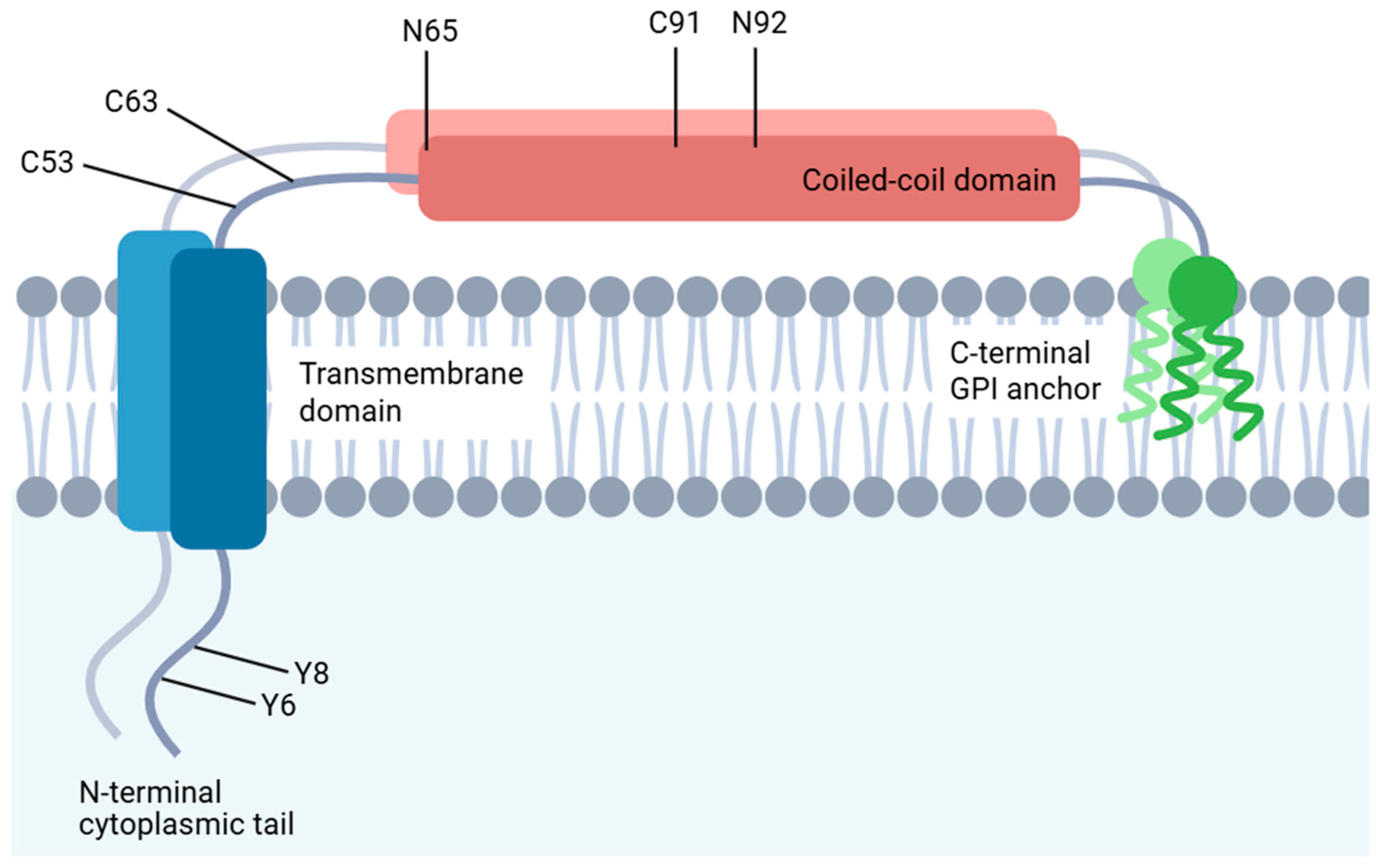
2. Structural and Molecular Features of BST2
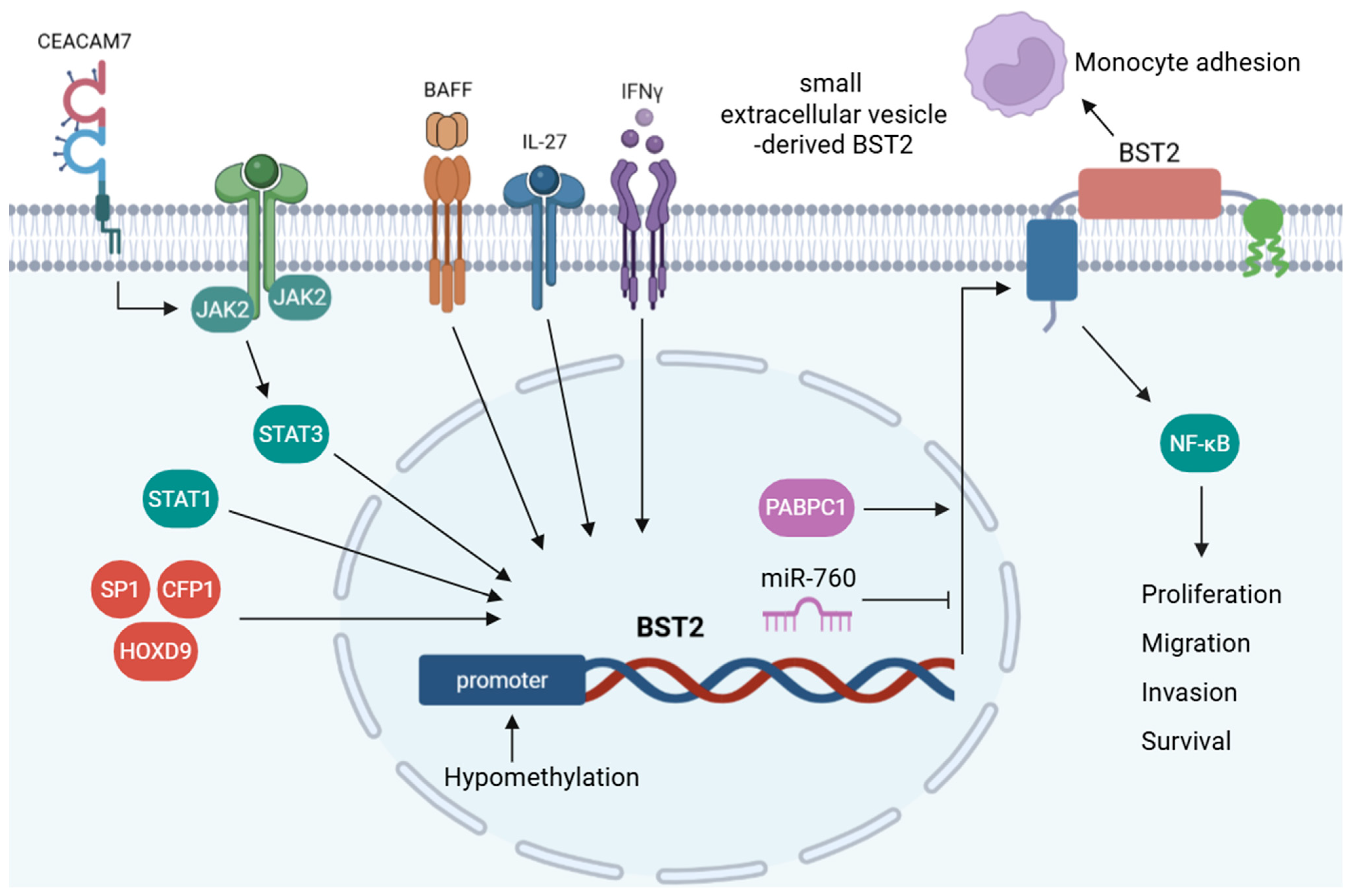
3. Regulation of BST2 Expression
4. Antiviral Functions of BST2
5. BST2 in Cancer Biology
5.1. Hematological Malignancies
5.2. Antibody-Based Immunotherapy in Lung Cancers
5.3. BST2 in Breast and Metastatic Progression
5.4. BST2 in Glioma and Brain Tumors
5.5. BST2 in Other Solid Tumors
6. BST2 and Immune Regulation
6.1. Immune Cell Regulation
6.2. BST2-Driven Quiescence—Pluripotency Switch
7. Therapeutic Approaches Targeting BST2
8. Conclusions
Author Contributions
Funding
Institutional Review Board Statement
Informed Consent Statement
Data Availability Statement
Acknowledgments
Conflicts of Interest
References
- Erikson, E.; Adam, T.; Schmidt, S.; Lehmann-Koch, J.; Over, B.; Goffinet, C.; Harter, C.; Bekeredjian-Ding, I.; Sertel, S.; Lasitschka, F.; et al. In vivo expression profile of the antiviral restriction factor and tumor-targeting antigen CD317/BST-2/HM1.24/tetherin in humans. Proc. Natl. Acad. Sci. USA 2011, 108, 13688–13693. [Google Scholar] [CrossRef] [PubMed]
- Mahauad-Fernandez, W.D.; Okeoma, C.M. The role of BST-2/Tetherin in host protection and disease manifestation. Immun. Inflamm. Dis. 2016, 4, 4–23. [Google Scholar] [CrossRef] [PubMed]
- Yu, H.; Bian, Q.; Wang, X.; Wang, X.; Lai, L.; Wu, Z.; Zhao, Z.; Ban, B. Bone marrow stromal cell antigen 2: Tumor biology, signaling pathway and therapeutic targeting (Review). Oncol. Rep. 2024, 51, 45. [Google Scholar] [CrossRef] [PubMed]
- Mukai, S.; Oue, N.; Oshima, T.; Mukai, R.; Tatsumoto, Y.; Sakamoto, N.; Sentani, K.; Tanabe, K.; Egi, H.; Hinoi, T.; et al. Overexpression of Transmembrane Protein BST2 is Associated with Poor Survival of Patients with Esophageal, Gastric, or Colorectal Cancer. Ann. Surg. Oncol. 2017, 24, 594–602. [Google Scholar] [CrossRef] [PubMed]
- Li, J.; Yang, P.; Hong, L.; Xiao, W.; Zhang, L.; Yu, Z.; Zhang, J.; Pei, M.; Peng, Y.; Wei, X.; et al. BST2 promotes gastric cancer metastasis under the regulation of HOXD9 and PABPC1. Mol. Carcinog. 2024, 63, 663–676. [Google Scholar] [CrossRef]
- Liu, W.; Cao, Y.; Guan, Y.; Zheng, C. BST2 promotes cell proliferation, migration and induces NF-kappaB activation in gastric cancer. Biotechnol. Lett. 2018, 40, 1015–1027. [Google Scholar] [CrossRef]
- Fang, K.H.; Kao, H.K.; Chi, L.M.; Liang, Y.; Liu, S.C.; Hseuh, C.; Liao, C.T.; Yen, T.C.; Yu, J.S.; Chang, K.P. Overexpression of BST2 is associated with nodal metastasis and poorer prognosis in oral cavity cancer. Laryngoscope 2014, 124, E354–E360. [Google Scholar] [CrossRef]
- Jin, H.; Zhang, L.; Wang, S.; Qian, L. BST2 promotes growth and induces gefitinib resistance in oral squamous cell carcinoma via regulating the EGFR pathway. Arch. Med. Sci. 2021, 17, 1772–1782. [Google Scholar] [CrossRef]
- Mahauad-Fernandez, W.D.; DeMali, K.A.; Olivier, A.K.; Okeoma, C.M. Bone marrow stromal antigen 2 expressed in cancer cells promotes mammary tumor growth and metastasis. Breast Cancer Res. 2014, 16, 493. [Google Scholar] [CrossRef]
- Mahauad-Fernandez, W.D.; Borcherding, N.C.; Zhang, W.; Okeoma, C.M. Bone marrow stromal antigen 2 (BST-2) DNA is demethylated in breast tumors and breast cancer cells. PLoS ONE 2015, 10, e0123931. [Google Scholar] [CrossRef][Green Version]
- Sayeed, A.; Luciani-Torres, G.; Meng, Z.; Bennington, J.L.; Moore, D.H.; Dairkee, S.H. Aberrant regulation of the BST2 (Tetherin) promoter enhances cell proliferation and apoptosis evasion in high grade breast cancer cells. PLoS ONE 2013, 8, e67191. [Google Scholar] [CrossRef]
- Cai, D.; Cao, J.; Li, Z.; Zheng, X.; Yao, Y.; Li, W.; Yuan, Z. Up-regulation of bone marrow stromal protein 2 (BST2) in breast cancer with bone metastasis. BMC Cancer 2009, 9, 102. [Google Scholar] [CrossRef] [PubMed]
- Yi, E.H.; Yoo, H.; Noh, K.H.; Han, S.; Lee, H.; Lee, J.K.; Won, C.; Kim, B.H.; Kim, M.H.; Cho, C.H.; et al. BST-2 is a potential activator of invasion and migration in tamoxifen-resistant breast cancer cells. Biochem. Biophys. Res. Commun. 2013, 435, 685–690. [Google Scholar] [CrossRef] [PubMed]
- Wubuli, R.; Ainiwaer, Z.; Niyazi, M.; Han, L. DNA hypomethylation modification promotes BST2 expression in cervical cancer by facilitating STAT1 binding to the promoter of BST2. Infect. Agent. Cancer 2025, 20, 36. [Google Scholar] [CrossRef] [PubMed]
- Lei, C.; Hou, Y.; Chen, J. Specificity protein 1-activated bone marrow stromal cell antigen 2 accelerates pancreatic cancer cell proliferation and migration. Exp. Ther. Med. 2021, 22, 1459. [Google Scholar] [CrossRef]
- Li, J.P.; Lin, C.W.; Lu, Y.T.; Huang, C.C.; Ho, Y.T.; Hsin, C.H.; Yang, S.F. Role of the CEACAM7-JAK2/STAT3-BST2 Axis in the migration of nasopharyngeal carcinoma cells. Biochim. Biophys. Acta Mol. Basis Dis. 2025, 1871, 167948. [Google Scholar] [CrossRef]
- Kuang, C.M.; Fu, X.; Hua, Y.J.; Shuai, W.D.; Ye, Z.H.; Li, Y.; Peng, Q.H.; Li, Y.Z.; Chen, S.; Qian, C.N.; et al. BST2 confers cisplatin resistance via NF-kappaB signaling in nasopharyngeal cancer. Cell Death Dis. 2017, 8, e2874. [Google Scholar] [CrossRef]
- Yang, L.L.; Wu, L.; Yu, G.T.; Zhang, W.F.; Liu, B.; Sun, Z.J. CD317 Signature in Head and Neck Cancer Indicates Poor Prognosis. J. Dent. Res. 2018, 97, 787–794. [Google Scholar] [CrossRef]
- Yokoyama, T.; Enomoto, T.; Serada, S.; Morimoto, A.; Matsuzaki, S.; Ueda, Y.; Yoshino, K.; Fujita, M.; Kyo, S.; Iwahori, K.; et al. Plasma membrane proteomics identifies bone marrow stromal antigen 2 as a potential therapeutic target in endometrial cancer. Int. J. Cancer 2013, 132, 472–484. [Google Scholar] [CrossRef]
- Wang, W.; Nishioka, Y.; Ozaki, S.; Jalili, A.; Abe, S.; Kakiuchi, S.; Kishuku, M.; Minakuchi, K.; Matsumoto, T.; Sone, S. HM1.24 (CD317) is a novel target against lung cancer for immunotherapy using anti-HM1.24 antibody. Cancer Immunol. Immunother. 2009, 58, 967–976. [Google Scholar] [CrossRef]
- Shigematsu, Y.; Oue, N.; Nishioka, Y.; Sakamoto, N.; Sentani, K.; Sekino, Y.; Mukai, S.; Teishima, J.; Matsubara, A.; Yasui, W. Overexpression of the transmembrane protein BST-2 induces Akt and Erk phosphorylation in bladder cancer. Oncol. Lett. 2017, 14, 999–1004. [Google Scholar] [CrossRef] [PubMed]
- Zhang, G.; Li, X.; Chen, Q.; Li, J.; Ruan, Q.; Chen, Y.H.; Yang, X.; Wan, X. CD317 Activates EGFR by Regulating Its Association with Lipid Rafts. Cancer Res. 2019, 79, 2220–2231. [Google Scholar] [CrossRef] [PubMed]
- Chiang, S.F.; Kan, C.Y.; Hsiao, Y.C.; Tang, R.; Hsieh, L.L.; Chiang, J.M.; Tsai, W.S.; Yeh, C.Y.; Hsieh, P.S.; Liang, Y.; et al. Bone Marrow Stromal Antigen 2 Is a Novel Plasma Biomarker and Prognosticator for Colorectal Carcinoma: A Secretome-Based Verification Study. Dis. Markers 2015, 2015, 874054. [Google Scholar] [CrossRef] [PubMed]
- Cao, Z.; Wang, Y.; Wu, J.; Tang, X.; Qian, Z.; Zhang, Z.; Liu, R.; Liu, P.; Li, Z.; Xu, X.; et al. Serum small extracellular vesicles-derived BST2 as a biomarker for papillary thyroid microcarcinoma promotes lymph node metastasis. Cancer Gene Ther. 2025, 32, 38–50. [Google Scholar] [CrossRef]
- Etcheverry, A.; Aubry, M.; de Tayrac, M.; Vauleon, E.; Boniface, R.; Guenot, F.; Saikali, S.; Hamlat, A.; Riffaud, L.; Menei, P.; et al. DNA methylation in glioblastoma: Impact on gene expression and clinical outcome. BMC Genom. 2010, 11, 701. [Google Scholar] [CrossRef]
- Kong, Y.; Xue, Z.; Wang, H.; Cui, G.; Chen, A.; Liu, J.; Wang, J.; Li, X.; Huang, B. Identification of BST2 Contributing to the Development of Glioblastoma Based on Bioinformatics Analysis. Front. Genet. 2022, 13, 890174. [Google Scholar] [CrossRef]
- Liao, Z.; Wu, S.; Shi, Z.; Chen, D.; Chen, J.; Zhang, H. BST2 and DIRAS3 Drive Immune Evasion and Tumor Progression in High-Grade Glioma. Int. J. Mol. Sci. 2025, 26, 6205. [Google Scholar] [CrossRef]
- Zheng, C.; Wang, J.; Zhou, Y.; Duan, Y.; Zheng, R.; Xie, Y.; Wei, X.; Wu, J.; Shen, H.; Ye, M.; et al. IFNalpha-induced BST2+ tumor-associated macrophages facilitate immunosuppression and tumor growth in pancreatic cancer by ERK-CXCL7 signaling. Cell Rep. 2024, 43, 114088. [Google Scholar] [CrossRef]
- Kupzig, S.; Korolchuk, V.; Rollason, R.; Sugden, A.; Wilde, A.; Banting, G. Bst-2/HM1.24 is a raft-associated apical membrane protein with an unusual topology. Traffic 2003, 4, 694–709. [Google Scholar] [CrossRef]
- Tokarev, A.; Suarez, M.; Kwan, W.; Fitzpatrick, K.; Singh, R.; Guatelli, J. Stimulation of NF-kappaB activity by the HIV restriction factor BST2. J. Virol. 2013, 87, 2046–2057. [Google Scholar] [CrossRef]
- Masuyama, N.; Kuronita, T.; Tanaka, R.; Muto, T.; Hirota, Y.; Takigawa, A.; Fujita, H.; Aso, Y.; Amano, J.; Tanaka, Y. HM1.24 is internalized from lipid rafts by clathrin-mediated endocytosis through interaction with alpha-adaptin. J. Biol. Chem. 2009, 284, 15927–15941. [Google Scholar] [CrossRef] [PubMed]
- Naushad, W.; Mahauad-Fernandez, W.D.; Okeoma, C.M. Structural determinant of BST-2-mediated regulation of breast cancer cell motility: A role for cytoplasmic tail tyrosine residues. Oncotarget 2017, 8, 110221–110233. [Google Scholar] [CrossRef] [PubMed]
- Billcliff, P.G.; Gorleku, O.A.; Chamberlain, L.H.; Banting, G. The cytosolic N-terminus of CD317/tetherin is a membrane microdomain exclusion motif. Biol. Open 2013, 2, 1253–1263. [Google Scholar] [CrossRef]
- Andrew, A.J.; Miyagi, E.; Kao, S.; Strebel, K. The formation of cysteine-linked dimers of BST-2/tetherin is important for inhibition of HIV-1 virus release but not for sensitivity to Vpu. Retrovirology 2009, 6, 80. [Google Scholar] [CrossRef] [PubMed]
- Mahauad-Fernandez, W.D.; Okeoma, C.M. Cysteine-linked dimerization of BST-2 confers anoikis resistance to breast cancer cells by negating proapoptotic activities to promote tumor cell survival and growth. Cell Death Dis. 2017, 8, e2687. [Google Scholar] [CrossRef]
- Swiecki, M.; Scheaffer, S.M.; Allaire, M.; Fremont, D.H.; Colonna, M.; Brett, T.J. Structural and biophysical analysis of BST-2/tetherin ectodomains reveals an evolutionary conserved design to inhibit virus release. J. Biol. Chem. 2011, 286, 2987–2997. [Google Scholar] [CrossRef]
- Billcliff, P.G.; Rollason, R.; Prior, I.; Owen, D.M.; Gaus, K.; Banting, G. CD317/tetherin is an organiser of membrane microdomains. J. Cell Sci. 2013, 126, 1553–1564. [Google Scholar] [CrossRef]
- Presle, A.; Fremont, S.; Salles, A.; Commere, P.H.; Sassoon, N.; Berlioz-Torrent, C.; Gupta-Rossi, N.; Echard, A. The viral restriction factor tetherin/BST2 tethers cytokinetic midbody remnants to the cell surface. Curr. Biol. 2021, 31, 2203–2213.e2205. [Google Scholar] [CrossRef]
- Cheng, J.; Zhang, G.; Deng, T.; Liu, Z.; Zhang, M.; Zhang, P.; Adeshakin, F.O.; Niu, X.; Yan, D.; Wan, X.; et al. CD317 maintains proteostasis and cell survival in response to proteasome inhibitors by targeting calnexin for RACK1-mediated autophagic degradation. Cell Death Dis. 2023, 14, 333. [Google Scholar] [CrossRef]
- Yoo, H.; Park, S.H.; Ye, S.K.; Kim, M. IFN-gamma-induced BST2 mediates monocyte adhesion to human endothelial cells. Cell Immunol. 2011, 267, 23–29. [Google Scholar] [CrossRef]
- Li, Y.; Chen, W.; Zhu, X.; Mei, H.; Steinhoff, M.; Buddenkotte, J.; Wang, J.; Zhang, W.; Li, Z.; Dai, X.; et al. Neuronal BST2: A Pruritic Mediator alongside Protease-Activated Receptor 2 in the IL-27-Driven Itch Pathway. J. Investig. Dermatol. 2024, 144, 1829–1842.e4. [Google Scholar] [CrossRef] [PubMed]
- Fu, J.; Shi, H.; Zhan, T.; Li, H.; Ye, L.; Xie, L.; Wang, Z.; Wang, B.; Zheng, L. BST-2/Tetherin is involved in BAFF-enhanced proliferation and survival via canonical NF-kappaB signaling in neoplastic B-lymphoid cells. Exp. Cell Res. 2021, 398, 112399. [Google Scholar] [CrossRef] [PubMed]
- Yang, L.Q.; Hu, H.Y.; Han, Y.; Tang, Z.Y.; Gao, J.; Zhou, Q.Y.; Liu, Y.X.; Chen, H.S.; Xu, T.N.; Ao, L.; et al. CpG-binding protein CFP1 promotes ovarian cancer cell proliferation by regulating BST2 transcription. Cancer Gene Ther. 2022, 29, 1895–1907. [Google Scholar] [CrossRef] [PubMed]
- Li, K.; Zhou, Z.; Liu, F.; Huang, Z.; Chen, X.; Zhou, F. Unphosphorylated STAT1 binds to the BST2 transcription promoter, promoting increased AKBA anchoring on HPMECs to alleviate ARDS. Sci. Rep. 2025, 15, 15207. [Google Scholar] [CrossRef]
- Liu, W.; Li, Y.; Feng, S.; Guan, Y.; Cao, Y. MicroRNA-760 inhibits cell viability and migration through down-regulating BST2 in gastric cancer. J. Biochem. 2020, 168, 159–170. [Google Scholar] [CrossRef]
- Neil, S.J.; Zang, T.; Bieniasz, P.D. Tetherin inhibits retrovirus release and is antagonized by HIV-1 Vpu. Nature 2008, 451, 425–430. [Google Scholar] [CrossRef]
- Galao, R.P.; Le Tortorec, A.; Pickering, S.; Kueck, T.; Neil, S.J. Innate sensing of HIV-1 assembly by Tetherin induces NFkappaB-dependent proinflammatory responses. Cell Host Microbe 2012, 12, 633–644. [Google Scholar] [CrossRef]
- Perez-Caballero, D.; Zang, T.; Ebrahimi, A.; McNatt, M.W.; Gregory, D.A.; Johnson, M.C.; Bieniasz, P.D. Tetherin inhibits HIV-1 release by directly tethering virions to cells. Cell 2009, 139, 499–511. [Google Scholar] [CrossRef]
- Madjo, U.; Leymarie, O.; Fremont, S.; Kuster, A.; Nehlich, M.; Gallois-Montbrun, S.; Janvier, K.; Berlioz-Torrent, C. LC3C Contributes to Vpu-Mediated Antagonism of BST2/Tetherin Restriction on HIV-1 Release through a Non-canonical Autophagy Pathway. Cell Rep. 2016, 17, 2221–2233. [Google Scholar] [CrossRef]
- Judith, D.; Versapuech, M.; Bejjani, F.; Palaric, M.; Verlhac, P.; Kuster, A.; Lepont, L.; Gallois-Montbrun, S.; Janvier, K.; Berlioz-Torrent, C. ATG5 selectively engages virus-tethered BST2/tetherin in an LC3C-associated pathway. Proc. Natl. Acad. Sci. USA 2023, 120, e2217451120. [Google Scholar] [CrossRef]
- Miller, K.D.; Matullo, C.; Williams, R.; Jones, C.B.; Rall, G.F. Murine BST2/tetherin promotes measles virus infection of neurons. Virology 2021, 563, 38–43. [Google Scholar] [CrossRef] [PubMed]
- Lv, M.; Zhang, B.; Shi, Y.; Han, Z.; Zhang, Y.; Zhou, Y.; Zhang, W.; Niu, J.; Yu, X.F. Identification of BST-2/tetherin-induced hepatitis B virus restriction and hepatocyte-specific BST-2 inactivation. Sci. Rep. 2015, 5, 11736. [Google Scholar] [CrossRef] [PubMed]
- Yi, E.; Oh, J.; Kang, H.R.; Song, M.J.; Park, S.H. BST2 inhibits infection of influenza A virus by promoting apoptosis of infected cells. Biochem. Biophys. Res. Commun. 2019, 509, 414–420. [Google Scholar] [CrossRef] [PubMed]
- Kelly, J.T.; Human, S.; Alderman, J.; Jobe, F.; Logan, L.; Rix, T.; Goncalves-Carneiro, D.; Leung, C.; Thakur, N.; Birch, J.; et al. BST2/Tetherin Overexpression Modulates Morbillivirus Glycoprotein Production to Inhibit Cell-Cell Fusion. Viruses 2019, 11, 692. [Google Scholar] [CrossRef]
- Kong, N.; Shan, T.; Wang, H.; Jiao, Y.; Zuo, Y.; Li, L.; Tong, W.; Yu, L.; Jiang, Y.; Zhou, Y.; et al. BST2 suppresses porcine epidemic diarrhea virus replication by targeting and degrading virus nucleocapsid protein with selective autophagy. Autophagy 2020, 16, 1737–1752. [Google Scholar] [CrossRef]
- Ozaki, S.; Kosaka, M.; Wakahara, Y.; Ozaki, Y.; Tsuchiya, M.; Koishihara, Y.; Goto, T.; Matsumoto, T. Humanized anti-HM1.24 antibody mediates myeloma cell cytotoxicity that is enhanced by cytokine stimulation of effector cells. Blood 1999, 93, 3922–3930. [Google Scholar] [CrossRef]
- Staudinger, M.; Glorius, P.; Burger, R.; Kellner, C.; Klausz, K.; Gunther, A.; Repp, R.; Klapper, W.; Gramatzki, M.; Peipp, M. The novel immunotoxin HM1.24-ETA’ induces apoptosis in multiple myeloma cells. Blood Cancer J. 2014, 4, e219. [Google Scholar] [CrossRef]
- Wang, W.; Nishioka, Y.; Ozaki, S.; Jalili, A.; Verma, V.K.; Hanibuchi, M.; Abe, S.; Minakuchi, K.; Matsumoto, T.; Sone, S. Chimeric and humanized anti-HM1.24 antibodies mediate antibody-dependent cellular cytotoxicity against lung cancer cells. Lung Cancer 2009, 63, 23–31. [Google Scholar] [CrossRef]
- Mahauad-Fernandez, W.D.; Okeoma, C.M. B49, a BST-2-based peptide, inhibits adhesion and growth of breast cancer cells. Sci. Rep. 2018, 8, 4305. [Google Scholar] [CrossRef]
- Hansch, L.; Peipp, M.; Mastall, M.; Villars, D.; Myburgh, R.; Silginer, M.; Weiss, T.; Gramatzki, D.; Vasella, F.; Manz, M.G.; et al. Chimeric antigen receptor T cell-based targeting of CD317 as a novel immunotherapeutic strategy against glioblastoma. Neuro-Oncology 2023, 25, 2001–2014. [Google Scholar] [CrossRef]
- Hiramatsu, K.; Serada, S.; Kobiyama, K.; Nakagawa, S.; Morimoto, A.; Matsuzaki, S.; Ueda, Y.; Fujimoto, M.; Yoshino, K.; Ishii, K.J.; et al. CpG oligodeoxynucleotides potentiate the antitumor activity of anti-BST2 antibody. Cancer Sci. 2015, 106, 1474–1478. [Google Scholar] [CrossRef] [PubMed]
- Jones, P.H.; Mahauad-Fernandez, W.D.; Madison, M.N.; Okeoma, C.M. BST-2/tetherin is overexpressed in mammary gland and tumor tissues in MMTV-induced mammary cancer. Virology 2013, 444, 124–139. [Google Scholar] [CrossRef] [PubMed]
- Woodman, N.; Pinder, S.E.; Tajadura, V.; Le Bourhis, X.; Gillett, C.; Delannoy, P.; Burchell, J.M.; Julien, S. Two E-selectin ligands, BST-2 and LGALS3BP, predict metastasis and poor survival of ER-negative breast cancer. Int. J. Oncol. 2016, 49, 265–275. [Google Scholar] [CrossRef]
- Mahauad-Fernandez, W.D.; Naushad, W.; Panzner, T.D.; Bashir, A.; Lal, G.; Okeoma, C.M. BST-2 promotes survival in circulation and pulmonary metastatic seeding of breast cancer cells. Sci. Rep. 2018, 8, 17608. [Google Scholar] [CrossRef] [PubMed]
- Wainwright, D.A.; Balyasnikova, I.V.; Han, Y.; Lesniak, M.S. The expression of BST2 in human and experimental mouse brain tumors. Exp. Mol. Pathol. 2011, 91, 440–446. [Google Scholar] [CrossRef]
- Edgar, J.R.; Manna, P.T.; Nishimura, S.; Banting, G.; Robinson, M.S. Tetherin is an exosomal tether. eLife 2016, 5, e17180. [Google Scholar] [CrossRef]
- Li, X.; Zhang, G.; Chen, Q.; Lin, Y.; Li, J.; Ruan, Q.; Chen, Y.; Yu, G.; Wan, X. CD317 Promotes the survival of cancer cells through apoptosis-inducing factor. J. Exp. Clin. Cancer Res. 2016, 35, 117. [Google Scholar] [CrossRef]
- Yu, A.; Fu, J.; Yin, Z.; Yan, H.; Xiao, X.; Zou, D.; Zhang, X.; Zu, X.; Li, X.C.; Chen, W. Continuous Expression of Interferon Regulatory Factor 4 Sustains CD8+ T Cell Immunity against Tumor. Research 2023, 6, 0271. [Google Scholar] [CrossRef]
- Cao, W.; Bover, L. Signaling and ligand interaction of ILT7: Receptor-mediated regulatory mechanisms for plasmacytoid dendritic cells. Immunol. Rev. 2010, 234, 163–176. [Google Scholar] [CrossRef]
- Yang, L.L.; Mao, L.; Wu, H.; Chen, L.; Deng, W.W.; Xiao, Y.; Li, H.; Zhang, L.; Sun, Z.J. pDC depletion induced by CD317 blockade drives the antitumor immune response in head and neck squamous cell carcinoma. Oral Oncol. 2019, 96, 131–139. [Google Scholar] [CrossRef]
- Cheng, J.; Liu, Z.; Deng, T.; Lu, Z.; Liu, M.; Lu, X.; Adeshakin, F.O.; Yan, D.; Zhang, G.; Wan, X. CD317 mediates immunocytolysis resistance by RICH2/cytoskeleton-dependent membrane protection. Mol. Immunol. 2021, 129, 94–102. [Google Scholar] [CrossRef] [PubMed]
- Li, S.X.; Barrett, B.S.; Guo, K.; Kassiotis, G.; Hasenkrug, K.J.; Dittmer, U.; Gibbert, K.; Santiago, M.L. Tetherin/BST-2 promotes dendritic cell activation and function during acute retrovirus infection. Sci. Rep. 2016, 6, 20425. [Google Scholar] [CrossRef] [PubMed]
- Park, S.; Yi, E.; Jeon, J.; Oh, J.; Xu, Z.; Park, S.H. The Role of Bone Marrow Stromal Cell Antigen 2 (BST2) in the Migration of Dendritic Cells to Lymph Nodes. Int. J. Mol. Sci. 2024, 26, 149. [Google Scholar] [CrossRef] [PubMed]
- Chen, S.; Yao, L.; Wen, X.; Wang, X.; Chen, L.; Zhang, J.; Xu, J. CD317 stabilizes TNFR1 and confers the anti-inflammatory functions of MSCs via NF-kappaB/TSG6 pathway. Stem Cell Res. Ther. 2025, 16, 391. [Google Scholar] [CrossRef]
- Florez, M.A.; Thatavarty, A.; Le, D.T.; Hill, H.A.; Jeong, Y.; Ho, B.M.; Kus, P.; Wathan, T.K.; Kain, B.N.; Huang, S.; et al. BST2 facilitates activation of hematopoietic stem cells through ERK signaling. Exp. Hematol. 2024, 140, 104653. [Google Scholar] [CrossRef]
- Florez, M.A.; Matatall, K.A.; Jeong, Y.; Ortinau, L.; Shafer, P.W.; Lynch, A.M.; Jaksik, R.; Kimmel, M.; Park, D.; King, K.Y. Interferon Gamma Mediates Hematopoietic Stem Cell Activation and Niche Relocalization through BST2. Cell Rep. 2020, 33, 108530. [Google Scholar] [CrossRef]
- Choi, H.S.; Lee, J.Y.; Choi, M.J.; Kim, M.S.; Ryu, C.J. Bone marrow stromal cell antigen 2 is broadly expressed in the different pluripotent states of human pluripotent stem cells and regulates the expression of pluripotency genes and three germ layer markers. Hum. Cell 2024, 38, 34. [Google Scholar] [CrossRef]
- Kitao, M.; Hayashi, R.; Nomi, K.; Kobayashi, R.; Katayama, T.; Takayanagi, H.; Oguchi, A.; Murakawa, Y.; Nishida, K. Identification of BST2 as a conjunctival epithelial stem/progenitor cell marker. iScience 2023, 26, 107016. [Google Scholar] [CrossRef]
- Kawai, S.; Azuma, Y.; Fujii, E.; Furugaki, K.; Ozaki, S.; Matsumoto, T.; Kosaka, M.; Yamada-Okabe, H. Interferon-alpha enhances CD317 expression and the antitumor activity of anti-CD317 monoclonal antibody in renal cell carcinoma xenograft models. Cancer Sci. 2008, 99, 2461–2466. [Google Scholar] [CrossRef]



| Cancer Type | Sample Type | Methods | Expression Pattern | Comparison Group | [Refs.] |
|---|---|---|---|---|---|
| Gastric | GC, CRC, ESCC tissues | IHC | Increased | Non-neoplastic mucosa | [4] |
| GC tissues and cell lines (MKN-74, MGC-803, MKN-45, AGS, NCI-N87, HGC-27, SNU-719) | WB, IHC | Increased | Normal gastric epithelium and cell line (GES-1) | [5] | |
| GC tissues and cell lines (NCI-N87, MGC-803, SGC-7901, BGC-823) | WB, IHC | Increased | Normal tissues and gastric epithelium cell line (GES-1) | [6] | |
| Oral cavity squamous cell | OSCC tissues | qRT-PCR, IHC, WB | Increased | Adjacent normal tissues | [7,8] |
| Breast | Breast-invasive carcinoma data (TCGA) | Transcriptomic analysis | Increased | Normal breast tissues | [9] |
| Breast cancer tissues (TCGA) | Transcriptomic analysis | Increased | Normal mammary gland tissues | [10] | |
| Primary breast cancer cell lines | qRT-PCR | Increased | Non-malignant primary breast epithelial cells | [11] | |
| Primary human breast cancer cell lines (MDA-231, HTB-121, BC-701, UACC812, MCF-7, T47D, MDA-468), Bone metastatic breast cancer cell line (MDA-231BO) | WB, qRT-PCR, ELISA, cDNA microarray analysis | Increased | Normal breast cell line (MCF-10A) | [12] | |
| Tamoxifen-resistant MCF-7 human breast cancer cell line (TRM-7) | WB, qRT-PCR | Increased | Human breast cancer cell line (MCF-7) | [13] | |
| Cervical | Cervical cancer tissues and cell lines (HeLa cells, SiHa cells) | Transcriptomic analysis, WB, qRT-PCR | Increased | Normal tissue and cervical epithelial cells (HcerEpic) | [14] |
| Pancreatic | Pancreatic cancer cell lines (SW1990, BxPC3, PANC1, PSN-1) | Transcriptomic analysis, WB, qRT-PCR | Increased | Human pancreatic duct epithelial cell line (HPDE6-C7) | [15] |
| Nasopharyngeal | Nasopharyngeal carcinoma (NPC) tissues (GSE12452, GSE53819) | Transcriptomic analysis | Increased | Normal tissues | [16] |
| Cisplatin-resistant NPC cell lines (CNE2) | WB | Increased | Cisplatin-sensitive NPC cell lines (S16) | [17] | |
| Head and neck | Primary head and neck squamous cell carcinoma (HNSCC) tissues | IHC | Increased | Adjacent normal mucosa | [18] |
| Endometrial | Endometrial cancer cell lines (HEC-1, HEC-1A, HEC-6, HEC-88nu, HEC-108, HEC-116, HEC-251, SNG-II, SNG-M) | qRT-PCR, Flow cytometry, IHC | Increased | Normal endometrial cell line (EM-E6/E7/TERT) | [19] |
| Lung | Human lung cancer cells | Flow cytometry | unchanged | Multiple myeloma cells (RPMI8226) | [20] |
| Bladder | 8 urothelial carcinoma (UC) tissues | qRT-PCR, IHC | Increased | Normal lung, stomach, liver, bone marrow tissues | [21] |
| Hepatocellular | Hepatocellular carcinoma tissues, Human protein atlas | Proteomic analysis, IHC | Increased | Normal liver tissues | [22] |
| Colorectal | CRC tissues, plasma samples | IHC, ELISA | Increased | Adjacent nontumor epithelial cells | [23] |
| Thyroid | Small extracellular vesicles (sEVs) from papillary thyroid microcarcinoma tissues | WB, ELISA | Increased | sEVs from benign thyroid nodule | [24] |
| Glioblastoma | GBM tissues | Transcriptomic analysis | Increased | Non-neoplastic brain tissues | [25] |
| GBM tissues (TCGA-glioma dataset) | Transcriptomic analysis | Increased | Non-neoplastic brain tissues | [26] | |
| Glioma cell lines (LN229, U87MG) | qRT-PCR, WB | Increased | Normal human astrocytes (svgP12) | [27] |
| Cancer Type | Model | Experimental Setting | Treatment Response/Main Function | [Refs.] |
|---|---|---|---|---|
| Hematological malignancies | BST2-positive myeloma cells | in vitro | HM1.24-ETA’ induces apoptosis. | [57] |
| SCID mice | in vivo | HM1.24-ETA’ prolongs survival. | [57] | |
| Lung cancers | BST2-positive lung cancer cells | in vitro | Antibody-based immunotherapy triggers robust ADCC and CDC. | [58] |
| SCID mice | in vivo | Antibody-based immunotherapy reduces tumor growth. | [20] | |
| Breast cancers | Tamoxifen-resistant breast cancer cells | in vitro | BST2 promotes invasive and migratory behavior. | [13] |
| Breast cancer cells | in vitro | BST-2-based peptide (B49) inhibits cell adhesion. | [59] | |
| Syngeneic breast cancer mouse model | in vivo | B49 reduces the rate of breast tumor growth by 35%. | [59] | |
| Glioma | Orthotopic glioma xenograft models | in vivo | CAR-T cells enhance antitumor activity. | [60] |
| Endometrial cancers | Endometrial cancer cells | in vitro | Anti-BST2 antibodies elicit ADCC and CDC. | [19] |
| SCID mice (but not in NOG mice) | in vivo | CpG ODNs enhance anti-BST2 antibody activity. | [61] | |
| Metastatic progression | Lung metastasis mouse model | in vivo | BST2 enhances metastatic nodule formation in the lungs. | [13] |
| Lymph node metastasis (LNM) mouse model | in vivo | BST2 promotes lymph node enlargement and metastasis | [24] |
Disclaimer/Publisher’s Note: The statements, opinions and data contained in all publications are solely those of the individual author(s) and contributor(s) and not of MDPI and/or the editor(s). MDPI and/or the editor(s) disclaim responsibility for any injury to people or property resulting from any ideas, methods, instructions or products referred to in the content. |
© 2026 by the authors. Licensee MDPI, Basel, Switzerland. This article is an open access article distributed under the terms and conditions of the Creative Commons Attribution (CC BY) license.
Share and Cite
Kim, C.; Choi, S.; Park, J.-W. Emerging Oncogenic and Immunoregulatory Roles of BST2 in Human Cancers. Biomedicines 2026, 14, 131. https://doi.org/10.3390/biomedicines14010131
Kim C, Choi S, Park J-W. Emerging Oncogenic and Immunoregulatory Roles of BST2 in Human Cancers. Biomedicines. 2026; 14(1):131. https://doi.org/10.3390/biomedicines14010131
Chicago/Turabian StyleKim, Chohee, Seoyoon Choi, and Jong-Whi Park. 2026. "Emerging Oncogenic and Immunoregulatory Roles of BST2 in Human Cancers" Biomedicines 14, no. 1: 131. https://doi.org/10.3390/biomedicines14010131
APA StyleKim, C., Choi, S., & Park, J.-W. (2026). Emerging Oncogenic and Immunoregulatory Roles of BST2 in Human Cancers. Biomedicines, 14(1), 131. https://doi.org/10.3390/biomedicines14010131