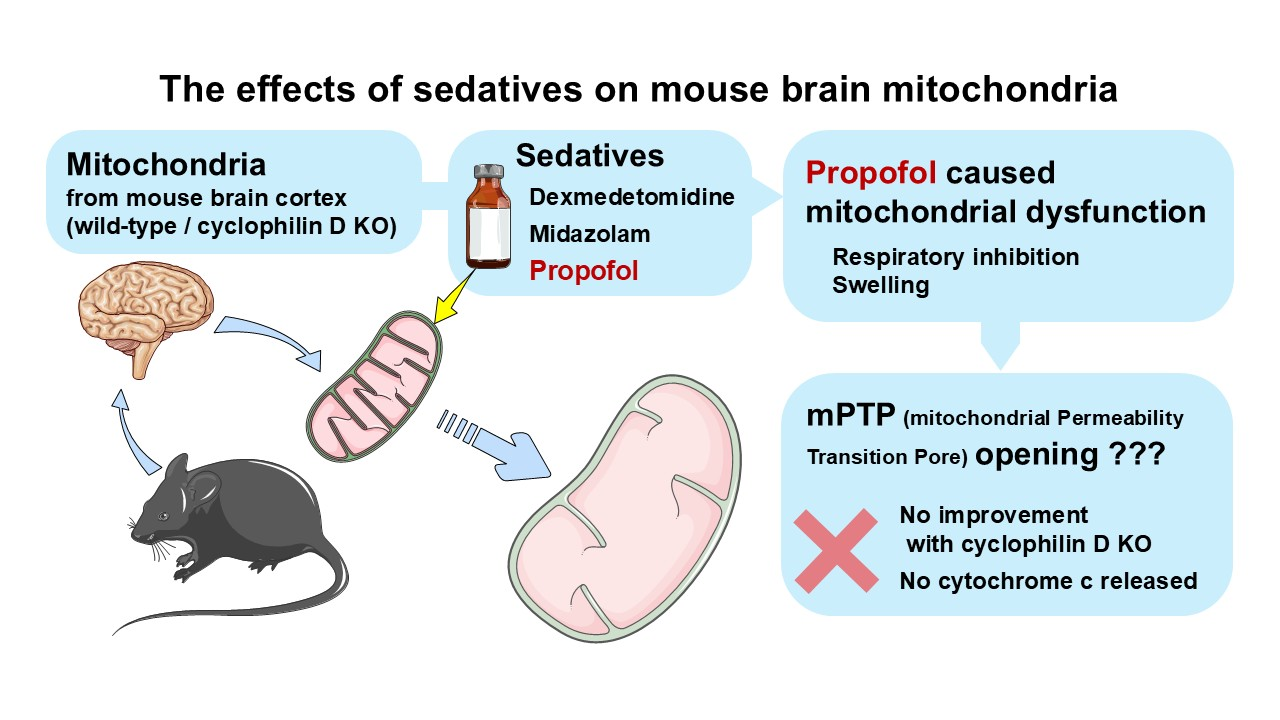
Propofol-Induced Mitochondrial Dysfunction Is Independent of Mitochondrial Permeability Transition


Abstract
1. Introduction
2. Materials and Methods
2.1. Animals
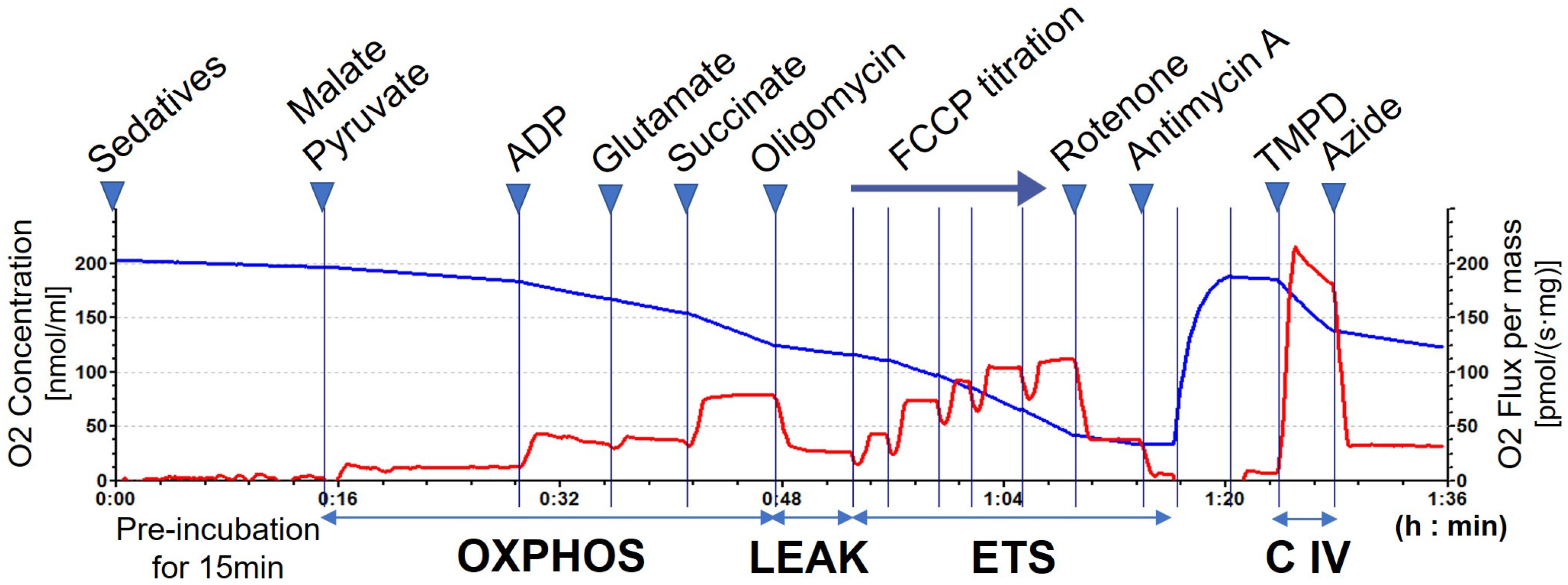
2.2. Mitochondrial Respiratory Capacity Assay
2.3. Mitochondrial Swelling Assay
2.4. Detection of Cyt c by WB Analysis
2.5. Statistical Analysis
3. Results
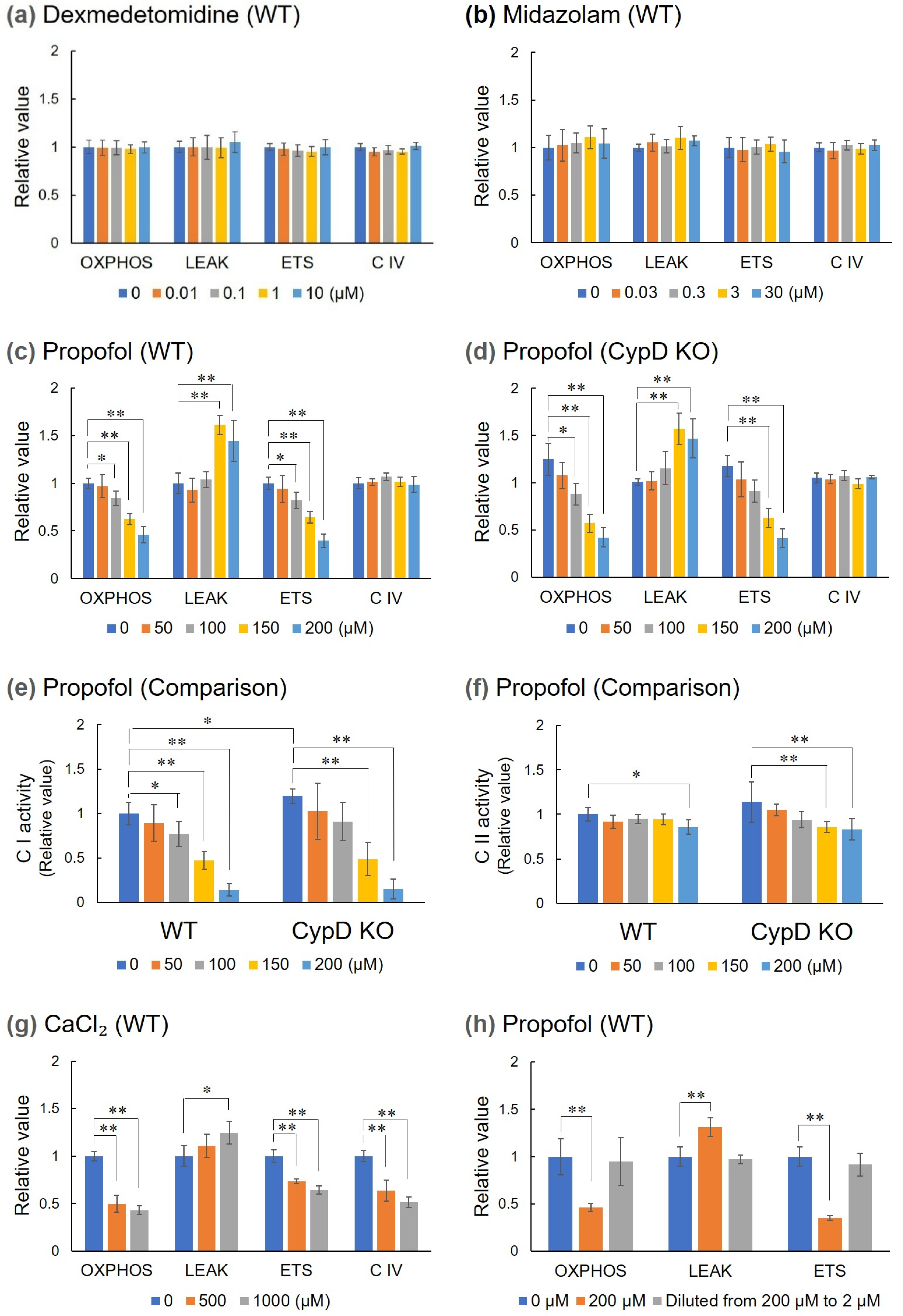
3.1. Effects of Sedatives on Mitochondrial Respiratory Capacity
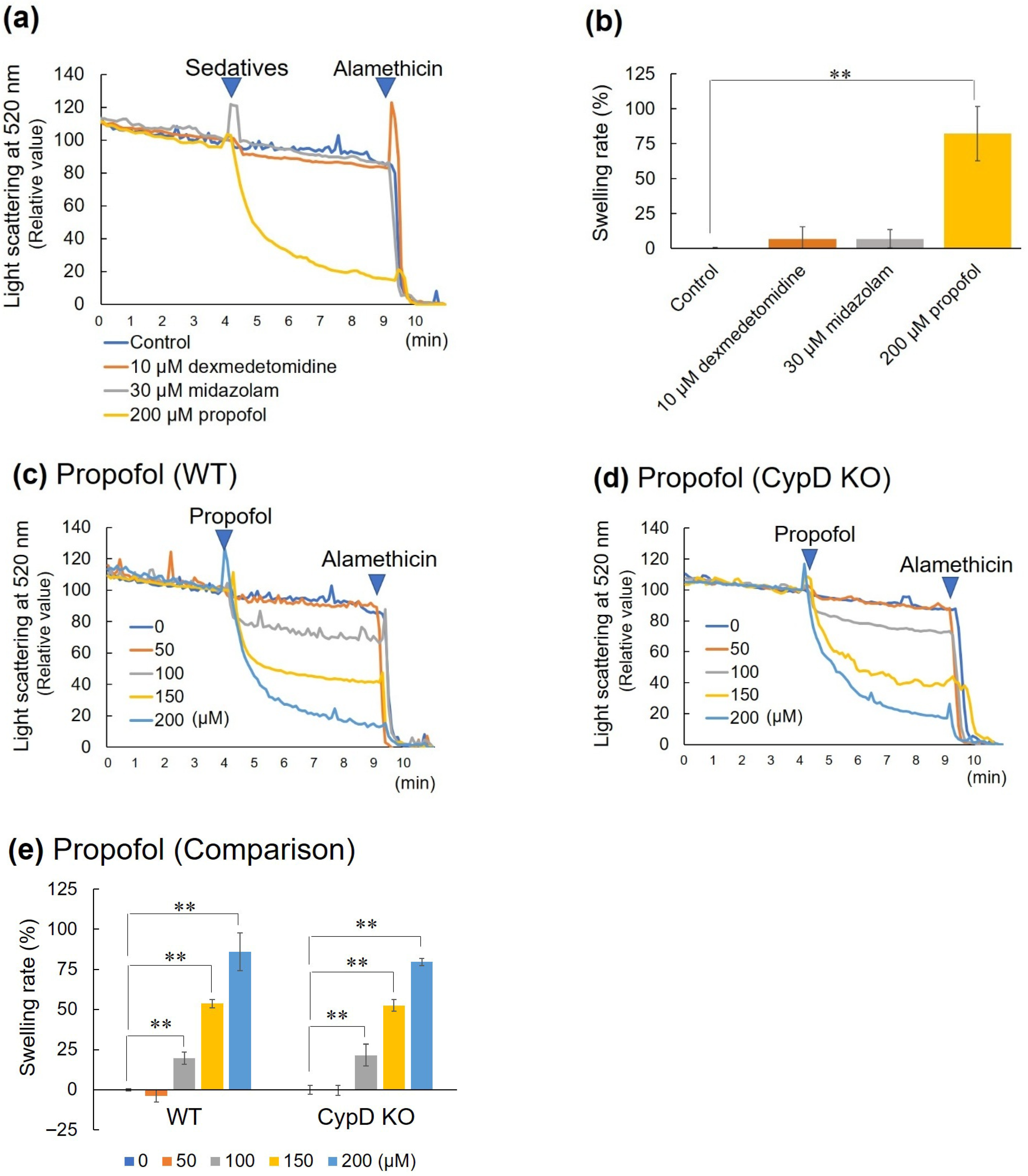
3.2. Effects on Mitochondrial Swelling
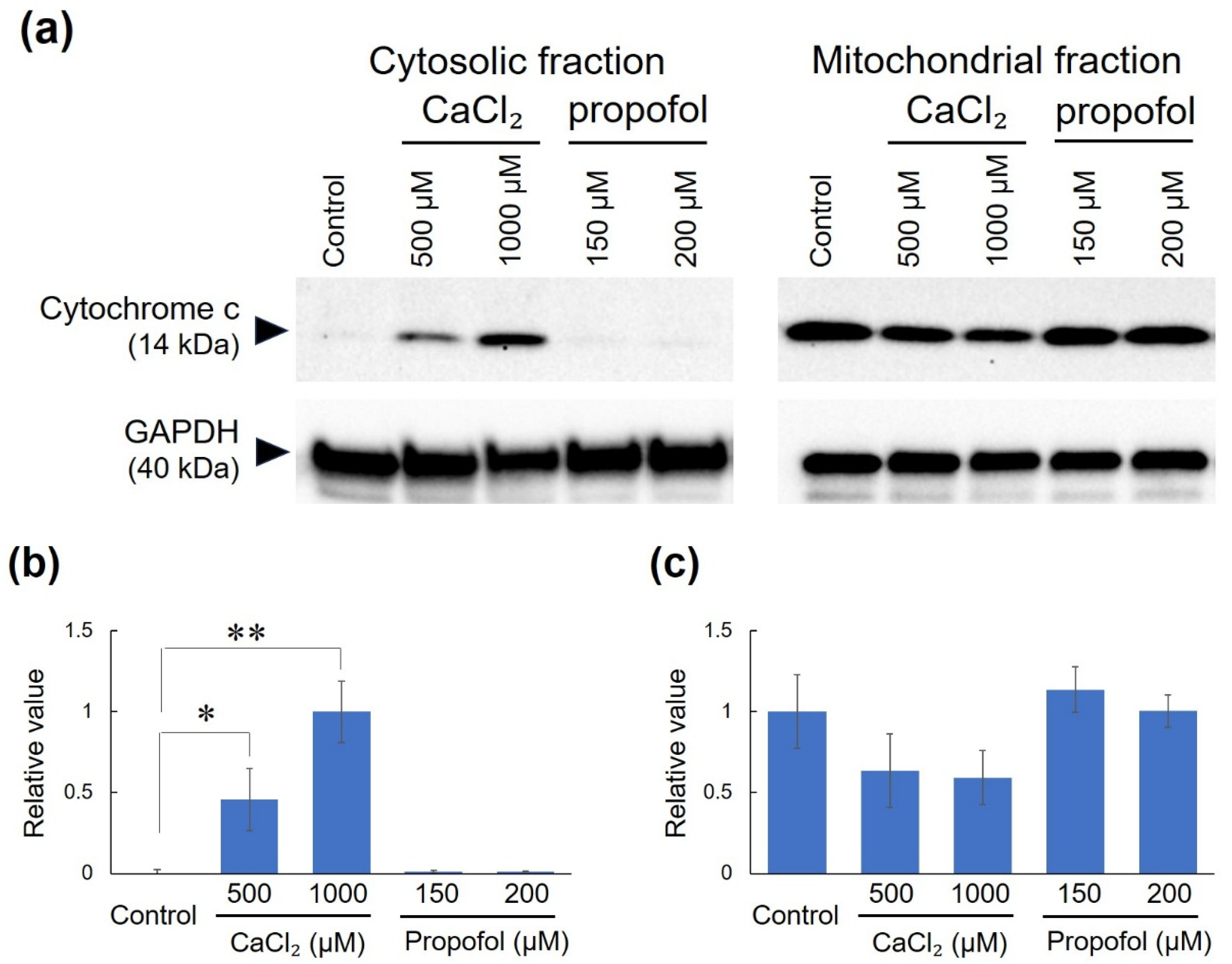
3.3. Detection of Cyt c by WB
4. Discussion
Supplementary Materials
Author Contributions
Funding
Institutional Review Board Statement
Informed Consent Statement
Data Availability Statement
Conflicts of Interest
Abbreviations
| ADP | adenosine diphosphate |
| ATP | adenosine triphosphate |
| CaCl2 | calcium chloride |
| C I | complex I |
| C II | complex II |
| C IV | complex IV |
| CsA | cyclosporin A |
| CypD | cyclophilin D |
| cyt c | cytochrome c |
| ETS | electron transport system |
| FCCP | carbonyl cyanide-p-trifluoromethoxyphenyl-hydrazon |
| IB | isolation buffer |
| KCl | potassium chloride |
| KO | knockout |
| mPTP | mitochondrial permeability transition pore |
| OXPHOS | oxidative phosphorylation |
| PRIS | propofol infusion syndrome |
| ROS | reactive oxygen species |
| SUIT | Substrate–Uncoupler–Inhibitor–Titration |
| WB | Western blot |
References
- Lei, B.; Popp, S.; Capuano-Waters, C.; Cottrell, J.E.; Kass, I.S. Lidocaine attenuates apoptosis in the ischemic penumbra and reduces infarct size after transient focal cerebral ischemia in rats. Neuroscience 2004, 125, 691–701. [Google Scholar] [CrossRef]
- Goyagi, T.; Kimura, T.; Nishikawa, T.; Tobe, Y.; Masaki, Y. Beta-adrenoreceptor antagonists attenuate brain injury after transient focal ischemia in rats. Anesth. Analg. 2006, 103, 658–663. [Google Scholar] [CrossRef] [PubMed]
- Wang, R.; Zhang, Z.; Kumar, M.; Xu, G.; Zhang, M. Neuroprotective potential of ketamine prevents developing brain structure impairment and alteration of neurocognitive function induced via isoflurane through the PI3K/AKT/GSK-3β pathway. Drug Des. Dev. Ther. 2019, 13, 501–512. [Google Scholar] [CrossRef] [PubMed]
- Heil, L.B.B.; Braga, C.L.; Magalhaes, R.F.; Antunes, M.A.; Cruz, F.F.; Samary, C.S.; Battaglini, D.; Robba, C.; Pelosi, P.; Silva, P.L.; et al. Dexmedetomidine compared to low-dose ketamine better protected not only the brain but also the lungs in acute ischemic stroke. Int. Immunopharmacol. 2023, 124, 111004. [Google Scholar] [CrossRef] [PubMed]
- Yang, C.Y.; Liu, S.Y.; Wang, H.Y.; Li, Y.L.; Guo, D.; Wang, X.Y.; Hua, W.; Wang, G.L. Neuroprotection by propofol post-conditioning: Focus on PKMzeta/KCC2 pathway activity. Cell. Mol. Neurobiol. 2018, 38, 691–701. [Google Scholar] [CrossRef]
- Liu, J.Y.; Guo, F.; Wu, H.L.; Wang, Y.; Liu, J.S. Midazolam anesthesia protects neuronal cells from oxidative stress-induced death via activation of the JNK-ERK pathway. Mol. Med. Rep. 2017, 15, 169–179. [Google Scholar] [CrossRef]
- Li, J.; Yu, W.; Li, X.T.; Qi, S.H.; Li, B. The effects of propofol on mitochondrial dysfunction following focal cerebral ischemia-reperfusion in rats. Neuropharmacology 2014, 77, 358–368. [Google Scholar] [CrossRef]
- Li, L.; Liu, X.; Du, J.; Yang, W.; Fu, R.; Li, Y.; Zhao, W.; Wang, H. Propofol mitigates brain injury and oxidative stress, and enhances GABAA receptor α1 subunit expression in a rat model of lithium chloride-pilocarpine induced status epilepticus. Turk. J. Med. Sci. 2023, 53, 1058–1066. [Google Scholar] [CrossRef]
- Zhang, J.; Li, Y. Propofol-induced developmental neurotoxicity: From mechanisms to therapeutic strategies. ACS Chem. Neurosci. 2023, 14, 1017–1032. [Google Scholar] [CrossRef]
- Xiao, F.; Qin, Y.; Chen, J.; Li, C.; Qin, Y.; Wei, Y.; Xie, Y. The propofol-induced mitochondrial damage in fetal rat hippocampal neurons via the AMPK/P53 signaling pathway. Ann. Transl. Med. 2022, 10, 1106. [Google Scholar] [CrossRef]
- Sumi, C.; Okamoto, A.; Tanaka, H.; Nishi, K.; Kusunoki, M.; Shoji, T.; Uba, T.; Matsuo, Y.; Adachi, T.; Hayashi, J.I.; et al. Propofol induces a metabolic switch to glycolysis and cell death in a mitochondrial electron transport chain-dependent manner. PLoS ONE 2018, 13, e0192796. [Google Scholar] [CrossRef] [PubMed]
- Robichaux, D.J.; Harata, M.; Murphy, E.; Karch, J. Mitochondrial permeability transition pore-dependent necrosis. J. Mol. Cell. Cardiol. 2023, 174, 47–55. [Google Scholar] [CrossRef] [PubMed]
- Kwong, J.Q.; Molkentin, J.D. Physiological and pathological roles of the mitochondrial permeability transition pore in the heart. Cell Metab. 2015, 21, 206–214. [Google Scholar] [CrossRef]
- Endlicher, R.; Drahota, Z.; Štefková, K.; Červinková, Z.; Kučera, O. The mitochondrial permeability transition pore-current knowledge of its structure, function, and regulation, and optimized methods for evaluating its functional state. Cells 2023, 12, 1273. [Google Scholar] [CrossRef] [PubMed]
- Porter, G.A., Jr.; Beutner, G. Cyclophilin D, somehow a master regulator of mitochondrial function. Biomolecules 2018, 8, 176. [Google Scholar] [CrossRef]
- Thomas, B.; Banerjee, R.; Starkova, N.N.; Zhang, S.F.; Calingasan, N.Y.; Yang, L.; Wille, E.; Lorenzo, B.J.; Ho, D.J.; Beal, M.F.; et al. Mitochondrial permeability transition pore component cyclophilin D distinguishes nigrostriatal dopaminergic death paradigms in the MPTP mouse model of Parkinson’s disease. Antioxid. Redox Signal. 2012, 16, 855–868. [Google Scholar] [CrossRef]
- Du, H.; Guo, L.; Fang, F.; Chen, D.; Sosunov, A.A.; McKhann, G.M.; Yan, Y.; Wang, C.; Zhang, H.; Molkentin, J.D.; et al. Cyclophilin D deficiency attenuates mitochondrial and neuronal perturbation and ameliorates learning and memory in Alzheimer’s disease. Nat. Med. 2008, 14, 1097–1105. [Google Scholar] [CrossRef]
- Kim, H.J.; Magrane, J.; Starkov, A.A.; Manfredi, G. The mitochondrial calcium regulator cyclophilin D is an essential component of oestrogen-mediated neuroprotection in amyotrophic lateral sclerosis. Brain 2012, 135, 2865–2874. [Google Scholar] [CrossRef]
- Perry, G.M.; Tallaksen-Greene, S.; Kumar, A.; Heng, M.Y.; Kneynsberg, A.; van Groen, T.; Detloff, P.J.; Albin, R.L.; Lesort, M. Mitochondrial calcium uptake capacity as a therapeutic target in the R6/2 mouse model of Huntington’s disease. Hum. Mol. Genet. 2010, 19, 3354–3371. [Google Scholar] [CrossRef]
- Hansson, M.J.; Månsson, R.; Mattiasson, G.; Ohlsson, J.; Karlsson, J.; Keep, M.F.; Elmér, E. Brain-derived respiring mitochondria exhibit homogeneous, complete and cyclosporin-sensitive permeability transition. J. Neurochem. 2004, 89, 715–729. [Google Scholar] [CrossRef]
- Hansson, M.J.; Mattiasson, G.; Månsson, R.; Karlsson, J.; Keep, M.F.; Waldmeier, P.; Ruegg, U.T.; Dumont, J.M.; Besseghir, K.; Elmér, E. The nonimmunosuppressive cyclosporin analogs NIM811 and UNIL025 display nanomolar potencies on permeability transition in brain-derived mitochondria. J. Bioenerg. Biomembr. 2004, 36, 407–413. [Google Scholar] [CrossRef]
- Hansson, M.J.; Persson, T.; Friberg, H.; Keep, M.F.; Rees, A.; Wieloch, T.; Elmér, E. Powerful cyclosporin inhibition of calcium-induced permeability transition in brain mitochondria. Brain Res. 2003, 960, 99–111. [Google Scholar] [CrossRef] [PubMed]
- Bradford, M.M. A rapid and sensitive method for the quantitation of microgram quantities of protein utilizing the principle of protein-dye binding. Anal. Biochem. 1976, 72, 248–254. [Google Scholar] [CrossRef]
- Morota, S.; Månsson, R.; Hansson, M.J.; Kasuya, K.; Shimazu, M.; Hasegawa, E.; Yanagi, S.; Omi, A.; Uchino, H.; Elmér, E. Evaluation of putative inhibitors of mitochondrial permeability transition for brain disorders—Specificity vs. toxicity. Exp. Neurol. 2009, 218, 353–362. [Google Scholar] [CrossRef] [PubMed]
- Kanda, Y. Investigation of the freely available easy-to-use software ‘EZR’ for medical statistics. Bone Marrow Transplant. 2013, 48, 452–458. [Google Scholar] [CrossRef] [PubMed]
- Hirsch, T.; Susin, S.A.; Marzo, I.; Marchetti, P.; Zamzami, N.; Kroemer, G. Mitochondrial permeability transition in apoptosis and necrosis. Cell Biol. Toxicol. 1998, 14, 141–145. [Google Scholar] [CrossRef]
- Zhang, H.; Yang, T.; Mu, W.; Peng, X.; Liu, T.; Weng, L.; Wang, H.; Zhang, Y.; Chen, X. Effective amplification of oxidative stress and calcium manipulation mediated mitochondrial dysfunction based on engineered nanozyme for primary and metastatic breast cancer therapy. Small 2025, 21, e2411299. [Google Scholar] [CrossRef]
- Niatsetskaya, Z.V.; Sosunov, S.A.; Matsiukevich, D.; Utkina-Sosunova, I.V.; Ratner, V.I.; Starkov, A.A.; Ten, V.S. The oxygen free radicals originating from mitochondrial complex I contribute to oxidative brain injury following hypoxia-ischemia in neonatal mice. J. Neurosci. 2012, 32, 3235–3244. [Google Scholar] [CrossRef]
- St-Pierre, J.; Buckingham, J.A.; Roebuck, S.J.; Brand, M.D. Topology of superoxide production from different sites in the mitochondrial electron transport chain. J. Biol. Chem. 2002, 277, 44784–44790. [Google Scholar] [CrossRef]
- Marian, M.; Parrino, C.; Leo, A.M.; Vincenti, E.; Bindoli, A.; Scutari, G. Effect of the intravenous anesthetic 2,6-diisopropylphenol on respiration and energy production by rat brain synaptosomes. Neurochem. Res. 1997, 22, 287–292. [Google Scholar] [CrossRef]
- Vanlander, A.V.; Okun, J.G.; de Jaeger, A.; Smet, J.; De Latter, E.; De Paepe, B.; Dacremont, G.; Wuyts, B.; Vanheel, B.; De Paepe, P.; et al. Possible pathogenic mechanism of propofol infusion syndrome involves coenzyme q. Anesthesiology 2015, 122, 343–352. [Google Scholar] [CrossRef] [PubMed]
- Ludbrook, G.L.; Visco, E.; Lam, A.M. Propofol: Relation between brain concentrations, electroencephalogram, middle cerebral artery blood flow velocity, and cerebral oxygen extraction during induction of anesthesia. Anesthesiology 2002, 97, 1363–1370. [Google Scholar] [CrossRef] [PubMed]
- Zhang, J.; Chen, A.; Song, Y. Propofol triggers cell death in lung cancer cells by increasing PANX1 expression, activating the mitochondrial cell death pathway, and enhancing ROS levels. Discov. Med. 2024, 36, 2231–2243. [Google Scholar] [CrossRef] [PubMed]
- Short, T.G.; Young, Y. Toxicity of intravenous anaesthetics. Best Pract. Res. Clin. Anaesthesiol. 2003, 17, 77–89. [Google Scholar] [CrossRef]
- Kam, P.C.; Cardone, D. Propofol infusion syndrome. Anaesthesia 2007, 62, 690–701. [Google Scholar] [CrossRef]
- Hillered, L.; Smith, M.L.; Siesjo, B.K. Lactic acidosis and recovery of mitochondrial function following forebrain ischemia in the rat. J. Cereb. Blood Flow. Metab. 1985, 5, 259–266. [Google Scholar] [CrossRef]
- Korotkov, S.M. Mitochondrial oxidative stress is the general reason for apoptosis induced by different-valence heavy metals in cells and mitochondria. Int. J. Mol. Sci. 2023, 24, 14459. [Google Scholar] [CrossRef]
- Keramaris, E.; Stefanis, L.; MacLaurin, J.; Harada, N.; Takaku, K.; Ishikawa, T.; Taketo, M.M.; Robertson, G.S.; Nicholson, D.W.; Slack, R.S.; et al. Involvement of caspase 3 in apoptotic death of cortical neurons evoked by DNA damage. Mol. Cell. Neurosci. 2000, 15, 368–379. [Google Scholar] [CrossRef]
- Susin, S.A.; Lorenzo, H.K.; Zamzami, N.; Marzo, I.; Snow, B.E.; Brothers, G.M.; Mangion, J.; Jacotot, E.; Costantini, P.; Loeffler, M.; et al. Molecular characterization of mitochondrial apoptosis-inducing factor. Nature 1999, 397, 441–446. [Google Scholar] [CrossRef]
- Ribeiro, R.T.; Roginski, A.C.; Marschner, R.A.; Wajner, S.M.; Castilho, R.F.; Amaral, A.U.; Wajner, M. Disruption of mitochondrial bioenergetics, calcium retention capacity and cell viability caused by D-2-hydroxyglutaric acid in the heart. Biochimie 2023, 207, 153–164. [Google Scholar] [CrossRef]
- Cattano, D.; Young, C.; Straiko, M.M.W.; Olney, J.W. Subanesthetic doses of propofol induce neuroapoptosis in the infant mouse brain. Anesth. Analg. 2008, 106, 1712–1714. [Google Scholar] [CrossRef] [PubMed]
- Morota, S.; Manolopoulos, T.; Eyjolfsson, A.; Kimblad, P.O.; Wierup, P.; Metzsch, C.; Blomquist, S.; Hansson, M.J. Functional and pharmacological characteristics of permeability transition in isolated human heart mitochondria. PLoS ONE 2013, 8, e67747. [Google Scholar] [CrossRef] [PubMed]
- Hansson, M.J.; Morota, S.; Chen, L.; Matsuyama, N.; Suzuki, Y.; Nakajima, S.; Tanoue, T.; Omi, A.; Shibasaki, F.; Shimazu, M.; et al. Cyclophilin D-sensitive mitochondrial permeability transition in adult human brain and liver mitochondria. J. Neurotrauma 2011, 28, 143–153. [Google Scholar] [CrossRef] [PubMed]
- Baines, C.P.; Kaiser, R.A.; Purcell, N.H.; Blair, N.S.; Osinska, H.; Hambleton, M.A.; Brunskill, E.W.; Sayen, M.R.; Gottlieb, R.A.; Dorn, G.W.; et al. Loss of cyclophilin D reveals a critical role for mitochondrial permeability transition in cell death. Nature 2005, 434, 658–662. [Google Scholar] [CrossRef]
- Du, H.; Guo, L.; Zhang, W.; Rydzewska, M.; Yan, S. Cyclophilin D deficiency improves mitochondrial function and learning/memory in aging Alzheimer disease mouse model. Neurobiol. Aging 2011, 32, 398–406. [Google Scholar] [CrossRef]
- Rozich, E.; Ozkurede, U.; Pakkiriswami, S.; Gemilere, R.; Azarin, S.M.; Liu, J.C. Mitochondrial oxidative stress, calcium and dynamics in cardiac ischaemia-reperfusion injury. J. Physiol. 2025. [Google Scholar] [CrossRef]
- Hughes, G.; Murphy, M.P.; Ledgerwood, E.C. Mitochondrial reactive oxygen species regulate the temporal activation of nuclear factor kappaB to modulate tumour necrosis factor-induced apoptosis: Evidence from mitochondria-targeted antioxidants. Biochem. J. 2005, 389, 83–89. [Google Scholar] [CrossRef]
- Barbu, A.R.; Akusjarvi, G.; Welsh, N. Adenoviral-induced islet cell cytotoxicity is not counteracted by Bcl-2 overexpression. Mol. Med. 2002, 8, 733–741. [Google Scholar] [CrossRef]
- Ebrahimi, M.; Dabbagh, A.; Madadi, F. Propofol-induced hippocampal neurotoxicity: A mitochondrial perspective. Brain Res. 2024, 1831, 148841. [Google Scholar] [CrossRef]
- Kojima, A.; Bai, J.Y.; Ito, Y.; Ding, W.G.; Kitagawa, H.; Matsuura, H. Serum albumin attenuates the open-channel blocking effects of propofol on the human Kv1.5 channel. Eur. J. Pharmacol. 2016, 783, 117–126. [Google Scholar] [CrossRef]
- Kahraman, S.; Zup, S.L.; McCarthy, M.M.; Fiskum, G. GABAergic mechanism of propofol toxicity in immature neurons. J. Neurosurg. Anesthesiol. 2008, 20, 233–240. [Google Scholar] [CrossRef]
- Ren, G.; Zhou, Y.; Liang, G.; Yang, B.; Yang, M.; King, A.; Wei, H. General anesthetics regulate autophagy via modulating the inositol 1,4,5-trisphosphate receptor: Implications for dual effects of cytoprotection and cytotoxicity. Sci. Rep. 2017, 7, 12378. [Google Scholar] [CrossRef]


Disclaimer/Publisher’s Note: The statements, opinions and data contained in all publications are solely those of the individual author(s) and contributor(s) and not of MDPI and/or the editor(s). MDPI and/or the editor(s) disclaim responsibility for any injury to people or property resulting from any ideas, methods, instructions or products referred to in the content. |
© 2025 by the authors. Licensee MDPI, Basel, Switzerland. This article is an open access article distributed under the terms and conditions of the Creative Commons Attribution (CC BY) license (https://creativecommons.org/licenses/by/4.0/).
Share and Cite
Kawachi, A.; Shibata, S.; Elmér, E.; Uchino, H. Propofol-Induced Mitochondrial Dysfunction Is Independent of Mitochondrial Permeability Transition. Biomedicines 2025, 13, 3125. https://doi.org/10.3390/biomedicines13123125
Kawachi A, Shibata S, Elmér E, Uchino H. Propofol-Induced Mitochondrial Dysfunction Is Independent of Mitochondrial Permeability Transition. Biomedicines. 2025; 13(12):3125. https://doi.org/10.3390/biomedicines13123125
Chicago/Turabian StyleKawachi, Aya, Shoichiro Shibata, Eskil Elmér, and Hiroyuki Uchino. 2025. "Propofol-Induced Mitochondrial Dysfunction Is Independent of Mitochondrial Permeability Transition" Biomedicines 13, no. 12: 3125. https://doi.org/10.3390/biomedicines13123125
APA StyleKawachi, A., Shibata, S., Elmér, E., & Uchino, H. (2025). Propofol-Induced Mitochondrial Dysfunction Is Independent of Mitochondrial Permeability Transition. Biomedicines, 13(12), 3125. https://doi.org/10.3390/biomedicines13123125