

The Role of the CCR5 Receptor in Neuropathic Pain Modulation: Current Insights and Therapeutic Implications

Abstract
1. Introduction
2. CCR5: Structure and Physiological Functions
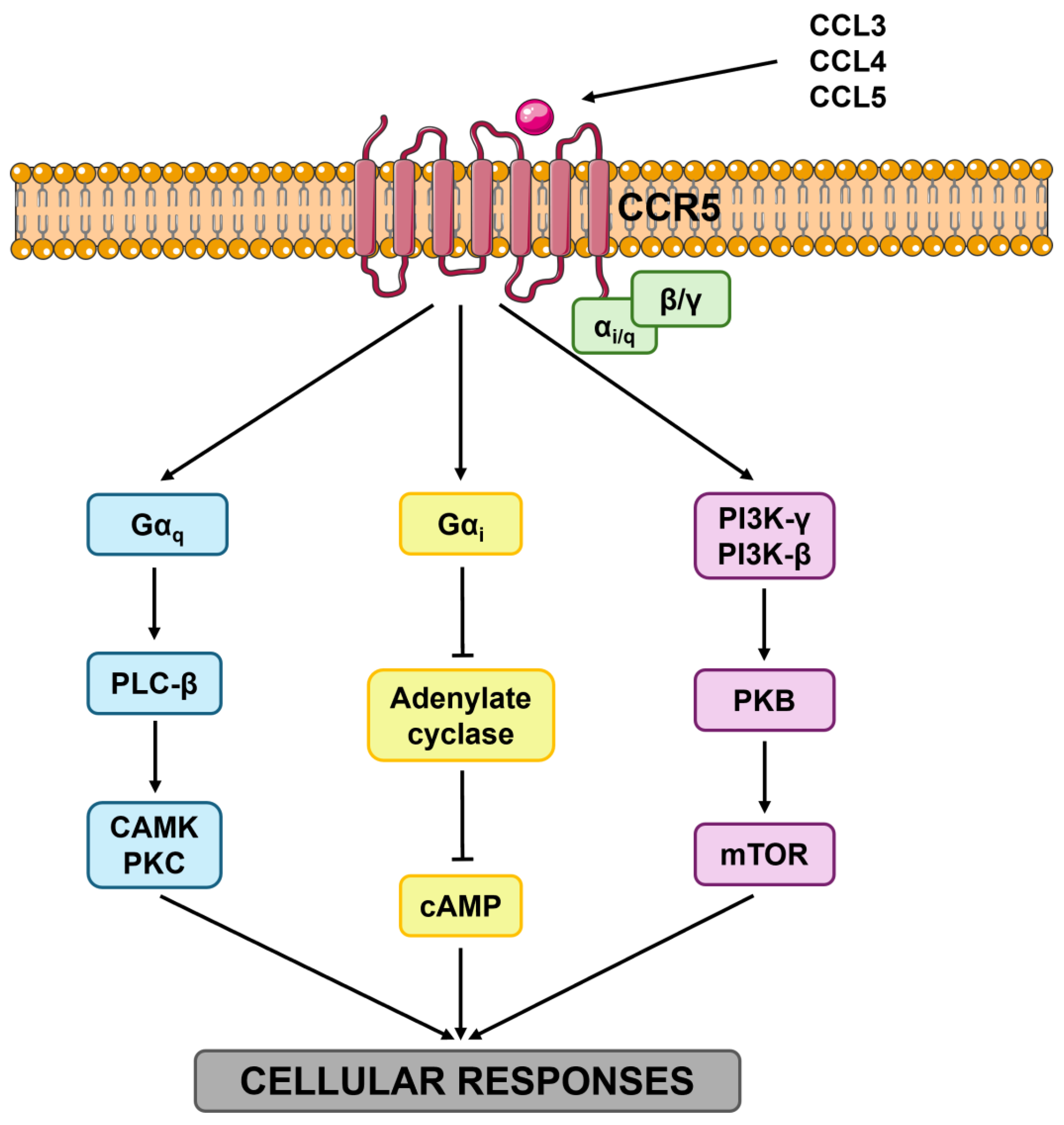
2.1. Structural Features and Molecular Signaling Mechanisms of CCR5
2.2. Distribution of the Chemokine CCR5 Receptor
2.3. Functional Significance of CCR5 Receptor
2.3.1. Role in Chemotaxis and Immune Cell Trafficking
2.3.2. CCR5 as a Co-Receptor for HIV-1 Entry
2.3.3. CCR5 in Inflammation and Autoimmunity
2.3.4. CCR5 in Tissue Repair and Regeneration
2.3.5. CCR5 in Stem Cell and Hematopoietic Regulation
3. The Role of CCR5 in the Pathophysiology of Neuropathic Pain
3.1. CCR5-Mediated Peripheral Mechanisms in Neuropathic Pain
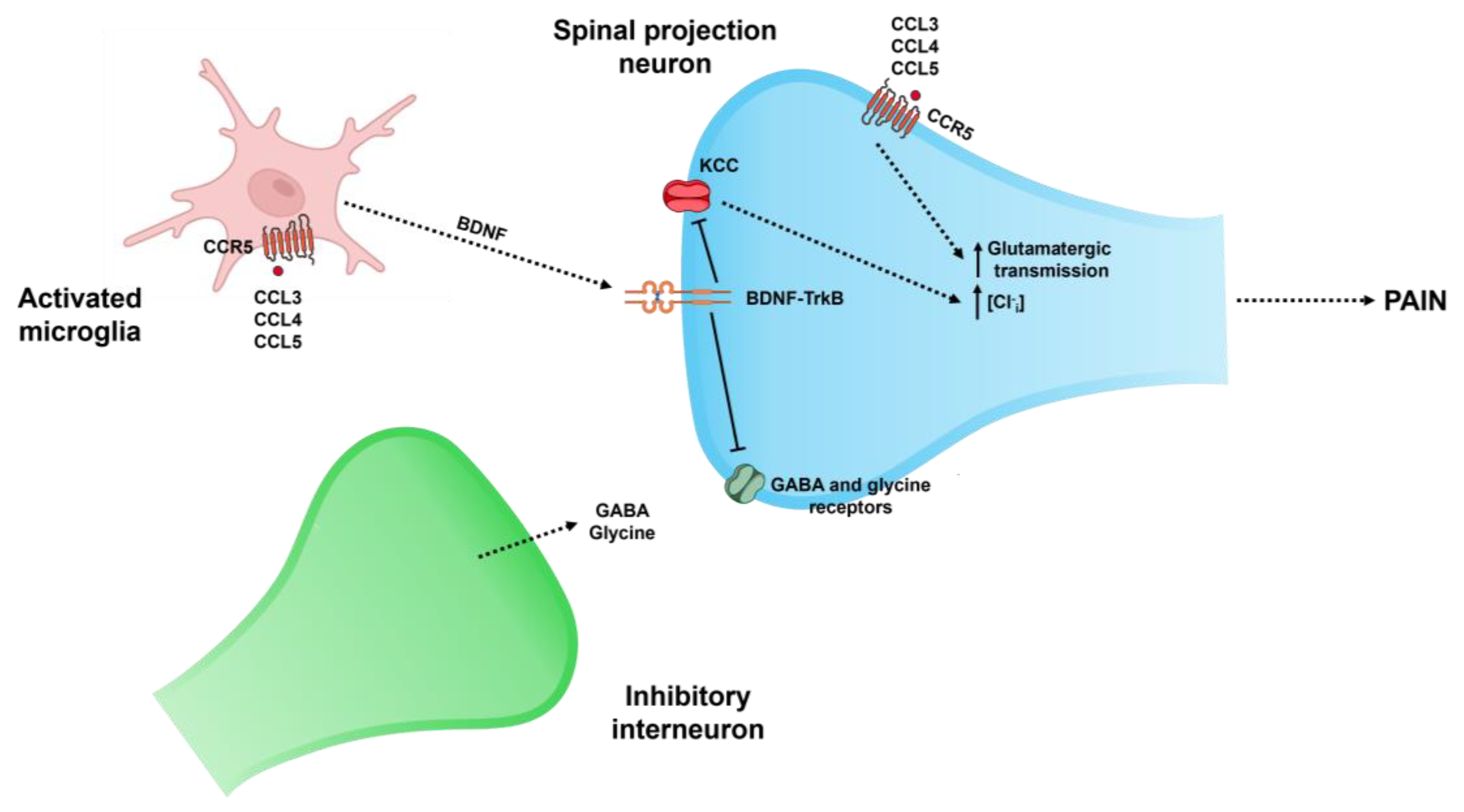
3.2. CCR5-Mediated Central Mechanisms in Neuropathic Pain
3.3. Interplay Between CCR5 and Other Chemokine Receptors in the Modulation of Neuropathic Pain
4. CCR5 Inhibition: Emerging Approaches for Analgesia
4.1. Evidence from Animal Models of Neuropathic Pain
4.2. Translational Potential and Early Clinical Findings
5. Future Perspectives
6. Conclusions
Funding
Data Availability Statement
Conflicts of Interest
Abbreviations
| [Cl−i] | Intracellular Cl− concentration |
| 7TM | Seven transmembrane |
| Akt | Protein kinase B |
| ALT | Alanine aminotransferase |
| AMPA | α-amino-3-hydroxy-5-methyl-4-isoxazolepropionic acid |
| AP-1 | Activator protein 1 |
| APC | Antigen-presenting cell |
| Arc | Activity-regulated cytoskeleton-associated protein |
| AST | Aspartate aminotransferase |
| ATP | Adenosine triphosphate |
| BBB | Blood–brain barrier |
| BDNF | Brain-derived neurotrophic factor |
| c-fos | Cellular oncogene fos |
| Ca2+ | Calcium ion |
| CaMK | Calcium/calmodulin-dependent protein |
| CaMKIV | Calcium/calmodulin-dependent protein kinase IV |
| cAMP | Cyclic adenosine monophosphate |
| cGMP | Cyclic guanosine monophosphate |
| Cav2.2 | Voltage-gated calcium channel subtype 2.2 |
| CCI | Chronic constriction injury |
| CCL12 | Chemokine (C-C motif) ligand 12 |
| CCL2 | Chemokine (C-C motif) ligand 2 |
| CCL3 | Chemokine (C-C motif) ligand 3 |
| CCL4 | Chemokine (C-C motif) ligand 4 |
| CCL5 | Chemokine (C-C motif) ligand 5 |
| CCL7 | Chemokine (C-C motif) ligand 7 |
| CCL8 | Chemokine (C-C motif) ligand 8 |
| CCR1 | C-C chemokine receptor type 1 |
| CCR2 | C-C chemokine receptor type 2 |
| CCR3 | C-C chemokine receptor type 3 |
| CCR5 | C-C chemokine receptor type 5 |
| CD11b | Cluster of differentiation 11b |
| CD14 | Cluster of differentiation 14 |
| CD16 | Cluster of differentiation 16 |
| CD4 | Cluster of differentiation 4 |
| CD8 | Cluster of differentiation 8 |
| CGRP | Calcitonin gene-related peptide |
| Cl− | Chloride ion |
| CNS | Central nervous system |
| CREB | cAMP response element-binding protein |
| CXCL9 | C-X-C motif chemokine ligand 9 |
| CXCL10 | C-X-C motif chemokine ligand 10 |
| CXCL11 | C-X-C motif chemokine ligand 11 |
| CXCR3 | C-X-C chemokine receptor type 3 |
| CX3CR1 | C-X3-C motif chemokine receptor 1 |
| DAG | Diacylglycerol |
| DAMP | Damage-associated molecular pattern |
| DAPTA | D-Ala1-peptide T-amide |
| DC | Dendritic cell |
| DPN | Diabetic peripheral neuropathy |
| DRG | Dorsal root ganglia |
| ECL1 | Extracellular loop 1 |
| ECL2 | Extracellular loop 2 |
| ECL3 | Extracellular loop 3 |
| ECM | Extracellular matrix |
| EP2 | Prostaglandin E2 receptor subtype 2 |
| EP4 | Prostaglandin E2 receptor subtype 4 |
| ERK | Extracellular signal-regulated kinase |
| ERK1/2 | Extracellular signal-regulated kinases 1 and 2 |
| FDA | Food and Drug Administration |
| GABA | Gamma-aminobutyric acid |
| GFAP | Glial fibrillary acidic protein |
| GluA1 | Glutamate receptor subunit A1 (AMPA receptor subunit) |
| gp120 | Glycoprotein 120 |
| G0p130 | Glycoprotein 130 |
| gp41 | Glycoprotein 41 |
| GPCR | G protein-coupled receptor |
| GRK | G protein-coupled receptor kinase |
| Gαi | G protein alpha i subunit |
| Gαq | G protein alpha q subunit |
| Gβγ | G protein beta-gamma subunits |
| Gq/11 | G protein subtypes q and 11 |
| HBV | Hepatitis B virus |
| HIV-1 | Human immunodeficiency virus type 1 |
| i.t. | Intrathecal injection |
| IASP | International Association for the Study of Pain |
| Iba1 | Ionized calcium-binding adapter molecule 1 |
| ICAM-1 | Intercellular adhesion molecule 1 |
| ICL1 | Intracellular loop 1 |
| ICL2 | Intracellular loop 2 |
| ICL3 | Intracellular loop 3 |
| IFN-γ | Interferon gamma |
| IL-1RI | Interleukin-1 receptor type I |
| IL-10 | Interleukin 10 |
| IL-17 | Interleukin 17 |
| IL-18 | Interleukin 18 |
| IL-18BP | Interleukin 18 binding protein |
| IL-1β | Interleukin 1 beta |
| IL-1RA | Interleukin 1 receptor antagonist |
| IL-6 | Interleukin 6 |
| IL-6Rα | Interleukin-6 receptor alpha |
| iNOS | Inducible nitric oxide synthase |
| IP3 | Inositol 1,4,5-trisphosphate |
| IRAK1/4 | Interleukin-1 receptor-associated kinases 1 and 4 |
| JAK | Janus kinase |
| K+ | Potassium ion |
| KCC | Potassium chloride cotransporter |
| KCC2 | Potassium chloride cotransporter 2 |
| LTP | Long-term potentiation |
| M1 | Pro-inflammatory microglial phenotype |
| M2 | Anti-inflammatory microglial phenotype |
| MAPK | Mitogen-activated protein kinase |
| MASH | Metabolic dysfunction-associated steatohepatitis |
| MHC-II | Major histocompatibility complex class II |
| MIP-1α | Macrophage inflammatory protein 1 alpha |
| MIP-1β | Macrophage inflammatory protein 1 beta |
| MMP | Matrix metalloproteinase |
| MS | Multiple sclerosis |
| MSC | Mesenchymal stem cell |
| MyD88 | Myeloid differentiation primary response 88 |
| mTOR | Mammalian target of rapamycin |
| Nav1.3 | Voltage-gated sodium channel subtype 1.3 |
| Nav1.7 | Voltage-gated sodium channel subtype 1.7 |
| Nav1.8 | Voltage-gated sodium channel subtype 1.8 |
| NADPH | Nicotinamide adenine dinucleotide phosphate |
| NF-κB | Nuclear factor kappa-light-chain-enhancer of activated B cells |
| NGF | Nerve growth factor |
| NK | Natural killer |
| NMDA | N-methyl-D-aspartate |
| NO | Nitric oxide |
| NOS2 | Nitric oxide synthase 2 |
| p38 MAPK | p38 mitogen-activated protein kinase |
| pERK | Phosphorylated extracellular signal-regulated kinase |
| PGE2 | Prostaglandin E2 |
| PI3K | Phosphoinositide 3-kinase |
| PI3K-β | Phosphatidylinositol 3-kinase beta |
| PI3K-γ | Phosphatidylinositol 3-kinase gamma |
| PIP2 | Phosphatidylinositol 4,5-bisphosphate |
| PIPN | Paclitaxel-induced peripheral neuropathy |
| PK | Pharmacokinetics |
| PKA | Protein kinase A |
| PKB | Protein kinase B |
| PKC | Protein kinase C |
| PKG | Protein kinase G |
| PLC-β | Phospholipase C beta |
| PLC-γ | Phospholipase C gamma |
| PNS | Peripheral nervous system |
| PRR | Pattern recognition receptor |
| PSNL | Partial sciatic nerve ligation |
| qRT-PCR | Quantitative real-time Polymerase Chain Reaction |
| RA | Rheumatoid arthritis |
| RANTES | Regulated upon activation, normal T cell expressed and secreted |
| ROS | Reactive oxygen species |
| SARS-CoV-2 | Severe acute respiratory syndrome coronavirus 2 |
| Ser | Serine |
| SLE | Systemic lupus erythematosus |
| STAT | Signal transducer and activator of transcription |
| STAT3 | Signal transducer and activator of transcription 3 |
| STZ | Streptozotocin |
| TCR | T cell receptor |
| TGF-β | Transforming growth factor beta |
| Th1 | T helper 1 cell |
| Th17 | T helper 17 cell |
| Thr | Threonine |
| TM3 | Transmembrane helix 3 |
| TM5 | Transmembrane helix 5 |
| TM6 | Transmembrane helix 6 |
| TNF-α | Tumor necrosis factor alpha |
| TNFR1 | Tumor necrosis factor receptor 1 |
| TNFR2 | Tumor necrosis factor receptor 2 |
| TRAF6 | TNF receptor-associated factor 6 |
| TrkB | Tropomyosin receptor kinase B |
| TRP | Transient receptor potential channel |
| TRPA1 | Transient receptor potential ankyrin 1 |
| TRPM8 | Transient receptor potential melastatin 8 |
| TRPV1 | Transient receptor potential vanilloid 1 |
| V1 | Variable region 1 of gp120 |
| V2 | Variable region 2 of gp120 |
| V3 | Variable region 3 of gp120 |
| VEGF | Vascular endothelial growth factor |
| VGCC | Voltage-gated calcium channel |
| VGSC | Voltage-gated sodium channel |
| Xc− | Cystine/glutamate antiporter |
References
- Raja, S.N.; Carr, D.B.; Cohen, M.; Finnerup, N.B.; Flor, H.; Gibson, S.; Keefe, F.J.; Mogil, J.S.; Ringkamp, M.; Sluka, K.A.; et al. The revised International Association for the Study of Pain definition of pain: Concepts, challenges, and compromises. Pain 2020, 161, 1976–1982. [Google Scholar] [CrossRef] [PubMed]
- Vader, K.; Bostick, G.P.; Carlesso, L.C.; Hunter, J.; Mesaroli, G.; Perreault, K.; Tousignant-Laflamme, Y.; Tupper, S.; Walton, D.M.; Wideman, T.H.; et al. The Revised IASP Definition of Pain and Accompanying Notes: Considerations for the Physiotherapy Profession. Physiother. Can. 2021, 73, 103–106. [Google Scholar] [CrossRef] [PubMed]
- Fashler, S.R.; Cooper, L.K.; Oosenbrug, E.D.; Burns, L.C.; Razavi, S.; Goldberg, L.; Katz, J. Systematic Review of Multidisciplinary Chronic Pain Treatment Facilities. Pain Res. Manag. 2016, 2016, 5960987. [Google Scholar] [CrossRef] [PubMed]
- Bonezzi, C.; Fornasari, D.; Cricelli, C.; Magni, A.; Ventriglia, G. Not All Pain is Created Equal: Basic Definitions and Diagnostic Work-Up. Pain Ther. 2020, 9, 1–15. [Google Scholar] [CrossRef]
- Sima, S.; Lapkin, S.; Gan, Z.; Diwan, A.D. Nociceptive pain assessed by the PainDETECT questionnaire may predict response to opioid treatment for chronic low back pain. Heliyon 2024, 10, e25834. [Google Scholar] [CrossRef]
- Kaplan, C.M.; Kelleher, E.; Irani, A.; Schrepf, A.; Clauw, D.J.; Harte, S.E. Deciphering nociplastic pain: Clinical features, risk factors and potential mechanisms. Nat. Rev. Neurol. 2024, 20, 347–363. [Google Scholar] [CrossRef]
- Rugnath, R.; Orzechowicz, C.; Newell, C.; Carullo, V.; Rugnath, A. A Literature Review: The Mechanisms and Treatment of Neuropathic Pain—A Brief Discussion. Biomedicines 2024, 12, 204. [Google Scholar] [CrossRef]
- van Hecke, O.; Austin, S.K.; Khan, R.A.; Smith, B.H.; Torrance, N. Neuropathic pain in the general population: A systematic review of epidemiological studies. Pain 2014, 155, 654–662. [Google Scholar] [CrossRef]
- Martins, J.P.; Marson, F.A.L. A narrative review of the complex panorama regarding chronic neuropathic pain mainly for the psychological issues. Heliyon 2024, 10, e38282. [Google Scholar] [CrossRef]
- Madariaga Muñoz, M.C.; Villegas Estévez, F.; Jiménez López, A.J.; Cabezón Álvarez, A.; Soler López, B. Evaluation of Quality of Life and Satisfaction of Patients with Neuropathic Pain and Breakthrough Pain: Economic Impact Based on Quality of Life. Pain Res. Treat. 2018, 2018, 5394021. [Google Scholar] [CrossRef]
- Cao, B.; Xu, Q.; Shi, Y.; Zhao, R.; Li, H.; Zheng, J.; Liu, F.; Wan, Y.; Wei, B. Pathology of pain and its implications for therapeutic interventions. Signal Transduct. Target. Ther. 2024, 9, 155. [Google Scholar] [CrossRef]
- Ghazisaeidi, S.; Muley, M.M.; Salter, M.W. Neuropathic Pain: Mechanisms, Sex Differences, and Potential Therapies for a Global Problem. Annu. Rev. Pharmacol. Toxicol. 2023, 63, 565–583. [Google Scholar] [CrossRef]
- Bennett, G.J. What is spontaneous pain and who has it? J. Pain 2012, 13, 921–929. [Google Scholar] [CrossRef] [PubMed]
- Balzani, E.; Fanelli, A.; Malafoglia, V.; Tenti, M.; Ilari, S.; Corraro, A.; Muscoli, C.; Raffaeli, W. A Review of the Clinical and Therapeutic Implications of Neuropathic Pain. Biomedicines 2021, 9, 1239. [Google Scholar] [CrossRef]
- Bowsher, D. Dynamic mechanical allodynia in neuropathic pain. Pain 2005, 116, 164–165. [Google Scholar] [CrossRef]
- Jensen, T.S.; Finnerup, N.B. Allodynia and hyperalgesia in neuropathic pain: Clinical manifestations and mechanisms. Lancet Neurol. 2014, 13, 924–935. [Google Scholar] [CrossRef]
- Hamdan, A.; Galvez, R.; Katati, M. Shedding light on neuropathic pain: Current and emerging tools for diagnosis, screening, and quantification. SAGE Open Med. 2024, 12, 20503121231218985. [Google Scholar] [CrossRef]
- van Velzen, M.; Dahan, A.; Niesters, M. Neuropathic Pain: Challenges and Opportunities. Front. Pain Res. 2020, 1, 1. [Google Scholar] [CrossRef]
- Duan, Y.-W.; Chen, S.-X.; Li, Q.-Y.; Zang, Y. Neuroimmune Mechanisms Underlying Neuropathic Pain: The Potential Role of TNF-α-Necroptosis Pathway. Int. J. Mol. Sci. 2022, 23, 7191. [Google Scholar] [CrossRef] [PubMed]
- Clark, A.K.; Old, E.A.; Malcangio, M. Neuropathic pain and cytokines: Current perspectives. J. Pain Res. 2013, 6, 803–814. [Google Scholar] [CrossRef] [PubMed]
- Wang, F.; Zhao, C.; Jing, Z.; Wang, Q.; Li, M.; Lu, B.; Huo, A.; Liang, W.; Hu, W.; Fu, X. The dual roles of chemokines in peripheral nerve injury and repair. Inflamm. Regen. 2025, 45, 11. [Google Scholar] [CrossRef]
- Kato, J.; Svensson, C.I. Role of extracellular damage-associated molecular pattern molecules (DAMPs) as mediators of persistent pain. Prog. Mol. Biol. Transl. Sci. 2015, 131, 251–279. [Google Scholar]
- Araldi, D.; Khomula, E.V.; Bonet, I.J.M.; Bogen, O.; Green, P.G.; Levine, J.D. Role of pattern recognition receptors in chemotherapy-induced neuropathic pain. Brain 2024, 147, 1025–1042. [Google Scholar] [CrossRef] [PubMed]
- Prado, J.; Westerink, R.H.S.; Popov-Celeketic, J.; Steen-Louws, C.; Pandit, A.; Versteeg, S.; van de Worp, W.; Kanters, D.H.A.J.; Reedquist, K.A.; Koenderman, L.; et al. Cytokine receptor clustering in sensory neurons with an engineered cytokine fusion protein triggers unique pain resolution pathways. Proc. Natl. Acad. Sci. USA 2021, 118, e2009647118. [Google Scholar] [CrossRef] [PubMed]
- White, F.A.; Feldman, P.; Miller, R.J. Chemokine signaling and the management of neuropathic pain. Mol. Interv. 2009, 9, 188–195. [Google Scholar] [CrossRef]
- Donnelly, C.R.; Andriessen, A.S.; Chen, G.; Wang, K.; Jiang, C.; Maixner, W.; Ji, R.R. Central Nervous System Targets: Glial Cell Mechanisms in Chronic Pain. Neurotherapeutics 2020, 17, 846–860. [Google Scholar] [CrossRef] [PubMed]
- García-Domínguez, M. NGF in Neuropathic Pain: Understanding Its Role and Therapeutic Opportunities. Curr. Issues Mol. Biol. 2025, 47, 93. [Google Scholar] [CrossRef]
- Chaudhari, A.; Padmar, J.; Awathale, S.; Goyal, S.; Nakhate, K.; Sherikar, A. From glial cells to pain pathways: ICAM-1 as a central player in neuroinflammation and neuropathy. Discov. Neurosci. 2025, 20, 5. [Google Scholar] [CrossRef]
- Bennett, D.L.; Clark, A.J.; Huang, J.; Waxman, S.G.; Dib-Hajj, S.D. The Role of Voltage-Gated Sodium Channels in Pain Signaling. Physiol. Rev. 2019, 99, 1079–1151. [Google Scholar] [CrossRef]
- Alles, S.R.A.; Smith, P.A. Peripheral Voltage-Gated Cation Channels in Neuropathic Pain and Their Potential as Therapeutic Targets. Front. Pain Res. 2021, 2, 750583. [Google Scholar] [CrossRef]
- Busserolles, J.; Tsantoulas, C.; Eschalier, A.; López García, J.A. Potassium channels in neuropathic pain: Advances, challenges, and emerging ideas. Pain 2016, 157 (Suppl. S1), S7–S14. [Google Scholar] [CrossRef]
- Yin, Y.; Yi, M.H.; Kim, D.W. Impaired Autophagy of GABAergic Interneurons in Neuropathic Pain. Pain Res. Manag. 2018, 2018, 9185368. [Google Scholar] [CrossRef]
- Imlach, W.L.; Bhola, R.F.; Mohammadi, S.A.; Christie, M.J. Glycinergic dysfunction in a subpopulation of dorsal horn interneurons in a rat model of neuropathic pain. Sci. Rep. 2016, 6, 37104. [Google Scholar] [CrossRef]
- Li, X.Y.; Wan, Y.; Tang, S.J.; Guan, Y.; Wei, F.; Ma, D. Maladaptive Plasticity and Neuropathic Pain. Neural Plast. 2016, 2016, 4842159. [Google Scholar] [CrossRef] [PubMed]
- Pawlik, K.; Mika, J. Targeting Members of the Chemokine Family as a Novel Approach to Treating Neuropathic Pain. Molecules 2023, 28, 5766. [Google Scholar] [CrossRef]
- Hughes, C.E.; Nibbs, R.J.B. A guide to chemokines and their receptors. FEBS J. 2018, 285, 2944–2971. [Google Scholar] [CrossRef] [PubMed]
- Jiang, B.C.; Liu, T.; Gao, Y.J. Chemokines in chronic pain: Cellular and molecular mechanisms and therapeutic potential. Pharmacol. Ther. 2020, 212, 107581. [Google Scholar] [CrossRef] [PubMed]
- Bajetto, A.; Bonavia, R.; Barbero, S.; Florio, T.; Schettini, G. Chemokines and their receptors in the central nervous system. Front. Neuroendocrinol. 2001, 22, 147–184. [Google Scholar] [CrossRef]
- Lin, Y.; Liu, S.; Sun, Y.; Chen, C.; Yang, S.; Pei, G.; Lin, M.; Yu, J.; Liu, X.; Wang, H.; et al. CCR5 and inflammatory storm. Ageing Res. Rev. 2024, 96, 102286. [Google Scholar] [CrossRef]
- Shen, Y.; Zhou, M.; Cai, D.; Filho, D.A.; Fernandes, G.; Cai, Y.; de Sousa, A.F.; Tian, M.; Kim, N.; Lee, J.; et al. CCR5 closes the temporal window for memory linking. Nature 2022, 606, 146–152. [Google Scholar] [CrossRef]
- Steffens, C.M.; Hope, T.J. Localization of CD4 and CCR5 in living cells. J. Virol. 2003, 77, 4985–4991. [Google Scholar] [CrossRef]
- Festa, B.P.; Siddiqi, F.H.; Jimenez-Sanchez, M.; Won, H.; Rob, M.; Djajadikerta, A.; Stamatakou, E.; Rubinsztein, D.C. Microglial-to-neuronal CCR5 signaling regulates autophagy in neurodegeneration. Neuron 2023, 111, 2021–2037.e12. [Google Scholar] [CrossRef]
- Dorf, M.E.; Berman, M.A.; Tanabe, S.; Heesen, M.; Luo, Y. Astrocytes express functional chemokine receptors. J. Neuroimmunol. 2000, 111, 109–121. [Google Scholar] [CrossRef]
- Zhang, P.; Wang, Y.; Xu, Y.; Li, X.; Yu, X.; Li, Y.; Zhu, D.; Luo, F.; Li, W.; Jin, X. Nasal-to-brain delivery of CCR5 antagonist for reshaping the dysregulated microglia-neuron axis and enhancing post-traumatic cognitive function. Biomaterials 2026, 324, 123479. [Google Scholar] [CrossRef] [PubMed]
- Oppermann, M. Chemokine receptor CCR5: Insights into structure, function, and regulation. Cell. Signal. 2004, 16, 1201–1210. [Google Scholar] [CrossRef]
- Zare-Bidaki, M.; Karimi-Googheri, M.; Hassanshahi, G.; Zainodini, N.; Arababadi, M.K. The frequency of CCR5 promoter polymorphisms and CCR5 Δ 32 mutation in Iranian populations. Iran. J. Basic Med. Sci. 2015, 18, 312–316. [Google Scholar] [PubMed]
- Saika, F.; Sato, T.; Nakabayashi, T.; Fukazawa, Y.; Hino, S.; Suzuki, K.; Kiguchi, N. Male-Dominant Spinal Microglia Contribute to Neuropathic Pain by Producing CC-Chemokine Ligand 4 Following Peripheral Nerve Injury. Cells 2025, 14, 484. [Google Scholar] [CrossRef] [PubMed]
- Isaikina, P.; Tsai, C.J.; Dietz, N.; Pamula, F.; Grahl, A.; Goldie, K.N.; Guixà-González, R.; Branco, C.; Paolini-Bertrand, M.; Calo, N.; et al. Structural basis of the activation of the CC chemokine receptor 5 by a chemokine agonist. Sci. Adv. 2021, 7, eabg8685. [Google Scholar] [CrossRef]
- Jasinska, A.J.; Pandrea, I.; Apetrei, C. CCR5 as a Coreceptor for Human Immunodeficiency Virus and Simian Immunodeficiency Viruses: A Prototypic Love-Hate Affair. Front. Immunol. 2022, 13, 835994. [Google Scholar] [CrossRef]
- Jensen, T.S. Anticonvulsants in neuropathic pain: Rationale and clinical evidence. Eur. J. Pain 2002, 6, 61–68. [Google Scholar] [CrossRef]
- Catalisano, G.; Campione, G.M.; Spurio, G.; Galvano, A.N.; di Villalba, C.P.; Giarratano, A.; Alongi, A.; Ippolito, M.; Cortegiani, A. Neuropathic pain, antidepressant drugs, and inflammation: A narrative review. J. Anesth. Analg. Crit. Care 2024, 4, 67. [Google Scholar] [CrossRef]
- McNicol, E.D.; Midbari, A.; Eisenberg, E. Opioids for neuropathic pain. Cochrane Database Syst. Rev. 2013, 2013, CD006146. [Google Scholar] [CrossRef]
- Cavalli, E.; Mammana, S.; Nicoletti, F.; Bramanti, P.; Mazzon, E. The neuropathic pain: An overview of the current treatment and future therapeutic approaches. Int. J. Immunopathol. Pharmacol. 2019, 33, 2058738419838383. [Google Scholar] [CrossRef] [PubMed]
- Piotrowska, A.; Kwiatkowski, K.; Rojewska, E.; Makuch, W.; Mika, J. Maraviroc reduces neuropathic pain through polarization of microglia and astroglia—Evidence from in vivo and in vitro studies. Neuropharmacology 2016, 108, 207–219. [Google Scholar] [CrossRef] [PubMed]
- Bober, A.; Piotrowska, A.; Pawlik, K.; Ciapała, K.; Maciuszek, M.; Makuch, W.; Mika, J. A New Application for Cenicriviroc, a Dual CCR2/CCR5 Antagonist, in the Treatment of Painful Diabetic Neuropathy in a Mouse Model. Int. J. Mol. Sci. 2024, 25, 7410. [Google Scholar] [CrossRef]
- Lee, Y.K.; Choi, D.Y.; Jung, Y.Y.; Yun, Y.W.; Lee, B.J.; Han, S.B.; Hong, J.T. Decreased pain responses of C-C chemokine receptor 5 knockout mice to chemical or inflammatory stimuli. Neuropharmacology 2013, 67, 57–65. [Google Scholar] [CrossRef]
- Zhou, P.; Zhang, R.; Xian, L.; Ning, L.; Lu, P.; Liu, Q.; Liu, M. Selection of sciatic nerve injury models: Implications for pathogenesis and treatment. Front. Neurol. 2025, 16, 1521941. [Google Scholar] [CrossRef] [PubMed]
- Lee, K.T.; Bulls, H.W.; Hoogland, A.I.; James, B.W.; Colon-Echevarria, C.B.; Jim, H.S.L. Chemotherapy-Induced Peripheral Neuropathy (CIPN): A Narrative Review and Proposed Theoretical Model. Cancers 2024, 16, 2571. [Google Scholar] [CrossRef]
- Sun, C.F.; Lin, Y.H.; Ling, G.X.; Gao, H.J.; Feng, X.Z.; Sun, C.Q. Systematic review and critical appraisal of predictive models for diabetic peripheral neuropathy: Existing challenges and proposed enhancements. World J. Diabetes 2025, 16, 101310. [Google Scholar] [CrossRef]
- Faivre, N.; Verollet, C.; Dumas, F. The chemokine receptor CCR5: Multi-faceted hook for HIV-1. Retrovirology 2024, 21, 2. [Google Scholar] [CrossRef]
- Parmentier, M. CCR5 and HIV Infection, a View from Brussels. Front. Immunol. 2015, 6, 295. [Google Scholar] [CrossRef]
- Zhang, H.; Chen, K.; Tan, Q.; Shao, Q.; Han, S.; Zhang, C.; Yi, C.; Chu, X.; Zhu, Y.; Xu, Y.; et al. Structural basis for chemokine recognition and receptor activation of chemokine receptor CCR5. Nat. Commun. 2021, 12, 4151. [Google Scholar] [CrossRef]
- Chain, B.; Arnold, J.; Akthar, S.; Brandt, M.; Davis, D.; Noursadeghi, M.; Lapp, T.; Ji, C.; Sankuratri, S.; Zhang, Y.; et al. A Linear Epitope in the N-Terminal Domain of CCR5 and Its Interaction with Antibody. PLoS ONE 2015, 10, e0128381. [Google Scholar] [CrossRef][Green Version]
- Itell, H.L.; Guenthoer, J.; Humes, D.; Baumgarten, N.E.; Overbaugh, J. Host cell glycosylation selects for infection with CCR5- versus CXCR4-tropic HIV-1. Nat. Microbiol. 2024, 9, 2985–2996. [Google Scholar] [CrossRef] [PubMed]
- Bannert, N.; Craig, S.; Farzan, M.; Sogah, D.; Santo, N.V.; Choe, H.; Sodroski, J. Sialylated O-glycans and sulfated tyrosines in the NH2-terminal domain of CC chemokine receptor 5 contribute to high affinity binding of chemokines. J. Exp. Med. 2001, 194, 1661–1674. [Google Scholar] [CrossRef]
- Samson, M.; LaRosa, G.; Libert, F.; Paindavoine, P.; Detheux, M.; Vassart, G.; Parmentier, M. The second extracellular loop of CCR5 is the major determinant of ligand specificity. J. Biol. Chem. 1997, 272, 24934–24941. [Google Scholar] [CrossRef] [PubMed]
- Steen, A.; Thiele, S.; Guo, D.; Hansen, L.S.; Frimurer, T.M.; Rosenkilde, M.M. Biased and constitutive signaling in the CC-chemokine receptor CCR5 by manipulating the interface between transmembrane helices 6 and 7. J. Biol. Chem. 2013, 288, 12511–12521. [Google Scholar] [CrossRef]
- Lin, Y.L.; Mettling, C.; Portalès, P.; Réant, B.; Robert-Hebmann, V.; Reynes, J.; Clot, J.; Corbeau, P. The efficiency of R5 HIV-1 infection is determined by CD4 T-cell surface CCR5 density through Gαi-protein signalling. AIDS 2006, 20, 1369–1377. [Google Scholar] [CrossRef] [PubMed]
- Zhao, J.; Ma, L.; Wu, Y.L.; Wang, P.; Hu, W.; Pei, G. Chemokine receptor CCR5 functionally couples to inhibitory G proteins and undergoes desensitization. J. Cell. Biochem. 1998, 71, 36–45. [Google Scholar] [CrossRef]
- Spadaro, F.; Cecchetti, S.; Purificato, C.; Sabbatucci, M.; Podo, F.; Ramoni, C.; Gessani, S.; Fantuzzi, L. Nuclear phosphoinositide-specific phospholipase C β1 controls cytoplasmic CCL2 mRNA levels in HIV-1 gp120-stimulated primary human macrophages. PLoS ONE 2013, 8, e59705. [Google Scholar] [CrossRef]
- Hang, L.H.; Li, S.N.; Dan, X.; Shu, W.W.; Luo, H.; Shao, D.H. Involvement of Spinal CCR5/PKCγ Signaling Pathway in the Maintenance of Cancer-Induced Bone Pain. Neurochem. Res. 2017, 42, 563–571. [Google Scholar] [CrossRef]
- Popik, W.; Pitha, P.M. Early activation of mitogen-activated protein kinase kinase, extracellular signal-regulated kinase, p38 mitogen-activated protein kinase, and c-Jun N-terminal kinase in response to binding of simian immunodeficiency virus to Jurkat T cells expressing CCR5 receptor. Virology 1998, 252, 210–217. [Google Scholar]
- Zhu, B.; Wei, R.; Li, X.; Bi, Q. Targeting CCL5 Attenuates Fibrosis via Activation of PI3k/Akt Signaling Axis After Glaucoma Filtration Surgery. Curr. Eye Res. 2025, 50, 394–404. [Google Scholar] [CrossRef]
- Lucera, M.B.; Fleissner, Z.; Tabler, C.O.; Schlatzer, D.M.; Troyer, Z.; Tilton, J.C. HIV signaling through CD4 and CCR5 activates Rho family GTPases that are required for optimal infection of primary CD4+ T cells. Retrovirology 2017, 14, 4. [Google Scholar] [CrossRef]
- Venkatesan, S.; Petrovic, A.; Locati, M.; Kim, Y.O.; Weissman, D.; Murphy, P.M. A membrane-proximal basic domain and cysteine cluster in the C-terminal tail of CCR5 constitute a bipartite motif critical for cell surface expression. J. Biol. Chem. 2001, 276, 40133–40145. [Google Scholar] [CrossRef]
- Stambouli, N.; Dridi, M.; Wei, N.N.; Jlizi, A.; Bouraoui, A.; Elgaaied, A.B. Structural insight into the binding complex: β-arrestin/CCR5 complex. J. Biomol. Struct. Dyn. 2014, 32, 866–875. [Google Scholar] [CrossRef] [PubMed]
- Petrovic, I.; Desai, S.; Isaikina, P.; Abiko, L.A.; Spang, A.; Grzesiek, S. A high-resolution analysis of arrestin2 interactions responsible for CCR5 endocytosis. eLife 2025, 14, RP106839. [Google Scholar]
- Mueller, A.; Kelly, E.; Strange, P.G. Pathways for internalization and recycling of the chemokine receptor CCR5. Blood 2002, 99, 785–791. [Google Scholar] [CrossRef]
- Bauss, J.; Morris, M.; Shankar, R.; Olivero, R.; Buck, L.N.; Stenger, C.L.; Hinds, D.; Mills, J.; Eby, A.; Zagorski, J.W.; et al. CCR5 and Biological Complexity: The Need for Data Integration and Educational Materials to Address Genetic/Biological Reductionism at the Interface of Ethical, Legal, and Social Implications. Front. Immunol. 2021, 12, 790041. [Google Scholar] [CrossRef] [PubMed]
- Verma, M.K.; Shakya, S. Genetic variation in the chemokine receptor 5 gene and course of HIV infection; review on genetics and immunological aspect. Genes Dis. 2020, 8, 475–483. [Google Scholar] [CrossRef] [PubMed]
- Pekkoc-Uyanik, K.C.; Todurga-Seven, Z.G.; Shahzadi, A.; Sonmez, H.; Mercan, S.; Mete, B.; Tabak, F. Next-generation sequencing of CCR5, CXCR4, and IFNAR1 variants in relation to HIV-1 disease progression and ART response. Sci. Rep. 2025, 15, 26511. [Google Scholar] [CrossRef]
- Obrien, S.J. Legacy of a magic gene-CCR5-∆32: From discovery to clinical benefit in a generation. Proc. Natl. Acad. Sci. USA 2024, 121, e2321907121. [Google Scholar] [CrossRef]
- Ravn, K.; Cobuccio, L.; Muktupavela, R.A.; Meisner, J.; Danielsen, L.S.; Benros, M.E.; Korneliussen, T.S.; Sikora, M.; Willerslev, E.; Allentoft, M.E.; et al. Tracing the evolutionary history of the CCR5delta32 deletion via ancient and modern genomes. Cell 2025, 188, 3679–3695.e16. [Google Scholar] [CrossRef]
- Balotta, C.; Bagnarelli, P.; Violin, M.; Ridolfo, A.L.; Zhou, D.; Berlusconi, A.; Corvasce, S.; Corbellino, M.; Clementi, M.; Clerici, M.; et al. Homozygous delta 32 deletion of the CCR-5 chemokine receptor gene in an HIV-1-infected patient. AIDS 1997, 11, F67–F71. [Google Scholar] [CrossRef]
- Liu, S.; Kong, C.; Wu, J.; Ying, H.; Zhu, H. Effect of CCR5-Δ32 heterozygosity on HIV-1 susceptibility: A meta-analysis. PLoS ONE 2012, 7, e35020. [Google Scholar] [CrossRef] [PubMed]
- Glass, W.G.; McDermott, D.H.; Lim, J.K.; Lekhong, S.; Yu, S.F.; Frank, W.A.; Pape, J.; Cheshier, R.C.; Murphy, P.M. CCR5 deficiency increases risk of symptomatic West Nile virus infection. J. Exp. Med. 2006, 203, 35–40. [Google Scholar] [CrossRef] [PubMed]
- Dore, M.P.; Errigo, A.; Merola, E.; Pes, G.M. Role of ACE1, ACE2, and CCR5-Δ32 Polymorphisms in the Transmission of SARS-CoV-2 to Intimate Contacts. Biology 2025, 14, 587. [Google Scholar] [CrossRef]
- Goel, V.; Bose, P.D.; Sarma, M.P.; Hazam, R.K.; Das, B.C.; Gondal, R.; Kar, P. Chemokine receptor 5 (CCR5) polymorphism in chronic hepatitis B patients treated with three different nucleos(t)ide analogues. Indian J. Med. Res. 2013, 137, 1208–1209. [Google Scholar]
- Zapico, I.; Coto, E.; Rodríguez, A.; Alvarez, C.; Torre, J.C.; Alvarez, V. CCR5 (chemokine receptor-5) DNA-polymorphism influences the severity of rheumatoid arthritis. Genes Immun. 2000, 1, 288–289. [Google Scholar] [CrossRef]
- Rzeszotarska, E.; Sowinska, A.; Stypinska, B.; Walczuk, E.; Wajda, A.; Lutkowska, A.; Felis-Giemza, A.; Olesinska, M.; Puszczewicz, M.; Majewski, D.; et al. The Role of MECP2 and CCR5 Polymorphisms on the Development and Course of Systemic Lupus Erythematosus. Biomolecules 2020, 10, 494. [Google Scholar] [CrossRef] [PubMed]
- Glass, W.G.; Lim, J.K.; Cholera, R.; Pletnev, A.G.; Gao, J.L.; Murphy, P.M. Chemokine receptor CCR5 promotes leukocyte trafficking to the brain and survival in West Nile virus infection. J. Exp. Med. 2005, 202, 1087–1098. [Google Scholar] [CrossRef] [PubMed]
- Jin, C.; Zhang, F.; Luo, H.; Li, B.; Jiang, X.; Pirozzi, C.J.; Liang, C.; Zhang, M. The CCL5/CCR5/SHP2 axis sustains Stat1 phosphorylation and activates NF-κB signaling promoting M1 macrophage polarization and exacerbating chronic prostatic inflammation. Cell Commun. Signal. 2024, 22, 584. [Google Scholar] [CrossRef] [PubMed]
- Alonzo, F.; Torres, V.J. Staphylococcus aureus and CCR5: Unveiling commonalities in host-pathogen interactions and potential treatment strategies. Future Microbiol. 2013, 8, 425–428. [Google Scholar] [CrossRef] [PubMed]
- Westmoreland, S.V.; Alvarez, X.; deBakker, C.; Aye, P.; Wilson, M.L.; Williams, K.C.; Lackner, A.A. Developmental expression patterns of CCR5 and CXCR4 in the rhesus macaque brain. J. Neuroimmunol. 2002, 122, 146–158. [Google Scholar] [CrossRef]
- Lynch, E.A.; Heijens, C.A.; Horst, N.F.; Center, D.M.; Cruikshank, W.W. Cutting edge: IL-16/CD4 preferentially induces Th1 cell migration: Requirement of CCR5. J. Immunol. 2003, 171, 4965–4968. [Google Scholar] [CrossRef]
- Urszula, Ł.; Ulana, J.; Bartosz, S.; Maja, O.; Małgorzata, M.; Monika, R.S. Exploring CCR5+ T regulatory cell subset dysfunction in type 1 diabetes patients: Implications for immune regulation. Immunol. Res. 2024, 72, 1061–1070. [Google Scholar] [CrossRef]
- Desmetz, C.; Lin, Y.L.; Mettling, C.; Portalès, P.; Rabesandratana, H.; Clot, J.; Corbeau, P. The strength of the chemotactic response to a CCR5 binding chemokine is determined by the level of cell surface CCR5 density. Immunology 2006, 119, 551–561. [Google Scholar] [CrossRef]
- Seo, I.H.; Eun, H.S.; Kim, J.K.; Lee, H.; Jeong, S.; Choi, S.J.; Lee, J.; Lee, B.S.; Kim, S.H.; Rou, W.S.; et al. IL-15 enhances CCR5-mediated migration of memory CD8+ T cells by upregulating CCR5 expression in the absence of TCR stimulation. Cell Rep. 2021, 36, 109438. [Google Scholar] [CrossRef]
- Ferrero, M.R.; Tavares, L.P.; Garcia, C.C. The Dual Role of CCR5 in the Course of Influenza Infection: Exploring Treatment Opportunities. Front. Immunol. 2022, 12, 826621. [Google Scholar] [CrossRef]
- Renovato-Martins, M.; Matheus, M.E.; de Andrade, I.R.; Moraes, J.A.; da Silva, S.V.; Citelli Dos Reis, M.; de Souza, A.A.; da Silva, C.C.; Bouskela, E.; Barja-Fidalgo, C. Microparticles derived from obese adipose tissue elicit a pro-inflammatory phenotype of CD16+, CCR5+ and TLR8+ monocytes. Biochim. Biophys. Acta Mol. Basis Dis. 2017, 1863, 139–151. [Google Scholar] [CrossRef]
- Shen, R.; Meng, G.; Ochsenbauer, C.; Clapham, P.R.; Grams, J.; Novak, L.; Kappes, J.C.; Smythies, L.E.; Smith, P.D. Stromal down-regulation of macrophage CD4/CCR5 expression and NF-κB activation mediates HIV-1 non-permissiveness in intestinal macrophages. PLoS Pathog. 2011, 7, e1002060. [Google Scholar] [CrossRef]
- Bartneck, M.; Koppe, C.; Fech, V.; Warzecha, K.T.; Kohlhepp, M.; Huss, S.; Weiskirchen, R.; Trautwein, C.; Luedde, T.; Tacke, F. Roles of CCR2 and CCR5 for Hepatic Macrophage Polarization in Mice with Liver Parenchymal Cell-Specific NEMO Deletion. Cell. Mol. Gastroenterol. Hepatol. 2021, 11, 327–347. [Google Scholar] [CrossRef]
- Matsuda, M.; Shimora, H.; Nagatani, Y.; Nishikawa, K.; Takamori, I.; Haguchi, T.; Kitatani, K.; Kaminuma, O.; Nabe, T. Involvement of CCR5 on interstitial macrophages in the development of lung fibrosis in severe asthma. Int. Immunopharmacol. 2024, 135, 112331. [Google Scholar] [CrossRef] [PubMed]
- Feng, M.; Zhou, S.; Yu, Y.; Su, Q.; Li, X.; Lin, W. Regulation of the Migration of Distinct Dendritic Cell Subsets. Front. Cell Dev. Biol. 2021, 9, 635221. [Google Scholar] [CrossRef]
- Santos, J.; Wang, P.; Shemesh, A.; Liu, F.; Tsao, T.; Aguilar, O.A.; Cleary, S.J.; Singer, J.P.; Gao, Y.; Hays, S.R.; et al. CCR5 drives NK cell-associated airway damage in pulmonary ischemia-reperfusion injury. JCI Insight 2023, 8, e173716. [Google Scholar] [CrossRef]
- Zhang, Z.; Wang, Q.; Yao, J.; Zhou, X.; Zhao, J.; Zhang, X.; Dong, J.; Liao, L. Chemokine Receptor 5, a Double-Edged Sword in Metabolic Syndrome and Cardiovascular Disease. Front. Pharmacol. 2020, 11, 146. [Google Scholar] [CrossRef]
- Costa, R.M.; Cerqueira, D.M.; Bruder-Nascimento, A.; Alves, J.V.; Awata, W.M.C.; Singh, S.; Kufner, A.; Prado, D.S.; Johny, E.; Cifuentes-Pagano, E.; et al. Role of the CCL5 and Its Receptor, CCR5, in the Genesis of Aldosterone-Induced Hypertension, Vascular Dysfunction, and End-Organ Damage. Hypertension 2024, 81, 776–786. [Google Scholar] [CrossRef] [PubMed]
- Ohta-Ogo, K.; Ishibashi-Ueda, H.; Ogo, T.; Ikeda, Y.; Inagaki, T.; Matsumoto, M.; Amemiya, K.; Nakaoka, Y.; Hatakeyama, K. Recruitment of CCR5-positive T cells in pulmonary vascular lesions in idiopathic- and connective tissue disease associated- pulmonary arterial hypertension. Eur. Heart J. 2024, 45, ehae666.2165. [Google Scholar] [CrossRef]
- Cowell, R.M.; Xu, H.; Parent, J.M.; Silverstein, F.S. Microglial expression of chemokine receptor CCR5 during rat forebrain development and after perinatal hypoxia-ischemia. J. Neuroimmunol. 2006, 173, 155–165. [Google Scholar] [CrossRef] [PubMed]
- Trebst, C.; Staugaitis, S.M.; Tucky, B.; Wei, T.; Suzuki, K.; Aldape, K.D.; Pardo, C.A.; Troncoso, J.; Lassmann, H.; Ransohoff, R.M. Chemokine receptors on infiltrating leucocytes in inflammatory pathologies of the central nervous system (CNS). Neuropathol. Appl. Neurobiol. 2003, 29, 584–595. [Google Scholar] [CrossRef]
- Hamid, R.; Alaziz, M.; Mahal, A.S.; Ashton, A.W.; Halama, N.; Jaeger, D.; Jiao, X.; Pestell, R.G. The Role and Therapeutic Targeting of CCR5 in Breast Cancer. Cells 2023, 12, 2237. [Google Scholar] [CrossRef] [PubMed]
- Xiong, Z.; Yu, S.L.; Xie, Z.X.; Zhuang, R.L.; Peng, S.R.; Wang, Q.; Gao, Z.; Li, B.H.; Xie, J.J.; Huang, H.; et al. Cancer-associated fibroblasts promote enzalutamide resistance and PD-L1 expression in prostate cancer through CCL5-CCR5 paracrine axis. iScience 2024, 27, 109674. [Google Scholar] [CrossRef]
- Battaglin, F.; Baca, Y.; Millstein, J.; Yang, Y.; Xiu, J.; Arai, H.; Wang, J.; Ou, F.S.; Innocenti, F.; Mumenthaler, S.M.; et al. CCR5 and CCL5 gene expression in colorectal cancer: Comprehensive profiling and clinical value. J. Immunother. Cancer 2024, 12, e007939. [Google Scholar] [CrossRef]
- Huang, H.; Zepp, M.; Georges, R.B.; Jarahian, M.; Kazemi, M.; Eyol, E.; Berger, M.R. The CCR5 antagonist maraviroc causes remission of pancreatic cancer liver metastasis in nude rats based on cell cycle inhibition and apoptosis induction. Cancer Lett. 2020, 474, 82–93. [Google Scholar] [CrossRef]
- Mencarelli, A.; Graziosi, L.; Renga, B.; Cipriani, S.; D’Amore, C.; Francisci, D.; Bruno, A.; Baldelli, F.; Donini, A.; Fiorucci, S. CCR5 Antagonism by Maraviroc Reduces the Potential for Gastric Cancer Cell Dissemination. Transl. Oncol. 2013, 6, 784–793. [Google Scholar] [CrossRef]
- Korbecki, J.; Bosiacki, M.; Stasiak, P.; Snarski, E.; Brodowska, A.; Chlubek, D.; Baranowska-Bosiacka, I. Clinical Aspects and Significance of β-Chemokines, γ-Chemokines, and δ-Chemokines in Molecular Cancer Processes in Acute Myeloid Leukemia (AML) and Myelodysplastic Neoplasms (MDS). Cancers 2024, 16, 3246. [Google Scholar] [CrossRef]
- Menu, E.; De Leenheer, E.; De Raeve, H.; Coulton, L.; Imanishi, T.; Miyashita, K.; Van Valckenborgh, E.; Van Riet, I.; Van Camp, B.; Horuk, R.; et al. Role of CCR1 and CCR5 in homing and growth of multiple myeloma and in the development of osteolytic lesions: A study in the 5TMM model. Clin. Exp. Metastasis 2006, 23, 291–300. [Google Scholar] [CrossRef]
- Aldinucci, D.; Borghese, C.; Casagrande, N. The CCL5/CCR5 Axis in Cancer Progression. Cancers 2020, 12, 1765. [Google Scholar] [CrossRef]
- Lopalco, L. CCR5: From Natural Resistance to a New Anti-HIV Strategy. Viruses 2010, 2, 574–600. [Google Scholar] [CrossRef] [PubMed]
- Bender, E.C.; Tareq, H.S.; Suggs, L.J. Inflammation: A matter of immune cell life and death. Npj Biomed. Innov. 2025, 2, 7. [Google Scholar] [CrossRef]
- Loetscher, P.; Uguccioni, M.; Bordoli, L.; Baggiolini, M.; Moser, B.; Chizzolini, C.; Dayer, J.M. CCR5 is characteristic of Th1 lymphocytes. Nature 1998, 391, 344–345. [Google Scholar] [CrossRef]
- Kroetz, D.N.; Deepe, G.S., Jr. CCR5 dictates the equilibrium of proinflammatory IL-17+ and regulatory Foxp3+ T cells in fungal infection. J. Immunol. 2010, 184, 5224–5231. [Google Scholar] [CrossRef]
- Rawat, K.; Tewari, A.; Li, X.; Mara, A.B.; King, W.T.; Gibbings, S.L.; Nnam, C.F.; Kolling, F.W.; Lambrecht, B.N.; Jakubzick, C.V. CCL5-producing migratory dendritic cells guide CCR5+ monocytes into the draining lymph nodes. J. Exp. Med. 2023, 220, e20222129. [Google Scholar] [CrossRef]
- Martín-Leal, A.; Blanco, R.; Casas, J.; Sáez, M.E.; Rodríguez-Bovolenta, E.; de Rojas, I.; Drechsler, C.; Real, L.M.; Fabrias, G.; Ruíz, A.; et al. CCR5 deficiency impairs CD4+ T-cell memory responses and antigenic sensitivity through increased ceramide synthesis. EMBO J. 2020, 39, e104749. [Google Scholar] [CrossRef]
- Foppiani, E.; Burnham, A.J.; Daley-Bauer, L.; Horwitz, E. Integrin α4 and CCR5 on IFNγ-activated MSC determine biodistribution to critical sites for aGVHD prophylaxis in mice. Cytotherapy 2025, 27, S11. [Google Scholar] [CrossRef]
- Blanco, R.; Gómez de Cedrón, M.; Gámez-Reche, L.; Martín-Leal, A.; González-Martín, A.; Lacalle, R.A.; Ramírez de Molina, A.; Mañes, S. The Chemokine Receptor CCR5 Links Memory CD4+ T Cell Metabolism to T Cell Antigen Receptor Nanoclustering. Front. Immunol. 2021, 12, 722320. [Google Scholar] [CrossRef] [PubMed]
- Schweneker, M.; Bachmann, A.S.; Moelling, K. The HIV-1 co-receptor CCR5 binds to alpha-catenin, a component of the cellular cytoskeleton. Biochem. Biophys. Res. Commun. 2004, 325, 751–757. [Google Scholar] [CrossRef] [PubMed]
- Sorce, S.; Myburgh, R.; Krause, K.H. The chemokine receptor CCR5 in the central nervous system. Prog. Neurobiol. 2011, 93, 297–311. [Google Scholar] [CrossRef]
- Liu, J.; Guo, Y.; Zhang, C.; Zeng, Y.; Luo, Y.; Wang, G. Clearance Systems in the Brain, From Structure to Function. Front. Cell. Neurosci. 2022, 15, 729706. [Google Scholar] [CrossRef]
- Louboutin, J.P.; Chekmasova, A.; Marusich, E.; Agrawal, L.; Strayer, D.S. Role of CCR5 and its ligands in the control of vascular inflammation and leukocyte recruitment required for acute excitotoxic seizure induction and neural damage. FASEB J. 2011, 25, 737–753. [Google Scholar] [CrossRef]
- Mohamed, H.; Gurrola, T.; Berman, R.; Collins, M.; Sariyer, I.K.; Nonnemacher, M.R.; Wigdahl, B. Targeting CCR5 as a Component of an HIV-1 Therapeutic Strategy. Front. Immunol. 2022, 12, 816515. [Google Scholar] [CrossRef] [PubMed]
- Raja, A.; Venturi, M.; Kwong, P.; Sodroski, J. CD4 binding site antibodies inhibit human immunodeficiency virus gp120 envelope glycoprotein interaction with CCR5. J. Virol. 2003, 77, 713–718. [Google Scholar] [CrossRef]
- Chen, B. Molecular Mechanism of HIV-1 Entry. Trends Microbiol. 2019, 27, 878–891. [Google Scholar] [CrossRef]
- Guan, Y. The first structure of HIV-1 gp120 with CD4 and CCR5 receptors. Cell Biosci. 2019, 9, 2. [Google Scholar] [CrossRef] [PubMed]
- Bruxelle, J.-F.; Trattnig, N.; Mureithi, M.W.; Landais, E.; Pantophlet, R. HIV-1 Entry and Prospects for Protecting against Infection. Microorganisms 2021, 9, 228. [Google Scholar] [CrossRef]
- Bennetts, B.H.; Teutsch, S.M.; Buhler, M.M.; Heard, R.N.; Stewart, G.J. The CCR5 deletion mutation fails to protect against multiple sclerosis. Hum. Immunol. 1997, 58, 52–59. [Google Scholar] [CrossRef]
- Takeuchi, T.; Kameda, H. What is the future of CCR5 antagonists in rheumatoid arthritis? Arthritis Res. Ther. 2012, 14, 114. [Google Scholar] [CrossRef][Green Version]
- Schauren, J.D.S.; de Oliveira, A.H.; Consiglio, C.R.; Monticielo, O.A.; Xavier, R.M.; Nunes, N.S.; Ellwanger, J.H.; Chies, J.A.B. CCR5 promoter region polymorphisms in systemic lupus erythematosus. Int. J. Immunogenet. 2024, 51, 20–31. [Google Scholar] [CrossRef]
- Ishida, Y.; Kimura, A.; Kuninaka, Y.; Inui, M.; Matsushima, K.; Mukaida, N.; Kondo, T. Pivotal role of the CCL5/CCR5 interaction for recruitment of endothelial progenitor cells in mouse wound healing. J. Clin. Investig. 2012, 122, 711–721. [Google Scholar] [CrossRef] [PubMed]
- Pesaresi, M.; Bonilla-Pons, S.A.; Sebastian-Perez, R.; Di Vicino, U.; Alcoverro-Bertran, M.; Michael, R.; Cosma, M.P. The Chemokine Receptors Ccr5 and Cxcr6 Enhance Migration of Mesenchymal Stem Cells into the Degenerating Retina. Mol. Ther. 2021, 29, 804–821. [Google Scholar] [CrossRef]
- Zhuang, Y.; Zhao, X.; Yuan, B.; Zeng, Z.; Chen, Y. Blocking the CCL5-CCR5 Axis Using Maraviroc Promotes M1 Polarization of Macrophages Cocultured with Irradiated Hepatoma Cells. J. Hepatocell. Carcinoma 2021, 8, 599–611. [Google Scholar] [CrossRef] [PubMed]
- Kiseleva, V.; Vishnyakova, P.; Elchaninov, A.; Fatkhudinov, T.; Sukhikh, G. Biochemical and molecular inducers and modulators of M2 macrophage polarization in clinical perspective. Int. Immunopharmacol. 2023, 122, 110583. [Google Scholar] [CrossRef] [PubMed]
- Claiborne, D.T.; Detwiler, Z.; Docken, S.S.; Borland, T.D.; Cromer, D.; Simkhovich, A.; Ophinni, Y.; Okawa, K.; Bateson, T.; Chen, T.; et al. High frequency CCR5 editing in human hematopoietic stem progenitor cells protects xenograft mice from HIV infection. Nat. Commun. 2025, 16, 446. [Google Scholar] [CrossRef]
- McDermott, D.H.; Conway, S.E.; Wang, T.; Ricklefs, S.M.; Agovi, M.A.; Porcella, S.F.; Tran, H.T.; Milford, E.; Spellman, S.; Abdi, R. Donor and recipient chemokine receptor CCR5 genotype is associated with survival after bone marrow transplantation. Blood 2010, 115, 2311–2318. [Google Scholar] [CrossRef]
- Mende, N.; Laurenti, E. Hematopoietic stem and progenitor cells outside the bone marrow: Where, when, and why. Exp. Hematol. 2021, 104, 9–16. [Google Scholar] [CrossRef] [PubMed]
- Seyfried, A.N.; McCabe, A.; Smith, J.N.P.; Calvi, L.M.; MacNamara, K.C. CCR5 maintains macrophages in the bone marrow and drives hematopoietic failure in a mouse model of severe aplastic anemia. Leukemia 2021, 35, 3139–3151. [Google Scholar] [CrossRef]
- Robertson, P.; Means, T.K.; Luster, A.D.; Scadden, D.T. CXCR4 and CCR5 mediate homing of primitive bone marrow-derived hematopoietic cells to the postnatal thymus. Exp. Hematol. 2006, 34, 308–319. [Google Scholar] [CrossRef]
- Piryani, S.O.; Kam, A.Y.F.; Vu, U.T.; Chao, N.J.; Doan, P.L. CCR5 Signaling Promotes Murine and Human Hematopoietic Regeneration following Ionizing Radiation. Stem Cell Rep. 2019, 13, 76–90. [Google Scholar] [CrossRef]
- Sáez-Cirión, A.; Mamez, A.C.; Avettand-Fenoel, V.; Nabergoj, M.; Passaes, C.; Thoueille, P.; Decosterd, L.; Hentzien, M.; Perdomo-Celis, F.; Salgado, M.; et al. Sustained HIV remission after allogeneic hematopoietic stem cell transplantation with wild-type CCR5 donor cells. Nat. Med. 2024, 30, 3544–3554. [Google Scholar] [CrossRef]
- García-Domínguez, M. Injury-Driven Structural and Molecular Modifications in Nociceptors. Biology 2025, 14, 788. [Google Scholar] [CrossRef]
- Kocot-Kępska, M.; Zajączkowska, R.; Mika, J.; Wordliczek, J.; Dobrogowski, J.; Przeklasa-Muszyńska, A. Peripheral Mechanisms of Neuropathic Pain—The Role of Neuronal and Non-Neuronal Interactions and Their Implications for Topical Treatment of Neuropathic Pain. Pharmaceuticals 2021, 14, 77. [Google Scholar] [CrossRef]
- Malcangio, M. Role of the immune system in neuropathic pain. Scand. J. Pain 2019, 20, 33–37. [Google Scholar] [CrossRef] [PubMed]
- Bless, N.M.; Huber-Lang, M.; Guo, R.F.; Warner, R.L.; Schmal, H.; Czermak, B.J.; Shanley, T.P.; Crouch, L.D.; Lentsch, A.B.; Sarma, V.; et al. Role of CC chemokines (macrophage inflammatory protein-1 beta, monocyte chemoattractant protein-1, RANTES) in acute lung injury in rats. J. Immunol. 2000, 164, 2650–2659. [Google Scholar] [CrossRef]
- Ajuebor, M.N.; Hogaboam, C.M.; Kunkel, S.L.; Proudfoot, A.E.; Wallace, J.L. The chemokine RANTES is a crucial mediator of the progression from acute to chronic colitis in the rat. J. Immunol. 2001, 166, 552–558. [Google Scholar] [CrossRef]
- Kiguchi, N.; Maeda, T.; Kobayashi, Y.; Fukazawa, Y.; Kishioka, S. Macrophage inflammatory protein-1alpha mediates the development of neuropathic pain following peripheral nerve injury through interleukin-1beta up-regulation. Pain 2010, 149, 305–315. [Google Scholar] [CrossRef]
- Becerra, L.; Bishop, J.; Barmettler, G.; Kainz, V.; Burstein, R.; Borsook, D. Brain network alterations in the inflammatory soup animal model of migraine. Brain Res. 2017, 1660, 36–46. [Google Scholar] [CrossRef] [PubMed]
- Köster, P.A.; Leipold, E.; Tigerholm, J.; Maxion, A.; Namer, B.; Stiehl, T.; Lampert, A. Nociceptor sodium channels shape subthreshold phase, upstroke, and shoulder of action potentials. J. Gen. Physiol. 2025, 157, e202313526. [Google Scholar] [CrossRef]
- Antunes, F.T.T.; Campos, M.M.; Carvalho, V.d.P.R.; da Silva Junior, C.A.; Magno, L.A.V.; de Souza, A.H.; Gomez, M.V. Current Drug Development Overview: Targeting Voltage-Gated Calcium Channels for the Treatment of Pain. Int. J. Mol. Sci. 2023, 24, 9223. [Google Scholar] [CrossRef]
- Mickle, A.D.; Shepherd, A.J.; Mohapatra, D.P. Nociceptive TRP Channels: Sensory Detectors and Transducers in Multiple Pain Pathologies. Pharmaceuticals 2016, 9, 72. [Google Scholar] [CrossRef]
- Rivera-Arconada, I.; Baccei, M.L.; López-García, J.A.; Bardoni, R. An electrophysiologist’s guide to dorsal horn excitability and pain. Front. Cell. Neurosci. 2025, 19, 1548252. [Google Scholar] [CrossRef] [PubMed]
- Sahbaie, P.; Shi, X.; Guo, T.Z.; Qiao, Y.; Yeomans, D.C.; Kingery, W.S.; Clark, D.J. Role of substance P signaling in enhanced nociceptive sensitization and local cytokine production after incision. Pain 2009, 145, 341–349. [Google Scholar] [CrossRef]
- Büttner, R.; Schulz, A.; Reuter, M.; Akula, A.K.; Mindos, T.; Carlstedt, A.; Riecken, L.B.; Baader, S.L.; Bauer, R.; Morrison, H. Inflammaging impairs peripheral nerve maintenance and regeneration. Aging Cell 2018, 17, e12833. [Google Scholar] [CrossRef]
- Zhang, F.; Vadakkan, K.I.; Kim, S.S.; Wu, L.J.; Shang, Y.; Zhuo, M. Selective activation of microglia in spinal cord but not higher cortical regions following nerve injury in adult mouse. Mol. Pain 2008, 4, 15. [Google Scholar] [CrossRef]
- Jung, H.; Bhangoo, S.; Banisadr, G.; Freitag, C.; Ren, D.; White, F.A.; Miller, R.J. Visualization of chemokine receptor activation in transgenic mice reveals peripheral activation of CCR2 receptors in states of neuropathic pain. J. Neurosci. 2009, 29, 8051–8062. [Google Scholar] [CrossRef] [PubMed]
- He, X.H.; Zang, Y.; Chen, X.; Pang, R.P.; Xu, J.T.; Zhou, X.; Wei, X.H.; Li, Y.Y.; Xin, W.J.; Qin, Z.H.; et al. TNF-α contributes to up-regulation of Nav1.3 and Nav1.8 in DRG neurons following motor fiber injury. Pain 2010, 151, 266–279. [Google Scholar] [CrossRef] [PubMed]
- Stemkowski, P.L.; Noh, M.C.; Chen, Y.; Smith, P.A. Increased excitability of medium-sized dorsal root ganglion neurons by prolonged interleukin-1β exposure is K+ channel dependent and reversible. J. Physiol. 2015, 593, 3739–3755. [Google Scholar] [CrossRef]
- García-Domínguez, M. The Role of TNF-α in Neuropathic Pain: An Immunotherapeutic Perspective. Life 2025, 15, 785. [Google Scholar] [CrossRef] [PubMed]
- Hameed, S. Nav1.7 and Nav1.8: Role in the pathophysiology of pain. Mol. Pain 2019, 15, 1744806919858801. [Google Scholar] [CrossRef]
- Pereira, M.; Gazzinelli, R.T. Regulation of innate immune signaling by IRAK proteins. Front. Immunol. 2023, 14, 1133354. [Google Scholar] [CrossRef]
- Jeevakumar, V.; Al Sardar, A.K.; Mohamed, F.; Smithhart, C.M.; Price, T.; Dussor, G. IL-6 induced upregulation of T-type Ca2+ currents and sensitization of DRG nociceptors is attenuated by MNK inhibition. J. Neurophysiol. 2020, 124, 274–283. [Google Scholar] [CrossRef]
- St-Jacques, B.; Ma, W. Prostaglandin E2/EP4 signalling facilitates EP4 receptor externalization in primary sensory neurons in vitro and in vivo. Pain 2013, 154, 313–323. [Google Scholar] [CrossRef] [PubMed]
- Schnizler, K.; Shutov, L.P.; Van Kanegan, M.J.; Merrill, M.A.; Nichols, B.; McKnight, G.S.; Strack, S.; Hell, J.W.; Usachev, Y.M. Protein kinase A anchoring via AKAP150 is essential for TRPV1 modulation by forskolin and prostaglandin E2 in mouse sensory neurons. J. Neurosci. 2008, 28, 4904–4917. [Google Scholar] [CrossRef]
- Cadiou, H.; Studer, M.; Jones, N.G.; Smith, E.S.; Ballard, A.; McMahon, S.B.; McNaughton, P.A. Modulation of acid-sensing ion channel activity by nitric oxide. J. Neurosci. 2007, 27, 13251–13260. [Google Scholar] [CrossRef]
- Spiers, J.G.; Steinert, J.R. Nitrergic modulation of ion channel function in regulating neuronal excitability. Channels 2021, 15, 666–679. [Google Scholar] [CrossRef]
- Yoshimura, N.; Seki, S.; de Groat, W.C. Nitric oxide modulates Ca2+ channels in dorsal root ganglion neurons innervating rat urinary bladder. J. Neurophysiol. 2001, 86, 304–311. [Google Scholar] [CrossRef]
- Linley, J.E.; Ooi, L.; Pettinger, L.; Kirton, H.; Boyle, J.P.; Peers, C.; Gamper, N. Reactive oxygen species are second messengers of neurokinin signaling in peripheral sensory neurons. Proc. Natl. Acad. Sci. USA 2012, 109, E1578–E1586. [Google Scholar] [CrossRef]
- Meacham, K.; Shepherd, A.; Mohapatra, D.P.; Haroutounian, S. Neuropathic Pain: Central vs. Peripheral Mechanisms. Curr. Pain Headache Rep. 2017, 21, 28. [Google Scholar] [CrossRef]
- Zhang, X.; Cao, Y.; Li, L.; Liu, Y.; Zhou, P.; Lai, Y.; Wang, S.; Zuo, Y.; Chen, J.; Chen, C.; et al. Quercetin targets the Ccl4-Ccr5 axis to relieve neuropathic pain after spinal cord injury. APL Bioeng. 2025, 9, 036108. [Google Scholar] [CrossRef]
- Festa, B.P.; Siddiqi, F.H.; Jimenez-Sanchez, M.; Rubinsztein, D.C. Microglial cytokines poison neuronal autophagy via CCR5, a druggable target. Autophagy 2024, 20, 949–951. [Google Scholar] [CrossRef] [PubMed]
- Valiukas, Z.; Tangalakis, K.; Apostolopoulos, V.; Feehan, J. Microglial activation states and their implications for Alzheimer’s Disease. J. Prev. Alzheimers Dis. 2025, 12, 100013. [Google Scholar] [CrossRef] [PubMed]
- Smith, J.A.; Das, A.; Ray, S.K.; Banik, N.L. Role of pro-inflammatory cytokines released from microglia in neurodegenerative diseases. Brain Res. Bull. 2012, 87, 10–20. [Google Scholar] [CrossRef] [PubMed]
- Kim, S.; Hahn, Y.K.; Podhaizer, E.M.; McLane, V.D.; Zou, S.; Hauser, K.F.; Knapp, P.E. A central role for glial CCR5 in directing the neuropathological interactions of HIV-1 Tat and opiates. J. Neuroinflamm. 2018, 15, 285. [Google Scholar] [CrossRef]
- Cappoli, N.; Tabolacci, E.; Aceto, P.; Dello Russo, C. The emerging role of the BDNF-TrkB signaling pathway in the modulation of pain perception. J. Neuroimmunol. 2020, 349, 577406. [Google Scholar] [CrossRef]
- Smith, P.A. BDNF in Neuropathic Pain; the Culprit that Cannot be Apprehended. Neuroscience 2024, 543, 49–64. [Google Scholar] [CrossRef] [PubMed]
- Breitinger, U.; Breitinger, H.G. Excitatory and inhibitory neuronal signaling in inflammatory and diabetic neuropathic pain. Mol. Med. 2023, 29, 53. [Google Scholar] [CrossRef]
- Pittaluga, A. CCL5-Glutamate Cross-Talk in Astrocyte-Neuron Communication in Multiple Sclerosis. Front. Immunol. 2017, 8, 1079. [Google Scholar] [CrossRef] [PubMed]
- Ji, R.R.; Befort, K.; Brenner, G.J.; Woolf, C.J. ERK MAP kinase activation in superficial spinal cord neurons induces prodynorphin and NK-1 upregulation and contributes to persistent inflammatory pain hypersensitivity. J. Neurosci. 2002, 22, 478–485. [Google Scholar] [CrossRef]
- Lu, Y.; Jiang, B.C.; Cao, D.L.; Zhao, L.X.; Zhang, Y.L. Chemokine CCL8 and its receptor CCR5 in the spinal cord are involved in visceral pain induced by experimental colitis in mice. Brain Res. Bull. 2017, 135, 170–178. [Google Scholar] [CrossRef]
- MacDermott, A.B.; Mayer, M.L.; Westbrook, G.L.; Smith, S.J.; Barker, J.L. NMDA-receptor activation increases cytoplasmic calcium concentration in cultured spinal cord neurones. Nature 1986, 321, 519–522. [Google Scholar] [CrossRef]
- Simonetti, M.; Hagenston, A.M.; Vardeh, D.; Freitag, H.E.; Mauceri, D.; Lu, J.; Satagopam, V.P.; Schneider, R.; Costigan, M.; Bading, H.; et al. Nuclear calcium signaling in spinal neurons drives a genomic program required for persistent inflammatory pain. Neuron 2013, 77, 43–57. [Google Scholar] [CrossRef] [PubMed]
- Musante, V.; Longordo, F.; Neri, E.; Pedrazzi, M.; Kalfas, F.; Severi, P.; Raiteri, M.; Pittaluga, A. RANTES modulates the release of glutamate in human neocortex. J. Neurosci. 2008, 28, 12231–12240. [Google Scholar] [CrossRef]
- Sandkühler, J. Understanding LTP in pain pathways. Mol. Pain 2007, 3, 9. [Google Scholar] [CrossRef]
- Giri, R.K.; Rajagopal, V.; Shahi, S.; Zlokovic, B.V.; Kalra, V.K. Mechanism of amyloid peptide induced CCR5 expression in monocytes and its inhibition by siRNA for Egr-1. Am. J. Physiol. Cell Physiol. 2005, 289, C264–C276. [Google Scholar] [CrossRef]
- Kim, H.K.; Park, H.R.; Sul, K.H.; Chung, H.Y.; Chung, J. Induction of RANTES and CCR5 through NF-κB activation via MAPK pathway in aged rat gingival tissues. Biotechnol. Lett. 2006, 28, 17–23. [Google Scholar] [CrossRef]
- Garland, E.F.; Hartnell, I.J.; Boche, D. Microglia and Astrocyte Function and Communication: What Do We Know in Humans? Front. Neurosci. 2022, 16, 824888. [Google Scholar] [CrossRef]
- Karavis, M.Y.; Siafaka, I.; Vadalouca, A.; Georgoudis, G. Role of Microglia in Neuropathic Pain. Cureus 2023, 15, e43555. [Google Scholar] [CrossRef] [PubMed]
- Loyd, D.R.; Murphy, A.Z. The role of the periaqueductal gray in the modulation of pain in males and females: Are the anatomy and physiology really that different? Neural Plast. 2009, 2009, 462879. [Google Scholar] [CrossRef]
- Nimura, F.; Zhang, L.F.; Okuma, K.; Tanaka, R.; Sunakawa, H.; Yamamoto, N.; Tanaka, Y. Cross-linking cell surface chemokine receptors leads to isolation, activation, and differentiation of monocytes into potent dendritic cells. Exp. Biol. Med. 2006, 231, 431–443. [Google Scholar] [CrossRef] [PubMed]
- He, J.; Chen, Y.; Farzan, M.; Choe, H.; Ohagen, A.; Gartner, S.; Busciglio, J.; Yang, X.; Hofmann, W.; Newman, W.; et al. CCR3 and CCR5 are co-receptors for HIV-1 infection of microglia. Nature 1997, 385, 645–649. [Google Scholar] [CrossRef] [PubMed]
- Dansereau, M.A.; Midavaine, É.; Bégin-Lavallée, V.; Belkouch, M.; Beaudet, N.; Longpré, J.M.; Mélik-Parsadaniantz, S.; Sarret, P. Mechanistic insights into the role of the chemokine CCL2/CCR2 axis in dorsal root ganglia to peripheral inflammation and pain hypersensitivity. J. Neuroinflamm. 2021, 18, 79. [Google Scholar] [CrossRef]
- Zhang, Z.J.; Dong, Y.L.; Lu, Y.; Cao, S.; Zhao, Z.Q.; Gao, Y.J. Chemokine CCL2 and its receptor CCR2 in the medullary dorsal horn are involved in trigeminal neuropathic pain. J. Neuroinflamm. 2012, 9, 136. [Google Scholar] [CrossRef]
- Fantuzzi, L.; Tagliamonte, M.; Gauzzi, M.C.; Lopalco, L. Dual CCR5/CCR2 targeting: Opportunities for the cure of complex disorders. Cell. Mol. Life Sci. 2019, 76, 4869–4886. [Google Scholar] [CrossRef]
- Hwang, C.J.; Park, M.H.; Hwang, J.Y.; Kim, J.H.; Yun, N.Y.; Oh, S.Y.; Song, J.K.; Seo, H.O.; Kim, Y.B.; Hwang, D.Y.; et al. CCR5 deficiency accelerates lipopolysaccharide-induced astrogliosis, amyloid-beta deposit and impaired memory function. Oncotarget 2016, 7, 11984–11999. [Google Scholar] [CrossRef]
- Bober, A.; Mika, J.; Piotrowska, A. A Missing Puzzle in Preclinical Studies—Are CCR2, CCR5, and Their Ligands’ Roles Similar in Obesity-Induced Hypersensitivity and Diabetic Neuropathy?—Evidence from Rodent Models and Clinical Studies. Int. J. Mol. Sci. 2024, 25, 11323. [Google Scholar] [CrossRef]
- Bedognetti, D.; Spivey, T.L.; Zhao, Y.; Uccellini, L.; Tomei, S.; Dudley, M.E.; Ascierto, M.L.; De Giorgi, V.; Liu, Q.; Delogu, L.G.; et al. CXCR3/CCR5 pathways in metastatic melanoma patients treated with adoptive therapy and interleukin-2. Br. J. Cancer 2013, 109, 2412–2423. [Google Scholar] [CrossRef] [PubMed]
- Ni, J.; Zhu, Y.N.; Zhong, X.G.; Ding, Y.; Hou, L.F.; Tong, X.K.; Tang, W.; Ono, S.; Yang, Y.F.; Zuo, J.P. The chemokine receptor antagonist, TAK-779, decreased experimental autoimmune encephalomyelitis by reducing inflammatory cell migration into the central nervous system, without affecting T cell function. Br. J. Pharmacol. 2009, 158, 2046–2056. [Google Scholar] [CrossRef]
- Gao, Y.J.; Ji, R.R. Chemokines, neuronal-glial interactions, and central processing of neuropathic pain. Pharmacol. Ther. 2010, 126, 56–68. [Google Scholar] [CrossRef]
- Kwiatkowski, K.; Piotrowska, A.; Rojewska, E.; Makuch, W.; Jurga, A.; Slusarczyk, J.; Trojan, E.; Basta-Kaim, A.; Mika, J. Beneficial properties of maraviroc on neuropathic pain development and opioid effectiveness in rats. Prog. Neuro-Psychopharmacol. Biol. Psychiatry 2016, 64, 68–78. [Google Scholar] [CrossRef] [PubMed]
- Kwiatkowski, K.; Ciapała, K.; Rojewska, E.; Makuch, W.; Mika, J. Comparison of the beneficial effects of RS504393, maraviroc and cenicriviroc on neuropathic pain-related symptoms in rodents: Behavioral and biochemical analyses. Int. Immunopharmacol. 2020, 84, 106540. [Google Scholar] [CrossRef]
- Ciechanowska, A.; Pawlik, K.; Ciapała, K.; Mika, J. Pharmacological Modulation of the MIP-1 Family and Their Receptors Reduces Neuropathic Pain Symptoms and Influences Morphine Analgesia: Evidence from a Mouse Model. Brain Sci. 2023, 13, 579. [Google Scholar] [CrossRef] [PubMed]
- Padi, S.S.V.; Shi, X.Q.; Zhao, Y.Q.; Ruff, M.R.; Baichoo, N.; Pert, C.B.; Zhang, J. Attenuation of rodent neuropathic pain by an orally active peptide, RAP-103, which potently blocks CCR2- and CCR5-mediated monocyte chemotaxis and inflammation. Pain 2012, 153, 95–106. [Google Scholar] [CrossRef]
- Saika, F.; Kiguchi, N.; Kobayashi, Y.; Fukazawa, Y.; Kishioka, S. CC-chemokine ligand 4/macrophage inflammatory protein-1β participates in the induction of neuropathic pain after peripheral nerve injury. Eur. J. Pain 2012, 16, 1271–1280. [Google Scholar] [CrossRef] [PubMed]
- Zhong, S.; Liu, F.; Giniatullin, R.; Jolkkonen, J.; Li, Y.; Zhou, Z.; Lin, X.; Liu, C.; Zhang, X.; Liu, Z.; et al. Blockade of CCR5 suppresses paclitaxel-induced peripheral neuropathic pain caused by increased deoxycholic acid. Cell Rep. 2023, 42, 113386. [Google Scholar] [CrossRef] [PubMed]
- Woollard, S.M.; Kanmogne, G.D. Maraviroc: A review of its use in HIV infection and beyond. Drug Des. Dev. Ther. 2015, 9, 5447–5468. [Google Scholar] [CrossRef]
- Ray, N. Maraviroc in the treatment of HIV infection. Drug Des. Dev. Ther. 2009, 2, 151–161. [Google Scholar] [CrossRef]
- Rockstroh, J.K.; Plonski, F.; Bansal, M.; Fätkenheuer, G.; Small, C.B.; Asmuth, D.M.; Pialoux, G.; Zhang-Roper, R.; Wang, R.; Pineda, J.A.; et al. Hepatic safety of maraviroc in patients with HIV-1 and hepatitis C and/or B virus: 144-week results from a randomized, placebo-controlled trial. Antivir. Ther. 2017, 22, 263–269. [Google Scholar] [CrossRef]
- Lefebvre, E.; Gottwald, M.; Lasseter, K.; Chang, W.; Willett, M.; Smith, P.F.; Somasunderam, A.; Utay, N.S. Pharmacokinetics, Safety, and CCR2/CCR5 Antagonist Activity of Cenicriviroc in Participants with Mild or Moderate Hepatic Impairment. Clin. Transl. Sci. 2016, 9, 139–148. [Google Scholar] [CrossRef]
- Friedman, S.; Sanyal, A.; Goodman, Z.; Lefebvre, E.; Gottwald, M.; Fischer, L.; Ratziu, V. Efficacy and safety study of cenicriviroc for the treatment of non-alcoholic steatohepatitis in adult subjects with liver fibrosis: CENTAUR Phase 2b study design. Contemp. Clin. Trials 2016, 47, 356–365. [Google Scholar] [CrossRef]
- Anstee, Q.M.; Neuschwander-Tetri, B.A.; Wai-Sun Wong, V.; Abdelmalek, M.F.; Rodriguez-Araujo, G.; Landgren, H.; Park, G.S.; Bedossa, P.; Alkhouri, N.; Tacke, F.; et al. Cenicriviroc Lacked Efficacy to Treat Liver Fibrosis in Nonalcoholic Steatohepatitis: AURORA Phase III Randomized Study. Clin. Gastroenterol. Hepatol. 2024, 22, 124–134.e1. [Google Scholar] [CrossRef]
- Takashima, K.; Miyake, H.; Kanzaki, N.; Tagawa, Y.; Wang, X.; Sugihara, Y.; Iizawa, Y.; Baba, M. Highly potent inhibition of human immunodeficiency virus type 1 replication by TAK-220, an orally bioavailable small-molecule CCR5 antagonist. Antimicrob. Agents Chemother. 2005, 49, 3474–3482. [Google Scholar] [CrossRef] [PubMed]
- Gerlag, D.M.; Hollis, S.; Layton, M.; Vencovský, J.; Szekanecz, Z.; Braddock, M.; Tak, P.P.; ESCAPE Study Group. Preclinical and clinical investigation of a CCR5 antagonist, AZD5672, in patients with rheumatoid arthritis receiving methotrexate. Arthritis Rheum. 2010, 62, 3154–3160. [Google Scholar] [CrossRef]
- van Kuijk, A.W.R.; Vergunst, C.E.; Gerlag, D.M.; Bresnihan, B.; Gomez-Reino, J.J.; Rouzier, R.; Verschueren, P.C.; van de Leij, C.; Maas, M.; Kraan, M.C.; et al. CCR5 blockade in rheumatoid arthritis: A randomized, double-blind, placebo-controlled clinical trial. Ann. Rheum. Dis. 2010, 69, 2013–2016. [Google Scholar] [CrossRef]
- Noda, M.; Tomonaga, D.; Kitazono, K.; Yoshioka, Y.; Liu, J.; Rousseau, J.P.; Kinkead, R.; Ruff, M.R.; Pert, C.B. Neuropathic pain inhibitor, RAP-103, is a potent inhibitor of microglial CCL1/CCR8. Neurochem. Int. 2018, 119, 184–189. [Google Scholar] [CrossRef] [PubMed]
- Alghibiwi, H.; Ansari, M.A.; Nadeem, A.; Algonaiah, M.A.; Attia, S.M.; Bakheet, S.A.; Albekairi, T.H.; Almudimeegh, S.; Alhamed, A.S.; Shahid, M.; et al. DAPTA, a C-C Chemokine Receptor 5 (CCR5), Leads to the Downregulation of Notch/NF-κB Signaling and Proinflammatory Mediators in CD40+ Cells in Experimental Autoimmune Encephalomyelitis Model in SJL/J Mice. Biomedicines 2023, 11, 1511. [Google Scholar] [CrossRef] [PubMed]
- Ruff, M.R.; Polianova, M.; Yang, Q.E.; Leoung, G.S.; Ruscetti, F.W.; Pert, C.B. Update on D-ala-peptide T-amide (DAPTA): A viral entry inhibitor that blocks CCR5 chemokine receptors. Curr. HIV Res. 2003, 1, 51–67. [Google Scholar] [CrossRef]
- Arribas López, J.R. Efectos secundarios asociados al tratamiento con maraviroc y otros antagonistas de CCR5. Impacto potencial del bloqueo del receptor CCR5. Enferm. Infecc. Microbiol. Clin. 2008, 26, 23–27. [Google Scholar] [CrossRef] [PubMed]
- Crespo, M.; Navarro, J.; Moreno, S.; Sanz, J.; Márquez, M.; Zamora, J.; Ocampo, A.; Iribaren, J.A.; Rivero, A.; Llibre, J.M. Hepatic safety of maraviroc in HIV-1-infected patients with hepatitis C and/or B co-infection. The Maraviroc Cohort Spanish Group. Enferm. Infecc. Microbiol. Clin. 2017, 35, 493–498. [Google Scholar] [CrossRef]
- Francque, S.M.; Hodge, A.; Boursier, J.; Younes, Z.H.; Rodriguez-Araujo, G.; Park, G.S.; Alkhouri, N.; Abdelmalek, M.F. Phase 2, open-label, rollover study of cenicriviroc for liver fibrosis associated with metabolic dysfunction-associated steatohepatitis. Hepatol. Commun. 2024, 8, e0335. [Google Scholar] [CrossRef]
- Abel, S.; Russell, D.; Whitlock, L.A.; Ridgway, C.E.; Nedderman, A.N.; Walker, D.K. Assessment of the absorption, metabolism and absolute bioavailability of maraviroc in healthy male subjects. Br. J. Clin. Pharmacol. 2008, 65 (Suppl. S1), 60–67. [Google Scholar] [CrossRef]
- Wu, Q.L.; Cui, L.Y.; Ma, W.Y.; Wang, S.S.; Zhang, Z.; Feng, Z.P.; Sun, H.S.; Chu, S.F.; He, W.B.; Chen, N.H. A novel small-molecular CCR5 antagonist promotes neural repair after stroke. Acta Pharmacol. Sin. 2023, 44, 1935–1947. [Google Scholar] [CrossRef]
- Keizer, R.J.; Huitema, A.D.; Schellens, J.H.; Beijnen, J.H. Clinical pharmacokinetics of therapeutic monoclonal antibodies. Clin. Pharmacokinet. 2010, 49, 493–507. [Google Scholar] [CrossRef]
- Gathe, J.C.; Dejesus, E.; Ramgopal, M.N.; Rolle, C.P.; Yang, O.O.; Sanchez, W.E.; Lalezari, J.P.; Krishen, A.; Sacha, J.B.; Hansen, S.G.; et al. Leronlimab Treatment for Multidrug-Resistant HIV-1 (OPTIMIZE): A Randomized, Double-Blind, Placebo-Controlled Trial. J. Acquir. Immune Defic. Syndr. 2025, 99, 185–194. [Google Scholar] [CrossRef] [PubMed]
- Jiao, X.; Wang, M.; Zhang, Z.; Li, Z.; Ni, D.; Ashton, A.W.; Tang, H.Y.; Speicher, D.W.; Pestell, R.G. Leronlimab, a humanized monoclonal antibody to CCR5, blocks breast cancer cellular metastasis and enhances cell death induced by DNA damaging chemotherapy. Breast Cancer Res. 2021, 23, 11. [Google Scholar] [CrossRef]
- Yang, B.; Fulcher, J.A.; Ahn, J.; Berro, M.; Goodman-Meza, D.; Dhody, K.; Sacha, J.B.; Naeim, A.; Yang, O.O. Clinical Characteristics and Outcomes of Coronavirus Disease 2019 Patients Who Received Compassionate-Use Leronlimab. Clin. Infect. Dis. 2021, 73, e4082–e4089. [Google Scholar] [CrossRef] [PubMed]
- Sánchez-Robles, E.M.; Girón, R.; Paniagua, N.; Rodríguez-Rivera, C.; Pascual, D.; Goicoechea, C. Monoclonal Antibodies for Chronic Pain Treatment: Present and Future. Int. J. Mol. Sci. 2021, 22, 10325. [Google Scholar] [CrossRef]
- Nwagwu, C.D.; Sarris, C.; Tao, Y.X.; Mammis, A. Biomarkers for Chronic Neuropathic Pain and their Potential Application in Spinal Cord Stimulation: A Review. Transl. Perioper. Pain Med. 2016, 1, 33–38. [Google Scholar]
- Yukselten, Y.; Wishah, H.; Li, J.A.; Sutton, R.E. Targeting CCR5: A central approach to HIV treatment and cure strategies. Virology 2025, 603, 110375. [Google Scholar] [CrossRef] [PubMed]
- Akgün, E.; Javed, M.I.; Lunzer, M.M.; Powers, M.D.; Sham, Y.Y.; Watanabe, Y.; Portoghese, P.S. Inhibition of Inflammatory and Neuropathic Pain by Targeting a Mu Opioid Receptor/Chemokine Receptor5 Heteromer (MOR-CCR5). J. Med. Chem. 2015, 58, 8647–8657. [Google Scholar] [CrossRef]
- Kim, M.B.; Giesler, K.E.; Tahirovic, Y.A.; Truax, V.M.; Liotta, D.C.; Wilson, L.J. CCR5 receptor antagonists in preclinical to phase II clinical development for treatment of HIV. Expert Opin. Investig. Drugs 2016, 25, 1377–1392. [Google Scholar] [CrossRef]
- Wang, J.; Qu, C.; Xiao, P.; Liu, S.; Sun, J.P.; Ping, Y.Q. Progress in structure-based drug development targeting chemokine receptors. Front. Pharmacol. 2025, 16, 1603950. [Google Scholar] [CrossRef]
- Zhang, F.; Yuan, Y.; Xiang, M.; Guo, Y.; Li, M.; Liu, Y.; Pu, X. Molecular Mechanism Regarding Allosteric Modulation of Ligand Binding and the Impact of Mutations on Dimerization for CCR5 Homodimer. J. Chem. Inf. Model. 2019, 59, 1965–1976. [Google Scholar] [CrossRef] [PubMed]
- Olson, W.C.; Jacobson, J.M. CCR5 monoclonal antibodies for HIV-1 therapy. Curr. Opin. HIV AIDS 2009, 4, 104–111. [Google Scholar] [CrossRef] [PubMed]
- Saita, Y.; Kondo, M.; Miyazaki, T.; Yamaji, N.; Shimizu, Y. Transgenic mouse expressing human CCR5 as a model for in vivo assessments of human selective CCR5 antagonists. Eur. J. Pharmacol. 2005, 518, 227–233. [Google Scholar] [CrossRef] [PubMed]
- Zhou, Z.; Cong, L.; Cong, X. Patient-Derived Organoids in Precision Medicine: Drug Screening, Organoid-on-a-Chip and Living Organoid Biobank. Front. Oncol. 2021, 11, 762184. [Google Scholar] [CrossRef]
- Ellinger, B.; Pohlmann, D.; Woens, J.; Jäkel, F.M.; Reinshagen, J.; Stocking, C.; Prassolov, V.S.; Fehse, B.; Riecken, K. A High-Throughput HIV-1 Drug Screening Platform, Based on Lentiviral Vectors and Compatible with Biosafety Level-1. Viruses 2020, 12, 580. [Google Scholar] [CrossRef]
- Staudt, M.D. The Multidisciplinary Team in Pain Management. Neurosurg. Clin. N. Am. 2022, 33, 241–249. [Google Scholar] [CrossRef]



| Neuropathic Pain Model | Compound | Observed Outcomes | Proposed Mechanisms | References |
|---|---|---|---|---|
| CCI | Maraviroc | Chronic i.t. administration of maraviroc attenuated neuropathic pain symptoms and elevated the nociceptive threshold approximately 60 min post-administration on days 3 and 7 following CCI | Maraviroc suppressed phosphorylated p38 MAPK, ERK1/2, and NF-κB expression while enhancing STAT3 in the spinal cord and DRG Maraviroc reduced classical pro-nociceptive markers (IL-1β, IL-18, IL-6, and NOS2) and upregulated anti-nociceptive markers (IL-1RA, IL-18BP, and IL-10) in the spinal cord | [54] |
| CCI | Maraviroc | Chronic i.t. administration of maraviroc alleviated neuropathic pain symptoms on day 7 post-CCI | Maraviroc decreased Iba-1 and GFAP protein levels and restored CCR5 expression altered by CCI in the spinal cord and DRG qRT-PCR showed that CCR5 and its pro-nociceptive ligands (CCL3, CCL4, and CCL5) were upregulated after nerve injury, while maraviroc attenuated these increases | [208] |
| CCI | Maraviroc Cenicriviroc | Reduction in neuropathic pain outcomes | Maraviroc reduced CCI-induced increases in CCL4 within the spinal cord and selectively decreased CCL5 expression in the DRG In contrast, cenicriviroc exerted a broader effect, reducing CCL2, CCL3, CCL4, and CCL7 in the spinal cord, and CCL2, CCL3, CCL4, CCL5, and CCL7 in the DRG | [209] |
| DPN | Cenicriviroc | A single dose of cenicriviroc produced comparable analgesia in male and female mice Repeated cenicriviroc elicited the most robust and sustained antinociceptive effect, reducing STZ-induced hypersensitivity without tolerance | In male mice, mRNA levels of CCL2, CCL5, and CCL7 were upregulated, whereas female mice exhibited additional upregulation of CCL8 and CCL12 | [55] |
| PSNL | Maraviroc | i.t. administration of maraviroc following PSL significantly attenuated mechanical allodynia exclusively in male mice | Not defined | [47] |
| CCI | TAK-220 AZD-5672 | Single intrathecal administration of TAK-220 and AZD-5672 dose-dependently reduced pain-related behaviors following CCI | Not defined | [210] |
| CCI | RAP-103 | Oral administration of RAP-103 robustly attenuated nerve injury-induced mechanical and thermal hypersensitivity | RAP-103 treatment slightly reduced GFAP expression, while Iba-1-positive cells in the spinal cord exhibited smaller cell bodies, elongated fine processes, and markedly reduced Iba-1 staining | [211] |
| PSNL | DAPTA (Adaptavir) | DAPTA administration prevented the development of tactile allodynia and thermal hyperalgesia | Not defined | [212] |
| PIPN | Maraviroc | Administration of the CCR5 antagonist maraviroc attenuates the development of neuropathic pain-related nociceptive behaviors | Not defined | [213] |
| Compound | Target | Indications | Mechanisms of Action | Pharmacokinetics | Clinical Status | References |
|---|---|---|---|---|---|---|
| Maraviroc | CCR5 antagonist | HIV-1 | Blocks CCR5 to inhibit HIV-1 entry and immune cell trafficking | Oral administration t½ 14–18 h Activation of CYP3A4 | FDA- approved | [214,215,216] |
| Cenicriviroc | CCR2/CCR5 antagonist | MASH Fibrosis HIV-1 | Blocks CCR2 and CCR5- associated inflammatory pathways | Oral administration t½ 22–42 h Poor CYP activation | Phase 3 discontinued | [217,218,219] |
| TAK-220 | CCR5 antagonist | HIV-1 | Competitive CCR5 inhibitor | Good oral bioavailability | Not tested | [220] |
| AZD-5672 | CCR5 antagonist | Autoimmune diseases | Blocks CCR5-mediated T-cell trafficking | Oral administration Limited PK data | Phase 2 | [221,222] |
| RAP-103 | CCR2/CCR5 antagonist | Severe psoriasis | Reduces macrophage activation | Oral administration Limited PK data | Phase 2 | [223] [NCT07204639] |
| DAPTA (Adaptavir) | CCR5 antagonist | Neuroinflammation HIV-1 | Blocks CCR5 and reduces microglial activation | Intranasal or Injectable drug delivery | Not tested | [224,225] |
| Compound | Target | Side Effects | References |
|---|---|---|---|
| Maraviroc | CCR5 antagonist | Gastrointestinal symptoms: diarrhea, nausea, and hepatotoxicity Neurological symptoms: headache, dizziness and insomnia Respiratory symptoms: cough Musculoskeletal issues: muscle spasms and back pain Dermatological problems: rash General symptoms: weakness | [226,227] |
| Cenicriviroc | CCR2/CCR5 antagonist | Gastrointestinal symptoms: diarrhea, nausea, constipation, and abdominal pain Respiratory symptoms: nasopharyngitis and influenza Dermatological problems: rash General symptoms: fatigue, arthralgia, and headache | [228] |
| AZD-5672 | CCR5 antagonist | Gastrointestinal symptoms: nausea, diarrhea, abdominal pain, and dyspepsia Respiratory issues: nasopharyngitis, sinusitis, and bronchitis Dermatological problems: rash and pruritus General symptoms: headache, fatigue, and dizziness Laboratory changes: transient neutropenia and increases in liver enzymes (ALT/AST) | [221] |
| RAP-103 | CCR2/CCR5 antagonist | Not published | [NCT07204639] |
Disclaimer/Publisher’s Note: The statements, opinions and data contained in all publications are solely those of the individual author(s) and contributor(s) and not of MDPI and/or the editor(s). MDPI and/or the editor(s) disclaim responsibility for any injury to people or property resulting from any ideas, methods, instructions or products referred to in the content. |
© 2025 by the author. Licensee MDPI, Basel, Switzerland. This article is an open access article distributed under the terms and conditions of the Creative Commons Attribution (CC BY) license (https://creativecommons.org/licenses/by/4.0/).
Share and Cite
García-Domínguez, M. The Role of the CCR5 Receptor in Neuropathic Pain Modulation: Current Insights and Therapeutic Implications. Biomedicines 2025, 13, 2650. https://doi.org/10.3390/biomedicines13112650
García-Domínguez M. The Role of the CCR5 Receptor in Neuropathic Pain Modulation: Current Insights and Therapeutic Implications. Biomedicines. 2025; 13(11):2650. https://doi.org/10.3390/biomedicines13112650
Chicago/Turabian StyleGarcía-Domínguez, Mario. 2025. "The Role of the CCR5 Receptor in Neuropathic Pain Modulation: Current Insights and Therapeutic Implications" Biomedicines 13, no. 11: 2650. https://doi.org/10.3390/biomedicines13112650
APA StyleGarcía-Domínguez, M. (2025). The Role of the CCR5 Receptor in Neuropathic Pain Modulation: Current Insights and Therapeutic Implications. Biomedicines, 13(11), 2650. https://doi.org/10.3390/biomedicines13112650