Article

Impedance Sensor Based on ZnO/Graphite Composite with 3D-Printed Housing for Ionized Ammonia Detection in Continuous Water Flow


by
Jorge A. Uc-Martín
and
Roberto G. Ramírez-Chavarría
*
Instituto de Ingeniería, Universidad Nacional Autónoma de México, Av. Universidad 3000, Coyoacán, Ciudad de México 04510, Mexico
*
Author to whom correspondence should be addressed.
Chemosensors 2026, 14(3), 64; https://doi.org/10.3390/chemosensors14030064
Submission received: 13 January 2026 / Revised: 27 February 2026 / Accepted: 4 March 2026 / Published: 6 March 2026

Abstract

High concentrations of ionized ammonia ( NH 4 + ) have been increasingly reported in municipal drinking water systems, posing a severe public health risk as excessive ingestion can lead to life-threatening conditions. Despite its importance, there is a significant lack of sensing technologies designed for continuous-flow monitoring outside laboratory settings, particularly those providing a robust, low-cost methodology suitable for resource-limited environments. To address these challenges, in this work, we report the development of an impedance sensor featuring a 3D-printed housing (3D-IS) for monitoring aqueous ionized ammonia ( NH 4 + ). The sensing electrodes, composed of zinc oxide and graphite, allow for the detection of concentrations 10 times lower and 60 times higher than current environmental limits. Its innovative, optimized design, analogous to that of industrial pressure gauges, highlights its potential for use in continuous water flow conditions outside the laboratory, such as water treatment plants. The level of NH 4 + in water is monitored by changes in impedance magnitude, with optimal performance observed at a frequency of 100 kHz. At this frequency, the impedance magnitude decreased by nearly two orders of magnitude as the NH 4 + concentration increased from 0 to 1 μM. Under these optimized conditions, the sensor exhibited a sensitivity of 2 kΩ/log(μM) and a linearity exceeding 90%. Furthermore, we propose an equivalent circuit model that accurately describes the experimental data, explaining the transduction process. We also describe, from an electrical perspective, the phenomenon of adsorption on the sensor’s transducer surface, thereby ensuring the device’s selectivity. The sensor was evaluated using dilutions of a standard ammonium solution for IC in distilled water, as well as with real groundwater samples, obtaining ∼99.7% of correlation with ion chromatography and a limit of detection of 2 μM. Finally, our device can provide information relatively quickly, with the added advantage of stable response under continuous-flow and real conditions, making it an attractive option for integration into a field sensor node.

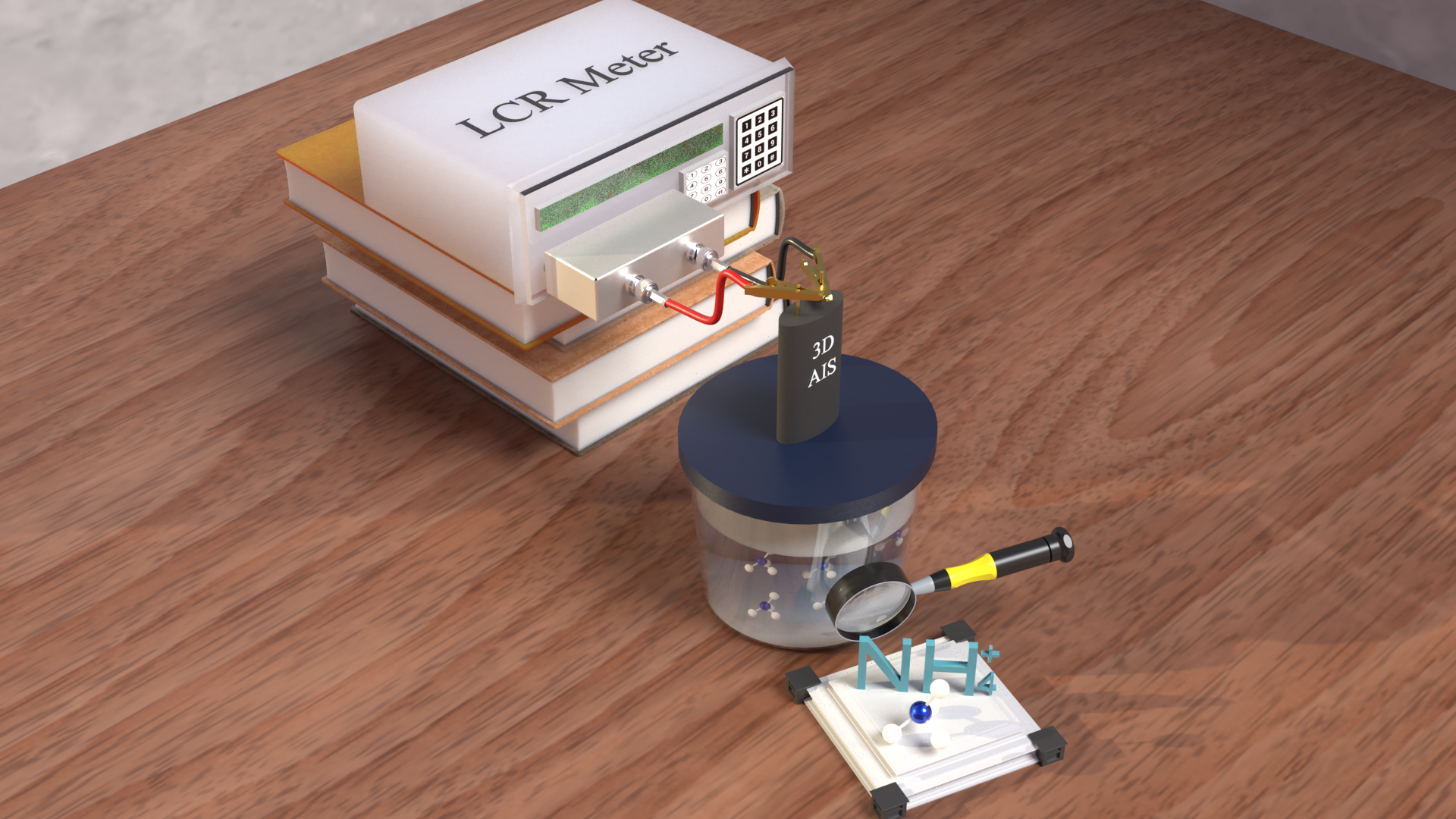
Graphical Abstract

1. Introduction

In aqueous solutions, total ammonia (TA) or ammonia refers to the total amount of un-ionized ammonia (NH3) and ionized ammonia ( NH 4 + ) [1]. The composition of TA depends fundamentally on the water’s pH and temperature [2]. At temperatures below 28 °C, with a pH of less than 8.75, NH 4 + is the predominant form, while at a pH of more than 9.75, NH3 predominates [3,4]. Several studies report that due to anthropogenic activities, ammonia is one of the common pollutants discharged into water streams [5]. It has been documented that the concentration of TA in the form of NH 4 + in municipal waters ranges from 20 to 100 mgL−1 [6,7].
European Union (EU) legislation sets the permissible limit for NH 4 + in drinking water at 0.5 mgL−1 [8]. A high intake of NH 4 + may irritate the throat and lungs and cause permanent blindness, lung diseases, cell death in the central nervous system, brain function disorders, and even death [9,10].
The standard method for detecting total ammonia, provided by the U.S. Environmental Protection Agency (U.S. EPA), is spectrophotometric analysis, which includes the Nessler’s reagent (Nesslerization) method, the titrimetric method, and the indophenol blue (IPB) method [11]. Nesslerization is the classical method for determining ammonia; however, it has been abandoned as a standard method since it uses a highly alkaline solution [12]. The titrimetric method generally uses a solution of sulphuric acid (H2SO4) to observe a pale lavender color change [13]. This method is generally used for samples with ammonia concentrations > 5 mgL−1. With the IPB method, a reaction occurs between ammonia, alkaline phenol solution, and hypochlorite, forming an indophenol blue dye [14]. All these methods require pre-treatment of the samples and reaction reagents to obtain a measurement.
Electrochemical techniques also enable the detection of TA. These techniques include potentiometric [15,16], amperometric [17,18], and impedance [19,20] sensors. Ion-sensitive electrodes (ISEs) are the most popular potentiometric technique [21]. An ISE uses a gas-permeable hydrophilic membrane to separate NH 4 + from the liquid sample. Among its limitations are interferences by similar ions (e.g., K+ and Na+), which can affect NH 4 + measurements. In addition, they need frequent calibration and electrode care [22].
The primary focus of these techniques is the development of selective electrodes modified with materials that can detect changes in the environment based on their electrical properties. In this sense, different types of carbon-based materials have exhibited growing interest for designing selective electrodes [23]. The materials commonly used to modify these carbon electrodes are cadmium oxide (CdO), stannous oxide (SnO), and zinc oxide (ZnO), due to their low cost of production, easy handling, chemical versatility, and good electrical properties [24]. Among these materials, ZnO has received special attention owing to its physical and chemical properties, high mobility of electrons, no toxicity, and high sensitivity [25]. These attractive features position ZnO as a promising material for designing chemical sensors. For instance, an NH 4 + sensor based on MWCNT/ZnO compounds with interdigitated configuration was reported for 1–100 mM concentrations [26]. Also, the work [27] proposes the growth of ZnO nanobars aligned vertically directly on a seeded glass substrate to manufacture an NH3 ion sensor based on a field-effect transistor (FET) for concentrations ranging from 0.01 to 2.5 mM. Finally, in [28], the authors report impedance variations in F-MWCNT/ZnO-NFs nanocomposites for 1-100 mM NH 4 + ion concentrations.
Advanced technologies, such as Ion-Sensitive Field-Effect Transistors (ISFETs) [29,30], offer high sensitivity (141.19 mV/dec) through the deposition of nanometric thin films, enabling in situ monitoring of the nitrogen cycle in modern agriculture. However, further research is required to optimize these measurement systems, particularly regarding the influence of burial procedures on the electrical contact between the soil electrolyte and the sensor.
On the other hand, recent advancements in additive manufacturing have transitioned from printing passive structural components to developing functional sensing platforms. Current research often focuses on the synthesis of custom conductive filaments by doping thermoplastics with carbon allotropes, such as graphene or multi-walled carbon nanotubes, to achieve high sensitivity in physical sensors [31]. However, the requirement for specialized equipment to produce these composite materials limits their adoption in resource-constrained settings. Furthermore, while the performance of 3D-printed strain and pressure sensors has evolved significantly, there remains a critical gap in the development of chemical sensors for water quality [32]. Our work addresses this dual challenge by utilizing a cost-effective ZnO/Graphite composite integrated into a 3D-printed housing, providing a robust and accessible solution for ionized ammonia detection that does not rely on complex filament fabrication.
Given these trends in identifying total ammonia in the form of NH 4 + , developing affordable detection devices as alternative tools for in situ measurements and real operating conditions remains a technological challenge. Therefore, this work introduces an optimized 3D design of an electrochemical sensor based on carbon paste electrodes (CPEs) modified with ZnO for detecting ionized ammonia in water, in accordance with current environmental legislation. The main contribution of our proposal is fourfold:
  • The proposed sensor can operate under continuous flow conditions, making it particularly attractive for use in industrial applications, such as water treatment plants;
  • The sensor is tested in an environment with interfering cations, where its signal remains unaffected, making it suitable for analyzing complex water matrices;
  • This work aims to provide a framework for developing affordable electrochemical sensors that detect pollutants in water, optimized for current regulations;
  • By prioritizing a larger contact area, the design achieves measurable magnitudes without requiring sophisticated or robust signal-conditioning electronics.
In summary, the proposed sensor aims to complement classical analytical techniques for testing in resource-limited or field-test environments, without needing sophisticated facilities and specialized training. The rest of the paper is organized as follows. Section 2 gives a detailed overview of reagents, chemicals, and equipment used to prepare the sensor. Section 3 and Section 4 provide a thorough description of the most relevant findings, whereas Section 5 compares the sensor with the state-of-the-art technologies. Finally, Section 6 is devoted to the concluding remarks derived from the work.

2. Materials and Methods

2.1. Reagents and Chemicals

To prepare the ZnO-modified carbon paste electrodes (ZnO-CPEs), we use graphite (G) powder and organic binder, both of technical grade (USP grade, MY-7110-3500), obtained from Meyer (Mexico City, Mexico). The 99.9% zinc oxide powder (<5 μM, CAS 1314-13-2, No. 205532) was from Sigma-Aldrich (St. Louis, MO, USA). According to [33], the bare ZnO powder (205536—Sigma Aldrich) exhibits a characteristic XRD pattern suggesting a hexagonal wurtzite structure. This feature creates oxygen vacancies that act as active sites where target molecules adsorb and interact. A higher number of vacancies results in greater sensor sensitivity, producing a strong surface polarity.
A standard analytical solution of ammonium standard for IC ( NH 4 + in water) from Sigma Aldrich (St. Louis, USA) is used to prepare the following NH 4 + concentrations, resulting in c = {1–14} μM in distilled water (DW). Distilled water (2 μScm−1 a 25 °C) was also from Meyer (Mexico City, Mexico). The products used to verify that there was no ion interference during the detection of NH 4 + were potassium chloride (KCl), calcium chloride (CaCl2), sodium chloride (NaCl) and magnesium chloride (MgCl2), all from Sigma Aldrich (St. Louis, MO, USA). The material used to manufacture the 3D holder for electrodes was polylactic acid (PLA). All tests were conducted at a non-controlled stable temperature of 25 °C, and all graphs show the average of three measurements. The pH of all solutions remained below 8.

2.2. Apparatus

Impedance measurements were performed with an LCR Meter ZM2376 (NF Corporation, Yokohama, Japan). This instrument was controlled by a computer application, which allowed for customization of its operation and the real-time storage of data for further analysis. We conducted the experiments using a configuration with two electrodes, one for excitation and the other for reference. The measurement technique employed was electrical impedance spectroscopy (EIS), which involved applying a fixed voltage of 1 Vrms over a frequency range of 300 mHz to 5.5 MHz. The data were acquired using a logarithmic sweep comprising 250 discrete experimental points.
The sensor structure was fabricated via fused deposition modeling (FDM) using an Artillery Genius Pro 3D printer (Shenzhen, China) equipped with a 0.3 mm nozzle. A White Creality Hyper PLA filament (Shenzhen, China, 1.75 mm diameter) was employed for the construction. The components were printed with a layer height of 0.16 mm (corresponding to a dynamic quality setting). The structural components were printed using a nozzle temperature of 200 °C and a bed temperature of 60 °C. To ensure mechanical robustness and structural stability, an infill density of 70% was utilized with a cubic pattern. The printing speed was maintained at 50 mm/s, and a shell thickness of 0.5 mm was applied to enhance the housing’s integrity for continuous-flow operation.
The electrode surface was studied with a JEOL JSM-IT500 field emission scanning electron microscope (FESEM) (JEOL USA, Inc., Peabody, MA, USA) at 10,000× magnification. FESEM images were obtained by focusing on the surface of both electrodes with a 5000× magnification.

2.3. Preparation of Modified Carbon Paste Electrodes

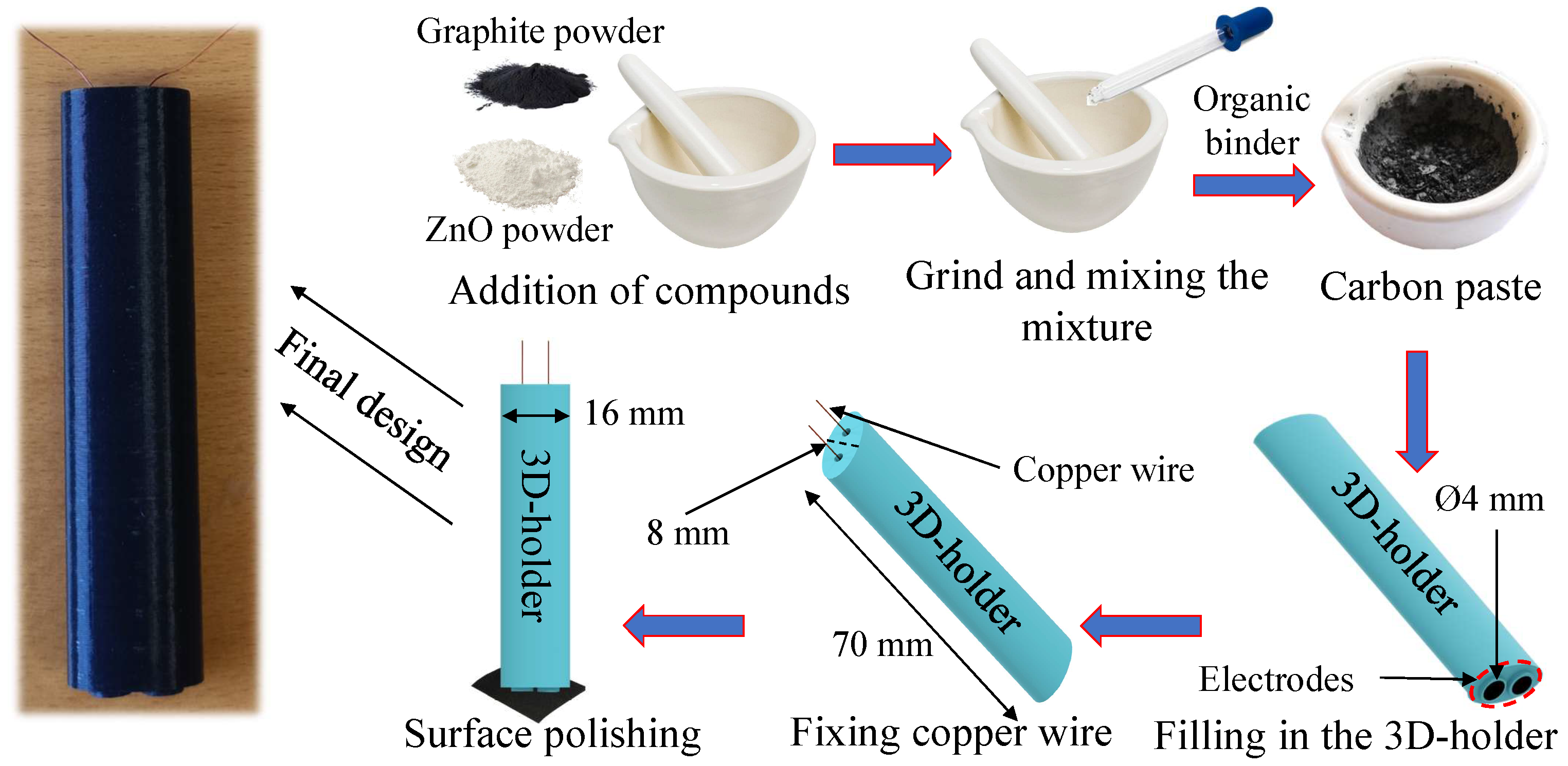
Because graphite retains many of the thermal and electronic conductive properties of graphene, zinc oxide-modified carbon paste electrodes (ZnO-CPEs) were prepared by placing graphite powder and ZnO powder in a laboratory mortar at a ratio of 92:8 (w/w). The materials were carefully mixed with mineral oil until a consistent and homogeneous paste was obtained. The resulting paste was deposited into the cavity of the 3D PLA holder using a laboratory spatula. Previously, a copper wire was inserted into the holder from above to establish electrical contact between the ZnO-CPEs and the LCR meter. Then, the surface of the electrodes was gently polished using sandpaper, followed by rinsing with ethanol and deionized water, respectively. Finally, the fabricated electrodes were allowed to stabilize for approximately eight hours at room temperature. Figure 1 shows the complete process of manufacturing the 3D-IS. Table 1 shows some parameters of ZnO.
A two-electrode setup was chosen to guarantee uniform electric field distribution throughout the water flow path. This geometry was implemented to simplify the physical modeling of the sensor and to enable the use of closed-form equations for parameter extraction. By utilizing two planar electrodes, the system provides a more intuitive and direct interpretation of the impedance data compared to asymmetric reference electrode configurations. That is to say, the detection system was designed as a non-faradaic impedance sensor, a choice that prioritizes operational stability and simplicity. Unlike faradaic systems that require a third reference electrode to monitor redox potentials, our non-faradaic approach measures changes in the electrical double-layer capacitance and solution resistance. Consequently, the two-electrode setup is optimized for continuous-flow monitoring, providing a reliable response in resource-constrained environments where a maintenance-free operation is paramount.

2.4. Detection Mechanism of Ionized Ammonia

The ionized ammonia detection mechanism involves two functions: (i) target recognition at the ZnO-CPE interface, and (ii) surface phenomenon transduction in a resistance change [34]. The electrochemical interaction and charge transfer occur only in the first layer of the ZnO-CPE, where only the G and ZnO interact with the target, since the organic binders are inert.
Generally speaking, when ZnO nanostructures are exposed to air, they adsorb oxygen molecules onto their surface. These molecules capture electrons from the ZnO conduction band, forming oxygen ions as O 2 ( atmosphere ) + e ( ZnO surface ) O 2 ( ZnO surface ) . That is, when the surface of the ZnO-CPE is exposed to the environment, it forms chemical adsorption clusters (chemisorption), in which strong chemical bonds form between the oxygen ions and the material’s surface. This high potential barrier hinders the movement of charge carriers, thereby increasing electrical resistance. On the other hand, when the target interacts with the oxygen ions that are oxidized, it returns electrons to the conduction band of ZnO and, consequently, increases conductivity.
Now, when NH 4 + is present in water (H2O), it can donate a proton (H+) to the H2O. Furthermore, NH3 can coexist in equilibrium with NH 4 + when the latter is dissolved in water. The following equations describe the reaction of ZnO (solid-state) with a solution of NH 4 + (aqueous state) [35],
4 NH 4 ( aq ) + + 4 H 2 O 4 NH 3 ( aq ) + 4 H 3 O + ,
ZnO ( sol ) + 2 H 3 O + = Zn ( aq ) 2 + + 3 H 2 O ,
ZnO ( sol ) + NH 4 + = [ Zn ( NH 3 ) 4 ] 2 + + H 2 O + 2 H + .
Equations (1)–(3) indicate the acid hydrolysis of the ionized ammonia ion into water, which is transformed into NH3 (dynamic equilibrium); the reaction of zinc oxide with H3O+ in an aqueous solution; and NH 4 + exhibiting an indirect role via dissociation, respectively [36,37,38]. Therefore, our device detects changes in NH 4 + concentration via dissociation, in which NH3 is released and reacts with the oxide surface upon contact with NH 4 + . In addition, ZnO is a semiconductor material with strong polarity because Zn-O bonds have a significant ionic character, which is crucial for the adsorption of molecules on the transducer surface [39].

2.5. Real Sample Collection

Samples were collected from a water well used as a source of drinking water in Mexico City (Tulyehualco 10°17′03.5″ N; 99°03′03.2″ W). Sampling was performed by attaching a hose to the first outlet of the well. The effluent was immediately purged for approximately three minutes to remove any standing water from the pump feed pipe and thus obtain a representative sample. Next, the sampling containers were conditioned by rinsing them in triplicate with water from the well itself. Once conditioned, they were filled. A portion of the collected sample was used for in situ measurement of pH, conductivity, temperature, and ammonium using the proposed 3D-IS. The remaining portion was immediately acidified to preserve the integrity of specific analytes and allow for their quantification in the laboratory. Subsequently, all samples were stored on ice to maintain a temperature of approximately 4 °C. This preservation protocol aimed to minimize alteration of the parameters, particularly preventing the degradation of organic matter and other compounds that could bias the analytical results.

3. Result and Discussion

3.1. Surface Characterization of the Electrodes

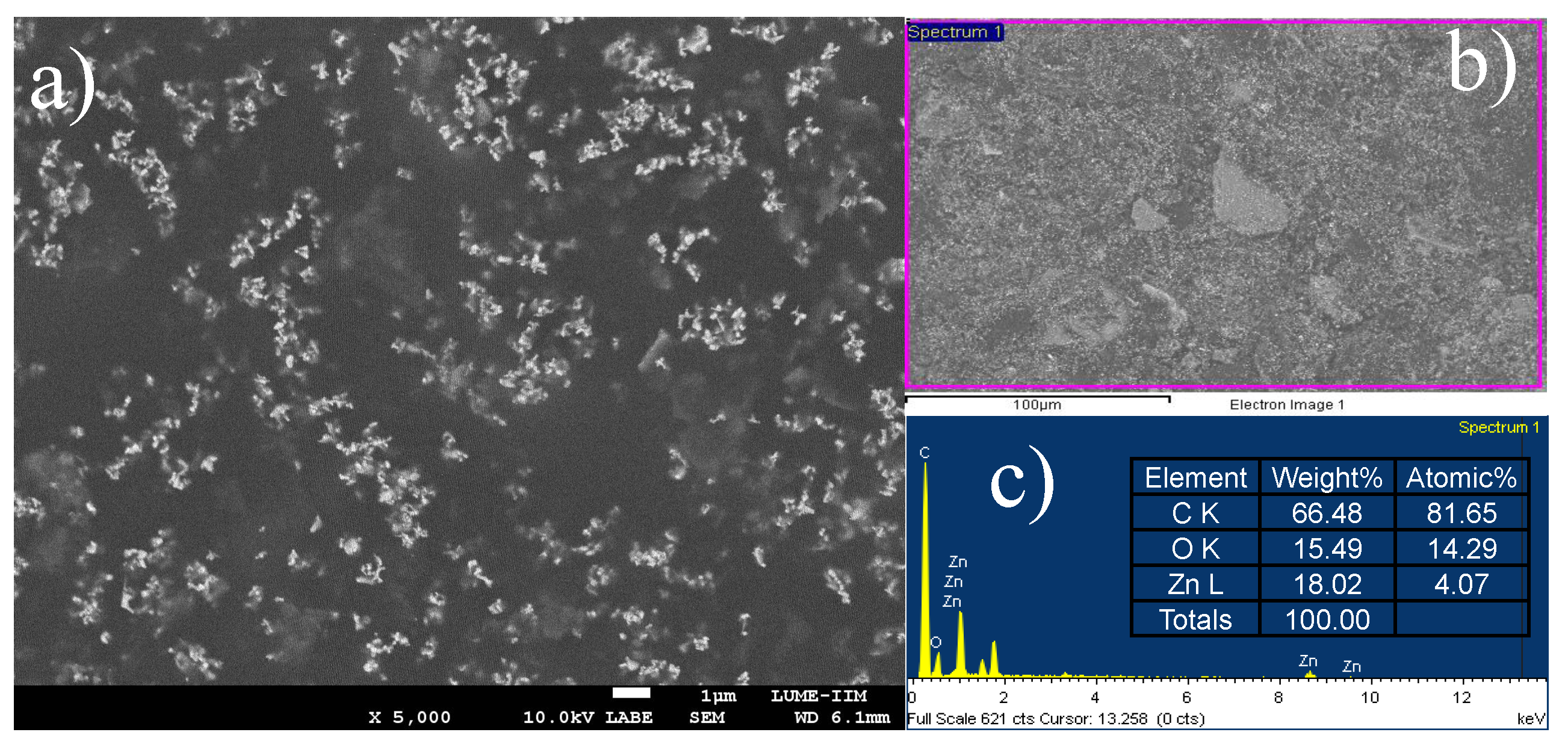
FESEM analysis of the ZnO-CPEs reveals a modified surface characterized by a typical carbon paste morphology (Figure 2a). In this structure, the ZnO particles are clearly identified as high-contrast white dots distributed across the electrode surface. The elemental composition and distribution, determined via EDS (Figure 2b), confirm the presence of carbon (81.65%), zinc (4.07%), and oxygen (14.29%) within the composite (Figure 2c). The EDS spectrum shows no evidence of additional impurities, validating the high purity of the active material. These results confirm the successful integration of ZnO on the electrode surface, which is the functional element responsible for the selective detection of NH 4 + in water [27].

3.2. Equivalent Circuit of the Transducer

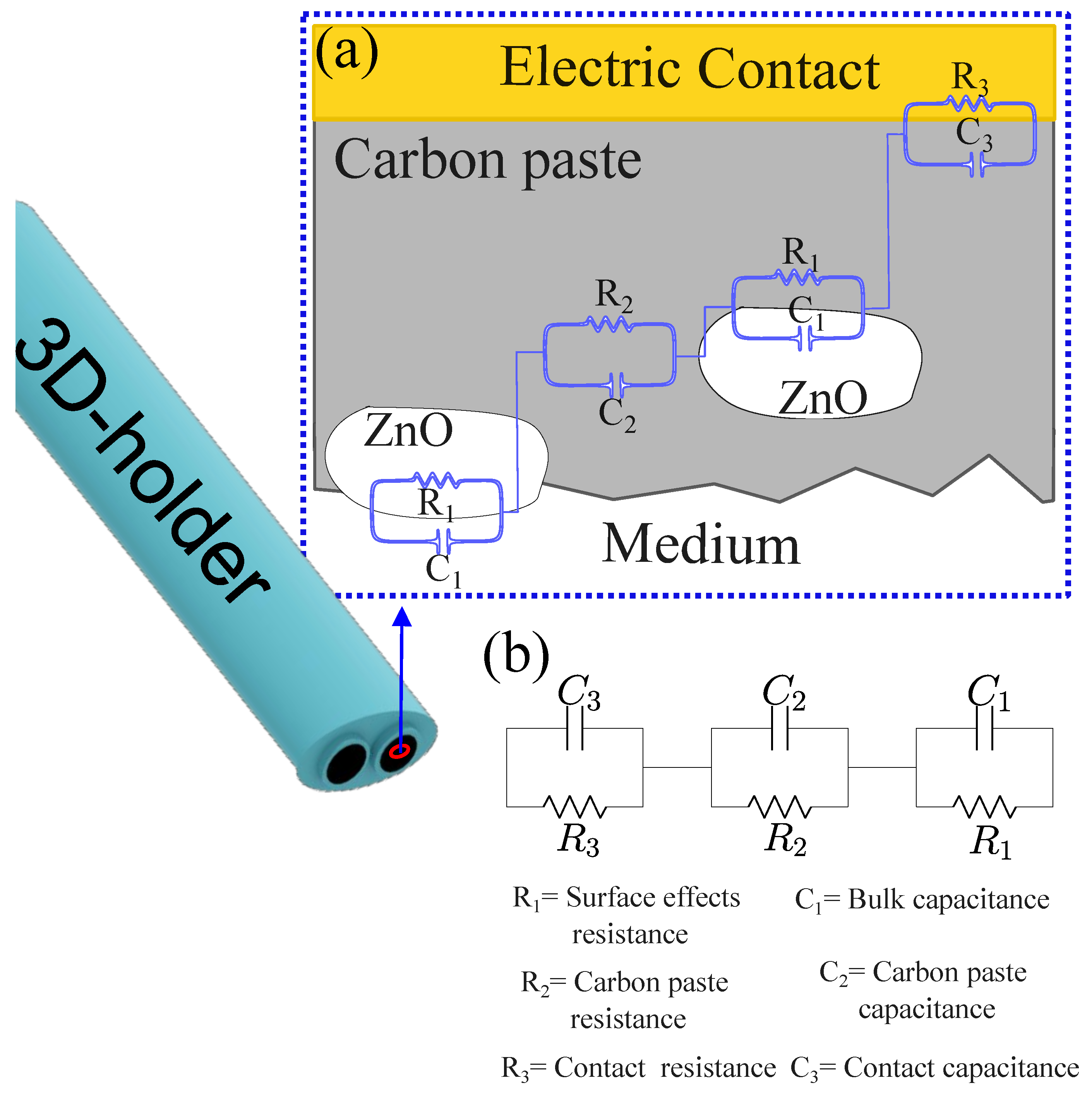
Based on the composition of the 3D-IS electrodes, we propose an equivalent circuit model to electrically describe the transduction process and the device’s response in terms of the detection phenomenon. Figure 3a shows a front view of a section (differential area) of the electrodes (ZnO-CPEs), which allows for the representation of the electrical elements involved in the detection process. These elements are the surface effect of ZnO particles, the carbon paste effect, and the electrical contact between the paste interface and the wire [40]. These elements contribute to the electrical properties of ZnO for NH 4 + detection, and this composition enables the approximation of an equivalent circuit for the 3D-IS. Figure 3b shows the proposed equivalent circuit for a differential area of the 3D-IS electrode.
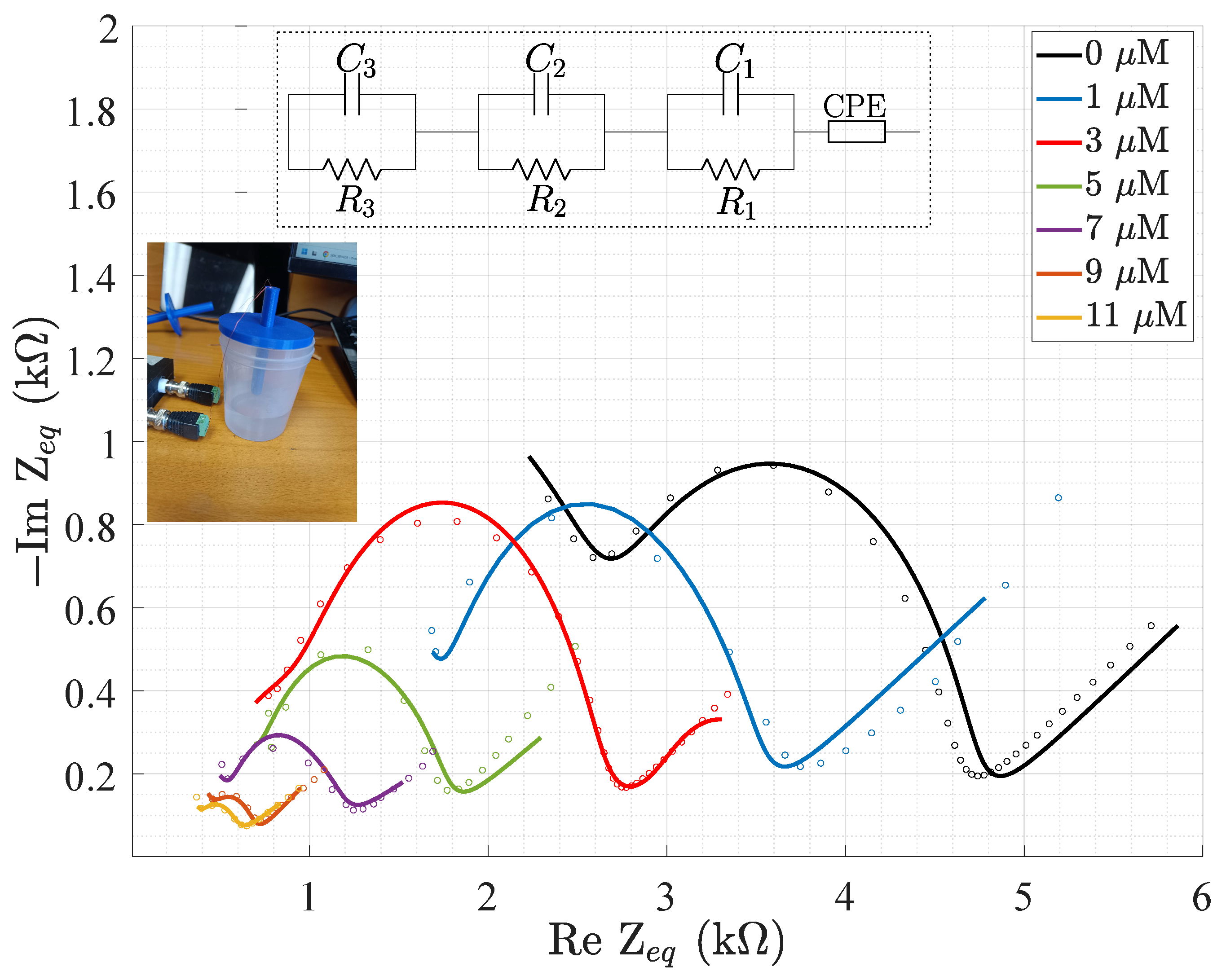
To validate the proposed equivalent circuit, we plot the real and imaginary parts of the impedance magnitude | Z e q | against NH 4 + concentration in a complex 3D plane, in the frequency range of 300 mHz to 5.5 MHz. In Figure 4, we present the Nyquist diagram of the impedance spectra obtained using the 3D-IS for each NH 4 + concentration below the current environmental regulation. The continuous lines represent the fit curves obtained by means of the proposed equivalent circuit, and the dotted lines represent the measurements made with the sensor. As can be seen from the measurement curves (dotted lines), these show a typical low-frequency linear tail of about 45°. This tail represents a nonlinear diffusion mechanism, which can be approximated as a constant phase element (CPE) [41]. This mechanism is likely due to the porosity of the electrode surface, among other factors.
Based on this observation, we add a series CPE to our proposed equivalent circuit, as shown in the inset of Figure 4, and adjust the circuit parameters based on the measurement data. Figure 4 also illustrates a displacement in the complex plane driven by variations in the NH 4 + concentration. This characteristic is another parameter that enables the detection of ammonium ions. This graph illustrates the agreement between the equivalent circuit model and the obtained data.
The experimental data were fitted to the proposed equivalent circuit using nonlinear least-squares and the Levenberg–Marquardt algorithm. In Figure 4, it is observed that the proposed equivalent circuit provides a good fit to the measurement data for frequencies above 100 Hz and below 1 MHz. The error rate in this frequency range between adjustment and measurement data was less than 10 %.
Then, from the updated proposed electrical circuit, we can define a differential impedance, Z Δ ı ˙ , representing a specific electrode area differential ( d A ), such that,
Z Δ ı ˙ = R ı ˙ ( 1 j ω C ı ˙ R ı ˙ ) 1 + ( ω C ı ˙ R ı ˙ ) 2 + 1 Q ( j ω ) α ,
where j = 1 , ω is the angular frequency, R ı ˙ and C ı ˙ are the resistors and capacitances of each parallel RC circuit, and Q and α are frequency-independent constants, respectively. Also, the impedance in Equation (4) can be decomposed into its real and imaginary components as Z Δ ı ˙ = Re { Z Δ ı ˙ } + j Im { Z Δ ı ˙ } . At this point, it is observed that the value of the imaginary part of Z Δ ı ˙ depends on the operating frequency and the value of the capacitor. So, the equivalent impedance Z e q of the electrode surface can be written as the following integral equation,
Z e q = A R ı ˙ ( 1 j ω C ı ˙ R ı ˙ ) 1 + ( ω C ı ˙ R ı ˙ ) 2 + 1 Q ( j ω ) α d A .
Thus, by taking the limit d A 0 in Equation (5), it follows that Z e q can be approximated by the sum of all the differential impedances, such that Z e q = i Z Δ ı ˙ .
To estimate the order of magnitude of each element in the proposed circuit, selected the data corresponding to the 1 μM and 11 μM measurements. Then, the values of the different elements that comprise the electrical circuit were extracted for analysis based on changes in the NH 4 + concentration.
Table 2 shows the capacitance and resistance values taken from the set points for the corresponding concentrations. We can see that the value of C 2 , which corresponds to the capacitance of the carbon paste that “encapsulates” the ZnO particles, does not show a significant variation with changes in NH 4 + concentration. In contrast, the value of C 1 corresponding to the bulk capacitance of the ZnO particle is sensitive to the concentration of NH 4 + . Here, the most significant change is given so that its contribution to the imaginary part of Z e q would be significant at low frequencies. The value of C 3 corresponds to the effect that an electrical double layer (EDL) would also contribute to the value of | Z e q | by varying the concentration of NH 4 + . Regarding the resistance values, R 1 and R 2 correspond to the resistance surface effects and the carbon paste resistance, respectively; they are the elements that significantly affect | Z e q | . This is consistent with the idea that when the target interacts with adsorbed oxygen, it returns electrons, increasing conductivity. The value of CPE at low frequencies undergoes a significant change, which typically indicates a change in the electrochemical interface and an increase in the effective surface area of the electrode, among other effects.

3.3. Sensing Performance of the Device

To assess the sensor response to NH 4 + in water and determine its optimal operating frequency, we measure the magnitude of the equivalent impedance, | Z e q | , as a function of frequency for each concentration in the range of 1 to 14 μM, with distilled water (DW) as the blank value.
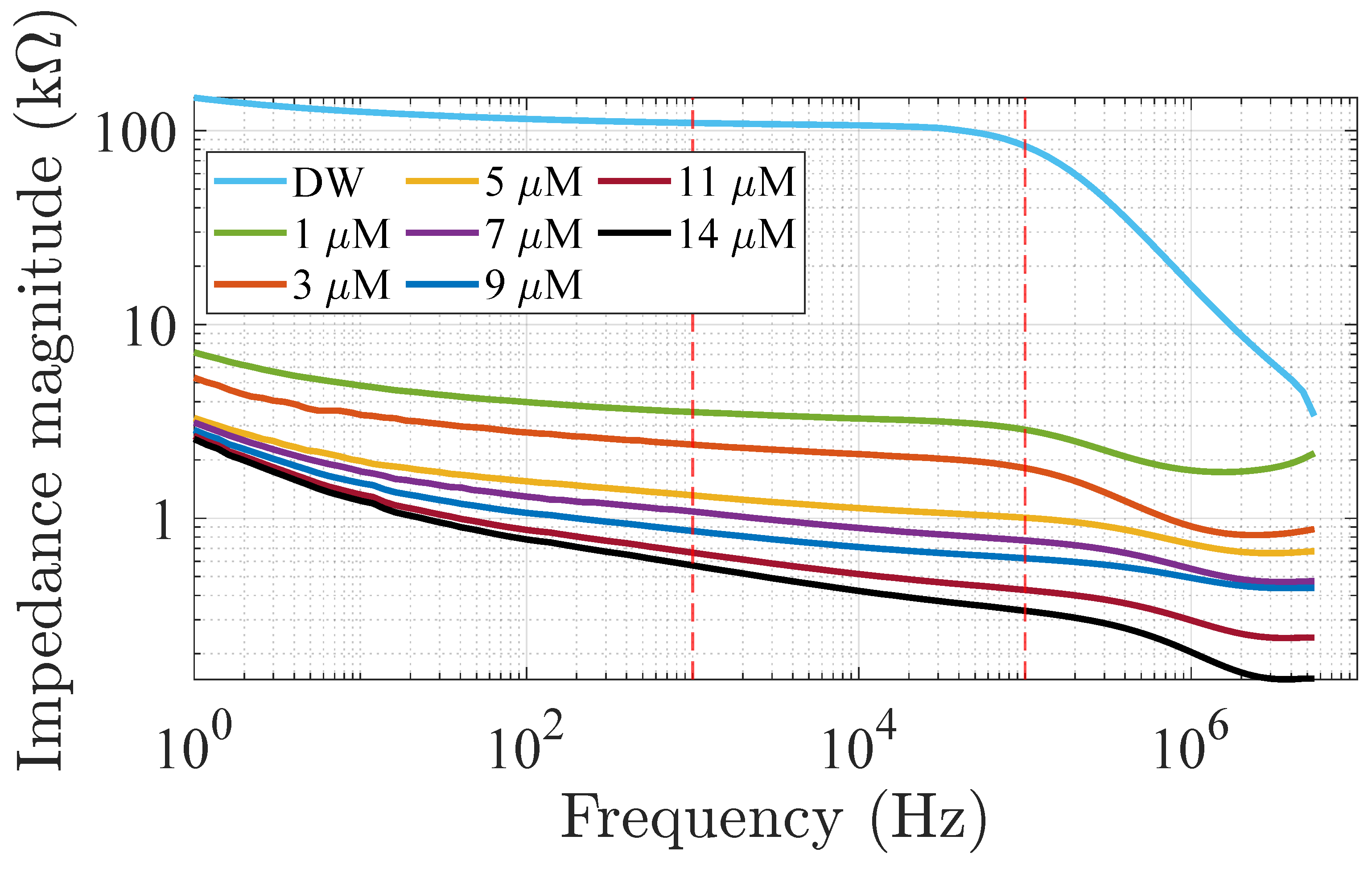
In Figure 5, the impedance measurements obtained for each NH 4 + concentration are shown in a Bode diagram. Interestingly, the curve corresponding to DW, namely the blank, differs from the ionized ammonia measurements, thus ensuring selectivity. Furthermore, at frequencies below 1 kHz, the curves become unstable and saturated as concentration increases above 5 μM. Within the range from 1 kHz to 100 kHz (vertical dashed lines), the impedance magnitude decreases with increasing frequency, but exhibits a quasi-flat response as the ionized ammonia ion concentration increases. This situation would indicate that the real part of | Z e q | would dominate in this frequency range. On the other hand, at frequencies greater than 100 kHz, the contribution of the imaginary part becomes more significant.
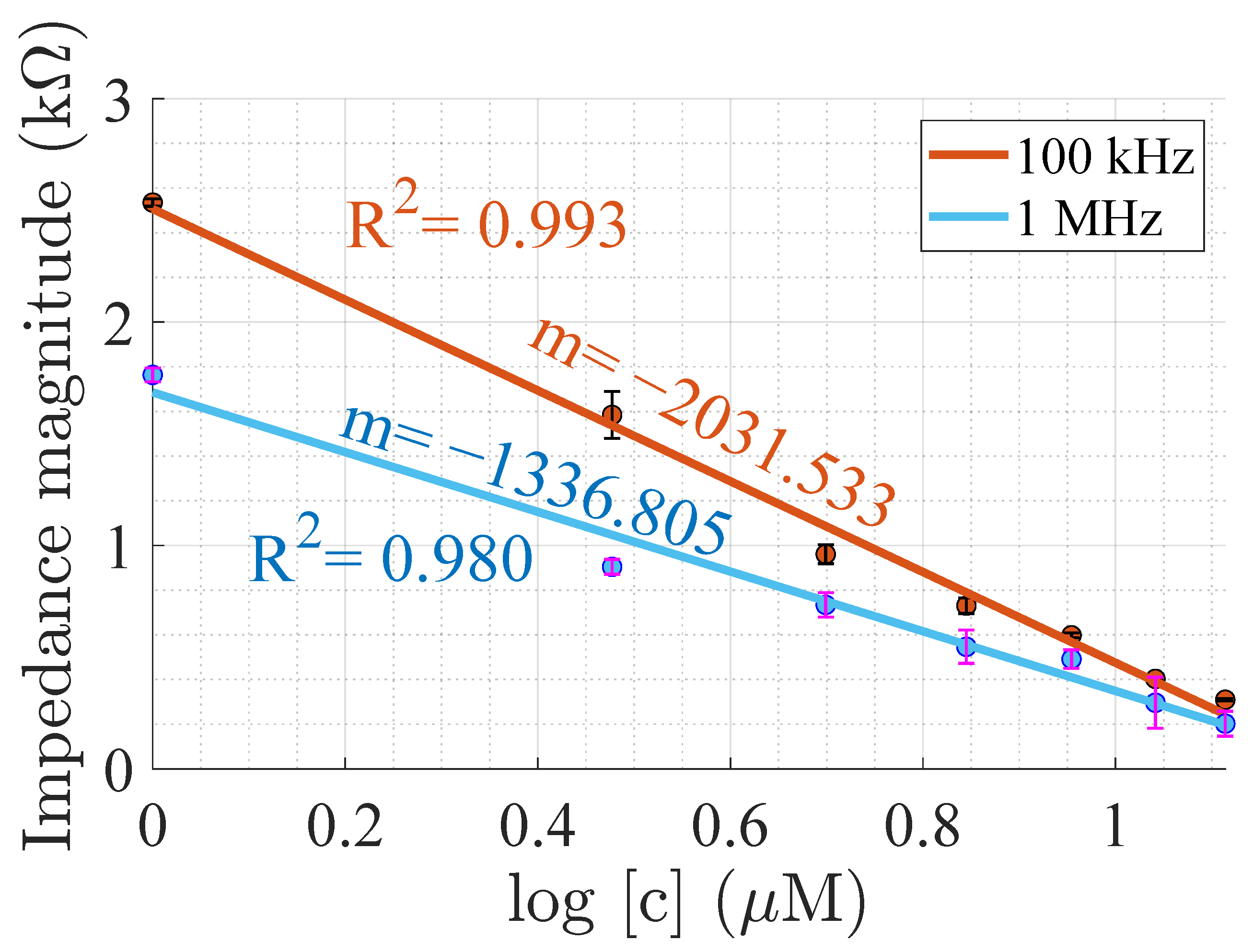
To select the optimal operating frequency, the impedance magnitude was measured at two frequencies, 100 kHz and 1 MHz, to determine the 3D-IS’s sensitivity to NH 4 + concentration. Figure 6 shows the calibration curves relating the impedance magnitude to the logarithm of the ionized ammonia concentration. The sensitivity value of the 3D-IS at 100 kHz results in S I S = 2 kΩ/log(μM), with a correlation coefficient equal to R2 = 0.993. On the other hand, the sensitivity at 1 MHz is 1.3 kΩ/log(μM) with a linearity of 98%. Therefore, it is deduced that setting the operating frequency at 100 kHz yields a higher sensitivity than operating at a frequency of 1 MHz, exhibiting a decrease in the impedance magnitude with increasing concentration levels, which is consistent with the description in Section 2.4.
Thus, Figure 6 clearly shows that impedance decreases with increasing ionized ammonia concentration from 0 to 14 μM at the optimal frequency of 100 kHz. At this frequency, the electric double-layer capacitance at the sensor–liquid interface has low impedance, enabling the AC signal to circumvent polarization effects and directly reflect the properties of the ZnO/graphite composite.
In comparison with [26], where impedance decreases from 3.3 kΩ to 2.3 kΩ at 1 kHz upon increasing concentration up to 1 mM, our ZnO/graphite composite shows a far stronger response, nearly two orders of magnitude larger. This enhanced sensitivity arises primarily from two factors: (i) measurement at a higher frequency 100 kHz, which effectively suppresses electric double-layer (EDL) capacitance, and (ii) the three-dimensional structure of the composite, which creates a volumetric graphite network and exposes a larger number of ZnO active sites.

3.4. Interference and Durability of the Device

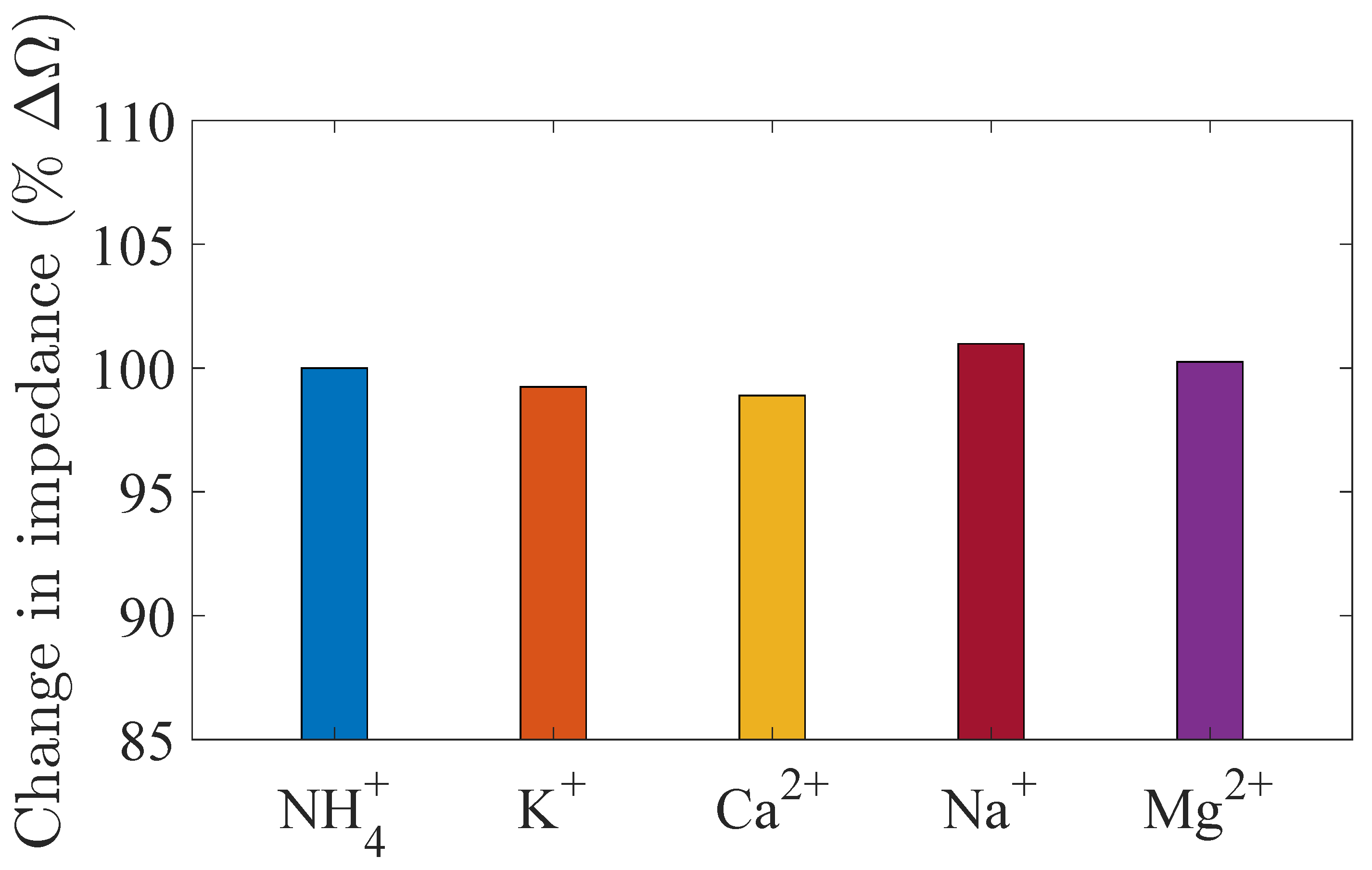
To evaluate the selectivity of the 3D-printed sensor for NH 4 + , interference tests were conducted by introducing 5 μM of common cations (K+, Ca2+, Na+, and Mg2+) into a 10 μM standard ammonium IC solution (Section 2). The results, summarized in Figure 7, reveal that while minor fluctuations in the impedance magnitude are present (no more than 5% deviation from the final stabilized magnitude value), these variations remain negligible compared to the primary response of the NH 4 + ions. The consistent R and C values obtained through our algorithm confirm that the impedance changes are fundamentally driven by the target ion. So, the ZnO/Graphite composite exhibits a significantly higher affinity for NH 4 + , resulting in a signal-to-interference ratio that validates the sensor’s selectivity for practical water quality monitoring applications.
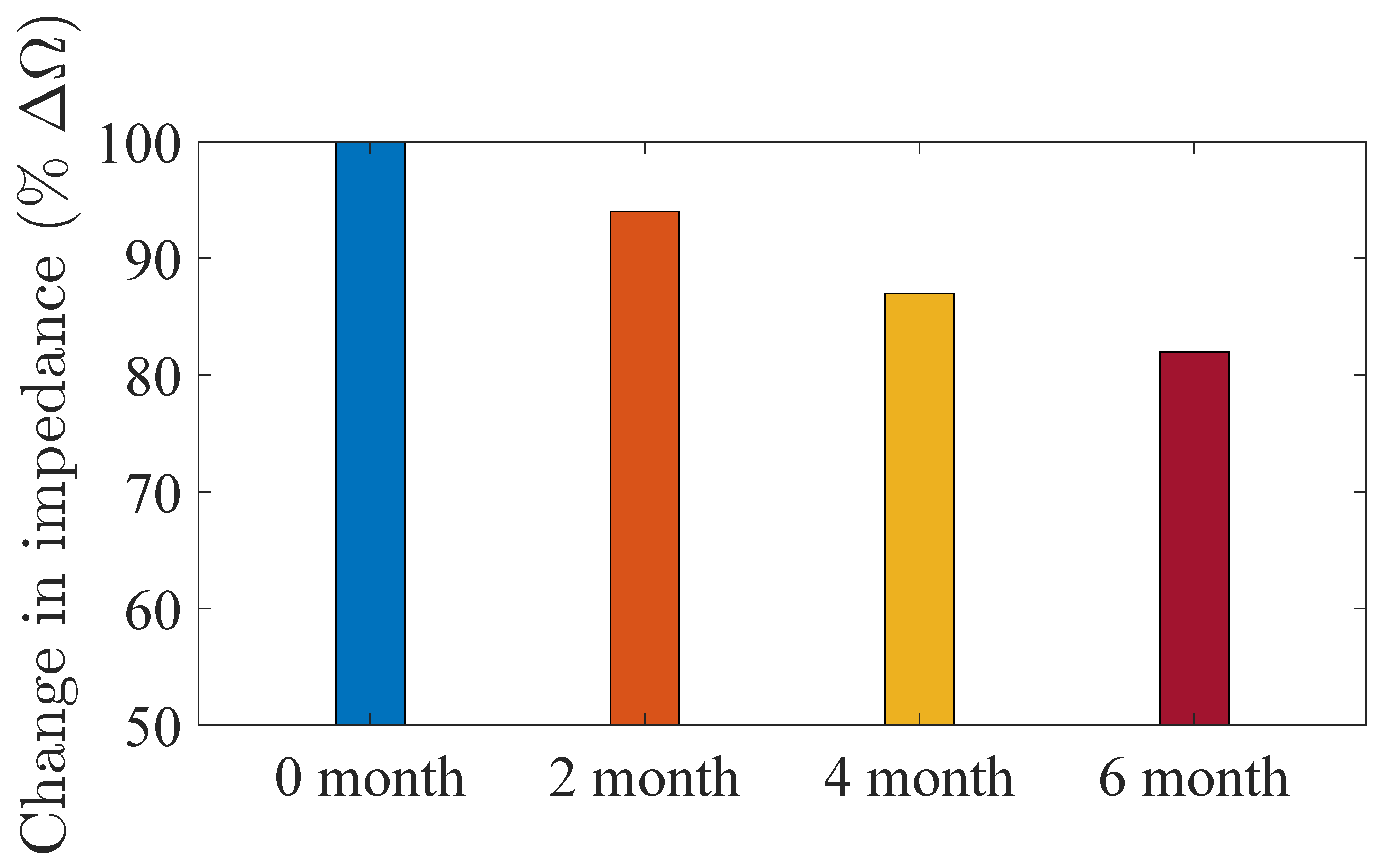
Aging tests were performed to verify the 3D-IS’s lifetime. It was used for two consecutive days, two hours at a time, at intervals of two months, until the end of the period, totaling six months. The magnitude of Z e q was recorded for each prepared concentration. Figure 8 shows how the magnitude of Z e q varies over the first 6 months of use. This magnitude gradually decreased over time, as expected. In the second month, the device registered 94.92% of the initial magnitude, and by the end of the period, the change was 82.35%. In summary, Figure 8 demonstrates that the device supports continuous operation up to 80% of its initial capacity. Subsequently, a simple maintenance procedure is required, which consists of polishing the sensor surface. This outcome confirmed that the 3D-IS is long-term stable, making it suitable for use in ion-exchange columns for pilot-plant experiments and for industrial use.

3.5. Real-Time Ammonium Detection with the 3D-IS

To go beyond static experiments, the 3D-IS dynamic response to the ionized ammonia in water was assessed. This experiment was conducted by exposing the sensor surface with NH 4 + for approximately 100 s, and the magnitude of | Z e q | was measured.
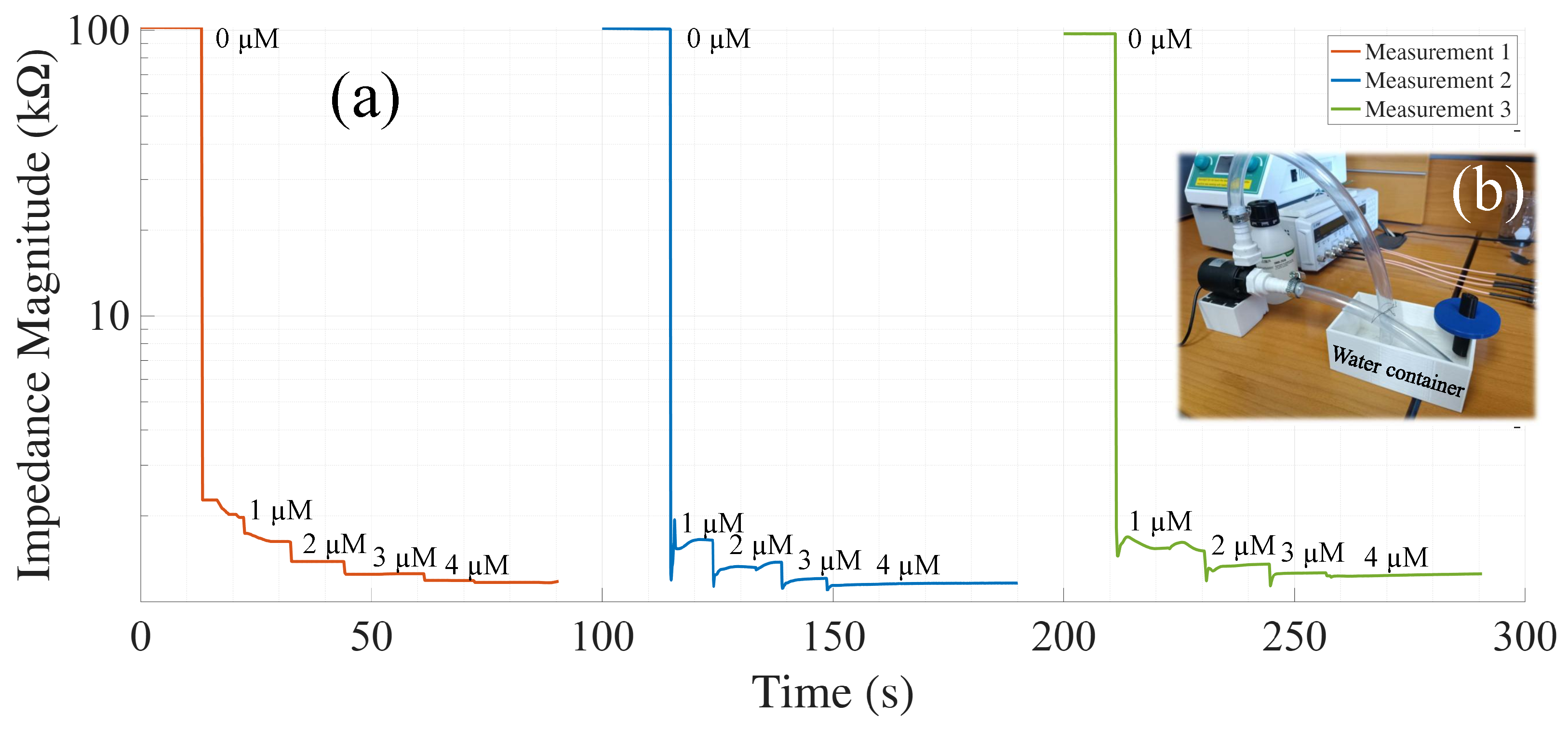
Figure 9a shows the real-time response of the 3D-IS when the concentration of NH 4 + in distilled water is increased by 1 μM at a stable temperature. The first 15 s represent the device’s response to DW. After this time, 1 μM of NH 4 + was continuously added to the DW using the experimental setup shown in Figure 9b. As depicted in Figure 9a, the initial exposure to 1 μM resulted in a decrease in the magnitude of | Z e q | to approximately 30 kΩ. Subsequently, as the ionized ammonia concentration increased in steps of 1 μM, the impedance magnitude decreased, as suggested by the equivalent impedance model.
Additionally, it is important to note that the reversibility of the NH 4 + detection was evaluated by observing the signal recovery after successive measurements. It was found that deenergizing (eliminating the electrostatic attraction) the electrodes is a critical step to facilitate the desorption of the ionized ammonia. In a continuous-flow environment, the hydrodynamic forces of the water stream act as a natural cleaning mechanism, removing the analytes from the surface once the electrical excitation is removed. After 100 s of measurement, the device disconnects and is subsequently powered on again (Figure 9a). This regeneration process allows the sensor to return to its original impedance baseline, confirming that the ZnO-CPE surface does not suffer from irreversible adsorption under the tested flow condition.
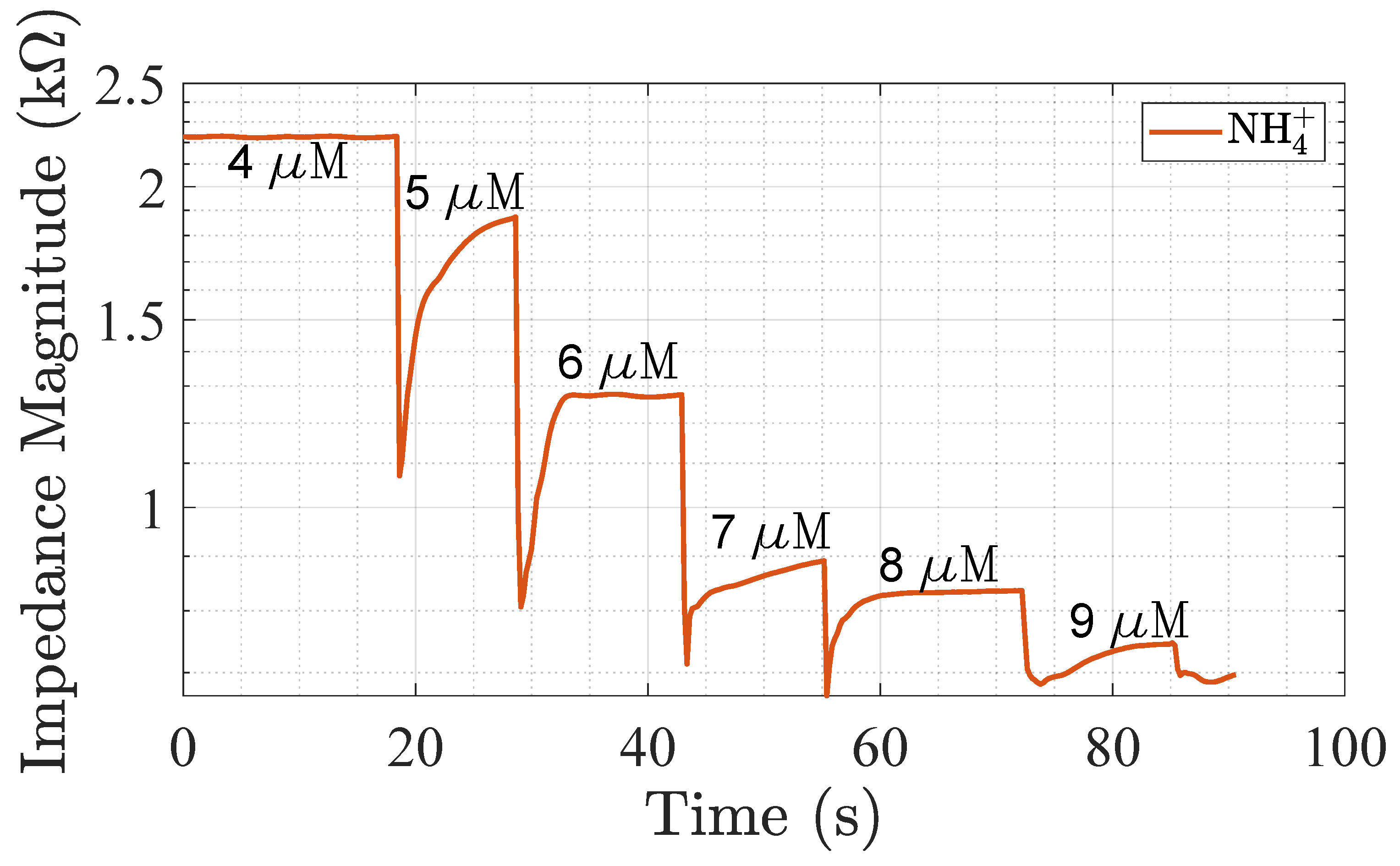
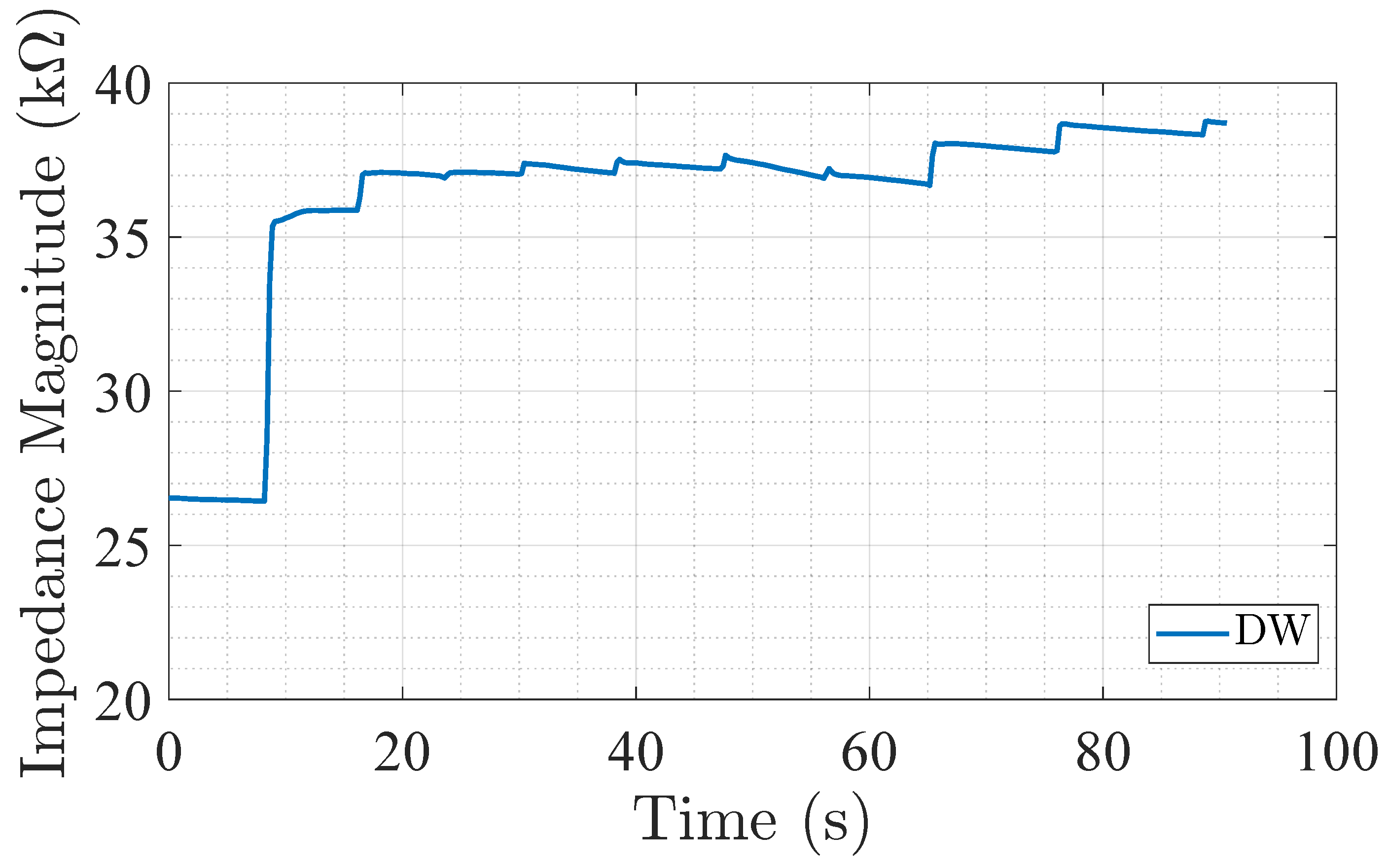
To further explore the dynamic analysis, the sensor’s dynamic response was studied for a non-zero initial concentration. Figure 10 shows the variation in impedance magnitude over time as the NH 4 + concentration is varied from 4 μM.
As seen in Figure 10, the outcomes indicate that the real-time response of the 3D-IS after measuring a first concentration of NH 4 + and consecutively increasing the concentration tends to a signal drift. This finding is positive because it allows us to observe that the ionized ammonia concentration is growing rapidly. This behavior is typical of adsorption processes, in which the system approaches equilibrium as available adsorption sites become saturated with NH3, a consequence of NH 4 + dissociation [42]. Based on this analysis, an integrated electronic system is being developed to optimize sensor readings, which can be deactivated and reactivated for a few seconds to establish a new signal level corresponding to the current concentration.
As the third time-resolved experiment, it was necessary to verify that the 3D-IS response corresponds to the increase in NH 4 + concentration, not to the continuous water flow generated by the pump. For this purpose, the change in magnitude | Z e q | was measured by increasing the volume of DW. The resulting signal is shown in Figure 11, which turns out to be quasi-flat and significantly different from the concentration signal of NH 4 + .
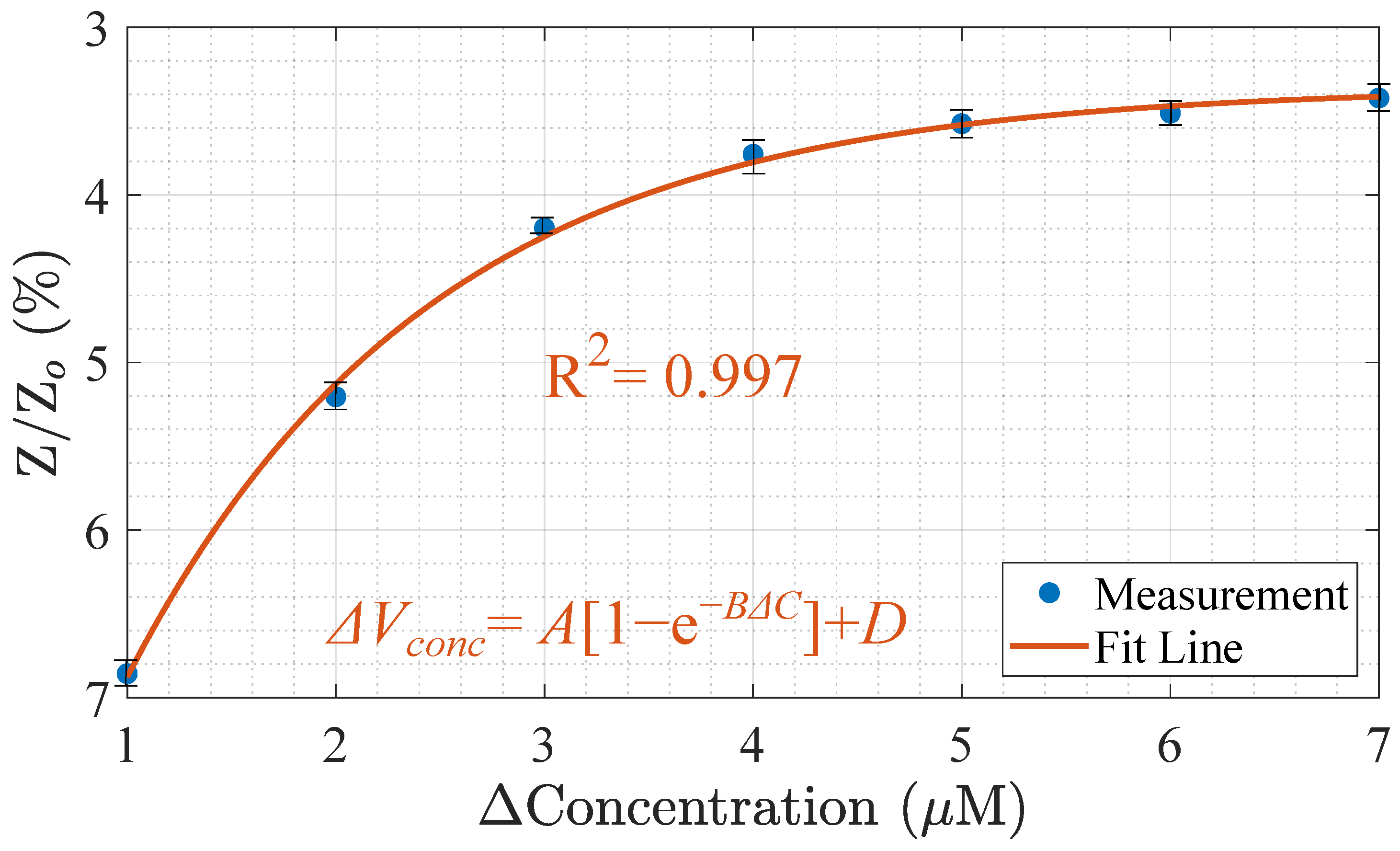
From an electrical point of view, Figure 12 shows that the curve represents the adsorption rate of the 3D-IS. Here, the percentage change in impedance ( % Δ Ω ) of the sensor response was plotted as a function of the concentration change ( Δ V c o n c ) in NH 4 + . For this purpose, we calculated the mean value of the change in the magnitude of | Z e q | (in the flat region) corresponding to the change in concentration of NH 4 + over time.
Starting from the response in Figure 12, we propose a standard mathematical equation to describe the rate of adsorption of the 3D-IS as a function of the change in concentration, such as
Δ V c o n c = A [ 1 e B Δ C ] + D
where D = 3.355, B = 0.686, A = 6.996, and Δ C represents the increase in concentration. In Equation (6), the value of B, corresponding to the adsorption constant, suggests a high affinity and rapid adsorption of the sensor upon detection of the first concentration. This 3D-IS response equation would be analogous to the first-order adsorption kinetics model at the solid/solution interface, in terms of the analyte concentration, as described in [43].

4. Ammonium Ion Detection in Real Groundwater

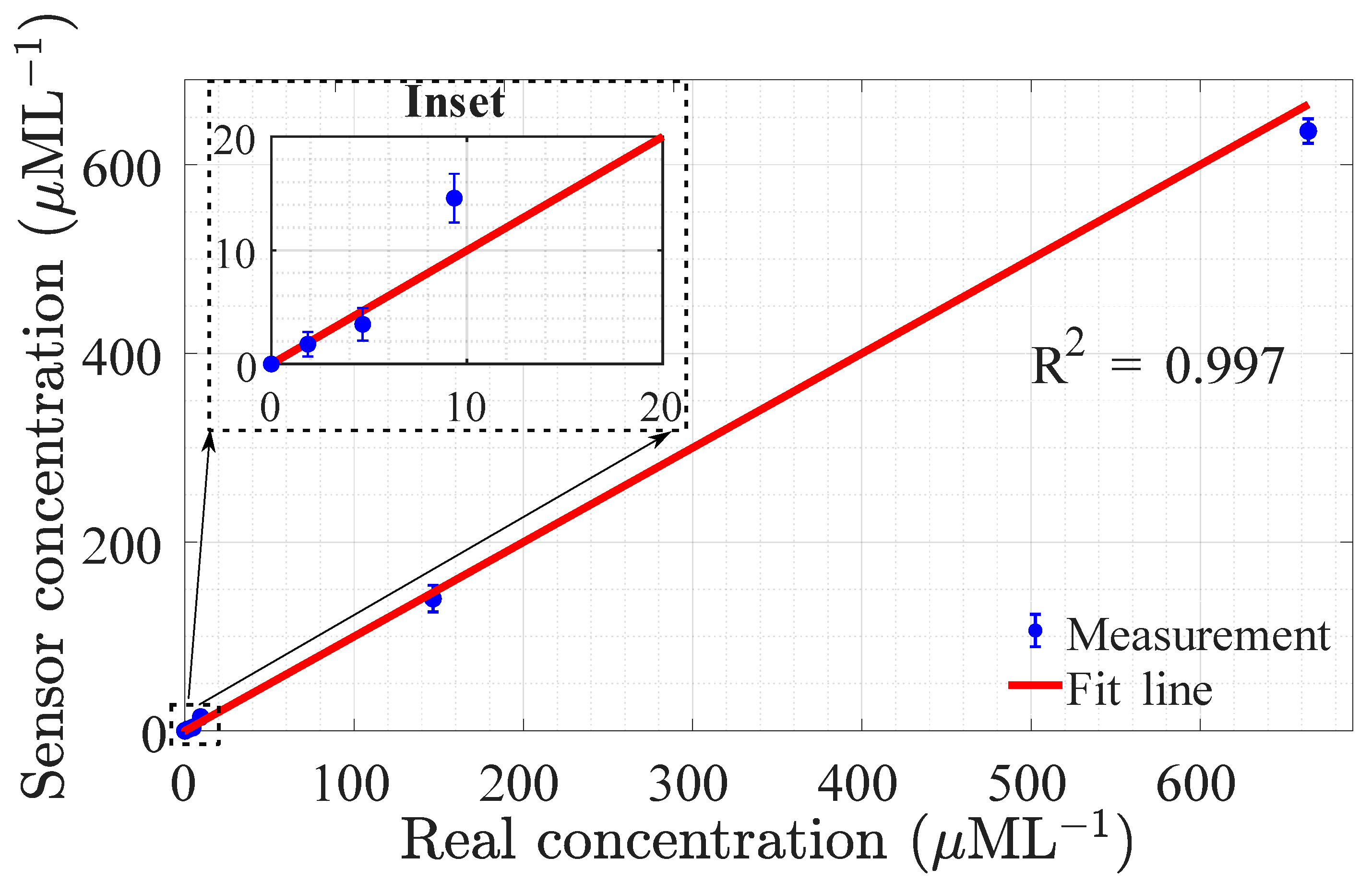
As a final experiment, the 3D-IS was validated in real groundwater and compared against a standard technique. This test allowed us to evaluate the design and performance of the 3D-IS under real-world conditions. Five water samples, collected as described in Section 2.5, were analyzed using ion chromatography (IC) with a DIONEX Model ICS-1000 chromatograph (Thermo Fisher Scientific, San Diego, CA, USA) to identify common cations and ammonium. Hence, seven concentrations of NH 4 + were retrieved, and labeled as c = {1.87, 4.67, 9.35, 146.6, 663.8} μM, which serve as the real concentration values.
Figure 13 shows the 3D-IS correlation plot for the concentration values obtained using inverse calibration equations [44]. This step was intended to correlate the sensor’s concentration reading with the actual concentration determined by a standard technique (IC). From the curve in Figure 13, we observe a linear relationship between the 3D-IS response to NH 4 + concentration and the IC values, with a coefficient of determination R2 of approximately 99.7%. Therein, the inset allows for the visualization of the measurements spanning the range from blank value to 20 μM of NH 4 + . Therefore, the sensor proves optimal for the concentration range of 1 μM to 663.8 μM of NH 4 + concentration.
These outcomes demonstrate that the 3D-IS device is capable of predicting concentrations in a wide range and is suitable for both laboratory conditions, where NH 4 + concentrations are verified below current regulations, and for real-world environments with samples exceeding the established NH 4 + limit. Furthermore, it offers the added value of easy integration with an in situ measurement platform.

5. Comparison of Ammonium Ion Sensors

Finally, for comparison purposes, we have selected notable state-of-the-art technologies for NH 4 + detection in water to contrast the proposed 3D-IS.
Table 3 summarizes five works and ours, considering six parameters to contrast their performance.
The NH 4 + detection sensors described in Table 3 offer a good detection range, exhibit good selectivity, and possess high sensitivity. However, they were not tested under continuous-flow conditions or real contaminated water. For this reason, we introduce a device that can be part of a filtration process train to monitor the continuous flow conditions of NH 4 + removal, offering the added value of being low-cost, utilizing easily accessible materials, and being manufactured using 3D technology. Although some elements, such as electronics and processing algorithms, need improvement to convert the electrical signal’s value into a concentration value, our prototype has produced excellent results in selectivity, sensitivity, response time, and shelf life.

6. Conclusions

ZnO-modified carbon paste electrodes have enabled effective monitoring of NH 4 + in aqueous media flows and in real samples over the 1 μM to 663.8 μM range. Furthermore, the 3D-IS sensor was validated using a standard technique, showing impedance variation proportional to NH 4 + concentrations, consistent with the current standard limit for NH 4 + in drinking water. Under optimal frequency conditions (100 kHz), the sensitivity was 2 kΩ/log(μM), with a correlation of approximately 99%. Additionally, it is worth noting that the essential parameter of the sensor signal was not affected by the presence of interfering cations. An equivalent circuit model was proposed to explain the transduction process. From the experimental data and an electrical perspective, an empirical model of the solid/solution adsorption rate was also obtained, analogous to a first-order kinetic adsorption model. As a result, a new impedance sensor design was developed to estimate NH 4 + levels in a real-time industrial scenario, exhibiting features such as affordability, durability, and compliance with current standards. Measurements show reproducible results thanks to ZnO’s affinity for NH 4 + . The design demonstrates the benefit of substituting complex chemical syntheses with readily available commercial materials ZnO and graphite incorporated into a 3D-printed automated housing. Regarding reliability, the housing also ensures stable hydrodynamic conditions under continuous flow. The impedance values obtained lie within ranges measurable with standard basic electronics, removing the need for sensitive and costly RF components. Lastly, safe detection is guaranteed by both the low toxicity and excellent stability of the chosen materials.

Supplementary Materials

The following supporting information can be downloaded at https://www.mdpi.com/article/10.3390/chemosensors14030064/s1, Table S1: Results of the physicochemical and biological characterization of the sample extracted from the groundwater.

Author Contributions

Conceptualization: J.A.U.-M.; investigation: J.A.U.-M.; methodology: J.A.U.-M.; resources: R.G.R.-C.; validation: R.G.R.-C. and J.A.U.-M.; software: J.A.U.-M.; writing—original draft: J.A.U.-M.; writing—review and editing: R.G.R.-C.; funding acquisition: R.G.R.-C. All authors have read and agreed to the published version of the manuscript.

Funding

This work was supported by SECTEI-CDMX through project e-SAST number SECTEI/153/ 2023 (1564c23).

Institutional Review Board Statement

Not applicable.

Informed Consent Statement

Not applicable.

Data Availability Statement

The original contributions presented in this study are included in the article/Supplementary Materials. Further inquiries can be directed to the corresponding author.

Acknowledgments

J.A.U.M (CVU 708832) acknowledges SECIHTI for the postdoctoral fellowship. Also, the authors thank Carlos M. Espinoza-Pérez for his technical support.

Conflicts of Interest

The authors declare no conflicts of interest.

References

  1. Constable, M.; Charlton, M.; Jensen, F.; McDonald, K.; Craig, G.; Taylor, K.W. An Ecological Risk Assessment of Ammonia in the Aquatic Environment. Hum. Ecol. Risk Assess. Int. J. 2003, 9, 527–548. [Google Scholar] [CrossRef]
  2. Wang, X.; Li, J.; Chen, J.; Cui, L.; Li, W.; Gao, X.; Liu, Z. Water Quality Criteria of Total Ammonia Nitrogen (TAN) and Un-Ionized Ammonia (NH3-N) and Their Ecological Risk in the Liao River, China. Chemosphere 2020, 243, 125328. [Google Scholar] [CrossRef]
  3. Velásquez-Yévenes, L.; Ram, R. The Aqueous Chemistry of the Copper-Ammonia System and Its Implications for the Sustainable Recovery of Copper. Clean. Eng. Technol. 2022, 9, 100515. [Google Scholar] [CrossRef]
  4. Zhang, M.; Song, G.; Gelardi, D.L.; Huang, L.; Khan, E.; Mašek, O.; Parikh, S.J.; Ok, Y.S. Evaluating Biochar and Its Modifications for the Removal of Ammonium, Nitrate, and Phosphate in Water. Water Res. 2020, 186, 116303. [Google Scholar] [CrossRef]
  5. Karri, R.R.; Sahu, J.N.; Chimmiri, V. Critical Review of Abatement of Ammonia from Wastewater. J. Mol. Liq. 2018, 261, 21–31. [Google Scholar] [CrossRef]
  6. Zangeneh, A.; Sabzalipour, S.; Takdatsan, A.; Yengejeh, R.J.; Khafaie, M.A. Ammonia Removal Form Municipal Wastewater by Air Stripping Process: An Experimental Study. S. Afr. J. Chem. Eng. 2021, 36, 134–141. [Google Scholar] [CrossRef]
  7. Cruz, H.; Law, Y.Y.; Guest, J.S.; Rabaey, K.; Batstone, D.; Laycock, B.; Verstraete, W.; Pikaar, I. Mainstream Ammonium Recovery to Advance Sustainable Urban Wastewater Management. Environ. Sci. Technol. 2019, 53, 11066–11079. [Google Scholar] [CrossRef] [PubMed]
  8. Molins-Legua, C.; Meseguer-Lloret, S.; Moliner-Martinez, Y.; Campíns-Falcó, P. A Guide for Selecting the Most Appropriate Method for Ammonium Determination in Water Analysis. TrAC Trends Anal. Chem. 2006, 25, 282–290. [Google Scholar] [CrossRef]
  9. Dave, U.C.; Ingale, D.V.; Venkatesh, K.; Bayineni, V.K.; Kadeppagari, R.K. Multiwalled Carbonnanotubes Enhance the Response and Sensitivity of the Ammonium Biosensor Based on Alanine Dehydrogenase. J. Electroanal. Chem. 2017, 784, 102–108. [Google Scholar] [CrossRef]
  10. Gonçalves, A.F.; Páscoa, I.; Neves, J.V.; Coimbra, J.; Vijayan, M.M.; Rodrigues, P.; Wilson, J.M. The Inhibitory Effect of Environmental Ammonia on Daniorerio LPS Induced Acute Phase Response. Dev. Comp. Immunol. 2012, 36, 279–288. [Google Scholar] [CrossRef]
  11. Zhu, Y.; Chen, J.; Yuan, D.; Yang, Z.; Shi, X.; Li, H.; Jin, H.; Ran, L. Development of Analytical Methods for Ammonium Determination in Seawater over the Last Two Decades. TrAC Trends Anal. Chem. 2019, 119, 115627. [Google Scholar] [CrossRef]
  12. Zhou, L.; Boyd, C.E. Comparison of Nessler, Phenate, Salicylate and Ion Selective Electrode Procedures for Determination of Total Ammonia Nitrogen in Aquaculture. Aquaculture 2016, 450, 187–193. [Google Scholar] [CrossRef]
  13. Mtewa, A.G.; Sesaazi, D.C.; Botchie, S.K.; Peter, E.L.; Deyno, S.; Neme, B.A.; Mweta, D. Chapter 6—Titrimetry. In Analytical Techniques in Biosciences; Egbuna, C., Patrick-Iwuanyanwu, K.C., Shah, M.A., Ifemeje, J.C., Rasul, A., Eds.; Academic Press: Cambridge, MA, USA, 2022; pp. 103–113. [Google Scholar] [CrossRef]
  14. Lin, K.; Li, P.; Wu, Q.; Feng, S.; Ma, J.; Yuan, D. Automated Determination of Ammonium in Natural Waters with Reverse Flow Injection Analysis Based on the Indophenol Blue Method with O-Phenylphenol. Microchem. J. 2018, 138, 519–525. [Google Scholar] [CrossRef]
  15. Choosang, J.; Numnuam, A.; Thavarungkul, P.; Kanatharana, P.; Radu, T.; Ullah, S.; Radu, A. Simultaneous Detection of Ammonium and Nitrate in Environmental Samples Using on Ion-Selective Electrode and Comparison with Portable Colorimetric Assays. Sensors 2018, 18, 3555. [Google Scholar] [CrossRef]
  16. Calvo-López, A.; Ymbern, O.; Puyol, M.; Casalta, J.M.; Alonso-Chamarro, J. Potentiometric Analytical Microsystem Based on the Integration of a Gas-Diffusion Step for on-Line Ammonium Determination in Water Recycling Processes in Manned Space Missions. Anal. Chim. Acta 2015, 874, 26–32. [Google Scholar] [CrossRef]
  17. Valentini, F.; Biagiotti, V.; Lete, C.; Palleschi, G.; Wang, J. The Electrochemical Detection of Ammonia in Drinking Water Based on Multi-Walled Carbon Nanotube/Copper Nanoparticle Composite Paste Electrodes. Sens. Actuators B Chem. 2007, 128, 326–333. [Google Scholar] [CrossRef]
  18. Nithya, S.; Dutta, A. Rapid and Highly Sensitive of Amperometric Ammonia Sensor Using Green Synthesized CuO Nanoparticles as Anode Material. Electrocatalysis 2025, 16, 478–489. [Google Scholar] [CrossRef]
  19. Zazoua, A.; Kazane, I.; Khedimallah, N.; Dernane, C.; Errachid, A.; Jaffrezic-Renault, N. Evidence of Ammonium Ion-Exchange Properties of Natural Bentonite and Application to Ammonium Detection. Mater. Sci. Eng. C 2013, 33, 5084–5089. [Google Scholar] [CrossRef] [PubMed]
  20. Zougar, S.; Morakchi, K.; Zazoua, A.; Saad, S.; Kherrat, R.; Jaffrezic-Renault, N. Characterization of Ammonium Ion—Sensitive Membranes in Solution with Electrochemical Impedance Spectroscopy. Mater. Sci. Eng. C 2008, 28, 1020–1023. [Google Scholar] [CrossRef]
  21. Bakker, E.; Pretsch, E.; Bühlmann, P. Selectivity of Potentiometric Ion Sensors. Anal. Chem. 2000, 72, 1127–1133. [Google Scholar] [CrossRef]
  22. Capella, J.V.; Bonastre, A.; Campelo, J.C.; Ors, R.; Peris, M. A New Ammonium Smart Sensor with Interference Rejection. Sensors 2020, 20, 7102. [Google Scholar] [CrossRef]
  23. Michalkiewicz, S.; Skorupa, A.; Jakubczyk, M. Carbon Materials in Electroanalysis of Preservatives: A Review. Materials 2021, 14, 7630. [Google Scholar] [CrossRef] [PubMed]
  24. Franco, M.A.; Conti, P.P.; Andre, R.S.; Correa, D.S. A Review on Chemiresistive ZnO Gas Sensors. Sensors Actuators Rep. 2022, 4, 100100. [Google Scholar] [CrossRef]
  25. Sundara Venkatesh, P.; Dharmaraj, P.; Purushothaman, V.; Ramakrishnan, V.; Jeganathan, K. Point Defects Assisted NH3 Gas Sensing Properties in ZnO Nanostructures. Sens. Actuators B Chem. 2015, 212, 10–17. [Google Scholar] [CrossRef]
  26. Kumar, S.K.N.; Aliyana, A.K.; Baburaj, A.; Adetunji, M.; Fernandez, R.E. Impedance Sensor for Real-Time Ammonium Detection Based on MWCNT/ZnO Nanocomposites. IEEE Trans. NanoBiosci. 2023, 22, 121–127. [Google Scholar] [CrossRef]
  27. Ahmad, R.; Tripathy, N.; Khan, M.Y.; Bhat, K.S.; Ahn, M.s.; Hahn, Y.B. Ammonium Ion Detection in Solution Using Vertically Grown ZnO Nanorod Based Field-Effect Transistor. RSC Adv. 2016, 6, 54836–54840. [Google Scholar] [CrossRef]
  28. Aliyana, A.K.; Naveen Kumar, S.K.; Marimuthu, P.; Baburaj, A.; Adetunji, M.; Frederick, T.; Sekhar, P.; Fernandez, R.E. Machine Learning-Assisted Ammonium Detection Using Zinc Oxide/Multi-Walled Carbon Nanotube Composite Based Impedance Sensors. Sci. Rep. 2021, 11, 24321. [Google Scholar] [CrossRef]
  29. Joly, M.; Marlet, M.; Barreau, D.; Jourdan, A.; Durieu, C.; Launay, J.; Temple-Boyer, P. Monitoring of Ammonium and Nitrate Ions in Soil Using Ion-Sensitive Potentiometric Microsensors. Sensors 2024, 24, 7143. [Google Scholar] [CrossRef]
  30. Ravariu, C.; Manea, E.; Pârvulescu, C.; Dima, G. Nanoporous Layer Integration for the Fabrication of ISFET and Related Transistor-Based Biosensors. Chemosensors 2025, 13, 316. [Google Scholar] [CrossRef]
  31. Khosravani, M.R.; Reinicke, T. 3D-printed Sensors: Current Progress and Future Challenges. Sens. Actuators A Phys. 2020, 305, 111916. [Google Scholar] [CrossRef]
  32. Sun, Y.; Li, D.; Shi, Y.; Wang, Z.; Okeke, S.I.; Yang, L.; Zhang, W.; Zhang, Z.; Shi, Y.; Xiao, L. Application of 3D Printing Technology in Sensor Development for Water Quality Monitoring. Sensors 2023, 23, 2366. [Google Scholar] [CrossRef]
  33. Bouras, H.D.; Isik, Z.; Bezirhan Arikan, E.; Bouras, N.; Chergui, A.; Yatmaz, H.C.; Dizge, N. Photocatalytic Oxidation of Azo Dye Solutions by Impregnation of ZnO on Fungi. Biochem. Eng. J. 2019, 146, 150–159. [Google Scholar] [CrossRef]
  34. Dey, A. Semiconductor Metal Oxide Gas Sensors: A Review. Mater. Sci. Eng. B 2018, 229, 206–217. [Google Scholar] [CrossRef]
  35. Chang, S.C.; Hicks, D.; Laugal, R. Patterning of Zinc Oxide Thin Films. In Proceedings of the Technical Digest IEEE Solid-State Sensor and Actuator Workshop, Hilton Head, SC, USA, 22–25 June 1992; IEEE: New York, NY, USA, 1992; pp. 41–45. [Google Scholar] [CrossRef]
  36. Fatmi, M.Q.; Hofer, T.S.; Rode, B.M. The Stability of [Zn(NH3)4]2+ in Water: A Quantum Mechanical/Molecular Mechanical Molecular Dynamics Study. Phys. Chem. Chem. Phys. 2010, 12, 9713–9718. [Google Scholar] [CrossRef]
  37. Modec, B.; Podjed, N. The [Zn(NH3)4]2+ Reactions with Quinaldinate or Pyrazinoate: A Ready Synthetic Route to Zinc(II) Coordination Polymers? Inorg. Chem. Commun. 2024, 159, 111831. [Google Scholar] [CrossRef]
  38. Li, H.; Zhao, L.; Wang, L.; Liang, J.; Yan, H.; Liu, J. Leaching Kinetics of Secondary Zinc Oxide in a NH3–NH4HCO3–H2O System. Crystals 2021, 11, 496. [Google Scholar] [CrossRef]
  39. Sun, J.; Bian, J.; Liang, H.; Zhao, J.; Hu, L.; Zhao, Z.; Liu, W.; Du, G. Realization of Controllable Etching for ZnO Film by NH4Cl Aqueous Solution and Its Influence on Optical and Electrical Properties. Appl. Surf. Sci. 2007, 253, 5161–5165. [Google Scholar] [CrossRef]
  40. Ji, H.; Zeng, W.; Li, Y. Gas Sensing Mechanisms of Metal Oxide Semiconductors: A Focus Review. Nanoscale 2019, 11, 22664–22684. [Google Scholar] [CrossRef] [PubMed]
  41. Neri, G.; Donato, N. Resistive Gas Sensors. In Wiley Encyclopedia of Electrical and Electronics Engineering; John Wiley & Sons, Ltd.: Hoboken, NJ, USA, 2016; pp. 1–12. [Google Scholar] [CrossRef]
  42. Hoang, V.H.; Nguyen, T.M.P.; Nguyen, T.D.; Nguyen, T.H.V.; Chu, T.H.H.; Hoang, L.P.; Thang, P.Q.; Nguyen, L.H.; Hoang, T.K.; Van, H.T. Recycling Paper Sludge into Hydrochar and ZnO Nanocomposite for Enhanced Ammonium Adsorption in Aqueous Solutions. RSC Adv. 2025, 15, 6634–6651. [Google Scholar] [CrossRef]
  43. Haerifar, M.; Azizian, S. An Exponential Kinetic Model for Adsorption at Solid/Solution Interface. Chem. Eng. J. 2013, 215–216, 65–71. [Google Scholar] [CrossRef]
  44. Chen, H.Y.; Chen, C. Comparison of Classical and Inverse Calibration Equations in Chemical Analysis. Sensors 2024, 24, 7038. [Google Scholar] [CrossRef] [PubMed]
  45. Dar, G.N.; Umar, A.; Zaidi, S.A.; Baskoutas, S.; Hwang, S.W.; Abaker, M.; Al-Hajry, A.; Al-Sayari, S.A. Ultra-High Sensitive Ammonia Chemical Sensor Based on ZnO Nanopencils. Talanta 2012, 89, 155–161. [Google Scholar] [CrossRef] [PubMed]
  46. Baciu, A.; Manea, F.; Pop, A.; Pode, R.; Schoonman, J. Simultaneous Voltammetric Detection of Ammonium and Nitrite from Groundwater at Silver-Electrodecorated Carbon Nanotube Electrode. Process Saf. Environ. Prot. 2017, 108, 18–25. [Google Scholar] [CrossRef]
Figure 1. The manufacturing process of the 3D printed-based ZnO-carbon paste electrodes.
Chemosensors 14 00064 g001
Figure 2. FESEM images. (a) ZnO-CPE surface, (b) EDS analysis area, (c) EDS elemental composition spectrum.
Chemosensors 14 00064 g002
Figure 3. Electrical parameters of a differential area ( d A ) of the 3D-IS carbon paste electrode exposed to the environment. (a) Surface effect of the ZnO, carbon paste effect, and contact between the carbon paste and the electric contact. (b) Equivalent circuit.
Chemosensors 14 00064 g003
Figure 4. Nyquist diagrams of the sensor’s complex impedance against NH 4 + concentration. The inset figure shows the proposed equivalent circuit for the 3D-IS with a series CPE.
Chemosensors 14 00064 g004
Figure 5. Bode diagram of impedance magnitude | Z e q | for evaluating distilled water (DW) and NH 4 + concentrations from 1 to 14 μM. The vertical dashed lines indicate the range from 1 kHz to 100 kHz, where the measurements exhibit a quasi-plane response.
Chemosensors 14 00064 g005
Figure 6. Impedance magnitude | Z e q | response against NH 4 + concentration in the proposed frequency range. 3D-IS sensitivity and correlation coefficient.
Chemosensors 14 00064 g006
Figure 7. Selectivity study of the 3D-IS shown as a percentage change in impedance in the presence of four interfering ions: K+, Ca2+, Na+, and Mg2+.
Chemosensors 14 00064 g007
Figure 8. Aging test of the 3D-IS shown as a percentage change in impedance of the transducer surface as a function of time.
Chemosensors 14 00064 g008
Figure 9. Dynamic sensor response. (a) Initial concentration at 0 μM of NH 4 + , consecutive response per 1 μM ionized ammonia ions. After 100 s of measurement, the device disconnects and is subsequently powered on again. (b) Experimental setup.
Chemosensors 14 00064 g009
Figure 10. Dynamic sensor response with an initial concentration at 4 μM of NH 4 + .
Chemosensors 14 00064 g010
Figure 11. Dynamic sensor response under continuous water flow and subsequent insertion of 1 μML−1 of DW.
Chemosensors 14 00064 g011
Figure 12. Adsorption rate of NH 4 + of the 3D-IS as a function of concentration change.
Chemosensors 14 00064 g012
Figure 13. NH 4 + concentration curve for 3D-IS measurements versus standard concentration.
Chemosensors 14 00064 g013
Table 1. Summary of electrical parameters of ZnO/composite [24].
  ParameterSymbolValue
  Energy band gap E g 3.73 eV
  Effective density of states N c 2.2 × 10 18 cm−3
  Effective density of states N v 1.8 × 10 19 cm−3
  Intrinsic carrier concentration n i 10 7 cm−3
  Relative permittivity ϵ r 8.5∼8.6
  Resistivity (CPE matrix) ρ 10 3 to 10 2 Ω · cm
Table 2. Equivalent circuit parameters for concentrations of NH 4 + .
 Param.1 μM3 μM5 μM7 μM9 μM11 μM
C 1 (pF)17.45900.71783.92667.13550.44433.6
C 2 (pF)414.8415.1415.4415.7415.9416.2
C 3 (pF)29.1718.5211.767.474.743.01
R 1 ( Ω )1367.11013.1750.8556.4412.3305.6
R 2 ( Ω )1629.3713.4312.3136.759.926.2
R 3 ( Ω )817.7748.6679.5610.4541.3472.2
 CPE ( mFs α 1 )0.1400.1920.2430.2940.3450.397
Table 3. Comparison of techniques for detecting NH 4 + in water.
Active MaterialDetec. Range3D PrinterReal TimeSelectivityContinuous FlowRef.
ZnO nanopencils50 nM–0.5 mMNoNoYesNo[45]
CNT epoxy0–1 mMNoNoYesNo[46]
ZnO-MWCNT1–20 mMNoNoYesNo[28]
ZnO-MWCNT1–100 mMNoYesYesNo[26]
ZnO-NRs0.01–2.5 mMNoNoNoNo[27]
ZnO-Graphite1–14 μMYesYesYesYesThis work
Disclaimer/Publisher’s Note: The statements, opinions and data contained in all publications are solely those of the individual author(s) and contributor(s) and not of MDPI and/or the editor(s). MDPI and/or the editor(s) disclaim responsibility for any injury to people or property resulting from any ideas, methods, instructions or products referred to in the content.