1. Introduction
The history of the African American community in Latin America is deeply marked by the transatlantic slave trade, which is considered the largest forced migration in history [
1]. More than 500 years ago, African Americans arrived in the region under adverse conditions driven by racist, economic, and religious motives. Many slaves were brought to serve as warriors, others as labor for plantations, mines, domestic services, and, to a lesser extent, as soldiers. The struggle for freedom—initiated through failed escape attempts, confrontations, and claims—finally bore fruit in the early 19th century. However, after the progressive abolition of slavery, African American settlement groups have continued to be viewed and treated as a danger to social security, leading to exclusion and racial violence.
Over the last 250 years, these groups have rebuilt their identity and sense of belonging in their new territories, yet they still face poverty, social and economic hardships, and limited access to healthcare. Geographic isolation, while favoring the preservation of identity, culture, and social cohesion, has also led to endogamy, predisposing them to the expression of genetic, cardiovascular, and mental diseases [
2].
Various international studies have shown that a history of violence, trauma, deprivation, racism, and post-migration difficulties is associated with high rates of mental disorders—mainly post-traumatic stress disorder and depression among Americans of African descent and African migrant populations in Europe, Asia, and the Americas. Social and economic determinants make a significant contribution to the development of problems such as depression, anxiety, and substance use disorders. Additionally, exposure to natural disasters, geographic isolation, illiteracy, medical comorbidities, and low income markedly affects the quality of life of these communities [
3,
4,
5,
6,
7].
Mental health problems in migrants and refugees are reflected in difficulties coping with stress, working productively, and contributing to society due to various barriers. Likewise, violent traumas and severe deprivation can explain a heightened risk of mental illnesses [
2]. A study conducted with 500 low-income African Americans and Latinos highlights the harmful consequences of cumulative stress and trauma on mental health [
8]. Unresolved traumas and emotional patterns are passed down through generations, influencing current family dynamics [
9]. It is well-known how an adverse environment can provoke genetic polymorphisms under conditions of social stress and economic hardship, emphasizing the importance of the interaction between environmental and genetic factors in the manifestation of mental disorders [
10].
In Ecuador, most African American settlements that arrived as slaves are in rural riverside areas in the north of the country, where vulnerability to disasters and social exclusion is especially pronounced. However, despite the magnitude and specificity of these challenges, there is a notable lack of published studies in Ecuador that systematically address the mental health of Afro-descendant communities. The scarce existing literature is focused on demographic or cultural aspects, neglecting a thorough analysis of psychosocial factors as determinants of the prevalence of mental disorders within these groups [
11,
12].
The lack of local research hampers the understanding of an empirically observed problem and consequently limits the design of interventions and the development of policies aimed at optimally and pertinently addressing this situation. Therefore, it is essential to obtain scientific information regarding the interaction of social and economic factors on the mental health of these groups [
13,
14,
15].
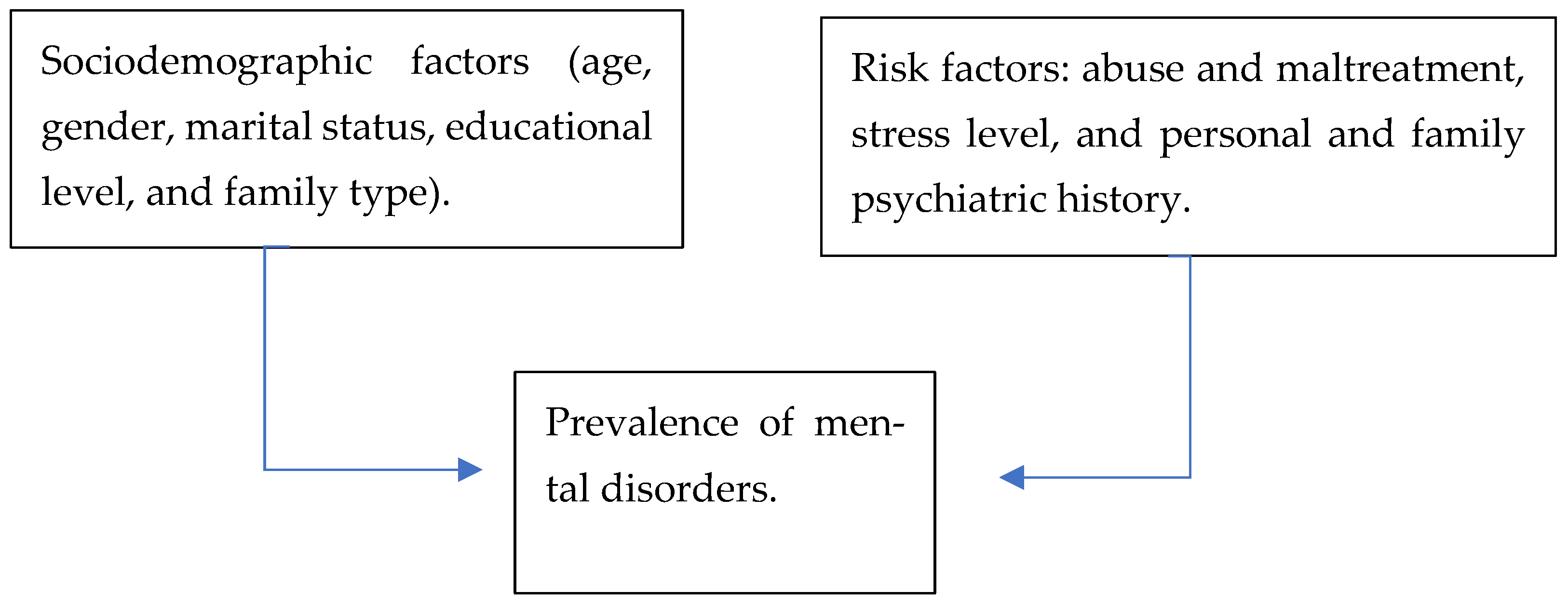
This study aimed to estimate the prevalence of mental disorders and identify their social and economic determinants among adults from African American communities in the Chota River basin, Ecuador. Specifically, associations were evaluated between mental disorders diagnosed via GMHAT/PC and factors such as perceived stress, experiences of abuse, socioeconomic level, and medical comorbidities, using two-stage cluster probability sampling (n = 557). The findings will provide local evidence to guide culturally appropriate preventive interventions. [
16,
17]. The conceptual framework of the study and the main groups of variables evaluated are summarized in
Figure 1.
Research Hypothesis 1 (H1): There is a significant association between sociodemographic factors (age, gender, marital status, educational level, and family type) and the prevalence of mental disorders.
Research Hypothesis 2 (H2): Risk factors (abuse and maltreatment, stress levels, and personal and family psychiatric history) are associated with a higher prevalence of mental disorders.
Research Question: (RQ1): What factors are associated with a higher presence of mental disorders among the Afro-descendant population of the Chota River basin?
2. Materials and Methods
2.1. Sample
A cross-sectional, analytical, quantitative study was conducted in communities of the Chota River basin, comprising a sample of 557 African American individuals. The sample size was determined to ensure representativeness by age and gender, considering an expected prevalence of mental disorders of 30% (based on another local community study), a 95% confidence level, and a 5% margin of error. This yielded a minimum sample size of 323; to compensate for the design effect and ensure adequate precision, the sample size was increased.
2.2. Sampling Design
The sample was drawn from a population of 5118 inhabitants using two-stage cluster probability sampling in the communities of Caldera, Piquiucho, Carpuela, San Vicente de Pusir, and Pusir Grande. In the first stage, communities were randomly selected by lottery and designated as primary clusters. The second stage involved selecting zones according to the distribution established by the Ecuadorian Ministry of Public Health, which were then randomly drawn as sub-units. Within these selected zones, men and women aged 18 years or older who were habitual residents were interviewed, excluding those unable to respond to the questionnaires due to disability and lack of an accompanying person.
2.3. Procedure
Prior to data collection, participants were informed about the study’s objectives and scope, and written informed consent was obtained from each participant. Data collection was conducted by a team of trained researchers and students skilled in administering the instrument, who conducted individual interviews with participants in confidential settings within each community until the target sample size was reached. Risk factors such as perceived stress and experiences of abuse and maltreatment were obtained directly from the GMHAT-PC. Specific data on abuse and maltreatment experiences were extracted as dichotomous variables from the questionnaire. Other sociodemographic variables, such as economic income, were obtained through additional questions included in the semi-structured interview administered by trained interviewers.
2.4. Instruments
The assessment of mental disorders was conducted using the GMHAT-PC (Global Mental Health Assessment Tool—Primary Care), an instrument that identifies a wide range of mental health problems and can be used by healthcare professionals to detect and manage mental disorders in primary care among the general population. Validation studies have reported a sensitivity of 0.79 (95% CI: 0.73–0.85) and a specificity of 0.94 (95% CI: 0.83–1) [
18,
19,
20,
21]. GMHAT is used for the systematic assessment of mental symptoms and disorders, allowing for the identification of conditions such as depression, anxiety, and psychotic disorders, among others. It has been used in various settings, including inpatient services and community-based contexts [
22,
23]. In addition, sociodemographic variables, history of abuse, stress level, and personal and family psychiatric history were recorded.
To assess lifestyle-related factors, questions from Phase 1 of the World Health Organization (WHO) STEPS instrument were incorporated. This tool is designed for the epidemiological surveillance of behavioral risk factors associated with noncommunicable chronic diseases. The initial stage (STEPS I) gathers information on sociodemographic characteristics, tobacco and alcohol consumption, nutritional status, and physical activity. The STEPS questionnaire is widely used in population-based studies and has been validated across multiple settings, facilitating the identification of risk behaviors that impact the mental and physical health of populations [
24,
25].
2.5. Data Analysis
Data were processed and analyzed using Jamovi statistical software (version 2.6). Descriptive analysis of frequencies and percentages was conducted for sociodemographic variables and risk factors. Subsequently, prevalences of identified mental disorders were estimated, and associations were explored between independent variables (age, gender, educational level, history of violence, social support, dietary habits, physical activity) and mental health outcomes. The significance level was set at 0.05. Age was classified into three groups following standardized Latin American epidemiological conventions established by governmental health entities—young adults (18–44 years), middle-aged adults (45–64 years), and older adults (≥65 years), consistent with World Health Organization contextual recommendations for morbidity studies in developing countries.
3. Results
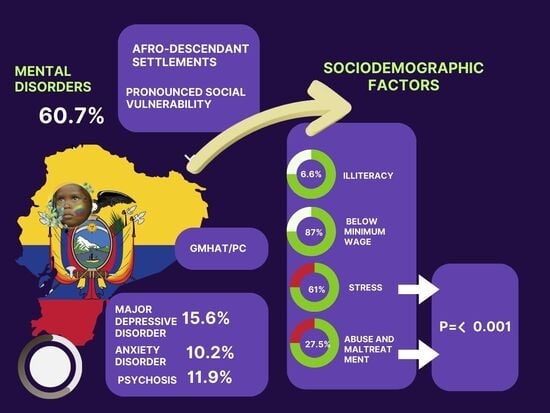
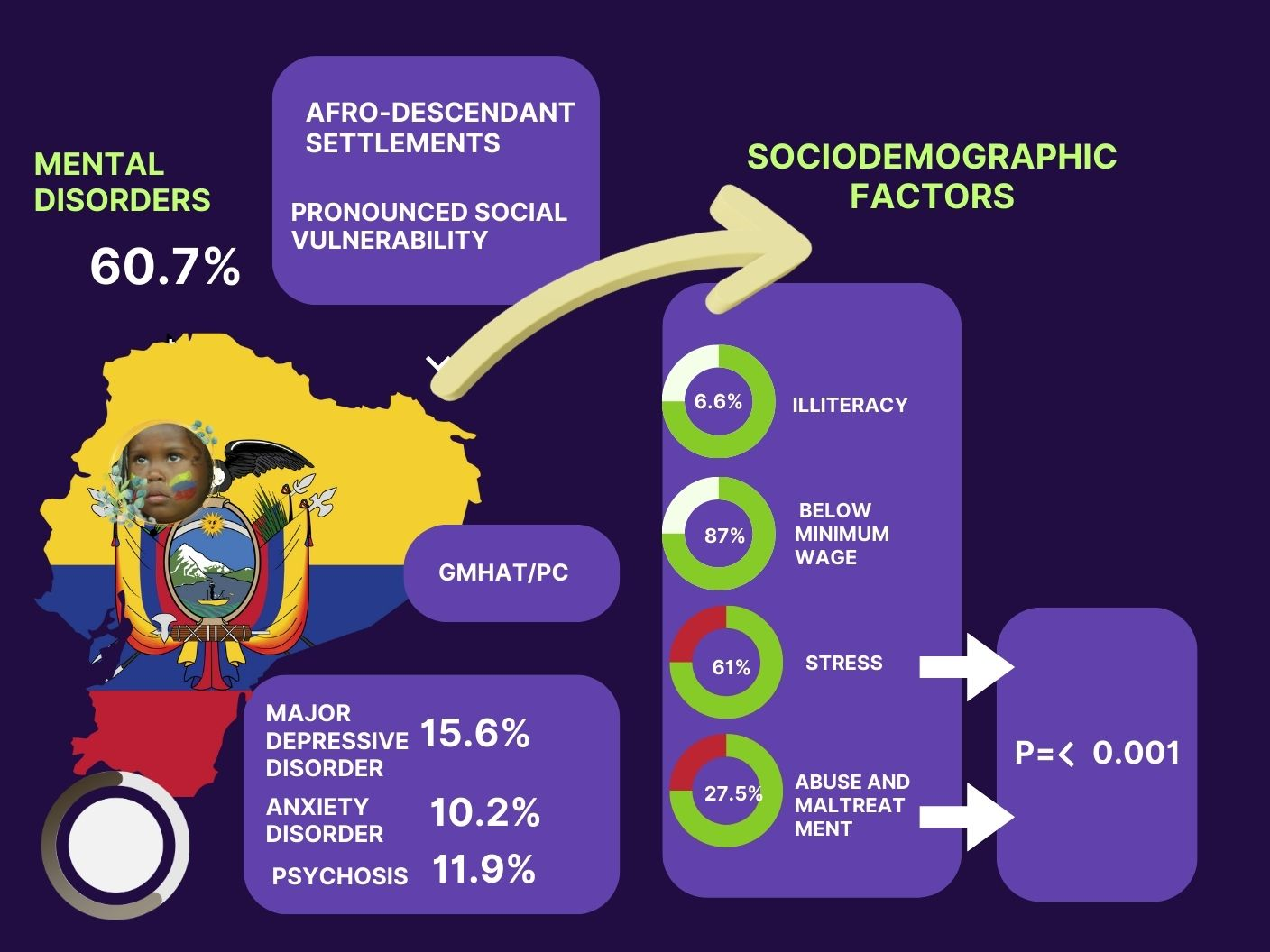
This study described sociodemographic factors and certain determinants of mental health in a population settled in northern Ecuador. It focused on data such as gender, economic status, marital status, educational level, age, and family type, as well as risk factors including history of abuse and maltreatment, stress levels, and personal and family history of mental disorders. The overall prevalence of mental disorders in the study population was 60.7% (95% CI: 56.8–64.6%), with significant differences according to gender, stress level, and economic income.
3.1. Sociodemographic Data
The sociodemographic characterization of the sample, consisting of 557 participants, revealed a population profile marked by social and economic vulnerability, shaping a context of significant psychosocial risk.
3.1.1. Sex Distribution
Most participants were female, as shown in
Table 1 (61.2%), representing greater female representation in the sample.
3.1.2. Age-Group Distribution
In the age distribution, a balanced representation was found among young adults, middle-aged adults, and older adults, reflecting the demographic heterogeneity of rural African American communities.
3.1.3. Marital Status
A higher proportion of single and married individuals was identified, while the categories of divorced, separated, and widowed were less represented. This distribution reflects a diversity of marital situations, with those associated with the absence of formal marital bonds or legally established stable relationships predominating.
3.1.4. Education
Regarding education levels, the population exhibited predominantly low to middle educational attainment, with the greatest concentration at primary and secondary levels. The proportion of individuals with higher education was very low, likely indicating limited access to higher education levels.
3.1.5. Economic Income
Marked economic precarity was determined in most of the population, with 87.8% (n = 489) earning less than the unified basic salary.
3.1.6. Family Type
The most predominant family grouping was the nuclear family, although a considerable presence of monoparental households was also notable, particularly those headed by women. This family structure implies a greater economic and emotional burden, which may be associated with increased risk of depressive symptoms and anxiety in both caregivers and dependents.
To further characterize the study population, the distribution of the main risk factors evaluated—abuse and maltreatment, stress level, and personal and family psychiatric history—is presented in
Table 2.
3.2. Risk Factors
The analysis of psychosocial risk factors and psychiatric history in the studied population revealed a complex pattern of emotional vulnerability and cumulative exposure to adverse experiences, situated within a historical context of structural marginalization.
3.2.1. Abuse and Maltreatment
Although most participants did not report experiences of abuse, a considerable proportion reported histories of physical or psychological violence, with the latter being the most prevalent form (20.5%). The coexistence of physical and psychological maltreatment in some cases suggests a pattern of multifactorial violence, which may have a significant impact on emotional regulation, self-esteem, and stress coping capacity.
3.2.2. Stress Level
The distribution of stress levels showed that nearly half of the participants experienced some degree of perceived stress, with a non-negligible group reporting severe stress. The predominance of mild and moderate stress may reflect community resilience mechanisms and cultural adaptation to adversity; however, the presence of severe stress in a significant percentage (7%) suggests an overflow of traditional coping strategies, which could contribute to the emergence of anxious, depressive, and somatic symptomatology.
3.2.3. Personal and Family Psychiatric History
The proportion of participants with personal and family histories of mental health conditions confirmed the presence of psychobiological vulnerability in a significant segment of the population. Personal histories reflected prior exposure to depressive, anxious, or psychotic episodes. The existence of family histories suggests a hereditary or familial component that, combined with adverse environmental factors, could potentiate the clinical expression of mental disorders.
To contextualize the subsequent analysis, the distribution of the main mental disorder diagnoses identified by the GMHAT/PC in the study population is presented in
Table 3.
3.3. Mental Disorder Prevalence
Screening using the Global Mental Health Assessment Tool (GMHAT/PC) revealed a high burden of psychiatric morbidity among the African American population of the Chota River basin. Of the 557 participants assessed, 60.7% (n = 338) presented at least one diagnosed mental disorder, predominantly affective and anxiety disorders, followed by psychotic conditions and organic disorders. Depressive disorder was the most frequent diagnosis (15.6%), constituting the primary mental health problem in the sample, while anxiety disorder ranked second at 10.2% (n = 57).
Although less prevalent, other mental health conditions were identified, including personality disorders, obsessive–compulsive disorder, phobias, and eating disorders, which broaden the observed clinical spectrum and reflect the diversity of psychopathological expressions within the community.
Bivariate analysis (showed that women exhibited higher prevalence of mental disorders (66.3%; 95% CI: 61.2–71.1) than men (51.9%; 95% CI: 45.0–58.7), with an OR of 1.82 (95% CI: 1.32–2.51; χ
2 = 10.9,
p = 0.001). Stress demonstrated a dose–response relationship with mental disorders—mild (OR = 2.03), moderate (OR = 4.46), and severe (OR = 27.6; global
p < 0.001), reflecting the accumulated psychological burden in these communities. Mental disorder prevalence decreased with higher economic income (47.1% vs. 62.6%; OR = 1.87,
p = 0.014), highlighting key socioeconomic determinants. Experiences of abuse/maltreatment significantly increased risk (physical OR = 4.15; psychological OR = 3.47;
p < 0.001), while marital status and education showed non-significant associations (
p > 0.05). The results of the bivariable analysis examining the association between sociodemographic factors and mental disorder prevalence are presented in
Table 4.
Table 5 presents a multivariate analysis of sociodemographic factors, gender, and major psychiatric diagnoses such as depression, anxiety, and psychosis; the results revealed relevant interactions between sociodemographic variables—particularly gender and education level—with the prevalence of the main identified mental disorders. Women generally exhibited a higher proportion of psychiatric diagnoses compared to men. For major depressive disorder, a statistically significant association emerged between lower education levels and higher prevalence (
p = 0.041), particularly among women with primary education or less. Psychosis also showed a significant link to schooling (
p = 0.046), with the most severe cases concentrated among individuals—especially women—with lower education levels.
Anxiety disorders displayed no significant differences by education level (p > 0.05). Income level, however, associated significantly with anxiety (p < 0.01), proving more prevalent in women earning below the basic salary. This underscores the interplay between economic inequality and gender in generating psychological distress, where women in poverty experience greater emotional burden and reduced access to formal or informal support, perpetuating a cycle of vulnerability. Marital status analysis revealed a trend—though not statistically significant—of higher depression and psychosis rates among separated, divorced, or widowed women.
Table 6 presents univariate associations showing high stress and a history of abuse significantly related to higher depression risk (OR = 4.2 and 3.9, respectively; both
p < 0.001). Stress also demonstrated statistically significant associations with anxiety (OR = 2.1,
p = 0.016) and psychosis (OR = 1.8,
p = 0.025).
Once the various risk factors were identified, a multivariate analysis was performed to determine which sociodemographic factors and/or risk factors are the strongest predictors of mental disorders. The results of the multivariate logistic regression analysis identifying the strongest predictors of mental disorders are presented in
Table 7.
The multivariate logistic regression analysis identifies history of abuse (OR 2.44) and stress levels (OR 2.11) as the strongest independent predictors of mental disorders in this population (p < 0.001). Male sex was found to be a significant protective factor, associated with a 37% reduction in risk compared to females. After adjusting for these variables, socioeconomic factors such as income and educational level did not show a statistically significant association with the general diagnosis.
4. Discussion
Mental disorder findings reveal a troubling reality in these populations, alongside relevant associations with certain sociodemographic factors such as history of abuse and maltreatment, stress levels, gender, and economic income. The 60.7% mental disorder prevalence, obtained via the GMHAT in this community population from the Río Chota Basin, stands out as notably elevated compared to national and international studies. The U.S. survey conducted between 2001 and 2003, accounting for racial differences between whites and blacks, found that African Americans have equal or greater likelihood of presenting mental disorders. Jude Mary C.’s recent meta-analysis, including 1.3 million people of African descent, reported a depression prevalence of 20.2% (95% CI: 18.7–21.7%). U.S. studies indicate that African American adults face a 20% higher probability of experiencing serious mental health problems compared to the white population [
26]. A systematic review in the World Mental Health report indicates that socially marginalized groups, including ethnic minorities, exhibit higher rates of mental disorders. However, none of these findings exceed the figure reported in the current study; the Río Chota river basin features adverse socioeconomic conditions that may amplify vulnerability to mental disorders, including high rural poverty (87.8% of the sample with incomes below basic salary), low education levels (predominance of incomplete primary/secondary schooling), and diverse family structures (51.7% nuclear but 21.2% single-parent), aligned with chronic stressors such as food insecurity, geographic isolation, and limited access to mental health services [
27,
28]. Another factor likely contributing to the high prevalence observed is the assessment tool used in this study. GMHAT, although validated for primary care, detects subclinical cases, enabling more frequent identification of various mental disorders. Structural racism, causing diverse social problems combined with other social determinants, generates chronic stress and trauma [
29,
30,
31], which is important to consider as a cause of elevated prevalence.
The data also confirm the global epidemiological pattern that women present mental disorders more frequently. The explanation lies in possible greater biological and hormonal vulnerability, specific psychosocial factors, and cultural models, along with low education levels, social class, unemployment, and lack of social support that affect Afro-American women—including traditional gender roles, family caregiving overload, and greater exposure to gender violence—as suggested by studies from Galbis and Bacigalupe, and the abuse/maltreatment data from this study itself, leading to the accumulation of traumatic factors [
14,
32].
Most of the population was found to have incomes below the basic salary, including unemployment, and these groups exhibited the highest prevalence of mental disorders. This finding aligns with evidence from Gili’s study, which links poverty and mental health through moderate to severe psychological distress [
29,
33]. This association proves particularly relevant in Afro-American communities, where populations living below the poverty threshold have more than double the likelihood of reporting severe stress—alongside other conditions these groups have historically faced [
27].
Regarding the spectrum of mental disorders, the study found predominance of major depressive disorder, anxiety disorder, and psychosis cases. According to the 2018 National Survey on Drug Use and Health (SAMHSA), 19.7% of Black and African American adults experienced a mental health condition in the past year [
34]. In Greene et al.’s review study, 22 point prevalence studies across 12 North African countries determined that major depressive disorder ranged from 2.0% to 33.2%, with the highest prevalence in South Africa—the origin of Ecuadorian Afro-descendants. In the same study, point prevalence for anxiety disorders varied from 0.9% to 36.5% across 12 of the 36 studies reviewed [
35]. The prevalence findings for depression and anxiety in this study align with Greene et al.’s review, but results differ across analyzed studies regarding psychosis data, with point prevalences ranging from 0.19% to 9.3% in just two studies from different African cities potentially reaching over 39% for lifetime prevalence. None of the studies included in Greene et al.’s review used the GMHAT/PC; however, despite diagnostic heterogeneity, they converge on DSM criteria and findings [
35]. The significant presence of psychosis—alone or associated with affective disorders—requires special attention, as it may reflect both genetic vulnerabilities and the impact of chronic psychosocial stress [
36]. The presence of depressive disorder, psychosis, and anxiety—in that order—showed significant correlation with higher stress levels and presence of abuse/maltreatment more than other sociodemographic variables, except low income for anxiety disorder and low education, where depressive disorder and psychosis approached statistical significance.
The data demonstrated a highly significant association between stress level and presence of mental disorders (
p < 0.001); the progressive increase in prevalence according to stress level—reaching up to 94.9% in severe stress cases—evidences the central role of this factor in psychiatric pathophysiology. Chronic stress associates with hypothalamic–pituitary–adrenal axis dysfunction, neuroinflammation, and neuroplasticity alterations that promote the emergence of depressive and anxious symptoms [
37].
Finally, the results from this study regarding maltreatment and abuse as risk factors for mental disorders revealed a pattern of high prevalence with depressive and anxious symptoms, showing a significant association (
p < 0.001), consistent with reports by Grayson et al., where racial and structural trauma generates lasting effects on the mental health of the Afro-American community. Both physical abuse and psychological abuse act as chronic stressors that trigger mental health disorders [
38]. The results of Ricks and Horan [
39] found that exposure to childhood sexual abuse (40.6%) and intimate partner violence (44.9% physical, 63% emotional, 40.6% sexual) are extremely frequent and strongly associated with depressive symptoms, anxiety, and poorer quality of life, which was evidenced in the population of the Chota Valley.
The practical implications for public health of such high-prevalence findings for both anxiety and depression—and their key associated risk factors—require developing early detection programs for mental health problems in the Río Chota river basin. Additionally, they demand the implementation of interinstitutional activities focused on reducing stress, violence, and economic and educational inequities in the population, without overlooking culturally adapted strategies to address transgenerational historical trauma.
The main limitations of this study include its cross-sectional design, which prevents inferring causality; the use of screening instruments without diagnostic confirmation; and female oversampling, which may affect gender-based generalizability. Future longitudinal studies with simple random sampling and confirmed clinical diagnosis are needed to validate these associations in similar contexts.
5. Conclusions
The sociodemographic factors revealed a female predominance in the sample and a high proportion of young and older adults with low educational levels and high poverty rates, as most participants reported incomes below the minimum wage. This economic precariousness was significantly associated with a higher prevalence of mental disorders.
The present study confirms a high burden of psychiatric morbidity in the Afro-descendant communities of the Chota River basin, showing a significantly higher prevalence of mental disorders than the national and regional averages reported for Latin America.
The most frequent mental disorders were major depressive disorder, anxiety disorder, and psychosis with depressive symptoms, all with a female predominance.
A central role of stress and experiences of abuse/maltreatment in the genesis of mental disorders was evidenced, with a directly proportional relationship observed between the intensity of stress and the presence of mental illness (anxiety).
Physical and psychological abuse showed a 100% association with the presence of mental disorders, confirming the relevance of interpersonal trauma as a psychiatric trigger, especially depression.