


Highlights
What are the main findings?
- This scoping review identified 83 records spanning six historical periods (pre-colonial to Sustainable Development Goals [SDG] eras) across 21 African countries, revealing how health systems evolved from traditional community-driven practices to Western-influenced models with persistent tensions between indigenous and colonial medical approaches.
- African health systems demonstrated advanced medical practices even in pre-colonial times, challenging stereotypes, while colonial-period marginalization of traditional medicine created structural inequities and workforce hierarchies that continue to impact contemporary health care delivery.
What is the implication of the main finding?
- Historical understanding is essential for designing equitable health systems that address colonial legacies and structural barriers rather than reproducing past inequities, particularly as African countries develop universal health coverage frameworks in the SDG era.
- Significant documentation gaps exist, especially for pre-colonial periods and many African countries, necessitating standardized reporting guidelines for health historical research, centralized repositories, and integration of oral histories to preserve valuable knowledge for future health system strengthening.
Abstract
Background: This scoping review aims to systematically examine the extent of the literature on African health histories throughout the pre-colonial, colonial, post-independence, primary health care (PHC), Millennium Development Goals (MDG), and Sustainable Development Goals (SDG) periods. Methods: This scoping review followed the Arksey and O’Malley framework, enhanced by Levac’s updates and adaptations from the Joanna Briggs Institute’s methodology. Data from eligible records were extracted based on inclusion criteria and summarized narratively. Results: We included 83 records, of which the majority (n = 70) were narrative reviews. Eighteen of these provide evidence from Africa as a whole, while country-specific evidence was obtained from 21 countries. South Africa had the most records (n = 17), followed by Ghana (n = 6) and Nigeria (n = 6). The majority of evidence came from the colonial period (n = 13), followed by the PHC and MDG periods (n = 12 each). Health systems in the pre-colonial era were rooted in indigenous practices and community-driven systems; the colonial period introduced Western-style health care systems; the post-independence period focused on health promotion initiatives and infectious disease eradication; the PHC era focused on community-centered health care and equitable service provision; the MDG era expanded on targeted interventions for infectious diseases, and the SDG era aims to build resilient and inclusive health care systems towards universal health coverage. Conclusion: This review revealed diverse influences on health systems from the pre-colonial to SDG eras. However, these records are not exhaustive and require country-specific records, archived documents, and a centralized repository. Addressing these gaps will provide a comprehensive understanding of African health histories and aid in future health interventions.
1. Introduction
African health care systems have had a complicated past that includes traditional practices, colonial influences, efforts made after independence, and current global health initiatives [1], and the value of incorporating historical perspectives into public health discourse cannot be overemphasized. Understanding the evolution of these health systems requires a comprehensive examination of the historical contexts that have shaped health practices, health care delivery, and health policies across the continent [1].
Drawing on existing historical analyses of African medicine and public health, we identify six broad periods through which health practices and health care delivery systems on the continent have evolved. These periods provide a conceptual lens for understanding the major transitions that have shaped African health systems over time. The pre-colonial period (around the 1800s in many countries) was characterized by health care practices before contact with settlers, where medicine was purely traditional [2]. This was followed by the colonial period (up to autonomy in some countries), during which colonizers interacted with local communities and introduced different medical approaches, such as Western or Eastern medicine practices [3]. Next came the period immediately following independence (corresponding roughly to the 1960s in some countries), when local autonomy was reintroduced, and indigenous people were responsible for health decision-making. Subsequently, the structural adjustment program, also known as the Primary Health Care (PHC) period (corresponding to the 1970s–1990s) [4], emphasized that ‘Governments have a responsibility for the health of their people by providing a set of basic services needed by the majority of the population.’ The Millenium Development Goals (MDG) period (corresponding to 2000–2015) then focused on delivering a suite of interventions targeting the biggest contributors to morbidity and mortality [5]. Finally, the Sustainable Development Goals (SDG) period (post–2015) shifted the focus to providing a range of interventions targeting the health and well-being of people at all ages [6].
There has been a lack of attention paid to the history of health systems in African countries [7]. This scoping review therefore aims to systematically examine the extent of the literature on African health histories from the pre-colonial to the SDG period. By documenting and understanding these historical trajectories, we can gain valuable insights into the areas where evidence is strong and where gaps exist, as well as better contextualize current health challenges and leverage lessons from the past to shape more equitable and effective health care systems moving forward [7].
2. Materials and Methods
This review followed the framework for conducting scoping reviews outlined by Arksey and O’Malley [8] and updated by Levac et al. [9], with adaptations from the Joanna Briggs Institute (JBI) [10,11]. A protocol for this review has also been published previously with detailed methodology [1] and this review has been registered with the Open Science Framework (osf.io/avwut). The steps followed in this review include “defining the research question”, “identifying relevant studies”, “selecting studies”, “charting the data”, and “collating, summarizing, and reporting the results” [8]. We reported this review in accordance with the Preferred Reporting Items for Systematic Reviews and Meta-Analyses extension for scoping reviews (PRISMA-ScR) [12].
2.1. Defining the Research Question
As defined in the protocol for this review [1], the research question is “what literature exists on the history of health practices and health care delivery systems in Africa from the pre-colonial era through to the SDG era”?
2.2. Identification of Relevant Studies
We conducted a comprehensive literature search in the PubMed database using relevant keywords with the search strategy detailed in Table A1. Additionally, we searched the Google Scholar and Google search engines for gray literature. Due to time constraints, we limited our search to these databases and search engines, which represented a slight deviation from the protocol’s plan to search more databases. The first 100 results each from both Google and Google Scholar were retrieved for screening. We screened articles directly on these search engines, and did not merge them with those from PubMed; therefore, deduplication of articles was not conducted.
2.3. Inclusion and Exclusion Criteria
We used the JBI’s Population, Concept, and Context (PCC) framework [10,11] to determine studies eligible for inclusion. The population that we referred to was the African population, such as health care providers, policymakers, and communities. The concept focused on the evolution of health care practices and systems in Africa. This was key to understanding how health systems in Africa transformed over time. The context was both geographical and time-based. The geographical context was Africa as a continent, including sub-regions and countries. The time-based context comprised six distinct time blocks: the pre-colonial, colonial, postcolonial, PHC, MDG, and SDG periods. Studies were assigned to these time blocks based on the historical period they described, rather than their publication dates, as some records examined earlier or overlapping eras.
We included any study that discussed any aspect of health practices and health systems employed and/or developed during any of the specified periods in a historical context. No restrictions were applied regarding the year of publication, language, or study design. For publications in languages other than English, we used Google Translate for translation. Publications that did not pertain to Africa or African populations were excluded. Likewise, studies were excluded if, despite matching search keywords, they focused primarily on biomedical mechanisms, experimental research, or sectoral issues such as biodiversity conservation or regulation, without examining health practices or health care delivery systems. Studies focusing solely on epidemiological analyses of disease burden, trends, or risk factors without examining health practices or health care delivery systems were excluded.
2.4. Study Selection
Following the search, all identified records were imported into the Rayyan web application for conducting reviews [13]. Two authors (CJI and AVM) screened both titles and abstracts of these records to obtain potentially eligible ones. The full texts of these potentially relevant records were further assessed by the two authors (CJI and AVM) for eligibility based on the inclusion and exclusion criteria. We resolved any conflicts through discussion and consensus.
2.5. Charting the Data
We extracted data from all included studies using a pre-tested extraction tool designed in an Excel spreadsheet. The information collected from each record included study identification (ID), which consisted of the first author’s last name; the year of publication; and the historical year, that is, the period upon which the historical context in the record was based and the corresponding time block (derived from the historical year).
2.6. Collating, Summarizing, and Reporting Results
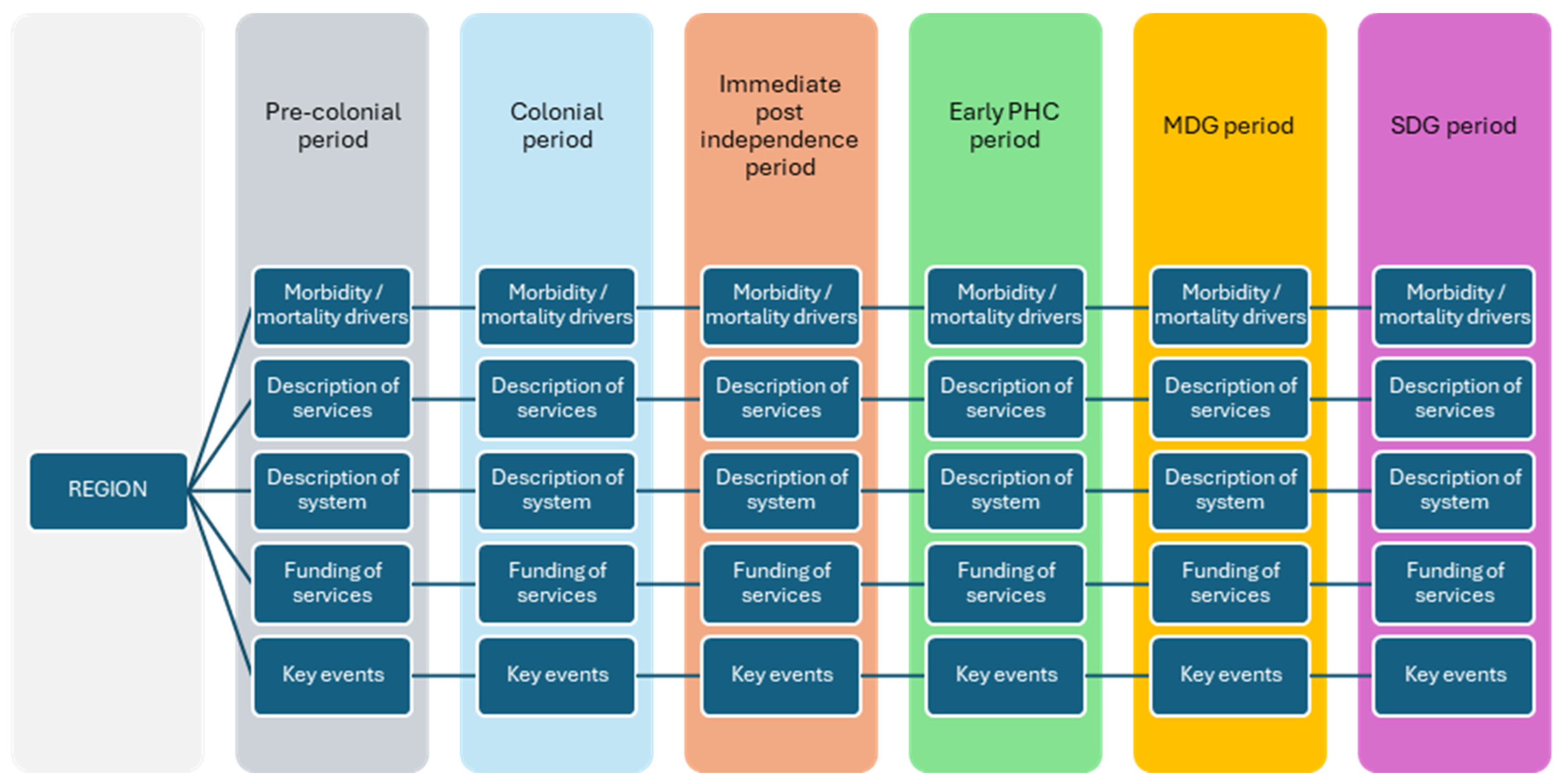
We analyzed the relevant information extracted from each paper and presented them in tables. Given the highly heterogeneous nature of the scoping review and the fact that a meta-analysis was not required, we synthesized the evidence narratively, categorizing our key findings according to each time block. We developed a conceptual framework (Figure 1) to guide our synthesis of the evidence. In this framework, “region” refers to the African region, and the repeated categories represent consistent analytical domains applied to each time block to examine how health practices and health care delivery systems evolved over time. During data extraction and synthesis, information from the included studies was grouped by historical time block. As an extension of this synthesis, recurring elements described across studies were identified inductively and later summarized into three cross-cutting domains, namely, morbidity and mortality drivers, description of health services and systems, and key historical or policy events to support comparative interpretation across periods.
Figure 1.
Conceptual framework for documenting African health histories in Africa.
3. Results
3.1. Results of Literature Search
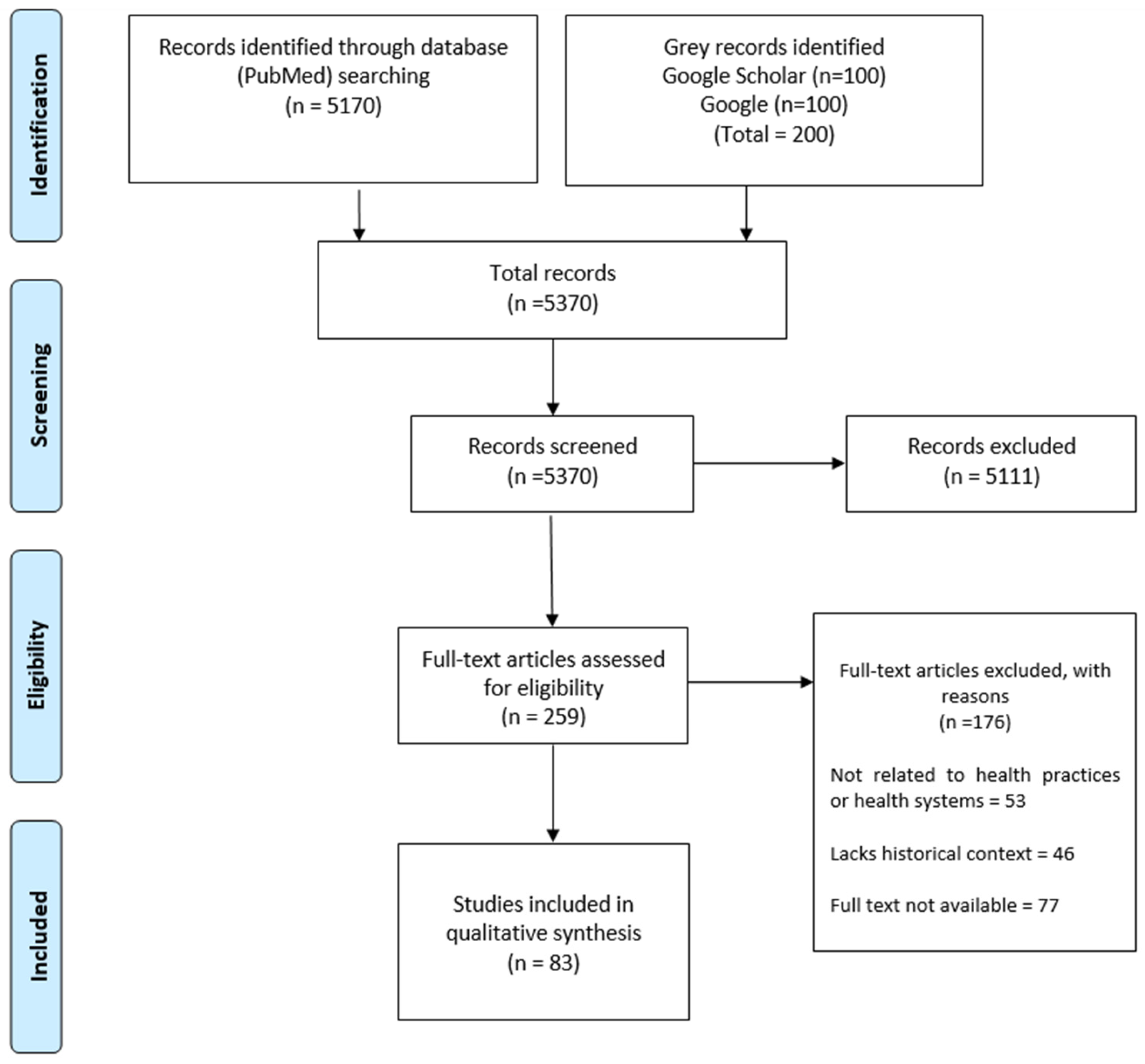
Our literature search initially identified 5371 records. After screening titles and abstracts, 5111 records were excluded. We then reviewed the full texts of the remaining 259 potentially eligible records, from which 176 were excluded. Ultimately, 83 articles were included in this review. Figure 2 below provides the PRISMA flow diagram detailing the study selection process.
Figure 2.
PRISMA flow diagram illustrating the study selection process.
3.2. Characteristics of Included Studies
The geographical distribution of included studies (Table A2) demonstrates that the majority of the studies (n = 18) focused on Africa as a whole. At the country level, we found studies from 21 countries, with South Africa having the highest number of studies (n = 17), followed by Ghana (n = 6) and Nigeria (n = 6). In comparison, fewer studies focused on sub-regions such as West and Central Africa (n = 2), and one study each was from Central Africa, East and Central Africa and Southern Africa. These records were predominantly narrative reviews (70); there were also fewer systematic reviews (n = 3) and historical analyses (n = 3). The remaining records consisted of one study each for archival research, descriptive studies, document analysis, mixed methods studies, case studies, observational studies, and qualitative studies (Table A2).
The distribution of studies by time block (Table 1) indicates that most of the included studies were published during the colonial (n = 13), PHC (n = 12), and MDG (n = 12) periods, with fewer studies from the pre-colonial (n = 4) period. We also identified studies with historical contexts spanning multiple periods, such as from the colonial to PHC (n = 8), pre-colonial to SDG (n = 1), and post-independence to SDG (n = 2) (Table A2).
Table 1.
Health care evolution in Africa across the unique time periods *.
3.3. Summary of Evidence on African Health Histories Across All Time Blocks
3.3.1. The Pre-Colonial Period
The four studies that were found to explore the historical context during this era focused on the history of medicine in Egypt by linking it to the biography of a physician-king named “Aha.” [14]; the interpretation of diseases, particularly smallpox, in pre-colonial Dahomey (now the Republic of Benin) [15]; insight into the evolution of medical knowledge in ancient Egypt, citing the Edwin Smith papyrus and drawing connections to modern clinical methods [16]; and traditional public health practices in Africa before the 20th century, highlighting the role of kings, chiefs, and priests in managing health through practices like rainmaking and sorcery control [2] (Table A2).
3.3.2. Colonial Period
Thirteen studies covered the colonial period [17,18,19,20,21,22,23,24,25,26,27,28,29]. Six of these studies focused on the influences of the colonial era on different aspects of the health system. These included colonial influences on traditional or indigenous health care systems, including the marginalization of traditional medical practices, the role of traditional leaders in promoting colonial health care and preserving indigenous medical practices, and the decolonization of global health [18,19,20,23,26]. Additionally, their influence on health promotion, including those on nutritional practices [27,28], was noted (Table A2).
Three studies on the colonial era focused on the history of endemic diseases, disease outbreaks and epidemics including onchocerciasis (river blindness) and sleeping sickness, and the roles played in disease control, and also history challenging the misconception that Africans had no role in biomedicine, highlighting their contributions to global health [21,22,25]. Two studies focused on surgical practices at the time, with one reporting that advanced surgical practices were already documented in this era in Uganda, which were at par with Western medicine at the time [24], and another discussing thoracic surgery, which first began in South Africa and moved to other African countries [29] (Table A2).
3.3.3. Post-Independence Period
Five studies described the historical context during this period [30,31,32,33]. The historical development of health promotion in Namibia was discussed in one study [30]. Another article explored the history of naturopathy in South Africa [31]. A separate paper provided a historical perspective on the successful eradication of smallpox and control of measles in West and Central Africa and how these achievements influenced the development of health systems [32]. Additionally, a study examined the 1960s health planning efforts by the WHO, in collaboration with the United States Agency for International Development (USAID), in West and Central Africa, highlighting challenges related to administrative capacity, financial resources, and the implementation of health plans [34]. Lastly, one paper looked at the evolution of dentistry in Uganda and the devastating impact of two decades of civil strife on health care, offering insights into the poor performance of the oral health system [33] (Table A2).
3.3.4. Primary Health Care Period
There were 12 articles in this category [35,36,37,38,39,40,41,42,43,44,45,46]. The historical context discussed in these papers focused on various themes, namely, workforce training to improve health services and address human resource gaps such as training of traditional birth attendants [35], the design and implementation of workforce schemes such as the Return of Service (RoS) scheme in Southern Africa [40], and the African Field Epidemiology Network [41]. Topics related to infectious diseases, including epidemics and control, were highlighted [36], such as the development of the Onchocerciasis Control Programme in West Africa [37] and the HIV/AIDS epidemic and its history in Africa [38] alongside nationwide HIV initiatives for counseling and testing in Rwanda [39]. Other papers focused on occupational health in South Africa [42], Rwanda’s post-genocide health system development [43], the evolving role of traditional medicine in African health systems [44], and government-driven family planning services aimed at managing population growth and improving health through primary care [45,46] (Table A2).
3.3.5. The Millennium Development Goal Period
Twelve studies were included in this category [47,48,49,50,51,52,53,54,55,56,57,58]. The health histories during this period were found in 12 studies. Two studies from South Africa explored the history and post-apartheid reforms of components of their health system and how some of the public health challenges during the MDG period were linked to these reforms and policies [48,50]. Similarly, two other studies from Seychelles and Somalia highlighted the history and evolution of their health systems, including challenges faced in each country [55,56] (Table A2).
Papers that described the response to diseases and outbreaks were also found. One of them provided a review of the history and public health response to Ebola outbreaks across the continent [49], while another one focused on the history of the response to the first Ebola case in Senegal [47]. Similarly, for papers related to disease control, we found the history of the establishment and rollout of a novel initiative to prevent mother-to-child transmission of HIV (Option B+ strategy) and its influence on the country’s health system in Malawi [51] (Table A2).
Two papers provided highlights of historical perspectives of the establishment of various surveillance systems such as the MenAfriNet consortium for meningitis surveillance in Western African countries [54] and the implementation of the Global Antimicrobial Resistance and Use Surveillance System (GLASS), which includes the development of national antimicrobial resistance (AMR) surveillance systems and the reporting of AMR data by African countries [58] (Table A2).
Other studies also provided historical perspectives on other key initiatives such as the Meningitis Vaccine Project (MVP) in Africa, which focused on efforts to develop and introduce a group A meningococcal conjugate vaccine in Africa [57]; a historical overview of family medicine in Malawi highlighting the evolution of training and practice in this field [52]; and the inception of the General Practitioner Contracting Initiative (GPCI) in South Africa, a health financing initiative that aims to achieve universal health coverage [53] (Table A2).
3.3.6. The Sustainable Development Goals Period
The five studies from this period focused on the following: Health financing initiatives aimed at achieving universal health coverage, such as the national comprehensive multi-year strategic plans (cMYP) processes for immunization [59] as well as the International Monetary Fund’s austerity measures for Mozambique’s health system [60]. The history of the evolution of faith-based organizations in helping Ghana realize UHC [61] was also explored. Lastly, a study describing the history of a new community health care worker program (which was initially part of the PHC period) aimed at strengthening Zambia’s health system was found in this category [62] (Table A2).
3.3.7. Cross-Cutting Studies Spanning Different Periods
Colonial to PHC Period
Eight studies spanned between the colonial and PHC eras [63,64,65,66,67,68,69,70]. They mostly focused on the evolution of surveillance systems [63]; the evolution of health systems from the colonial era to the PHC era, including challenges due to colonial systems, such as the segregationist approach of the apartheid system in South Africa [64,66,68]; the contributions of missionary organizations [65,69]; and establishment of task-oriented practices among nurses [67] and initiatives to improve maternal and child outcomes [70] (Table A2).
PHC to MDG Period
The five articles in this category primarily focused on the evolution of the PHC in countries until the MDG period [71,72,73,74,75]. One study examined the evolution of the PHC in the context of the PHC HIV epidemic in Africa [71], while others focused on the establishment of prevention of mother-to-child transmission (PMTCT) programs and tuberculosis response initiatives [72,73,74]. In addition, one study discussed a special initiative designed to improve PHC services [75] (Table A2).
Pre-Colonial to Colonial Period
Of the two studies we found in this cross-cutting era, one study described a historical account of disease control and public health practices in Africa from the pre-colonial to colonial era, specifically focusing on interactions between indigenous and colonial medical systems [76]. The second study went on to describe, on the country level, infectious diseases that have affected Madagascar and surrounding islands over the centuries, such as smallpox, cholera, and Bubonic plague, as well as their response, the establishment of the Pasteur Institute, and vaccine development efforts [77] (Table A2).
Pre-Colonial to MDG Period
Only one study was found to describe the history between the pre-colonial and MDG eras. This study provided a historical analysis of the public health landscape in South Africa, while highlighting the impact of social and environmental factors on public health, along with the significant role of HIV/AIDS in shaping the country’s health outcomes [78] (Table A2).
Pre-Colonial to SDG Period
Two studies were found to describe health history from the pre-colonial to the SDG era. One study provided a historical overview of the challenges and successes in responding to disease outbreaks in Nigeria, focusing on outbreaks like Yellow fever, Poliomyelitis, Lassa fever, Ebola virus disease, and mpox [79]. The second record was a comprehensive report from Uganda, providing a breakdown of historical events that occurred in each time block [80]. The pre-colonial period was characterized by traditional and complementary medicine, the use of herbal remedies, and traditional birth attendants, making health care very affordable. The colonial era saw the “criminalization” of traditional practices and introduction of Western-style services, including the establishment of missionary hospitals. However, both traditional and Western medical services continued to coexist. The post-independence period was marked by an increase in Western health services within the country, which were regarded as the best in Africa at the time, though this was unfortunately cut short by civil wars that lasted up to 20 years. By the MDG era, health care services in Uganda had not fully recovered from the challenges of the post-independence period. There were health system challenges such as poor infrastructure, out-of-pocket payments, low availability of medicines, and human resource challenges such as staff shortages and lack of payment. There was a gradual introduction of Eastern medicine, particularly from China, in addition to traditional and Western medicine. Health financing was mostly in-kind or trade by barter during the pre-colonial era, by the colonial (British) government during the colonial era, and by the Ugandan government during the post-independence period [80] (Table A2).
Colonial to MDG
The seven studies which we identified during this cross-cutting era explored the following: a review of Rift Valley fever (RVF) outbreaks in eastern Africa [81]; a comprehensive historical analysis of South African medicine, touching on colonial and post-colonial influences [82]; schistosomiasis control strategies [83]; and the impact of historical factors such as armed conflicts in former French colonies, particularly Côte d’Ivoire, on health systems [84]. The famous Pholela experiment in South Africa was also discussed for its significant role in the evolution of primary health care [85]. Additionally, the evolution of Nigeria’s health care system from colonial times to the SDG era was examined [86], as well as the role of the private health sector in complementing the public system in South Africa, particularly in health care financing and efforts toward universal health coverage [87] (Table A2).
Colonial to SDG Period
Three studies were found to describe histories that cut across the colonial to the SDG eras [88,89,90]. These studies explored the historical development and implementation of PHC in Tanzania, drawing connections to contemporary debates on universal health coverage (UHC) [88]; the history of Rwanda’s malaria control efforts, emphasizing the factors driving change and future strategies in combating the disease [89], and the evolution of health financing reforms in South Africa from the 1920s to 2019, exploring how socio-political factors have influenced these reforms at various points in time [90] (Table A2).
Post-Independence to PHC Period
We found two papers that reviewed the development of mental health policy, especially on how mental health practices evolved within the broader health system during these eras [91] and the training of health workers to improve service delivery [92] (Table A2).
Post-Independence to SDG Period
We included two papers in this category [92,93]. These included efforts to improve the primary health care system, including efforts in workforce training [92], and challenges in promoting local pharmaceutical production over time. The latter highlights the evolution of policies and initiatives aimed at reducing reliance on imports and enhancing domestic production of health products [93] (Table A2).
MDG to SDG Period
We included two studies that described the historical background of the Uganda National Institute of Public Health (UNIPH) and lessons learned so far [94] and the creation of an initiative, “Community-based Health Planning and Services (CHPS)”, to address barriers to access to quality care [95] (Table A2).
Table 1 provides a cross-period summary of key recurring elements identified across the six historical time blocks, highlighting reported morbidity and mortality drivers, features of health services and systems, and major historical or policy events in the African region. In this summary, “morbidity and mortality drivers” refer to conditions or events shaping health needs, “description of health services and systems” captures reported features of service delivery and system organization, and “key events” denote major historical, policy, or institutional developments influencing health systems.
4. Discussion
The evolution of health care systems in Africa, spanning from pre-colonial times to the SDG era, reveals a dynamic interplay of cultural, social, and political factors that shaped health practices and health care delivery [61]. This review identified 83 records on African health histories. While 18 studies provided historical overviews of Africa as a whole, only 21 country-specific historical accounts were included.
Our findings suggest that in the pre-colonial era, health care practices were deeply rooted in cultural traditions and community-driven systems. However, the colonial period introduced significant changes to this landscape. The majority of studies from this review focused on the colonial, PHC, and MDG periods, which could be attributed to several reasons. The colonial period was marked by significant transformations, including the establishment of health infrastructure, disease control programs, and the introduction of Western health care systems, which continue to shape present-day health systems. In fact, this shift was thought to result in tensions between indigenous health care systems and colonial influences [19]. Some key findings worthy of note are how records showed that, contrary to stereotypes, Africa had advanced medical and public health practices even during the pre-colonial era [2,21]. The continent played a crucial role in the discovery and treatment of diseases like malaria, trypanosomiasis, smallpox, syphilis, tuberculosis, and plague [2].
The post-independence period was marked by a renewed focus on autonomy and self-determination in health care. This period was characterized by health promotion initiatives and the eradication of diseases such as smallpox. The PHC era, influenced by the Alma-Ata Declaration (1978) [4,62], emphasized the importance of community-based health care and equity in service delivery. The focus on primary health care, maternal and child health, and the integration of community health workers into the system highlighted the importance of accessibility and community engagement in achieving health outcomes. The subsequent MDG era further expanded on targeted interventions, particularly for infectious diseases like HIV/AIDS and malaria. Finally, the SDG era currently aims to build resilient and inclusive health care systems that ensure universal health coverage.
The evidence described above may not be exhaustive for a couple of reasons. Identifying and selecting studies on African health histories was challenging due to the lack of uniformity in how histories were presented in publications. Country-specific evidence was based on 21 African countries, with countries like South Africa, Nigeria, and Ghana providing the majority of the evidence. Nonetheless, the WHO African regional office is currently looking at ways to document individual country histories. For example, a country-specific historical document from Uganda has just been published [80]. Additionally, we could not retrieve the full texts of some publications, particularly those from earlier time blocks (pre-colonial and colonial periods). Such publications only had abstracts, which did not provide sufficient evidence, subsequently resulting in their exclusion from our synthesis despite their potential eligibility. We also acknowledge that some colonial-era documents and translated materials may carry inherent biases, which could affect the completeness or accuracy of historical accounts.
Although our findings align with what is already known, we highlight certain gaps and potential limitations. The historical records available are not generalizable to all countries, as some countries’ records were not available. Therefore, more historical publications are required from individual countries. Given the high heterogeneity of the studies, we may have missed some vital records that included historical contexts. Hence, we recommend establishing a standardized guideline for reporting public health historical documents, drawing inspiration from other established guidelines for reporting studies, such as STrengthening the Reporting of OBservational studies in Epidemiology (STROBE) [96]. This would help ensure uniformity, improve comparability, strengthen the evidence base, and support the long-term use of historical public health information.
Furthermore, historical contexts should be incorporated into public health reports or documented separately. Public health professionals should collaborate with social scientists in developing such reports. There should be increased awareness within the health, public health, and broader scientific communities about the importance of including historical contexts in their publications, as these will be valuable for future research and understanding.
Funding mechanisms were not explicitly mentioned in the majority records we included, particularly regarding how users paid for the services. A possible explanation may be that funding information may not have been comprehensively or systematically documented or may have been overlooked, especially during early periods. Most studies in our review focused on health care practices, disease control, and service delivery, rather than economic aspects. Researchers might have prioritized describing these areas without detailing the financial mechanisms involved.
Given the historical nature of the information, our conclusions are based mostly on the authors’ accounts, and we did not conduct quality assessments to verify the accuracy of these accounts, especially for older historical records. In addition, the lack of standardized documentation for historical health records posed challenges for inclusion of studies in this review, potentially limiting the representativeness of our synthesis. Some articles written in other languages, such as French, were translated using Google Translate, which may have introduced slight distortions in meaning. However, we do not consider these distortions to be significant.
We acknowledge that relying primarily on PubMed presents a limitation for historical research, as it may not adequately capture historical accounts and archival sources, potentially affecting the comprehensiveness of our synthesis. Our future studies will involve gathering more data at the country level, which will greatly complement the evidence from our review. For example, a country-specific historical document from Uganda has just been published [80].
We recommend conducting primary field studies at the country level, taking a cue from the Ugandan example [80]. Also, given the perceived tensions between indigenous and colonial health care systems as identified from this review, it will be useful to have a deeper exploration of the complexity of the transition and their long-term effects. This exploration could include examining how colonial health policies shaped or displaced traditional systems as well as the social and political consequences.
Lastly, it will be useful to physically review documents that are currently only available as hard copies, especially those archived in libraries and other institutions, as well as capturing oral histories from individual countries. These oral histories could include interviews with community leaders or health care practitioners and leaders and hence could provide personal perspectives and lived experiences that are often not found in written records. Lastly, given the digital age we live in, establishing robust digital archiving practices is essential. This will ensure that these valuable histories, both oral and written, remain accessible and preserved for future reference.
5. Conclusions
Our scoping review of African health histories identified a reasonable amount of records across the six time blocks, from the pre-colonial period to the SDG era, depicting the diverse ways in which historical events have shaped health systems across Africa. These influences span areas such as traditional medicine, disease control, health care policies, surgical advancements, vaccine development, and financial reforms. However, the records are not exhaustive or fully representative of all countries in Africa. This necessitates the development of more country-specific historical records, the extraction of additional records from archived documents in libraries and elsewhere, and the creation of a centralized repository for future reference. By addressing these gaps, we can ensure a more comprehensive understanding of African health histories, which will help shape effective health interventions moving forward.
Author Contributions
Conceptualization, H.K., A.M., S.S. and C.S.W.; methodology, C.I.-J., A.V.M., A.A.A. and C.S.W.; validation, H.K., C.I.-J., A.V.M., A.A.A., E.O.O., A.M., S.S. and C.S.W.; formal analysis, C.I.-J. and A.V.M.; data curation, C.I.-J. and A.V.M.; writing—original draft preparation, C.I.-J.; writing—review and editing, H.K., C.I.-J., A.V.M., A.A.A., E.O.O., A.M., S.S. and C.S.W.; visualization, C.I.-J. All authors have read and agreed to the published version of the manuscript.
Funding
This research received no external funding.
Institutional Review Board Statement
Not applicable.
Informed Consent Statement
Not applicable.
Data Availability Statement
Data generated for this review were all from publicly available publications. No new data were created or analyzed in this study.
Conflicts of Interest
All authors declare no conflicts of interest. The views and opinions expressed in this article are those of the authors only and do not necessarily represent those of their affiliated organizations.
Appendix A
Table A1.
Search history on PubMed: African health histories—8 September 2024.
Table A2.
Characteristics of included records on African health histories.
References
- Karamagi, H.C.; Oduwole, E.O.; Sy, S.; Adamu, A.A.; Seydi, A.B.W.; Wiysonge, C.S. Scoping Review of African Health Histories: A Protocol. BMJ Open 2023, 13, e075787. [Google Scholar] [CrossRef] [Scilit] [PubMed]
- Waite, G. Public Health in Pre-Colonial East-Central Africa. Soc. Sci. Med. 1987, 24, 197–208. [Google Scholar] [CrossRef] [Scilit] [PubMed]
- Baah, B.A. History of African Development Initiatives. In Proceedings of the Africa Labour Research Network Workshop, Johannesburg, South Africa, 22–23 May 2003. [Google Scholar]
- Rifkin, S.B. Alma Ata after 40 Years: Primary Health Care and Health for All-from Consensus to Complexity. BMJ Glob. Health 2018, 3, e001188. [Google Scholar] [CrossRef] [Scilit] [PubMed]
- United Nations. The Millennium Development Goals Report 2015; United Nations: New York, NY, USA, 2015. [Google Scholar]
- United Nations. Department of International Economic and Social Affairs Sustainable Development Goals. Available online: https://sdgs.un.org/goals (accessed on 23 February 2025).
- van Eeuwijk, P.; Harries, P.; Obrist, B.; Mabika, H.; Dreier, M.; Schmid, P. Working Paper Research Project “History of Health Systems in Africa”: Swiss Mission Hospitals and Rural Health Delivery in the 20th Century (SNIS Final Report); Zurich Open Repository and Archive, University of Zurich: Zurich, Switzerland, 2011. [Google Scholar]
- Arksey, H.; O’Malley, L. Scoping Studies: Towards a Methodological Framework. Int. J. Soc. Res. Methodol. Theory Pract. 2005, 8, 19–32. [Google Scholar] [CrossRef] [Scilit]
- Levac, D.; Colquhoun, H.; O’Brien, K.K. Scoping Studies: Advancing the Methodology. Implement. Sci. 2010, 5, 69. [Google Scholar] [CrossRef] [Scilit]
- Peters, M.D.J.; Marnie, C.; Tricco, A.C.; Pollock, D.; Munn, Z.; Alexander, L.; McInerney, P.; Godfrey, C.M.; Khalil, H. Updated Methodological Guidance for the Conduct of Scoping Reviews. JBI Evid. Synth. 2020, 18, 2119–2126. [Google Scholar] [CrossRef] [Scilit]
- Peters, M.D.J.; Godfrey, C.M.; Khalil, H.; McInerney, P.; Parker, D.; Soares, C.B. Guidance for Conducting Systematic Scoping Reviews. JBI Evid. Implement. 2015, 13, 141–146. [Google Scholar] [CrossRef] [Scilit]
- Tricco, A.C.; Lillie, E.; Zarin, W.; O’Brien, K.K.; Colquhoun, H.; Levac, D.; Moher, D.; Peters, M.D.J.; Horsley, T.; Weeks, L.; et al. PRISMA Extension for Scoping Reviews (PRISMA-ScR): Checklist and Explanation. Ann. Intern. Med. 2018, 169, 467–473. [Google Scholar] [CrossRef] [Scilit]
- Ouzzani, M.; Hammady, H.; Fedorowicz, Z.; Elmagarmid, A. Rayyan-a Web and Mobile App for Systematic Reviews. Syst. Rev. 2016, 5, 210. [Google Scholar] [CrossRef] [Scilit]
- Kwiecinski, J. The Dawn of Medicine: Ancient Egypt and Athotis, the King-Physician. Perspect. Biol. Med. 2013, 56, 99–104. [Google Scholar] [CrossRef] [Scilit]
- Soumonni, E. Disease, Religion and Medicine: Smallpox in Nineteenth-Century Benin. História Ciências Saúde Manguinhos 2012, 19, 35–45. [Google Scholar] [CrossRef] [Scilit] [PubMed]
- Vargas, A.; López, M.; Lillo, C.; Vargas, M. The Edwin Smith Papyrus in the History of Medicine. Rev. Med. Chil. 2012, 140, 1357–1362. [Google Scholar] [CrossRef] [Scilit] [PubMed]
- Havik, P.J. Public Health and Tropical Modernity: The Combat against Sleeping Sickness in Portuguese Guinea, 1945–1974. História Ciências Saúde-Manguinhos Rio Jan. 2014, 21, 641–666. [Google Scholar] [CrossRef] [Scilit] [PubMed]
- Abdullahi, A. Trends and Challenges of Traditional Medicine in Africa. Afr. J. Tradit. Complement. Altern. Med. 2011, 8, 115–123. [Google Scholar] [CrossRef]
- Adetiba, A.; Msindo, E. Chiefs and Rural Health Services in South-Western Nigeria, c. 1920-c. 1950s. Soc. Hist. Med. 2022, 35, 589–611. [Google Scholar] [CrossRef] [Scilit]
- Aidoo, T. Rural Health under Colonialism and Neocolonialism: A Survey of the Ghanaian Experience. Int. J. Health Serv. 1982, 12, 637–657. [Google Scholar] [CrossRef] [Scilit]
- Bernault, F. Some Lessons from the History of Epidemics in Africa. Available online: https://sciencespo.hal.science/hal-03455846/ (accessed on 3 October 2024).
- Bannister, D. Wilful Blindness: Sleeping Sickness and Onchocerciasis in Colonial Northern Ghana, 1909–1957. Soc. Hist. Med. J. Soc. Soc. Hist. Med. 2022, 35, 635–660. [Google Scholar] [CrossRef] [Scilit]
- Bump, J.; Aniebo, I. Colonialism, Malaria, and the Decolonization of Global Health. PLoS Glob. Public Health 2022, 2, e0000936. [Google Scholar] [CrossRef] [Scilit]
- Diop, S. Overview of Surgical and Anesthesia Practice in Sub-Saharan Africa during the 19th Century: The Example of the People of Bunyoro. Pan Afr. Med. J. 2021, 40, 120. [Google Scholar] [CrossRef] [Scilit]
- Doyle, S. Health in African History. In The History of African Development; University of Leeds: Leeds, UK, 2022. [Google Scholar]
- Feierman, S. Struggles for Control: The Social Roots of Health and Healing in Modern Africa. Afr. Stud. Rev. 1985, 28, 73–147. [Google Scholar] [CrossRef] [Scilit]
- Nott, J. “No One May Starve in the British Empire”: Kwashiorkor, Protein and the Politics of Nutrition Between Britain and Africa. Soc. Hist. Med. 2019, 34, 553–576. [Google Scholar] [CrossRef] [Scilit] [PubMed]
- Ouoba, K.; Banhoro, Y.; Semde, R. The Professions of Colonial Pharmacist in French West Africa. Ann. Pharm. Fr. 2022, 80, 151–156. [Google Scholar] [CrossRef] [Scilit] [PubMed]
- Schewitz, I. Cardiothoracic Surgery in South Africa: A History. J. Thorac. Dis. 2022, 14, 1275–1281. [Google Scholar] [CrossRef] [Scilit] [PubMed]
- Chipare, M.; Tapera, R.; Pachawo, R.; January, J. Exploring the Evolution of Health Promotion in Namibia: Opportunities and Obstacles during the Post-Independence Era. Glob. Health Promot. 2020, 27, 107–113. [Google Scholar] [CrossRef] [Scilit]
- Ericksen-Pereira, W.; Roman, N.; Swart, R. An Overview of the History and Development of Naturopathy in South Africa. Health SA Gesondheid 2018, 23, 1078. [Google Scholar] [CrossRef] [Scilit]
- Foege, W.; Millar, J.; Henderson, D. Smallpox Eradication in West and Central Africa. Bull. World Health Organ. 1975, 52, 209–222. [Google Scholar]
- Muhirwe, L. Oral Health in Uganda: The Need for a Change in Focus. Int. Dent. J. 2006, 56, 3–6. [Google Scholar] [CrossRef] [Scilit]
- Manton, J.; Gorsky, M. Health Planning in 1960s Africa: International Health Organisations and the Post-Colonial State. Med. Hist. 2018, 62, 425–448. [Google Scholar] [CrossRef] [Scilit]
- Akpala, C. An Evaluation of the Knowledge and Practices of Trained Traditional Birth Attendants in Bodinga, Sokoto State, Nigeria. J. Trop. Med. Hyg. 1994, 97, 46–50. [Google Scholar]
- Awah, P.; Boock, A.; Kum, K. Ebola Virus Diseases in Africa: A Commentary on Its History, Local and Global Context. Pan Afr. Med. J. 2015, 22, 18. [Google Scholar] [CrossRef] [Scilit]
- Benton, B.; Bump, J.; Sékétéli, A.; Liese, B. Partnership and Promise: Evolution of the African River-Blindness Campaigns. Ann. Trop. Med. Parasitol. 2002, 96, S5–S14. [Google Scholar] [CrossRef] [Scilit] [PubMed]
- Kagaayi, J.; Serwadda, D. The History of the HIV/AIDS Epidemic in Africa. Curr. HIV/AIDS Rep. 2016, 13, 187–193. [Google Scholar] [CrossRef] [Scilit] [PubMed]
- Karita, E.; Nsanzimana, S.; Ndagije, F.; Wall, K.; Mukamuyango, J.; Mugwaneza, P.; Remera, E.; Raghunathan, P.; Bayingana, R.; Kayitenkore, K.; et al. Implementation and Operational Research: Evolution of Couples’ Voluntary Counseling and Testing for HIV in Rwanda: From Research to Public Health Practice. J. Acquir. Immune Defic. Syndr. 2016, 73, e51–e58. [Google Scholar] [CrossRef] [Scilit] [PubMed]
- Mabunda, S.; Durbach, A.; Chitha, W.; Moaletsane, O.; Angell, B.; Joshi, R. How Were Return-of-Service Schemes Developed and Implemented in Botswana, Eswatini and Lesotho? Healthcare 2023, 11, 1512. [Google Scholar] [CrossRef] [Scilit]
- Mukanga, D.; Tshimanga, T.; Wurapa, F.; Binka, F.; Serwada, D.; Bazeyo, W.; Pariyo, G.; Wabwire-Mangen, F.; Gitta, S.; Chungong, S.; et al. The Genesis and Evolution of the African Field Epidemiology Network. Pan Afr. Med. J. 2011, 10, 2. [Google Scholar]
- Myers, J.; Macun, I. The Sociologic Context of Occupational Health in South Africa. Am. J. Public Health 1989, 79, 216–224. [Google Scholar] [CrossRef] [Scilit]
- Nsanzimana, S.; Prabhu, K.; McDermott, H.; Karita, E.; Forrest, J.; Drobac, P.; Farmer, P.; Mills, E.; Binagwaho, A. Improving Health Outcomes through Concurrent HIV Program Scale-up and Health System Development in Rwanda: 20 Years of Experience. BMC Med. 2015, 13, 216. [Google Scholar] [CrossRef] [Scilit]
- Oppong, A. Healers in Transition. Soc. Sci. Med. 1989, 28, 605–612. [Google Scholar] [CrossRef] [Scilit]
- United Nations, Department of International Economic and Social Affairs, Population Division; U.N.F. for P.A.U. Swaziland. Population Policy Compendium; United Nations: New York, NY, USA, 1985; pp. 1–6. [Google Scholar]
- United Nations, Department of International Economic and Social Affairs, Population Division; U.N.F. for P.A.U. Ethiopia. Population Policy Compendium; United Nations: New York, NY, USA, 1984; pp. 1–8. [Google Scholar]
- Abdoulaye, B.; Moussa, S.; Daye, K.; Boubakar, B.; Cor, S.; Idrissa, T.; Mamadou Nel, H.; Oumar, B.; Tidiane, N.; Selly, L.; et al. Experience on the Management of the First Imported Ebola Virus Disease Case in Senegal. Pan Afr. Med. J. 2015, 22, 6. [Google Scholar] [CrossRef] [Scilit]
- Coovadia, H.; Jewkes, R.; Barron, P.; Sanders, D.; McIntyre, D. The Health and Health System of South Africa: Historical Roots of Current Public Health Challenges. Lancet 2009, 374, 817–834. [Google Scholar] [CrossRef] [Scilit]
- Dembek, Z.; Hadeed, S.; Tigabu, B.; Schwartz-Watjen, K.; Glass, M.; Dressner, M.; Frankel, D.; Blaney, D.; Eccles, T.; Chekol, T.; et al. Ebola Virus Disease Outbreaks: Lessons Learned from Past and Facing Future Challenges. Mil. Med. 2024, 189, e1470–e1478. [Google Scholar] [CrossRef] [Scilit] [PubMed]
- van Rensburg, H.C. South Africa’s Protracted Struggle for Equal Distribution and Equitable Access—Still Not There. Hum. Resour. Health 2014, 12, 26. [Google Scholar] [CrossRef] [Scilit] [PubMed]
- Kalua, T.; Tippett Barr, B.; van Oosterhout, J.; Mbori-Ngacha, D.; Schouten, E.; Gupta, S.; Sande, A.; Zomba, G.; Tweya, H.; Lungu, E.; et al. Lessons Learned from Option B+ in the Evolution Toward “Test and Start” from Malawi, Cameroon, and the United Republic of Tanzania. J. Acquir. Immune Defic. Syndr. 2017, 75, S43–S50. [Google Scholar] [CrossRef] [Scilit] [PubMed]
- Makwero, M.; Lutala, P.; McDonald, A. Family Medicine Training and Practice in Malawi: History, Progress, and the Anticipated Role of the Family Physician in the Malawian Health System. Malawi Med. J. 2017, 29, 312–316. [Google Scholar] [CrossRef] [Scilit]
- Mureithi, L.; Burnett, J.; Bertscher, A.; English, R. Emergence of Three General Practitioner Contracting-in Models in South Africa: A Qualitative Multi-Case Study. Int. J. Equity Health 2018, 17, 107. [Google Scholar] [CrossRef] [Scilit]
- Patel, J.; Soeters, H.; Diallo, A.; Bicaba, B.; Kadadé, G.; Dembélé, A.; Acyl, M.; Nikiema, C.; Lingani, C.; Hatcher, C.; et al. MenAfriNet: A Network Supporting Case-Based Meningitis Surveillance and Vaccine Evaluation in the Meningitis Belt of Africa. J. Infect. Dis. 2019, 220, S148–S154. [Google Scholar] [CrossRef] [Scilit]
- Said, A.; Kicha, D. Implementing Health System and the New Federalism in Somalia: Challenges and Opportunities. Front. Public Health 2024, 12, 1205327. [Google Scholar] [CrossRef] [Scilit]
- Shamlaye, C.; Shamlaye, H.; Brewer, R. Health in Seychelles—An Overview. Neurotoxicology 2020, 81, 230–237. [Google Scholar] [CrossRef] [Scilit]
- Tiffay, K.; Jodar, L.; Kieny, M.; Socquet, M.; LaForce, F. The Evolution of the Meningitis Vaccine Project. Clin. Infect. Dis. 2015, 61, S396–S403. [Google Scholar] [CrossRef] [Scilit]
- Tornimbene, B.; Eremin, S.; Abednego, R.; Abualas, E.; Boutiba, I.; Egwuenu, A.; Fuller, W.; Gahimbare, L.; Githii, S.; Kasambara, W.; et al. Global Antimicrobial Resistance and Use Surveillance System on the African Continent: Early Implementation 2017–2019. Afr. J. Lab. Med. 2022, 11, 1594. [Google Scholar] [CrossRef] [Scilit]
- Petu, A. Towards Immunization Financing Sustainability in Africa. J. Immunol. Sci. 2018, 13, 89–93. [Google Scholar] [CrossRef] [Scilit]
- Pfeiffer, J.; Gimbel, S.; Chilundo, B.; Gloyd, S.; Chapman, R.; Sherr, K. Austerity and the “Sector-Wide Approach” to Health: The Mozambique Experience. Soc. Sci. Med. 2017, 187, 208–216. [Google Scholar] [CrossRef] [Scilit] [PubMed]
- Grieve, A.; Olivier, J. Towards Universal Health Coverage: A Mixed-Method Study Mapping the Development of the Faith-Based Non-Profit Sector in the Ghanaian Health System. Int. J. Equity Health 2018, 17, 97. [Google Scholar] [CrossRef] [Scilit] [PubMed]
- Wintrup, J. Health by the People, Again? The Lost Lessons of Alma-Ata in a Community Health Worker Programme in Zambia. Soc. Sci. Med. 2023, 319, 115257. [Google Scholar] [CrossRef] [Scilit] [PubMed]
- David, P.; Nakouné, E.; Giles-Vernick, T. Hotspot or Blind Spot? Historical Perspectives on Surveillance and Response to Epidemics in the Central African Republic. Int. J. Public Health 2020, 65, 241–248. [Google Scholar] [CrossRef] [Scilit]
- Gorsky, M.; Manton, J. The Political Economy of “Strengthening Health Services”: The View from WHO AFRO, 1951-c.1985. Soc. Sci. Med. 2023, 319, 115412. [Google Scholar] [CrossRef] [Scilit]
- Harries, P.; Obrist, B.; Eeuwijk, P.; van Dreier, M.; Schmid, P.; Meier, L.; Basel, A.G. The History of Health Care in Africa: Actors, Experiences and Perspectives in the 20th Century. H-Net Rev. 2011, 7, 14–25. [Google Scholar]
- Kautzky, K.; Tollman, S.M. A Perspective on Primary Health Care in South Africa. S. Afr. Health Rev. 2008, 2008, 17–30. [Google Scholar]
- van der Walt, H.M.; Swartz, L. Task Orientated Nursing in a Tuberculosis Control Programme in South Africa: Where Does It Come from and What Keeps It Going? Soc. Sci. Med. 2002, 54, 1001–1009. [Google Scholar] [CrossRef] [Scilit]
- Benatar, S. Economics of Health in South Africa: Past, Present and Future. Med. Law 1989, 8, 111–117. [Google Scholar]
- Mabika, H. History of Community Health in Africa. The Swiss Medical Missionaries’ Endeavour in South Africa. Gesnerus 2015, 72, 135–158. [Google Scholar] [CrossRef] [Scilit]
- Planned Parenthood Federation of America. The Chogoria Harambee Story. Newsl.—Fam. Plan. Int. Assist. 1977, 3, 3–6. [Google Scholar]
- LeVasseur, M.T.; Goldstein, N.D.; Welles, S.L. A Public Health Perspective on HIV/AIDS in Africa: Victories and Unmet Challenges. Pathophysiology 2014, 21, 237–256. [Google Scholar] [CrossRef] [Scilit] [PubMed]
- Simon, S.; Chu, K.; Frieden, M.; Candrinho, B.; Ford, N.; Schneider, H.; Biot, M. An Integrated Approach of Community Health Worker Support for HIV/AIDS and TB Care in Angónia District, Mozambique. BMC Int. Health Hum. Rights 2009, 9, 13. [Google Scholar] [CrossRef] [Scilit] [PubMed]
- Simelela, N.P.; Venter, W.D.F. A Brief History of South Africa’s Response to AIDS. S. Afr. Med. J. 2014, 104, 249–251. [Google Scholar] [CrossRef] [Scilit]
- Burton, R.; Giddy, J.; Stinson, K. Prevention of Mother-to-Child Transmission in South Africa: An Ever-Changing Landscape. Obstet. Med. 2015, 8, 5–12. [Google Scholar] [CrossRef] [Scilit]
- Odutolu, O.; Ihebuzor, N.; Tilley-Gyado, R.; Martufi, V.; Ajuluchukwu, M.; Olubajo, O.; Banigbe, B.; Fadeyibi, O.; Abdullhai, R.; Muhammad, A. Putting Institutions at the Center of Primary Health Care Reforms: Experience from Implementation in Three States in Nigeria. Health Syst. Reform 2016, 2, 290–301. [Google Scholar] [CrossRef] [Scilit]
- Coghe, S.; Berlin, F.U. African Therapeutic Practices in a Precolonial World; Sabinet Africa Journals: Centurion, South Africa, 2022; ISBN 9780190277734. [Google Scholar]
- Gaüzère, B.; Aubry, P. History of Human Epidemic and Endemic Diseases in the Southwest Indian Ocean. Med. Sante Trop. 2013, 23, 145–157. [Google Scholar] [CrossRef] [Scilit]
- Walker, A.R.P. Changes in Public Health in South Africa from 1876. J. R. Soc. Promot. Health 2001, 121, 85–93. [Google Scholar] [CrossRef] [Scilit]
- Olumade, T.; Adesanya, O.; Fred-Akintunwa, I.; Babalola, D.; Oguzie, J.; Ogunsanya, O.; George, U.; Akin-Ajani, O.; Osasona, D. Infectious Disease Outbreak Preparedness and Response in Nigeria: History, Limitations and Recommendations for Global Health Policy and Practice. AIMS Public Health 2020, 7, 736–757. [Google Scholar] [CrossRef] [Scilit]
- World Health Organization. African Region Study Report of the African Health Histories for the Last One Hundred and Fifty (150) Years: A Case Study of Uganda. Available online: https://iris.who.int/handle/10665/376080 (accessed on 26 October 2024).
- Baba, M.; Masiga, D.; Sang, R.; Villinger, J. Has Rift Valley Fever Virus Evolved with Increasing Severity in Human Populations in East Africa? Emerg. Microbes Infect. 2016, 5, e58. [Google Scholar] [CrossRef] [Scilit] [PubMed]
- Digby, A. The Medical History of South Africa: An Overview. Hist. Compass 2008, 6, 1194–1210. [Google Scholar] [CrossRef] [Scilit]
- Fenwick, A.; Rollinson, D.; Southgate, V. Implementation of Human Schistosomiasis Control: Challenges and Prospects. Adv. Parasitol. 2006, 61, 567–622. [Google Scholar] [CrossRef] [Scilit] [PubMed]
- Gaber, S.; Patel, P. Tracing Health System Challenges in Post-Conflict Côte d’Ivoire from 1893 to 2013. Glob. Public Health 2013, 8, 698–712. [Google Scholar] [CrossRef] [Scilit]
- Phillips, H. The Return of the Pholela Experiment: Medical History and Primary Health Care in Post-Apartheid South Africa. Am. J. Public Health 2014, 104, 1872–1876. [Google Scholar] [CrossRef] [Scilit]
- Scott-Emuakpor, A. The Evolution of Health Care Systems in Nigeria: Which Way Forward in the Twenty-First Century. Niger. Med. J. 2013, 51, 1–8. [Google Scholar]
- van den Heever, A.M. The Role of Insurance in the Achievement of Universal Coverage within a Developing Country Context: South Africa as a Case Study. BMC Public Health 2012, 12, S5. [Google Scholar] [CrossRef] [Scilit]
- Beaudevin, C.; Gaudillière, J.; Gradmann, C. The Local Roots of “Health for All”: Primary Health Care in Practices, 1950s–2000s. Soc. Sci. Med. 2023, 319, 115321. [Google Scholar] [CrossRef] [Scilit]
- Karema, C.; Wen, S.; Sidibe, A.; Smith, J.; Gosling, R.; Hakizimana, E.; Tanner, M.; Noor, A.; Tatarsky, A. History of Malaria Control in Rwanda: Implications for Future Elimination in Rwanda and Other Malaria-Endemic Countries. Malar. J. 2020, 19, 356. [Google Scholar] [CrossRef] [Scilit]
- Whyle, E.; Olivier, J. A Socio-Political History of South Africa’s National Health Insurance. Int. J. Equity Health 2023, 22, 247. [Google Scholar] [CrossRef] [Scilit]
- Muga, F.; Jenkins, R. Health Care Models Guiding Mental Health Policy in Kenya 1965–1997. Int. J. Ment. Health Syst. 2010, 4, 9. [Google Scholar] [CrossRef] [Scilit]
- Kwasi, P.N. Health Manpower Planning for Primary Care in Ghana. Chin. Med. J. 1984, 97, 97–100. [Google Scholar]
- Pourraz, J. Making Medicines in Post-Colonial Ghana: State Policies, Technology Transfer and Pharmaceuticals Market. Soc. Sci. Med. 2022, 311, 115360. [Google Scholar] [CrossRef] [Scilit]
- Ario, A.; Makumbi, I.; Kadobera, D.; Bulage, L.; Ocom, F.; Kwesiga, B.; Jarvis, D.; Nabatanzi, S.; Homsy, J.; Banage, F.; et al. Uganda National Institute of Public Health: Establishment and Experiences, 2013–2021. Glob. Health Sci. Pract. 2022, 10, e2100784. [Google Scholar] [CrossRef] [Scilit]
- Adusei, A.B.; Bour, H.; Amu, H.; Afriyie, A. Community-Based Health Planning and Services Programme in Ghana: A Systematic Review. Front. Public Health 2024, 12, 1337803. [Google Scholar] [CrossRef] [Scilit]
- STROBE. Strengthening the Reporting of Observational Studies in Epidemiology (STROBE) Checklists. Available online: http://www.strobe-statement.org/?id=available-checklists (accessed on 16 October 2024).

Disclaimer/Publisher’s Note: The statements, opinions and data contained in all publications are solely those of the individual author(s) and contributor(s) and not of MDPI and/or the editor(s). MDPI and/or the editor(s) disclaim responsibility for any injury to people or property resulting from any ideas, methods, instructions or products referred to in the content. |
© 2026 by the authors. Licensee MDPI, Basel, Switzerland. This article is an open access article distributed under the terms and conditions of the Creative Commons Attribution (CC BY) license.