


Abstract
We estimated the spin values of the supermassive black holes (SMBHs) of the active galactic nuclei (AGN) for a large set of Narrow Line Seyfert 1 (NLS1) galaxies assuming the inclination angle between the line of sight and the axis of the accretion disk to be approximately 45 degrees. We found that for these objects the spin values are on average less than for the Seyfert 1 galaxies that we studied previously. In addition, we found that the dependencies of the spin on the bolometric luminosity and the SMBH mass are two to three times stronger that for Seyfert 1 galaxies, which could mean that at early stages of evolution NLS1 galaxies either have a low accretion rate or chaotic accretion, while at later stages they have standard disk accretion, which very effectively increases the spin value.
1. Introduction
There are many types of active galaxies with Active Galactic Nuclei (AGNs), such as Seyfert galaxies, quasars, BL Lac objects, and radio galaxies. Among these types of galaxy, there are two types that are determined by the properties of their emission lines, namely, Seyfert 1 (Sy1) and Seyfert 2 (Sy2) galaxies [1]. Sy1 galaxies exhibit both broad allowed emission lines from the broad line region (BLR) with a width of several thousand km/s, and narrow forbidden emission lines from the narrow line region (NLR) with a width of several hundreds of km/s. Sy2 galaxies are characterized by narrow allowed and forbidden lines in their emission spectra [2]. According to the Antonucci [3] model, both types of galaxies, Sy1 and Sy2, have a similar internal structure, and the differences in their spectra are mainly due to orientation effects. Although the differences between Sy1 and Sy2 galaxies are well defined, galaxies with narrow resolved emission lines, similar to Sy2 galaxies but having all the spectral properties of Sy1 sources, have been found as well. These galaxies have been classified as narrow-line Sy1 (NLS1) galaxies [4]. Galaxies of this type are characterized by the following: (1) full width at half maximum (FWHM) of the broad line H < 2000 km/s [5]; (2) weak [OIII] emission lines relative to H with [OIII] /H < 3 [4,6]; (3) strong emission lines of FeII relative to H in the ultraviolet and optical regions of the spectrum [7]; (4) a strong excess of soft X-rays and high amplitude of rapid X-ray variability [6,8]; (5) strong infrared emissions, indicating active star formation [9].
The SMBHs in AGNs are characterized by two main parameters, namely, the mass and the spin (dimensionless angular momentum). The spin is very important because, according to modern concepts, the radiative efficiency of the accretion disk (among other things) strongly depends on the value of the spin [10,11,12,13].
In our previous works, we mainly explored AGNs in Seyfert 1-type galaxies; thus, in this work, we decided to study AGNs in NLS1 and to compare these two types of AGNs.
2. Examination of Initial Data
We took initial data from Zhou et al. [14]. This catalogue consists of 2011 NLS1 type objects; of these, 2005 have all the necessary data for our calculations. These include —luminosity at 5100 Å (H)—full width at half maximum of the H spectral line (which determines the rotation speed of an accretion disk of AGN), and z—the cosmological redshift.
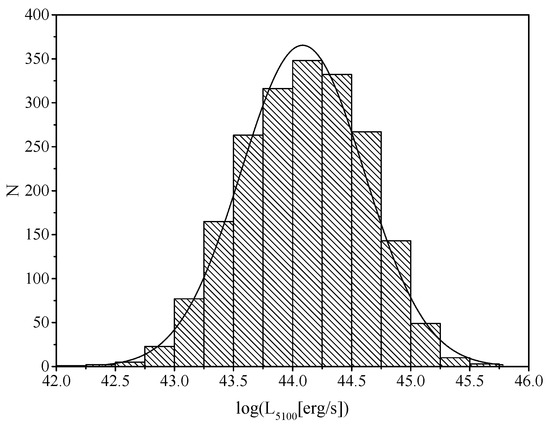
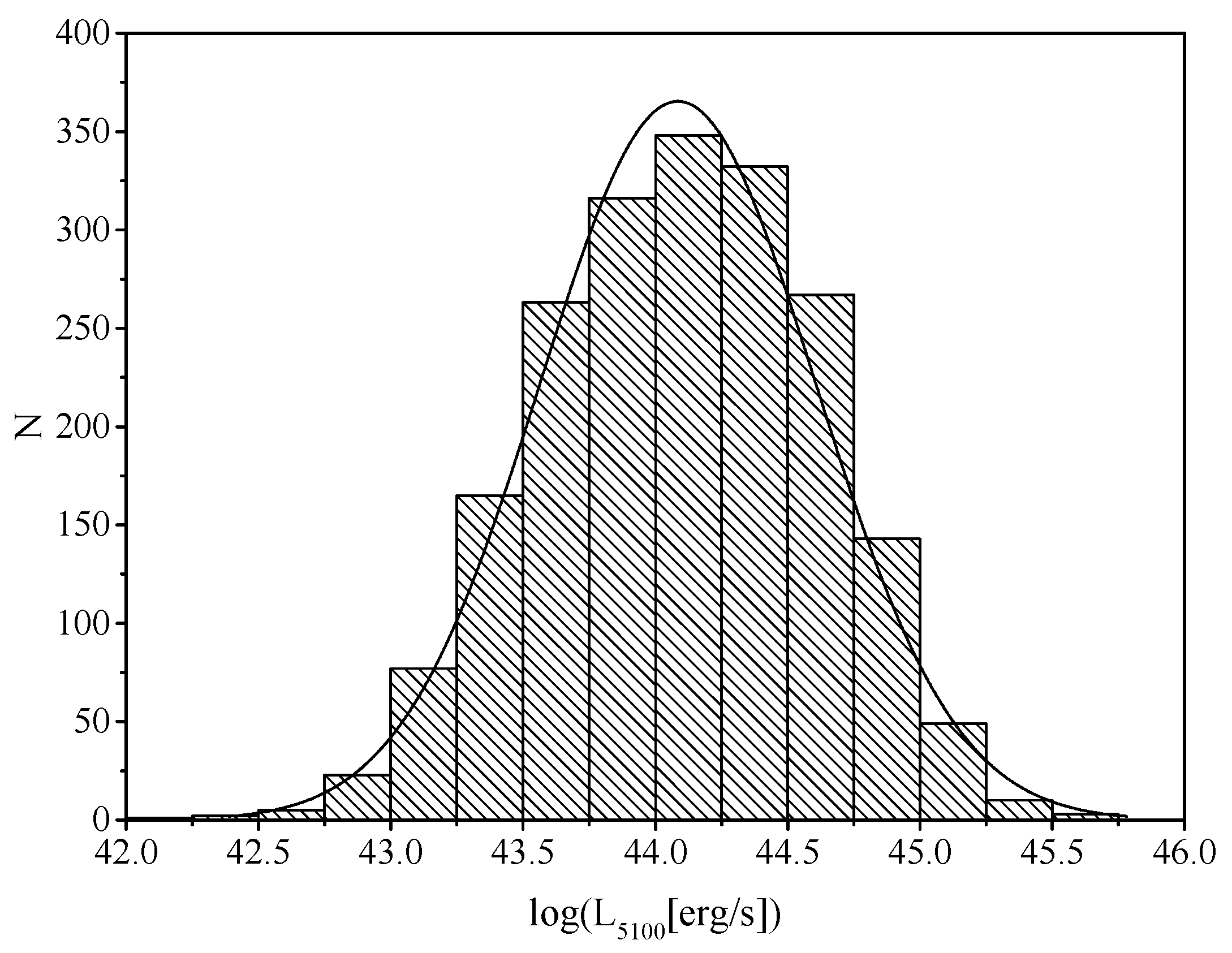
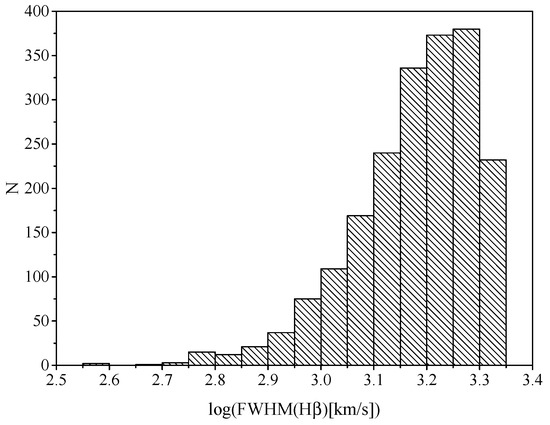
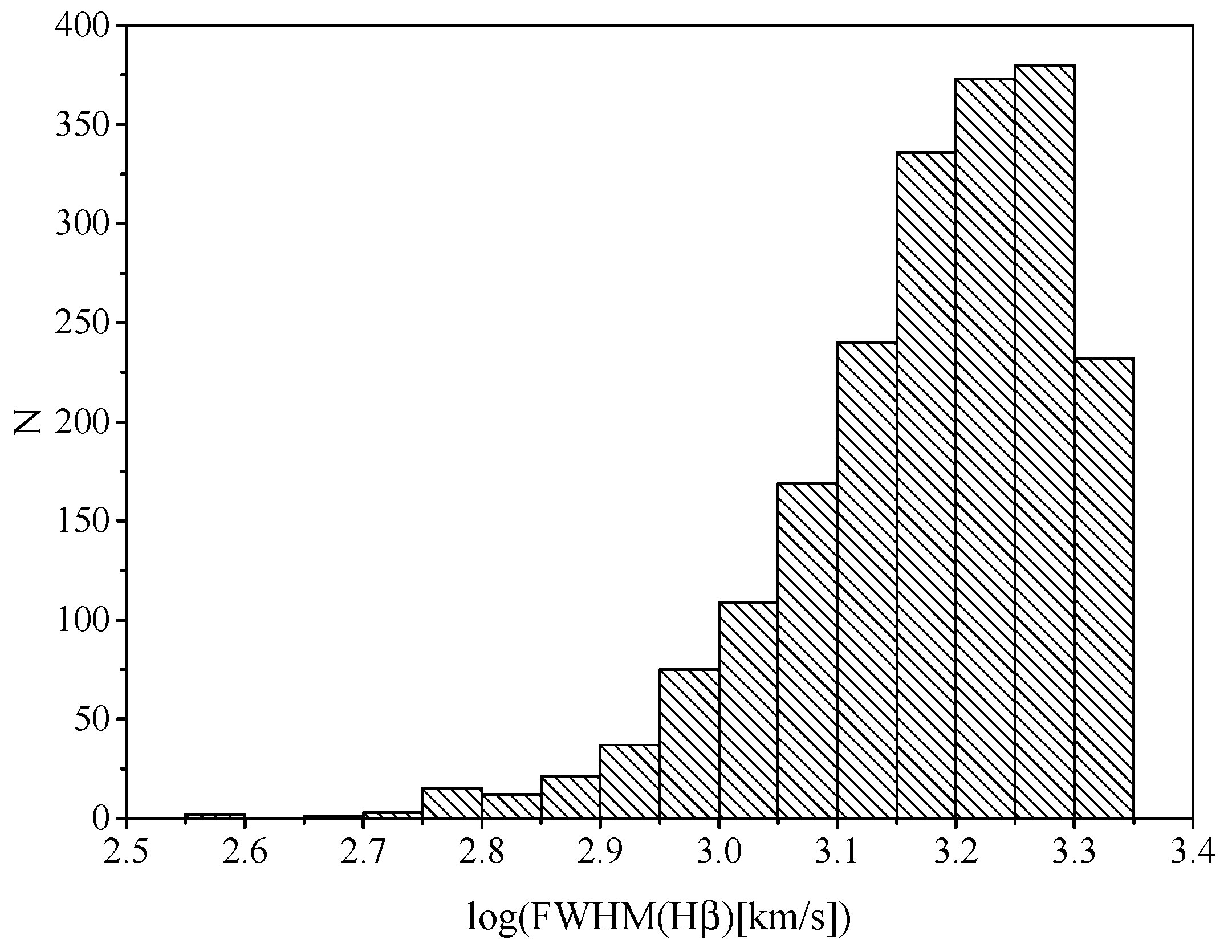
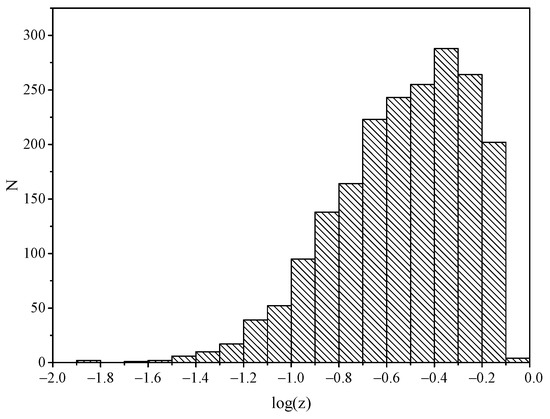
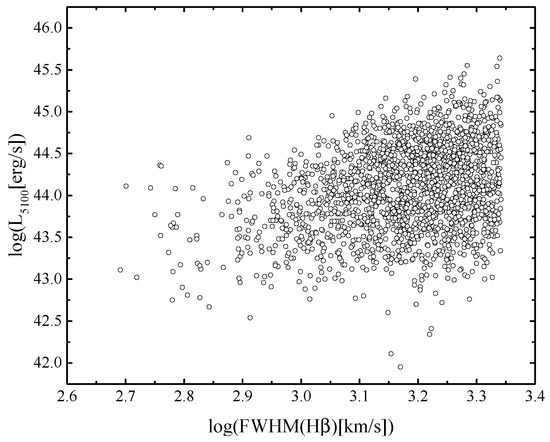
First, we examine the data from the catalogue. Figure 1, Figure 2 and Figure 3 show the histograms with the distributions of , (H) and the cosmological redshift z. We can see that the 5100 Å that is, the luminosity, has a log-normal distribution with its peak at . Concerning (H), it can be seen that the right-hand side of the distribution ends quite abruptly at log((H)[km/s]) . This can be explained by the fact that AGNs in NLS1-type objects are characterized by a lower rotation speed of the accretion disk compared to, for example, Seyfert 1 galaxies, as well as by the method used to process the data during the creation of the catalogue [15]. The cosmological redshift distribution may be caused by the spatial distribution of objects (for close objects) and the selection effect (for distant objects). Figure 4 shows the dependence of the luminosity at 5100 Å on (H). The Spearman correlation coefficient for this parameter is 0.28, and the correlation is significant at the 0.05 level. Thus, we can only note a weak correlation between the parameters, which is as expected.
Figure 1.
The distribution of the luminosity at 5100 Å (with a fitted log-normal distribution curve) from the initial set.
Figure 2.
The distribution of (H) from the initial set.
Figure 3.
The distribution of the cosmological redshift z from the initial set.
Figure 4.
The dependence of (H) on the luminosity at 5100 Å from the initial set.
3. Estimation of Spin Values
The spin (dimensionless angular momentum) of an SMBH is defined as , where J is the angular momentum, is the mass of the black hole, and c is the speed of light. We can obtain the spin via the radiative efficiency (where is the bolometric luminosity of AGN and is the accretion rate), which depends strongly on the spin of the SMBH [10,11,12,13].
There are several models [16,17,18,19,20] connecting the radiative efficiency with the physical parameters of AGNs, which can be obtained from observations. In our previous work [21], we concluded that the model from Du et al. [18] provides the most consistent results; therefore, we decided to use it in this work.
According to Du et al. [18]:
where , , and i is the angle between the line of sight and the axis of the accretion disk. Because the angles for most objects are unknown, and because we have no reason to assume the presence of any preferred direction in the orientation of galaxies, the generally accepted method is to assume some average angle. As there is insufficient statistical data on the preferred angle for NLS1, we assume , . Although this method is not perfect, there are a number of arguments in its favor; for example, existing angle measurements (including those made with the participation of the authors of the present work [22]) show that for most objects of the Seyfert 1 type (including NLS1) they usually range from 20 to 60 degrees, and for a noticeable number of objects the angle is close to 45 degrees (see, for example, Afanasiev et al. [22], Marin [23]), which reduces the possible size of errors. Furthermore, in our calculations we use the Eddington ratio , where is the Eddington luminosity.
In order to obtain the bolometric luminosity from , we need to use bolometric correction. Various authors provide different bolometric corrections that can differ by up to two to three times [24,25,26,27,28]. We tested several different methods of bolometric correction, and for consistency decided to use the same method we used in Piotrovich et al. [21], namely, the approach from Richards et al. [24]: .
We obtained the masses of the SMBHs using the method from Vestergaard and Peterson [29]:
The radiative efficiency for this type of object must satisfy the condition [30]. In addition, because the method from [18] uses the Shakura–Sunyaev accretion disk model [31], the Eddington ratio must be in the range [32]. Thus, from 2005 initial objects, we obtained 474 objects satisfying these conditions. The spin a was determined numerically using the expression from Bardeen et al. [10]:
where is the radius of the innermost stable circular orbit of the SMBH and
In the expression for , the sign ”−” is used to indicate the prograde (), while the sign ”+” indicates the retrograde rotation ().
The results of our calculations are presented in Tables Table A1, Table A2, Table A3, Table A4, Table A5, Table A6, Table A7 and Table A8. We must emphasize that the obtained spin values are of course not exact, and can only be considered as estimates intended for statistical analysis. Nevertheless, in the absence of other spin data, they can be used as a first approximation.
4. Analysis of Objects Using Estimated Spin Values
First, we consider the statistical properties of the objects using the estimated spin values (the new set) as compared to the initial set.
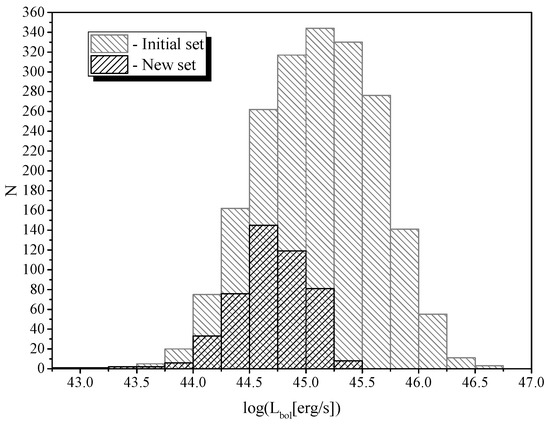
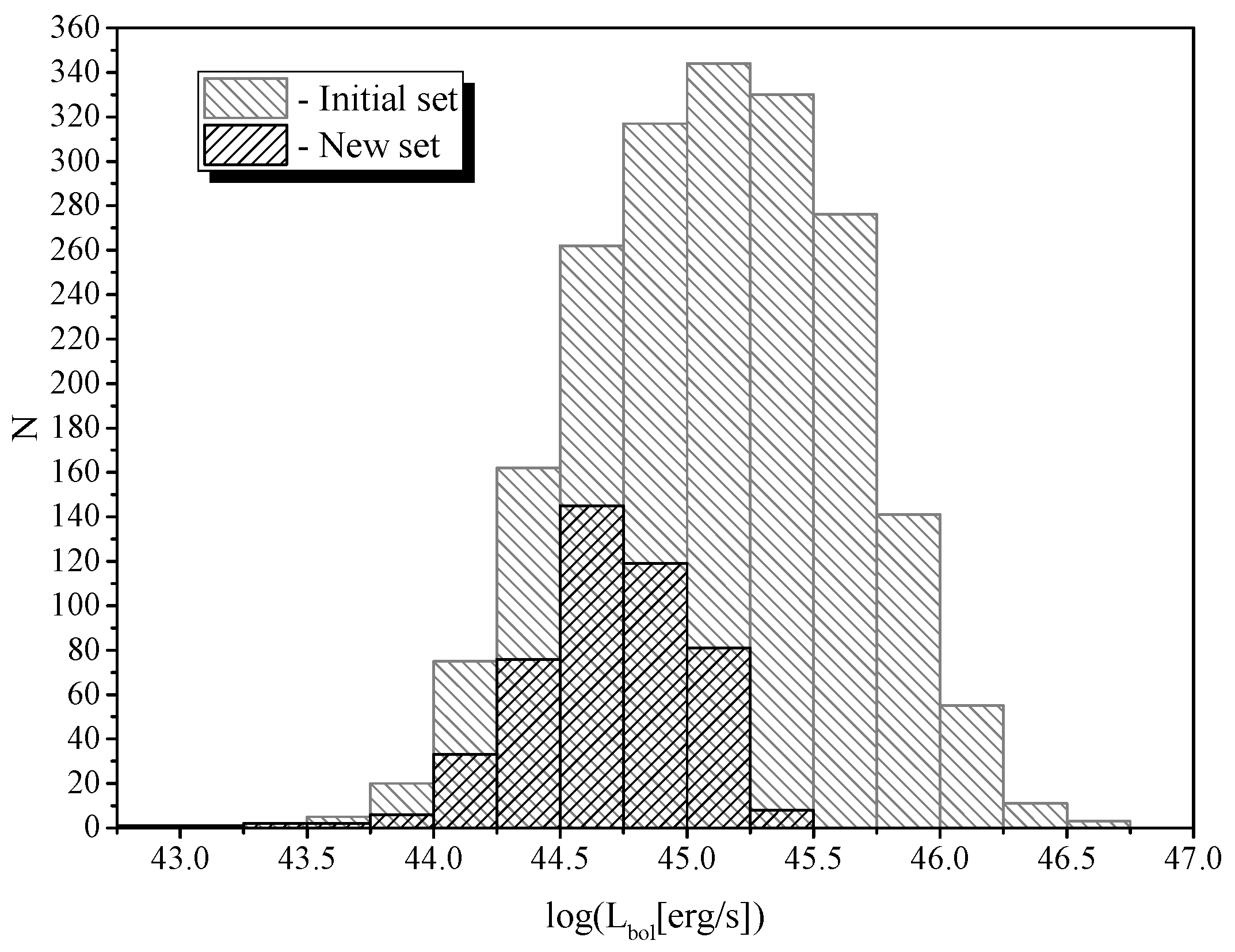
Figure 5 shows the distribution of the bolometric luminosity for both sets. It can be seen that both the new set and the initial one have normal distributions; however, in the new set the peak is shifted to the left by an order of magnitude. This can be explained by the fact that we estimated spins only for those objects with Eddington ratios .
Figure 5.
The distribution of the bolometric luminosity for the initial and new sets.
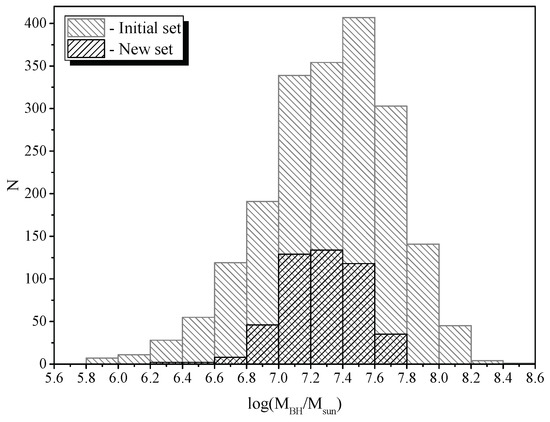
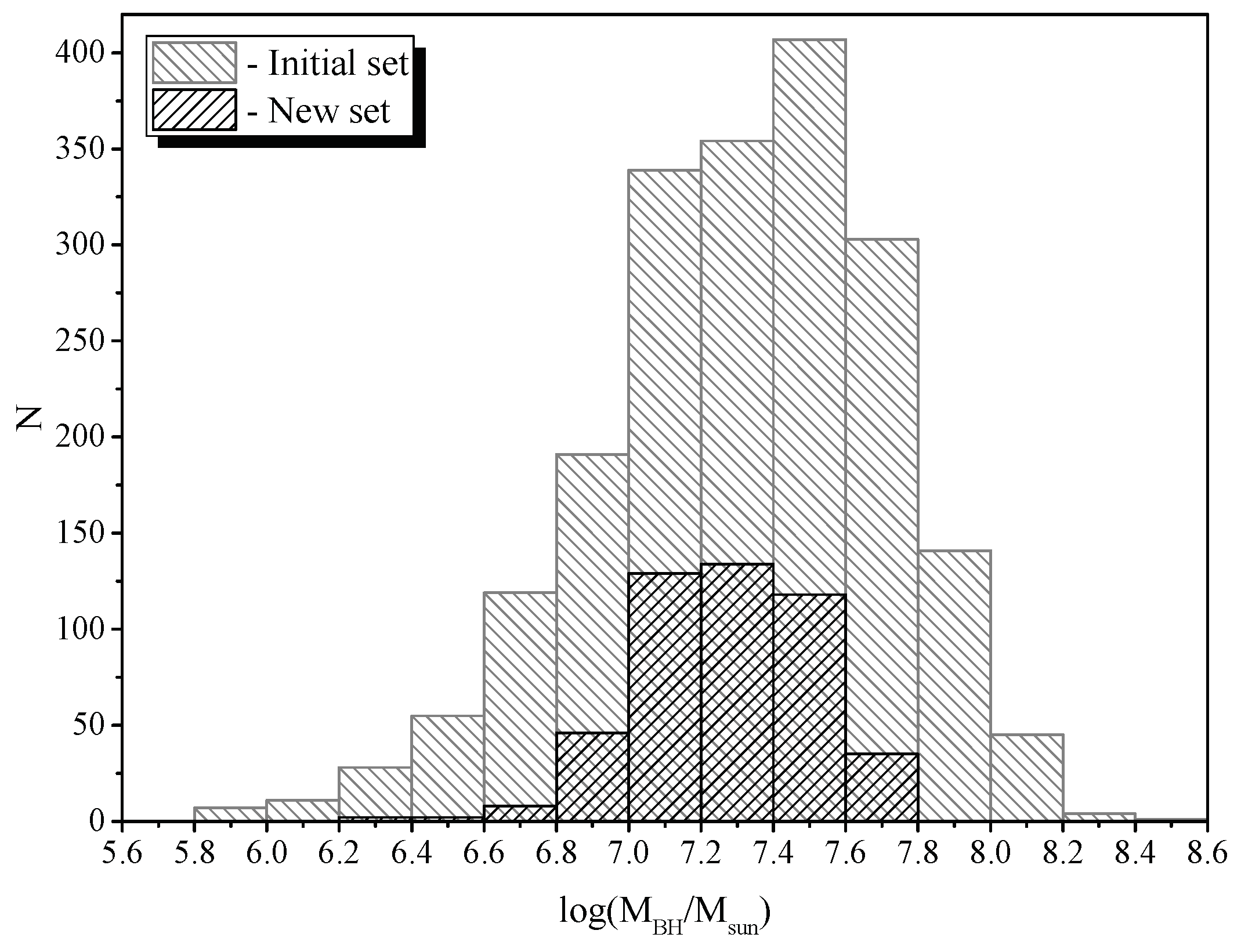
Figure 6 demonstrates the distribution of the SMBH mass for both sets. In general, the distributions have a similar form.
Figure 6.
The distribution of the SMBH mass for the initial and new sets.
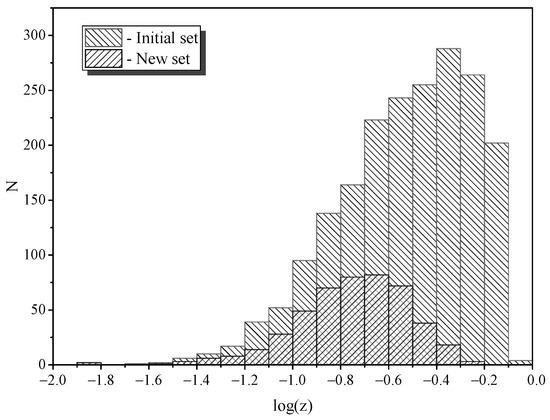
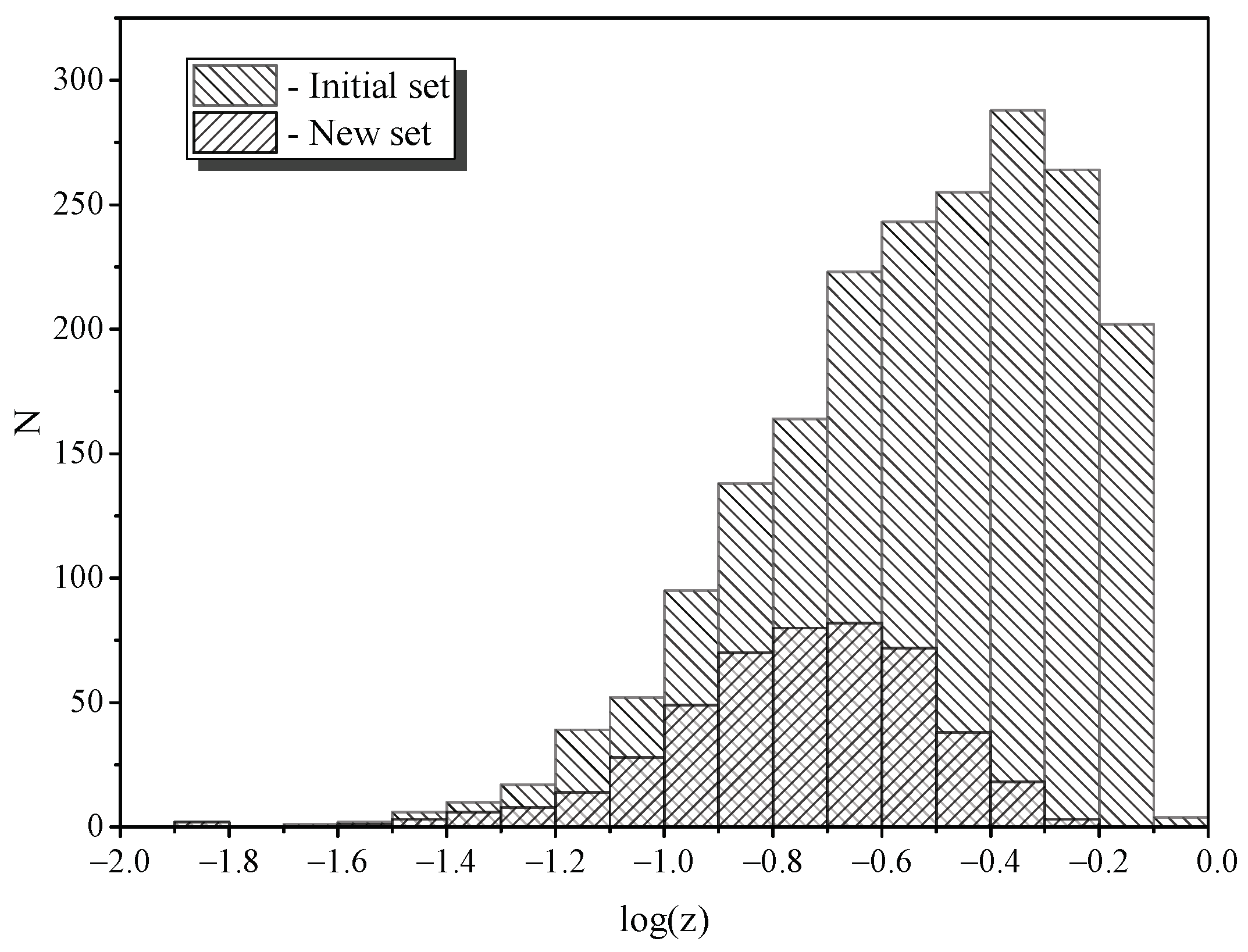
Figure 7 shows the distribution of cosmological redshift for both sets. While this distribution again has similar form, its peak is shifted towards closer objects. This occurs because the new set consists of predominantly fainter objects that we are usually only able to detect at closer distances (selection effect).
Figure 7.
The distribution of the cosmological redshift for the initial and new sets.
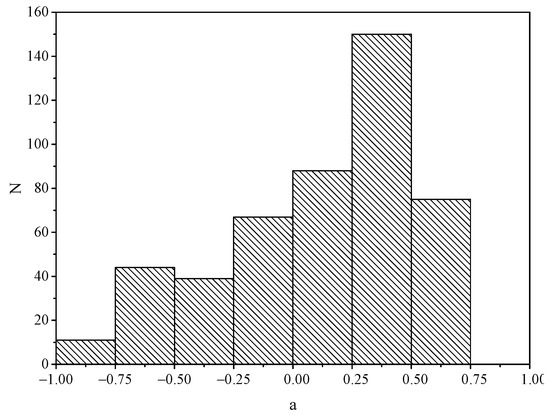
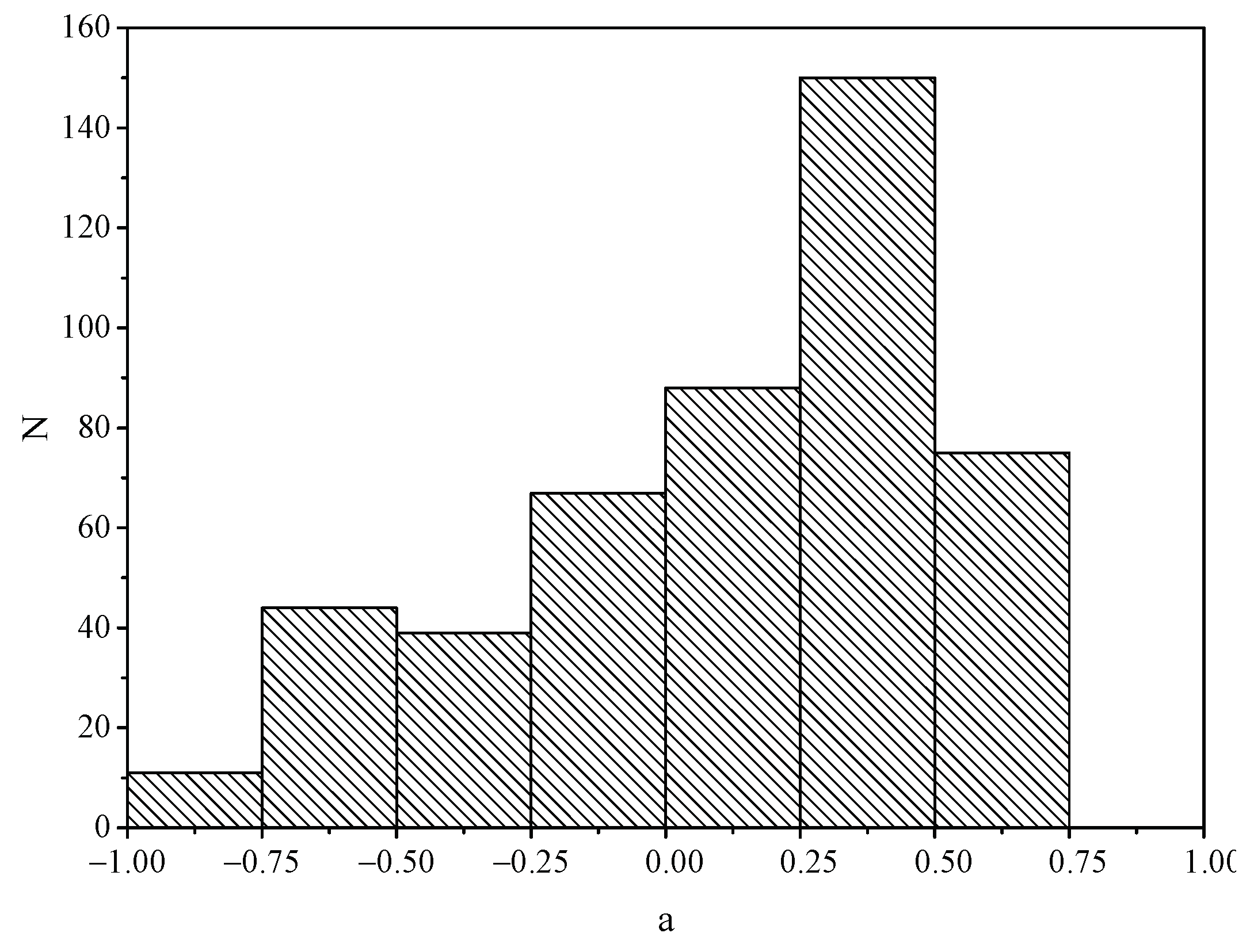
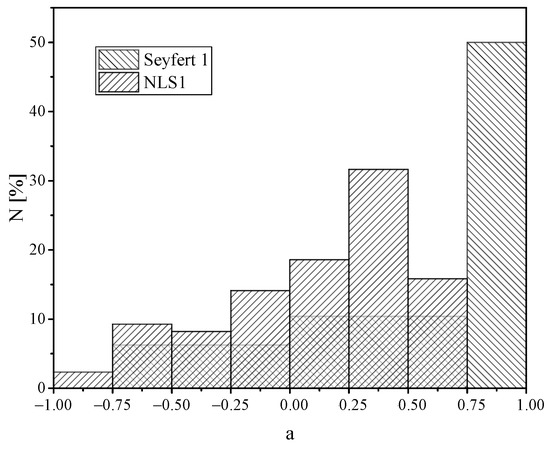
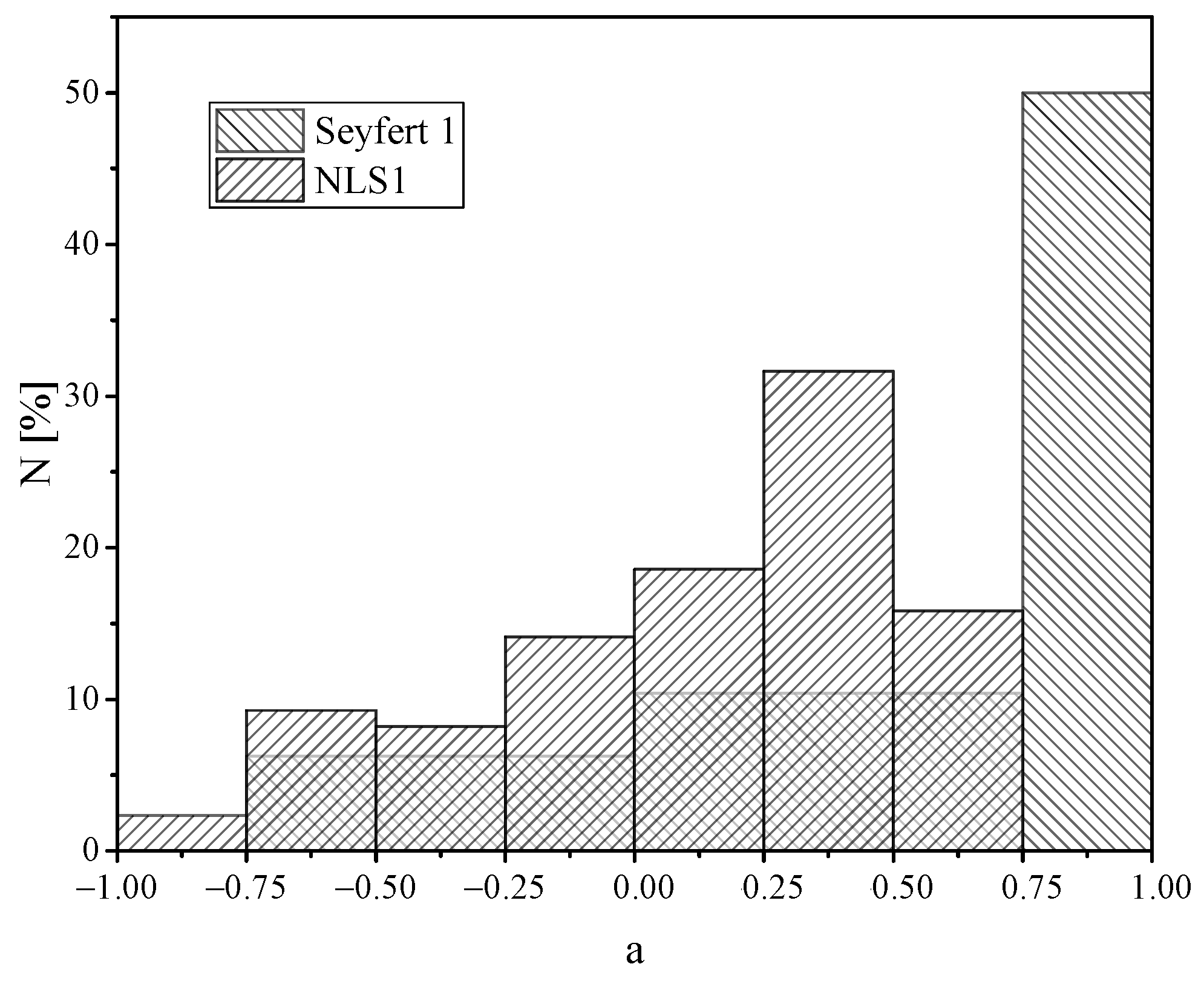
Figure 8 shows the distribution of the estimated spin values for the 474 objects. The distribution has a pronounced peak at and terminates at . This is very different from the typical distribution for Seyfert 1-type objects (see Figure 9), for which the distribution usually has its peak at and up to 50% of objects have spin values [19,21,22]. This result is generally consistent with the results of Liu et al. [33] obtained via X-ray observations.
Figure 8.
The distribution of the estimated spin values a.
Figure 9.
The normalized distributions of the estimated spins for Seyfert 1 [21] and NLS1 (this work).
It is interesting to compare our results with the distribution of spins estimated in Chen et al. [34] (see Figure 6 in their work) for various types of active galaxies. It can be observed that our distribution of spin values for NLS1 looks very similar to their distribution for radio galaxies, which may indicate that these two types of objects are closely related [35,36]. In addition, it can be seen that our spin distribution for Seyfert 1-type galaxies resembles their distribution for flat-spectrum radio quasars (FSRQ), which in turn could mean that Seyfert 1 galaxies and FSRQs are related (for example, it may mean that these are objects of the same type observed from different directions).
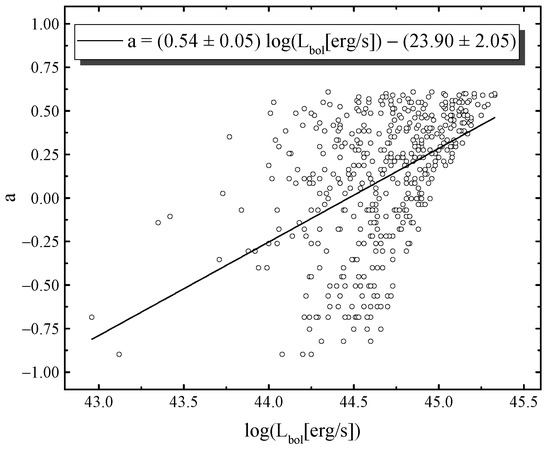
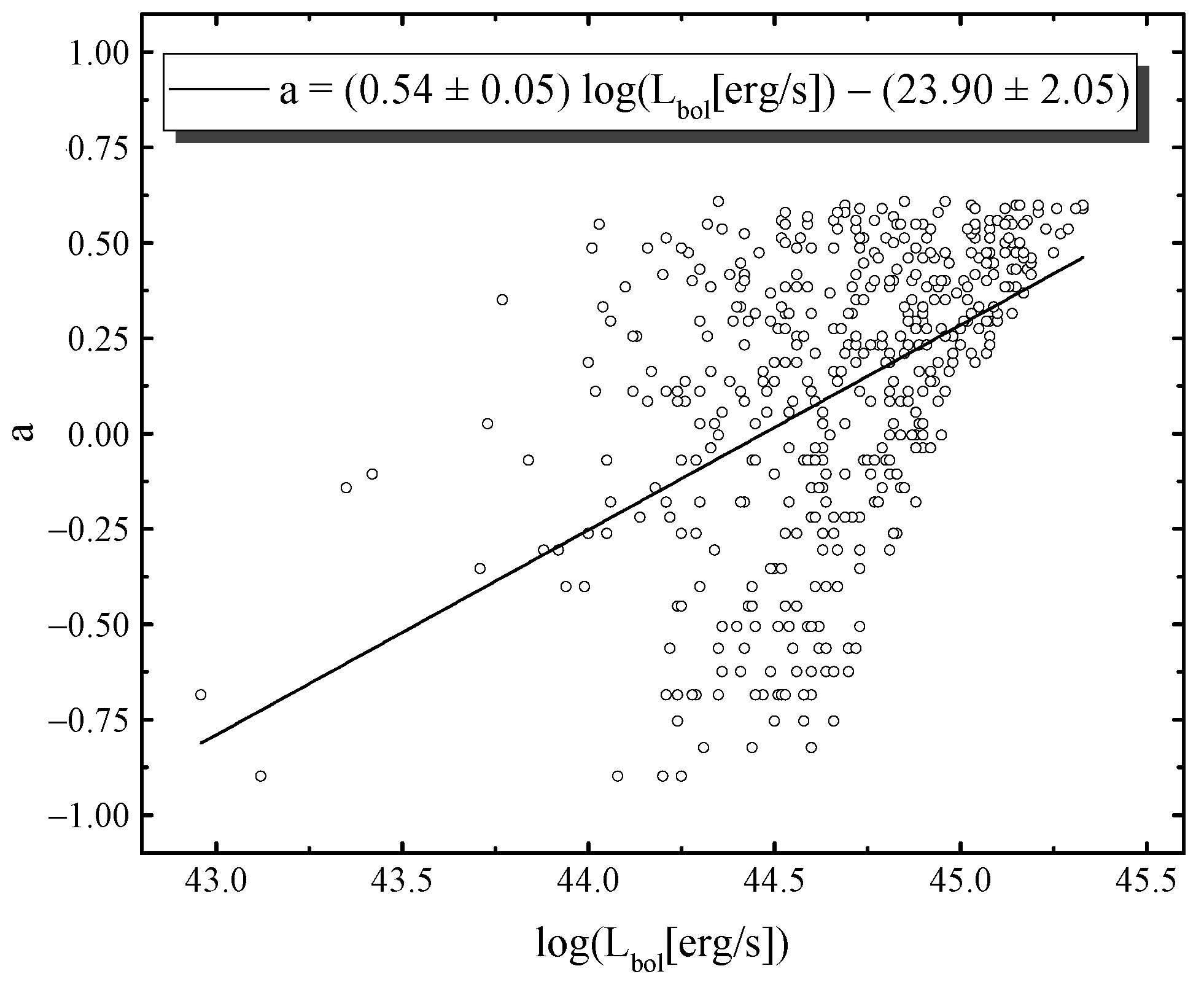
Figure 10 shows the dependence of the estimated spin values a on the bolometric luminosity . The linear fitting provides us with the following expression:
Figure 10.
The dependence of the estimated spin values a on the bolometric luminosity .
In our previous work in Piotrovich et al. [21], the following was obtained for Seyfert 1 galaxies: . Thus, we can conclude that the dependence of the spin on the bolometric luminosity for the NLS1 type is stronger than for Seyfert 1 galaxies.
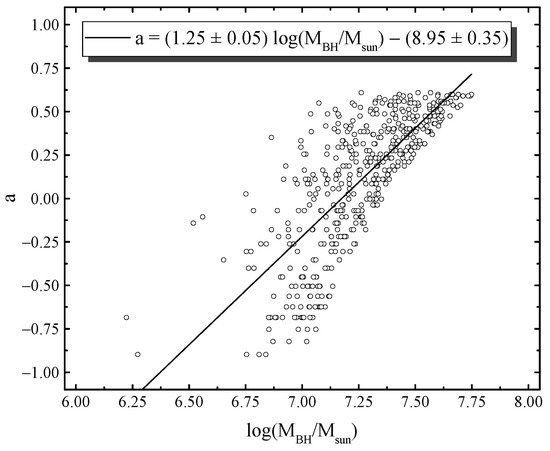
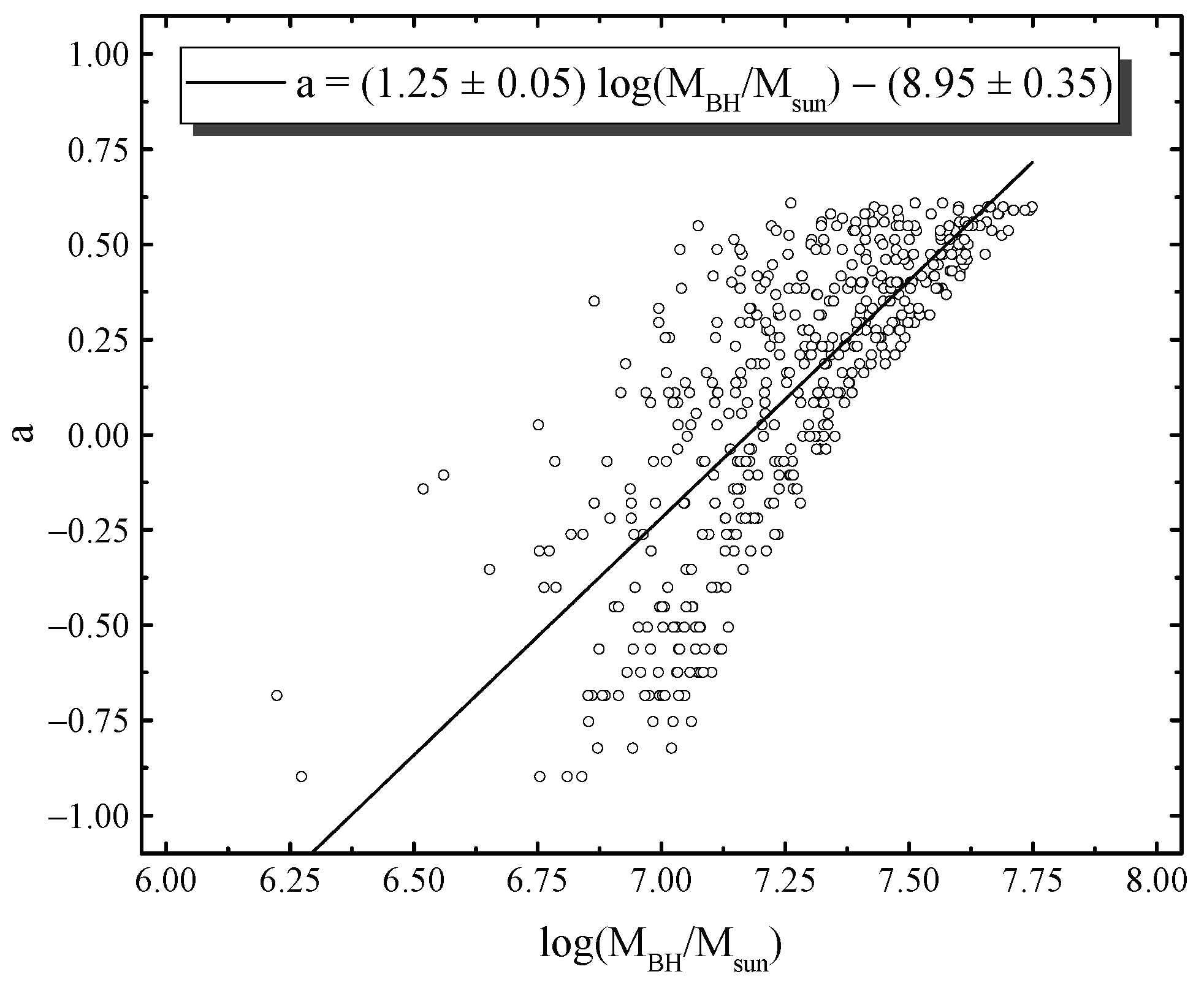
Figure 11 shows the dependence of the estimated spin values a on the mass of the SMBH . The linear fitting provides us with the following expression:
Figure 11.
The dependence of the estimated spin values a on the SMBHs masses .
In Piotrovich et al. [21], we obtained the following for Seyfert 1 galaxies: . Thus, we can conclude that the dependence of the spin on the SMBH mass is stronger for the NLS1 type than for Seyfert 1 galaxies.
Together with the low average spin, this could mean that at early stages of evolution NLS1 either have low accretion rates or chaotic accretion, while at later stages (which we are studying in this work) they have standard disk accretion, which very effectively increases the spin value.
5. Conclusions
In this work, we have estimated spin values of the SMBHs in AGNs for 474 NLS1-type galaxies, assuming the inclination angle between the line of sight and the axis of the accretion disk . The distribution of the estimated spin values differs significantly from the distribution of the spins for Seyfert 1-type galaxies. On average, the spin values are smaller. The distribution has a peak at , and there are no objects with spins . This is generally consistent with the results of Liu et al. [33]. Our distribution of spin values for NLS1 looks very similar to the distribution for radio galaxies from Chen et al. [34], which may indicate that these two types of objects are closely related [35,36]. In addition, it can be seen that our spin distribution for Seyfert 1-type galaxies in our previous works resembles the distribution from Chen et al. [34] for flat-spectrum radio quasars (FSRQ), which in turn could mean that Seyfert 1 galaxies and FSRQs are related (for example, it may mean that these are objects of the same type observed from different directions). The dependencies of spin on the bolometric luminosity (Equation (5)) and SMBH mass (Equation (6)) are quite different from the Seyfert 1 case. Specifically, the dependencies of the spin on these parameters is two to three times stronger, which could mean that in the early stages of evolution the NLS1 type either have a low accretion rate or chaotic accretion, while at later stages they have standard disk accretion, which very effectively increases the spin value.
Author Contributions
Conceptualization, M.P.; methodology, M.P.; software, M.P.; validation, S.B. and T.N.; formal analysis, M.P.; investigation, M.P., S.B. and T.N.; resources, M.P., S.B. and T.N.; data curation, S.B. and T.N.; writing—original draft preparation, M.P.; writing—review and editing, M.P.; visualization, M.P.; supervision, M.P.; project administration, M.P. All authors have read and agreed to the published version of the manuscript.
Funding
This research received no external funding.
Institutional Review Board Statement
Not applicable.
Informed Consent Statement
Not applicable.
Data Availability Statement
The data underlying this article are available in the article.
Conflicts of Interest
The authors declare no conflict of interest.
Appendix A
Table A1.
All objects with their estimated spin values. Part 1 of 8. Columns indicate: (1) object name, (2) cosmological redshift, (3) bolometric luminosity, (4) mass of SMBH, and (5) estimated spin value.
Table A2.
All objects with their estimated spin values. Part 2 of 8.
Table A3.
All objects with their estimated spin values. Part 3 of 8.
Table A4.
All objects with their estimated spin values. Part 4 of 8.
Table A5.
All objects with their estimated spin values. Part 5 of 8.
Table A6.
All objects with their estimated spin values. Part 6 of 8.
Table A7.
All objects with their estimated spin values. Part 7 of 8.
Table A8.
All objects with their estimated spin values. Part 8 of 8.
References
- Netzer, H. Revisiting the Unified Model of Active Galactic Nuclei. Annu. Rev. Astron. Astrophys. 2015, 53, 365–408. [Google Scholar] [CrossRef] [Scilit]
- Robson, I. Active Galactic Nuclei; Wiley: New York, NY, USA, 1996. [Google Scholar]
- Antonucci, R. Unified models for active galactic nuclei and quasars. Annu. Rev. Astron. Astrophys. 1993, 31, 473–521. [Google Scholar] [CrossRef]
- Osterbrock, D.E.; Pogge, R.W. The spectra of narrow-line Seyfert 1 galaxies. Astrophys. J. 1985, 297, 166–176. [Google Scholar] [CrossRef] [Scilit]
- Goodrich, R.W. Spectropolarimetry of “Narrow-Line” Seyfert 1 Galaxies. Astrophys. J. 1989, 342, 224. [Google Scholar] [CrossRef] [Scilit]
- Leighly, K.M. A Comprehensive Spectral and Variability Study of Narrow-Line Seyfert 1 Galaxies Observed by ASCA. II. Spectral Analysis and Correlations. Astrophys. J. Suppl. 1999, 125, 317–348. [Google Scholar] [CrossRef] [Scilit]
- Mathur, S. Narrow-line Seyfert 1 galaxies and the evolution of galaxies and active galaxies. Mon. Not. R. Astron. Soc. 2000, 314, L17–L20. [Google Scholar] [CrossRef] [Scilit]
- Boller, T.; Brandt, W.N.; Fink, H. Soft X-ray properties of narrow-line Seyfert 1 galaxies. Astron. Astrophys. 1996, 305, 53. [Google Scholar] [CrossRef] [Scilit]
- Moran, E.C.; Halpern, J.P.; Helfand, D.J. Classification of IRAS-selected X-ray Galaxies in the ROSAT All-Sky Survey. Astrophys. J. Suppl. 1996, 106, 341. [Google Scholar] [CrossRef] [Scilit]
- Bardeen, J.M.; Press, W.H.; Teukolsky, S.A. Rotating Black Holes: Locally Nonrotating Frames, Energy Extraction, and Scalar Synchrotron Radiation. Astrophys. J. 1972, 178, 347–370. [Google Scholar] [CrossRef] [Scilit]
- Novikov, I.D.; Thorne, K.S. Astrophysics of black holes. In Black Holes (Les Astres Occlus); Dewitt, C., Dewitt, B.S., Eds.; Gordon and Breach: New York, NY, USA, 1973; pp. 343–450. [Google Scholar]
- Krolik, J.H. Making black holes visible: Accretion, radiation, and jets. In Proceedings of the 2007 STScI Spring Symposium on Black Holes, Baltimore, MD, USA, 23–26 April 2007; pp. 309–321. [Google Scholar]
- Krolik, J.H.; Hawley, J.F.; Hirose, S. The Relationship between Accretion Disks and Jets. In Revista Mexicana de Astronomia y Astrofisica; Revista Mexicana de Astronomia y Astrofisica Conference Series; Instituto de Astronomía Distrito Federal: Ciudad de México, Mexico, 2007; Volume 27, pp. 1–7. [Google Scholar]
- Zhou, H.; Wang, T.; Yuan, W.; Lu, H.; Dong, X.; Wang, J.; Lu, Y. VizieR Online Data Catalog: Narrow line Seyfert 1 galaxies from SDSS-DR3 (Zhou+, 2006). VizieR Online Data Cat. 2017. [Google Scholar] [CrossRef]
- Zhou, H.; Wang, T.; Yuan, W.; Lu, H.; Dong, X.; Wang, J.; Lu, Y. A Comprehensive Study of 2000 Narrow Line Seyfert 1 Galaxies from the Sloan Digital Sky Survey. I. The Sample. Astrophys. J. Suppl. 2006, 166, 128–153. [Google Scholar] [CrossRef] [Scilit]
- Davis, S.W.; Laor, A. The Radiative Efficiency of Accretion Flows in Individual Active Galactic Nuclei. Astrophys. J. 2011, 728, 98. [Google Scholar] [CrossRef] [Scilit]
- Raimundo, S.I.; Fabian, A.C.; Vasudevan, R.V.; Gandhi, P.; Wu, J. Can we measure the accretion efficiency of active galactic nuclei? Mon. Not. R. Astron. Soc. 2012, 419, 2529–2544. [Google Scholar] [CrossRef] [Scilit]
- Du, P.; Hu, C.; Lu, K.X.; Wang, F.; Qiu, J.; Li, Y.R.; Bai, J.M.; Kaspi, S.; Netzer, H.; Wang, J.M.; et al. Supermassive Black Holes with High Accretion Rates in Active Galactic Nuclei. I. First Results from a New Reverberation Mapping Campaign. Astrophys. J. 2014, 782, 45. [Google Scholar] [CrossRef] [Scilit]
- Trakhtenbrot, B. The Most Massive Active Black Holes at z ∼ 1.5–3.5 have High Spins and Radiative Efficiencies. Astrophys. J. Lett. 2014, 789, L9. [Google Scholar] [CrossRef] [Scilit]
- Lawther, D.; Vestergaard, M.; Raimundo, S.; Grupe, D. A catalogue of optical to X-ray spectral energy distributions of z ≈ 2 quasars observed with Swift—I. First results. Mon. Not. R. Astron. Soc. 2017, 467, 4674–4710. [Google Scholar] [CrossRef] [Scilit]
- Piotrovich, M.Y.; Buliga, S.D.; Natsvlishvili, T.M. Determination of supermassive black hole spins in local active galactic nuclei. Astron. Nachr. 2022, 343, e10020. [Google Scholar] [CrossRef] [Scilit]
- Afanasiev, V.L.; Gnedin, Y.N.; Piotrovich, M.Y.; Natsvlishvili, T.M.; Buliga, S.D. Determination of Supermassive Black Hole Spins Based on the Standard Shakura-Sunyaev Accretion Disk Model and Polarimetric Observations. Astron. Lett. 2018, 44, 362–369. [Google Scholar] [CrossRef] [Scilit]
- Marin, F. Are there reliable methods to estimate the nuclear orientation of Seyfert galaxies? Mon. Not. R. Astron. Soc. 2016, 460, 3679–3705. [Google Scholar] [CrossRef] [Scilit]
- Richards, G.T.; Lacy, M.; Storrie-Lombardi, L.J.; Hall, P.B.; Gallagher, S.C.; Hines, D.C.; Fan, X.; Papovich, C.; Vanden Berk, D.E.; Trammell, G.B.; et al. Spectral Energy Distributions and Multiwavelength Selection of Type 1 Quasars. Astrophys. J. Suppl. 2006, 166, 470–497. [Google Scholar] [CrossRef] [Scilit]
- Hopkins, P.F.; Richards, G.T.; Hernquist, L. An Observational Determination of the Bolometric Quasar Luminosity Function. Astrophys. J. 2007, 654, 731–753. [Google Scholar] [CrossRef] [Scilit]
- Cheng, H.; Yuan, W.; Liu, H.Y.; Breeveld, A.A.; Jin, C.; Liu, B. Modelling accretion disc emission with generalized temperature profile and its effect on AGN spectral energy distribution. Mon. Not. R. Astron. Soc. 2019, 487, 3884–3903. [Google Scholar] [CrossRef] [Scilit]
- Netzer, H. Bolometric correction factors for active galactic nuclei. Mon. Not. R. Astron. Soc. 2019, 488, 5185–5191. [Google Scholar] [CrossRef] [Scilit]
- Duras, F.; Bongiorno, A.; Ricci, F.; Piconcelli, E.; Shankar, F.; Lusso, E.; Bianchi, S.; Fiore, F.; Maiolino, R.; Marconi, A.; et al. Universal bolometric corrections for active galactic nuclei over seven luminosity decades. Astron. Astrophys. 2020, 636, A73. [Google Scholar] [CrossRef] [Scilit]
- Vestergaard, M.; Peterson, B.M. Determining Central Black Hole Masses in Distant Active Galaxies and Quasars. II. Improved Optical and UV Scaling Relationships. Astrophys. J. 2006, 641, 689–709. [Google Scholar] [CrossRef] [Scilit]
- Thorne, K.S. Disk-Accretion onto a Black Hole. II. Evolution of the Hole. Astrophys. J. 1974, 191, 507–520. [Google Scholar] [CrossRef] [Scilit]
- Shakura, N.I.; Sunyaev, R.A. Black holes in binary systems. Observational appearance. Astron. Astrophys. 1973, 24, 337–355. [Google Scholar]
- Netzer, H.; Trakhtenbrot, B. Bolometric luminosity black hole growth time and slim accretion discs in active galactic nuclei. Mon. Not. R. Astron. Soc. 2014, 438, 672–679. [Google Scholar] [CrossRef] [Scilit]
- Liu, Z.; Yuan, W.; Lu, Y.; Zhou, X. Relativistic Fe Kα line revealed in the composite X-ray spectrum of narrow-line Seyfert 1 galaxies—Do their black holes have averagely low or intermediate spins? Mon. Not. R. Astron. Soc. 2015, 447, 517–529. [Google Scholar] [CrossRef] [Scilit]
- Chen, Y.; Gu, Q.; Fan, J.; Yu, X.; Ding, N.; Xiong, D.; Guo, X. Curvature of the Spectral Energy Distribution, Compton Dominance, and Synchrotron Peak Frequency in Jetted Active Galactic Nuclei. Astrophys. J. 2023, 944, 157. [Google Scholar] [CrossRef] [Scilit]
- Yuan, W.; Zhou, H.Y.; Komossa, S.; Dong, X.B.; Wang, T.G.; Lu, H.L.; Bai, J.M. A Population of Radio-Loud Narrow-Line Seyfert 1 Galaxies with Blazar-Like Properties? Astrophys. J. 2008, 685, 801–827. [Google Scholar] [CrossRef] [Scilit]
- Berton, M.; Congiu, E.; Järvelä, E.; Antonucci, R.; Kharb, P.; Lister, M.L.; Tarchi, A.; Caccianiga, A.; Chen, S.; Foschini, L.; et al. Radio-emitting narrow-line Seyfert 1 galaxies in the JVLA perspective. Astron. Astrophys. 2018, 614, A87. [Google Scholar] [CrossRef] [Scilit]
Disclaimer/Publisher’s Note: The statements, opinions and data contained in all publications are solely those of the individual author(s) and contributor(s) and not of MDPI and/or the editor(s). MDPI and/or the editor(s) disclaim responsibility for any injury to people or property resulting from any ideas, methods, instructions or products referred to in the content. |
© 2023 by the authors. Licensee MDPI, Basel, Switzerland. This article is an open access article distributed under the terms and conditions of the Creative Commons Attribution (CC BY) license (https://creativecommons.org/licenses/by/4.0/).