


Abstract
The construction of complex systems is of great significance in enhancing national competitiveness and promoting social development. However, the academic community currently lacks a systematic understanding of its sustainable innovation mechanism. This study selected the China Manned Space Engineering Application System (CMSEAS) as a representative case of a complex system. Research data were collected by a multi-method approach including document literature, internal data, field research, and interviews. Through the lens of grounded theory, the study delves into how the complex system achieves local innovation and how to maintain the sustainability of innovation. Findings indicate that, firstly, late-mover advantage and spiritual strength jointly contribute to the knowledge accumulation of national major task-oriented complex systems, and this knowledge accumulation significantly improves the innovation ability of complex systems. Secondly, while emphasizing the enhancement of innovation capabilities, it is imperative for complex systems to implement holistic risk management, which is an important guarantee for successfully achieving the goal. Thirdly, in the context of market failure, the whole nation system provides strong support for the national major task-oriented complex system. The overall institution and overall capacity constitute the backbone for ensuring sustainable innovation.
1. Introduction
In the context of substantial societal transformations, nations are increasingly attentive to the growth of the technology sector, vigorously promoting the establishment of complex systems. In fact, complex systems often serve the major strategic needs of the country, emphasizing the breakthroughs in core technologies and major scientific and technological fields. This represents a qualitative improvement in technological strength. In recent years, numerous significant achievements have been made globally in the development of complex systems. These achievements have profoundly transformed lifestyles, taking on an increasingly critical role in economic society and evolving into a powerful tool for global competition. Furthermore, they have effectively spurred social and economic growth, thereby attracting the attention of an escalating number of scholars.
Complex systems often involve numerous stakeholders, high investments, significant risks, and may span several years, having a profound impact on society. Notably, the inherent complexity of these systems implies that their construction is not an overnight endeavor. The role of innovation in driving the evolution of complex systems cannot be overlooked. In the practice of complex systems, innovation does not typically manifest as a singular breakthrough but rather as an ongoing process that can span a decade or more. In other words, the sustainable innovation capability within these systems is of paramount importance. A series of studies have been conducted by scholars exploring aspects such as innovative ecosystems [1,2], institutional innovation [3,4], independent innovation [5,6], and collaborative innovation [7,8]. These studies can often form different perspectives on sustainable innovation. Additionally, factors such as government support, digital transformation, and knowledge flow are also important influences on the sustainable innovation of complex systems. However, although these factors are all significant, there are relatively few systematic studies that truly explore how to achieve sustainable innovation in complex systems. Therefore, it is of particular importance to comprehensively analyze the mechanisms of sustainable innovation in the practice of complex systems.
In addition, according to existing research, the case study is a common method in the field of complex systems. Relatively successful case studies cover fields such as marine engineering equipment [9], railway engineering [10,11], bridge construction [12,13,14], and aerospace engineering [15]. In fact, different types of complex systems often exhibit certain differences. For example, cross-border mergers and acquisitions in the global competitive market mark the starting point of CIMC Offshore’s entry into the offshore equipment market [9], while large-scale technology imports initiated the development of China’s high-speed rail system [16]. However, for a complex system like China Manned Space Engineering (CMSE), it is subject to limited market regulation, faces foreign technological blockades, and entails substantial costs. This type of complex system, led by the state and funded by the national treasury, is driven by major national tasks. It plays a crucial role in safeguarding national strategic interests, conducting science and technology diplomacy, and enhancing international influence. In fact, although the academic community has also carried out valuable management research on aerospace-type cases, these studies generally adopt qualitative research methods, and the doubts about their subjectivity cannot be ignored. In contrast, grounded theory is hailed as the most scientific qualitative research method, but there are relatively few aerospace-type case studies using grounded theory. This study uses grounded theory to analyze the case of a China Manned Space Engineering application system (CMSEAS) in aerospace engineering to fill this gap.
Furthermore, compared with general space engineering, CMSEAS also has specific characteristics. Specifically, China’s space engineering practices often involve using mature but not outdated technologies, and new technologies are cautiously introduced, with the proportion of new technologies rarely exceeding 30%. This ensures better compliance with engineering requirements and the completion of tasks under strict engineering constraints. However, CMSEAS is positioned as an “experimental application”, aiming to carry out application tasks to fill in the gaps and achieve scientific goals (i.e., engineering goals). This requires the extensive use of new technologies, techniques, and methods in practice, which increases the uncertainty associated with the engineering tasks. This high level of innovation conflicts with the conservative approach to new technologies in space engineering. Therefore, a strong contradiction arises between scientific objectives and engineering requirements, which further underscores the unique nature of CMSEAS.
In summary, although previous studies have focused on the research of sustainable innovation in complex systems from different perspectives such as innovation ecosystems and government support, these studies have not been effectively integrated, and there are very few studies that systematically explore the mechanism of sustainable innovation throughout the dynamic evolution of complex systems. In fact, the construction of complex systems is long-term, and sustainable innovation is crucial to achieving its goal. Moreover, in recent years, qualitative research on aerospace engineering has emerged, but its subjectivity cannot be ignored. The use of grounded theory, the most scientific qualitative research method, is limited, and can effectively make it less subjective. Furthermore, although complex systems across different fields share commonalities, they also exhibit certain differences. The strong contradiction between engineering goals and the requirements of CMSEAS highlights the unique aspects of this aerospace engineering case, and the realization and maintenance of its sustainable innovation capacity warrant deeper academic reflection.
In this context, this study focuses on the core theme of sustainable innovation in complex systems, selecting CMSEAS as a typical case. The study employs both the case study and grounded theory to analyze the mechanisms of sustainable innovation in complex systems. Specifically, according to the concepts of the part and the whole in systems theory, this key research question can be decomposed into two main aspects: firstly, how complex systems achieve local innovation to fulfill local task goals under foreign technology blockades; secondly, how complex systems maintain their sustainable innovation capacity throughout their dynamic evolution through local innovation. In analyzing this key research question, two points should always be considered: The first is the difference between aerospace-engineering-type complex systems and other types of complex systems, such as marine-engineering equipment and high-speed rail; The second is the particularity of CMSEAS compared to general space engineering, particularly the strong contradiction between its engineering goal and requirement. This study hopes to further promote academic research in this field by answering relevant research questions, provide theoretical support and practical guidance for the sustainable innovation of other complex systems, and enhance the country’s position in global scientific and technological competition.
The framework of this study is as follows. Section 2 reviews the relevant research findings. Section 3 outlines the research design, specifically including research method, case background, data source, and data analysis. Section 4 delves deeply into the sustainable innovation mechanism of the complex system, corresponding to the two aspects deconstructed from the core research question. Section 5 specifically presents the model interpretation, theoretical contributions and practical insights. Finally, Section 6 presents the main conclusions of the entire study, while also acknowledging existing research limitations and suggesting potential directions for future studies.
2. Literature Review
2.1. Basic System Theory
Complex systems are often composed of numerous interrelated components, which exhibit nonlinear relationships. The behavior of the entire complex system is typically a product of comprehensive coordination, and cannot be simply predicted from any one component [17]. With the increase in system complexity, a new form of system originating from systems engineering, systems of systems, has received extensive attention. It is composed of multiple independent systems, and both the operation and management of the constituent systems are independent [18]. For systems of systems, these constituent systems are to some extent independent of the overall system. Different constituent systems are also intelligent agents with the ability to act and make decisions, and the systems, in their entirety, influence and interact with each other [19].
In fact, complex systems have a profound theoretical foundation, and numerous system theory scholars, represented by Ludwig von Bertalanffy, Wymore, Klir, and Kenneth Boulding, have made remarkable contributions. Specifically, in the 20th century, Bertalanffy established the theory of “system theory of life”, which was of great significance for the formation of the “general system theory”. As the founder of the “general system theory”, Bertalanffy’s system thoughts had a far-reaching impact [20]. Later, Bertalanffy, together with experts such as Kenneth Boulding, a famous American economist, founded the “General Systems Research Society”, which further promoted the development of system theory. Boulding was more concerned about the application of system thinking in social sciences. He proposed a method for classifying systems, emphasizing the organic integrity of systems. He believed that there were interactions among the various components of a system, and they jointly influenced the overall behavior of the system [21]. Wymore laid the foundation for the application of system theory in modeling and simulation, and also contributed to the emergence of the concept of model-driven simulation. In fact, modeling and simulation technologies have had a profound impact on fields such as aerospace [22]. George J. Klir’s research focused on the three major themes of systems, uncertainty, and information, as well as the relationships among them, which had a profound impact on the system discipline [23]. Among these scholars, as the founder of the general system theory, Bertalanffy was the first to put forward the idea of the part–whole relationship, laying the foundation for the development of the system field. Meanwhile, modern system theory has further developed, pointing out that the whole plays a decisive role in the process of system development, while the parts play a fundamental role. Only through the organic combination of the two can the system be better understood [24].
In summary, systems theory, encompassing both the part and the whole, along with the concept of constituent systems as independent intelligent agents, holds significant implications for this research. Notably, systems theory serves as the important theoretical bases for this study to deconstruct the core issue of the sustainable innovation of complex systems into two aspects: the part and the whole.
2.2. Current Status of Case Studies and Innovation Research on Complex Systems
In the field of complex systems, a case study serves as an invaluable research method, bridging the gap between theory and practice. The cases, such as high-speed rail [25,26] and Hong Kong-Zhuhai-Macao Bridge [27,28,29], provide rich research scenarios for complex systems, offering practical guidance. In comparison, as an important national strategic project, aerospace engineering has attracted the attention of more and more scholars in recent years. Some scholars adopt qualitative research methods to conduct research in the aerospace field, often not involving coding and other methods in specific data analysis. Zhao Yaosheng et al. [30] used the qualitative research method to summarize the successful secrets of the Beidou Satellite Navigation System’s leapfrog development, including R&D strategies, technical solutions, organizational implementation methods, and opportunities for industrial technology upgrades. Tang Wei et al. [31] abstracted the new V-R3 system engineering model based on the practice of the Chinese space station, with “incremental-backtracking-recursive” being an important feature of this model. Sheng Zhaohan et al. [32] clearly pointed out the importance of human, cultural, and value orientation in management issues, avoiding the rigid use of a single mathematical method to study complex management problems. However, it is particularly worth noting the subjectivity issue of qualitative research. In fact, a rigorous data-coding process can further reduce the subjectivity of research. Grounded theory is known as the most scientific method in qualitative research, and applying grounded theory to the management research of an aerospace engineering case is also a useful supplement to previous research. In fact, China’s space engineering has also provided successful cases for complex systems, and is one of the most typical cases that closely integrates academic ideas and practice within complex systems [33].
In the realm of complex systems, innovation stands as a critical domain warranting meticulous exploration. The academic community has conducted extensive research around innovative ecosystems, institutional innovation, technological innovation, and collaborative innovation. Firstly, the innovative ecosystem, characterized by numerous innovative entities, leverages cross-organizational collaborations to foster the progression of systemic innovation. Zhou, JR et al. [34] discussed the current research state of green innovation ecosystems, offering insights into the amalgamation of complex systems and value emergence. Yang, ZJ et al. [35] used China’s high-speed rail as a case of complex systems, pointing out that technological innovation subsystems, value creation subsystems, and habitat subsystems were important components of its innovative ecosystem. Secondly, core technology cannot be bought, so enhancing independent research and development and innovation capabilities is crucial. Independent innovation can help complex systems to gain competitive advantages. Zhang, J. et al. [36] took the telecommunications industry as an example to illustrate the factors affecting the establishment of technological competitive advantages, emphasizing the importance of self-reliance in science and technology and independent innovation. Wang, X. et al. [37] posited that it was a practical strategy during the transformation process of China’s new energy vehicle industry to shift from policy subsidies to promoting its innovative development and cultivating independent innovation capabilities. Thirdly, collaborative innovation typically involves numerous participating entities, cooperating and sharing resources at different levels, ultimately helping complex systems achieve dynamic evolution. Chen, X. Y. et al. [38] used fuzzy-set qualitative comparative analysis to explore the mechanisms of system innovation orientation and radical innovation orientation on large project collaborative innovation. Guan, Y. Y. et al. [39] took the new energy vehicle industry as an example, illustrating how economic development and investment in education and technology affect collaborative innovation networks. Finally, institutional innovation is often a long-term evolution, significantly influenced by the policy environment and social needs. Woodhill, J. [3] emphasized the importance of institutional innovation, pointing out that abilities such as managing complexity, self-reflection, and political participation profoundly affect institutional innovation. Li, H. C. et al. [4] compared the levels of institutional innovation in high-tech industries horizontally and vertically, and approached enhancing their institutional innovation level from three aspects: government, market, and property rights systems.
It is particularly noteworthy that approaches such as innovation ecosystems [40,41,42], independent innovation [43], and collaborative innovation [44,45] are of great significance for the realization of sustainable innovation. For example, Koch-Orvad, N. et al. [42] explored the impact of ecosystems on sustainable innovation through case studies and proposed a spectrum ecosystem management model, with a particular focus on sustainable innovation. Nigra, M. [45] constructed an analytical model by studying more than 30 construction cases worldwide, regarding cooperative learning in project organizations as an important way to achieve sustainable innovation. In fact, sustainable innovation was proposed by scholars such as Geroski and Malerba in the 1990s [46]. It has a profound impact on the realization of complex systems’ goals and is an important force driving the dynamic evolution of complex systems. Creative ability, network ability, and opportunity-capture ability are all important components of sustainable innovation [47]. Brix, J. [48] conducted a field study on an established European company and further explored the importance of identifying new opportunities and building organizational innovation capabilities for achieving sustainable innovation capabilities.
Scholars have also carried out research related to sustainable innovation from perspectives such as government support, cross-border cooperation, digital transformation, and knowledge flow. Paravano, A. et al. [49] used grounded theory to explore the case of the European Space Agency’s Commercial Applications Program, clearly pointing out that factors such as policy support, technological progress, and cross-border cooperation were important forces driving the goal of sustainable innovation. Wang, S. F. et al. [50] processed questionnaire data using two methods, structural equation modeling and fuzzy-set qualitative comparative analysis, and pointed out that digital transformation can also positively enhance sustainable innovation capabilities in the digital era. Bossink, B. [51] reviewed the development of the Dutch residential construction industry and pointed out that knowledge flow not only promoted the creation and transformation of sustainable innovation but also further expanded its scope of application. That is, the sustainable innovation created and improved in small-scale projects may be adopted by large-scale engineering projects. Currently, although there are some research perspectives on the sustainable innovation of complex systems, they are relatively limited. The questions of why complex systems do not fall into the failure trap due to resources, technology, and other reasons during the process of sustainable innovation, and how complex systems break through failure traps, have not been well answered.
In summary, based on the literature review, the following findings can be obtained. Although the academic community has carried out some qualitative research on aerospace-type engineering cases, the use of grounded theory, which is regarded as the most scientific qualitative research method, is relatively limited. In addition, at the present stage, systematic research on the sustainable innovation of complex systems is relatively scarce, and the question of how complex systems break through the innovation failure trap has not been reasonably explained.
2.3. Research Foundation from the Perspective of Grounded Theory
The construction and refinement of a theoretical model cannot be separated from drawing on existing research. In fact, multi-dimensional research, such as late-mover advantage, knowledge accumulation, risk management, the impact of policy on technology, organizational research, and public policy, has important implications for the abstraction of relevant categories and concepts in the development of the grounded theory in this paper.
Firstly, the late-mover advantage often enables latecomers to increase their knowledge reserves at a relatively low cost and speed. Once knowledge accumulation reaches a certain level, the innovation ability will also be effectively enhanced. The pathways for latecomers to obtain late-mover advantage include studying abroad and scientific and technological exchanges, introducing foreign-funded enterprises, collecting information, importing equipment, and purchasing patents, which effectively enhance the knowledge reserves and innovation capabilities [52]. Taking high-speed rail as an example, China is neither the original country nor the country that developed it first, but it has been recognized as a great achievement by China. In fact, the starting point of its construction was large-scale technology import, and the late-mover advantage was an important force driving the construction of China’s high-speed rail [16]. Beuter, N. et al. [53] explored the impact of knowledge-based dynamic capabilities on the sustainable innovation process through the case of the green plastics project. Knowledge acquisition, knowledge creation, and knowledge integration are all important dimensions affecting this process.
Secondly, the impact of policy on technology and organizational research both have a significant impact on the evolution of complex systems. Zhang Shuman et al. [54], taking the case of TBEA, emphasized the promoting role of government support in cultivating the sustainable innovation ability of key core technologies. The integration and allocation of innovation resources by the government, and the impact of various government policies on interest coordination and innovation environment optimization are all important ways for government support to play its role. Chu, Y.Y. et al. [55] applied grounded theory to emphasize the important impact of the management system on the development of complex product systems. The general department and the organizational management model are all successful management experiences.
Thirdly, risk management runs through the construction process of complex systems. It is a management activity to control risk events and is of great significance for complex systems to achieve their established goals. Maria, D. et al. [56] pointed out that risk management must be carried out within complex systems so as to better adapt to reality. Both human behavior and uncertainty were important factors affecting risk management strategies. Sanchez-Cazorla, A. et al. [57] pointed out that risk identification is an important link in risk management, and its entire process included planning, risk identification, qualitative and quantitative risk analysis, and risk response planning.
Finally, public policy is systematic decision-making made by the government. Industrial policies and the whole nation system are its important manifestations. In fact, for the national major task-oriented complex system, the whole nation system is particularly important. Ma Xuemei et al. [58] pointed out that the new whole nation system, with institutional advantages and resource allocation that often profoundly affect complex and significant projects, is a magic weapon for major scientific and technological projects such as manned spaceflight and lunar exploration. Wu, X. T. et al. [59], drawing from a longitudinal study of China’s high-speed rail, highlighted the complexity inherent in industrial policies by distinguishing between central and ministerial policy approaches, and further proposed the concept of a policy-driven open strategy.
3. Methodology
3.1. Research Method
This study aims to explore the mechanisms of sustainable innovation in complex systems using two research methods: case study [60] and grounded theory [61]. In fact, identifying how complex systems can achieve sustainable innovation is of significant importance for the future development of such systems. Case study is particularly suited for addressing “What” and “How” types of research questions [62], as it allows for a thorough consideration of contextual factors such as China’s national conditions and cultural nuances. This approach helps solve practical problems and effectively bridges the gap between abstract theory and engineering practice. Furthermore, in addition to conducting case studies, this research will leverage grounded theory to develop a theoretical framework for sustainable innovation in complex systems. Grounded theory involves systematically coding vast amounts of research data from the bottom up, continuously abstracting relevant concepts and categories, and integrating them into a coherent storyline that addresses the research questions. The combination of these two research methods provides a solid foundation for this study.
3.2. Case Selection
This paper selected CMSEAS as a case of complex systems, utilizing grounded theory for data analysis to further dissect the sustainable innovation mechanism of complex systems. The case selection of CMSEAS was based on the following three considerations.
- (1)
- Typicality. CMSE is a globally recognized, intricate system with the ultimate aim of space application. CMSEAS, one of the seven major systems initiated at the inception of the CMSE, holds specific responsibility for space application. Its sustainable innovation process from its outset to achieving a series of significant breakthroughs aligns well with the research issues, demonstrating a high degree of typicality.
- (2)
- Heuristics. In contrast to engineering construction, which is typically market-oriented or relies on stages such as “introduction, absorption, and re-innovation”, CMSEAS, amidst foreign technological blockades, has been primarily financed by government funds. and has developed new payloads for multidisciplinary and multi-domain applications. A significant majority of these payloads are pioneering within their domestic sphere, and some have even attained international leadership or set global precedents. For instance, the space cold atom clock carried by Tiangong-2 is the first operational cold atom clock in orbit internationally. Therefore, this paper selected CMSEAS as a case which relies on sustainable innovation capabilities to achieve complex system goals and continuously realize significant breakthroughs. This also offers valuable insights for overcoming technological bottlenecks and achieving engineering milestones.
- (3)
- Data availability. The author has undertaken several years of research on the CMSEAS, amassing an extensive collection of secondary information. With the assistance of pertinent institutions, the author has interviewed engineering specialists and reviewed internal documents. Guidance from senior experts has further ensured the completeness of the research data.
3.3. Case Background
CMSE is a multi-century project initiated to address major national strategic needs. It has evolved from the initial seven major systems to fourteen, with few similar projects worldwide. CMSE has always adhered to the philosophy of “building ships for establishing stations, and establishing stations for applications”, emphasizing space application as its important goal. As its second largest system, CMSEAS represents China’s first large-scale national strategy for space applications, marking substantial development. Over three decades, CMSEAS has executed numerous application tasks through platforms such as spaceships, Tiangong laboratories, and space stations. In addition, it has developed new payloads like medium-resolution imaging spectrometers and scientific experiment cabinets. It has also conducted scientific research, including the cultivation of rice from seed to seed, pioneered novel application technologies such as the in-orbit release of microsatellites, and achieved significant breakthroughs from nonexistence to existence, from zero to one.
In the early stages of China’s space industry development, the country mainly focused on the research and development of launch vehicles and other space technologies. At this time, effective payloads and satellite platforms were viewed as two distinct subsystems in the traditional satellite engineering model. Within this framework, space applications belonged to service applications, which were secondary and used proven technologies to serve the national economic construction and the improvement of people’s living standards. After the implementation of CMSE, CMSEAS became a new major system with a wider scope, greater task complexity, and pioneering frontier research, thereby marshaling resources for relevant application domains. Therefore, there is a marked disparity in technological maturity and innovation between the service applications of conventional satellite engineering and the application tasks associated with CMSE.
3.4. Data Collection
To conduct this study, we amassed a wide range of data resources via various methods including document literature, internal data, field research, and interview, as detailed in Table 1. The specific explanation of these four data sources is as follows.
Table 1.
Data source.
The first source is the acquisition of document literature. At the initial stage of the research, the author extensively read books, papers, and other literature related to CMSE and CMSEAS, including the CMSE popular science series, the Academy of Aerospace Sciences biographical series, expert papers, etc. Professional perspectives were obtained from aspects such as the engineering evolution process, key contributors, and aerospace theoretical research. In addition, the author promptly accessed authoritative reports from press conferences of the State Council Information Office, the official website of the CMSE, the official website of the Chinese Academy of Sciences, and other authoritative media. After acquiring these materials, valuable data related to the research topic were selected and imported into the Nvivo 14 software, forming the basic database for subsequent coding.
The second source is the acquisition of internal data. With the support of relevant organizations, the author conducted in-depth research on the CMSEAS archives, studied internal documents such as CMSEAS system files, and participated in some internal meetings. The author strictly adhered to the regulations of the organization, ensuring the compliance of data use, which was solely for academic purposes.
The third and fourth sources are field research and interview. The author conducted on-site visits to key work locations, including the electromagnetic ejection center, and software evaluation center, engaging in in-depth discussions with staff on related topics. In addition, the author interviewed engineering experts and was fortunate to receive insights from the original overall commander of CMSEAS. After the field research and interview, the author continued to maintain contact with these staff members and experts via WeChat and face-to-face communication.
In using field research and interview to obtain data, the author approached the research with a clear academic question while engaging in conversations with the relevant staff and interviewees. The interview mainly sets open-ended questions around sustainable innovation, and the interviews should be clearly defined when determining the criteria for interviewees, including both engineering experts and frontline technical personnel. In fact, based on conducting interviews with senior experts, this study gradually expanded the interview scope through snowball sampling, and the final number of interviewees totaled more than 20 people. Specifically, since 2020, the author has begun to track the development of CMSEAS, and during the research process of this study, interviews were first conducted with senior experts of CMSEAS. Then, according to the expert’s connections and engineering experience, further investigation of relevant internal materials was carried out; at the same time, this senior expert recommended other interviewees who might fit the theme of sustainable innovation, and other interviewees were determined under the snowball-sampling method. Before the interview, the author explained the academic purpose and confidentiality principles, striving to create a comfortable environment for interviewees to express their true thoughts. At the same time, the author fully respected the wishes of the staff and experts, and the interview information was not directly reflected as original material in the paper.
The conclusions drawn from this study are supported by multiple data sources, including document literature and interview. These data sources complement each other, forming a triangulation relationship that enhances the credibility of the research. During the process of comparing the consistency of data from different sources, if any issues such as unclear logic, data contention or insufficient data are discovered, additional work would be undertaken to enrich the research data via WeChat, face-to-face conversations, acquiring internal data and other means.
At the same time, the author has been very mindful of the needs of the supporting organization and interviewees throughout the process of completing this thesis. All data that substantiates the conclusions in this paper are extracted from publicly accessible document literature. Direct references to internal data, field research, and interview are not included in the paper. In fact, CMSE is an internationally recognized global phenomenon, with ample secondary data available. Research conclusions drawn in this study can be fully substantiated by secondary data obtained from the document literature.
3.5. Data Analysis
This study is a qualitative research, employing the methods of case study and grounded theory. In the process of Section 4 “Case analysis and results”, when selecting CMSEAS as a case, the analysis strategy of grounded theory [63] is strictly followed to analyze the research question of “how complex systems could achieve sustainable innovation”. Figure 1 shows the specific process of grounded theory. Correspondingly, the overall analysis process of using grounded theory in this study is as follows.
Figure 1.
Flow chart of grounded theory.
The first stage was to collect and organize research data based on the research question. In this phase, research data was collected and processed from sources such as the documented literature and internal data. Original text related to the sustainable innovation of CMSEAS was organized, forming a basic database, and then imported into Nvivo 14 software for further analysis.
The second stage was three-level coding, including open coding, axial coding, and selective coding. The Nvivo 14 software was used to continuously abstract the data text in the basic database to obtain rigorous constructs. Specifically, open coding was used to abstract relevant data texts from the basic database, and compare them with literature, so as to obtain relevant concepts and abstract basic categories; axial coding mainly aimed to identify the potential relationships among the scattered basic categories, and further abstract and develop main categories; selective coding involved in-depth analysis of the previously formed concepts and categories, exploring their relatively clear connections, and developing a core category that can integrate them into a coherent whole. This core category serves as the foundation for constructing a theoretical model.
It is particularly important to note that triangulation is a key component of the three-level coding process. Triangulation refers to comparing and cross-validating data from different sources within the basic database to enhance the credibility of research conclusions. This study employs triangulation by using data from various sources, such as document literature and internal data. For inconsistent data, timely confirmation with relevant engineers should be conducted through WeChat or face-to-face communication, etc. This ensured information completeness, and thereby obtained rigorous constructs, finally guaranteeing the reliability and validity of the study. Importantly, while the research data were sourced diversely and underwent triangulation, only the original materials from the document literature are presented in Section 4 “Case analysis and results” due to specific constraints of the data provider.
The third stage was the saturation test. When continued data collection no longer generates new concepts or categories and fails to contribute additional insights, the saturation test was passed; otherwise, data collection needed to be continued, and the three-level coding process was repeated.
In addition, in Section 5 “Discussion”, this paper conducted a comprehensive comparison of the CMSEAS with other complex systems, including high-speed rail, marine-engineering equipment, and large aircraft. This comparative analysis aided in elucidating the distinctiveness and universality of complex system cases, thereby enhancing the explanatory capacity of the constructed theoretical model.
4. Case Analysis and Results
Countries typically make significant project approvals after thoroughly evaluating various factors such as strategic needs, national security, and technological development. These projects often pertain to complex systems and cannot be regulated solely by market forces. Such systems embody a blend of the country’s hard and soft power. The approval of CMSE was in line with the country’s long-term interests, and was founded on a combination of internal development and external influence, reflecting comprehensive national considerations in alignment with the country’s enduring interests. On the one hand, through early space missions and the implementation of the 863 Program, China gradually built up the capabilities needed for manned spaceflight. On the other hand, its initiation was also a strategic choice made by China in response to foreign space technology blockades.
At the beginning of the approval of CMSE, a distinct role was envisioned for space applications: “experimental applications”. This perspective guides the inevitable selection of a sustainable innovation strategy, which would be driven by significant national tasks within CMSEAS. Specifically, the CMSEAS tasks are based on national strategic needs, aimed at the international frontier of space science, and belong to exploratory research that fills gaps. This is in stark contrast to satellite engineering, which utilizes mature technologies for practical benefits. In addition, the CMSEAS comprehensively promotes the advancement of space science and applications during the exploration and verification process. Some achievements of CMSEAS have also been transferred to the operational applications of satellite engineering, yielding immediate benefits in fields such as meteorology, communication, broadcasting, and remote sensing. The choice and realization of the sustainable innovation strategy have further enhanced the national image, strengthened the overall national strength, and generated long-term social benefits.
The clear positioning of CMSEAS in the approval of major national tasks determines the selection of its sustainable innovation strategy. Then, how does CMSEAS achieve its sustainable innovation ability? This part strictly follows the grounded theory analysis process of three-level coding and saturation testing to scientifically explore this research question.
4.1. Open Coding
In the open-coding stage, this study uses the coding analysis software Nvivo 14 to process the data materials from different sources, and abstracts basic categories. Table 2 presents an example of the open-coding process. Specifically, this study needs to screen the original materials from different sources sentence by sentence, sort out the summary of phenomena related to the theme of the sustainable innovation of CMSEAS, further abstract the key information, and conduct a conceptualization process based on labeling so as to obtain initial concepts. Then, it is necessary to further condense these initial concepts, clarify the relationships among them, and obtain relevant basic categories. These basic categories specifically include national pride, independent innovation, etc.
Table 2.
Open coding example.
4.2. Axial Coding
In fact, the initial categories obtained through open coding are relatively scattered. Axial coding mainly aims to identify the associations between different categories, link them together, and further deepen the understanding of these basic categories to develop more abstract main categories. After the axial-coding stage, this study has developed nine main categories, such as late-mover advantage, spiritual strength, knowledge accumulation, etc., as specifically shown in Table 3.
Table 3.
The results of axial coding.
4.3. Selective Coding
Selective coding mainly involves refining a higher-level, overarching category, namely the core category, by integrating the categories obtained from the previous coding stages. This core category weaves different categories into a conceptual model in the form of a story line. In this study, “sustainable innovation” is determined as the core category. For better understanding, the story line is divided into two closely connected parts: “how a single subsystem achieves its innovation goals” and “how CMSEAS maintains innovation’s sustainability”, which also corresponds to the two aspects of the deconstruction of the core research question “the mechanism of the sustainable innovation of complex systems” in Section 1 “Introduction”.
The first part of the story line emphasizes the achievement of the innovation goals of a single subsystem, which forms an important foundation for sustainable innovation. In fact, in complex systems such as CMSEAS, resolving the pronounced contradiction between scientific objectives and engineering requirements to achieve synchronization is tantamount to realizing the innovative goals of subsystems.
In analyzing the innovation process of a single subsystem, this part follows the following train of thought: how the subsystem team achieves scientific goals through new technologies, new thinking, new concepts, etc., and, based on the achievement of scientific goals, how to ensure that these innovative behaviors meet the constraints of engineering conditions and satisfy engineering requirements. According to this idea, the author gradually searches for the evidence chain in the basic database, codes the data with the help of grounded theory, and obtains the corresponding evidence chain. Table 4 presents part of the evidence chain.
Table 4.
Relation of main category and core category. (The first part of the story line).
Based on the evidence chain and the corresponding data analysis, Figure 2 presents a model about achieving the innovation goals of subsystem i. Specifically, the complex system first increases its knowledge reserve through the interaction of factors such as the late-mover advantage and spiritual strength. These knowledge accumulations form a solid foundation for independent innovation and integrated innovation capabilities. At the same time, the enhancement of innovation capabilities brings greater uncertainty to the complex system. In this regard, the risk control of the whole process and all its elements plays an important role in ensuring the reliability of the complex system.
Figure 2.
Realization of subsystem i innovation goal.
The second part of the story line is “how CMSEAS maintains the sustainability of innovation”. When considering this part, it should be clear that after the approval of CMSE, it is divided into three phases according to the “three-step strategy”: Manned Spacecraft Engineering, Space Laboratory Engineering, and Chinese Space Station Engineering. CMSEAS has always been an important part of CMSE. Horizontally, CMSEAS has different subsystems in each phase of CMSE, and different subsystems are developed in parallel. Figure 3 shows the organizational chart of CMSEAS in each phase. Vertically, CMSEAS has different positions for space applications in these three phases, and different subsystems in CMSEAS are developed successively. Therefore, based on the first part of the story line, namely “how a single subsystem achieves its innovation goals”, this part considers the realization of the innovation’s sustainability from both horizontal and vertical aspects. Based on this idea, this study further codes the research data in the basic database. Table 5 presents part of the evidence chain for CMSEAS to maintain the innovation’s sustainability.
Figure 3.
CMSEAS organization chart.
Table 5.
Relation of main category and core category. (The second part of the story line).
After comprehensively considering the relevant evidence chains and the organizational chart of CMSEAS in Figure 3, Figure 4 presents the model of maintaining innovation’s sustainability. Specifically, for the CMSEAS-type complex system with a very high overall difficulty, it not only has great risks and is difficult to obtain market value in a short time, but also requires the support of huge human, material and financial resources. The whole nation system has played a significant role. In addition, on the basis of ensuring the legitimate status of CMSEAS itself and the general department, its overall capabilities have been guaranteed, effectively coordinating the subsystems in the same stage and even in different stages, and gradually forming the sustainable innovation of the entire system from local innovation.
Figure 4.
The CMSEAS model for maintaining innovation’s sustainability.
Running through the first and second major parts of the story line, the sustainable innovation model of the complex system is integrated and obtained, as shown in Figure 5. It should be noted that in the process of integrating the sustainable innovation model of the complex system, this study replaced the term “subsystem”, which was specifically used in the aerospace field. Considering that the term “component” may not reflect the higher level of “subsystem” in CMSEAS, “subsystem” was replaced with “constituent system” in Figure 5.
Figure 5.
Sustainable innovation model of the complex system.
4.4. Saturation Test
After constructing a preliminary theoretical model through selective coding, this study continued to collect new data materials and conduct data coding. If coding the newly collected data fails to generate new concepts, categories, and relationships, that is, it cannot contribute new insights to the theory, it indicates that the theory has reached saturation; otherwise, new data will be collected for three-level coding and the relevant saturation test. During the saturation test of this model, four data materials were collected, and the results of CMSEAS all conform to the sustainable innovation model in Figure 5, that is, the model has passed the saturation test. Furthermore, in order to ensure the alignment between the sustainable innovation model and the practical engineering applications of the system, the author conducted in-depth discussions with the senior expert on the scientific validity of this model, ultimately receiving positive feedback.
5. Discussions
5.1. Sustainable Innovation Model Explanation
A complex system is composed of numerous interacting components. These components often have a certain degree of independence, and form an important part of the construction of a complex system. Meanwhile, complex systems involve numerous non-linear interaction relationships, making it extremely difficult to directly study the complex system as a whole. Therefore, this study explores the sustainable innovation of the entire complex system based on the local innovation of the component. First, the complex system is decomposed, and local research is carried out. Then, gradually advancing the research to the entire complex system is a feasible approach. In the process of using the grounded theory to analyze the sustainable innovation of the CMSEAS case, this study clarifies that the achievement of the subsystem goal constitutes the components of the sustainable innovation of the entire CMSEAS. So, in the process of constructing the sustainable innovation model of the complex system, the study first investigated how the subsystem balances the strong contradiction between engineering goal and engineering requirement, accomplishes new scientific discovery and new technology verification, and then achieves the innovation goal of the subsystem. Subsequently, based on the achievement of the subsystem innovation goal, it further explores how to maintain the sustainability innovation. Finally, the sustainable innovation model of CMSEAS was constructed, as shown in Figure 5.
In fact, according to the case of CMSEAS, it was found that, different from the innovation path of “introduction, absorption, and re-innovation”, a CMSEAS-type complex system, which has long been under foreign technological blockade, cannot directly introduce advanced technologies and has very little technology to draw on. However, CMSEAS can, to a certain extent, learn from the experiences and lessons of predecessors to enrich its own knowledge reserve. At the same time, different from complex systems such as offshore engineering equipment that are influenced by the market mechanism, CMSEAS belongs to the type of complex system of major national special tasks. It is difficult to obtain market returns in the short term, but it is in line with national strategic interests. Spiritual strength, including national pride, can fully mobilize the initiative of various stakeholders and promote the entire process of knowledge accumulation. That is to say, under the interaction of elements such as the late-mover advantage and spiritual strength, CMSEAS realizes knowledge creation and a large amount of knowledge accumulation. These knowledge accumulations play an important role in the cultivation of innovation capabilities, enabling the application of a large number of new technologies and new concepts. Correspondingly, scientific goals are achieved. But on the other hand, this may increase the risks to the project. Therefore, the risk control of the whole process and all elements ensures the success of the subsystem engineering tasks and, in turn, guarantees the successful achievement of the subsystem innovation goals.
In addition, for aerospace-type complex systems that are crucial to national strategic security, their strategic significance and long-term return characteristics are contrary to the short-term profit-seeking nature under the market mechanism. Therefore, for such complex systems that consume a substantial amount of manpower, material resources, and financial resources, they can only be promoted by relying on the country’s strong mobilization capabilities and resource allocation capabilities. Consequently, leveraging governmental forces to allocate various resources, the whole national system becomes the cornerstone for its construction. Complex systems are composed of numerous, interacting components. The general department holds great authority within the complex system, oversees the operation of the entire complex system, and effectively coordinates and resolves conflicts between components to achieve the maximization of overall interests. Its legitimate status is the cornerstone for maintaining the stability of the entire complex system. In fact, the general department occupies a core position in the entire complex system. Correspondingly, whether it is the overall technical capability or the overall management capability, the overall capability plays an important role in promoting the realization of sustainable innovation.
5.2. Theoretical Contributions
This section aims to deeply combine the sustainable innovation mechanism of CMSEAS-type complex systems with relevant theoretical frameworks, subsequently elaborating on the theoretical contributions of this study. These aspects will be further detailed.
- (1)
- Current case research is mostly focused on fields such as marine-engineering equipment [9], telecommunications [64], and high-speed rail [65]. While there are case studies in aerospace engineering, and qualitative methods are commonly used, the application of grounded theory, which is regarded as the most scientific qualitative research method, is extremely limited. Therefore, this study uses grounded theory to explore the mechanism of sustainable innovation in aerospace complex systems. In fact, while different types of complex systems have certain commonalities, they also exhibit their unique characteristics. In complex systems represented by aerospace engineering, the whole national system often plays an important role. However, the whole national system is not a necessary condition for the development of complex systems; market mechanisms may also play a significant role, which requires further judgment based on the type of complex system. Taking marine-engineering equipment [9] as an example, the reference value of theories such as national cooperation and institutional market has limited impact on the development of the China National Offshore Oil Corporation (CNOOC). CNOOC, with enterprises as the main body, achieves capacity improvement through international market competition, open collaboration, and other methods. In fact, different from this market-oriented type of complex system, complex systems represented by aerospace engineering are often funded by government allocations, primarily reflecting the national strategic needs. The whole national system often plays a role in areas where market capabilities are insufficient, concentrating its efforts to achieve major national tasks. It can harness the country’s advantages to meet major strategic needs and achieve effective resource allocation.
- (2)
- Aerospace major national tasks can drive high-intensity technological innovation in the construction of complex systems. The reason is that the interaction between late-mover advantage and spiritual culture accelerates the process of knowledge accumulation. A rich reserve of knowledge forms a solid foundation for innovative capabilities. In fact, different from China’s high-speed rail, which started its development with large-scale technology introduction [16], aerospace engineering often faces a technological blockade, so this late-mover advantage is more reflected in scientific and technological exchanges, knowledge spillover, and other aspects, and direct technology introduction is unrealistic. On the basis of this late-mover advantage, spiritual strength, such as national pride, is important to promote innovative capabilities. It may even compensate for technological deficiencies to some extent and propel technological innovation. Of course, this is not merely a spiritual victory but one that is founded on substantial knowledge accumulation and a certain measure of late-mover advantage. In addition, existing research also emphasizes the important roles of spiritual culture [66,67] and technology [68,69,70] in the complex systems, but this study further clarifies this interactive relationship between spiritual culture and technology. Within the context of the whole national system, the powerful driving force of spiritual culture to technological innovation is an important force for facilitating sustainable innovation in CMSEAS across both horizontal and vertical processes. In fact, this interactive relationship is crucial to the sustainable innovation of aerospace complex systems.
- (3)
- Given that the overall behavior of complex systems is often the result of multiple component interactions, this study first clarifies the importance of an independent general department, and emphasizes the irreplaceability of overall design and overall management capabilities from both technical and managerial dimensions. In comparison, prior research has predominantly highlighted the importance of overall design in complex systems, primarily to ensure efficient and coordinated operations from a technical standpoint, while frequently overlooking the critical role of overall management capability. For instance, Zeng, DL et al. [71] identified, from a technical capability viewpoint, that the overall design and system integration capabilities are pivotal to the development success of the C919 mainline passenger aircraft. Ouyang, Taohua, et al. [72] explored how the Chang Ying unmanned aerial vehicle achieved original innovation under technological blockade, emphasizing the important role of the overall unit, but in fact focusing more on technical indicators, overall schemes, and other technical issues. In fact, strengthening team collaboration through forms such as scheduling meetings is also a manifestation of overall management capabilities. Such capabilities are instrumental in ensuring coordinated and efficient functioning of the entire system, thereby safeguarding its overall benefits. Therefore, the significance of independent general institutions and holistic management capabilities offers valuable additions to existing research.
- (4)
- Existing research on complex systems rarely focuses on the strong contradiction between engineering goals and engineering requirements, emphasizing more on how to successfully achieve goals through policies [59], technology [73], management [74], and other means. Differing from He Yubing et al. [75], who focused more on the impact of technological innovation on business performance, in the context of strong contradiction between the engineering objectives (scientific objectives) and engineering requirements of CMSEAS, it is crucial to achieve a balance between innovation capability and risk control. This study emphasizes the important role of strict risk control measures in achieving engineering tasks, which is a valuable addition to previous research. Specifically, the extensive application of new technologies and concepts can help achieve engineering goals, but it also increases the risk to the project. Comprehensive risk management throughout the entire process and all elements has become an essential link to ensure the success of engineering tasks. Such risk management is intricate and protracted, encompassing the planning, design, and disposal phases of complex system lifecycles. It entails the oversight of various components, including technology, equipment, and project progression. Adopting these strategies significantly diminishes the unpredictability inherent in complex systems.
- (5)
- The application scope of the sustainable innovation model for complex systems is not limited to the industry field to which the case belongs. Identifying the commonalities and particularities of the case study and further expanding the applicable boundaries of the model are particularly crucial for case research. In fact, the sustainable innovation model in this study is not limited to the aerospace sector. It is also highly pertinent to national major task-oriented complex systems characterized by significant costs, technological challenges, and difficulties in market regulation. A prime example of such a system is the Beijing Electron-Positron Collider (BEPC) [76]. For the national major task-oriented complex system, firstly, making full use of the late-mover advantage and stimulating spiritual strength such as the national pride of the developers are of great significance for the cultivation of knowledge accumulation and innovation capability. The national major task-oriented complex system needs to pay close attention to this kind of cultural soft power. Secondly, the balance between innovation capability and risk control is crucial for the smooth completion of complex system tasks. Finally, in the national major tasks, the whole national system effectively promotes the completion of complex tasks through resource allocation, policy inclination, etc. For such complex tasks, overall management capabilities and technical capabilities also occupy an important position. In addition, some viewpoints of this sustainable innovation model can be further extended. Perspectives such as the balance between innovation capability and risk control, overall capability, and legitimacy also have certain applicability in other complex system fields, and should be used with caution.
5.3. Practical Inspiration
The sustainable innovation model, developed in this study, provides not only theoretical value but also practical insights for use in the high-tech complex systems, as detailed below.
Firstly, not all implementations of major complex systems relate to the whole nation system. However, for the case where it is difficult for the market to be effective in a short time, the whole nation system offers unique advantages. As to major tasks, such as deep space exploration, this system effectively allocates human, financial, and material resources, so as to foster technological breakthroughs and sustain innovative behavior. Furthermore, in national projects with significant strategic significance, the emphasis on spiritual incentives for participants, such as national honor and historical responsibility, can inspire the development team to surmount technical challenges and achieve sustainable innovation. In fact, the reverse pressure in the task-driven scenario is also a noteworthy point in the practice of complex systems. Managers can achieve this spiritual motivation through measures such as setting up honor-incentive programs and strengthening cultural construction.
Secondly, it is crucial to establish the general department and enhance the overall capability in the practice of complex systems. Managers should ensure the legitimacy and authority of a general department in the complex system. Leveraging the general department to enhance overall technical and management capabilities is of great benefit to the construction of complex systems. The general department should consider setting up an interdisciplinary expert committee to further improve the overall design capabilities of the complex system. Meanwhile, advanced artificial intelligence technologies can be introduced to optimize the system architecture design, ensuring the maximization of overall benefits. In addition, it is essential to further strengthen overall management capability and build effective communication platforms. Regular multi-level and cross-departmental coordination meetings can be held to ensure information flow and knowledge integration, enhance inter-disciplinary team collaboration, and cultivate a unified approach to surmount challenges.
Finally, in the development of complex systems, it is imperative to strike a balance between innovation and risk to ensure the realization of the system’s goals. In fact, innovation does not always play a positive role, and an overly aggressive innovation strategy might reduce the stability of the system, but being overly conservative might make it difficult to achieve system goals. Therefore, managers need to establish a sound risk-assessment mechanism, especially paying attention to the risk of new technologies, new processes and new materials, and integrating risk control mechanisms into the entire lifecycle of the complex system. At the same time, based on considerations of a comprehensive risk management strategy such as funds and technology, managers can try to establish a risk fund to balance the uncertainty brought by innovation, which is of great significance for the sustainable innovation of complex systems.
6. Conclusions
Complex systems are not only the practical focus of the strategic goal of self-reliance in science and technology, but also the foothold for deepening its practical implementation. This study selected CMSEAS as a case of complex systems to explore the breakthrough mechanism of sustainable innovation in complex systems, and draws the following conclusions. Firstly, in the face of technological blockades, the synergy between spiritual strength and late-mover advantages facilitates continuous knowledge accumulation. This is imperative for fostering innovative capabilities. In fact, spiritual strength, such as national pride, plays a pivotal role in addressing the challenges associated with lagging complex system technologies in major national tasks. Secondly, it is observed that heightened levels of innovation amplify the uncertainty inherent in complex systems, necessitating comprehensive risk management across all processes and elements for successful goal attainment. Thirdly, given the intricate dynamics within complex systems, where market mechanisms may be insufficient, the whole nation system often proves adept at mobilizing superior resources, ensuring human, financial, and material security. It plays a pivotal role in the development of major national task-oriented complex systems. Furthermore, the general department’s legitimacy and overall capacity are identified as crucial factors for achieving sustainable innovation in such systems.
Of course, this study also has certain limitations. This case of CMSEAS is more compatible with the national major task-oriented complex system. The driving forces and mechanisms for sustainable innovation in complex systems under different scenarios may vary, so this to some extent limits the further promotion of the research results. In addition, this study employs grounded theory to establish its theoretical framework. While this research method is apt for exploratory research, its inherent subjectivity should not be overlooked.
In the future, the following two research directions should also be attempted. Firstly, considering the limitations of single-case studies, future research could attempt multi-case comparisons of complex systems, deeply exploring their commonalities and individualities, further expanding the depth of innovation theory in complex systems. Moreover, given the inherent limitations of grounded theory, subsequent studies could try to quantify the relationships among different elements based on this study, using methods such as system dynamics. This approach could potentially unveil the quantitative laws governing innovation research in complex systems, thus overcoming the inherent limitations of qualitative research.
Funding
This research received no external funding.
Data Availability Statement
Partial data is contained within the article. Access to other data may be granted with the consent of the corresponding author.
Conflicts of Interest
The author declares no conflicts of interest.
References
- Ranjbar, M.S.; Ghazinoori, S.; Manteghi, M. Evolution of Iran’s gas turbine sectoral innovation system as a complex product system (CoPS). Afr. J. Sci. Technol. Innov. Dev. 2021, 14, 1102–1116. [Google Scholar]
- Roukouni, A.; Lukosch, H.; Verbraeck, A.; Zuidwijk, R. Let the Game Begin: Enhancing Sustainable Collaboration among Actors in Innovation Ecosystems in a Playful Way. Sustainability 2020, 12, 8494. [Google Scholar] [CrossRef] [Scilit]
- Woodhill, J. Capacities for Institutional Innovation: A Complexity Perspective. Ids Bull. Inst. Dev. Stud. 2010, 41, 47–59. [Google Scholar]
- Li, H.C.; Sheng, Y.L.; Yan, X.L. Empirical Research on the Level of Institutional Innovation in the Development of China’s High-Tech Industry. IEEE Access 2020, 8, 115800–115811. [Google Scholar]
- Liu, Y.F. Analysis on the Independent Innovation Path and Development Trend of Emerging Marine Industry Based on DEA Model. Discret. Dyn. Nat. Soc. 2022, 2022, 8255444. [Google Scholar]
- Wang, S.; Liu, Q.; Chen, Y.W. Independent research and development, technology accumulation and innovation performance: Evidence from China’s pharmaceutical manufacturing industry. PLoS ONE 2022, 17, e0266768. [Google Scholar]
- Venghaus, S.; Stummer, C. Finding partners for complex system innovations through a trans-sectoral ‘matchmaking platform’. Technol. Anal. Strateg. Manage. 2015, 27, 334–359. [Google Scholar] [CrossRef] [Scilit]
- Zhang, R.X.; Wang, Z.Y.; Tang, Y.Y.; Zhan, Y.X. Collaborative Innovation for Sustainable Construction: The Case of an Industrial Construction Project Network. IEEE Access 2020, 8, 41403–41417. [Google Scholar]
- Guo, Y.; Zheng, G.; Liu, X.; Yu, Y. How do latecomers catch up fast in complex product systems? a longitudinal case study of CIMC offshore (2008~2021). J. Manag. World 2023, 39, 170–186. [Google Scholar]
- Trauernicht, N.; Braaksma, J.; Haanstra, W.; van Dongen, L.A.M. The Impacts on Interorganizational Project Coordination: A Multiple Case Study on Large Railway Projects. Proj. Manag. J. 2024, 56, 214–232. [Google Scholar]
- Mann, A.; Banerjee, T. Institutions and Megaprojects the Case of Delhi Metro Rail. Environ. Urban. Asia 2011, 2, 77–91. [Google Scholar]
- Wu, H.Y.; Zhou, W.W.; Bao, Z.K.; Long, W.J.; Chen, K.Y.; Liu, K. Life cycle assessment of carbon emissions for cross-sea tunnel: A case study of Shenzhen-Zhongshan Bridge and Tunnel in China. Case Stud. Constr. Mater. 2024, 21, e03502. [Google Scholar] [CrossRef] [Scilit]
- Sert, D.S.; Kuruüzüm, U. Alienated imagination through a mega development project in Turkey: The case of the Osman Gazi Bridge. New Perspect. Turk. 2022, 66, 160–179. [Google Scholar]
- Luo, T.; Xue, X.L.; Zhang, M.G. Exploring Sustainable Operations Management in Major Infrastructure Projects: The Case of the Hong Kong-Zhuhai-Macao Bridge. Proj. Manag. J. 2024, 55, 102–122. [Google Scholar]
- Mai, Q.; Chen, X.; An, S.; Guo, Y.; Wang, J. The Principle, Model and Management Method for System Fusion in Aerospace Megaprojects. J. Manag. World 2021, 37, 214–224+215. [Google Scholar]
- Lu, F. Break through the Fog: Reveal the Origin of Chinese High-Speed Railway Technology Advances. J. Manag. World 2019, 35, 164–194+200. [Google Scholar]
- Yang, X.; Gao, Z.; Sheng, Z.; Huang, L.; Zeng, D.; Chen, X.; Yang, K.; Huang, W.; Ding, R.; Zheng, X.; et al. The management of complex systems is an important component of the management system with Chinese characteristics. J. Manag. World 2022, 38, 1–24. [Google Scholar]
- Samad, T.; Parisini, T. Systems of Systems. Impact Control. Technol. 2011, 12, 175–183. [Google Scholar]
- Axelsson, J. Implications of Second-Order Cybernetics and Autopoiesis on Systems-of-Systems Engineering. Systems 2025, 13, 119. [Google Scholar] [CrossRef] [Scilit]
- Drack, M. Ludwig von Bertalanffy’s Early System Approach. Syst. Res. Behav. Sci. 2009, 26, 563–572. [Google Scholar]
- Wilby, J. An essay on Kenneth E. Boulding’s general systems theory: The skeleton of science. Syst. Res. Behav. Sci. 2006, 23, 695–699. [Google Scholar]
- Ören, T.I.; Zeigler, B.P. System theoretic foundations of modeling and simulation: A historic perspective and the legacy of A Wayne Wymore. Simul. Trans. Soc. Model. Simul. Int. 2012, 88, 1033–1046. [Google Scholar]
- Belohlavek, R. Systems, uncertainty, and information: A legacy of George J. Klir. Int. J. Gen. Syst. 2017, 46, 792–823. [Google Scholar]
- Chang, S. From Classical System in the Case of Modern System Theory. J. Syst. Sci. 2011, 19, 1–4. [Google Scholar]
- Xue, Y.T.; Xiang, P.C. The Social Risk of High-Speed Rail Projects in China: A Bayesian Network Analysis. Sustainability 2020, 12, 2087. [Google Scholar] [CrossRef] [Scilit]
- Mei, L.; Zhang, N.N. Catch up of complex products and systems: Lessons from China’s high-speed rail sectoral system. Ind. Corp. Chang. 2021, 30, 1108–1130. [Google Scholar]
- Liu, Y.; Houwing, E.J.; Hertogh, M.; Yuan, Z.W.; Liu, H.M. Explorative Learning in Infrastructure Development Megaprojects: The Case of the Hong Kong-Zhuhai-Macao Bridge. Proj. Manag. J. 2022, 53, 113–127. [Google Scholar]
- Hu, Z.N.; Xie, Y.L.; Wang, J. Challenges and strategies involved in designing and constructing a 6 km immersed tunnel: A case study of the Hong Kong-Zhuhai-Macao Bridge. Tunn. Undergr. Space Technol. 2015, 50, 171–177. [Google Scholar]
- Xue, J.; Shen, G.Q.P.; Yang, R.J.; Zafar, I.; Ekanayake, E. Dynamic Network Analysis of Stakeholder Conflicts in Megaprojects: Sixteen-Year Case of Hong Kong-Zhuhai-Macao Bridge. J. Constr. Eng. Manag. 2020, 146, 04020103. [Google Scholar]
- Zhao, Y.; Song, L.; Mao, J.; Liu, J. “BeiDou” Shining: Reliminary Exploration on the Development “Dao” of China’s Satellite Navigation Industry. J. Manag. World 2021, 37, 217–237. [Google Scholar]
- Tang, W.; Liu, S.; Wang, X.; Song, Z. Construction and Practice of V-R3 Systems Engineering Mode: Take the Manned Space Station Project as an Example. J. Manag. World 2020, 36, 203–213. [Google Scholar]
- Sheng, Z.; Huo, H.; Chen, X.; Liu, Z.; Xu, W. Moving Forward with the Everlasting Progress of Innovation: The Review, Reflection and Prospect on Seven Decades of Management Science and Engineering Discipline in China. J. Manag. World 2021, 37, 185–202+213+113. [Google Scholar]
- Sheng, Z.; Yu, J. Complex Systems Management: An Emerging Management Science with Chinese Characteristics. J. Manag. World 2021, 37, 36–50+2. [Google Scholar]
- Zhou, J.R.; Li, H.J. Review and Prospects of Green Innovation Ecosystems from the Perspective of Value Emergence. Systems 2024, 12, 206. [Google Scholar] [CrossRef] [Scilit]
- Yang, Z.; Qi, L.; Li, X.; Wang, T. How Does Successful Catch-Up Occur in Complex Products and Systems from the Innovation Ecosystem Perspective? A Case of China’s High-Speed Railway. Sustainability 2022, 14, 7930. [Google Scholar] [CrossRef] [Scilit]
- Zhang, J.; Liang, X.J. Independent Innovation and Establishment of Technological Competitive Advantages in the Telecom Industry. China Commun. 2009, 6, 68–74. [Google Scholar]
- Wang, X.; Xiong, Z.; Li, X.G.; Xiong, Y.Q. How do nonsubsidized incentive affect enterprises’ innovation choices? A case from the new energy vehicle industry in China. Technol. Forecast. Soc. Chang. 2024, 204, 123445. [Google Scholar] [CrossRef] [Scilit]
- Chen, X.Y.; Wang, T.; Liu, Y.; Dou, Z.X. Configurational Path to Collaborative Innovation in Large and Complex Construction Projects. Buildings 2024, 14, 117. [Google Scholar] [CrossRef] [Scilit]
- Guan, Y.Y.; Li, L.F.; Liu, C. Resilience Characteristics and Driving Mechanism of Urban Collaborative Innovation Network-A Case Study of China’s New Energy Vehicle Industry. Systems 2023, 11, 214. [Google Scholar] [CrossRef] [Scilit]
- Ciasullo, M.V.; Troisi, O.; Grimaldi, M.; Leone, D. Multi-level governance for sustainable innovation in smart communities: An ecosystems approach. Int. Entrep. Manag. J. 2020, 16, 1167–1195. [Google Scholar] [CrossRef] [Scilit]
- Scarpellini, S.; Valero-Gil, J.; Portillo-Tarragona, P. The “economic-finance interface” for eco-innovation projects. Int. J. Proj. Manag. 2016, 34, 1012–1025. [Google Scholar] [CrossRef] [Scilit]
- Koch-Orvad, N.; Thuesen, C.; Koch, C.; Berker, T. Transforming Ecosystems: Facilitating Sustainable Innovations Through the Lineage of Exploratory Projects. Proj. Manag. J. 2019, 50, 602–616. [Google Scholar] [CrossRef] [Scilit]
- Zhang, X.; Zhu, Q.Y.; Li, X.C.; Pan, Y.H. The impact of government subsidy on photovoltaic enterprises independent innovation based on the evolutionary game theory. Energy 2023, 285, 11. [Google Scholar] [CrossRef] [Scilit]
- Grunwald, G.; Kara, A.; Spillan, J.E. Sustainable innovations through project partnerships at higher education institutions: Challenges and implications for stakeholder engagement. Manag. Decis. 2024, 28. [Google Scholar] [CrossRef] [Scilit]
- Nigra, M.; Bossink, B. Cooperative Learning in Green Building Demonstration Projects: Insights from 30 Innovative and Environmentally Sustainable Demonstrations around the World. J. Constr. Eng. Manage. 2023, 149, 11. [Google Scholar] [CrossRef] [Scilit]
- Yang, R.; Yang, M. Persistent Innovation Effect of Digital Transformation. J. Quant. Technol. Econ. 2025, 42, 109–129. [Google Scholar]
- Wang, W.; Zhang, Y.; Chen, S.G. The development of the sustainable innovation capabilities construct using grounded theory: Evidence from Chinese equipment manufacturers. Eur. J. Innov. Manag. 2024, 27, 2483–2521. [Google Scholar] [CrossRef] [Scilit]
- Brix, J. Building capacity for sustainable innovation: A field study of the transition from exploitation to exploration and back again. J. Clean Prod. 2020, 268, 12. [Google Scholar] [CrossRef] [Scilit]
- Paravano, A.; Locatelli, G.; Trucco, P. Projects benefit realisation through sustainable innovation: Drivers and challenges. Manag. Decis. 2025, 26. [Google Scholar] [CrossRef] [Scilit]
- Wang, S.F.; Zhang, H. Enhancing SMEs sustainable innovation and performance through digital transformation: Insights from strategic technology, organizational dynamics, and environmental adaptation. Socio-Econ. Plan. Sci. 2025, 98, 16. [Google Scholar] [CrossRef] [Scilit]
- Bossink, B. The influence of knowledge flow on sustainable innovation in a project-based industry: From demonstration to limited adoption of eco-innovations. J. Clean Prod. 2018, 193, 249–262. [Google Scholar]
- Fan, G. Comparative Advantage and Latecomer Advantage. J. Manag. World 2023, 39, 13–21+37+22. [Google Scholar]
- Beuter, N.; Faccin, K.; Martins, B.V.; Balestrin, A. Knowledge-Based Dynamic Capabilities for Sustainable Innovation: The Case of the Green Plastic Project. Sustainability 2019, 11, 2392. [Google Scholar] [CrossRef] [Scilit]
- Zhang, S.; Yuan, C. How do leading manufacturers cultivate the continuous innovationcapacities in key core technologies? Sci. Res. Manag. 2022, 43, 103–110. [Google Scholar]
- Chu, Y.; Xu, L. Research on Influencing Factors of Catch-Up in Complex Product Systems: Taking the China Manned Space Engineering Application System as an Example. Systems 2024, 12, 384. [Google Scholar] [CrossRef] [Scilit]
- Maria, D.; Adelina, B.; Tato, D.M. Engineering complex systems applied to risk management in the mining industry. Int. J. Min. Sci. Technol. 2017, 27, 611–616. [Google Scholar]
- Sanchez-Cazorla, A.; Alfalla-Luque, R.; Irimia-Dieguez, A.I. Risk Identification in Megaprojects as a Crucial Phase of Risk Management: A Literature Review. Proj. Manag. J. 2016, 47, 75–93. [Google Scholar]
- Ma, X.; Sun, G.; Yang, F.; Yi, J.; Xue, Y.; Yu, B. Research on the Innovation of Complex Major Projects underthe New Whole National System: From the Perspective of InnovativeEcological Theory. J. Eng. Stud. 2020, 12, 142–154. [Google Scholar]
- Wu, X.T.; Mei, L. Policy-driven open strategy: Lessons from China’s high-speed rail industry. J. Eng. Technol. Manage. 2022, 63, 101671. [Google Scholar]
- Crowe, S.; Cresswell, K.; Robertson, A.; Huby, G.; Avery, A.; Sheikh, A. The case study approach. Bmc Med. Res. Methodol. 2011, 11, 100. [Google Scholar] [CrossRef] [Scilit]
- LaRossa, R. Grounded theory methods and qualitative family research. J. Marriage Fam. 2005, 67, 837–857. [Google Scholar] [CrossRef] [Scilit]
- Huang, J.; Li, L.; Wang, W. Case study: From Good Story to Good Theory: Review of Chinese Enterprise Management Case and Theory Construction Research Forum (2010). J. Manag. World 2011, 2, 118–126. [Google Scholar]
- Gioia, D.A.; Corley, K.G.; Hamilton, A.L. Seeking Qualitative Rigor in Inductive Research: Notes on the Gioia Methodology. Organ. Res. Methods 2013, 16, 15–31. [Google Scholar] [CrossRef] [Scilit]
- Park, T.-Y. How a latecomer succeeded in a complex product system industry: Three case studies in the Korean telecommunication systems. Ind. Corp. Chang. 2012, 22, 363–396. [Google Scholar]
- Davies, A.; MacAulay, S.; DeBarro, T.; Thurston, M. Making Innovation Happen in a Megaproject: London’s Crossrail Suburban Railway System. Proj. Manag. J. 2014, 45, 25–37. [Google Scholar]
- Bortolotti, T.; Boscari, S.; Danese, P. Successful lean implementation: Organizational culture and soft lean practices. Int. J. Prod. Econ. 2015, 160, 182–201. [Google Scholar] [CrossRef] [Scilit]
- Teperi, A.M.; Leppänen, A. Managers’ conceptions regarding human factors in air traffic management and in airport operations. Saf. Sci. 2011, 49, 438–449. [Google Scholar] [CrossRef] [Scilit]
- Gil Perez, A.J.; Hansen, T. Technology characteristics and catching-up policies: Solar energy technologies in Mexico. Energy Sustain. Dev. 2020, 56, 51–66. [Google Scholar]
- Binz, C.; Gosens, J.; Hansen, T.; Hansen, U.E. Toward Technology-Sensitive Catching-Up Policies: Insights from Renewable Energy in China. World Dev. 2017, 96, 418–437. [Google Scholar] [CrossRef] [Scilit]
- Majidpour, M. Technological catch-up in complex product systems. J. Eng. Technol. Manage. 2016, 41, 92–105. [Google Scholar] [CrossRef] [Scilit]
- Zeng, D.; Ouyang, T. A case study of the main manufacturer—supplier mode in the latecomer technology catch—up of complex products. Sci. Res. Manag. 2021, 42, 25–33. [Google Scholar]
- Ouyang, T.; Zheng, S.; Zhang, F.; Zeng, D. Research on National Strategic Engineering of Research Universities: A Case Study of the Original Innovation from Changying UAV. Sci. Sci. Manag. S.&T 2023, 44, 20–37. [Google Scholar]
- Safdari Ranjbar, M.; Park, T.-Y.; Ghazinoori, S.; Manteghi, M. Multi-level drivers of catching up in complex product systems: An Iranian gas turbine producer. J. Sci. Technol. Policy Manag. 2019, 11, 85–106. [Google Scholar] [CrossRef] [Scilit]
- Yang, S.; Wang, J.; Shi, L.; Tan, Y.; Qiao, F. Engineering Management Theory and Methodology for High-end Equipment Intelligent Manufacturing in the Era of New-generation Information Technology. J. Manag. World 2023, 39, 177–190. [Google Scholar]
- He, Y.; Zhang, S. A research on the effect of technological innovation persistence on firm’s performance. Sci. Res. Manag. 2017, 38, 1–11. [Google Scholar]
- Wang, Y.; Bai, Y. Developing Mega-science Facility to Lead the Innovation Globally. J. Manag. World 2020, 36, 192–208. [Google Scholar]
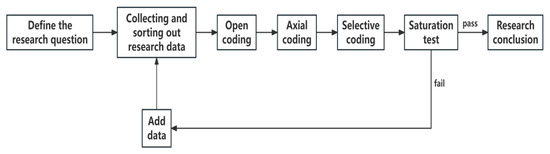
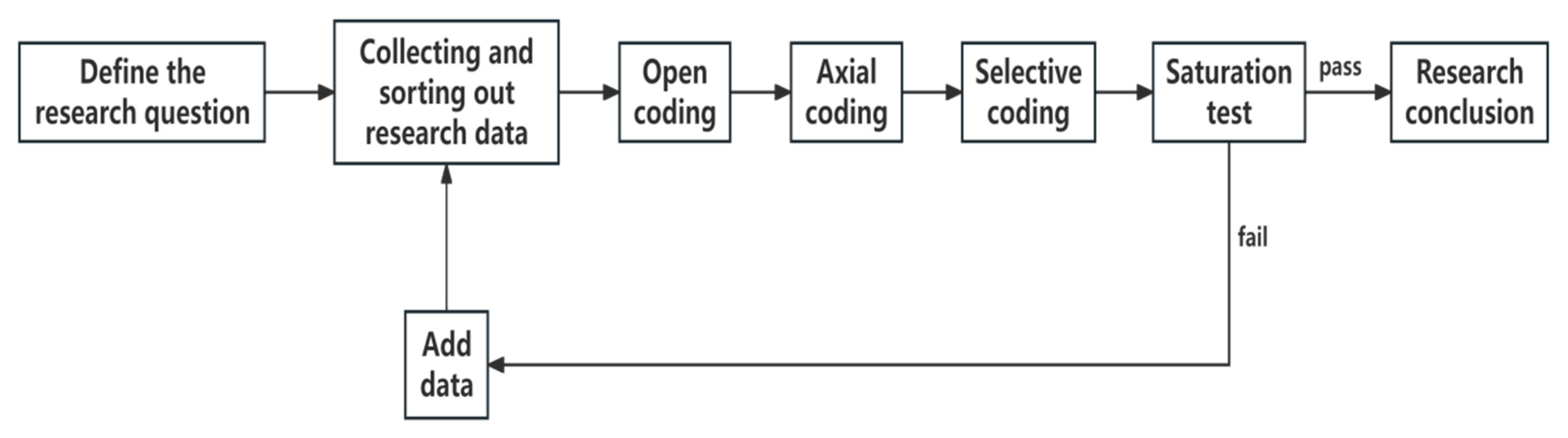
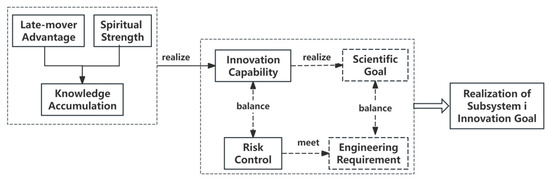
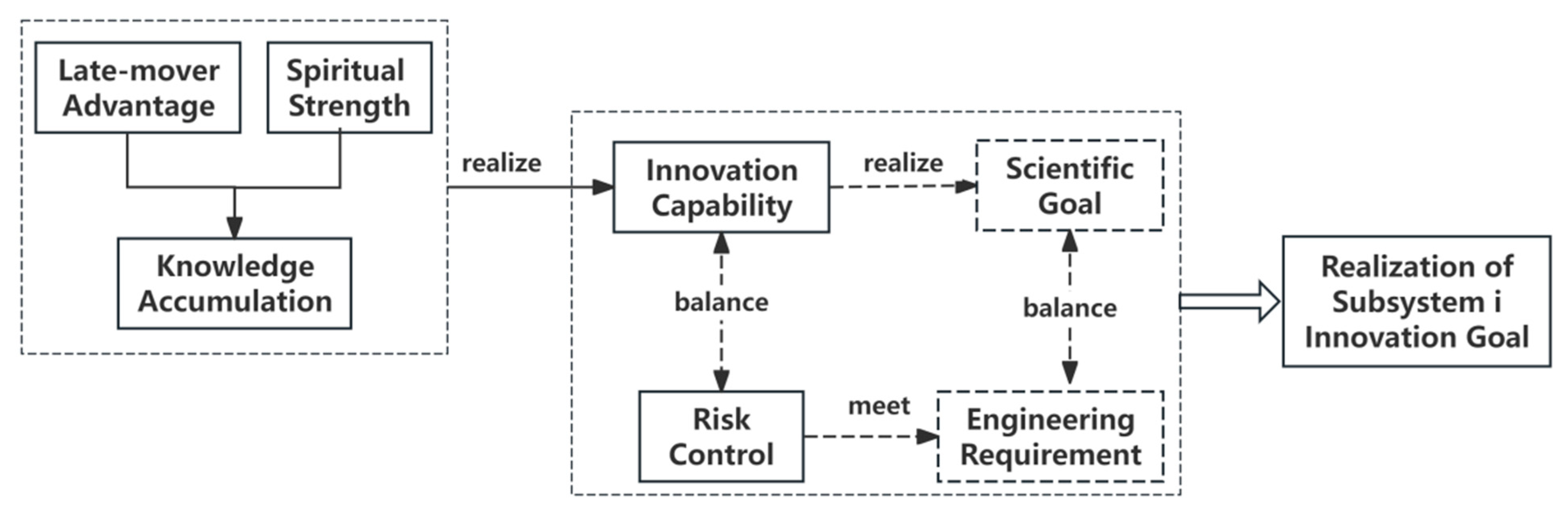
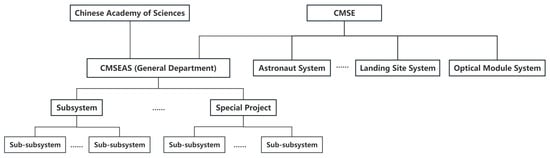
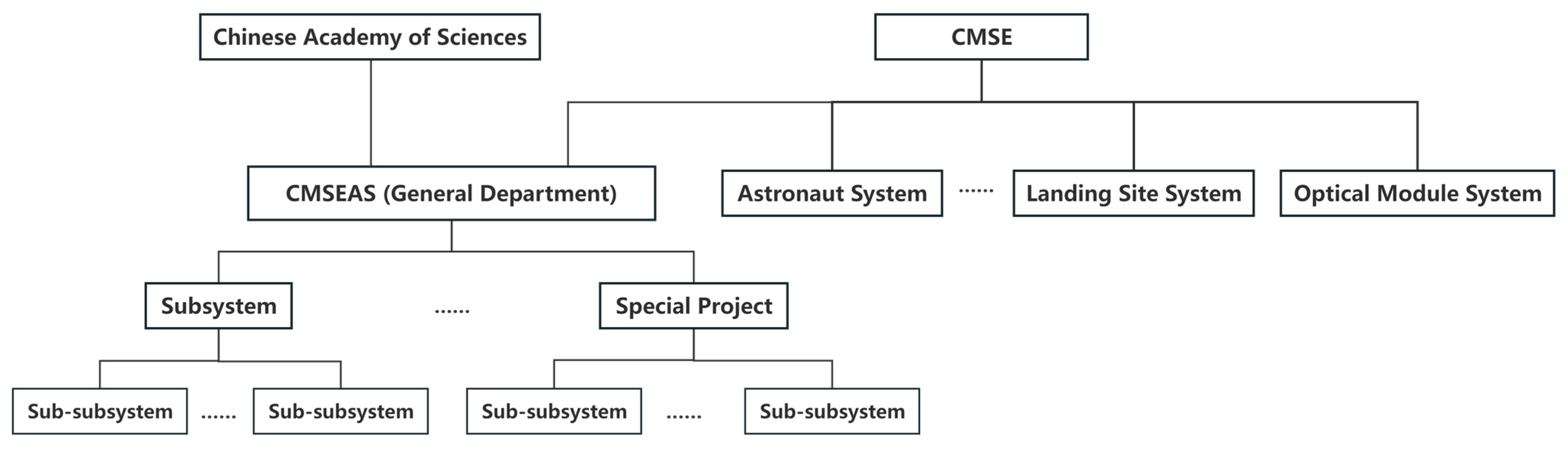
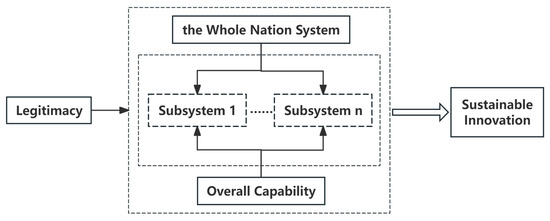
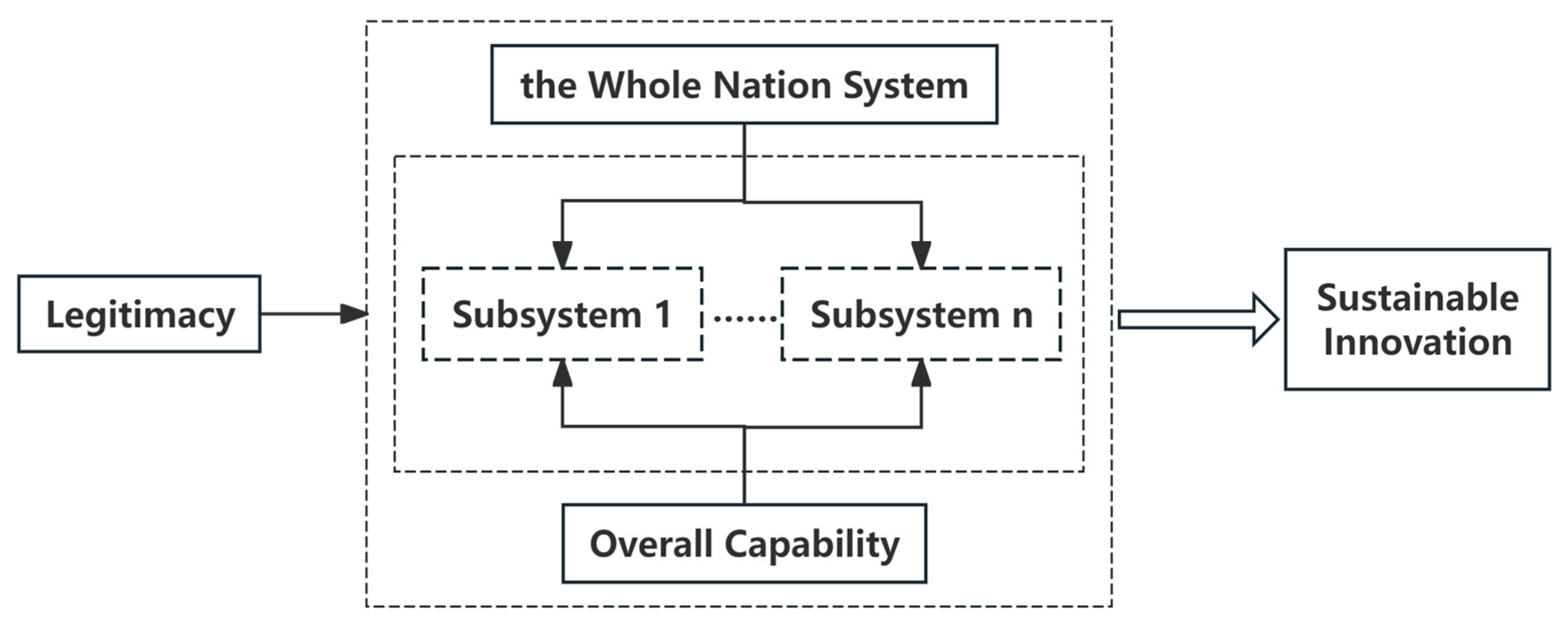
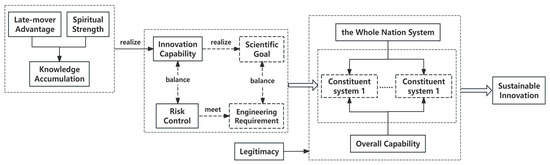
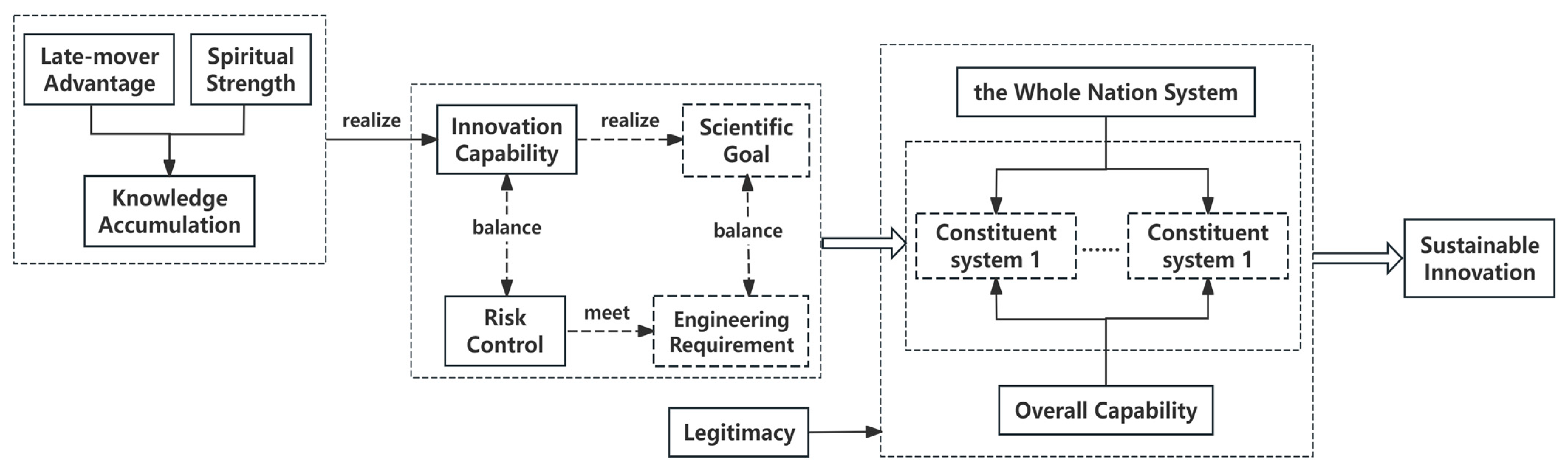

Disclaimer/Publisher’s Note: The statements, opinions and data contained in all publications are solely those of the individual author(s) and contributor(s) and not of MDPI and/or the editor(s). MDPI and/or the editor(s) disclaim responsibility for any injury to people or property resulting from any ideas, methods, instructions or products referred to in the content. |
© 2025 by the author. Licensee MDPI, Basel, Switzerland. This article is an open access article distributed under the terms and conditions of the Creative Commons Attribution (CC BY) license (https://creativecommons.org/licenses/by/4.0/).