


Abstract
The paper presents the main features of a Web-GIS platform designed to compute real-time scenario-based seismic risk assessments at the national level. Based on the Italian experience, the platform enables DRM scientist and policymakers to readily generate seismic scenarios supporting the entire DRM cycle, including training, emergency planning, calibrating operations during response, and providing seismic risk estimates for National Disaster Risk Assessment or seismic risk reduction programs. The platform is immediately operational, relying on preloaded freeware datasets on exposure and vulnerability, and requiring only basic earthquake parameters to perform real-time analysis. At a later stage, these datasets should be replaced with more detailed and accurate national-level data. The platform generates earthquake impact assessments that include physical damage, economic and human losses, and key emergency response indicators, such as estimated displaced population, required tent camps, and EMT and USAR needs. Its key innovation lies in the ability to operate at the national scale, offering immediate usability with the possibility of further customization. As a web-based service with a user-friendly graphical interface, it is particularly suited for civil protection and DRM experts.
1. Introduction
Real-time seismic scenario simulation refers to automated systems for rapidly estimating the likely impacts of an earthquake from its source parameters. This process integrates ground motion predictions and shaking maps with geospatial information on exposure (e.g., buildings, population, infrastructure) and vulnerability, to estimate potential damage and human losses [1,2,3]. The resulting scenario is not a forecast, but rather as a rapid approximation of the consequences of a specific earthquake that has just occurred or may occur.
These simulations are increasingly recognized as valuable tools in seismic disaster risk management (DRM). In the immediate aftermath of an earthquake, real-time scenarios provide civil protection authorities, emergency responders, and government institutions with timely information to guide rapid decision-making [4]. When field information is lacking, they support initial situation assessments, help prioritize response efforts and facilitate the activation of emergency protocols and international assistance. When integrated with early warning systems or national emergency platforms, they can also support public and risk communication [5].
Beyond response, real-time seismic simulation contributes to preparedness and planning. By supporting the development and testing of plausible scenarios, they enable authorities to assess vulnerabilities in critical systems, identify capacity gaps, and design more effective contingency plans [6]. They can inform mitigation by identifying high-risk areas and estimating the benefits of land-use changes [7] or retrofitting and recovery planning [8]. Moreover, they provide realistic scenarios for training and exercises [9], helping stakeholders practice decision-making and coordination under conditions that mimic actual emergencies [10].
The effectiveness of real-time seismic simulation depends on several factors, including the robustness of ground motion models [11], the quality and resolution of exposure and vulnerability data [12], and the speed of data processing [13].
Recent advances, such as sensor networks integrated into data platforms [14], the incorporation of ShakeMaps [15] and remote sensing imagery [16], Bayesian updating from multiple sources [17], combined with open-source computational tools [18], have significantly improved the speed and accuracy of seismic impact simulations where real-time data are available. While integration enhances performance in data-rich contexts, the applicability of these simulations in data-scarce regions is increasingly supported by alternative data sources and modeling approaches [19].
Over the past two decades, numerous tools and platforms have been developed to support rapid or real-time seismic risk assessment. These vary widely in geographic coverage, methodological approach, required input data, and interoperability with DRM systems. For example, ref. [20] selected five software packages and compared their results for the city of Istanbul, identifying key challenges such as model calibration and aligning building typologies across packages.
A more systematic overview of key tools was presented in [21,22]. Specifically, ref. [21] identified 50 tools for rapid earthquake impact assessment and reviewed 15 of them in detail, while [22] offered a separate review of 13 tools. Building on this, [23] evaluated these 13 tools, together with relevant European research projects and good practices, considering their potential use for national risk assessment
In 2017, the European Commission’s Joint Research Centre (JRC) organized the Seismic Risk Assessment Tools Workshop [24], which provided a comparative analysis of multiple platforms and their operational applications. The workshop brought together developers, researchers, and national civil protection authorities, during which eight tools were discussed and compared.
In the following paragraphs, only the five most relevant tools for the purposes of this paper are summarized.
Among the most recognized tools is Hazus [25], developed by the Federal Emergency Management Agency (FEMA) in the United States which estimates physical damage, economic loss, and social impacts (functional losses and exposure to induced hazards) from earthquakes, as well as floods and hurricanes. The tool provides a wide range of information, including: repair and replacement costs, business revenue loss, relocation costs, casualties, household displacements, debris, facility restoration times, and exposure to fire following earthquakes. Though primarily designed for the U.S. context, Hazus has been adapted for use in other countries.
CAPRA (Central America Probabilistic Risk Assessment) [26], is a modular, multi-hazard, open source, platform developed for Latin America supporting deterministic and probabilistic assessments. It emphasizes flexibility, allowing users to select different taxonomies (e.g., GAR15 hazard, exposure, and vulnerability files), and transparency, as exposure, hazard, and vulnerability are represented within the same methodological framework, regardless of the hazard type. It can be used for high resolution (element by element) risk assessments at urban level as well as for coarse-grain national assessments. The output includes uncertainty estimates. It has been used by several governments and development agencies in DRM planning.
AFAD-RED [27] is the national operational tool developed by AFAD, the Turkish Disaster and Emergency Management Authority, for rapid damage estimation specifically tailored to the Turkish building stock and seismic hazard environment. It provides immediate estimates of building damage, casualties following an earthquake, impact on lifelines and economic losses. The assessment is carried out in three consecutive stages, with increasing levels of accuracy as more data are received. The system integrates data from Turkey’s National Seismological Monitoring Network and National Strong-Motion Network.
OpenQuake [18], developed by the Global Earthquake Model (GEM) Foundation, is an open-source multi-purpose tool entirely written in Python 3. The software comprises a suite of calculators capable of computing human and economic losses for a portfolio of assets, either based on a specific scenario event or by considering the probability of all possible events occurring within a region over a defined time span. Logic trees are used to model epistemic uncertainty and spatial correlation of ground-motion is accounted for. OpenQuake has served as the basis for developing additional tools. For example, in [28], a Real-Time Loss Tools software was developed to account for damage accumulation during a seismic sequence, while [29] demonstrated its use for assessing infrastructure connectivity.
SELENA (SEismic Loss EstimatioN using a logic tree Approach) [30] is an open-source, self-contained MATLAB-based platform that estimates structural damage, economic losses, human loss, debris and shelter needs using the capacity-spectrum method. It supports deterministic, probabilistic, and near-real-time scenarios, employing a logic-tree framework to manage input uncertainties. SELENA provides considerable versatility, allowing users to select their ground-motion prediction equations, earthquake demand spectra, and choose whether to include site and/or topographic amplification effects.
The comparative analysis conducted during the Seismic Risk Assessment Tools Workshop [24] revealed some common patterns across these tools. Generally, human casualties tend to be overestimated, while the order of magnitude of economic costs is reliably predicted. The time required to generate outcome reports ranged from 5 to 15 min. However, ease of use and the level of necessary training or expert involvement varied considerably among tools, indicating that efforts to develop more intuitive input methods and user-friendly interfaces would be beneficial. The Workshop concluded that there is a strong demand for tools that are easier to use, more automated, and equipped with ready-to-use datasets and default options capable of producing results with minimal effort, even if those results are of low resolution and relatively high uncertainty. For national authorities, particularly in real-time early impact assessment, extreme accuracy and detailed loss categories are not a priority. In such situations, a coarse estimate of predicted losses is often sufficient, as increasing model detail does not necessarily improve decision-making when the associated uncertainties are of the same order of magnitude as the outputs.
These findings are in line with the Authors’ assessment: few tools are designed to be user-friendly for a broad range of stakeholders, including Civil Protection, DRM authorities, planners, and decision-makers, thus limiting their usefulness beyond the research community. For instance, ref. [31] presented a user-friendly tool for rapid seismic risk assessment of Canadian buildings; however, it is time-based rather than scenario-based and provides only economic loss estimates. The Authors also noticed that most tools require extensive data preparation and system configuration, often spanning several years, before they become operational. Only a limited number are ready for immediate use following an event without the prolonged setup. And only a few can operate at the national scale to rapidly assessing the impact of earthquakes that may occur anywhere within a country or near its borders.
This highlights a critical gap between current technological capabilities and the practical needs of emergency management. There is a clear demand for real-time simulation tools that are scalable, interoperable with response protocols, rapidly deployable, and intuitive for non-technical users.
2. Concept, Innovation, and Features of the SEIS-MEC Simulator
During 2018–2021, the European Union (EU) funded the “Prevention, Preparedness and Response to natural and man-made Disasters South, Phase III” (PPRDSouth III) program as a Euro-Mediterranean initiative aimed at increasing resilience and reducing the social, economic and environmental costs of natural and man-made disasters in the EU Southern Neighborhoods. Component 1, led by the Italian Civil Protection Department, focused on building national risk assessment capacity among Mediterranean Beneficiary Countries and develop a regional risk map to guide risk reduction strategies.
During the first PPRD South III Steering Committee Meeting and following discussions, Beneficiary Countries expressed a clear need in a ready-to-use software tool to support the assessment of potential earthquake consequences, intended for use by civil protection authorities, risk management planners and the scientific sector.
Since the early 1990s, the Italian Civil Protection Department had already developed such a tool for the entire national territory [32]. The software, named SIGE (Sistema Informativo Geografico per l’Emergenza, or Emergency Geographic Information System), integrates various data sources, including earthquake parameters from the National Institute of Geophysics and Volcanology, to produce damage scenarios and loss estimations (scenario-based risk assessment). The most recent evolution of this system is called ESPAS (Earthquake Scenario Probabilistic Assessment), which addresses two key challenges: (a) quantifying the uncertainty of the many parameters and variables involved in scenario analyses, and (b) progressively updating initial post-event loss estimates by incorporating observed earthquake effects (e.g., macroseismic intensities, peak ground accelerations, collapsed buildings), to improve accuracy over time [33].
Since 2009, the EUCENTRE Foundation has developed numerous tools for the Italian Civil Protection Department within a Web-GIS platform for seismic risk assessment and the real-time damage scenario generation [34]. The platform, named EUCLIDE (EUCentre for Loss-Impact and Damage Evaluation), initially focused exclusively on residential buildings. Over time, it has been significantly expanded and now comprises five specialized modules covering residential buildings, schools, hospitals, transportation infrastructure (e.g., bridges, tunnels, retaining walls, ports, and airports), and industrial facilities. All databases integrated into the platform are developed at the national scale. Seismic hazard, exposure, and vulnerability data, along with outputs related to seismic risk and damage scenarios, are presented through both interactive maps and tabular formats. Time-based seismic risk assessments, pre-calculated for events characterized by specific return periods, are pre-loaded in the system. Users can also perform near real-time scenario-based seismic risk assessment using two methods: (1) inputting earthquake source parameters and Ground Motion Models (GMMs) to estimate asset-level seismic input, or (2) providing ground shaking maps (i.e., ShakeMaps), directly [35].
Building on such extensive experience, in response to PPRDSouth III request, and as part of project sub-result 1.1: “Risk assessment and mapping capacities are enhanced at both national and regional levels”, the EUCENTRE Foundation and the Italian Civil Protection Department, developed an innovative Web-GIS platform called SEIS-MEC (SEIsmic riSk in MEditerranean Countries) for real-time earthquake impact assessment. The idea was not to introduce strong methodological innovations, rather to integrate existing elements into a user-friendly national-scale web platform, to fill the gap between technological capabilities and the practical needs of seismic risk management, as highlighted by the JRC Workshop [24].
SEIS-MEC embodies a new generation of seismic impact simulators by combining broad-scale analysis capability with user-centered design and operational flexibility. Unlike many existing tools that require complex Geographic Information System (GIS) desktop environments, SEIS-MEC operates as a stand-alone web-based service. This approach simplifies deployment and ensures immediate operability by any country, removing common barriers to national-scale seismic risk assessment.
A key innovation of SEIS-MEC lies in its ability to integrate different data sources within a customizable framework. The simulator can ingest multiple input streams, including seismic hazard data, exposure databases, and vulnerability models, to generate impact scenarios covering various sectors such as infrastructure, population, and economic assets. This holistic perspective enables civil protection and DRM agents to understand and prioritize interventions efficiently.
Reflecting the strategic approach adopted during its development, the following features represent the core design objectives of the platform:
- National-Scale Applicability: SEIS-MEC is designed to perform comprehensive impact evaluations across entire countries, supporting strategic planning and rapid response.
- Multi-Sector Synthesis: The tool consolidates seismic effects on buildings, infrastructure, population, and other critical sectors, delivering a consolidated impact overview.
- Web-Based Service: As an online platform, SEIS-MEC avoids the need for complex installations and software licenses, promoting accessibility and ease of use.
- Standalone Operation with GIS Capabilities: Although fully operational independently of traditional GIS desktop environments, SEIS-MEC incorporates GIS mapping functionalities for spatial visualization and analysis.
- User-Friendly Interface: A graphical user interface tailored for civil protection and DRM agents enhances usability, empowering non-expert users to operate the simulator efficiently during emergencies or simulations.
- Immediate Operability: By leveraging freeware databases and minimizing data preparation requirements, SEIS-MEC is ready for deployment in any country without extensive setup or calibration.
- Customizable and Integrative: Users can customize scenarios and input parameters, and the platform is designed to integrate heterogeneous national data sources, ensuring adaptability to various national contexts and data availabilities.
- Multilingual Accessibility: SEIS-MEC supports multiple languages for both the user interface and documentation, enhancing usability and inclusiveness for a broad range of national and international stakeholders.
Within the PPRDSouth III program, the platform was delivered to Algeria, Egypt, Jordan, Lebanon, Morocco, Tunisia, and Palestine and was presented in [36].
3. The Platform: Data, Engine and Outputs
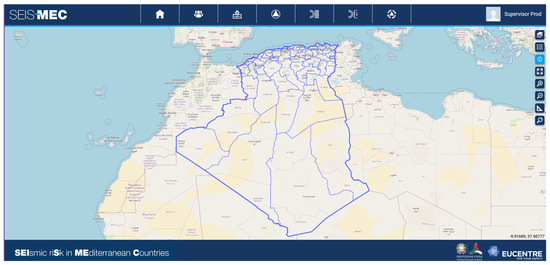
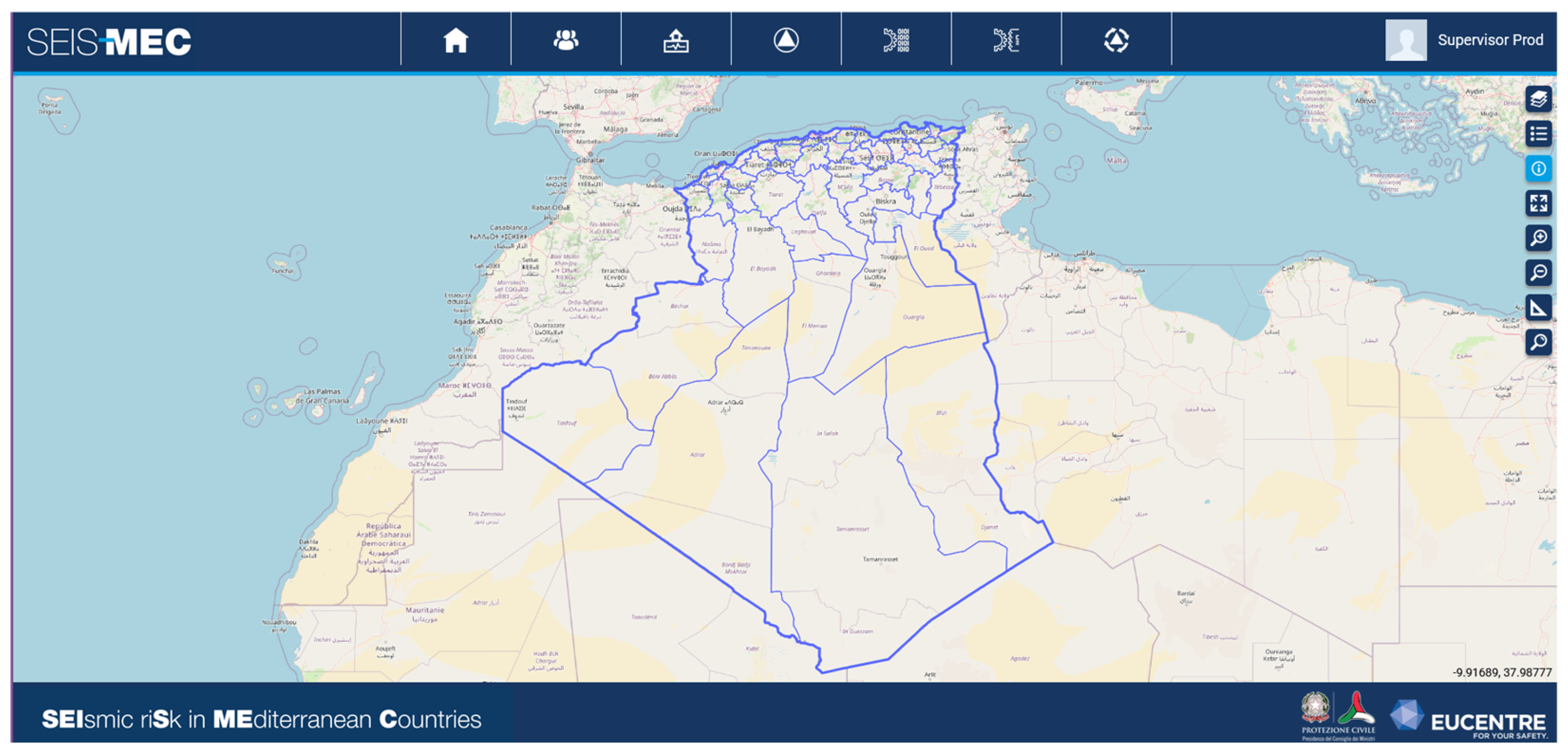
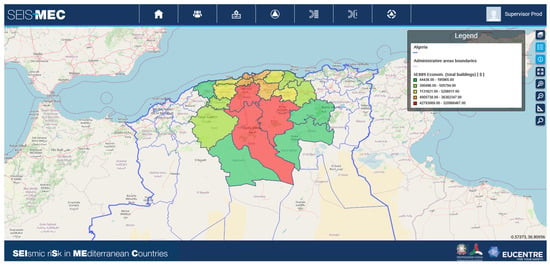
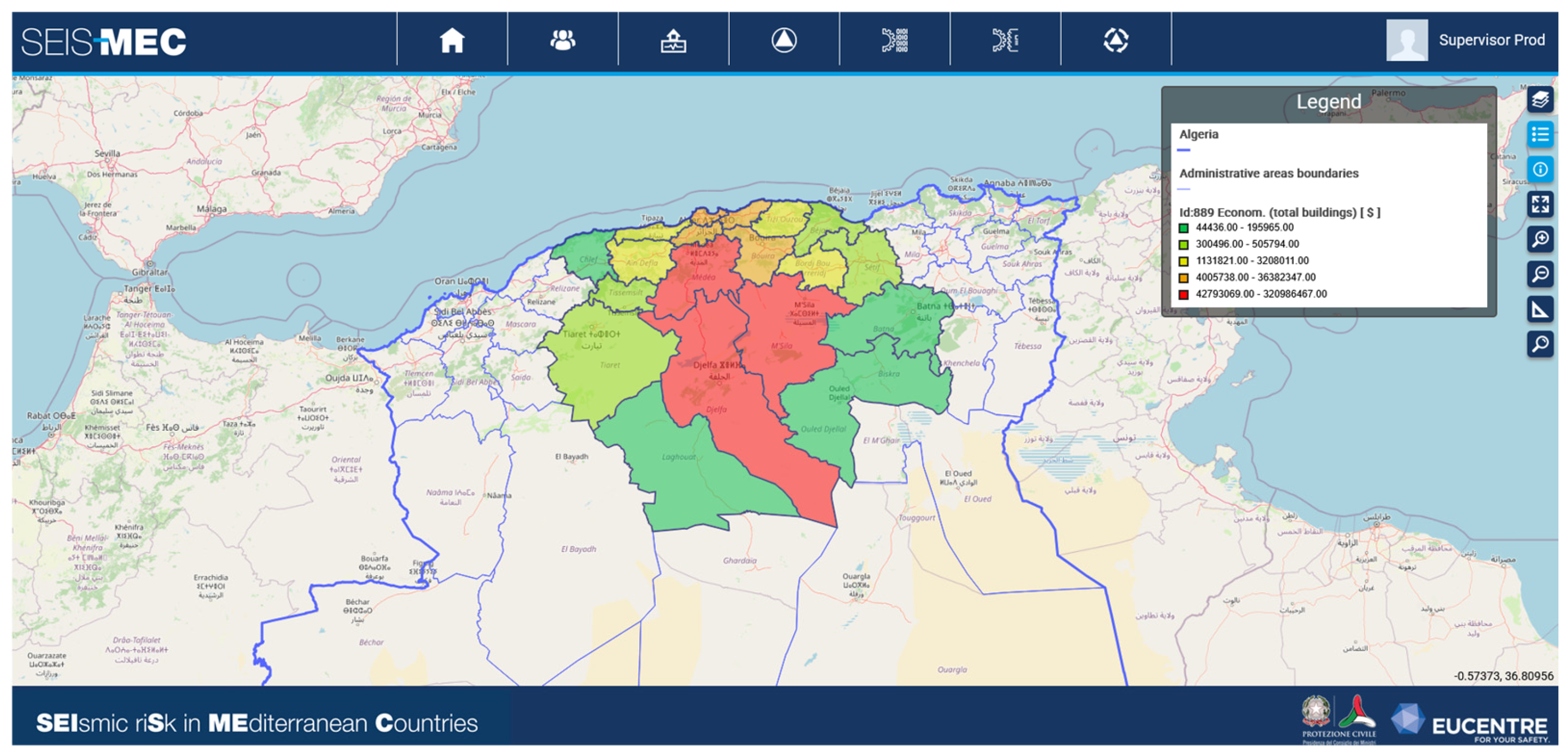
Accessing the SEIS-MEC platform is straightforward and requires only a computer, an internet connection, a web browser, and valid login credentials. Figure 1 shows the Homepage of the platform for one selected country. At the top, seven navigation tabs are available, as detailed in Table 1. On the right-hand side, a toolbar is provided, described in Table 2. The tabs allow users to add or remove map layers and to perform various analyses.
Figure 1.
Homepage of the platform illustrating its application to Algeria.
Table 1.
Description of the Tabs.
Table 2.
Toolbar functionalities.
3.1. Freeware Data and Models Preloaded into the Platform
The SEIS-MEC platform is built upon publicly available datasets to ensure immediate use, even in contexts where national data on exposure, vulnerability, and soil are limited or unavailable. Freeware preloaded datasets include:
- Exposure database of buildings: Derived from the GEM Foundation global dataset [37,38,39,40]. It provides aggregated data on the number of residential, industrial and commercial buildings (not building by building). For each building type, it includes the number of buildings, number of occupants (residential only), repair cost, and building taxonomy. The taxonomy is expressed in terms of material, Lateral Load Resisting System, design code, number of storeys, lateral force coefficient.
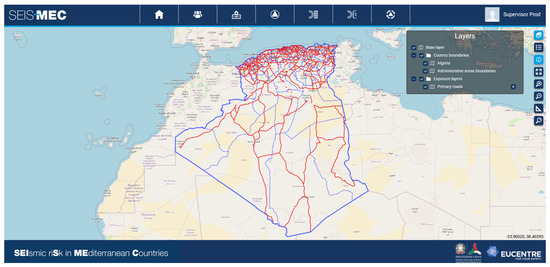
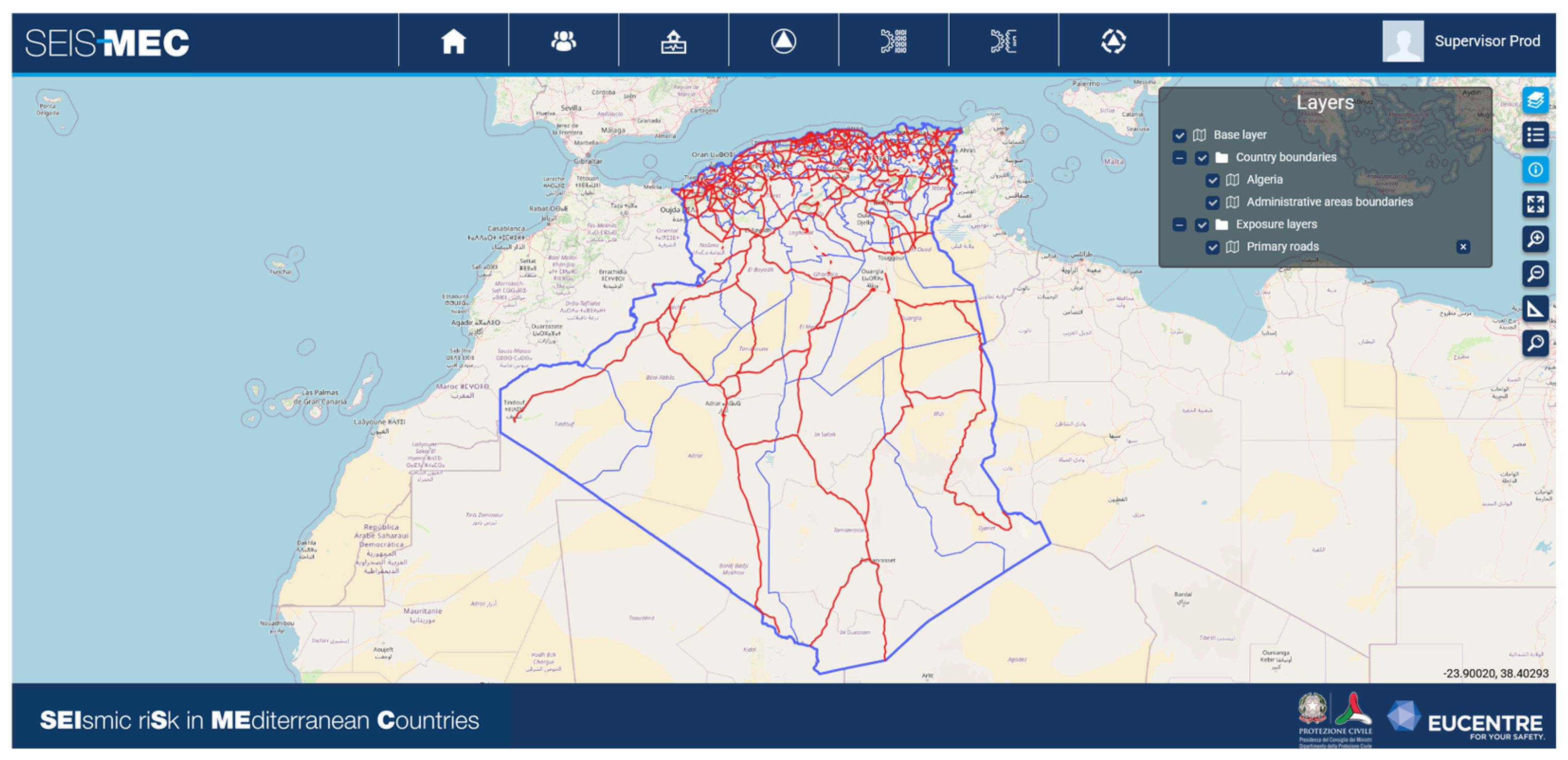
- Primary and secondary roads, hospitals and schools, fire and police stations: These data are retrieved from https://mapcruzin.com (accessed on 1 January 2020 and on 1 January 2025). They can be visualized on the maps, but are not included in damage scenario calculations. A map of primary roads is reported in Figure 2 as an example.
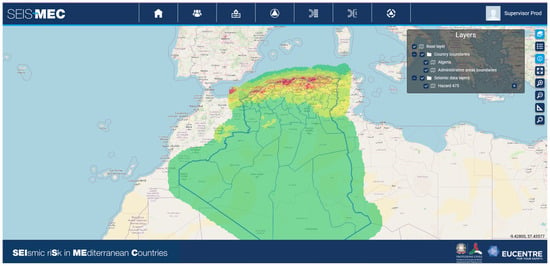
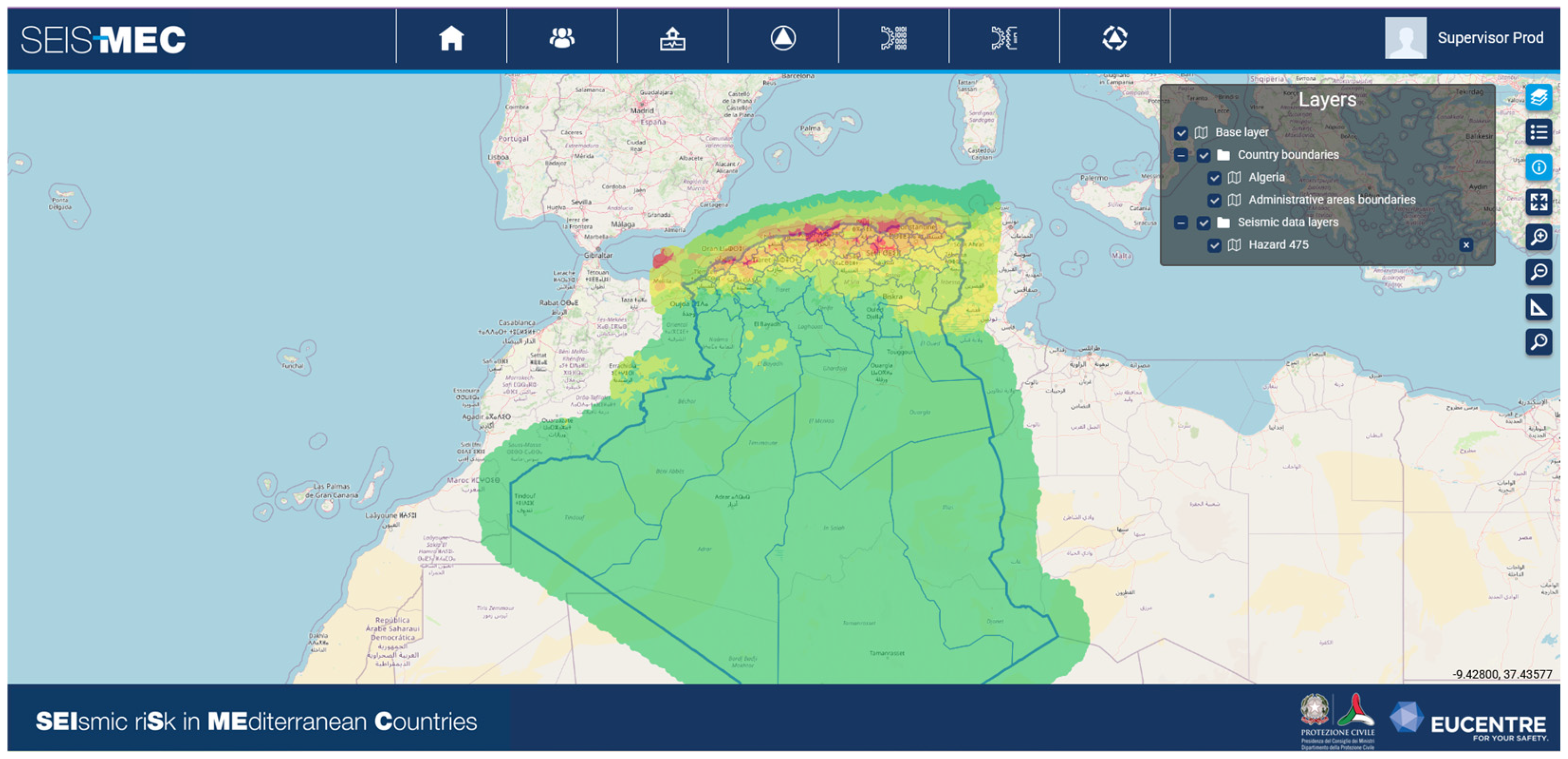
- Hazard map: Sourced from the GEM foundation database [37]. The default maps display the Peak Ground Acceleration (PGA) for a return period of 475 (see Figure 3) and 2475 years.
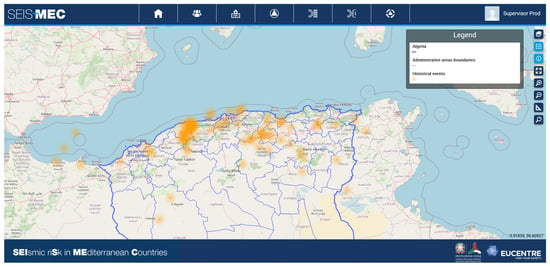
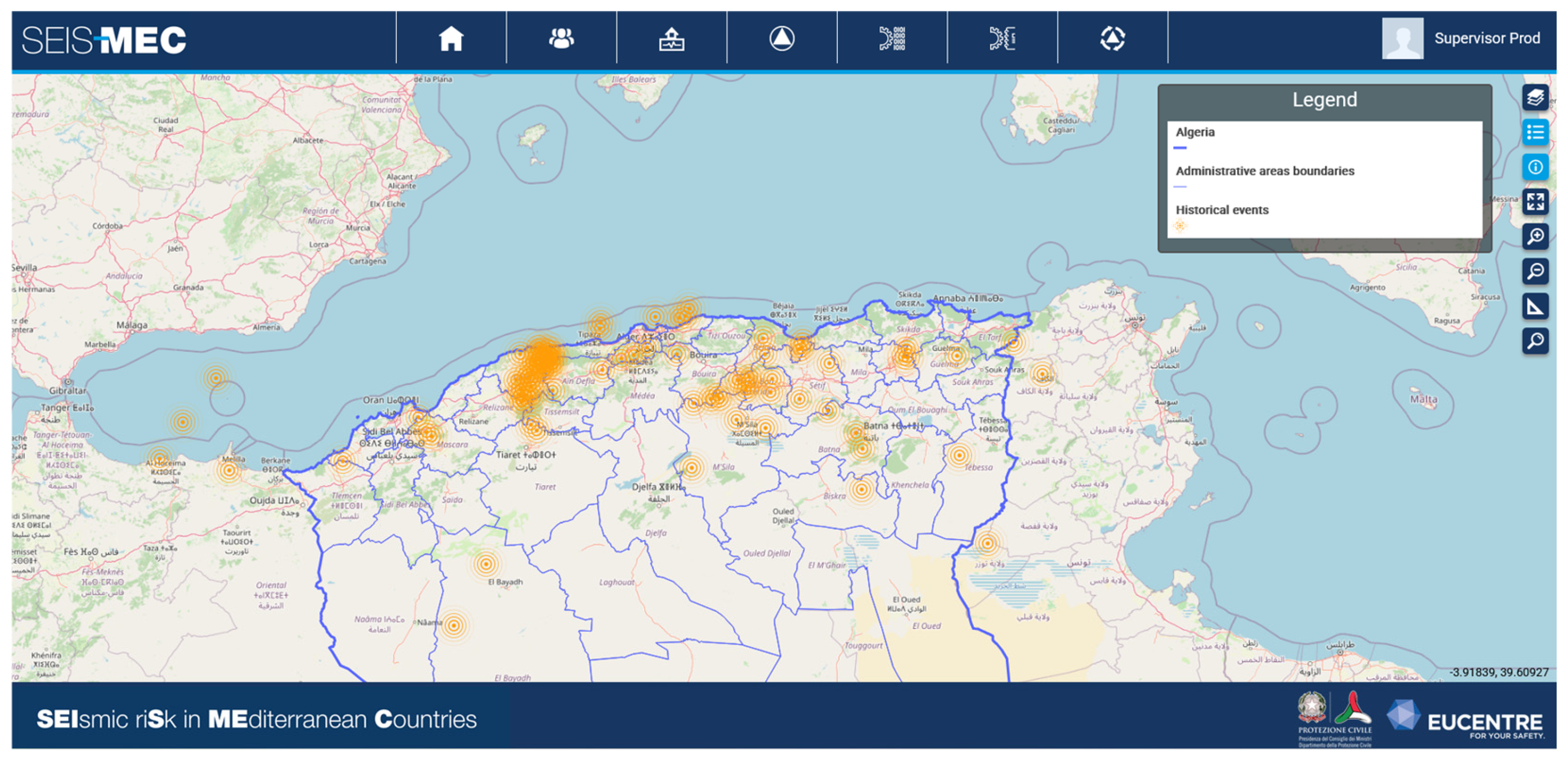
- Historical events: The catalog of relevant historical events was compiled using data from the global ISC-GEM catalog (http://www.isc.ac.uk/iscgem/, accessed on 1 January 2020 and on 1 January 2025). Includes events within national borders and outside that could significantly affect the country. Each event contains date, magnitude, depth, longitude, and latitude, and is both viewable and searchable on the map (Figure 4). These events are used to calculate “actual scenarios” for historical earthquakes.
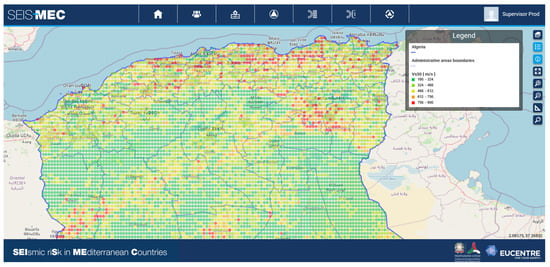
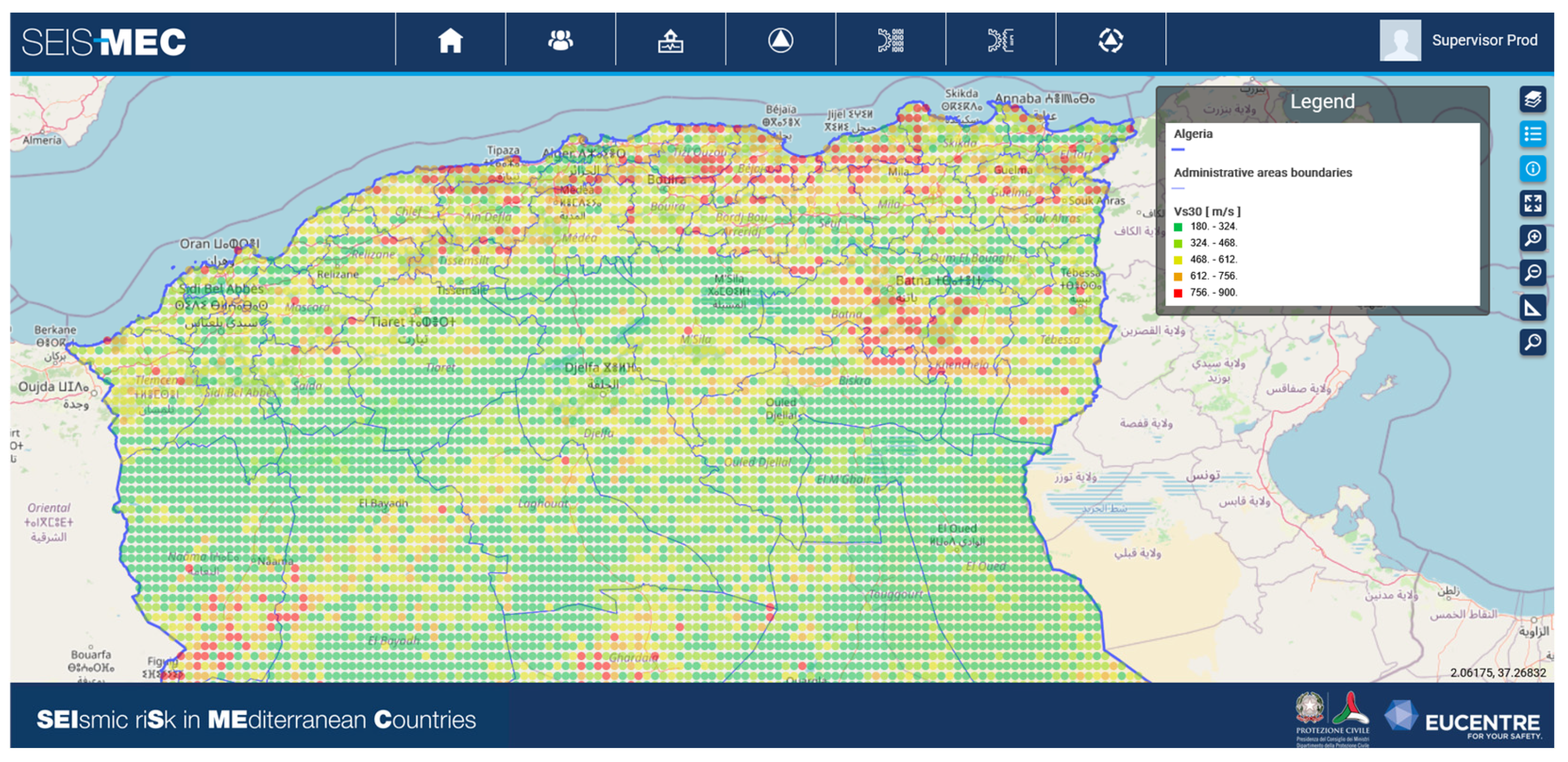
- Vs30 map: The platform integrates the United States Geological Survey (USGS) Vs30 map (average shear-wave velocity in the top 30 m), as grid of points spaced at 0.0083 degrees, freely available from [41] (Figure 5), to incorporate ground motion amplification effects. Users can generate scenarios based on rock conditions only or including soil effects.
- Fragility functions: Retrieved from the GEM Foundation database [42]. Each building taxonomy has a fragility curve, indicating the probability of reaching four damage levels: slight (D1), moderate (D2), extensive (D3), and complete (D4) for a given intensity parameter.
Figure 2.
Primary roads layer.
Figure 3.
Hazard map for a return period of 475 years.
Figure 4.
Historical events from the global ISC-GEM catalog.
Figure 5.
Vs30 map (average shear-wave velocity in the first 30 m of depth) from USGS [41].
The data described above are generally readily available for countries worldwide. Two models, sourced from the literature, complement these data. The first one is a Ground Motion Model (GMM) that estimates through empirical equations the acceleration at a given location based on epicentral parameters, providing both a central value and its associated variability. The platform uses as GMM the Ground Motion Prediction Equation (GMPE) developed by [43], consistent with the seismic hazard maps incorporated in the platform.
The second model uses the Vs30 map overlaid with the boundaries of the administrative units with exposure data. Within each unit, the percentage of soil class A, B, C, D is calculated based on the following correspondence between Vs30 value and soil classes as reported in Eurocode 8 (EC8) [44]:
- Class A: Vs30 ≥ 800 m/s;
- Class B: Vs30 ≥ 360 and <800 m/s;
- Class C: Vs30 ≥ 180 and <360 m/s;
- Class D: Vs30 < 180 m/s.
For each soil class, the average Vs30 in each unit is also calculated. This average Vs30 value is used in the GMPE to calculate ground acceleration, thereby accounting for lithostratigraphic amplification.
A platform based on freely available open-source data and pre-loaded static models enables rapid deployment in any country, while ensuring data homogeneity across the territory. However, it has limitations in reliability and granularity. Freeware data are intended as an initial step, aimed at raising awareness among DRM experts and institutions and allowing them to rapidly explore the platform’s potential. For operational use, national datasets, such as country-specific GMPEs, census data, and tailored fragility curves, should replace or complement the global datasets.
3.2. Earthquake Input Parameters Entered by the User
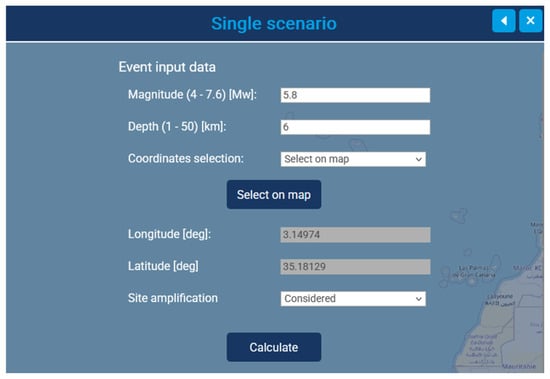
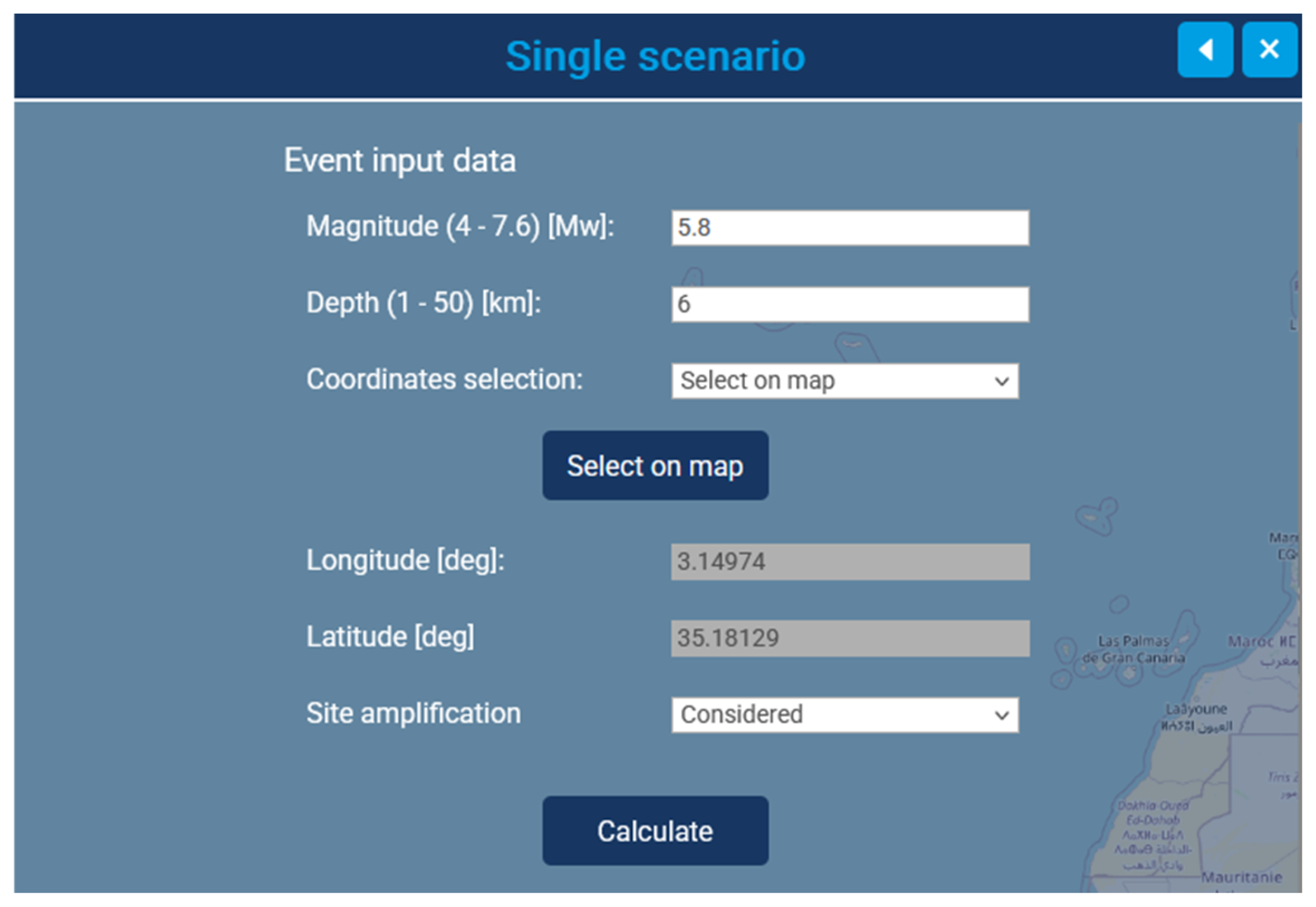
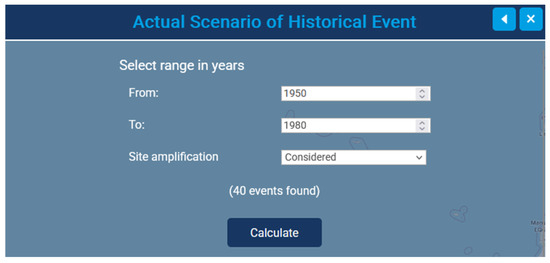
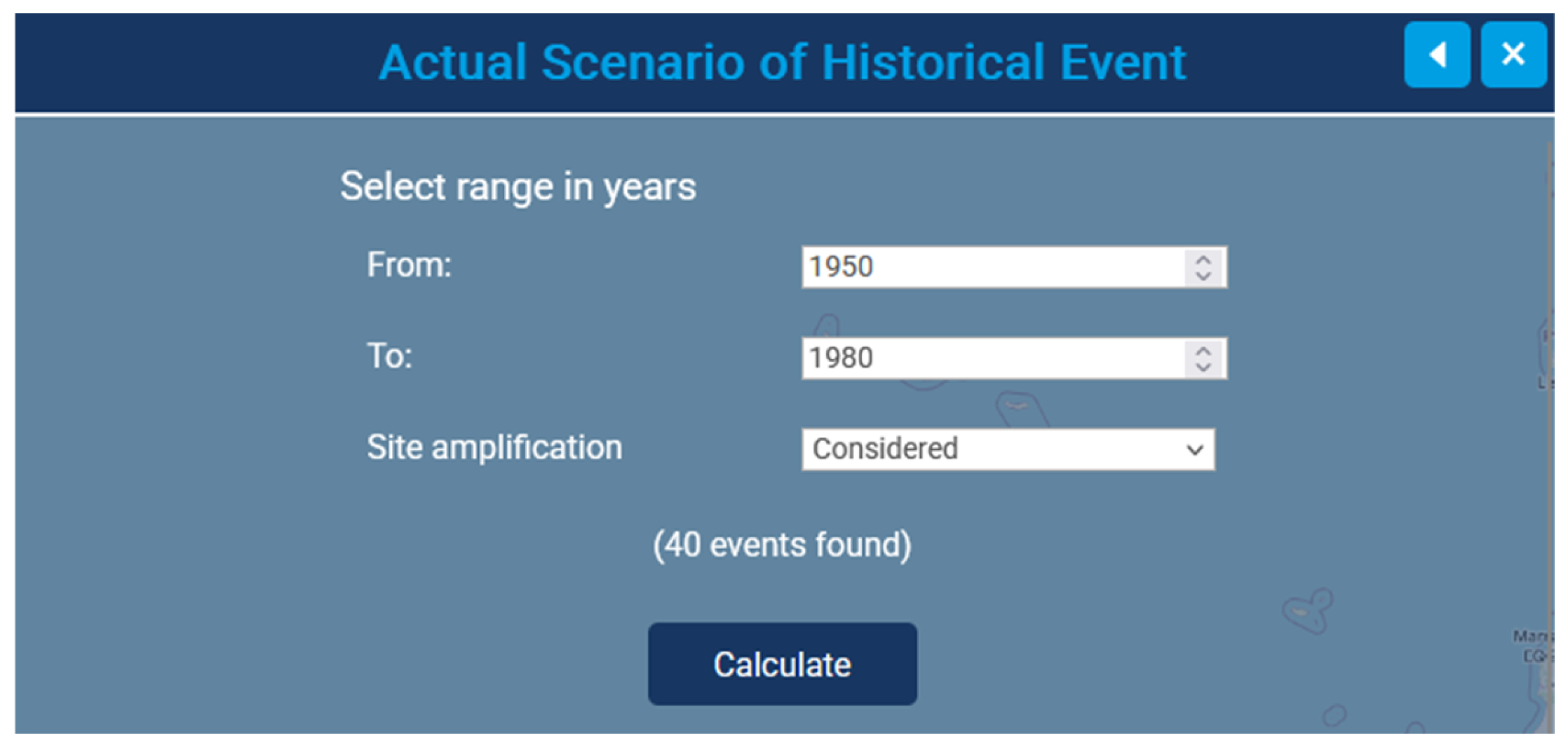
As previously mentioned, the platform includes two options for computing damage scenarios. In the “Single Scenario” option (Figure 6), the user specifies the earthquake’s magnitude, epicentral location (either inserting latitude and longitude, or by clicking a point on the map), and focal depth. The “Actual Scenario of Historical Event” option (Figure 7), instead, uses preloaded earthquake parameters from the ISC-GEM catalog (http://www.isc.ac.uk/iscgem/, accessed on 1 January 2020 and on 1 January 2025). The user defines a time window (e.g., 1950–1980), and the platform generates damage scenarios for all events in that period. The scenario uses current exposure and vulnerability data, allowing assessment of past seismicity under present conditions. The catalog itself may consist of real historical events or virtual ones. Therefore, this option also allows for sensitivity analysis. By adding to the catalog a range of magnitudes (e.g., 4.9, 5.0, 5.1) or slightly varying epicentral locations for the same event, users can automatically run all scenarios and assess how input changes affect the resulting impact.
Figure 6.
Option to elaborate a single scenario.
Figure 7.
Option to elaborate Actual Scenario of Historical Event.
3.3. Damage Scenario Calculation and Results
A computational engine developed by EUCENTRE is integrated into the platform to combine the three components of seismic risk, exposure, vulnerability, and hazard, and generate damage scenarios. When using the platform with the freeware datasets described in §3.1, damage scenarios are produced only for residential, industrial, and commercial buildings, since vulnerability models are only available for these structures, where sufficient information exists to define a taxonomy. Specifically, the basic information required to associate fragility curves with a building includes: (1) structural typology (e.g., masonry, reinforced concrete, precast, etc.), (2) number of storeys, and (3) year of construction. Other buildings (e.g., schools, hospitals, railway stations, police and fire stations) are represented only by location, with no damage assessment, as freeware data lack the necessary details. However, the platform is designed for later customization with national data, enabling inclusion of such strategic assets in impact assessments. The following section describes the step-by-step procedure used by the platform to compute damage scenarios for residential, industrial, and commercial buildings, along with the types of outputs provided.
Step 1: Hazard assessment.
The first step is the calculation of the intensity measure at the centroid of each Geographic Unit (hereafter referred to as GU, which may be a municipality, census tract, or a larger area such as a province, depending on the resolution of the exposure data). Using the Ground Motion Prediction Equation (GMPE), the engine calculates all the intensity measures specified by the fragility curves, at the geographic centroid of the GU. The parameters required by GMPE are the distance to the epicenter or fault, the earthquake magnitude, and the site conditions (e.g., rock vs. soft soil, summarized by Vs30). Given the epicenter’s location, the distance to each GU is computed, while, as said before, the magnitude of the event is entered by the users. Users may also choose whether to consider lithostratigraphic amplification. If soil type is not considered, the intensity measure is computed assuming soil type A (rock) in the GMPE. If soil amplification is considered, the intensity measure is calculated separately for each soil class (A, B, C, D), and the results are aggregated using a weighted average, with weight corresponding to the percentage of each soil type present in the GU.
Step 2: Exposure and vulnerability assessment.
For each GU, the exposure is retrieved in terms of the number of buildings, disaggregated by taxonomy. For example, the taxonomy CR/LDUAL+CDL+DUM/H6/RES indicates Reinforced Concrete, Dual System (Lateral Load Resisting System), Low Code (Design Code), six storeys, Residential use. In addition, each taxonomy is associated with total floor area and replacement cost per square meter, and for residential buildings, the number of inhabitants. Each taxonomy or group of taxonomies is associated with fragility curves, which provide the probability of exceeding four damage levels (D1 slight damage, D2 moderate damage, D3 extensive damage, and D4 complete damage) for a given intensity measure.
Step 3: Physical damage assessment.
Once the intensity measure at the centroid of the GU is estimated, the probability of reaching each damage level is retrieved from the corresponding fragility curve for each taxonomy. Multiplying this probability by the number of buildings in the taxonomy yields the expected number of buildings at each damage level.
Step 4: Impact assessment.
Based on the number of buildings at each damage level, the engine estimates economic and human losses using pre-loaded consequence models. Economic losses are calculated separately for residential, industrial, and commercial buildings, as well as in total. Human losses are computed only for residential buildings (since worker data for industrial and commercial buildings are unavailable) and are expressed as fatalities, injuries, and homeless.
The consequence models are parameterized using the values reported in Table 3, which define the percentage of buildings at each damage level (D1–D4) to be included in the loss estimates. Specifically, economic losses are calculated as 5% of the total floor area of buildings at D1, 30% at D2, 60% at D3, and 100% at D4, each multiplied by the replacement cost per square meter. Buildings at D4 are assumed to be fully restored (100% loss), while those at lower damage levels require only partial restoration (e.g., 60% for D3, 30% for D2, and 5% for D1). Human losses are estimated as percentages of residents in buildings at D3 and D4 (e.g., 10% fatalities at D4, 1% at D3), with injuries and homeless computed using analogous rules
Table 3.
Losses calculation default parameters.
The parameters in Table 3 are default values that can be modified by each country to reflect country-specific characteristics. Figure 8 shows an example output of total economic losses per GU from a hypothetical earthquake.
Figure 8.
Total economic losses for a given earthquake.
Epistemic and aleatory uncertainties in hazard, exposure, and vulnerability are not currently quantified within the platform. Consequently, the impact is expressed deterministically, as an expected value. However, the influence of variability in earthquake parameters (e.g., magnitude and location) can be explored through the functionalities described in Section 3.2.
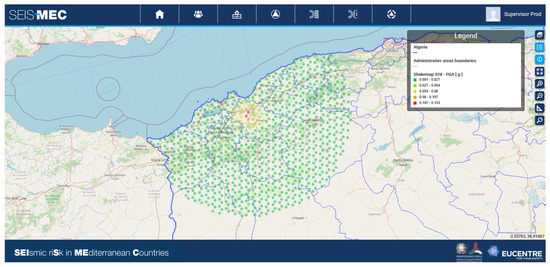
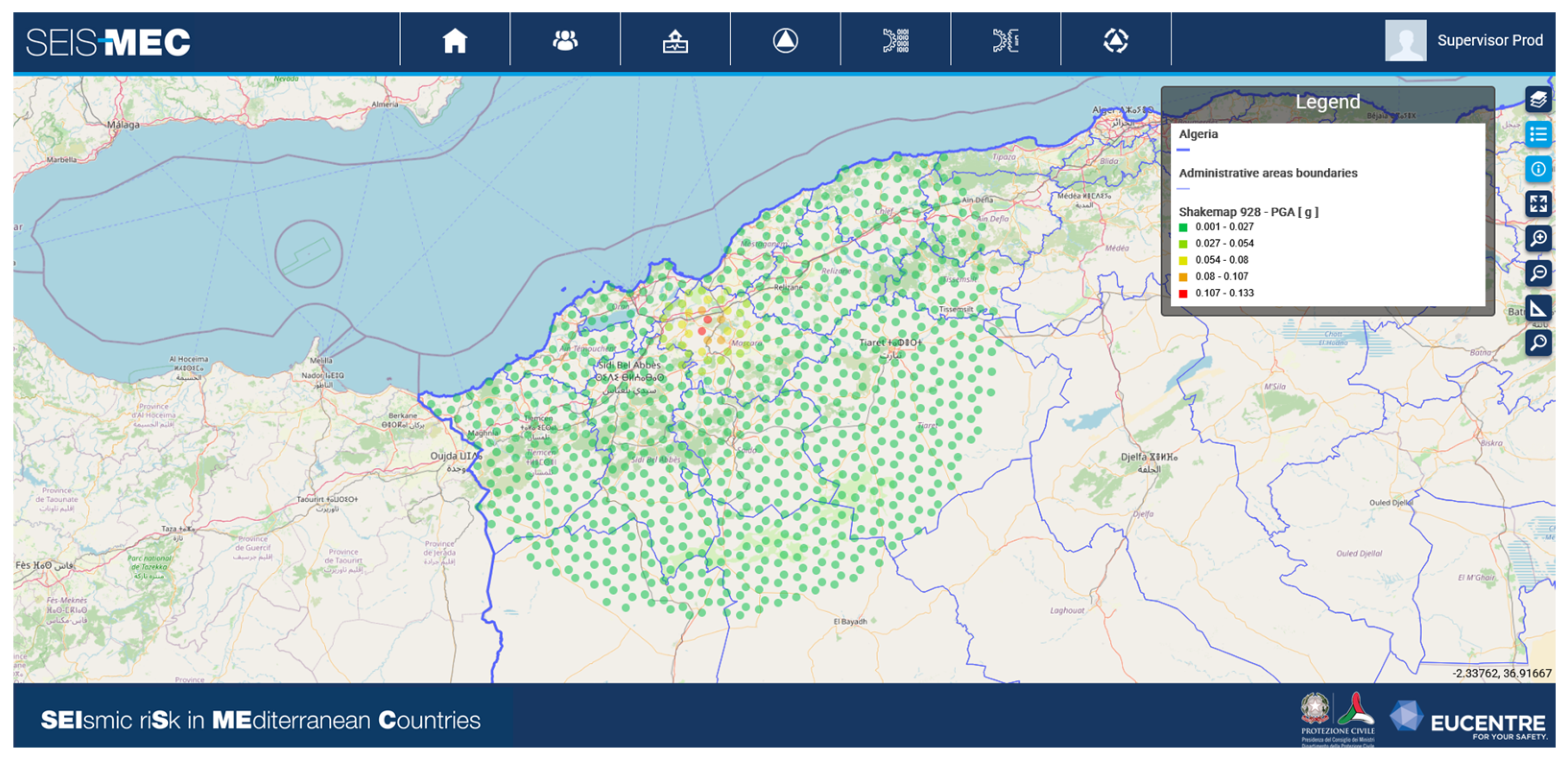
Within Step 1, the platform also produces shakemaps for the considered event in terms of PGA and spectral acceleration at of T = 0.3 and T = 1.0 s, on a 0.08° mesh, using the implemented GMPE [43]. Figure 9 shows, for example, a PGA shakemap for a M5.23 event occurred in Algeria in 1967.
Figure 9.
Shakemap in terms of PGA for the 1967 event with magnitude 5.23.
Step 5: Scenario results are automatically linked to predefined thresholds to suggest the deployment of response resources, such as temporary shelters (tent camps), advanced medical posts or Emergency Medical Teams (EMT), or USAR teams. While these outputs are not predictive in a probabilistic sense, they provide plausible ranges of needs for contingency planning. Default assumptions include:
- Shelters or tent camps are activated if the number of homeless reaches 20 or more.
- Advanced medical posts are activated if the number of injured is 10 or more.
- USAR teams are activated if there is 1 or more totally lost building.
Once more, it should be emphasized that these thresholds are default values that can easily be modified based on the country context.
3.4. Visualization and Export Options
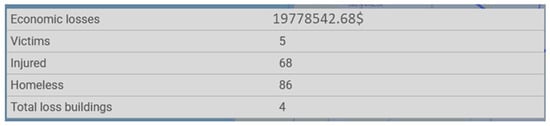
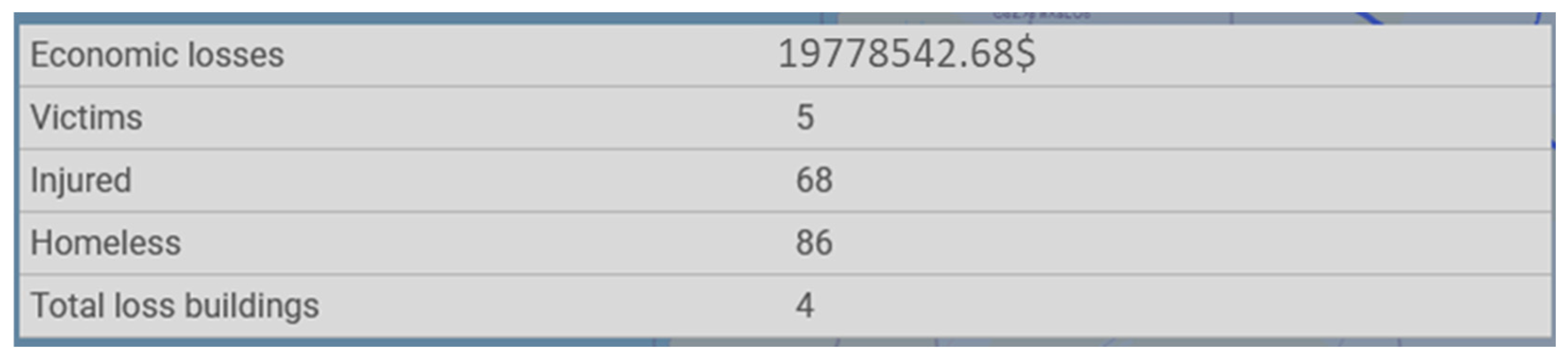
The SEIS-MEC platform provides a user-friendly and intuitive interface for data and results visualization. Outputs are displayed as color-coded maps (e.g., Figure 8) and aggregated national-level tables (Figure 10). An example is presented in Figure 10, referring to an Actual Scenario based on a Historical Event that occurred in 1973 in Algeria (Mw = 5.54).
Figure 10.
Visualization of the scenario assessment in table.
Results can also be exported as a CSV file (Figure 11), listing losses (economic and human) and damage levels (percentage and number of buildings at each damage level) by GU and taxonomy, and whether response resources are required. Offline availability of results is especially useful where internet connectivity is limited.
Figure 11.
Example of CSV output that can be downloaded from the platform.
To ensure the platform is inclusive and usable for local stakeholders, SEIS-MEC is multilingual. Supported languages currently include English, Albanian, Bosnian, Croatian, French, Macedonian, and Serbian. In addition, the navigation manual is also available in Arabic (Figure 12).
Figure 12.
Download option for the navigation manual in 8 different languages.
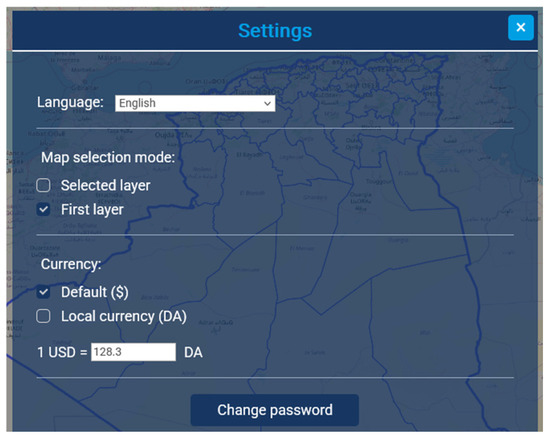
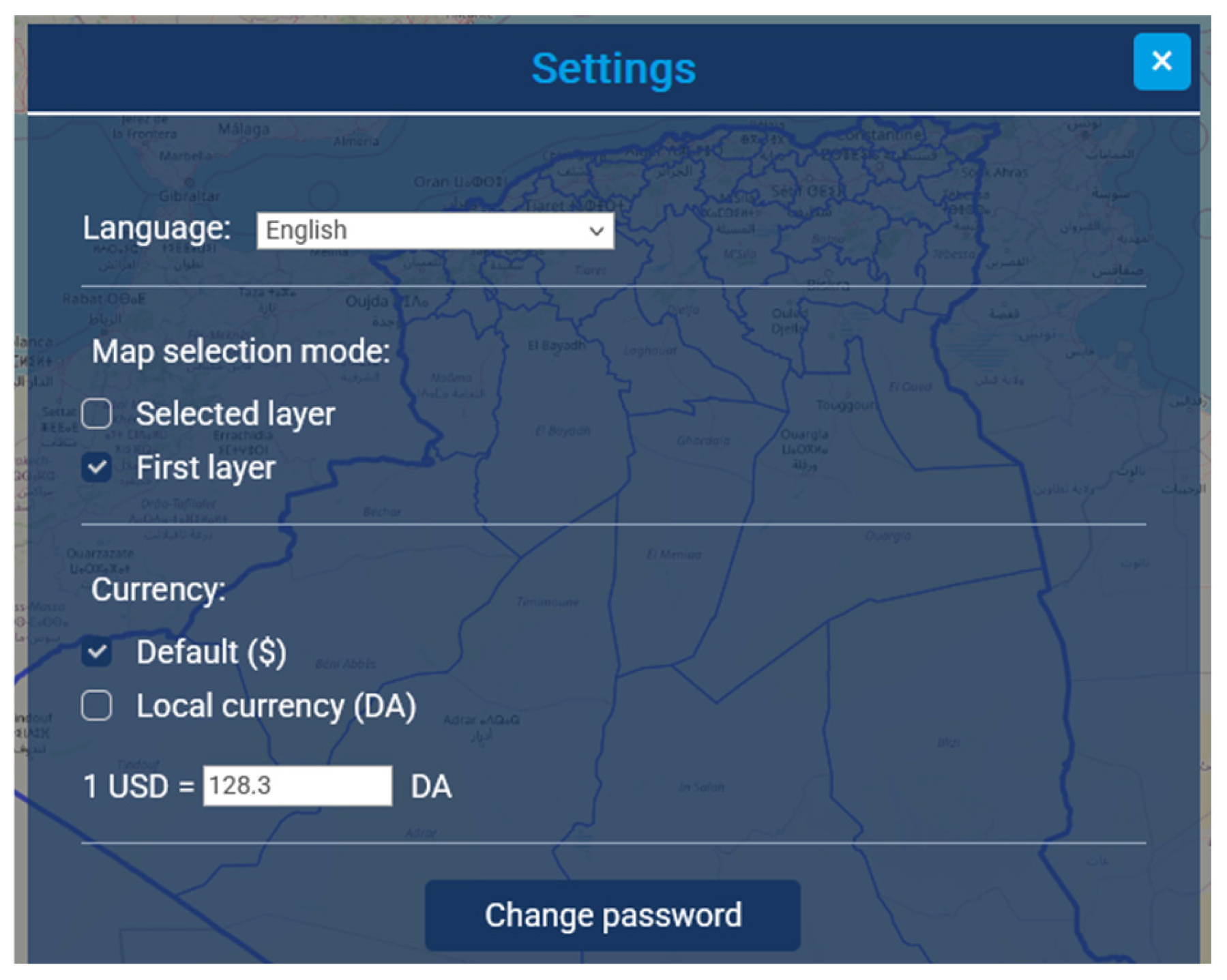
Following this flexible design, users can select the currency and adjust the exchange rate used for cost-related outputs, which are shown in US dollars by default. Figure 13 shows the control panel where language, currency, and map selection mode can be customized.
Figure 13.
Setting panel: language, map selection mode, currency and exchange rate.
3.5. Reliability of the SEIS-MEC Platform
The reliability of the SEIS-MEC platform is tested through application to the M6.4 Albania earthquake of 2019. This event, which struck on 26 November 2019 near Durrës, caused significant casualties and widespread structural damage, particularly to residential buildings. Several epicentral locations have been reported in the literature [45]. The present analysis adopts the location provided by IGEWE (41.4593, 19.4700) [46].
The reference dataset combines direct observations with estimates derived from other modeling approaches. Physical damage observations are based on the post-event, building-by-building survey carried out in Albania, with results consolidated in the Post-Disaster Needs Assessment (PDNA) housing sector report [47]. Only residential buildings are included in the comparison to ensure consistency between the SEIS-MEC output and available empirical data. Casualties and economic losses derived from SEIS-MEC are evaluated against both the PDNA housing sector estimates and the PAGER (Prompt Assessment of Global Earthquakes for Response) loss model [48]. This dual comparison, linking empirical observations with global impact models, offers a robust framework for evaluating the reliability and accuracy of SEIS-MEC’s impact assessment methodology.
Table 4 presents a comparison of key impact indicators, including fatalities, injuries, repair costs, and damaged buildings, together with their respective sources of information.
Table 4.
Comparison of SEIS-MEC impact estimates with observed data and estimates from other simulation tools.
From Table 4 it can be observed that SEIS-MEC provides a reasonably accurate estimate of fatalities and injured persons. Comparable tools, such as PAGER, produce similar figures for fatalities. With regard to repair costs, however, SEIS-MEC provides a noticeably lower estimate compared to both the PDNA and PAGER figures.
For the comparison with PDNA estimates, damaged buildings are grouped into three categories: (i) buildings at D1–D2, (ii) buildings at D3, and (iii) buildings at D4. Buildings classified as D4 in SEIS-MEC correspond to both D4 and D5 categories in the PDNA, ensuring consistency in the comparison. The number of buildings at D1–D2 estimated by SEIS-MEC is broadly consistent with the PDNA data, whereas discrepancies become more pronounced for higher damage levels. It should be noted that the PDNA values are based on a building-by-building survey carried out up to the end of December 2019, at which time the process had not yet been completed. For municipalities where surveys were still ongoing, damage levels were extrapolated based on percentages from fully surveyed municipalities. This procedure may have led to an overestimation of damage in larger municipalities such as Durrës and Tirana. Furthermore, PDNA reports damage in terms of apartments; to ensure comparability, these figures were converted into buildings by applying an average factor of six apartments per building. The discrepancy in the number of severely damaged and collapsed buildings is likely to account for the divergence in repair cost estimates.
Overall, despite some discrepancies in repair cost estimates and higher damage categories, the results can be considered satisfactory, confirming that SEIS-MEC provides a credible approximation of the observed impacts.
4. Application and Use Cases
The SEIS-MEC platform offers a powerful tool to support Civil Protection agencies and DRM authorities in enhancing preparedness, planning, and emergency response. It is particularly valuable for:
- Capacity building through simulation-based training;
- Supporting scenario-based contingency planning;
- Informing emergency response actions in real time;
- Strengthening coordination across agencies and sectors.
This paragraph illustrates the platform’s application through a case study from the PPRD South 3 regional project, involving national authorities from several Mediterranean and Middle Eastern countries. The exercise showcased how the platform can support training, contingency planning, and structured response discussions within national expert groups.
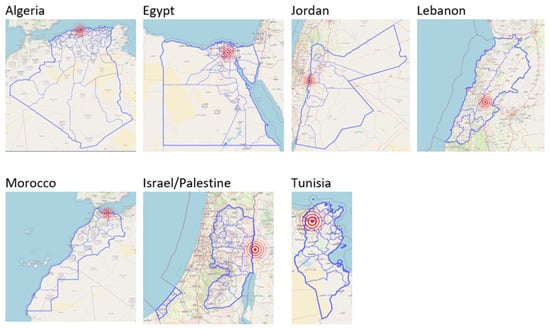
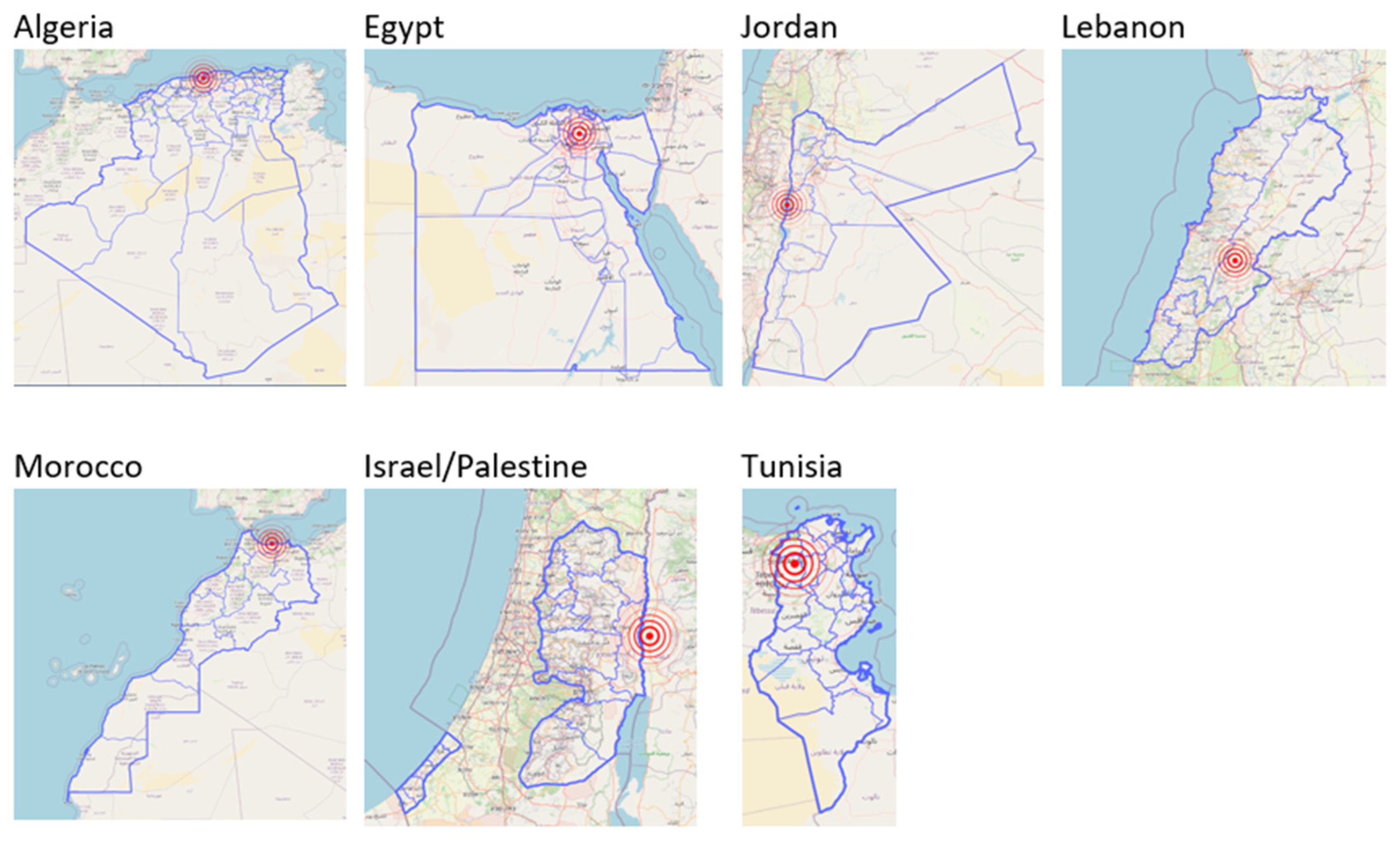
On 13–14 July 2021, the PPRD South 3 program organized a regional online TableTop Exercise (TTX) titled: “Online Workshop on the Utilisation of the Earthquake Simulator for Planning and Managing Earthquake Response”. Invited countries were Algeria, Egypt, Israel, Jordan, Lebanon, Morocco, Palestine, and Tunisia. Each national working group operated in parallel within dedicated online rooms and was provided with country-specific earthquake parameters, such as magnitude and epicenter, to generate impact scenarios in real time using SEIS-MEC. Table 5 and Figure 14 show the events considered, selected from the ISC-GEM historical earthquakes catalog integrated into the platform.
Table 5.
Characteristics of the earthquakes considered in the TTX.
Figure 14.
Earthquake epicenters considered in the TTX.
The exercise was structured as a two-day online scenario-based discussion workshop. Day 1 was dedicated to simulation, analysis, and planning, while Day 2 focused on reporting, feedback, and discussion on lessons learned. National working groups comprised representatives from civil protection authorities, DRM agencies, and scientific institutions.
The main objective of the TTX was to enhance participants’ understanding of the platform’s functionalities, assess simulated impacts and formulate elements of both an emergency operations plan and a communication plan based on the results. Specifically, the simulation aimed to:
- Test the national teams’ ability to operate the seismic simulator;
- Build capacity in scenario-based planning;
- Reinforce linkages between simulated impacts and operational planning;
- Promote good practices in earthquake response and public communication.
Participants used the Web-GIS platform to simulate the impact of a predefined seismic event in their territory. Key features included:
- Real-time generation of building damage and displaced population;
- Identification of priority response areas;
- Support for calculating shelter needs and logistical requirements;
- Output visualization for emergency coordination and planning.
Based on the simulator’s output, each group developed key elements for:
- An Intervention Plan, focusing on the social system (e.g., displaced population, sheltering, healthcare logistics);
- A Communication Plan, addressing both affected and unaffected populations.
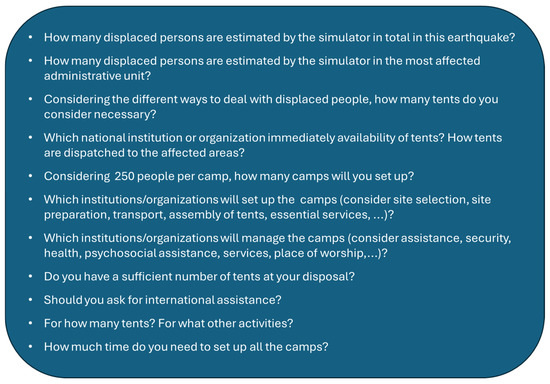
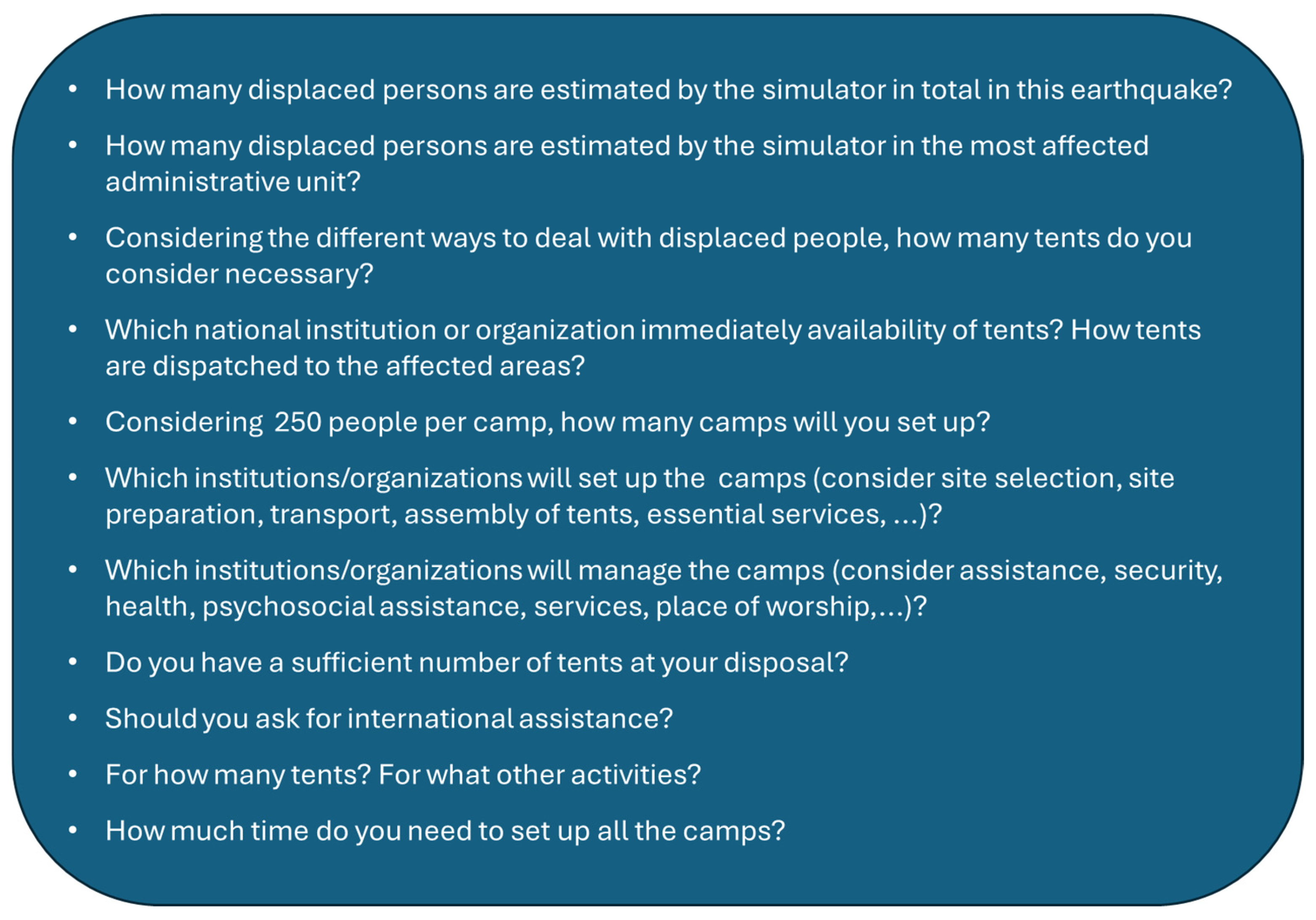
The TTX included predefined questions on institutional roles, shelter management, logistics (e.g., tents and camps), response timeframes, and health measures. Figure 15 shows the questions about population sheltering.
Figure 15.
Questions about population sheltering discussed during the TTX.
An unexpected scenario involving a COVID-19 outbreak in a displaced camp was also introduced to test the adaptability of response and communication strategies.
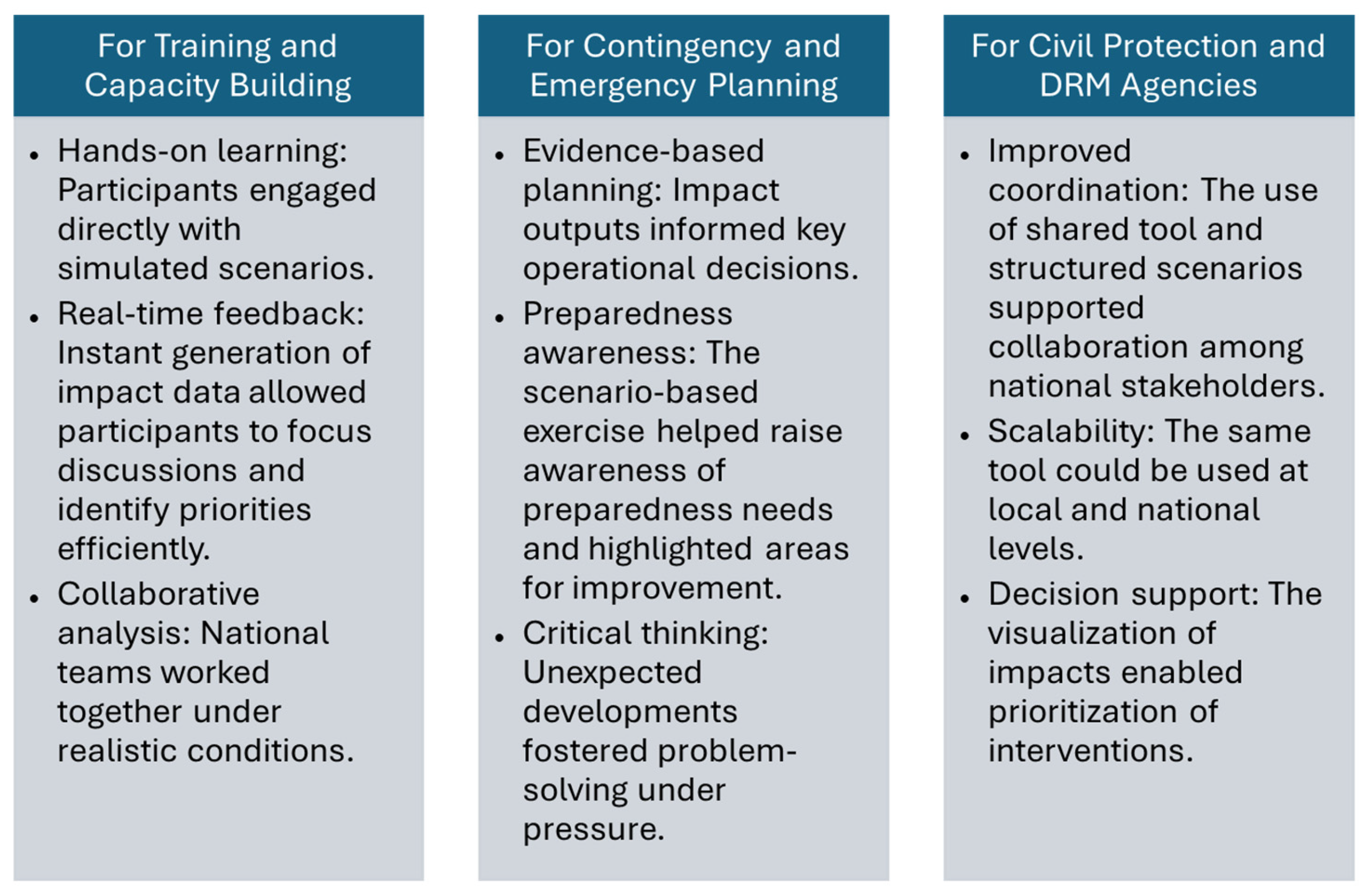
During the plenary session on the second day of the workshop, participating countries presented their responses to the predefined questions. In general, national expert groups were able to retrieve the main impact information from the simulator, demonstrating its user-friendly interface and accessibility. Participants were also able to link the simulated data to operational planning, confirming that the simulator is well aligned with the needs of civil protection authorities. Overall, the exercise proved useful, confirming SEIS-MEC’s effectiveness in supporting scenario-based discussions and planning. Benefits are summarized in Figure 16. The TTX highlighted the platform’s potentials to bridge the gap between scientific modeling and operational decision-making.
Figure 16.
Benefits of using a real-time seismic impact simulator for exercises.
5. Conclusions
The SEIS-MEC platform, jointly developed by EUCENTRE Foundation and the Italian Civil Protection Department, is a web-based seismic impact simulator designed to support rapid post-earthquake assessments and DRM. Thanks to its intuitive interface, integration of open-source data, and ease of use, the platform serves as a practical and accessible solution for national civil protection authorities and institutions in charge of seismic DRM. By entering only basic earthquake parameters, magnitude, epicenter location, and depth, the platform generates nearly real-time damage scenarios, including estimates of economic and human losses, as well as emergency response needs such as shelter and medical assistance posts. It also allows simulation of scenarios based on set of events selected from a catalog, either historical or virtual.
Originally developed under the PPRD South III initiative and currently enhanced within the IPA-CARE program, the platform has been adopted by several countries across the Southern Mediterranean and Western Balkans. Its architecture, combining freeware data with a modular design, ensures rapid deployment and immediate usability.
The platform, based on freeware data, serves primarily as an entry point to raise awareness and demonstrate potential. For operational use, however, a second phase with integration of accurate, country-specific national datasets is essential to ensure reliability, applicability, and institutional ownership. The ongoing IPA-CARE program is dedicated both to the integration of national datasets, aimed at improving scenario accuracy and tailoring the platform to local contexts, in four Balkan countries and to the enhancement of platform capabilities through the development of new functionalities.
Integration of national datasets may include:
- National census data on residential buildings and living population;
- Information on the location of faults;
- Soil-related data directly provided by the countries;
- More detailed data on critical facilities like schools, hospitals, police stations, airports;
- Information about the type of hospitals and their bed capability;
Enhancements of platform capabilities may include:
- The possibility to upload and use existing ShakeMaps;
- The evaluation of uncertainties;
- The possibility to consult satellite cartography directly from the tool;
- Dynamic data functionalities, for sharing real-time information with other tools;
- Connection to monitoring systems installed on buildings.
Over the next months, the feasibility of these improvements will be explored, with continuous stakeholder engagement to assess actual needs and data availability.
SEIS-MEC also strengthens seismic risk preparedness and prevention phases. By enabling realistic earthquake scenarios development and providing a shared operational tool, it supports contingency planning, inter-agency coordination, training exercises, and public risk communication. It serves as both a response instrument and a preparedness enabler. The platform proved effective during the PPRD South III TTX, where participants simulated real-time scenarios, assessed likely consequences, and defined operational responses. Its accessibility and user-friendliness allowed civil protection personnel to translate technical outputs into planning actions.
Its scalability, multilingual interface, and low technical entry requirements enhance value, particularly where time, data, or technical expertise may be limited. Rather than prioritizing analytical complexity, SEIS-MEC emphasizes operational usefulness and rapid applicability, aligning with the needs of civil protection agencies and decision-makers. It stands out as a practical and adaptable solution for supporting seismic risk management across different institutional contexts.
Author Contributions
Conceptualization, A.G. and M.F.; methodology, A.G., M.F. and B.B.; software development, D.Q.; validation, C.C.; writing—original draft preparation, A.G. and M.F.; writing—review and editing, A.G., C.C., D.Q. and B.B. All authors have read and agreed to the published version of the manuscript.
Funding
This research received external funding by the European Commission through the PPRD South III (Grant Agreement ENI/2017/392-714) and IPA-CARE (Grant Agreement ECHO/B1/2022/IPA/884155) programs.
Data Availability Statement
The freeware data and their sources are listed below: Baseline data: https://mapcruzin.com, https://openstreetmap.org (accessed on 1 January 2020 and 1 January 2025), Vs30 map: USGS https://earthquake.usgs.gov/data/vs30/ (accessed on 1 January 2020 and 1 January 2025), Exposure and fragility curves from GEM database: https://www.globalquakemodel.org (accessed on 1 January 2020 and 1 January 2025), Historical events catalog by ISC-GEM: http://www.isc.ac.uk/iscgem/ (accessed on 1 January 2020 and 1 January 2025).
Acknowledgments
The authors would like to acknowledge the DG-ECHO program for funding the IPA-CARE and PPRD South III projects, through which the SEIS-MEC platform was developed and further expanded. Special thanks are also extended to the GEM team for their support in accessing and utilizing the freeware data available through their databases. Finally, the authors wish to thank the countries that actively participated in the TTX organized within the PPRD South III program, demonstrating strong engagement and interest. During the preparation of this manuscript, the authors used ChatGPT-5 for English translation and language enhancement. The authors have reviewed and edited the output and take full responsibility for the content of this publication.
Conflicts of Interest
The authors declare no conflicts of interest.
Abbreviations
The following abbreviations are used in this manuscript:
| CAPRA | Central America Probabilistic Risk Assessment |
| D1 | Slight damage |
| D2 | Moderate damage |
| D3 | Extensive damage |
| D4 | Complete damage |
| DRM | Disaster Risk Management |
| EC8 | Eurocode 8 |
| EMT | Emergency Medical Team |
| EU | European Union |
| EUCLIDE | EUCentre for Loss-Impact and Damage Evaluation |
| FEMA | Federal Emergency Management Agency |
| GEM | Global Earthquake Model |
| GIS | Geographic Information System |
| GMMs | Ground Motion Models |
| GMPE | Ground Motion Prediction Equation |
| GU | Geographic Unit |
| JRC | Joint Research Centre |
| PGA | Peak Ground Acceleration |
| PPRD | Prevention, Preparedness and Response to natural and man-made Disasters |
| SEIS-MEC | SEIsmic riSk in MEditerranean Countries |
| SELENA | SEismic Loss EstimatioN using a logic tree Approach |
| SIGE | Sistema Informativo Geografico per l’Emergenza |
| TTX | Tabletop Exercise |
| USAR | Urban Search and Rescue |
| USGS | United States Geological Survey |
| Vs30 | Average shear-wave velocity in the first 30 m of depth |
References
- Erdik, M.; Fahjan, Y. Local Earthquake Rapid Loss Assessment Systems. In Rapid Earthquake Loss Assessment After Damaging Earthquakes; Springer: Berlin/Heidelberg, Germany, 2006; pp. 45–62. [Google Scholar]
- LESSLOSS. Earthquake Disaster Scenario Prediction and Loss Modelling for Urban Areas; Spence, R., Ed.; IUSS Press: Pavia, Italy, 2007. [Google Scholar]
- So, E.; Spence, R. Estimating shaking-induced casualties and building damage for global earthquake events: A proposed modelling approach. Bull. Earthq. Eng. 2013, 11, 347–363. [Google Scholar] [CrossRef] [Scilit]
- Erdik, M.; Şeşetyan, K.; Demircioğlu, M.B.; Zülfikar, C.; Hancılar, U.; Tüzün, C.; Harmandar, E. Rapid earthquake loss assessment after damaging earthquakes. In Perspectives on European Earthquake Engineering and Seismology. Geotechnical, Geological and Earthquake Engineering; Springer: Cham, Switzerland, 2014; Volume 34. [Google Scholar] [CrossRef] [Scilit]
- Faravelli, M.; Di Meo, A.; Borzi, B.; Cantoni, A.; Salvadori, L.; Speranza, E.; Dolce, M. SICURO+: A web platform to raise awareness on seismic risk in Italy. Int. J. Disaster Risk Reduct. 2024, 103, 104345. [Google Scholar] [CrossRef] [Scilit]
- Kazantzidou-Firtinidou, D.; Gountromichou, C.; Kyriakides, N.C.; Liassides, P.; Hadjigeorgiou, K. Seismic Risk Assessment as a Basic Tool for Emergency Planning: “PACES” EU Project. WIT Trans. Built Environ. 2017, 173, 43–54. [Google Scholar]
- Hung, H.; Chen, L. The application of seismic risk-benefit analysis to land use planning in Taipei City. Disasters 2007, 31, 256–276. [Google Scholar] [CrossRef] [Scilit]
- Roohi, M.; Ghasemi, S.; Sediek, O.; Jeond, H.; Van de Lindt, J.H.; Shields, M.; Hamideh, S.; Cutler, H. Multi-disciplinary seismic resilience modeling for developing mitigation policies and recovery planning. Resilient Cities Struct. 2024, 3, 66–84. [Google Scholar] [CrossRef] [Scilit]
- Masi, A.; Samela, C.; Santarsiero, G.; Vona, M. Scenari di danno sismico per l’esercitazione nazionale di Protezione civile “Terremoto Val d’Agri 2006”. In Proceedings of the XII Convegno ANIDIS L’Ingegneria Sismica in Italia, Pisa, Italy, 10–14 June 2007. [Google Scholar]
- UNDRR. Design and Conduct Simulation Exercises—SIMEX. Words into Action Guideline Series. 2012. Available online: https://www.undrr.org/publication/words-action-guidelines-design-and-conduct-simulation-exercises-simex (accessed on 1 January 2025).
- Silva, V.; Crowley, H.; Bazzurro, P. Exploring risk-targeted hazard maps for Europe. Earthq. Spectra 2016, 32, 1165–1186. [Google Scholar] [CrossRef] [Scilit]
- Bal, I.E.; Bommer, J.J.; Stafford, P.J.; Crowley, H.; Pinho, R. The Influence of Geographical Resolution of Urban Exposure Data in an Earthquake Loss Model for Istanbul. Earthq. Spectra 2010, 26, 619–634. [Google Scholar] [CrossRef] [Scilit]
- Zuccolo, E.; Bolzon, G.; Pitari, F.; Rodríguez Muñoz, L.; Monsalvo Franco, I.E.; Scaini, C.; Poggi, V.; Smerzini, C.; Salon, S. UrgentShake: An HPC System for Near Real-Time Physics-Based Ground Shaking Simulations to Support Emergency Response Efforts; EGU25-9353; EGU General Assembly: Vienna, Austria, 2025. [Google Scholar] [CrossRef] [Scilit]
- Costanzo, A.; Falcone, S.; D’Alessandro, A.; Vitale, G.; Giovinazzi, G.; Morici, M.; Dall’Asta, A.; Buongiorno, M.F. A Technological System for Post-Earthquake Damage Scenarios Based on the Monitoring by Means of an Urban Seismic Network. Sensors 2021, 21, 7887. [Google Scholar] [CrossRef] [Scilit]
- Silva, V.; Horspool, N. Combining USGS ShakeMaps and the OpenQuake-engine for damage and loss assessment. Earthq. Eng. Struct. Dyn. 2019, 48, 634–652. [Google Scholar] [CrossRef] [Scilit]
- Lu, X.; Zeng, X.; Xu, Z.; Guan, H. Improving the Accuracy of near Real-Time Seismic Loss Estimation using Post-Earthquake Remote Sensing Images. Earthq. Spectra 2018, 34, 1219–1245. [Google Scholar] [CrossRef] [Scilit]
- Tubaldi, E.; Özer, E.; Douglas, J.; Gehl, P. Examining the contribution of near real-time data for rapid seismic loss assessment of structures. Struct. Health Monit. 2022, 21, 118–137. [Google Scholar] [CrossRef] [Scilit]
- Silva, V.; Crowley, H.; Pagani, M.; Monelli, D.; Pinho, R. Development of the OpenQuake engine, the Global Earthquake Model’s open-source software for seismic risk assessment. Nat. Hazards 2014, 72, 1409–1427. [Google Scholar] [CrossRef] [Scilit]
- Rodríguez-Saiz, J.; González-Rodrigo, B.; Rejas-Ayuga, J.G.; Hidalgo-Leiva, D.A.; Marchamalo-Sacristán, M. Assessing Building Seismic Exposure Using Geospatial Technologies in Data-Scarce Environments: Case Study of San José, Costa Rica. Appl. Sci. 2025, 15, 6318. [Google Scholar] [CrossRef] [Scilit]
- Strasser, F.O.; Stafford, P.J.; Bommer, J.J.; Erdik, M. State of the Art of European Earthquake Loss Estimation Software. In Proceedings of the 14th World Conference on Earthquake Engineering, Beijing, China, 12–17 October 2008. [Google Scholar]
- Makhoul, N.; Argyroudis, S. Loss estimation software: Developments, limitations and future needs. In Proceedings of the 16th European Conference on Earthquake Engineering, Thessaloniki, Greece, 18–21 June 2018. [Google Scholar]
- Guérin-Marthe, S.; Gehl, P.; Negulescu, C.; Auclair, S.; Fayjaloun, R. Rapid earthquake response: The state-of-the art and recommendations with a focus on European systems. Int. J. Disaster Risk Reduct. 2021, 52, 101958. [Google Scholar] [CrossRef] [Scilit]
- Sousa, M.L.; Tsionis, G. National seismic risk assessment: An overview and practical guide. Nat. Hazards 2025, 1–34. [Google Scholar] [CrossRef] [Scilit]
- JRC. Seismic Risk Assessment Tools Workshop: Overview and Comparative Analysis; Joint Research Centre, European Commission: Brussels, Belgium, 2017. [Google Scholar]
- Federal Emergency Management Agency (FEMA). HAZUS Earthquake Model; Technical manual Hazus 6.1; Federal Emergency Management Agency: Washington, DC, USA, 2024.
- Cardona, O.D.; Ordaz, M.; Reinoso, E. CAPRA—Comprehensive Approach for Probabilistic Risk Assessment: International initiative for risk management effectiveness. In Proceedings of the 15th World Conference on Earthquake Engineering, Lisbon, Portugal, 24–28 September 2012. [Google Scholar]
- Yalçın, D.; Fahjan, Y.; Eravcı, B.; Yanık, K. AFAD-RED Rapid Earthquake Damage and Loss Estimation Software: Example of Adıyaman Samsat Earthquake. In Proceedings of the 9th Congress of the Balkan Geophysical Society, European Association of Geoscientists & Engineers (EAGE), Antalya, Turkey, 5–9 November 2017; ISBN 9781510857162. [Google Scholar]
- Nievas, C.I.; Crowley, H.; Weatherill, G.; Cotton, F. Real-Time Loss Tools: Open-Source Software for Time- and State-Dependent Seismic Damage and Loss Calculations. Features and Application to the 2023 Türkiye-Syria Sequence. Seismica 2025, 4, 1–30. [Google Scholar] [CrossRef] [Scilit]
- Poudel, A.; Pitilakis, K.; Silva, V.; Rao, A. Infrastructure seismic risk assessment: An overview and integration to contemporary open tool towards global usage. Bull. Earthq. Eng. 2023, 21, 4237–4262. [Google Scholar] [CrossRef] [Scilit]
- Molina, S.; Lang, D.H.; Lindholm, C.D. SELENA: An open-source tool for seismic risk and loss assessment using a logic tree computation procedure. Comput. Geosci. 2010, 36, 257–269. [Google Scholar] [CrossRef] [Scilit]
- Momeni, P.; Goda, K.; Sirous, N.; Molnar, S. Rapid Computation of Seismic Loss Curves for Canadian Buildings Using Tail Approximation Method. Geohazard 2025, 6, 26. [Google Scholar] [CrossRef] [Scilit]
- Goretti, A.; Sabetta, F. Real Time Seismic Loss Estimation in Italy; Geophysical Research Abstracts, EGU2009-544; EGU General Assembly: Vienna, Austria, 2009; Volume 11. [Google Scholar]
- Di Pasquale, G.; Ferlito, R.; Orsini, G.; Papa, F.; Pizza, G.; Van Dyck, D. Seismic scenario tools for emergency planning and management. In Proceedings of the XXIX General Assembly of the European Seismological Commission, Potsdam, Germany, 13–17 September 2004. [Google Scholar]
- Faravelli, M.; Borzi, B.; Onida, M.; Pagano, M. Tools for seismic risk assessment on different asset types. In Proceedings of the 18th World Conference on Earthquake Engineering, Milan, Italy, 30 June–5 July 2024. [Google Scholar]
- Bozzoni, F.; Borzi, B.; Faravelli, M.; Onida, M.; Pagano, M.; Quaroni, D. A webgis tool to assess the seismic risk of health facilities for emergency management in Italy. In Proceedings of the 18th World Conference on Earthquake Engineering, Milan, Italy, 30 June–5 July 2024. [Google Scholar]
- Dolce, M.; Goretti, A.; Germagnoli, F.; Borzi, B.; Faravelli, M. The SeisMec WebGis Platform for Real-time Seismic Scenarios Supporting Disaster Risk Management. In Proceedings of the 5th Annual Seminar of Disaster Risk Management Center, Virtual, 17–18 November 2021. [Google Scholar]
- Global Earthquake Model. GEM Foundation. Available online: https://www.globalquakemodel.org/ (accessed on 1 January 2025).
- Crowley, H.; Despotaki, V.; Rodrigues, D.; Silva, V.; Toma-Danila, D.; Riga, E.; Karatzetzou, A.; Fotopoulou, S.; Zugic, Z.; Sousa, L.; et al. Exposure model for European seismic risk assessment. Earthq. Spectra 2020, 36 (Suppl. 1), 252–273. [Google Scholar] [CrossRef] [Scilit]
- Dabeek, J.; Silva, V. Modeling the residential building stock in the Middle East for multi-hazard risk assessment. Nat. Hazards 2020, 100, 781–810. [Google Scholar] [CrossRef] [Scilit]
- Nicole, P.; Silva, V.; Amo-Oduro, D. Development of a uniform exposure model for the African continent for use in disaster risk assessment. Int. J. Disaster Risk Reduct. 2022, 71, 102823. [Google Scholar] [CrossRef] [Scilit]
- USGS Database. Available online: https://earthquake.usgs.gov/data/vs30/ (accessed on 1 January 2025).
- Martins, L.; Silva, V. Global Vulnerability Model of the GEM Foundation; GitHub: San Francisco, CA, USA, 2023; Available online: https://github.com/gem/global_vulnerability_model/ (accessed on 1 January 2025). [CrossRef]
- Akkar, S.; Sandıkkaya, M.A.; Bommer, J.J. Empirical Ground-Motion Models for Point- and Extended-Source Crustal Earthquake Scenarios in Europe and the Middle East. Bull. Earthq. Eng. 2014, 12, 359–387. [Google Scholar] [CrossRef] [Scilit]
- EN 1998-1; Eurocode 8: Design of Structures for Earthquake Resistance—Part 1: General Rules, Seismic Actions and Rules for Buildings. The European Union Per Regulation 305/2011, Directive 98/34/EC, Directive 2004/18/EC. European Standards: Brussels, Belgium, 2004.
- Papadopoulos, G.A.; Agalos, A.; Carydis, P.; Lekkas, E.; Mavroulis, S.; Triantafyllou, I. The 26 November 2019 Mw 6.4 Albania Destructive Earthquake. Seismol. Res. Lett. 2020, 91, 3129–3138. [Google Scholar] [CrossRef] [Scilit]
- Duni, L.; Theodoulidis, N. Short Note on the November 26, 2019, Durrës (Albania) M 6.4 Earthquake: Strong Ground Motion with Emphasis in Durrës City. In Proceedings of the International Symposium on Durrës Earthquake and Eurocodes (ISDEE-2020), Tirana, Albania, 21–22 September 2020. [Google Scholar]
- Government of Albania; European Union; United Nations Agencies; World Bank. Albania Post-Disaster Needs Assessment, Volume A Report; OCHA: Tirana, Albania, 2020.
- USGS. M 6.4, 15km WSW of Mamurras, Albania, PAGER, Event ID: us70006d0m. 2020. Available online: https://earthquake.usgs.gov/earthquakes/eventpage/us70006d0m#pager (accessed on 15 September 2025).





Disclaimer/Publisher’s Note: The statements, opinions and data contained in all publications are solely those of the individual author(s) and contributor(s) and not of MDPI and/or the editor(s). MDPI and/or the editor(s) disclaim responsibility for any injury to people or property resulting from any ideas, methods, instructions or products referred to in the content. |
© 2025 by the authors. Licensee MDPI, Basel, Switzerland. This article is an open access article distributed under the terms and conditions of the Creative Commons Attribution (CC BY) license (https://creativecommons.org/licenses/by/4.0/).