


Abstract
The literature addresses Time Perspective and technology use among adolescents in various ways. However, the existing body of research remains limited, with gaps in both descriptive and comparative dimensions. Accordingly, this study aimed to describe and compare Time Perspective, the Use of ICT (Information and Communication Technologies) and Social Media, and Attitudes Towards Technology among adolescents, considering sex, type of course, and school year. The sample comprised 433 secondary school students aged between 14 and 19 years. Two instruments were employed: the Time Perspective Inventory (TPI) and the Media and Technology Usage and Attitudes Scale for Portuguese Youth (MTUAS-PY). Participants were generally more oriented towards the past; specifically, greater Future Orientation was observed among male students, while Past Orientation was more prevalent in regular-education courses, and a more Negative View of the Future was found among students in vocational courses. Smartphone Use emerged as the highest-scoring dimension within ICT and Social Media Use, whereas Accessibility and Ease received the highest scores in Attitudes Towards Technology. This study provides a nuanced overview of the secondary school adolescent population and identifies significant differences when considering academic tracks. These findings raise important considerations for future research, both in terms of factorial analysis and comparative approaches.
1. Introduction
Throughout adolescence, neurological, hormonal, and cognitive development is anticipated and, consequently, physical, psychological, and social transformations occur. Adolescence represents a period of emotional instability, with an increased risk of developing disorders associated with puberty and physical maturation [1]. In this phase, young people develop greater cognitive maturation, begin to formulate an identity, and question their role in society [2,3]. They face various challenges and transitions, which may be both a consequence of this developmental phase and of their academic path. Entry into and attendance at secondary school is another common factor among young people during adolescence, bringing new experiences, thoughts, and emotions they must handle. They respond according to their capacities and strategies, derived from their life experiences, interactions, and internal repertoire [4,5,6].
An individual’s internal capacities and characteristics are developed through interaction with the environment, a process that begins in childhood. These internal variables shape the individual and their subsequent way of seeing and interacting with others and the world [7]. They accompany the person throughout life and, at the same time, undergo changes themselves (e.g., personality, beliefs, self-esteem, curiosity, resilience…); from the moment they emerge, they will be present in any interaction between the individual and the context. Depending on how they develop, they can be adaptive and promote good functioning and mental health or conversely contribute to the emergence of psychological problems [3,8]. This study addresses one internal variable and one contextual variable highly present in adolescence, Time Perspective and ICT, respectively.
1.1. Time Perspective
Over the course of life, people have various experiences that give rise to new knowledge, feelings, and thoughts; these are stored and contribute to their continuous development. In this way, it is possible that past experiences influence the present moment and serve as a basis for planning and safeguarding the future. One of the main factors that makes this possible is the development of a subjective perception of time. In childhood, children begin to discern subjectively between the past, the present moment, and the future, and to label events and experiences as what has already happened, what is occurring now, and what is to come, initiating the development of their Time Perspective [9].
We define Time Perspective as the way in which an individual relates to time, often unconsciously and always subjectively [10]. It is generally divided into past, present, and future, and it organizes an individual’s personal and social experiences into these temporal zones in an organized and categorized manner. Each of these zones possesses distinct influences on human thought and behavior and is associated with both positive and negative affect according to subjective experiences [10].
1.2. Research Lines of the Time Perspective
This topic has gained more prominence in Portugal over the past twenty years, deepened after the adaptation and creation of instruments for its assessment, namely, the development of the Time Perspective Inventory (TPI) [11]. and the adaptation of the Zimbardo Time Perspective Inventory (ZTPI) [9,12], which have allowed a more structured and systematic approach. Currently, there are two main strands of research, with the TPI and ZTPI falling into the second. The first recognizes the global nature of Time Perspective but focuses on the future, framing study within human motivation, more common in fields such as educational, motivational, and vocational psychology [13,14]. The second considers the past, present, and future dimensions as influencing factors of motivation, judgment, and behavior. This second strand is more common in social, organizational, and clinical psychology [9,15]. Time Perspective has gained greater clinical prominence, particularly through the second research strand, as it is characterized as a specific cognitive style of information processing that impacts the individual’s overall functioning, thought, behavior, and emotions [9,16]. Thus, it has been related to personality, self-esteem, anxiety, depression, addictive problems, and risk behaviors and has served as a basis for intervention development [17,18,19].
1.3. Descriptive Approach in Time Perspective
Time Perspective carries great importance for individual functioning throughout life and makes a significant contribution during adolescence [11,20]. In this phase, more complex and meaningful social relationships begin to be established, and academic performance and decision-making, linked to recurrent study demands, are tested [2,3]. This is a crucial moment in social and emotional development and in the maturation of variables such as self-esteem, personality, eating habits, and behaviors [21,22,23].
To promote positive individual functioning, it is necessary to know the variables that comprise it and how they behave in different populations and contexts. Accordingly, a descriptive approach is essential for mapping and understanding the diversity and complexity of adolescents’ experiences and behaviors. Although literature integrates Time Perspective as a multifactorial construct, many of its components are understudied, and those most studied show inconsistent results [24,25]. Therefore, it is important to build a more solid and detailed foundation and identify specific patterns and trends within populations and their subgroups. A descriptive approach will capture cultural and contextual nuances often lost in other quantitative or experimental study typologies, generate new insights, and reveal cultural and individual particularities crucial for effective, personalized interventions [26].
1.4. Technologies
Regarding technologies, literature has demonstrated growing and frequent use at increasingly younger ages, particularly ICT, with social networks standing out [27,28,29,30]. The concept of ICT refers to the set of tools, communicational activities, and social dynamics by which we can consider technology as an instrument, a product, and a context. The latter encompasses the consequences of its use, convergence, and dissemination through media, as well as its influence on innovations in communication and information representation [31].
In recent years, the Instituto Nacional de Estatística (INE) has found that most internet use is devoted to communication and information seeking, and that 80% of these users participate in social networks. There is an increasing need to keep devices always connected and a growing importance attributed to social networks [32]. Concerning young people, practically all those between sixteen and twenty-four years old, and all individuals who are studying, use the internet [33,34,35]; ICT and, especially, internet-access devices are becoming available at ever younger ages. Data from the Entidade Reguladora para a Comunicação Social (ERC) show that children aged three to eight watch television every or nearly every day; in the six-to-eight age group, 62% use the internet and 77% play digital games [36,37]. Thus, with technology present from such an early age, it ends up playing a role in development, affecting each young person individually and according to personal characteristics and psychological functioning, resulting in consequences that can be both positive and negative [38].
Technologies are a relevant topic today. As Tache and Vâlau (2025) [39]. state, the use of technologies, and AI in particular, can have adverse effects on users as long as they remain unregulated. This is especially true for adolescents, who are at a highly susceptible and vulnerable stage of development. If researchers and other professionals, such as journalists, rarely consider fact-checking [40], it is worrying that adolescents may spend so much time connected to online information, without reference points or the possibility of critical reflection or confrontation.
ICT and social-media use and attitudes toward technology have been continuously studied and encompass a wide range of technology-related variables, which makes research very diversified. There are several studies addressing one or more technologies, a single social network, and social networks in general [41,42,43,44,45,46,47]; however, few involve a broad approach to ICT and social-network use and to attitudes toward technology in adolescents, especially Portuguese adolescents, often due to measurement scarcity and objective specificity, which leads them to focus on specific ICT domains (one of the best-known being problematic internet use). Another reason relates to sampling difficulties: comprehensive surveys tend to have large numbers of items, implying larger samples and greater participant fatigue, especially in adolescent populations [48,49].
1.5. The Present Study
Considering the information presented here, the present study’s general objective is to describe Time Perspective, ICT and social media use, and attitudes toward technology in secondary-school adolescents, for which the following specific objectives were defined: (i) to describe Time Perspective and ascertain whether there are differences by sex, course type, and school year; and (ii) to describe ICT and social media use and attitudes toward technology and analyze possible differences by sex, course type, and school year. In line with the two objectives, the following research questions were formulated:
- RQ1: To which Time Perspective are the adolescents in our sample predominantly oriented?
- RQ2: Are there differences in Time Perspective by sex, course type, and school year?
- RQ3: What types of ICT use and what attitudes towards technology are most frequent among adolescents?
- RQ4: Are there differences in ICT use and attitudes towards technology by sex, course type, and school year?
2. Materials and Methods
2.1. Study Design
This study followed a cross-sectional quantitative methodology with a descriptive and comparative approach to Time Perspective, use of ICT and social media, and attitudes towards technology in secondary school adolescents according to sex, type of course, and grade. Data were collected using convenience sampling.
Underlying Scientific Methods
This study was guided by core scientific methods of investigation that complement the statistical procedures described above. Analysis was used to decompose complex constructs (Time Perspective, ICT and social media usage, and attitudes toward technology) into measurable dimensions for psychometric evaluation and group comparison. Synthesis integrated results across instruments, factor analyses, and statistical tests to produce coherent interpretations throughout the manuscript (instruments, results, and discussion). Deduction informed hypothesis formulation and the selection of confirmatory procedures (for example, CFA and directed comparisons) on the basis of theory and prior validation studies. Induction supported exploratory stages, notably EFA and PCA, in which empirical patterns emerging from the sample informed the reconstruction and refinement of constructs. Comparison was central to the study’s objectives and was applied throughout to test differences by sex, grade, and course type using uni- and multivariate techniques including robust procedures. Taken together, these methods ensure epistemic transparency: analytic and deductive steps anchor confirmatory claims in theory, while inductive and comparative steps permit empirical discovery and contextualized interpretation of adolescents’ technological engagement.
2.2. Participants
In the present study, the sample initially included 481 participants from schools in the north of Portugal, selected by convenience. After data cleaning, 433 remained, all secondary-school students, 201 (46.4%) male and 231 (53.6%) female, with ages ranging from 14 to 19 years (M = 16.30; SD = 1.08). The upper bound for adolescence was set at 19 years in accordance with the World Health Organization (WHO) [50], so individuals older than 19 were excluded. Regarding grade level, 132 (30.5%) were in the 10th grade, 135 (31.2%) in the 11th grade, and 166 (38.3%) in the 12th grade. A total of 218 (50.3%) attended vocational courses and 215 (49.7%) attended general-education tracks (Table 1). This study followed a cross-sectional quantitative methodology with a descriptive and comparative approach to Time Perspective, use of ICT and social media, and attitudes towards technology in secondary school adolescents according to sex, type of course, and grade. Data were collected using convenience sampling.
Table 1.
Sociodemographic data of the sample.
The sample included students from fifteen vocational courses and four general-education tracks. Within vocational courses, categories/groups were formed to encompass courses with similar characteristics (Table 1). Thus, six vocational course categories and three ungrouped courses emerged. Categories with n ≥ 30 were retained for analysis: Computer Science (n = 35; three courses), Installation, Maintenance, and Repair (IMR; n = 37; two courses), Hospitality and Catering (n = 42; two courses), and Media Production (n = 44; one course). For general education tracks, the same n ≥ 30 criterion yielded three retained majors: Science and Technology (n = 105), Socioeconomics Sciences (n = 72), and Languages and Humanities (n = 33).
2.3. Instruments
The research protocol comprised three instruments. The first was a sociodemographic questionnaire, consisting of items to collect diverse information about participants, including sex, age, grade, and course type.
2.3.1. Time Perspective Inventory
The Time Perspective Inventory (TPI) was developed and validated for Portuguese elementary and secondary school students by Janeiro [11,51]. and comprises 32 items on a 7-point Likert scale (1–7), rated by degree of agreement with each statement. It contains four subscales: Future Orientation (16 items), Present Orientation (8 items), Past Orientation (4 items), and Negative/Anxious View of the Future (4 items). The Future Orientation subscale includes positively and negatively worded items, with the latter reversed for scoring. It is further divided into five dimensions: Density; Time Span (near vs. distant future); Optimism; Continuity; and Clarity. In the present study, Future Orientation excluded three items, retaining 13 of 16. In the original validation, Cronbach’s α ranged from 0.70 to 0.86 for three subscales (Past Orientation α = 0.51). In this study, most subscales had α = 0.73 to 0.90, with Past Orientation at α = 0.58. Lower reliability in Past Orientation has been reported in the literature. Future Orientation dimensions in this study yielded Cronbach’s alphas from 0.61 to 0.79. Optimism and Clarity, each composed of two items, were assessed via item–total correlations (0.745 to 0.871).
2.3.2. Media and Technology Usage and Attitudes Scale for Portuguese Youth
The Media and Technology Usage and Attitudes Scale for Portuguese Youth (MTUAS-PY) was adapted and validated for Portuguese adolescents by Costa et al. [48] from the original adult scale by Rosen et al. [52].This scale consists of 59 items: 44 assess ICT and social-media use and 15 assess attitudes toward technology. Of the 44 use items, the last four gauge the number of online friends; the first 40 use a 10-point Likert scale (1 = never to 10 = all the time) for frequency, and the final four use an 8-point Likert scale (1 = 0 to 8 = 751 or more). The use scale is divided into ten subscales: Social Media Use (formerly “Facebook Use,” 11 items), Email Use (5), Internet Search and Multimedia Sharing (6), Smartphone Use (5), Video Recording and Image Capture (2), Video Games (3), Information Search (3), Watching Television (2), Multimedia Search (2), and Online Friendships (2). The Social Media subscale was renamed to reflect general social-network use. Attitudes toward technology are rated on a 5-point Likert scale (1 = strongly disagree to 5 = strongly agree) and divided into four subscales: Anxiety and Dependency (6), Task-Switching Preference (3), Positive Attitude (3), and Negative Attitude (3). In this study, attitudes converged into five factors: an Accessibility and Ease factor added three items migrated from Anxiety and Dependency. Validation alphas for use subscales ranged from 0.67 to 0.95, and in the present study, 0.55 to 0.84 (Information Seeking was below 0.60). Four use subscales comprised two items each and were assessed via item–total correlations (0.539–0.935). Attitude subscales’ alphas ranged from 0.68 to 0.84 in validation and from 0.61 to 0.81 in this study.
2.4. Procedures
Initially, permission requests were made to the authors of the selected instrument validations, and an investigation protocol was drafted. This enabled the necessary requests for study approval, namely to the Directorate-General for Education (DGE) and to the Ethics Committee of the University of Trás-os-Montes and Alto Douro (CE-UTAD), registration numbers 1315700001 and Doc82-CE-UTAD-2023, respectively. After approval, the chosen schools, teachers, and class guardians were contacted, and consent documents were delivered for review by the legal tutors of minors. The right to privacy, anonymity, and voluntariness was informed and guaranteed. In each class, the investigation was first explained to participants, then consent forms were collected and the questionnaire made available via QR code or LimeSurvey link. The researcher was always present to clarify any doubts, with an average response time of 14.7 min.
2.5. Statistical Analysis
Three software packages were employed in the data analysis: IBM SPSS (version 29), R (version 4.4.2), complemented by the integrated development environment RStudio (version 2023.06.0), and Jamovi (version 2.3.28). Data preparation was primarily conducted using SPSS, including the handling of missing values, exclusion of outliers, and construction of derived variables. This software was also used for the majority of descriptive and comparative analyses. Its lightweight and user-friendly interface facilitates preprocessing tasks, particularly in contexts where classical statistical assumptions are partially or fully met. In such cases, SPSS remains advantageous by enabling the execution of complex analyses without requiring programming, including options such as bootstrapping, Welch’s t-test, and other robust approaches for addressing moderate violations of assumptions. Confirmatory factor analysis (CFA), exploratory factor analysis (EFA), and principal component analysis (PCA) were conducted using Jamovi, which proved particularly effective due to its modular extensibility and accessible interface, allowing for clear visualization of models without the need for coding. Jamovi also supports procedures not readily available or easily implemented in SPSS, such as advanced structural modelling. R, in turn, was utilized for more complex multivariate analyses, customized visualizations (e.g., scatterplots), and robust statistical testing. Its high computational power and versatility make it ideal for researchers requiring full control over model specification, access to cutting-edge statistical methods, and flexibility for fine-tuning and analytical extensions.
Initially, data cleaning and organization were performed; outliers were addressed using z-scores and Mahalanobis distance. Then variables were constructed as described by the original authors, and normality was assessed via Kolmogorov–Smirnov (p > 0.05) and skewness/kurtosis between −1 and 1. Boxplots were used when necessary. Most dimensions exhibited approximately normal distributions with skewness and kurtosis between −1 and 1, both in the total sample and in comparison groups. This was not the case for some ICT and social-media use dimensions, which showed skewness and kurtosis outside that range. According to the literature, this is common when evaluating technology use and was observed in both the original and Portuguese validation [48,52]. Technology use is highly diverse, making the presence of statistical outliers (e.g., individuals who play much more frequently than most or who have an unusually high number of online friends) not necessarily indicative of true outliers. Taking this into account, authors have always analyzed the MTUAS-PY retaining high skewness and kurtosis values in some dimensions so as not to exclude data representative of reality [48,52]. The same approach was taken in this study, with the addition of robust analyses to address assumption violations.
Subsequently, factor and principal component analyses were performed, namely CFA, EFA, and PCA. For CFAs, robust Maximum Likelihood with mean adjustment (MLM) estimators were included to address deviations from normality when necessary, and otherwise to provide additional robustness to the models. When R was used for CFA, the lavaan package was employed, and for EFA the psych package. After the factor analyses, variables were reconstructed as needed, and internal consistency was evaluated using Cronbach’s alpha and item–total correlations for dimensions consisting of two items.
The fit indices used varied depending on the model analysis performed, namely Chi-Square and its degrees of freedom, χ2(df), Comparative Fit Index (CFI), Tucker–Lewis Index (TLI), Root Mean Square Error of Approximation (RMSEA), Standardized Root Mean Square Residual (SRMR), and the Bayesian Information Criterion (BIC). Chi-Square normally indicates good fit when p > 0.05; however, this index is very sensitive for n > 200, which can lead to Type I errors. Thus, one may use the χ2/df ratio alongside other indices. For the χ2/df ratio, values above 5 are considered poor, between 3 and 5 mediocre, between 1 and 2 good, and values around 1 very good [53,54]. CFI and TLI range from 0 to 1: values ≥ 0.95 very good, 0.90–0.95 good, 0.80–0.90 mediocre, and <0.80 poor [54,55]. RMSEA and SRMR normally range between 0 and 1 (RMSEA > 1 is rare) and are perfect at 0; ≤0.05 is very good, 0.06–0.08 good, 0.08–0.10 mediocre, and >0.10 poor/unacceptable [54,55,56]. Finally, BIC has no specific cutoff; lower values indicate better fit. It is primarily used for model comparison; the model with the lowest BIC is preferred. The difference ΔBIC informs strength of evidence: ≤2 negligible, 2–6 positive, 6–10 strong, and >10 very strong [57]. Regarding factor analysis, Bartlett’s test of sphericity and the Kaiser–Meyer–Olkin (KMO) measure were also considered to determine data suitability for EFA and PCA. Bartlett’s test yields a χ2(df) value—the larger the χ2, the more appropriate the mode—accompanied by p < 0.05. KMO ranges from 0 to 1: ≥0.60 acceptable, <0.50 inadequate, ≥0.70 good, ≥0.80 very good, ≥0.90 excellent [58,59].
Subsequently, descriptive and comparative analyses were carried out using a mixed approach, predominantly parametric, but resorting to nonparametric tests when appropriate. For univariate two-group comparisons, Student’s t-test for independent samples was used, and a stratified bootstrapping approach was included to estimate significance without the influence of nonnormality in order to avoid Type I and II errors when p-values were near the threshold, or simply to add robustness to the analysis. When homogeneity was not met or was marginal (values near the threshold), Welch’s t-test was applied. In those cases, Cohen’s d was calculated to account for the lack of homogeneity and to reflect Welch’s statistic using the R package rstatix (version 0.7.2). Finally, when violations of normality and homogeneity occurred, Yuen’s robust test (from the WRS2 package) (version 1.1.6) and a robust Cohen’s d from the same package were used. The Modified One-Step M-Estimator (MOM) served as the estimator, with a 20% trimmed mean, allowing for the handling of outliers and assumption breaks. A trimming level of 20% was adopted, as this represents a common standard in the robust Yuen test for controlling the influence of heavy-tailed distributions. Simulation studies indicate that, in the presence of tail contamination, moderate trimming, such as 20%, tends to align the Type I error rate more closely with the nominal level [60], thereby reducing the impact of outliers. Alternative trimming levels, namely 10% and 5%, were also tested; however, the results did not differ substantially from those obtained with 20%, and this value was therefore retained as the default. The MOM was included as a complementary procedure, offering dual protection. It is applied to trimmed data and reweights residual asymmetric outliers that may persist following the symmetric cut [60]. The MOM implementation in the WRS2 package is based on Huber’s ψ function, assigning weights to observations according to the magnitude of their residuals. It does not eliminate remaining outliers but rather attenuates their influence. These two procedures are complementary and provide layered robustness: trimming addresses tail contamination by removing or neutralizing the most extreme values prior to M-adjustment, while MOM with Huber refines the weighting of residual observations that were not excluded. For dimensions where this test was employed, the statistic is reported as “tᵧ” and the effect size as “dr.” Cohen’s d was interpreted according to Jacob Cohen’s guidelines: d = 0.2 small, d = 0.5 medium, d = 0.8 large [61,62].
For univariate analyses involving more than two groups, one-factor ANOVA was used, accompanied by Welch’s correction when necessary and Scheffé and Tamhane T2 post hoc tests for homogeneity breaches. The Kruskal–Wallis test was also employed to address assumption violations in comparisons that included smaller groups; in those cases, post hoc analyses were conducted via pairwise comparisons with Bonferroni adjustment. Effect sizes were reported using eta-squared (η2), which in this context corresponds to partial eta-squared, given the absence of covariates or random factors. Cohen [61] defined η2 = 0.01 as small, 0.06 as medium, and 0.14 as large. Observed power was also reported to guard against Type II errors; denoted “OP” in this study, a value of OP = 0.80 or higher indicates an 80% chance of detecting a true effect [63].
Finally, multivariate analyses were carried out by using robust one-factor MANOVA in R, through the functions Wilks.test and MANOVA.wide from the rrcov and MANOVA.RM packages, respectively. Of the available options, four multivariate tests were selected, two from each function. In the first function, a classical Wilks’s Lambda test was used, with a ‘Rao’ approximation that approximates the statistic to an F distribution, facilitating the p-value calculation; its value is reported as “Fra”. The second test, also from this function, was a robust Wilks’s Lambda. It uses the Minimum Covariance Determinant (MCD) method, accompanied by an empirical distribution and a standard 3000 replications. These implementations make the test less sensitive to outliers and non-normal distributions, providing robust estimates. It is reported as ‘Λr’ and is one of the most robust of the four [64,65]. Regarding the second function, two provided tests were used: the Wald-Type Statistic (WTS) and the Modified ANOVA-Type Statistic (MATS). Both the Wald-type statistic and the modified ANOVA allow handling non-normal errors and residuals, different sample sizes, and heteroscedastic variances. The statistics were accompanied by WildBS resampling, set to 10,000 by default. WildBS was chosen because it does not assume a specific distribution and is more robust to assumption violations [66,67,68]. The choice among the four aimed to provide different robustness and power levels, offering varied perspectives for interpretation. The first selected test does not differ much from a classical Wilks’s Lambda statistic and thus would be powerful under ideal conditions, in the absence of assumption violations, but it lacks robustness. It is included mainly to perceive the impact caused by assumption violations when compared with robust results. Considering the three robust tests included, we have the WTS, which is the least robust of the three, yet much more robust than the previous one, especially by including resampling, but still sensitive to assumption violations. Λr and MATS are the most robust of the four, also the most powerful under assumption-violating conditions [65,67,69].
3. Results
3.1. Factor Analysis of the Time Perspective Inventory
Firstly, a confirmatory factor analysis was performed on the inventory using Jamovi; however, satisfactory values were not obtained for the fit indices, so we opted to follow the approach of Janeiro [11,51] and conduct a principal component analysis. Components were extracted using Parallel Analysis, as it is more robust than the one based on eigenvalues. Four main components were obtained; each associated with one of the theoretical factors. Varimax rotation was chosen due to the structural independence theoretically established by Janeiro [11]. The rotation was applied to the four extracted components, and loadings < 0.30 were suppressed, which is the software’s default value. For items that converged onto more than one component, the decision on retention considered the size of the loadings and the underlying theory, and no items were allocated to components that did not correspond to their respective theoretical factor. Three items were excluded for failing to converge onto the Future Orientation factor due to low or near-zero loadings. It is important to mention that similar values were recorded in the original study. Normality was reviewed, and the principal component analysis was repeated.
The first component explained the largest portion of variance, 20.39%, the second 10.61%, the third 9.49%, and the fourth 9.23%, with a cumulative total variance of 49.7%. To verify the adequacy of the analysis, Bartlett’s test of sphericity and the KMO sampling adequacy measure were performed. Both values indicated that the component analysis was appropriate: χ2 (406) = 4791, p < 0.001 and KMO = 0.872, respectively.
The first component was clearly associated with Future Orientation, retaining 13 out of 16 items: items 1, 3, 6, 8, 10, 12, 14, 15, 19, 26, 29, 31, and 32. The loadings ranged between 0.49 and 0.79. As noted, items 20, 22, and 24 showed weak relationships with the other scale items, registering very low or near-zero saturations on this component. Thus, three of the five Future Orientation subdimensions were adjusted, each losing one item, namely, Time Span, which remained with three items, and Optimism and Clarity, with two items each. The second component was associated with Present Orientation, retaining all eight items from the dimension. Loadings ranged from 0.33 to 0.73, with only item 21 presenting a value below 0.40. It should also be noted that two of the excluded items from the Future Orientation factor, items 22 and 24, were associated with this component. The third component related to Negative/Anxious View of the Future, retaining all four items from the dimension, was the best fitting among the four, with loadings between 0.61 and 0.75. Lastly, the fourth component was associated with Past Orientation, retaining all four items with loadings ranging between 0.37 and 0.63; item 11 was the only one that presented a loading below 0.40. Item 20 from Future Orientation was associated with this component.
3.2. Descriptive and Comparative Analysis of the Time Perspective
The dimensions were reorganized according to the principal component analysis, and the variables were described for the total sample (Table 2). In general, the data indicated higher values for Past Orientation, followed by Future Orientation, and lower values for Negative View of the Future. Looking at the dimensions of Future Orientation, higher values were found for Continuity, which reflects the perception of the connection and interaction between Past, Present, and Future. Regarding the examined categories, all presented lower central tendency values for Negative View of the Future. Among the three Time Orientations, Present Orientation always presented a lower value, whereas the highest value varied between Past Orientation and Future Orientation, with male participants and vocational students more future-oriented, while the others were more past-oriented. In the categories where Future Orientation was higher, the means of the two Time Orientations were always very close (Table 3).
Table 2.
Descriptive data of the time perspective inventory for the total sample.
Table 3.
Descriptive data of the time perspective inventory by category.
Regarding sex, only the Future Orientation dimension showed statistically significant values, with t (431) = 2.857; p = 0.006 and the following central tendency and dispersion values: M = 60.81; SD = 14.56 for male students (n = 201), and M = 56.97; SD = 13.34 for female students (n = 232). The test indicated a small effect size, d = 0.275; 95% CI [0.085, 0.465]. This difference represents a greater Future Orientation for male students compared to female students.
The dimensions of Future Orientation were analyzed using a robust one-factor MANOVA, and four multivariate tests with varying robustness methods were included. Effects of sex were observed across the dimensions, with statistically significant values (p < 0.001) for all multivariate tests: Fra (5, 427) = 9.5159; Λr = 0.856; WTS = 48.394; MATS = 62.239. The robust test outputs indicated higher values for female students on the Continuity variable and higher values for male students on the other four.
To determine which variables had statistically significant differences, independent t-tests were performed, as all assumptions were met for univariate analyses. Specifically, significance (p < 0.001) was found for Optimism and Clarity, with t (431) = 5.087, d = 0.490 and t (431) = 5.350, d = 0.516, respectively. These results reveal sex differences with small-to-medium and medium effect sizes, translating into greater effort in planning future actions and greater confidence in achieving goals among male students. It is important to note that the Time Span dimension showed a marginally significant result, t (404) = 1.968, p = 0.050, d = 0.190, 95% CI [0.003, 0.390], with higher scores for male students.
Regarding course type, the Past Orientation and Negative View of the Future dimensions showed statistically significant differences, t (431) = −3.222, d = −0.311, p < 0.001 and t (431) = 2.132; d = 0.205, p = 0.034, respectively (Table 4). Effect sizes were small in both cases, but the differences had opposite directions: Past Orientation was more pronounced among students in regular education courses, while Negative View of the Future was more pronounced among students in vocational courses. When analyzing the seven course categories, only the Past Orientation dimension showed significance, F (6, 361) = 3.931, p < 0.001, η2 = 0.061, OP = 0.97. More specifically, differences were found between Media Production (M = 16.30; SD = 5.39) and Science and Technology (M = 19.60; SD = 4.89), p = 0.029, and between Media Production and Socioeconomics Sciences (M = 20.01; SD = 4.42), p = 0.016. In both cases, the direction of the difference was the same, with the Media Production group showing lower Past Orientation and being the group with the lowest central tendency among the seven.
Table 4.
Comparisons by Course Type in the Time Perspective Inventory dimensions.
The dimensions of Future Orientation were analyzed using a robust MANOVA, which revealed statistically significant differences across all four multivariate tests, with Fra (5, 427) = 9.1757, Λr = 0.860, WTS = 46.352, and MATS = 40.115 (all p < 0.001). The descriptive results indicated that students from vocational courses tended to score higher in Density, Optimism, and Clarity, whereas those from regular education courses presented higher scores in Continuity and Time Span.
To identify specific dimensions with statistically significant differences, each variable was analyzed univariately. Welch’s t-tests were applied due to mild violations in homogeneity assumptions for two dimensions. Differences emerged in three dimensions. For Optimism, students in vocational courses scored higher t (431) = 4.729, p < 0.001, with an effect size of d = 0.454. In Continuity, scores were higher among regular education students, t (416) = −2.362, p = 0.022, with d = −0.227. Lastly, Clarity showed higher scores among students in vocational courses, t (421) = 3.441, p < 0.001, and an effect size of d = 0.330. These results suggest that students enrolled in vocational education exhibit, on average, greater confidence in their ability to achieve future goals and are more actively engaged in planning for the future, while students in regular education demonstrate a greater perceived connection among past, present, and future.
Analysis of the dimensions across the seven course categories using robust MANOVA again revealed statistically significant differences across all multivariate tests: Fr (30, 1430) = 2.5345, Λr = 0.734, WTS = 88.198, MATS = 93.780; p < 0.001. Subsequent univariate analysis via ANOVA and ANOVA with Welch correction indicated significant differences for Optimism and Clarity. For Optimism, the result was F (6, 361) = 5.856, with η2 = 0.089, OP = 1. For Clarity, F (6, 361) = 4.366, η2 = 0.068, OP = 0.98. Although Continuity presented an initial significance (p = 0.032), this effect was not maintained after applying Welch’s correction. This was corroborated by post hoc analyses using Scheffé’s method, which identified specific group differences for Optimism and Clarity.
For Optimism, students in Science and Technology (M = 10.14; SD = 3.11) scored significantly lower than students in IMR (M = 12.84; SD = 3.83; p = 0.025) and Media Production (M = 12.70; SD = 3.93; p = 0.022). As for Clarity, IMR students (M = 9.68; SD = 3.16) scored higher than those in Science and Technology (M = 7.41; SD = 2.66; p = 0.010), Languages and Humanities (M = 6.97; SD = 2.80; p = 0.018), and Socioeconomics Sciences (M = 7.15; SD = 2.47; p = 0.005).
Regarding grade level, no statistically significant differences were found in the Time Orientations. However, Future Orientation approached significance with F (2, 433) = 2.900, p = 0.056, η2 = 0.013, and observed power, OP = 0.56, with higher mean scores in the 10th grade compared to other levels.
As for the dimensions of Future Orientation, the multivariate tests produced mixed results. Statistical significance was observed in two of the four tests: Λr = 0.950, p = 0.048 and MATS = 22.536, p = 0.041, while Fra = 1.7232 and WTS = 17.925 showed values near but above 0.05 (p = 0.071 and 0.068, respectively). It is important to note that the significant outcomes occurred in the most robust of the four tests.
Each variable was then examined univariately, and Clarity revealed a statistically significant difference, F (2, 430) = 5.363, p = 0.005, η2 = 0.024, with observed power, OP = 0.84. Post hoc tests using Scheffé’s method indicated that students in the 10th grade (M = 8.42; SD = 2.94) scored higher than those in the 11th grade (M = 7.33; SD = 2.82; p = 0.008) and in the 12th grade (M = 7.68; SD = 2.89; p = 0.043). These results suggest that 10th-grade students engage more in future-oriented thinking and planning when compared especially to students in the 11th grade.
3.3. Factor Analysis of the Scale Use of ICT and Social Media
A confirmatory factor analysis was conducted on the scale using MLM, setting the variance of the factors to 1 and standardizing the estimates for the observed variables. The model converged successfully, presenting acceptable fit indices: ꭓ2 (728) = 1592, ꭓ2/df = 2.19, CFI = 0.855, TLI = 0.837, RMSEA = 0.06, 90% CI [0.056, 0.064], and SRMR = 0.081. It is also important to note that six covariances between residuals were considered. The path diagram was produced; due to the model’s extension, the covariances between factors are presented in a table (Appendix A).
The first factor concerns Social Media Use and showed factor loadings ranging from 0.368 to 0.694, followed by the second factor, Email Use, with loadings between 0.616 and 0.878, Internet Search and Multimedia Sharing between 0.319 and 0.818, Smartphone Use between 0.484 and 0.764, and Video Recording and Image Capture with loadings of 0.889 and 0.839 for items 13 and 15, respectively. Regarding the first five factors, only three items presented loadings below 0.40: item 42 belonging to the first factor, and items 21 and 24 belonging to the third factor. The sixth factor relates to Video Games, with loadings between 0.709 and 0.776, followed by the seventh, Information Search, with values between 0.444 and 0.631. The final three factors consist of two items each: Watching Television, including items 19 and 20 with loadings of 0.643 and 0.753 respectively; Multimedia Search, items 27 and 28 with loadings of 0.795 and 0.839; and finally, Online Friendships, items 43 and 44 with loadings of 0.493 and 0.931.
3.4. Factor Analysis of the Scale Attitudes Towards Technologies
A confirmatory factor analysis was initially conducted on the scale using the structure presented in the Portuguese validation article, which converged adequately and presented the following fit indices: ꭓ2 (83) = 305, ꭓ2/df = 3.67, CFI = 0.857, TLI = 0.820, RMSEA = 0.081, 90% CI [0.071, 0.090], and SRMR = 0.073. Subsequently, two exploratory factor analyses were performed: the first using Oblimin rotation and fixing the number of factors at four, as per the theoretical framework, and the second using Oblimin rotation with the number of factors defined through Parallel Analysis. The first used minimum residual extraction, and the second maximum likelihood extraction. Maximum likelihood extraction was not used in the first analysis, as it produced an output model that grouped the items from the “Preference for Task Switching” and “Positive Attitude” factors, which was not theoretically interpretable. This extraction method seeks to generate the model that best explains the variance and covariance of the observed data and is more sensitive to small variations. As the analysis was forced to converge to only four factors, it is possible that the extraction produced a factor without theoretical meaning, because four factors were insufficient to capture the complexity of the data. Thus, when performing an EFA based on Parallel Analysis, both minimum residual and maximum likelihood extractions presented a structure with the same five theoretically interpretable factors.
The EFA fixed at four factors presented a structure very similar to the original scale [52] and explained 43.7% of the total variance. “Anxiety and Dependence” converged as the first factor, including items 48 to 50 and explaining 13.5% of the total variance. The second factor was “Positive Attitude”, including items 45 to 47 and 51 to 53 and explaining 13%. “Negative Attitude” was the third, explaining 8.9% and including items 54 to 56. Finally, “Preference for Task Switching” included items 57 to 59 and explained 8.2%. Bartlett’s test of sphericity and KMO were performed to verify assumptions, with the following values: ꭓ2 (105) = 1633, p < 0.001, KMO = 0.735. The model also presented the following fit indices: ꭓ2 (51) = 200, TLI = 0.798, RMSEA = 0.0842, 90% CI [0.0722, 0.0968].
The EFA based on Parallel Analysis converged to five factors with three items each, explaining 49.1% of the total variance. The first factor concerns “Anxiety and Dependence” (items 48 to 50) and explained 12.5%. The second converging factor represents a new factor including items 45 to 47, which were part of “Positive Attitude” in the original study and “Anxiety and Dependence” in the Portuguese validation. These items reflect a positive view of ICT but not limited to a positive attitude; they also express a sense of necessity, which does not imply dependence. They relate to accessibility and ease provided by ICT, whether for accessing information or facilitating communication, assessing their importance as a tool. Thus, this factor was named “Accessibility and Ease” and explained 9.9%. “Positive Attitude” converged as the third factor (items 51 to 53) and explained 9.9%; the fourth and fifth factors were “Negative Attitude” (items 54 to 56) and “Preference for Task Switching” (items 57 to 59), respectively, explaining 9% and 7.8%. The model presented excellent fit indices: ꭓ2 (40) = 64.4, TLI = 0.958, RMSEA = 0.0385, 90% CI [0.0197, 0.0554]. Bartlett’s test of sphericity and KMO values were the same as those of the model fixed at four factors.
The models obtained were confirmed by CFA, and the three CFA models were compared to determine the most appropriate. The values are presented in Table 5. For each model, factor loadings were standardized, the variance of latent variables was fixed at 1, and estimates for observed variables were standardized. In general, the first two models showed the smallest differences, but were sufficient to indicate improvement, while the third presented a significant improvement. The model obtained through Parallel Analysis with five factors showed better fit values across all indicators. Notably, it had a Chi-square value 76 units lower than the first model and 69 lower than the second, as well as a lower ratio of degrees of freedom (difference of 0.813 and 0.728 compared to models 1 and 2, respectively). It also presented a CFI of 0.904, considered a good fit, and did not require covariances between item residuals, demonstrating better capture of relationships among observed variables. BIC is also an important indicator; the lower the value, the better the model. Differences in BIC values of 6 to 10 units represent strong evidence that the model with the lower BIC is better, while differences greater than 10 represent very strong evidence. In this case, ΔBIC1–2 = 6 and ΔBIC1–3 = 57, indicating a significant difference in data fit between model 1 and both alternative models, especially model 3, where very strong evidence of better fit was found.
Table 5.
Comparison between the three CFA models of the scale attitudes towards technologies.
The results indicated that the five-factor model obtained through Parallel Analysis (Scheme 1) was the most appropriate for explaining the data and was therefore selected for the present study. The first factor presented loadings between 0.611 and 0.771, the second between 0.620 and 0.864, the third between 0.551 and 0.844, the fourth between 0.499 and 0.820, and the fifth between 0.437 and 0.807.
Scheme 1.
Factor Model of the MTUAS-PY Attitudes Scale obtained through Parallel Analysis. Note: Factor 1 = “Anxiety and Dependence”, Factor 2 = “Accessibility and Ease”, Factor 3 = “Negative Attitude”, Factor 4 = “Positive Attitude”, Factor 5 = “Preference for Task Switching”. The darker the color and the thicker the line, the greater the factorial weighting.
3.5. Description of the Use of ICT and Social Media
Initially, the dimensions of the ICT and Social Media Use scale were analyzed considering the total sample, with the respective values shown in Table 6. The analysis of the dimensions for the overall sample revealed higher values for Smartphone Use, followed by Social Media Use. In contrast, the Online Friendships dimension showed the lowest mean value, followed by Email Use. When analyzing the categories (Table 7), higher values were observed for Smartphone Use, followed by Social Media Use in most categories, except for male participants and 10th-year students, where Multimedia Search was higher. The Online Friendships dimension showed the lowest central tendency across all categories, followed by Email Use in most, except for female participants, where Video Games had the second-lowest mean.
Table 6.
Descriptive data for dimensions of ICT and Social Media Use.
Table 7.
Descriptive data on ICT and Social Media Use by sex, type of course, and school year.
Regarding sex, only the variables Information Search and Watching Television did not show statistically significant differences. The dimensions Social Media Use, Smartphone Use, and Video Recording and Image Capture showed negative test statistics, t (398) = −2.305, t (409) = −3.608, t (409) = −5.877, respectively, indicating higher usage among female participants compared to males. These differences were significant at p = 0.019 for the first dimension and p < 0.001 for the other two, with effect sizes of d = −0.231, d = −0.357, and d = −0.581, respectively. The remaining five dimensions showed significant values for higher usage among male participants, namely: Email Use, t (349) = 3.153, p = 0.003, d = 0.315; Internet Search and Multimedia Sharing, t (409) = 2.586, p = 0.018, d = 0.256; Video Games, t (409) = 10.547, p < 0.001, d = 1.043; Multimedia Search, t (409) = 2.507, p = 0.022, d = 0.248; and Online Friendships, ty (224) = 3.832, p < 0.001, dr = 0.240. Overall, effect sizes were small, with moderate differences for Video Recording and Image Capture, and large differences for Video Games.
Regarding the course, significance was found for six out of the ten dimensions, with the vocational course category showing higher values of ICT and Social Media Use across all significant variables. For Social Media Use, the values obtained were t (376) = 3.841, p < 0.001, d = 0.386, followed by Email Use with t (380) = 3.029, p < 0.001, d = 0.300, Internet Search and Multimedia Sharing with t (361) = 2.474, p = 0.013, d = 0.246, Video Games, t (388) = 5.964, p < 0.001, d = 0.590, Watching Television, ty (216) = 5.487, p < 0.001, dr = 0.366, and finally, Online Friendships, ty (207) = 5.038, p < 0.001, dr = 0.355.
The variables were analyzed across the seven course categories using the Kruskal–Wallis test. Initially, only four of the dimensions did not show significance, with p = 0.009 for Social Media Use, p = 0.022 for Internet Search and Multimedia Sharing, p = 0.005 for Watching Television, and p < 0.001 for the remaining three, namely Email Use, Video Games, and Online Friendships. However, after conducting post hoc analysis using the Pairwise method with Bonferroni adjustment, the dimensions Social Media Use and Internet Search and Multimedia Sharing were no longer significant. For Email Use, differences were found between IMR (R = 233.66) and Socioeconomic Sciences (R = 151.08), Sciences and Technologies (R = 161.99), and Hospitality and Catering (R = 151.04), with p = 0.001, p = 0.005, and p = 0.009, respectively. The Video Games dimension showed differences between Languages and Humanities (R = 113.52) and Sciences and Technologies (R = 135.64) with the following groups: IMR (R = 212.69), Media Production (R = 238.54), and Computer Sciences (R = 240.07), with significance values for Languages and Humanities: p = 0.002, p < 0.001, and p < 0.001, and for Sciences and Technologies: p = 0.004, p < 0.001, and p < 0.001, respectively. Additionally, for this dimension, differences were found between Socioeconomic Sciences (R = 174.83) and Media Production and Computer Sciences, with p = 0.030 and p = 0.038, respectively. Regarding the Watching Television dimension, a significant difference was noted between Sciences and Technologies (R = 151.11) and Media Production (R = 217.64), p = 0.009. Finally, Online Friendships showed differences between Sciences and Technologies (R = 138.95) and Socioeconomic Sciences (R = 153.53) with Hospitality and Catering (R = 214.63) and IMR (R = 221.18), with significance values of p = 0.001 for Sciences and Technologies in both cases, and p = 0.043 and p = 0.025 for Socioeconomic Sciences, respectively.
Lastly, the dimensions were analyzed according to school year, with only three showing statistical significance: Social Media Use, F (2, 397) = 7.712, p < 0.001, η2 = 0.037, OP = 0.95; Internet Search and Multimedia Sharing, F (2, 397) = 11.758, p < 0.001, η2 = 0.056, OP = 0.99; and Smartphone Use, F (2, 397) = 4.662, p = 0.010, η2 = 0.023, OP = 0.79. All three remained significant after post hoc testing using Scheffé and Tamhane T2. Regarding the first, Social Media Use, differences were found between 10th year (M = 5.04; SD = 1.53) 11th year (M = 5.77; SD = 1.45) and 12th year (M = 5.57; SD = 1.59), with p < 0.001 and p = 0.015, respectively. For Internet Search and Multimedia Sharing, differences were found between 10th (M = 3.25; SD = 1.36) and 11th (M = 3.62; SD = 1.66) and 12th (M = 4.15; SD = 1.64), with p = 0.041 and p < 0.001, respectively. Finally, Smartphone Use showed differences between 10th (M = 7.51; SD = 1.67) and 11th (M = 8.06; SD = 1.68) and 12th (M = 8.00; SD = 1.50), with p = 0.033 and p = 0.026, respectively. The direction of the differences was consistent across all three variables, indicating lower Social Media and Smartphone Use, as well as less frequent Internet Search and Multimedia Sharing among 10th year students compared to those in the 11th and 12th years.
3.6. Description of Attitudes Towards Technologies
Attitudes towards technologies showed a higher average value for the dimension Accessibility and Ease, highlighting the importance given by secondary school students to the need to maintain constant internet access (Table 8). It is also important to note the similar values for Positive Attitude and Negative Attitude, with the lack of differences reflecting students’ perception of both the positive and negative aspects of technology. Regarding the categories analyzed (Table 9), Accessibility and Ease showed the highest value across all categories, while Preference for Task Switching showed the lowest. As for Positive and Negative Attitudes, the former was higher among male students, vocational courses, and 11th year, while the latter was higher among female students, regular-education courses, and 10th year. In the 12th year, the central tendency value was equal.
Table 8.
Descriptive data of Attitudes Towards Technologies for the total sample.
Table 9.
Descriptive data of Attitudes Towards Technologies by category.
Regarding sex as a grouping variable, differences were only found for Anxiety and Dependence, t (409) = −2.824, p = 0.006, d = −0.279, representing a small effect size and indicating a greater presence of Anxiety and Dependence on technologies among female students.
Regarding course type, only one variable, Negative Attitude, did not show statistically significant differences, while the remaining ones showed differences with small effect sizes. Anxiety and Dependence showed t (409) = 2.684, p = 0.009, d = 0.265; Accessibility and Ease, t (385) = −2.242, p = 0.023, d = −0.223; Positive Attitude, t (393) = 2.440, p = 0.015, d = 0.242; and finally, Preference for Task Switching, t (407) = 2.911, p = 0.012, d = 0.286. These differences represent a more pronounced Positive Attitude, Anxiety and Dependence, and Preference for Task Switching among students in vocational courses compared to those in regular education courses. Conversely, they also reflect a greater perception of Accessibility and Ease regarding technology among students in regular education courses compared to those in vocational courses.
The possibility of significant differences among the seven course categories was also analyzed using Kruskal–Wallis and post hoc pairwise method with Bonferroni adjustment. Initially, all dimensions showed statistical significance: Anxiety and Dependence (p = 0.028), Accessibility and Ease (p = 0.012), Negative Attitude (p = 0.026), Positive Attitude (p = 0.031), and Preference for Task Switching (p < 0.001). However, after post hoc analysis, the Accessibility and Ease dimension was no longer significant.
The differences were addressed more specifically for each variable. Anxiety and Dependence showed differences (p = 0.006) between Hospitality and Catering (R = 231.13) and Science and Technology (R = 160.93); Negative Attitude between Languages and Humanities (R = 226.02) and Computer Science (R = 142.75), p = 0.015; and Positive Attitude between Computer Science (R = 219.32) and Science and Technology (R = 152.09), p = 0.013. Lastly, the Preference for Task Switching dimension showed differences in six comparisons, three of them between Science and Technology (R = 142.31) and Languages and Humanities (R = 204.80), IMR (R = 216.97), and Hospitality and Catering (R = 244.64), p = 0.042, p = 0.005, and p < 0.001, respectively. The last three were between Hospitality and Catering and Socioeconomic Sciences (R = 165.65), Media Production (R = 173.60), and Computer Science (R = 151.22), p = 0.002, p = 0.044, and p = 0.002, respectively.
Regarding school year, an ANOVA with Scheffé post hoc was conducted for the variables related to Attitudes Towards Technologies. Initially, only Preference for Task Switching showed statistically significant differences, F (2, 408) = 3.360, p = 0.036, η2 = 0.016, OP = 0.63. However, after post hoc analysis, the significance did not hold, confirming doubts raised by its statistical power value, suggesting that the differences may not be real but rather a result of numerical algorithm limitations.
4. Discussion
This study aimed to describe the dimensions of Time Perspective, the Use of ICT and Social Media, and Attitudes Towards Technology among secondary school students, distinguishing results by sex, course type, and grade level, and comparing them across these three categories. Accordingly, the discussion is structured by theme, addressing each objective separately.
The first objective sought to describe Time Perspective, namely the Temporal Orientation and a Time Attitude representing a Negative View of the Future, while comparing sex, course type, and grade level. Initially, the factorial model of the TPI was analyzed, yielding a structure highly similar to that of [11,51]. Some of the reversed items from the Future Orientation loaded onto other components, showing weak or negligible loadings on the Future Orientation dimension. This phenomenon was also observed by [11,51] in the original study and by [70] in the Brazilian validation. Thus, although the reversed items theoretically belong to the Future Orientation dimension, they do not appear to reflect adolescents’ actual perception of the future, as they are predominantly associated with Present and Past Orientation.
The descriptive analysis of the scale dimensions revealed higher values for Past Orientation, followed by Future Orientation and Present Orientation, while Negative View of the Future showed the lowest scores. International literature indicates that adolescents tend to be more oriented towards the future or the present, with Past Orientation generally scoring lower than the other two [25,71]. However, analyses using the TPI have shown higher scores either for Future Orientation [11,70] or for Past Orientation [72,73]. Among the three orientations, Present Orientation consistently shows lower values, and across all dimensions, Negative View of the Future typically presents the lowest scores, as confirmed in the current study.
Regarding group comparisons, statistically significant differences were found between sexes in Future Orientation, with higher scores among male participants. Literature on Future Time Perspective variables, including Temporal Orientation, presents mixed and inconsistent findings concerning sex [74,75,76,77,78], due to various factors such as the use of different measurement tools, the broad range of constructs encompassed by Time Perspective, and social changes related to female emancipation in recent decades [76,79,80,81]. A longitudinal study [82] found that females exhibited slightly more stabilization and decline in Future Orientation in late adolescence compared to males. In a meta-analysis examining the relationship between Future Time Perspective and attitudes and behaviors related to education, work, and health, the authors found that contemplating the future more strongly motivated educational and professional attitudes and behaviors among males, which was explained by gender roles [83]. Other authors, such as Kooij et al. [76], also note that men’s goals tend to be more career-oriented, while women’s are more diverse, encompassing work, family, and leisure. Thus, the higher Future Orientation scores among males in the present study may be explained by the fact that secondary school students face numerous challenges and experiences closely tied to their vocational and professional futures. In this age group, Future Orientation is likely associated with goals and attitudes related to vocational and professional development [84], and male students may be more future-oriented due to societal expectations and greater certainty regarding their professional development.
Results for the Future Orientation dimensions revealed significant differences in Optimism, with a near-medium effect size, and in Clarity, with a medium effect size, both favoring male students. A small effect size was also observed in Time Span, again favoring males. The findings for Optimism may be interpreted in light of the greater challenges women face or expect to face in their professional futures compared to men. Similar results have been reported in the literature [75,85] also explained by gender roles. The same reasoning applies to the lower Clarity scores among females, as more anticipated challenges may lead to greater uncertainty about the future [79]. Regarding Time Span, the literature reports higher scores among males during adolescence, with goals extending further into the future. This has been highlighted in both early reviews of the topic [86,87] and more recent studies [88], often explained by stereotypes and sociocultural environments. However, these differences are increasingly reported as diminishing, with results beginning to converge, which may also be reflected here by the small effect size [79,89]. The significant presence of students from vocational courses in the sample may also have influenced the sex differences observed in the overall sample, as technical professions are traditionally more associated with males [90].
Regarding course type, the results revealed higher Past Orientation and greater Continuity among students in regular education courses, and higher scores in Negative/Anxious Future Vision, Optimism, and Clarity among students in vocational courses, with small effect sizes. These findings may be interpreted in light of the characteristics of each educational pathway. Regular-education courses promote a more general and theoretical education and are geared towards progression into higher education, whereas vocational courses offer a more practical and technical education, aimed at integration into the labor market [91]. Consequently, courses such as regular education ones often involve subjects that address historical and cultural continuity, such as History, Philosophy, and Biology and Geology, and encourage critical reflection, which fosters thinking about the importance of the Past in the Present and Future, thereby promoting a stronger focus on Past Orientation. Conversely, more technical courses focused on the labor market tend to narrow and direct students’ choices towards vocational and professional futures, which may explain the higher Clarity scores compared to courses that prepare students for higher education and offer more diverse career options. A similar rationale may be applied to the higher Optimism scores among vocational students, as these students follow a more immediate trajectory. Although they are still in formal education, they already possess technical and practical skills and knowledge of how to apply them in their field, as well as benefiting from high employability and demand in the labor market. These findings are consistent with those of Duarte et al. [90], who reported that students in regular education courses perceive transitions as more uncertain and beyond their control, whereas students in vocational courses are more likely to believe that the future is influenced by their individual actions, with these differences linked to the specific academic experiences of each educational context. However, being closer to the labor market may also place pressure on vocational students to find employment more quickly and to confront competition and uncertainty earlier, whereas entry into the labor market for regular-education students is postponed due to higher education, which also offers a broader range of academic choices and opportunities. These factors may contribute to a more anxious and/or negative view of the future among vocational students, and the lower socioeconomic status often associated with students in this type of course may also be a contributing factor to this outlook [91].
Regarding grade level, statistically significant differences were found only in the Clarity dimension, which was higher among 10th year students compared to those in 11th and 12th year. A similar trend was observed in Future Orientation, although the differences were not statistically significant. According to Western literature, Future Time Orientation tends to increase with age, and this relationship is also present during adolescence [71,76,82], which may initially seem contradictory to the findings of the present study, given that age and grade level are correlated, and it is expected that adolescents grow older and progress academically simultaneously. Nevertheless, the literature presents similar results. Two longitudinal studies conducted in the United States [82,92] found, respectively, that Future Time Orientation declined during adolescence and that 10th year students had higher Future Orientation than those in 11th and 12th year. Another longitudinal study [93] also found that younger secondary school students exhibited greater clarity and a more positive attitude towards the future compared to their older peers. Unlike Western literature, studies involving Chinese populations have shown that Future Time Orientation remains stable across age groups [93]. However, both Western and Chinese studies have identified differences between grade levels, which may indicate that, despite the correlation between age and grade level, the latter still contains variance not explained by age and may yield results that differ from those obtained for age alone in secondary school students. These differences may be explained by the stress and fatigue experienced by older students as they face academic challenges and the increasing proximity of adult responsibilities, in contrast to younger students. Additionally, maturation may lead to the adoption of a more conservative attitude towards the future, with greater reliance on current circumstances and a tendency to avoid excessively optimistic expectations [82,93].
The second and final objective examined the ICT and Social Media Use and Attitudes Towards Technology, comparing sex, course type, and grade level. Initially, both scales were analyzed at the factorial level. The scale measuring Use of ICT and Social Media showed generally acceptable fit indices, while the scale assessing Attitudes Towards Technology yielded a well-fitting five-factor model. This model introduced a new factor representing an attitude of Accessibility and Ease regarding technology, its usefulness, and its necessity as a tool. This attitude aligns with findings from Haddock et al. [94] and Faverio et al. [95], which highlight the importance adolescents place on immediate access to information and connectivity.
Descriptive analysis revealed higher scores for Smartphone Use, followed by Social Media Use, which is consistent with the literature on adolescents [96]. In the Attitudes Towards Technology scale, Accessibility and Ease showed the highest mean score, which also aligns with existing research, as adolescents are expected to value access to technology and the benefits it provides [94].
Comparisons regarding the Use of ICT and Social Media and Attitudes Towards Technology revealed statistically significant differences between sexes. Specifically, female students scored higher in Social Media Use, Smartphone Use, Video Recording and Image Capture, and Anxiety and Dependence, while male students scored higher in Email Use, Internet Search and Multimedia Sharing, Video Games, Multimedia Search, and Online Friendships. These results are largely consistent with the literature [49,97,98,99,100,101,102,103], with the exception of Email Use, which, when statistically significant, tends to favor female students [49,104]. Higher scores among male students may be associated with activities that require more frequent email use, such as playing video games.
The higher scores observed among female students in the ICT and Social Media Use dimensions are often explained by a greater tendency to engage in frequent social interactions and communications. Females are generally more focused on social relationships and popularity, especially during adolescence, and are more likely to engage in social comparisons and seek feedback on social media [49,97,100,103,105]. Regarding Anxiety and Dependence, the literature varies depending on the type of technology. For instance, females tend to be more dependent and anxious about smartphone and social media use, while males are more dependent on internet use and video games, with video games being the activity that most contributes to their internet dependence [106,107,108,109]. This dimension comprises three items: the first two relate to anxiety when not having a mobile phone or internet access, respectively, and the third concerns general dependence on technology. Therefore, the higher scores among female students are consistent with the literature, as girls are the most frequent smartphone users and report greater dependence and anxiety related to it [107]. Moreover, the smartphone is the most commonly used device among adolescents for accessing the internet [96,110].
On the other hand, boys are more inclined towards video games, showing a statistically significant difference in usage frequency. Several explanations for this difference have been proposed. For instance, video games create a more competitive environment, which tends to be more appealing to male adolescents. Boys also rely more heavily on video games to relieve the pressures of daily life, and most games contain predominantly male content, including a higher frequency of male characters compared to female ones. Moreover, female characters are often sexualized, which may discourage girls from engaging with these games [103,111,112]. The literature further indicates that during adolescence, girls begin to lose interest in video games and shift more towards social media, while boys increasingly identify as gamers. In both cases, being active on social media or in gaming environments becomes essential for socializing with peers [111,113].
The Online Friendships dimension assesses the number of individuals known exclusively online (i.e., never met face-to-face) and the number with whom regular interaction occurs. National reports [114,115] suggest that, unlike girls, who maintain more frequent online contact with close friends, family members, classmates, and acquaintances, boys tend to interact with a broader group of friends, including those met online. Lenhart et al. [113] also found that male adolescents are more likely to make friends online, and that social networks and online games are the most common digital spaces for forming these connections. This may help explain the sex differences observed in the Online Friendships dimension, especially considering that the difference in Social Media Use was small and favored girls, whereas the difference in Video Game Use was large and favored boys.
Finally, the higher scores among male students in Internet Search and Multimedia Sharing and Multimedia Search are consistent with literature showing that male adolescents are the most frequent users of YouTube and online video platforms, the most active in downloading content, the most engaged with knowledge-sharing platforms, and the most likely to browse the internet indiscriminately [96,103,104,114,115,116,117]. Regarding Internet Search and Multimedia Sharing, four of the six items refer exclusively to computer-based actions, which may have contributed to higher scores among boys, as they tend to use computers more frequently, while girls rely more on smartphones [96,114].
Regarding course type, higher scores were observed among students in vocational courses in the dimensions of ICT and Social Media Use: Social Media Use, Email Use, Internet Search and Multimedia Sharing, Video Games, Watching Television, and Online Friendships. In the dimensions of Attitudes Towards Technology, vocational students also scored higher in Anxiety and Dependence, Positive Attitude, and Preference for Task Switching. In contrast, students in regular education courses only showed higher scores in the attitude dimension Accessibility and Ease. These results are largely expected, given that vocational courses incorporate technology more extensively into their teaching practices. This is confirmed by the analysis of the seven course categories, where the highest scores were found in vocational courses related to technology, namely Media Production, Computer Science, and IMR, while the lowest scores were observed in regular-education courses and vocational courses less focused on technology. The results obtained in the attitude dimensions also align with existing literature. It is known that higher levels of anxiety and dependence are associated with increased internet and social media use [118], and that higher levels of Positive Attitude correlate with greater ICT use [119]. Adolescents also tend to engage more in multitasking during leisure time, particularly in activities involving ICT or that are mediated by it [120,121,122,123]. Conversely, lower scores in Accessibility and Ease were found among vocational students. The literature shows that adolescents who use technology more intensively, especially internet, video games, and social media, are also more likely to perceive a loss of control over their usage and to believe they should reduce it [106,108,115]. A study with Italian adolescents [104] also found that being enrolled in a vocational course was associated with problematic internet use. Therefore, the lower scores in this dimension may reflect a perception among vocational students that they need to limit or reduce their use of technology.
Finally, in the last parameter of the third objective, the comparison between grade levels revealed statistically significant differences in Social Media Use, Internet Search and Multimedia Sharing, and Smartphone Use, with lower usage values among 10th year students compared to those in 11th and 12th year. These findings are supported by the literature, which reports an increase in the use of these activities with age and grade level [95,96,110,115]. The increase in autonomy is presented as one of the explanations for higher usage in more advanced grade levels [124].
5. Conclusions
The present study aimed to contribute to the expansion of the literature on Time Perspective and ICT among adolescents. This investigation provides a complement to existing research by offering descriptive and comparative data from adolescents across different educational pathways, sexes, and grade levels. The analysis of secondary school students proved particularly relevant, allowing for a more diversified approach to this population by including the two most common educational tracks and enabling the identification of comparative differences.
The results obtained for Time Perspective confirmed the lack of consistency in the use of reverse-scored items for Future Orientation, which ultimately converged with Present and Past Orientation, a phenomenon also observed by Janeiro [11,51] and Bardagi et al. [70]. Therefore, future studies should seek to understand why reverse-scored items fail to reflect adolescents’ actual perception of the future, despite theoretically belonging to the Future Orientation dimension.
The literature on Future Time Perspective and its components has raised concerns about the consistency of findings, particularly when comparing older studies with more recent ones. The latter have reported higher values of Future Time Perspective and some of its components among female adolescents [76,125,126,127]. The present study provides relevant data on how these differences manifest among Portuguese secondary school students and contributes to the development of recent literature on the topic by deepening the analysis according to educational pathways. However, further studies involving Portuguese adolescents are still needed to clarify potential sex differences in Future Time Perspective.
Regarding ICT, the current study contributed to confirming the factorial structure of the MTUAS-PY scales in a population of secondary school adolescents, presenting an acceptable factorial model for the ICT and Social Media Use scale and a well-fitting five-factor model for the Attitudes Towards Technology scale. Nevertheless, it would be relevant to revisit these models in future studies to improve fit indices for the first scale and to analyze and confirm the new factor, Accessibility and Ease, in the second scale. It may also be important to explore the composition of the ICT and Social Media Use factors in greater depth, aiming, for instance, to determine whether Factor 1 (Social Media Use) should retain items 41 and 42, which converged and were included in Factor 1 in the validation study [48], and to assess whether their inclusion benefits or undermines the theoretical consistency of the underlying construct.
The chosen approach, using the MTUAS-PY, enabled a detailed description of ICT and Social Media Use and Attitudes Towards Technology among secondary school adolescents. It confirmed some findings from previous research while offering new perspectives, particularly by comparing vocational and regular education, and helped to highlight the factorial validity of the MTUAS-PY, which remains relatively recent in research involving Portuguese adolescents.
However, it is important to acknowledge certain limitations inherent to this study. This research adopted a cross-sectional design, which, although suitable for descriptive and comparative analyses at a given moment, does not allow for the examination of underlying temporal factors and changes. The sample was not representative of the Portuguese secondary school adolescent population, which limits the generalizability of the findings. Self-report questionnaires were used, a widely recognized and employed methodology in descriptive and comparative studies, but one that carries the inherent risk of biases stemming from subjective perception.
As a cross-sectional study employing convenience sampling, it is essential to acknowledge the inherent risk of selection bias and measurement error, including regional limitations, respondent fatigue, and social desirability. To mitigate these risks and enhance the reliability of the findings, several statistical strategies were implemented. Robust estimators, such as Welch’s t-test, Yuen’s test, robust MANOVA using Minimum Covariance Determinant (MCD), and trimmed means, were employed to reduce the influence of outliers, heteroscedasticity, and non-normal distributions. These approaches were selected for their capacity to address violations of classical assumptions, which are frequently observed in self-reported data. Stratified bootstrapping was applied to strengthen the reliability of group comparisons, and internal consistency was assessed using Cronbach’s alpha and item-total correlations. Furthermore, confirmatory and exploratory factor analyses were conducted to evaluate the latent structure and psychometric adequacy of the instruments. Although these procedures enhance the robustness of the results, they do not eliminate the structural limitations inherent to convenience sampling and the potential for measurement bias. Consequently, the findings should always be interpreted with caution, recognizing that they may offer valuable insights into Portuguese adolescents but do not permit broad generalizations.
Author Contributions
Conceptualization, D.G., A.P.M. and C.A.; methodology, D.G., A.P.M. and C.A.; software, D.G.; formal analysis, D.G., A.P.M. and C.A.; data curation, D.G.; writing—original draft preparation, D.G.; writing—review and editing, A.P.M. and C.A.; supervision, A.P.M. and C.A.; project administration, D.G. All authors have read and agreed to the published version of the manuscript.
Funding
This work was supported by national funds, through FCT—Portuguese Foundation for Science and Technology, within the scope of the strategic program of CIIE-Center for Research and Intervention in Education at the University of Porto [ref. UIDB/00167/2020; UIDP/00167/2020].
Institutional Review Board Statement
The research was approved by the Ethics Committee of the University of Trás-os-Montes and Alto Douro (CE-UTAD), 1315700001 and Doc82-CE-UTAD-2023, 2 October 2023.
Informed Consent Statement
Informed consent was obtained from all subjects involved in the study and their legal guardians.
Data Availability Statement
The data presented in this study are available on request from the corresponding author.
Conflicts of Interest
The authors declare no conflicts of interest.
Appendix A
Table A1.
Table of covariances between the factors of the ICT and Social Media Use Scale.
Scheme A1.
Factorial model of the ICT and Social Media Use Scale. Note: Factor 1 = Social Media Use; Factor 2 = Email Use; Factor 3 = Internet Searching and Multimedia Sharing; Factor 4 = Smartphone Use; Factor 5 = Video Recording and Image Capture; Factor 6 = Video Games; Factor 7 = Information Search; Factor 8 = Watching Television; Factor 9 = Multimedia Searching; Factor 10 = Online Friendships. Model fit indices: ꭓ2 (728) = 1592, p < 0.001, ꭓ2/gl = 2.19, CFI = 0.855, TLI = 0.837, RMSEA = 0.06, SRMR = 0.081. The darker the color and the thicker the line, the greater the factorial weighting.
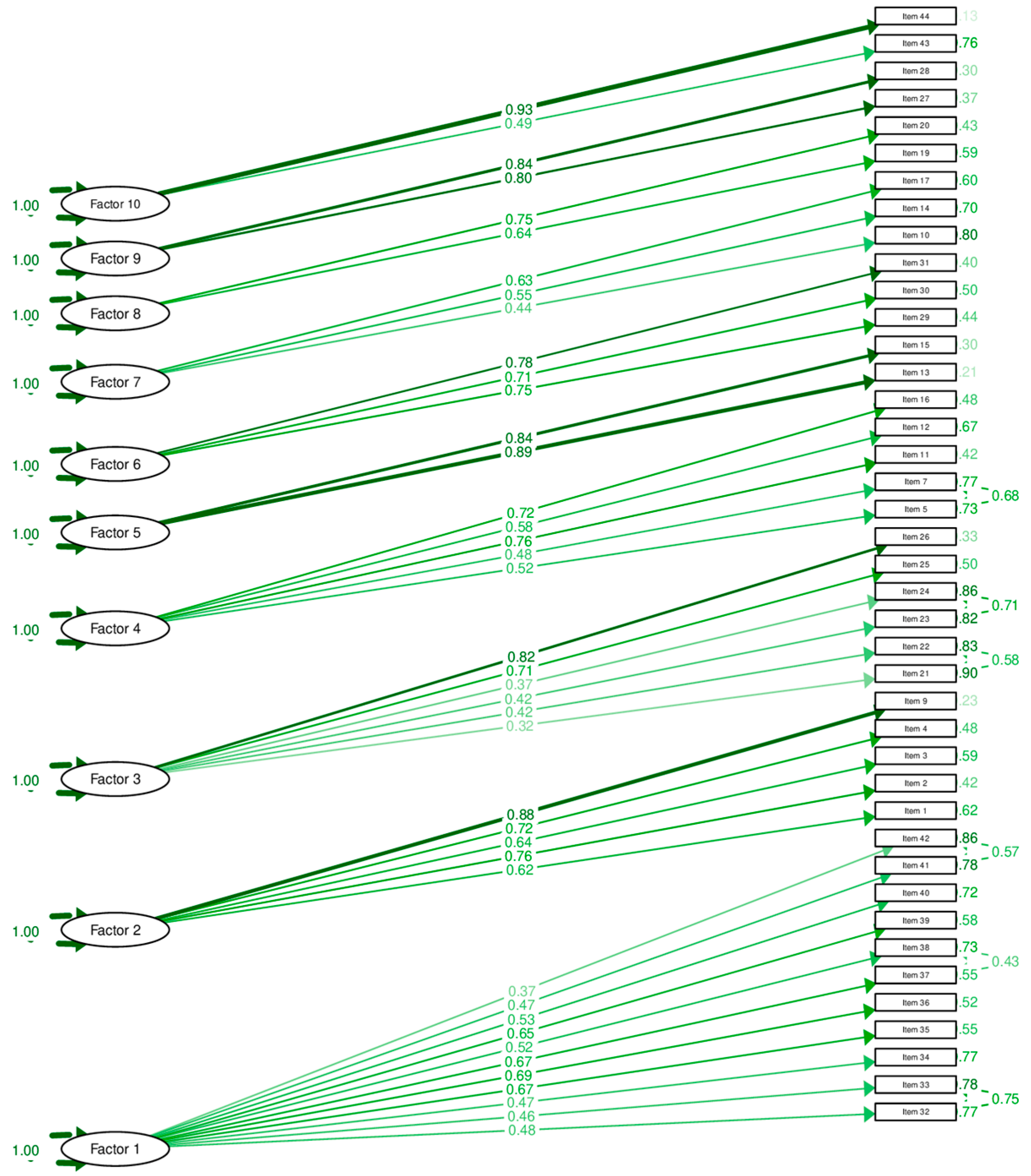
References
- Pfeifer, J.; Allen, N. Puberty Initiates Cascading Relationships Between Neurodevelopmental, Social, and Internalizing Processes Across Adolescence. Biol. Psychiatry 2021, 89, 99–108. [Google Scholar] [CrossRef] [Scilit] [PubMed]
- Erikson, E. Identity, Youth and Crisis; Norton: New York, NY, USA, 1968. [Google Scholar]
- Piaget, J.; Inhelder, B. The Psychology of the Child; Basic Books: New York, NY, USA, 2008. [Google Scholar]
- Gilbert, K. The neglected role of positive emotion in adolescente psychopathology. Clin. Psychol. Rev. 2012, 32, 467–481. [Google Scholar] [CrossRef] [Scilit]
- Gross, J.J.; Thompson, R.A. Emotion regulation: Conceptual foundations. In Handbook of Emotion Regulation; Gross, J.J., Ed.; The Guilford Press: New York, NY, USA, 2007; pp. 3–24. Available online: https://psycnet.apa.org/record/2007-01392-001 (accessed on 1 December 2024).
- Steinberg, L. Cognitive and affective development in adolescence. Trends Cogn. Sci. 2005, 9, 69–74. [Google Scholar] [CrossRef] [Scilit] [PubMed]
- Rutter, M.; Dunn, J.; Plomin, R.; Simonoff, E.; Pickles, A.; Maughan, B.; Ormel, J.; Meyer, J.; Eaves, L. Integrating nature and nurture: Implications of person–environment correlations and interactions for developmental psychopathology. Dev. Psychopathol. 1997, 9, 335–364. [Google Scholar] [CrossRef] [Scilit]
- Glick, J. The Collected Works of LS Vygotsky: The History of the Development of Higher Mental Functions; Springer Science & Business Media: Berlin/Heidelberg, Germany, 2012. [Google Scholar]
- Zimbardo, P.G.; Boyd, J.N. Putting Time in Perspective: A Valid, Reliable Individual-Differences Metric. J. Personal. Soc. Psycology 1999, 77, 1271–1288. [Google Scholar] [CrossRef]
- Boyd, J.N.; Zimbardo, P.G. Time perspective, health and risk taking. In Understanding Behavior in the Context of Time. Theory, Research and Application; Strathman, A., Joireman, J., Eds.; Psychology Press: Oxford, UK, 2005. [Google Scholar] [CrossRef] [Scilit]
- Janeiro, I.N. A Perspectiva Temporal, as Crenças Atribucionais, a Auto-Estima e as Atitudes de Planeamento e de Exploração da Carreira: Estudo Sobre os Determinantes da Maturidade na Carreira em Estudantes dos 9º e 12º anos [Tese de Doutoramento, Universidade de Lisboa]-Repositório da Universidade de Lisboa. 2006. Available online: http://hdl.handle.net/10451/42312 (accessed on 20 November 2024).
- Ortuño, V.; Gamboa, V. Estudo preliminar de adaptação ao português do Zimbardo Time Perspective Inventory–ZTPI. In Actas da XIII Conferencia Internacional de Avaliação Psicológica: Formas e Contextos; Psiquilíbrios: Braga, Portugal, 2008. [Google Scholar] [CrossRef]
- Nuttin, J.; Lens, W. Future Time Perspective and Motivation. Theory and Research Method, 1st ed.; Psychology Press: Oxford, UK, 1985. [Google Scholar] [CrossRef] [Scilit]
- Raynor, J.O.; Entin, E.E. The function of future orientation as a determinant of human behaviour in step-path theory of action. Int. J. Psychol. 1983, 18, 463–487. [Google Scholar] [CrossRef] [Scilit]
- Keough, K.A.; Zimbardo, P.G.; Boyd, J.N. Who’s smoking, drinking and using drugs? Time perspective as a predictor of substance use. Basic Appl. Soc. Psychol. 1999, 21, 149–165. [Google Scholar] [CrossRef] [Scilit]
- Zimbardo, P.G.; Keough, K.A.; Boyd, J.N. Present time perspective as a predictor of risky driving. Personal. Individ. Differ. 1997, 23, 1007–1023. [Google Scholar] [CrossRef] [Scilit]
- Stolarski, M.; Zajenkowski, M.; Jankowski, K.; Szymaniak, K. Deviation from the balanced time perspective: A systematic review of empirical relationships with psychological variables. Personal. Individ. Differ. 2020, 156, 109772. [Google Scholar] [CrossRef] [Scilit]
- Sword, R.M.; Sword, R.K.; Brunskill, S.R. Time perspective therapy: Transforming Zimbardo’s temporal theory into clinical practice. In Time Perspective Theory; Review, Research and Application: Essays in Honor of Philip G. Zimbardo; Springer International Publishing: Berlin/Heidelberg, Germany, 2014; pp. 481–498. [Google Scholar] [CrossRef] [Scilit]
- Zakharova, A.Y.; Trusova, A.V. Time perspective in patients with affective disorders: Review of scientific research. Rudn. J. Psychol. Pedagog. 2019, 16, 435–450. [Google Scholar] [CrossRef] [Scilit]
- Janeiro, I.N.; Veiga, F.H. Perspetiva temporal e envolvimento dos alunos na escola. In I Congresso Internacional Envolvimento dos Alunos na Escola: Perspetivas da Psicologia e Educação; Instituto de Educação da Universidade de Lisboa: Lisboa, Portugal, 2014; pp. 386–398. Available online: http://hdl.handle.net/10451/18034 (accessed on 2 February 2025).
- Desbrow, B. Youth athlete development and nutrition. Sports Med. 2021, 51, 3–12. [Google Scholar] [CrossRef] [Scilit] [PubMed]
- Parfanovych, I.; Kyrychenko, V.; Petrochko, Z.; Necherda, V.; Koropetska, O.; Lavrentieva, I. Peculiarities of assertiveness development and ways of socialization of personality in adolescence. BRAIN Broad Res. Artif. Intell. Neurosci. 2022, 13, 163–181. [Google Scholar] [CrossRef] [Scilit]
- Rapee, R.; Oar, E.; Johnco, C.; Forbes, M.; Fardouly, J.; Magson, N.; Richardson, C. Adolescent development and risk for the onset of social-emotional disorders: A review and conceptual model. Behav. Res. Ther. 2019, 123, 103501. [Google Scholar] [CrossRef] [Scilit] [PubMed]
- Mello, Z.R. A construct matures: Time perspective’s multidimensional, developmental, and modifiable qualities. Res. Hum. Dev. 2019, 16, 93–101. [Google Scholar] [CrossRef] [Scilit]
- Mello, Z.R.; Worrell, F.C. The past, the present, and the future: A conceptual model of time perspective in adolescence. In Time Perspective Theory; Review, Research and Application; Stolarski, M., Fieulaine, N., Beek, W., Eds.; Springer: Cham, Switzerland, 2015. [Google Scholar] [CrossRef] [Scilit]
- Marin, A.H.; Schaefer, M.P.; Lima, M.; Rolim, K.I.; Fava, D.C.; Feijó, L.P. Delineamentos de pesquisa em psicologia clínica: Classificação e aplicabilidade. Psicol. Ciência Profissão 2021, 41, e221647. [Google Scholar] [CrossRef] [Scilit]
- Instituto Nacional de Estatística. Sociedade da Informação e do Conhecimento-Inquérito à Utilização de Tecnologias da Informação e da Comunicação Pelas Famílias: Indivíduos dos 10 aos 15 anos. 2009. Available online: https://www.ine.pt/xportal/xmain?xpid=INE&xpgid=ine_destaques&DESTAQUESdest_boui=42406406&DESTAQUEStema=55483&DESTAQUESmodo=2 (accessed on 12 November 2024).
- Instituto Nacional de Estatística. Sociedade da Informação e do Conhecimento-Inquérito à Utilização de Tecnologias da Informação e da Comunicação Pelas Famílias. 2020. Available online: https://www.ine.pt/xportal/xmain?xpid=INE&xpgid=ine_destaques&DESTAQUESdest_boui=415621509&DESTAQUESmodo=2&xlang=pt (accessed on 12 November 2024).
- Kaytez, N. The role of technology in early childhood. In Enriching Teaching and Learning Environments with Contemporary Technologies; Durnali, M., Limon, İ., Eds.; IGI Global Scientific Publishing: Hershey, PA, USA, 2020; pp. 202–220. [Google Scholar] [CrossRef] [Scilit]
- Tena, R.; Gutiérrez, M.; Cejudo, M. Technology use habits of children under six years of age at home. Ens. Avaliação Políticas Públicas Educ. 2019, 27, 340–362. [Google Scholar] [CrossRef] [Scilit]
- Damásio, M. Tecnologia e Educação; Vega: Monza, Italy, 2007. [Google Scholar]
- Anuncibay, R. ICTs and teenage students. Problematic usage or dependence. Procedia-Soc. Behav. Sci. 2017, 237, 230–236. [Google Scholar] [CrossRef] [Scilit]
- Instituto Nacional de Estatística. Sociedade da Informação e do Conhecimento-Inquérito à Utilização de Tecnologias da Informação e da Comunicação Pelas Famílias. 2021. Available online: https://www.ine.pt/xportal/xmain?xpid=INE&xpgid=ine_destaques&DESTAQUESdest_boui=473557834&DESTAQUEStema=55565&DESTAQUESmodo=2 (accessed on 12 November 2024).
- Instituto Nacional de Estatística. Sociedade da Informação e do Conhecimento-Inquérito à Utilização de Tecnologias da Informação e da Comunicação pelas Famílias. 2022. Available online: https://www.ine.pt/xportal/xmain?xpid=INE&xpgid=ine_destaques&DESTAQUESdest_boui=541052592&DESTAQUEStema=55565&DESTAQUESmodo=2 (accessed on 12 November 2024).
- Instituto Nacional de Estatística. Sociedade da Informação e do Conhecimento-Inquérito à Utilização de Tecnologias da Informação e da Comunicação Pelas Famílias. 2024. Available online: https://censos.ine.pt/xportal/xmain?xpid=INE&xpgid=ine_destaques&DESTAQUESdest_boui=646170284&DESTAQUESmodo=2&xlang=pt (accessed on 30 December 2024).
- Ponte, C.; Simões, J.A.; Batista, S.; Jorge, A.; Castro, T.S. Crescendo Entre Ecrãs. Usos de Meios Eletrónicos por Crianças (3–8 anos). ERC—Entidade Reguladora para a Comunicação Social. 2017. Available online: https://www.erc.pt/pt/estudos/consumos-de-media/estudo-crescendo-entre-ecras-usos-de-meios-eletronicos-por-criancas-3-8-anos--/ (accessed on 17 March 2025).
- Ponte, C.; Jorge, A.; Almeida, A.N.; Basílio, A.; Zaman, B.; Simões, A.J.; Ramos, V. Boom Digital? Crianças (3–8 anos) e Ecrãs. ERC-Entidade Reguladora para a Comunicação Social. 2018. Available online: https://www.erc.pt/pt/estudos/consumos-de-media/estudo-boom-digital-criancas-3-8-anos-e-ecras-/ (accessed on 17 March 2025).
- Castellacci, F.; Tveito, V. Internet use and well-being: A survey and a theoretical framework. Res. Policy 2018, 47, 308–325. [Google Scholar] [CrossRef] [Scilit]
- Tache, C.E.P.; Vâlcu, E.N. Artificial intelligence and corporate liability towards a new legal-ethical contract in the dynamics of emerging global human rights convergences. Jurid. Rev. Comp. Int. Law 2025, 15, 281–305. [Google Scholar] [CrossRef] [Scilit]
- Zakharchenko, A.; Peráček, T.; Fedushko, S.; Syerov, Y.; Trach, O. When Fact-Checking and ‘BBC Standards’ Are Helpless: ‘Fake Newsworthy Event’ Manipulation and the Reaction of the ‘High-Quality Media’ on It. Sustainability 2021, 13, 573. [Google Scholar] [CrossRef] [Scilit]
- Amendola, S.; Spensieri, V.; Guidetti, V.; Cerutti, R. The relationship between difficulties in emotion regulation and dysfunctional technology use among adolescents. J. Psychopathol. 2019, 25, 10–17. Available online: https://psycnet.apa.org/record/2019-20701-002 (accessed on 20 January 2025).
- Assunção, R.S.; Matos, P.M. Perspetivas dos adolescentes sobre o uso do Facebook: Um estudo qualitativo. Psicol. Estud. 2014, 19, 539–547. [Google Scholar] [CrossRef] [Scilit]
- Chittaro, L.; Vianello, A. Time perspective as a predictor of problematic Internet use: A study of Facebook users. Personal. Individ. Differ. 2013, 55, 989–993. [Google Scholar] [CrossRef] [Scilit]
- Díaz-Aguado, M.J.; Martín-Babarro, J.; Falcón, L. Problematic internet use, maladaptive future time perspective and school context. Psicothema 2018, 30, 195–200. [Google Scholar] [CrossRef] [Scilit]
- Labăr, A.V.; Ţepordei, A.M. The interplay between time perspective, Internet use and smart phone in class multitasking: A mediation analysis. Comput. Hum. Behav. 2019, 93, 33–39. [Google Scholar] [CrossRef] [Scilit]
- Yang, Y.; Liu, K.; Li, S.; Shu, M. Social media activities, emotion regulation strategies, and their interactions on people’s mental health in COVID-19 pandemic. Int. J. Environ. Res. Public Health 2020, 17, 8931. [Google Scholar] [CrossRef] [Scilit]
- Zsido, A.N.; Arato, N.; Lang, A.; Labadi, B.; Stecina, D.; Bandi, S.A. The role of maladaptive cognitive emotion regulation strategies and social anxiety in problematic smartphone and social media use. Pers. Individ. Differ. 2021, 173, 110647. [Google Scholar] [CrossRef] [Scilit]
- Costa, J.J.M.; Matos, A.P.; Pinheiro, M.D.R.; Salvador, M.D.C.; Vale-Dias, M.D.L.; Zenha-Rela, M. Evaluating use and attitudes towards social media and ICT for Portuguese youth: The MTUAS-PY scale. In Proceedings of the 2nd International Conference on Health & Health Psychology-icH&Hpsy, Porto, Portugal, 6–9 July 2016; pp. 99–115. [Google Scholar] [CrossRef] [Scilit]
- Matos, A.P.; Costa, J.J.; Pinheiro, M.R.; Salvador, M.C.; Vale-Dias, M.L.; Zenha-Rela, M. Anxiety and dependence to media and Technology use: Media technology use and attitudes, and personality variables in portuguese adolescents. J. Glob. Acad. Inst. Educ. Soc. Sci. 2016, 2, 1–21. Available online: https://hdl.handle.net/10316/47156 (accessed on 23 April 2025).
- World Health Organization. Adolescent Health; WHO: Geneva, Switzerland, 2024; Available online: https://www.who.int/health-topics/adolescent-health (accessed on 4 March 2025).
- Janeiro, I.N. O Inventário de Perspectiva Temporal: Estudo de validação. Rev. Iberoam. Diagnóstico Y Evaluación-E Avaliação Psicológica 2012, 34, 117–132. Available online: https://www.researchgate.net/publication/236260848 (accessed on 25 November 2024).
- Rosen, L.D.; Whaling, K.; Carrier, L.M.; Cheever, N.A.; Rokkum, J. The Media and Technology Usage and Attitudes Scale: An empirical investigation. Comput. Hum. Behav. 2013, 29, 2501–2511. [Google Scholar] [CrossRef] [Scilit] [PubMed]
- Byrne, B.M. Structural Equation Modeling with AMOS: Basic Concepts, Applications, and Programming, 3rd ed.; Routledge: Oxford, UK, 2016. [Google Scholar] [CrossRef] [Scilit]
- Marôco, J. Análise das Equações Estruturais: Fundamentos Teóricos, Software & Aplicações; ReportNumber: Sintra, Portugal, 2014. [Google Scholar]
- Brown, T.A. Confirmatory Factor Analysis for Applied Research, 2nd ed.; Guilford Publications: New York, NY, USA, 2015; Available online: https://psycnet.apa.org/record/2015-10560-000 (accessed on 24 February 2025).
- Chen, D.G.; Yung, Y.F. Structural Equation Modeling Using R/SAS: A Step-By-Step Approach with Real Data Analysis, 1st ed.; Chapman and Hall/CRC: Boca Raton, FL, USA, 2023. [Google Scholar] [CrossRef] [Scilit]
- Fabozzi, F.; Focardi, S.; Rachev, S.; Arshanapalli, B.; Hoechstoetter, M. The Basics of Financial Econometrics, 1st ed.; Wiley: Hoboken, NJ, USA, 2014; Available online: https://www.perlego.com/book/992140 (accessed on 26 February 2025).
- Matos, D.A.S.; Rodrigues, E.C. Análise Fatorial. Enap. 2019. Available online: http://repositorio.enap.gov.br/handle/1/4790 (accessed on 25 February 2025).
- Watkins, M.W. A Step-By-Step Guide to Exploratory Factor Analysis with SPSS; Routledge: Oxford, UK, 2021. [Google Scholar] [CrossRef] [Scilit]
- Wilcox, R. Introduction to Robust Estimation and Hypothesis Testing, 5th ed.; Elsevier: Amsterdam, The Netherlands, 2022; Available online: https://shop.elsevier.com/books/introduction-to-robust-estimation-and-hypothesis-testing/wilcox/978-0-12-820098-8 (accessed on 2 March 2025).
- Cohen, J. Set correlation and contingency tables. Appl. Psychol. Meas. 1988, 12, 425–434. [Google Scholar] [CrossRef] [Scilit]
- Cohen, J. Statistical power analysis. Curr. Dir. Psychol. Sci. 1992, 1, 98–101. [Google Scholar] [CrossRef] [Scilit]
- Field, A. Discovering Statistics Using IBM SPSS Statistics; Sage Publications Limited: Thousand Oaks, CA, USA, 2024; Available online: https://uk.sagepub.com/en-gb/eur/discovering-statistics-using-ibm-spss-statistics/book285130 (accessed on 24 February 2025).
- Todorov, V. Robust selection of variables in linear discriminant analysis. Stat. Meth. Appl. 2007, 15, 395–407. [Google Scholar] [CrossRef] [Scilit]
- Todorov, V.; Filzmoser, P. Robust dtatistic for the one-way MANOVA. Comput. Stat. Data Anal. 2010, 54, 37–48. [Google Scholar] [CrossRef] [Scilit]
- Friedrich, S.; Konietschke, F.; Pauly, M. Analysis of multivariate data and repeated measures designs with the R package MANOVA.RM. arXiv 2018, arXiv:1801.08002. [Google Scholar] [CrossRef] [Scilit]
- Friedrich, S.; Pauly, M. MATS: Inference for potentially singular and heteroscedastic MANOVA. J. Multivar. Anal. 2018, 165, 166–179. [Google Scholar] [CrossRef] [Scilit]
- Konietschke, F.; Bathke, A.; Harrar, S.; Pauly, M. Parametric and nonparametric bootstrap methods for general MANOVA. J. Multivar. Anal. 2015, 140, 291–301. [Google Scholar] [CrossRef] [Scilit]
- Appolus, E.E.; Okoli, C.N. A robust comparison powers of four multivariate analysis of variance tests. Eur. J. Stat. Probab. 2022, 10, 11–20. [Google Scholar] [CrossRef] [Scilit]
- Bardagi, M.P.; Teixeira, M.A.P.; Lassance, M.C.P.; Janeiro, I.N. Propriedades psicométricas da versão brasileira do Inventário de Perspectiva Temporal para adolescentes. Avaliação Psicológica 2015, 14, 1–8. Available online: http://www.redalyc.org/articulo.oa?id=335042985002 (accessed on 1 May 2025). [CrossRef] [Scilit]
- Park, G.; Schwartz, H.A.; Sap, M.; Kern, M.L.; Weingarten, E.; Eichstaedt, J.C.; Berger, J.; Stillwell, D.J.; Kosinski, M.; Ungar, L.H.; et al. Living in the past, present, and future: Measuring temporal orientation with language. J. Personal. 2017, 85, 270–280. [Google Scholar] [CrossRef] [Scilit]
- Janeiro, I.N.; Duarte, A.M.; Araújo, A.M.; Gomez, A.I. Time perspective, approaches to learning, and academic achievement in secondary students. Learn. Individ. Differ. 2017, 55, 61–68. [Google Scholar] [CrossRef] [Scilit]
- Ortuño, V.; Janeiro, I. Análise das Diferenças na Perspectiva Temporal em Vários Grupos Etários Através do IPT e do ZTPI. Actas do VII Simpósio Nacional de Investigação em Psicologia 2010; pp. 35–46. Available online: https://www.researchgate.net/publication/239597552 (accessed on 23 May 2025).
- Belogai, K.N.; Bugrova, N.A. The image of the future in older adolescents: Gender differences. Psychol.-Educ. Stud. 2020, 12, 86–104. (In Russian) [Google Scholar] [CrossRef] [Scilit]
- Ginevra, M.C.; Pallini, S.; Vecchio, G.M.; Nota, L.; Soresi, S. Future orientation and attitudes mediate career adaptability and decidedness. J. Vocat. Behav. 2016, 95, 102–110. [Google Scholar] [CrossRef] [Scilit]
- Kooij, D.T.A.M.; Kanfer, R.; Betts, M.; Rudolph, C.W. Future time perspective: A systematic review and meta-analysis. J. Appl. Psychol. 2018, 103, 867–893. [Google Scholar] [CrossRef] [Scilit]
- Ridho, A. The role of engagement in influencing high school students’ future time perspectives: A gender moderation. J. Sains Psikol. 2024, 13, 189–203. [Google Scholar] [CrossRef] [Scilit]
- Wang, H.; Geng, J.; Liu, K.; Wei, X.; Wang, J.; Lei, L. Future time perspective and self-control mediate the links between parental autonomy support and adolescents’ digital citizenship behavior. Youth Soc. 2022, 54, 1077–1096. [Google Scholar] [CrossRef] [Scilit]
- Alhadeff-Jones, M. Time and the Rhythms of Emancipatory Education: Rethinking the Temporal Complexity of Self and Society, 1st ed.; Taylor & Francis: Oxford, UK, 2017. [Google Scholar] [CrossRef] [Scilit]
- Coscioni, V.; Teixeira, M.A.P.; Damásio, B.F.; Dell’Aglio, D.D.; Paixão, M.P. Perspectiva temporal futura: Teorias, construtos e instrumentos. Rev. Bras. Orientação Prof. 2020, 21, 215–232. [Google Scholar]
- Mello, Z.R.; Finan, L.J.; Worrell, F.C. Introducing an instrument to assess time orientation and time relation in adolescents. J. Adolesc. 2013, 36, 551–563. [Google Scholar] [CrossRef] [Scilit] [PubMed]
- Shubert, J.; Wray-Lake, L.; McKay, B. Looking ahead and working hard: How school experiences foster adolescents’ future orientation and perseverance. J. Res. Adolesc. Off. J. Soc. Res. Adolesc. 2020, 30, 989–1007. [Google Scholar] [CrossRef] [Scilit]
- Andre, L.; Vianen, A.E.M.; Peetsma, T.T.D.; Oort, F.J. Motivational power of future time perspective: Meta-analyses in education, work, and health. PLoS ONE 2018, 13, e0190492. [Google Scholar] [CrossRef] [Scilit]
- Shilova, N.P.; Vladyko, A.K. Sovremennyi kulturnyi kontekst predstavleniy o budushchem v yunoshcheskom vozraste [The modern cultural context of ideas about the future in adolescence]. Sib. Psikhologicheskiy Zhurnal-Sib. J. Psychol. 2023, 86, 103–108. [Google Scholar] [CrossRef] [Scilit]
- Ginevra, M.C.; Sgaramella, T.M.; Ferrari, L.; Nota, L.; Santilli, S.; Soresi, S. Visions about future: A new scale assessing optimism, pessimism, and hope in adolescents. Int. J. Educ. Vocat. Guid. 2017, 17, 187–210. [Google Scholar] [CrossRef] [Scilit]
- Greene, B.A.; DeBacker, T.K. Gender and orientations toward the future: Links to motivation. Educ. Psychol. Rev. 2004, 16, 91–120. [Google Scholar] [CrossRef] [Scilit]
- Mclnerney, D.M. A discussion of future time perspective. Educ. Psychol. Rev. 2004, 16, 141–151. [Google Scholar] [CrossRef] [Scilit]
- Lisichkina, A.; Emelyanova, L.; Trushina, I. The vision of the future for modern older adolescents. In Personality in Norm and in Pathology; Ovchinnikov, M., Trushina, I., Zabelina, E., Kurnosova, S., Eds.; Chelyabinsk State University: Chelyabinsk, Russia, 2021. [Google Scholar] [CrossRef] [Scilit]
- Lopez-Zafra, E.; Garcia-Retamero, R. Are gender stereotypes changing over time? A cross-temporal analysis of perceptions about gender stereotypes in Spain. Int. J. Soc. Psychol. 2021, 36, 330–354. [Google Scholar] [CrossRef] [Scilit]
- Duarte, F.; Paixão, M.P.; Silva, J.T. Perspetiva temporal no ensino secundário: Efeitos do tipo de ensino e sexo. Rev. Bras. Orientação Vocac. 2022, 23, 91–101. Available online: https://hdl.handle.net/10316/115464 (accessed on 16 May 2025).
- Barbosa, B.; Melo, A.; Rodrigues, C.; Santos, C.A.; Costa, F.; Dias, G.P.; Filipe, S.; Traqueia, A.; Nogueira, S. Caracterização do Ensino e Formação Profissional em Portugal; EDULOG: Fundação Belmiro de Azevedo. 2019. Available online: https://www.edulog.pt/publicacao/31# (accessed on 21 April 2025).
- Callina, K.S.; Johnson, S.K.; Tirrell, J.M.; Batanova, M.; Weiner, M.B.; Lerner, R.M. Modeling pathways of character development across the first three decades of life: An application of integrative data analysis techniques to understanding the development of hopeful future expectations. J. Youth Adolesc. 2017, 46, 1216–1237. [Google Scholar] [CrossRef] [Scilit]
- Hao, H.; Li, X.; Jiang, H.; Lyu, H. Reciprocal relations between future time perspective and academic achievement among adolescents: A four-wave longitudinal study. J. Adolesc. 2024, 96, 1727–1738. [Google Scholar] [CrossRef] [Scilit]
- Haddock, A.; Ward, N.; Yu, R.; O’Dea, N. Positive effects of digital technology use by adolescents: A scoping review of the literature. Int. J. Environ. Res. Public Health 2022, 19, 14009. [Google Scholar] [CrossRef] [Scilit]
- Faverio, M.; Anderson, M.; Park, E. Teens, Social Media and Mental Health. Pew Research Center. 2025. Available online: https://www.pewresearch.org/internet/2025/04/22/teens-social-media-and-mental-health/ (accessed on 21 May 2025).
- Ponte, C.; Batista, S. EU kids online Portugal. Usos, Competências, Riscos e Mediações da Internet Reportados por Crianças e Jovens (9-17 anos). EU Kids Online e NOVA FCSH. 2019. Available online: https://eukidsonline.fcsh.unl.pt/documentos/ (accessed on 1 May 2025).
- Felice, G.; Burrai, J.; Mari, E.; Paloni, F.; Lausi, G.; Giannini, A.M.; Quaglieri, A. How do adolescents use social networks and what are their potential dangers? A qualitative study of gender differences. Int. J. Environ. Res. Public Health 2022, 19, 5691. [Google Scholar] [CrossRef] [Scilit] [PubMed]
- Gordeeva, T.O.; Sychev, O.A.; Egorov, V.A. Use of gadgets and social networks by adolescents of different genders: Girls as a risk group. In Child in a Digital-World; Moscow University Press: Moscow, Russia, 2023; pp. 84–85. [Google Scholar] [CrossRef] [Scilit]
- Matos, M.G.D.; Gaspar, T.; Guedes, F.A.B.; Tomé, G.M.Q.; Branquinho, C.S.D.S. Os adolescentes portugueses, a internet e as dependências tecnológicas. Rev. Psicol. Criança Adolesc. 2019, 10, 173–185. Available online: https://revistas.lis.ulusiada.pt/index.php/rpca/article/view/2640 (accessed on 2 May 2025).
- Mougharbel, F.; Chaput, J.P.; Sampasa-Kanyinga, H.; Hamilton, H.A.; Colman, I.; Leatherdale, S.T.; Goldfield, G.S. Heavy social media use and psychological distress among adolescents: The moderating role of sex, age, and parental support. Front. Public Health 2023, 11, 1190390. [Google Scholar] [CrossRef] [Scilit] [PubMed]
- OECD. PISA 2018 Results (Volume II): Where All Students Can Succeed; PISA, OECD Publishing: Paris, France, 2019. [Google Scholar] [CrossRef] [Scilit]
- Twenge, J.M.; Martin, G.N. Gender differences in associations between digital media use and psychological well-being: Evidence from three large datasets. J. Adolesc. 2020, 79, 91–102. [Google Scholar] [CrossRef] [Scilit] [PubMed]
- Yang, X.; Xin, M.; Liu, K.; Böke, B.N. The impact of internet use frequency on non-suicidal self injurious behavior and suicidal ideation among chinese adolescents: An empirical study based on gender perspective. BMC Public Health 2020, 20, 1727. [Google Scholar] [CrossRef] [Scilit] [PubMed]
- Vigna-Taglianti, F.; Brambilla, R.; Priotto, B.; Angelino, R.; Cuomo, G.; Diecidue, R. Problematic internet use among high school students: Prevalence, associated factors and gender differences. Psychiatry Res. 2017, 257, 163–171. [Google Scholar] [CrossRef] [Scilit]
- Fox, J.; Vendemia, M.A. Selective self-presentation and social comparison through photographs on social networking sites. Cyberpsychology Behav. Soc. Netw. 2016, 19, 593–600. [Google Scholar] [CrossRef] [Scilit]
- Cerniglia, L.; Zoratto, F.; Cimino, S.; Laviola, G.; Ammaniti, M.; Adriani, W. Internet addiction in adolescence: Neurobiological, psychosocial and clinical issues. Neurosci. Biobehav. Rev. 2017, 76, 174–184. [Google Scholar] [CrossRef] [Scilit]
- Ezoe, S.; Toda, M. Relationships of smartphone dependence with chronotype and gender in adolescence. In Analyzing Human Behavior in Cyberspace; Yan, Z., Ed.; IGI Global Scientific Publishing: Hershey, PA, USA, 2019. [Google Scholar] [CrossRef] [Scilit]
- Hsieh, Y.C.; Tsai, W.C.; Hsia, Y.C. A study on technology anxiety among different ages and genders. In Human Aspects of IT for the Aged Population. Technology and Society; Lecture Notes in Computer Science, 12209; Gao, Q., Zhou, J., Eds.; Springer: Cham, Switzerland, 2020. [Google Scholar] [CrossRef] [Scilit]
- Li, L.; Feng, X.; Luo, S.; Lin, L.; Xiang, H.; Chen, D.; Qin, K.; Guo, X.; Chen, W.; Guo, V.Y. Internet addiction and health-related quality of life in adolescents: The mediating role of sleep disturbance. Sleep Med. 2024, 117, 53–59. [Google Scholar] [CrossRef] [Scilit]
- Kaspersky Lab Growing up Online: Connected Kids. Kaspersky. 2016. Available online: https://kids.kaspersky.com/connected-kids/ (accessed on 17 March 2025).
- Leonhardt, M.; Overå, S. Are there differences in video gaming and use of social media among boys and girls?-A mixed methods approach. Int. J. Environ. Res. Public Health 2021, 18, 6085. [Google Scholar] [CrossRef] [Scilit]
- Martucci, A.; Gursesli, M.C.; Duradoni, M.; Guazzini, A. Overviewing gaming motivation and its associated psychological and sociodemographic variables: A PRISMA systematic review. Hum. Behav. Emerg. Technol. 2023, 5640258. [Google Scholar] [CrossRef] [Scilit]
- Lenhart, A. Teens, Technology and Friendships. Pew Research Center. 2015. Available online: https://www.pewresearch.org/internet/2015/08/06/teens-technology-and-friendships/ (accessed on 17 March 2025).
- Gaspar, T.; Guedes, F.B.; Cerqueira, A.; Matos, M.G. A Saúde dos Adolescentes Portugueses em Contexto de Pandemia: Dados Nacionais do Estudo HBSC 2022. Aventura Social. 2022. Available online: https://aventurasocial.com/dt_portfolios/a-saude-dos-adolescentes-portugueses-em-contexto-de-pandemia-dados-nacionais-2022/ (accessed on 9 April 2025).
- Matos, M.G.; Cerqueira, A.; Guedes, F.B.; Raimundo, M.; Moraes, B.; Branquinho, C.; Noronha, C.; Gaspar, T. Os Jovens, a Saúde e o Bem-Estar: Comportamentos de Saúde e Bem-Estar dos Jovens de Loures. Aventura Social. 2024. Available online: https://aventurasocial.com/dt_portfolios/os-jovens-a-saude-e-o-bem-estar/ (accessed on 17 March 2025).
- Fabian, B.; Baumann, A.; Keil, M. Privacy on Reddit? Towards large-scale user classification. In Proceedings of the Twenty-Third European Conference on Information Systems (ECIS), Münster, Germany, 26–29 May 2015; Available online: https://www.researchgate.net/publication/272828012 (accessed on 9 April 2025).
- Faverio, M.; Sidoti, O. Teens, Social Media and Technology 2024. Pew Research Center. 2024. Available online: https://www.pewresearch.org/internet/2024/12/12/teens-social-media-and-technology-2024/ (accessed on 23 February 2025).
- Akbari, M.; Seydavi, M.; Palmieri, S.; Mansueto, G.; Caselli, G.; Spada, M.M. Fear of missing out (FoMO) and internet use: A comprehensive systematic review and meta-analysis. J. Behav. Addict. 2021, 10, 879–900. [Google Scholar] [CrossRef] [Scilit]
- Erdogdu, F.; Erdogdu, E. Understanding students’ attitudes towards ICT. Interact. Learn. Environ. 2023, 31, 7467–7485. [Google Scholar] [CrossRef] [Scilit]
- Ettinger, K.; Cohen, A. Patterns of multitasking behaviours of adolescents in digital environments. Educ. Inf. Technol. 2020, 25, 623–645. [Google Scholar] [CrossRef] [Scilit]
- Soldatova, G.; Chigarkova, S.; Dreneva, A. Features of media multitasking in school-age children. Behav. Sci. 2019, 9, 130. [Google Scholar] [CrossRef] [Scilit]
- Soldatova, G.U.; Chigarkova, S.; Koshevaya, A.; Nikonova, E. Daily activities of adolescents in mixed reality: User activity and multitasking. Sib. Psikhologicheskiy Zhurnal-Sib. J. Psychol. 2022, 83, 20–45. [Google Scholar] [CrossRef] [Scilit]
- Gorshenkov, Y.O.; Polyakov, S.D. Features of attention of modern adolescents in multitasking conditions when involving them in information and communication technologies. Volga Reg. Pedagog. Search 2021, 2, 43–51. [Google Scholar] [CrossRef] [Scilit]
- Türel, Y.K.; Dokumacı, O. Use of media and technology, academic procrastination, and academic achievement in adolescence. Particip. Educ. Res. 2022, 9, 481–497. [Google Scholar] [CrossRef] [Scilit]
- Allemand, M.; Fend, H.A.; Hill, P.L. Perceptions of the future in adolescence predict depressive symptoms in adolescence and early and middle adulthood. Dev. Psychol. 2022, 58, 2197–2209. [Google Scholar] [CrossRef] [Scilit]
- Kaur, J.; Kaur, K. Gender differences in optimism and resilience among adolescents. Int. J. Sci. Res. 2017, 6, 508–509. [Google Scholar] [CrossRef]
- Webber, K.C.; Smokowski, P.R. Assessment of adolescent optimism: Measurement invariance across gender and race/ethnicity. J. Adolesc. 2018, 68, 78–86. [Google Scholar] [CrossRef] [Scilit]
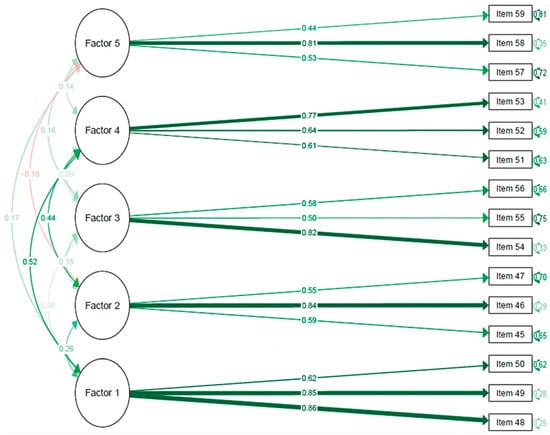
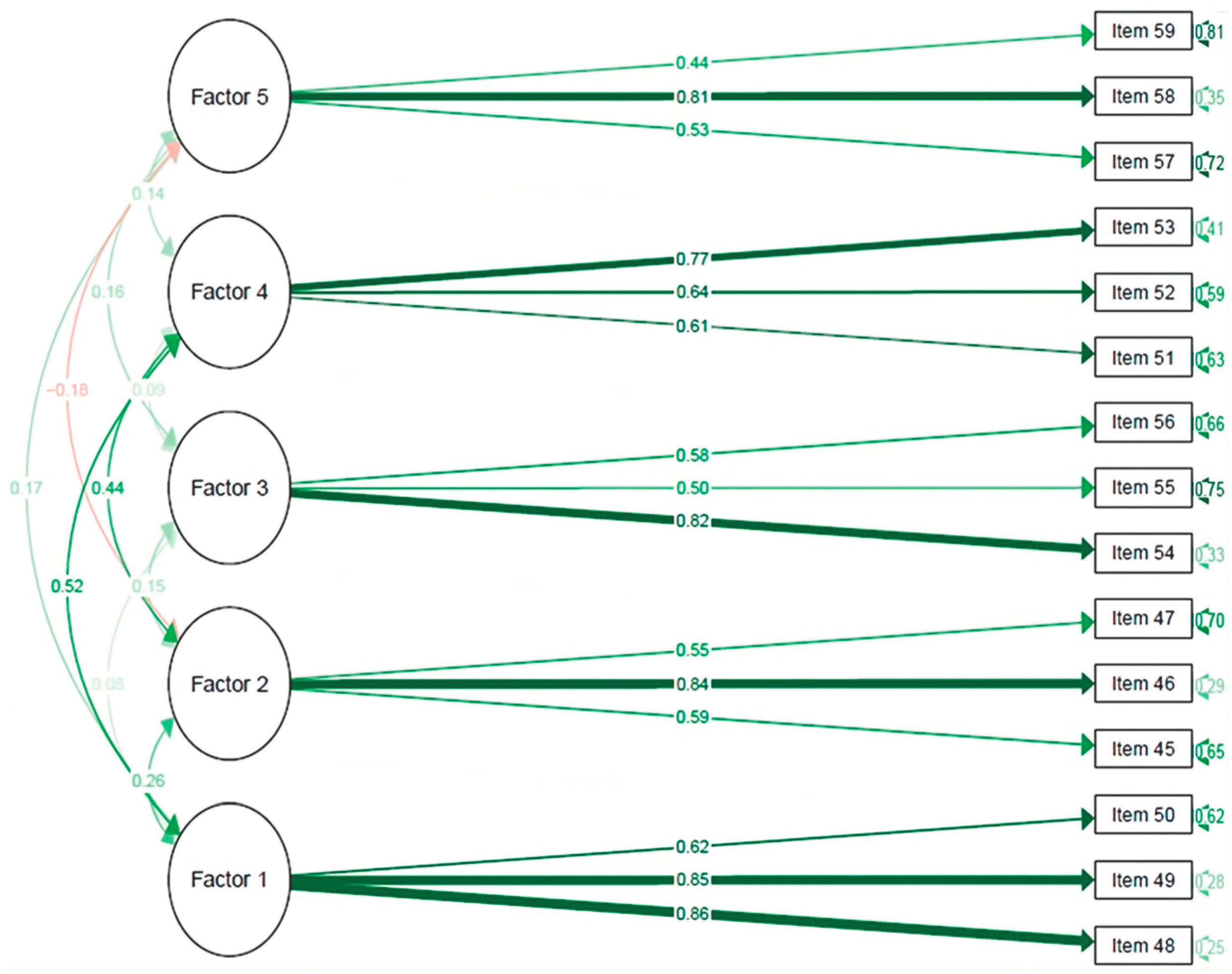

Disclaimer/Publisher’s Note: The statements, opinions and data contained in all publications are solely those of the individual author(s) and contributor(s) and not of MDPI and/or the editor(s). MDPI and/or the editor(s) disclaim responsibility for any injury to people or property resulting from any ideas, methods, instructions or products referred to in the content. |
© 2025 by the authors. Licensee MDPI, Basel, Switzerland. This article is an open access article distributed under the terms and conditions of the Creative Commons Attribution (CC BY) license (https://creativecommons.org/licenses/by/4.0/).