You are currently viewing a new version of our website. To view the old version click .
Societies
  • Article
  • Open Access

12 November 2024

Measuring the Unmeasurable: Decomposing Multidimensional Rural Poverty and Promoting Economic Development in the Poorest Region of Luzon, Philippines


and
1
Graduate School, University of the Philippines Los Baños, Laguna 4030, Philippines
2
Partido Institute of Economics, Partido State University, Goa 4422, Philippines
*
Author to whom correspondence should be addressed.

Abstract

Poverty is the oldest social problem that ever existed and is difficult to reverse. It is multidimensional and unmeasurable. Thus, measuring by decomposing rural multidimensional poverty is critical. Most poverty studies are usually generic, exposed to large sampling errors, and intended for macroeconomic decisions. Thus, measuring poverty for a specific locality with various configurations (15) is critical for economic development. The paper combines predictive analytics and advanced econometrics to decompose poverty at the micro-level by utilizing the Community-Based Monitoring system at complete enumeration (L = 34, S = 4). Logistic Regression (78) Models with 19 Independent Variables and 12 Intervening Variables were fitted. Headcount Analysis (0.2138–0.9845), Poverty Gap (0.2228–0.0502), Severity statistics (0.0723–0.0168) and Watts Index (0.2724–0.0618) are scrutinized. Poverty levels vary by location; a significant fraction of the population (P0i = 68.50%, P0f = 55.80%) and households (P0i = 63.70%, P0f = 50.70%) live below the poverty line and food threshold. It has been revealed that poverty is extreme in Isarog (i = 0.7793), moderate in Poblacion (p = 0.4019), intense in Ranggas (r = 0.6542), and severe in Salog (s = 0.6353). Multidimensional variables (13VAR) significantly predict poverty outcomes (p-value = 0.0000, PseudoR2 = 0.75). Moreover, intervening variables have been impacting poverty across all locals. All models tested are significant across all sectors and correctly predicted by the model classifications (Estat = 73.29–74.12%). Poverty is multifaceted; thus, it requires different interventions. Finally, policy proposals (54) were outlined to alleviate poverty and promote local economic development.

1. Introduction

1.1. The Anatomy of Poverty and Its Multidimensionality

One of the most enduring social problems ever is poverty, which still persists today. According to Haughton and Khandker (2009), it has an adverse impact on society’s advancement and economic prosperity [1]. It is challenging to deal with and reverse. Many economists have attempted to explain global poverty and the necessary reforms. Their goal is to comprehend the fundamental principles and motivations that influence the choices and way of life of the impoverished. They investigated the conditions of the underprivileged in developing nations. They go into further detail about the choices made by people experiencing poverty in relation to food consumption, health, education, family size, financial services, and welfare. They contend that these individuals are not unreasonable. Instead, because they must make do with few resources, they may be more logical than the majority of us [2]. Poverty is difficult to reverse [3]. Due to its complexity and multidimensionality, poverty cannot be perfectly measured. As a result, it needs to be examined using different cruxes. Based on Sen (1999), poverty is not usually associated with a lack of necessities [4,5]. Not being able to reach one’s full potential as a human being is what it means to be incapable. The underuse of one’s ability leads to poverty. Due to deprivation that is within humanity’s control, Poverty exists in society. A vital characterization of poverty comes from the words of people experiencing poverty themselves. Asking people experiencing poverty to explain their situation is a key factor in modeling poverty [6].
Deaton A. (2006) asserts that understanding poverty’s notions is the first step towards measuring it [7,8]. To understand the nature of poverty, a variety of measures can be taken, such as Participatory Rural Assessment, which is being carried out by scholars and non-governmental organizations. Contextualizing poverty is a useful approach for quantifying it. To determine its causes, poverty needs to be conceived. Income and expenses are significant indicators of poverty, but the capacity of an individual should also be taken into account [3]. The problem of poverty is multifaceted [3,4,9,10]. As a result, several frameworks must be taken into account when evaluating poverty [11]. Economic growth and poverty have a contentious relationship. As stated by Deaton A. (2005), consumption growth among people experiencing poverty might be slower than that of the nation’s consumers without any rise in quantified inequality [7,8]. Current statistical practices in developing nations overestimate global growth and underestimate the rate at which poverty is being reduced worldwide. The majority of poverty measures have two foundations. The poverty line defines the income thresholds below which someone is considered to be poor, and a variety of measurements capture the depths of those earnings. A methodology could employ income standards as the fundamental measurement building blocks that generate measurements of inequality and poverty. With the introduction of a unified approach, it is now easier to read, compare, and comprehend how poverty metrics change [12]. However, current poverty measures are usually generic and most poverty studies are exposed to large sampling errors and intended for macroeconomic decisions. This is an important gap that the study is trying to bridge. Poverty must be measured in multifaceted approaches through a complete enumeration of subjects. Complete enumeration approaches eliminate sampling errors and are more accurate and reliable. Measuring poverty at a specific locale in various configurations is critical, particularly for the poorest regions of the world. Results can be utilized as input for policymaking that can alleviate poverty and promote local economic development.
Addressing the country’s pervasive poverty issue is the most significant difficulty in its policy. In addition to having a high percentage of poverty in comparison to its East Asian neighbors, the Philippines is also experiencing a crisis or is considered to be in untenable circumstances. Tackling poverty in developing countries is relevant, and examining its determinants is crucial [13]. Measuring poverty is important because the results of a poverty analysis can be used to design and carry out developmental initiatives. Core indicators of poverty include factors like employment, peace and order, income and hunger, housing and dwellings, water and sanitation, education, and health and nutrition. In the vast majority of countries on the ground, poverty is characterized as a lack of resources. The impoverished, on the other hand, see their plight in a far broader context. A poor person may experience multiple negative factors at once, including poor health or hunger, a lack of access to electricity or clean water, low-quality employment, or insufficient education. Although poverty has generally only been measured in terms of one factor—income—it has probably always been recognized as a complex issue. The core premise was that a person’s level of pay could reasonably forecast whether or not they could meet necessities like shelter, clothing, and food [14]. This is known as multidimensional poverty, which takes into account the multiple, interlinked deficiencies that impoverished people experience. People who live in poverty describe a variety of obstacles as their disadvantages, including a lack of education, lousy health and nutrition, inadequate housing, dirty water, and others. These restrictions reflect the challenges that many people who live in poverty face while attempting to learn practical skills.

1.2. Rural Poverty

According to the Asian Development Bank (2019), living in poverty in the Philippines is difficult due to the many negative repercussions of poverty [15]. A few of the factors contributing to poverty include low growth in the economy, a weakening agriculture sector, rising population rates, and severe inequality. These factors are generic and holistic, which may not be able to the true conditions of rural sectors with various characteristics. In terms of reducing poverty, the Philippines has made progress and is still doing so. However, the need for more growth is still present due to overpopulation and the lack of economic opportunities for people living in rural areas. Government officials and numerous organizations acknowledging these issues provide the Philippines and its citizens with grounds for optimism. The poverty rate in the Philippines is higher than that of other Southeast Asian nations. In the western Pacific Ocean, there are 7641 islands that make up the Republic of the Philippines. Despite a recent drop in the poverty rate, 21.6% of the nation’s citizens remain impoverished. The main problems mentioned include poverty, illiteracy, being homeless, crime, and violence. A person is said to be in poverty if they do not have the resources necessary to sustain their standard of living. In the Philippines, the poverty rate is 36% in rural areas and 13% in urban areas. Urban poverty has been contextualized to reduce multidimensional poverty [16]. However, rural poverty is a result of a number of circumstances, including a lack of access to markets, financial goods, education, adequate infrastructure, job possibilities, and health care [17,18,19,20]. Rural poverty is more difficult to address than urban poverty. As asserted by Meij E. et al. (2020), rural poverty has been more persistent and prevalent [17,18,19,20,21]. It is associated with history and structural conditions, resulting in a cycle that never stops. Thus, this research focuses on rural poverty. Addressing rural problems will contribute to the economic growth and development of a region, which soon lead to the progress of a country.

1.3. Measuring the Unmeasurable through Data Analytics and Econometrics

Data Analytics can gauge technical, practical, computational, and real stories from immense data through the science and arts of analyses. Data informatics enhances the reliability and validity of analyses through the application, integration, and management of technology, people, and procedures. Measures the unmeasurable in the field of natural sciences [22,23,24,25]. Economic issues and social events are difficult to quantify, challenging to analyze, and some are unmeasurable [26]. Considering the foregoing, this project aims to measure the unmeasurable in the field of economics and social sciences through data analytics and informatics. This paper will provide novel measures and alternative procedures on how to measure the unmeasurable poverty, inequality, social constraints, and local economic development. The paper will provide descriptive findings about local poverty, inequality, and constraints. It will then diagnose potential threats and barriers to attaining local progress. It will provide explanatory results to solve existing problems and prescribe policies for economic development. Through the utilization of panel datasets, digital data management may be highlighted and data informatics could be uplifted. Data analytics and informatics, in conjunction with economic theories, econometrics, statistics, and accountancy, will yield better results. Results will be conveyed to the public administrators and policy-maker-implementers for the progressive Partido district.
A technology-based system called a Community-Based Monitoring System is used to gather, examine, and validate disaggregated data that can be used for planning. At the local level, communities are given the opportunity to participate in the process while program implementation and impact monitoring are being performed [27,28,29,30,31]. The databases of CBMS can provide sufficient information to measure the unmeasurable aspects of poverty, inequality, and development in Goa, Camarines Sur. In light of the United Nations’ current agenda, the Sustainable Development Goals (SDGs), which call for the eradication of extreme poverty by the year 2030, and the 2018 revision of the Multidimensional Poverty Index (MPI), investigating the multifaceted characteristics of the poor people in the Philippines, particularly in Camarines Sur and the Bicol Region, is essential, appropriate, and material to improve the targeting of the government’s platforms to address this problem. This study, which focuses on poverty, employment, health, and housing conditions, specifically connects with SDGs 1, 2, 3, 6, and 8.
A limited amount of research has also been performed on the multifaceted nature of poverty in rural areas of the Philippines; the decentralization of poverty cases, economic progress, and sociological advancement, particularly in the Bicol region, is insufficient. Moreover, only a few studies have made use of CBMS databases in examining the depths of poverty. In the Partido district, no research has been performed to quantify poverty using data analytics models and data science algorithms that combine machine learning and econometric models. The relationship between numerous factors in Goa, Camarines Sur, and the Philippines will be examined in this study. The dependent variables will be the poverty measurements, outcomes, and classes, while the independent variables will be socioeconomic conditions, economic development indicators, calamity occurrences, disaster risk mitigation, social components, and their intervening effects. There is a dearth of research on the relationship between health dynamics, education, housing, employment, peace and order, settlement, calamity incidence, disaster risk management, cases of poverty, economic advancement, and sociological progress.

1.4. Purpose of the Present Study

Bicol region is the poorest region in Luzon, and Camarines Sur is the poorest province in the Bicol region, with a poverty incidence of 38.7% [29]. The research seeks to quantify the insurmountable poverty problems in the Bicol Region (V), notably in the province of Camarines Sur. The national poverty data are usually holistic in nature and intended for macroeconomic purposes that cannot be used effectively in designing policies for poverty alleviation and economic development for a specific municipality with diverse characteristics. Through the application of economic analyses and econometric modeling in conjunction with data analytics and informatics, the research project aims to capture the multidimensionality of rural poverty from the microeconomic perspectives of Goa, Camarines Sur. In light of the aforementioned, it is essential to measure poverty in order to properly target programs for reducing poverty and developmental activities for the socioeconomic upliftment of Bicolanos. Goa, Camarines Sur, is host to a significant number of impoverished people. They must alter their way of life if they want to stop being impoverished. They should be a priority for the government at all times, not only during their political careers. The purpose of the study was to look into the causes of poverty in the Municipality of Goa, Camarines Sur, over time. Additionally, this study is going to search for strategies to reduce the various types of rural poverty that the residents of the aforementioned municipality are now dealing with, particularly during this pandemic and through the passage of time.

3. Method Used

3.1. Sample and Locale of Study

The Municipality of Goa, Camarines Sur, which is regarded as a second-class municipality in the province of Camarines Sur, served as the study’s location. In 2020, it had a population of 71,368 [38]. Goa is located 288.36 km (179.18 miles) to the west-northwest (N70°W) of Manila and is bordered by the municipalities of Tinambac, Lagonoy, Tigaon, and San Jose [17,18]. There are 14,021 Households with 63,749 members that are being evaluated. Four groups were created, each of which served as the base for the multisectoral analysis. The four sectors were classified using the municipality’s sectoral classification system [20].The Isarog sector was coined from the tallest forested peak on Southern Luzon, the Mt. Isarog. It is a stratovolcano that reaches 1966 m above sea level [19,20]. The Isarog Sector, commonly known as the Upland Sector, is named for the fact that 12 of its barangays are situated on Mt. Isarog’s slope. About 29.67% of the population are indigenous people [17]. The Poblacion sector serves as the commercial and economic hub of Goa Municipality. The Bicol word “Riverine”, which describes towns near rivers, is the source of the word “Salog”. All barangays in the Salog Sector have access to a number of streams. The longest river in the area is called The Ranggas, and it runs from Mount Isarog to the seaside communities of Partido. We looked at the socio-demographic and economic characteristics of communities in terms of their physical characteristics, population dynamics, ethnicity, cultural elements, and land area. About 31.27% of all houses are located in the Isarog Sector. A total of 21.85% of all households were located in the Poblacion Sector, while 25.88% were located in the Ranggas Sector. Furthermore, 20.99% of all households are in the Salog Sector. Of the 34 barangays, Ranggas Sector’s Matacla, Buyo, and Catagbacan are the most populated. Isarog has the most residents out of the 12 barangays. Despite having only five barangays, the Ranggas Sector has more households and inhabitants than the Poblacion and Salog Sectors, which have 10 and 7 barangays, respectively. The most populous barangay in Isarog is Digdigon, with a population distribution of 4.57%, whereas the most populous barangay in Poblacion is Bagumbayan Pequeño, with a population distribution of 5.97%. Taytay is the most densely populated locality in Salog, with a population distribution of 7.92%, whereas Matacla is the most populous place in Ranggas, with a population distribution of 4.43%. The three least populous barangays—Tamban, Lamon, and Scout Fuentebella—have population distributions of 0.59%, 0.96%, and 1.01%, respectively.

3.2. Sources of Data

The study utilized the 2018–2020 CBMS dataset of Goa, Camarines Sur, the Philippines. A mixed-method approach was employed to measure different factors and come up with sound poverty-reduction intervention methods. Key informant interviews (KII) and focus group discussions (FGD) were conducted to gather the information needed to create and propose intervention plans for poverty alleviation. In addition, document review was geared to gather substantial data that might be utilized to compare study findings to current assertions on a particular problem. The sampling design was total enumeration. The study took into account key informants such as the CBMS focal person, municipal planning and development director, representatives from Local Government Units (LGUs), and CBMS Enumerators, who all made significant contributions to the completion of the study.

3.3. Design

To determine the attributes of variables that influence a household’s income-based poverty status, this study has utilized the Reyes et al. (2011), Sobreviñas (2020), and Onsay et. al. (2021, 2024) models, with modifications and multiple fitting [19,20,36,66,67]. The poverty statuses of households based on income and food thresholds are the dependent variables, while multidimensional variables, calamity occurrences, and disaster risk preparedness are the independent factors. In addition, the models included a number of control variables and intervening variables.
Y = α + Xβ + i + μ
where
Y = logit (p) = log [p/(1 − p)], p = probability of being poor of household;
α = the intercept or individual effects of socio-economic conditions, education, health and nutrition, water and sanitation, housing and settlement, employment and livelihood, peace and order, calamity occurrences, and disaster risk preparedness, which is assumed to be constant;
X = vector of independent variables or socio-economic conditions, education, health and nutrition, water and sanitation, housing and settlement, employment and livelihood, peace and order, calamity occurrences, and disaster risk preparedness, including control variables;
β = vector of coefficients, intercepts, or effects of socio-economic conditions, education, health and nutrition, water and sanitation, housing and settlement, employment and livelihood, peace and order, calamity occurrences, and disaster risk preparedness on poverty outcomes;
i = intervening variables or combined effects of various socio-economic conditions, education, health and nutrition, water and sanitation, housing and settlement, employment and livelihood, peace and order, calamity occurrences, and disaster risk preparedness; and
μ = error term.
Logistic regression was employed to reveal the link between multidimensional variables on poverty outcomes. The Econometric Models below were used for predictive analytics. This is an econometric design that is concerned with establishing cause and effect between given variables with binary outcomes for rural settings. The logit models in this study were estimated as follows:
Logit Model 1
POVC_IT = β0 + β1C_Mortality + β2M_Mortality + β3C_Malnutrition + β4MSH_Dwellers + β5I_Settlers +
β6WAS_Water + β7WASF_Toilet + β8TNOHH_Members + β9CO_Typhoon + β10CO_Flood +
β11CO_Drought + β12CO_VolEruption + β13CO_LMSlide + β14DR_Prepared + β15CNA_Elem +
β16CNA_JunHS + β17CNA_SenHS + β18LF_Unmployed + β19Vic_Crime + βni + μ
Logit Model 2
POVC_FT = β0 + β1C_Mortality + β2M_Mortality + β3C_Malnutrition + β4MSH_Dwellers + β5I_Settlers +
β6WAS_Water + β7WASF_Toilet + β8TNOHH_Members + β9CO_Typhoon + β10CO_Flood +
β11CO_Drought + β12CO_VolEruption + β13CO_LMSlide + β14DR_Prepared + β15CNA_Elem +
β16CNA_JunHS + β17CNA_SenHS + β18LF_Unmployed + β19Vic_Crime + βni + μ
where
POVC_IT = the Poverty outcomes based on poverty or income threshold;
POVC_FT = the Poverty outcomes based on food threshold;
C_Mortality = Children under 5 years old who died;
M_Mortality = Women who died due to pregnancy-related causes;
C_Malnutrition = Malnourished children 0–5 years old;
MSH_Dwellers = Households living in makeshift housing;
I_Settlers = Households who are informal settlers;
WAS_Water = Households without access to safe water;
WASF_Toilet = Households without access to sanitary toilet facility;
TNOHH_Members = Members of Household;
CO_Typhoon = Typhoon Occurrence;
CO_Flood = Flood Occurrence;
CO_Drought = Drought Occurrence;
CO_VolEruption = Volcanic Eruption Occurrence;
CO_LMSlide = Landslide or Mudslide Occurrence;
DR_Prepared = Disaster Risk Preparedness;
CNA_Elem = Children aged 6–11 years old who are not attending elementary;
CNA_JunHS = Children aged 12–15 years old who are not attending Junior High School;
CNA_SenHS = Children aged 16–17 years old not attending Senior High School;
LF_Unmployed = Unemployed members of the labor force;
Vic_Crime = Victims of crime;
β0 = the intercept;
β1 = the coefficient for the independent variable;
i = intervening variables; and
μ = the error term.
To evaluate the extent of poverty, the following measures were utilized and generated [17]:
Headcount Ratio
P 0 = Headcount Ratio
P 0 = 1 N i = 1 N y i < z
P O = N P N Where, Np = Number of poor; and N = Total Population (or sample)
The headcount ratio (HCR) calcuHeadcount Ratiolates the proportion of the population that is impoverished. When the expression included in brackets is true, the i function returns 1, and when it is false, it returns 0. A household is deemed poor if its income (yi) is less than the poverty line (z), in which case the i equals 1. The readability and simplicity of the headcount index are its main benefits. One drawback of the head count ratio is that it does not take into account the severity of poverty; as people experiencing poverty become poorer, the headcount index does not change [1,17].
Poverty Gap Metrics
P 1 = Poverty Gap Index
P 1 = 1 N i = 1 N G i z Where, G i = (z − x 1 ) × I y i < z
An indicator of how severe poverty is is the poverty gap index. With the non-poor having none or no poverty gap, it is defined as the average poverty gap in the population represented as a percentage of the poverty line. By calculating the average distance below the poverty line, it establishes the level of poverty. The indicator is more closely aligned with zero when the proportion of the population living in poverty is lower and more closely aligned with one when that proportion is higher [1,20].
Poverty Severity
P 2 = Squared Poverty Gap Index
P = 1 N i = 1 N G i z , 0
where
= sensitivity of index to poverty;
z = poverty line;
x 1 = value of expenditure (income) per capita for ith person’s HH; and
G i = z − x 1 (with G i = 0   w h e n   x i > z ) = poverty gap for individual i.
The poverty gap index is correlated with the squared poverty gap index, sometimes referred to as the poverty severity index. The poverty gap ratio is multiplied by itself, and the average is then determined. The metric gives greater weight to an individual’s observed income when it goes below the poverty level by squaring each dataset representing the poverty gap. A weighted total of poverty gaps whose weight varies with gap size is the squared poverty gap index. It also takes poverty inequality into account [19,65].
Watts Index
W = Watts Index
W = 1 N i = 1 N l n z l n y i = 1 N i = 1 q l n z y i
where
The population’s income (or spending) is indexed in ascending order for N individuals, and the total is divided by the number of individuals (q) whose income (yi) is below the poverty line (z). The poverty line is divided by income, logs are computed, the impoverished are added, and the index is then divided by the total population. This is one of the earliest measurements of poverty that takes distribution into account [1,17].

4. Results and Discussion

4.1. Multidimensional Poverty Profile

Multidimensional poverty indicators were used to analyze poverty in the Municipality of Goa. Four sectors that made up the 34 barangays were used as the basis for a multi-sectoral analysis. Prior to being de-identified and analyzed thematically, the data were used to determine the level of poverty in each community. In the municipality, 63.70 percent of households and 55.7 percent of the population as a whole are poor and food insecure, respectively. The mortality rates for children and expectant mothers are low, and malnutrition among young children (0–5 years) is present. As seen in Table 1, where informal settlers makeup just 6.80% of all households and temporary housing only makes up 2.70% of all households, poverty is also reflected in housing measures.
Table 1. Poverty Profile of Goa, Camarines Sur, Philippines (2018–2020).
Additionally, a fifth of the population lacks access to clean water for drinking, and a fourth does not have access to a toilet that is hygienic. Due to the large percentage of out-of-school children—ranging from 25% to 75% of all households with children aged 6 to 17—poverty is apparent in terms of basic education. Children who do not attend elementary, junior high, or senior high school make up a sizable portion of the population. There are few signs of a food shortage, and the unemployment rate is very low. Eighty-four households, however, were the targets of criminal behavior. According to the primary poverty data, the municipality experiences poverty frequently in the areas of income and livelihood, fundamental education, and water and sanitation. As a result, Figure 1 depicts Multidimensional poverty analytics through diagnostic models [19].
Figure 1. Multidimensional poverty analytics through diagnostic models.

4.2. Multi-Sectoral Poverty Analysis

According to the diagnostic analytics, 63,749 people live in 14,021 households. Also, 51.10% of people lack access to food, and approximately 63.70% of people live in poverty. However, on a local scale, food shortages and unemployment have been reported. During the time of the census, 84 occurrences of crimes against individuals were documented. Regarding health and nutrition, 6.20% of the homes with children ages 0 to 5 had malnutrition, while 0.60 percent of households with children under the age of 5 experienced a death. Only 2.7% and 6.80% of all households are informal settlers and reside in temporary dwellings, respectively. According to the statistics, only 20.50 percent and 12.40 percent of all houses lack access to clean toilets and safe drinking water, respectively. According to the evaluation, results are generally consistent across barangays. The majority of the children in the community are either not enrolled in schools or have stopped enrolling in them as educational levels rise. According to the data, the four sectors and 34 barangays of the population experience poverty mostly as a result of income and means of subsistence, as well as a lack of Basic Education. Poverty has also been evident in areas that have an impact on health dynamics, like housing, access to adequate drinking water, and sanitation.
The Isarog Sector poverty episodes are multifaceted. Child mortality is evident in Pinaglabanan, while child malnutrition is evident in the Payatan neighborhood. Maternal mortality is not known to exist in any sector. Lamon, Tamban, Tabgon, and Scout Fuentebella did not have any documented cases of child mortality, and Tamban did not have any cases of child malnutrition either. Few people live in Scout Fuentebella in informal settlements, and not all Tamban residents live in temporary accommodation. In terms of maintaining peace and order, Payatan was the area with the highest level of crime.
According to the assessment, out of all the barangays in the Isarog sector and the entire municipality, Abucayan has the highest percentage of homes and residents that live below the poverty line and the food threshold. Children under the age of five are malnourished in 6.0% of the population overall, and 0.62% of them have passed away. The sector with the highest unemployment rate, accounting for 4.42% of all households with labor force members, is the Isarog. In addition, 80.32% of all households have incomes that are below the poverty line. In addition, 69.53% of all households earn less than the minimum required for food. In addition, 35.05% and 26.86% of the households in Isarog lack access to clean restrooms and safe drinking water, respectively. So, in terms of income and means of subsistence, poverty is apparent. Poverty is also evident in terms of Basic Education and Water and Sanitation. Few members of residences, though, have experienced food shortages.
Of the four divisions of the municipality, Poblacion has the fewest residents and households. Only four incidents of child death have been reported in Bagumbayan Pequeño, Belen, and San Juan Evangelista. With only 29 counts spread across 10 barangays, child malnutrition is not obvious. Ninety-five households are informal settlers despite the fact that the majority of households do not reside in temporary housing. In comparison to other sectors, the amount of unemployment and crime that has been observed during a census is less. Poverty is visible with regard to Basic Education and Water and Sanitation Indicators, which is in line with the assessment of Poverty of Aggregated Locality in the Municipality. Additionally, the vast majority of homes have hygienic restrooms.
Only 40.99% and 29.47% of all households, respectively, are below the poverty line and the food threshold, according to the Poblacion sector’s poverty profile. These numbers are considerably lower than those for Isarog, Ranggas, and Salog. The circumstances for peace and order, employment, health, and nutrition are likewise positive. However, indicators for basic services like water, sanitation, and education reflect the prevalence of poverty. According to the data above, 10.74% of all families and 62.53% of all homes with children ages 16 to 17 do not have access to safe drinking water. However, compared to other sectors, Poblacion’s poverty level is comparatively better.
The second most populous division in the Goa municipality is the Ranggas sector. Buyo and San Pedro Aroro are areas with high rates of child mortality and malnutrition. The majority of households in the Tagongtong neighborhood do not reside in temporary housing. However, informal settlers make up a sizable fraction of the population in the Buyo area. Few magnitudes in terms of food scarcity, unemployment, and crime have been recorded over the course of the census period. They do not, therefore, represent poverty. Child mortality and malnutrition are widespread in the area, accounting for 0.71% and 5.28%, respectively, of all households with children under the age of five and those between the ages of 0 and 5.
In terms of the prevalence of poverty, 63.74% and 50.18% of all households, respectively, have incomes below the poverty line and the food threshold. Basic Education measurements reflect poverty occurrences in the same manner that metrics from other sectors do.
The number of households with child mortality is reported from Taytay and Cagaycay in the Salog sector. The greatest figures for child malnutrition are from Maymatan and Cagaycay. Only 152 households are informal settlers, and few of them are living in temporary dwellings. Of the total number of households, 62.49% have incomes below the poverty level, while 47.30% have incomes below the food limit. On the other hand, water and sanitation are not big problems because the vast majority of families have access to clean toilets and safe drinking water. Characteristics of elementary schooling are indicative of poverty and are consistent with the municipality’s comprehensive assessment of poverty.

4.3. Extent of Poverty

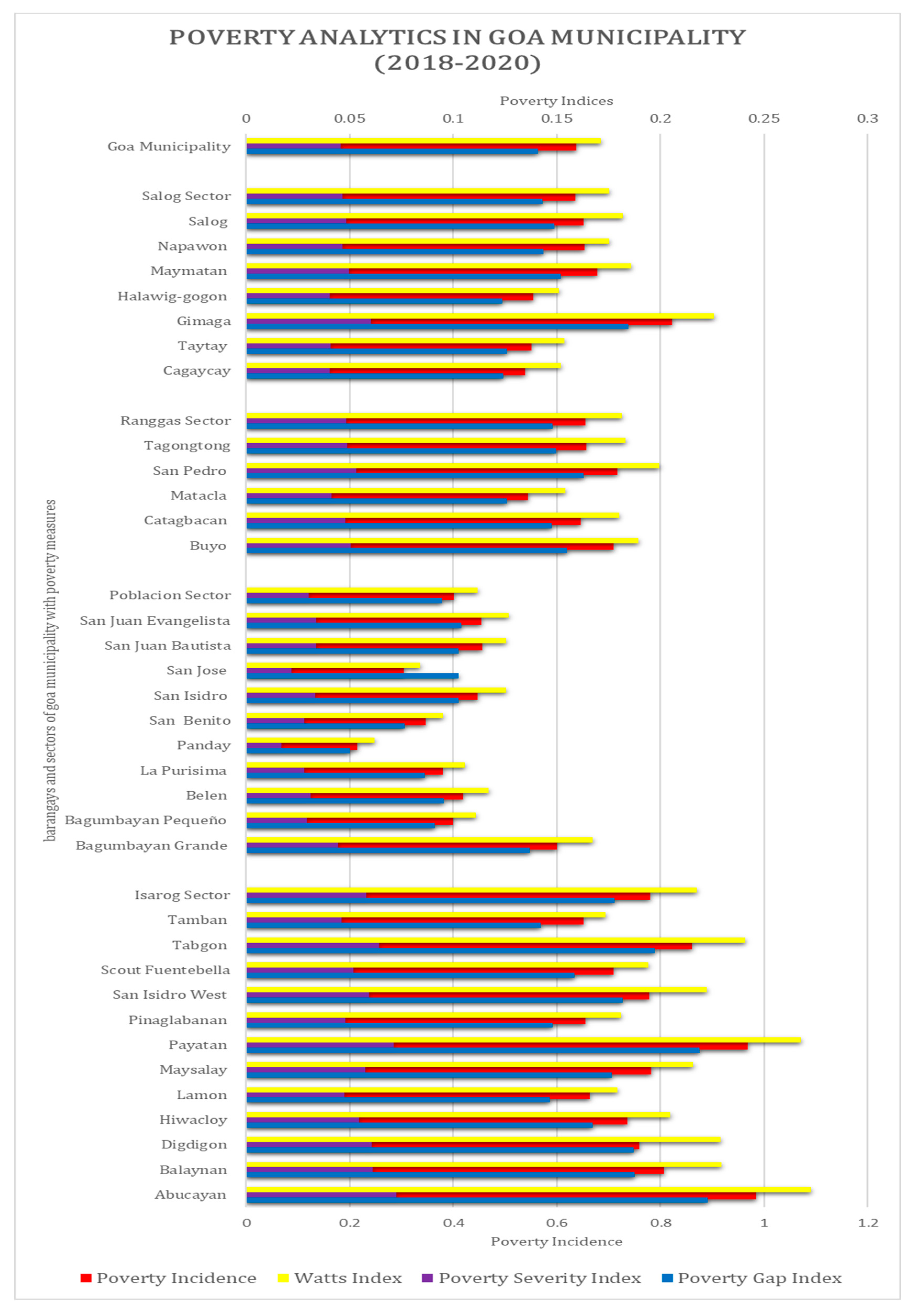
Poverty has many facets and is challenging to gauge using just one metric. The prevalence, gap, severity, and extent of poverty were thus measured using a variety of variables. The headcount ratio was estimated as follows: P 0 = 1 N   i = 1 N y i < z   P O = N P N where P O = Headcount Ratio, Np = Number of poor; and N = Total Population (or sample). It is the proportion of the population that is comprised of those who live in poverty. Based on the overall number of households, the majority of barangays are poor. The Isarog region’s Payatan and Tabgon are the next two poorest localities after Abucayan, which is the lowest locality overall. On the other hand, among all the barangays, Panday, San Jose, and San Benito have the fewest poor households. The head count ratio has the drawback of ignoring the degree of poverty; as people experiencing poverty become poorer, the headcount index stays the same. Thus, the Poverty gap index was derived as follows: P 1 = 1 N   i = 1 N G i z , where P 1 = Poverty Gap Index and G i = (z x 1 ) × I y i < z . The multi-sectoral and comparative evaluation of the sectors and barangays in the municipality is shown in Figure 2.
Figure 2. Multisectoral Poverty Analytics in Goa, Camarines Sur, the Philippines.
An indicator of the extent to which poverty is is the poverty gap index. It is the percentage of the poverty line that the average income disparity in the population is expressed as. It assesses how far, on average, the impoverished fall below the poverty line to establish the level of poverty. The indices vary from 0.05 to 0.22; the closer it is to 0, the fewer people live in poverty; the closer it is to 1, the greater the number of individuals who do. An index of 0.18 equates to 18%, whereas a value of. 21 equates to 21%, which is closer to 100%. Because of this, poverty is pervasive in the Isarog Sector. Abucayan has the largest poverty gap index, followed by Payatan and Tabgon.
On the other hand, Panday and San Benito have the smallest poverty gap index, which suggests better income than other barangays. To assess the intensity of poverty, the following poverty severity indices were calculated P = 1 N   i = 1 N G i z ,   0 , where P 2 = Squared Poverty Gap Index  = sensitivity of index to poverty; z = poverty line; x 1 = value of expenditure (income) per capita for ith person’s HH; and G i = z x 1 (with G i = 0   w h e n   x i   > z ) = poverty gap for individual i. The poverty gap index and the squared poverty gap index are interrelated. By multiplying the poverty gap ratio by itself and averaging the result, it is determined. The statistic gives more weight to a poor person’s observed income when it declines below the poverty line by squaring each data point on the poverty gap. The weighted sum of poverty gaps, whose weight is proportional to the size of the gap, is known as the squared poverty gap index. More people live in poverty in Abucayan, Payatan, Tabgon, Balaynan, and Digdigon. It is less severe in the Poblacion community, nevertheless. Moreover, the Watts Indices were also estimated through the equation W = 1 N   i = 1 N l n z l n y i = 1 N   i = 1 q l n z y i Where W = Watts Index; The total of q people whose income (or expenditure) yi is above the poverty line z is divided by the number of N people in the population whose income (or expenditure) yi is below the poverty threshold z. By dividing the poverty line by income, adding up people experiencing poverty on a logarithmic scale, and then dividing the result by the total population, the index can be constructed. According to the research, poverty is more prevalent in Isarog than in Poblacion. On the other side, the Ranggas and Salog share a similar level of poverty [19,20].

4.4. Characterization of Health Dynamics

Of the 12 barangays of Isarog, Pinaglabanan has the highest child mortality rate. Child mortality is high in San Juan Evangelista, Poblacion. Additionally, no child fatality incidences have been found in 15 barangays, indicating adequate nutrition and health. In 34 barangays, there has not been a single instance of pregnancy-related mortality. Malnutrition cases are most prevalent in Maymatan, then Payatan. However, Tamban and San Juan Bautista have not recorded any occurrences. The majority of Poblacion residents live in permanent dwellings since they are more durable. However, residences in Tabgon, Lapurisima, and San Benito are in a better position than those in other barangays in terms of formal settlement. Residents of Hiwacloy are quite concerned about having access to clean water, yet this is not a problem in San Jose or San Juan Bautista. The majority of people in Bagumbayan Pequeño, Belen, Panday San Benito, Gimaga, and Maymatan have access to sanitary toilet facilities; however, a sizeable portion of people in Hiwacloy, Digdigon, Lamon, Scout Fuentebella, and Tabgon do not. In addition, five people live in each household on average across all barangays. The dynamics of each barangay’s health in relation to the population are shown here.

4.5. Calamity and Disaster Risk Preparedness

Five frequent potential disasters that could happen in the municipality were highlighted by the researchers. The typhoon is the first. The municipality is situated at the focal point of super typhoons in the Philippines. Typhoons consequently frequently occur from September to December. The following typhoons struck the region in 2017: Jolina, Maring, Salome, and Nina. In 2018, Agaton, Ompong, Rosita, Samuel, and Usman. 2019: Ursula, Amang, Ineng, Jenny, Ramon, Tisoy. In 2020, a typhoon parade in the region occurred. Supertyphoon Goni (Rolly), the strongest landfalling super typhoon on earth (195 mph) has battered the region, along with Typhoon Vongfong (Ambo), Tropical Storm Nuri (Butchoy), Tropical Storm Sinlaku, Tropical Storm Noul (Leon), Tropical Storm Linfa, Tropical Depression Ofel, Typhoon Molave (Quinta), Tropical Storm Etau (Tonyo), and Typhoon Vamco (Ulysses). The majority of households in four sectors have been impacted by typhoons [17,18,19,20]. Typhoons are commonly associated with flooding and mudslides, sometimes known as landslides. As a result, it has an impact on homes in low-lying areas. An inactive stratovolcano is called Mount Isarog. But for the past 700 years, there has not been any volcanic activity. There has not been an eruption as a result in any of the homes. The Isarog sector has the most drought occurrences [19].
While the majority of homes in Isarog lack disaster risk preparedness, the majority of households in Poblacion, Ranggas, and Salog do. It is clear that residents in three sectors place a high priority on household preparedness for disasters.

Predictive Analytics and Advanced Econometric Modeling

With overall p-Values of 0.0000 for poverty as defined by income (z) and food (v) thresholds, the results demonstrate that the overall models are significant in predicting poverty outcomes across all rural sectors and municipalities. Coefficients are the numbers used in the logistic regression equation to predict the dependent variable based on the independent variable. They are measured in units of log-odds and probability.
The prediction equation is expressed as (1) log(p/1 − p)z = β0 + β1C_Mortality + β2M_Mortality + β3C_Malnutrition + β4MSH_Dwellers + β5I_Settlers + β6WAS_Water + β7WASF_Toilet + β8TNOHH_Members + β9CO_Typhoon + β10CO_Flood + β11CO_Drought + β12CO_VolEruption + β13CO_LMSlide + β14DR_Prepared + β15CNA_Elem + β16CNA_JunHS + β17CNA_SenHS + β18LF_Unmployed + β19Vic_Crime + βni + μ; and (2) log(p/1 − p)v = β0 + β1C_Mortality + β2M_Mortality + β3C_Malnutrition + β4MSH_Dwellers + β5I_Settlers + β6WAS_Water + β7WASF_Toilet + β8TNOHH_Members + β9CO_Typhoon + β10CO_Flood + β11CO_Drought + β12CO_VolEruption + β13CO_LMSlide + β14DR_Prepared + β15CNA_Elem + β16CNA_JunHS + β17CNA_SenHS + β18LF_Unmployed + β19Vic_Crime + βni + μ, where p is the probability of being poor, poverty incidence, or poverty outcomes. The odds ratio is derived by dividing the total number of households that do not fall below the poverty line by the total number of households that do. The approach is the same for all indicators. Another interesting finding is that significant variables have a 95% confidence interval that excludes 1.0, perhaps because the p-value and the bottom end of the 95% confidence interval are so close to 0.05.
Seventy-eight logistic models (34 locals, 4 sectors, 1 municipality for two outcomes) were fitted to measure the unmeasurable effects of multidimensional variables on poverty outcomes. The results of logistic regression modeling for the two outcomes are identical and yield the same conclusions. Across all locals and sectors, at disaggregated and aggregated configurations, the following variables significantly influence and predict the poverty outcomes at a 5% level of significance as shown in Table 2, namely, Children under 5 years old who died, Malnourished children 0–5 years old, Households who are informal settlers, Households living in makeshift housing, Households without access to safe water, Households without access to sanitary toilet facility, Household Members, Children aged 6–11 years old who are not attending elementary, Children aged 12–15 years old who are not attending Junior High School, Children aged 16–17 years old not attending Senior High School, Unemployed members of the labor force, and Victims of crime. The beta coefficients of the aforementioned variables are all positive. It affirms that as the level of multidimensional variables increases, the probability of becoming poor increases as well. Moreover, calamity occurrences of typhoons, floods, drought, and landslides/mudslides also increased poverty outcomes across all locals and sectors. However, when a household or individual becomes prepared for risk and disaster, the likelihood of becoming poor decreases, as reflected by negative coefficients. As can be seen in the table, the researchers also used a range of interaction variables. The interacting variables show significant results. It reveals interesting causation between the combined effects of two multidimensional variables as shown in Table 3. The following variables affect poverty outcomes positively, namely, Households who are informal settlers × Household Members, Households living in makeshift housing × Children under 5 years old who died, Households without access to safe water × Children under 5 years old who died, Households without access to safe water × Household Members, Households without access to safe water × Households who are informal settlers, Households without access to safe water × Households living in makeshift housing, and Households without access to sanitary toilet facility × Households who are informal settlers. However, when the multidimensional variables are combined with disaster risk reduction preparedness, the coefficients become negative, indicating a probable reduction in poverty outcomes. The following intervention decreases poverty outcomes, namely: DRRP × Makeshift Housing, DRRP × Child Mortality, DRRP × Total Household Members, and DRRP × Calamity Occurrences. Furthermore, the variable of Women who died due to pregnancy-related causes and Calamity Occurrences—Volcanic Eruption was dropped by the fitted model due to the absence of occurrence or entries. The intervening variable, Households without access to sanitary toilet facility × Households living in makeshift housing, is not significant across all locals and sectors. The combined effects of the two variables have no significant influence on poverty outcomes.
Table 2. Results of logistic regression on the multidimensional poverty decomposition (z) with the intervening combination at various configurations.
Table 3. Results of logistic regression on the multidimensional poverty decomposition (v) with intervening combination at various configurations.
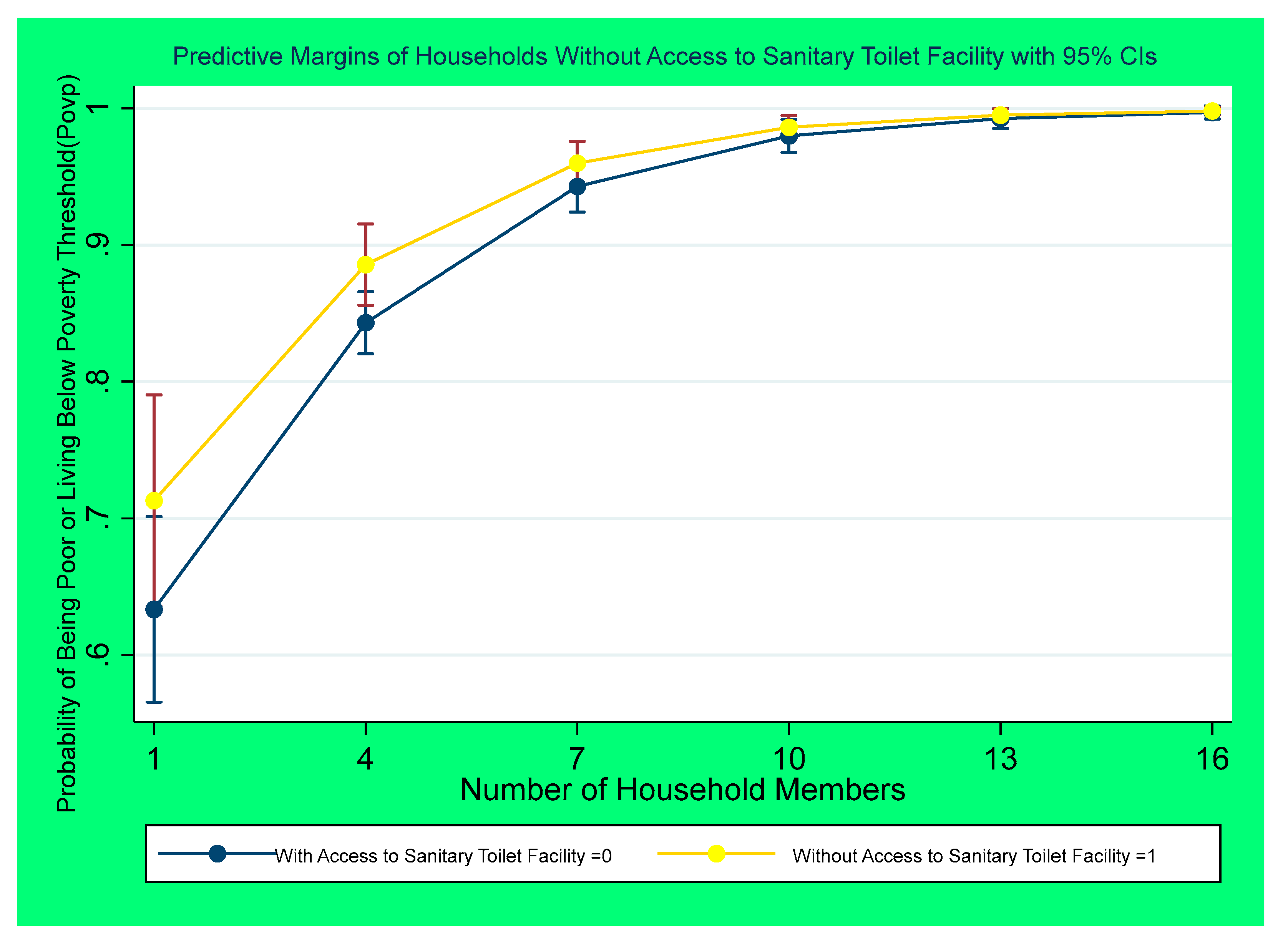
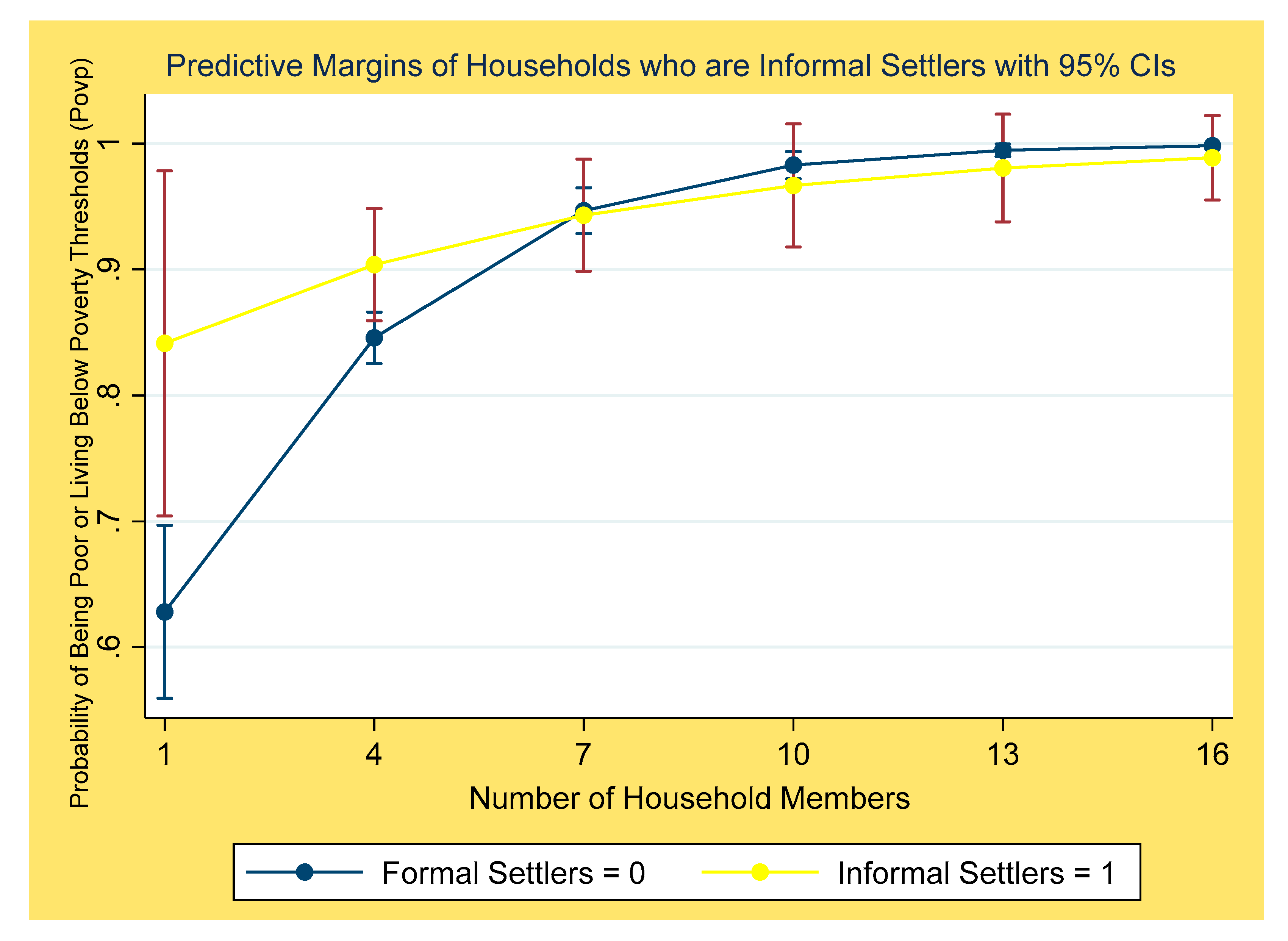
It is evident that the likelihood of a family falling into poverty lowers when housing, water, and sanitation indicators become better. Informal settlers are more likely than formal settlers to experience poverty. Additionally, as the number of household members rises, so does the likelihood of becoming poor.
The likelihood that a household will be below the poverty line is lowest for households with access to a sanitary toilet facility and households with fewer members than for households with access to a sanitary toilet facility and a large number of members than for households without access to a sanitary toilet facility and fewer household members. Figure 3 reveals that household size is a significant predictor of poverty as a factor influencing health dynamics.
Figure 3. Predictive margins of multidimensional variables on poverty outcomes as measured by poverty z. Source: Authors’ calculations processed through STATA graphics.
The p-value for the entire model is 0.0000, indicating significance at the 0.05 alpha level. Additionally, the following procedure was used for the goodness-of-fit test. According to the goodness-of-fit, Prob > chi2 of 0.0011 is less than the 0.05 Alpha level. Similarly to the second model, which displays Prob > chi2 = 0.0043, a value below the 0.05 Alpha criterion, the goodness-of-fit test for the two models is significant. The results of the model are asserted objectively using the estate classification tests.
The input and output were categorized according to Estat classification. True denotes the binary outcomes of whether a household is poor or not. There are 1121 non-poor samples and 4648 poor samples in all. All 13,767 data are correctly classified by the model, demonstrating that sensitivity is 100% as shown in Figure 4. The specificity is zero because none of the 225 observations could be conclusively classified as being below the poverty threshold. Thus, the model accurately predicted each and every home that was below the poverty threshold. The overall accuracy rate ranges from 73.29 to 74.12%. The models or alternative specifications used in the logistic model correctly classify the household observations [19,20].
Figure 4. Predictive margins of multidimensional variables on poverty outcomes as measured by food line v. Source: Authors’ calculations processed through STATA graphics.

4.6. Novelty of the Study and Its Contributions to the Rural Community

The majority of the world’s nations describe poverty as a lack of resources. However, poverty is multifaceted. The overall results of the study support existing literature on global and rural poverty. However, it provides thorough empirical evidence on the causes of poverty and its reverse causality that affects specific rural communities. It also combines the effects of interacting variables to model poverty outcomes. Calamity occurrences and disaster risk reduction preparedness were fitted into the models, along with the control variable. Those who are poor view their situation in a far broader light. A poor person may experience multiple negative factors at once, including poor health or hunger, a lack of access to electricity or clean water, low-quality employment, or insufficient education. In the majority of nations, the level of poverty is determined by comparing an individual’s or family’s income to the minimum income required to meet basic needs. People are categorized as poor if their income is below the poverty line. The same procedure was applied in the study. However, the processes undertaken in this study are more specific, more accurate, and intended for microeconomic policy-making purposes. The study has not been exposed to large sampling errors; thus, the results are useful and realistic.
Health and nutrition, housing and houses, water and sanitation, education, income and hunger, employment, and peace and order are the main markers of poverty. One of the hardest problems facing the Philippines is still reducing poverty. It comes as no surprise that the nation has accepted poverty. Its entire development strategy is geared toward eradicating poverty. But in order to effectively combat poverty, it is important to comprehend its nature and scope—that is, who people experiencing poverty are, where they live, and why they are poor [35,36,37,68]. The findings of the study identify poor households and the causes of their poverty. The overall results and processed datasets were delivered to the local government unit. The output of the study has been instrumental in designing poverty alleviation programs and policies for local economic development.
Policy proposals have been utilized by the local government sector. Disaggregated findings and decomposed multidimensional poverty variables are very useful in combating poverty. The findings of the study conform to Dunga and Sekatane (2014). They asserted that employment is one factor that contributes to poverty [69]. One of the most important pillars in the fight against poverty is employment status since it shows that individuals or families are reliable and powerful by demonstrating temporal stability and a significant correlation with other social and economic elements. Additionally, they found a substantial correlation between the two variables after investigating the association between household poverty status and job status in a township environment. According to their research, families with working members have a higher likelihood of overcoming poverty and advancing in socioeconomic position.
Because income from paid labor is the main source of income for the majority of households, employment status has a considerable impact on living conditions and poverty outcomes [70]. Nothing is more vital to reducing poverty than employment, according to the International Labor Organization (ILO), which ardently advocates for decent employment, or work that provides people with respectable pay, safeguards, security, flexibility, and an opportunity to speak at work. Major initiatives to expand employment, boost employability, and boost labor market effectiveness are necessary for reducing poverty through employment [34,55]. Rutkowski (2015) contends that widespread poverty at work in the Philippines is the main issue with labor regulations, mostly as a result of people experiencing poverty’s limited access to secure employment and consequently low earning potential. The absence of opportunities for productive jobs and the impoverished people’s low levels of education are considered to be the root factors [71]. Contrary to people with wealth and influence, those who are impoverished work in informal, transitory, or casual positions that pay very little. Reducing in-work poverty will improve both the supply and demand sides of the employment equation. Supply reflects better education and skills, and the demand implies better job opportunities.
According to Aizer et al. (2017), socioeconomic disparity is a result of the mutually reinforcing effects that poverty and poor health have on one another [51]. The consequences of poverty and changes in health are concealed, mediated, and moderated through time. According to the World Bank (2014), one of the main reasons for poverty is having a poor health status. In addition to paying for medical charges like lab work, doctor visits, and medicines, patients also have to pay incidental fees like transportation costs and other costs associated with the procedure [54]. The breadwinner’s illness or the absence from school or the job of other family members who are caring for the sick relative is likely to result in a loss of revenue.
Malnutrition exacerbates poverty by raising medical expenses, decreasing productivity, and stifling economic growth. Malnutrition, which is widespread in children and can limit productivity, raise the risk of poverty, and slow national growth, impacts a person’s mental development [41,42,43,72,73,74]. In general, having good health is a very desirable economic asset, especially for people experiencing poverty. Their way of life is in jeopardy. It is crucial to acknowledge that good health is one of the prerequisites for economic progress, especially in developing nations like the Philippines. When a member of the family who is socially disadvantaged becomes ill or injured, the entire family may become trapped in a cycle of decreased income and higher medical costs. The cascading effects may necessitate selling assets necessary for survival and devoting time away from working or going to school to care for the sick. A person’s health will improve their ability to work and learn, and it will also have a favorable impact on the vital statistics of the entire population [41,42,43]. Housing conditions for persons in poverty are often less attractive than for those with better earnings, but they also prefer to steer clear of subpar conditions. The connection between low-income and subpar housing can be broken with the aid of housing rules. Access to affordable, adequate housing can also assist people in having more money to spend, avoid being without material possessions, and maintain a steady standard of living. On the other hand, workplace incentives and high housing prices might result in poverty and material deprivation. There will be costs to society as a whole. Many Filipinos are unable to buy a house due to the country’s extreme poverty and lack of employment possibilities, which puts them at risk of rough sleeping on the streets [19,20,57]. Presently, there is a critical need for suitable housing. Various factors exacerbate housing problems, such as low average family income, prohibitive land, building materials, and construction costs. Housing conditions are also being affected by high construction standards and high speculation, a lack of credit for low-income families, and poor outcomes in the private and public sectors with regard to affordable housing [74]. When all of the contributing elements are considered, they aggravate the restrictions, making it more challenging to obtain suitable housing. Overall, the findings of the study validate existing literature and contribution to rural studies by measuring the unmeasurable and comprehensive aspects of multidimensional poverty [2,19,20,21,49,56]. Finally, it helps the local sector and the community by utilizing the output of the study.

4.7. Prescriptive Analytics for Economic Policies and Economic Development Infrastructure

The policy mapping of multidimensional poverty predictors for economic development prioritized programs is shown in Table 3. This map was created using a complete enumeration of all significant findings in relation to the overall population of all barangays. The ranking and clustering processes were completed. Because there are 34 barangays in the study, they were divided into two groups: those with a high prevalence or occurrence and those with a low prevalence or occurrence. As a result, the first 17 locals with the highest proportion were classed as having a high prevalence, while the following 17 with the lowest proportion were classified as having a low prevalence. This mechanism was facilitated for proper targeting of policies and prioritization of programs specific to a certain local. The municipality’s poverty reduction programs or policies needed to be clear, verifiable, and attainable, so focus groups and key informant interviews were established and conducted, respectively, along with measuring the unmeasurable evidence through policy mapping and targeting analytics [20]. The focus group discussions and key informant interviews were conducted with the municipal chief executive, department chairs, local chief executives, councilors, resident representatives, stakeholders, and researchers in the municipality of Goa, Camarines Sur, covering 4 sectors and 34 barangays. Table 4 includes all potential programs, policies, and interventions aimed at reducing rural poverty and promoting local economic development, which were generated from the focus group discussions and key informant interviews.
Table 4. Policy proposals for rural poverty alleviation and promoting local economic development.

5. Conclusions

The municipality of Goa is divided into four sectors, each of which has 34 barangays. Using the CBMS households and members’ datasets, poverty was evaluated across barangays, and numerous policy suggestions for programs to reduce poverty were presented. Due to the diversity of poverty assessments and its many causes, data were disaggregated to look at each locality. The bulk of households and populations are underprivileged and food-vulnerable. There have been reports of food shortages and unemployment, albeit on a minor scale. There have been reports of malnutrition, child mortality, and crimes against citizens, yet they are not predominantly recognized as the primary causes of poverty.
The Isarog sector has a high percentage of impoverished residents, and poverty is pervasive, according to headcount indexes. Poverty severity differs from location to location based on measures of the poverty gap. Poblacion has relatively less poverty compared to other sectors. The squared poverty gap indices, which vary depending on location, such as in the Ranggas and Salog sectors, measure the severity of tolerable poverty. The Watts indicators assess the degree and severity of poverty, which ranges from mild to severe in several spheres. Certain health profile factors were chosen to gain beneficial insights and see if they might forecast instances of poverty. Each village will, therefore, need its own set of policy strategies to combat poverty (please refer to Table 4 for complete and specific policy recommendations). Furthermore, based on the results of the logistic regression model for both individual and consolidated techniques, it can be concluded that health dynamics significantly predict poverty consequences. Lack of resources like money and means of sustenance, as well as restricted access to basic education, are the main causes of household poverty. Poverty has also shown up in areas that affect people’s ability to maintain good health, including housing, access to safe drinking water, and sanitation.
To assist in reducing poverty, collaboration, and cooperation are required between public and private sectors, as well as intellectual institutions. Due to its multifaceted nature, poverty requires a variety of intervention strategies to be overcome. Several intervention options that have been assessed by the researchers, recommended by government officials, and supported by locals should be put into practice, monitored, and evaluated in order to achieve the desired objectives (please refer to Table 4 for complete and specific policy recommendations). Through the findings of policy mapping, decide which components of each barangay’s susceptibility and poverty prevalence should be targeted. Especially in the case of health dynamics, make use of the consequences of policy targeting to allocate resources effectively and achieve economic development goals. Keep an eye on the programs’ development and guarantee that plans to combat poverty always include impoverished households. Policymakers and government organizations should modify their economic development strategies when local conditions change, so plans should be adaptable and based on policy targeting mechanisms. The Partido district’s economists or economics experts should spend time simulating poverty and economic development as well as conducting research and evaluating poverty in the district’s other municipalities. Collaboration between CBMS experts, data analysts and scientists, and Partido economists may be facilitated by Memorandums of Agreements (MOA) for more in-depth economic study to support economic growth.

Author Contributions

Conceptualization, E.A.O. and J.F.R.; methodology, E.A.O.; software, E.A.O.; validation, E.A.O. and J.F.R.; formal analysis, E.A.O.; investigation, E.A.O.; resources, E.A.O. and J.F.R.; data curation, E.A.O.; writing—original draft preparation, E.A.O.; writing—review and editing, J.F.R.; visualization, E.A.O.; supervision, J.F.R.; project administration, J.F.R.; funding acquisition, E.A.O. and J.F.R. All authors have read and agreed to the published version of the manuscript.

Funding

This work is funded by the Department of Agriculture (DA) and University of the Philippines Los Baños (UPLB) Accelerating Growth to One Research and Extension in Action (AGORA) and Agricultural and Rural Development Scholarship (ARDS) Thesis and Dissertation Grant 2024 (Recipient: Em-manuel A. Onsay).

Institutional Review Board Statement

The Partido State University and the University of the Philippines Los Baños approved the conduct of this study. The dissemination, usage, wrangling, analysis, and utilization of the processed data outputs were approved by the Goa, Camarines Sur Local Government Unit. Researchers voluntarily conduct the data analysis and procedures; they are not a component of any experiment. Our human data is indirect and secondary. Furthermore, this study does not involve any animal testing, direct human volunteers, or data acquired from social media platforms.

Data Availability Statement

Onsay, Emmanuel; Rabajante, Jomar (2023), “Dataset on Measuring the Unmeasurable Multidimensional Rural Poverty for Economic Development: Analysis from the Poorest District of the Poorest Province in the Poorest Region of Luzon, Philippines”, Mendeley Data, V1, https://doi.org/10.17632/s76nh7dm4v.1.

Acknowledgments

The authors would like to express their sincere gratitude to the Department of Agriculture (DA) for publication funding assistance, the University of the Philippines Los Baños for conceptualization and analytical support, Partido State University for internal financial assistance, De La Salle University’s School of Economics for methods and reviews, LGU Goa, Camarines Sur for data provision, and MDPI Societies for providing a platform to share our article for economic development and poverty alleviation of rural communities. Special appreciation is extended to Christopher Morales of Department of Agriculture and Mariyel Hiyas Liwanag of UPLB Learning Resources Center for altruistic support in funding this paper. For data provision, enumeration, authorization, and logistics, we deeply acknowledge Marcel S. Pan, Moriel Prado, Lea Nonah M. Perit, Keschei Joana Villar Cañaveras, Herman B. Jungco II, and Jude Zair C. Paladan of LGU Goa. For assistance in econometrics, we are indebted to Jason Alinsunurin and Jefferson Arapoc. For mathematical analysis support, we are grateful to Jerrold Tubay and Neil Jerome Egarquin. For poverty models, we deeply appreciate Eva Marie Aragones and Alellie Sobreviñas. For editing, curation, and logistics, we sincerely thank Rolan Jon G. Bulao, Sir Kevin C. Baltar, Mark Rey Pardiñas, Spotty Kankan, Sakura Kokok, and Biboy Binangon. Above all, to the All-Powerful God for his wisdom, might, and knowledge. God is to be praised!

Conflicts of Interest

The authors declare that they have no known competing financial interests or personal relationships that could have appeared to influence the work reported in this paper.

References

  1. Haughton, J.; Khandker, S.R. Handbook on Poverty and Inequality; World Bank: Washington, DC, USA, 2009. [Google Scholar]
  2. Abhijit Banejee, V.; Duflo, E. Poor Economics: A Radical Rethinking of the Way to Fight Global Poverty; Public Affairs: New York, NY, USA, 2012; p. 303. ISBN 978-1-58648-798-0. [Google Scholar]
  3. Sen, A. Conceptualizing and Measuring Poverty. Poverty and Inequality; De Gruyter: Berlin, Germany, 2006; pp. 30–46. [Google Scholar]
  4. Sen, A. Development as Freedom (1999). The Globalization and Development Reader: Perspectives on Development and Global Change; Wiley: Hoboken, NJ, USA, 2014; p. 525. [Google Scholar]
  5. Sen, A. Issues in the Measurement of Poverty; Palgrave Macmillan: London, UK, 1981; pp. 144–166. [Google Scholar]
  6. Kamruzzaman, P. Understanding extreme poverty in the words of the poor—A Bangladesh case study. J. Poverty 2021, 25, 193–216. [Google Scholar] [CrossRef]
  7. Deaton, A. Measuring poverty in a growing world (or measuring growth in a poor world). Rev. Econ. Stat. 2005, 87, 1–19. [Google Scholar] [CrossRef]
  8. Deaton, A. Measuring poverty. In Understanding Poverty; Oxford University Press: Oxford, UK, 2006; pp. 3–15. [Google Scholar]
  9. Sen, A. Welfare, freedom and social choice: A reply. Rech. Économiques De Louvain/Louvain Econ. Rev. 1990, 56, 451–485. [Google Scholar] [CrossRef]
  10. Sen, A. Valuing Freedoms. Sen’s Capability Approach and Poverty Reduction; Oxford University Press: Oxford, UK, 1999. [Google Scholar]
  11. Bibi, S. Measuring Poverty in a Multidimensional Perspective: A Review of Literature. 2005. Available online: https://ssrn.com/abstract=850487 (accessed on 11 June 2023).
  12. Foster, J.; Seth, S.; Lokshin, M. A Unifi ed Approach to Measuring Poverty and Inequality; The World Bank: Washington, DC, USA, 2013. [Google Scholar]
  13. Gnangnon, S.K. Poverty volatility and poverty in developing countries. Econ. Aff. 2021, 41, 84–95. [Google Scholar] [CrossRef]
  14. Alkire, S.; Santos, M.E. A Multidimensional Approach: Poverty Measurement & Beyond. Soc. Indic. Res. 2013, 112, 239–257. [Google Scholar] [CrossRef]
  15. Asian Development Bank. Poverty Data Stories. 2019. Available online: https://kidb.adb.org/content/poverty (accessed on 12 December 2023).
  16. Mohanty, S.K.; Vasishtha, G. Contextualizing multidimensional poverty in urban India. Poverty Public Policy 2021, 13, 234–253. [Google Scholar] [CrossRef]
  17. Onsay, E.A. Poverty profile and health dynamics of indigenous people. Int. Rev. Soc. Sci. Res. 2022, 2, 1–27. [Google Scholar] [CrossRef]
  18. Onsay, E.A. Productivity value chain analysis of cassava in the Philippines. IOP Conf. Ser. Earth Environ. Sci. 2021, 892, 012010. [Google Scholar] [CrossRef]
  19. Onsay, E.A.; Rabajante, J.F. Measuring the unmeasurable multidimensional poverty for economic development: Datasets, algorithms, and models from the poorest region of Luzon, Philippines. Data Brief 2024, 110150. [Google Scholar] [CrossRef]
  20. Onsay, E.A.; Rabajante, J.F. When machine learning meets econometrics: Can it build a better measure to predict multidimensional poverty and examine unmeasurable economic conditions? Sci. Talks 2024, 11, 100387. [Google Scholar] [CrossRef]
  21. Meij, E.; Haartsen, T.; Meijering, L. Enduring rural poverty: Stigma, class practices and social networks in a town in the Groninger Veenkoloniën. J. Rural. Stud. 2020, 79, 226–234. [Google Scholar] [CrossRef]
  22. Eid, M.; Larsen, R.J. Measuring the immeasurable. In The Science of Subjective Well-Being; Guilford Press: New York, NY, USA, 2008; pp. 141–167. [Google Scholar]
  23. Gruijters, S.L.; Fleuren, B.P. Measuring the unmeasurable. Hum. Nat. 2018, 29, 33–44. [Google Scholar] [CrossRef]
  24. Rabajante, J.F. Insights from early mathematical models of 2019-nCoV acute respiratory disease (COVID-19) dynamics. arXiv 2020, arXiv:2002.05296. [Google Scholar] [CrossRef]
  25. Wu, L.; Kittur, A.; Youn, H.; Milojević, S.; Leahey, E.; Fiore, S.M.; Ahn, Y.Y. Metrics and mechanisms: Measuring the unmeasurable in the science of science. J. Informetr. 2022, 16, 101290. [Google Scholar] [CrossRef]
  26. U. Nations. Facing the Challenge of Measuring the Unmeasurable. 2012. Available online: https://www.un.org/en/development/desa/news/statistics/measuring-the-unmeasurable.html (accessed on 22 July 2024).
  27. RA11315. Community-Based Monitoring Act of 2018. Available online: https://www.officialgazette.gov.ph/downloads/2019/04apr/20190417-RA-11315-RRD.pdf (accessed on 24 January 2023).
  28. Philippine Statistics Authority. Updated Official Poverty Statistics of the Philippines. Full-Year 2018. Poverty and Human Development Statistics Division of the Philippine Statistics Authority (PSA). 2018. Available online: https://rsso11.psa.gov.ph/poverty (accessed on 20 November 2023).
  29. Philippine Statistics Authority. Official Poverty Statistics of the Philippines. First Semester of 2021. Poverty and Human Development Statistics Division of the Philippine Statistics Authority. 2021. Available online: https://psa.gov.ph/statistics/poverty/index (accessed on 27 October 2023).
  30. Philippine Statistics Authority. Official Poverty Statistics of the Philippines. Full-Year 2015. Poverty and Human Development Statistics Division of the Philippine Statistics Authority (PSA). 2015. Available online: https://www.psa.gov.ph/content/updated-2015-and-2018-full-year-official-poverty-statistics (accessed on 24 January 2023).
  31. Philippine Statistics Authority. Proportion of Poor Filipinos Registered at 21.0 Percent in the First Semester of 2018. 2019. Available online: https://psa.gov.ph/content/proportion-poor-filipinos-was-recorded-181-percent-2021 (accessed on 27 October 2023).
  32. Oxford Poverty and Human Development Initiative. Global Multidimensional Poverty Index 2018: The Most Detailed Picture to Date of the World’s Poorest People. Report; Oxford Poverty and Human Development Initiative (OPHI), University of Oxford: Oxford, UK, 2018; ISBN 978-1-912291-12-0. [Google Scholar]
  33. Allen, C.; Metternicht, G.; Wiedmann, T. Initial progress in implementing the Sustainable Development Goals (SDGs): A review of evidence from countries. Sustain. Sci. 2018, 13, 1453–1467. [Google Scholar] [CrossRef]
  34. Karnani, A. Romanticizing the poor. In Fighting Poverty Together: Rethinking Strategies for Business, Governments, and Civil Society to Reduce Poverty; Palgrave Macmillan US: New York, NY, USA, 2011; pp. 85–109. [Google Scholar]
  35. Reyes, C.M.; Mandap, A.E.E.; Quilitis, J.A.; Bancolita, J.E.; Baris, M.A.J.; Leyso, N.L.C.; Calubayan, S.J.I. CBMS Handbook; De La Salle University Publishing House: Manila, Philippines, 2014. [Google Scholar]
  36. Reyes, C.; Tabuga, A.; Mina, C.; Asis, R.; Datu, M. Chronic and Transient Poverty; PIDS Discussion Paper Series No. 2010-30; Philippine Institute for Development Studies: Manila, Philippines, 2011. [Google Scholar]
  37. Reyes, C.M.; Mandap, A.B.E. Monitoring Child Poverty and Exclusion through the Community-Based Monitoring System (CBMS). DLSU Bus. Econ. Rev. 2019, 32, 14–29. [Google Scholar]
  38. Barro, R. Health and Economic Growth; World Health Organization: Geneve, Switzerland, 1996. [Google Scholar]
  39. Bloom, D.E.; Canning, D.; Sevilla, J. The effect of health on economic growth: A production function approach. World Dev. 2004, 32, 1–13. [Google Scholar] [CrossRef]
  40. Well, D.N. Accounting for the effect of health on economic growth. Q. J. Econ. 2007, 122, 1265–1306. [Google Scholar] [CrossRef]
  41. World Health Organization. Malnutrition. 2022. Available online: https://www.who.int/health-topics/malnutrition#tab=tab_1 (accessed on 9 August 2023).
  42. World Health Organization. DAC Guidelines and Reference Series Poverty and Health. 2003. Available online: https://www.oecd-ilibrary.org/docserver/9789264100206-en.pdf?expires=1664436943&i (accessed on 9 August 2023).
  43. World Health Organization. Undernutrition in the Philippines: Scale, Scope, and Opportunities for Nutrition Policy and Programming. 2021. Available online: https://www.worldbank.org/en/country/philippines/publication/-key-findings-undernutrition-in-the-philippines (accessed on 9 August 2023).
  44. Bankoff, G. Blame, responsibility and agency: ‘Disaster justice’ and the state in the Philippines. Environ. Plan. E Nat. Space 2018, 1, 363–381. [Google Scholar]
  45. RA10121. Philippine Disaster Risk Reduction and Management Act (2009). Available online: https://lawphil.net/statutes/repacts/ra2010/ra_10121_2010.html (accessed on 24 January 2023).
  46. Datt, G.; Ravallion, M. Growth and redistribution components of changes in poverty measures: A decomposition with applications to Brazil and India in the 1980s. J. Dev. Econ. 1992, 38, 275–295. [Google Scholar] [CrossRef]
  47. Aguilar, G.R.; Sumner, A. Who is the world’s poor? A new profile of global multidimensional poverty. World Dev. 2019, 126, 104716. [Google Scholar] [CrossRef]
  48. Valenzuela, J.F.; Narito RR, S.; Asor, N.T.; Onsay, E.A. Comprehensive Poverty Evaluation of Rural Communities in the Philippines: Empirical Evidence from Community-Based Monitoring System (CBMS) and Econometric Modeling. Technoarete Transactions on Economics and Business Systems (TTEBS). 2023. Vol-2, Issue-1, e-ISSN: 2583-4649. Available online: https://technoaretepublication.org/economics-and-busniess-system/article/comprehensive-poverty-evaluation.pdf (accessed on 22 July 2024).
  49. Anwar, T.; Qureshi, S.K.; Ali, H.; Ahmad, M. Landlessness and rural poverty in Pakistan [with comments]. Pak. Dev. Rev. 2004, 855–874. [Google Scholar]
  50. Imai, K.; Gaiha, R.; Bresciani, F. The labor productivity gap between the agricultural and nonagricultural sectors, and poverty and inequality reduction in Asia. Asian Dev. Rev. 2019, 36, 112–135. [Google Scholar] [CrossRef]
  51. Aizer, A.; Jackson, M.; O’Brien, R.; Persico, C. Poverty and Childhood Health. Spring/Summer. 2017. Available online: https://www.irp.wisc.edu/publications/focus/pdfs/foc332f.pdf (accessed on 12 December 2023).
  52. Sindzingre, A. The multidimensionality of poverty: An institutionalist perspective. In The Many Dimensions of Poverty; Springer: Berlin/Heidelberg, Germany, 2013; pp. 52–74. [Google Scholar]
  53. Bourguignon, F. The Growth Elasticity of Poverty Reduction: Explaining Heterogeneity Across Countries and Time Periods; MIT Press: Cambridge, MA, USA, 2003. [Google Scholar]
  54. World Bank. Poverty and Health. 2014. Available online: https://www.worldbank.org/en/topic/health/brief/poverty-health (accessed on 14 September 2023).
  55. World Bank. Republic of the Philippines Labor Market Review: Employment and Poverty; World Bank: Washington, DC, USA, 2016. [Google Scholar]
  56. Castañeda, A.; Doan, D.; Newhouse, D.; Nguyen, M.C.; Uematsu, H.; Azevedo, J.P. A new profile of the global poor. World Dev. 2018, 101, 250–267. [Google Scholar] [CrossRef]
  57. Vista, B.M. Exploring the Spatial Patterns and Determinants of Poverty: The Case of Albay and Camarines Sur Provinces in Bicol Region, Philippines. Graduate School of Life and Environmental Sciences, the University of Tsukuba. 2008. Available online: http://giswin.geo.tsukuba.ac.jp/sis/thesis/Vista_Brandon.pdf (accessed on 14 September 2023).
  58. Velarde, R.B.; Velarde, R.B. The Philippines’ Targeting System for the Poor: Successes, Lessons, and Ways Forward. World Bank, 2018. Available online: https://documents1.worldbank.org/curated/pt/830621542293177821/pdf/132110-PN-P162701-SPL-Policy-Note-16-Listahanan.pdf (accessed on 18 October 2023).
  59. Sachs, J. The End of Poverty: Economic Possibilities for Our Time; Penguin: New York, NY, USA, 2005. [Google Scholar]
  60. Easterly, W. The big push deja vu: A review of Jeffrey Sachs’s the end of poverty: Economic possibilities for our time. J. Econ. Lit. 2006, 44, 96–105. [Google Scholar] [CrossRef][Green Version]
  61. Easterly, W. The ideology of development. Foreign Policy 2007, 161, 30–35. [Google Scholar]
  62. Moyo, D. Why foreign aid is hurting Africa. Wall Str. J. 2009, 21. [Google Scholar]
  63. Moyo, D. Dead Aid: Why aid is Not Working and How There is a Better Way for Africa; Macmillan: New York, NY, USA, 2009. [Google Scholar]
  64. Rowntree, B.S. Poverty: A Study of Town Life; Macmillan: London, UK, 1901; pp. 119–120. [Google Scholar]
  65. Foster, J.; Greer, J.; Thorbecke, E. A class of decomposable poverty measures. Econom. J. Econom. Soc. 1984, 52, 761–766. [Google Scholar] [CrossRef]
  66. Sobreviñas, A.B. The Community-Based Monitoring System (CBMS): An Investigation of Its Usefulness in Understanding the Relationship between International Migration and Poverty in the Philippines. Doctoral Dissertation, University of Antwerp, Antwerp, Belgium, 2017. [Google Scholar]
  67. Sobreviñas, A.B. Examining chronic and transient poverty using the Community-Based Monitoring System (CBMS) Data: The case of the Municipality of Orion. DLSU Bus. Econ. Rev. 2020, 30, 111–112. [Google Scholar]
  68. Reyes, C.M. Community-Based Monitoring System (CBMS): An Overview. In Proceedings of the 2017 PEP Meeting, Nairobi, Kenya, 8–14 June 2017. [Google Scholar]
  69. Dunga, S.H.; Sekatane, M.B. Determinants of employment status and its relationship to poverty in Bophelong Township. Mediterr. J. Soc. Sci. 2014, 5, 215–220. [Google Scholar] [CrossRef][Green Version]
  70. Ray, K.; Sissons, P.; Jones, K.; Vegeris, S. Employment, Pay and Poverty. Evidence and Policy Review; Joseph Rowntree Foundation: York, UK, 2014. [Google Scholar]
  71. Rutkowski, J.J. Employment and Poverty in the Philippines; World Bank, Washington, DC, USA, 2015. Available online: https://documents.worldbank.org/en/publication/documents-reports/documentdetail/979071488446669580/employment-and-poverty-in-the-philippines (accessed on 17 August 2023).
  72. Siddiqui, F.; Salam, R.A.; Lassi, Z.S.; Das, J.K. The intertwined relationship between malnutrition and poverty. Front. Public Health 2020, 8, 453. [Google Scholar] [CrossRef] [PubMed]
  73. Reyes, M.R.L.; Valdecanas, C.M.; Reyes, O.L.; Reyes, T.M. The effects of malnutrition on the motor, perceptual, and cognitive functions of Filipino children. Int. Disabil. Stud. 1990, 12, 131–136. [Google Scholar] [CrossRef] [PubMed]
  74. Keyes, W.J. Economic development and the housing problem. Philipp. Stud. 1979, 27, 210–230. [Google Scholar]
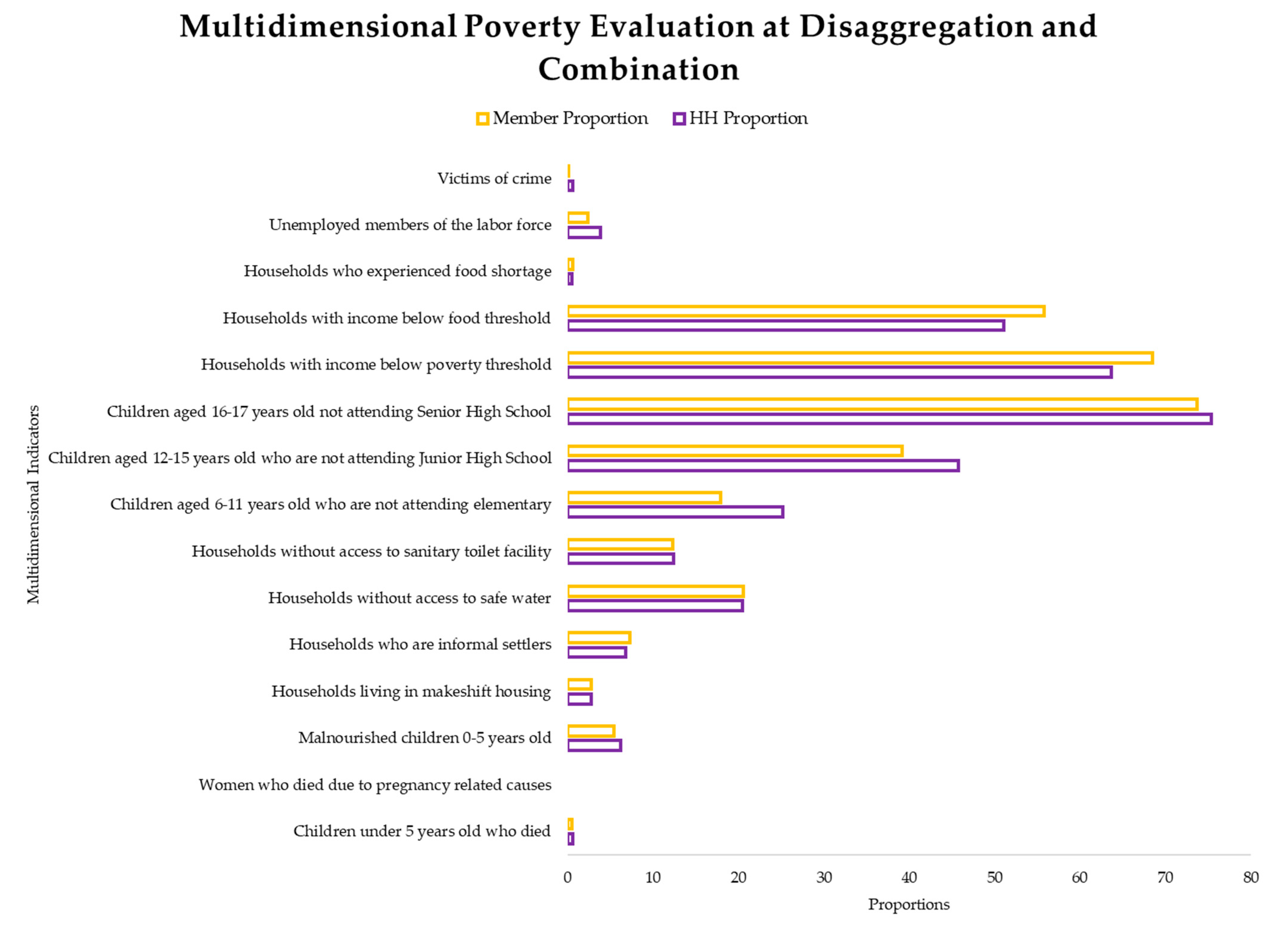
Disclaimer/Publisher’s Note: The statements, opinions and data contained in all publications are solely those of the individual author(s) and contributor(s) and not of MDPI and/or the editor(s). MDPI and/or the editor(s) disclaim responsibility for any injury to people or property resulting from any ideas, methods, instructions or products referred to in the content.

Article Metrics

Citations

Article Access Statistics

Multiple requests from the same IP address are counted as one view.