Article

Evaluation of Dry Eye Treatment with Sodium Hyaluronate- and Dexpanthenol-Containing Eye Drops on Ocular Surface Improvement after Cataract Surgery

by
Maximilian K. Köppe
,
Mustafa K. Hallak
,
Annette L. Stengele
,
Ramin Khoramnia
and
Gerd U. Auffarth
*
International Vision Correction Research Centre (IVCRC), University Eye Clinic Heidelberg, 69120 Heidelberg, Germany
*
Author to whom correspondence should be addressed.
Diagnostics 2024, 14(11), 1097; https://doi.org/10.3390/diagnostics14111097

Submission received: 2 April 2024 / Revised: 6 May 2024 / Accepted: 22 May 2024 / Published: 25 May 2024
(This article belongs to the Section Pathology and Molecular Diagnostics)

Abstract

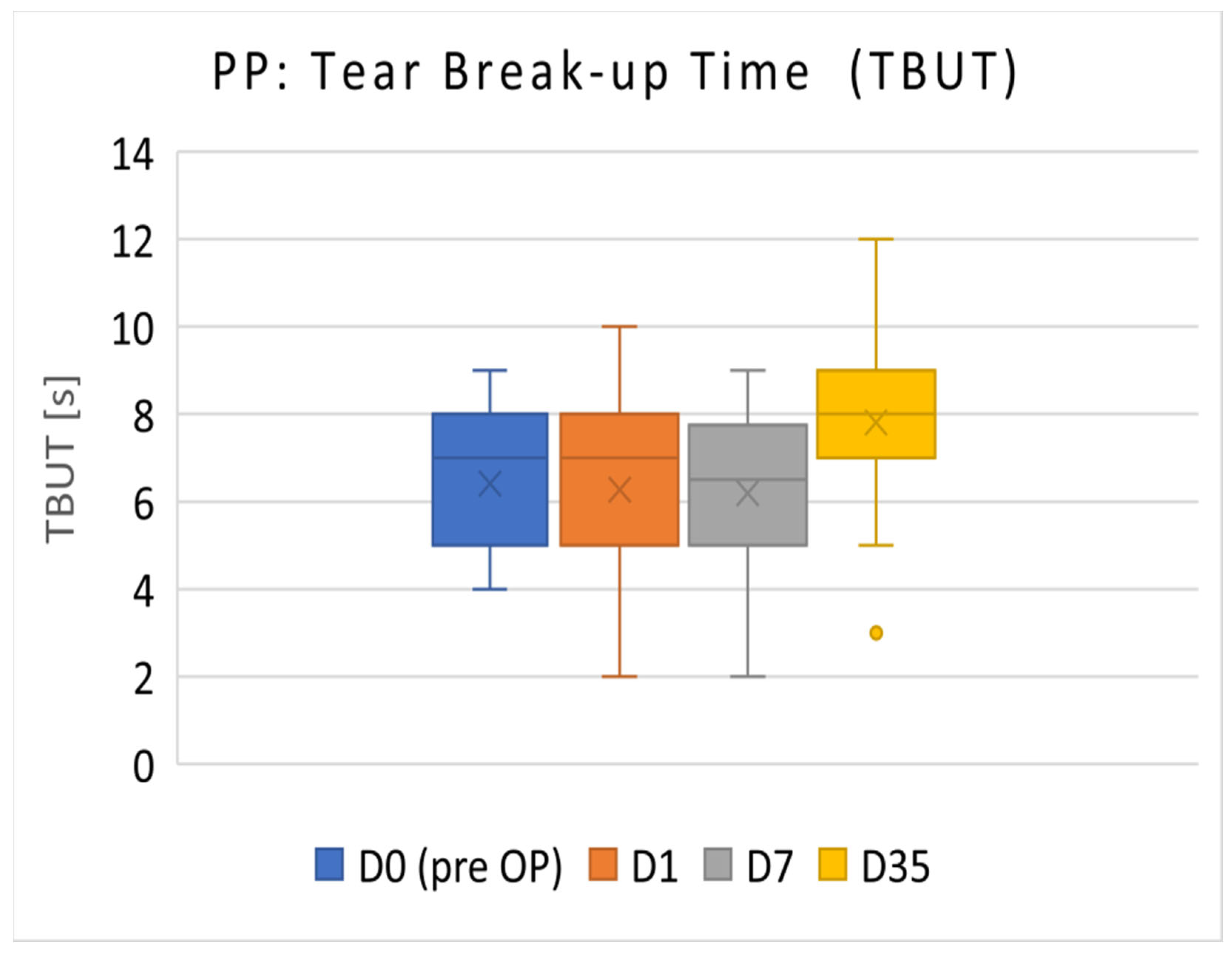
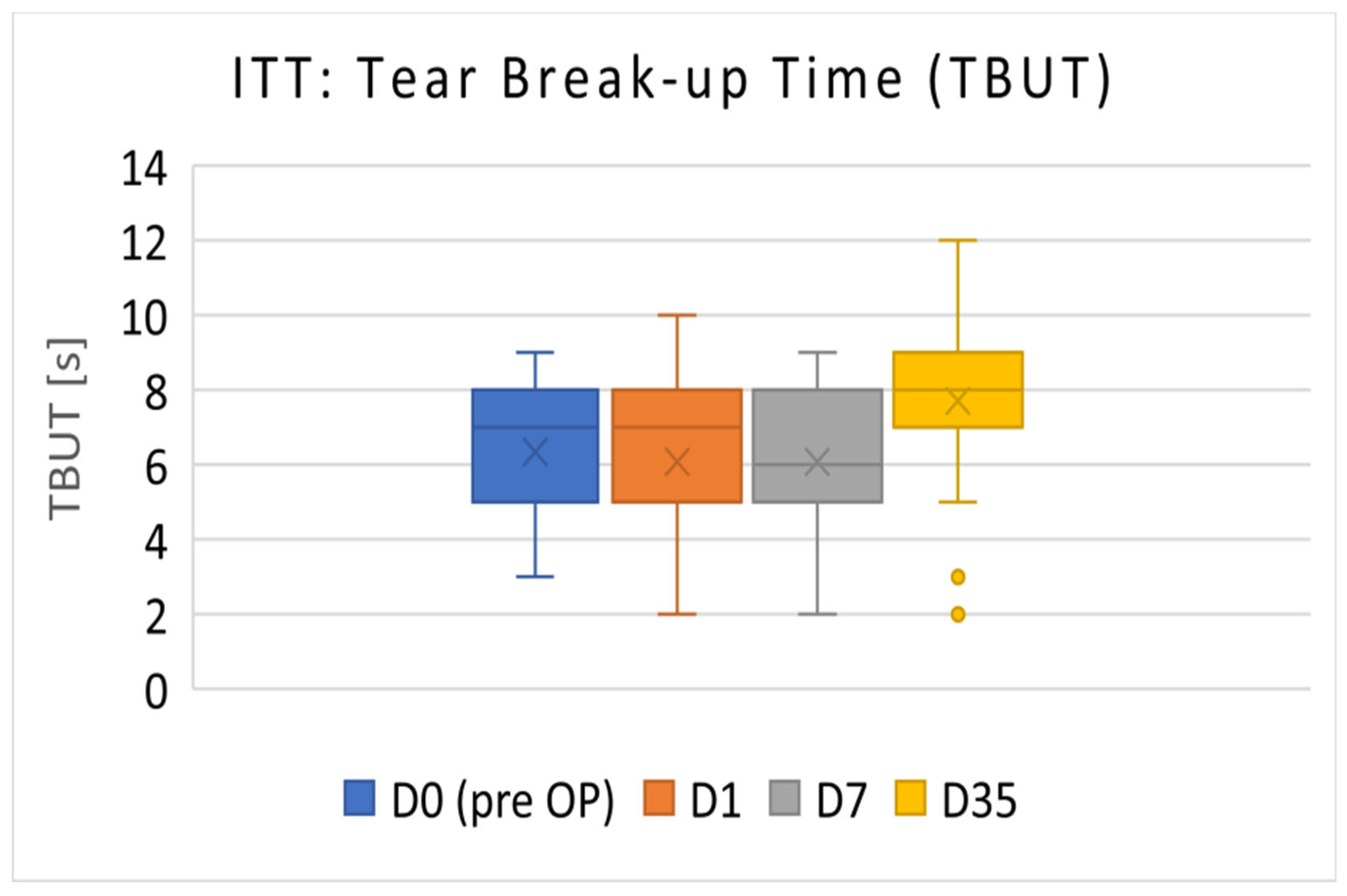
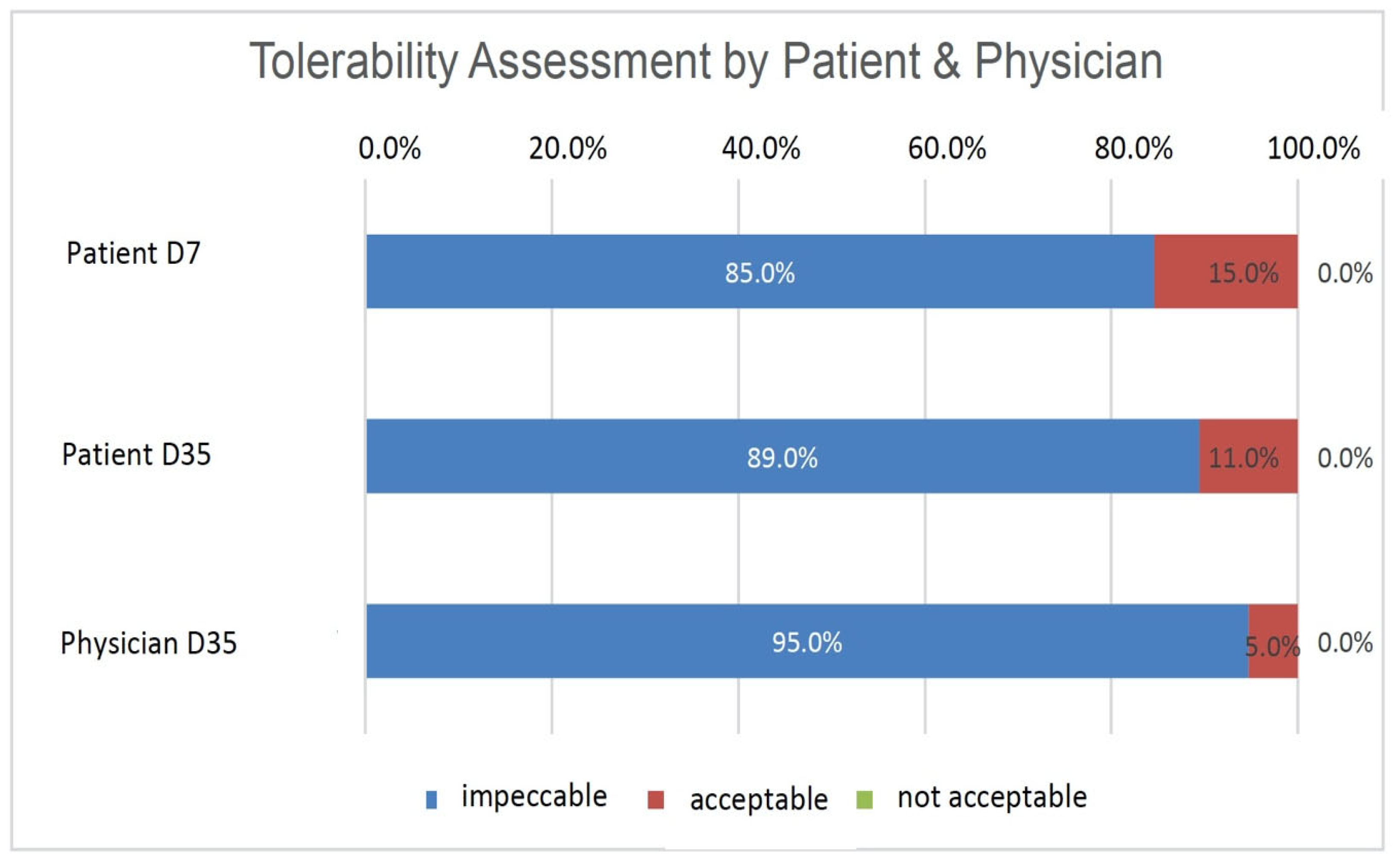
Background: To clinically evaluate how dry eye symptoms in preoperatively diagnosed dry eye patients change with the use of sodium hyaluronate- and dexpanthenol-containing eye drops (HYLO CARE (HC), URSAPHARM Arzneimittel GmbH, Saarbruecken, Germany) after cataract surgery. The aim of the study was not to compare different eye drops but to implement standard treatment in patients with dry eye undergoing cataract surgery. The impact of treatment was evaluated using Symptom Assessment Tools for Dry Eye. Methods: In this prospective, single-center, open-label clinical trial, 49 patients undergoing cataract surgery were included who showed signs and symptoms of dry eye disease assessed by the Symptom Assessment in Dry Eye (Visual Analogue Scale (VAS)) questionnaire, Ocular Surface Disease Index (OSDI), and fluorescein tear break-up Time (TBUT). Patients were instructed to apply HC three to four times a day for 5 weeks in the operated eye in addition to the standard postoperative topical anti-inflammatory regimen. The primary endpoint was the change in TBUT. Secondary endpoints were the assessment of the subjective symptoms (VAS), corrected distance visual acuity (CDVA), and slit-lamp examination including the corneal staining score, Schirmer test, and intraocular pressure. Results: At 5 weeks after operation, the mean TBUT increased from 6.42 ± 1.57 s (s) to 7.81 ± 1.83 s in the per-protocol (PP) population (p > 0.001) and from 6.33 ± 1.64 s to 7.71 ± 2.05 s in the intention-to-treat (ITT) population (p < 0.001). There was a statistically significant decrease in all scores (p < 0.05) from the VAS questionnaire except for the tearing score (p = 0.062) at 5 weeks after operation. The mean total corneal staining score also decreased statistically significantly from 8.85 ± 2.49 before operation to 5.61 ± 3.37 at 5 weeks after operation on a 15-point scale. Conclusions: Controlled standardized dry eye treatment (with HC) improved tear film stability, ocular surface defects, and subjective symptoms of dry eye disease in patients 5 weeks after undergoing cataract surgery. Both the patient and physician assessments indicated high efficacy, tolerability, and a reliable safety profile, as indicated by the low number of at least possibly related adverse events (AE), suggesting its beneficial role in the postoperative management of the ocular surface (OS) in patients with dry eye symptoms prior to and after cataract surgery.
Keywords: dry eye; ocular surface; cornea dry eye; ocular surface; cornea