Article

Measurement and Simulation Analysis of Noise and Vibration in a Combine Harvester Cab Based on Pivot Noise Transfer Function and Vibroacoustic Coupling Method

1
School of Agricultural Engineering, Jiangsu University, Zhenjiang 212013, China
2
Key Laboratory of Modern Agricultural Equipment and Technology, Jiangsu University, Ministry of Education, Zhenjiang 212013, China
*
Author to whom correspondence should be addressed.
Machines 2026, 14(1), 90; https://doi.org/10.3390/machines14010090
Submission received: 13 December 2025 / Revised: 7 January 2026 / Accepted: 8 January 2026 / Published: 12 January 2026
(This article belongs to the Special Issue Advances in Noise and Vibrations for Machines: Second Edition)

Abstract

To address the pronounced issue of noise and vibration within the combine harvester cab, this study proposes a hybrid simulation and experimental validation approach that integrates the pivot noise transfer function (NTF) with a finite element method (FEM)-based vibroacoustic coupling analysis. A coupled finite element model combining the cab structure and its internal acoustic cavity was developed, with the excitation path characteristics explicitly defined. The coupled interaction between structural and acoustic modes, along with its influence on noise transmission, was systematically examined. The analysis revealed a significant transmission peak near 18 Hz at critical pivot Point D under specific excitation directions, indicating strong directional sensitivity in the excitation–response relationship. Experimental validation showed that the discrepancy between simulated and measured responses, including the NTFs, remained within 15%, confirming the accuracy and applicability of the proposed method. This research offers a reliable analytical framework and practical reference for noise and vibration reduction in agricultural machinery cab design.

1. Introduction

As one of the most structurally complex agricultural machines—with the highest number of components and the most intricate motion forms—a combine harvester generates significant vibration through its moving parts during operation. These vibrations are transmitted to the cab, resulting in elevated interior noise levels and structural vibration. This phenomenon not only reduces the mechanical strength and reliability of the cab panels and supporting frame but also poses long-term risks to operator comfort and health, particularly during extended working hours. Therefore, analyzing and evaluating the noise and vibration characteristics of the cab using the finite element method (FEM) is critical. Such analysis enables designers to gain a timely understanding of the cab’s noise, vibration, and harshness (NVH) performance, identify weak points for improvement, and optimize structural reliability by reducing both vibration and noise levels [1,2].
In recent years, scholars in the field of agricultural machinery investigated vibration characteristics in tractors induced by external excitations. For instance, a roll–pitch coupled vibration model was proposed to capture complex dynamic behavior [3]. Further research derived the nonlinear stiffness and damping equations of tractor hydro-pneumatic suspensions and established three-dimensional multibody dynamic models [4]. Structural FEM models of tractor cabs were developed to evaluate structural vibration responses induced by bottom excitation forces and to estimate the resulting sound pressure near the driver’s ears [5]. Additionally, computer-aided design (CAD) models of tractor cabs were used to extract both structural and acoustic cavity meshes; tools such as HyperMesh were applied to compute structural and acoustic modal shapes, providing a foundation for structural optimization [6]. Many studies modeled small tractor cabs and conducted modal and harmonic response analysis via ANSYS Workbench2022, focusing on the 3 key vulnerable zones [7]. Research combining modal contributions and panel-based analysis was also employed to identify structural components contributing most to in-cab noise near the operator’s ears [8]. Efforts to improve ride quality include suspension optimization using vertical (Z-direction) acceleration data, achieving vibration reductions of up to 78.3% [9]. International studies likewise examined the adverse impact of cab noise on operators. Although many tractor manufacturers have achieved moderate reductions in internal noise, most remain below ideal thresholds, indicating the need for continued refinement [10]. Machine learning models such as neural networks were adopted to predict arm vibrations in operators during various tillage operations [11]. In related fields, such as construction and automotive engineering, researchers explored low-frequency structural noise in excavator cabs, identifying both generation and propagation mechanisms [12]. For smaller hydraulic excavators, investigations led to targeted structural modifications that reduce cabin noise by mitigating vibration sources [13]. For passenger vehicles, coupled acoustic-structural FEM models were developed, combining interior trim and body panels with the cabin cavity to perform modal and noise transfer function (NTF) analyses [14]. Further work assessed tractor ride vibration under different operating conditions based on suspension types, evaluating the influence of cab support strategies [15]. A self-leveling cab system was even developed to maintain optimal spinal posture during heavy-duty operations such as primary soil cultivation [16]. Ergonomics-centered studies on cranes, excavators, bulldozers, and loaders proposed fast, cost-effective, and low-risk models for structural vibration assessment [17].
Compared with the above research efforts, the approach proposed in this study offers three distinct advantages. Firstly, rather than relying solely on structural modal optimization, the integration of vibroacoustic coupling and NTF analysis directly links structural modifications to changes in internal sound pressure, thereby offering clearer optimization targets. Secondly, unlike studies based purely on acoustic testing or simplified models, this method combines high-fidelity FEM simulations with empirically measured transfer functions, greatly improving noise prediction accuracy—particularly in the mid- and low-frequency bands. Thirdly, while some studies employ statistical energy analysis (SEA) or empirical models, this work utilizes physically based FEM modeling to more thoroughly uncover the interaction mechanisms between structure and cavity, providing precise guidance for structural enhancements.
Accordingly, this research presents a unified framework for “vibration measurement–transfer function identification–vibroacoustic coupling simulation” tailored to combine harvester cabs. The core objective is to experimentally measure vibration transfer functions at key cab mounting points, construct a finite element model incorporating structural–acoustic coupling effects, and verify simulation accuracy through testing. Based on NTF analysis, dominant noise transmission paths within the cab are identified, and targeted structural modifications are proposed to suppress vibration and reduce in-cab noise effectively.
The scientific significance of this study lies in its novel integration of transfer function measurement with vibroacoustic coupling simulation, offering a systematic exploration of the noise and vibration transmission mechanisms in combine harvester cabs under complex excitation conditions. This fills a critical gap in understanding coupled path dynamics in this domain. From an engineering standpoint, the proposed method delivers a data-driven, precision-targeted design tool for optimizing the NVH performance of agricultural machinery cabs. It enhances evaluation reliability during product development stages and provides a scalable technical pathway for vibration and noise control in other complex mechanical systems.

2. Materials and Methods

2.1. Vibration Testing and Analysis Method of Combine Harvester Cab

In this study, a ZZDASP signal acquisition system (Yangzhou Tuling Electronics Co., Ltd., Jiangsu, China) was employed to collect three-direction vibration signals from the cab of a combine harvester. Sensors (Donghua Testing Co., Ltd., Jiangsu, China) were mounted at the door frame of the cab. Time-domain and frequency-domain analyses were performed on the collected data to identify characteristic frequencies associated with vibration and noise issues. All tests were conducted under stationary operating conditions, with all functional components engaged and the engine speed set at 2400 rpm.
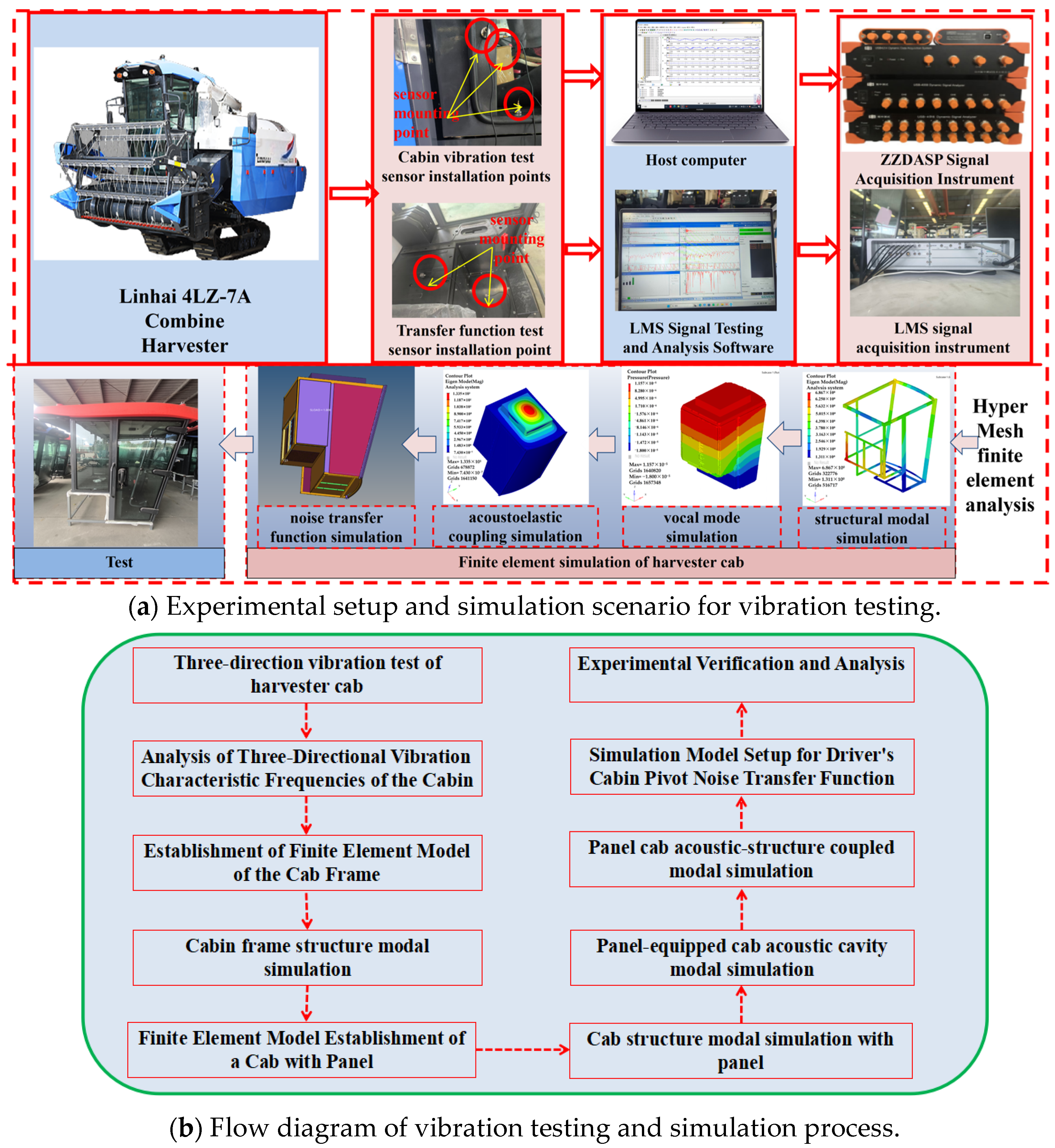
Subsequent to identifying the excitation frequencies, load recognition was carried out. Structural modal, acoustic modal, vibroacoustic coupled modal, and NTF simulations were performed to identify problematic frequencies at the cab’s response points. These simulations were validated using LMS-based experimental tests (Siemens PLM Software, Leuven, Belgium), including vibration and noise analysis. The test and simulation process is illustrated in Figure 1, and the specifications of the key equipment are listed in Table 1.

2.2. Overall Structure of Combine Harvester and Excitation Sources

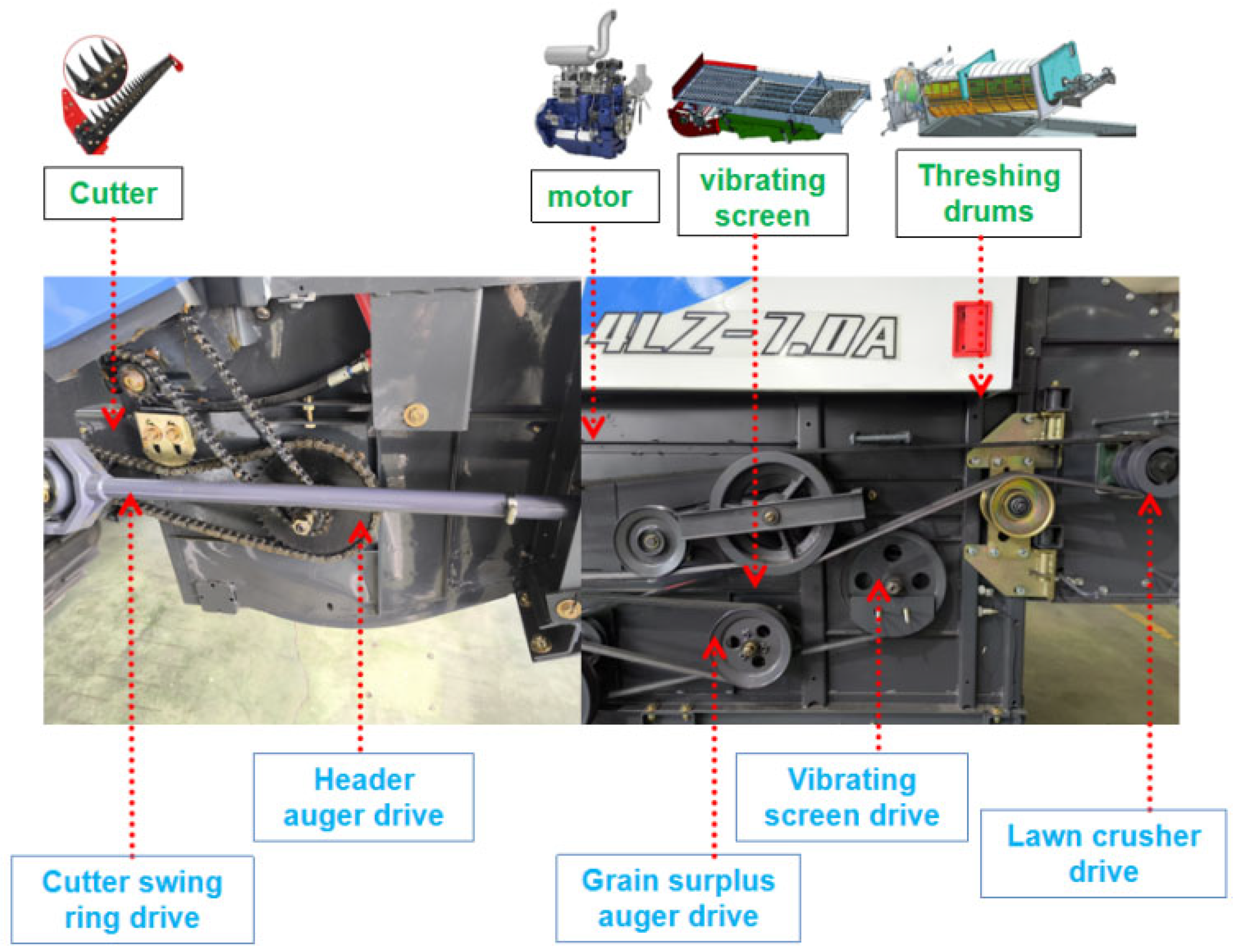
The test platform used was the Linhai 4LZ-7A combine harvester (Jiangsu Linhai Machinery Co., Ltd., Jiangsu, China). Its overall structure, key excitation components, and transmission system are shown in Figure 2 [18,19,20].
Subsequently, vibration signals from the combine harvester cab were measured, and characteristic frequencies were extracted and analyzed [21,22,23,24]. The coordinate system was defined with the forward traveling direction of the harvester as the Y-direction, the lateral direction as the X-direction, and the vertical direction as the Z-direction. During testing under no-load operating conditions, all major components—including the header, threshing drum, and vibrating sieve—were running, with the engine speed maintained at 2400 rpm.

2.3. Identification of Triaxial Vibration Excitation Loads on the Cab

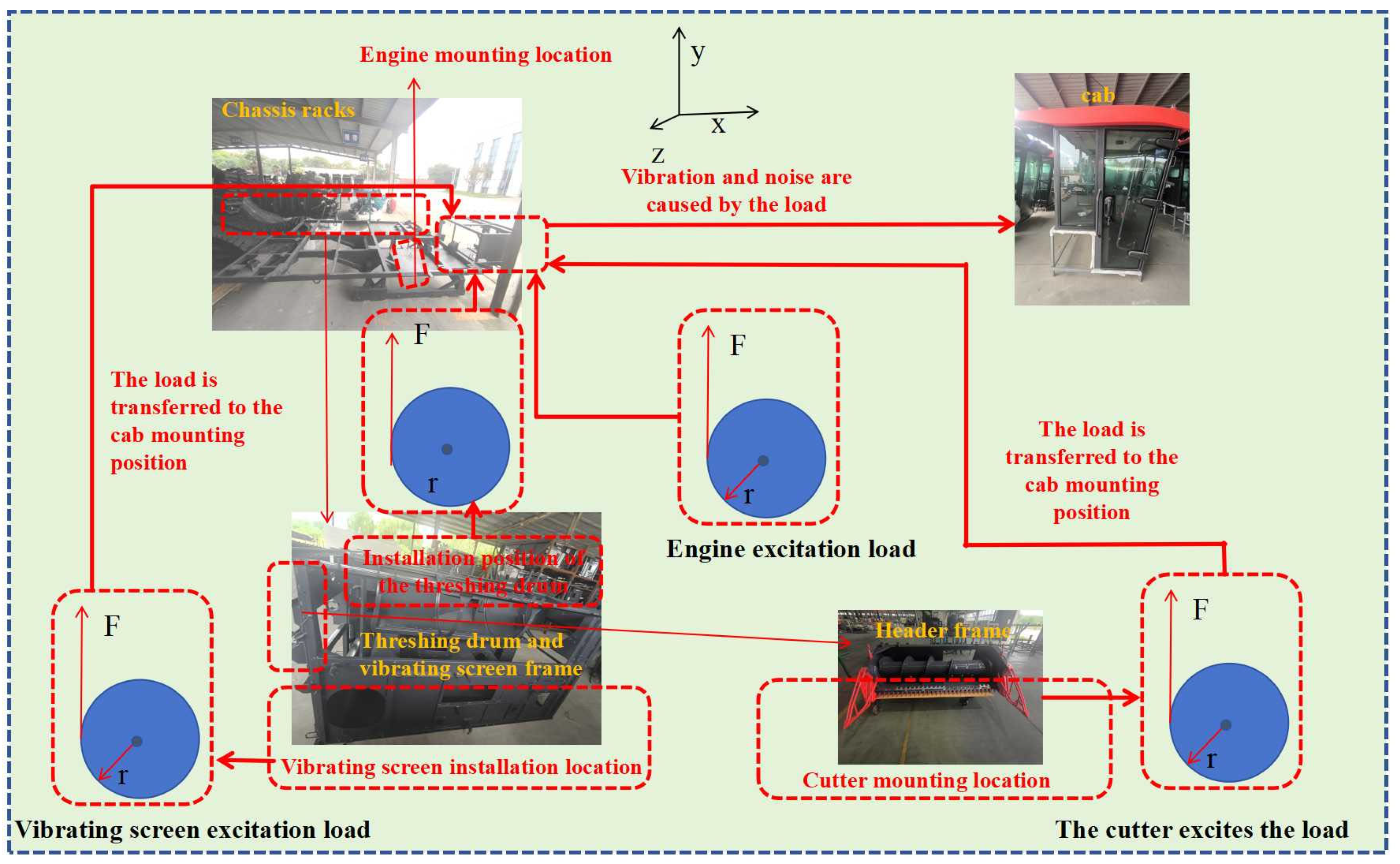
To facilitate subsequent structural modal, acoustic modal, vibroacoustic coupled modal simulations, and the extraction of NTFs at mounting points, this section focuses on identifying the triaxial vibration excitation loads acting on the cab. The cab of the combine harvester is mounted at four discrete points on the chassis frame. The threshing drum and vibrating sieve are installed on an integrated sub-frame, which itself is supported by the main chassis. Dynamic forces generated by the cutter, vibrating sieve, and engine are transmitted through the mounting brackets of the cab, resulting in vibrations and noise within the cabin structure [25,26]. The full excitation path is illustrated in Figure 3.
The vibration excitation from the vibrating sieve to the chassis support structure is primarily transmitted through the reaction forces at Points A and B. While the amplitude of the inertial force generated by the sieve varies depending on structural parameters and mass, it generally exhibits a near-harmonic pattern synchronized with the rotation of the drive shaft. The corresponding angular frequency is given in Equation (1):
ω shai = 2 π f shai = 2 π n shai / 60
where ω shai is the angular velocity of the vibrating sieve’s drive shaft (rad/s); f shai is the rotational frequency (Hz); and n shai is the rotational speed (rpm).
The excitation force exerted by the vibrating screen on the chassis frame of the combine harvester can be expressed in Equation (2):
F shai = K shai + A n cos n ω shai t + θ n
where Fshai is the excitation force generated by the vibrating sieve (N); Kshai is the constant component of the sieve excitation force (N); An is the amplitude of the excitation force that varies periodically with ω shai (N); θ n is the initial phase angle (rad); and t is the time (s).
The engine block transmits vibration to the chassis through its mountings. The dynamic forces exerted by these mounting points on the chassis represent the engine-induced excitation forces acting on the combine harvester. These forces initiate vibration in the harvester, which is subsequently transmitted through the vibration isolation system to the cab, leading to structural vibration within the cabin. The excitation force generated by the engine can be described in Equation (3):
F fa = K f a + A f a cos 2 α t + ψ
where Ffa is the engine excitation force (N); Kfa is the constant component of the engine excitation force (N); α is the crankshaft angular frequency (rad/s); Afa is the amplitude of the excitation force that varies periodically with 2 α (N); ψ is the initial phase angle (rad); and t is the time (s).
The excitation force produced by the cutter can be expressed in Equation (4):
F qie = K qie + n = 1 m A n 1 cos n ω qie t + θ n
where Fqie is the cutter excitation force (N); Kqie is the constant component of the cutter excitation force (N); ω qie is the crankshaft angular frequency (rad/s); An1 is the amplitude of the excitation force that varies periodically with ω shai (N); θ n is the initial phase angle (rad); m is the number of periodic components in the reaction force; and t is the time (s).

2.4. Theoretical Basis of Structural, Acoustic, and Vibroacoustic Modal Analysis

This section focuses on performing structural, acoustic, and vibroacoustic coupled modal simulations [27,28] of the combine harvester cab, as a foundational step for extracting the NTFs at its mounting points. Accurately modeling the cab’s NVH performance requires coupling the structural and acoustic domains; isolated structural or acoustic analysis alone cannot sufficiently capture their interactive behavior. The governing dynamic equation for structural modal analysis is given in Equation (5):
M e U e + C e U e + K e U e = f e
where [Me] is the structural mass matrix; [Ke] is the stiffness matrix; [Ce] is the damping matrix; Ue is the nodal displacement vector; and fe is the external excitation vector.
In the acoustic modal analysis, the finite element formulation of the acoustic fluid domain is expressed in Equation (6):
M e p P e + K e p P e + C e p P e = 0
where M e p is the unit fluid mass matrix; K e p is the element fluid stiffness matrix; C e p is the element fluid damping matrix; and Pe is the nodal acoustic pressure vector.
During the vibroacoustic coupling simulation of the cab, it is necessary to integrate the structural dynamic equation, the acoustic fluid equation, and the fluid continuity equation. The resulting coupled dynamic equation (Equation (7)) as follows:
M e 0 M fs M e p U e P e + C e 0 0 C e p U e P e + K e K f s 0 K e p U e P e = f e 0
where M fs = ρ 0 R e T ; K fs = R e ; R e = s N N T n d ( s ) ; {N} is the shape function for pressure elements; S is the coupling surface between the structural and acoustic domains; {N′} is the shape function for displacement elements; {n} is the unit normal vector on the coupling surface; and ρ0 is the density of the structural material.

2.5. Finite Element Mesh Generation of the Combine Harvester Cab

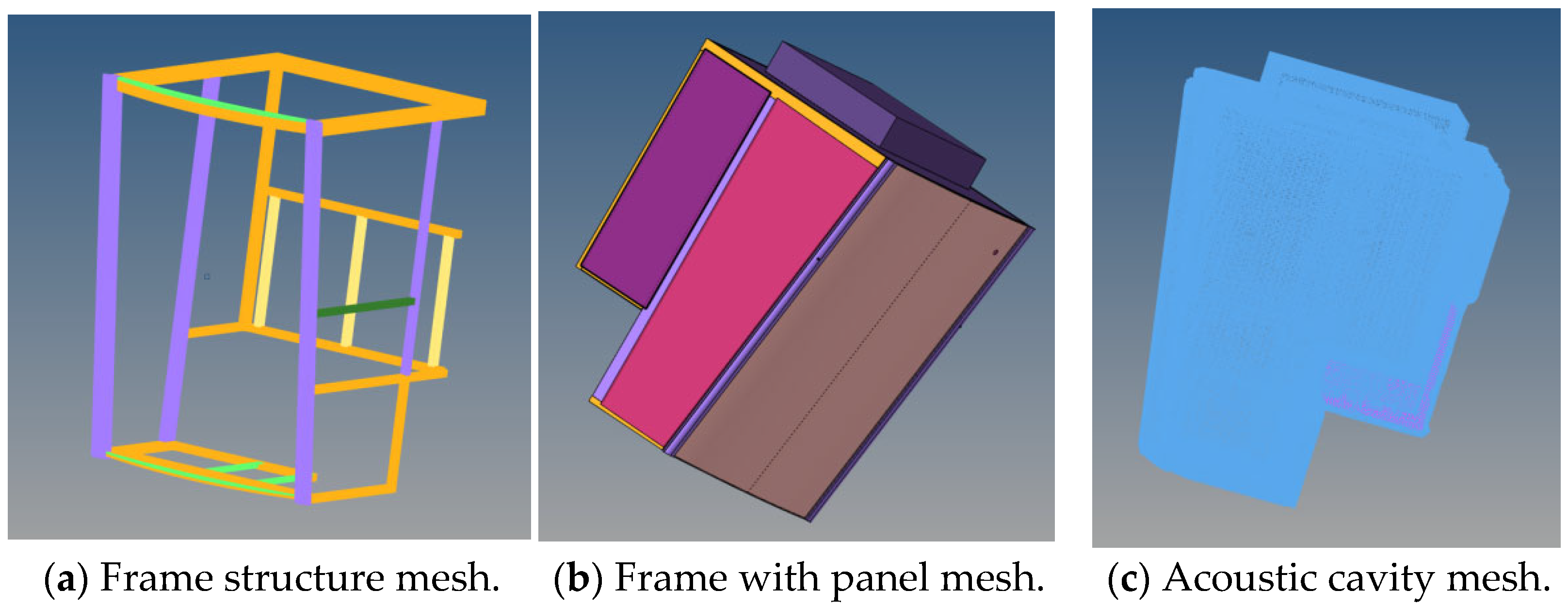
The structural and acoustic cavity meshes of the cab were generated using HyperMesh2022 software, with appropriate material properties assigned to each domain. The meshed finite element model of the cab is depicted in Figure 4. Details regarding node counts and simulation setup parameters are presented in Table 2. Typically, the frequency range for acoustic modal analysis is set to twice that of the structural modal analysis [29]. Specific mesh quality parameters are listed in Table 3.

2.6. Theoretical Basis of NTF

The NTF describes the transmission relationship of the noise signal from the input to the output and is typically expressed in Equation (8):
N T F z = Y n o i s e z Q z
where Y n o i s e z is the output noise component, expressed in the Z-domain and Q z is the quantization noise or other noise sources introduced within the system.
The magnitude response of the NTF allows Equation (8) to be reformulated in terms of N T F e j ω . Accordingly, the power spectral density (PSD) of the output noise is given in Equation (9):
S y ω = N T F e j ω 2 S q ω
where S q ω is the PSD of the input noise.
However, in most engineering applications, the NTF is more commonly defined in terms of the acoustic response and excitation force through Equation (10):
N T F f = P f F f
where P f is the acoustic pressure at the response point (in frequency domain) and F f is the excitation force at the input point (in frequency domain).
Subsequently, post-processing is carried out in HyperView to extract the excitation force and the corresponding sound pressure response. The sound pressure level (SPL) is then calculated using Equation (11):
N T F f = 20 log ( P f F f )

2.7. Simulation Model Setup for NTF at Mounting Points

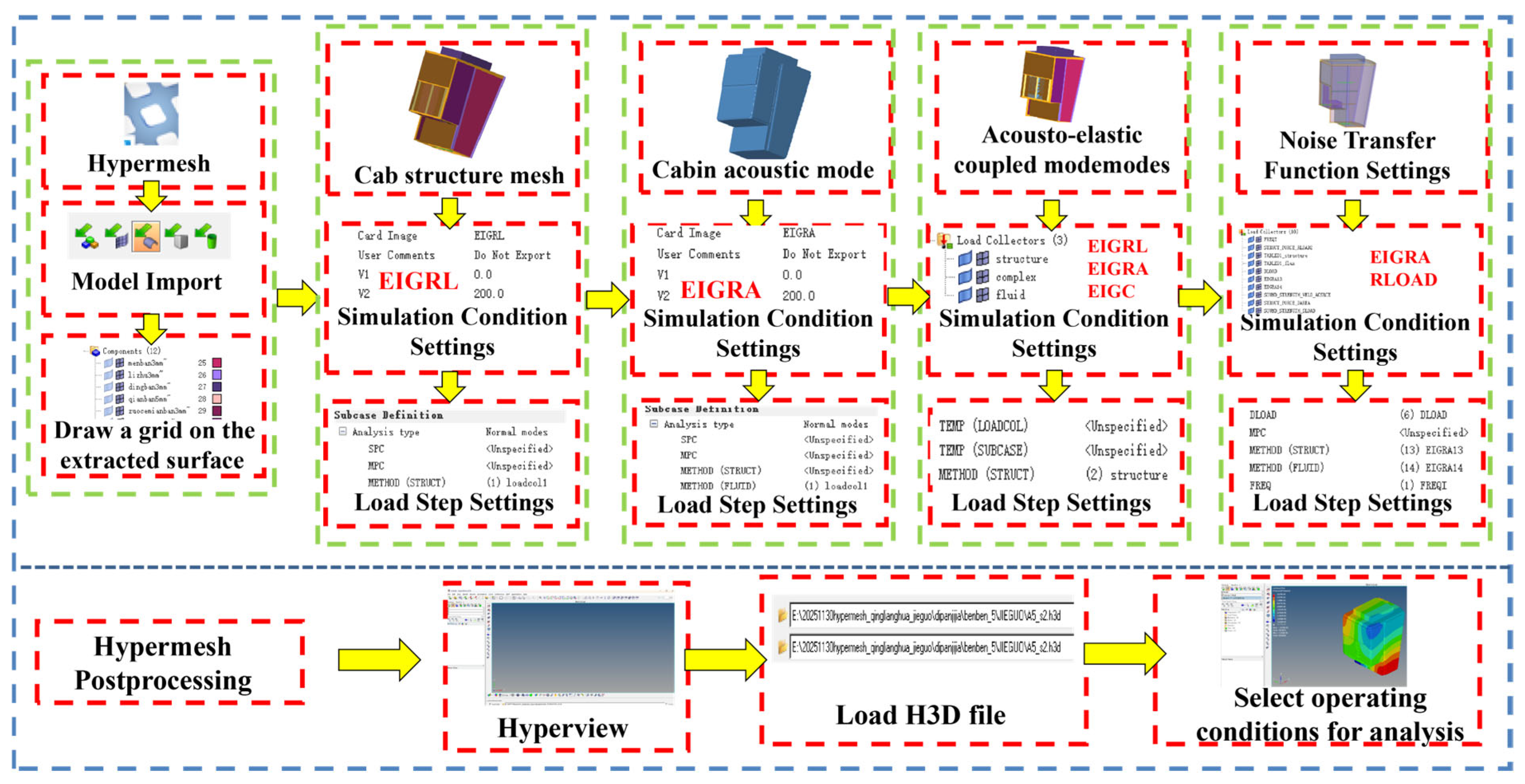
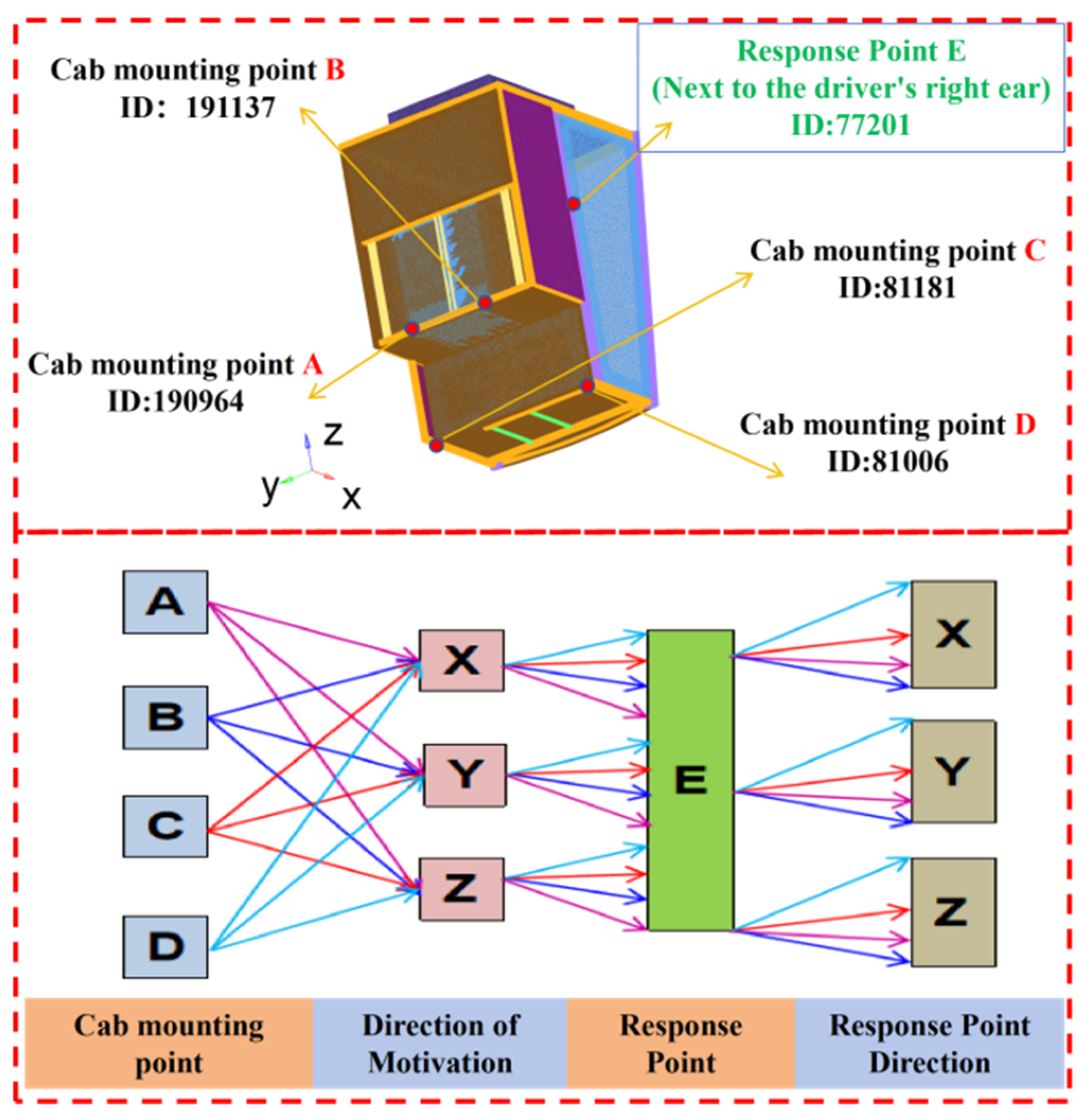
The simulation model was established using HyperMesh. Excitation loads were applied at the four mounting points (Points A, B, C, and D) of the vibroacoustic coupled cab model, with the simulation steps and boundary conditions appropriately defined. A response point (Point E) was placed adjacent to the operator’s right ear to evaluate the acoustic response. The simulation procedure focused on analyzing the NTFs at the mounting points. In Figure 5, the simulation workflow includes multiple stages, from structural modal setup to acoustic modal definition, followed by vibroacoustic coupling, NTF configuration, and post-processing analysis. The spatial locations of the excitation points and the acoustic response point, along with the corresponding noise transmission paths, are detailed in Figure 6.

2.8. Experimental Methodology

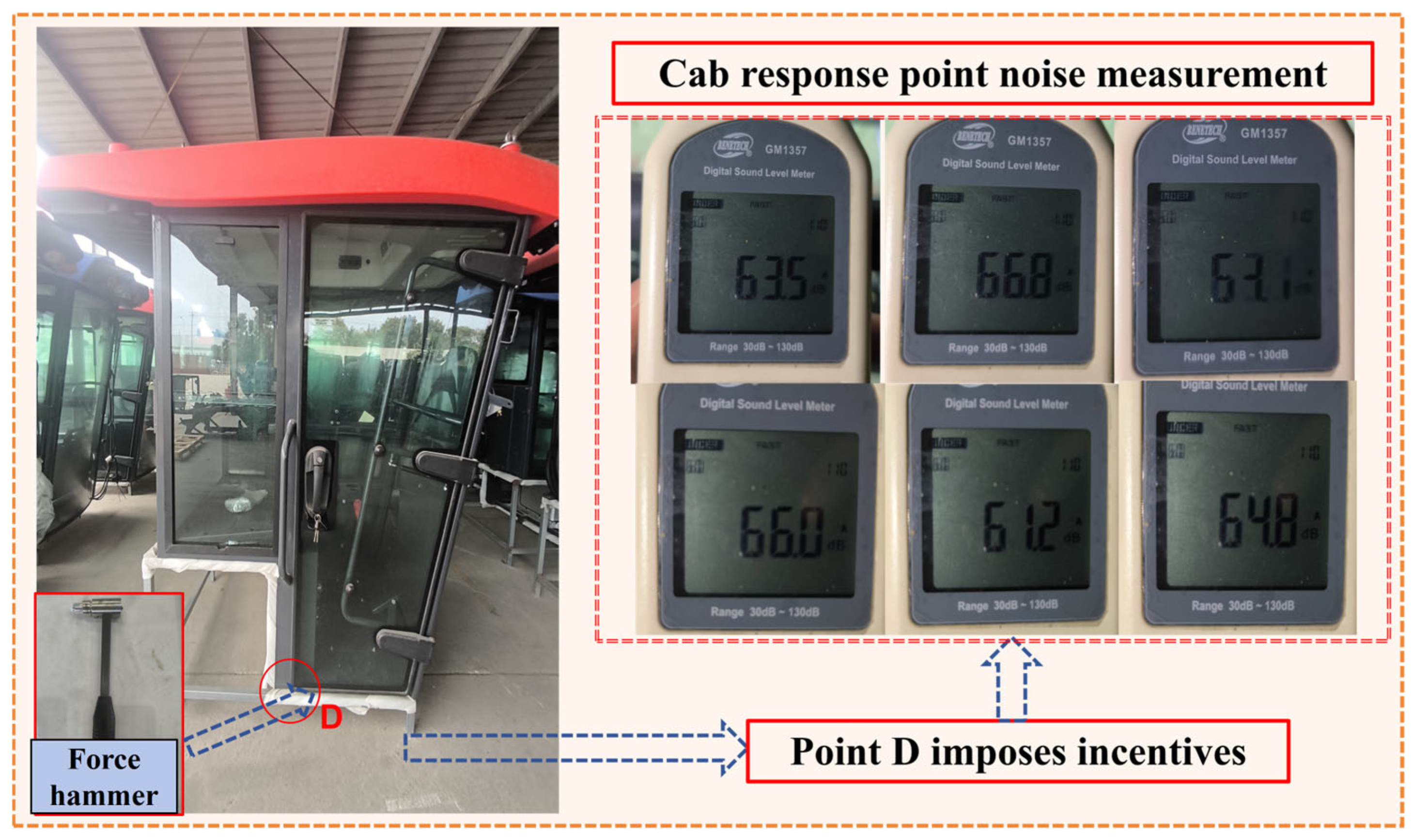
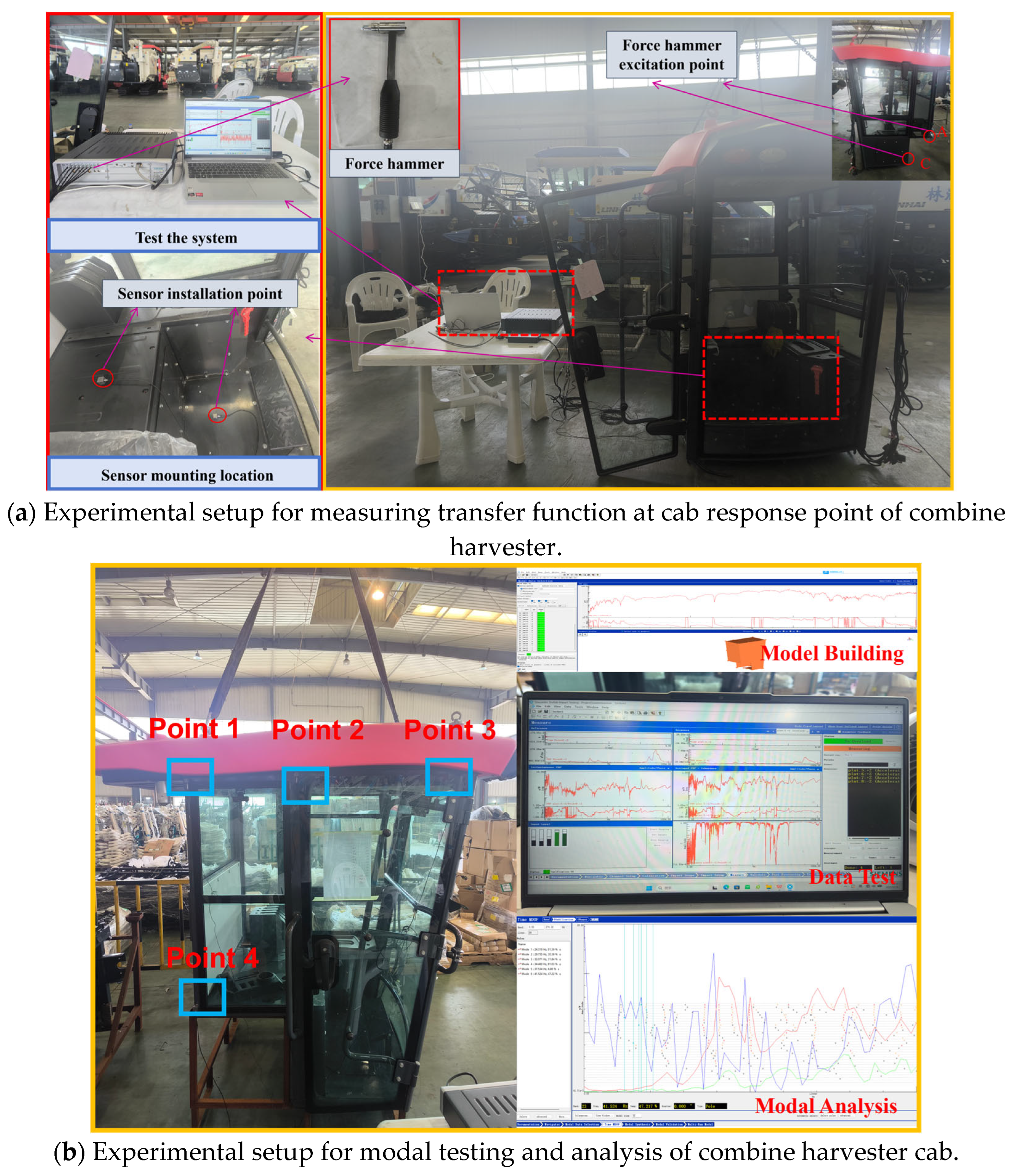
In November 2024, a series of tests were conducted at Lanhai Agricultural Machinery in Taizhou, Jiangsu Province, to evaluate the NTFs at the cab mounting points, interior noise responses, and the structural modal characteristics of the cab with panel coverings. The experimental equipment included an impact hammer, a sound level meter, an LMS vibration testing system, and multiple sensors. During testing, the ambient background noise level at the site was measured at 44~48 dB. The first test involved applying excitation at Point D and measuring the corresponding acoustic response at the interior response point of the cab. Specifically, excitation was applied in the X-direction at Point D, and the resulting Y-direction noise response at the designated response point was recorded. Measurements were taken every 2 min, for a total of 10 consecutive recordings. The test setup is illustrated in Figure 7. The second test used an impact hammer to apply excitation forces in the XYZ directions at the four mounting points (Points A, B, C, and D) of the cab. The resulting three-directional transfer functions at the interior response point were recorded (Figure 8a). The third test focused on modal analysis using single-point excitation. A total of 29 acceleration sensors were sequentially placed at predefined modal measurement locations on the cab frame, and the response to hammer excitation was captured (Figure 8b). Prior to testing, a geometric model with 29 measurement points was created in the Geometry module of the LMS 2019 software. To ensure a high signal-to-noise ratio (SNR), sensor placement followed these key principles: measurement points were located at points of external excitation, structural junctions, and critical stress locations; the layout of points enabled comprehensive representation of the cab’s global structural characteristics. For accuracy, the cab was suspended using a crane to minimize boundary constraints during the modal tests.

3. Results and Discussion

3.1. Time- and Frequency-Domain Analysis of Cab Vibration Signals

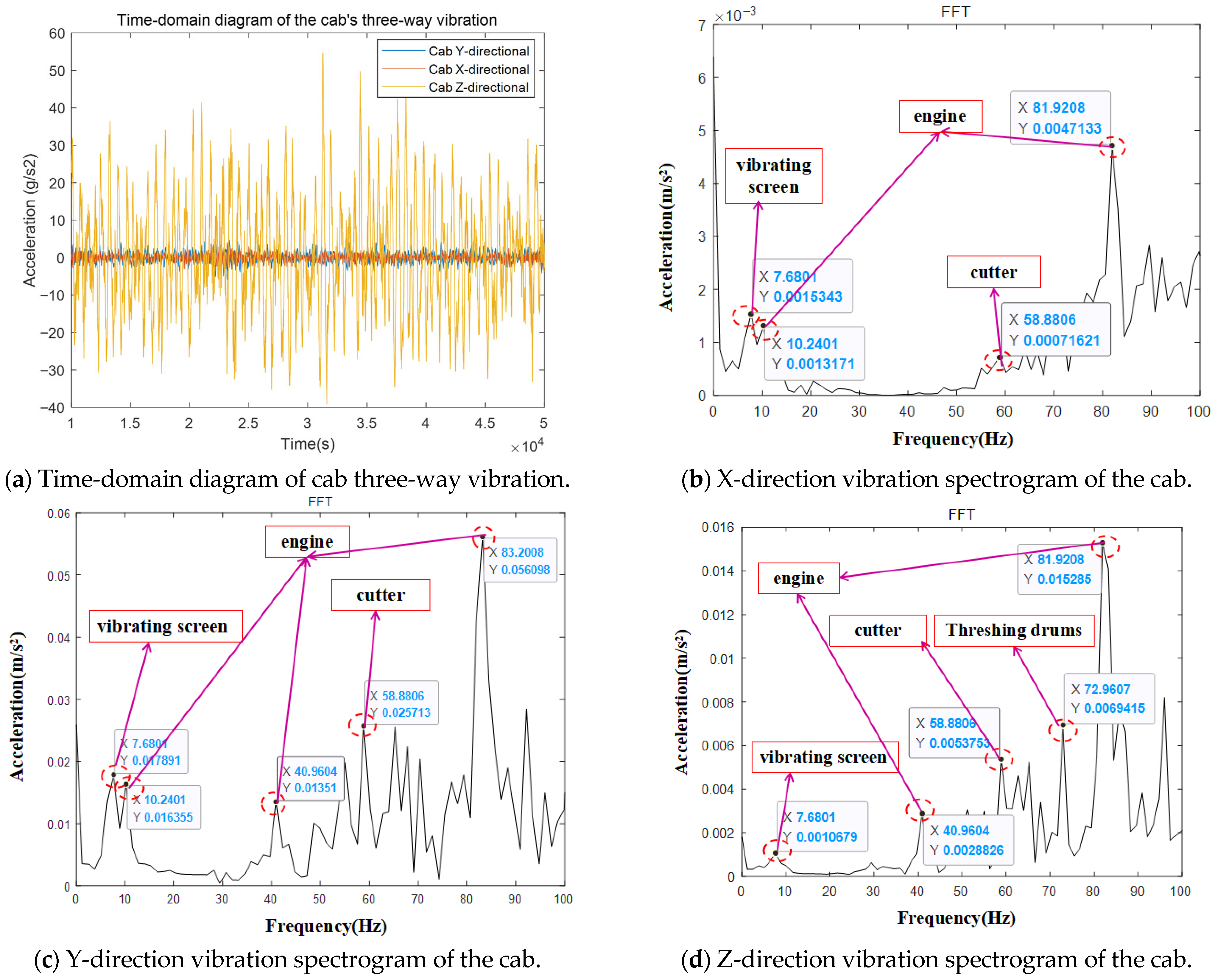
Based on the measured vibration signals of the combine harvester cab, time-domain and frequency-domain analyses were carried out using MATLAB2022. The excitation frequency ranges were then calculated according to the rotational speeds of the harvester’s excitation components (Table 4). Since all excitation frequencies were below 100 Hz, the analysis primarily focused on identifying characteristic frequencies within this range. The results of the time-frequency analysis of the vibration signals are presented in Figure 9. In Figure 9b, the characteristic frequencies observed in the X-direction vibration signal of the cab are 7.68, 10.24, 58.88, and 81.92 Hz; in Figure 9c, the Y-direction vibration signal exhibits dominant frequencies at 7.68, 10.24, 40.96, 58.88, and 83.20 Hz; and in Figure 9d, the Z-direction vibration signal shows peaks at 7.68, 40.96, 58.88, 72.96, and 81.96 Hz. According to the transmission system configuration of this harvester model, 7.68 Hz corresponds to the first-order excitation frequency of the vibrating sieve, 10.24 Hz corresponds to one-fourth of the external excitation frequency of the engine, 40.96 Hz corresponds to the first-order engine excitation frequency, 58.88 Hz corresponds to the sixth-order excitation of the cutter, 72.96 Hz corresponds to the sixth-order excitation of the threshing drum, and both 81.96 and 83.20 Hz correspond to the second-order engine excitation frequency.
Under normal no-load operating conditions of the Lanhai 4LZ-7A combine harvester (Jiangsu Linhai Machinery Co., Ltd., Jiangsu, China), the main excitation components responsible for the cab’s noise response and their corresponding characteristic frequencies are outlined in Table 5.

3.2. Modal Simulation Results of Cab Frame Structure

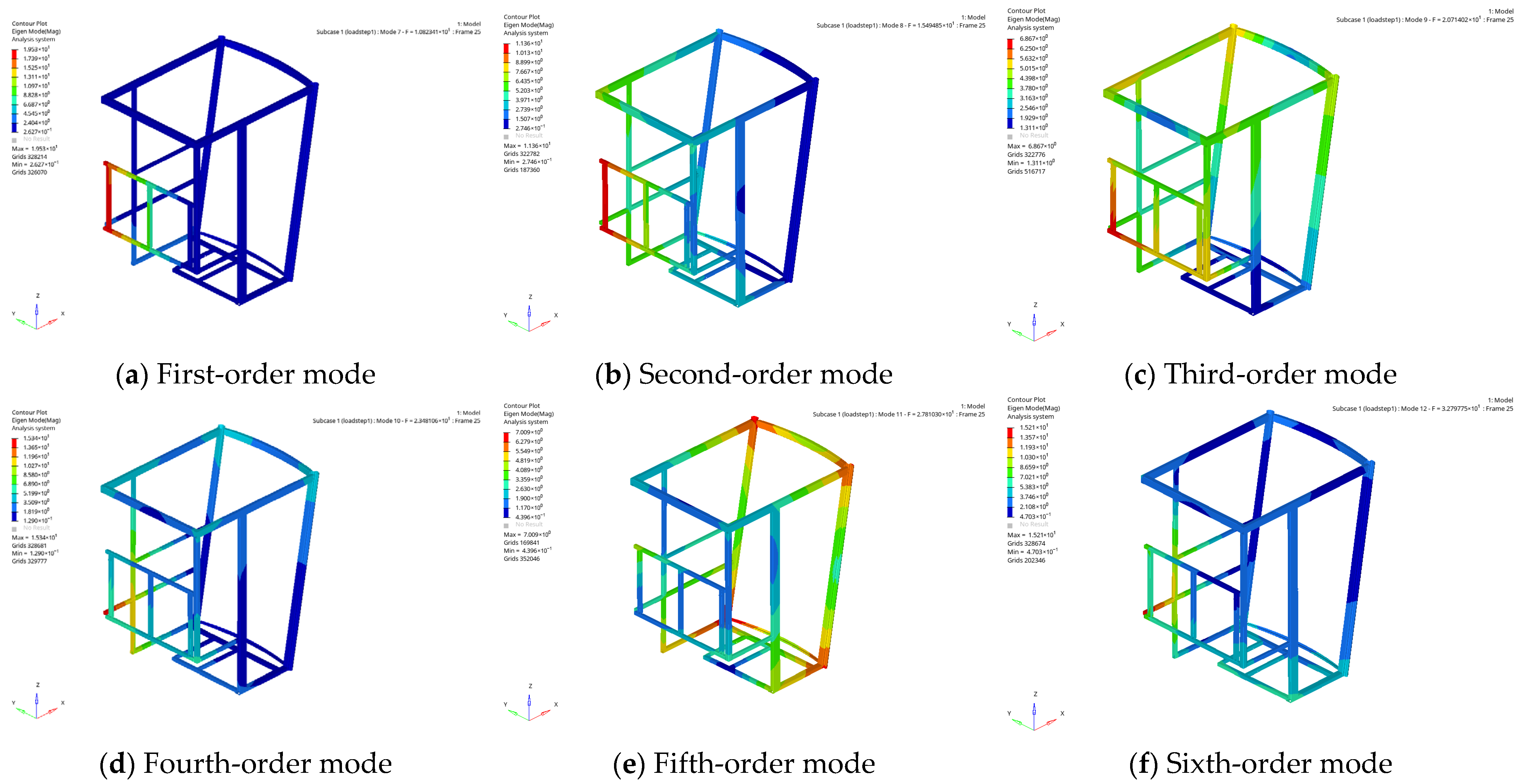
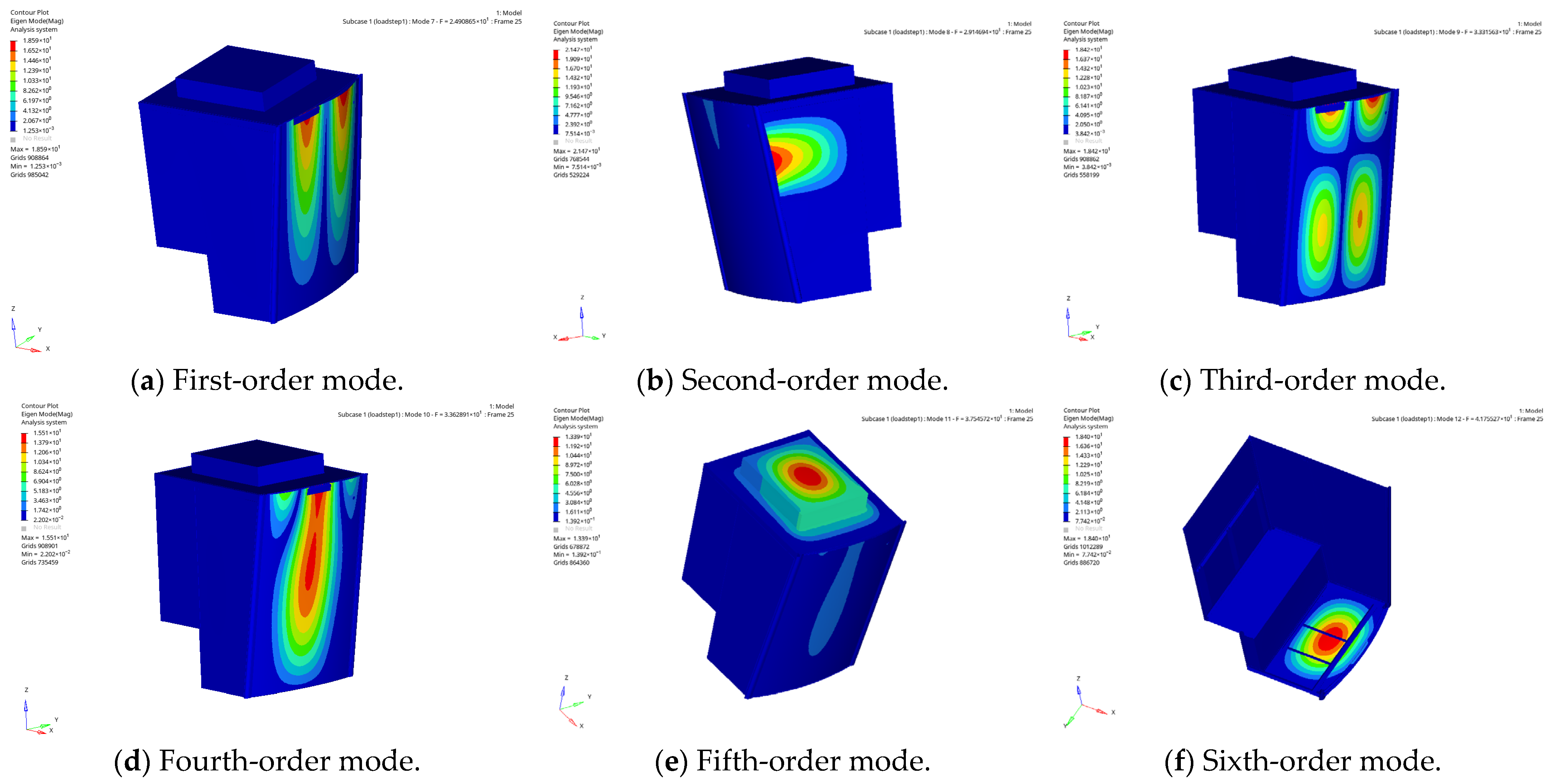
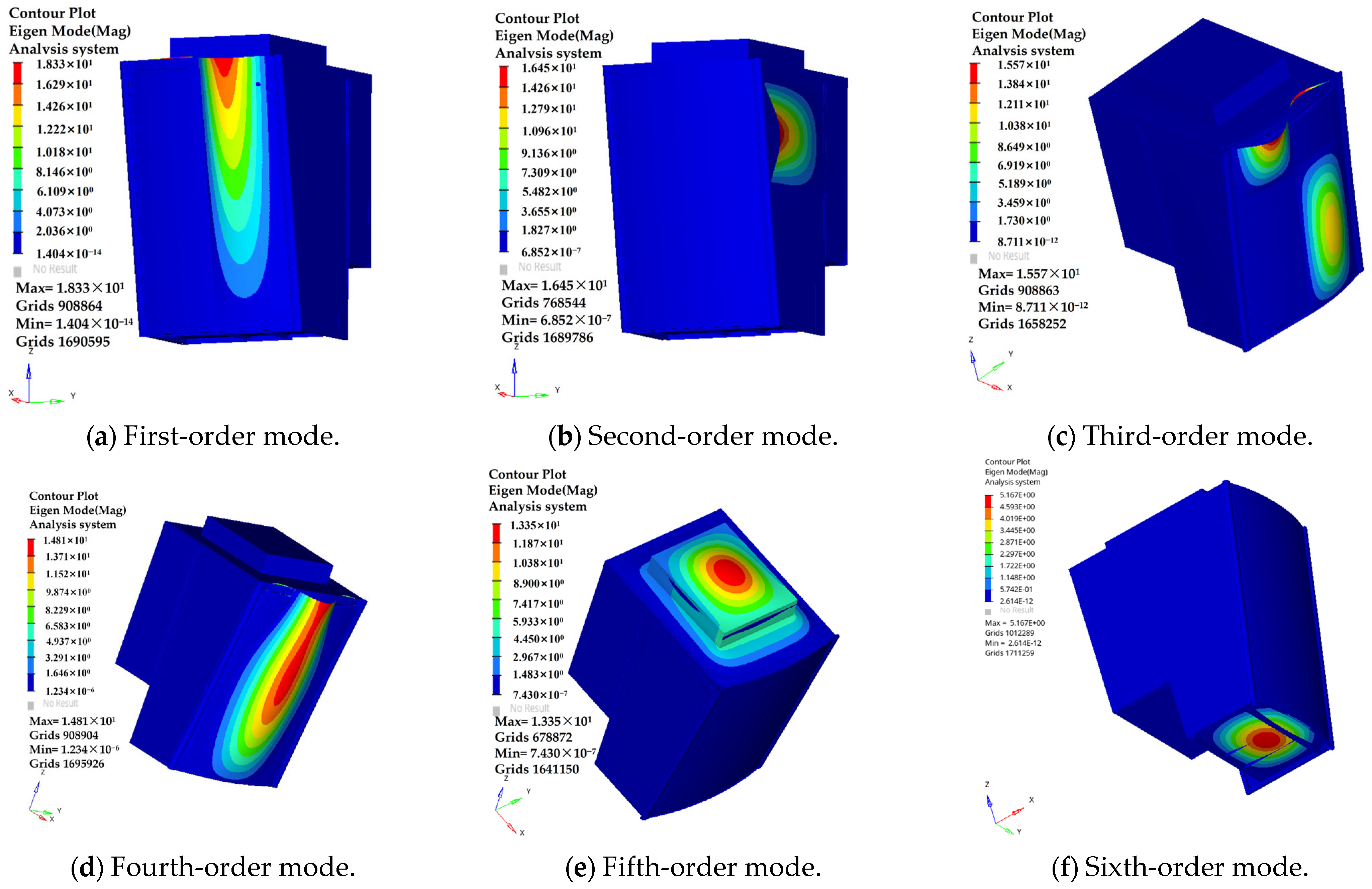
The first six orders of the simulated modal shapes of the cab frame structure are illustrated in Figure 10, with the corresponding natural frequencies and modal deformation characteristics summarized in Table 6.
As shown in Figure 10, the first-order modal shape exhibited pronounced local deformation in the rear section of the cab frame. The second-order mode demonstrated dominant vibrational characteristics from the mid-section rearwards. A global modal response was observed in the third-order mode, while the fourth-order mode again displayed localized deformation patterns in the rear frame section. The fifth-order mode presented a comprehensive frame vibration with particularly noticeable local deformation at the interface between the front panel and main structure. The sixth-order mode revealed localized vibrations concentrated at the rear and base sections of the frame. Notably, no significant first-order bending or torsional modes typical of vehicle body structures were detected, indicating the combine harvester’s cab frame possesses substantial structural stiffness and high strength. The first-order natural frequency (10.8 Hz) approximated the engine’s 1/4 harmonic excitation (10.24 Hz). The third-order frequency (20.7 Hz) closely matched the engine’s 1/2 harmonic (20.48 Hz). The fourth-order frequency (23.4 Hz) corresponded to the triple harmonic of sieve vibration (23.1 Hz). The fifth-order frequency (27.8 Hz) approached the cutter’s triple harmonic excitation (29.44 Hz). These correlations demonstrate significant influence of engine, cutter and vibrating sieve operational excitations on the cab frame’s modal characteristics.

3.3. Modal Simulation and Experimental Results of Cab Structure with Panels

The first six modal simulation results of the cab structure with exterior panels are depicted in Figure 11. A single-point excitation method [11] was employed, in which an impact hammer served as the external excitation source. Acceleration sensors placed on the cab transmitted the collected signals to LMS analysis software, where the first six natural frequencies and corresponding mode shapes of the cab were extracted. A comparison between the simulation results and the experimental modal results obtained via LMS is presented in Table 7, including the corresponding frequencies and modal deformation characteristics.
In Figure 11, the simulation results of the cab structure with panels indicate that the first-order mode corresponds to a bending deformation of the front panel, the second-order mode shows a local bending mode of the right panel, and the third-order mode again displays a bending deformation of the front panel. The fourth-order mode presents local bending and vibration of the front panel, the fifth-order mode exhibits a breathing mode of the roof, and the sixth-order mode reflects a breathing mode of the cab bottom. The discrepancies between the simulated and experimental modal frequencies are all within 5%, and the modal shapes are consistent across corresponding modes, confirming the reliability of the simulation results and providing technical support for the subsequent analyses in this study. The first-order frequency at 24.9 Hz is close to the second harmonic of the threshing drum excitation (24.32 Hz), the second-order frequency at 29.1 Hz is near the third harmonic of the cutter excitation (29.44 Hz), and the fifth- and sixth-order modes at 37.5 Hz and 41.7 Hz, respectively, are close to the engine’s base excitation frequency (40 Hz). These results suggest that the dynamic excitations generated by the threshing drum, cutter, and engine have a significant influence on the modal characteristics of the cab panel structure.

3.4. Acoustic Cavity Modal Simulation Results of Cab

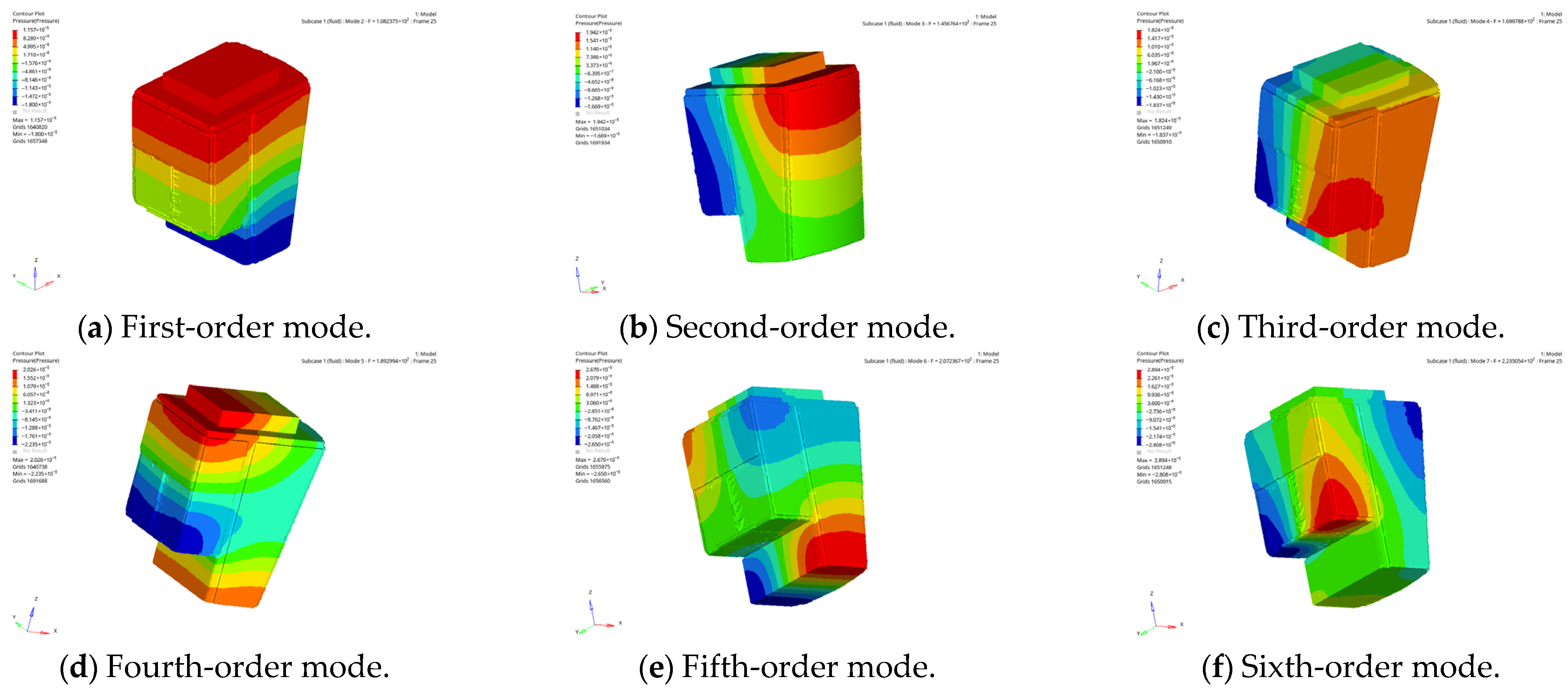
The first six simulated modes of the cab’s internal acoustic cavity are presented in Figure 12, with the corresponding natural frequencies and mode shape characteristics summarized in Table 8.
In Figure 12, compared with the structural modes, the acoustic cavity modes generally occur at higher frequencies and exhibit more complex mode shapes. The first-order mode is characterized as a vertical acoustic cavity mode. The second-order mode is a longitudinal mode, with the highest SPL appearing at the upper section of the front panel. The third-order mode represents a transverse acoustic cavity mode, with peak sound pressure located at the lower section of the left panel. The fourth-order mode exhibits coupled vertical and longitudinal modal behavior. The fifth-order mode presents a combination of transverse and second-order vertical cavity modes, with the maximum SPL occurring near the cab floor. The sixth-order mode shows a combination of second-order longitudinal and transverse acoustic modes. Notably, the fifth-order mode, at 207 Hz, closely corresponds to the fifth harmonic of the engine excitation frequency (204.8 Hz).

3.5. Vibro-Acoustic Coupled Modal Simulation Results of Cab

The first six vibro-acoustic coupled modes of the cab were simulated (Figure 13) with the corresponding natural frequencies and mode shapes outlined in Table 9.
In Figure 13, the vibro-acoustic coupled modal simulation results of the cab are consistent with the structural modal results of the cab with panels, both in terms of mode shapes and corresponding frequencies. The first-order mode exhibits deformation of the front panel; the second shows local deformation of the right panel; the third again presents front panel deformation; the fourth demonstrates a combination of front panel deformation and local right panel deformation; the fifth represents a breathing mode of the cab roof; and the sixth corresponds to a breathing mode of the cab floor. The first-order frequency (25.9 Hz) is close to the second harmonic of the threshing drum excitation (24.32 Hz), the second-order frequency (29.4 Hz) approximates the third harmonic of the cutter excitation (29.44 Hz), and the fifth and sixth modes (37.9 Hz and 41.6 Hz, respectively) are close to the engine’s base excitation frequency (40 Hz). These findings indicate that excitations generated by the threshing drum, cutter, and engine have a significant influence on the vibro-acoustic coupled modes of the cab [30,31,32,33].

3.6. Simulation Results of Cab Mount NTFs

Based on the NTF model of the cab mounting points configured in HyperMesh2022, excitation forces were applied at the four mounting points (Points A, B, C, D), and a response point was set within the acoustic cavity of the cab. The simulation was performed using the OptiStruct solver. Subsequently, the results were post-processed in HyperView by opening the generated H3D file, yielding the NTF results.
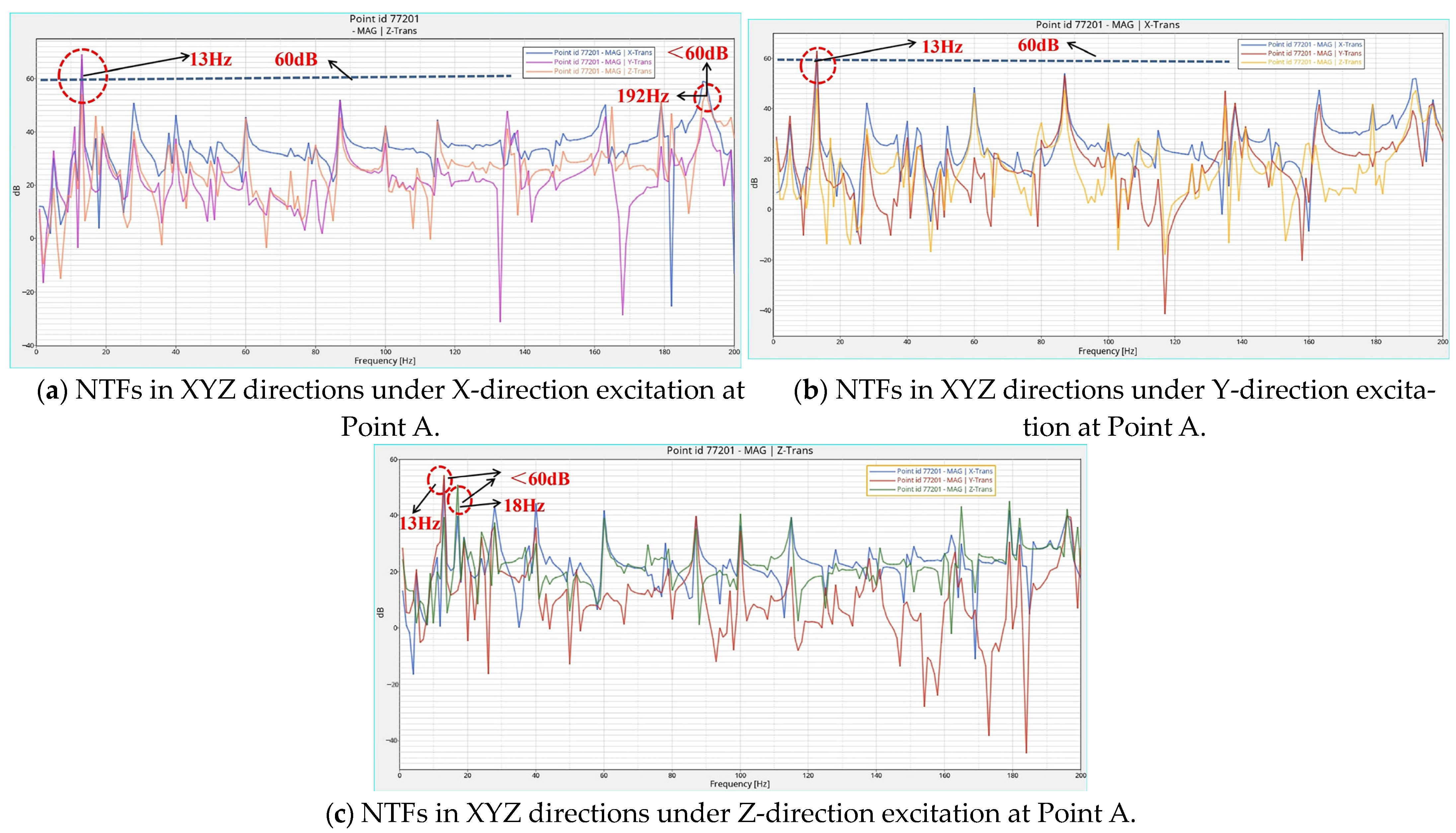
The simulated NTFs in the three directions at the response point, when applying tri-axial (XYZ) excitation loads at Point A, are shown in Figure 14.
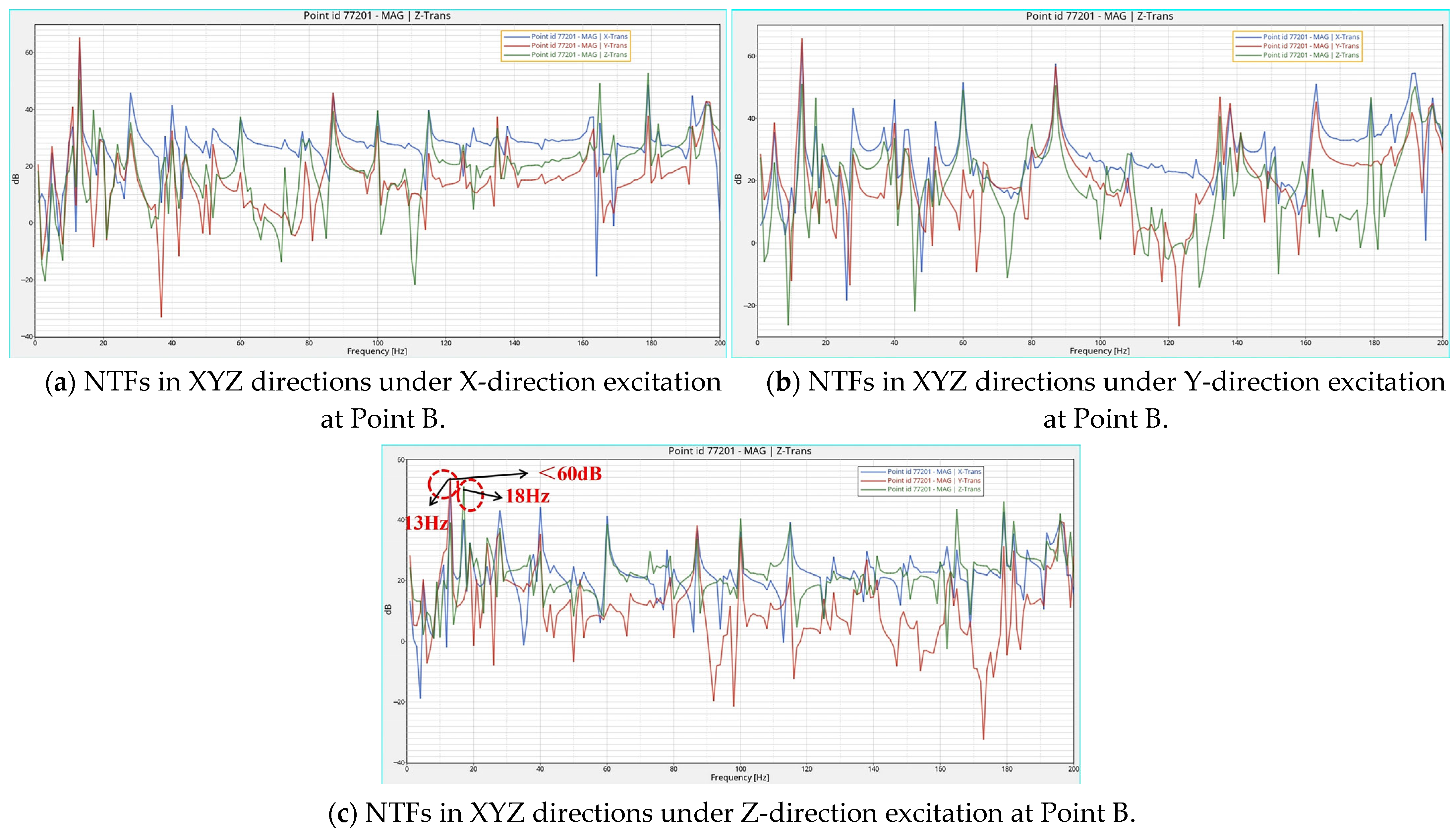
Similarly, the results for Point B are illustrated in Figure 15.
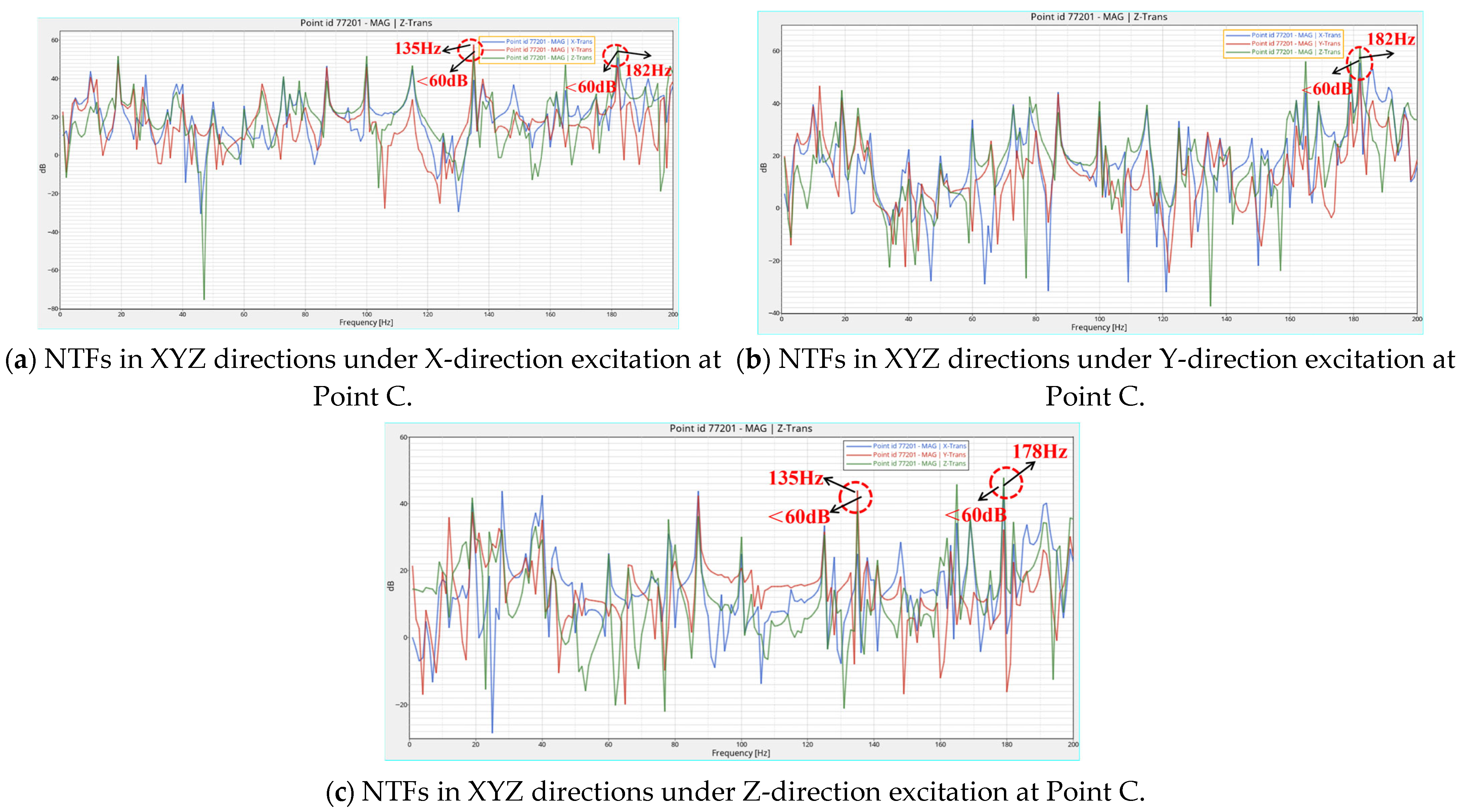
For Point C, results are presented in Figure 16.
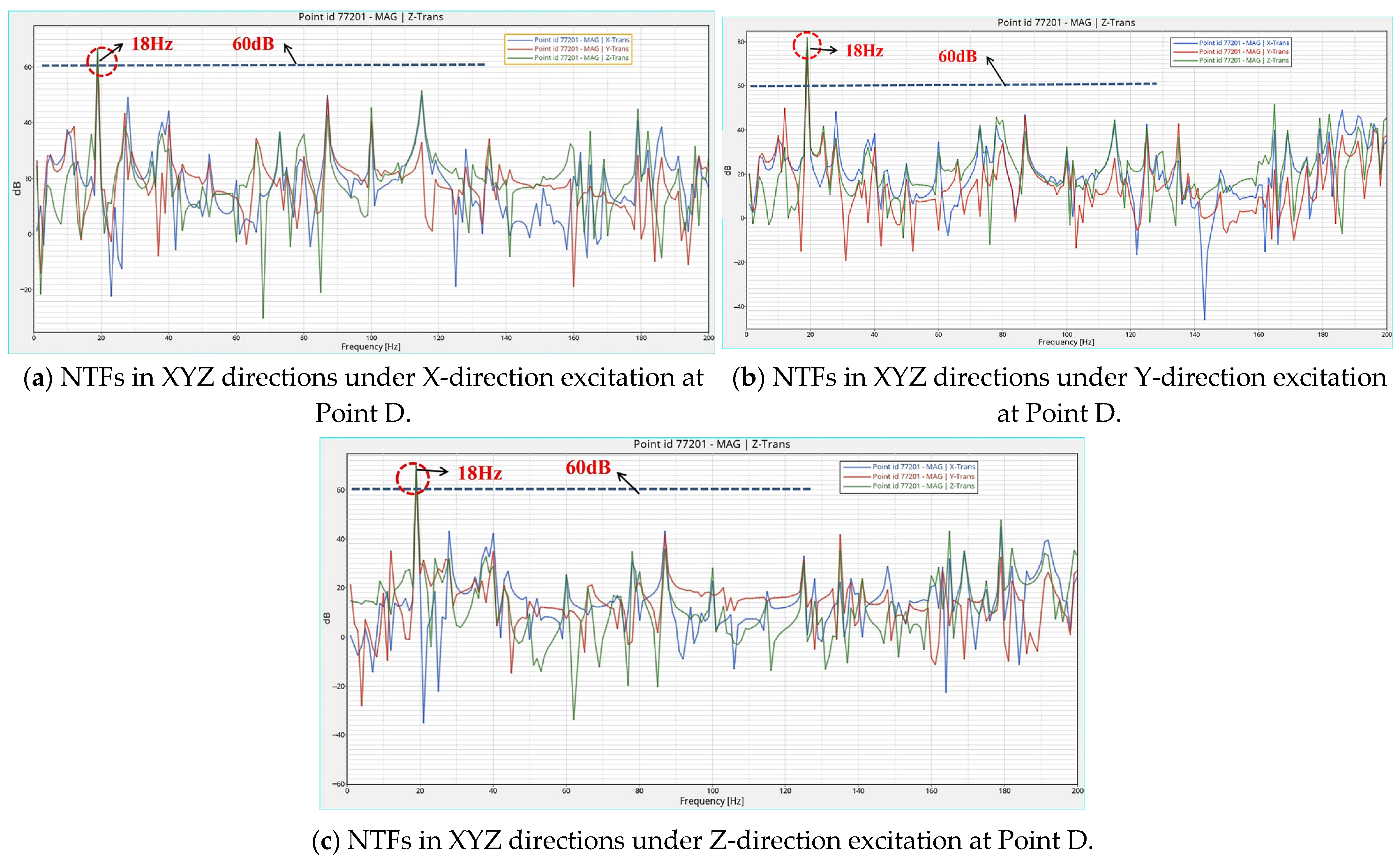
The results of Point D are depicted in Figure 17.
Based on the transfer functions obtained from each excitation point, the peak response frequencies and corresponding SPLs at the driver’s right ear were extracted, as summarized in Table 10.
Under simulated conditions with no background noise interference, and considering that the standard cab noise level should not exceed 60 dB, the NTF analysis revealed distinct sound pressure peaks at several characteristic frequencies: 13, 18, 29, 40, 60, 115, 135, 163, 178, and 182 Hz. Among them: 13, 18, and 29 Hz are close to the first-, third-, and fifth-order modes frequencies of the cab frame; 9 and 40 Hz correspond to the second- and sixth-order modes of the cab structure with panels; Frequencies above 115 Hz align with acoustic cavity modes, suggesting resonance phenomena.
In Figure 14, under X-direction excitation at Point A, SPLs in the X and Y-directions reached 66.47 and 68 dB, respectively, with dominant frequency near 13 Hz. Under Y-direction excitation, X and Y responses were 60.5 and 62.1 dB, again centered around 13 Hz. Z-direction responses remained within acceptable limits, indicating that Point A primarily excites noise in the X and Y-directions, with Y-direction response being more prominent.
In Figure 15, under X and Y-direction excitations at Point B, responses around 13 Hz in X and Y-directions ranged from 63.03 to 64.9 dB, with normal Z-direction levels, confirming that Point B also contributes mainly to X and Y-directional noise.
In Figure 16, Point C generally meets noise standards across all excitations, except for a slight Z-direction overrun (60.7 dB) under Z-direction excitation. Overall, Point C remains compliant with noise control requirements.
In Figure 17, Point D exhibits strong noise responses near 18 Hz (which matches the second harmonic of cutter excitation). Under X-direction excitation, SPLs reached 63.8 dB, 61.9 dB, and 65.8 dB in XYZ directions, respectively. Y-direction excitation led to significantly increased levels across all directions (77~81 dB), while Z-direction excitation caused 65~69 dB. Comprehensive analysis reveals that Point D triggers high noise levels in all directions, with Z-direction response being the most critical.

3.7. Vibroacoustic Coupled Modes Under Typical Cab Mount NTFs

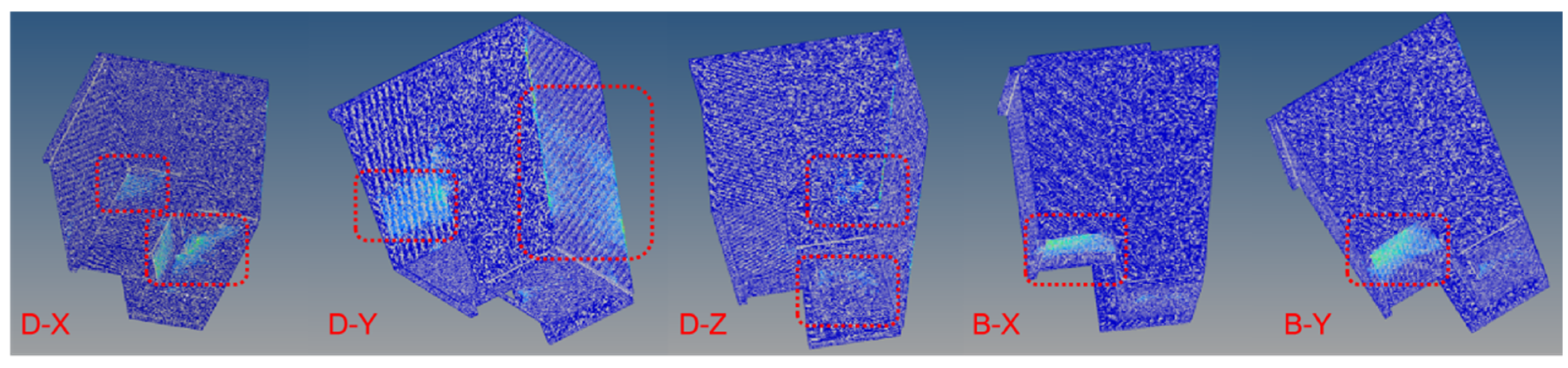
Based on the simulation results of the NTF and corresponding SPLs at the response point, it is evident that tri-directional excitations applied at Point D result in excessive interior noise levels, whereas Points A, B, and C only lead to exceedances in specific directions. Therefore, this section focuses on analyzing the vibroacoustic coupled mode shapes at a characteristic frequency of 18 Hz under excitation at Point D, and at 13 Hz under excitation at Point B. The results are presented in Figure 18.
In Figure 18, when X and Y directional excitations are applied at Point B, local mode shape variations occur in the rear panel (marked with a dashed box), indicating that the vibrational energy transmitted from Point B predominantly affects the rear mounting panel area. This observation, combined with the second-order frame modal shape, confirms that the rear panel exhibits high vibration transmission and associated noise under excitation. For Point D, applying X-direction excitation results in local mode shapes on the bottom surfaces of the front and rear mounting brackets. Under Y-direction excitation, the middle and lower sections of the front windshield panel show localized deformation, especially at the joint between the windshield and right panel. Z-direction excitation induces deformation at the same joint and slight deformation on the bottom front mount surface. Combined with the third-order frame mode and the fourth-order panel mode, it is suggested to enhance the structural integrity by: Thickening and reinforcing the front windshield panel; Strengthening the joint between the windshield and right panel via adhesive or welding; Increasing the thickness of front and rear mounting brackets and adding reinforcement ribs; in order to mitigate panel vibrations and suppress associated noise transmission.

3.8. Experimental Results of Interior Noise Response

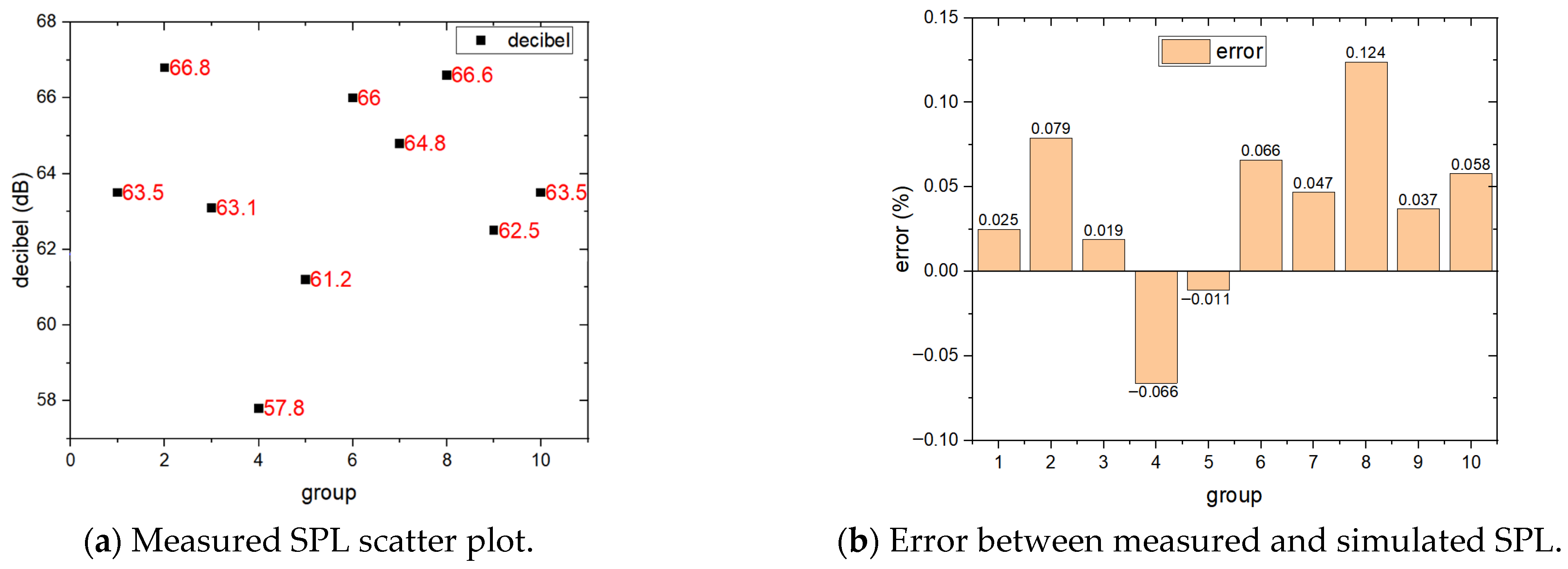
An excitation was applied at Point D, and the Y-direction noise at the cabin response point was measured and compared to simulation results is illustrated in Table 11.
The comparison between measured and simulated values is illustrated in Figure 19.
In Table 11 and Figure 19, the maximum measured SPL is 69.6 dB, and the minimum is 57.8 dB. Compared with the simulated value of 61.9 dB, the maximum absolute error is 12.4%, the minimum is 1.1%, with an average of 5.32%. This confirms the feasibility and accuracy of the cab NVH analysis method based on the NTF and vibroacoustic coupling simulation, providing theoretical support for factory-level NVH testing and optimization.

3.9. Experimental Results of Cab Transfer Function

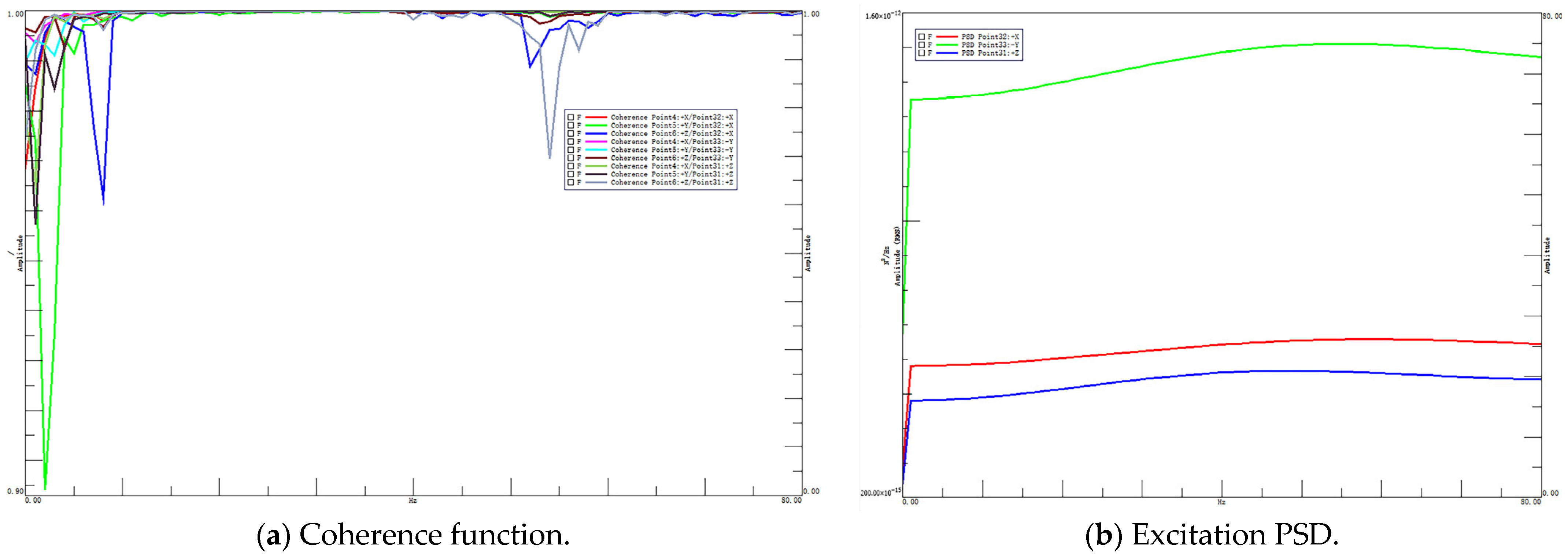
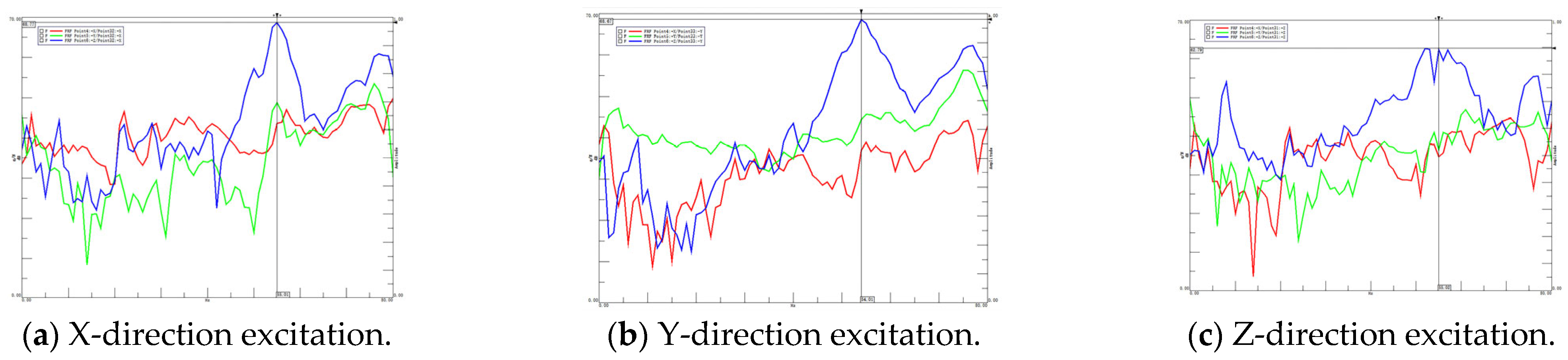
After applying XYZ excitations at Point D, transfer functions between the excitation and the interior response point were measured and compared with simulation and operational conditions. The coherence functions and PSD of the excitations are shown in Figure 20, while the XYZ transfer functions are displayed in Figure 21.
As can be seen from Figure 20a, the coherence functions between the XYZ In Figure 20a, the coherence functions between XYZ excitations at Point D and the interior response point are all within the range of 0.9 to 1.0, indicating strong correlation and high reliability of the experimental data. Figure 20b shows stable PSD in the 0~80 Hz band, without abrupt fluctuations, suggesting stable system response within this frequency range.
In Figure 21a–c, peak response frequencies under Point D XYZ excitations are 55.01, 54.01, and 55.02 Hz, respectively. In real operating conditions, a characteristic frequency of 58.88 Hz is observed in the cabin (corresponding to the sixth harmonic of the cutter), with a frequency deviation of less than 9%, confirming the model’s predictive capability. Measured peak SPLs under XYZ excitation are 68.77, 68.67, and 62.97 dB, respectively, while simulated peak SPLs near 18 Hz (corresponding to the second harmonic of the cutter) are 65.8, 81, and 69 dB, resulting in absolute errors of 4.5%, 15%, and 8.7%, respectively. The average deviation is 9.4%, within acceptable limits, further validating the model’s reliability.
Compared with Karpenko et al. [34], who investigated vertical vibration in electric scooters (2.0~62.5 Hz), the harvester cab shows stronger low-frequency vibration amplitudes, characteristic of whole-body vibration (WBV). Unlike scooters, where road excitation dominates, the harvester cab is affected by multi-source rotating components such as the engine and cutter.
Regarding noise, Danilevicius et al. [35] reported vehicle cabin noise levels of 71 dB (50 km/h) and 77 dB (90 km/h) in passenger cars, with heavy trucks exceeding by 6~7 dB. In this study, cab noise peaks at 81 dB under mount excitation. While lower than a heavy truck (~87 dB), sustained exposure in an enclosed space can lead to operator fatigue and reduced attention, indicating significant occupational health risks.

4. Conclusions

This study established a simulation model of mount NTFs through structural and vibroacoustic modal analyses and validated it through experimental tests. The results provide a theoretical foundation for vibration and noise control in the design and manufacturing of harvester cabs and support NVH performance improvement before factory release.
  • Frame structural modal analysis indicates that engine, cutter, and sieve motions significantly affect cab vibrations. Simulated panel structure modes closely matched experimental results, with frequency deviations within 5%, confirming accuracy. The fifth- and sixth-order modes (37.5 and 41.7 Hz) align with the engine’s fundamental frequency. Acoustic modal frequencies were generally higher and displayed different mode shapes compared to structural modes.
  • NTF simulations showed that among the four mounting points, Point C transmitted the least excitation, while Point D induced the highest noise levels in all directions, exceeding acceptable SPL thresholds.
  • Under Point D XYZ excitation, interior response SPLs deviated from simulations by less than 15%. Transfer function measurements matched simulation predictions, with characteristic frequencies corresponding to cutter harmonics. Peak noise deviations remained below 15%, supporting the model’s reliability for path identification and optimization, consistent with domain literature [36,37,38].
  • The integrated analysis approach proposed in this study—combining pivot-based noise transfer function modeling with vibro-acoustic coupling simulation—not only achieves high accuracy in predicting the NVH performance of the harvester cabin but also provides a clear and practical engineering pathway for forward design and optimization. By identifying the primary noise transmission paths and key structural panels, targeted reinforcement strategies can be implemented in high-vibration zones (e.g., panel junctions), such as increasing panel thickness, incorporating stiffening ribs, or applying damping materials, thereby suppressing vibration radiation at the source. Furthermore, optimizing the mounting points between the cabin and the chassis can effectively disrupt vibration transmission. For instance, L-shaped stiffeners can be added to critical frame regions (e.g., Points A and D), using low-carbon steel or high-strength low-alloy steel materials consistent with the frame. Constrained or free-layer damping treatments on the cabin’s interior surfaces can also be applied to improve structural damping. By establishing the correlation between external excitations and the sound pressure near the driver’s ear, the method supports NVH optimization with a focus on occupant comfort. Controlling noise within specific frequency bands can directly improve the driver’s physical well-being and operational safety. Moreover, the high-fidelity simulation model developed in this work lays the foundation for future implementation of active noise control (ANC) strategies, enabling real-time regulation of cabin noise levels.
  • In future, the proposed “measurement–simulation–optimization” framework proposed in this study can be seamlessly extended to the NVH performance development of other agricultural machinery cabins, such as those of tractors and combine harvesters. Future research should focus on characterizing vibration and noise behavior under varying operational conditions to evaluate the robustness of the proposed methodology and to establish a comprehensive performance database for agricultural cabins. Furthermore, integrating advanced noise control strategies with this framework to form a closed-loop system—encompassing diagnosis, prediction, and real-time control—will be critical for achieving a significant leap in cabin acoustic comfort. These extended investigations will not only deepen the academic value of this research but also provide practical, long-term technical guidance for noise and vibration reduction in the agricultural machinery industry and facilitate the upgrade of future product designs.

Author Contributions

K.J.: Conceptualization and Writing—original draft and Writing—review and editing. Y.L. (Yaoming Li): Methodology and Funding acquisition. H.W.: Investigation and test equipment. Y.L. (Yanbin Liu): Resources and software analysis. All authors have read and agreed to the published version of the manuscript.

Funding

This study was supported by the National Natural Science Foundation of China (52275251), the Natural Science Foundation of Jiangsu Province (BK20210772), the Youth Project of the Natural Science Foundation of Jiangsu Province (BK20240879), the Shandong Province Postdoctoral Innovation Project (SDCX-ZG-202400199), and a project funded by the Priority Academic Program Development of Jiangsu Higher Education Institutions (PAPD-2023-87).

Data Availability Statement

The data presented in this study are available on request from the corresponding author (the data are not publicly available due to privacy).

Conflicts of Interest

The authors declare no conflicts of interest.

References

  1. Biriș, S.Ș.; Constantin, A.-M.; Anghelache, D.; Găgeanu, I.; Cujbescu, D.; Nenciu, F.; Voicea, I.; Matei, G.; Popa, L.-D.; Duțu, M.F.; et al. Considerations Regarding the Vibrations Transmitted to the Operator by an Axial Flow Harvester Combine. INMATEH Agric. Eng. 2022, 68, 747–756. [Google Scholar] [CrossRef]
  2. Holzgreve, F.; Lenk, A.; Troebs, P.; Oremek, G.; Wanke, E. Arbeitsplatzbezogene Gesundheitsbelastungen am Beispiel von Lastkraftwagenfahrer/innen im Fernverke. Zentralblatt Arbeitsmedizin Arbeitsschutz Ergon. 2022, 72, 290–296. [Google Scholar] [CrossRef]
  3. Huang, P.; Yao, Y.; Xiu, W.; Wu, J.; Geng, D. Vibration modelling and testing of off-road vehicle incorporating coupled roll and pitch vibrations. Biosyst. Eng. 2024, 240, 111–122. [Google Scholar] [CrossRef]
  4. Zheng, E.; Zhong, X.; Zhu, R.; Xue, J.; Cui, S.; Gao, H.; Lin, X. Investigation into the vibration characteristics of agricultural wheeled tractor-implement system with hydro-pneumatic suspension on the front axle. Biosyst. Eng. 2019, 186, 14–33. [Google Scholar] [CrossRef]
  5. Chen, G.; Xie, K.; Dong, W. Vibration and noise analysis of tractor cab based on finite element/boundary element. Noise Vib. Control 2023, 43, 163–167. Available online: https://nvc.sjtu.edu.cn/cn/y2023/v43/i6/163 (accessed on 8 August 2025).
  6. Wang, D.; Zhou, Y.; Yan, T. Tractor cab mode analysis and by-ear noise control. Noise Vib. Control 2018, 38, 397–401. [Google Scholar] [CrossRef]
  7. Tang, H. Tractor cab vibration optimization based on Matlab and Ansys. J. Chengdu Univ. Technol. 2023, 26, 1–5. [Google Scholar] [CrossRef]
  8. Wang, S. Analysis and Control of Low-Frequency Noise of Tractor Cab Structure. Master’s Thesis, Henan University of Science and Technology, Luoyang, China, 2023. [Google Scholar] [CrossRef]
  9. Han, G.; Kim, K.; Ahn, D.; Park, Y. Comparative Analysis of Tractor Ride Vibration According to Suspension System Configuration. J. Biosyst. Eng. 2023, 48, 69–78. [Google Scholar] [CrossRef]
  10. Karol, D.; Piotr, R. Noise Emission in the Cabs of Modern Farm Tractors. Teh. Vjesn. 2023, 30, 669–675. [Google Scholar] [CrossRef]
  11. Prakash, C.; Singh, P. Prediction of hand-arm vibration among tractor operators in different soil tillage operations using artificial neural network-based model. Comput. Electron. Agric. 2025, 230, 109858. [Google Scholar] [CrossRef]
  12. Liu, Q. Research on the Noise Control Strategy of Low-Frequency Structure of Hydraulic Excavator Cab. Master’s Thesis, Central South University, Changsha, China, 2022. [Google Scholar] [CrossRef]
  13. Liu, Z.; Wang, Y.; Chai, P.; Li, X.; Liu, Y.; Shan, K.; Wu, J. Analysis and optimization of low-frequency structural noise of excavator cab. J. Appl. Acoust. 2021, 40, 182–187. [Google Scholar] [CrossRef]
  14. Oh, J.; Chung, W.; Han, H.; Kim, J.; Son, G.; Park, Y. Evaluation of Tractor Ride Vibrations by Cab Suspension System. Trans. Asabe 2020, 63, 1465–1476. [Google Scholar] [CrossRef]
  15. Cheng, K.; Zhong, B.; Wu, Z. NVH performance analysis of passenger car cab based on HyperMesh. Intern. Combust. Engine Power Plant 2024, 41, 53–58. [Google Scholar] [CrossRef]
  16. Pochi, D.; Fornaciari, L.; Vassalini, G.; Grilli, R.; Fanigliulo, R. Levels of Whole-Body Vibrations Transmitted to the Driver of a Tractor Equipped with Self-Levelling Cab during Soil Primary Tillage. AgriEngineering 2022, 4, 695–706. [Google Scholar] [CrossRef]
  17. Spasojević Brkić, V.; Misita, M.; Perišić, M.; Brkić, A.; Veljković, Z. Validating Measurement Structure of Checklist for Evaluating Ergonomics Risks in Heavy Mobile Machinery Cabs. Mathematics 2022, 1, 23. [Google Scholar] [CrossRef]
  18. Chen, S.; Zhou, Y.; Tang, Z.; Lu, S. Modal vibration response of rice combine harvester frame under multi-source excitation. Biosyst. Eng. 2020, 194, 177–195. [Google Scholar] [CrossRef]
  19. Chen, T.; Xu, L.; Ahn, H.; Lu, E.; Liu, Y.; Xu, R. Evaluation of headland turning types of adjacent parallel paths for combine harvesters. Biosyst. Eng. 2023, 233, 93–113. [Google Scholar] [CrossRef]
  20. Wang, B.; Chen, S.; Wang, G.; Tang, Z.; Ding, H. Damping Optimization Method of Combine Harvester Frame Undergoing Multi-Source Excitation. Agriculture 2024, 14, 815. [Google Scholar] [CrossRef]
  21. Ma, Z.; Zhang, Z.; Zhang, Z.; Song, Z.; Liu, Y.; Li, Y.; Xu, L. Durable Testing and Analysis of a Cleaning Sieve Based on Vibration and Strain Signals. Agriculture 2023, 13, 2232. [Google Scholar] [CrossRef]
  22. Liang, Z.; Qin, Y.; Su, Z. Establishment of a feeding rate prediction model for combine harvesters. Agriculture 2024, 14, 589. [Google Scholar] [CrossRef]
  23. Balazs, P.; Bastianoni, F.; Cordero, E.; Feichtinger, H.G.; Schweighofer, N. Comparisons between Fourier and STFT multipliers: The smoothing effect of the short-time Fourier transform. J. Math. Anal. Appl. 2024, 529, 15–31. [Google Scholar] [CrossRef]
  24. Yu, Z.; Li, Y.; Du, X.; Liu, Y. Threshing cylinder unbalance detection using a signal extraction method based on parameter-adaptive variational mode decomposition. Biosyst. Eng. 2024, 244, 26–41. [Google Scholar] [CrossRef]
  25. Pang, J. Vibration Source-Response Analysis and Transmission Main Path Identification of Crawler Grain Combine. Master’s Thesis, Jiangsu University, Zhenjiang, China, 2019. [Google Scholar] [CrossRef]
  26. Pang, J.; Li, Y.; Ji, J.; Xu, L. Vibration excitation identification and control of the cutter of a combine harvester using triaxial accelerometers and partial coherence sorting. Biosyst. Eng. 2019, 185, 25–34. [Google Scholar] [CrossRef]
  27. Gao, Y.; Yang, Y.; Fu, S.; Feng, K.; Han, X.; Hu, Y.; Zhu, Q.; Wei, X. Analysis of Vibration Characteristics of Tractor–Rotary Cultivator Combination Based on Time Domain and Frequency Domain. Agriculture 2024, 14, 1139. [Google Scholar] [CrossRef]
  28. Wang, X.; Hong, T.; Fang, W.; Chen, X. Optimized design for vibration reduction in a residual film recovery machine frame based on modal analysis. Agriculture 2024, 14, 543. [Google Scholar] [CrossRef]
  29. Wang, B.; Que, K.; Tang, Z.; Sun, M.; Lian, Y.; Wang, H. Multivariate Structural Vibration Coupling Response of the Self-Propelled Straw Pickup Baler Under Time-Varying Loads. Agriculture 2024, 14, 1960. [Google Scholar] [CrossRef]
  30. Seonghyeon, K.; Ercan, M. Active control of road noise considering the vibro-acoustic transfer path of a passenger car. Appl. Acoust. 2022, 192, 108741. [Google Scholar] [CrossRef]
  31. Hu, H.; Geng, C.; Zhang, C.; Lin, Z. Analysis and optimization of the vibration and noise transfer function of a certain server chassis. Comput. Aided Eng. 2023, 32, 34–41. [Google Scholar] [CrossRef]
  32. Zheng, C.; Chang, L.; Wang, K.; Gong, Y.; Zhang, X. Study on the optimization of car body noise transfer function by introducing control variables. Automot. Technol. 2024, 5, 58–62. [Google Scholar] [CrossRef]
  33. Zhang, G.; Qin, J.; Zhong, J.; Qin, T.; Wei, J. Study on the test method of the complete vehicle noise transfer function. Automot. Technol. 2024, 6, 47–52. [Google Scholar] [CrossRef]
  34. Karpenko, M.; Prentkovskis, O.; Skačkauskas, P. Analysing the impact of electric kick-scooters on drivers: Vibration and frequency transmission during the ride on different types of urban pavements. Eksploat. Niezawodn. Maint. Reliab. 2025, 27, 199893. [Google Scholar] [CrossRef]
  35. Danileviciusi, A.; Karpenko, M.; Krivanek, V. Research on the Noise Pollution from Different Vehicle Categories in the Urban Area. Transport 2023, 28, 1–11. [Google Scholar] [CrossRef]
  36. Zheng, G.; Li, Y.; Ji, K.; Liang, Z.; Ma, X. Vibration analysis and structural optimization of the cutting platform frame of the Guzi combine harvester. Agric. Mech. Res. 2024, 46, 41–45. [Google Scholar] [CrossRef]
  37. Fan, Q.; Li, H.; Dong, H. Prediction and Low Noise Optimization of Loader Cab Noise. J. Taiyuan Univ. Sci. Technol. 2025, 46, 168–174. [Google Scholar] [CrossRef]
  38. Wang, S.; Ma, X.; He, M. Research on Low-Frequency Noise Control in Tractor Cab. China Agric. Mach. Chem. J. 2024, 5, 134–139. [Google Scholar] [CrossRef]
Figure 1. Workflow of vibration testing and simulation for combine harvester.
Machines 14 00090 g001
Figure 2. Overall structure of 4LZ-7A combine harvester and its major vibration excitation components.
Machines 14 00090 g002
Figure 3. Transmission paths of excitation loads from key components to cab.
Machines 14 00090 g003
Figure 4. Finite element mesh models of cab.
Machines 14 00090 g004
Figure 5. Simulation modules configured in HyperMesh for vibroacoustic analysis.
Machines 14 00090 g005
Figure 6. Locations of excitation and response points and corresponding noise transmission paths.
Machines 14 00090 g006
Figure 7. Experimental setup for noise measurement at cab response point of combine harvester.
Machines 14 00090 g007
Figure 8. Experimental procedures and setup for NTF and modal analysis of combine harvester cab.
Machines 14 00090 g008
Figure 9. Frequency-Domain Analysis of XYZ Three-Directional Vibration in a Combine Harvester Cabin.
Machines 14 00090 g009
Figure 10. Modal simulation results of cab frame structure.
Machines 14 00090 g010
Figure 11. Modal simulation results of cab structure with exterior panels.
Machines 14 00090 g011
Figure 12. Simulated acoustic cavity modes of cab.
Machines 14 00090 g012
Figure 13. Simulation results and frequency values of the acoustic and structural interaction modes of the cab.
Machines 14 00090 g013
Figure 14. NTFs at response point under tri-axial excitations at Point A.
Machines 14 00090 g014
Figure 15. NTFs at response point under tri-axial excitations at Point B.
Machines 14 00090 g015
Figure 16. NTFs at response point under tri-axial excitations at Point C.
Machines 14 00090 g016
Figure 17. NTFs at response point under tri-axial excitations at Point D.
Machines 14 00090 g017
Figure 18. Vibroacoustic coupled mode shapes under typical cab mount noise transfer conditions.
Machines 14 00090 g018
Figure 19. Comparison of measured and simulated SPL at cab response point.
Machines 14 00090 g019
Figure 20. Coherence and PSD between excitation and response.
Machines 14 00090 g020
Figure 21. Transfer functions from Point D excitation to cab interior response point.
Machines 14 00090 g021
Table 1. Specifications and models of testing equipment.
EquipmentModelRangeError
ZZDASPUSB4016±10 V<0.5%
LMSLMS SCADAS Mobile20±10 V<0.1%
DongHua Testing1A2347E±5 V<5%
Table 2. Mesh node counts and simulation frequency settings.
Mesh TypeNumber of NodesNumber of ElementsSimulation Frequency Range
Frame structure mesh142,194142,3390~150 Hz
Frame with panel mesh523,210523,1910~150 Hz
Acoustic cavity mesh582,0663,676,2580~300 Hz
Table 3. Detailed mesh quality parameters.
ParameterValue
Length5~7.5 mm
Jocabain<0.7
Taper>0.5
Quads (Min angle)<45°
Trias (Min angle)<20°
Table 4. Rotational speeds and corresponding excitation frequencies of main excitation components in combine harvester.
ComponentRotational SpeedExcitation Frequency Range
Engine2400~2500 rpm40.0~41.6 Hz
Vibrating sieve440~480 rpm7.3~8 Hz
Threshing drum690~730 rpm11.5~12.7 Hz
Cutter540~590 rpm9.0~9.8 Hz
Table 5. Dominant contributing components for three-directional cab vibrations.
Cab DirectionDominant Characteristic Frequencies Main Contributing Components
X-direction10.24, 7.68, 58.88, 81.92 HzEngine, vibrating sieve, cutter
Y-direction7.68, 10.24, 40.96, 58.88, 83.2 HzVibrating sieve, engine, cutter
Z-direction7.68, 40.96, 58.88, 72.96, 81.96 HzVibrating sieve, engine, cutter, threshing drum
Table 6. Corresponding frequencies and mode shapes of the cab frame structure.
Mode OrderFrequencyModal Characteristics
First10.8 HzLocal mode at rear section
Second15.4 HzMode extending from middle to the rear
Third20.7 HzGlobal structural mode
Fourth23.4 HzLocal mode at rear section
Fifth27.8 HzGlobal mode with local deformation at front panel-frame joint
Sixth32.7 HzLocal mode at rear and bottom sections
Table 7. Comparison of simulated and experimental modal frequencies and mode shapes of cab with panels.
Mode OrderSimulated FrequencySimulated Mode ShapeExperimental FrequencyError
First24.9 HzBending mode of front panel24.3 Hz−2.4%
Second29.1 HzLocal bending mode of right panel29.8 Hz2.4%
Third33.3 HzBending mode of front panel33.1 Hz−0.6%
Fourth33.6 HzLocal bending and vibration of front panel34.5 Hz2.7%
Fifth37.5 HzBreathing mode of roof37.5 Hz0
Sixth41.7 HzBreathing mode of bottom41.5 Hz−0.4%
Table 8. Natural frequencies and mode shapes of cab acoustic cavity.
Mode OrderFrequency Mode Shape Description
First108 HzFirst-order vertical acoustic cavity mode
Second145 HzFirst-order longitudinal acoustic cavity mode, with peak sound pressure near upper front panel
Third169 HzFirst-order transverse acoustic cavity mode, with peak sound pressure near lower left panel
Fourth189 HzCoupled first-order vertical and longitudinal cavity modes
Fifth207 HzCoupled first-order transverse and second-order vertical cavity modes
Sixth223 HzCoupled second-order longitudinal and transverse acoustic cavity modes
Table 9. Natural frequencies and mode shapes of cab vibro-acoustic coupled modes.
Mode OrderFrequency Mode Shape Description
First25.9 HzFront panel deformation
Second29.4 HzLocal deformation of right panel
Third34.5 HzFront panel deformation
Fourth35.4 HzCombined front panel and local right panel deformation
Fifth37.9 HzBreathing mode of cab roof
Sixth41.6 HzBreathing mode of cab floor
Table 10. Peak NTF frequencies and corresponding SPLs at driver’s right ear under different excitation points.
ExcitationDirectionFrequencySPLExcitationDirectionFrequencySPL
A-XX13 Hz66.47 dBC-XX182 Hz50.3 dB
A-XY13 Hz68.0 dBC-XY135 Hz56.8 dB
A-XZ192 Hz54.1 dBC-XZ182 Hz56.7 dB
A-YX13 Hz60.5 dBC-YX182 Hz54.4 dB
A-YY13 Hz62.1 dBC-YY182 Hz49.0 dB
A-YZ18 Hz50.3 dBC-YZ182 Hz60.7 dB
A-ZX13 Hz52.0 dBC-ZX178 Hz43.0 dB
A-ZY13 Hz53.6 dBC-ZY135 Hz42.0 dB
A-ZZ18 Hz50.3 dBC-ZZ178 Hz52.7 dB
B-XX13 Hz63.03 dBD-XX18 Hz63.8 dB
B-XY13 Hz64.5 dBD-XY18 Hz61.9 dB
B-XZ178 Hz51.9 dBD-XZ18 Hz65.8 dB
B-YX13 Hz63.4 dBD-YX18 Hz79.0 dB
B-YY13 Hz64.9 dBD-YY18 Hz77.0 dB
B-YZ13 Hz50.1 dBD-YZ18 Hz81.0 dB
B-ZX13 Hz51.6 dBD-ZX18 Hz66.9 dB
B-ZY13 Hz53.0 dBD-ZY18 Hz65.0 dB
B-ZZ18 Hz50.3 dBD-ZZ18 Hz69.0 dB
Table 11. Measured SPLs at interior response point.
Group12345678910
SPL63.5 dB66.8 dB63.1 dB57.8 dB61.2 dB66.0 dB64.8 dB69.6 dB64.5 dB65.5 dB
Error2.5%7.9%1.9%−6.6%−1.1%6.6%4.7%12.4%3.7%5.8%
Disclaimer/Publisher’s Note: The statements, opinions and data contained in all publications are solely those of the individual author(s) and contributor(s) and not of MDPI and/or the editor(s). MDPI and/or the editor(s) disclaim responsibility for any injury to people or property resulting from any ideas, methods, instructions or products referred to in the content.