Article

Coagulation Coupled with the Contact Oxidation Biofilter Process for Malodorous Blackwater Treatment


1
Shenzhen Accurate Testing Co., Ltd., Shenzhen 518055, China
2
Shenzhen Zhonghong Juhua Environmental Protection Technology Co., Ltd., Shenzhen 518000, China
3
School of Ecology and Environment, Harbin Institute of Technology, Shenzhen 518055, China
4
Shenzhen Environmental Technology Group Co., Ltd., Shenzhen 518055, China
*
Author to whom correspondence should be addressed.
Water 2026, 18(2), 245; https://doi.org/10.3390/w18020245
Submission received: 24 November 2025 / Revised: 6 January 2026 / Accepted: 13 January 2026 / Published: 16 January 2026
(This article belongs to the Topic Wastewater Treatment Based on AOPs, ARPs, and AORPs)

Abstract

With accelerating urbanization, rivers have been severely polluted, resulting in widespread black and odorous waterways. The coagulation–sedimentation and contact oxidation bypass treatment process is characterized by low operational cost and simple operation and management. In this study, a coagulation–sedimentation–contact oxidation biofilter process was developed to treat heavily polluted malodorous blackwater. Among the tested biofilm carriers, rigid aramid fiber exhibited the fastest biofilm formation and the best pollutant removal performance. Based on a comprehensive evaluation of effluent quality and treatment capacity, the optimal operating conditions of the proposed process were identified as a PAC dosage of 50 mg/L, an air-to-water ratio of 7:1, and a hydraulic retention time (HRT) of 2 h. Under these conditions, the effluent concentrations of chemical oxygen demand (COD), ammonia nitrogen (NH4+-N), and suspended solids (SSs) were consistently maintained below 30, 5, and 5 mg/L, respectively. Moreover, the optimized system demonstrated strong resistance to shock loading, maintaining stable operation at influent COD and SS concentrations of approximately 150 mg/L and 40 mg/L, respectively, while complying with the Class A Discharge Standard of Pollutants for Municipal Wastewater Treatment Plants. This study provides an efficient treatment strategy for malodorous blackwater remediation.

1. Introduction

Water pollution remains one of the most serious environmental challenges worldwide, driven by rapid urbanization, industrial activities, and the continuous discharge of complex wastewaters into natural water bodies. Under conditions of excessive pollutant loading and insufficient self-purification capacity, extreme forms of water pollution may develop in urban surface waters. Among these, malodorous blackwater bodies represent a typical and severe manifestation, characterized by high concentrations of chemical oxygen demand (COD), ammonia nitrogen (NH4+-N), and suspended solids (SSs), accompanied by oxygen depletion and persistent odor problems [1]. The general pollutants in malodorous blackwater have similar concentrations and even exceed those of domestic sewage, which have exceeded the self-purification capacity of the water bodies. Malodorous blackwater bodies severely degrade aquatic ecosystems and urban environmental quality [2]. The remediation of them has become a critical concern in urban water management, particularly in rapidly urbanizing regions.
In 2015, the Chinese Ministry of Housing and Urban-Rural Development of Environmental Protection, Water Resources, and Agriculture conducted a nationwide survey covering 295 cities [3]. It revealed that more than 75% of cities were affected by malodorous blackwater bodies. By 2019, the total number of such water bodies had increased to approximately 2100 [4]. In response, the Chinese government has issued the Working Guidelines for Treatment of Urban Malodorous Black Water Bodies, establishing strict remediation deadlines [5]. In addition, the Implementation Plan for Managing Urban Malodorous Black Water Bodies states that the problem should be basically eliminated by 2030 [6]. Therefore, remediation of malodorous blackwater bodies has become one of the most urgent tasks in urban environmental management, requiring efficient and practical treatment technologies that can cope with high pollutant loading and variable real-water conditions.
In situ treatment technologies are frequently applied for the remediation of polluted water bodies. Common approaches include aeration, artificial floating islands, or constructed wetlands [7,8,9,10]. Aeration increases dissolved oxygen (DO) concentrations, thereby promoting the growth and metabolic activity of microorganisms and aquatic organisms, which can accelerate pollutant degradation in water bodies. Previous studies have reported that the concentrations of COD and NH4+-N were reduced by approximately 62% and 29% after the aeration process [10]. Artificial floating islands and constructed wetlands primarily rely on aquatic plants to remove pollutants through processes such as uptake, adsorption, and microbial interactions within the rhizosphere [11]. However, several studies have revealed that these technologies are not well suited to heavily polluted water bodies, including malodorous blackwater bodies. It is because of their relatively slow treatment rates and the limited pollutant degradation or adsorption capacity of aquatic plants under high pollutant loading conditions [8,9].
Ex situ treatment technologies are widely regarded as rapid and effective solutions for malodorous blackwater treatment [12]. These approaches involve diverting polluted water from the water bodies, treating it by adjacent treatment units, and then subsequently returning the treated water to the original system. The specific ex situ treatment technology can be selected based on the initial water quality and the remediation objectives [13,14]. Generally, process configuration is primarily governed by treatment efficiency, cost, and required remediation time.
Recent studies have explored a variety of technologies for malodorous blackwater remediation, including biofilm-based processes, sulfur/iron (Fe/S)-mediated systems, as well as conventional anaerobic/oxic (A/O) biological treatment process. Membrane aerated biofilm reactor (MABR) has been recognized as a high-efficiency option. Thant et al., (2023) reported high COD removal (90.9 ± 1.7%) together with notable NH4+-N removal (74.3 ± 3.1%) under controlled conditions [15]. However, membrane fouling, frequent maintenance requirements, and the resulting operational complexity pose significant challenges to the long-term stability and large-scale field application of MABR systems [16]. Fe/S-mediated autotrophic denitrification biofilters have been developed, achieving superior nutrient removal with total nitrogen and phosphate removal efficiencies reaching 90–100% over HRT of 1–12 h [17]. Nevertheless, these systems may introduce risks such as sulfate accumulation and typically require strict control of redox conditions [18,19]. Conventional A/O processes are widely used, but they generally demand longer HRT and larger footprints, which may limit their applicability for rapid and space-constrained remediation of heavily polluted rivers [16]. Coagulation followed by biofiltration represents a well-established treatment process. However, its practical application to severely polluted malodorous black river water remains challenged by high SS concentrations, unstable influent quality, and rapid biofilter clogging, which collectively hinder short-HRT and high-throughput operation.
Therefore, this study develops a coagulation–sedimentation–contact oxidation biofilter process for severely polluted malodorous black river water. In this integrated configuration, coagulation–sedimentation process served as an effective pretreatment step for solids removal and influent stabilization, thereby enabling the downstream biofilter to operate reliably at short HRT. The dosage of the coagulant was optimized. For the contact oxidation biofilter, this work systematically compared three fiber-based biofilm carriers and demonstrated that a rigid aramid fiber carrier significantly accelerated biofilm establishment and enhanced long-term pollutant removal. Key operational parameters (air-to-water ratio and HRT) were optimized, while system robustness under real river water variability and shock loading was evaluated. The study provides a more feasible and generalizable engineering strategy for rapid malodorous blackwater remediation.

2. Materials and Methods

2.1. Materials

2.1.1. Wastewater and Inoculated Sludge

The raw wastewater was collected from a river located in southern China. The characteristics of river water are shown in Table 1.
The inoculated sludge for the contact oxidation biofilter was obtained from a wastewater treatment plant in southern China. The mixed liquid volatile suspended solids (MLVSS) to mixed liquid suspended solids (MLSS) ratio was 0.57, and the sludge volume index (SVI) was 41 mL/g. Before experiments, the inoculated sludge was pre-washed to remove large impurities and particles

2.1.2. Coagulant

The coagulant employed in this study was polyaluminum chloride (PAC) (Xingfanhuanbao Co., Ltd., Gongyi, China). It is commonly employed in the coagulation of water treatment. The Al2O3 content of PAC is 10% and the density is 1.236 g/cm3.

2.1.3. Biofilm Carriers

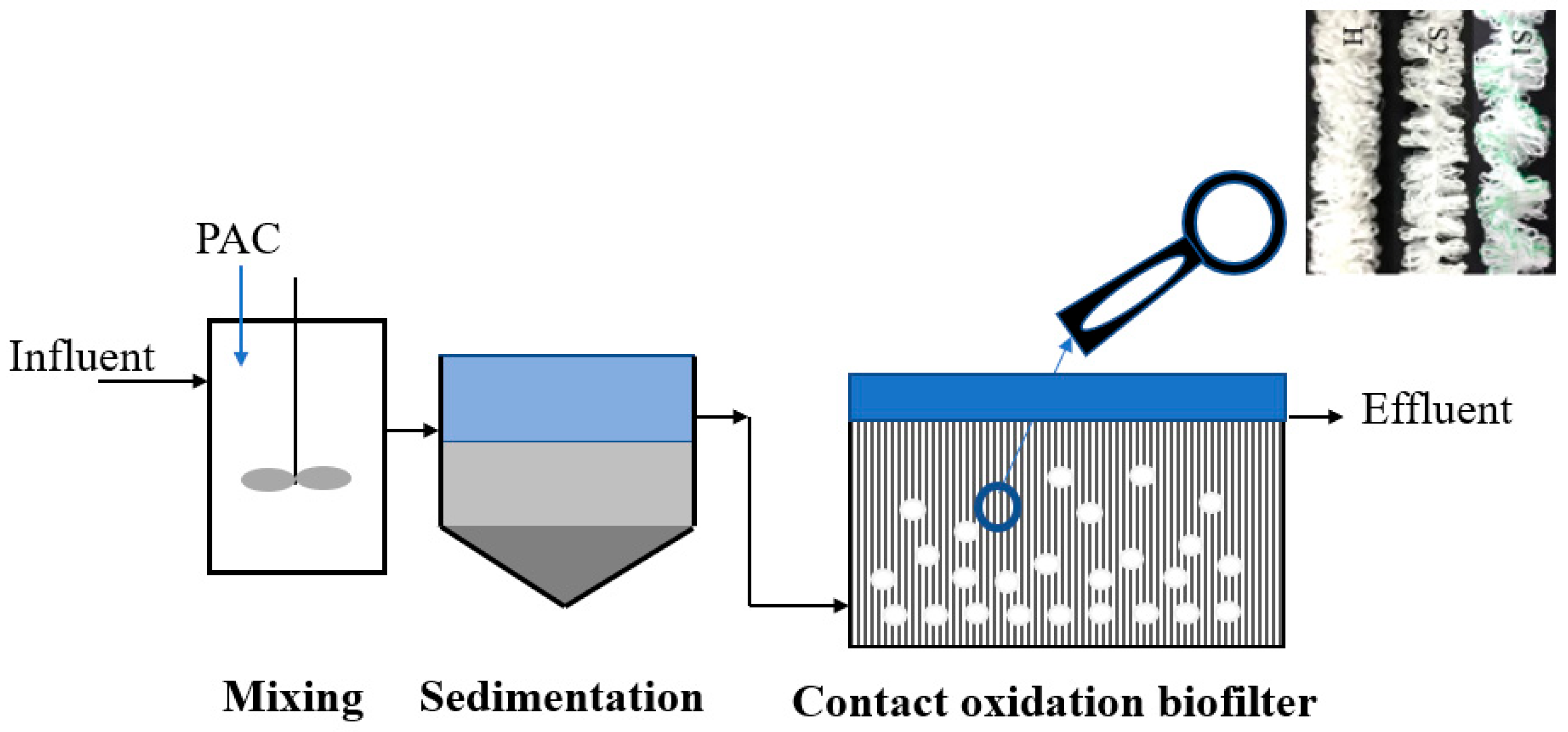
In this study, three different types of braided ribbon fiber fillers (S1, S2 and S3) (Dowin Environment, Zhengzhou, China) were employed for experiments. The physical pictures of the three types of fillers are shown in Figure 1. S1 and S2 were both composed of fiberglass and polyethylene fiber, which were soft fibers. S1 was three-stranded while S2 was two-stranded. S3 was composed of aramid fiber, which was rigid fiber. The biofilm carriers were filled into the contact oxidation biofilter to a volume of 60%. The specific surface areas of S1, S2, and S3 were 1000–5000, 1000–5000, and 2000–5000 m2/m3, respectively.

2.2. Treatment Process and Reactor System

2.2.1. The Treatment Process

The contact oxidation biofilter requires a relatively low suspended solids (SS) concentration in the influent to avoid clogging, prolong its operational cycle, and maintain stable treatment performance. Therefore, the treatment process adopted in this study mainly consisted of three stages of coagulation, sedimentation and contact oxidation (Figure 2). In the first stage, the raw wastewater was mixed with PAC to generate flocs, which were then removed through sedimentation. The clarified supernatant from the sedimentation tank subsequently entered the contact oxidation biofilter for further treatment. Samples were collected throughout the processes to monitor the pollutants removal performance.

2.2.2. The Reactor System

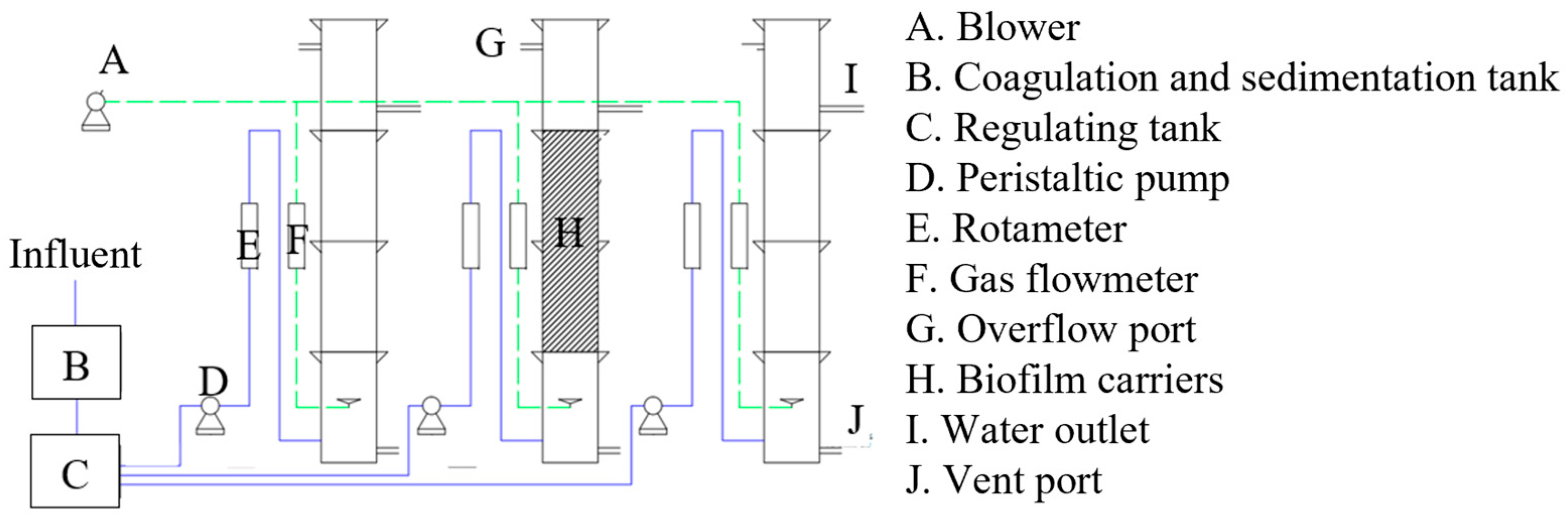
The reactor system used for biofilm carrier selection is shown in Figure 3. Three identical contact oxidation reactors were employed for parallel comparison, each with a total height of 2 m, constructed by assembling four modules measuring 0.5 m in height and 0.25 m in width. The volume of the regulating tank was 2000 L.
The reactors operated in an up-flow mode. After coagulation and sedimentation, the influent was collected in the regulating tank, where sodium carbonate (Na2CO3) (Kermel Reagent Co. Ltd, Tianjin, China) was added for pH adjustment. The pretreated wastewater was then pumped into the contact oxidation reactors using peristaltic pumps to undergo aerobic biochemical treatment. A blower was utilized for aeration, and the airflow was regulated using gas flowmeters.
After identifying the optimal biofilm carrier based on initial performance, all subsequent optimization experiments were conducted in the same reactor containing the selected biofilm carrier. In this stage, different operational parameters (e.g., air-to-water ratio, HRT) were tested sequentially within the same reactor by adjusting conditions over time, allowing for performance comparisons under controlled and consistent conditions.

2.3. Experimental Methods

2.3.1. The Selection of PAC Dosages

The dosage of PAC was optimized for the coagulation and sedimentation processes. The raw wastewater was divided into eight 1 L beakers, each containing 1 L of water. The PAC (10 g/L PAC solution) was added to the beakers to achieve a final PAC dosage of 30 mg/L, 30 mg/L, 40 mg/L, 40 mg/L, 50 mg/L, 50 mg/L, 60 mg/L, and 60 mg/L. The solution was rapidly stirred at 200 r/min for 3 min, then the speed was reduced to 50 r/min and stirred for another 5 min. After stirring, the mixture was allowed to stand for 5 min, and the supernatant was sampled to determine the SS and COD concentrations of the wastewater.

2.3.2. The Selection of Biofilm Carriers

This experiment mainly examines the influence of three different types of braided ribbon fiber fillers on the pollutant removal effect during the biofilm formation start-up and continuous operation stages, in order to screen out the filler with the best treatment effect.
The experiment conducted membrane attachment start-up by the steps of inoculated sludge addition, intermittent aeration, and continuous-flow cultivation [20,21]. Firstly, the three types of biofilm carriers were thoroughly rinsed with tap water and then placed into the contact oxidation reactors, which were subsequently filled with raw wastewater, maintaining an air-to-water ratio of 10:1. Then, sludge was inoculated into each of the three reactors using a peristaltic pump. After inoculation, the systems were maintained under aeration conditions for 6 days, during which the water was replaced daily. During this period, samples were taken regularly to determine COD and NH3-N concentrations. After 6 days, a low-flow continuous water supply is used, gradually increasing the inflow under an air-to-water ratio of 10:1 until the hydraulic retention time (HRT) reached 4 h. Samples from both the Influent and effluent were collected daily at fixed times to determine COD and NH4+-N concentrations.
In this study, three samples were taken in each sampling for analysis. The average values are presented in the results. The ANOVA was performed, and the p-value of each analysis was smaller than 0.05.

3. Results and Discussion

3.1. Coagulation and Sedimentation

The raw river water has a high SS concentration, which can cause biofilter clogging. To extend the filter operation cycles and ensure the operational effectiveness of the contact oxidation biofilter, the raw wastewater must be properly treated. The removal effects of coagulation-sedimentation pretreatment on SS and COD were explored.

3.1.1. The PAC Dosage Optimization

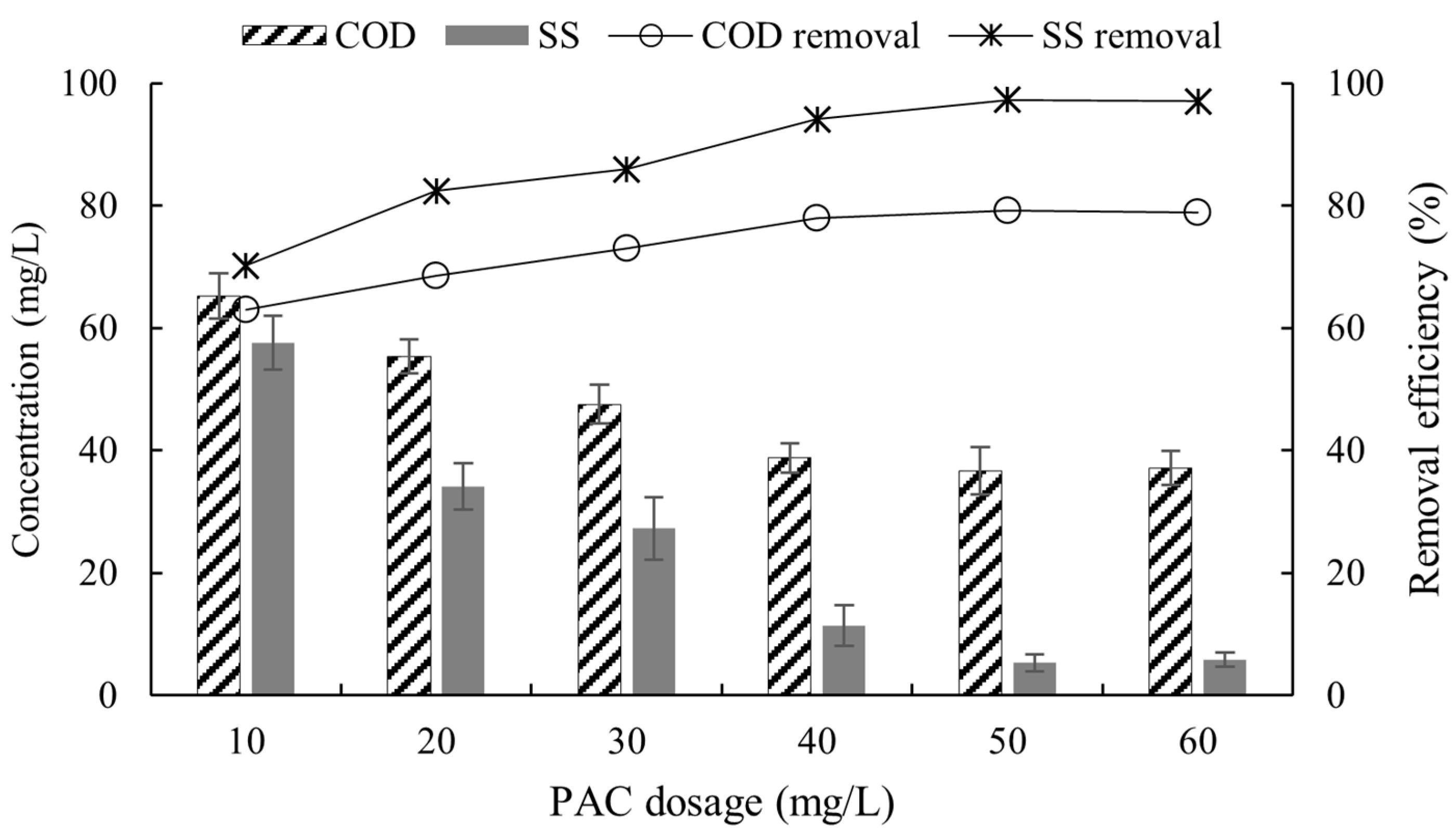
The PAC has been added to the river water at a concentration of 10–60 mg/L. The initial concentrations of COD and SS were 175.7 mg/L and 193.2 mg/L, respectively. The supernatant was collected after settling for the determination of COD and SS. The results are presented in Figure 4.
As shown, coagulation–sedimentation process had a significant effect on COD and SS removal. With increasing PAC dosage, the concentrations of COD and SS in the supernatant decrease gradually. The COD concentration decreased from 175.7 mg/L to 36.6 mg/L with the PAC addition from 10 mg/L to 50 mg/L. The COD removal efficiency reached the maximum of 79.2%. Similarly, The SS concentration decreased from the initial 193.2 mg/L to 5.3 mg/L when the PAC dosage was 50 mg/L. The SS removal efficiency reached the maximum of 97.3%. Further increasing the PAC addition did not significantly impact the COD and SS removal. Therefore, the PAC dosage of 50 mg/L was selected as the optimal condition for coagulation–sedimentation conditioning and used in the subsequent study.

3.1.2. The Pollutant Removal in the Coagulation and Sedimentation

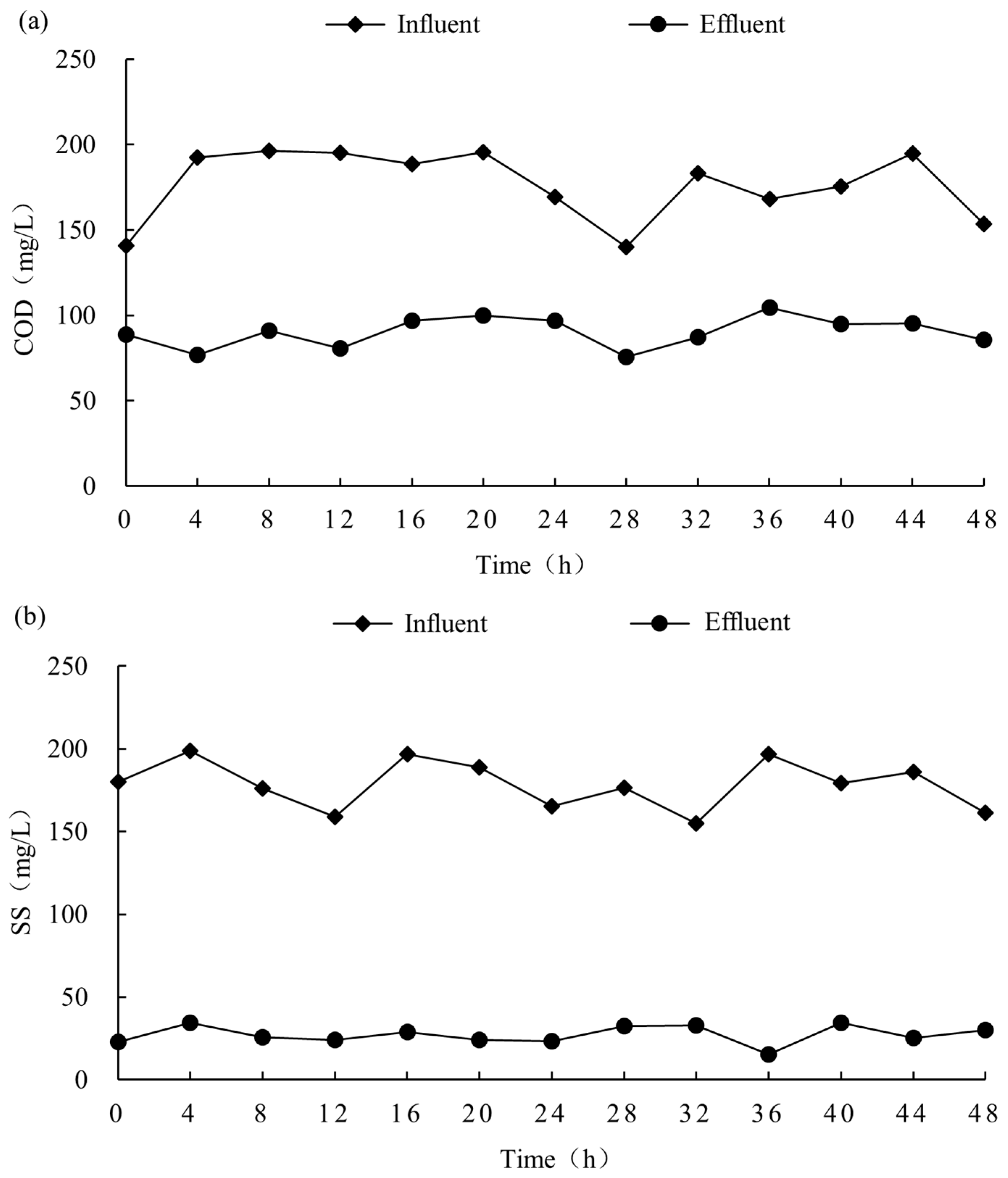
The optimized PAC dosage was subsequently applied in the continuous coagulation process (Figure 2). The samples collected from the effluent of the sedimentation tank were analyzed for COD and SS. As shown in Figure 5a, the coagulation and sedimentation system exhibited effective and stable COD removal at a PAC dosage of 50 mg/L.
During this period, the influent COD concentration fluctuated between approximately 140 and 200 mg/L, whereas the average effluent COD concentration remained around 90.3 mg/L, indicating stable system performance. A similar trend was observed for SS removal (Figure 5b). The coagulation–sedimentation process achieved efficient and stable SS removal, with an average effluent SS concentration of 27.2 mg/L. These results demonstrate that coagulation and sedimentation provided favorable influent conditions for the subsequent contact oxidation biofilter by stabilizing the influent COD and SS and reducing the treatment loading imposed on the downstream biological process.

3.2. Contact Oxidation Biofilter Startup

Biofilm carriers play a critical role in the performance of contact oxidation biofilters by providing attachment surfaces for microbial growth and biofilm development [22,23]. In this study, three different types of biofilm carriers were employed to conduct a comparative evaluation. Biofilms were allowed to develop on each carrier, and the corresponding biofilters were subsequently fed with the effluent from the sedimentation tank for further pollutant removal.

3.2.1. Biofilm Development

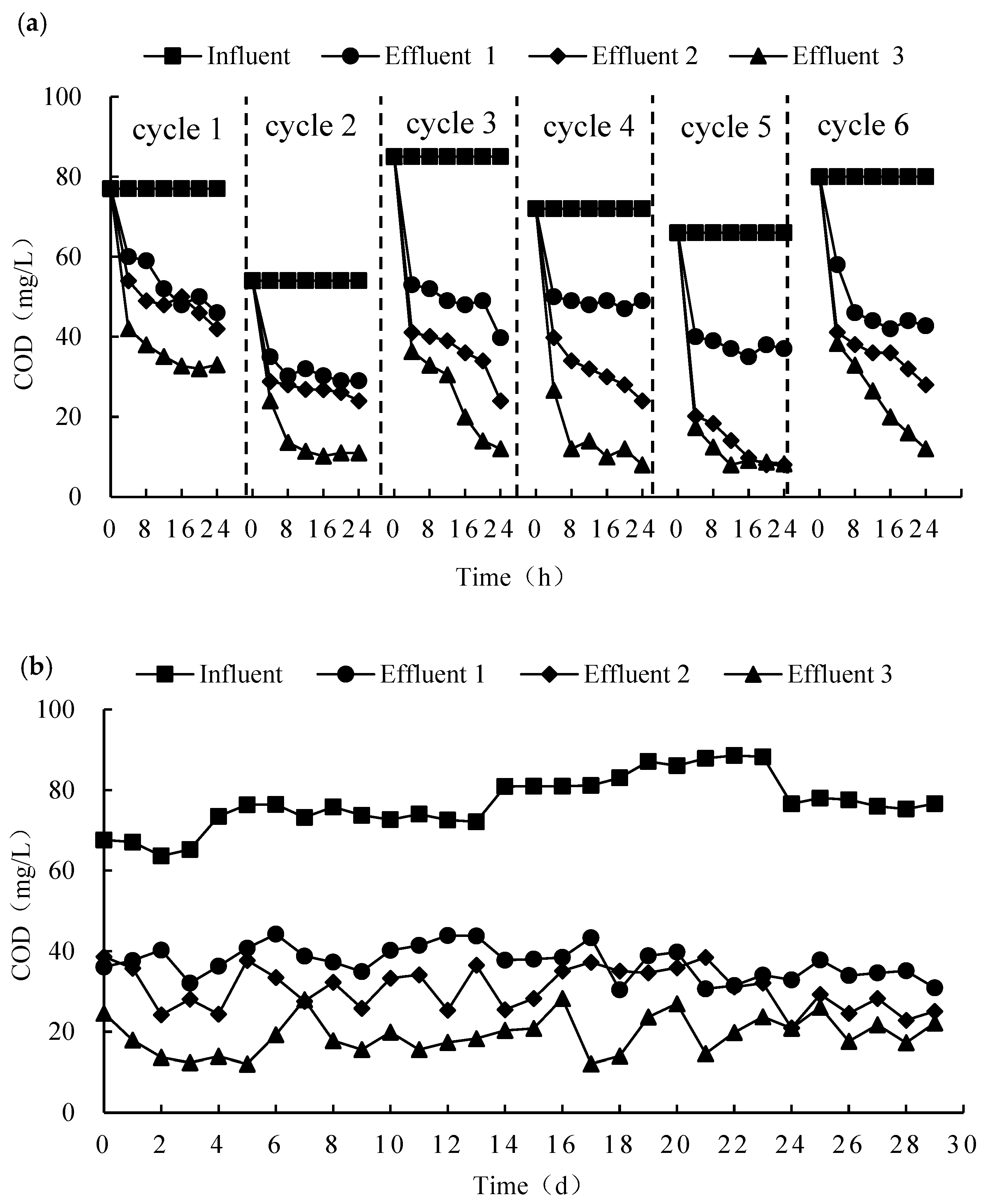
During the biofilm development period, pretreated river water was introduced to the contact oxidation biofilters packed with different biofilm carriers. Continuous aeration was provided throughout this stage, while no effluent discharged within each 24 h cycle. Under identical operating conditions, the COD concentrations in the three reactors was regularly monitored over six consecutive cycles (each cycle lasting 24 h). This stage was defined as the closed aeration biofilm formation period.
As shown in Figure 6a, under the identical experimental conditions, the COD removal efficiency of the three reactors followed the order: Reactor 3 > Reactor 2 > Reactor 1 throughout all cycles. Since the only difference among the three reactors was the type of biofilm carrier, with Reactors 1, 2, and 3 packed with carriers S1, S2, and S3, respectively, the observed performance differences can be attributed to the carrier properties. The superior performance of Reactor 3 suggests that aerobic heterotrophic microorganisms were more likely to attached to and grew on carrier S3. Carriers S1 and S2 were composed of relatively soft fibrous materials. They may undergo deformation and compaction during operation, thereby reducing effective surface area and limiting microbial attachment. In contrast, the rigid structure of carrier S3 was less prone to deformation, providing more stable attachment sites for biofilm development and resulting in a higher microbial attachment efficiency. In addition, biofilm formation progressed rapidly, as evidenced by the stabilization of COD removal after the third cycle. It indicated that a relatively mature biofilm has been established within six operational cycles.

3.2.2. Biofilter Stability

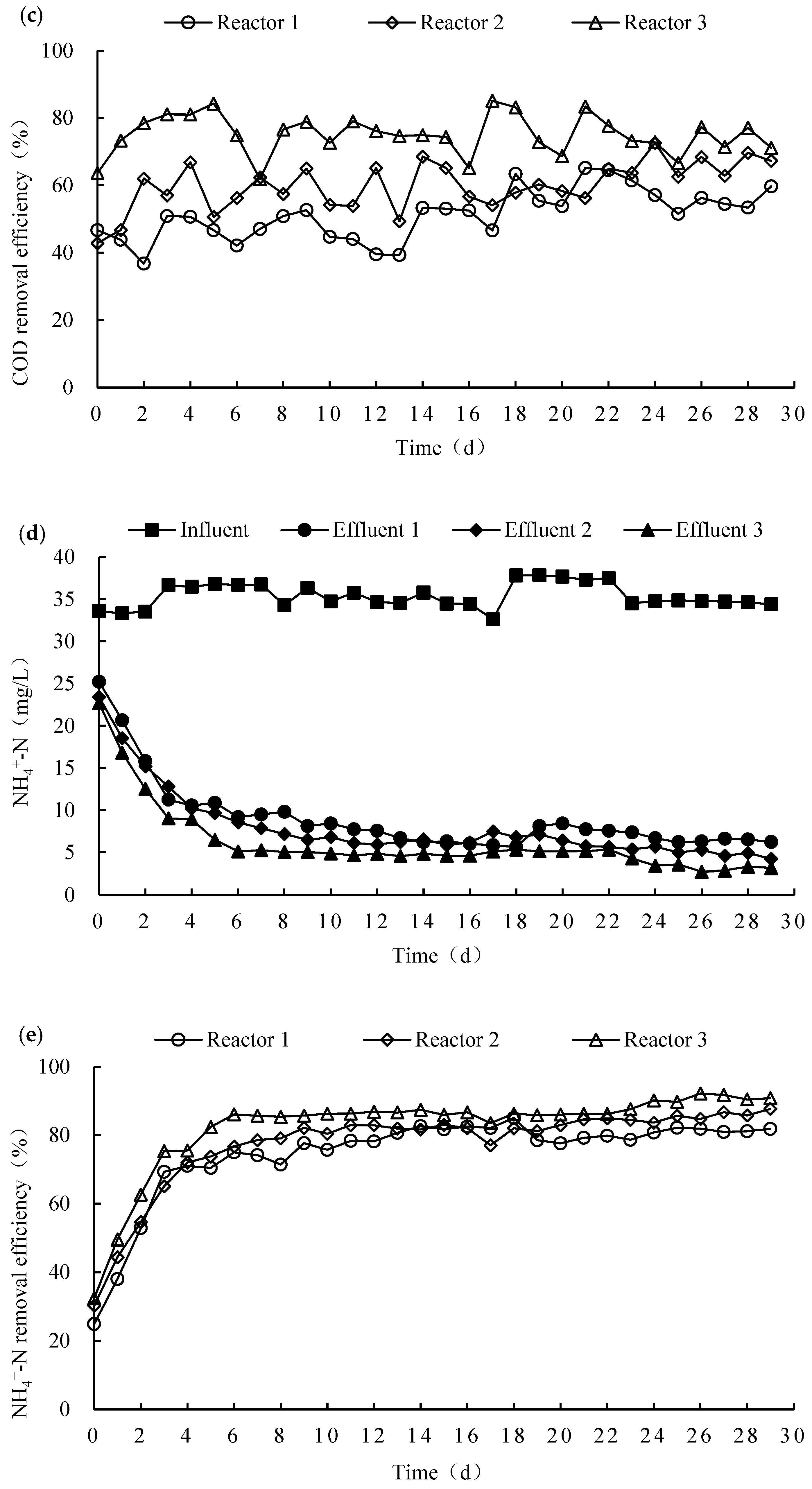
To evaluate the long-term treatment capacity of each reactor, COD removal performance was monitored over a continuous operation period of 30 days. The hydraulic retention time (HRT) was set at 4 h, and the COD concentrations of both influent and effluent were measured, as shown in Figure 6b. During the continuous operation period, stable effluent COD concentrations were observed for all three reactors, with average values of approximately 40 mg/L for Reactor 1, 30 mg/L for Reactor 2, and 15 mg/L for Reactor 3.
As shown in Figure 6c, Reactor 3 consistently exhibited superior COD removal performance compared to Reactors 1 and 2. Reactor 3 achieved an average removal efficiency of 75.0%, whereas the corresponding values for Reactors 1 and 2 were 51.2% and 60.0%, respectively. The superior COD removal performance observed in Reactor 3 can be attributed to the rapid and effective establishment of biomass on its biofilm carrier, which subsequently supported stable and sustained COD removal during long-term operation.
In addition, NH4+-N removal performance was also investigated. As shown in Figure 6d, the effluent ammonia concentrations of all three reactors gradually stabilized after approximately 7 days of continuous operation. Among the three systems, Reactor 3 consistently exhibited superior NH4+-N removal performance, with the effluent NH4+-N concentration maintained at around 5 mg/L. After 7 days of operation, the average NH4+-N removal efficiency of Reactor 3 reached 87.4%, whereas the corresponding values of Reactors 1 and 2 were 79.7% and 82.9%, respectively (Figure 6e). During the initial stage of continuous operation, relatively low NH4+-N removal efficiencies were observed in all reactors. This performance can be attributed to the growth characteristics of nitrifying bacteria, which are autotrophic microorganisms with significantly lower growth rates than aerobic heterotrophic bacteria during biofilm development [24,25]. Therefore, the system did not exhibit significant NH4+-N nitrogen removal at the initial stage. With extended operation time, nitrifying bacteria gradually accumulated and multiplied on the biofilm carriers, leading to a corresponding increase in ammonia removal efficiency and the establishment of stable nitrification performance.
Based on the comparative evaluation of pollutants removal performance, Reactor 3 packed with biofilm carrier S3 demonstrated the most favorable treatment efficiency. Accordingly, Reactor 3 was selected for subsequent studies.

3.3. Contact Oxidation Biofilter Optimization

The contact oxidation biofilter has exhibited considerable potential for COD and NH4+-N removal. However, the treatment performance is strongly dependent on operational conditions. The air-to-water ratio and HRT are recognized as two of the most critical parameters influencing the performance of contact oxidation biofilters [26,27,28]. Therefore, to further improve pollutant removal efficiency, this study systematically investigates the effects of air-to-water ratio and HRT on system performance, aiming to identify the optimal conditions for stable and efficient operation.

3.3.1. Impact of Air–Water Ratio

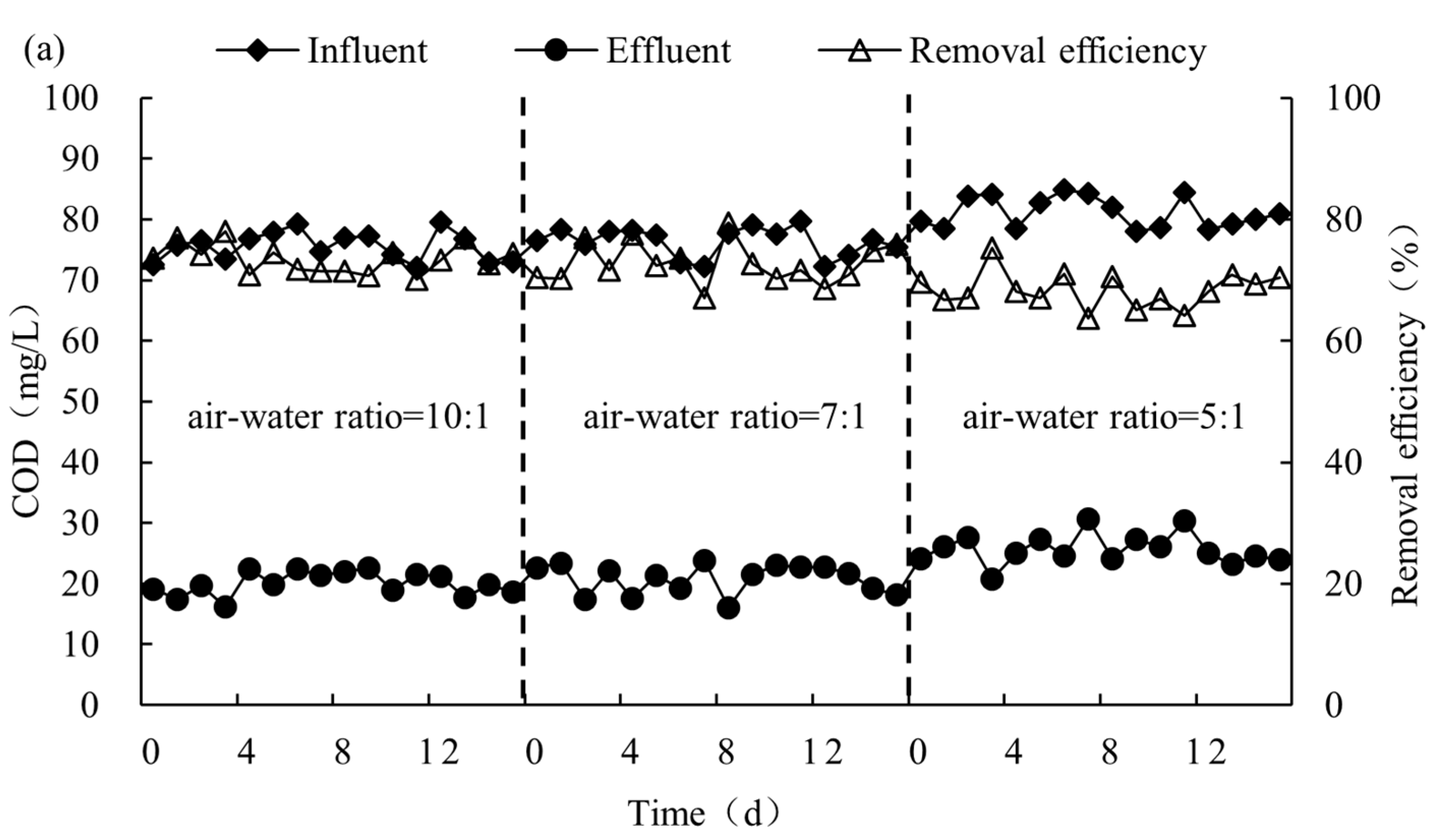
The contact oxidation technology mainly relies on aerobic microorganisms to degrade organic pollutants in wastewater [29,30]. During operation, it is necessary to provide sufficient DO to support microbial metabolic activity and enable effective pollutants degradation. In contact oxidation biofilters, aeration is typically provided by blowers, and the aeration intensity is commonly expressed as the air-to-water ratio (volume ratio). The air-to-water ratio affects the hydrodynamic conditions and the concentration of DO in the reactor. An appropriate increase in the air-to-water ratio can enhance the turbulence of the mixed liquid and improve the dissolved oxygen concentration in the system, thereby improving oxygen mass transfer and stimulating biofilm activity. As a result, biological oxidation reactions can be accelerated, leading to enhanced pollutant removal performance [31,32]. Many studies [33,34] have shown that increasing the air–water ratio has limited effect on COD removal but a significant impact on NH4+-N removal. At the HRT of 4 h, the air-to-water ratio was sequentially adjusted from 10:1 to 7:1, and then to 5:1. The effects of the air-water ratio on the removal of various pollutants are presented in Figure 7.
With the decrease in the air-to-water ratio from 10:1 to 5:1, the COD removal performance did not change significantly. Under air–water ratios of 10:1, 7:1, and 5:1, the average effluent COD concentrations were 20.1 mg/L, 20.8 mg/L and 25.7 mg/L, respectively (Figure 7a). These results indicate that organic matter removal in the contact oxidation system required a low level of aeration, and that an air-to-water ratio of 5:1 was sufficient to maintain adequate DO to support microbial activity.
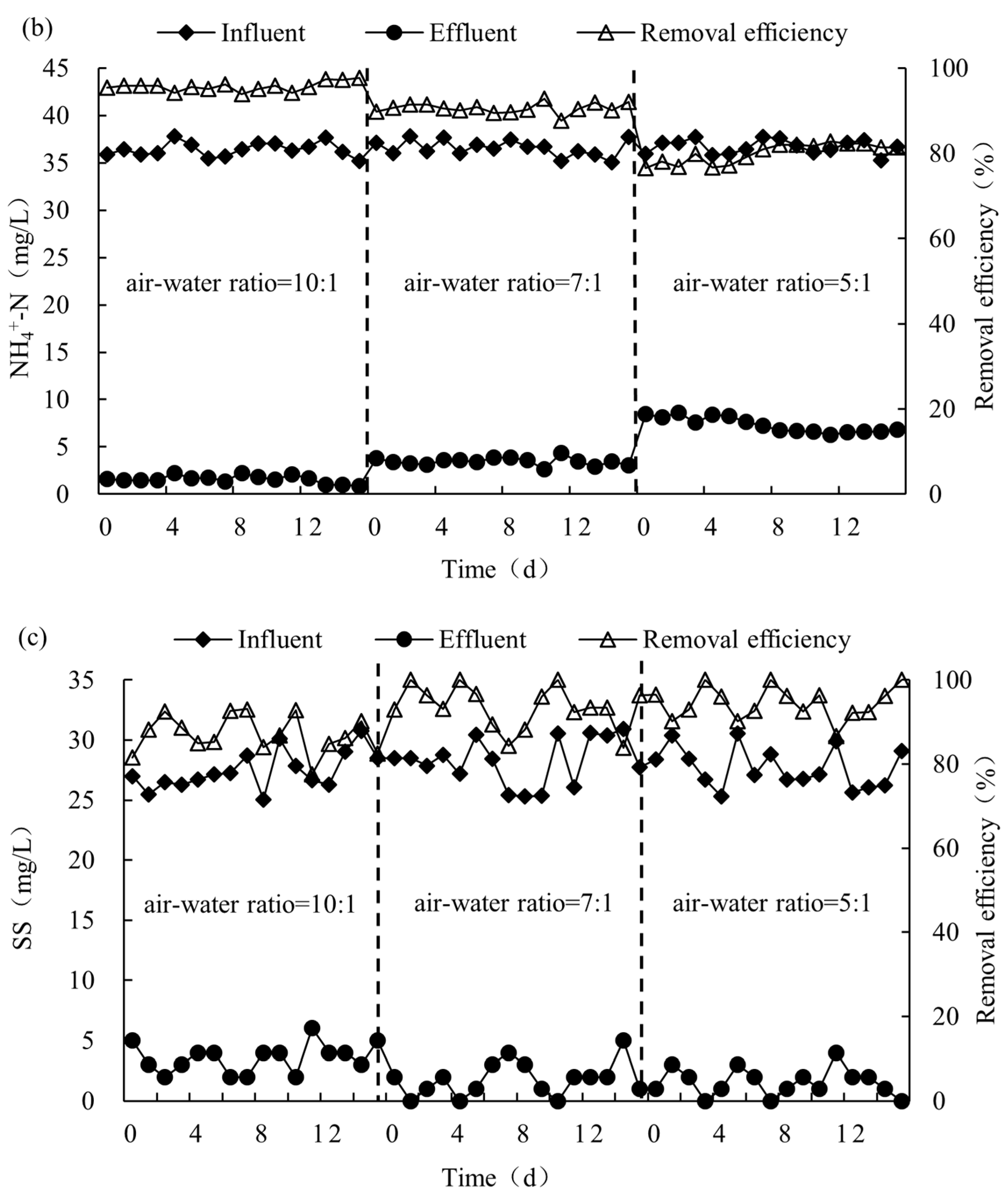
In contrast to COD removal, NH4+-N removal was strongly influenced by the air-to-water ratio, as shown in Figure 7b. As the air–water ratio decreased, the effluent NH4+-N concentration gradually increased, and the removal efficiencies of NH4+-N correspondingly decreased. Under air-to-water ratios of 10:1, 7:1 and 5:1, the average effluent NH4+-N concentrations were 1.6, 3.5 and 6.6 mg/L, corresponding to average removal efficiencies of 95.7%, 90.4% and 82.0%, respectively. When the air–water ratio was reduced, the DO concentration in the reactor decreased, and a substantial fraction of the DO was preferentially consumed by heterotrophic bacteria. As a result, nitrifying bacteria were at a competitive disadvantage for oxygen, leading to inhibited growth and reduced NH4+-N nitrogen removal efficiency.
Variation in the air–water ratio from 10:1 to 5:1 had a slight impact on SS removal (Figure 7c). The system consistently exhibited excellent SS removal performance. Under air-to-water ratios of 10:1, 7:1, and 5:1, the average effluent SS concentrations were 3.6, 1.8 and 1.6 mg/L, corresponding to average removal efficiencies of 986.8%, 93.0% and 95.4%, respectively. Following coagulation–sedimentation pretreatment, the influent SS concentration was already reduced to a relatively low level. When combined with the subsequent contact oxidation biofilter, the integrated process maintained highly effective and stable SS removal.
Considering both pollutants removal efficiency and operational energy consumption, an air-to-water ratio of 7:1 was identified as the optimal operating condition. Under this condition, the average effluent COD, NH4+-N, and SS concentrations were 20.8 mg/L, 3.5 mg/L and 1.8 mg/L, corresponding to average removal efficiencies of 72.8%, 90.4%, and 93.0%, respectively.

3.3.2. Impact of HRT

In contact oxidation biofilters, biological reactions mainly occur on the biofilm attached to the fillers. Effective pollutant degradation requires sufficient contact time between the wastewater and the biofilm. In general, increasing the HRT enhances treatment efficiency by prolonging the interaction between pollutants and microorganisms. However, HRT cannot be extended indefinitely in practical operation. Excessively long HRT may accelerate biofilm aging and consequently reduce treatment performance. Moreover, in practical engineering applications, longer HRT necessitate larger reactor volume and increased land requirement. Conversely, excessively short HRT results in insufficient contact time between pollutants and microorganisms, limiting biodegradation efficiency. In addition, strong hydraulic scouring associated with short HRT may lead to biofilm detachment, further deteriorating effluent quality. Therefore, the optimization of HRT is essential to achieve stable and efficient operation of the contact oxidation biofilter system.
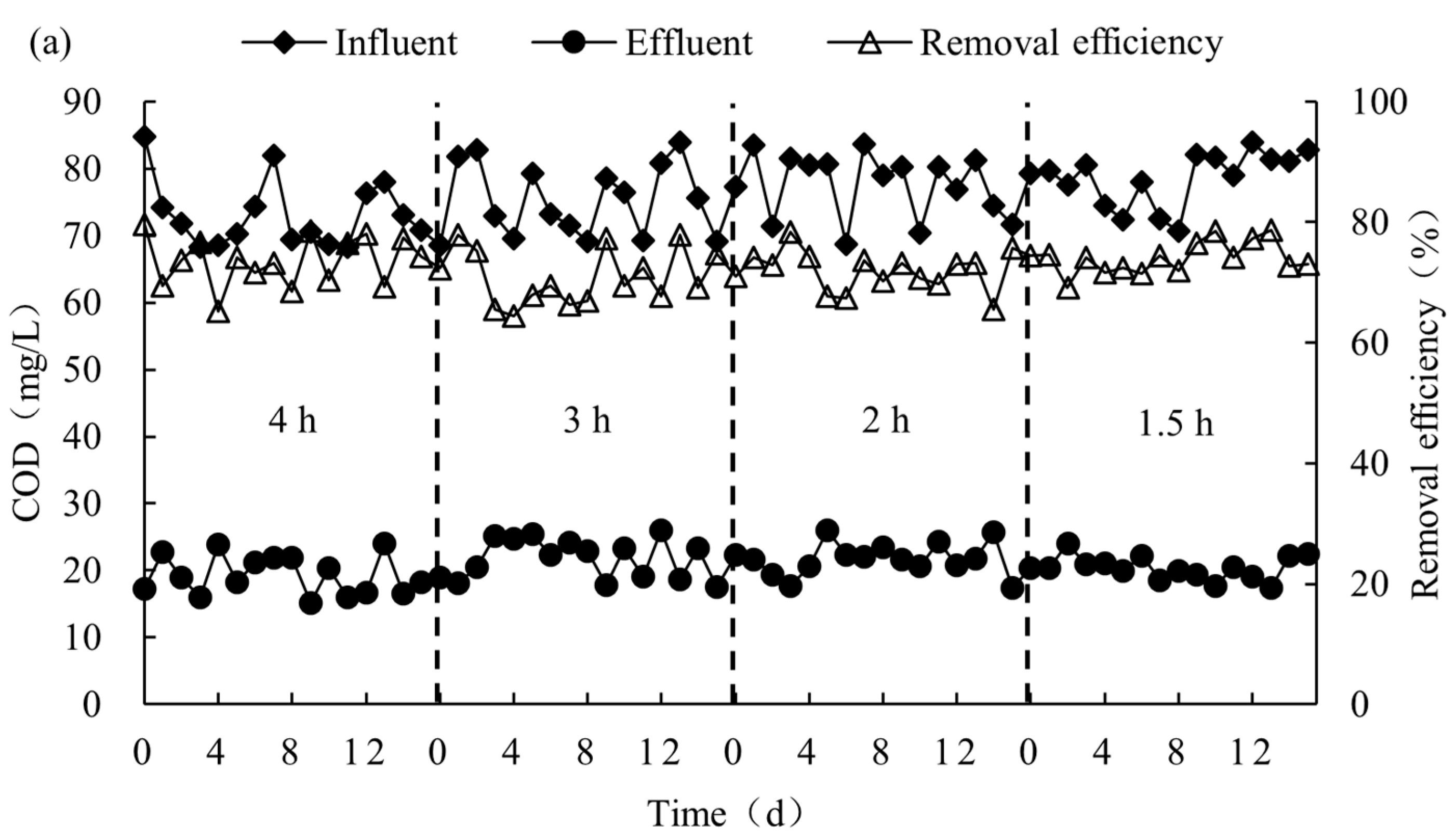
At an air–water ratio of 7:1, pollutant removal efficiencies were evaluated by gradually reducing the HRT to assess its impact on the system. As the HRT decreased from 4 h to 1.5 h, COD removal performance remained relatively stable, with effluent COD concentrations consistently below 30 mg/L and removal efficiencies maintained at approximately 70% (Figure 8a). This stability can be attributed to the relatively low influent COD concentration following coagulation–sedimentation pretreatment (generally below 100 mg/L), which allowed effective COD removal to be achieved even at shorter contact times.
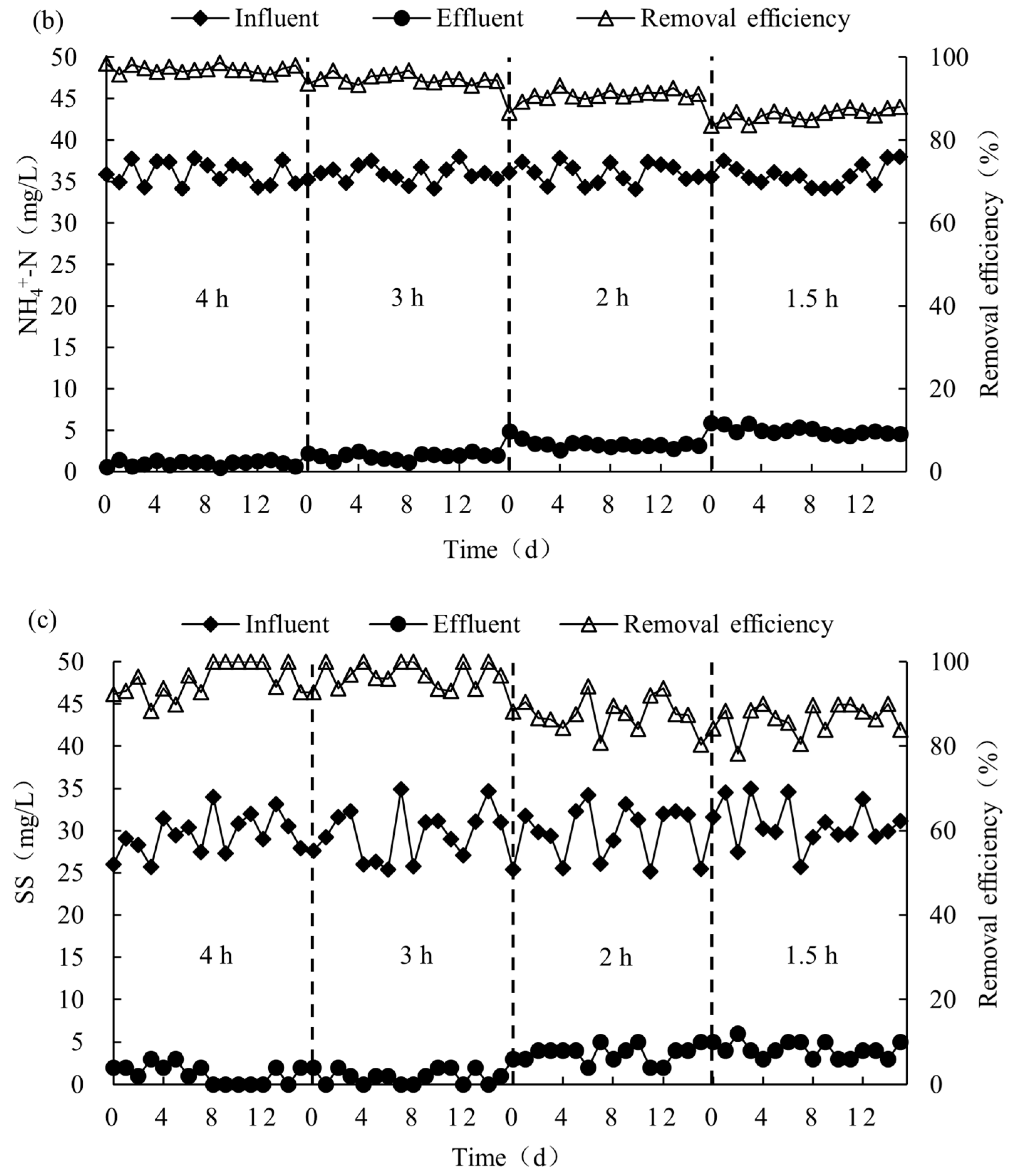
As the HRT was shortened, the effluent NH4+-N concentration in the effluent increased gradually, and the NH4+-N removal efficiencies decreased accordingly (Figure 8b). Under the conditions where the influent NH4+-N concentration was about 35 mg/L and the HRTs were 4, 3, 2 and 1.5 h, the average effluent NH4+-N concentrations were 1.0, 1.9, 3.4 and 5.0 mg/L, corresponding to average removal efficiencies of 97.1%, 94.6%, 90.6% and 85.5%, respectively. The decline in NH4+-N removal performance at shorter HRTs can be attributed to multiple factors. Shortening the HRT increased hydraulic and airflow shear forces as well as the organic load, promoting rapid growth of aerobic heterotrophic bacteria. In contrast, nitrifying bacteria were at a competitive disadvantage. Moreover, shorter HRTs reduce the contact time between NH4+-N in the wastewater and nitrifying bacteria attached to the biofilm, allowing some NH4+-N to escape before nitrification was complete.
As the HRT was reduced from 4 h to 1.5 h, a slight increase in effluent SS concentration was observed. However, the overall SS removal performance remained favorable, with effluent SS concentrations consistently below 10 mg/L and removal efficiencies con above 80% (Figure 8c). The effluent quality of SS could consistently meet the Class A discharge standard [35]. The observed increase in effluent SS at shorter HRTs can be attributed to enhanced hydraulic and airflow shear forces, which intensify the scouring of biofilms attached to the carriers. Some aging biofilm may be washed out with the water, leading to slightly elevated SS concentrations in the effluent. Nevertheless, the influent SS concentration after coagulation and sedimentation was relatively low, providing favorable conditions for the stable operation of the contact oxidation biofilter. Combined with the retention capacity of the contact oxidation biofilter, the system can still maintain good effluent quality even at a short HRT.
The comprehensive evaluation considering pollutant removal performance and treated water volume indicates that an HRT of 2 h is considered the optimal operating condition for the system. Under this condition, the effluent concentrations of COD, SS and NH4+-N were consistently below 30, 5 and 5 mg/L, respectively, enabling stable compliance with the Class A discharge standard.

3.4. Tolerance on Pollutant Loading of Contact Oxidation Biofilter

Pollutant concentration load is a crucial indicator influencing the performance of contact oxidation biofilters [36]. It is essential to investigate the effects of variations in influent pollutants concentrations for evaluating the system’s resistance to shock loading and adaptability under changing operating conditions. In this study, the effects of changes in influent COD and NH4+-N concentrations on the pollutant removal performance were investigated.

3.4.1. Tolerance on COD Concentration Fluctuation

Organic load is one of the factors affecting the nitrification performance of contact oxidation systems [37]. In this study, with an HRT of 2 h and an air-to-water ratio of 7:1, the influent COD concentration was systematically varied. The effluent COD and NH4+-N concentrations were monitored regularly to evaluate the system response to changes in organic loading.
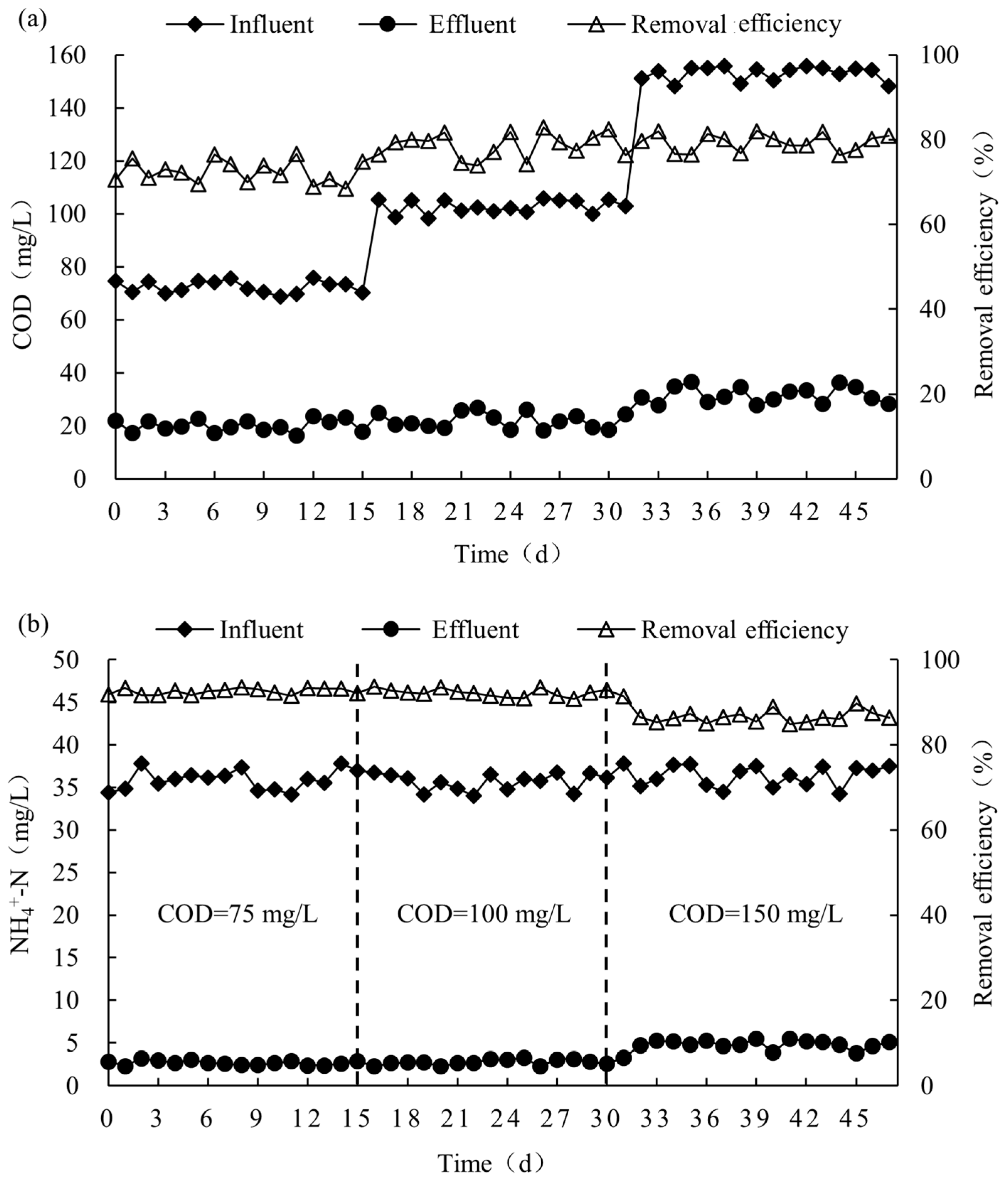
As shown in Figure 9a, under the three influent COD concentration conditions, the COD removal efficiency did not vary significantly. It indicates that the contact oxidation biofilter system had a strong resistance to organic load shocks and maintained stable COD removal performance. When the influent COD concentrations were approximately 75, 100, and 150 mg/L, the system consistently achieved effective COD removal, with average effluent COD concentrations of 20.1, 22.0, and 31.6 mg/L, respectively. The corresponding average COD removal efficiencies were 73.1%, 77.7%, and 79.3%. This stable performance can be attributed to the rapid growth of aerobic heterotrophic microorganisms, which have short generation times and are capable of quickly adapting to increased organic substrate. The increased influent COD provided sufficient carbon sources to support microbial growth and metabolic activity, enabling effective COD degradation. Even at an influent COD concentration of 150 mg/L, the reactor still exhibits good removal performance.
As shown in Figure 9b, excessively high organic matter concentrations adversely affected the nitrification performance of the system. Under conditions where the influent NH4+-N concentration was 35 mg/L and the COD concentration was below 100 mg/L, the biofilter exhibited stable NH4+-N removal performance, with an average effluent NH4+-N concentration of 2.7 mg/L and a removal efficiency of approximately 92.2%. However, when the influent COD concentration was adjusted to 150 mg/L, the NH4+-N removal efficiency of the contact oxidation system showed a significant decreasing trend. After stabilization, the average effluent NH4+-N concentration increased to 4.9 mg/L, and the corresponding average removal efficiency decreased to 86.4%. This could be due to that the increase in organic matter concentration in the influent provided sufficient substrate for aerobic heterotrophic microorganisms. Nitrifying bacteria were placed at a competitive disadvantage for oxygen and space within the biofilm, resulting in inhibited nitrifier activity and reduced overall nitrification capacity of the reactor.

3.4.2. Tolerance on NH4+-N Concentration Fluctuation

Under the conditions of an HRT of 2 h and an air–water ratio of 7:1, the influent NH4+-N concentration was systematically varied from 30 mg/L to 40 mg/L, and then 50 mg/L. The effluent COD and NH4+-N concentrations were regularly measured.
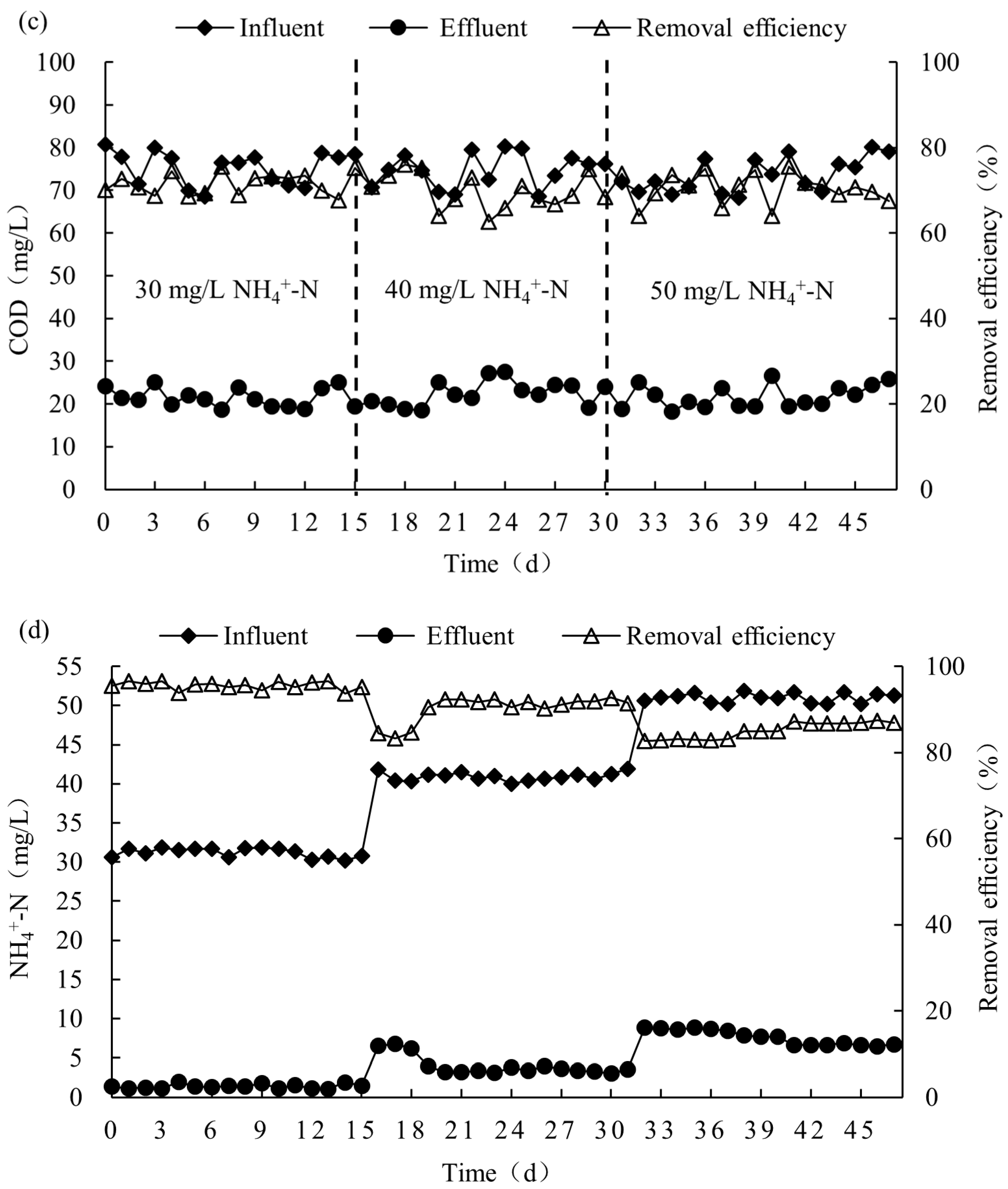
As shown in Figure 9c, variations in influent NH4+-N concentration had little effect on the COD removal performance, indicating that the contact oxidation biofilter exhibited strong resistance to NH4+-N shock with respect to organic matter removal. Under different influent NH4+-N concentrations, the COD removal remained relatively stable, with average effluent COD concentrations of 21.5, 22.4 and 21.6 mg/L and corresponding average removal efficiencies of 71.1%, 70.7%, and 71.3%, respectively. This performance can be attributed to the growth characteristics of aerobic heterotrophic microorganisms, which possess short generation times and substantially higher growth rates than nitrifying bacteria. Consequently, increases in influent NH4+-N concentration had limited influence on the growth environment and metabolic activity of heterotrophic microorganisms responsible for COD degradation [38].
As shown in Figure 9d, the NH4+-N removal efficiency decreased with increasing influent NH4+-N concentration. At an influent NH4+-N concentration of 30 mg/L, the average effluent NH4+-N concentration in the biofilter was 1.4 mg/L, with an average removal efficiency of 95.6%. When the influent NH4+-N concentration was increased from 30 mg/L to 40 mg/L, the effluent NH4+-N concentration increased significantly. After 3 days of operation, the performance gradually stabilized, with an average effluent NH4+-N concentration of 4.0 mg/L and an average removal efficiency of 90.4%. With a further increase in influent NH4+-N concentration to 50 mg/L, the NH4+-N removal performance of the system deteriorated more pronouncedly. Under this condition, the average effluent NH4+-N concentration increased to 7.5 mg/L, and the corresponding removal efficiency was 85.4%.
Overall, under the optimal operating conditions, namely, an air-to-water ratio of 7:1 and an HRT of 2 h, the contact oxidation biofilter system demonstrated high robustness against influent shock loading. Even at COD and NH4+-N concentrations of approximately 150 mg/L and 40 mg/L, respectively, the system maintained stable operation and consistently achieved effluent quality compliant with the Class A discharge standard.

4. Conclusions

The proposed coagulation–sedimentation–contact oxidation biofilter process demonstrated strong potential for the treatment of malodorous blackwater. Served as an effective pretreatment step, the coagulation–sedimentation unit significantly reduced organic loading and stabilized influent conditions at a PAC dosage of 50 mg/L. The contact oxidation biofilter packed with rigid aramid fiber exhibited excellent and stable removal performance for COD and NH4+-N. Under the optimal operating conditions, including a PAC dosage of 50 mg/L, an air-to-water ratio of 7:1, and a HRT of 2 h, the combined process consistently achieved effluent COD, SS, and NH4+-N concentrations below 30, 5 and 5 mg/L, respectively. Moreover, the system demonstrated high robustness against influent shock loading. While complying with the Class A discharge standard, the system operating under optimal conditions was able to tolerate influent COD and NH4+-N concentrations of approximately 150 mg/L and 40 mg/L, respectively. Overall, the proposed process offers a practical and reliable solution for malodorous blackwater management under realistic operating conditions.

Author Contributions

Conceptualization, P.K., J.P. and X.Z.; methodology, H.J. and P.K.; validation, Y.S., P.K. and H.J.; formal analysis, H.J. and J.P.; investigation, Y.S.; resources, J.P. and X.Z.; data curation, Y.S.; writing—original draft preparation, P.K. and X.Z.; writing—review and editing, J.P. and X.Z.; supervision, J.P. All authors have read and agreed to the published version of the manuscript.

Funding

This research received no external funding.

Data Availability Statement

The original contributions presented in this study are included in the article. Further inquiries can be directed to the corresponding author.

Conflicts of Interest

Author Ping Kuang was employed by the company Shenzhen Accurate Testing Co., Ltd., China, and the Shenzhen Zhonghong Juhua Environmental Protection Technology Co., Ltd., China. Author Juan Peng was employed by the company Shenzhen Accurate Testing Co., Ltd. and Shenzhen Environmental Technology Group Co., Ltd., China. The remaining authors declare that the research was conducted in the absence of any commercial or financial relationships that could be construed as potential conflicts of interest.

References

  1. Jing, Z.M.; Ye, F.J.; Liu, X.L.; Gao, H.J. A critical review of microbial profiles in black and odorous waters. Environ. Res. 2025, 270, 120972. [Google Scholar] [CrossRef]
  2. Liu, L.X.; Li, N.; Wang, H. Promoting the ecological restoration of black and odorous water by Fe/C internal electrolysis. Desalination Water Treat. 2024, 319, 100423. [Google Scholar] [CrossRef]
  3. Chen, M.; Liu, W.; Lu, D.; Chen, H.; Ye, C. Progress of China’s new-type urbanization construction since 2014: A preliminary assessment. Cities 2018, 78, 180–193. [Google Scholar] [CrossRef]
  4. Liu, M.; Ran, Y.; Peng, X.; Zhu, Z.; Liang, J.; Ai, H.; Li, H.; He, Q. Sustainable modulation of anaerobic malodorous black water: The interactive effect of oxygen-loaded porous material and submerged macrophyte. Water Res. 2019, 160, 70–80. [Google Scholar] [CrossRef] [PubMed]
  5. Chinese Ministry of Housing and Urban-Rural Development. Working Guidelines for the Treatment of Urban Malodorous Black Water; Chinese Ministry of Housing and Urban-Rural Development: Beijing, China, 2015. [Google Scholar]
  6. Chinese Ministry of Housing and Urban-Rural Development. Chinese Ministry of Ecology and Environment, Implementation Plan for Managing Urban Malodorous Black Water Bodies; Chinese Ministry of Housing and Urban-Rural Development: Beijing, China, 2018. [Google Scholar]
  7. Fang, T.; Bao, S.; Sima, X.; Jiang, H.; Zhu, W.; Tang, W. Study on the application of integrated eco-engineering in purifying eutrophic river waters. Ecol. Eng. 2016, 94, 320–328. [Google Scholar] [CrossRef]
  8. Lu, B.; Xu, Z.; Li, J.; Chai, X. Removal of water nutrients by different aquatic plant species: An alternative way to remediate polluted rural rivers. Ecol. Eng. 2018, 110, 18–26. [Google Scholar] [CrossRef]
  9. Martín, M.; Oliver, N.; Hernández-Crespo, C.; Gargallo, S.; Regidor, M.C. The use of free water surface constructed wetland to treat the eutrophicated waters of lake L’Albufera de Valencia (Spain). Ecol. Eng. 2013, 50, 52–61. [Google Scholar] [CrossRef]
  10. Zhu, L.; Li, X.; Zhang, C.; Duan, Z. Pollutants’ Release, Redistribution and Remediation of Black Smelly River Sediment Based on Re-Suspension and Deep Aeration of Sediment. Int. J. Environ. Res. Public Health 2017, 14, 374. [Google Scholar] [CrossRef] [PubMed]
  11. Zhang, X.; Qin, Q.; Zhai, X.; Guo, H.; Han, S.; Chang, J.-S.; Lee, D.-J. Black-odor water body remediations by ecological floating island coupled with Ecobase and Acinetobacter haemolyticus: Lab and pilot tests. J. Taiwan Inst. Chem. Eng. 2025, 172, 106081. [Google Scholar] [CrossRef]
  12. Cao, J.; Sun, Q.; Zhao, D.; Xu, M.; Shen, Q.; Wang, D.; Wang, Y.; Ding, S. A critical review of the appearance of black-odorous waterbodies in China and treatment methods. J. Hazard. Mater. 2020, 385, 121511. [Google Scholar] [CrossRef] [PubMed]
  13. Ren, J.; Jin, C.; Ding, N.; Zhao, Y.; Ji, J.; Zhang, Z. Sediment microbial fuel cell with biochar-modified cathode for remediation of black-odorous water sediments and analysis of microbial community. J. Environ. Chem. Eng. 2024, 12, 112848. [Google Scholar] [CrossRef]
  14. Xue, Y.; Zhang, Z.; Chen, P.; Zhu, M.; Pan, Y.; Chen, F. The enhancement of black-odor water remediation by an aeration–carbon synergistic sulfur–iron autotrophic denitrification MBBR process. J. Water Process Eng. 2025, 77, 108623. [Google Scholar] [CrossRef]
  15. Thant, K.J.W.; Anh-Vu, N.; Yun-Je, K.; Masumi, K.; Visvanathan, C. Performance of pilot-scale membrane aerated biofilm reactors integrated with anoxic nano-biotechnological reactor for domestic wastewater treatment. Chemosphere 2023, 319, 137927. [Google Scholar] [CrossRef]
  16. Li, X.L.; Bao, D.G.; Zhang, Y.Z.; Xu, W.Q.; Zhang, C.; Yang, H.Y.; Ru, Q.J.; Wang, Y.F.; Ma, H.; Zhu, E.R.; et al. Development and application of membrane aerated biofilm reactor (MABR)-A review. Water 2023, 15, 436. [Google Scholar] [CrossRef]
  17. Bai, Y.; Wang, S.; Zhussupbekova, A.; Shvets, I.V.; Lee, P.H.; Zhan, X.M. High-rate iron sulfide and sulfur-coupled autotrophic denitrification system: Nutrients removal performance and microbial characterization. Water Res. 2023, 231, 119619. [Google Scholar] [CrossRef] [PubMed]
  18. Zhang, F.; Chen, C.; Zhou, J.R.; Zhu, Q.; Chen, W.J.; Zhang, Q.Z.; Long, M.C.; Chen, C. Synergistically enhancing the remediation of low C/N slightly black-odorous water body using pretreated stalk in-situ loaded with sulfidated nano zero-valent iron. Sep. Purif. Technol. 2024, 351, 127976. [Google Scholar] [CrossRef]
  19. Zha, Y.Y.; Yu, C.X.; Huang, Y.; Zhu, J.; Zhou, G.M.; He, Y. Effects of sulfur on nitrogen transformation in malodorous rivers with different remediations. Appl. Microbiol. Biotechnol. 2025, 109, 235. [Google Scholar] [CrossRef]
  20. Li, Y.; Wang, J.; Zhao, Y.; Luan, Z. Research on magnetic seeding flocculation for arsenic removal by superconducting magnetic separation. Sep. Purif. Technol. 2010, 73, 264–270. [Google Scholar] [CrossRef]
  21. Zhao, Y.; Xi, B.; Li, Y.; Wang, M.; Zhu, Z.; Xia, X.; Zhang, L.-y.; Wang, L.; Luan, Z. Removal of phosphate from wastewater by using open gradient superconducting magnetic separation as pretreatment for high gradient superconducting magnetic separation. Sep. Purif. Technol. 2012, 86, 255–261. [Google Scholar] [CrossRef]
  22. Dai, M.; Huang, X.; Yang, X.; Dong, W.; Wang, H. A novel Fe/Cu/C micro-electrolytic composite filler for reclaimed water advanced treatment. J. Water Process Eng. 2025, 79, 109003. [Google Scholar] [CrossRef]
  23. Xu, L.; Su, J.; Liu, S.; Wei, H.; Zhang, P.; Qi, S. Biofilter constructed of iron–carbon, ceramsite and biochar to synchronous removal of nitrate and phosphate: Treatment optimization and analysis of microbial community difference. J. Water Process Eng. 2024, 68, 106309. [Google Scholar] [CrossRef]
  24. Li, J.; Wang, H.; Li, Z.; Xie, J.; Tsybekmitova, G.T.; Wang, Y. Membrane aeration accelerated nitrifying biofilm formation and optimized spatial niche differentiation in aerobic biofilm-based reactors for enhanced nitrogen removals. Chem. Eng. J. 2025, 506, 160297. [Google Scholar] [CrossRef]
  25. Shyamala, G.; Ravindran, G.; Karri, R.R.; Kumar, K.R.; Gokulan, R. Microbial ecology in aerobic granular sludge biofilm technology and its impact on treatment efficiency—A critical review. J. Water Process Eng. 2025, 76, 108112. [Google Scholar] [CrossRef]
  26. Ryu, H.-D.; Kim, J.-S.; Kang, M.-K.; Lee, S.-I. Enhanced nitrification at short hydraulic retention time using a 3-stage biological aerated filter system incorporating an organic polishing reactor. Sep. Purif. Technol. 2014, 136, 199–206. [Google Scholar] [CrossRef]
  27. Li, J.; Wang, Z.; Wang, Y. Integrating membrane aerated biofilm reactors with biological nitrogen removal processes: A new paradigm for achieving sustainable wastewater treatment plants. Chem. Eng. J. 2023, 475, 146025. [Google Scholar] [CrossRef]
  28. Qin, S.; Chen, W.; Lin, Y.; Tan, S.; Liang, S.; Liu, H.; Zhang, Q. Effect of hydraulic retention time on the nitrogen removal performance of pure biofilm rotating biological contactor system inoculated with heterotrophic nitrification-aerobic denitrification bacteria and its corresponding mechanism. Bioresour. Technol. 2025, 427, 132428. [Google Scholar] [CrossRef] [PubMed]
  29. Kong, F.; Fu, Q.; Wang, L.; Ren, H.-Y. Performance optimization and microbial community analysis of integrated anaerobic BES-aerobic MBBR system for azo dye treatment with related wastewater remediation. Chem. Eng. J. 2025, 521, 166589. [Google Scholar] [CrossRef]
  30. Gupta, A.D.; Jaiswal, V.K.; Chabhadiya, K.; Singh, R.S.; Gupta, M.K.; Singh, H. A critical review on the properties and applications of bulk micro and nanobubbles for the degradation of organic pollutants in wastewater treatment. Sci. Total Environ. 2025, 976, 179310. [Google Scholar] [CrossRef]
  31. Zhou, Q.; Wu, W.; Wang, J. Unveiling DO impact on electron transfer and S/Fe cycle for advanced N and P removal from actual secondary effluent by pilot-scale two-stage pyrite-based biofilters. J. Water Process Eng. 2025, 78, 108805. [Google Scholar] [CrossRef]
  32. Guo, K.; Li, D.; Ji, B.; Zhang, Z.; Teng, L.; Li, S.; Zeng, H.; Zhang, J. Potential role of the counter-current mainstream aerated biofilter in the competitive enrichment of copiotrophic ammonia-oxidizing archaea at low air-water ratios. Chem. Eng. J. 2025, 519, 165483. [Google Scholar] [CrossRef]
  33. Timmer, M.J.; Vaz, M.I.; De Paepe, J.; De Corte, I.J.; Perdigão, M.E.; Straathof, A.J.J.; Van Winckel, T.; Vlaeminck, S.E. Combined membrane aeration and filtration for energy- and space-efficient COD removal in water reuse. Water Res. X 2025, 27, 100344. [Google Scholar] [CrossRef]
  34. Gao, Y.; Zeng, D.; Liu, C.; Huang, X. Simultaneous nitrogen and phosphorus removal in water supply sludge biofilter: Focus on the impact of backwashing and microbial community analysis. Process Saf. Environ. Prot. 2024, 189, 1323–1332. [Google Scholar] [CrossRef]
  35. GB 18918–2002; Discharge Standard of Pollutants for Municipal Wastewater Treatment Plants. China Environmental Science Press: Beijing, China, 2002.
  36. Asdiou, N.; Alaoui, S.B.; Elamraoui, S.; Elkaim billah, R.; Lamy, E.; Benhida, R.; Achak, M. Evaluation of the efficiency of multilayer biofilters for organic pollutants and nutrient removal from raw, diluted, and pretreated olive mill wastewater. J. Water Process Eng. 2025, 77, 108456. [Google Scholar] [CrossRef]
  37. Gilmore, K.R.; Husovitz, K.J.; Holst, T.; Love, N.G. Influence of organic and ammonia loading on nitrifier activity and nitrification performance for a two-stage biological aerated filter system. Water Sci. Technol. 1999, 39, 227–234. [Google Scholar] [CrossRef]
  38. Zhang, J.-F.; Lai, C.-Y.; Cao, X.-X.; Hartmann, E.M.; Zhao, H.-P. High ammonia loading rate and biofilm reattachment initiated partial nitrification and anammox in a membrane aerated biofilm reactor. J. Water Process Eng. 2024, 58, 104829. [Google Scholar] [CrossRef]
Figure 1. Physical pictures of three types of braided ribbon fiber fillers: (a) S1, (b) S2, (c) S3.
Water 18 00245 g001
Figure 2. The schematic diagram of the treatment process.
Water 18 00245 g002
Figure 3. The schematic diagram of the reactor system.
Water 18 00245 g003
Figure 4. The SS and COD removal with different PAC dosages.
Water 18 00245 g004
Figure 5. The COD and SS removal in the coagulation and sedimentation. (a) the COD variation; (b) the SS variation.
Water 18 00245 g005
Figure 6. The pollutants removal performance of three reactors packing with different biofilm carriers: (a) changes in COD concentration in closed aeration stage; (b) changes in COD concentration, (c) COD removal efficiencies, (d) changes in NH4+-N concentration and (e) NH4+-N removal efficiencies in continuous operation stage.
Water 18 00245 g006aWater 18 00245 g006b
Figure 7. The impact of air-to-water ratio on the removal of (a) COD, (b) NH4+-N, and (c) SS.
Water 18 00245 g007aWater 18 00245 g007b
Figure 8. The impact of HRT on the removal of (a) COD, (b) NH4+-N, and (c) SS.
Water 18 00245 g008aWater 18 00245 g008b
Figure 9. T Removal performance of COD and NH4+-N under varying pollutant loading. (a) COD removal with different organic loading; (b) NH4+-N removal with different organic loading; (c) COD removal with different ammonia nitrogen loading; (d) NH4+-N removal with different ammonia nitrogen loading.
Water 18 00245 g009aWater 18 00245 g009b
Table 1. Characteristics of raw wastewater.
ComponentsCODCrNH4+-NSSpH
Concentration
(mg/L)
140–20030–40150–2006.5–7.5
Disclaimer/Publisher’s Note: The statements, opinions and data contained in all publications are solely those of the individual author(s) and contributor(s) and not of MDPI and/or the editor(s). MDPI and/or the editor(s) disclaim responsibility for any injury to people or property resulting from any ideas, methods, instructions or products referred to in the content.