A Framework for Refined Hydrodynamic Model Based on High Resolution Urban Hydrological Unit




Abstract
1. Introduction
- (a)
- construct a high-resolution Urban Hydrological Units model (HRGM) based on urban hydrological units and SWMM, coupled with the 2D hydrodynamic model LISFLOOD-FP, to simulate complete flood inundation processes;
- (b)
- calibrate and validate the coupled model using monitored data, then apply it to investigate simulation performance under typical storm events;
- (c)
- assess and compare the performance and accuracy of the two model frameworks—HRGM/LISFLOOD-FP and SWMM/LISFLOOD-FP—under different scenarios.
2. Study Area and Data
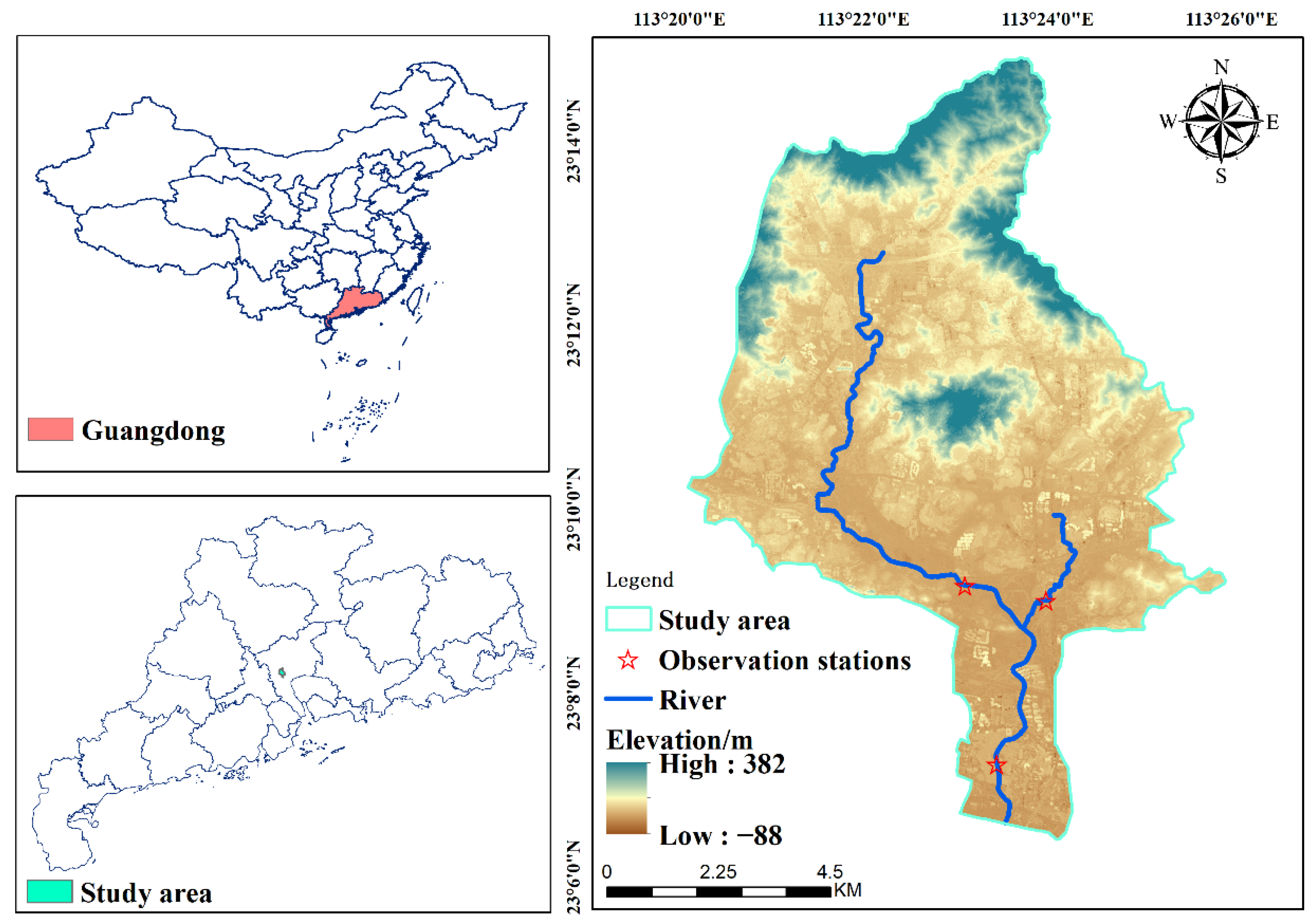
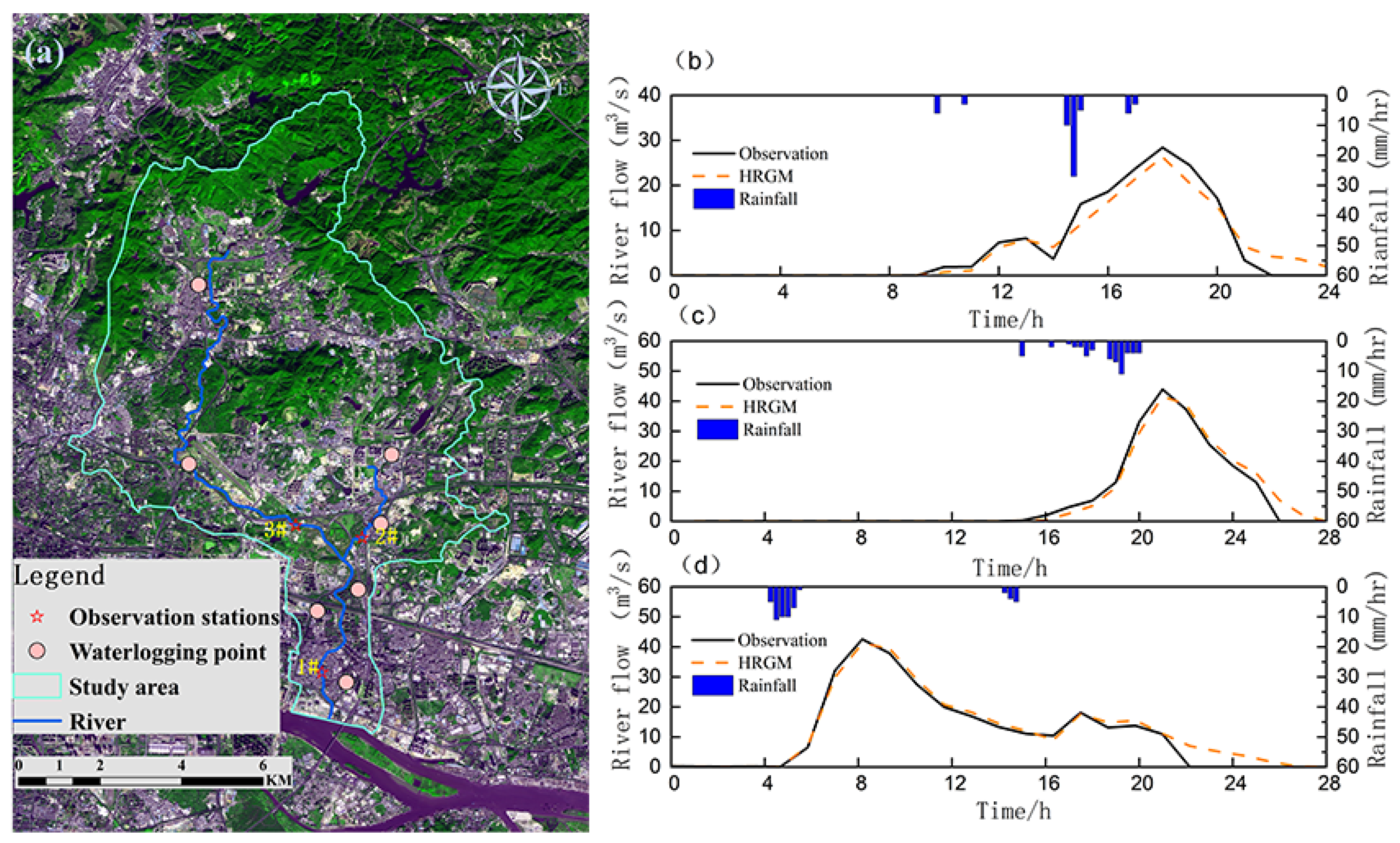
2.1. Study Area
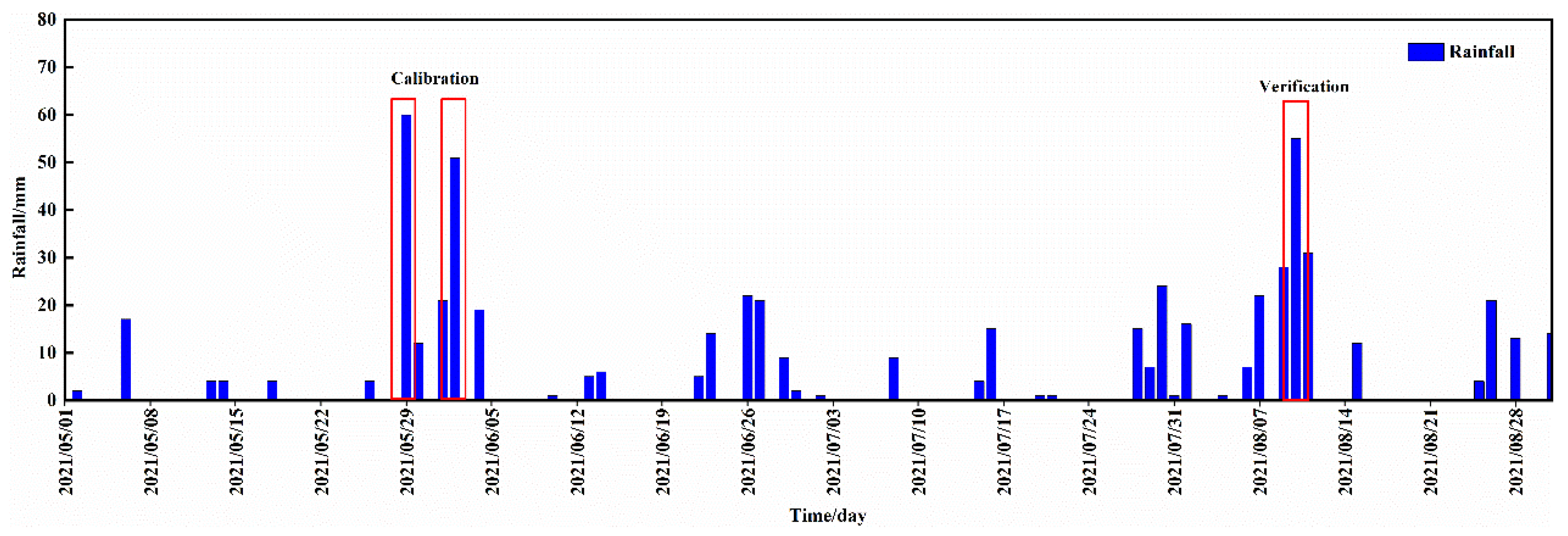
2.2. Monitoring Data
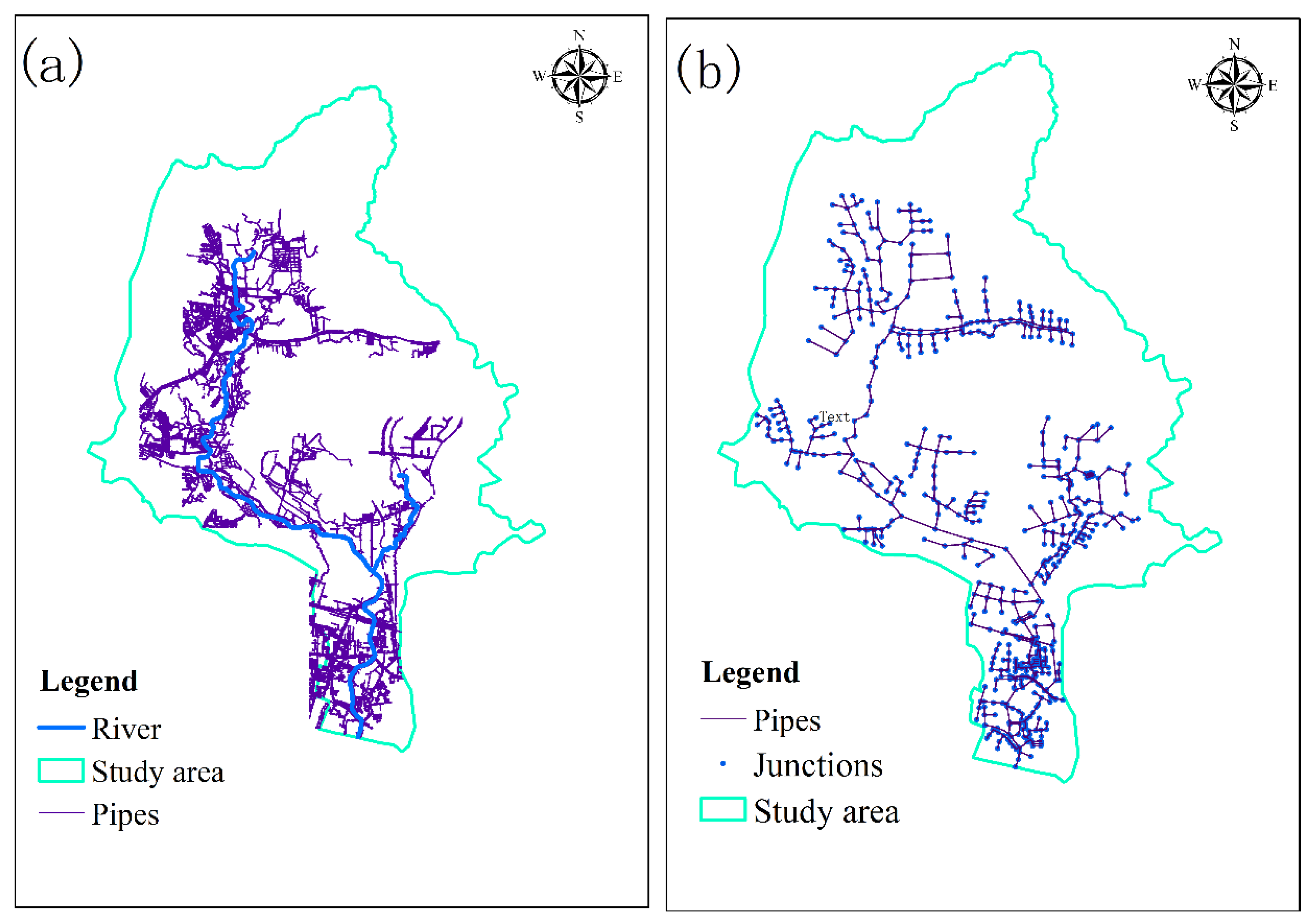
2.3. Data for Model Establishment
3. Methodology
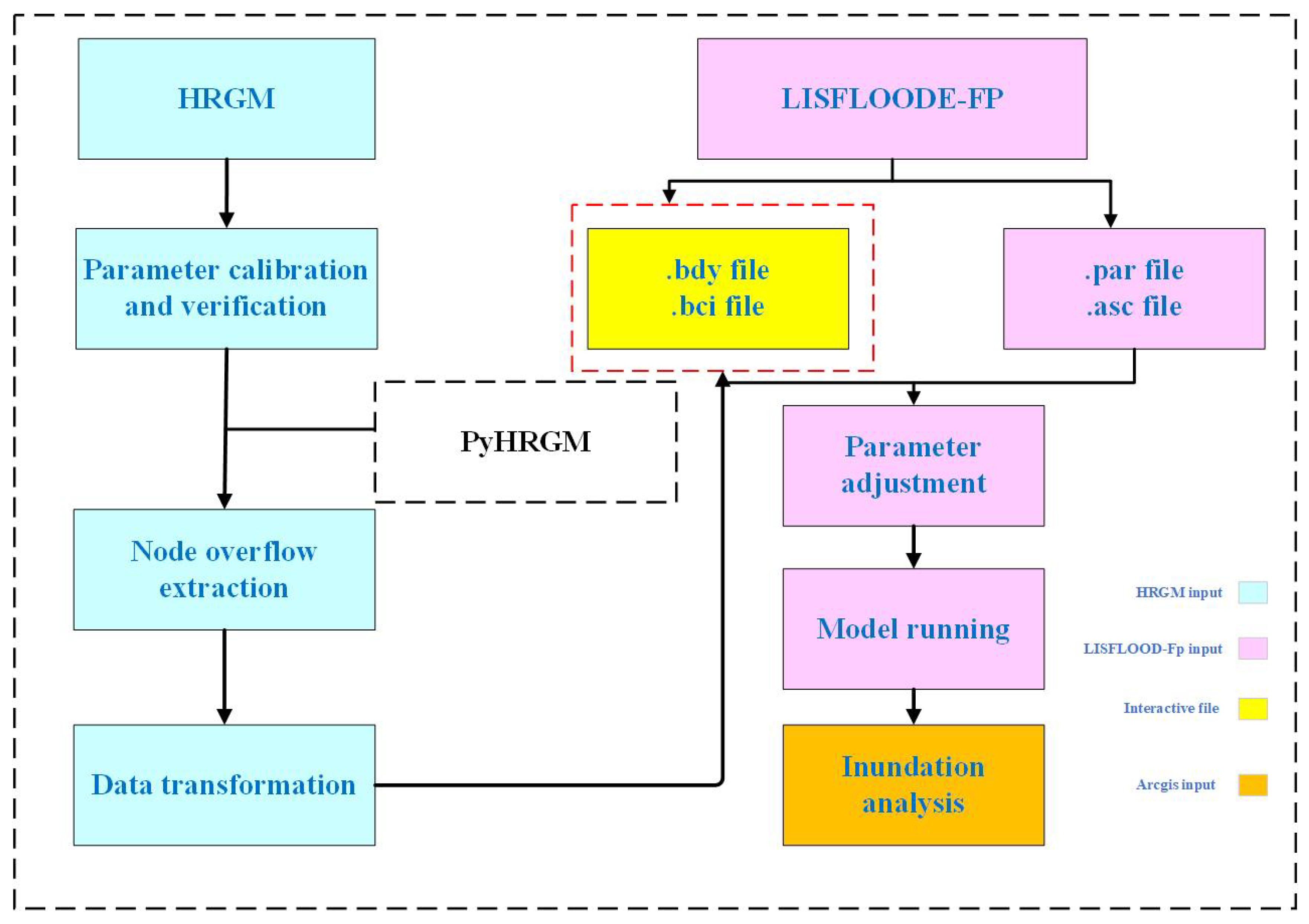
3.1. Model Framework
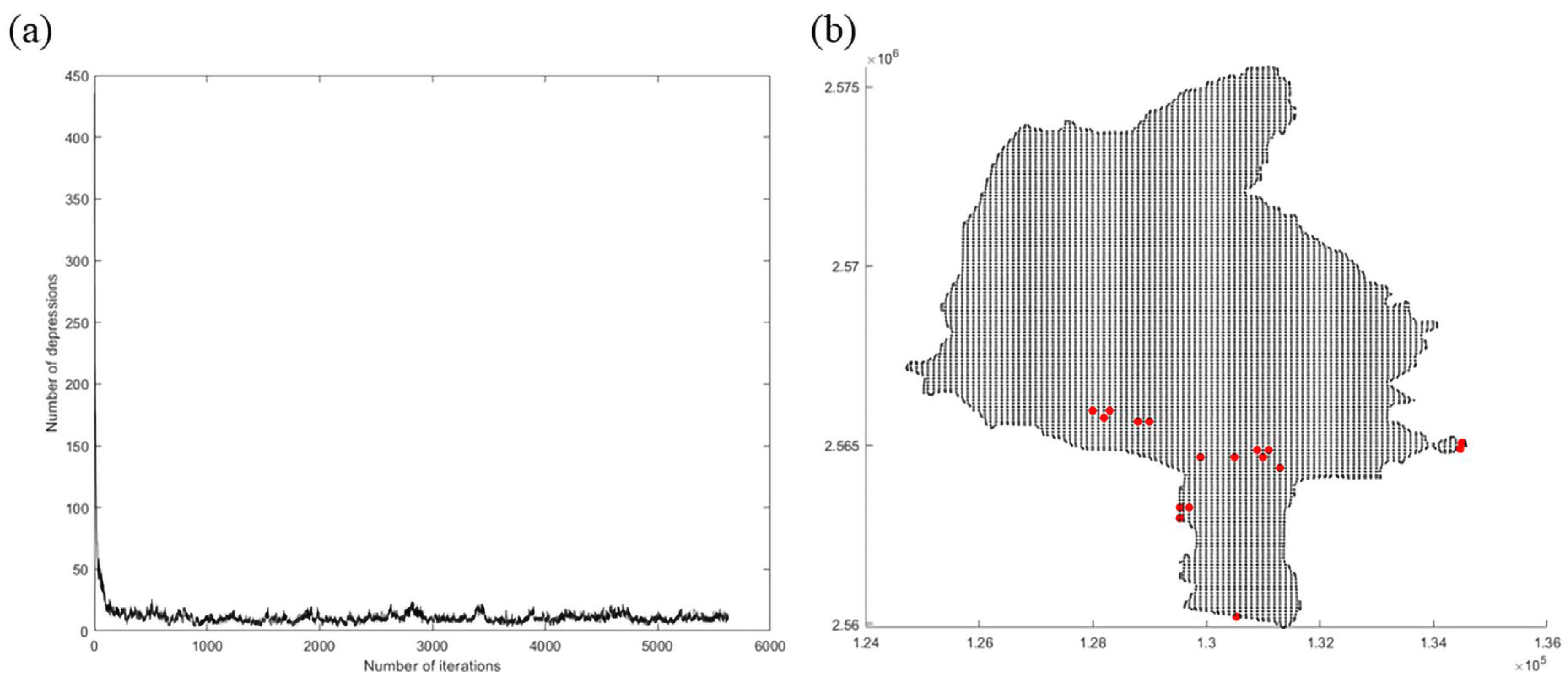
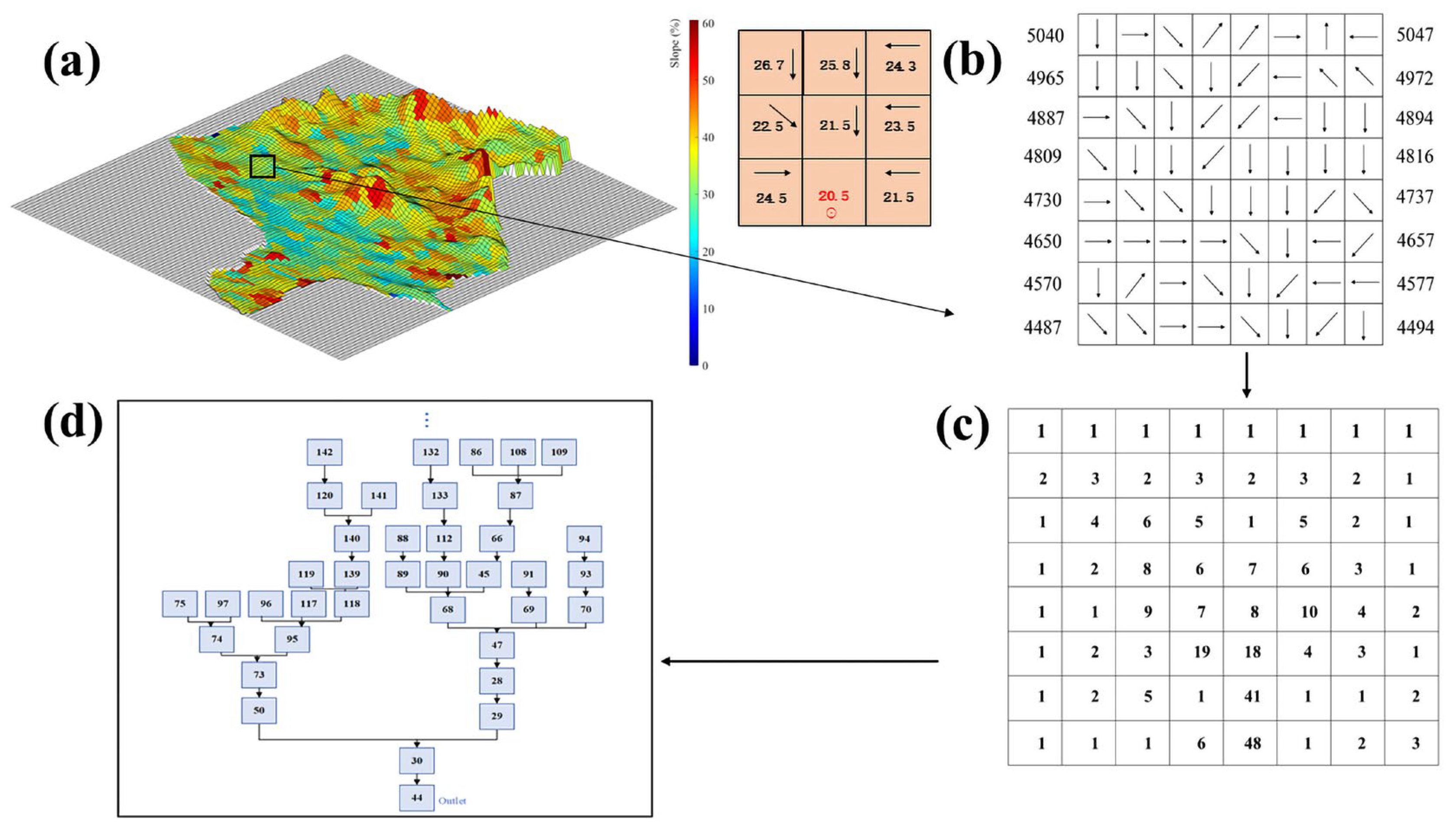
3.2. Watershed Discretization and Flow Path Determination
3.3. Runoff Generation and Confluence
3.3.1. Infiltration and Runoff Yield
3.3.2. Overland Flow Routing
3.4. Surface-Drainage System Coupling
3.5. Drainage Network Hydraulics
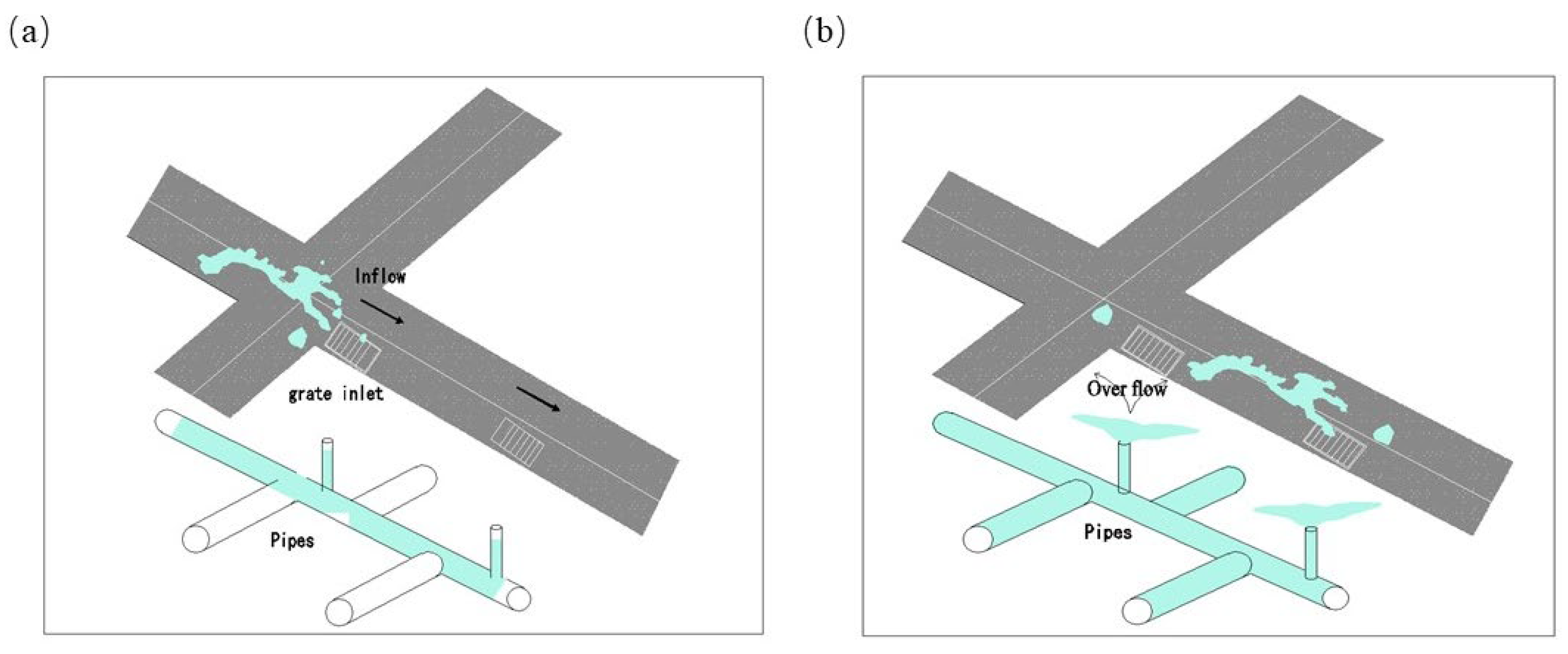
3.6. Model Coupling: HRGM and LISFLOOD-FP
4. Results
4.1. Model Calibration and Validation Results
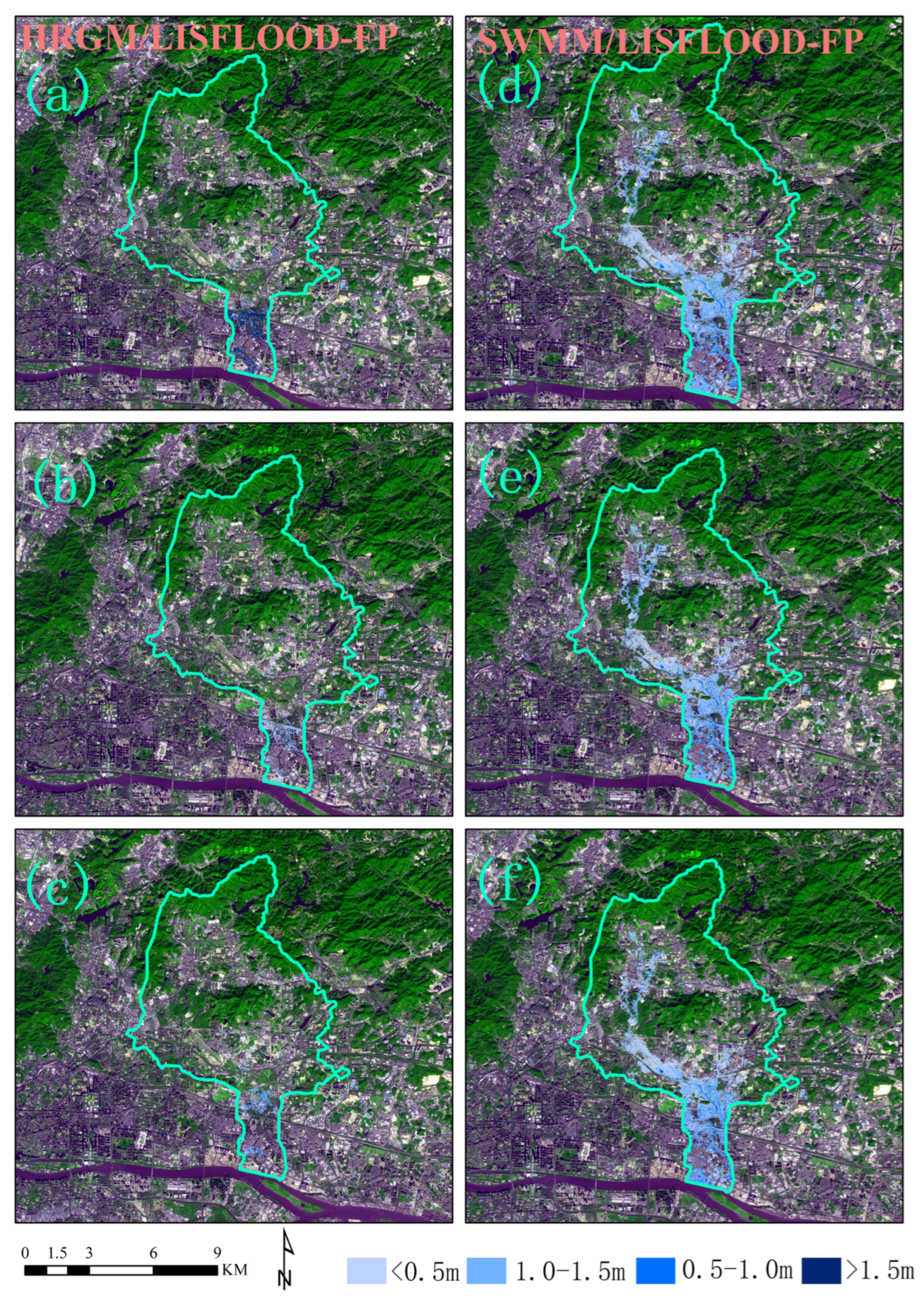
4.2. Overall Simulation Results for HRGM/LISFLOOD-FP Model Under Typical Rainstorm Event
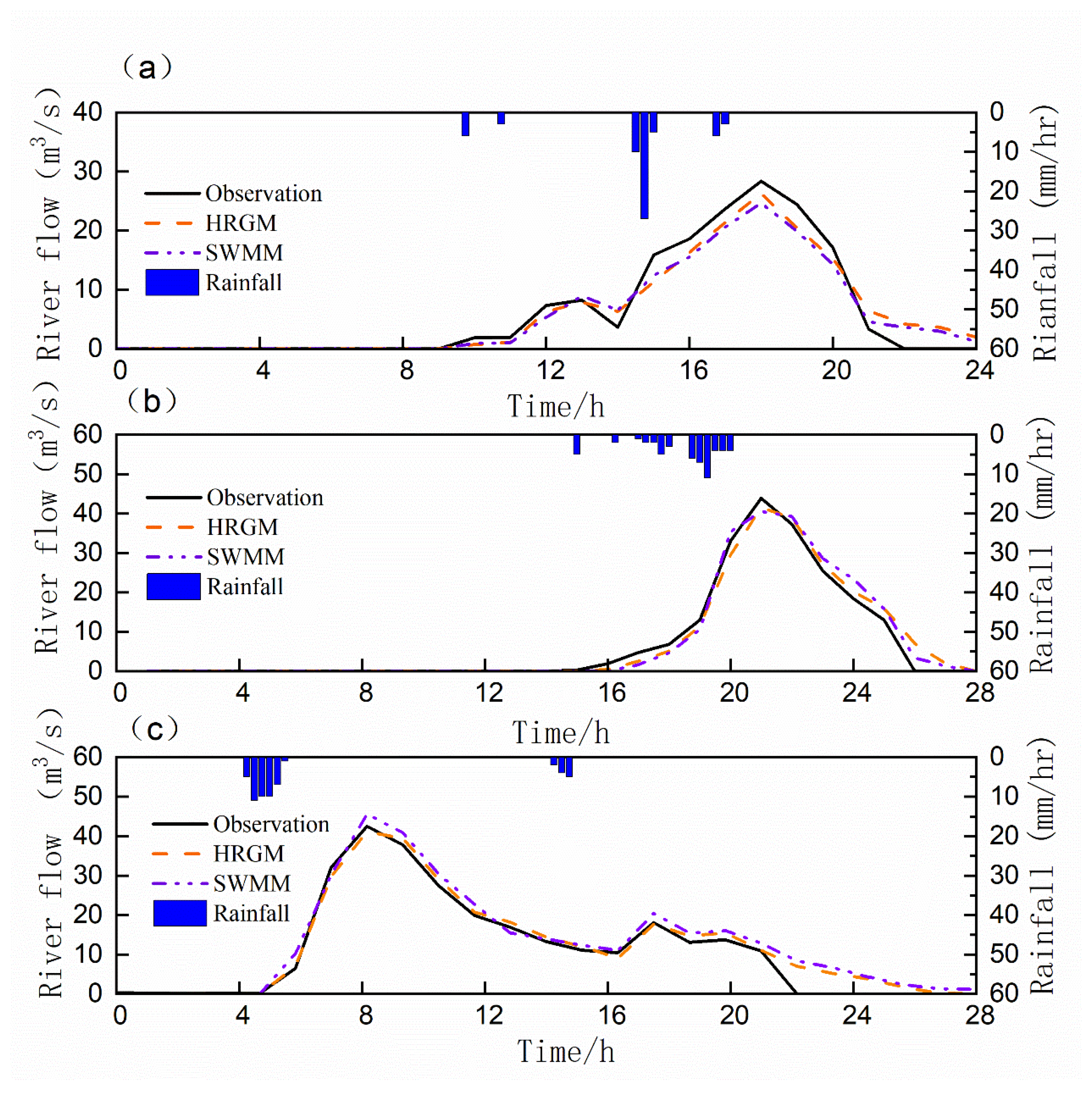
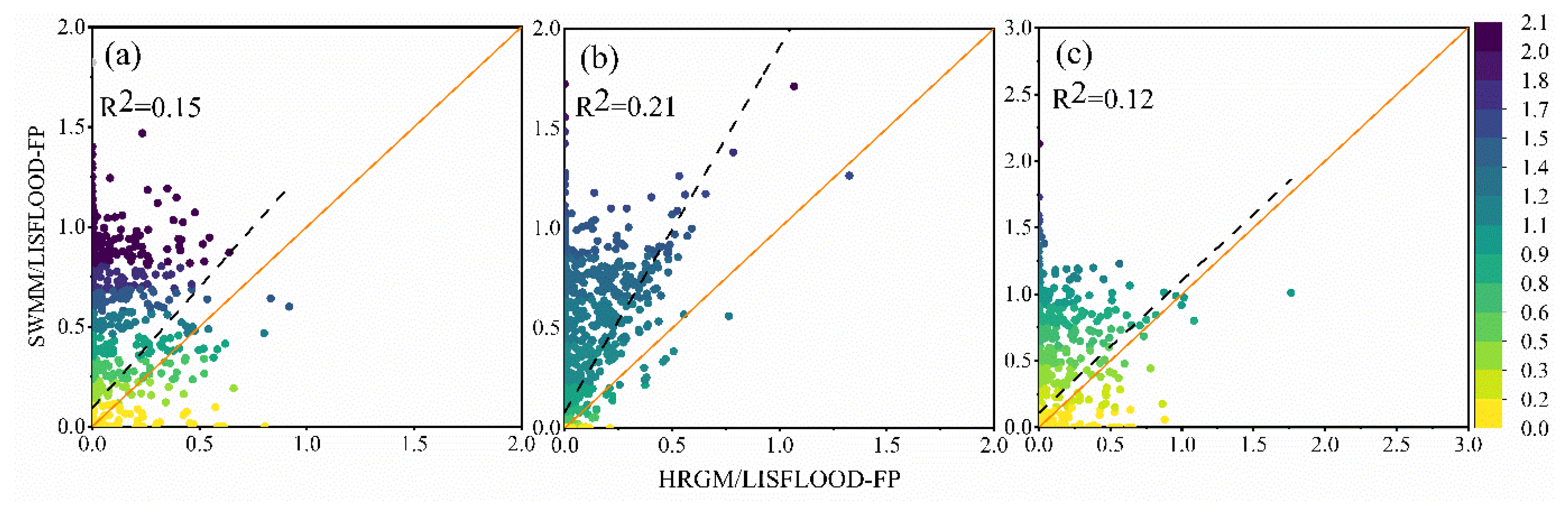
4.3. Overall Simulation Results Comparison Under Typical Rainstorm Event
5. Discussion
6. Conclusions
- (a)
- The developed high-resolution Urban Hydrological Units model (HRGM) was successfully applied in the Chebeichong watershed. Its simulation results align well with observations, achieving Nash–Sutcliffe efficiency coefficients above 0.8 for typical rainfall events.
- (b)
- In terms of accuracy, HRGM showed significant improvement over the standalone SWMM model and agreed better with measurements. For example, during the storm event on 10 August 2021, the Nash–Sutcliffe efficiency coefficient increased from 0.7 to 0.85, and the peak flow error decreased markedly from 15.8% to 3.1%.
- (c)
- The waterlogging patches simulated by the coupled HRGM/LISFLOOD-FP framework are more dispersed, fragmented, and discontinuous. This pattern aligns well with the actual characteristics of urban waterlogging, which often exhibits a discrete and scattered distribution due to the obstruction of buildings and the segmentation by roads.
Author Contributions
Funding
Data Availability Statement
Conflicts of Interest
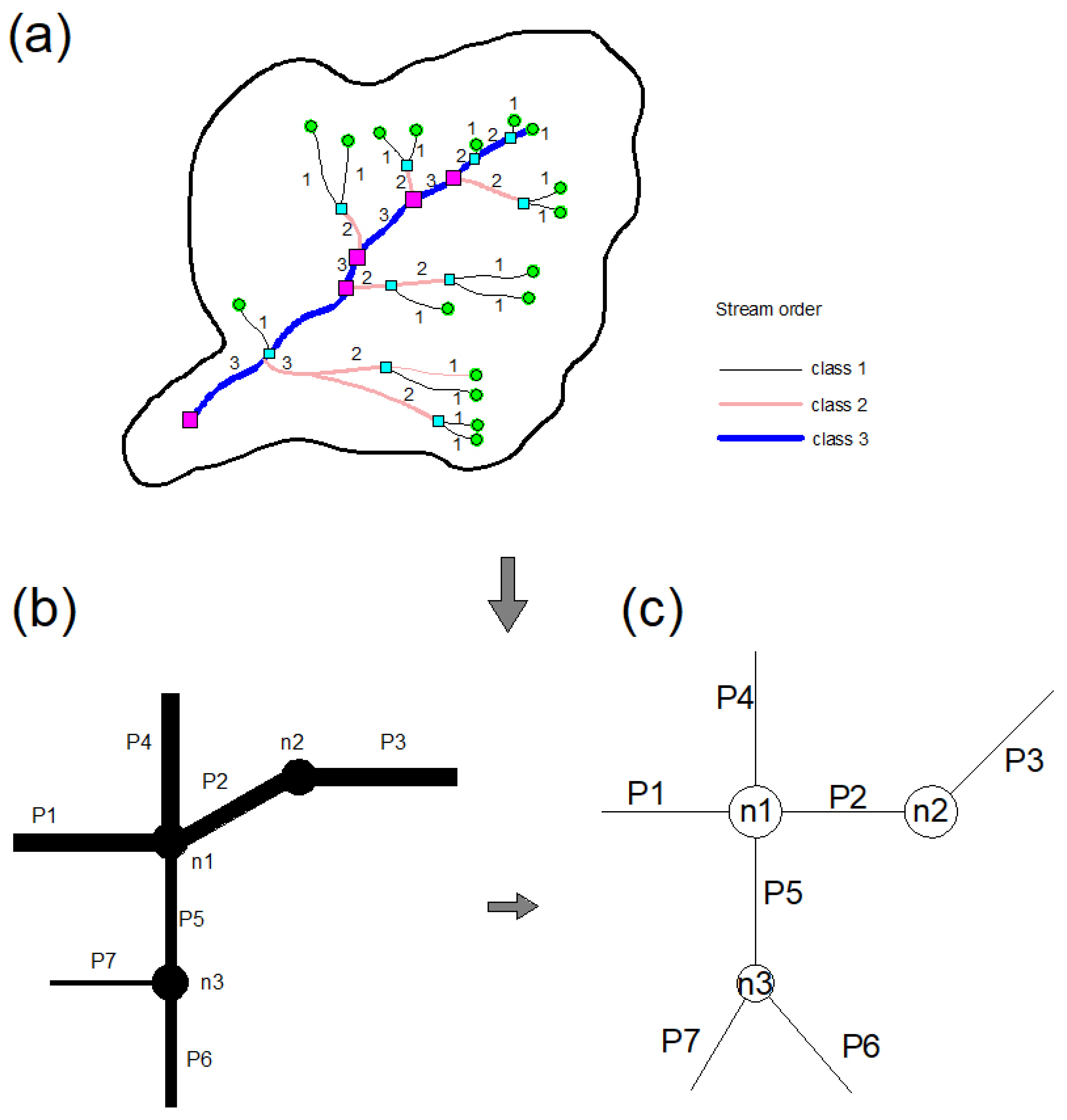
Appendix A. A Drainage Network Simplification Method Based on the Strahler Ordering Approach

| SWMM | HRGM | |
|---|---|---|
| Infiltration | ||
| Surface runoff | ||
| Drainage Network Hydraulics |


References
- Muthusamy, D.L.P. Understanding the effects of Digital Elevation Model resolution in urban fluvial flood modelling. J. Hydrol. 2021, 596, 126088. [Google Scholar] [CrossRef]
- IPCC. Climate Change 2013: The Physical Science Basis. Contribution of Working Group I to the Fifth Assessment Report of the Intergovernmental Panel on Climate Change; Cambridge University Press: Cambridge, UK; New York, NY, USA, 2013. [Google Scholar]
- IPCC. The Physical Science Basis. Contribution of Working Group I to the Fourth Assessment Report of the Intergovernmental Panel on Climate Change; Cambridge University Press: Cambridge, UK; New York, NY, USA, 2007. [Google Scholar]
- Huang, P.; Xie, S.; Hu, K.; Huang, G.; Huang, R. Patterns of the seasonal response of tropical rainfall to global warming. Nat. Geosci. 2013, 6, 357–361. [Google Scholar] [CrossRef]
- Wu, X.; Guo, S.; Yin, J.; Yang, G.; Zhong, Y.; Liu, D. On the event-based extreme precipitation across China: Time distribution patterns, trends, and return levels. J. Hydrol. 2018, 562, 305–317. [Google Scholar] [CrossRef]
- Sisay, E.; Halefom, A.; Khare, D.; Singh, L.; Worku, T. Hydrological modelling of ungauged urban watershed using SWAT model. Model. Earth Syst. Environ. 2017, 3, 693–702. [Google Scholar] [CrossRef]
- Zhong, R.; He, Y.; Chen, X. Responses of the hydrological regime to variations in meteorological factors under climate change of the Tibetan plateau. Atmos. Res. 2018, 214, 296–310. [Google Scholar] [CrossRef]
- Milly, P.C.D.; Betancourt, J.; Falkenmark, M.; Hirsch, R.M.; Kundzewicz, Z.W.; Lettenmaier, D.P.; Stouffer, R.J. Stationarity Is Dead: Whither Water Management? Science 2008, 319, 573–574. [Google Scholar] [CrossRef]
- Miller, J.D.; Kim, H.; Kjeldsen, T.R.; Packman, J.; Grebby, S.; Dearden, R. Assessing the impact of urbanization on storm runoff in a peri-urban catchment using historical change in impervious cover. J. Hydrol. 2014, 515, 59–70. [Google Scholar] [CrossRef]
- Song, X.M.; Zhang, J.Y.; Wang, G.Q.; He, R.M.; Wang, X.J. Development and challenges of urban hydrology in changing environments: II. Urban stormwater modeling and management. Adv. Water Sci. 2014, 25, 752–764. [Google Scholar]
- Hunter, N.M.; Villanueva, I.; Pender, G.; Lin, B.; Mason, D.C.; Falconer, R.A.; Neelz, S.; Crossley, A.J.; Bates, P.D.; Liang, D.; et al. Benchmarking 2D hydraulic models for urban flooding. Proc. ICE-Water Manag. 2008, 161, 13–30. [Google Scholar] [CrossRef]
- Russo, B.; Sunyer, D.; Velasco, M.; Djordjevic, S. Analysis of extreme flooding events through a calibrated 1D/2D coupled model: The case of Barcelona (Spain). J. Hydroinform. 2015, 17, 473–491. [Google Scholar] [CrossRef]
- Rossman, L.A.; Dickinson, R.E.; Schade, T.; Chan, C.; Burgess, E.H.; Huber, W.C. SWMM5: The USEPA’s newest tool for urban drainage analysis. In Proceedings of the 10th International Conference on Urban Drainage, Copenhagen, Denmark, 21–16 August 2005; pp. 1–8. [Google Scholar]
- Bates, P.D.; De Roo, A.P.J. A simple raster-based model for flood inundation simulation. J. Hydrol. 2000, 236, 54–77. [Google Scholar] [CrossRef]
- Yu, D.; Lane, S.N. Interactions between subgrid-scale resolution, feature representation and grid-scale resolution in flood inundation modelling. Hydrol. Process. 2011, 25, 36–53. [Google Scholar] [CrossRef]
- Seyoum, S.D.; Vojinovic, Z.; Price, R.K.; Weesakul, S. Coupled 1D and Noninertia 2D Flood Inundation Model for Simulation of Urban Flooding. J. Hydraul. Eng. 2012, 138, 23–34. [Google Scholar] [CrossRef]
- Lee, C.C.; Huang, L.; Antolini, F.; Garcia, M.; Juanb, A.; Brody, S.D.; Mostafavi, A. MaxFloodCast: Ensemble Machine Learning Model for Predicting Peak Inundation Depth And Decoding Influencing Features. arXiv 2023, arXiv:2308.06228. [Google Scholar]
- Liguori, S.; Rico-Ramirez, M.A.; Schellart, A.N.A.; Saul, A.J. Using probabilistic radar rainfall nowcasts and NWP forecasts for flow prediction in urban catchments. Atmos. Res. 2012, 103, 80–95. [Google Scholar] [CrossRef]
- Zhou, Q.; Leng, G.; Su, J.; Ren, Y. Comparison of urbanization and climate change impacts on urban flood volumes: Importance of urban planning and drainage adaptation. Sci. Total Environ. 2019, 658, 24–33. [Google Scholar] [CrossRef]
- Zoppou, C. Review of urban storm water models. Environ. Model. Softw. 2001, 16, 195–231. [Google Scholar] [CrossRef]
- Artina, S.; Bolognesi, A.; Liserra, T.; Maglionico, M. Simulation of a storm sewer network in industrial area: Comparison between models calibrated through experimental data. Environ. Model. Softw. 2007, 22, 1221–1228. [Google Scholar] [CrossRef]
- Wu, P.; Wang, T.; Wang, Z.; Song, C.; Chen, X. Impact of Drainage Network Structure on Urban Inundation Within a Coupled Hydrodynamic Model. Water 2025, 17, 990. [Google Scholar] [CrossRef]
- Wang, Y.; Chen, A.S.; Fu, G.; Djordjević, S.; Zhang, C.; Savić, D.A. An integrated framework for high-resolution urban flood modelling considering multiple information sources and urban features. Environ. Model. Softw. 2018, 107, 85–95. [Google Scholar] [CrossRef]
- Wu, X.; Wang, Z.; Guo, S.; Liao, W.; Zeng, Z.; Chen, X. Scenario-based projections of future urban inundation within a cou-pled hydrodynamic model framework: A case study in Dongguan City, China. J. Hydrol. 2017, 547, 428–442. [Google Scholar] [CrossRef]
- Li, X.; Li, Y.; Zheng, S.; Chen, G.; Zhao, P.; Wang, C. High efficiency integrated urban flood inundation simulation based on the urban hydrologic unit. J. Hydrol. 2024, 630, 130724. [Google Scholar] [CrossRef]
- Jenson, S.K.; Domingue, J.O. Extracting Topographic Structure from Digital Elevation Data for Geographic Information System Analysis. Photogramm. Eng. Remote Sens. 1988, 54, 1593–1600. [Google Scholar]
- Horritt, M.; Bates, P.D. Evaluation of 1D and 2D numerical models for predicting river flood inundation. J. Hydrol. 2002, 268, 87–99. [Google Scholar] [CrossRef]
- Bates, P.D.; Horritt, M.S.; Aronica, G.; Beven, K. Bayesian updating of flood inundation likelihoods conditioned on inunda-tion extent data. Hydrol. Process. 2004, 18, 3347–3370. [Google Scholar] [CrossRef]
- Bates, P.D.; Dawson, R.J.; Hall, J.W.; Horritt, M.S.; Nicholls, R.J.; Wicks, J.; Hassan, M.A.A.M. Simplified two-dimensional numerical modelling of coastal flooding and example applications. Coast. Eng. 2005, 52, 793–810. [Google Scholar] [CrossRef]
- Hsu, Y.-C.; Prinsen, G.; Bouaziz, L.; Lin, Y.-J.; Dahm, R. An Investigation of DEM Resolution Influence on Flood Inundation Simulation. Procedia Eng. 2016, 154, 826–834. [Google Scholar] [CrossRef]
- Kruszewski, P. A note on the Horton-Strahler number for random binary search trees. Inf. Process. Lett. 1999, 69, 47–51. [Google Scholar] [CrossRef]






| Subprogram | Typical Application | Available Numerical Model | Remark |
|---|---|---|---|
| Surface runoff unit | Type of catchment | Sub-catchment (Wu et al. [22]; Wang et al. [23]; Wu et al. [24]) UHUs (Li et al. [25], Present Work) | • Sub-catchment: Random and simple • UHUs: High resolution and easy to use |
| Surface runoff | Rainfall-runoff yield model | SCS-CN method (Li et al. [25]), Infiltration curve method (Wang et al. [23]; Wu et al. [24]), Runoff coefficient method (Present Work) | • Impervious area: Runoff coefficient method; SCS-CN method • Permeable areas: Runoff coefficient method • Suitable for areas with limited data |
| Surface confluence model | Reasoning formula method, (Present Work) Non-linear reservoir method (Wang et al. [23]; Wu et al. [24], Present Work) | • Higher precision: Nonlinear reservoir method | |
| Drainage system | Pipe flow | 1D Saint-Venart equations (Li et al. [25], Wang et al. [23]; Wu et al. [24]), Attenuation coefficient method (Present Work) | • Widely used pipe flow calculation model: 1D Saint-Venant equations, Preissmann model |
| Regional flow interaction | Exchange flow | Orifice equation, Weir equation (Li et al. [25], Wang et al. [23]; Wu et al. [24], Present Work) | • Surface—pipe free exchange flow: Weir equation • Surface—pipe submerged flow: Orifice equation |
| 2D-Surface runoff | Hydrodynamic method | 2D SWEs (Li et al. [25]), Kinematic wave (Wang et al. [23]; Wu et al. [24], Present Work) | • 2D SWEs: More complex calculation • Kinematic wave: Has good application prospects |
| Parameter | Description | Type of UHU | Recommended Perturbation Range | Value | |
|---|---|---|---|---|---|
| Runoff generation | The coefficient of imperviousness [-] | Water/River | 0 | 0 | |
| Grass/Woodland | 0–1 | 0.2 | |||
| Urban land | 0–1 | 0.75 | |||
| Farmland | 0–1 | 0.35 | |||
| Stable infiltration rate [mm·s−1] | Water/River | 0–0.001 | 0.001 | ||
| Grass/Woodland | 0.0002–0.089 | 0.015 | |||
| Urban land | 0.0001–0.004 | 0.001 | |||
| Farmland | 0.006–0.09 | 0.02 | |||
| Runoff concentration | Surface roughness value [-] | Water/River | 0–1 | 1 | |
| Grass/Woodland | 0–1 | 0.66 | |||
| Urban land | 0–1 | 0.90 | |||
| Farmland | 0–1 | 0.75 | |||
| Manning’s n value [-] | Water/River | 0.01–0.017 | 0.01 | ||
| Grass/Woodland | 0.03–0.05 | 0.03 | |||
| Urban land | 0.01–0.025 | 0.01 | |||
| Farmland | 0.018–0.025 | 0.02 | |||
| Water storage value [] | Water/River | 0 | 0 | ||
| Grass/Woodland | 10–20 | 15 | |||
| Urban land | 10–50 | 20 | |||
| Farmland | 10–50 | 10 | |||
| Flow attenuation value [-] | Water/River | 0–1 | 1 | ||
| Grass/Woodland | 0–1 | 0.65 | |||
| Urban land | 0–1 | 0.88 | |||
| Farmland | 0–1 | 0.72 | |||
| Flow routing | The coefficient of pipe flow [-] | / | / | 0.8 | |
| Pipe roughness [-] | / | / | 0.92 | ||
| The coefficient of junction flow [-] | / | / | 0.95 | ||
| Maximum depth in junction [m] | / | 0.5–2.5 | 2 | ||
| Parameter | Description | Recommended Perturbation Range | Value |
|---|---|---|---|
| Rough-R | Roughness of River | 0.010–0.14 | 0.014 |
| Rough-P | Roughness of Pipes | 0.010–0.14 | 0.014 |
| N-Imperv | Manning’ value of impermeable area | 0.005–0.05 | 0.015 |
| N-Perv | Manning’ value of permeable area | 0.05–0.5 | 0.2 |
| S-Imperv/mm | Storage capacity value impermeable area | 1–20 | 2 |
| S-Perv/mm | Storage capacity value impermeable area | 1–50 | 5 |
| MaxRate/(mm/h) | Maximum infiltration rate | 80–150 | 90 |
| MinRate/(mm/h) | Minimum infiltration rate | 1–50 | 7.3 |
| Decay | Coefficient of attenuation | 1–10 | 5.3 |
| Kwidth | The characteristic width | 0.2–5 | 4.8 |
| Rainstorm Event | Time (h) | Rainfall (mm) | NSE (-) | PRE (%) | RMSE (-) | |
|---|---|---|---|---|---|---|
| Calibration | 29 May 2021 | 24 | 60 | 0.812 | 7.3 | 2.14 |
| 2 June 2021 | 28 | 52 | 0.831 | 5.4 | 1.50 | |
| Verification | 10 August 2021 | 28 | 55 | 0.858 | 3.1 | 2.21 |
| Rainstorm Event | (m3/s) | (m3/s) | (m3) | (m3) | PTE (min) | RRE (%) |
|---|---|---|---|---|---|---|
| 29 May 2021 | 26.31 | 31.61 | 149.94 | 154.68 | 0 | −3.0 |
| 2 June 2021 | 41.54 | 43.93 | 201.87 | 198.10 | 0 | 1.9 |
| 10 August 2021 | 41.23 | 42.53 | 298.14 | 275.10 | 0 | 8.4 |
| Rainstorm Events | Area of Index Depth (km2) | ||||
|---|---|---|---|---|---|
| <0.5 (m) | 0.5–1.0 (m) | 1.0–1.5 (m) | >1.5 (m) | Total | |
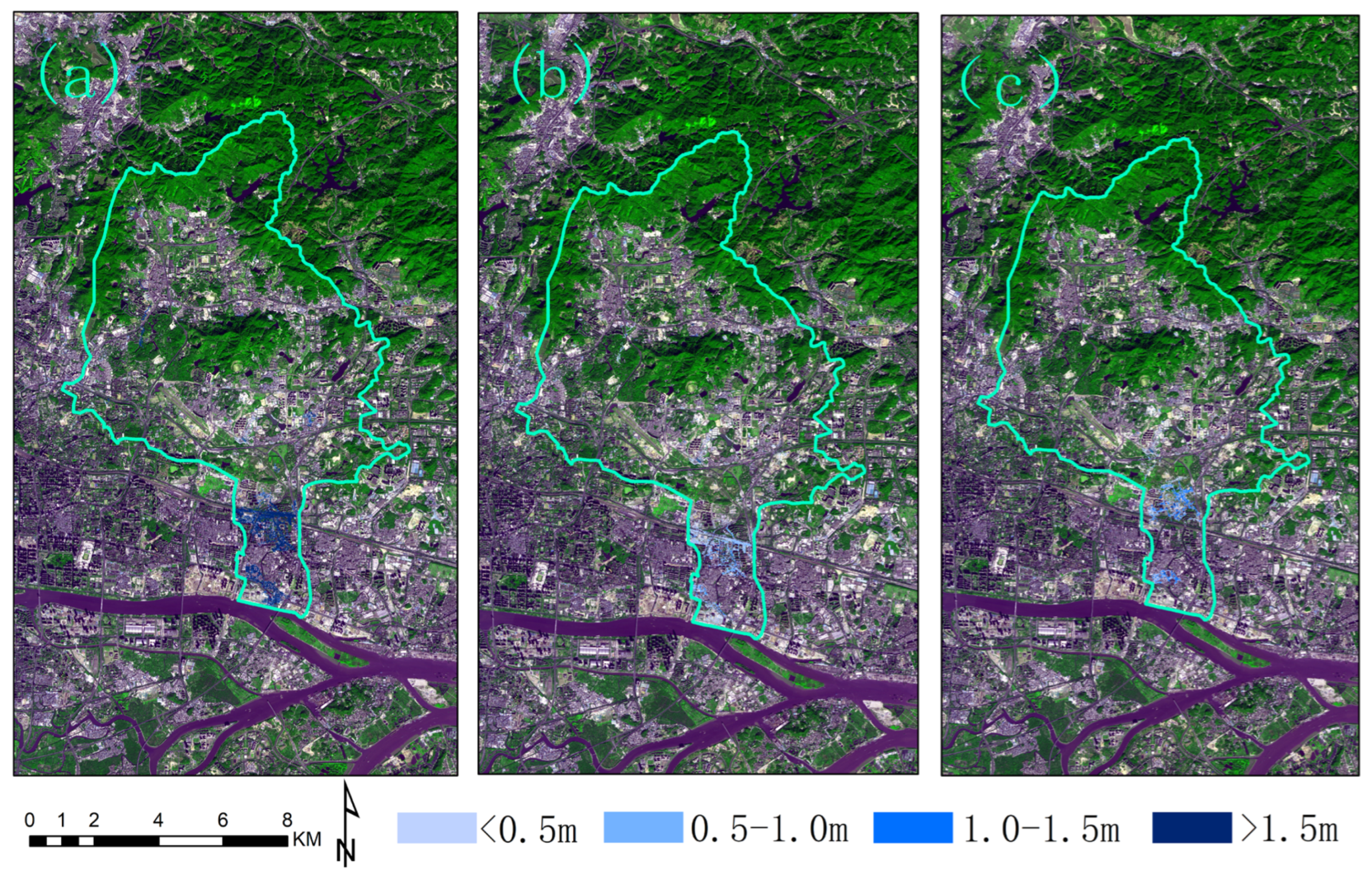
| 29 May 2021 | 0.77 | 1.01 | 0.80 | 0.26 | 2.84 |
| 2 June 2021 | 1.21 | 0.91 | 0.32 | 0.03 | 2.47 |
| 10 August 2021 | 0.88 | 1.11 | 0.47 | 0.05 | 2.51 |
| Rainstorm Event | NSE (-) | PRE (%) | PTE (min) | RMSE (-) | ||||
|---|---|---|---|---|---|---|---|---|
| HRGM | SWMM | HRGM | SWMM | HRGM | SWMM | HRGM | SWMM | |
| 29 May 2021 | 0.81 | 0.73 | 7.3 | 13.6 | 0 | 0 | 2.14 | 2.18 |
| 2 June 2021 | 0.83 | 0.78 | 5.4 | 14.7 | 0 | −5 | 1.50 | 1.94 |
| 10 August 2021 | 0.85 | 0.70 | 3.1 | 15.8 | 0 | 0 | 2.21 | 3.03 |
| Rainstorm Events | Inundation Area by HRGM/LISFLOOD-FP (km2) | Inundation Area by SWMM/LISFLOOD-FP (km2) | ||||||||
|---|---|---|---|---|---|---|---|---|---|---|
| <0.5 (m) | 0.5–1.0 (m) | 1.0–1.5 (m) | >1.5 (m) | Total (km2) | <0.5 (m) | 0.5–1.0 (m) | 1.0–1.5 (m) | >1.5 (m) | Total (km2) | |
| 29 May 2021 | 0.77 | 1.01 | 0.80 | 0.26 | 2.84 | 5.23 | 4.61 | 2.0 | 0.2 | 12.04 |
| 2 June 2021 | 1.21 | 0.91 | 0.32 | 0.03 | 2.47 | 5.73 | 4.38 | 1.34 | 0.15 | 11.6 |
| 10 August 2021 | 0.88 | 1.11 | 0.47 | 0.05 | 2.51 | 6.51 | 4.51 | 1.68 | 0.19 | 12.89 |
Disclaimer/Publisher’s Note: The statements, opinions and data contained in all publications are solely those of the individual author(s) and contributor(s) and not of MDPI and/or the editor(s). MDPI and/or the editor(s) disclaim responsibility for any injury to people or property resulting from any ideas, methods, instructions or products referred to in the content. |
© 2025 by the authors. Licensee MDPI, Basel, Switzerland. This article is an open access article distributed under the terms and conditions of the Creative Commons Attribution (CC BY) license.
Share and Cite
Wu, P.; Wang, T.; Wang, Z.; Jin, H.; Chen, X. A Framework for Refined Hydrodynamic Model Based on High Resolution Urban Hydrological Unit. Water 2026, 18, 92. https://doi.org/10.3390/w18010092
Wu P, Wang T, Wang Z, Jin H, Chen X. A Framework for Refined Hydrodynamic Model Based on High Resolution Urban Hydrological Unit. Water. 2026; 18(1):92. https://doi.org/10.3390/w18010092
Chicago/Turabian StyleWu, Pan, Tao Wang, Zhaoli Wang, Haoyu Jin, and Xiaohong Chen. 2026. "A Framework for Refined Hydrodynamic Model Based on High Resolution Urban Hydrological Unit" Water 18, no. 1: 92. https://doi.org/10.3390/w18010092
APA StyleWu, P., Wang, T., Wang, Z., Jin, H., & Chen, X. (2026). A Framework for Refined Hydrodynamic Model Based on High Resolution Urban Hydrological Unit. Water, 18(1), 92. https://doi.org/10.3390/w18010092