


Abstract
Understanding extreme precipitation (EP) evolution is crucial for global climate adaptation and hazardous disasters prevention. However, spatial non-stationarity of urbanization relationships with EP variations has been rarely discussed in a complex topographic context. Taking the city Liuzhou in China as the example, this study separately quantified the evolution of EP intensity, magnitude, duration, and frequency on different temporal scales with Innovative Trend Analysis (ITA). Based on a finer spatial (5 km grid) scale and multiple temporal (daily, daytime, nighttime, and 14 h) scale analyses, it innovatively identified spatially varying urbanization effects on EP with more details in different elevations. Our results indicate that: (1) from 2009 to 2023, EP events became more intense, persistent, and frequent, particularly for higher-grade EPs and in the steeper north of Liuzhou; (2) despite the globally negative correlations, spatial correlations between comprehensive urbanization (CUB) and each EP index on individual temporal scales were still explicitly categorized into four types using LISA maps—high-high, high-low, low-low, and low-high; (3) Geographically Weighted Regression (GWR) was demonstrated to precisely explain the response of most EP characteristics to multiple manifestation of urbanization with respect to population (POP), economy (GDP), and urban area (URP) expansion (adjusted R2: 0.5–0.8). The predictive accuracy of GWR on urbanization and EPs was spatially non-stationary and variable with temporal scales. The local influential strength and direction varied significantly with elevations. The most significant and positive influences of three urbanization predictors on EPs occurred at different elevation grades, respectively. Compared with POP and GDP, urban area percent (URP) was indicated to positively relate to EP changes in more areas of Liuzhou. The spatial and quantitative relationships between urbanization and EPs can help to guide effective urban planning and location-specific management of flood risks.
1. Introduction
With continued warming and accelerating urbanization, unpredictable extreme climate events have been overwhelming worldwide, which exerted cascading adverse impacts on sustainable development [1,2,3]. The 6th IPCC Assessment Report issued in 2022 highlighted the rising occurrence of extreme precipitation hazards in downtown and mountainous areas. As widely reported, the intensifying extreme precipitation (EP) have triggered a spectrum of climatic disasters (e.g., flash floods, urban inundation, landslides, and debris flows), which would endanger human life and property and cause substantial damages to public infrastructure and agricultural crops [4,5,6,7,8]. Hence, it is crucial to figure out the complexity of extreme precipitation dynamics and their causal mechanisms, which is valuable for enhancing flood resilience and implementing climate adaptation strategies.
Nowadays, over 50% of the world population resides in cities and this proportion is anticipated to reach 67% by 2050 [9]. As known, rapid urbanization dramatically modified physical properties of underlying surfaces by extensively replacing natural landscapes with impervious materials, which induced Urban Heat Islands [10,11]. UHI would unstabilize local convective and modify atmospheric circulation [12]. Additionally, urban structures and activities complicate turbulence, urban aerosols, and thermal uplift processes [13]. In recent decades, both observational statistics and climate modeling provided abundant evidence for the linkages between extreme precipitation and urbanization [14,15]. For instance, based on the Metropolitan Meteorological Experiment, Changnon [16] and Shepherd [17] determined that summer precipitation was highly affected by urbanization. Applying the Weather Research and Forecasting model, Donmez et al. [18] revealed that urban scenario increased rainfall amounts by 7% during summer events in the urban center and reshaped them to be more spatially distributed than spring precipitation events in Ankara, Turkey. Overall, previous studies have found that EP processes were more unpredictable and intense in downtowns than suburban or villages in a number of regions, e.g., in Yangtze River delta in China [19], in Thailand [20], and the Netherlands [21]. Nevertheless, urbanization effects often manifested significant abrupt changes and local characteristics depending on regional climate zone and underlying surfaces [1,22,23,24].
In addition, previous studies focused on the urbanization effects on single annual extremes of daily precipitation, involving finer temporal scales less (e.g., sub-daily or hourly) [25,26]. They primarily quantified urbanization impacts using a single lumped percentage of urban areas in flat regions or deltas [21,27,28,29], without including more detailed information of urbanization with respect to economy and population developments. Moreover, large-scale topography was demonstrated to considerably affect the evolution of climate extremes [30,31,32]. In southwestern China, Li et al. [33] indicated that the increase in EP events clustered in flatter areas instead of hills. Zhang et al. [34] found that extreme precipitation was negatively correlated with altitude in the Hengduan Mountains. By contrast, the hilly relief was quantified to exert a smoothing effect on spatio-temporal variabilities in the amount and frequency of seasonal precipitation events in southwestern United States [35]. In Central Asia, the heavier rainfall was reported to occur primarily over mountains, while precipitation responded in a more sensitive way to varied topography and land use occuring over the plains [36]. Compared to flat regions, hilly terrain was quantified to induce an annual increase of 0.22 mm/year in precipitation, particularly for monsoon season precipitation in Doon Valley, India [23]. Clearly, topography would modulate the urbanization effects on extreme precipitation, as it not only affects thermal and dynamic circulation patterns, but also shapes urban sprawl. Above all, it is hence necessary to clarify varying relationships between urbanization and extreme precipitation on different topographic settings and temporal scales, particularly in typical landform regions.
Located in southern China, the Guangxi Zhuang Autonomous Region is rapidly urbanizing, despite the lower economic development. Guangxi is highly affected by complex terrain and abundant annual precipitation with uneven spatio-temporal variability, which is conducive to elevated incidence of mountain torrents or urban floods [37,38,39]. The reconstructive analysis of long-term precipitation records revealed that the significant increase in annual EP predominantly occurred in the last two decades during 1960–2009 [40]. A notable reduction in light rain with an increase in intensity and duration of rainstorm events were reported in Guangxi, which witnessed increasingly severer rainstorms in recent decades [37]. While much attention has been paid to both temporal changes and spatial distributions of EP intensity or frequency in Guangxi [40], the extent to which variations in extreme precipitation characteristics relate to urbanization and topography remains hardly investigated in Guangxi.
As the largest industrial city in Guangxi, Liuzhou suffers from multiple ongoing pressures of urbanization development and flood security. Therefore, a comprehensive study of extreme rainfall in Liuzhou is not merely an academic exercise but an urgent prerequisite for sustainable urban planning and disaster risk reduction. Taking Liuzhou as the case, based on homogenized hourly observations of precipitation data and a spatial resolution of 5 km, this study seeks to: (1) unravel the spatio-temporal variations in extreme precipitation and urbanization; (2) quantify the global and local dependency of multifaceted characteristics of EP events on urbanization; and (3) identify spatially heterogenous impacts of urbanization on EP.
2. Materials and Methods
2.1. Study Area
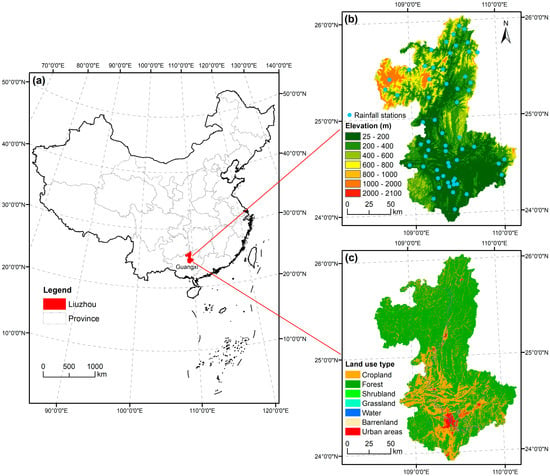
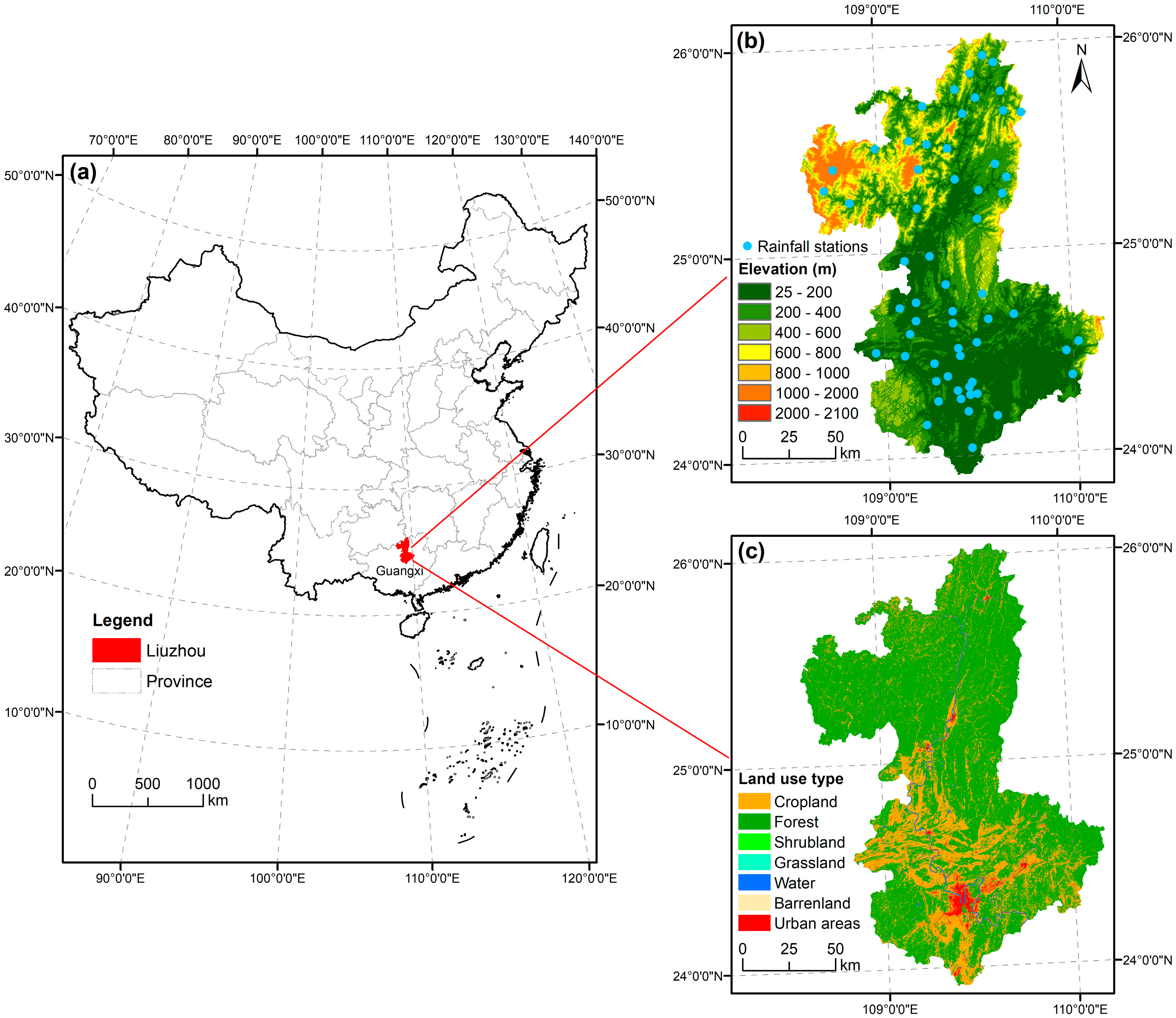
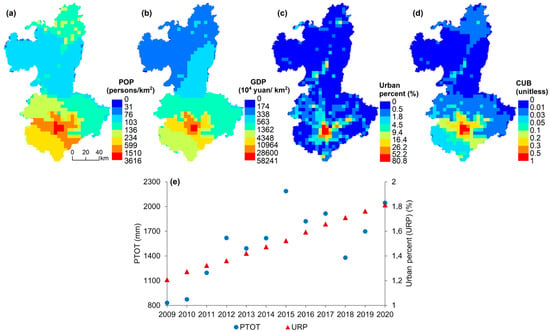
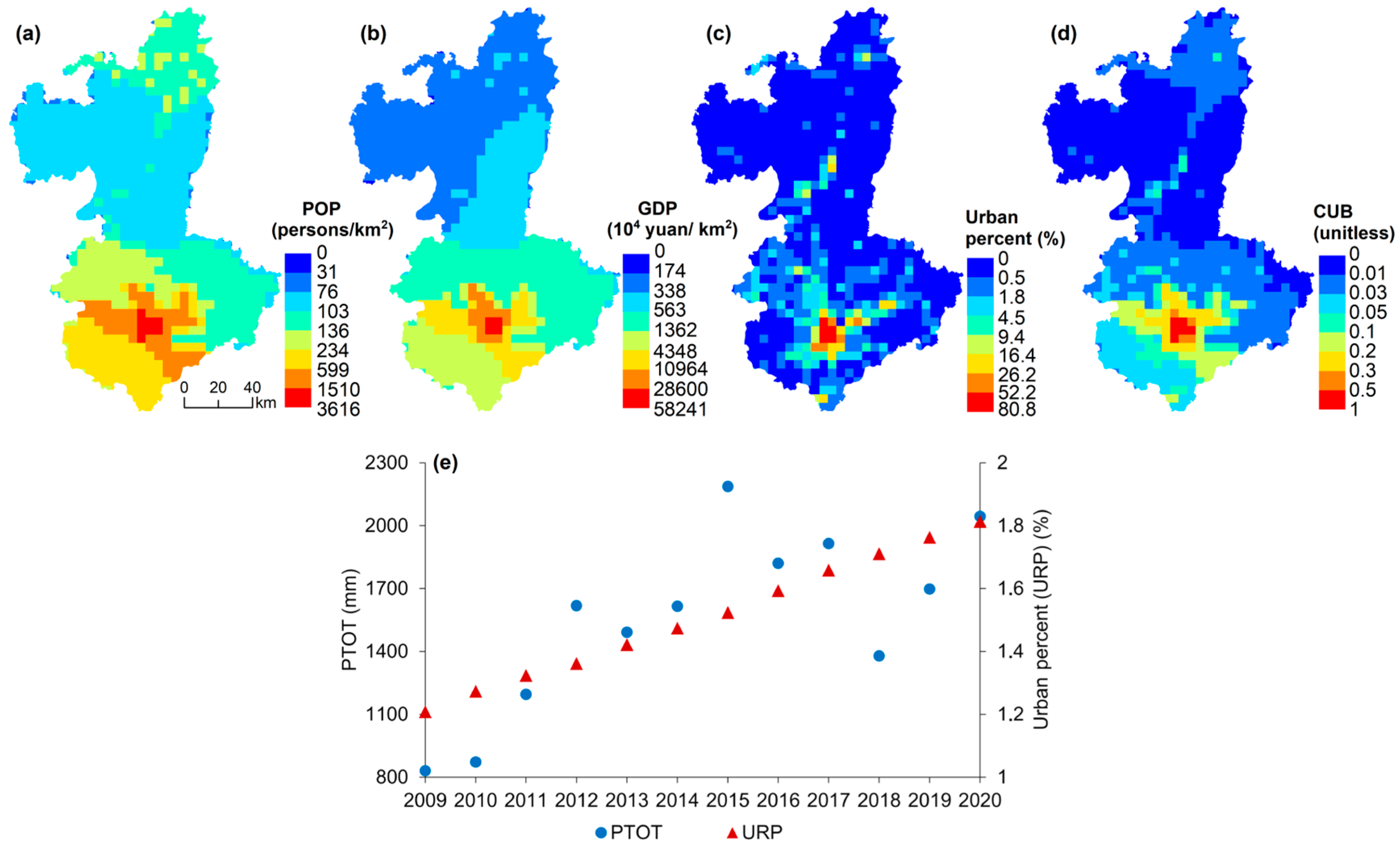
Situated in the north of Guangxi Zhuang Autonomous Region in southern China, Liuzhou is a major industrial hub of Guangxi and spans 108°35′~110°10′ E and 23°54′~26°03′ N, encompassing a total area of 18,596 km2 (Figure 1). It is affected by subtropical monsoon climate, with distinct dry (winter) and wet (summer) seasons. According to the long-term statistics, the annual precipitation averages approximately 1577.7 mm in Liuzhou and concentrates primarily from April to September, which accounts for above 70% of annual precipitation. The abundant precipitation decreases from hilly north to flat south in Liuzhou. Situated in a distinctive karst basin and surrounded by numerous rolling hills, the elevation of Liuzhou rises from 25 to 200 m a.s.l. in widespread areas of south to above 2000 m in north particularly northwest of Liuzhou, displaying notable topographic relief across the region (Figure 1). Over recent decades, this city has undergone rapid urbanization, characterized by a distinct spatial discrepancy in increase in urban area, population, and economic developments (Figure 2). Apparently, the areas with the largest urban areas, densest population, highest GDP, and comprehensive urbanization level (CUB) cluster primarily around the Li River valley in the south of Liuzhou (Figure 1 and Figure 2). Such uneven distribution of urbanization developments interacting with complex terrain landscapes might foster spatially varying patterns of urbanization impacts on extreme precipitation throughout the region.
Figure 1.
Location of the city Liuzhou (a), the spatial distributions of rainfall stations and elevation (b), and land-use map for 2020 in Liuzhou (c).
Figure 2.
Spatial variations in single urbanization variables including population density (POP) (a), gross domestic product (GDP) (b), urban area percent (URP) (c), and comprehensive urbanization level (CUB) (d) in Liuzhou that were averaged from 2010, 2015, and 2020 (e), respectively.
2.2. Data Description
The station-based daily and hourly precipitation measurements were acquired from the Meteorological Bureaus of Liuzhou for the period of 2009–2023 in Liuzhou (Figure 1). Continuous hourly observations were statistically and visually examined for potential gaps and measurement mistakes. The excluded stations comprise those with missing values exceeding 5% of the total length of daily observations. Ultimately, the observational data without any gaps for 59 stations that were evenly dispersed in Liuzhou were ultimately employed in this study (Figure 1). The missing values of these stations were replaced by measured value from the geographically nearest station. The daytime (8:00–19:00) and nighttime (20:00–7:00) precipitation were extracted based on hourly observations. The precipitation that occurred at 14:00 was also incorporated to represent typical convective rainfall pattern.
The urbanization was illustrated by the growth of population density (POP) or economy (domestic gross product, GDP), urban area (URP) and comprehensive urbanization level (CUB). The distribution of urban area was annually derived from land-use maps in 2010, 2015, and 2020, respectively. The raster maps of land use (spatial resolution: 30 m) and POP or GDP (spatial resolution: 1 km) in these years were collected from the RESDC platform (https://www.resdc.cn/, accessed on 15 July 2025). These datasets were widely introduced to former studies to depict urbanization intensity in other locations in China [41,42,43]. To depict the detailed spatial discrepancy of urbanization effects across Liuzhou, 30 m digital elevation (DEM) data extracted from geographic spatial data clouds (http://www.gscloud.cn, accessed on 10 June 2025) were used to explore urbanization variations tangled with topographic settings.
2.3. Methods
2.3.1. Definition of EP Indices
Extreme precipitation indices (EPs) enable a detailed and quantitative illustration of rainstorm events with respect to their intensity, amplitude and frequency [44]. Given the historic short-duration, high-intensity precipitation in Liuzhou, we employed four categories of EP indices to represent duration, frequency, intensity, and amplitude of EP events, referring to ETCCDI (Expert Team on Climate Change Detections and Indices) [45]. In this study, fifteen annual extreme indices were derived for daily, daytime, nighttime, and 14:00 precipitation, respectively, using the R project package RClimDex [46]. They were described with details in Table 1.
Table 1.
Description of the annual EPs applied in this study.
2.3.2. Innovative Trend Analysis
As a non-parametric statistical method, Innovative Trend Analysis (ITA) was developed by Şen [47] for detecting change trends of time series data. Compared with conventional methods (e.g., Mann-Kendall test), ITA performs free of restrictive data normality and independence assumptions and lately showed high suitability for non-stationary hydrological and climatic data analysis [48,49,50]. With ITA, individual time series (from 2009 to 2023) of each EP index were split into two equal portions. The two halves were anchored in an ascending order at X-axis (xk) and Y-axis (yk) in the Cartesian coordinate system, respectively. More details of ITA can be referred to in Şen [47] and Lei et al. [51]. The trend slope by ITA is computed as below:
where and are the arithmetic averages of the first and second halves of the EP variable k, respectively. n is number of time series.
2.3.3. Spatial Correlation Test
To explore spatial correlation between extreme precipitation indices (EPs) and urbanization, the bivariate Moran’s I (bivariate LISA) analyses were conducted globally and locally [52]. This study identified spatial correlations between EPs and comprehensive urbanization level (CUB) by integrating three urbanization indicators (POP, GDP, and URP) on each grid of 5 × 5 km, referring to Equation (2). The positive (denoted by positive Moran’s I) or negative (denoted by negative Moran’s I) correlation indicates aggregation or dispersion in space, respectively. The global bivariate Moran’s I quantifies the strength of overall spatial correlation between EPs and CUB in the entire region, whereas local bivariate Moran’s I elaborates spatial dependency of EPs on CUB in different local units. More details pertaining to Moran’s I analysis were provided in former studies [52,53]. Specifically, the spatial weight matrix was constructed, following the queen contiguity weight with the first order of neighbor in a 4 × 4 matrix [42], to quantify spatial correlations between different grids. Larger absolute values of Moran’s I (full range: −1 to 1) indicate the stronger spatial dependency of EPs on CUB. To examine the statistical significance of bivariate Moran’s I, 499 permutation tests were performed, with results considered to be significant by p values < 0.05.
Based on bivariate Moran’s I analysis, LISA method was further introduced to visualize correlations between CUB at one certain location and the average EP at nearby locations using cluster maps. It distinguishes four relationship patterns using four quadrants: high-high (HH) with quadrant I, denoting high CUB surrounded by high EP values; high-low (HL) with quadrant II, denoting high CUB in proximity to low EP values; low-low (LL) with quadrant III, denoting low CUB with neighboring low EPs; and low-high (LH) with quadrant IV, i.e., low CUB with high EPs in proximity.
where denotes the standardized value of , i.e., the level of the i-th urbanization indicator (i.e., population density, GDP or urban area percent) for the j-th grid. and denote the minimum and maximum values of i-th indicator for all grids. The average of for three indicators was denoted as CUB for each grid.
2.3.4. Geographically Weighted Regression Analysis
Geographically Weighted Regression (GWR) was carried out in this study to capture spatial discrepancy in urbanization effects on EPs with varying altitudes in Liuzhou, based on variations in model parameters (e.g., coefficients of predictors) of GWR. It addresses the inherent limitation of linear regression that assumes relationships lumped and constant across space. This method has been extensively applied to identify location specific effects on environmental, social, and economic processes [54,55,56]. The GWR formula in this analysis is shown below:
where is the dependent variable (i.e., EP index value) for spatial grid ; is the k-th independent variable (i.e., POP, GDP, URP) of urbanization for grid ; is the number of independent variables; is the GWR intercept value for grid ; is the local coefficient for the k-th independent variable for grid ; and is the random error for grid .
All spatial analyses were performed in 5 km spatial grid in ArcGIS 10.8 and statistical analyses were conducted in R environment (R 4.4.2) using main R packages such as “trendchange” of version 1.2 [57] and “stats” [58].
3. Results
3.1. Spatio-Temporal Variations in EPs
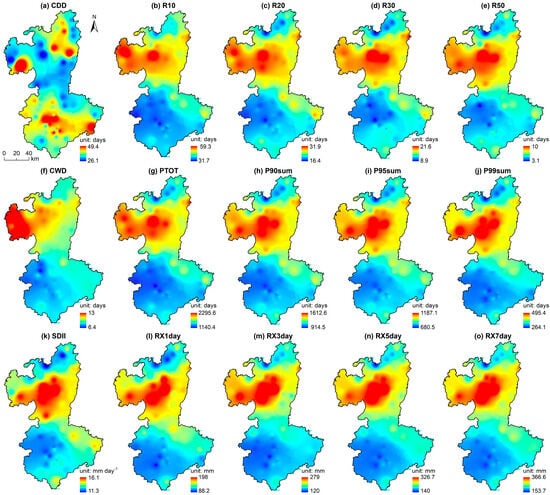
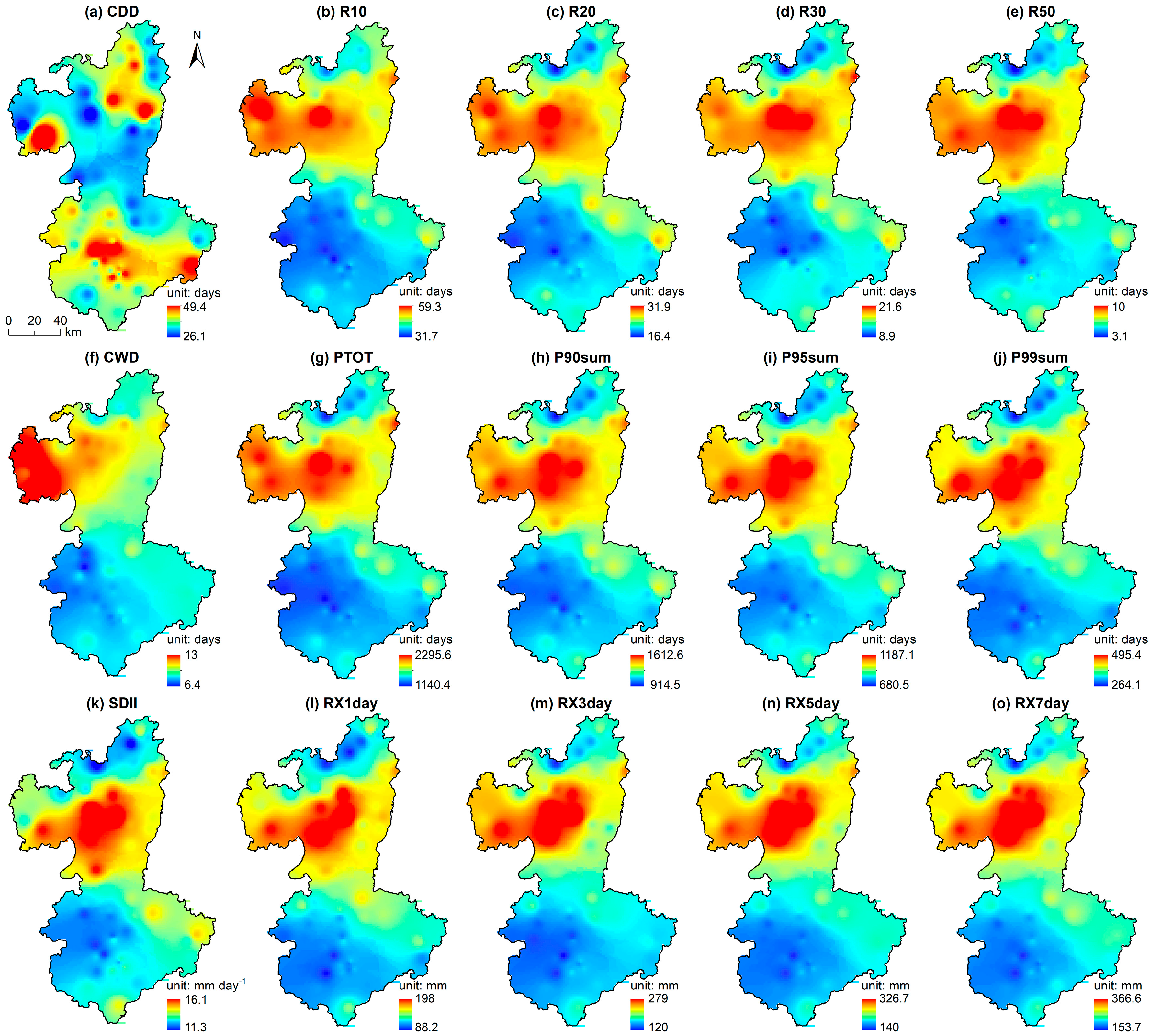
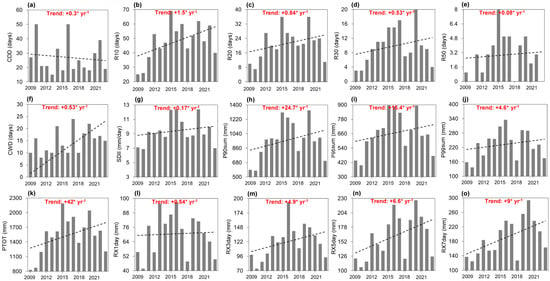
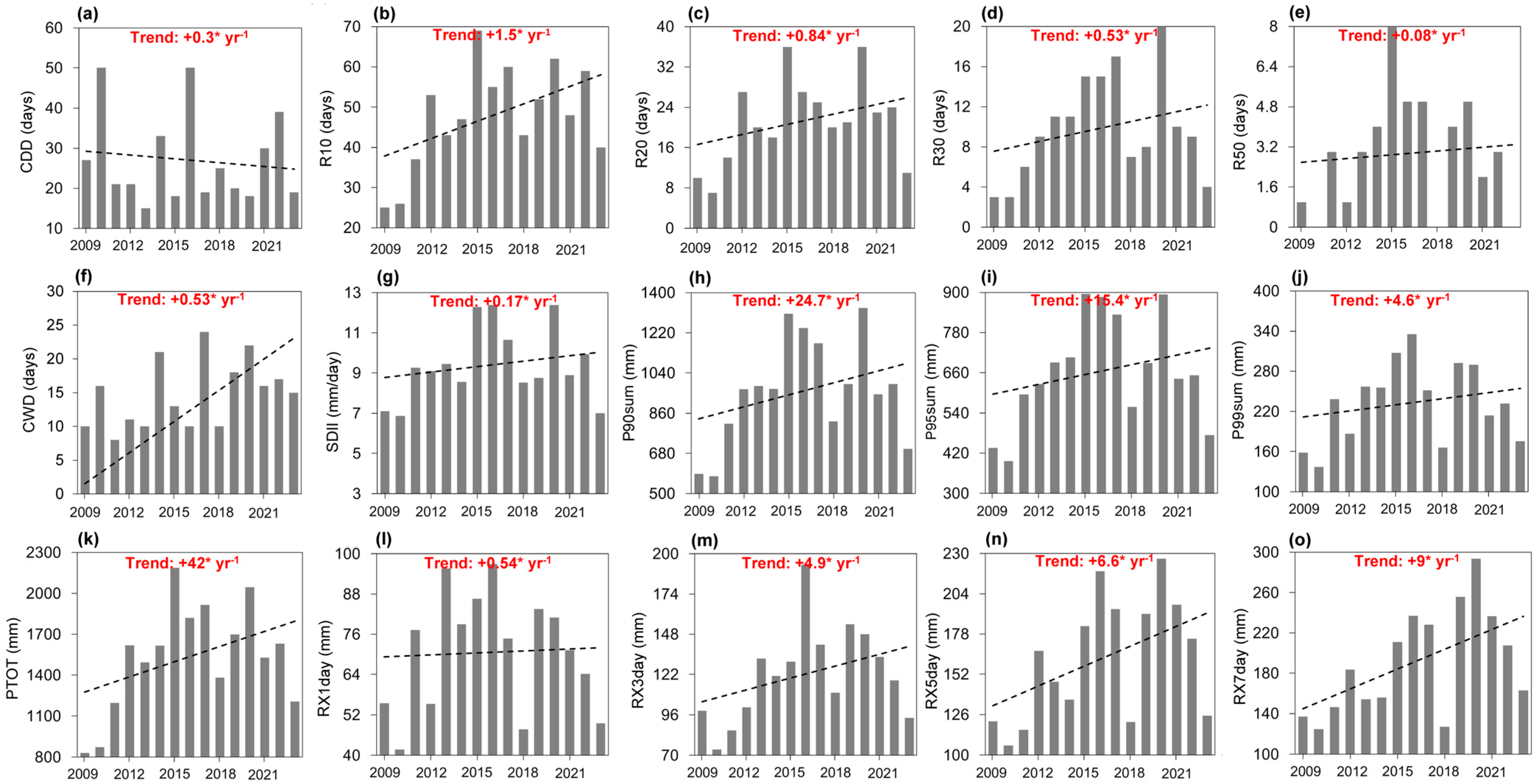
The spatial distribution and annual variations in extreme precipitation indices (EPs) in Liuzhou are illustrated by Figure 3 and Figure 4. Individual average values of EP frequency, duration, intensity, and amplitude were generally higher in the north than south of Liuzhou (Figure 3). Except CDD, highest EP levels occurred in steeper mountains in northwest, while weakest EP events mostly occurred in the flatter southwest (Figure 3). According to the ITA (Innovative Trend Analysis) results, the regionally averaged EPs have markedly exacerbated from 2009 to 2023, with a stronger intensification of intensity (e.g., PTOT) and amplitude (e.g., P95 sum and RX7 day) compared with other aspects of EP. Influenced by the same level of urbanization, higher-grade EP events seem to aggravate more strongly; for instance, the maxima indices increased by 0.54 to 9 mm per year for RX1 day to RX7 day (Figure 4).
Figure 3.
Spatial variations in each annual EP index based on daily precipitation in Liuzhou during 2009–2023.
Figure 4.
(a–o) Long-term time series and change trends detected by ITA (* noted in red) for each annual EP index based on daily precipitation averaged in Liuzhou during 2009–2023.
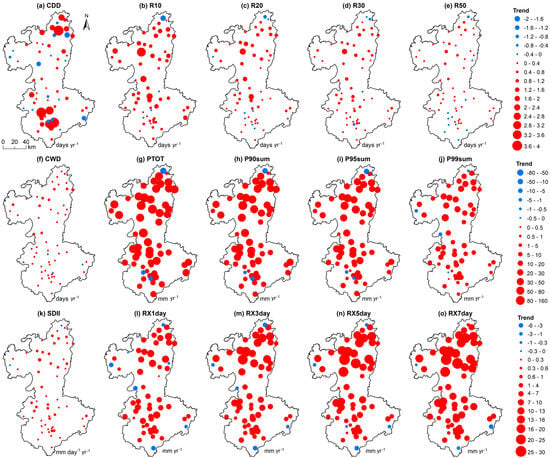
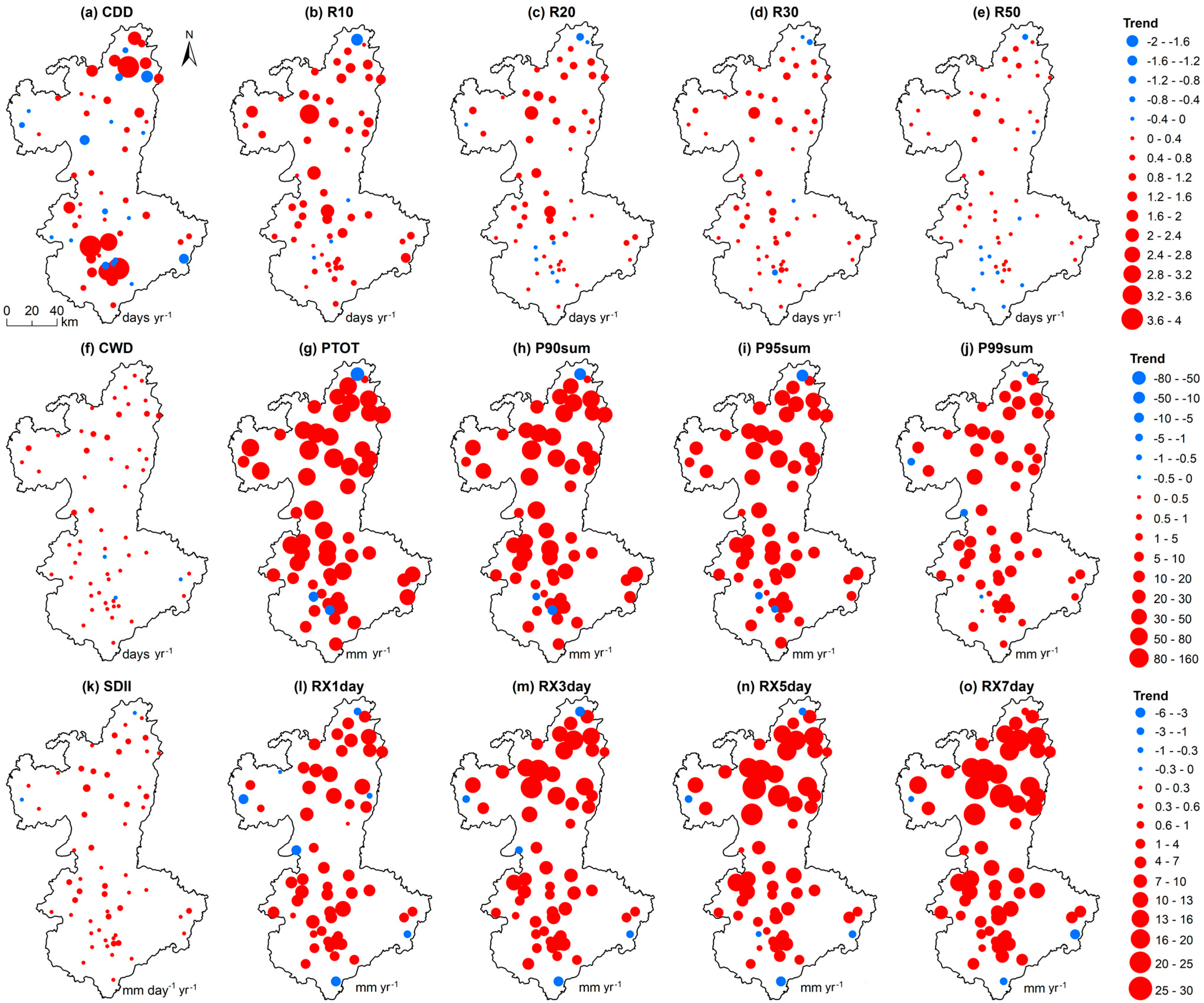
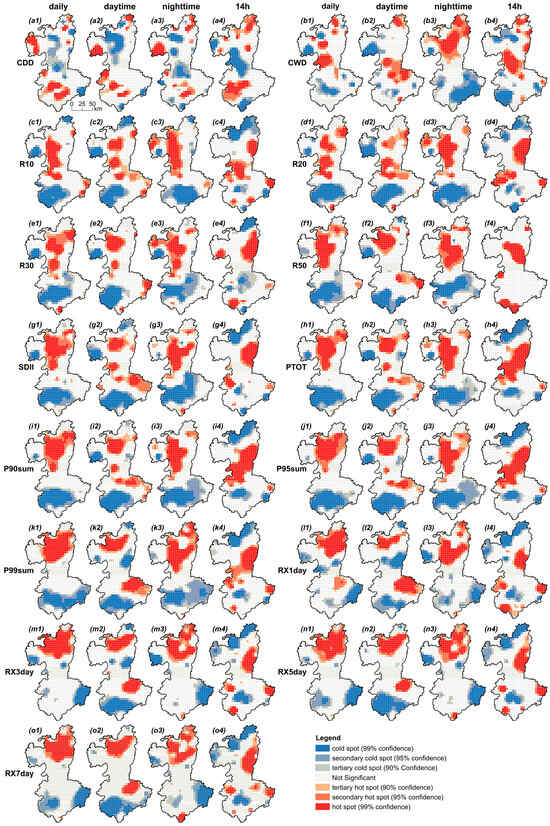
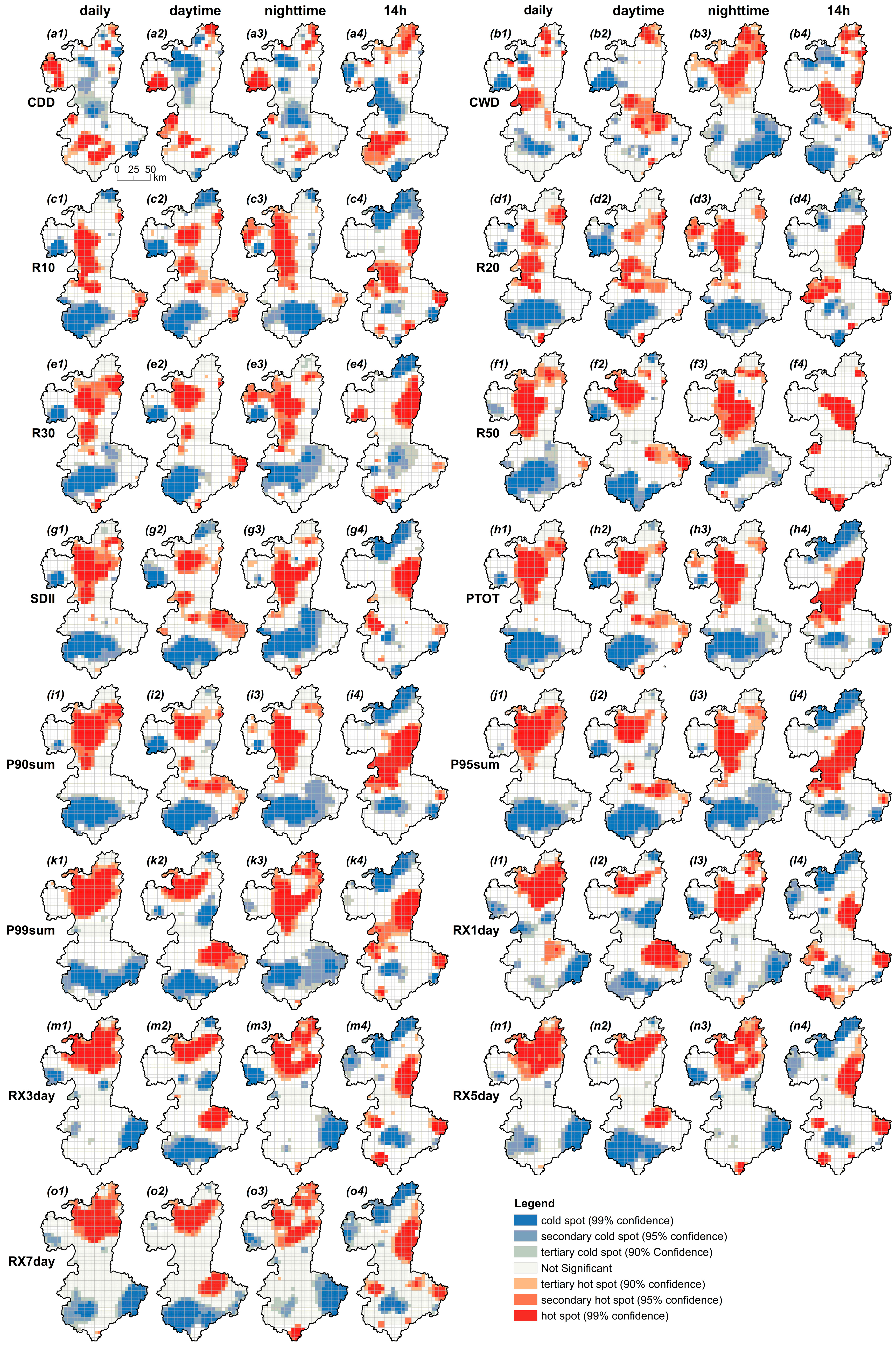
The station-based EP changes varied considerably across Liuzhou (Figure 5). The duration (Figure 5a,f), frequency (Figure 5b–e), intensity (Figure 5g,k), and amplitude (Figure 5h–j,l–o) of extreme precipitation exhibit significant (at the 95% confidence level) upwards trends at the majority of stations (i.e., 43–55 out of 59 stations). The intensity of EP has exacerbated more prominently, with greater spatial variability than EP time indices (Figure 5). EP intensified to a greater extent in the north than flatter south of Liuzhou. Clear hot or cold spots of change trends for EP indices were detected for different time scales. The (secondary) cold and (secondary) hot spots with confidence levels above 95% account for 18.9% and 18.2% of Liuzhou, respectively, on average (Figure 6). According to the analysis results of hot or cold spots, the strongest increases in CDD cluster primarily in the northeast and southwest. Unlike the common pattern of hot spots distributed in the north while cold spots in south, hot spots of daytime or 14 h scale sometimes additionally extended to the southeastern or central-eastern parts of Liuzhou (Figure 6). The regional and station-based tendency in addition to hot spot distributions suggest that EP events tend to occur more frequently and fiercely, exhibiting distinct spatial variations.
Figure 5.
Annual change trends for the station-based EP based on daily precipitation in Liuzhou during 2009–2023.
Figure 6.
The distributions of hot or cold spots for annual change trend for EP indices (a1–a4) CDD, (b1–b4) CWD, (c1–c4) R10, (d1–d4) R20, (e1–e4) R30, (f1–f4) R50, (g1–g4) SDII, (h1–h4) PTOT, (i1–i4) P90sum, (j1–j4) P95sum, (k1–k4) P99sum, (l1–l4) RX1day, (m1–m4) RX3day, (n1–n4) RX5day, and (o1–o4) RX7day that were individually derived based on daily, daytime, nighttime, and 14 h–precipitation in Liuzhou during 2009–2023.
3.2. Spatial Dependency of EPs on Urbanization
The global bivariate Moran’s I results indicate significant negative associations between CUB and EP indices, except for positive correlation for CDD (for all other EPs: Moran’s I values <0, p-values < 0.05 except for RX1 day on the daily scale) (Figure 7). It suggested that extreme precipitation seemed to intensify more strongly in less urbanized mountains rather than highly urbanized areas. This might be attributed to weak positive feedback on local precipitation by increasing air humidity through transpiration of widespread forests or shrubland at highest elevations (Table 2). The Moran’s I values (range: −0.394–−0.042) denote the differences in the negative correlation degree among EP aspects and grades, as well as time scales. The global negative correlation became strongest between CUB and intensity or amplitude (average Moran’s I: −0.26–−0.25), while the dependency of EP frequency (average Moran’s I: −0.24) and maxima (average Moran’s I: −0.17) on CUB was comparatively weaker (Figure 7). Nighttime-scale EPs were more strongly and negatively correlated with CUB than other scales for most of the time.
Figure 7.
Bivariate Moran’s I between comprehensive urbanization level (CUB) and individual annual indices of extreme precipitation (EP) across different time scales during 2009–2023.
Table 2.
The elevation of each land use type of Liuzhou in 2020.
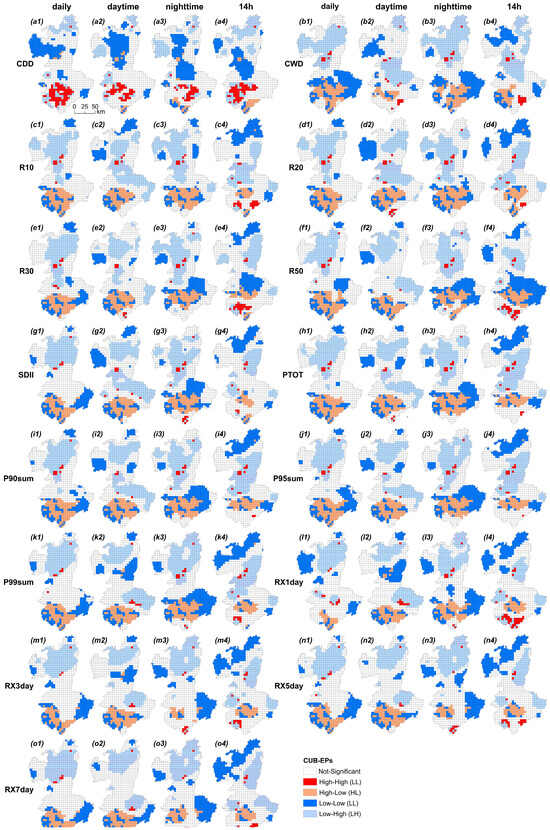
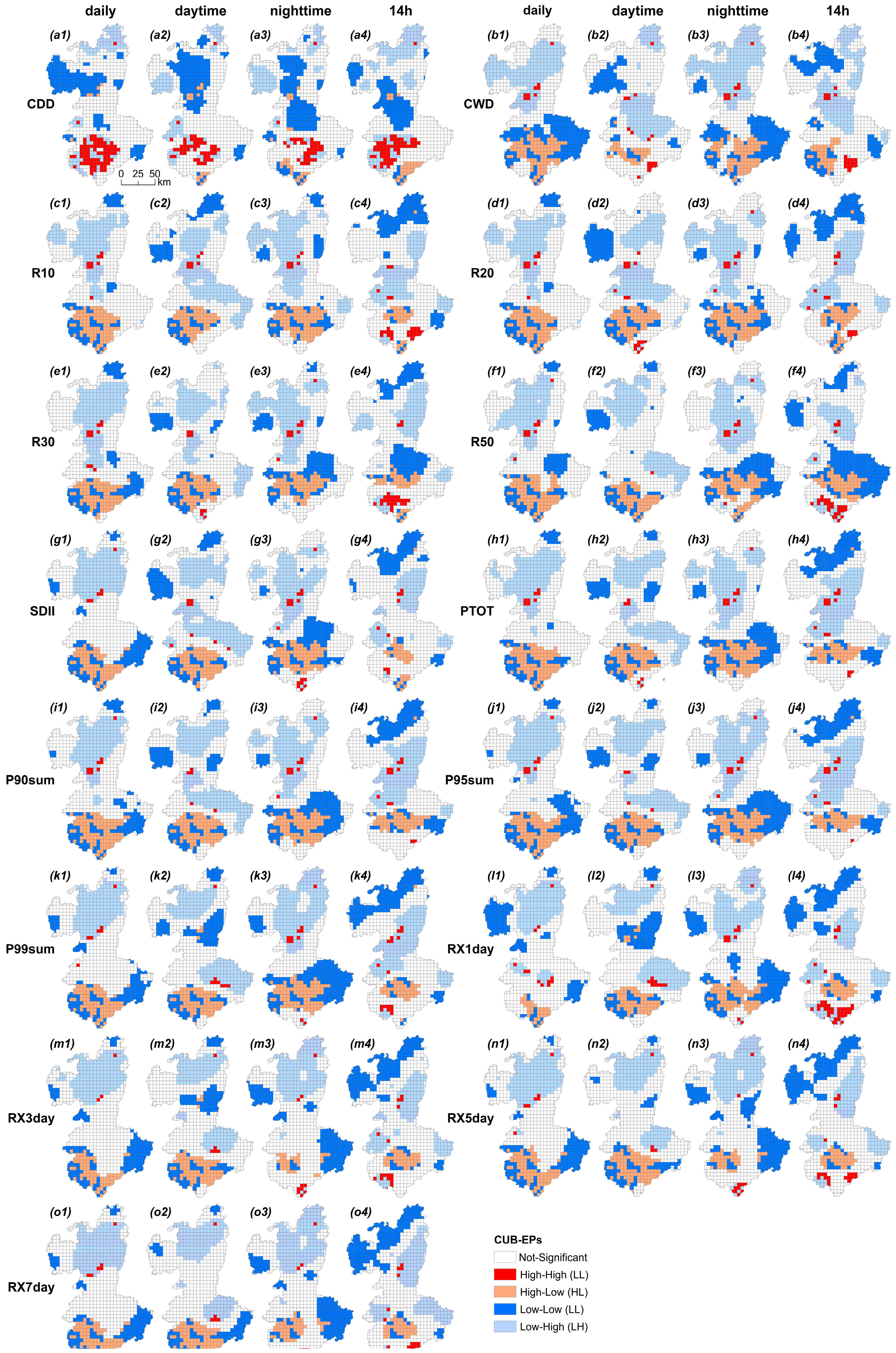
Despite the negative correlation at the global scale, four distinct spatial correlation types between CUB and each EP index were observed using bivariate LISA maps (Figure 8). EP indices derived at daytime or nighttime scales usually presented aggregation patterns similar to those at the daily scale. The aggregation behavior of 14 h-scale EPs and CUB, however, was fundamentally different from those at other scales, particularly in the north of Liuzhou. The areas dominated by HL and LH for all indices were wider (18.5–40.7%) and more concentrated than HH and LL patterns (16.6–29.1%). The HH areas occupied the lowest percentage and were scattered in central and southernmost parts with lower elevation below 200 m on average (Figure 1 and Table 2). This is due to the lack of effective terrain uplifts facilitating precipitation formation in relatively flat, high-urbanized areas. HL concentrated around major downtown areas in the south of Liuzhou, similar to the distributions of high GDP and population density (Figure 2).
Figure 8.
LISA cluster maps between comprehensive urbanization level (CUB) and annual average EP indices (a1–a4) CDD, (b1–b4) CWD, (c1–c4) R10, (d1–d4) R20, (e1–e4) R30, (f1–f4) R50, (g1–g4) SDII, (h1–h4) PTOT, (i1–i4) P90sum, (j1–j4) P95sum, (k1–k4) P99sum, (l1–l4) RX1day, (m1–m4) RX3day, (n1–n4) RX5day, and (o1–o4) RX7day that were individually derived based on daily, daytime, nighttime, or 14 h–scale precipitation, respectively.
3.3. Spatially Varying Effects of Urbanization on EPs
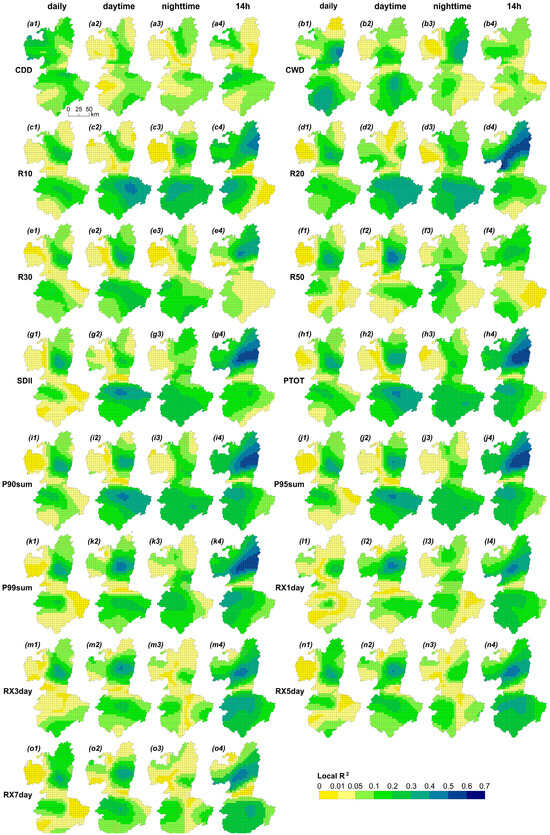
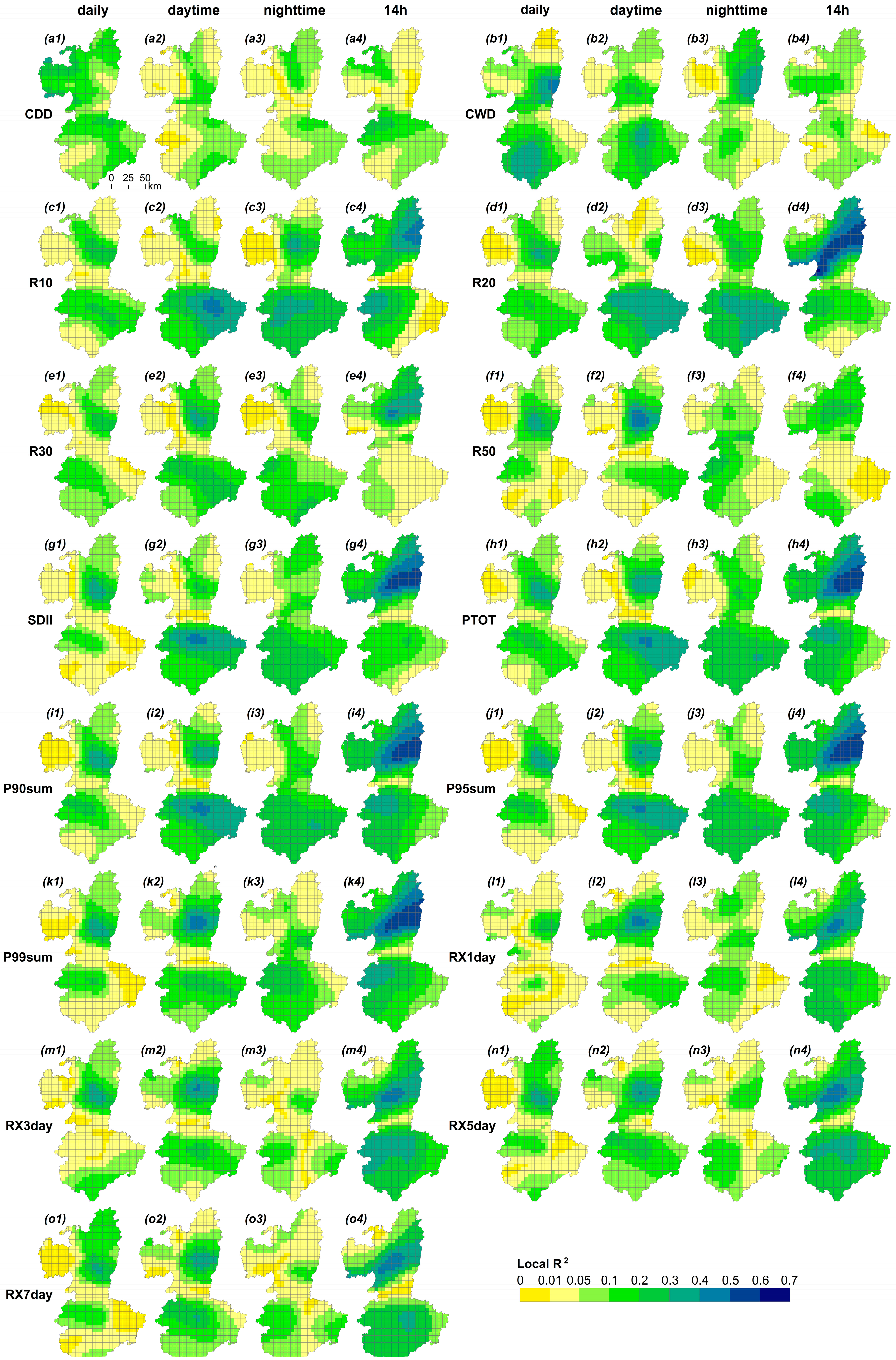
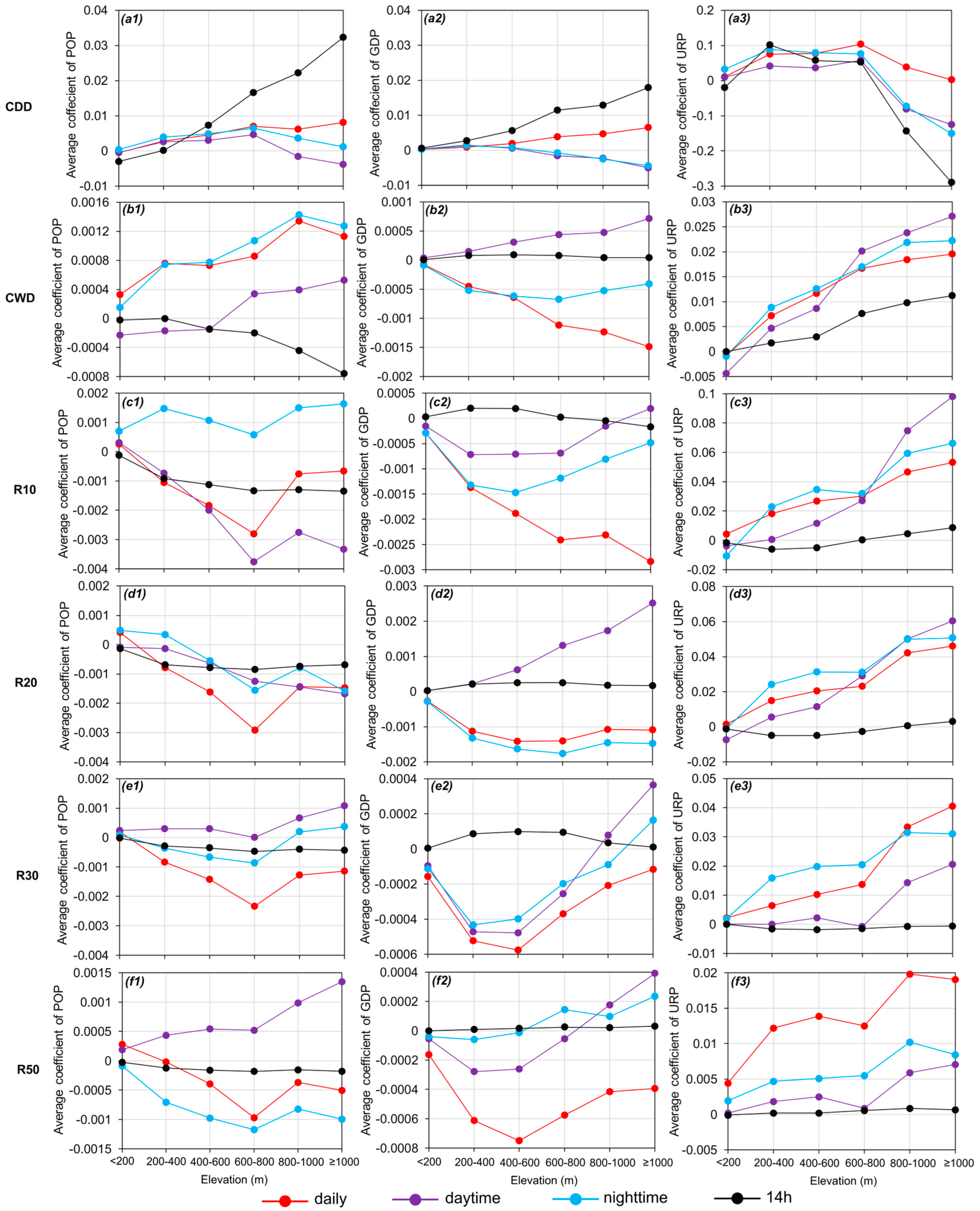
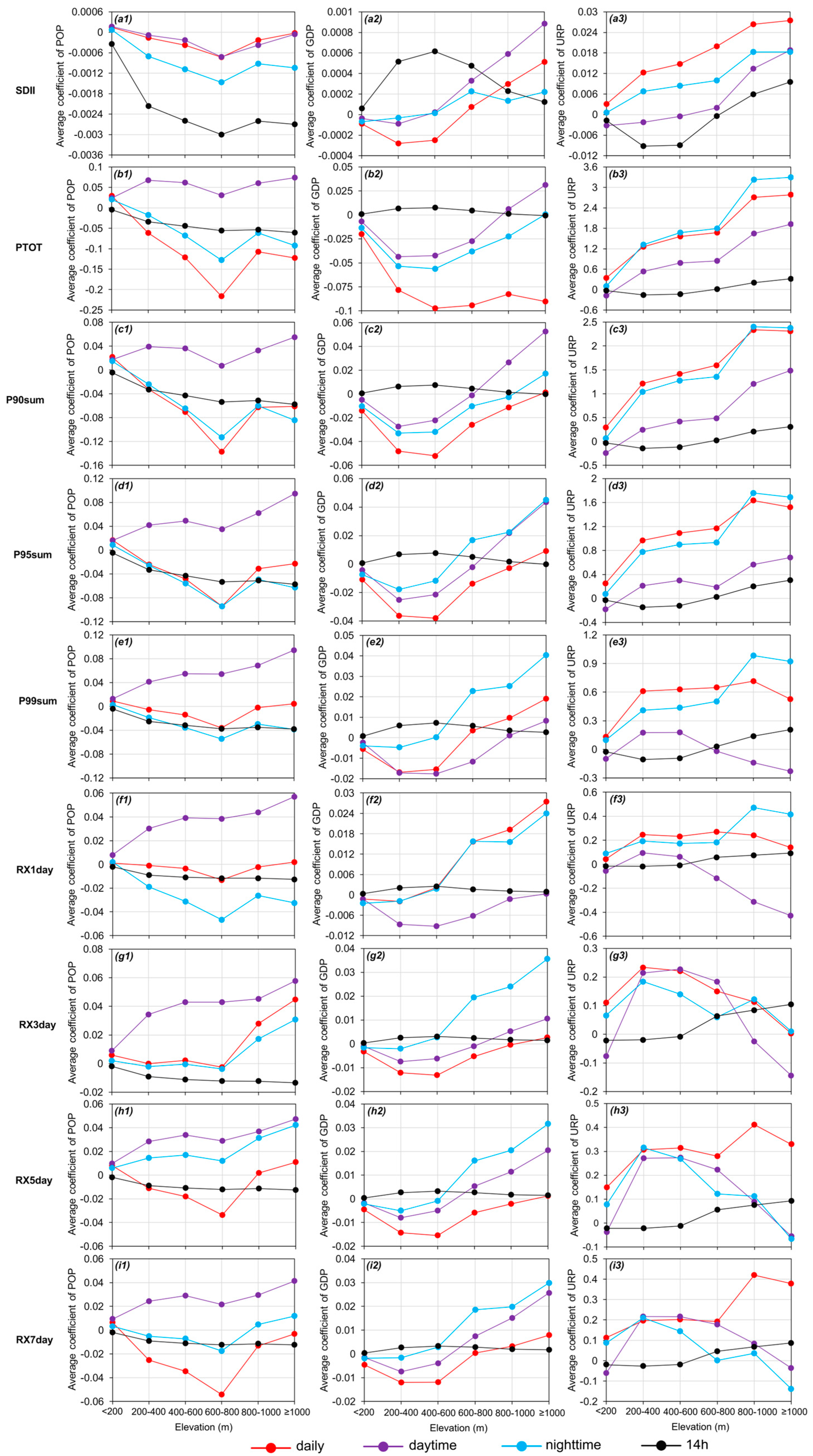
The GWR model precisely predicted influences of urbanization on EPs, which were indicated by adjusted R2 values of 0.5–0.8 for EP indices except CDD and R30 (average adj. R2: 0.37–0.47) (Table 3). The local R2 (Figure 9) and coefficients (Figure 10 and Figure 11) explicitly depicted the spatial variations in the impacts of urbanization on different EP indices. At the 14 h scale, GWR was more explanatory in the northeast of Liuzhou for most indices. At other scales, GWR explained relationships between EPs (except CDD) and three urbanization predictors more precisely in flatter southern areas dominated by higher urbanization levels (Figure 2 and Figure 9). The spatial variations in the explaining power of GWR should be related to the more complex forcing effect of terrain in steeper hills in the north of Liuzhou. Looking at the local relationships, POP and GDP often presented negative relationships with most EPs particularly when elevation was below 800 m. URP had positive influences on EPs in 22.3–91.7% of the total area, except for slightly weak negative influences in flat areas below 200 m, primarily driven by stronger urban heat island (UHI) effects and more urban aerosol emissions. Moreover, the local regression coefficients of daily-, daytime-, or nighttime-scale GWR models exhibited similar dynamic tendencies across different elevation grades, which mostly declined from <200 m to 400–600 m or to 600–800 m, and then increased with rising elevations. The variations in the urbanization impacting degree along with elevations might be partly explained by stronger thermal uplift effects in flat urban areas and the potential formation of mountain rainfall due to terrain forcing within a certain elevation scope [32,35]. The positive influences of URP decreased with higher elevation only for some maxima indices. The influences of three single urbanization predictors on EPs all varied to a lesser extent across different elevation grades at the 14 h scale compared with other scales, due to the relatively minor fluctuations of EP levels at 14:00.
Table 3.
Adjusted R2 values of GWR on urbanization variables (i.e., POP, GDP, and URP) and annual EP indices at daily, daytime, nighttime, and 14 h scale, respectively.
Figure 9.
Local R2 values of Geographically Weighted Regression applied on three single urbanization variables (i.e., POP, GDP, and URP) and changes of annual EP indices (a1–a4) CDD, (b1–b4) CWD, (c1–c4) R10, (d1–d4) R20, (e1–e4) R30, (f1–f4) R50, (g1–g4) SDII, (h1–h4) PTOT, (i1–i4) P90sum, (j1–j4) P95sum, (k1–k4) P99sum, (l1–l4) RX1day, (m1–m4) RX3day, (n1–n4) RX5day, and (o1–o4) RX7day that were derived at daily, daytime, nighttime, or 14 h scale, respectively.
Figure 10.
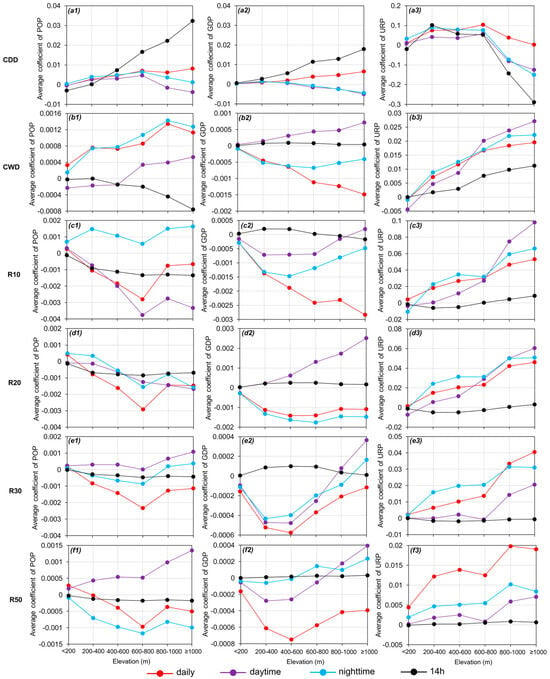
GWR coefficients of three single urbanization variables for annual EP duration or frequency indices (a1–a3) CDD, (b1–b3) CWD, (c1–c3) R10, (d1–d3) R20, (e1–e3) R30, and (f1–f3) R50 that were respectively derived at different time scales (daily, daytime, nighttime, and 14 h) and elevation grades.
Figure 11.
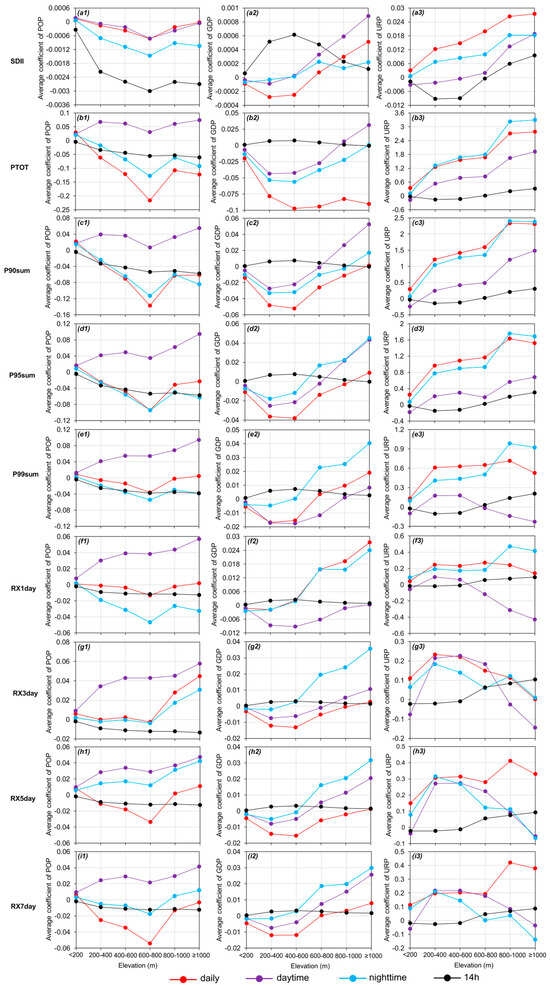
GWR coefficients of three single urbanization variables for annual EP intensity or amplitude indices (a1–a3) SDII, (b1–b3) PTOT, (c1–c3) P90sum, (d1–d3) P95sum, (e1–e3) P99sum, (f1–f3) RX1day, (g1–g3) RX3day, (h1–h3) RX5day, and (i1–i4) RX7day that were respectively derived at different time scales (daily, daytime, nighttime, and 14 h) and elevation grades.
4. Discussion
The evolution of extreme precipitation (EP) and its drivers have aroused increasing attention worldwide in recent decades [5,24,27,59]. Besides global warming, extreme precipitation can be triggered by expanded artificial surface and different aerosol emission to occur more frequently and strongly during urbanization [60,61]. Over mountainous regions, EP process varies spatially depending on prominent topographic fluctuations and manifests obvious non-stationary responses to urbanization development shaped by surrounding terrain characteristics.
During the same urbanization progress, EP events tend to aggravate to different extents for different aspects or grades. The findings of this analysis indicate: the intensity (e.g., PTOT) and amplitude (e.g., P95 sum or RX7 day) of extreme precipitation have increased far more markedly over urbanization than other aspects of it (Figure 4) and their increases showed more spatial heterogeneity (Figure 5). These findings collectively imply that EP intensity or amplitude might be subject to more non-stationarity on spatial and temporal scales, due to the combined influences of urbanization and topographic fluctuations. Similarly, the previous study reported that amplitude indices of extreme precipitation, rather than its frequency, were more attributed to urbanization in Tai Lake Plain in East China [19]. Unlike the finding that smaller EP events respond more sensitively to urbanization [19], this study indicated that more severe and longer-lasting extreme climate events seemed to intensify in a more sensitive way than lower-grade events during urbanization. Stronger intensification was also observed for other severe extreme climate events (e.g., heat waves) due to urbanization in southwestern China [62]. The varying EP trends across space revealed that EP increased most in the topographically steeper north while least in the flatter south, exhibiting an explicit south–north varying pattern, which agrees with prevailing distributions of EP levels (Figure 3). Particularly, steeper hills in the northeast can be regarded as potential hot spots that suffer from increasingly serious storm floods or relevant secondary disasters. More real-time and efficient forecasts of extreme precipitation or flood progression are urgently needed in these key areas of Liuzhou.
Previous studies have primarily focused on lumped relationships between urbanization and EP at a certain single temporal scale. This analysis can fill in the gap of quantifying the spatio-temporal effects of urbanization on different behaviors of EP events. The relatively flat and rapidly urbanized areas used to be the focus of previous studies; however, hills or mountains have been seldom touched [1,27,63]. This analysis revealed the spatial processes of how urbanization affected EP events in a typical terrain area in the southwest and southeast transition of China on the first attempt. It innovatively elaborated not only on the spatial heterogeneity of the associations between EPs and urbanization, but also on the temporal-scale effects of them from multiple perspectives in Liuzhou, Guangxi province. Previous studies primarily explored regionally lumped impacts on extreme climate at national or provincial scale [21,64,65]. This study identified variations in cause-effect relationships at a finer spatial scale (5 km grid) using a dense distribution of precipitation stations and multisource urban datasets in Liuzhou. Despite the negative global spillover effects of comprehensive urbanization on EPs, the local HH clusters (in a few central or southwestern areas) were also detected by LISA map (Figure 8). These findings imply that higher comprehensive urbanization levels (CUB) in a few flat edge areas can lead to the intensification of EPs in the proximities, which need more attention to cope with potentially higher flood risks during urbanization. In addition, local coefficients of urbanization predictors (POP and GDP) for EPs in GWR models mostly rose more markedly when elevation exceeded 800 m except at the 14 h scale. By contrast, the local positive coefficients of URP were observed in most areas above 200 m and they increased to an extent with elevation rising to above 1000 m for EPs except some CDD and maxima indices at diurnal scales. These findings imply that compared with population or economy increase, urban area expansion is more likely to induce EP to intensify with the context of specific topographic surroundings. The influencing strength of urbanization on 14 h-scale EPs was found to be weaker than those of other scales, suggesting that EP characteristics of smaller temporal scale were less linked to urbanization, probably due to relatively lower values of 14 h-scale EP and related changes than other scales. Nevertheless, the minor spatial fluctuations of them across elevation gradients imply that urbanization might contribute a more spatially stable role in altering hourly EP. Contrarily, the presence of urban areas was simulated to induce hourly extreme precipitation intensity to increase by 26%, doubling of the increase in daily extreme intensity in Pearl River Delta, China [66]. The different findings highlight the potential uncertainty in scale effects of urbanization influences, which necessitates the further investigation of finer-scale extreme precipitation dynamics dominated by typical climatic and topographic patterns. The varying behaviors of EPs differed by elevation at different temporal scales demonstrate that separate efforts are needed for different altitude classes to more efficiently combat different-grade storm flood risks in future.
Overall, the approaches covered in this study demonstrated their capability to unravel the spatial non-stationarity of EP variations and of their associations with urbanization. They innovatively and quantitatively compared different impacts of urbanization characteristics, with respect to urban area expansion, population, and economic development on extreme precipitation. In addition, this study systematically identified, for the first time in Liuzhou, the temporal or topographic scale effects of urbanization on various aspects of extreme precipitation. This finding provides novel insights for advancing finer-scale cause-effect research on global extreme climate change and adaptation. However, this study manifested some limitations, for example, the results of urbanization effects on extreme climate change would be more reliable and representative if more continued and longer times series and spatial data across multi-faceted urbanization sectors were incorporated. To better understand how topography modulates the impact of urbanization on extreme precipitation, future research should disentangle their linkages by incorporating detailed topographic characteristics beyond mere elevation.
5. Conclusions
This study investigated systematically the secular variations in multiple aspects of annual extreme precipitation (incl. its duration, frequency, intensity and magnitude) from 2009 to 2023 and their interactions with different urbanization characteristics in Liuzhou, Guangxi province. The applied approaches covered the spatial dependency of multifaceted EPs on urbanization and the urbanization effects on EPs to unravel urbanization impacts on extreme precipitation behaviors throughout Liuzhou.
From 2009 to 2023, extreme precipitation (EP) activities have strongly intensified, with the highest increase in the steeper northeast of the region. The increases in EP intensity or amplitude displayed greater variations across Liuzhou than those of EP time indices. This finding signifies that, compared with occurrence frequency or duration, the magnitude of extreme precipitation might be more vulnerable to disturbance by urbanization and other underlying factors. Compared to other temporal scales, spots of stronger increases in daytime- and 14 h-scale EPs additionally expanded to the central-east or southeast of Liuzhou. The behaviors of EP are, therefore, in high need of wide attention, particularly for its intensity around northeastern or central-eastern mountains in Liuzhou during urbanization. The global negative spillover effects that occurred in the spatial relationships between EPs and comprehension urbanization level (CUB) signify that severe extreme precipitation tended to occur farther away from highly urbanized flat areas overall, which is contrary to the positive spatial dependence of precipitation on urbanization in some other places in the world [21,67,68]. Local scale enabled the classification of the spatial correlation between EPs and CUB as HH, HL, LH, and LL clusters with LISA maps. The visualization of spatial aggregation facilitates the formation of more informed decisions to decrease conflicts between urbanization surroundings and extreme precipitation. The impacting direction and strength that urbanization exerted on EPs were spatially heterogenous. Furthermore, urban area expansion positively affected EPs in more areas than other urbanization indicators. It suggested that urban construction should be given priority compared with other urbanization characteristics when digging drivers for extreme climate changes and combating related disasters in the world. Across time scales, urbanization effects on EPs responded to topographic fluctuations with less sensitivity at the 14 h scale. In turn, climate change will continue to affect urban systems through extreme events such as droughts and floods and thus pose a direct threat to infrastructure and public health particularly for vulnerable low-income groups and the elderly.
The study obtained distinct spatial variations in EPs and their change trends, which highlighted the importance of extreme climate change anticipation and hazard mitigation. The spatial non-stationarity of urbanization effects on EPs can be linked to more specific urban resilience enhancement or water security management.
Author Contributions
C.L., conceptualization, methodology, investigation, formal analysis, writing—original draft, writing—review and editing; Y.L., conceptualization, writing—review and editing; C.P., data curation, writing—review and editing; J.Z., data curation, writing—review and editing; S.Y., data curation, writing—review and editing, methodology; Y.W., data curation, writing—review and editing, methodology; K.C., writing—review and editing, methodology; Q.Y., review and editing; L.H., investigation, writing—review and editing, supervision. All authors have read and agreed to the published version of the manuscript.
Funding
This research work was supported by the Natural Science Foundation of Chongqing, China (Grant No. CSTB2023NSCQ-MSX0632), Foundation by Key Laboratory of Liuzhou Yuanbaoshan Topography Heavy Rain (2024ybssysm6), Science and Technology Research Program of Chongqing Municipal Education Commission (Grant No. KJQN202300551, KJQN202500567, KJZD-5202400501), Belt and Road Special Foundation of the State Key Laboratory of Water Disaster Prevention (Grant No. 2023490911), Science Foundation of Chongqing Normal University (Grant No. 23XLB006), Natural Science Foundation of Hunan Province (Grant 2024JJ4030) and National Natural Science Foundation of China (Grant No. 42271035, U2340217).
Data Availability Statement
Restrictions apply to the availability of these data. Data were obtained from Liuzhou Meteorological Bureau and are available from corresponding author with the permission of Liuzhou Meteorological Bureau.
Acknowledgments
The authors gratefully acknowledge the provision of high-resolution precipitation data by the Liuzhou Meteorological Bureau.
Conflicts of Interest
The authors declare that they have no known competing financial interests or personal relationships that could have appeared to influence the work reported in this paper.
References
- Chen, F.; Wu, M.; Dong, M.; Yu, B. Comparison of the impacts of topography and urbanization on an extreme rainfall event in the Hangzhou Bay region. J. Geophys. Res. Atmos. 2022, 127, e2022JD037060. [Google Scholar] [CrossRef] [Scilit]
- Wanyama, D.; Bunting, E.L.; Weil, N.; Keellings, D. Delineating and characterizing changes in heat wave events across the United States climate regions. Clim. Change 2023, 176, 6. [Google Scholar] [CrossRef] [Scilit]
- Easterling, D.R.; Evans, J.L.; Groisman, P.Y.; Karl, T.R.; Kunkel, K.E.; Ambenje, P. Observed variability and trends in extreme climate events: A brief review. Bull. Am. Meteorol. Soc. 2000, 81, 417–426. [Google Scholar] [CrossRef] [Scilit]
- Zhao, Z.; Huo, A.; Liu, Q.; Yang, L.; Luo, C.; Ahmed, A.; Elbeltagi, A. Assessment of urban inundation and prediction of combined flood disaster in the middle reaches of Yellow river basin under extreme precipitation. J. Hydrol. 2024, 640, 131707. [Google Scholar] [CrossRef] [Scilit]
- de Souza, D.C.; Crespo, N.M.; da Silva, D.V.; Harada, L.M.; de Godoy, R.M.P.; Domingues, L.M.; Luiz, R.; Bortolozo, C.A.; Metodiev, D.; de Andrade, M.R.M. Extreme rainfall and landslides as a response to human-induced climate change: A case study at Baixada Santista, Brazil, 2020. Nat. Hazards 2024, 120, 10835–10860. [Google Scholar] [CrossRef] [Scilit]
- Eekhout, J.P.; Hunink, J.E.; Terink, W.; de Vente, J. Why increased extreme precipitation under climate change negatively affects water security. Hydrol. Earth Syst. Sci. 2018, 22, 5935–5946. [Google Scholar] [CrossRef] [Scilit]
- Wang, P.; Deng, X.; Zhou, H.; Qi, W. Responses of urban ecosystem health to precipitation extreme: A case study in Beijing and Tianjin. J. Clean. Prod. 2018, 177, 124–133. [Google Scholar] [CrossRef] [Scilit]
- Zeleňáková, M.; Gaňová, L.; Purcz, P.; Horský, M.; Satrapa, L.; Blišťan, P.; Diaconu, D. Mitigation of the adverse consequences of floods for human life, infrastructure, and the environment. Nat. Hazards Rev. 2017, 18, 05017002. [Google Scholar] [CrossRef] [Scilit]
- United Nations, Department of Economic and Social Affairs. Population Division (2019). In World Urbanization Prospects: The 2018 Revision (ST/ESA/SER.A/420); United Nations: New York, NY, USA, 2019. [Google Scholar]
- Tanoori, G.; Soltani, A.; Modiri, A. Machine learning for urban heat island (UHI) analysis: Predicting land surface temperature (LST) in urban environments. Urban Clim. 2024, 55, 101962. [Google Scholar] [CrossRef] [Scilit]
- Deilami, K.; Kamruzzaman, M.; Liu, Y. Urban heat island effect: A systematic review of spatio-temporal factors, data, methods, and mitigation measures. Int. J. Appl. Earth Obs. Geoinf. 2018, 67, 30–42. [Google Scholar] [CrossRef] [Scilit]
- Rajagopalan, P.; Lim, K.C.; Jamei, E. Urban heat island and wind flow characteristics of a tropical city. Sol. Energy 2014, 107, 159–170. [Google Scholar] [CrossRef] [Scilit]
- Huff, F.; Changnon, S. Precipitation modification by major urban areas. Bull. Am. Meteorol. Soc. 1973, 54, 1220–1233. [Google Scholar] [CrossRef] [Scilit]
- Yang, L.; Smith, J.A.; Baeck, M.L.; Bou-Zeid, E.; Jessup, S.M.; Tian, F.; Hu, H. Impact of urbanization on heavy convective precipitation under strong large-scale forcing: A case study over the Milwaukee–Lake Michigan region. J. Hydrometeorol. 2014, 15, 261–278. [Google Scholar]
- Shastri, H.; Paul, S.; Ghosh, S.; Karmakar, S. Impacts of urbanization on Indian summer monsoon rainfall extremes. J. Geophys. Res. Atmos. 2015, 120, 496–516. [Google Scholar] [CrossRef] [Scilit]
- Changnon, S.A. The La Porte weather anomaly—Fact or fiction? Bull. Am. Meteorol. Soc. 1968, 49, 4–11. [Google Scholar] [CrossRef] [Scilit]
- Shepherd, J.M. A review of current investigations of urban-induced rainfall and recommendations for the future. Earth Interact. 2005, 9, 1–27. [Google Scholar] [CrossRef] [Scilit]
- Donmez, B.; Donmez, K.; Diren-Ustun, D.H.; Unal, Y. Urbanization-induced changes in convective and frontal precipitation events in Ankara. Urban Clim. 2022, 46, 101316. [Google Scholar] [CrossRef] [Scilit]
- Lei, C.; Yu, Z.; Sun, X.; Wang, Y.; Yuan, J.; Wang, Q.; Han, L.; Xu, Y. Urbanization effects on intensifying extreme precipitation in the rapidly urbanized Tai Lake Plain in East China. Urban Clim. 2023, 47, 101399. [Google Scholar] [CrossRef] [Scilit]
- Pimonsree, S.; Limsakul, A.; Kammuang, A.; Kachenchart, B.; Kamlangkla, C. Urbanization-induced changes in extreme climate indices in Thailand during 1970–2019. Atmos. Res. 2022, 265, 105882. [Google Scholar]
- Golroudbary, V.R.; Zeng, Y.; Mannaerts, C.M.; Su, Z. Response of extreme precipitation to urbanization over the Netherlands. J. Appl. Meteorol. Climatol. 2019, 58, 645–661. [Google Scholar] [CrossRef] [Scilit]
- Tysa, S.K.; Ren, G.; Zhang, P.; Zhang, S. Impact of urbanization on regional extreme precipitation trends observed at China national station network. Weather Clim. Extrem. 2025, 48, 100760. [Google Scholar] [CrossRef] [Scilit]
- Gouraha, S.; Arya, D.S.; Srivastava, P. How urbanization and terrain characteristics shape precipitation and temperature patterns in complex geographies: A case study of the Doon Valley. Theor. Appl. Climatol. 2025, 156, 427. [Google Scholar] [CrossRef] [Scilit]
- Donmez, K.; Donmez, B.; Diren-Ustun, D.H.; Unal, Y. Boundary-dependent urban impacts on timing, pattern, and magnitude of heavy rainfall in Istanbul. Atmos. Res. 2023, 286, 106681. [Google Scholar]
- Rahmani, F.; Fattahi, M.H. Examining changes in daily rainfall patterns attributable to urbanization: A study of watershed hydrology transformation. Environ. Sci. Pollut. Res. 2025, 32, 18795–18819. [Google Scholar] [CrossRef] [Scilit]
- Huang, X.; Wang, D.; Ziegler, A.D.; Liu, X.; Zeng, H.; Xu, Z.; Zeng, Z. Influence of urbanization on hourly extreme precipitation over China. Environ. Res. Lett. 2022, 17, 044010. [Google Scholar] [CrossRef] [Scilit]
- Fu, Y.; Jiang, S.; Mao, Y.; Wu, G. Urbanization reshapes extreme precipitation metrics in typical urban agglomerations of Eastern China. Atmos. Res. 2024, 300, 107253. [Google Scholar] [CrossRef] [Scilit]
- Oh, S.-G.; Son, S.-W.; Min, S.-K. Possible impact of urbanization on extreme precipitation–temperature relationship in East Asian megacities. Weather Clim. Extrem. 2021, 34, 100401. [Google Scholar] [CrossRef] [Scilit]
- Li, Y.; Wang, W.; Chang, M.; Wang, X. Impacts of urbanization on extreme precipitation in the Guangdong-Hong Kong-Macau greater bay area. Urban Clim. 2021, 38, 100904. [Google Scholar] [CrossRef] [Scilit]
- Ter Maat, H.; Moors, E.; Hutjes, R.; Holtslag, A.; Dolman, A. Exploring the impact of land cover and topography on rainfall maxima in the Netherlands. J. Hydrometeorol. 2013, 14, 524–542. [Google Scholar] [CrossRef] [Scilit]
- Xu, X.; Huang, A.; Zhang, Y.; Yang, X.; Zhao, W. Impact of large-scale topography surrounding the Sichuan Basin on its regional hourly extreme precipitation in summer under specific weather patterns: Multi-case study. J. Geophys. Res. Atmos. 2025, 130, e2024JD042239. [Google Scholar]
- Prudhomme, C.; Reed, D.W. Relationships between extreme daily precipitation and topography in a mountainous region: A case study in Scotland. Int. J. Climatol. A J. R. Meteorol. Soc. 1998, 18, 1439–1453. [Google Scholar] [CrossRef] [Scilit]
- Li, Z.; He, Y.; Theakstone, W.H.; Wang, X.; Zhang, W.; Cao, W.; Du, J.; Xin, H.; Chang, L. Altitude dependency of trends of daily climate extremes in southwestern China, 1961–2008. J. Geogr. Sci. 2012, 22, 416–430. [Google Scholar] [CrossRef] [Scilit]
- Zhang, K.; Pan, S.; Cao, L.; Wang, Y.; Zhao, Y.; Zhang, W. Spatial distribution and temporal trends in precipitation extremes over the Hengduan Mountains region, China, from 1961 to 2012. Quat. Int. 2014, 349, 346–356. [Google Scholar] [CrossRef] [Scilit]
- Djebou, D.C.S.; Singh, V.P.; Frauenfeld, O.W. Analysis of watershed topography effects on summer precipitation variability in the southwestern United States. J. Hydrol. 2014, 511, 838–849. [Google Scholar] [CrossRef] [Scilit]
- Li, S.; Yang, S.; Ran, L. Impacts of changes in land cover and topography on a heavy precipitation event in Central Asia. Atmos. Ocean. Sci. Lett. 2022, 15, 100207. [Google Scholar] [CrossRef] [Scilit]
- Qin, N.X.; Wang, J.N.; Gao, L.; Hong, Y.; Huang, J.L.; Lu, Q.Q. Observed trends of different rainfall intensities and the associated spatiotemporal variations during 1958-2016 in Guangxi, China. Int. J. Climatol. 2021, 41, E2880–E2895. [Google Scholar] [CrossRef] [Scilit]
- Liu, M.X.; Xu, X.L.; Sun, A.Y.; Wang, K.L.; Liu, W.; Zhang, X.Y. Is southwestern China experiencing more frequent precipitation extremes? Environ. Res. Lett. 2014, 9, 14. [Google Scholar] [CrossRef] [Scilit]
- Liu, L.; Xu, Z.X. Regionalization of precipitation and the spatiotemporal distribution of extreme precipitation in southwestern China. Nat. Hazards 2016, 80, 1195–1211. [Google Scholar] [CrossRef] [Scilit]
- Nie, C.J.; Li, H.R.; Yang, L.S.; Ye, B.X.; Dai, E.F.; Wu, S.H.; Liu, Y.; Liao, Y.F. Spatial and temporal changes in extreme temperature and extreme precipitation in Guangxi. Quat. Int. 2012, 263, 162–171. [Google Scholar] [CrossRef] [Scilit]
- Zhang, J.X.; Liu, K.; Wang, M. Downscaling Groundwater Storage Data in China to a 1-km Resolution Using Machine Learning Methods. Remote Sens. 2021, 13, 523. [Google Scholar] [CrossRef] [Scilit]
- Lei, C.G.; Wang, Q.; Wang, Y.F.; Han, L.F.; Yuan, J.; Yang, L.; Xu, Y.P. Spatially non-stationary relationships between urbanization and the characteristics and storage-regulation capacities of river systems in the Tai Lake Plain, China. Sci. Total Environ. 2022, 824, 11. [Google Scholar] [CrossRef] [Scilit] [PubMed]
- Zheng, B.; Cheng, J.; Geng, G.N.; Wang, X.; Li, M.; Shi, Q.R.; Qi, J.; Lei, Y.; Zhang, Q.; He, K.B. Mapping anthropogenic emissions in China at 1 km spatial resolution and its application in air quality modeling. Sci. Bull. 2021, 66, 612–620. [Google Scholar] [CrossRef] [Scilit]
- Tank, A.M.G.K.; Zwiers, F.W.; Zhang, X. Guidelines on Analysis of Extremes in a Changing Climate in Support of Informed Decisions for Adaptation; World Meteorological Organization: Geneva, Switzerland, 2009; p. 72. [Google Scholar]
- Hong, Y.; Ying, S. Characteristics of extreme temperature and precipitation in China in 2017 based on ETCCDI indices. Adv. Clim. Change Res. 2018, 9, 218–226. [Google Scholar]
- Zhang, X.; Feng, Y.; Chan, R. RClimDex: Climate Indecies Calculation Software. R Package, Version 1.9-3; Climate Research Division: Toronto, ON, Canada, 2018.
- Şen, Z. Innovative trend analysis methodology. J. Hydrol. Eng. 2012, 17, 1042–1046. [Google Scholar] [CrossRef] [Scilit]
- Alashan, S. Comparison of sub-series with different lengths using sen-innovative trend analysis. Acta Geophys. 2023, 71, 373–383. [Google Scholar] [CrossRef] [Scilit]
- Sen, Z. Extreme value innovative trend analysis methodology. Int. J. Glob. Warm. 2022, 28, 297–310. [Google Scholar] [CrossRef] [Scilit]
- Körük, A.E.; Kankal, M.; Yildiz, M.B.; Akçay, F.; San, M.R.; Nacar, S. Trend analysis of precipitation using innovative approaches in northwestern Turkey. Phys. Chem. Earth 2023, 131, 16. [Google Scholar] [CrossRef] [Scilit]
- Lei, C.; Wang, Y.; Xu, Y. Spatiotemporal characteristics of different-grade extreme precipitation evolution detected by innovative trend analysis. Theor. Appl. Climatol. 2023, 154, 1119–1136. [Google Scholar] [CrossRef] [Scilit]
- Anselin, L.; Rey, S.J. Modern Spatial Econometrics in Practice: A Guide to GeoDa, GeoDaSpace and PySAL; Geoda Press LLC: Chicago, IL, USA, 2014. [Google Scholar]
- Getis, A. Spatial autocorrelation. In Handbook of Applied Spatial Analysis; Springer: Berlin/Heidelberg, Germany, 2010. [Google Scholar]
- Gao, Y.; Zhao, J.; Han, L. Exploring the spatial heterogeneity of urban heat island effect and its relationship to block morphology with the geographically weighted regression model. Sust. Cities Soc. 2022, 76, 103431. [Google Scholar] [CrossRef] [Scilit]
- Sisman, S.; Aydinoglu, A.C. A modelling approach with geographically weighted regression methods for determining geographic variation and influencing factors in housing price: A case in Istanbul. Land Use Policy 2022, 119, 106183. [Google Scholar] [CrossRef] [Scilit]
- Guo, B.; Wang, X.; Pei, L.; Su, Y.; Zhang, D.; Wang, Y. Identifying the spatiotemporal dynamic of PM2.5 concentrations at multiple scales using geographically and temporally weighted regression model across China during 2015–2018. Sci. Total Environ. 2021, 751, 141765. [Google Scholar] [CrossRef] [Scilit]
- Patakamuri, S.K.; Das, B. Package ‘trendchange’, Version 1.2; CRAN, R-Project: 2022. Available online: https://cran.r-project.org/web/packages/trendchange/index.html (accessed on 1 December 2025).
- Millard, S.P. EnvStats: An R Package for Environmental Statistics; Springer Science & Business Media: Berlin/Heidelberg, Germany, 2013. [Google Scholar]
- Rajeswari, J.; Srinivas, C.; Yesubabu, V.; Hari Prasad, D.; Venkatraman, B. Impacts of urbanization, aerodynamic roughness, and land surface processes on the extreme heavy rainfall over Chennai, India. J. Geophys. Res. Atmos. 2021, 126, e2020JD034017. [Google Scholar] [CrossRef] [Scilit]
- Xie, X.; Lin, K.; Xiao, M.; Zhou, X.; Zhao, G.; Yamazaki, D. How does heavy precipitation of varying durations respond to urbanization in China? Earth’s Future 2024, 12, e2023EF004412. [Google Scholar] [CrossRef] [Scilit]
- Marelle, L.; Myhre, G.; Steensen, B.M.; Hodnebrog, Ø.; Alterskjær, K.; Sillmann, J. Urbanization in megacities increases the frequency of extreme precipitation events far more than their intensity. Environ. Res. Lett. 2020, 15, 124072. [Google Scholar] [CrossRef] [Scilit]
- Lei, C.G.; Pan, C.Y.; Wang, Y.F.; Han, L.F.; Song, S. Urbanization effects on heat waves characterized by high topographic relief in a typical mountainous urban region. Urban Clim. 2025, 62, 14. [Google Scholar] [CrossRef] [Scilit]
- Deng, P.; Zhang, M.; Hu, Q.; Wang, L.; Bing, J. Pattern of spatio-temporal variability of extreme precipitation and flood-waterlogging process in Hanjiang River basin. Atmos. Res. 2022, 276, 106258. [Google Scholar] [CrossRef] [Scilit]
- Xing, Y.; Ni, G.; Yang, L.; Yang, Y.; Xing, P.; Sun, T. Modeling the impacts of urbanization and open water surface on heavy convective rainfall: A case study over the emerging Xiong’an City, China. J. Geophys. Res. Atmos. 2019, 124, 9078–9098. [Google Scholar] [CrossRef] [Scilit]
- Niyogi, D.; Lei, M.; Kishtawal, C.; Schmid, P.; Shepherd, M. Urbanization impacts on the summer heavy rainfall climatology over the eastern United States. Earth Interact. 2017, 21, 1–17. [Google Scholar] [CrossRef] [Scilit]
- Deng, Z.; Wu, X.; Villarini, G.; Wang, Z.; Zeng, Z.; Lai, C. Stronger exacerbation of extreme rainfall at the hourly than daily scale by urbanization in a warming climate. J. Hydrol. 2024, 633, 131025. [Google Scholar] [CrossRef] [Scilit]
- Pathirana, A.; Denekew, H.B.; Veerbeek, W.; Zevenbergen, C.; Banda, A.T. Impact of urban growth-driven landuse change on microclimate and extreme precipitation—A sensitivity study. Atmos. Res. 2014, 138, 59–72. [Google Scholar] [CrossRef] [Scilit]
- Wang, D.; Jiang, P.; Wang, G.; Wang, D. Urban extent enhances extreme precipitation over the Pearl River Delta, China. Atmos. Sci. Lett. 2015, 16, 310–317. [Google Scholar] [CrossRef] [Scilit]



Disclaimer/Publisher’s Note: The statements, opinions and data contained in all publications are solely those of the individual author(s) and contributor(s) and not of MDPI and/or the editor(s). MDPI and/or the editor(s) disclaim responsibility for any injury to people or property resulting from any ideas, methods, instructions or products referred to in the content. |
© 2025 by the authors. Licensee MDPI, Basel, Switzerland. This article is an open access article distributed under the terms and conditions of the Creative Commons Attribution (CC BY) license.