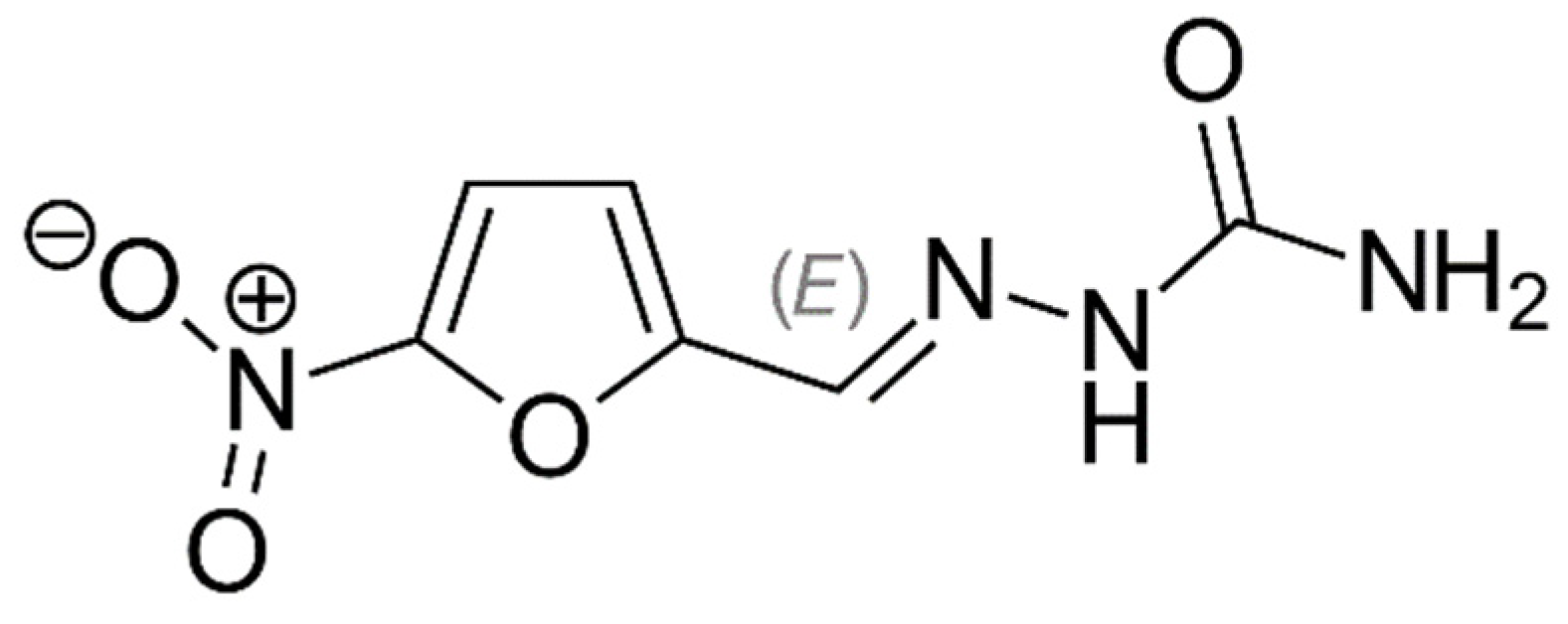


Study of the Process of Electrochemical Oxidation of Active Pharmaceutical Substances on the Example of Nitrofurazone ((2E)-2-[(5-Nitro-2-furyl)methylene]hydrazine Carboxamide)

 , ,
, , Abstract
Share and Cite
Kuznetsov, V.V.; Ivantsova, N.A.; Kuzin, E.N.; Pirogov, A.V.; Mezhuev, Y.O.; Filatova, E.A.; Averina, Y.M. Study of the Process of Electrochemical Oxidation of Active Pharmaceutical Substances on the Example of Nitrofurazone ((2E)-2-[(5-Nitro-2-furyl)methylene]hydrazine Carboxamide). Water 2023, 15, 3370. https://doi.org/10.3390/w15193370
Kuznetsov VV, Ivantsova NA, Kuzin EN, Pirogov AV, Mezhuev YO, Filatova EA, Averina YM. Study of the Process of Electrochemical Oxidation of Active Pharmaceutical Substances on the Example of Nitrofurazone ((2E)-2-[(5-Nitro-2-furyl)methylene]hydrazine Carboxamide). Water. 2023; 15(19):3370. https://doi.org/10.3390/w15193370
Chicago/Turabian StyleKuznetsov, Vitalyi Vladimirovich, Natalya Andreevna Ivantsova, Evgenii Nikolaevich Kuzin, Andrey Vladimirovich Pirogov, Yaroslav Olegovich Mezhuev, Elena Alexeevna Filatova, and Yulia Michailovna Averina. 2023. "Study of the Process of Electrochemical Oxidation of Active Pharmaceutical Substances on the Example of Nitrofurazone ((2E)-2-[(5-Nitro-2-furyl)methylene]hydrazine Carboxamide)" Water 15, no. 19: 3370. https://doi.org/10.3390/w15193370
APA StyleKuznetsov, V. V., Ivantsova, N. A., Kuzin, E. N., Pirogov, A. V., Mezhuev, Y. O., Filatova, E. A., & Averina, Y. M. (2023). Study of the Process of Electrochemical Oxidation of Active Pharmaceutical Substances on the Example of Nitrofurazone ((2E)-2-[(5-Nitro-2-furyl)methylene]hydrazine Carboxamide). Water, 15(19), 3370. https://doi.org/10.3390/w15193370