

Optimization of Horseradish Peroxidase Catalytic Degradation for 2-Methyl-6-Ethylaniline Removal Using Response Surface Methodology


Abstract
1. Introduction
2. Materials and Methods
2.1. Experimental Materials
2.2. Experimental Procedure
2.3. Analysis Methods
2.4. Experimental Design and Optimization Method
3. Results and Discussion
3.1. Model Fitting
4.62X22 − 0.21X32
3.2. Influence Factor of 2-Methyl-6-Ethylaniline (MEA) Removal Efficiency
4. Conclusions
- (1)
- A regression model for the removal efficiency of MEA, the ternary quadratic polynomial, was established. The variance analysis showed that the regression model was significant (p < 0.0001), fitted well with experimental data and had a high degree of reliability and accuracy, and the data were reasonable with low errors.
- (2)
- By analyzing interactions and solving the regression model, the maximum MEA removal efficiency was 97.90%, and the optimal conditions were defined as follows: pH 5.02, H2O2 concentration 13.41 mM, and temperature of 30.95 °C. Under the optimal conditions, the average MEA removal efficiency obtained from the experiments was 97.56%.
Author Contributions
Funding
Acknowledgments
Conflicts of Interest
References
- Wei, D.; Sun, K.; Han, L. Isolation, identification and analysis of degradation dharacteristics of acetochlor-degrading strain B-2. Genomics and Appl. Biol. 2016, 35, 3069–3075. [Google Scholar]
- Feng, Q.; Wen, S.; Bai, X.; Chang, W.; Cui, C.; Zhao, W. Surface modification of smithsonite with ammonia to enhance the formation of sulfidization products and its response to flotation. Miner. Eng. 2019, 137, 1–9. [Google Scholar] [CrossRef] [Scilit]
- Feng, Q.; Wen, S.; Deng, J.; Zhao, W. Combined DFT and XPS investigation of enhanced adsorption of sulfide species onto cerussite by surface modification with chloride. Appl. Surf. Sci. 2017, 425, 8–15. [Google Scholar]
- Feng, Q.; Zhao, W.; Wen, S. Surface modification of malachite with ethanediamine and its effect on sulfidization flotation. Appl. Surf. Sci. 2018, 436, 823–831. [Google Scholar] [CrossRef] [Scilit]
- Zhang, J.; Zheng, J.; Liang, B.; Wang, C.; Cai, S.; Ni, Y.; He, J.; Li, S. Biodegradation of Chloroacetamide Herbicides by Paracoccus sp. FLY-8 in Vitro. J. Agric. Food Chem. 2011, 59, 4614–4621. [Google Scholar] [CrossRef] [Scilit] [PubMed]
- Keith, L.H.; Telliard, W.A. Priority pollutants: I. A perspective view. Enviro. Sci. Technol. 1979, 13, 416–423. [Google Scholar] [CrossRef] [Scilit]
- Tao, H.; Zhou, S.; Gao, T. Experimental research on treatment of aniline-bearing wastewater using 13X molecular sieves. Acta Scientiae Circumstantiae 2002, 22, 408–411. [Google Scholar]
- Enric, B.; Juan, C. Aniline degradation by Electro-Fenton and peroxi-coagulation processes using a flow reactor for wastewater treatment. Chemosphere 2002, 47, 241–248. [Google Scholar]
- Wang, X. New progress in the treatment of aniline wastewater. Ind. Water Treat. 2010, 30, 11–14. [Google Scholar]
- Giardina, P.; Faraco, V.; Pezzella, C.; Piscitelli, A.; Vanhulle, S.; Sannia, G. Laccases: A never-ending story. Cell. Mol. Life Sci. 2010, 67, 369–385. [Google Scholar] [CrossRef] [Scilit]
- Zhong, P.; Peng, H.; Peng, F.; Cai, Q.; He, M. Kinetic Analysis of Laccase catalyze phenolic and aniline compounds and detecting catechol in wastewater. Environ. Sci. 2010, 31, 2673–2677. [Google Scholar]
- Song, W.; Wu, C.; Lin, L.; Ni, J.; Wang, W. Optimization of degradation conditions for degrading bacteria of dianilinodithiophosphoric acid and properties of degrading enzyme. J. Anhui Agric. Sci. 2013, 41, 13486–13488. [Google Scholar]
- Veitch, N.C. Horseradish peroxidase: a modern view of a classic enzyme. Phytochemistry 2004, 65, 249–259. [Google Scholar] [CrossRef] [Scilit] [PubMed]
- Saidman, S.; Rueda, E.H.; Ferreira, M.L. Activity of free peroxidases, hematin, magnetite-supported peroxidases and magnetite-supported hematin in the aniline elimination from water-UV-vis analysis. Biochem. Eng. J. 2006, 28, 177–186. [Google Scholar] [CrossRef] [Scilit]
- Jiang, Y.; Feng, C. The Study on Reaction kinetics based on a new system of the horseradish peroxidase catalyting the oxidation of o-phenylenediamine by H2O2. Spectrosc. Spectral Anal. 2002, 22, 436–440. [Google Scholar]
- Yang, D.; Wu, X.; Chang, Y.; Qiu, X.; Tao, J. Horseradish peroxidase catalyzed polymerization of sulfomethylated alkali Lignin. Acta Polym. Sin. 2014, 4, 473–480. [Google Scholar]
- Reihmann, M.H.; Ritter, H. Oxidative oligomerization of cyclodextrin-complexed bifunctional phenols catalyzed by horseradish peroxidase in water. Macromol. Chem. Phys. 2000, 201, 798–804. [Google Scholar] [CrossRef]
- Zhang, L. Applications of horseradish peroxidase in the phenolic wastewater. J. Shanxi Datong Univ. (Nat. Sci.) 2012, 28, 35–39. [Google Scholar]
- Mayer, R.H.; Montgomery, D.C. Response Surface Methodology; Wiley: New York, NY, USA, 2002. [Google Scholar]
- Hasan, S.D.M.; Melo, D.N.C.; Filho, R.M. Simulation and response surface analysis for the optimization of a three-phase catalytic slurry reactor. Chem. Eng. Process. 2005, 44, 335–343. [Google Scholar] [CrossRef] [Scilit]
- Ma, H.; He, T.; Hong, L.; Wei, D.; Li, J.; Sun, S.; Xu, Z. Optimization of the adsorption of phosphorus by water plant sludge using response surface methodology. Chin. J. Environ. Eng. 2015, 9, 546–552. [Google Scholar]
- Ghasempur, S.; Torabi, S.F.; Ranaei-Siadat, S.O.; Jalali-Heravi, M.; Ghaemi, N.; Khajeh, K. Optimization of peroxidase-catalyzed oxidative coupling process for phenol removal from wastewater using response surface methodology. Environ. Sci. Technol. 2007, 41, 7073–7079. [Google Scholar] [CrossRef] [Scilit] [PubMed]
- Liu, M.; Wang, T.B.; Shen, X. Market and technical process of acetochlor in China. Chem. Techno-Econ. 2005, 23, 14–16. [Google Scholar]
- Jeffwu, C.F.; Michael, H. Experimental Design and Analysis and Parameter Optimization; China Statistics Press: Beijing, China, 2003; pp. 362–365. [Google Scholar]
- Bhatti, M.S.; Reddy, A.S.; Thukral, A.K. Electrocoagulation removal of Cr(VI) from simulated wastewater using response surface methodology. J. Hazard. Mater. 2009, 172, 839–846. [Google Scholar] [CrossRef] [Scilit] [PubMed]
- Bashir, M.J.K.; Aziz, H.A.; Suffian, Y.M.; Aziz, S.Q.; Mohajeri, S. Stabilized sanitary landfill leachate treatment using anionic resin: treatment optimization by response surface methodology. J. Hazard. Mater. 2010, 182, 115–122. [Google Scholar] [CrossRef] [Scilit]
- Zhang, X.R.; Liu, Z.H.; Fan, X.; Lian, X.; Tao, C.Y. Optimization of reaction conditions for the electroleaching of manganese from low-grade pyrolusite. Int. J. Miner. Metall. Mater. 2015, 22, 1121–1130. [Google Scholar] [CrossRef] [Scilit]
- Jia, Z.; Wang, C.; Zhang, G. Catalytic degradation of benzaldehyde by horseradish peroxidase. J. Taiyuan Normal Univ. (Nat. Sci.) 2017, 16, 78–81. [Google Scholar]
- Ye, P.; Zhang, J.; Chen, S.; Yang, Y.; Wang, W.; Wang, S. Removal of pentachlor ophenol (PCP) by immobilized horseradish peroxidase (HRP). Acta Scientiarum Naturalium Universitatis Pekinensis 2005, 41, 918–925. [Google Scholar]
- Rodriguez-Lopez, J.N.; Hernandez-Ruiz, J.; Garcia-Canovas, F.; Thorneley, R.N.; Acosta, M.; Arnao, M.B. The inactivation and catalytic pathways of horseradish peroxidase with m-chloroperoxybenzoic acid: A spectrophotometric and transient kinetic study. J. Biol. Chem. 1997, 272, 5469–5476. [Google Scholar] [CrossRef] [Scilit]
- Arnao, M.B.; Acosta, M.; del Rio, J.A.; García-Cánovas, F. Inactivation of peroxidase by hydrogen peroxide and its protection by a reductant agent. Biochim. Biophy. Acta 1990, 1038, 85–89. [Google Scholar] [CrossRef] [Scilit]
- Pina, D.G.; Shnyrova, A.V.; Gavilanes, F.; Rodríguez, A.; Leal, F.; Roig, M.G.; Sakharov, I.Y.; Zhadan, G.G.; Villar, E.; Shnyrov, V.L. Thermally induced conformational changes in horseradish peroxidase. Eur. J. Biochem. 2010, 268, 120–126. [Google Scholar] [CrossRef]
- Si, Y.; Xu, R.; Li, F.; Xu, Z. Removal of dyestuff from water catalyzed by horseradish peroxidase. Ind. Water Treat. 2015, 35, 40–43. [Google Scholar]
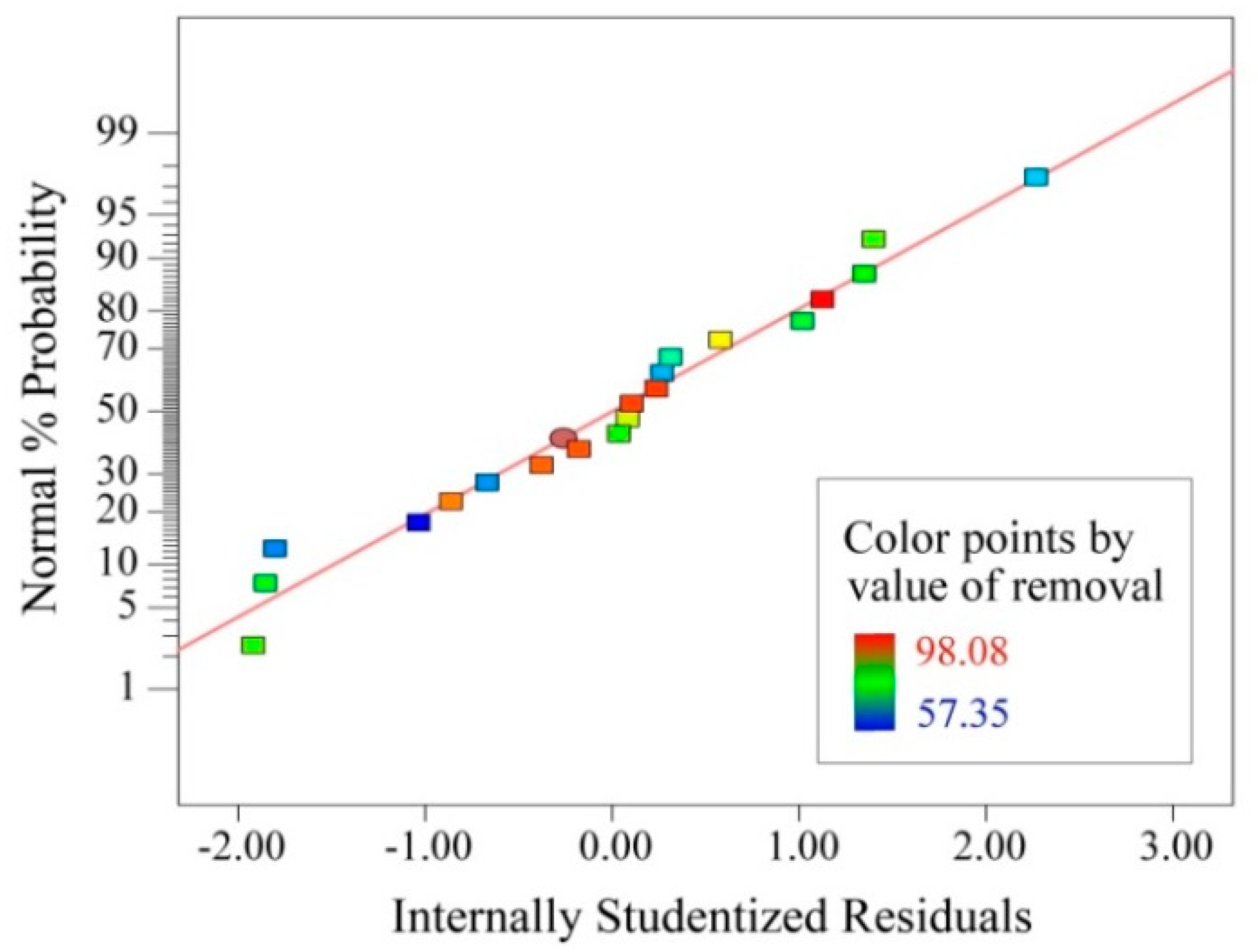
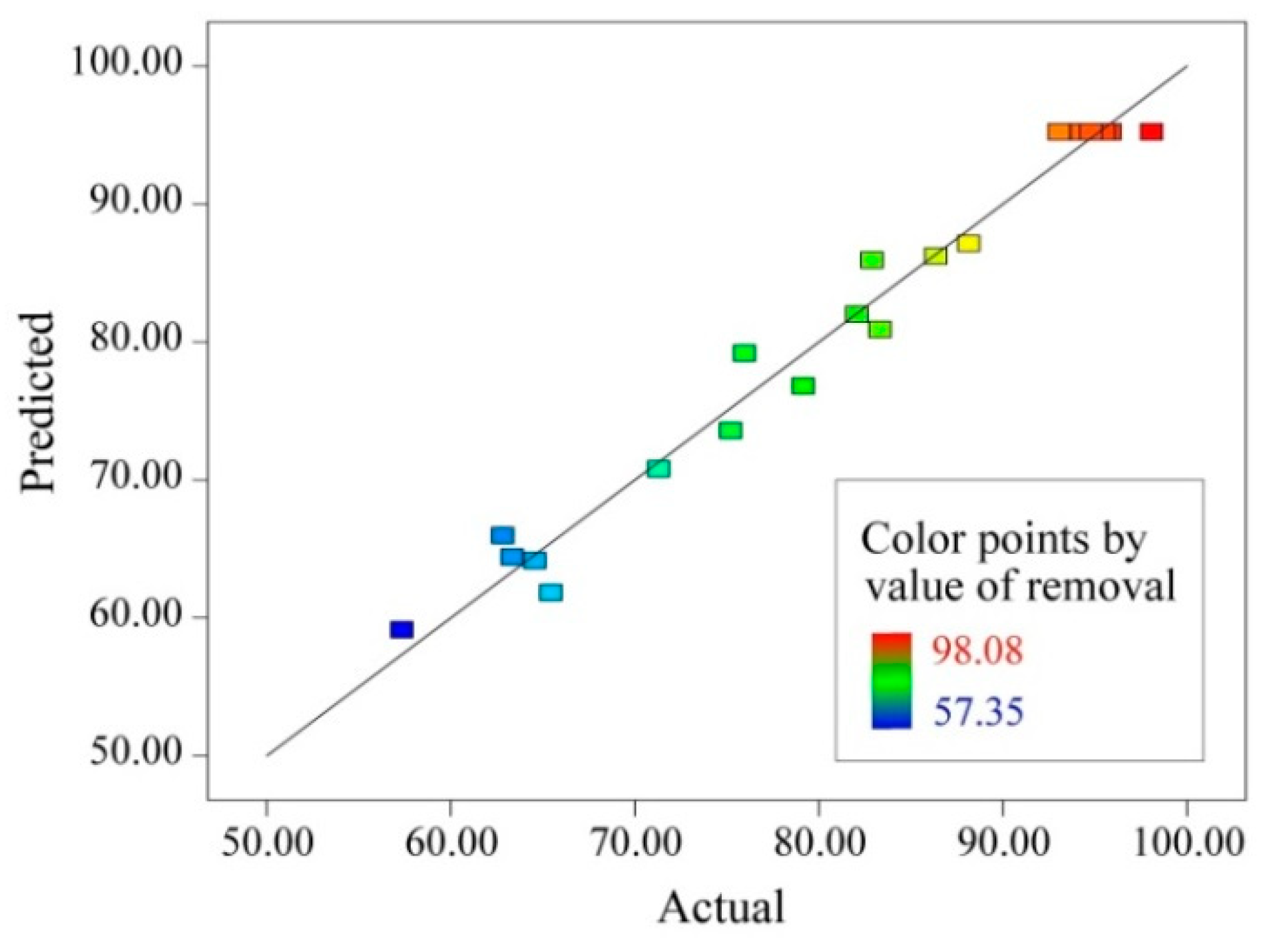
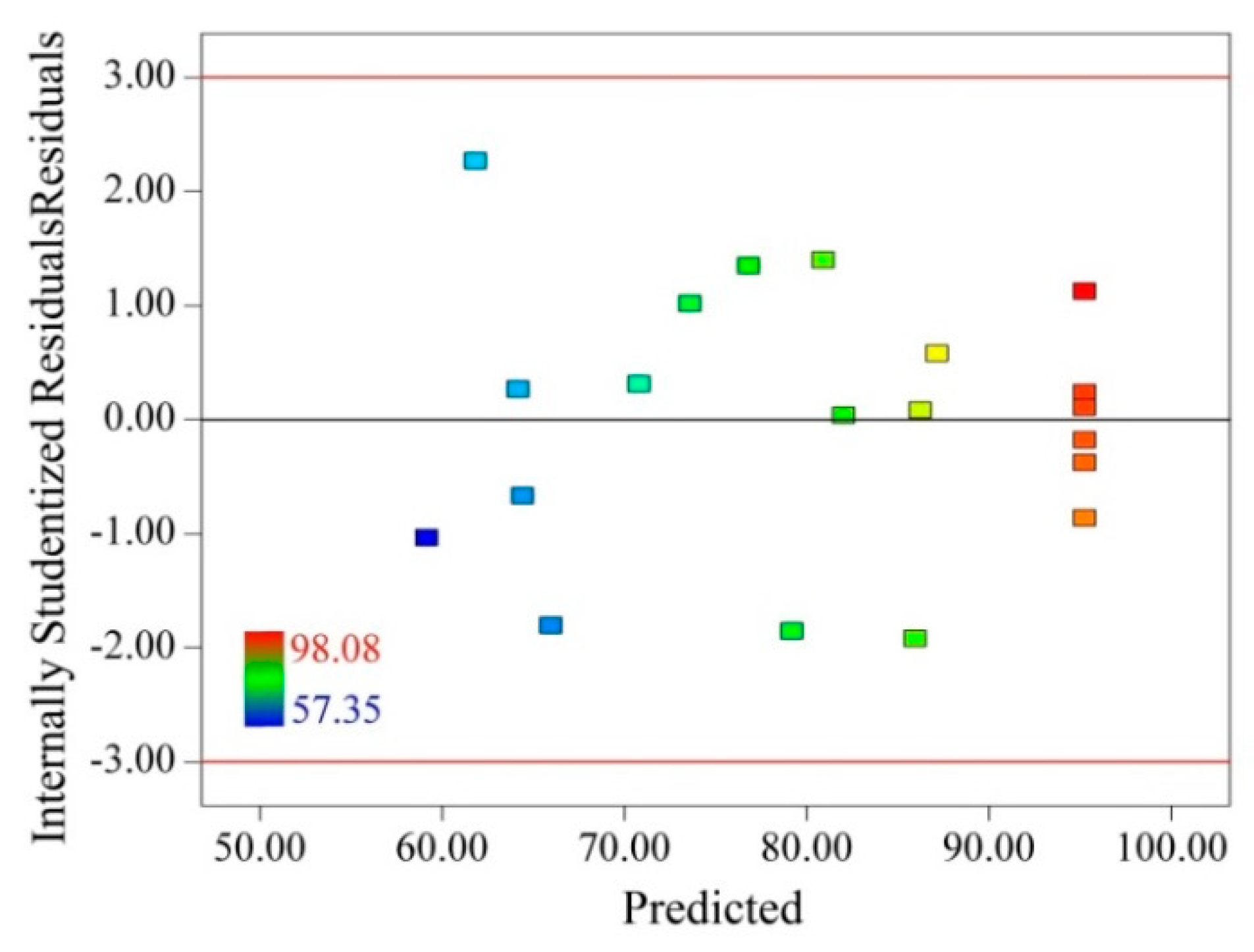
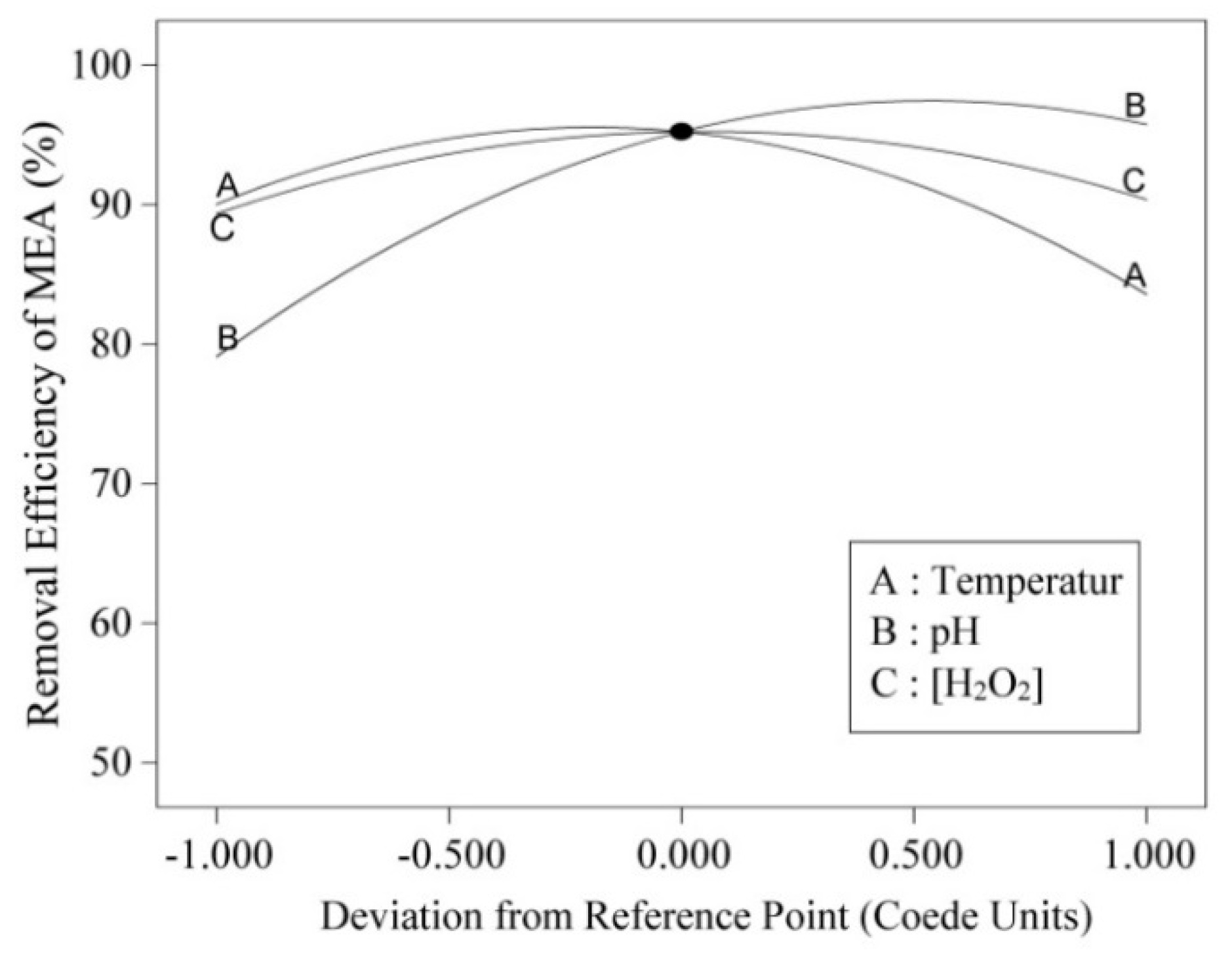
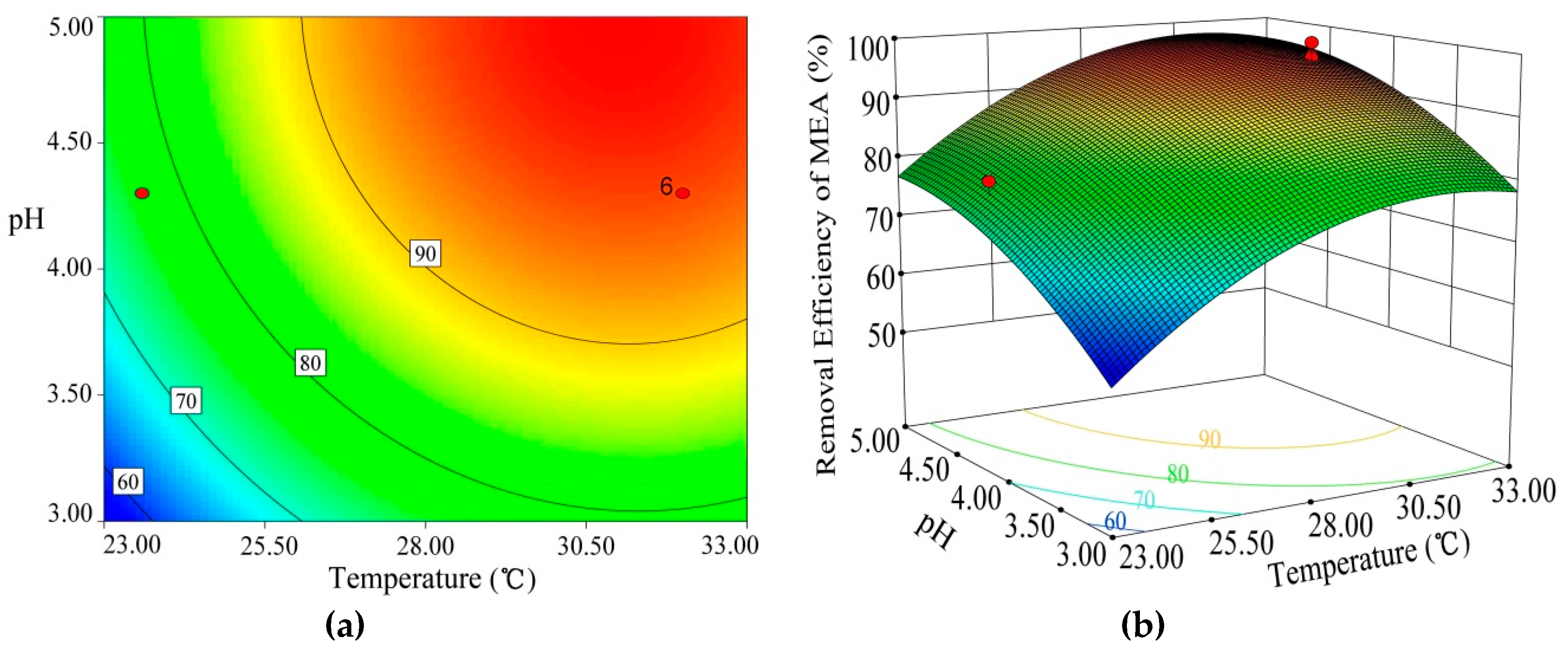
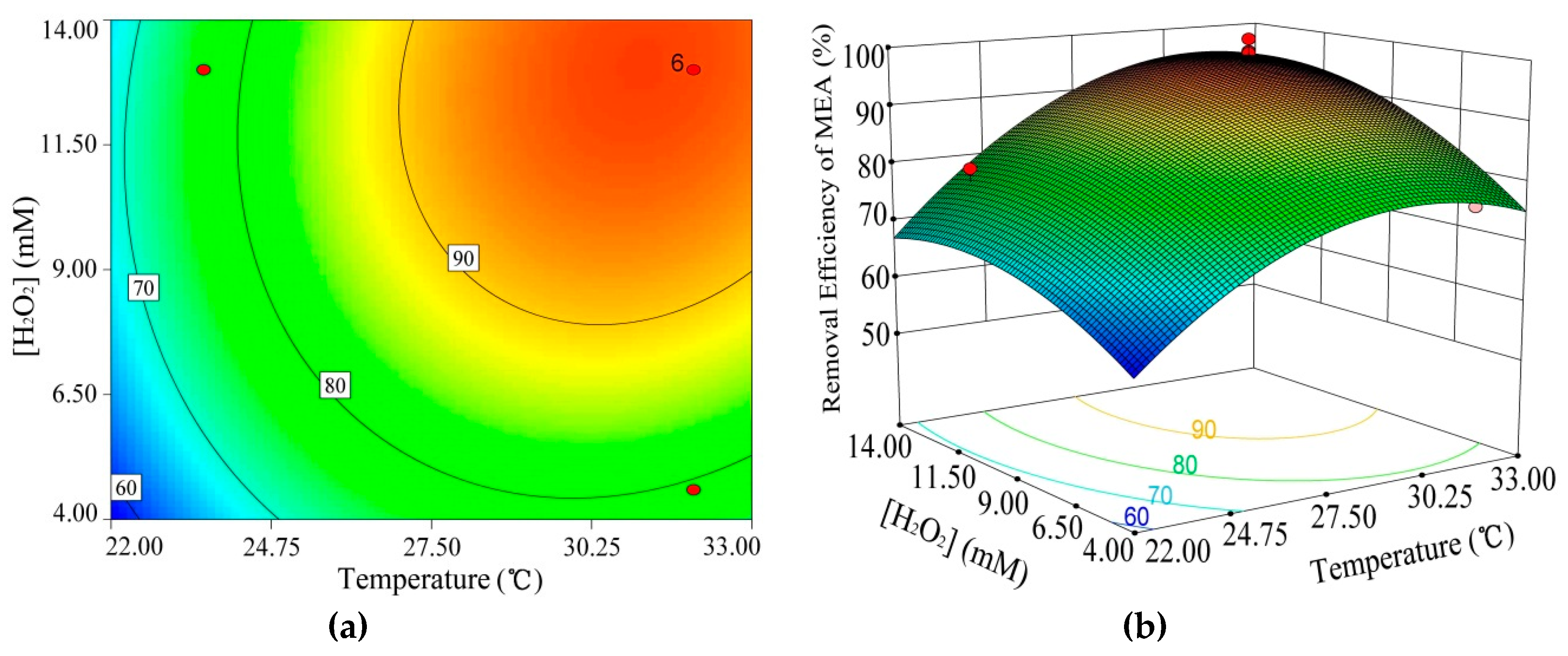
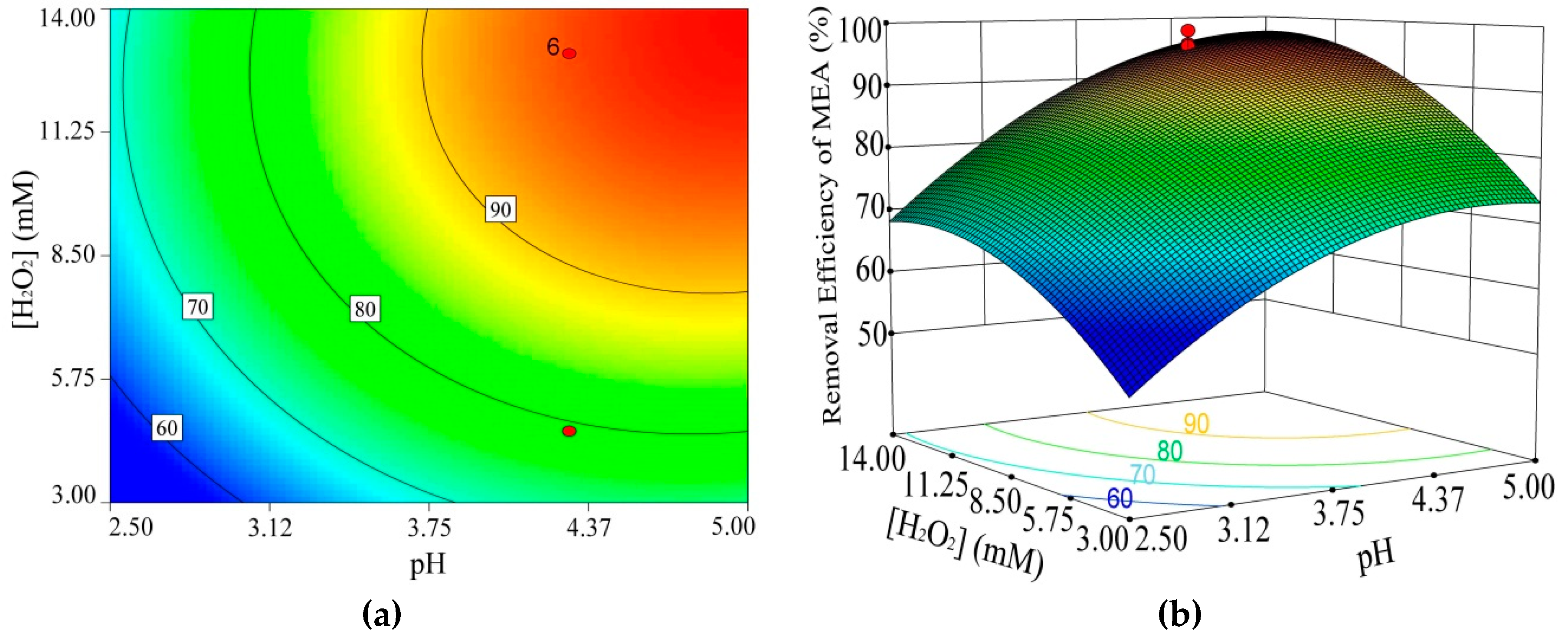

| Coded Level | Uncoded Level | ||
|---|---|---|---|
| Temperature (°C) | pH | [H2O2] (mM) | |
| −1.68 | 23.59 | 2.11 | 4.59 |
| −1 | 27.00 | 3.00 | 8.00 |
| 0 | 32.00 | 4.30 | 13.00 |
| 1 | 37.00 | 5.60 | 18.00 |
| 1.68 | 40.41 | 6.49 | 21.41 |
| Run | Type | Uncoded Level | Removal Efficiency of MEA (%) | ||
|---|---|---|---|---|---|
| Temperature (°C) X1 | pH X2 | [H2O2] (mM) X3 | |||
| 1 | Star | 27.00 | 3.00 | 8.00 | 71.30 |
| 2 | Star | 37.00 | 3.00 | 8.00 | 64.35 |
| 3 | Star | 27.00 | 5.60 | 8.00 | 86.35 |
| 4 | Star | 37.00 | 5.60 | 8.00 | 75.21 |
| 5 | Star | 27.00 | 3.00 | 18.00 | 63.35 |
| 6 | Star | 37.00 | 3.00 | 18.00 | 64.58 |
| 7 | Star | 27.00 | 5.60 | 18.00 | 82.89 |
| 8 | Star | 37.00 | 5.60 | 18.00 | 82.08 |
| 9 | Axial | 23.59 | 4.30 | 13.00 | 79.15 |
| 10 | Axial | 40.41 | 4.30 | 13.00 | 62.84 |
| 11 | Axial | 32.00 | 2.11 | 13.00 | 57.35 |
| 12 | Axial | 32.00 | 6.49 | 13.00 | 88.15 |
| 13 | Axial | 32.00 | 4.30 | 4.59 | 75.97 |
| 14 | Axial | 32.00 | 4.30 | 21.41 | 83.33 |
| 15 | Center | 32.00 | 4.30 | 13.00 | 93.05 |
| 16 | Center | 32.00 | 4.30 | 13.00 | 95.83 |
| 17 | Center | 32.00 | 4.30 | 13.00 | 95.50 |
| 18 | Center | 32.00 | 4.30 | 13.00 | 98.08 |
| 19 | Center | 32.00 | 4.30 | 13.00 | 94.28 |
| 20 | Center | 32.00 | 4.30 | 13.00 | 94.78 |
| Source | Sum of Squares | DF | Mean Square | F Value | P Value |
|---|---|---|---|---|---|
| Model | 3110.09 | 9 | 345.57 | 45.02 | <0.0001 |
| X1 | 141.9 | 1 | 141.9 | 18.49 | 0.0016 |
| X2 | 945.73 | 1 | 945.73 | 123.2 | <0.0001 |
| X3 | 3.56 | 1 | 3.56 | 0.46 | 0.5112 |
| X1·X2 | 6.72 | 1 | 6.72 | 0.88 | 0.3716 |
| X1·X3 | 37.95 | 1 | 37.95 | 4.94 | 0.0504 |
| X2·X3 | 18.69 | 1 | 18.69 | 2.44 | 0.1497 |
| X12 | 1024.32 | 1 | 1024.32 | 133.44 | <0.0001 |
| X22 | 878.93 | 1 | 878.93 | 114.5 | <0.0001 |
| X32 | 415.7 | 1 | 415.7 | 54.15 | <0.0001 |
| Residual | 76.76 | 10 | 7.68 | ||
| Lack of fit | 62.36 | 5 | 12.47 | 4.33 | 0.0667 |
| Pure error | 14.4 | 5 | 2.88 | ||
| Cor Total | 3186.85 | 19 |
| Optimum Conditions | MEA Removal Efficiency (%) | |||
|---|---|---|---|---|
| pH | H2O2 (mM) | Temperature (°C) | Experimental | Predicted |
| 5.02 | 13.41 | 30.95 | 97.56 | 97.90 |
© 2019 by the authors. Licensee MDPI, Basel, Switzerland. This article is an open access article distributed under the terms and conditions of the Creative Commons Attribution (CC BY) license (http://creativecommons.org/licenses/by/4.0/).
Share and Cite
Shen, S.; Wang, Q.; Shu, J.; Ma, L.; Chen, L.; Xu, Y. Optimization of Horseradish Peroxidase Catalytic Degradation for 2-Methyl-6-Ethylaniline Removal Using Response Surface Methodology. Water 2019, 11, 1093. https://doi.org/10.3390/w11051093
Shen S, Wang Q, Shu J, Ma L, Chen L, Xu Y. Optimization of Horseradish Peroxidase Catalytic Degradation for 2-Methyl-6-Ethylaniline Removal Using Response Surface Methodology. Water. 2019; 11(5):1093. https://doi.org/10.3390/w11051093
Chicago/Turabian StyleShen, Songtao, Qing Wang, Jiancheng Shu, Li Ma, Li Chen, and Yingyi Xu. 2019. "Optimization of Horseradish Peroxidase Catalytic Degradation for 2-Methyl-6-Ethylaniline Removal Using Response Surface Methodology" Water 11, no. 5: 1093. https://doi.org/10.3390/w11051093
APA StyleShen, S., Wang, Q., Shu, J., Ma, L., Chen, L., & Xu, Y. (2019). Optimization of Horseradish Peroxidase Catalytic Degradation for 2-Methyl-6-Ethylaniline Removal Using Response Surface Methodology. Water, 11(5), 1093. https://doi.org/10.3390/w11051093

