Article

Surviving the Heat: Genetic Diversity and Adaptation in Sudanese Butana Cattle

by
Guilherme B. Neumann
1,2,
Paula Korkuć
1,2,
Siham A. Rahmatalla
1,3,
Monika Reißmann
1,
Elhady A. M. Omer
4,
Salma Elzaki
1,4 and
Gudrun A. Brockmann
1,*
1
Albrecht Daniel Thaer-Institute for Agricultural and Horticultural Sciences, Animal Breeding and Molecular Genetics, Humboldt-Universität zu Berlin, Unter den Linden 6, 10099 Berlin, Germany
2
Leibniz Institute for Zoo and Wildlife Research, Alfred-Kowalke-Straße 17, 10315 Berlin, Germany
3
Department of Dairy Production, Faculty of Animal Production, University of Khartoum, P.O. Box 32, Khartoum North 13314, Sudan
4
Department of Genetics and Animal Breeding, Faculty of Animal Production, University of Khartoum, P.O. Box 32, Khartoum North 13314, Sudan
*
Author to whom correspondence should be addressed.
Genes 2025, 16(12), 1429; https://doi.org/10.3390/genes16121429
Submission received: 28 August 2025 / Revised: 15 October 2025 / Accepted: 10 November 2025 / Published: 30 November 2025
(This article belongs to the Section Animal Genetics and Genomics)

Abstract

Background: Butana are native Sudanese Bos indicus cattle that are well adapted to arid environments and valued for their relatively high milk performance and resilience under harsh conditions. Despite their adaptive advantages, Butana cattle face the risk of genetic erosion due to low production performance and the absence of structured breeding programs underscoring the urgent need to conserve their unique genetic potential for climate-resilient livestock development. Methods: In this study, we analyzed whole-genome sequencing data from 40 Butana cattle to assess their genetic diversity, population structure, signatures of selection, and potential pathogen load. Results: Butana cattle exhibited high nucleotide diversity and low levels of inbreeding, indicating a stable gene pool shaped by natural selection rather than by intensive breeding. Signatures of selection and functional variant analysis revealed candidate genes involved in heat stress adaptation (COL6A5, HSPA1L, TUBA8, XPOT), metabolic processes (G6PD, FAM3A, SLC10A3), and immune regulation (IKBKG, IRAK3, IL18RAP). Enrichment analyses and RoH island mapping consistently highlighted immune and thermoregulatory pathways as key selection targets, distinguishing Butana from both the geographically neighbored Kenana cattle and the specialized dairy cattle breed Holstein. Furthermore, metagenomic screening of unmapped reads detected the tick-borne parasite Theileria annulata and the opportunistic pathogen Burkholderia cenocepacia in all animals, underscoring the importance of integrating pathogen surveillance into genomic studies. Conclusions: Taken together, our findings highlight the distinct adaptive genomic profile of Butana cattle and reinforce their value in breeding programs aimed at improving climate resilience and disease resistance in livestock through the utilization of local breeds.

1. Introduction

Butana cattle are a native dairy Bos indicus breed of Sudan, primarily distributed in central Sudan, particularly in the Butana region along the Nile River, the Atbara River, and east of the Blue Nile [1,2]. As one of the largest East African Zebu breeds, Butana are well-known for their adaptability to arid environments, resilience under nutritional stress, and greater resistance to tick infestation compared to Bos taurus cattle [2,3]. Their shiny coats help protect them from the intense sun and heat, while their slender bodies, sturdy hooves, and lighter bone structure enable them to thrive in desert-like regions and endure long-distance migrations across harsh scrublands [4].
Butana cattle are especially valued for their milk yield, and high fat (6.01%) and protein content (3.74%) [5], making them an important source of nutrition for local communities [2,6]. Despite their adaptive advantages and relatively high milk yield under local conditions (4.15 ± 1.40 kg/day), Butana cattle exhibit lower overall production performance compared to Butana × Holstein crossbred cattle (10.12 ± 1.10 kg/day) [5]. As a result, they are increasingly at risk due to breed substitution, indiscriminate crossbreeding, and the absence of structured breeding programs. Amid climate change and the increasing global demand for high-quality protein, conserving and understanding locally adapted breeds is crucial. These cattle contribute to food security and provide valuable insights into the genetic basis of resilience to heat, disease, and nutritional stress.
Previous genomic studies on Butana cattle have largely focused on individual candidate genes, including DGAT1 (diacylglycerol-O-acyltransferase) [5,7,8,9], leptin [9], caseins [9,10], growth and reproductive hormone [9,11], and the bovine leukocyte antigen complex [12], as well as traits such as mastitis resistance [13]. Additionally, Butana cattle have also been shown to share a close genetic relationship with Kenana and other African indicine breeds, such as East African Shorthorn Zebu and Sheko [14,15].
Previous efforts to identify adaptive genomic signatures in Butana cattle revealed selection on pathways related to immunity, reproduction, and heat tolerance and prioritized 87 candidate genes under positive selection in Butana [14]. However, that study relied on the Illumina BovineHD BeadChip, which had been primarily developed for commercial B. taurus breeds and may, therefore, miss genetic variation relevant to indicine cattle [16]. A more recent study using whole-genome sequencing across Sudanese zebu populations identified selection signals in genes involved in insulin signaling and fat metabolism [17], but treated Sudanese breeds collectively, leaving the specific genomic uniqueness of Butana unaddressed.
Besides Butana, Kenana cattle also represent an important dairy breed with high potential for milk production, growth, and reproductive efficiency under harsh environments [2,3]. Although the two breeds are genetically closely related [14,15], they are raised in ecologically distinct environments: Butana cattle are predominantly managed in arid desert zones, whereas Kenana cattle are kept in comparatively more favorable and less arid regions [2,6,17]. These environmental contrasts, along with differing management practices, are expected to have driven divergent adaptive trajectories and selection pressures between the two breeds.
This study aimed to comprehensively characterize the genomic diversity and inbreeding levels within the Butana breed, assess its genetic relationship with other indicine breeds, and identify genomic regions under selection that may have contributed to its adaptation to hot, resource-limited environments. Additionally, we explored the presence of pathogen-related sequences in the genomic data to uncover potential microbial challenges affecting this breed.

2. Materials and Methods

2.1. Population and Genotypic Data

Samples from 22 unrelated Butana cows were collected across eight different locations in the North of Sudan. Genomic DNA was extracted from blood and sequenced using the Illumina NovaSeq 6000 platform (Illumina, San Diego, CA, USA), 150 bp paired-ed (PE), yielding an average coverage of 14×. Data pre-processing, sequence alignment, variant calling and variant recalibration (with 99% tranche filtering) were performed according to the 1000 Bull Genomes Project guidelines [18]. The B. taurus genome version ARS-UCD1.2_Btau5.0.1Y was used as reference [19,20]. Additionally, sequence variants from 18 Butana, 17 Kenana, 274 B. indicus cattle representing 25 breeds, and 50 Holstein cattle (as a taurine outgroup) were obtained from the 1000 Bull Genomes Project (Run 9) and merged with our Butana dataset. Only breeds with at least five individuals sequenced at ≥5× coverage were included. In total, 54,532,198 segregating variants were retained for downstream analysis.

2.2. Relationship Analysis

Pairwise FST values between Butana and each of the other breeds were calculated using variants segregating in either Butana or the respective comparison breed. FST values were estimated in windows of 10 kb based on Hudson’s method [21,22] using the scikit-allel v1.3.1 library in Python [23]. A maximum likelihood tree was constructed using Treemix v1.13 [24] in blocks of 1000 variants based on a pruned dataset of 19,094,509 variants. Linkage disequilibrium (LD) pruning was performed in PLINK v2.0 [25] using an r2 threshold of 0.6, a window size of 50 variants, and a step-size of 5 variants. A consensus tree was generated by bootstrapping across 1000 replicates (seed = 389) using PHYLIP v3.697 [26], and visualized with the BITE v2 package [27]. The optimal number of migrations edges was determined using the Evanno method [28] as implemented in the R package OptM v0.1.6 [29], testing migration values (m) from 0 to 10 across ten replicates. The highest Δm = 2.66 was observed at m = 3 edges, which was selected for further analysis. To assess gene flow, f3-statistics were calculated with Treemix v1.13 over blocks of 10,000 variants using the pruned dataset. The f3-statistics was calculated as f3(A; B, C), where a significantly negative value of the f3 statistic implies that population A is admixed from populations B and C. Principal Component Analysis (PCA) was performed on the pruned dataset using the scikit-learn v1.0.2 library in Python.

2.3. Diversity and Inbreeding Analyses

Nucleotide diversity (π) was calculated using scikit-allel v1.3.1 library in Python in windows of 10 kb (πwindow). The mean nucleotide diversity per chromosome (πChrMean) was calculated as the mean of all πwindow values of the respective chromosome and the total mean nucleotide diversity (πTotMean) was derived from the average of all πwindow values across all autosomes. Only pure Butana individuals were considered for diversity, inbreeding, and signatures of selection analyses; seven animals that were clustering together with Kenana and Begait cattle in the PCA were excluded. All segregating variants in Butana were annotated using the Ensembl Variant Effect Predictor (VEP) software v105.0 [30]. Additionally, variants that segregated in Butana, but were fixed in all other investigated breeds were defined as variants unique to Butana. Gene Ontology (GO) enrichment analysis for variants of candidate genes was performed using g:Profiler version e112_eg59_p19_25aa4782 [31]. Adjusted p-values (padj) <0.05 were considered significant.
Inbreeding was estimated using the excess of homozygosity (FHom) and the inbreeding coefficient FRoH based on runs of homozygosity (RoHs). Observed and expected homozygous genotype counts were derived using vcftools v0.1.15 [32] and FHom was calculated as:
F H O M = n u m b e r   o f   o b s e r v e d   h o m o z y g o u s n u m b e r   o f   e x p e c t e d   h o m o z y g o u s t o t a l   n u m b e r   o f   v a r i a n t s n u m b e r   o f   e x p e c t e d   h o m o z y g o u s
FRoH was estimated using BCFtools v1.9 [33] with an assumed recombination rate of 10–8 per base pair (1 cM/Mb). RoHs were classified into five length categories with the minimal lengths of 50 kb, 100 kb, 1 Mb, 2 Mb and 4 Mb. FRoH was calculated for each group as:
F R o H = L R o H L g e n o m e
where LRoH is the length of a homozygous region and Lgenome the length of the genome covered by variants (2,626,672,074 bp for our dataset).

2.4. Signatures of Selection

To detect signatures of selection within the sequenced Butana cattle, RoH islands were defined as regions with the highest variant frequency within RoHs ≥ 50 kb. The top 0.05 percentile of variant frequencies within these RoHs was used as the threshold to define RoH islands. Only pure Butana individuals were considered in this analysis. Between populations, the cross-population-extended haplotype homozygosity (XP-EHH) [34] was calculated for pure Butana versus Kenana, and pure Butana versus Holstein using the R package rehh v3.2.2 [35]. All segregating variants in pure Butana, Kenana, or Holstein were included. Missing variants were initially imputed and phased using Beagle v5.1 [36].
Positive XP-EHH scores represent variants positively selected in pure Butana compared to Kenana or Holstein, while negative scores correspond to variants positively selected in Kenana or Holstein compared to pure Butana. After multiple testing using Bonferroni correction, p-values < 0.05 were considered significant. XP-EHH regions were defined by merging significant neighbouring variants and subsequently used for gene annotation. RoH islands and XP-EHH regions start and end positions were scanned for protein-coding genes using the Ensembl database release 114. Gene Ontology (GO) enrichment analysis was performed using g:profiler with the same p-value threshold.

2.5. Detection of Pathogens

The strategy for detecting pathogen sequences in whole-genome sequencing data has been described previously [37]. Similarly, the unmapped reads from sequenced Butana animals were extracted with samtools v1.20 [38] and used as input in the Kraken v2.1.3 [39], filtering for results with a confidence of at least 0.7. Relative abundances were estimated using bracken v3.0.1 [40]. For taxonomic classification, unmapped reads were classified using the core_nt database which includes GenBank, RefSeq, TPA and PDB databases and retrieved and indexed in December 2024 by the Langmead Lab (https://benlangmead.github.io/aws-indexes/, accessed on 21 January 2025).

3. Results

3.1. Relationship Among Indicine Cattle Breeds

Breeds from Sudan and Ethiopia, such as Kenana, Begait, Fogera, Afar, Arsi, Horro, Ethiopian Boran, and Goffa, showed the closest genetic relationship to Butana, as supported by the maximum likelihood tree (Figure 1a), PCA (Figure 1b), and pairwise FST values (Table S1).
Pairwise FST values calculated relative to Butana ranged from 0.032 for Begait to 0.181 for Chinese Wannan and reached 0.317 for Holstein, which served as the outgroup. Furthermore, in total, three migration events were detected (Figure 1a). First, a migration from an ancestor of Wannan to a common ancestor of Weining and Xuanhan was observed. In addition, two moderate migration events were observed from an ancestor of Ankole to a common ancestor of Butana and Kenana, and from an ancestor of Sheko to Begait. However, gene flow from Ankole into Butana (f3 = 0.003, p = 1.20 × 10−282) and into Kenana (f3 = 0.002, p = 3.22 × 10−94) could not be confirmed by f3 statistics, but admixture of Butana with Holstein was observed in several cases (Table S2). The other migrations from Wannan to a common ancestor of Weining (f3 = 0.002, p = 3.68 × 10⁻³⁴) and Xuanhan (f3 = −0.000, p = 0.04) and from an ancestor of Sheko into Begait (with Gir, f3 = −0.001, p = 1.40 × 10⁻¹⁰) were confirmed of Wannan to Xuanhan and of Sheko to Begait.
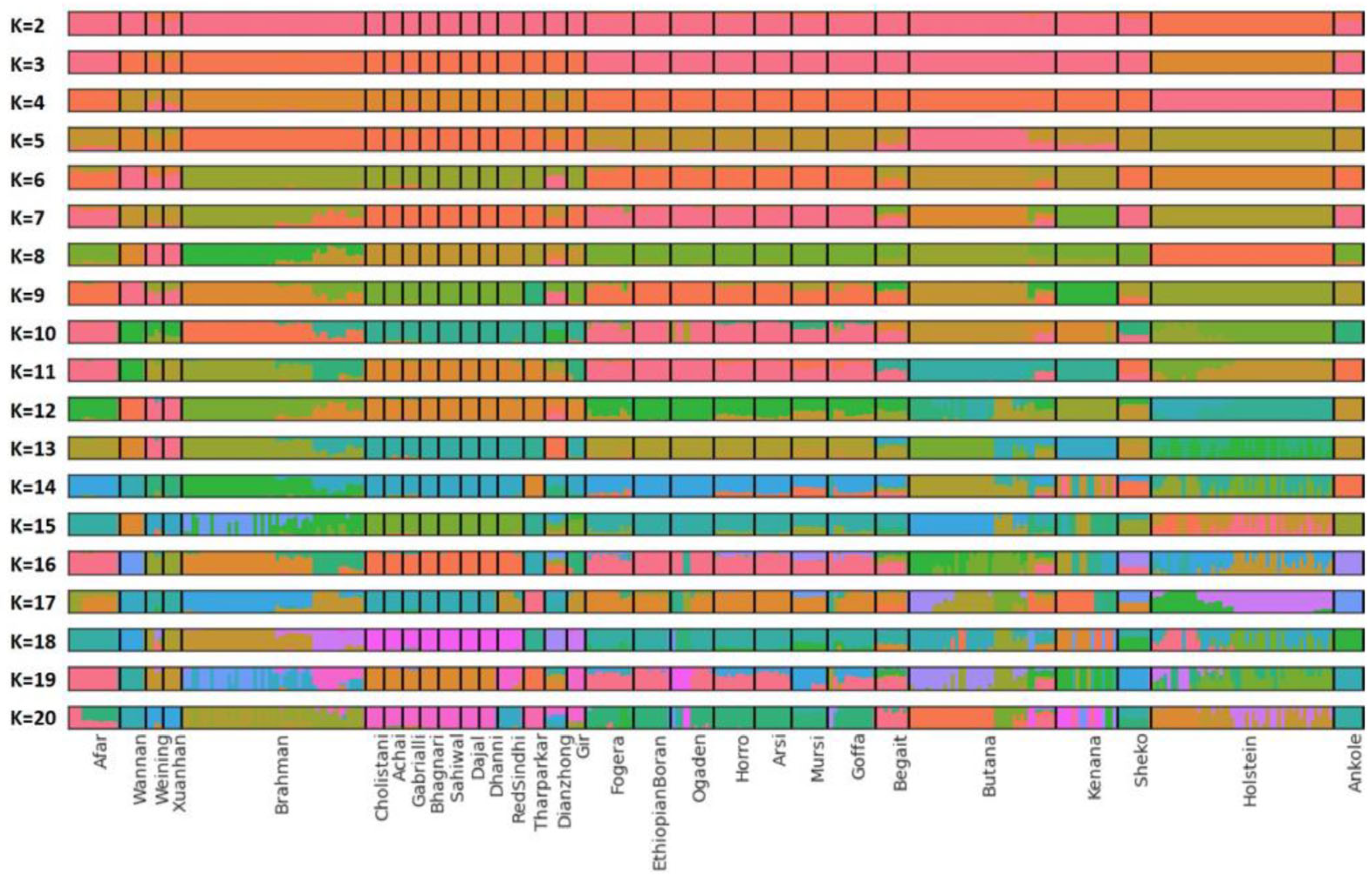
Out of the 40 investigated Butana cattle, seven individuals clustered with Kenana and Begait cattle (Figure 1b). These same seven individuals also exhibited signs of admixture with Kenana and other closely related breeds such as Begait (Figure 2). In contrast, the remaining 33 Butana cattle formed a distinct cluster in the PCA and did not show clear evidence of admixture based at K = 17, although three distinct subgroups emerged in different colors, which may suggest a relatively pure Butana group. These individuals originated from various locations, indicating that the observed genetic patterns are more plausibly attributed to historical gene flow rather than recent relatedness, shared environment, or inbreeding. Therefore, subsequent analyses focused on the 33 individuals displaying minimal signs of admixture.

3.2. High Diversity and Low Inbreeding Detected in Butana Cattle

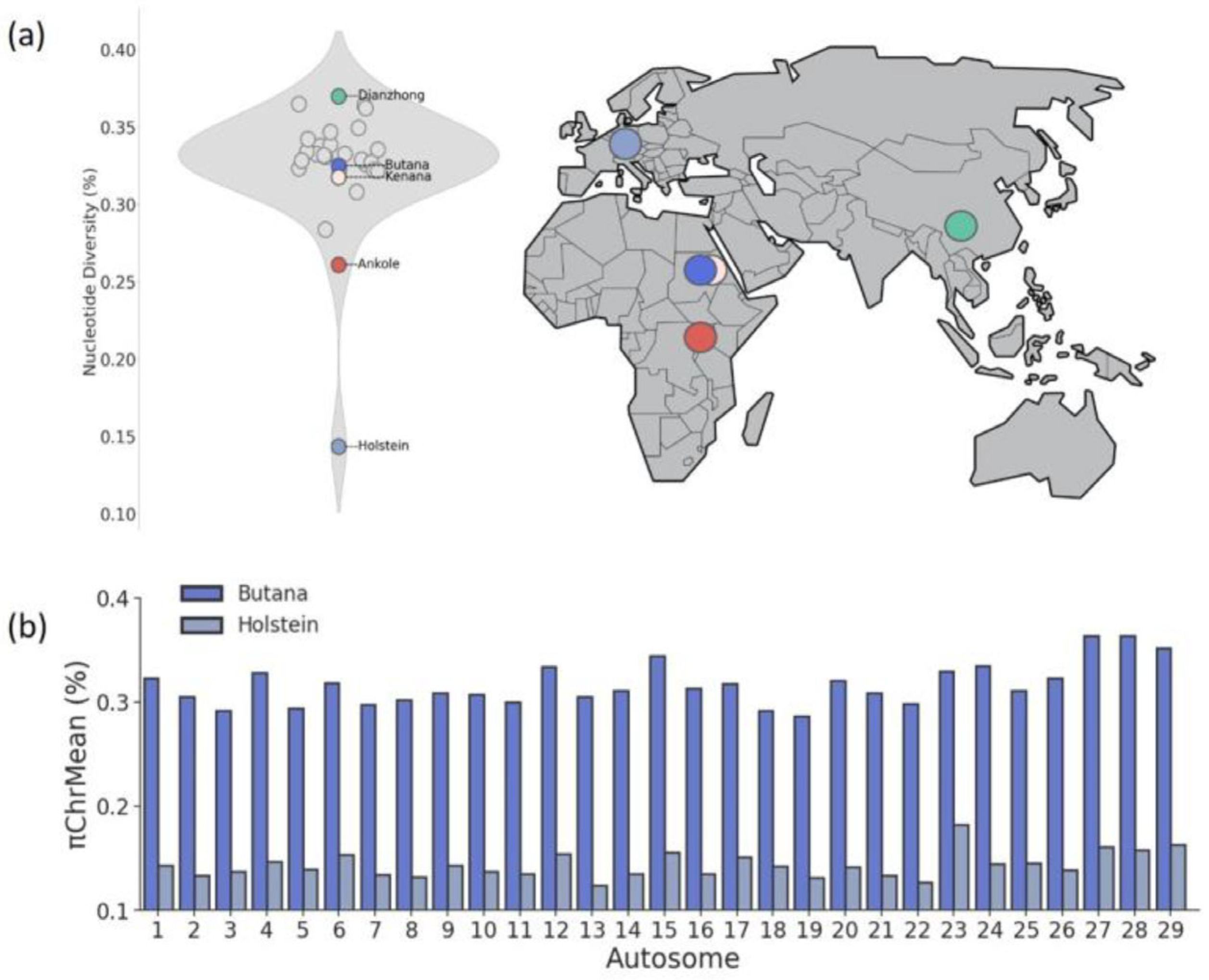
Total mean nucleotide diversity πTotMean ranged from 0.26 ± 0.01% in Ankole (or 0.14 ± 0.01% in Holstein which served as the outgroup) to 0.37 ± 0.02% in Dianzhong (Figure 3a, Table S1). Butana cattle (πTotMean = 0.32 ± 0.02%) exhibited a level of genetic diversity comparable to that of most indicine breeds (mean πTotMean = 0.33 ± 0.02% across breeds). The mean πTotMean of indicine breeds was 2.4 times higher nucleotide diversity compared to Holstein. Interestingly, Butana and most other B. indicus breeds showed the highest nucleotide diversity per chromosome (πChrMean) on chromosomes 27, 28, and 29 (Figure 3b), whereas Holstein showed the highest πChrMean on chromosome 23. Furthermore, the differences in πChrMean between chromosomes was less pronounced in indicine breeds compared to Holstein.
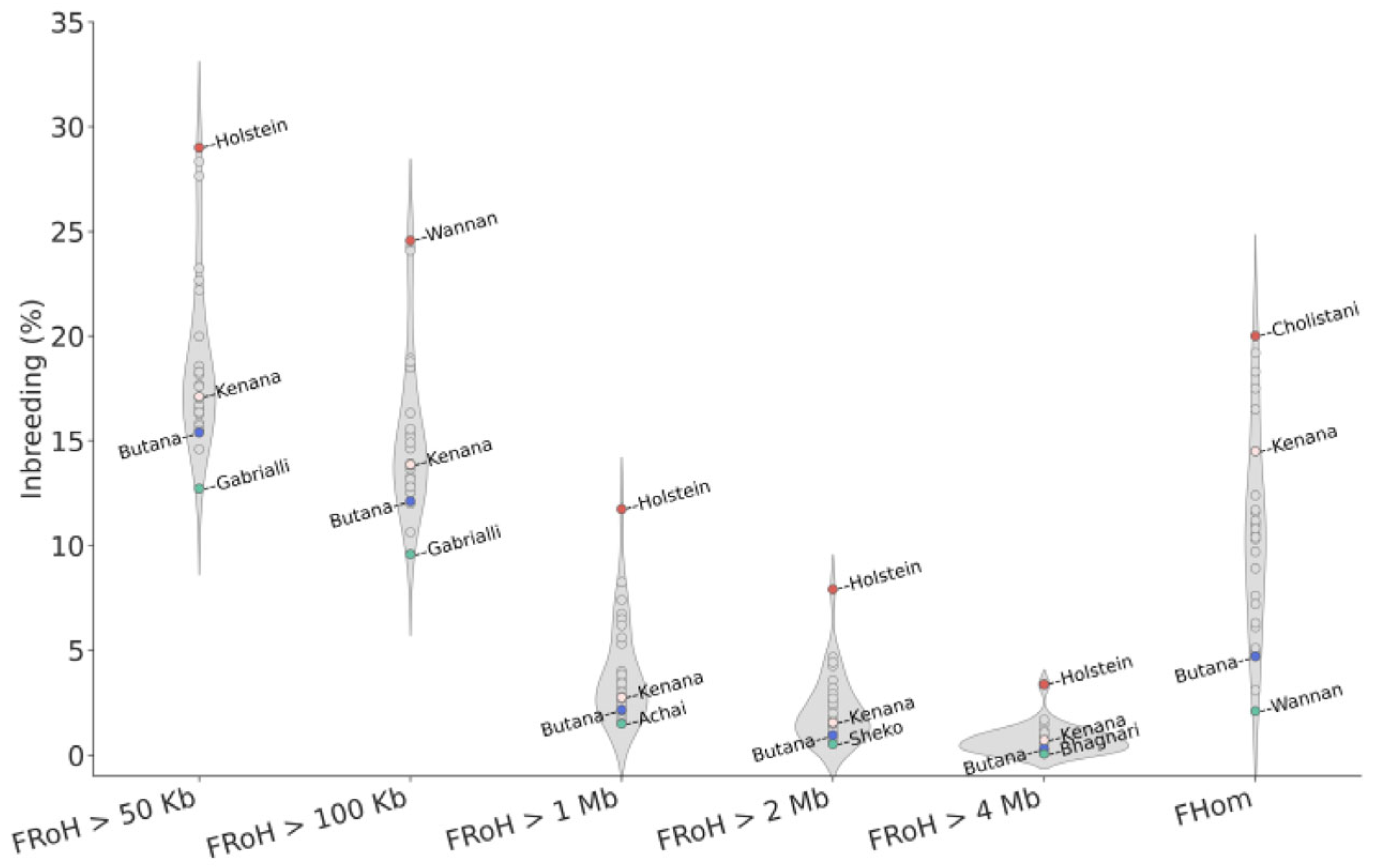
With regard to inbreeding, FHom ranged from 2.1 ± 1.7% in Chinese Wannan to 20.0 ± 19.2% in Cholistani (a breed from Pakistan) and Butana was observed with a FHom of 4.7 ± 3.0% (Figure 4, Table S1). Ancient inbreeding in terms of FRoH > 50 kb ranged from 12.7 ± 7.3% in Gabrialli (a breed from Pakistan) to 29.0 ± 3.98% in Holstein, while more recent inbreeding events in terms of FRoH > 4 Mb ranged from 0.06 ± 0.09% in Bhagnari (a breed from Baluchistan Province) to 3.4 ± 2.3% in Holstein. In Butana, low FRoH values were observed across all RoHs lengths categories (FRoH > 50 Kb = 15.4 ± 2.2%, FRoH > 100 Kb = 12.1 ± 2.3%, FRoH > 1 Mb = 2.2 ± 1.8%, FRoH > 2 Mb = 1.0 ± 1.2%, and FRoH > 4 Mb = 0.3 ± 0.6%), providing evidence for low recent and ancient inbreeding events.

3.3. Butana’s Unique Variants May Hold Key to Heat Stress Adaptation and Immune Function

In total, 93,899 variants unique to Butana cattle were detected. These variants were polymorphic in pure Butana cattle but monomorphic in all other 28 investigated breeds. Out of those, only 553 variants had a MAF > 0.05 and were predicted in silico to have a moderate or high impact on gene transcripts (Table S3). Most noteworthy were variants predicted to have high impact on gene transcripts as they are assumed to significantly affect the function of the gene product. These include 3 start lost, 25 stop gained, and 80 frameshift mutations. Four of these high impact variants are particularly interesting as they are quite frequent in the Butana cattle. The Butana-specific novel variant on chromosome 1 at 151,888,412 bp had a MAF of 0.11 and results in a stop gained mutation in COL6A5 (collagen type VI alpha 5 chain) gene. The others were three frameshift variants: one on chromosome 23 at 27,525,516 bp with a MAF of 0.09 affecting the gene HSPA1L (heat shock 70kDa protein 1-like), which is part of cellular response to heat stress pathway (R-BTA-2262752, Reactome), and two insertions on chromosome 5 at 109,393,293 bp and 109,393,261 bp had both a MAF of 0.09 and are affecting the gene TUBA8 (tubulin alpha 8). Furthermore, genes harboring variants that were unique to Butana, had a MAF ≥ 0.05, and showed moderate or high impact on gene transcripts, were checked for enrichment with GO terms as well as Reactome and KEGG pathways. Significantly enriched pathways were found in Reactome including immune system (R-BTA-168256, padj = 2.16 × 10⁻³), and homeostasis (R-BTA-109582, padj = 4.29 × 10⁻²), and in KEGG including ECM-receptor interaction (04512, padj = 8.94 × 10⁻³), focal adhesion (04510, padj = 1.92 × 10⁻²), and toxoplasmosis (05145, padj = 3.07 × 10⁻²) (Table S4).

3.4. Signatures of Selection Indicate Potential Adaptation to Immune Response in Butana

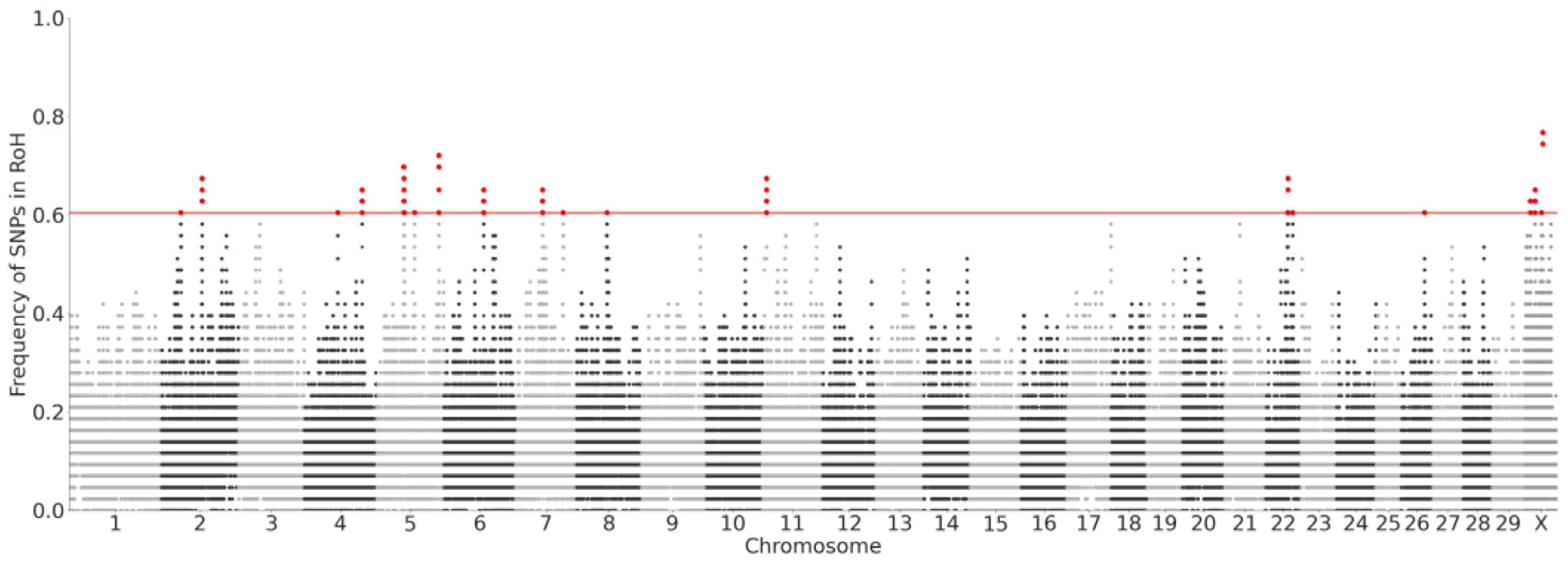
Regions with a high density of RoHs, referred to as RoH islands, were detected on ten chromosomes in pure Butana cattle (Figure 5, Table S5). Genes from three of these RoH islands were significantly enriched for GO terms. The RoH island on chromosome 5 harbors the genes IRAK3 (Interleukin 1 receptor associated kinase 3), CHADL (Chondroadherin like), and POLR3B (RNA polymerase III subunit B). On chromosome 11, the RoH island includes the gene IL18RAP (Interleukin 18 receptor accessory protein), while the RoH island on chromosome 26 contains RAB11FIP2 (RAB11 family interacting protein 2). These genes were significantly enriched (padj < 0.05) in a range of GO terms associated with immune response pathways (Table S6), including positive regulation of innate immune response (GO:45089), positive regulation of response to biotic stimulus (GO:02833), regulation of innate immune response (GO:45088), positive regulation of defense response (GO:31349), positive regulation of response to external stimulus (GO:32103), toll-like receptor signaling pathway (GO:02224), and regulation of response to biotic stimulus (GO:02831).
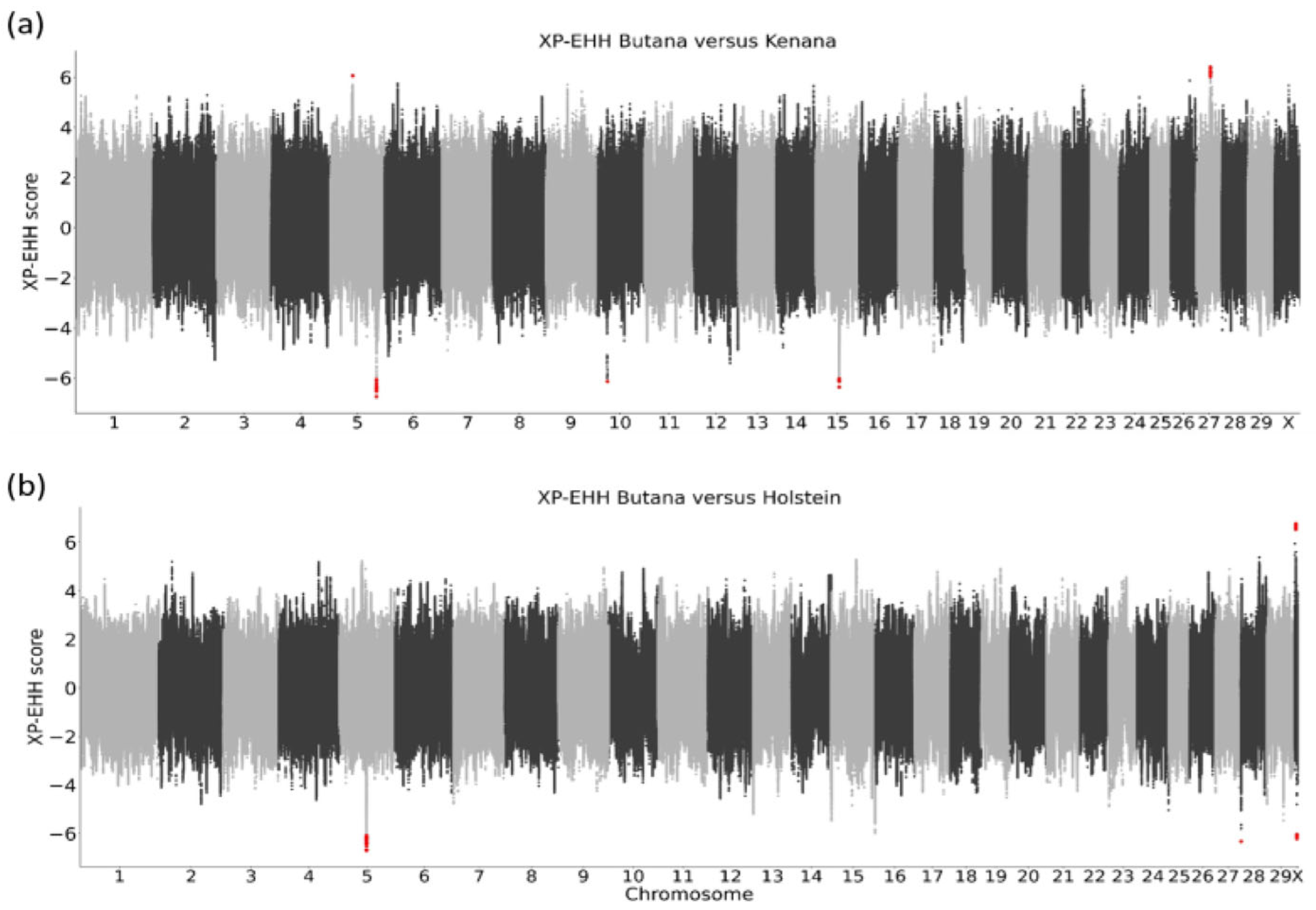
When comparing signatures of selection between Butana and Kenana, which is the closest related breed to Butana, five genomic regions showed significance (Figure 6a, Table 1). In Butana, two regions showing signatures of selection were detected on chromosomes 5 and 27. On chromosome 5, the region contained one variant downstream of XPOT (exportin for tRNA) and four additional flanking genes TBK1 (TANK binding kinase 1), C5H12orf56 (C12orf56 homolog), KICS2 (KICSTOR subunit 2), and SRGAP1 (SLIT-ROBO rho GTPase activating protein 1). On chromosome 27, ten variants formed the selection island surrounding PPP1R3B (protein phosphatase 1 regulatory subunit 3B) and TNKS (tankyrase).
In Kenana cattle compared to Butana, three regions showing signatures of selection were identified on chromosomes 5, 10, and 15. The region on chromosome 5 harbors nine genes including CD163L1 (CD163-like 1), PEX5 (peroxisomal biogenesis factor 5), RBP5 (retinol binding protein 5), and C1RL (complement C1r subcomponent-like). The region on chromosome 10 harbors TRAV24 (T cell receptor alpha variable 24) and five additional uncharacterized genes, while the region on chromosome 15 contains 15 olfactory receptor genes and five uncharacterized genes.
When comparing signatures of selection between Butana and Holstein cattle (Figure 6b, Table 1), only one region was detected in Butana on chromosome X. This region of selection contained 12 sequence variants and contained 13 genes including FAM50A (family with sequence similarity 50 member A), PLXNA3 (plexin A3), LAGE3 (L antigen family member 3), SLC10A3 (solute carrier family 10 member 3), FAM3A (family with sequence similarity 3 member A), G6PD (glucose-6-phosphate dehydrogenase), IKBKG (inhibitor of nuclear factor kappa B kinase regulatory subunit gamma), and seven uncharacterized genes. In Holstein cattle, compared to Butana, three regions showing selection signatures were identified (Figure 6b, Table 1). On chromosome 5, a selection region containing 15 variants was flanked by nine olfactory receptor genes belonging to the olfactory receptor family 9, as well as NEUROD4 (neuronal differentiation 4) and two uncharacterized genes. On chromosome 28, a region defined by a single variant showed a signature of selection. This variant was located near four genes, including three olfactory genes belonging to the olfactory receptor family 5, and one uncharacterized gene. On the X chromosome, five variants formed a region of selection flanked by YIPF6 (Yip1 domain family member 6), OPHN1 (oligophrenin 1), and one uncharacterized gene.

3.5. Pathogen Responsible for Tropical Theileriosis Was Detected in Butana Cattle

Sequencing reads from the 22 sequenced Butana that did not map to the B. taurus, the current reference genome available for cattle, were screened for taxonomy assignment to other species. In total, 6765 different species were detected in at least one of 22 sequenced Butana. Among these, the most abundant and prevalent were different Bosea species, a common gram-negative bacteria genus present in the environment (Table 2). Interestingly, a protozoa known to cause economic losses and impact cattle production in Northern Africa, Theileria annulata, was detected in all Butana cattle. In addition, another pathogen that can cause diseases in cattle was Burkholderia cenocepacia. B. cenocepacia can infect cattle, leading to various health issues, including mastitis and weak calves syndrome [41,42]. This bacteria was also observed in all sequenced Butana cattle, with an average of 14,410 reads per animal.

4. Discussion

This study provides a comprehensive genomic overview of Butana cattle, offering new insights into their genetic diversity and inbreeding, relationship with other B. indicus breeds, and adaptive traits. We identified selection signatures, candidate genes, and unique variants that reflect the distinct evolutionary path of Butana cattle. While some of the immune-related selection signals have been reported in Butana and Kenana populations previously, our study extends these findings by applying whole-genome sequencing data and by analyzing Butana as a distinct breed rather than in combination with other Sudanese populations. This higher-resolution approach reveals additional diversity and provides a more detailed view of the genetic architecture underlying adaptation. These findings contribute to our understanding of how environmental pressures, management practices, and historical factors have shaped the genome of this important indigenous breed.

4.1. Genetic Affinity and Historical Introgression

The observed genetic relationships between Butana cattle and the other investigated African B. indicus breeds, particularly those from Sudan and Ethiopia, reflect a shared ancestry and historical connectivity within the region. The close genetic proximity to breeds such as Kenana, Begait, and Fogera, was supported by maximum likelihood trees, PCA, and FST statistics. The admixture signal of a subset of Butana individuals clustering with Kenana and Begait likely indicates historical gene flow. As these individuals originated from different locations, recent kinship or localized population structure is unlikely, supporting the hypothesis of older introgression events. These findings are consistent with previous studies highlighting Sudan and Ethiopia as historical corridors for zebu gene flow and cattle migration [4,43,44].

4.2. Diversity and Inbreeding

Butana cattle exhibit high genetic diversity, similar to other zebu cattle, and substantially greater than that observed in Holstein and other taurine breeds [45]. This pattern is consistent with the known effects of intensive selection and closed breeding practices in commercial taurine populations. The high genetic diversity in Butana is also mirrored by low levels of both recent and ancient inbreeding as indicated by homozygosity and RoH analyses. These findings highlight the genetic value of indigenous breeds like Butana, which may carry alleles important for resilience, disease resistance, and adaptation to harsh environments. Interestingly, the distribution of nucleotide diversity across chromosomes revealed distinct patterns between indicine and taurine breeds. While the nucleotide diversity was extremely high and almost uniformly distributed across all chromosomes in indicine breeds, the highest diversity in taurine breeds was observed on chromosome 23, a chromosome that harbors immune-related genes as part of the BoLA (bovine leukocyte antigen) complex [46]. Nucleotide diversity on chromosome 23 in Holstein was about 50% lower than that observed in Butana. The elevated diversity in Butana may reflect a larger historical effective population size, differences in recombination rates, lineage-specific demographic histories, and selection pressures, particularly on genes related to immune function. Although the sample size was moderate, the inclusion of animals from eight geographically distinct locations and additional genomes from public databases provides a representative snapshot of the genetic diversity within the Butana breed.

4.3. Candidate Genes and Pathways for Heat Adaptation in Butana Cattle

The high number of unique variants in Butana cattle, including those with predicted functional relevance, highlights their distinct genomic profile and potential adaptation to hot climates. Among the affected genes, four genes COL6A5, HSPA1L, TUBA8, and XPOT emerged as promising candidates genes that may directly or indirectly contribute to the heat adaptation. COL6A5’s role in extracellular matrix stability might contribute to maintaining tissue integrity and elasticity under thermal stress, facilitating proper tissue function despite environmental challenges. This gene has been previously reported to affect cashmere formation and development in antelope, ibex, and goats [47] and wool in sheep [48]. This gene has also been reported to be upregulated in skin development in Dezhou donkeys [49]. Furthermore, variations in COL6A5 were linked to dermal phenotypes in humans and skin development in other species [50,51,52]. Although direct evidence in cattle is limited, COL6A5 might be involved in coat characteristics, which play a crucial role in thermoregulation and protection from solar radiation. HSPA1L, a heat shock protein, is directly involved in protecting cellular proteins from heat-induced denaturation and facilitating cellular stress response mechanisms. A novel, Butana-specific frameshift variant in HSPA1L affecting its only exon may alter gene function, although the exact impact remains to be clarified. Prior studies have linked indels in HSPA1L to fertility [53,54] and cell survival under heat stress [55,56], highlighting its relevance for thermal resilience. TUBA8, a gene involved in cytoskeletal stability and muscle development, has been associated with growth and skeletal adaptation in pigs [57] and yaks [58], which are living in extreme conditions in the Qinghai-Tibet Plateau. Frameshift variants in TUBA8 could reflect adaptations maintaining cellular integrity under heat stress. Both TUBA8 and XPOT, involved in fundamental cellular processes such as protein transport and cytoskeletal stability, could support maintaining cellular integrity and function during heat stress, preventing damage that might otherwise compromise activity and productivity. Notably, TUBA8 expression has been previously reported to be enriched and increase in bovine oocytes during seasonal heat stress [59], reinforcing its potential role in thermal resilience. The presence of two frameshift variants in TUBA8 exons with moderate allele frequency in Butana further supports the hypothesis of selection-driven adaptation to hot environments through enhanced cellular robustness.

4.4. Immune-Related Selection Signatures in Butana Cattle

Pathway enrichment analyses of Butana-unique variants and functional enrichment analyses along with signatures of selection, consistently pointed toward immune-related processes as key targets of selection in Butana cattle. Significant enrichment was observed in pathways linked to immune response, homeostasis, cellular adhesion, and environmental adaptation, suggesting that Butana may harbor unique alleles contributing to thermal resilience (see above) and disease resistance. Several identified candidate genes such as IRAK3, IL18RAP, CHADL, POLR3B, and RAB11FIP2 are directly involved in immune signaling, inflammatory responses, and cellular defense mechanisms in humans [60,61,62,63,64]. These genes, together with the overrepresentation of immune-related GO terms, indicate that immune-relevant genes in Butana cattle may have been shaped by natural or historical selection, potentially in response to regional pathogen pressure (e.g., such as bovine trypanosomiasis [65]) and/or harsh environmental conditions. This finding supports previous research where immune pathways were identified as signatures of positive selection for Butana and Kenana cattle [14].

4.5. Signatures of Selection Between Butana and Kenana Cattle

Several genomic regions showed signatures of selection in Butana when compared to the closely related Kenana breed, despite their shared ancestry. Notably, these regions included the genes XPOT, TBK1, SRGAP1, PPP1R3B, and TNKS. XPOT was previously identified within RoH islands of B. indicus cattle adapted to hot and semi-arid environments [66], suggesting a potential role in cellular stress responses under thermal conditions. TBK1 seems to play a role in the induction of IFN-β and microbial infections [67,68], while SRGAP1 has been linked to meat quality and feed efficiency traits in Nelore cattle [69], indicating potential dual relevance for both adaptation and productivity.
In another region, selection signals flanked PPP1R3B and TNKS, two genes previously associated with milk fat percentage in taurine breeds such as Holstein [70] and German Black Pied cattle [71]. Given Butana’s reputation for producing milk with high fat content, these loci may contribute to this economically important trait in an indicine context. In Kenana cattle, several genes under selection are associated with immune function, including CD163L1, PEX5, RBP5, C1RL [72,73,74,75], and TRAV24, which plays a key role in T-cell-mediated antigen recognition [76]. These findings suggest adaptation to breed-specific immune challenges. Additionally, a cluster of olfactory receptor genes under selection may reflect ongoing sensory adaptation, though such regions are common and should be interpreted with caution [77]. Although Butana and Kenana cattle are genetically similar, they are raised under contrasting environmental conditions within Sudan: Butana in hotter, more arid regions and Kenana in comparatively milder climates. The selection signals in Butana likely reflect adaptation to heat and harsher conditions, supporting the hypothesis that environmental pressures have shaped specific genomic regions related to both heat resilience and production traits.

4.6. Signatures of Selection Between Butana and Holstein Cattle

When comparing selection signals between Butana and Holstein cattle, distinct patterns emerged that reflect their contrasting selection histories and environmental conditions. In Butana, selected genes were primarily associated with metabolic regulation, stress response, and immune function. For instance, G6PD plays a central role in redox balance and cellular protection against oxidative stress and G6PD deficiency can cause acute hemolytic anemia in humans [78]. Further, FAM3A contributes to insulin signaling and energy metabolism [79,80], while SLC10A3 is involved in bile acid transport, potentially affecting lipid digestion and metabolic efficiency [81]. The immune-related gene IKBKG, a key regulator of the NF-κB pathway, is essential for inflammation control and cellular stress response [82,83]. Other genes, such as FAM50A [84,85,86] and PLXNA3 [87], are linked to transcriptional regulation and neural development, which may further support physiological resilience in challenging environments. In contrast, selection signals in Holstein cattle included genes associated with sensory perception and neural development. The presence of multiple olfactory receptor genes suggest ongoing adaptation in sensory functions, although such gene families are known to evolve rapidly across mammals and may also reflect genomic instability or drift [77,88,89]. Additional selected genes such as YIPF6 and OPHN1 point to intracellular transport and neuronal processes. YIPF6 supports proper protein trafficking within the endomembrane system and may influence immune signaling and cell maintenance [90,91]. OPHN1, involved in cytoskeletal regulation and brain development, has been associated with behavioral and neurological traits [92], which could reflect selection for temperament or stress response under intensive production systems. Taken together, these contrasting patterns suggest that while Holstein cattle have been shaped predominantly by artificial selection for productivity and possibly behavior, Butana cattle exhibit genomic signatures indicative of natural selection for heat tolerance, metabolic efficiency, and immune robustness, traits critical for survival and performance in arid environments. Our results of genomic regions of selection signatures and Butana specific genetic variation repeatedly hint on immune response genes and the pathways they act in. These findings are consistent with recent studies in other cattle breeds and mammals, which provide evidence for the critical role of the bodily immune response to stress that forms the backbone of resilience against environmental stress challenges. A large-scale genomic study in Angus and Hanwoo cattle recently has identified numerous selection signatures, including many genes associated with immunity and adaptation to environmental stress [93]. Similarly, comprehensive studies in human populations including Neanderthals demonstrate that the human immune response has been shaped by natural selection and adaptation to environmental stressors, highlighting the central role of the immune system in environmental adaptation and resilience [94].

4.7. Endemic Pathogens Detected in Butana Cattle

The detection of T. annulata in all sequenced Butana cattle, with consistently high read counts, indicates the presence of tropical theileriosis within the Butana population. This tick-borne parasite causes clinical symptoms such as fever, anemia, and reduced milk yield, and has been previously reported as endemic in Sudanese cattle, including Butana [95,96,97,98]. Its widespread presence underlines the need for improved management and control strategies to protect animal health and productivity. Similarly, the identification of B. cenocepacia across all animals, although at lower abundance, is notable. This opportunistic pathogen is known to cause mastitis and the birth of weak calves syndrome [41,42,99], potentially negatively affecting animal welfare and reproductive efficiency in Butana herds. Importantly, these observations were derived from the analysis of unmapped sequencing reads and should, therefore, be interpreted as pathogen DNA signatures rather than confirmed infections. Such signals may reflect environmental exposure or background microbial DNA rather than active disease. Validation through serological or veterinary analyses are necessary to confirm infection status. Nonetheless, this approach highlights the hidden potential of metagenomic data to reveal biologically relevant and often overlooked information about livestock health. Integrating such metagenomic screening into livestock genomics could thus provide valuable insights into pathogen dynamics and support future genomic surveillance and herd health monitoring efforts.

4.8. Breeding and Conservation Implications

The results presented here have direct relevance for breeding and conservation strategies. The high genetic diversity and low inbreeding levels observed in Butana cattle underline their value as a genetic resource for resilience traits, particularly heat tolerance and disease resistance. These adaptive characteristics could be strategically incorporated into breeding programs, for instance through genomic selection or crossbreeding approaches, to improve productivity under climate and pathogenic stress. Furthermore, conserving the genetic integrity of Butana cattle is essential to preserve alleles contributing to environmental adaptability, which may become increasingly important in the context of global warming and changing production environments.

5. Conclusions

This study provides a comprehensive genomic characterization of Butana cattle, revealing high genetic diversity, low levels of inbreeding, and distinct signatures of selection potentially associated with heat tolerance, metabolic adaptation, and immune function. These findings underscore the adaptive value of the Butana genome and its potential relevance for breeding programs focused on enhancing resilience to climate extremes and disease pressure. In particular, the discovery of unique genetic variants and selection signals in genes related to heat stress and immune defense highlight Butana’s potential as a genetic resource for improving livestock performance in challenging environments. Furthermore, the identified immune-related loci may be linked to resistance to diseases such as bovine trypanosomiasis, and their broader contribution in resilience to environmental challenges warrants further investigation into their functional consequences.

Supplementary Materials

The following supporting information can be downloaded at: https://www.mdpi.com/article/10.3390/genes16121429/s1; Table S1: Summary statistics of genetic diversity and runs of homozygosity (RoH) in the investigated cattle breeds; Table S2: Results of outgroup f3-statistics testing shared genetic drift between pairs of cattle populations; Table S3: Summary of 553 variants unique to Butana cattle with MAF > 0.05 and moderate or high impact on gene transcripts; Table S4: KEGG and Reactome terms enriched among genes harboring Butana-specific variants with minor allele frequency (MAF) > 0.05 and predicted moderate or high impact on transcripts; Table S5: Genomic regions with a high density of runs of homozygosity (RoHs), referred to as RoH islands, identified in pure Butana cattle; Table S6: Gene ontology (GO) molecular function terms enriched among genes in RoH islands of Butana cattle.

Author Contributions

Conceptualization, G.B.N., P.K., S.A.R., G.A.B.; methodology, G.B.N., G.A.B.; validation, G.B.N.; formal analysis, G.B.N.; investigation, G.B.N., P.K., S.A.R., M.R., E.A.M.O., S.E.; resources, G.A.B.; data curation, G.B.N., P.K.; writing—original draft preparation, G.B.N., P.K.; writing—review and editing, G.B.N., P.K., S.A.R., S.E., G.A.B.; visualization, G.B.N.; supervision, G.A.B.; project administration, G.A.B.; funding acquisition, G.A.B. All authors have read and agreed to the published version of the manuscript.

Funding

The collection of samples was supported by the Ministry of Higher Education and Scientific Research, Republic of Sudan. GBN was supported by funds of the Federal Ministry of Food and Agriculture (BMEL) based on a decision of the Parliament of the Federal Republic of Germany via the Federal Office for Agriculture and Food (BLE) (grant number 2818BM091). SE was supported by the Ministry of Higher Education and Scientific Research, Republic of Sudan and the Fiat Panis Foundation.

Institutional Review Board Statement

Not applicable.

Informed Consent Statement

Not applicable.

Data Availability Statement

The raw sequencing fastq files generated in the current study were made publicly available in the European Nucleotide Archive (PRJEB94940).

Acknowledgments

We acknowledge the 1000 Bull Genomes Consortium for providing the data. We gratefully acknowledge the cattle owners in Sudan for providing the Butana samples and the management and staff of the Atbara Research Station for their support.

Conflicts of Interest

The authors declare no conflicts of interest.

References

  1. Rahman, I.M.K. Sudanese Cattle Resources and Their Productivity—A Review. Agric. Rev. 2007, 28, 305–308. [Google Scholar]
  2. Musam, M.-A.; Peters, K.J.; Ahmed, M.-K. On Farm Characterization of Butana and Kenana Cattle Breed Production Systems in Sudan. Available online: https://www.researchgate.net/publication/288674640_On_farm_characterization_of_Butana_and_Kenana_cattle_breed_production_systems_in_Sudan (accessed on 1 April 2021).
  3. Ageeb, A.; Hillers, J. Production and Reproduction Characteristics of Butana and Kenana Cattle of the Sudan. Available online: https://www.fao.org/4/u1200t/u1200T0j.htm#production%20and%20reproduction%20characteristics%20of%20butana%20and%20kenana%20cattle%20of%20the%20s (accessed on 3 July 2025).
  4. Loftus, R.; Cunningham, P. Molecular Genetic Analysis of African Zeboid Populations. In The Origins and Development of African Livestock; Blench, R., MacDonald, K., Eds.; Routledge: London, UK, 2000; pp. 251–258. ISBN 9780203984239. [Google Scholar]
  5. Elzaki, S.; Korkuć, P.; Arends, D.; Reissmann, M.; Brockmann, G.A. Effects of DGAT1 on Milk Performance in Sudanese Butana × Holstein Crossbred Cattle. Trop. Anim. Health Prod. 2022, 54, 142. [Google Scholar] [CrossRef] [PubMed]
  6. Salim, B.; Taha, K.M.; Hanotte, O.; Mwacharo, J.M. Historical Demographic Profiles and Genetic Variation of the East African Butana and Kenana Indigenous Dairy Zebu Cattle. Anim. Genet. 2014, 45, 782–790. [Google Scholar] [CrossRef] [PubMed]
  7. Reissmann, M.; Brockmnn, G.A.; Peters, K.J.; Musa, L.M. Genetic Characterization of the Diacylglycerol Acyltransferase Gene in Sudanese Kenana and Butana Cattle Breeds. Univ. Khartoum J. Agric. Sci. 2008, 16, 173–186. [Google Scholar]
  8. Rosse, I.D.C.; Steinberg, R.D.S.; Coimbra, R.S.; Peixoto, M.G.C.D.; Verneque, R.S.; Machado, M.A.; Fonseca, C.G.; Carvalho, M.R.S. Novel SNPs and INDEL Polymorphisms in the 3′UTR of DGAT1 Gene: In Silico Analyses and a Possible Association. Mol. Biol. Rep. 2014, 41, 4555–4563. [Google Scholar] [CrossRef] [PubMed]
  9. Rahmatalla, S.A.; Reissmann, M.; Mueller, U.; Brockmann, G.A. Indentification of Genetic Variants Influencing Milk Production Traits in Sudanese Dairy Cattle. Res. J. Anim. Sci. 2015, 9, 12–22. [Google Scholar]
  10. Ahmed, A.S.; Rahmatalla, S.; Bortfeldt, R.; Arends, D.; Reissmann, M.; Brockmann, G.A. Milk Protein Polymorphisms and Casein Haplotypes in Butana Cattle. J. Appl. Genet. 2017, 58, 261–271. [Google Scholar] [CrossRef]
  11. Musa, L.; Riessmann, M.; Ishag, I. Characterization of the Growth Hormone Gene (GH1) in Sudanese Kenana and Butana Cattle Breeds. J. Anim. Prod. Adv. 2013, 3, 28. [Google Scholar] [CrossRef]
  12. Salim, B.; Takeshima, S.N.; Nakao, R.; Moustafa, M.A.M.; Ahmed, M.K.A.; Kambal, S.; Mwacharo, J.M.; Alkhaibari, A.M.; Giovambattista, G. BoLA-DRB3 Gene Haplotypes Show Divergence in Native Sudanese Cattle from Taurine and Indicine Breeds. Sci. Rep. 2021, 11, 17202. [Google Scholar] [CrossRef]
  13. Elzaki, S.; Korkuc, P.; Arends, D.; Reissmann, M.; Rahmatalla, S.A.; Brockmann, G.A. Validation of Somatic Cell Score-Associated SNPs from Holstein Cattle in Sudanese Butana and Butana × Holstein Crossbred Cattle. Trop. Anim. Health Prod. 2022, 54, 50. [Google Scholar] [CrossRef]
  14. Bahbahani, H.; Salim, B.; Almathen, F.; Al Enezi, F.; Mwacharo, J.M.; Hanotte, O. Signatures of Positive Selection in African Butana and Kenana Dairy Zebu Cattle. PLoS ONE 2018, 13, e0190446. [Google Scholar] [CrossRef]
  15. Kim, J.; Hanotte, O.; Mwai, O.A.; Dessie, T.; Bashir, S.; Diallo, B.; Agaba, M.; Kim, K.; Kwak, W.; Sung, S.; et al. The Genome Landscape of Indigenous African Cattle. Genome Biol. 2017, 18, 34. [Google Scholar] [CrossRef] [PubMed]
  16. Geibel, J.; Reimer, C.; Weigend, S.; Weigend, A.; Pook, T.; Simianer, H. How Array Design Creates SNP Ascertainment Bias. PLoS ONE 2021, 16, e0245178. [Google Scholar] [CrossRef] [PubMed]
  17. Tijjani, A.; Salim, B.; da Silva, M.V.B.; Eltahir, H.A.; Musa, T.H.; Marshall, K.; Hanotte, O.; Musa, H.H. Genomic Signatures for Drylands Adaptation at Gene-Rich Regions in African Zebu Cattle. Genomics 2022, 114, 110423. [Google Scholar] [CrossRef] [PubMed]
  18. Hayes, B.J.; Daetwyler, H.D. 1000 Bull Genomes Project to Map Simple and Complex Genetic Traits in Cattle: Applications and Outcomes. Annu. Rev. Anim. Biosci. 2019, 7, 89–102. [Google Scholar] [CrossRef]
  19. Bellott, D.W.; Hughes, J.F.; Skaletsky, H.; Brown, L.G.; Pyntikova, T.; Cho, T.J.; Koutseva, N.; Zaghlul, S.; Graves, T.; Rock, S.; et al. Mammalian y Chromosomes Retain Widely Expressed Dosage-Sensitive Regulators. Nature 2014, 508, 494–499. [Google Scholar] [CrossRef]
  20. Rosen, B.D.; Bickhart, D.M.; Schnabel, R.D.; Koren, S.; Elsik, C.G.; Tseng, E.; Rowan, T.N.; Low, W.Y.; Zimin, A.; Couldrey, C.; et al. De Novo Assembly of the Cattle Reference Genome with Single-Molecule Sequencing. Gigascience 2020, 9, giaa021. [Google Scholar] [CrossRef]
  21. Hudson, R.R.; Slatkint, M.; Maddison, W.P. Estimation of Levels of Gene Flow From DNA Sequence Data. Genetics 1992, 132, 583–589. [Google Scholar] [CrossRef]
  22. Bhatia, G.; Patterson, N.; Sankararaman, S.; Price, A.L. Estimating and Interpreting FST: The Impact of Rare Variants. Genome Res 2013, 23, 1514–1521. [Google Scholar] [CrossRef]
  23. Miles, A.; Rodrigues, M.F.; Ralph, P.; Harding, N.; Pisupati, R.; Rae, S. Cggh/Scikit-Allel, V1.3.1. bot, pyup.io bot. Zenodo: Geneva, Switzerland, 2020. [CrossRef]
  24. Pickrell, J.K.; Pritchard, J.K. Inference of Population Splits and Mixtures from Genome-Wide Allele Frequency Data. PLoS Genet. 2012, 8, e1002967. [Google Scholar] [CrossRef]
  25. Purcell, S.; Neale, B.; Todd-Brown, K.; Thomas, L.; Ferreira, M.A.R.; Bender, D.; Maller, J.; Sklar, P.; de Bakker, P.I.W.; Daly, M.J.; et al. PLINK: A Tool Set for Whole-Genome Association and Population-Based Linkage Analyses. Am. J. Hum. Genet. 2007, 81, 559–575. [Google Scholar] [CrossRef] [PubMed]
  26. Felsenstein, J. PHYLIP (Phylogeny Inference Package), version 3.6. Distributed by Author. Department of Genome Sciences, University of Washington: Seattle, WA, USA, 2005. Available online: https://phylipweb.github.io/phylip/ (accessed on 21 January 2025).
  27. Milanesi, M.; Capomaccio, S.; Vajana, E.; Bomba, L.; Garcia, J.F.; Ajmone-Marsan, P.; Colli, L. BITE: An R Package for Biodiversity Analyses. bioRxiv 2017. bioRxiv:181610. [Google Scholar]
  28. Evanno, G.; Regnaut, S.; Goudet, J. Detecting the Number of Clusters of Individuals Using the Software Structure: A Simulation Study. Mol. Ecol. 2005, 14, 2611–2620. [Google Scholar] [CrossRef] [PubMed]
  29. Fitak, R.R. OptM: Estimating the Optimal Number of Migration Edges on Population Trees Using Treemix. Biol. Methods. Protoc. 2021, 6, bpab017. [Google Scholar] [CrossRef] [PubMed]
  30. McLaren, W.; Gil, L.; Hunt, S.E.; Riat, H.S.; Ritchie, G.R.S.; Thormann, A.; Flicek, P.; Cunningham, F. The Ensembl Variant Effect Predictor. Genome Biol. 2016, 17, 122. [Google Scholar] [CrossRef] [PubMed]
  31. Raudvere, U.; Kolberg, L.; Kuzmin, I.; Arak, T.; Adler, P.; Peterson, H.; Vilo, J. G: Profiler: A Web Server for Functional Enrichment Analysis and Conversions of Gene Lists (2019 Update). Nucleic Acids Res. 2019, 47, W191–W198. [Google Scholar] [CrossRef]
  32. Danecek, P.; Auton, A.; Abecasis, G.; Albers, C.A.; Banks, E.; DePristo, M.A.; Handsaker, R.E.; Lunter, G.; Marth, G.T.; Sherry, S.T.; et al. The Variant Call Format and VCFtools. Bioinformatics 2011, 27, 2156–2158. [Google Scholar] [CrossRef]
  33. Narasimhan, V.; Danecek, P.; Scally, A.; Xue, Y.; Tyler-Smith, C.; Durbin, R. BCFtools/RoH: A Hidden Markov Model Approach for Detecting Autozygosity from next-Generation Sequencing Data. Bioinformatics 2016, 32, 1749–1751. [Google Scholar] [CrossRef]
  34. Sabeti, P.C.; Varilly, P.; Fry, B.; Lohmueller, J.; Hostetter, E.; Cotsapas, C.; Xie, X.; Byrne, E.H.; McCarroll, S.A.; Gaudet, R.; et al. Genome-Wide Detection and Characterization of Positive Selection in Human Populations. Nature 2007, 449, 913–918. [Google Scholar] [CrossRef]
  35. Gautier, M.; Klassmann, A.; Vitalis, R. Rehh 2.0: A Reimplementation of the R Package Rehh to Detect Positive Selection from Haplotype Structure. Mol. Ecol. Resour. 2017, 17, 78–90. [Google Scholar] [CrossRef] [PubMed]
  36. Browning, B.L.; Zhou, Y.; Browning, S.R. A One-Penny Imputed Genome from Next-Generation Reference Panels. Am. J. Hum. Genet. 2018, 103, 338–348. [Google Scholar] [CrossRef] [PubMed]
  37. Neumann, G.B.; Korkuć, P.; Reißmann, M.; Wolf, M.J.; May, K.; König, S.; Brockmann, G.A. Unmapped Short Reads from Whole-Genome Sequencing Indicate Potential Infectious Pathogens in German Black Pied Cattle. Vet. Res. 2023, 54, 95. [Google Scholar] [CrossRef] [PubMed]
  38. Danecek, P.; Bonfield, J.K.; Liddle, J.; Marshall, J.; Ohan, V.; Pollard, M.O.; Whitwham, A.; Keane, T.; McCarthy, S.A.; Davies, R.M.; et al. Twelve Years of SAMtools and BCFtools. Gigascience 2021, 10, giab008. [Google Scholar] [CrossRef] [PubMed]
  39. Lu, J.; Rincon, N.; Wood, D.E.; Breitwieser, F.P.; Pockrandt, C.; Langmead, B.; Salzberg, S.L.; Steinegger, M. Metagenome Analysis Using the Kraken Software Suite. Nat. Protoc. 2022, 17, 2815–2839. Erratum in: Nat Protoc. 2024. https://doi.org/10.1038/s41596-024-01064-1. [CrossRef] [PubMed] [PubMed Central]
  40. Lu, J.; Breitwieser, F.P.; Thielen, P.; Salzberg, S.L. Bracken: Estimating Species Abundance in Metagenomics Data. PeerJ Comput. Sci. 2017, 3, e104. [Google Scholar] [CrossRef] [PubMed]
  41. Zhang, Z.; Yao, Y.; Yang, J.; Jiang, H.; Meng, Y.; Cao, W.; Zhou, F.; Wang, K.; Yang, Z.; Yang, C.; et al. Assessment of Adaptive Immune Responses of Dairy Cows with Burkholderia Contaminans-Induced Mastitis. Front. Microbiol. 2023, 14, 1099623. [Google Scholar] [CrossRef]
  42. Saad, N.M.; Amin, W.F. Isolation of Burkholderia Cepacia Complex from Raw Miolk of Different Species of Dariy Animals in Assiut Governorate. Assiut Vet. Med. J. 2012, 58, 67–70. [Google Scholar] [CrossRef]
  43. Hanotte, O.; Bradley, D.G.; Ochieng, J.W.; Verjee, Y.; Hill, E.W.; Rege, J.E.O. African Pastoralism: Genetic Imprints of Origins and Migrations. Science 2002, 296, 336–339. [Google Scholar] [CrossRef]
  44. Pitt, D.; Sevane, N.; Nicolazzi, E.L.; MacHugh, D.E.; Park, S.D.E.; Colli, L.; Martinez, R.; Bruford, M.W.; Orozco-terWengel, P. Domestication of Cattle: Two or Three Events? Evol. Appl. 2019, 12, 123–136. [Google Scholar] [CrossRef]
  45. Neumann, G.B.; Korkuć, P.; Arends, D.; Wolf, M.J.; May, K.; König, S.; Brockmann, G.A. Genomic Diversity and Relationship Analyses of Endangered German Black Pied Cattle (DSN) to 68 Other Taurine Breeds Based on Whole-Genome Sequencing. Front. Genet. 2023, 13, 993959. [Google Scholar] [CrossRef] [PubMed]
  46. Shiina, T.; Blancher, A.; Inoko, H.; Kulski, J.K. Comparative Genomics of the Human, Macaque and Mouse Major Histocompatibility Complex. Immunology 2017, 150, 127–138. [Google Scholar] [CrossRef] [PubMed]
  47. Wang, W.; Li, Z.; Xie, G.; Li, X.; Wu, Z.; Li, M.; Liu, A.; Xiong, Y.; Wang, Y. Convergent Genomic Signatures of Cashmere Traits: Evidence for Natural and Artificial Selection. Int. J. Mol. Sci. 2023, 24, 1165. [Google Scholar] [CrossRef] [PubMed]
  48. Ma, S.; Long, L.; Huang, X.; Tian, K.; Tian, Y.; Wu, C.; Zhao, Z. Transcriptome Analysis Reveals Genes Associated with Wool Fineness in Merinos. PeerJ 2023, 11, e15327. [Google Scholar] [CrossRef] [PubMed]
  49. Wang, X.; Peng, Y.; Liang, H.; Zahoor Khan, M.; Ren, W.; Huang, B.; Chen, Y.; Xing, S.; Zhan, Y.; Wang, C. Comprehensive Transcriptomic Analysis Unveils the Interplay of MRNA and LncRNA Expression in Shaping Collagen Organization and Skin Development in Dezhou Donkeys. Front. Genet. 2024, 15, 1335591. [Google Scholar] [CrossRef] [PubMed]
  50. Harazin, M.; Parwez, Q.; Petrasch-Parwez, E.; Epplen, J.T.; Arinir, U.; Hoffjan, S.; Stemmler, S. Variation in the COL29A1 Gene in German Patients with Atopic Dermatitis, Asthma and Chronic Obstructive Pulmonary Disease. J. Dermatol. 2010, 37, 740–742. [Google Scholar] [CrossRef] [PubMed]
  51. Naumann, A.; Söderhäll, C.; Fölster-Holst, R.; Baurecht, H.; Harde, V.; Müller-Wehling, K.; Rodríguez, E.; Ruether, A.; Franke, A.; Wagenpfeil, S.; et al. A Comprehensive Analysis of the COL29A1 Gene Does Not Support a Role in Eczema. J. Allergy Clin. Immunol. 2011, 127, 1187–1194.e7. [Google Scholar] [CrossRef]
  52. Söderhäll, C.; Marenholz, I.; Kerscher, T.; Rüschendorf, F.; Esparza-Gordillo, J.; Worm, M.; Gruber, C.; Mayr, G.; Albrecht, M.; Rohde, K.; et al. Variants in a Novel Epidermal Collagen Gene (COL29A1) Are Associated with Atopic Dermatitis. PLoS Biol. 2007, 5, e242. [Google Scholar] [CrossRef]
  53. Rosenkrans, C.; Banks, A.; Reiter, S.; Looper, M. Calving Traits of Crossbred Brahman Cows Are Associated with Heat Shock Protein 70 Genetic Polymorphisms. Anim. Reprod. Sci. 2010, 119, 178–182. [Google Scholar] [CrossRef]
  54. Ortega, M.S.; Rocha-Frigoni, N.A.S.; Mingoti, G.Z.; Roth, Z.; Hansen, P.J. Modification of Embryonic Resistance to Heat Shock in Cattle by Melatonin and Genetic Variation in HSPA1L. J. Dairy Sci. 2016, 99, 9152–9164. [Google Scholar] [CrossRef]
  55. Basiricò, L.; Morera, P.; Primi, V.; Lacetera, N.; Nardone, A.; Bernabucci, U. Cellular Thermotolerance Is Associated with Heat Shock Protein 70.1 Genetic Polymorphisms in Holstein Lactating Cows. Cell Stress Chaperones 2011, 16, 441–448. [Google Scholar] [CrossRef] [PubMed]
  56. Hansen, P.J. Prospects for Gene Introgression or Gene Editing as a Strategy for Reduction of the Impact of Heat Stress on Production and Reproduction in Cattle. Theriogenology 2020, 154, 190–202. [Google Scholar] [CrossRef] [PubMed]
  57. Ropka-Molik, K.; Zukowski, K.; Eckert, R.; Gurgul, A.; Piõrkowska, K.; Oczkowicz, M. Comprehensive Analysis of the Whole Transcriptomes from Two Different Pig Breeds Using RNA-Seq Method. Anim. Genet. 2014, 45, 674–684. [Google Scholar] [CrossRef] [PubMed]
  58. Lan, D.; Wenhui, J.I.; Xiong, X.; Liang, Q.; Yao, W.; Mipam, T.D.; Zhong, J.; Jian, L.I. Population Genome of the Newly Discovered Jinchuan Yak to Understand Its Adaptive Evolution in Extreme Environments and Generation Mechanism of the Multirib Trait. Integr. Zool. 2021, 16, 685–695. [Google Scholar] [CrossRef] [PubMed]
  59. Özmen, Ö.; Karaman, K. Transcriptome Analysis and Potential Mechanisms of Bovine Oocytes under Seasonal Heat Stress. Anim. Biotechnol. 2023, 34, 1179–1195. [Google Scholar] [CrossRef]
  60. Gravastrand, C.; Yurchenko, M.; Kristensen, S.; Skjesol, A.; Chen, C.; Iqbal, Z.; Dahlen, K.R.; Nonstad, U.; Ryan, L.; Espevik, T.; et al. Rab11FIP2 Controls NLRP3 Inflammasome Activation through Rab11b. bioRxiv 2025. bioRxiv:2025.05.19.654879. [Google Scholar] [CrossRef]
  61. Hedl, M.; Zheng, S.; Abraham, C. The IL18RAP Region Disease Polymorphism Decreases IL-18RAP/IL-18R1/IL-1R1 Expression and Signaling through Innate Receptor–Initiated Pathways. J. Immunol. 2014, 192, 5924–5932. [Google Scholar] [CrossRef]
  62. Martínez-Barquero, V.; de Marco, G.; Martínez-Hervas, S.; Adam-Felici, V.; Pérez-Soriano, C.; Gonzalez-Albert, V.; Rojo, G.; Ascaso, J.F.; Real, J.T.; Garcia-Garcia, A.B.; et al. Are IL18RAP Gene Polymorphisms Associated with Body Mass Regulation? A Cross-Sectional Study. BMJ Open 2017, 7, e017875. [Google Scholar] [CrossRef]
  63. Stoll, S.; Jonuleit, H.; Schmitt, E.; Müller, G.; Yamauchi, H.; Kurimoto, M.; Knop, J.; Enk, A.H. Production of Functional IL-18 by Different Subtypes of Murine and Human Dendritic Cells (DC): DC-Derived IL-18 Enhances IL-12-Dependent Th1 Development. Eur. J. Immunol. 1998, 28, 3231–3239. [Google Scholar] [CrossRef]
  64. Freihat, L.A.; Wheeler, J.I.; Wong, A.; Turek, I.; Manallack, D.T.; Irving, H.R. IRAK3 Modulates Downstream Innate Immune Signalling through Its Guanylate Cyclase Activity. Sci. Rep. 2019, 9, 15468. [Google Scholar] [CrossRef]
  65. Ahmed, S.K.; Rahman, A.H.; Hassan, M.A.; Salih, S.E.M.; Paone, M.; Cecchi, G. An Atlas of Tsetse and Bovine Trypanosomosis in Sudan. Parasit. Vectors 2016, 9, 194. [Google Scholar] [CrossRef] [PubMed]
  66. Bhardwaj, S.; Singh, S.; Ganguly, I.; Bhatia, A.K.; Bharti, V.K.; Dixit, S.P. Genome-Wide Diversity Analysis for Signatures of Selection of Bos Indicus Adaptability under Extreme Agro-Climatic Conditions of Temperate and Tropical Ecosystems. Anim. Gene 2021, 20, 200115. [Google Scholar] [CrossRef]
  67. Liang, Z.; Wang, S.; Yao, K.; Ren, S.; Cheng, P.; Qu, M.; Ma, X.; Gao, X.; Yin, X.; Wang, X.; et al. Lumpy Skin Disease Virus ORF127 Protein Suppresses Type I Interferon Responses by Inhibiting K63-Linked Ubiquitination of Tank Binding Kinase 1. FASEB J. 2024, 38, e23467. [Google Scholar] [CrossRef] [PubMed]
  68. Yang, X.; Ren, S.; Rehman, Z.U.; Wang, X.; Yin, X.; Sun, Y.; Wan, X.; Chen, H. Molecular Characterization, Expression, and Functional Identification of TANK-Binding Kinase 1 (TBK1) of the Cow (Bos Taurus) and Goat (Capra Hircus). Dev. Comp. Immunol. 2022, 133, 104444. [Google Scholar] [CrossRef] [PubMed]
  69. Maiorano, A.M.; Cardoso, D.F.; Carvalheiro, R.; Júnior, G.A.F.; de Albuquerque, L.G.; de Oliveira, H.N. Signatures of Selection in Nelore Cattle Revealed by Whole-Genome Sequencing Data. Genomics 2022, 114, 110304. [Google Scholar] [CrossRef]
  70. Li, Q.; Liang, R.; Li, Y.; Gao, Y.; Li, Q.; Sun, D.; Li, J. Identification of Candidate Genes for Milk Production Traits by RNA Sequencing on Bovine Liver at Different Lactation Stages. BMC Genet. 2020, 21, 72. [Google Scholar] [CrossRef]
  71. Korkuć, P.; Neumann, G.B.; Hesse, D.; Arends, D.; Reißmann, M.; Rahmatalla, S.; May, K.; Wolf, M.J.; König, S.; Brockmann, G.A. Whole-Genome Sequencing Data Reveal New Loci Affecting Milk Production in German Black Pied Cattle (DSN). Genes 2023, 14, 581. [Google Scholar] [CrossRef]
  72. Sasaki, S.; Miki, Y.; Ibi, T.; Wakaguri, H.; Yoshida, Y.; Sugimoto, Y.; Suzuki, Y. A 44-Kb Deleted-Type Copy Number Variation Is Associated with Decreasing Complement Component Activity and Calf Mortality in Japanese Black Cattle. BMC Genom. 2021, 22, 107. [Google Scholar] [CrossRef]
  73. Schieffer, K.M.; Emrich, S.M.; Yochum, G.S.; Koltun, W.A. CD163L1+CXCL10+ Macrophages Are Enriched Within Colonic Lamina Propria of Diverticulitis Patients. J. Surg. Res. 2021, 267, 527–535. [Google Scholar] [CrossRef]
  74. Di Cara, F.; Rachubinski, R.A.; Simmonds, A.J. Distinct Roles for Peroxisomal Targeting Signal Receptors Pex5 and Pex7 in Drosophila. Genetics 2019, 211, 141–149. [Google Scholar] [CrossRef]
  75. Di Cara, F.; Sheshachalam, A.; Braverman, N.E.; Rachubinski, R.A.; Simmonds, A.J. Peroxisome-Mediated Metabolism Is Required for Immune Response to Microbial Infection. Immunity 2017, 47, 93–106.e7. [Google Scholar] [CrossRef]
  76. Connelley, T.K.; Degnan, K.; Longhi, C.W.; Morrison, W.I. Genomic Analysis Offers Insights into the Evolution of the Bovine TRA/TRD Locus. BMC Genom. 2014, 15, 994. [Google Scholar] [CrossRef] [PubMed]
  77. Niimura, Y.; Matsui, A.; Touhara, K. Extreme Expansion of the Olfactory Receptor Gene Repertoire in African Elephants and Evolutionary Dynamics of Orthologous Gene Groups in 13 Placental Mammals. Genome Res. 2014, 24, 1485–1496. [Google Scholar] [CrossRef] [PubMed]
  78. Mason, P.J.; Bautista, J.M.; Gilsanz, F. G6PD Deficiency: The Genotype-Phenotype Association. Blood Rev. 2007, 21, 267–283, Corrigendum in Blood Rev. 2007, 21, 399. [Google Scholar] [CrossRef] [PubMed]
  79. Zhang, X.; Yang, W.; Wang, J.; Meng, Y.; Guan, Y.; Yang, J. FAM3 Gene Family: A Promising Therapeutical Target for NAFLD and Type 2 Diabetes. Metabolism 2018, 81, 71–82. [Google Scholar] [CrossRef] [PubMed]
  80. Zhou, Y.; Jia, S.; Wang, C.; Chen, Z.; Chi, Y.; Li, J.; Xu, G.; Guan, Y.; Yang, J. FAM3A Is a Target Gene of Peroxisome Proliferator-Activated Receptor Gamma. Biochim. Biophys. Acta Gen. Subj. 2013, 1830, 4160–4170. [Google Scholar] [CrossRef]
  81. Claro da Silva, T.; Polli, J.E.; Swaan, P.W. The Solute Carrier Family 10 (SLC10): Beyond Bile Acid Transport. Mol. Aspects Med. 2013, 34, 252–269. [Google Scholar] [CrossRef]
  82. Towers, R.E.; Murgiano, L.; Millar, D.S.; Glen, E.; Topf, A.; Jagannathan, V.; Drögemüller, C.; Goodship, J.A.; Clarke, A.J.; Leeb, T. A Nonsense Mutation in the IKBKG Gene in Mares with Incontinentia Pigmenti. PLoS ONE 2013, 8, e81625. [Google Scholar] [CrossRef]
  83. Casal, M.L.; Scheidt, J.L.; Rhodes, J.L.; Henthorn, P.S.; Werner, P. Mutation Identification in a Canine Model of X-Linked Ectodermal Dysplasia. Mamm. Genome 2005, 16, 524–531. [Google Scholar] [CrossRef]
  84. Kim, Y.; Hur, S.W.; Jeong, B.C.; Oh, S.H.; Hwang, Y.C.; Kim, S.H.; Koh, J.T. The Fam50a Positively Regulates Ameloblast Differentiation via Interacting with Runx2. J. Cell Physiol. 2018, 233, 1512–1522. [Google Scholar] [CrossRef]
  85. Don, D.W.; Choi, T.-I.; Kim, T.-Y.; Lee, K.-H.; Lee, Y.; Kim, C.-H. Using Zebrafish as an Animal Model for Studying Rare Neurological Disorders: A Human Genetics Perspective. J. Genet. Med. 2024, 21, 6–13. [Google Scholar] [CrossRef]
  86. Haghshenas, S.; Levy, M.A.; Kerkhof, J.; Aref-Eshghi, E.; McConkey, H.; Balci, T.; Siu, V.M.; Skinner, C.D.; Stevenson, R.E.; Sadikovic, B.; et al. Detection of a DNA Methylation Signature for the Intellectual Developmental Disorder, X-Linked, Syndromic, Armfield Type. Int. J. Mol. Sci. 2021, 22, 1111. [Google Scholar] [CrossRef] [PubMed]
  87. Kotan, L.D.; Ternier, G.; Cakir, A.D.; Emeksiz, H.C.; Turan, I.; Delpouve, G.; Kardelen, A.D.; Ozcabi, B.; Isik, E.; Mengen, E.; et al. Loss-of-Function Variants in SEMA3F and PLXNA3 Encoding Semaphorin-3F and Its Receptor Plexin-A3 Respectively Cause Idiopathic Hypogonadotropic Hypogonadism. Genet. Med. 2021, 23, 1008–1016. [Google Scholar] [CrossRef] [PubMed]
  88. Lee, K.; Nguyen, D.T.; Choi, M.; Cha, S.Y.; Kim, J.H.; Dadi, H.; Seo, H.G.; Seo, K.; Chun, T.; Park, C. Analysis of Cattle Olfactory Subgenome: The First Detail Study on the Characteristics of the Complete Olfactory Receptor Repertoire of a Ruminant. BMC Genom. 2013, 14, 596. [Google Scholar] [CrossRef] [PubMed]
  89. Connor, E.E.; Zhou, Y.; Liu, G.E. The Essence of Appetite: Does Olfactory Receptor Variation Play a Role? J. Anim. Sci. 2018, 96, 1551–1558. [Google Scholar] [CrossRef] [PubMed]
  90. Brandl, K.; Tomisato, W.; Li, X.; Neppl, C.; Pirie, E.; Falk, W.; Xia, Y.; Moresco, E.M.Y.; Baccala, R.; Theofilopoulos, A.N.; et al. Yip1 Domain Family, Member 6 (Yipf6) Mutation Induces Spontaneous Intestinal Inflammation in Mice. Proc. Natl. Acad. Sci. USA 2012, 109, 12650–12655. [Google Scholar] [CrossRef]
  91. Wang, L.; Mazagova, M.; Pan, C.; Yang, S.; Brandl, K.; Liu, J.; Reilly, S.M.; Wang, Y.; Miao, Z.; Loomba, R.; et al. YIPF6 Controls Sorting of FGF21 into COPII Vesicles and Promotes Obesity. Proc. Natl. Acad. Sci. USA 2019, 116, 15184–15193. [Google Scholar] [CrossRef]
  92. Houy, S.; Estay-Ahumada, C.; Croisé, P.; Calco, V.; Haeberlé, A.M.; Bailly, Y.; Billuart, P.; Vitale, N.; Bader, M.F.; Ory, S.; et al. Oligophrenin-1 Connects Exocytotic Fusion to Compensatory Endocytosis in Neuroendocrine Cells. J. Neurosci. 2015, 35, 11045. [Google Scholar] [CrossRef]
  93. Nawaz, M.Y.; Savegnago, R.P.; Lim, D.; Lee, S.H.; Gondro, C. Signatures of Selection in Angus and Hanwoo Beef Cattle Using Imputed Whole Genome Sequence Data. Front. Genet. 2024, 15, 1368710. [Google Scholar] [CrossRef]
  94. Quach, H.; Rotival, M.; Pothlichet, J.; Loh, Y.H.E.; Dannemann, M.; Zidane, N.; Laval, G.; Patin, E.; Harmant, C.; Lopez, M.; et al. Genetic Adaptation and Neandertal Admixture Shaped the Immune System of Human Populations. Cell 2016, 167, 643. [Google Scholar] [CrossRef] [PubMed]
  95. Salih, D.A.; El Hussein, A.M.; Kyule, M.N.; Zessin, K.H.; Ahmed, J.S.; Seitzer, U. Determination of Potential Risk Factors Associated with Theileria Annulata and Theileria Parva Infections of Cattle in the Sudan. Parasitol. Res. 2007, 101, 1285–1288. [Google Scholar] [CrossRef] [PubMed]
  96. Abaker, I.A.; Salih, D.A.; El Haj, L.M.; Ahmed, R.E.; Osman, M.M.; Ali, A.M. Prevalence of Theileria Annulata in Dairy Cattle in Nyala, South Darfur State, Sudan. Vet. World 2017, 10, 1475. [Google Scholar] [CrossRef] [PubMed]
  97. Hayati, M.A.; Hassan, S.M.; Ahmed, S.K.; Salih, D.A. Prevalence of Ticks (Acari: Ixodidae) and Theileria Annulata Infection of Cattle in Gezira State, Sudan. Parasite Epidemiol. Control 2020, 10, e00148, Erratum in Parasitol Res. 2016, 115, 2427. [Google Scholar] [CrossRef] [PubMed]
  98. Mohammed-Ahmed, G.M.; Hassan, S.M.; El Hussein, A.M.; Salih, D.A. Molecular, Serological and Parasitological Survey of Theileria Annulata in North Kordofan State, Sudan. Vet. Parasitol. Reg. Stud. Rep. 2018, 13, 24–29. [Google Scholar] [CrossRef] [PubMed]
  99. Attili, A.; Tambella, A.M.; Preziuso, S.; Ngwa, V.N.; Moriconi, M.; Falcone, R.; Marconi, M.; Cuteri, V. Burkholderia Cepacia Complex in Clinically-Infected Animals: Retrospective Analysis, Antibiotic Resistance, and Potential Hazard for Public Health. Arch. Gynecol. Obstet. 2017, 23, 1450. Available online: https://www.researchgate.net/publication/256080384_Burkholderia_cepacia_complex_in_clinically-infected_animals_retrospective_analysis_antibiotic_resistance_and_potential_hazard_for_public_health (accessed on 21 January 2025).
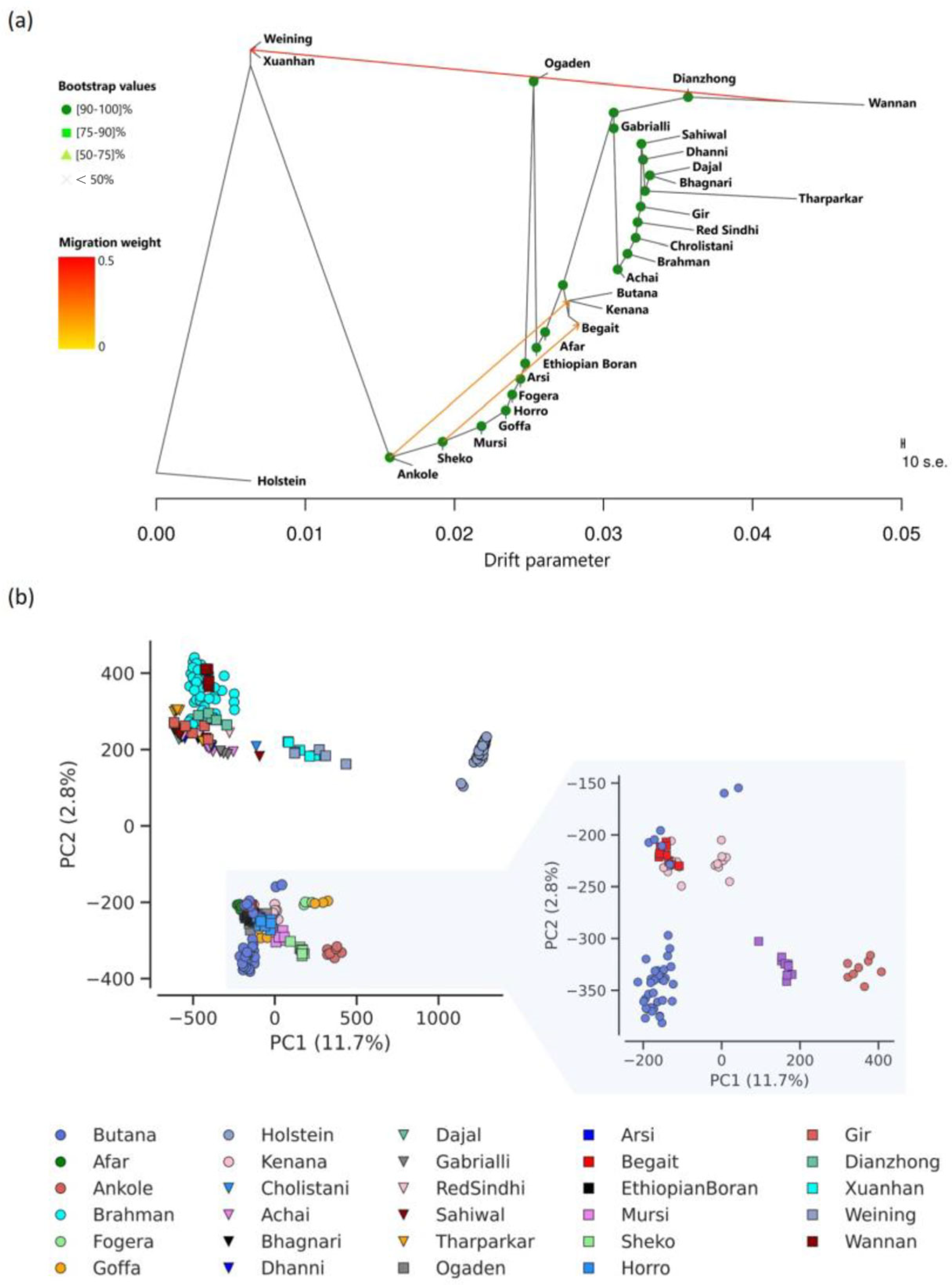
Figure 1. Relationship analysis among Bos indicus cattle breeds. (a) Maximum likelihood tree with Holstein as the outgroup. Green dots represent bootstrap percentages. Arrows indicate migration direction colored from yellow to red based on migration weight. The distance between the breeds is explained on the x-axis by drift. (b) Principal Component Analysis (PCA) among the breeds for the first two principal components. A detailed zoom-in is provided for the breeds Butana, Begait, Kenana, Mursi, and Ankole.
Genes 16 01429 g001
Figure 2. Admixture analysis of Bos indicus cattle breeds. Lowest cross validation error was estimated at K = 17. Seven Butana individuals showed admixture with other closely related breeds, whereas the remaining 33 Butana individuals showed no clear signs of admixture.
Genes 16 01429 g002
Figure 3. Diversity among Bos indicus cattle breeds with Holstein as outgroup. (a) Total mean nucleotide diversity across all investigated cattle breeds. Colors indicate Butana (blue), Kenana (rose), the breed with the highest (green) and lowest (red) total nucleotide diversity, and Holstein (violet) as outgroup. (b) Mean nucleotide diversity per chromosome in Butana (blue) and Holstein (violet). While Holstein samples in this study include individuals from both Europe and North America, the map highlights their ancestral region of origin.
Genes 16 01429 g003
Figure 4. Genomic inbreeding among Bos indicus cattle breeds. Inbreeding estimated from Runs of Homozygosity (RoH) considering RoH lengths from >50 Kb to >4 Mb, and excess of homozygosity (FHom). Inbreeding values for Butana and Kenana are highlighted in blue and rose, respectively, the highest inbreeding values are highlighted in red and lowest in green.
Genes 16 01429 g004
Figure 5. Runs of Homozygosity in pure Butana. The variants above the top 0.05 percentile of RoH frequencies are highlighted in red.
Genes 16 01429 g005
Figure 6. Signatures of selection in Butana compared to Kenana or Holstein cattle. (a) Butana versus Kenana. (b) Butana versus Holstein. Significant variants (p-values < 0.05 after Bonferroni correction) are highlighted in red indicating genomic regions under putative selection.
Genes 16 01429 g006
Table 1. Regions of selection signatures in Butana, Kenana, and Holstein cattle. For each region (chromosome: start–end), the length in kilobases (kb), the number of variants, and the flanking genes within ±250 kb are listed.
Region of Signature SelectionLength (kb)No. of VariantsFlanking Genes ±250 kb
Butana (versus Kenana)   
5: 49,459,819–49,459,8190.001TBK1, XPOT, C5H12orf56, KICS2, SRGAP1
27: 25,367,215–25,367,4620.2510PPP1R3B, TNKS
Kenana (versus Butana)   
5: 103,099,474–103,100,1640.6913ENSBTAG00000039256, ENSBTAG00000050301, CD163L1, PEX5, CLSTN3, RBP5, C1RL, ENSBTAG00000050749, ENSBTAG00000037743
10: 23,772,862–23,772,8620.001ENSBTAG00000051554, ENSBTAG00000048374, ENSBTAG00000052580, ENSBTAG00000048874, TRAV24, ENSBTAG00000052314
15: 46,039,792–46,085,32845.544OR2D2, OR10A4, OR10A5, OR10A5L, OR10A5G, OR6A2, OR6B18, ENSBTAG00000027525, OR6B17, ENSBTAG00000037603, OR2D4, OR2D3G, OR2AG1E, OR2AG1G, OR2AG1, OR2AG2, OR2D37, ENSBTAG00000051394, ENSBTAG00000037937, ENSBTAG00000049294
Butana (versus Holstein)   
X: 37,758,460–37,758,5870.1312FAM50A, PLXNA3, LAGE3, ENSBTAG00000014331, SLC10A3, FAM3A, G6PD, ENSBTAG00000053534, IKBKG, ENSBTAG00000001900, ENSBTAG00000048914, ENSBTAG00000055292, ENSBTAG00000053848, ENSBTAG00000052652
Holstein (versus Butana)   
5: 59,654,384–59,657,4073.0215OR9K2I, OR9K2H, OR9K2K, OR9K2C, ENSBTAG00000045722, ENSBTAG00000054855, OR9K2, OR9K15, OR9K1, OR9K2F, OR9K1B, NEUROD4
28: 319,705–319,7050.001ENSBTAG00000038418, OR5D18K, OR5L20, OR5AS1
X: 82,098,289–82,098,6010.315YIPF6, OPHN1, ENSBTAG00000052786
Table 2. Microorganisms detected in Butana cattle with mean number of >5000 reads. Min and Max refer to minimum and maximum number of reads detected in one animal classified for a certain taxon. Summary statistics includes taxon name, NCBI taxon ID, minimum and maximum read counts, number of samples (n), mean read count, and standard deviation read count (SD).
Taxon NameTaxon IDMinMaxnMeanSD
Bosea vestrisii15141617196,72412131,27279,955
Bosea sp. Tri-49186771514236,07315125,753106,967
Ralstonia mannitolilytica1052195419278,6252278,512103,706
Theileria annulata58747282259,0122271,63872,619
Botrytis cinerea4055910,118173,623854,42367,049
Bosea beijingensis30686323523,1611018,5016651
Bosea sp. (in: a-proteobacteria)187105014220,1741016,3355824
Bosea sp. F3-225996403322,4101116,3328192
Variovorax paradoxus340737022,7512214,6946100
Burkholderia cenocepacia9548654169,7602214,41039,918
Novosphingobium sp. EMRT-22571749609619,7212114,1493119
Bosea sp. NBC_0055029696212018,1451113,2996647
Bosea sp. UC22_3333501655416,4511013,0794723
Bosea sp. RAC0518425393015,2421012,2174404
Bosea sp. PAMC 2664217923072614,5041011,3574123
Bosea sp. ANAM0220204122615,2771111,2475627
Stenotrophomonas maltophilia4032412136,8732210,5568575
Bosea sp. 68530800574112,7781010,1753667
Bosea vaviloviae15266583912,3691096233473
Bosea sp. AS-120153162013,5041291155528
Microviridae sp.22026441224,4573816214,112
Variovorax sp. UC74_10433745554913,0822279293911
Variovorax sp. V1530659524697752259102887
Disclaimer/Publisher’s Note: The statements, opinions and data contained in all publications are solely those of the individual author(s) and contributor(s) and not of MDPI and/or the editor(s). MDPI and/or the editor(s) disclaim responsibility for any injury to people or property resulting from any ideas, methods, instructions or products referred to in the content.