


Structural Variations Identified in Patients with Autism Spectrum Disorder (ASD) in the Chinese Population: A Systematic Review of Case-Control Studies
 , , ,
, , ,
Abstract
1. Introduction
2. Methods
2.1. Search Strategy
2.2. Data Extraction
2.3. Quality Assessment
3. Results
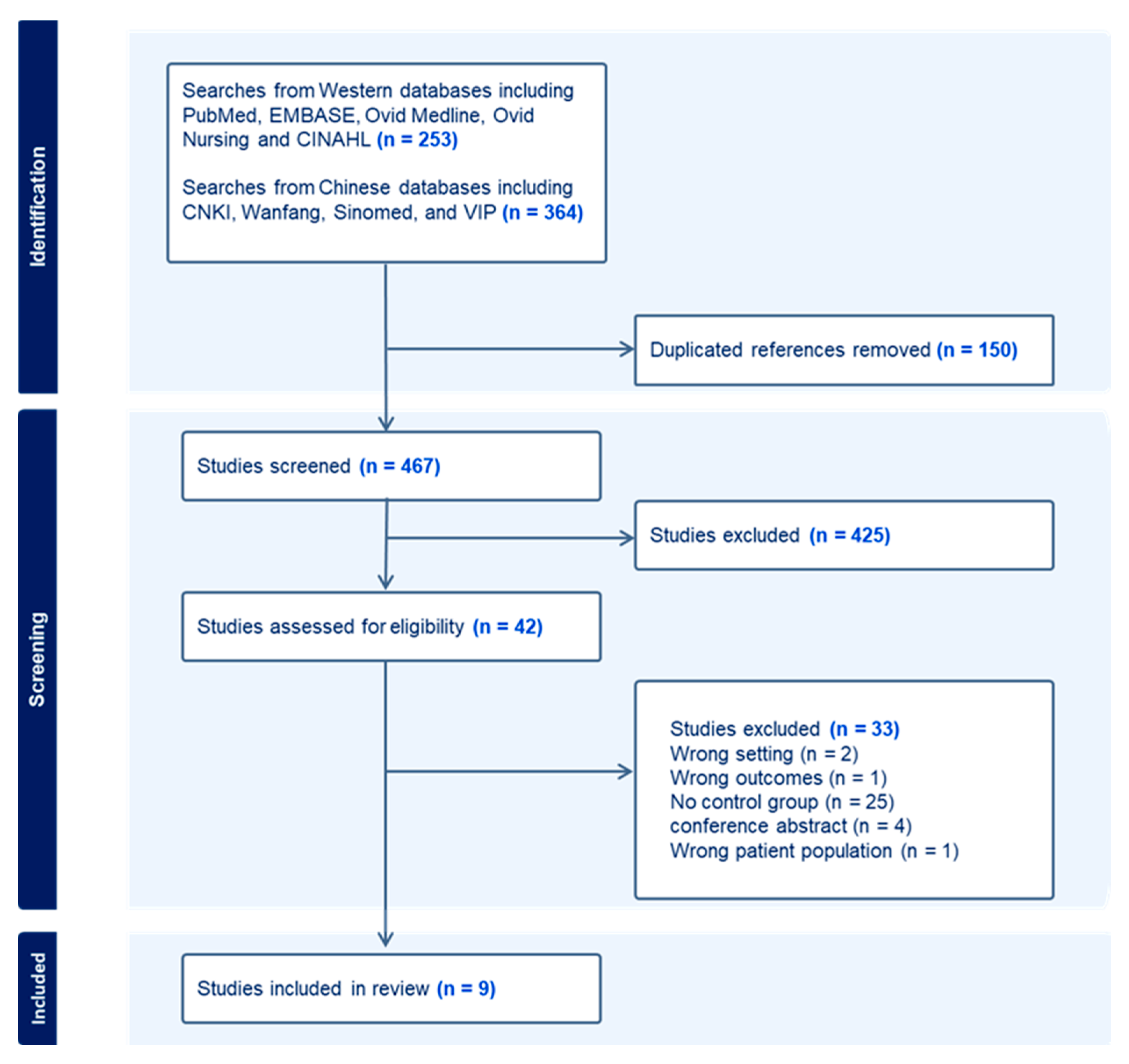
3.1. Search Result
3.2. Overview of Included Studies
3.3. Study Quality Assessment
3.4. Structural Variations Identification
4. Discussion
4.1. CNTNAP2
4.2. GABRB3
4.3. JARID2
4.4. NLGN4X
4.5. NRXN1
4.6. PARK2
4.7. SHANK3
4.8. UBE3A
5. Limitations
6. Conclusions
Author Contributions
Funding
Conflicts of Interest
References
- Maenner, M.J.; Warren, Z.; Williams, A.R.; Amoakohene, E.; Bakian, A.V.; Bilder, D.A.; Durkin, M.S.; Fitzgerald, R.T.; Furnier, S.M.; Hughes, M.M.; et al. Prevalence and Characteristics of Autism Spectrum Disorder Among Children Aged 8 Years—Autism and Developmental Disabilities Monitoring Network, 11 Sites, United States, 2020. MMWR Surveill. Summ. 2023, 72, 1–14. [Google Scholar] [CrossRef] [Scilit] [PubMed]
- Sun, X.; Allison, C.; Wei, L.; Matthews, F.E.; Auyeung, B.; Wu, Y.Y.; Griffiths, S.; Zhang, J.; Baron-Cohen, S.; Brayne, C. Autism prevalence in China is comparable to Western prevalence. Mol. Autism 2019, 10, 1–19. [Google Scholar] [CrossRef] [Scilit]
- Sabit, H.; Tombuloglu, H.; Rehman, S.; Almandil, N.B.; Cevik, E.; Abdel-Ghany, S.; Rashwan, S.; Abasiyanik, M.F.; Yee Waye, M.M. Gut microbiota metabolites in autistic children: An epigenetic perspective. Heliyon 2021, 7, e06105. [Google Scholar] [CrossRef] [Scilit]
- Waye, M.M.Y.; Cheng, H.Y. Genetics and epigenetics of autism: A Review. Psychiatry Clin. Neurosci. 2018, 72, 228–244. [Google Scholar] [CrossRef] [Scilit]
- Yang, P.Y.; Menga, Y.J.; Li, T.; Huang, Y. Associations of endocrine stress-related gene polymorphisms with risk of autism spectrum disorders: Evidence from an integrated meta-analysis. Autism Res. 2017, 10, 1722–1736. [Google Scholar] [CrossRef] [Scilit] [PubMed]
- Wang, J.; Yu, J.; Wang, M.; Zhang, L.; Yang, K.; Du, X.; Wu, J.; Wang, X.; Li, F.; Qiu, Z. Discovery and Validation of Novel Genes in a Large Chinese Autism Spectrum Disorder Cohort. Biol. Psychiatry 2023, 94, 792–803. [Google Scholar] [CrossRef] [Scilit] [PubMed]
- Wang, T.; Guo, H.; Xiong, B.; Stessman, H.A.; Wu, H.; Coe, B.P.; Turner, T.N.; Liu, Y.; Zhao, W.; Hoekzema, K.; et al. De novo genic mutations among a Chinese autism spectrum disorder cohort. Nat. Commun. 2016, 7, 13316. [Google Scholar] [CrossRef] [Scilit]
- Trost, B.; Thiruvahindrapuram, B.; Chan, A.J.S.; Engchuan, W.; Higginbotham, E.J.; Howe, J.L.; Loureiro, L.O.; Reuter, M.S.; Roshandel, D.; Whitney, J.; et al. Genomic architecture of autism from comprehensive whole-genome sequence annotation. Cell 2022, 185, 4409–4427.e18. [Google Scholar] [CrossRef] [Scilit]
- Noyes, M.D.; Harvey, W.T.; Porubsky, D.; Sulovari, A.; Li, R.; Rose, N.R.; Audano, P.A.; Munson, K.M.; Lewis, A.P.; Hoekzema, K.; et al. Familial long-read sequencing increases yield of de novo mutations. Am. J. Hum. Genet. 2022, 109, 631–646. [Google Scholar] [CrossRef] [Scilit]
- Chan, S.; Lam, E.; Saghbini, M.; Bocklandt, S.; Hastie, A.; Cao, H.; Holmlin, E.; Borodkin, M. Structural Variation Detection and Analysis Using Bionano Optical Mapping; Springer: New York, NY, USA, 2018; pp. 193–203. [Google Scholar]
- Faino, L.; Seidl, M.F.; Datema, E.; van den Berg, G.C.M.; Janssen, A.; Wittenberg, A.H.J.; Thomma, B.P.H.J. Single-Molecule Real-Time Sequencing Combined with Optical Mapping Yields Completely Finished Fungal Genome. mBio 2015, 6, e00936-15. [Google Scholar] [CrossRef] [Scilit]
- Grove, J.; Ripke, S.; Als, T.D.; Mattheisen, M.; Walters, R.K.; Won, H.; Pallesen, J.; Agerbo, E.; Andreassen, O.A.; Anney, R.; et al. Identification of common genetic risk variants for autism spectrum disorder. Nat. Genet. 2019, 51, 431–444. [Google Scholar] [CrossRef] [Scilit] [PubMed]
- Baio, J.; Wiggins, L.; Christensen, D.L.; Maenner, M.J.; Daniels, J.; Warren, Z.; Kurzius-Spencer, M.; Zahorodny, W.; Robinson Rosenberg, C.; White, T.; et al. Prevalence of Autism Spectrum Disorder Among Children Aged 8 Years—Autism and Developmental Disabilities Monitoring Network, 11 Sites, United States, 2014. MMWR Surveill. Summ. 2018, 67, 1–23. [Google Scholar] [CrossRef] [Scilit] [PubMed]
- Fang, Y.; Cui, Y.; Yin, Z.; Hou, M.; Guo, P.; Wang, H.; Liu, N.; Cai, C.; Wang, M. Comprehensive systematic review and meta-analysis of the association between common genetic variants and autism spectrum disorder. Gene 2023, 887, 147723. [Google Scholar] [CrossRef] [Scilit] [PubMed]
- Parellada, M.; Andreu-Bernabeu, A.; Burdeus, M.; San Jose Caceres, A.; Urbiola, E.; Carpenter, L.L.; Kraguljac, N.V.; McDonald, W.M.; Nemeroff, C.B.; Rodriguez, C.I.; et al. In Search of Biomarkers to Guide Interventions in Autism Spectrum Disorder: A Systematic Review. Am. J. Psychiatry 2023, 180, 23–40. [Google Scholar] [CrossRef] [Scilit] [PubMed]
- Page, M.J.; McKenzie, J.E.; Bossuyt, P.M.; Boutron, I.; Hoffmann, T.C.; Mulrow, C.D.; Shamseer, L.; Tetzlaff, J.M.; Akl, E.A.; Brennan, S.E.; et al. The PRISMA 2020 statement: An updated guideline for reporting systematic reviews. BMJ 2021, 372, n71. [Google Scholar] [CrossRef] [Scilit] [PubMed]
- Little, J.; Higgins, J.P.T.; Ioannidis, J.P.A.; Moher, D.; Gagnon, F.; Von Elm, E.; Khoury, M.J.; Cohen, B.; Davey-Smith, G.; Grimshaw, J.; et al. Strengthening the Reporting of Genetic Association Studies (STREGA)—An extension of the STROBE statement. Genet. Epidemiol. 2009, 33, 581–598. [Google Scholar] [CrossRef] [Scilit] [PubMed]
- Chair, S.Y.; Chan, J.Y.W.; Law, B.M.H.; Waye, M.M.Y.; Chien, W.T. Genetic susceptibility in pneumoconiosis in China: A systematic review. Int. Arch. Occup. Environ. Health 2023, 96, 45–56. [Google Scholar] [CrossRef] [Scilit] [PubMed]
- Fan, Y.; Du, X.; Liu, X.; Wang, L.; Li, F.; Yu, Y. Rare Copy Number Variations in a Chinese Cohort of Autism Spectrum Disorder. Front. Genet. 2018, 9, 665. [Google Scholar] [CrossRef] [Scilit]
- Gazzellone, M.J.; Zhou, X.; Lionel, A.C.; Uddin, M.; Thiruvahindrapuram, B.; Liang, S.; Sun, C.; Wang, J.; Zou, M.; Tammimies, K.; et al. Copy number variation in Han Chinese individuals with autism spectrum disorder. J. Neurodev. Disord. 2014, 6, 34. [Google Scholar] [CrossRef] [Scilit] [PubMed]
- Guo, H.; Peng, Y.; Hu, Z.; Li, Y.; Xun, G.; Ou, J.; Sun, L.; Xiong, Z.; Liu, Y.; Wang, T.; et al. Genome-wide copy number variation analysis in a Chinese autism spectrum disorder cohort. Sci. Rep. 2017, 7, 44155. [Google Scholar] [CrossRef] [Scilit]
- Liu, W.; Chen, X.; He, W.; Zhang, H.; Zhong, X.; Li, Q.; Sun, X. Correlation of Copy Number Variation in SHANK3, UBE3A and Other Autism Hot Gene Among Autism Children Based on Multiplex Ligation Probe Amplification and Whole-Genome Array Method. J. Mod. Lab. Med. 2011, 26, 35–38. [Google Scholar]
- Liu, Y.; Hu, Z.; Xun, G.; Peng, Y.; Lu, L.; Xu, X.; Xiong, Z.; Xia, L.; Liu, D.; Li, W.; et al. Mutation analysis of the NRXN1 gene in a Chinese autism cohort. J. Psychiatr. Res. 2012, 46, 630–634. [Google Scholar] [CrossRef] [Scilit]
- Siu, W.K.; Lam, C.W.; Gao, W.W.; Vincent Tang, H.M.; Jin, D.Y.; Mak, C.M. Unmasking a novel disease gene NEO1 associated with autism spectrum disorders by a hemizygous deletion on chromosome 15 and a functional polymorphism. Behav. Brain Res. 2016, 300, 135–142. [Google Scholar] [CrossRef] [Scilit]
- Yin, C.L.; Chen, H.I.; Li, L.H.; Chien, Y.L.; Liao, H.M.; Chou, M.C.; Chou, W.J.; Tsai, W.C.; Chiu, Y.N.; Wu, Y.Y.; et al. Genome-wide analysis of copy number variations identifies PARK2 as a candidate gene for autism spectrum disorder. Mol. Autism 2016, 7, 23. [Google Scholar] [CrossRef] [Scilit]
- Zhao, X.; Zhang, R.; Yu, S. Mutation screening of the UBE3A gene in Chinese Han population with autism. BMC Psychiatry 2020, 20, 589. [Google Scholar] [CrossRef] [Scilit] [PubMed]
- Zhou, W.Z.; Zhang, J.; Li, Z.; Lin, X.; Li, J.; Wang, S.; Yang, C.; Wu, Q.; Ye, A.Y.; Wang, M.; et al. Targeted resequencing of 358 candidate genes for autism spectrum disorder in a Chinese cohort reveals diagnostic potential and genotype-phenotype correlations. Hum. Mutat. 2019, 40, 801–815. [Google Scholar] [CrossRef] [Scilit]
- Baig, D.N.; Yanagawa, T.; Tabuchi, K. Distortion of the normal function of synaptic cell adhesion molecules by genetic variants as a risk for autism spectrum disorders. Brain Res. Bull. 2017, 129, 82–90. [Google Scholar] [CrossRef] [Scilit] [PubMed]
- Falivelli, G.; De Jaco, A.; Favaloro, F.L.; Kim, H.; Wilson, J.; Dubi, N.; Ellisman, M.H.; Abrahams, B.S.; Taylor, P.; Comoletti, D. Inherited genetic variants in autism-related CNTNAP2 show perturbed trafficking and ATF6 activation. Hum. Mol. Genet. 2012, 21, 4761–4773. [Google Scholar] [CrossRef] [Scilit]
- Ross, L.A.; Del Bene, V.A.; Molholm, S.; Woo, Y.J.; Andrade, G.N.; Abrahams, B.S.; Foxe, J.J. Common variation in the autism risk gene CNTNAP2, brain structural connectivity and multisensory speech integration. Brain Lang. 2017, 174, 50–60. [Google Scholar] [CrossRef] [Scilit]
- Warrier, V.; Baron-Cohen, S.; Chakrabarti, B. Genetic variation in GABRB3 is associated with Asperger syndrome and multiple endophenotypes relevant to autism. Mol. Autism 2013, 4, 48. [Google Scholar] [CrossRef] [Scilit] [PubMed]
- Coskunpinar, E.M.; Tur, S.; Cevher Binici, N.; Yazan Songur, C. Association of GABRG3, GABRB3, HTR2A gene variants with autism spectrum disorder. Gene 2023, 870, 147399. [Google Scholar] [CrossRef] [Scilit] [PubMed]
- Kang, J.Q.; Barnes, G. A common susceptibility factor of both autism and epilepsy: Functional deficiency of GABA A receptors. J. Autism Dev. Disord. 2013, 43, 68–79. [Google Scholar] [CrossRef] [Scilit]
- Cellot, G.; Cherubini, E. GABAergic Signaling as Therapeutic Target for Autism Spectrum Disorders. Front. Pediatr. 2014, 2, 70. [Google Scholar] [CrossRef] [Scilit]
- Celestino-Soper, P.B.; Skinner, C.; Schroer, R.; Eng, P.; Shenai, J.; Nowaczyk, M.M.; Terespolsky, D.; Cushing, D.; Patel, G.S.; Immken, L.; et al. Deletions in chromosome 6p22.3-p24.3, including ATXN1, are associated with developmental delay and autism spectrum disorders. Mol. Cytogenet. 2012, 5, 17. [Google Scholar] [CrossRef] [Scilit] [PubMed]
- Verberne, E.A.; Goh, S.; England, J.; Van Ginkel, M.; Rafael-Croes, L.; Maas, S.; Polstra, A.; Zarate, Y.A.; Bosanko, K.A.; Pechter, K.B.; et al. JARID2 haploinsufficiency is associated with a clinically distinct neurodevelopmental syndrome. Genet. Med. 2021, 23, 374–383. [Google Scholar] [CrossRef] [Scilit]
- Liu, X.; Shimada, T.; Otowa, T.; Wu, Y.Y.; Kawamura, Y.; Tochigi, M.; Iwata, Y.; Umekage, T.; Toyota, T.; Maekawa, M.; et al. Genome-wide Association Study of Autism Spectrum Disorder in the East Asian Populations. Autism Res. 2016, 9, 340–349. [Google Scholar] [CrossRef] [Scilit]
- Südhof, T.C. Neuroligins and neurexins link synaptic function to cognitive disease. Nature 2008, 455, 903–911. [Google Scholar] [CrossRef] [Scilit] [PubMed]
- Leone, P.; Comoletti, D.; Ferracci, G.; Conrod, S.; Garcia, S.U.; Taylor, P.; Bourne, Y.; Marchot, P. Structural insights into the exquisite selectivity of neurexin/neuroligin synaptic interactions. EMBO J. 2010, 29, 2461–2471. [Google Scholar] [CrossRef] [Scilit] [PubMed]
- Liu, Y.; Du, Y.; Liu, W.; Yang, C.; Liu, Y.; Wang, H.; Gong, X. Lack of association between NLGN3, NLGN4, SHANK2 and SHANK3 gene variants and autism spectrum disorder in a Chinese population. PLoS ONE 2013, 8, e56639. [Google Scholar] [CrossRef] [Scilit] [PubMed]
- Jiang, C.-C.; Lin, L.-S.; Long, S.; Ke, X.-Y.; Fukunaga, K.; Lu, Y.-M.; Han, F. Signalling pathways in autism spectrum disorder: Mechanisms and therapeutic implications. Signal Transduct. Target. Ther. 2022, 7, 229. [Google Scholar] [CrossRef] [Scilit]
- Feng, J.; Schroer, R.; Yan, J.; Song, W.; Yang, C.; Bockholt, A.; Cook, E.H., Jr.; Skinner, C.; Schwartz, C.E.; Sommer, S.S. High frequency of neurexin 1β signal peptide structural variants in patients with autism. Neurosci. Lett. 2006, 409, 10–13. [Google Scholar] [PubMed]
- Autism Genome Project, C.; Szatmari, P.; Paterson, A.D.; Zwaigenbaum, L.; Roberts, W.; Brian, J.; Liu, X.Q.; Vincent, J.B.; Skaug, J.L.; Thompson, A.P.; et al. Mapping autism risk loci using genetic linkage and chromosomal rearrangements. Nat. Genet. 2007, 39, 319–328. [Google Scholar] [CrossRef] [Scilit]
- Kim, H.-G.; Kishikawa, S.; Higgins, A.W.; Seong, I.-S.; Donovan, D.J.; Shen, Y.; Lally, E.; Weiss, L.A.; Najm, J.; Kutsche, K.; et al. Disruption of Neurexin 1 Associated with Autism Spectrum Disorder. Am. J. Hum. Genet. 2008, 82, 199–207. [Google Scholar] [CrossRef] [Scilit]
- Glessner, J.T.; Wang, K.; Cai, G.; Korvatska, O.; Kim, C.E.; Wood, S.; Zhang, H.; Estes, A.; Brune, C.W.; Bradfield, J.P. Autism genome-wide copy number variation reveals ubiquitin and neuronal genes. Nature 2009, 459, 569–573. [Google Scholar] [CrossRef] [Scilit]
- Yan, J.; Noltner, K.; Feng, J.; Li, W.; Schroer, R.; Skinner, C.; Zeng, W.; Schwartz, C.E.; Sommer, S.S. Neurexin 1 structural variants associated with autism. Neurosci. Lett. 2008, 438, 368–370. [Google Scholar] [CrossRef] [Scilit] [PubMed]
- Williams, S.M.; An, J.Y.; Edson, J.; Watts, M.; Murigneux, V.; Whitehouse, A.J.O.; Jackson, C.J.; Bellgrove, M.A.; Cristino, A.S.; Claudianos, C. An integrative analysis of non-coding regulatory DNA variations associated with autism spectrum disorder. Mol. Psychiatry 2019, 24, 1707–1719. [Google Scholar] [CrossRef] [Scilit]
- Wiśniowiecka-Kowalnik, B.; Nesteruk, M.; Peters, S.U.; Xia, Z.; Cooper, M.L.; Savage, S.; Amato, R.S.; Bader, P.; Browning, M.F.; Haun, C.L.; et al. Intragenic rearrangements in NRXN1 in three families with autism spectrum disorder, developmental delay, and speech delay. Am. J. Med. Genet. Part B Neuropsychiatr. Genet. 2010, 153B, 983–993. [Google Scholar] [CrossRef] [Scilit]
- Iossifov, I.; Ronemus, M.; Levy, D.; Wang, Z.; Hakker, I.; Rosenbaum, J.; Yamrom, B.; Lee, Y.-H.; Narzisi, G.; Leotta, A.; et al. De Novo Gene Disruptions in Children on the Autistic Spectrum. Neuron 2012, 74, 285–299. [Google Scholar] [CrossRef] [Scilit]
- Wang, J.; Gong, J.; Li, L.; Chen, Y.; Liu, L.; Gu, H.; Luo, X.; Hou, F.; Zhang, J.; Song, R. Neurexin gene family variants as risk factors for autism spectrum disorder. Autism Res. 2018, 11, 37–43. [Google Scholar] [CrossRef] [Scilit] [PubMed]
- Al Shehhi, M.; Forman, E.B.; Fitzgerald, J.E.; McInerney, V.; Krawczyk, J.; Shen, S.; Betts, D.R.; Ardle, L.M.; Gorman, K.M.; King, M.D.; et al. NRXN1 deletion syndrome; phenotypic and penetrance data from 34 families. Eur. J. Med. Genet. 2019, 62, 204–209. [Google Scholar] [CrossRef] [Scilit]
- Ching, M.S.L.; Shen, Y.; Tan, W.H.; Jeste, S.S.; Morrow, E.M.; Chen, X.; Mukaddes, N.M.; Yoo, S.Y.; Hanson, E.; Hundley, R.; et al. Deletions of NRXN1 (neurexin-1) predispose to a wide spectrum of developmental disorders. Am. J. Med. Genet. Part B Neuropsychiatr. Genet. 2010, 153B, 937–947. [Google Scholar] [CrossRef] [Scilit]
- Kilarski, L.L.; Pearson, J.P.; Newsway, V.; Majounie, E.; Knipe, M.D.W.; Misbahuddin, A.; Chinnery, P.F.; Burn, D.J.; Clarke, C.E.; Marion, M.H.; et al. Systematic Review and UK-Based Study of PARK2 (parkin), PINK1, PARK7 (DJ-1) and LRRK2 in early-onset Parkinson’s disease. Mov. Disord. 2012, 27, 1522–1529. [Google Scholar] [CrossRef] [Scilit]
- Dalla Vecchia, E.; Mortimer, N.; Palladino, V.S.; Kittel-Schneider, S.; Lesch, K.P.; Reif, A.; Schenck, A.; Norton, W.H.J. Cross-species models of attention-deficit/hyperactivity disorder and autism spectrum disorder: Lessons from CNTNAP2, ADGRL3, and PARK2. Psychiatr. Genet. 2019, 29, 1–17. [Google Scholar] [CrossRef] [Scilit]
- Bacchelli, E.; Cameli, C.; Viggiano, M.; Igliozzi, R.; Mancini, A.; Tancredi, R.; Battaglia, A.; Maestrini, E. An integrated analysis of rare CNV and exome variation in Autism Spectrum Disorder using the Infinium PsychArray. Sci. Rep. 2020, 10, 3198. [Google Scholar] [CrossRef] [Scilit] [PubMed]
- Monteiro, P.; Feng, G. SHANK proteins: Roles at the synapse and in autism spectrum disorder. Nat. Rev. Neurosci. 2017, 18, 147–157. [Google Scholar] [CrossRef] [Scilit]
- Mitz, A.R.; Philyaw, T.J.; Boccuto, L.; Shcheglovitov, A.; Sarasua, S.M.; Kaufmann, W.E.; Thurm, A. Identification of 22q13 genes most likely to contribute to Phelan McDermid syndrome. Eur. J. Hum. Genet. 2018, 26, 293–302. [Google Scholar] [CrossRef] [Scilit] [PubMed]
- Durand, C.M.; Betancur, C.; Boeckers, T.M.; Bockmann, J.; Chaste, P.; Fauchereau, F.; Nygren, G.; Rastam, M.; Gillberg, I.C.; Anckarsäter, H.; et al. Mutations in the gene encoding the synaptic scaffolding protein SHANK3 are associated with autism spectrum disorders. Nat. Genet. 2007, 39, 25–27. [Google Scholar] [CrossRef] [Scilit]
- Moessner, R.; Marshall, C.R.; Sutcliffe, J.S.; Skaug, J.; Pinto, D.; Vincent, J.; Zwaigenbaum, L.; Fernandez, B.; Roberts, W.; Szatmari, P. Contribution of SHANK3 mutations to autism spectrum disorder. Am. J. Hum. Genet. 2007, 81, 1289–1297. [Google Scholar] [CrossRef] [Scilit]
- Schaaf, C.P.; Sabo, A.; Sakai, Y.; Crosby, J.; Muzny, D.; Hawes, A.; Lewis, L.; Akbar, H.; Varghese, R.; Boerwinkle, E.; et al. Oligogenic heterozygosity in individuals with high-functioning autism spectrum disorders. Hum. Mol. Genet. 2011, 20, 3366–3375. [Google Scholar] [CrossRef] [Scilit]
- Leblond, C.S.; Nava, C.; Polge, A.; Gauthier, J.; Huguet, G.; Lumbroso, S.; Giuliano, F.; Stordeur, C.; Depienne, C.; Mouzat, K.; et al. Meta-analysis of SHANK Mutations in Autism Spectrum Disorders: A Gradient of Severity in Cognitive Impairments. PLoS Genet. 2014, 10, e1004580. [Google Scholar] [CrossRef] [Scilit] [PubMed]
- Loureiro, L.O.; Howe, J.L.; Reuter, M.S.; Iaboni, A.; Calli, K.; Roshandel, D.; Pritisanac, I.; Moses, A.; Forman-Kay, J.D.; Trost, B.; et al. A recurrent SHANK3 frameshift variant in Autism Spectrum Disorder. NPJ Genom. Med. 2021, 6, 91. [Google Scholar] [CrossRef] [Scilit]
- Veenstra-Vanderweele, J.; Cook, E.H. Molecular genetics of autism spectrum disorder. Mol. Psychiatry 2004, 9, 819–832. [Google Scholar] [CrossRef] [Scilit]
- Depienne, C.; Moreno-De-Luca, D.; Heron, D.; Bouteiller, D.; Gennetier, A.; Delorme, R.; Chaste, P.; Siffroi, J.-P.; Chantot-Bastaraud, S.; Benyahia, B. Screening for genomic rearrangements and methylation abnormalities of the 15q11-q13 region in autism spectrum disorders. Biol. Psychiatry 2009, 66, 349–359. [Google Scholar] [CrossRef] [Scilit] [PubMed]
- Allen-Brady, K.; Robison, R.; Cannon, D.; Varvil, T.; Villalobos, M.; Pingree, C.; Leppert, M.; Miller, J.; McMahon, W.; Coon, H. Genome-wide linkage in Utah autism pedigrees. Mol. Psychiatry 2010, 15, 1006–1015. [Google Scholar] [CrossRef] [Scilit]
- Kishino, T.; Lalande, M.; Wagstaff, J. UBE3A/E6-AP mutations cause Angelman syndrome. Nat. Genet. 1997, 15, 70–73. [Google Scholar] [CrossRef] [Scilit]
- Cook, E.H., Jr.; Courchesne, R.Y.; Cox, N.J.; Lord, C.; Gonen, D.; Guter, S.J.; Lincoln, A.; Nix, K.; Haas, R.; Leventhal, B.L.; et al. Linkage-disequilibrium mapping of autistic disorder, with 15q11-13 markers. Am. J. Hum. Genet. 1998, 62, 1077–1083. [Google Scholar] [CrossRef] [Scilit]
- Nurmi, E.L.; Bradford, Y.; Chen, Y.; Hall, J.; Arnone, B.; Gardiner, M.B.; Hutcheson, H.B.; Gilbert, J.R.; Pericak-Vance, M.A.; Copeland-Yates, S.A.; et al. Linkage disequilibrium at the Angelman syndrome gene UBE3A in autism families. Genomics 2001, 77, 105–113. [Google Scholar] [CrossRef] [Scilit]
- Nurmi, E.L.; Amin, T.; Olson, L.M.; Jacobs, M.M.; McCauley, J.L.; Lam, A.Y.; Organ, E.L.; Folstein, S.E.; Haines, J.L.; Sutcliffe, J.S. Dense linkage disequilibrium mapping in the 15q11–q13 maternal expression domain yields evidence for association in autism. Mol. Psychiatry 2003, 8, 624–634. [Google Scholar] [CrossRef] [Scilit]
- Veenstra-Vanderweele, J.; Gonen, D.; Leventhal, B.L.; Jr, E.C. Mutation screening of the UBE3A /E6-AP gene in autistic disorder. Mol. Psychiatry 1999, 4, 64–67. [Google Scholar] [CrossRef] [Scilit] [PubMed]
- Bremer, A.; Giacobini, M.; Nordenskjöld, M.; Brøndum-Nielsen, K.; Mansouri, M.; Dahl, N.; Anderlid, B.; Schoumans, J. Screening for copy number alterations in loci associated with autism spectrum disorders by two-color multiplex ligation-dependent probe amplification. Am. J. Med. Genet. Part B Neuropsychiatr. Genet. 2010, 153B, 280–285. [Google Scholar] [CrossRef] [Scilit] [PubMed]
- Jason, J.Y.; Berrios, J.; Newbern, J.M.; Snider, W.D.; Philpot, B.D.; Hahn, K.M.; Zylka, M.J. An autism-linked mutation disables phosphorylation control of UBE3A. Cell 2015, 162, 795–807. [Google Scholar]
- Iossifov, I.; O’roak, B.J.; Sanders, S.J.; Ronemus, M.; Krumm, N.; Levy, D.; Stessman, H.A.; Witherspoon, K.T.; Vives, L.; Patterson, K.E. The contribution of de novo coding mutations to autism spectrum disorder. Nature 2014, 515, 216–221. [Google Scholar] [CrossRef] [Scilit] [PubMed]
- Greer, P.L.; Hanayama, R.; Bloodgood, B.L.; Mardinly, A.R.; Lipton, D.M.; Flavell, S.W.; Kim, T.-K.; Griffith, E.C.; Waldon, Z.; Maehr, R.; et al. The Angelman Syndrome Protein Ube3A Regulates Synapse Development by Ubiquitinating Arc. Cell 2010, 140, 704–716. [Google Scholar] [CrossRef] [Scilit]
- Mak, A.S.L.; Chiu, A.T.G.; Leung, G.K.C.; Mak, C.C.Y.; Chu, Y.W.Y.; Mok, G.T.K.; Tang, W.F.; Chan, K.Y.K.; Tang, M.H.Y.; Lau Yim, E.T.-K.; et al. Use of clinical chromosomal microarray in Chinese patients with autism spectrum disorder—Implications of a copy number variation involving DPP10. Mol. Autism 2017, 8, 31. [Google Scholar] [CrossRef] [Scilit] [PubMed]
- Park, H.; Kim, J.-I.; Ju, Y.S.; Gokcumen, O.; Mills, R.E.; Kim, S.; Lee, S.; Suh, D.; Hong, D.; Kang, H.P.; et al. Discovery of common Asian copy number variants using integrated high-resolution array CGH and massively parallel DNA sequencing. Nat. Genet. 2010, 42, 400–405. [Google Scholar] [CrossRef] [Scilit] [PubMed]
- Lou, H.; Li, S.; Yang, Y.; Kang, L.; Zhang, X.; Jin, W.; Wu, B.; Jin, L.; Xu, S. A Map of Copy Number Variations in Chinese Populations. PLoS ONE 2011, 6, e27341. [Google Scholar] [CrossRef] [Scilit] [PubMed]
- Lu, J.; Lou, H.; Fu, R.; Lu, D.; Zhang, F.; Wu, Z.; Zhang, X.; Li, C.; Fang, B.; Pu, F.; et al. Assessing genome-wide copy number variation in the Han Chinese population. J. Med. Genet. 2017, 54, 685–692. [Google Scholar] [CrossRef] [Scilit]
- Manrai, A.K.; Funke, B.H.; Rehm, H.L.; Olesen, M.S.; Maron, B.A.; Szolovits, P.; Margulies, D.M.; Loscalzo, J.; Kohane, I.S. Genetic Misdiagnoses and the Potential for Health Disparities. N. Engl. J. Med. 2016, 375, 655–665. [Google Scholar] [CrossRef] [Scilit]
- Breeze, C.E.; Batorsky, A.; Lee, M.K.; Szeto, M.D.; Xu, X.; McCartney, D.L.; Jiang, R.; Patki, A.; Kramer, H.J.; Eales, J.M.; et al. Epigenome-wide association study of kidney function identifies trans-ethnic and ethnic-specific loci. Genome Med. 2021, 13, 74. [Google Scholar] [CrossRef] [Scilit]
- Delgado, J.C.; Baena, A.; Thim, S.; Goldfeld, A.E. Ethnic-Specific Genetic Associations with Pulmonary Tuberculosis. J. Infect. Dis. 2002, 186, 1463–1468. [Google Scholar] [CrossRef] [Scilit]
- Gijsberts, C.M.; Groenewegen, K.A.; Hoefer, I.E.; Eijkemans, M.J.C.; Asselbergs, F.W.; Anderson, T.J.; Britton, A.R.; Dekker, J.M.; Engström, G.; Evans, G.W.; et al. Race/Ethnic Differences in the Associations of the Framingham Risk Factors with Carotid IMT and Cardiovascular Events. PLoS ONE 2015, 10, e0132321. [Google Scholar] [CrossRef] [Scilit] [PubMed]
- Ortega, V.E.; Meyers, D.A. Pharmacogenetics: Implications of race and ethnicity on defining genetic profiles for personalized medicine. J. Allergy Clin. Immunol. 2014, 133, 16–26. [Google Scholar] [CrossRef] [Scilit] [PubMed]
- Lettig, L.; Sahnane, N.; Pepe, F.; Cerutti, R.; Albeni, C.; Franzi, F.; Veronesi, G.; Ogliari, F.; Pastore, A.; Tuzi, A.; et al. EGFR T790M detection rate in lung adenocarcinomas at baseline using droplet digital PCR and validation by ultra-deep next generation sequencing. Transl. Lung Cancer Res. 2019, 8, 584–592. [Google Scholar] [CrossRef] [Scilit] [PubMed]
- Rebbeck, T.R.; Bridges, J.F.P.; Mack, J.W.; Gray, S.W.; Trent, J.M.; George, S.; Crossnohere, N.L.; Paskett, E.D.; Painter, C.A.; Wagle, N.; et al. A Framework for Promoting Diversity, Equity, and Inclusion in Genetics and Genomics Research. JAMA Health Forum 2022, 3, e220603. [Google Scholar] [CrossRef] [Scilit]

| Study (Author/Year) | Study Settings | Participant Characteristics (Number/Diagnostic Method) | Methodology | Structural Variations Detected | Major Findings |
|---|---|---|---|---|---|
| Fan et al., 2018 [19] | Study design: Case-control Location: Shanghai Study period: Jul 2014–Dec 2017 | Number of subjects: Proband: 401 Control: 197 ASD diagnostic method: DSM-5, ADOS and CARS Exclusion: Control group—major anomalies | CMA: Affymetrix CytoScan HD array with Chromosome Analysis Suite software Burden analysis: PLINK v1.07 and scripts developed in house | CNVs |
|
| Gazzellone et al., 2014 [20] | Study design: Case-control Location: Harbin Study period: Jan 2007–Jun 2011. | Number of subjects: Proband: 104 Control: 875 (USA) Control: 1235 (China) ASD diagnostic method: DSM-IV, CARS and ABC Inclusion: Control—No developmental delay or autistic traits Exclusion: Subject—Rett syndrome, tuberous sclerosis, fragile-X syndrome, and any other neurological conditions suspected to be associated with autism were excluded by clinical examination and a molecular genetic test of the FMR1 gene. | Affymetrix CytoScan HD array with Chromosome Analysis Suite software * PLANK confirm ethnicity | CNVs |
|
| Guo et al., 2017 [21] | Study design: Case-control Location: Changsha Study period: Not mentioned | Number of subjects: Proband: 406 ASD trios and 225 sporadic ASD cases Control: 1000 ASD diagnostic method: DSM-IV-TR Inclusion: ASD subjects diagnosed independently by two experienced psychiatrists. Control subjects had no history of ASDs or any other psychiatric diseases, nor did they have a familial history of psychiatric, neurological or autoimmune diseases. | Using Illumina HumanCNV370-Quad BeadChip and Illumina Human660W-Quad BeadChip. The CNVs were validated by quantitative PCR (qPCR). | CNVs |
|
| Liu et al., 2011 [22] | Study design: Case-control Location: Guangzhou Study period: 2009–2010 | Number of subjects: MLPA: Proband: 75 Parents: 112 (non-autistic) Control: 30 WGAA: Proband: 6 Control: 6 ASD diagnostic method: DSM-IV and ABC Inclusion: Fulfill DSM-IV diagnosis criteria, ABC score above 53 Exclusion: Unclear diagnosis with other neurological disorders, serious physical illness, mental retardation, developmental language disorder, and other anomalies. | MLPA: SALSA MLPA kit P343 ABI PRISM 3100 Genetic Analyzer WGAA: Affymetrix Cytogenetics Whole-genome 2.7M Array SNP and variation suit 7 (Golden helix Co., Bozeman, MT, USA) Statistic: SPSS 11.0 | Microdeletion CNVs |
|
| Liu et al., 2012 [23] | Study design: Case-control Location: Changsha Study period: Not mentioned | Number of subjects: Proband: 313 Control: 500 ASD diagnostic method: DSM-IV-TR and CARS Exclusion: Subject—Fragile X syndrome Control—History of neurological disorders | Sequencing: ABI3100/3130 automated sequencer with the SeqMan program Analysis: Hardy Weinberg equilibrium—software SHEsis Statistics—SPSS 13.0 | All kinds |
|
| Siu et al., 2016 [24] | Study design: Case-control Location: Hong Kong Study period: Not mentioned | Number of subjects: Proband: 66 Control: 100 ASD diagnostic method: Adult group patients were diagnosed in childhood by psychiatrists, paediatricians or clinical psychologists before year 1990. The diagnoses were confirmed with the development, dimensional and diagnostic during adulthood. Paediatric group patients were diagnose by ADRI. Exclusion: Adult group—IQ score below 75 by WAIS-III | CGH: NimbleGen CGX-135K oligonucleotide arrays Sequencing: The GS Junior Benchtop System Mapping: GS Reference Mapper Evaluate variants: Polyphen-2 [16], SIFT, MutationTaster, HumanSplicing Finder and MaxEntScan | All kinds |
|
| Yin et al., 2016 [25] | Study design: Case-control Location: Taiwan Study period: Not mentioned | Number of subjects: Proband: 335 Control: 1093 Proband for replication: 301 Control for replication: 301 Diagnostic method: DSM-IV and confirmed by using the Chinese version of the Autism Diagnostic Interview-Revised (ADI-R). Exclusion: Subjects diagnosed as fragile X, Rett’s disorder, or other known chromosome/genetic disorders. | CNVs were called using Affymetrix Genotyping Console software v.4.1 (Affymetrix, Santa Clara, CA, USA). Genes overlapped with the CNV regions were reported according to UCSC genes (NCBI37/hg19. The case-specific CNVs were validated by SYBR-Green based genomic quantitative PCR (qPCR) using ABI StepOne Plus system | CNVs |
|
| Zhao et al., 2020 [26] | Study design: Case-control Location: Shanghai Study period: Not mentioned | Number of subjects: Proband: 391 Control: 384 ASD diagnostic method: DSM-IV Inclusion: Diagnosis according to DSM-IV. Exclusion: Known mental and physical illness or chromosomal abnormalities. | High resolution melting (HRM) and Sanger sequencing | CNVs |
|
| Zhou et al., 2019 [27] | Study design: Case-control Location: Beijing and Tsingdao Study period: Not mentioned | Number of subjects: Proband: 539 Control: 512 ASD diagnostic method: ADI-R and ADOS Inclusion: Diagnosis according to DSM-IV. Inclusion: Case satisfy the same ADI-R criteria for ASD as used by the Simons Simplex Collection; a participant was used as a control if he/she had an AQ below 32, did not have any personal or family history of neurological disorders, psychiatric illness, or adverse pregnancy outcomes such as fetal loss, and had completed education through at least middle school to exclude any risk of low intellectual functioning. | A panel of 111 syndromic and 247 nonsydromic genes were selected and sequenced by Illumina Hiseq platform and validated by qPCR | CNVs |
|
| Item | Description | Fan et al., 2018 [19] | Gazzellone et al., 2014 [20] | Guo et al., 2017 [21] | Liu et al., 2011 [22] | Liu et al., 2012 [23] | Siu et al., 2016 [24] | Yin et al., 2016 [25] | Zhao et al., 2020 [26] | Zhou et al., 2019 [27] |
|---|---|---|---|---|---|---|---|---|---|---|
| 1 | Describe laboratory methods, including source and storage of DNA, genotyping methods, and platforms. | Yes | Yes | Yes | Yes | Yes | Yes | Yes | Yes | Yes |
| 2 | Describe any methods used to address multiple comparisons or to control risk of false positive findings. | No | Yes | Yes | No | No | No | No | No | Yes |
| 3 | Describe the centre at which the genotyping was performed. | No | Yes | No | No | No | No | No | No | No |
| 4 | Provide a hint on whether the genotyping was performed in one single batch or a few smaller batches. | No | No | No | No | No | No | No | No | No |
| 5 | Report the number of individual participants’ samples that were genotyped and how many of these samples were successfully genotyped. | No | Yes | Yes | No | No | No | Yes | Yes | Yes |
| 6 | Describe how to assess the level of and/or control for population stratification. | Yes | NA | NA | NA | NA | NA | NA | No | Yes |
| 7 | Describe any methods on determining the type of structural variations. | Yes | Yes | Yes | Yes | Yes | Yes | Yes | Yes | Yes |
| 8 | Stated whether this is the first report to report such genetic variations, was it a replicated effort of a previous study, or both. | No | Yes | Yes | No | Yes | Yes | No | No | No |
| Score (Max. 8) | 3 | 6 | 5 | 2 | 3 | 3 | 3 | 3 | 5 | |
| Chromosome Banding | SV | Size (kb) | Candidate Gene | Inheritance | Reference |
|---|---|---|---|---|---|
| 1q21.1 | Duplication | 900 | (Not reported) | (Not reported) | [19] |
| 1p22.1-21.1 | Deletion | 12,232 | 56 genes (including OLFM3) | de novo | [21] |
| 1q21.1 | Deletion | 1820 | (Not reported) | (Not reported) | [19] |
| 1q25.1 | Deletion | 689 (bp) | RABGAP1L | de novo | [25] |
| 1p36.13 | Duplication | 33 | CROCC | de novo | [25] |
| 1p36.21 | Duplication | 161 | PRAMEF8, PRAMEF9, PRAMEF13, PRAMEF19, PRAMEF16, PRAMEF20 | de novo | [25] |
| 1q41 | Duplication | 32 | USH2A | de novo | [27] |
| 2p11.2-p11.1 | Duplication | 335 | LOC654342, Mir_544, GGT8P, ACTR3BP2 | de novo | [25] |
| 2p12 | Duplication | 1125 | 2 genes (including CNTN4) | unknown | [21] |
| 2p12 | Duplication | 1500 | (Not reported) | Paternal | [21] |
| 2q12.2-12.3 | Duplication | 1544 | 5 genes (including ST6GAL2) | Paternal | [21] |
| 2p16.3 | Deletion | 3 (bp) | NRXN1 | (Not reported) | [23] |
| 2p16.3 | Deletion | 12 (bp) | NRXN1 | Paternal and Maternal | [23] |
| 2p16.3 | Deletion | 15 (bp) | NRXN1 | Paternal and Maternal | [23] |
| 2p16.3 | Deletion | 19 (bp) | NRXN1 | (Not reported) | [23] |
| 2q36.3 | Duplication | 1072 | NYAP2 | Paternal | [21] |
| 2q37.1 | Deletion | 22 | GIGYF2 | de novo | [20] |
| 3p12.3 | Duplication | 291 | MIR1324, FLJ20518, LOC401074, ZNF717, MIR4273 | de novo | [25] |
| 3p14.1 | Duplication | 3207 | (Not reported) | (Not reported) | [19] |
| 3q22.1 | Duplication/Deletion | 108 | ALG1L2, FAM86HP | de novo | [25] |
| 3p26.3 | Duplication | 1859 | 10 genes (including CNTN4) | unknown | [21] |
| 3p26.3-26.2 | Duplication | 2402 | 2 genes (including CSMD1) | unknown | [21] |
| 4q13.2 | Deletion | 39 | UGT2B15, UGT2B17 | de novo | [25] |
| 4p16.1 | Duplication/Deletion | 258 | MIR548I2, AB059369 | de novo | [25] |
| 4p16.3 | Duplication | 305 | DQ584669, FAM86EP, BC042823, OTOP1 | de novo | [25] |
| 4q22.2 | Deletion | 28 | GRID2 | Maternal | [20] |
| 4q28.1 | Duplication | 982 | SPRY1, SPATA5 | de novo | [20] |
| 4q31.21q33 | Duplication | 25,264 | (Not reported) | (Not reported) | [19] |
| 4q35.2 | Deletion | 1004 | LINC01060 | Paternal | [21] |
| 5q13.2 | Duplication | 1631 | 12 genes | Maternal | [21] |
| 5p14.2-14.1 | Deletion | 2021 | CDH10 | Maternal | [21] |
| 5p15.31 | Duplication | 62 | SEMA5A | de novo | [27] |
| 5p15.33-15.2 | Deletion | 8642 | 55 genes (including SLC9A3) | de novo | [21] |
| 5q35.3 | Duplication | 1070 | 11 genes (including GRM6) | Paternal | [21] |
| 6p22.3 | Duplication | 36 | JARID2 | de novo | [27] |
| 6q24.3-q27 | Duplication | 21,867 | 126 genes (including ARID1B) | de novo | [21] |
| 6q26 | Duplication/Deletion | 493 | PARK2 | de novo | [25] |
| 7q11.23 | Deletion | 1512 | (Not reported) | (Not reported) | [19] |
| 7q32.3 | Duplication | 39 | PLXNA4 | de novo | [27] |
| 7q35 | Duplication | 726 | CNTNAP2 | de novo | [27] |
| 8p23.1 | Duplication | 45 | LONRF1, MIR3926-1, MIR3926-2 | de novo | [25] |
| 8q23.3 | Duplication | 1802 | 2 genes (including CSMD3) | Maternal | [21] |
| 8p23.3-p22 | Deletion | 15,273 | 102 genes (including RP1L1/XKR6) | de novo | [21] |
| 8p23.3p23.1 | Deletion | 9979 | (Not reported) | (Not reported) | [19] |
| 8p23.3-23.2 | Duplication | 1064 | 7 genes (including STAM) | unknown | [21] |
| 9p21.1 | Deletion | 139 | LINGO2 (intronic) | Paternal | [20] |
| 9p21.1 | Deletion | 132 | LINGO2 | Maternal | [20] |
| 9q13 | Duplication | 507 | AK308561, BC080605, LOC642236 | de novo | [25] |
| 10p12.33 | Deletion | 73 | SLC39A12 | Paternal | [20] |
| 10q11.2 | Duplication | 5606 | (Not reported) | (Not reported) | [19] |
| 10q12.33 | Duplication | 1103 | (Not reported) | unknown | [21] |
| 12p13.31 | Duplication | 158 | LINC00937, FAM86FP, FAM90A1 | de novo | [25] |
| 14q11.2 | Duplication/Deletion | 84 | DHRS4, DHRS4L2, DHRS4L1 | de novo | [25] |
| 15q11q13 | Duplication | 5775 | (Not reported) | (Not reported) | [19] |
| 15q11q13 | Duplication | 5250 | (Not reported) | (Not reported) | [19] |
| 15q11q13 | Duplication | 5790 | (Not reported) | (Not reported) | [19] |
| 15q11.2-q13.1 | Duplication | 5913 | 119 gene (including UBE3A, GABRB3) | de novo | [21] |
| 15q11.2-q13.1 | Duplication | 5894 | 109 gene (including UBE3A, GABRB3) | de novo | [21] |
| 15q11.2-q13.3 | Duplication | 10,923 | 162 gene (including UBE3A, GABRB3) | de novo | [21] |
| 15q11.2-q13.3 | Duplication | 10,450 | 155 gene (including UBE3A, GABRB3) | de novo | [21] |
| 15q13.1-13.2 | Deletion | 1391 | 6 genes (including APBA2) | de novo | [21] |
| 15q14 | Duplication | 1277 | 19 genes | Maternal | [21] |
| 15q23 | Deletion | 4320 | 34 (including GRAMD2) | de novo | [21] |
| 15q23-24.1 | Deletion | 1969 | 19 genes (including NEO1) | (Not reported) | [24] |
| 15q24.1 | Duplication | 13 (bp) | NEO1 (intronic) | (Not reported) | [24] |
| 16p11.2 | Duplication | 1150 | 6 genes | de novo | [21] |
| 16p11.2 | Deletion | 232 | 9 genes | de novo | [20] |
| 16p11.2 | Deletion | 598 | (Not reported) | (Not reported) | [19] |
| 16p13.3 | Duplication | 319 | 7 genes | de novo | [20] |
| 16p13.3 | Duplication | 327 | 15 genes | de novo | [20] |
| 16p13.11 | Deletion | 845 | (Not reported) | (Not reported) | [19] |
| 17p12 | Deletion | 1397 | (Not reported) | (Not reported) | [19] |
| 17p12 | Deletion | 1404 | (Not reported) | (Not reported) | [19] |
| 17p12 | Deletion | 1340 | 7 genes | Maternal | [21] |
| 17p13.3-p13.2 | Duplication | 994 | 16 genes | de novo | [20] |
| 19q13.42 | Duplication | 1357 | >60 genes | de novo | [25] |
| 20q13.31-13.33 | Duplication | 6760 | 96 genes | de novo | [21] |
| 21q11.2 | Duplication/Deletion | 138 | ANKRD30BP2 | de novo | [25] |
| 22q11.2 | Deletion | 1254 | (Not reported) | (Not reported) | [19] |
| 22q11.2 | Deletion | 2882 | (Not reported) | (Not reported) | [19] |
| 22q11.21 | Deletion | 215 | COMT, GNB1L, TBX1 | de novo | [27] |
| 22q11.23 | Deletion | 8 | GSTTP2 | de novo | [25] |
| 22q13 | Deletion | (Not reported) | SHANK3 | de novo/Maternal | [22] |
| 22q13.31-13.33 | Deletion | 2627 | 40 genes (including SHANK3) | de novo | [21] |
| Xq13.2 | Deletion | 33 | NAP1L6 | de novo | [20] |
| Xp21.1 | Deletion | 154 | DMD | de novo | [20] |
| Xp21.1 | Deletion | 55 | DMD | de novo | [20] |
| Xp22.33-22.31 | Deletion | 3536 | 6 genes (including NLGN4X) | de novo | [21] |
| Xp22.32-22.31 | Deletion | 3695 | 10 genes (including NLGN4X) | de novo | [21] |
| Candidate Gene | Chromosome Banding | SV | Inheritance | Reference |
|---|---|---|---|---|
| CNTNAP2 | 7q35 | Duplication | de novo | [27] |
| GABRB3 | 15q11.2q13.1; 15q11.2-q13.3 | Duplication | de novo | [21] |
| JARID2 | 6p22.3 | Duplication | de novo | [27] |
| NLGN4X | Xp22.33-22.31; Xp22.32-22.31 | Deletion | de novo | [21] |
| NRXN1 | 2p16.3 | Deletion | Paternal and Maternal | [23] |
| PARK2 | 6q26 | Duplication/Deletion | de novo | [25] |
| SHANK3 | 22q13.31; 22q13.31-13.33 | Deletion | de novo/Maternal | [21,22] |
| UBE3A | 15q11.2-q13.1; 15q11.2-q13.3 | Duplication | de novo | [21] |
Disclaimer/Publisher’s Note: The statements, opinions and data contained in all publications are solely those of the individual author(s) and contributor(s) and not of MDPI and/or the editor(s). MDPI and/or the editor(s) disclaim responsibility for any injury to people or property resulting from any ideas, methods, instructions or products referred to in the content. |
© 2024 by the authors. Licensee MDPI, Basel, Switzerland. This article is an open access article distributed under the terms and conditions of the Creative Commons Attribution (CC BY) license (https://creativecommons.org/licenses/by/4.0/).
Share and Cite
Chair, S.-Y.; Chow, K.-M.; Chan, C.W.-L.; Chan, J.Y.-W.; Law, B.M.-H.; Waye, M.M.-Y. Structural Variations Identified in Patients with Autism Spectrum Disorder (ASD) in the Chinese Population: A Systematic Review of Case-Control Studies. Genes 2024, 15, 1082. https://doi.org/10.3390/genes15081082
Chair S-Y, Chow K-M, Chan CW-L, Chan JY-W, Law BM-H, Waye MM-Y. Structural Variations Identified in Patients with Autism Spectrum Disorder (ASD) in the Chinese Population: A Systematic Review of Case-Control Studies. Genes. 2024; 15(8):1082. https://doi.org/10.3390/genes15081082
Chicago/Turabian StyleChair, Sek-Ying, Ka-Ming Chow, Cecilia Wai-Ling Chan, Judy Yuet-Wa Chan, Bernard Man-Hin Law, and Mary Miu-Yee Waye. 2024. "Structural Variations Identified in Patients with Autism Spectrum Disorder (ASD) in the Chinese Population: A Systematic Review of Case-Control Studies" Genes 15, no. 8: 1082. https://doi.org/10.3390/genes15081082
APA StyleChair, S.-Y., Chow, K.-M., Chan, C. W.-L., Chan, J. Y.-W., Law, B. M.-H., & Waye, M. M.-Y. (2024). Structural Variations Identified in Patients with Autism Spectrum Disorder (ASD) in the Chinese Population: A Systematic Review of Case-Control Studies. Genes, 15(8), 1082. https://doi.org/10.3390/genes15081082

