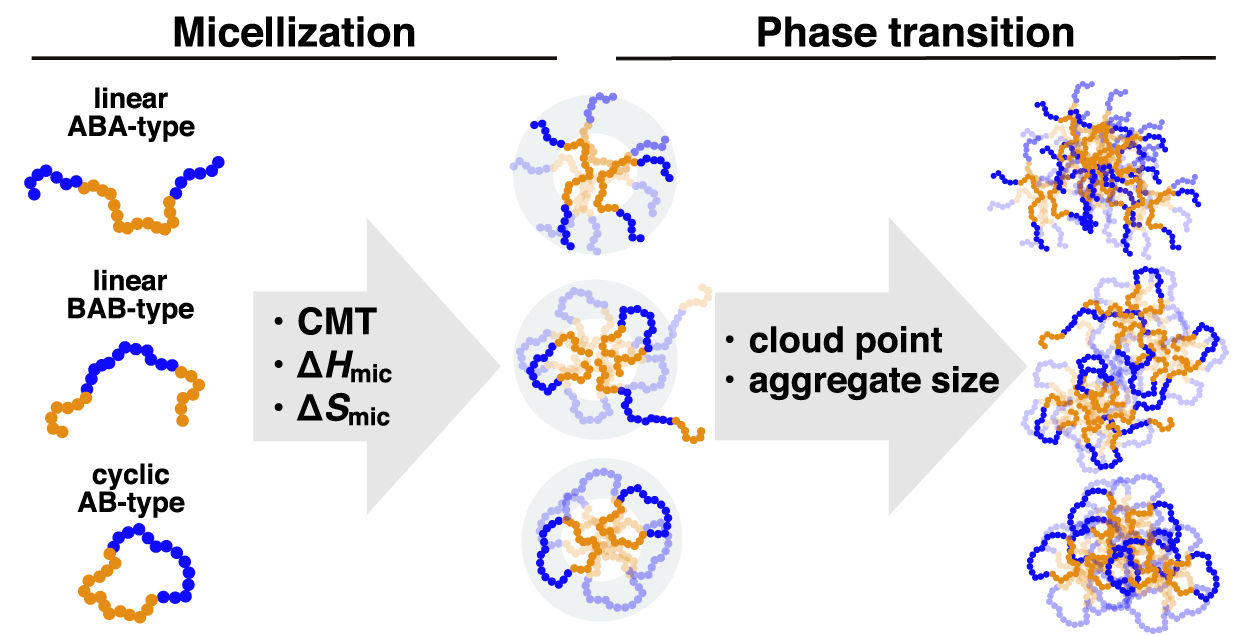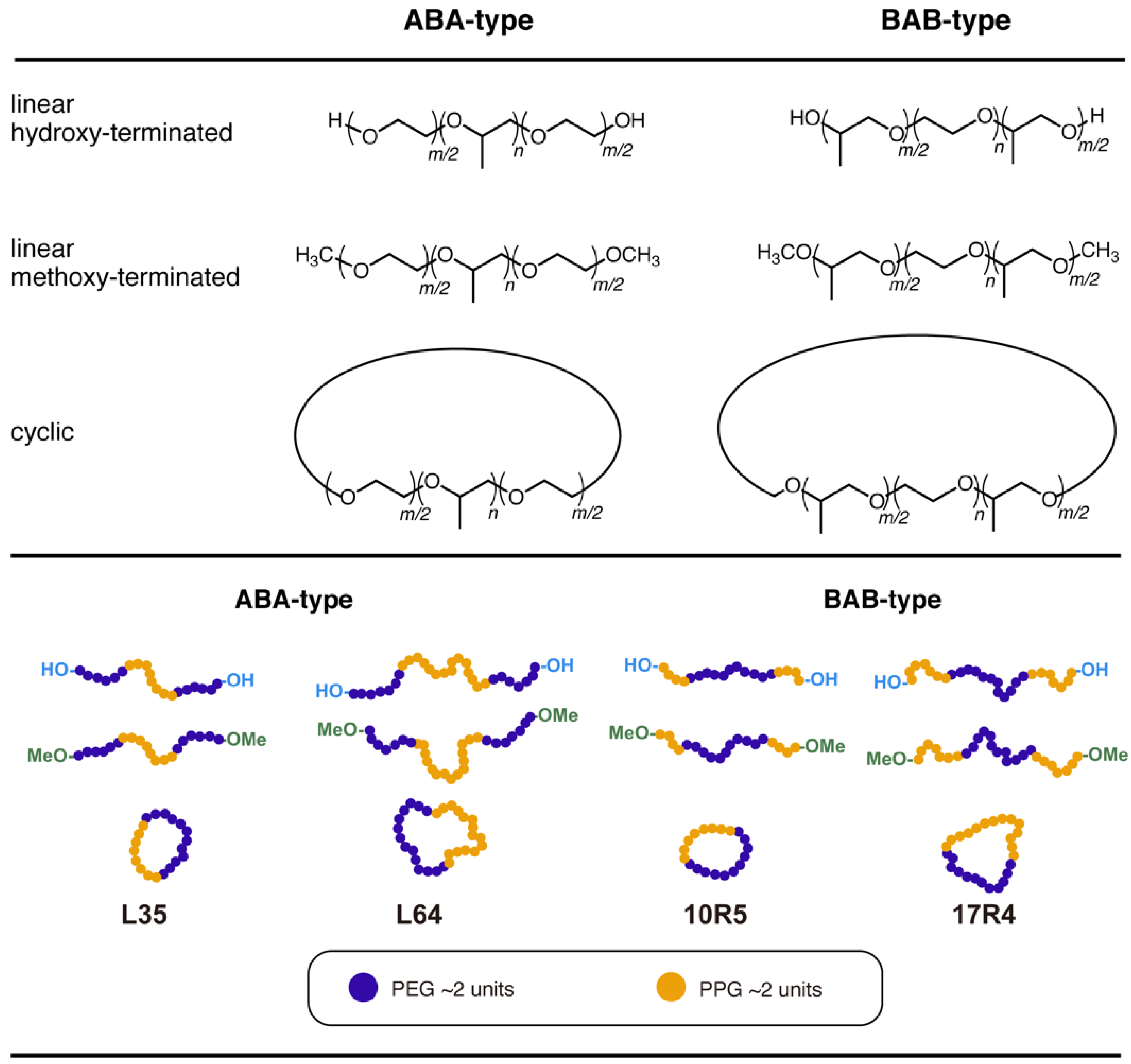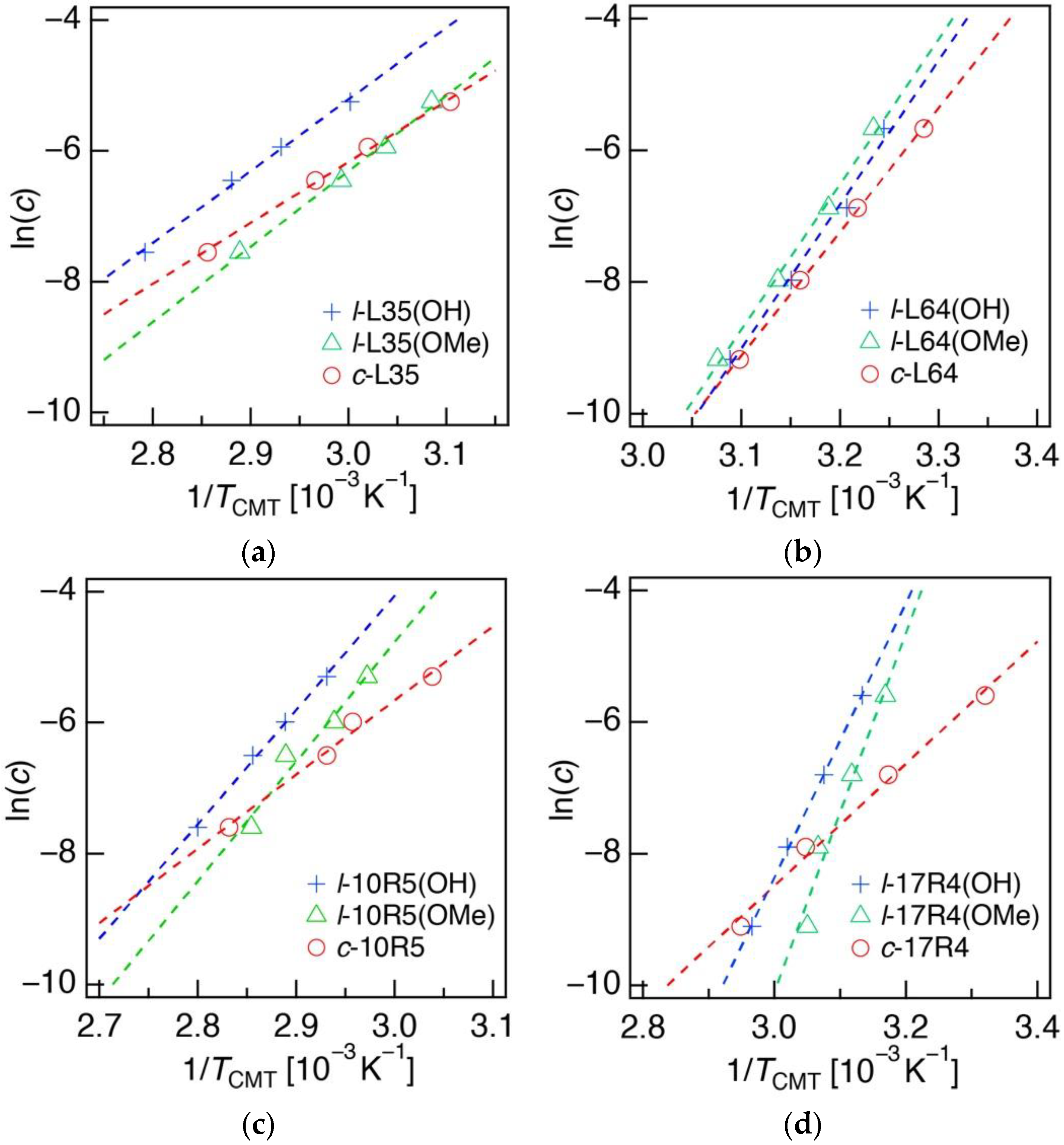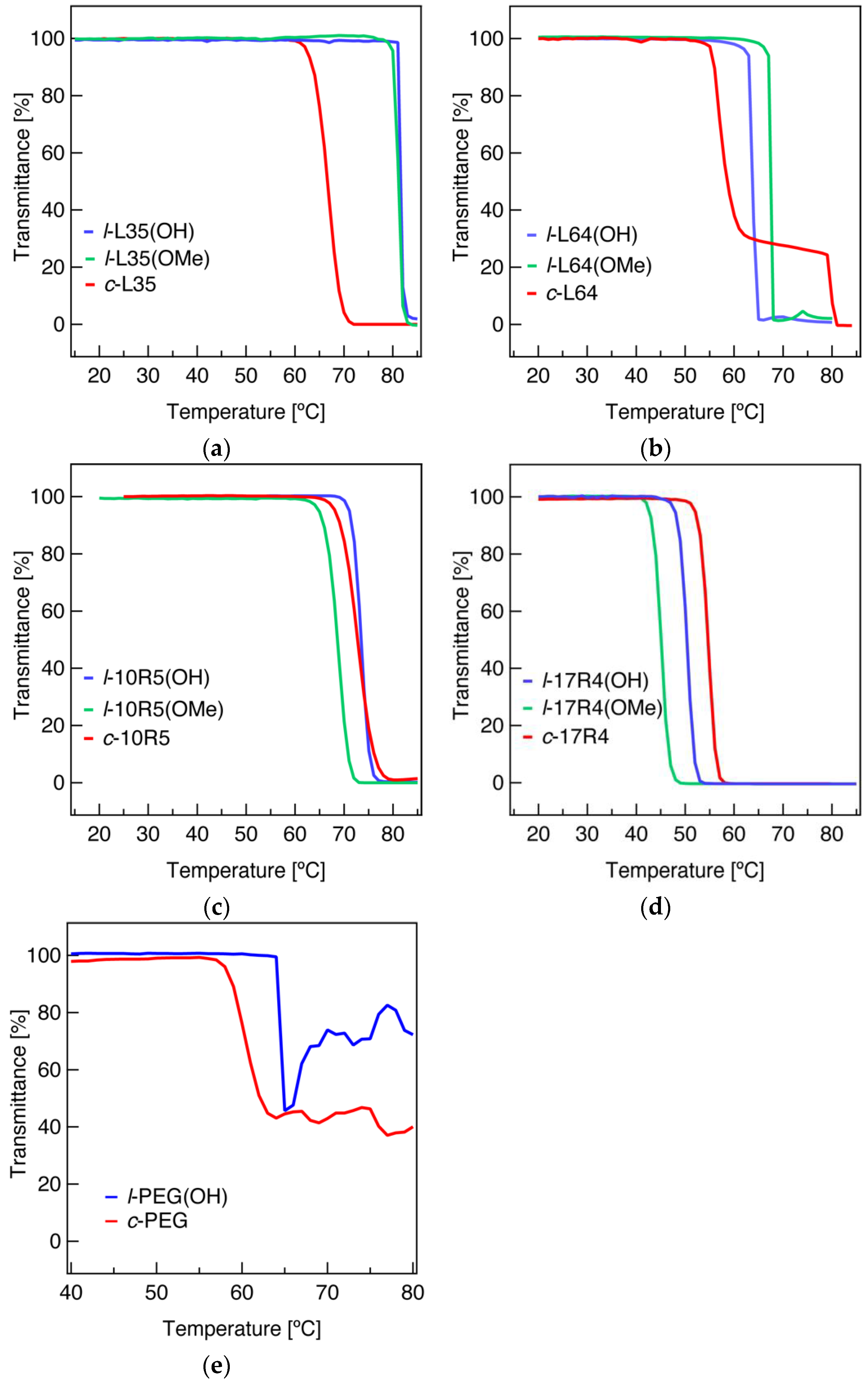

Topology and Sequence-Dependent Micellization and Phase Separation of Pluronic L35, L64, 10R5, and 17R4: Effects of Cyclization and the Chain Ends
 , , , ,
  , and
, and Abstract
Share and Cite
Watanabe, T.; Wang, Y.; Ono, T.; Chimura, S.; Isono, T.; Tajima, K.; Satoh, T.; Sato, S.-i.; Ida, D.; Yamamoto, T. Topology and Sequence-Dependent Micellization and Phase Separation of Pluronic L35, L64, 10R5, and 17R4: Effects of Cyclization and the Chain Ends. Polymers 2022, 14, 1823. https://doi.org/10.3390/polym14091823
Watanabe T, Wang Y, Ono T, Chimura S, Isono T, Tajima K, Satoh T, Sato S-i, Ida D, Yamamoto T. Topology and Sequence-Dependent Micellization and Phase Separation of Pluronic L35, L64, 10R5, and 17R4: Effects of Cyclization and the Chain Ends. Polymers. 2022; 14(9):1823. https://doi.org/10.3390/polym14091823
Chicago/Turabian StyleWatanabe, Tomohisa, Yubo Wang, Tomoko Ono, Satoru Chimura, Takuya Isono, Kenji Tajima, Toshifumi Satoh, Shin-ichiro Sato, Daichi Ida, and Takuya Yamamoto. 2022. "Topology and Sequence-Dependent Micellization and Phase Separation of Pluronic L35, L64, 10R5, and 17R4: Effects of Cyclization and the Chain Ends" Polymers 14, no. 9: 1823. https://doi.org/10.3390/polym14091823
APA StyleWatanabe, T., Wang, Y., Ono, T., Chimura, S., Isono, T., Tajima, K., Satoh, T., Sato, S.-i., Ida, D., & Yamamoto, T. (2022). Topology and Sequence-Dependent Micellization and Phase Separation of Pluronic L35, L64, 10R5, and 17R4: Effects of Cyclization and the Chain Ends. Polymers, 14(9), 1823. https://doi.org/10.3390/polym14091823