
Article

Synthesis, Reaction Process, and Mechanical Properties of Medium-Entropy (TiVNb)2AlC MAX Phase

1
School of Materials Science and Engineering, Chang’an University, Xi’an 710061, China
2
School of Materials and Chemical Engineering, Ningbo University of Technology, Ningbo 315211, China
*
Authors to whom correspondence should be addressed.
Crystals 2025, 15(10), 903; https://doi.org/10.3390/cryst15100903
Submission received: 30 August 2025 / Revised: 12 October 2025 / Accepted: 14 October 2025 / Published: 17 October 2025
(This article belongs to the Section Crystalline Metals and Alloys)

Abstract

The synthesis, reaction process, and mechanical properties of medium-entropy (TiVNb)2AlC MAX phase materials were investigated. The Ti, V, Nb, Al, and C powders were mixed and sintered by the powder metallurgy method. The experimental results showed that the highest purity M2AlC phase with a mass fraction of 95.8% was obtained when the raw material ratio was M(Ti:V:Nb):Al:C = 2:1.2:0.7 and the sintering temperature was 1450 °C. In order to explore the sintering process reactions and optimize the purity of sintered products, sintering was carried out under different temperatures and various molar ratios of raw materials. During the sintering process, the metal elements firstly reacted with aluminum to generate intermetallic compounds (IMCs), and with the increase in temperature, the IMCs gradually reacted with carbon to generate M2AlC. Mechanical property tests revealed that the Vickers hardness of the medium-entropy (TiVNb)2AlC material was 6.52 GPa, significantly higher than both the theoretical prediction based on the rule of mixtures and the hardness of traditional MAX phases. The severe lattice distortions in the polymeric solid solution structure contributed to this significant increase in hardness. In addition, the medium-entropy (TiVNb)2AlC exhibited temperature-dependent friction behavior within the temperature range of room temperature to 400 °C, with the lowest friction coefficient observed at 200 °C when the sample was in contact with the bearing steel. This study provided an important theoretical and experimental basis for the synthesis and future application of medium-entropy MAX phase materials.

1. Introduction

Medium- and high-entropy MAX phase ceramics, as a branch of MAX phase materials, have attracted much attention in recent years due to their unique layered structure and multi-elemental properties of high-entropy alloys [1,2]. Due to the complex composition and the influence of the nature of multiple solid solution elements and their interactions, these materials not only inherit the excellent properties of traditional MAX phase materials, but also further enhance their comprehensive performance through multi-element solid solution strengthening [3,4,5]. The doping of solute elements causes lattice distortion, which increases the resistance to dislocation motion and improves the strength and hardness of the solid solution [6,7,8].
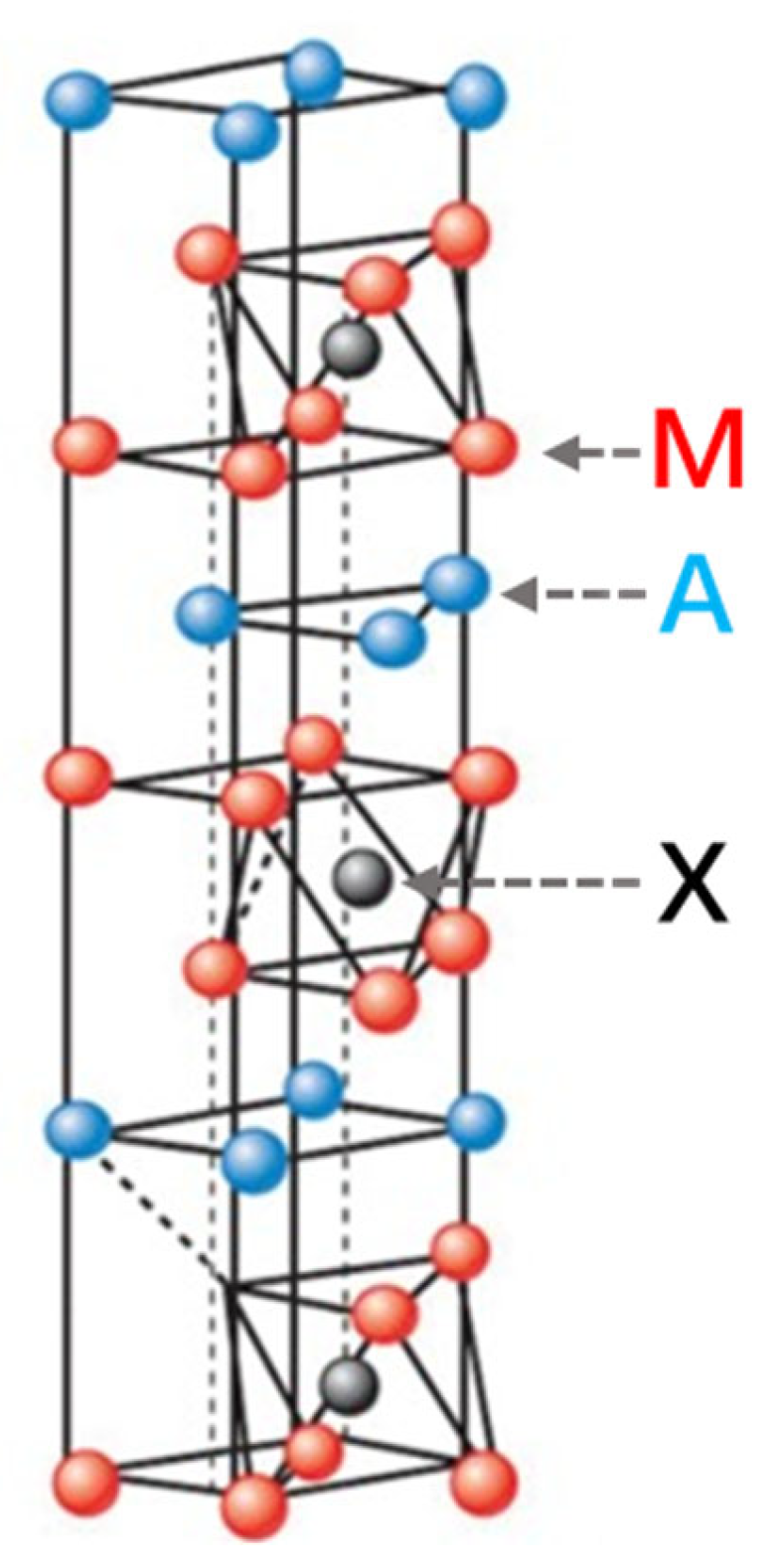
The MAX phase is a ternary layered compound with a hexagonal structure (space group P63/mmc) with the general formula Mn+1AXn, where M is an early transition group metal element; A is a group IIIA and IVA element; X is carbon or nitrogen; and n = 1, 2, or 3 [9,10]. In the MAX phase structure, M and X are covalently bonded, and M and A are metallically bonded, and the MX and A atomic layers are stacked alternately along the c-axis [11,12]. As shown in Figure 1, this unique structure makes MAX phase materials not only have high strength, high temperature resistance, and oxidation resistance like ceramics but also have electrical and thermal conductivity, impact resistance, and easy processing like metals. As a result, they are also known as “metallic ceramics” [13,14,15]. The unique combination of the advantages of metals and ceramics contributes to the MAX phase having a broad application prospect in many fields such as high-temperature thermal protection, wear, nuclear protection, and electrochemistry [16,17,18,19].
The performance limitations of the traditional MAX phase in complex service environments have prompted researchers to explore medium- and high-entropy strategies to break through the performance bottleneck. Studies have shown that multi-element solid solutions can be realized at all three elemental sites of the MAX phase, and multi-element solid solutions can make the MAX phase materials exhibit richer properties [20,21]. For example, the solid solution of ferromagnetic elements such as Fe, Co, and Ni effectively improved the magnetic properties of MAX phase materials [22,23]; the solid solution of elements such as Al and Si improved oxidation resistance [24]; and the addition of lightweight elements reduced the density [25,26]. The M elements of MAX phase materials are chemically active and have abundant d-electrons, which have a great influence on its physicochemical properties, so in this paper we choose to solid solution at the M-position to improve the properties of the MAX phase [27,28]. The synthesized high-entropy MAX phase (Ti0.5Nb0.15Zr0.1Mo0.1Ta0.1W0.05)2AlC by Li et al. was remarkable in its hardening, strengthening, and toughening compared to Ti2AlC [29]. Tan et al. synthesized multicomponent 413MAX phase solid solutions (Ti0.36Nb0.27Ta0.37)4AlC2.8 and (Ti0.28Nb0.26Ta0.28V0.18)4AlC2.9, and the composites showed a high flexural strength of 720 MPa and a 9.5 MPa. m0.5 high fracture toughness [30]. Bo et al. prepared porous high-entropy MAX phase (Ti0.25Zr0.25Nb0.25Ta0.25)2AlC, which exhibited good corrosion resistance in 6 M HCl [31]. Du et al. synthesized a novel high-entropy (TiVCrMo)3AlC2 MAX phase with outstanding hardness and oxidation resistance, and it had good dry sliding friction properties in the temperature range from room temperature to 600 °C with Si3N4 counter grinding [32].
During this process, the approaches to achieve multicomponent uniform solid solutions, as well as the precise control of thermodynamic parameters and kinetic conditions, are all problems that need to be solved urgently [33]. Therefore, the research on the preparation process and phase transformation process of medium- and high-entropy MAX phases is particularly important. Researchers have conducted some investigations to address the above problems. Ge et al. prepared the ideal Ti3AlC2 product by combustion synthesis through adjusting the initial ratios of titanium, aluminum, and carbon powder or adding TiC as an additive. The formation mechanism is that the TiC formed in the preliminary stage dissolves into the molten Ti-Al compounds and then precipitates layered Ti3AlC2 from the liquid phase [34]. Hu et al. demonstrated that single-phase Ta2AlC can be prepared through hot-press sintering under an Ar atmosphere at 1550 °C, with the optimal composition of Ta:Al:C = 2:1.2:0.9. Ta2AlC was generated by the reaction of Ta2Al with C, or the reaction of Ta5Al3C and TaC with C, in the temperature range of 1500–1550 °C. Above 1600 °C, Ta2AlC decomposed readily into Ta4AlC3 and then into TaCx [35]. Yuan et al. analyzed the heating process of M-Al-C coatings (M = Ti, V, Cr) deposited on Ni-based alloy substrates. Due to its higher formation energy and density of states, Ti2AlC has a higher formation and decomposition temperature compared to V2AlC and Cr2AlC. Additionally, no intermediate phase forms prior to the generation of the Ti2AlC phase [36]. Sijuade et al. found that the purest V2AlC samples were obtained by pressureless sintering at 1300 °C when the Al molar ratio was 1.2 [37]. Wang et al. prepared V2AlC by the molten salt method with a ratio of V:Al:C = 2:1.2:1. The addition of NaCl led to the early generation of V2AlC at 1050 °C, and annealing at 1400 °C allowed the removal of V4Al23 and C impurities from the products [38]. Zhang et al. prepared dense Nb2AlC by in situ reaction/hot pressing method using NbC, Nb, and Al powders as raw materials at 1650 °C under 30 MPa [39]. Bo et al. successfully synthesized a multicomponent porous MAX phase (Ti0.25Zr0.25Nb0.25Ta0.25)2AlC with mixed-element powders using the pressureless sintering method. It was demonstrated that the formation reaction of the MAX phase occurs above 1200 °C, with the optimal sintering temperature being 1600 °C; however, an excessively high sintering temperature (1700 °C) results in a significant loss of aluminum atoms and the decomposition of the MAX phase [40].
Existing studies have focused on the unitary MAX phase and high-entropy MAX phase, but too many solid solution elements may trigger phase separation and synthesis difficulties, while the ternary medium-entropy system can not only maintain the advantages of the solid solution but also facilitate the control of their reaction processes. However, the phase transition mechanism and kinetic process (involving the elevation of elemental diffusion barriers and the enhancement of the tendency to generate competing phases and so on) under the synergistic effect of multiple elements are more complicated than that of the traditional unitary MAX phase, involving the elevation of elemental diffusion barriers, the enhancement of the tendency to generate competing phases, and so on. Therefore, the reaction process of the medium-entropy MAX phase still needs to be further studied.
In this paper, the synthesis method as well as the reaction process of medium-entropy (TiVNb)2AlC are explored in detail through the powder metallurgy method by mixing Ti, V, Nb, Al, and C powders, and the reaction kinetic characterization of the ternary solid solution system is elucidated by the pressureless sintering process [41]. The hardness of the medium-entropy (TiVNb)2AlC phase is compared with the three MAX phases of Ti2AlC, V2AlC, and Nb2AlC MAX phases. This study provides theoretical support for the controllable preparation of medium-entropy MAX phases.

2. Experimental Details

2.1. Fabrication Process

Simple commercially available powders, titanium (99.9% purity, 325 mesh), vanadium (99.7% purity, 325 mesh), niobium (99.95% purity, 400 mesh), aluminum (99% purity, 325 mesh), and carbon (99.95% purity, 750–850 mesh), were used to synthesize (TiVNb)2AlC materials [42]. The raw materials were weighed at molar ratios of M:Al:C = 2:1.2:0.6, M:Al:C = 2:1.2:0.7, M:Al:C = 2:1.2:0.8, M:Al:C = 2:1.2:0.9, M:Al:C = 2:1.2:1, and M:Al:C = 2:1.2:1.1, respectively (corresponding the samples named 0.6C, 0.7C, 0.8C, 0.9C, 1C, and 1.1, respectively), in order to determine the optimum ratio. For these compositions, M = Ti:V:Nb = 1:1:1, with a slight excess of Al added to compensate for its loss during sintering [43]. The weighed powders were fully mixed by passing them through a 200-mesh sieve and subsequently sintered in a high-temperature tube furnace (GSL-1700X, Hefei Kocrystal Material Technology Co., Ltd., An Hui, China) at 1450 °C for 2 h, with a temperature increase rate of no more than 10 °C/min. To find the optimum sintering temperature of (TiVNb)2AlC, the raw material powders were then weighed according to this optimum ratio and sintered at 1250 °C, 1350 °C, 1450 °C, and 1550 °C for 2 h, respectively. In addition, the mixed powders were also sintered at 750 °C, 850 °C, 950 °C, 1050 °C, and 1150 °C in order to study the phase transition process during sintering. The products after pressureless sintering were ground into powder, mixed thoroughly, and sintered into dense blocks using SPS at 1200 °C under 30 MPa for further characterization and tests.

2.2. Characterization

The phase compositions of the sintered samples were characterized by X-ray diffractometry (XRD, D8 ADVANCE, Bruker., Karlsruhe, Germany) using Cu Kα radiation, and the mass share of each phase in the samples was approximated by the K-value method:
W i = I i / K i i = 1 n I i / K i × 100 %
where   W i   is the mass fraction of the   i   phase, I i   is the highest peak value of the   i   phase, and   K i   is the reference intensity of the   i   phase [44]. The surface micromorphology of the samples was analyzed using a scanning electron microscope (SEM, S4800, Hitachi, Tokyo, Japan), while the elemental composition and distribution of the samples were analyzed using an energy spectrometer (EDS, Aztec UltimMax 100, Oxford Instruments, Abingdon, UK). The Vickers hardness of the prepared samples was determined by using a microhardness tester (MH-500D, SINOWON, Guang Dong, China) at a load of 100 kgf with a holding time of 15 s, and the average value was taken for five determinations [45]. A high-temperature pin-on-disk friction and wear testing apparatus was employed to conduct counterface grinding between the specimen and bearing steel balls (5 mm, G25), thereby enabling the measurement of friction force and the coefficient of friction at any specified time interval. The load was applied perpendicular to the test surface with a magnitude of 4 N. The sample stage rotation speed was 200 r/s, and each test lasted 40 min. The test temperature ranged from room temperature (R.T.) to 400 °C, with a temperature gradient of 100 °C. Each test was performed three times under the same experimental conditions, and the average value was taken as the final test result. Finally, the wear rate under each test condition was calculated using Equation (2):
W R = w t 2 F n
where   W R is the wear rate, w is the wear scar width, t is the wear thickness, F is the normal load, and n is the number of sample rotation cycles, which satisfies the following relationship: n = rotational speed × test time.

3. Results and Discussion

3.1. The Effect of the Sintering Process on Purity

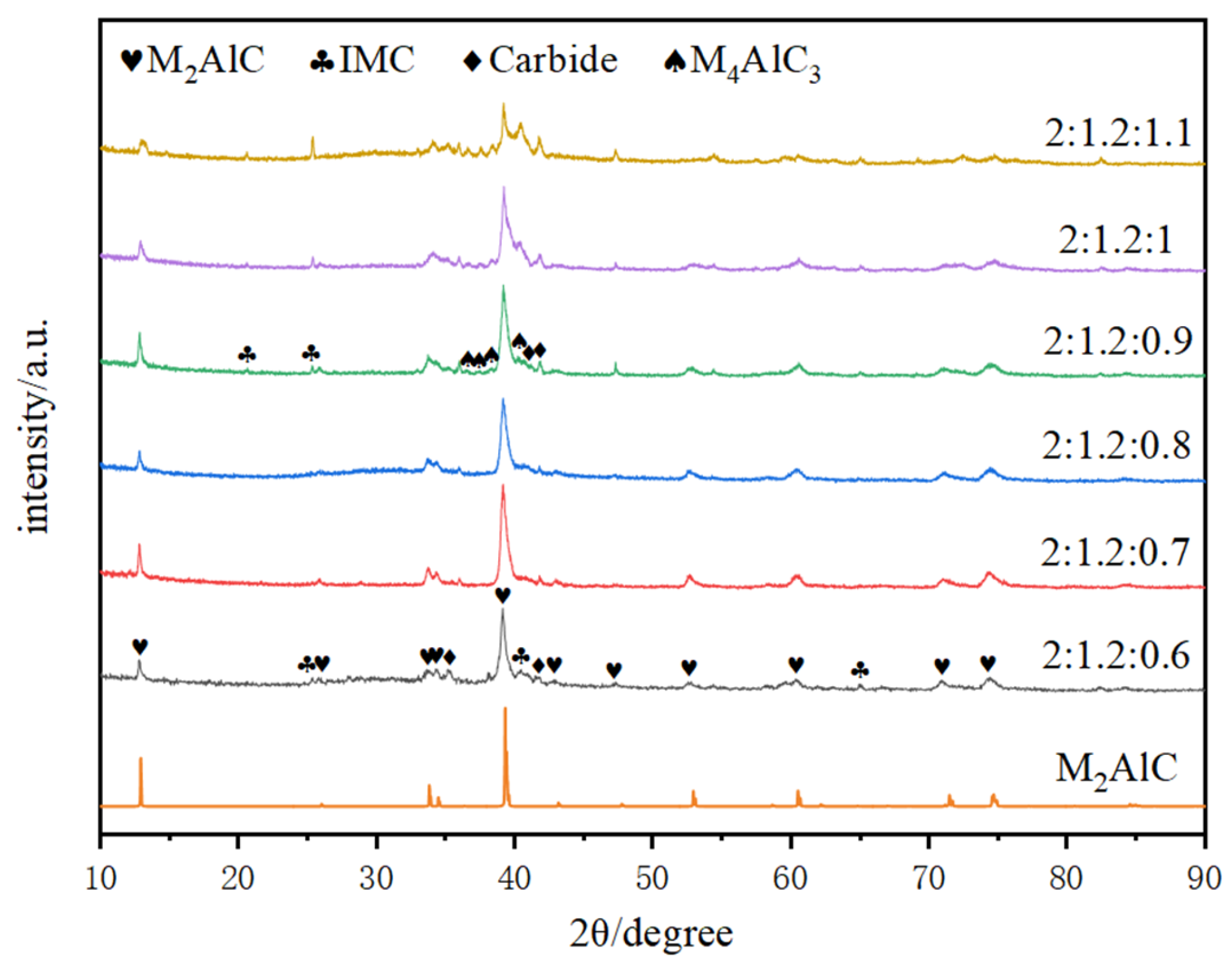
The XRD results of the sintered products with different raw material ratios are shown in Figure 2. When the ratio was M:Al:C = 2:1.2:0.6, the peaks of M2AlC were mainly observed, accompanied by some intermetallic compound IMC and carbide MC characteristic peaks, which indicated that a M2AlC phase with limited phase purity was generated at this ratio. The XRD results are shown in Figure 2. When the ratio was M:Al:C = 2:1.2:0.7, the peaks of M2AlC were enhanced, and there were almost no IMC characteristic peaks, indicating that the purity of M2AlC was improved [46]. With the ratio of M:Al:C = 2:1.2:0.8, the peak intensity of M2AlC weakened, while the peak of MC was still present. As the ratio of C increased to 0.9, the peak intensity of MC increased significantly, and the characteristic peak of M4AlC3 appeared, suggesting that the impurity content increased significantly and the purity of M2AlC decreased. When the ratio was M:Al:C = 2:1.2:1, the intensity of the M2AlC peak decreased, while the intensity of the peaks of M4AlC3 and MC increased, indicating a further decrease in the purity of M2AlC. When the ratio of C in the feedstock reached 1.1, the peak intensity of M2AlC significantly weakened, and the characteristic peak intensities of M4AlC3 as well as MC were significantly enhanced, indicating that the purity of M2AlC was at a lower level under this condition. Therefore, a higher purity of M2AlC was obtained with the ratio of M:Al:C = 2:1.2:0.7.
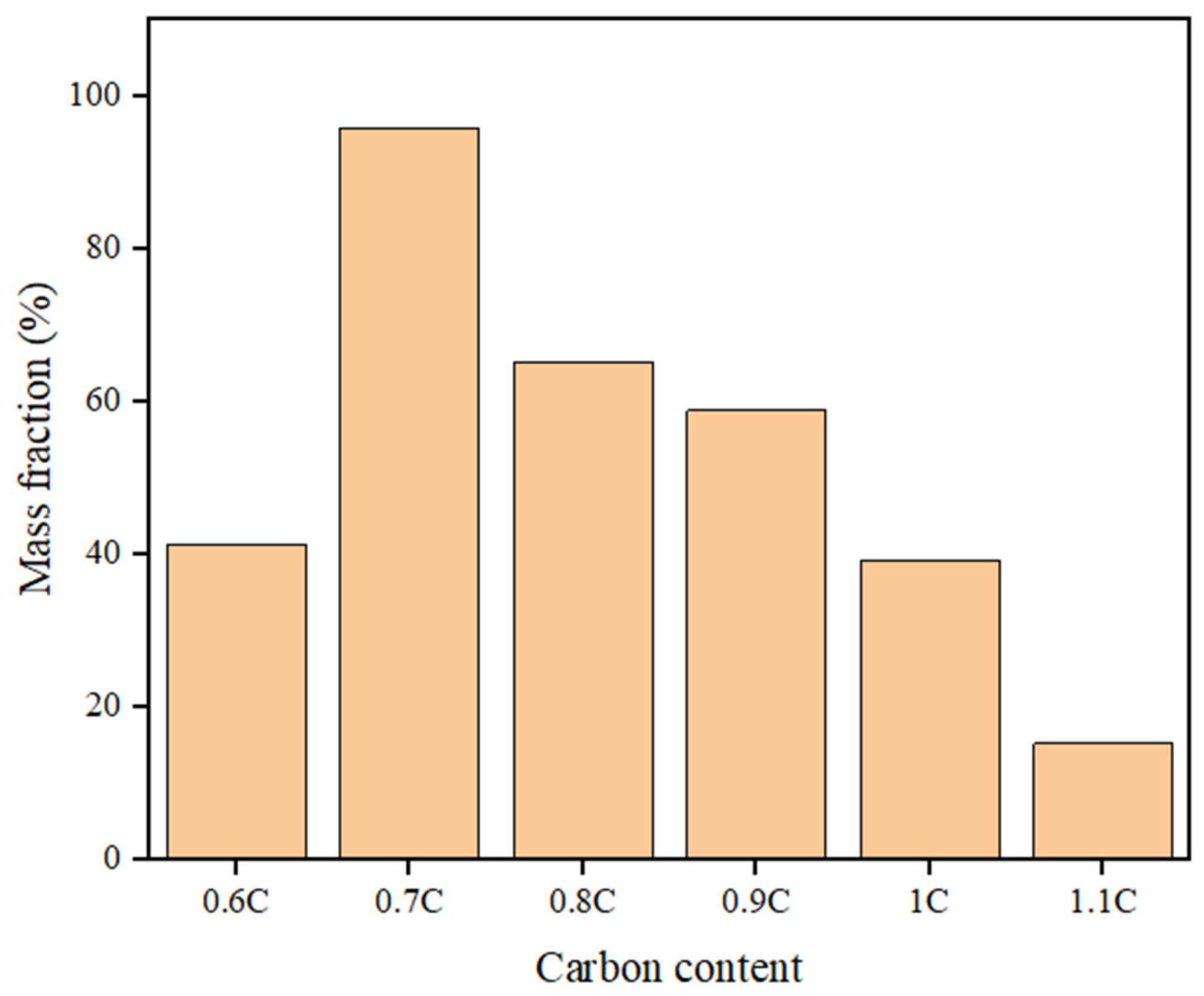
Using the K-value method to approximate the mass percentage of each phase in the above samples, the mass fraction of M2AlC was obtained as shown in Figure 3. As the proportion of C in the raw materials increased from 0.6 to 1.1, the mass fraction of M2AlC started to increase from 42.3%, reached a maximum of 95.8% at M:Al:C = 2:1.2:0.7, and then gradually decreased to 15.1% (M:Al:C = 2:1.2:1.1). Thus, the purity of M2AlC prepared in the ratio of M:Al:C = 2:1.2:0.7 was the highest.
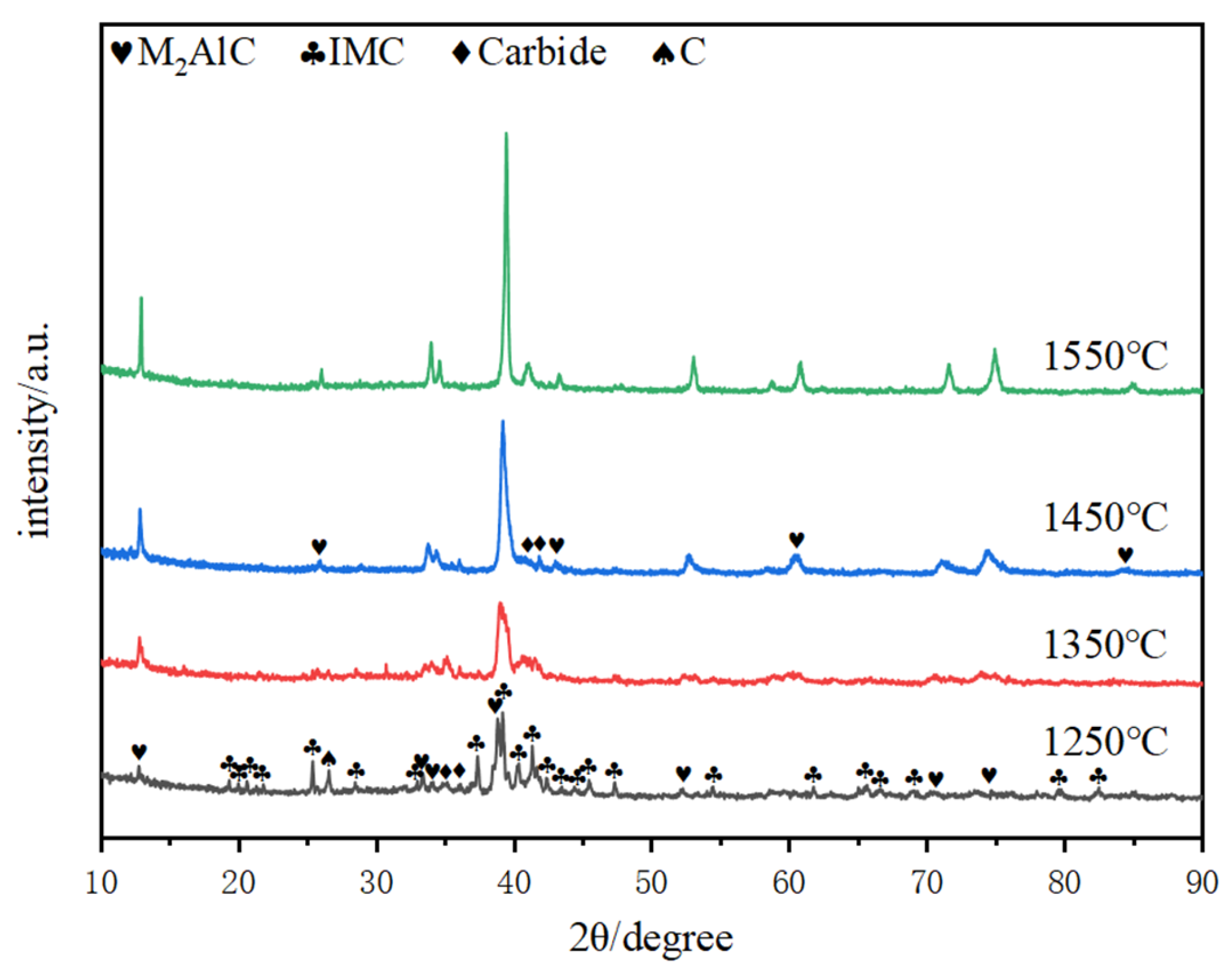
In order to find the optimum synthesis temperature of M2AlC, sintering was carried out at different temperatures with the ratios M(Ti:V:Nb = 1:1:1):Al:C = 2:1.2:0.7, and the XRD patterns of the products are shown in Figure 4. It can be seen that at the sintering temperature of 1250 °C, there were already peaks of M2AlC in the XRD pattern but were accompanied by some IMC and MC impurities, such as TiAl, NbAl3, Nb3Al, and TiC, as well as partially unreacted carbon. This indicates that the purity of the sintered products was relatively low at lower temperatures. As the sintering temperature increased, the peaks of IMC gradually decreased, while the peaks of M2AlC increased, suggesting that more IMC and MC reacted to form M2AlC. When the sintering temperature reached 1450 °C, the peak intensities of IMC and MC decreased significantly, indicating that the purity of M2AlC increased and the impurity content in the product decreased significantly at 1450 °C. Above 1450 °C, the MC peaks increased, indicating that the MAX phase underwent decomposition into carbides, which limited the upper limit of the sintering temperature.
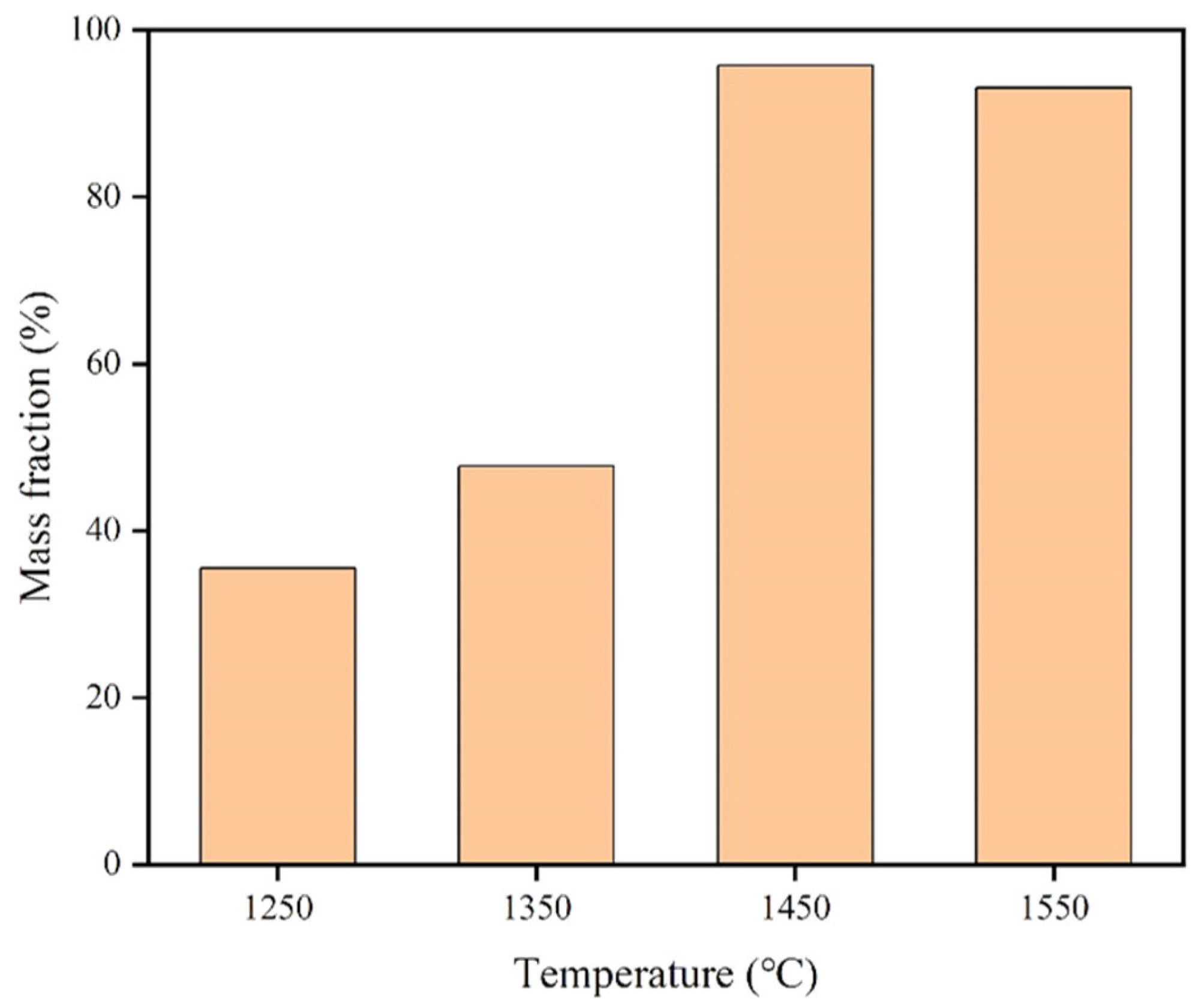
Using the K-value method to approximate the mass percentage of each phase in the above samples, the mass fraction of M2AlC was obtained as shown in Figure 5. With the increase in sintering temperature, the mass fraction of M2AlC gradually increased from 35.5% at 1250 °C, reached a maximum of 95.8% at 1450 °C, and then decreased to 93.1% at 1550 °C. Therefore, the highest purity of M2AlC was obtained when the sintering temperature was 1450 °C. In summary, the raw material ratio of M:Al:C = 2:1.2:0.7 was selected to sinter M2AlC with the highest purity at 1450 °C.

3.2. The Phase Evolution During the Reaction

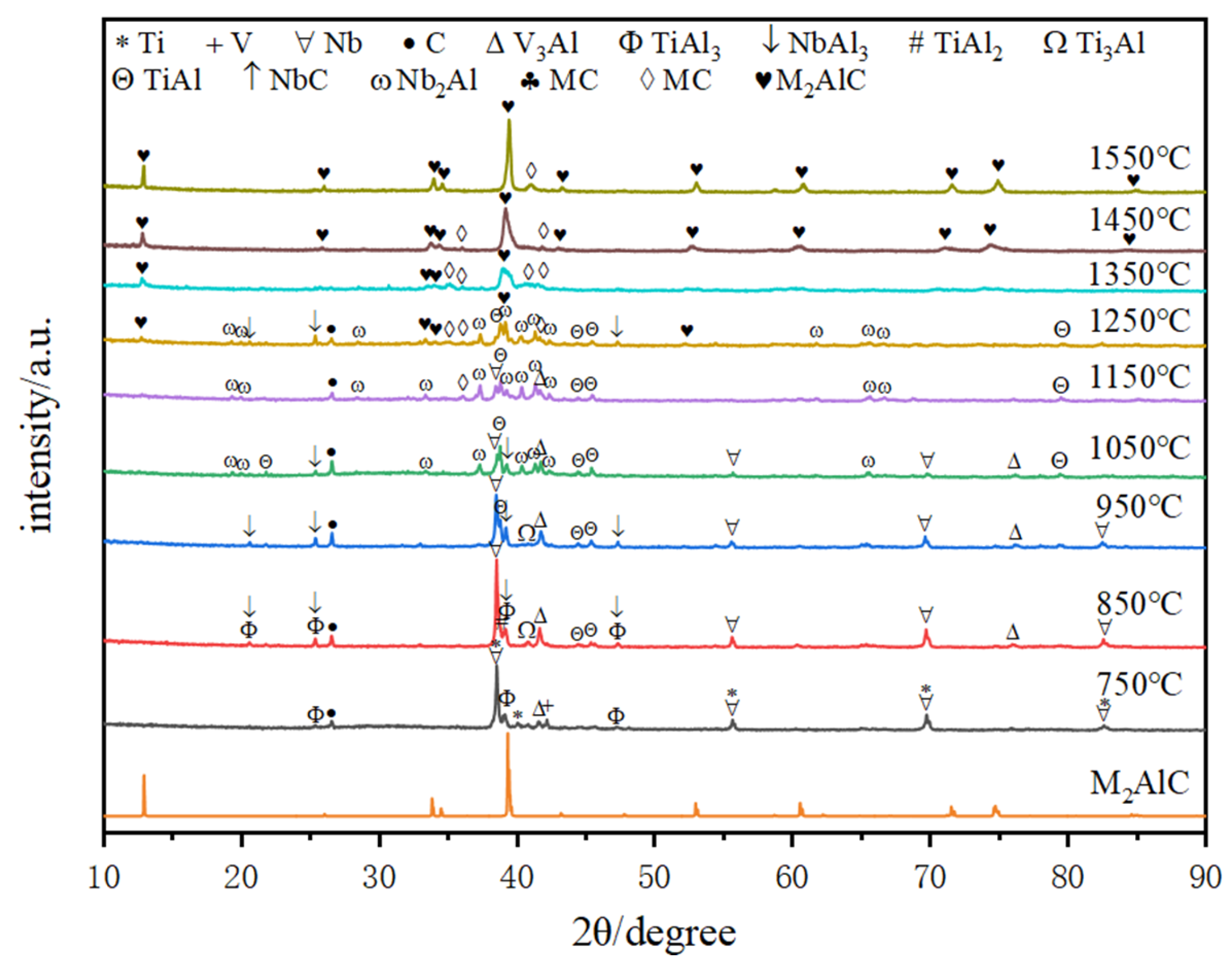
In order to study the reaction paths during the sintering of M2AlC, the XRD spectra of the sintered with Ti, V, Nb, Al, and C powders in the ratios of M(Ti:V:Nb = 1:1:1):Al:C = 2:1.2:0.7 at temperatures ranging from 750 to 1450 °C are shown in Figure 6, and the detected phases are listed in Table 1. When the sintering temperature was 750 °C, the melted aluminum reacted with some M metal elements to generate intermetallic compounds and some weaker intensity peaks of TiAl3 and V3Al could be detected in XRD, which indicated that the corresponding reactions started to proceed. The corresponding reaction equations were as follows:
Ti   +   3 Al   =   TiAl 3
3 V + Al = V 3 Al
As the sintering temperature increased, the peak intensity of the intermetallic compound M-Al continued increasing, while the peak intensity of each M-site metal decreased. This indicated that more and more metals reacted with Al, and the unreacted Ti continued reacting with its Al-rich phase. The main reaction equations were as follows:
TiAl 3   +   Ti   =   TiAl 2   +   TiAl
TiAl 3 + TiAl 2 + 3 Ti = 5 TiAl
TiAl 3 + 8 Ti = 3 Ti 3 Al
Nb + 3 Al = NbAl 3
When the sintering temperature reached 1050 °C, the peak of Nb2Al appeared in the XRD plot, indicating that Nb further reacted with its Al-rich phase to form intermetallic Nb2Al, which followed the following reactions:
5 N b + N b A l 3 = 3 N b 2 A l
2 N b + A l = N b 2 A l
As the sintering temperature increased, the IMC peaks also increased, while the intensity of the peaks of M metal elements gradually decreased. At a sintering temperature above 1250 °C, weaker carbide peaks appeared in the XRD diagram, indicating that a reaction occurred between the M metal powder and its IMC or C-powder. The transition metal peaks of the raw material disappeared completely and were replaced by the peaks of various intermetallic compounds and carbides, while MAX phases were generated. The corresponding reactions were as follows:
Ti 3 Al   +   TiAl   +   2 C   =   2 Ti 2 AlC
Ti 3 Al + C = Ti 2 AlC + TiC  
TiC + TiAl =   Ti 2 AlC
Nb + C = NbC
5 NbC + 2 Nb 2 Al + NbAl 3 = 5 Nb 2 AlC
V 3 Al + 2 C = V 2 AlC + VC
At the temperature of 1250–1450 °C, the peak of M2AlC was enhanced and the peak of IMC gradually weakened, while the peak of carbide was enhanced, which could be explained as follows: when a variety of metal elements were mixed, an Al-rich eutectic phase was formed in the sintering process, and the formation and mobility of this eutectic phase led to the depletion of aluminum in the reaction of the formation of the MAX phase, and the excess of other elements could only react to form carbide [39]. In addition, as the temperature increased, the mobility of elements increased, favoring the formation of carbides [40]. At a sintering temperature of 1450 °C, the intermetallic compound was completely converted to M2AlC, accompanied by a small amount of carbide impurities, and its peak intensity was much lower than that of the M2AlC peak. Above this sintering temperature, part of M2AlC decomposed into medium-entropy carbide MC due to the high temperature, and at the same time, the intensity of the M2AlC peak increased due to grain growth.
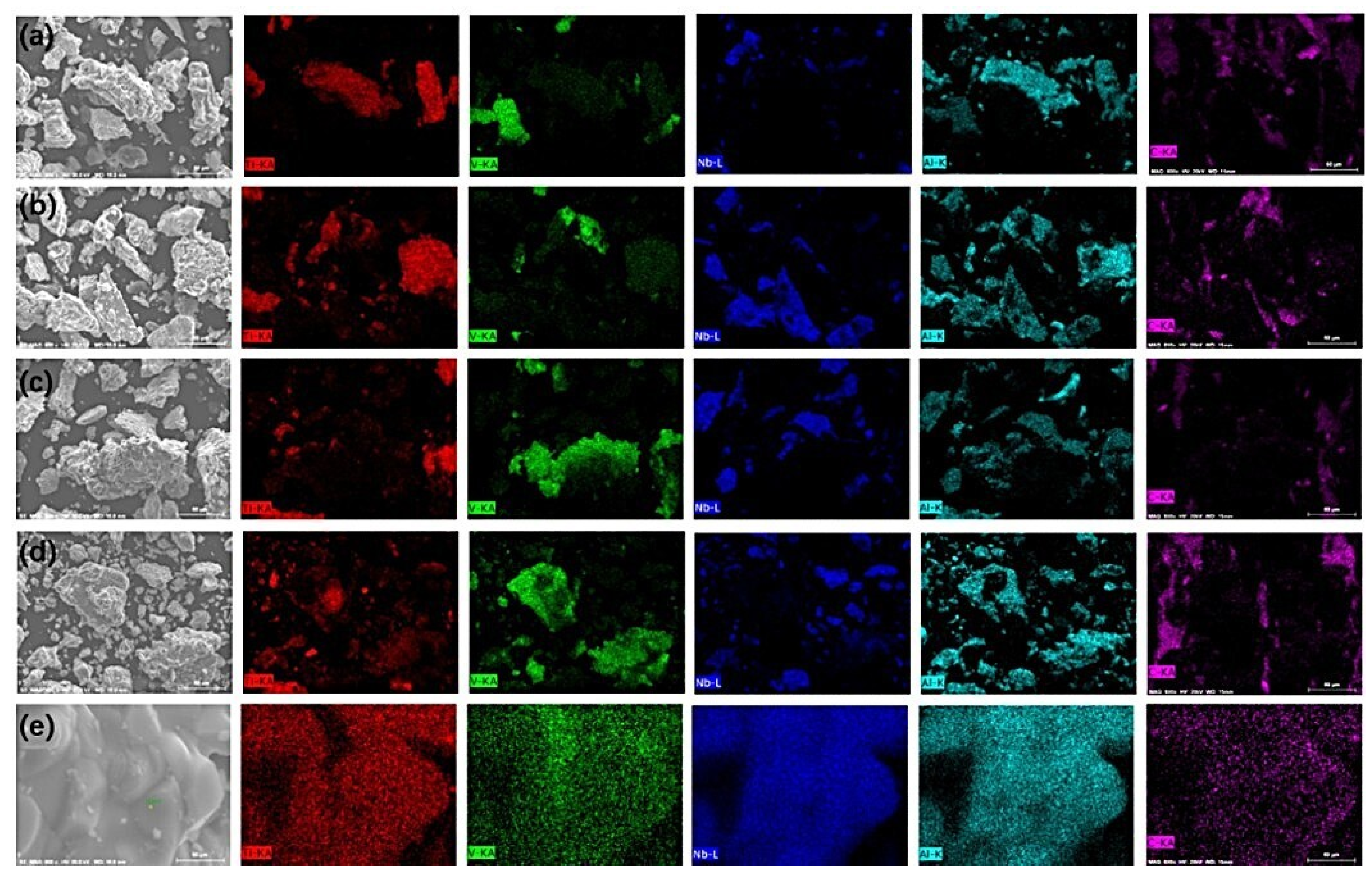
Figure 7 shows the morphologies and EDS elemental surface releases of the sintered products with the raw material ratios of M:Al:C = 2:1.2:0.7 at 850 °C, 1150 °C, 1250 °C, 1350 °C, and 1450 °C, respectively. The EDS results showed that the sintered products at 850 °C were dominated by the intermetallic compounds IMC of Ti-Al and Nb-Al, as well as by the raw materials (Figure 7a). This suggested that the reaction between elements had just begun to occur at 850 °C, and molten Al reacted preferentially with Ti and Nb to produce Al-rich phase products. When the temperature increased to 1150 °C, a small amount of carbide MC appeared in the product in addition to IMC (Figure 7b), indicating that the M element reacted with C. When the sintering temperature was 1250 °C, the product showed a small amount of carbide MC and M2AlC phases, as well as IMC. The EDS images showed an overlap of the Al element as well as the C element with the M elements (Figure 7c). As the sintering temperature reached 1350 °C, the EDS results showed an increase in the carbide structure and a decrease in the IMC structure. In addition, the lamellar structure of the MAX phase could be recognized in the microscopic morphology (see Figure 7d), which suggested that the M metals, the IMC, and C particles continued to react to form the MC. The IMC structure almost disappeared as the sintering temperature increased to 1450 °C. The typical structure of the MAX phase in Figure 7e shows that the intermetallic compounds were converted into M2AlC, with the increasing purity of M2AlC and the uniform distribution of each element in the sintered solid solutions.
The quantitative EDS elemental analysis of (TiVNb)2AlC obtained by pressureless sintering at 1450 °C is shown in Table 2. The results showed that the overall ratio was basically in accordance with the ratio of M(Ti:V:Nb = 1:1:1):Al:C = 2:1:1, and the aluminum content in the final product reached the desired value due to the excessive addition of aluminum before sintering, so it can be concluded that the synthesis of meso-entropic (TiVNb)2AlC was feasible under this sintering process.

3.3. Mechanical Properties

Table 3 lists the measured and theoretical values of the Vickers hardness of (TiVNb)2AlC and the hardness of the associated ternary MAX phase. The theoretical hardness of (TiVNb)2AlC satisfied the following equation:
H Theoretical = H Ti 2 AlC + H V 2 AlC + H Nb 2 AlC 3
The hardness of (TiVNb)2AlC from the measurements was 6.52 GPa, which was higher than the theoretical prediction of the mixing law and the hardness of the three single MAX phases. As we know, in solid solutions, the difference in the metal atomic radius is a measure of the lattice distortion. The excess hardness was mainly attributed to severe lattice distortions in the polymeric solid solution structure. The degree of atomic radius difference ( Δ r ) was defined as
Δ r = r max   r min r - × 100 %
For the solidification in the M sites, i.e., (TiVNb)2AlC, the differences in the atomic radius of Ti, V, and Nb (Ti: 1.32 Å, V: 1.22 Å, and Nb: 1.34 Å) led to the atomic radius difference index Δ r   =   9.3%. This value exceeded the solid solution critical distortion threshold ( Δ r > 5%), indicating the presence of significant lattice distortion within the system [1]. The differences in multi-element diffusion kinetics led to the formation of high-density dislocation networks during sintering. The local stress fields generated by distortions hindered dislocation slip, requiring extra energy to overcome the barriers, which further enhanced the resistance to plastic deformation [2,47,48,49].
Table 3. Hardness of medium-entropy (TiVNb)2AlC and related materials.
Properties(TiVNb)2AlCStandard Deviation(TiVNb)2AlC
(Theoretical Value)
Ti2AlC [50]V2AlC [51]Nb2AlC [52]
Vickers hardness (GPa)6.520.3542.82.86.1

3.4. Friction and Wear Performance

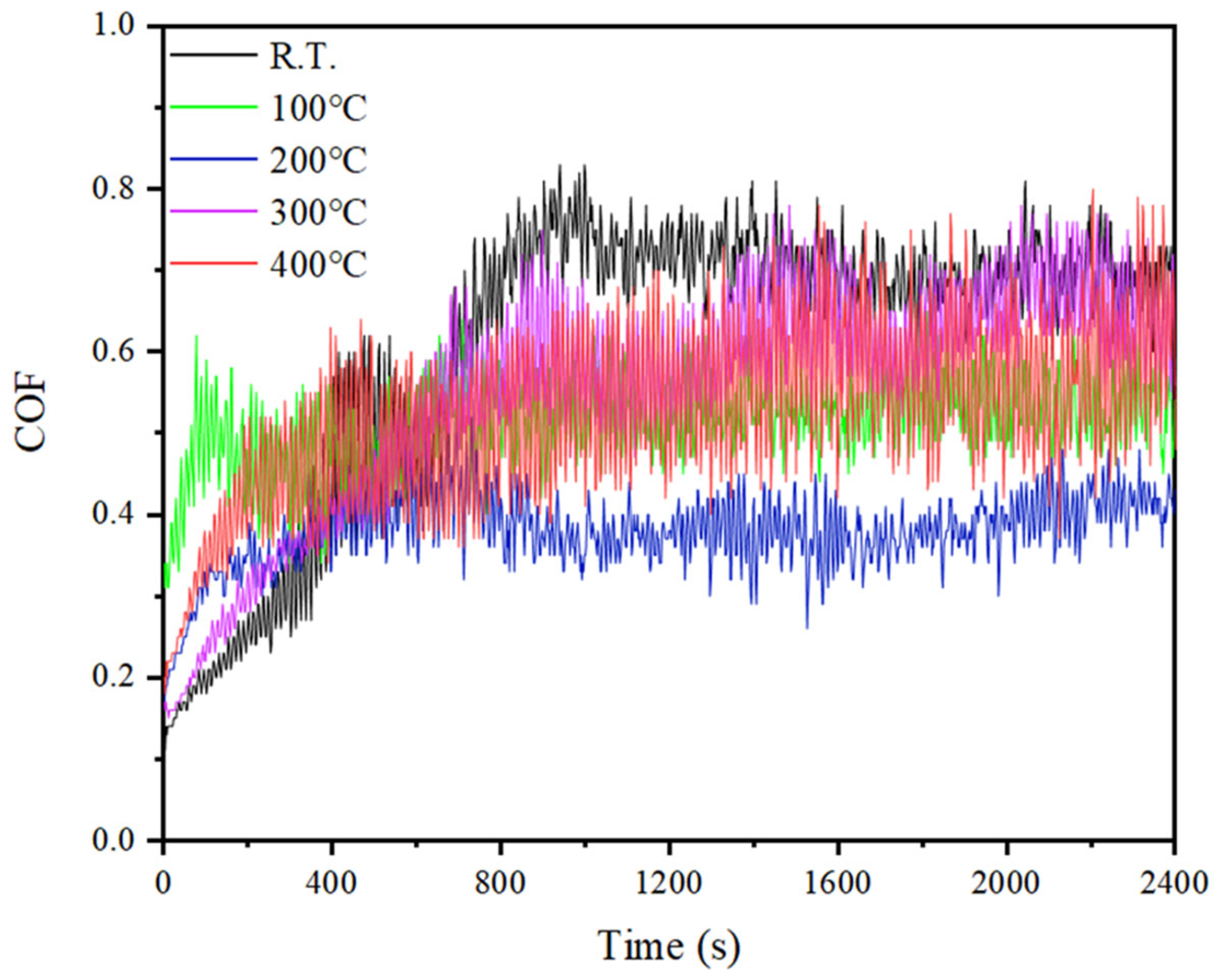
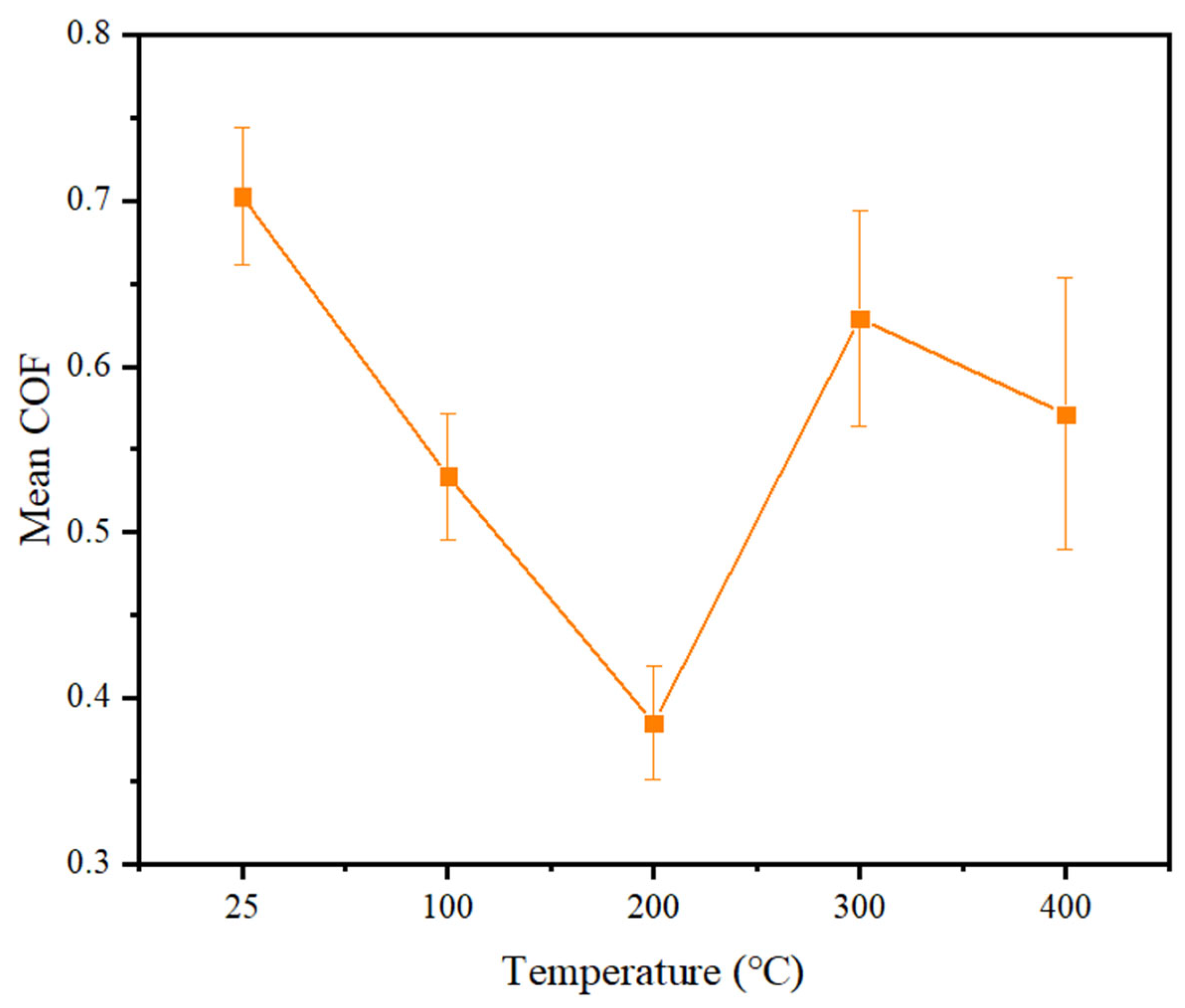
Figure 8 and Figure 9 present the coefficient of friction (COF)–time curves and average COF values under different experimental temperatures, respectively. At room temperature, the COF curve remained generally stable, while at 100 °C, the fluctuations in the COF curve increased, with the average COF decreasing from 0.65 to 0.56. The rise in temperature and the contact between surface asperities reduced material strength and enhanced plastic deformation, resulting in increased adhesive friction [53]. Meanwhile, the initial slight oxidation was insufficient to form an effective lubricating film. At this stage, the “adhesion-induced friction increase” and “oxidation-induced friction reduction” competed, causing fluctuations and an overall increase in the COF. Overall, the friction-reducing effect of the oxide film could not counteract the COF fluctuations caused by the formation and subsequent shearing fracture of adhesive contacts, resulting in an insignificant decrease in the average coefficient of friction.
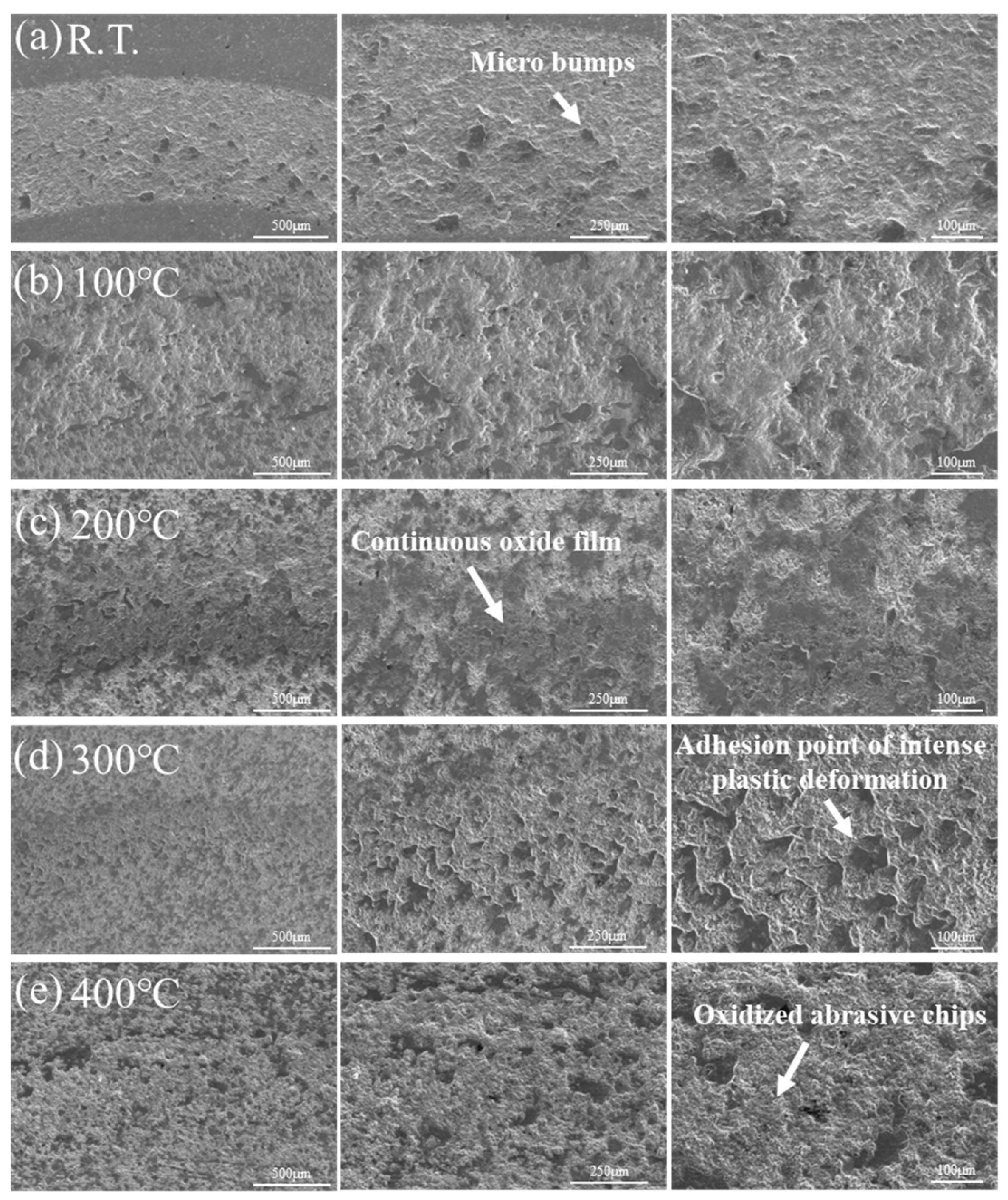
During the experiment at 200 °C, the average COF further decreased to 0.39, and the COF fluctuation significantly reduced. From room temperature to 200 °C, the average COF maintained a nearly consistent decreasing rate, indicating that with increasing temperature, the oxide film gradually increased on the friction surface. A discontinuous lubricating film formed at the friction interface (as shown in Figure 10b,c), reducing the adhesive contact area. Consequently, the frictional resistance caused by the adhesion and shear was relatively reduced, leading to a decrease in the average friction coefficient.
When the temperature increased to 300 °C, the friction coefficient curve fluctuated more drastically, and the average COF rose sharply. This analysis suggested that as the temperature continued to rise, on one hand, the oxidation reaction intensified at the friction interface, forming a continuous lubrication layer which could theoretically further reduce the friction coefficient. However, the elevated temperature also significantly reduced the sample’s yield strength, leading to increased plastic deformation at contact points and intensified adhesive wear (as shown in Figure 10d). As a result, the friction coefficient fluctuated more greatly, and instead of decreasing, it rose. When the temperature increased to 400 °C, the average COF slightly decreased but fluctuated violently. This was likely due to the thickening oxide layer being prone to brittle spalling during friction, which generated debris distributed across the friction interface and increased the probability of three-body abrasion. Figure 10e also shows the increased surface roughness of the friction interface. Therefore, sustained high temperatures led to the decreased stability of the lubrication film and intensified dynamic changes in properties and morphology of materials at the friction interface.
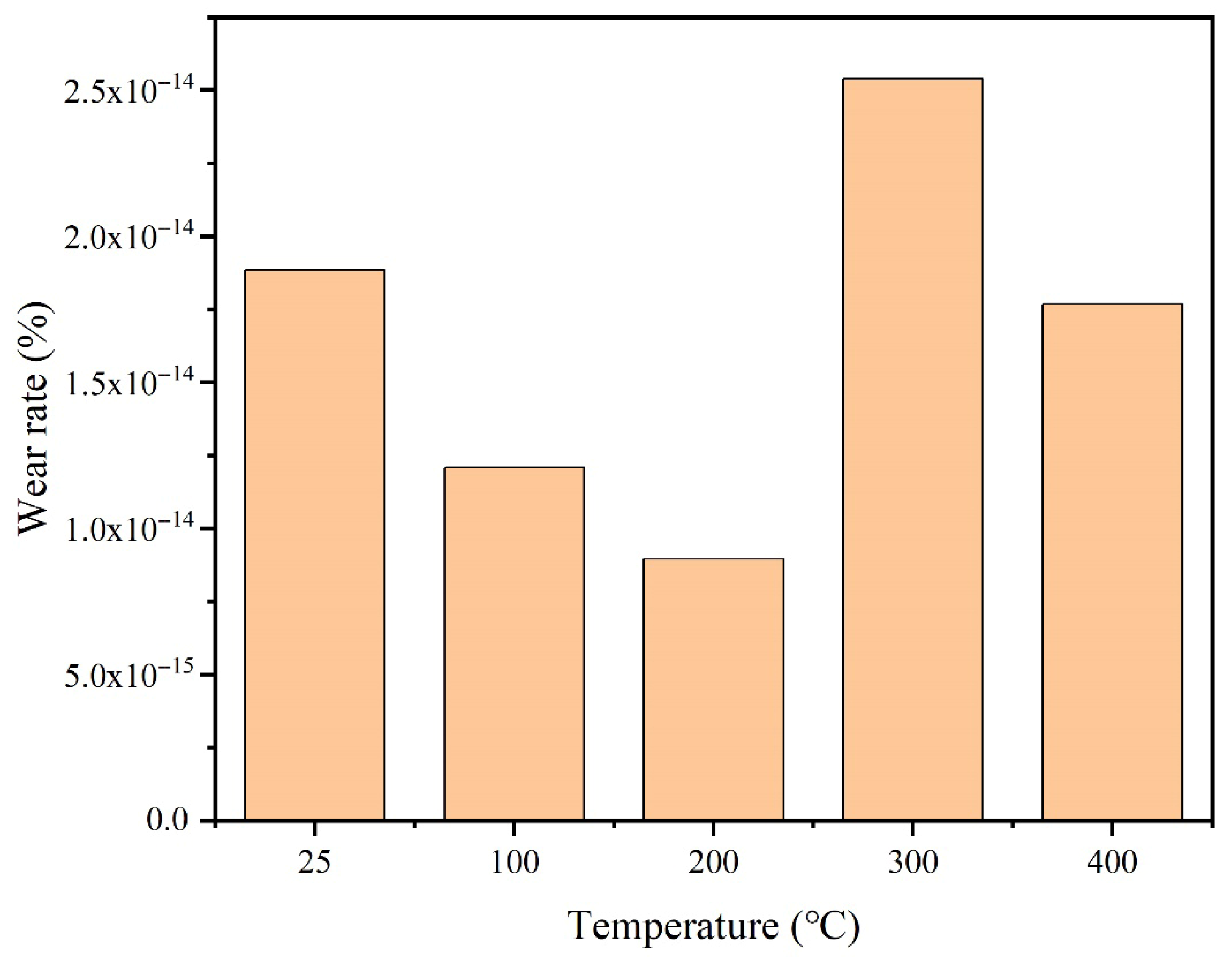
The wear rate of the sample in the temperature ranges from R.T. to 400 °C was calculated and is shown in Figure 11. The wear rate gradually decreased from 1.88 × 10⁻¹⁴ m3/Nm (R.T.) to 0.89 × 10⁻¹⁴ m3/Nm (200 °C), a reduction of more than 50%. At 300 °C, it rapidly increased again to 2.54 × 10⁻¹⁴ m3/Nm and then slightly decreased to 1.77 × 10⁻¹⁴ m3/Nm at 400 °C. The variation pattern of the wear rate was consistent with the change in the friction coefficient with temperature.
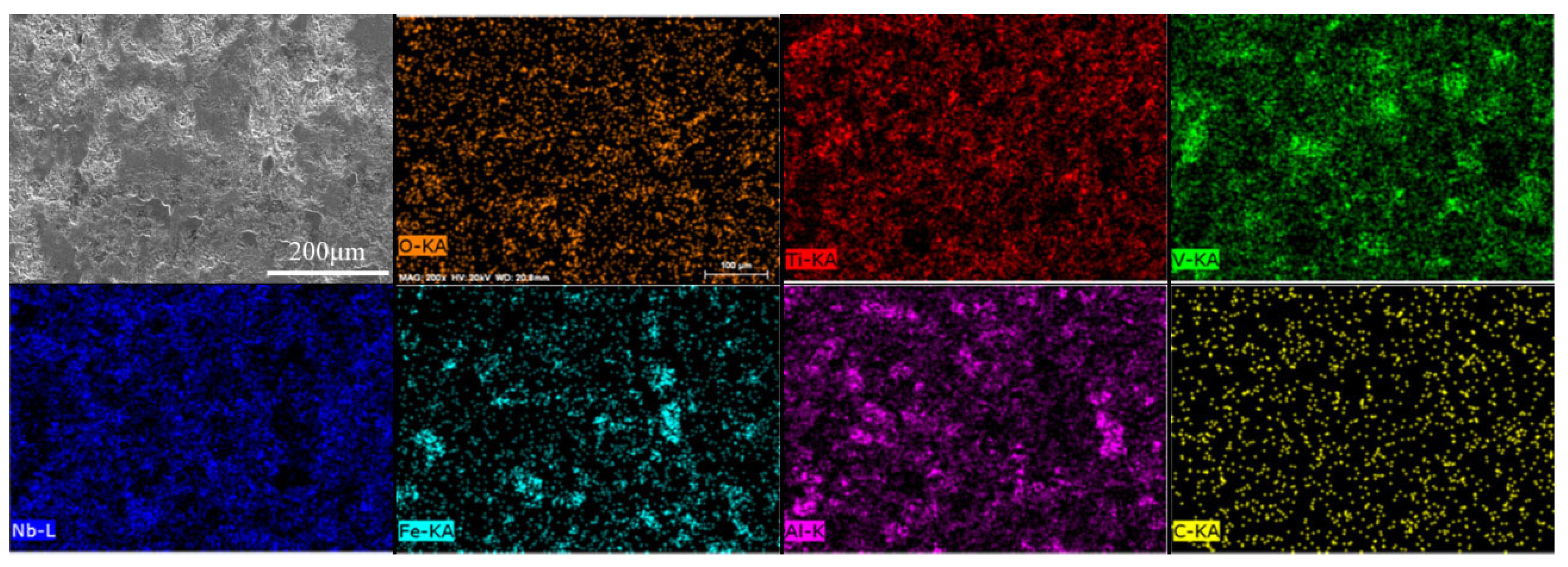
Figure 12 shows the elemental distribution in the worn region at 200 °C. Fe enrichment could be detected in the micro-protruding areas, indicating adhesive wear and material transferred from the steel ball to (TiVNb)2AlC. The overlapping colors of the O element with Ti, V, and Nb confirmed the formation of a continuous coverage layer, which can provide relatively stable lubrication [54].
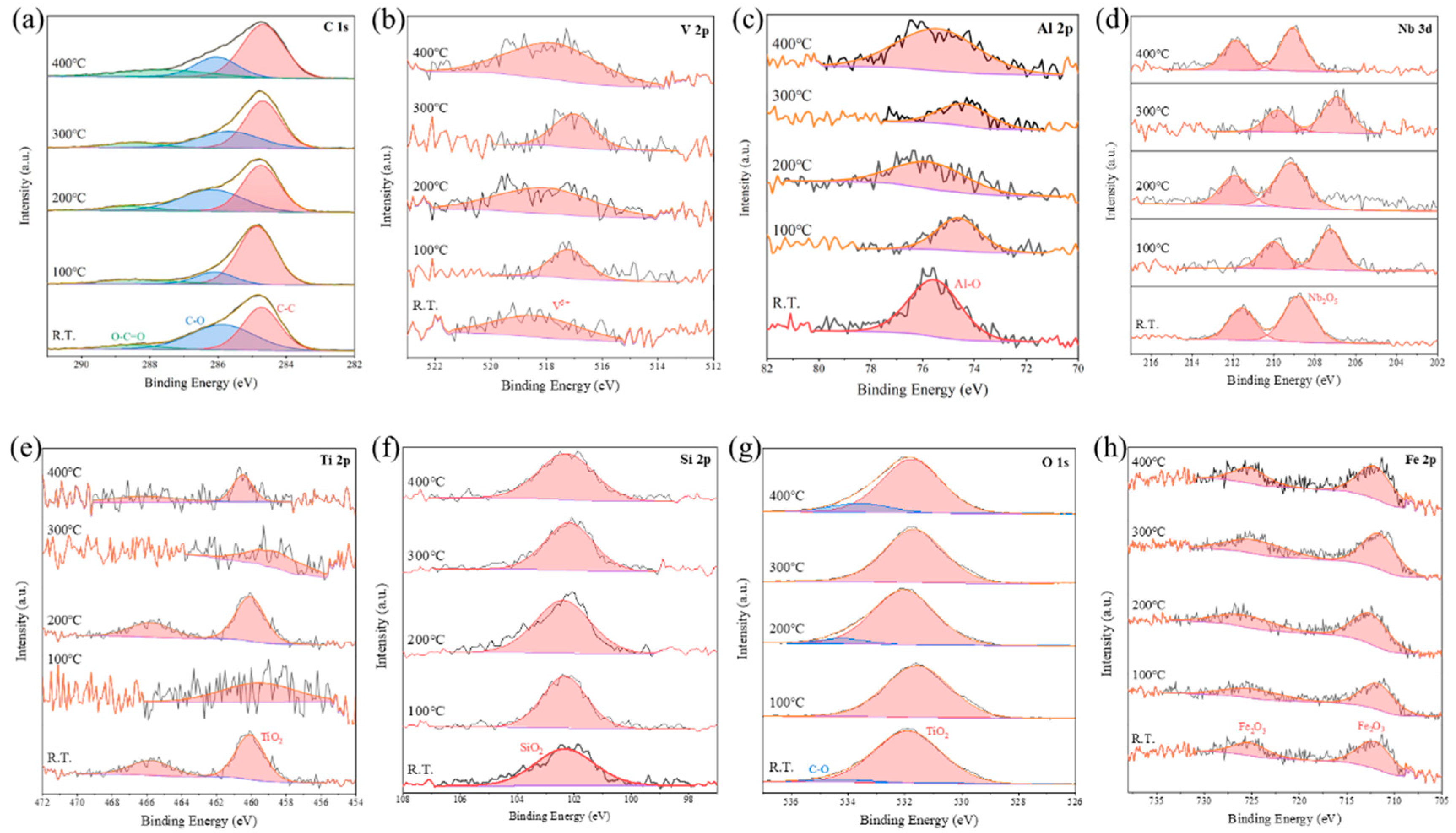
The core electron energy levels of C 1s at different temperatures are shown in Figure 13a. The deconvolution peak at 282.7 eV corresponded to carbon–metal (C-M) bonding, while the deconvolution peaks at 284.8 eV and 286.3 eV were attributed to C-H and C-O bonds, respectively. The V 2p peak was located at ~518 eV (see Figure 13b), and the peak fitting indicated it belonged to V5+ (V2O5), suggesting the formation of high-valence vanadium oxide during oxidation. The Al 2p orbital spectrum generated a deconvolution peak between 74 eV and 76 eV (Figure 13c), which was attributed to Al-O bonds. The peak fitting of the Nb 3d orbital showed peaks at ~206–207 eV (Figure 13d, Nb5+, Nb2O5), indicating the formation of niobium oxide during oxidation, which may have enhanced the stability of the oxide layer. The Ti peak was located at ~458.5 eV (Figure 13e), corresponding to Ti4+, i.e., TiO2, indicating that titanium oxide became dominant at high temperatures, synergistically protecting the substrate with Al2O3.
Table 4 presents the friction performance of (TiVNb)2AlC and the corresponding three ternary MAX phase materials. It can be observed that, under similar testing conditions, (TiVNb)2AlC exhibits a relatively low wear rate with a more stable trend. This phenomenon can be attributed to several factors:
The formation energy of MAX phase materials decreases as the number of transition metal elements increases, and the formation energy of (TiVNb)2AlC is significantly lower than that of the corresponding ternary MAX phases, indicating enhanced thermodynamic stability [55]. Meanwhile, the solid solution of three different atoms at the M sites induces lattice distortion, which hinders dislocation motion and multiplication. During friction, material deformation and delamination require dislocation activity for coordination. Therefore, the more difficult it is for dislocations to move, the more resistant the material is to wear, resulting in a lower wear rate, which is consistent with the high hardness of (TiVNb)2AlC. Furthermore, the complex and disordered chemical environment slows down the surface oxidation rate, leading to the formation of a thinner and more stable protective mixed oxide film. In contrast, excessively thick and unstable oxide films tend to spall off and act as abrasives, thereby exacerbating wear.
Table 4. Approximate wear rate ranges for different materials.
Properties(TiVNb)2AlC
(This Paper)
Ti2AlC [56]V2AlC [57](W-Alloys)-Nb2AlC-Sn [58]
Wear ratess (m3/Nm)0.89 × 10−14–2.54 × 10−1410−14–5.5 × 10−1310−16–2.07 × 10−132.51 × 10⁻¹³–6.49 × 10⁻¹³
The counterBearing steelInc718Al2O3Si3N4
Temperature (°C)R.T.–400R.T.–550R.T.–800R.T.
Linear velocity (m/s)0.110.010.1–0.2
Load (N)4310

4. Conclusions

In this study, medium-entropy (TiVNb)2AlC MAX phase materials were successfully synthesized, and their synthesis methods, reaction processes, and mechanical properties were systematically investigated. The optimum conditions for the preparation of high-purity (TiVNb)2AlC were determined by controlling the sintering process. The main conclusions are as follows:
The highest purity M2AlC phase with a mass fraction of 95.8% could be obtained with the raw material ratio M(Ti:V:Nb):Al:C = 2:1.2:0.7 and a sintering temperature of 1450 °C. Excess carbon (>0.7 mol) or elevated temperatures (>1450 °C) promoted carbide formation and degraded MAX phase purity.
The reaction proceeded through two stages: Stage I (750–1150 °C)—the formation of intermetallic compounds (IMCs) (e.g., TiAl3, V3Al, Nb2Al) dominated as molten Al preferentially reacted with transition metals. Stage II (1250–1450 °C)—IMCs reacted with carbon to form (TiVNb)2AlC, while partial decomposition into MC carbides occurred above 1450 °C due to aluminum depletion [59].
The results of mechanical property tests showed that the medium-entropy (TiVNb)2AlC material exhibits excellent performance in terms of hardness, with a Vickers hardness of 6.52 GPa, which was significantly higher than the theoretical prediction of the law of mixing and the hardness of the conventional single MAX phases (e.g., Ti2AlC, V2AlC, and Nb2AlC).
Friction tests against bearing steel revealed distinct regimes: at 25–100 °C, the COF decreases from 0.65 to 0.56 due to nascent oxide film formation, competing with adhesion-induced fluctuations; at 200 °C a minimum COF (0.39) was achieved with reduced fluctuations, attributed to discontinuous lubricating oxide films suppressing adhesive wear; and at 200–400 °C, the COF sharply increased (>0.60), with severe fluctuations caused by material softening, adhesive welding, and brittle oxide layer spallation inducing three-body abrasion.

Author Contributions

Conceptualization, L.C.; methodology, L.C.; software, L.C.; validation, Y.C.; formal analysis, Z.S.; investigation, Z.S.; resources, Z.S.; data curation, Z.S.; writing—original draft preparation, L.C.; writing—review and editing, Y.C.; visualization, Z.S.; supervision, Z.S.; project administration, M.B.; funding acquisition, M.B. All authors have read and agreed to the published version of the manuscript.

Funding

This research was funded by the High Technology and Key Development Project of Ningbo, China (grant number No. 2022Z012 and No. 2024Z103) and Scientific Research Project Funded by Ningbo University of Technology (grant number No. 2022KQ53).

Data Availability Statement

The original contributions presented in the study are included in the article, further inquiries can be directed to the corresponding authors.

Conflicts of Interest

The authors declare no conflicts of interest.

References

  1. Yeh, J.W.; Chen, S.K.; Lin, S.J.; Gan, J.Y.; Chin, T.S.; Shun, T.T.; Tsau, C.H.; Chang, S.Y. Nanostructured High-Entropy Alloys with Multiple Principal Elements: Novel Alloy Design Concepts and Outcomes. Adv. Eng. Mater. 2004, 6, 299–303. [Google Scholar] [CrossRef]
  2. Xiang, H.; Xing, Y.; Dai, F.-Z.; Wang, H.; Su, L.; Miao, L.; Zhang, G.; Wang, Y.; Qi, X.; Yao, L.; et al. High-entropy ceramics: Present status, challenges, and a look forward. J. Adv. Ceram. 2021, 10, 385–441. [Google Scholar] [CrossRef]
  3. Zhang, X.; Shen, Z.Y.; Jian, N.; Yao, J.H.; Gao, M.X.; Pan, H.G.; Liu, Y.F. Synthesis and Catalytic Effects of Solid-Solution MAX-phase (Ti0.5V0.5)3AlC2 on Hydrogen Storage Performance of MgH2. Chin. J. Inorg. Chem. 2019, 35, 101–108. [Google Scholar]
  4. Dahlqvist, M.; Rosen, J. The Rise of MAX Phase Alloys—Large-Scale Theoretical Screening for the Prediction of Chemical Order and Disorder. Nanoscale 2022, 14, 10958–10971. [Google Scholar] [CrossRef]
  5. Li, Y.; Pan, D.; Cao, J.; Fang, W.; Bao, Y.; Liu, B. Recent advances in high-entropy ceramics: Design principles, structural characteristics, and emerging properties. Extrem. Mater. 2025, 1, 42–72. [Google Scholar] [CrossRef]
  6. Zhang, W.; Li, S.; Fan, S.; Zhang, X.; Fan, X.; Bei, G. Ti3AlC2−yNy carbonitride MAX phase solid solutions with tunable mechanical, thermal, and electrical properties. J. Adv. Ceram. 2024, 13, 1473–1481. [Google Scholar] [CrossRef]
  7. Xiong, W.; Guo, A.X.Y.; Zhan, S.; Liu, C.-T.; Cao, S.C. Refractory high-entropy alloys: A focused review of preparation methods and properties. J. Mater. Sci. Technol. 2023, 142, 196–215. [Google Scholar] [CrossRef]
  8. Zhang, H.L.; Cai, D.D.; Sun, X.; Huang, H.; Lu, S.; Wang, Y.Z.; Hu, Q.M.; Vitos, L.; Ding, X.D. Solid solution strengthening of high-entropy alloys from first-principles study. J. Mater. Sci. Technol. 2022, 121, 105–116. [Google Scholar] [CrossRef]
  9. Huang, Q.; Wang, C.; Zhao, S.; Han, M.; Sun, Z.; Zhang, P.; Huang, Z.; Zhang, Y.; Wang, J.; Sun, Z.; et al. Progress in Structural Tailoring and Properties of Ternary Layered Ceramics. J. Inorg. Mater. 2023, 38, 845–884. [Google Scholar] [CrossRef]
  10. Zhou, A.; Liu, Y.; Li, S.; Wang, X.; Ying, G.; Xia, Q.; Zhang, P. From structural ceramics to 2D materials with multi-applications: A review on the development from MAX phases to MXenes. J. Adv. Ceram. 2021, 10, 1194–1242. [Google Scholar] [CrossRef]
  11. Barsoum, M.W.; El-Raghy, T. The MAX Phases: Unique New Carbide and Nitride Materials. Am. Sci. 2001, 89, 334. [Google Scholar] [CrossRef]
  12. Barsoum, M.W.; El-Raghy, T. Synthesis and Characterization of a Remarkable Ceramic: Ti3SiC2. J. Am. Ceram. Soc. 1996, 79, 1953–1956. [Google Scholar] [CrossRef]
  13. Perevislov, S.N.; Sokolova, T.V.; Stolyarova, V.L. The Ti3SiC2 max phases as promising materials for high temperature applications: Formation under various synthesis conditions. Mater. Chem. Phys. 2021, 267, 124625. [Google Scholar] [CrossRef]
  14. Shamsipoor, A.; Farvizi, M.; Razavi, M.; Keyvani, A.; Mousavi, B.; Pan, W. Hot corrosion behavior of Cr2AlC MAX phase and CoNiCrAlY compounds at 950 °C in presence of Na2SO4+V2O5 molten salts. Ceram. Int. 2021, 47, 2347–2357. [Google Scholar] [CrossRef]
  15. Radovic, M.; Barsoum, M. MAX Phases: Bridging the gap Between Metals and Ceramics. Am. Ceram. Soc. Bull. 2013, 92, 20–27. [Google Scholar]
  16. Hu, W.; Huang, Z.; Wang, Y.; Li, X.; Zhai, H.; Zhou, Y.; Chen, L. Layered ternary MAX phases and their MX particulate derivative reinforced metal matrix composite: A review. J. Alloys Compd. 2021, 856, 157313. [Google Scholar] [CrossRef]
  17. Sun, Z.M. Progress in research and development on MAX phases: A family of layered ternary compounds. Int. Mater. Rev. 2013, 56, 143–166. [Google Scholar] [CrossRef]
  18. Zhang, Z.; Duan, X.; Jia, D.; Zhou, Y.; van der Zwaag, S. On the formation mechanisms and properties of MAX phases: A review. J. Eur. Ceram. Soc. 2021, 41, 3851–3878. [Google Scholar] [CrossRef]
  19. Ma, G.; Zhang, A.; Wang, Z.; Wang, K.; Zhang, J.; Xu, K.; Xu, Y.; Zhou, S. MAX phase coatings: Synthesis, protective performance, and functional characteristics. Mater. Horiz. 2025, 12, 1689–1710. [Google Scholar] [CrossRef]
  20. Li, M.; Huang, Q. Recent Progress and Prospects of Ternary Layered Carbides/Nitrides MAX Phases and Their Derived Two-Dimensional Nanolaminates MXenes. J. Inorg. Mater. 2020, 35, 1–7. [Google Scholar]
  21. Radovic, M. Elastic and Mechanical Properties of the MAX Phases. Annu. Rev. Mater. Res. 2011, 41, 195–227. [Google Scholar] [CrossRef]
  22. Li, Y.; Lu, J.; Li, M.; Chang, K.; Zha, X.; Zhang, Y.; Chen, K.; Persson, P.O.A.; Hultman, L.; Eklund, P. Multielemental single-atom-thick A layers in nanolaminated V2(Sn, A)C (A = Fe, Co, Ni, Mn) for tailoring magnetic properties. Proc. Natl. Acad. Sci. USA 2019, 117, 820–825. [Google Scholar] [CrossRef]
  23. Chen, Z.; Chong, H.; Sun, S.; Yang, J.; Yao, G.; Wang, Q.; Zhu, J.; Yang, S.; Cui, W. Synthesis and characterizations of solid-solution i-MAX phase (W1/3Mo1/3R1/3)2AlC (R = Gd, Tb, Dy, Ho, Er and Y) and derivated i-MXene with improved electrochemical properties. Scr. Mater. 2022, 213, 114596. [Google Scholar] [CrossRef]
  24. Dong, N.; Zhang, C.; Liu, H.; Fan, G.; Fang, X.; Han, P. Effects of different alloying additives X (X = Si, Al, V, Ti, Mo, W, Nb, Y) on the adhesive behavior of Fe/Cr2O3 interfaces: A first-principles study. Comput. Mater. Sci. 2015, 109, 293–299. [Google Scholar] [CrossRef]
  25. Li, M.; Lu, J.; Luo, K.; Li, Y.; Chang, K.; Chen, K.; Zhou, J.; Rosen, J.; Hultman, L.; Eklund, P. Element Replacement Approach by Reaction with Lewis Acidic Molten Salts to Synthesize Nanolaminated MAX Phases and MXenes. J. Am. Chem. Soc. 2019, 141, 4730–4737. [Google Scholar] [CrossRef] [PubMed]
  26. Anasori, B.; Luhatskaya, M.R.; Gogotsi, Y. 2D metal carbides and nitrides (MXenes) for energy storage. Nat. Rev. Mater. 2017, 2, 16098. [Google Scholar] [CrossRef]
  27. Wang, J.; Zhou, Y. Recent Progress in Theoretical Prediction, Preparation, and Characterization of Layered Ternary Transition-Metal Carbides. Annu. Rev. Mater. Res. 2009, 39, 415–443. [Google Scholar] [CrossRef]
  28. Magnuson, M.; Wilhelmsson, O.; Palmquist, J.P.; Jansson, U.; Mattesini, M.; Li, S.; Ahuja, R.; Eriksson, O. Electronic structure and chemical bonding in Ti2AlC investigated by soft x-ray emission spectroscopy. Phys. Rev. 2011, 74, 195108. [Google Scholar] [CrossRef]
  29. Li, M.; Gao, H.; Wang, X.; Hu, F.; Ji, J. High entropy six-component solid solution (Ti0.5Nb0.15Zr0.1Mo0.1Ta0.1W0.05)2AlC: A novel synthesis approach and its mechanical properties. Ceram. Int. 2023, 49 Pt B, 39719–39723. [Google Scholar] [CrossRef]
  30. Tan, Y.; Xia, Y.; Teng, Z.; Chen, C.; Zhou, X.; Zhang, H. Synthesis and enhanced mechanical properties of compositionally complex MAX phase. J. Eur. Ceram. Soc. 2021, 41, 4658–4665. [Google Scholar] [CrossRef]
  31. Bo, L.; Liu, X.; Wang, D. The corrosion behavior of multicomponent porous MAX phase (Ti0.25Zr0.25Nb0.25Ta0.25)2AlC in hydrochloric acid. Corros. Sci. 2023, 222, 111430. [Google Scholar] [CrossRef]
  32. Du, C.-F.; Xue, Y.; Wang, C.; Zeng, Q.; Wang, J.; Wang, X.; Xue, L.; Yu, H. Synthesis of a high-entropy (TiVCrMo)3AlC2 MAX and its tribological properties in a wide temperature range. J. Eur. Ceram. Soc. 2023, 43, 4684–4695. [Google Scholar] [CrossRef]
  33. Khan, M.U.; Soomro, S.A.; Jahanger, M.I.; Zhou, Y.; Chu, L.; Feng, Q.; Hu, C. Factors influencing synthesis and properties of MAX phases. Sci. China Mater. 2024, 67, 3427–3455. [Google Scholar] [CrossRef]
  34. Ge, Z.; Chen, K.; Guo, J.; Zhou, H.; Ferreira, J.M.F. Combustion synthesis of ternary carbide Ti3AlC2 in Ti–Al–C system. J. Eur. Ceram. Soc. 2003, 23, 567–574. [Google Scholar] [CrossRef]
  35. Hu, C.; Zhang, J.; Bao, Y.; Wang, J.; Zhou, Y. In-situ reaction synthesis and decomposition of Ta2AlC. Int. J. Mater. Res. 2008, 99, 8–13. [Google Scholar] [CrossRef]
  36. Yuan, J.; Wang, Z.; Ma, G.; Bai, X.; Li, Y.; Cheng, X.; Ke, P.; Wang, A. MAX phase forming mechanism of M–Al–C (M = Ti, V, Cr) coatings: In-situ X-ray diffraction and first-principle calculations. J. Mater. Sci. Technol. 2023, 143, 140–152. [Google Scholar] [CrossRef]
  37. Sijuade, A.A.; Bellevu, F.L.; Singh, S.K.D.; Rahman, M.M.; Arnett, N.; Okoli, O.I. Processing of V2AlC MAX phase: Optimization of sintering temperature and composition. Ceram. Int. 2024, 50 Pt B, 3733–3738. [Google Scholar] [CrossRef]
  38. Wang, B.; Zhou, A.; Hu, Q.; Wang, L. Synthesis and oxidation resistance of V2AlC powders by molten salt method. Int. J. Appl. Ceram. Technol. 2017, 14, 873–879. [Google Scholar] [CrossRef]
  39. Zhang, W.; Travitzky, N.; Hu, C.; Zhou, Y.; Greil, P. Reactive Hot Pressing and Properties of Nb2AlC. J. Am. Ceram. Soc. 2009, 92, 2396–2399. [Google Scholar] [CrossRef]
  40. Bo, L.; Zu, L.; Liu, X.; Wang, D. A multicomponent porous MAX phase (Ti0.25Zr0.25Nb0.25Ta0.25)2AlC: Reaction process, microstructure and pore formation mechanism. Ceram. Int. 2023, 49, 2167–2173. [Google Scholar] [CrossRef]
  41. Lóh, N.J.; Simão, L.; Faller, C.A.; De Noni, A.; Montedo, O.R.K. A review of two-step sintering for ceramics. Ceram. Int. 2016, 42, 12556–12572. [Google Scholar] [CrossRef]
  42. Eklund, P.; Beckers, M.; Jansson, U.; Högberg, H.; Hultman, L. The Mn+1AXn phases: Materials science and thin-film processing. Thin Solid Film. 2010, 518, 1851–1878. [Google Scholar] [CrossRef]
  43. Bingchu, M.; Xuewen, X.U.; Jiaoqun, Z.; Ing, L.J. Fabrication and microstructure of Ti3AlC2. J. Chin. Ceram. Soc. 2004, 32, 897–900. [Google Scholar]
  44. Ji, J.; Wei, Y.; Ji, Y.; Zhang, Z.; Shi, G.; Li, Q.; Li, D.; Wang, Z. Synthesis and strengthening mechanism of (Ti0.9Nb0.03Ta0.03W0.03)3SiC2/Al2O3 composite ceramics by doping NbC, TaC and WC powders. Vacuum 2023, 215, 112346. [Google Scholar] [CrossRef]
  45. Zakeri-Shahroudi, F.; Ghasemi, B.; Abdolahpour, H. Sintering behavior of Cr2AlC MAX phase synthesized by Spark plasma sintering. Int. J. Appl. Ceram. Technol. 2022, 19, 1309–1318. [Google Scholar] [CrossRef]
  46. Song, X.; Cui, H.; Han, Y.; Hou, N.; Wei, N.; Ding, L.; Song, Q. Effect of carbon reactant on microstructures and mechanical properties of TiAl/Ti2AlC composites. Mater. Sci. Eng. A. 2017, 684, 406–412. [Google Scholar] [CrossRef]
  47. Wang, H.; Yang, P.Y.; Zhao, W.J.; Ma, S.H.; Hou, J.H.; He, Q.F.; Wu, C.L.; Chen, H.A.; Wang, Q.; Cheng, Q.; et al. Lattice distortion enabling enhanced strength and plasticity in high entropy intermetallic alloy. Nat. Commun. 2024, 15, 6782. [Google Scholar] [CrossRef]
  48. Thirathipviwat, P.; Sato, S.; Song, G.; Bednarcik, J.; Nielsch, K.; Jung, J.; Han, J. A role of atomic size misfit in lattice distortion and solid solution strengthening of TiNbHfTaZr high entropy alloy system. Scr. Mater. 2022, 210, 114470. [Google Scholar] [CrossRef]
  49. Hu, Y.Y.; Wang, X.T.; Ma, Y.J.; Chen, J.L.; Zhao, X.J.; Cheng, J.; Xu, T.R.; Zhao, W.L.; Song, X.Y.; Wu, S.; et al. Strong solid solution strengthening caused by severe lattice distortion in body-centered cubic refractory high-entropy alloys. Scr. Mater. 2025, 263, 116671. [Google Scholar] [CrossRef]
  50. Zhou, Y.C.; Meng, F.L.; Wang, J.Y. Strengthening of Ti2AlC by substituting Ti with V. Scr. Mater. 2005, 53, 1369–1372. [Google Scholar]
  51. Hu, C.; He, L.; Liu, M.; Wang, X.; Wang, J.; Li, M.; Bao, Y.; Zhou, Y. In Situ Reaction Synthesis and Mechanical Properties of V2AlC. J. Am. Ceram. Soc. 2008, 91, 4029–4035. [Google Scholar] [CrossRef]
  52. Zhou, W.; Li, K.; Zhu, J.; Tian, S. Rapid synthesis of highly pure Nb2AlC using the spark plasma sintering technique. J. Phys. Chem. Solids 2018, 120, 218–222. [Google Scholar] [CrossRef]
  53. Li, S.; Wang, Z.; Cao, Z.; Liu, L.; Wang, Y. Characteristics of tribo-oxidation surface evolution in molybdenum−tungsten−vanadium hot-work die steel. J. Mech. Sci. Technol. 2024, 38, 4097–4104. [Google Scholar] [CrossRef]
  54. Guo, C.; Duan, X.; Fang, Z.; Zhao, Y.; Yang, T.; Wang, E.; Hou, X. A new strategy for long-term complex oxidation of MAX phases: Database generation and oxidation kinetic model establishment with aid of machine learning. Acta Mater. 2022, 241, 118378. [Google Scholar] [CrossRef]
  55. Das, P.; Dong, Y.; Wu, X.; Zhu, Y.; Wu, Z.-S. Perspective on high entropy MXenes for energy storage and catalysis. Sci. Bull. 2023, 68, 1735–1739. [Google Scholar] [CrossRef] [PubMed]
  56. Gupta, S.; Filimonov, D.; Zaitsev, V.; Palanisamy, T.; Barsoum, M.W. Ambient and 550 °C tribological behavior of select MAX phases against Ni-based superalloys. Wear 2008, 264, 270–278. [Google Scholar] [CrossRef]
  57. Wang, Z.; Li, X.; Zhou, J.; Liu, P.; Huang, Q.; Ke, P.; Wang, A. Microstructure evolution of V−Al–−C coatings synthesized from a V2AlC compound target after vacuum annealing treatment. J. Alloys Compd. 2016, 661, 476–482. [Google Scholar] [CrossRef]
  58. Zhang, T.; Zhang, F.; Yin, X.; Han, W.; Zhang, C.; Chen, H.; Xiong, B.; Yang, K.; Hao, Y. Important explorations of the sliding tribological performances of micro/nano−structural interfaces: Cross−shaped microconcave and the nanoNb2AlC−Sn. Eng. Fail. Anal. 2022, 142, 106738. [Google Scholar] [CrossRef]
  59. Guo, M.; Cao, G.; Pan, H.; Guo, J.; Chen, C.; Zhang, B.; Hu, J. Recent progress in synthesis of MAX phases and oxidation & corrosion mechanism: A review. Mater. Res. Lett. 2024, 12, 765–796. [Google Scholar] [CrossRef]
Figure 1. The typical crystal structure of MAX phases (take M2AC for example).
Crystals 15 00903 g001
Figure 2. XRD patterns of sintered products at different ratios.
Crystals 15 00903 g002
Figure 3. Mass fraction of M2AlC in sintered products with different ratios.
Crystals 15 00903 g003
Figure 4. XRD patterns of sintered products at different sintering temperatures.
Crystals 15 00903 g004
Figure 5. Mass fraction of M2AlC in sintered products at different temperatures.
Crystals 15 00903 g005
Figure 6. XRD patterns of phase compositions at various sintering temperatures for raw materials ratios of M:Al:C = 2:1.2:0.7.
Crystals 15 00903 g006
Figure 7. SEM image and the corresponding EDS mapping of sintered products at (a) 850 °C, (b) 1150 °C, (c) 1250 °C, (d) 1350 °C, and (e) 1450 °C.
Crystals 15 00903 g007
Figure 8. The curve of the samples’ COF varying with time at different temperatures.
Crystals 15 00903 g008
Figure 9. Average COF of samples at different temperatures.
Crystals 15 00903 g009
Figure 10. The microscopic morphology of the wear tracks on the sample surface after friction at different temperatures for different magnifications.
Crystals 15 00903 g010
Figure 11. Wear rate of samples at different temperatures.
Crystals 15 00903 g011
Figure 12. EDS image of the wear scar at 200 °C.
Crystals 15 00903 g012
Figure 13. XPS spectra of (a) C 1s, (b) V 2p, (c) Al 2p, (d) Nb 3d, (e) Ti 2p, (f) Si 2p, (g) O 1s, and (h) Fe 2p after friction at different temperatures.
Crystals 15 00903 g013
Table 1. Summary of phase compositions at various sintering temperatures for raw material ratios of M:Al:C = 2:1.2:0.7.
Temperature/°CPhase Composition
R.T.Ti, V, Nb, Al, C
750Ti, V, Nb, C, V3Al, TiAl3
850V, Nb, C, V3Al, TiAl3, TiAl2, TiAl, NbAl3, Ti3Al
950V, Nb, C, V3Al, TiAl3, TiAl, NbAl3, Ti3Al
1050Nb, C, TiAl, Nb2Al, NbAl3, V3Al, Ti3Al
1150Nb, C, TiAl, Nb2Al, V3Al, Ti3Al
1250C, NbAl3, TiAl, Nb2Al, MC, M2AlC,
1350Nb2Al, MC, M2AlC,
1450MC, M2AlC
1550MC, M2AlC
Table 2. EDS analysis of (TiVNb)2AlC powder sintered at 1450 °C with a ratio of M:Al:C = 2:1.2:0.7.
Temperature/°CPercentage of Elements/%
TiVNbAlCTotal
145017.0215.8415.8625.1826.10100.00
Disclaimer/Publisher’s Note: The statements, opinions and data contained in all publications are solely those of the individual author(s) and contributor(s) and not of MDPI and/or the editor(s). MDPI and/or the editor(s) disclaim responsibility for any injury to people or property resulting from any ideas, methods, instructions or products referred to in the content.