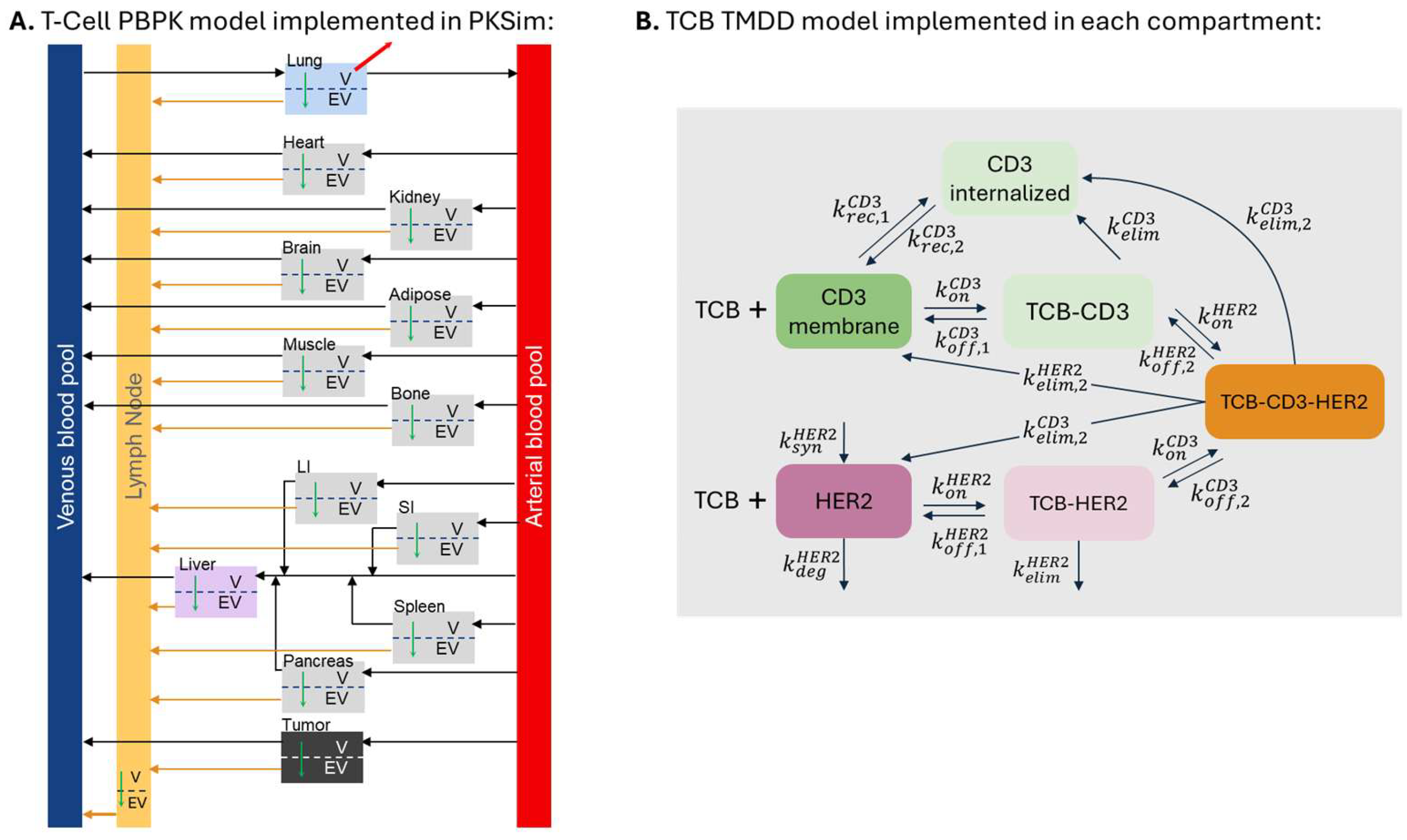
Correction: Susilo et al. Whole-Body Physiologically Based Pharmacokinetic Modeling Framework for Tissue Target Engagement of CD3 Bispecific Antibodies. Pharmaceutics 2025, 17, 500

 , ,
, , Reference
- Susilo, M.E.; Schaller, S.; Jiménez-Franco, L.D.; Kulesza, A.; de Witte, W.E.A.; Chen, S.-C.; Boswell, C.A.; Mandikian, D.; Li, C.-C. Whole-Body Physiologically Based Pharmacokinetic Modeling Framework for Tissue Target Engagement of CD3 Bispecific Antibodies. Pharmaceutics 2025, 17, 500. [Google Scholar] [CrossRef] [PubMed]

Disclaimer/Publisher’s Note: The statements, opinions and data contained in all publications are solely those of the individual author(s) and contributor(s) and not of MDPI and/or the editor(s). MDPI and/or the editor(s) disclaim responsibility for any injury to people or property resulting from any ideas, methods, instructions or products referred to in the content. |
© 2025 by the authors. Licensee MDPI, Basel, Switzerland. This article is an open access article distributed under the terms and conditions of the Creative Commons Attribution (CC BY) license.
Share and Cite
Susilo, M.E.; Schaller, S.; Jiménez-Franco, L.D.; Kulesza, A.; de Witte, W.E.A.; Chen, S.-C.; Boswell, C.A.; Mandikian, D.; Li, C.-C. Correction: Susilo et al. Whole-Body Physiologically Based Pharmacokinetic Modeling Framework for Tissue Target Engagement of CD3 Bispecific Antibodies. Pharmaceutics 2025, 17, 500. Pharmaceutics 2026, 18, 12. https://doi.org/10.3390/pharmaceutics18010012
Susilo ME, Schaller S, Jiménez-Franco LD, Kulesza A, de Witte WEA, Chen S-C, Boswell CA, Mandikian D, Li C-C. Correction: Susilo et al. Whole-Body Physiologically Based Pharmacokinetic Modeling Framework for Tissue Target Engagement of CD3 Bispecific Antibodies. Pharmaceutics 2025, 17, 500. Pharmaceutics. 2026; 18(1):12. https://doi.org/10.3390/pharmaceutics18010012
Chicago/Turabian StyleSusilo, Monica E., Stephan Schaller, Luis David Jiménez-Franco, Alexander Kulesza, Wilhelmus E. A. de Witte, Shang-Chiung Chen, C. Andrew Boswell, Danielle Mandikian, and Chi-Chung Li. 2026. "Correction: Susilo et al. Whole-Body Physiologically Based Pharmacokinetic Modeling Framework for Tissue Target Engagement of CD3 Bispecific Antibodies. Pharmaceutics 2025, 17, 500" Pharmaceutics 18, no. 1: 12. https://doi.org/10.3390/pharmaceutics18010012
APA StyleSusilo, M. E., Schaller, S., Jiménez-Franco, L. D., Kulesza, A., de Witte, W. E. A., Chen, S.-C., Boswell, C. A., Mandikian, D., & Li, C.-C. (2026). Correction: Susilo et al. Whole-Body Physiologically Based Pharmacokinetic Modeling Framework for Tissue Target Engagement of CD3 Bispecific Antibodies. Pharmaceutics 2025, 17, 500. Pharmaceutics, 18(1), 12. https://doi.org/10.3390/pharmaceutics18010012