


Abstract
The chief financial officer (CFO) is a crucial executive position in an organisation, responsible for overseeing the financial operations and strategy of the company. Despite rising interest among academics and practitioners, the literature corpus on CFO research remains largely fragmented, which warrants the unpacking of the underlying intellectual knowledge structure of the domain. In response, this study aims to provide a concise overview of the trends and science relating to CFO research, comprehend potential gaps in the literature, and highlight crucial future research pathways. A quantitative bibliometric overview of 669 research articles from 1982 to 2022 provides a spectrum of intellectual clout that helps decipher performance trends and delineates six significant clusters of knowledge in CFO research. We selectively discuss the empirical findings and theoretical and conceptual advancements within each cluster. This study offers recommendations for future research, emphasising the growing role of CFOs in leadership and addressing the fragmentation in current research. The findings and contributions of this study could further elevate CFOs’ importance in the C-suite.
1. Introduction
The TMT (top management team) greatly influences any company’s growth trajectory (Boeker 1997). The term “top management team” (TMT) is commonly used to refer to the group of senior executives at a company’s strategic apex who are charged with setting and implementing the company’s overarching strategic direction and performance (Barker et al. 2001). Therefore, TMTs play a pivotal role as a crucial analytical unit in research into workplace dynamics (Ng et al. 2019). Myriad literature on TMT exists (Carpenter et al. 2004; Abatecola et al. 2013), with the majority of literature centred around chief executive officers (CEOs) (Yu 2023; Menz 2012). The most senior individual involved in the financial function of an organisation is the chief financial officer (CFO). CFOs are frequently held accountable “for managing all financial aspects of the organisation, including managing budgets, preparing financial statements, identifying financial risks and controls, and presenting financial information” (Malaysian Institute of Accountants 2016). Mian (2001) assiduously described the CFO in the context of US corporations. He added that the chief financial officer (CFO) is ultimately in charge of designing and implementing the company’s policy decisions apropos financial performance. Successful CEOs acknowledge that having a CFO who can assist in managing the difficulties in a firm is not just desirable but is a requisite (Favaro 2001). However, the academic research that has dominated for more than 40 years does not coincide with the practitioners’ perspective. Instead, the scholarly argument has supported that a CFO’s responsibility can vary over a wide range of operations. From traditional financial reporting (Uddin and Gillett 2002) to more sophisticated strategic decisions (Hennessy and Chemla 2022), such as innovation in accounting (Naranjo-Gil et al. 2009), value-based management (Burkert and Lueg 2013), and participation of women in leadership (Caselli and Di Giuli 2010), CFOs are becoming more prolific.
Lately, or not long ago, there has been an outpouring of research on CFOs and related topics. The first article (as per Scopus search results) on CFO, “A reasoned approach to hospital planning in an uncertain world”, was published in 1982 by Bruton (1982). The area has developed over the past four decades, and numerous sub-contexts and sub-areas have emerged. Most early CFO research articles concentrated on the functioning and advantages of having a CFO and how they affected a company’s success with adopting innovations. The research area has grown conceptually and methodologically throughout time, providing opportunities for profound knowledge of the CFO.
As the chief financial officer (CFO) role is crucial to businesses and the number of scholarly articles on the subject has been rising continuously, it is not astounding that researchers have begun integrating the existing body of information to shed light on CFOs. A systematic literature review method has been used in some studies, but it is not closely related to CFOs. For example, Peterson et al. (2003) explored how a CEO’s personality can affect the dynamics of the TMT, which can affect a firm’s financial performance. In addition, Papadakis and Barwise (2002) further elaborated on the impact of TMT characteristics on strategic decision-making processes. They discovered that CEOs and other TMT participants impact these processes in various ways. Additionally, a detailed review of CEO activism was conducted by Rumstadt and Kanbach (2022). Other areas of research include CEO duality and performance of the firm (Yu 2023), the relationship between CEO characteristics and incentives and CSR (Velte 2020), the impact of CEO on product innovation (Back and Bausch 2019), the CEO hubris and related constructs (Park and Yoo 2017), theories and examples of independent directors’ roles in Indian corporate law and governance (Bose 2009), review of the several TMT members’ functional roles (Menz 2012), CEO compensation determinants (Winschel and Stawinoga 2019), review on CEO characteristics (Altarawneh et al. 2020), the personality factor of TMT (Abatecola et al. 2013), and the board chair’s role (Banerjee et al. 2020).
To our limited knowledge, only three review articles that have synthesised research on CFOs exist in the literature. However, these studies are constrained in many different ways. In particular, Habib and Hossain (2013) reviewed the literature on the relationship between various CEO/CFO characteristics and qualities of accounting information. Due to the lack of a systematic approach, the review is not easily reproducible. Hiebl’s (2017) review covered only 17 papers and unpacked key perspectives of finance managers in family firms through the upper echelons’ theoretical lens. In addition, Uhde et al. (2017) reviewed extant research on board monitoring of the CFO. Their article, one of the most thorough assessments to date, was limited to a content analysis of 65 articles published in 26 journals. It unravelled the key roles, methods, a comprehensive model, and constructs of CFOs. Cumulatively, it seems that existing evaluations on CFOs are restricted to contextual (e.g., family business) insights gleaned from traditional review approaches (e.g., content analysis) with a relatively small review sample (e.g., up to 17 and 26 articles).
A circumstance like this is considered troublesome, as scholarly literature reviews are designed to serve as a roadmap for further investigation. When such reviews are too narrow in their focus and methodology, a new (better) review that fixes the existing problems and sets academics back on the correct track is necessary (Lim et al. 2021; Paul et al. 2021). The voids mentioned above inspired the present review to be initiated.
In this vein, this article identifies five significant ways the abovementioned reviews on CFOs might be improved. First, this article is the first attempt to conduct a bibliometrics analysis on CFO research. Second, the current review covers data up to 2022. Third, using performance analysis and publication trends, this review provides fresh perspectives on the foci mentioned above, illuminating previously unexplored corners of the academic CFO literature. Fourth, following Donthu et al.’s (2021a) suggestions, this review provides a holistic perspective of the CFO’s history, development, and outlook by bibliographic coupling and temporal analysis. Fifth and finally, by synthesising the topics that emerged during this analysis, we hope to provide a comprehensive overview of the themes that make up the CFO knowledge base to provide an apparent, concise synthesis of CFO-relevant research for future studies.
Conclusions that can lead to the development of new scholarships related to chief financial officers could be gleaned from a review of the scholarly literature on the topic and by comprehending the strategic and pre-emptive roles that CFOs play. Ruminating the strategic relevance of a CFO’s position, flanked by the significant number of manuscripts published, a review may also aid scholars in understanding CFO research without having to look through an extensive body of work (Donthu et al. 2021a).
This work may establish a focal point for the developing domain of CFO research, allowing academics to assess its significance and address potential future research topics by carefully examining relevant studies. This bibliometric variant of systematic review analyses the corpora of literature on CFO by identifying the most prolific contributors and constituents to delineate the leading trends and future trajectories of research.
To facilitate the reader’s understanding, the structure of this paper is organised as follows. Section 2 provides an overview of the theoretical background, discussing key frameworks and literature relevant to CFO research. Section 3 outlines the methodology, including the dataset and period under analysis and the statistical tools used for the study. Section 4 presents the main findings. Then, Section 5 presents a detailed discussion. Finally, Section 6 concludes the paper, offering insights into the implications of the findings for both academia and practitioners, along with limitations and suggestions for future research.
2. CFO Research: Background
The known literature corpus of CFO research dates back to 1982. The first paper, “A reasoned approach to hospital planning in an uncertain world”, by Bruton (1982), was a conceptual article that proposed an approach that would incorporate the chief financial officer of a hospital into the planning process. He suggested that hospitals create a comprehensive strategic plan by including input from all hospital management team members, including those in charge of the finances. After this, there was gradual progress in the trajectory of CFO research. Within our limited knowledge, we found no review article that sedulously talked about the CFO. A plethora of studies have assiduously explored CEO characteristics. For example, Yu (2023) meticulously evaluated empirical studies investigating the association between board leadership structure and firm performance. The results revealed mixed findings. Carpenter et al. (2004) worked on the upper echelons theory and projected future research direction. A systematic review of the determinants of CEO compensation by Winschel and Stawinoga (2019), the decision process of top management by Abatecola et al. (2013), the function of the board chair in the performance of the firm by Banerjee et al. (2020), the activism of CEO in a firm by Rumstadt and Kanbach (2022), the influence of CEO on the top management team by Peterson et al. (2003), and the interaction of TMT and CEO in the strategic decision-making process by Papadakis and Barwise (2002) entail the literature on CFOs. Other studies corroborate the impact of chief sustainability officers and CEOs on CSR (Velte and Stawinoga 2020; Velte 2020). Some articles found a positive relationship (Banker et al. 2011; Krishnan et al. 2011; Jiang et al. 2008), while others adjudicated the association between CFO and firm performance to be insignificant (Gavious et al. 2012; Liu et al. 2016). The manuscript of Datta and Iskandar-Datta (2014) relied on the theory of the upper echelon (Hambrick and Mason 1984) and reported that “strategic” CFOs with a top-notch MBA frequently demand higher overall remuneration. Accordingly, grounded on a framework of the upper echelon in tandem with double standards of competence theories (Foschi 1996), female leaders have been shown to significantly and positively impact firm performance (Chadwick and Dawson 2018). In addition, the CFO impact has been explored in different contexts. For example, Li and Zeng (2019) examined the effect of a female CFO on stock price, the association between a firm’s CFO and its cash-holding policies was investigated by Li and Zeng (2019), and the adoption of innovations in business was explored by Esteves (2009) and Naranjo-Gil et al. (2009). Research has also investigated how the passage of the Sarbanes–Oxley Act has impacted the CFO (Collins et al. 2009; Hermanson and Ye 2009; Li et al. 2010; Krishnan et al. 2011).
Further, extant research has identified the causes of CFO compensation (Hoitash et al. 2012; Datta and Iskandar-Datta 2014), outcomes of CFO compensation (Alali 2011), and the capriciousness of CFO compensation in Australia based on managerial power and the incentive alignment theory (Duong and Evans 2015). Another thread of research identified the CFO turnover, finding an association between irregular errors and CFO turnover (Hennes et al. 2008) and the relationship between senior executive turnover and the contribution of managers to earning guidance provision (Brochet et al. 2011). In addition, Feldmann et al. (2009) examined the association between financial restatement and audit fees by incorporating the CFO turnover as a moderator. Notably, some studies have identified the CFO’s characteristics as influencing a variety of strategic outcomes. Ham et al. (Graham et al. 2015) argued that inaccurate reporting is predicted by narcissism, resulting in a lower standard of internal control and a greater likelihood of restatement. The degree of sensitivity associated with the CFO gender to the risk faced by a firm according to the accounting conservatism principle (Francis et al. 2015). In addition, research has also explored the CFO and audit relationship (Gibbins et al. 2007; McCracken et al. 2008; Salleh and Stewart 2012). Moreover, the age and education of the CFO proved to be the crucial determinants of the optimal capital structure and sophisticated capital budgeting method (Brunzell et al. 2013). Likewise, the chief financial officer’s social capital was found to impact private debt’s cost and terms (Fogel et al. 2018).
3. Review Methodology
Researchers have utilised a variety of approaches to perform and conduct systematic literature reviews (Preuße 2012; Borozan et al. 2022; Khan et al. 2022; Patel et al. 2022; Pattnaik et al. 2020), such as framework-based reviews (Kajol et al. 2022), bibliometric reviews (Chopra et al. 2021; Fakhar et al. 2023; Ishrat et al. 2023; Rashid et al. 2024), theory-based reviews (Tanrikulu 2021), hybrid reviews (Dabić et al. 2020; Khan et al. 2024), and method-based reviews (Diwanji 2023).
This systematic review adopts a pathway of mapping and gauging a relatively large dataset of 669 articles by adopting the methodical approach adopted by Sharma et al. (2022) and Boubaker et al. (2023), which is essentially a quantitatively informed bibliometric approach. We chose bibliometric and content analysis techniques, which are text-mining methods, as they offer the benefits of flexibility and the capacity to display statistical and contextual data succinctly (Tiwary et al. 2021). We first devise research questions, decide on the informatic framework for data collection, and then list and explain the data analysis tools employed in this review.
3.1. Formulation of Research Questions
A clear and crisp formulation of research questions is required to build a successful systematic review (Vrontis and Christofi 2021). While formulating our research questions, we followed a standard procedure adopted by state-of-the-art bibliometric variants (Goodell et al. 2021; Kumar et al. 2022a; Rasul et al. 2022) of systematic reviews for (1) highlighting the current state of the knowledge, (2) unravelling the realities and intellectual frontiers, (3) classifying the knowledge base, and (4) shedding light on potential future research directions concerning CFO research. These preliminary objectives ultimately helped us carve out four overarching research questions:
RQ1: What are the publication, citation trends, and most prolific articles, authors, journals, and countries in CFO research?
RQ2: What main themes (structure of knowledge) exist within CFO research?
RQ3: What are the major topics for CFO research?
RQ4: What are the future research lines in CFO research?
3.2. Data Collection
In line with the objectives of this review, we endeavoured to explore the trends and intellectual structure of the existing knowledge in the research domain of CFOs.
To endow a structural and objective outlook to our review, we incorporated the review guiding framework (see Figure 1) adopted by Tiwary et al. (2021) to finalise a dataset in which several quantitative bibliometric tools are used to map CFO research. Initially, Scopus was selected, as it is the most exhaustive and largest academic database, consisting of more than 40,000 journals across disciplines (Sureka et al. 2022). Afterwards, we searched for the keywords “CFO” OR “Chief Financ* Offic*” in Scopus’s abstract, title, and keyword options. In the first search, our query identified 6322 documents. Then, to identify the most relevant papers for final inclusion, we chose to apply filters on three levels. First, we used two filters: (1) document type and (2) source type. For document type, we decided only to go for peer-reviewed articles (avoiding reviews and other non-peer-reviewed publications); this choice is consistent with Kumar et al. (2022b), hence ensuring rigour. For source type, the source was kept as journals only (avoiding conference proceedings, etc.); this choice is consistent with Srivastava et al. (2022), resulting in a total of 3809 documents. Second, we applied two further filters: (1) subject and (2) language. For the subject, we kept the choice limited to subject streams that are relevant for CFO research, i.e., business, econometrics, management, economics, and finance. This process resulted in 842 documents. Third, two authors undertook a manual screening process individually. They screened all the articles by going through the titles, keywords, and abstracts of all the 842 documents returned from the second level. This screening process resulted in the final number of 669 articles while assuring inter-rater reliability (Tinsley and Weiss 2000; Fink 2014) of 0.95, which further enhanced the objectivity and systematicity of the process. The three-step filtering process resulted in 669 articles, which were finally used to apply quantitative tools taken from the bibliometric toolbox.
Figure 1.
Overview of the methodology adopted for the paper. Source: researcher’s own elaboration.
3.3. Bibliometric Tools and Software for Data Analysis
A statistical and unbiased method of analysing the bibliographic information for a body of literature is called bibliometric analysis (Tomar et al. 2021; Kasaraneni and Rosaline 2022). Through bibliometric tools (Donthu et al. 2021a), bibliometric analysis investigates the key trends among the research components and constituents of a subject corpus, looks at changes and advancements in the body of knowledge, and assesses the scientific calibre of pertinent publications (Cobo et al. 2011; Zhang et al. 2021a). Science mapping and performance analysis are two significant categories of analyses included in the bibliometric inquiry (Donthu et al. 2021a). Performance analysis offers an updated picture of how the review area has developed despite being descriptive (Jain et al. 2021). As a result, the quality tracing of publications is made more accessible. It also provides insights into which journals or authors publish widely in the field and who receives many scholarly citations (Capizzi et al. 2022). Science mapping techniques offer a different viewpoint on the subject (Liu et al. 2013). Any set of articles can be analysed as long as there are connections in the examined corpus. Science mapping has a more extensive scope than a structured literature review and seeks to identify trends in the corpus of knowledge (Zupic and Čater 2015).
In the current review, we first examined and orchestrated the statistics related to journals, articles, authors, and nations for CFO research, highlighting the most prolific journals, the most productive authors, the most cited articles, and the most productive countries. Then, we employed (1) bibliographic coupling, which identifies emerging trends in the field and facilitates data analysis beyond the status quo (Boiko 2022), and (2) temporal analysis, which depicts how the study field has evolved conceptually, intellectually, and socially (Aria and Cuccurullo 2017).
We used free and open-access computer software with specific capabilities and limitations to undertake bibliometric analysis, including VOSviewer version 1.6.15 and Bibliometrix-R version 4.3.2 (van Eck and Waltman 2010; Aria and Cuccurullo 2017), which helped us visualise and gauge the bibliographic data and map out the relevant intellectual structure of the research domain. Over the course of 41 years, scholarly researchers have identified significant changes in CFO research [1982–2022 (December 31st)].
4. Results and Findings
4.1. Performance Trends (RQ1a)
The first step of our research was performance analysis, where we examined the leading researchers in the discipline, their publication patterns, and the significant journals that publish CFO-related research (Pinho et al. 2022; Rasul et al. 2022).
4.1.1. Publication and Citation Trends
Table 1 details the various metrics of publication and citation trends in CFO research.
Table 1.
Trends for citations and publications.
First, publication trends in CFO research cover the periodic span of 41 years, and 1982 marks the beginning of this field of research (as per the Scopus database). Embarking in 1982, this field produced 669 peer-reviewed conceptual and empirical publications (TPs), appearing in 267 publication outlets, with an average productivity of 11.84 publications per year (PAY). Out of the 669 publications, 654 (or 97.76 percent) have been cited by other authors (TCPs). To date, 118 distinct single authors (ASAs) and 1244 distinct co-authors (ACAs) have each contributed to 129 single-authored publications (SAs) and 540 co-authored articles (CAs) in CFO research.
Second, citation trends in CFO research depict that this field has garnered 17,094 citations (TCs), with an average citation per publication of 25.55 (TC/TP). Furthermore, the field’s h-index (citation impact) is 57, indicating that 57 (h) publications have at least received 57 (h) citations.
4.1.2. Most Prolific Journals (RQ1b)
Table 2 lists the sources of CFO research based on the number of articles published, the number of citations obtained, and the journal’s h-index. The most influential article was published in the Journal of Financial Economics (TC: 2903) with an h-index of 13. The other leading journals are the Accounting Review, Journal of Accounting and Economics, Contemporary Accounting Research, and Accounting Horizons.
Table 2.
Most influential journals as per citation metric.
4.1.3. Articles (RQ1b)
Table 3 illustrates the most influential article published in CFO research (as per the total citations). It is evident that Campello et al.’s (2010) manuscript “The real effects of financial constraints: Evidence from a financial crisis” is the most prolific article, with 906 (highest) citations. Kim et al.’s (2011) article “CFOs versus CEOs: Equity incentives and crashes” is the second most influential article, with 496 total citations. The other impactful articles are “The importance of distinguishing errors from irregularities in restatement research: The case of restatements and CEO/CFO turnover” (Hennes et al. 2008) with 478 total citations, “An empirical analysis of the levers of control framework” (Widener 2007) with 430 citations, and “Corporate environmental reporting: A test of legitimacy theory” (Wilmshurst and Frost 2000) with 417 citations. Dichev et al. (2012) (TC: 416), Brau and Fawcett (2006) (TC: 375), Beasley et al. (2005) (TC: 347), Jiang et al. (2010) (TC: 323), and Feng et al. (2011) (TC: 281) have also received a high number of citations.
Table 3.
Most influential articles.
4.1.4. Authors (RQ1b)
Based on our corpus, 1362 authors have published articles on CFO-related research. Table 4 displays the most influential authors according to the total citations and the number of publications. Campbell R. Harvey has received the most citations (TC: 1619), with an h-index and g-index of 6, making him the most influential author in CFO research. The second most impactful author, as per the total citations, is John R. Graham, with 1598 citations. The third influential author in the CFO-related research is Murillo Campello (TC: 906), followed by Yiwei Li (TC: 631), Shivaram Rajgopal (TC: 550), Jeong-Bon Kim (TC: 530), and Liandong Zhang (TC: 496). Geoffrey R. Frost and Trevor D. Wilmshurst have received the same number of citations (TC: 483). Karen M. Hennes (TC: 478) ranks in the tenth position in CFO-related research.
Table 4.
Most prolific authors as per the productivity metric.
Top Publishing Country as Per Corresponding Authors
An examination of the publications’ worldwide distribution reveals that they are spread throughout 48 nations, with most of them concentrated in the United States, China, Australia, the United Kingdom, Canada, and Malaysia, among other nations (Figure 2). The leading contributor in the field of CFO research is the US with 140 articles, followed by China with 39 articles. The United Kingdom (31 articles) is preceded by Australia (32 articles) but only by one article. Hong and India have produced almost the same number of articles, i.e., nine each. This shows that most research has been conducted in developed countries, providing room for the same research to be carried out in developing nations.
Figure 2.
Country-wise publications using heatmap.
Top Countries as Per Total Citations
After a detailed examination of the data corpus, it is evident (see Table 5) that the USA is in the lead with 6017 citations, and the United Kingdom takes the second lead with 676 total citations, followed by Australia (TC: 574) in terms of the number of citations. While the performance of Canada, China, and Germany in this matter is notable, the performance of Singapore, Finland, Spain, and Malaysia is also impressive as per total citations.
Table 5.
Most prolific countries.
4.2. Science Mapping
4.2.1. Temporal Analysis Using Word Clouds
A temporal analysis enables us to determine the beginning of a new phenomenon and its progression into an emerging or trending topic. The corpus of research articles on CFO was divided into four time spans: 1990 to 1999, 2000 to 2009, 2010 to 2019, and 2020 to 2022. We followed Kumar et al. (2022a) to divide the period into four slices, which enabled us to understand the temporality and stretch of the evolution of the field. The key topics in each time period were unearthed through a temporal analysis exemplified by the word clouds (Kumar et al. 2022a) in Figure 3, Figure 4, Figure 5 and Figure 6.
Figure 3.
CFO research between 1982 and 1999 using word cloud from the Bibliometrix-R software.
Figure 4.
CFO research between 1992 and 2001 using word cloud from the Bibliometrix-R software.
Figure 5.
CFO research between 2002 and 2011 using word cloud from Bibliometrix-R software.
Figure 6.
CFO research between 2012 and 2022 using word cloud from Bibliometrix-R software.
Figure 3 illuminates the dawn of topics such as financial management, United States, organisation and management, administrative personnel, article, industry, and hospital in the initial years of CFO research between 1990 and 1999. Aspects such as persuasive communication, economics, decision-making, planning techniques, personnel management, questionnaire, and leadership, as well as some aspects of hospitals like hospital management, hospital planning, hospital finance, community hospital, and health facility administrators, were also explored in this period of study. In contrast, research on economics, investment, methodology, job description, budget community, normal humans, and Michigan received less attention.
Figure 4 illustrates the continued growth of administrative personnel and United States research by discovering fresh territory of financial management, organisational, organisation and management, decision-making, finance economics, and investment. Additionally, the field rapidly expanded in this decade to address public relations, governing boards, boards of trustees, problem-solving, standards, planning techniques, and the chief financial officer. The decade also discussed customer satisfaction, consumer participation, and industrial relations. Other key topics of this decade were industrial management, environmental management, financial games, business, Australia, and employee performance appraisal. The gradual growth of IT, like computer systems, computer programs, and information systems, also occurred in this decade.
Further, Figure 5 exhibits the continued growth of chief financial officer, chief executive officer, marketing, capital, sales, commerce, debt, costs, and leadership between 2002 and 2011, including the notable increase in studies that started in the prior decade related to decision-making, United States, administrative personnel, economics, customer satisfaction, article, and leadership. There was also increasing research on capital flow, budget control, batch industry, CEO credibility and certification, abnormal returns, chemical industry, cash flow, and cash management.
Finally, Figure 6 depicts the advent of chief financial officers, chief executive officers, financial reporting through surveys with the proper financial system, human resource management through leadership and group practice, and environmental management to ensure sustainable development between 2020 and 2022, including the notable explosion of qualitative research and operations research. There was also an increase in research on male and female employment, top management teams, capital market, and earnings management through adequate design/methodology/approach, including the remarkable explosion of research that had begun in the earlier decades concerning investments, commerce, economics, finance, articles, and sales through exploration of novel research fields that included Bayesian approaches and networks, banking, asymmetry, academic research, barriers, and accounting practices. There was also continuous research on managers in Washington.
4.2.2. Bibliographic Coupling (RQ2)
Figure 7 illustrates the bibliographic coupling in our dataset. Bibliographic coupling is based on the idea that two publications with a high degree of reference similarity will also have content similarities (Hoffman and Holbrook 1993; Donthu et al. 2021b). The size of the nodes in a map produced by bibliographic coupling indicates the overall strength of the links between the articles. The relationship between bibliographic nodes demonstrates the separation or proximity of the articles in the network.
Figure 7.
Bibliographic coupling of the themes using VOSviewer.
Furthermore, sharing many references indicates a close relationship between publications (Mukherjee et al. 2022; Sharma et al. 2022; Patel et al. 2022; Rasul et al. 2022). Table 6 delineates the bibliographic coupling analysis of the top ten journal articles based on the total citations and link strength.
Table 6.
Bibliographic information using VOSviewer.
Cluster 1: CFO and Financial Performance (Red)
The first cluster contemplates CFO and financial performance. Widener’s (2007) article has received the highest citations (TC: 430) in the cluster, with a total strength link of 37. He explored the control system antecedents that connect uncertainty and strategic risk to control systems, which are thought to impact learning, focus, and, ultimately, company performance. He found that uncertainty and strategic risk are the primary motivators for the diagnostic and interactive roles performance metrics play. This understanding is in line with Zhang and Wiersema’s (2009) study, which employed market signalling theory to look into the factors investors consider when determining a company’s value. This conclusion echoed Banker et al.’s (2011) findings that discussed how the reporting structure and strategic positioning of the chief information officer (CIO) affect firm performance. They concluded that while the CEO–CIO reporting structure might not be the optimal strategy for all businesses, the alignment of CIO reporting of the firm with strategic positioning favours business performance.
Similarly, Rhodes et al. (2008) discussed a holistic approach incorporating knowledge sharing, innovation, and firm performance. To investigate if there was a correlation between how certain important factors were rated and how often they were reported, an analysis was conducted by Wilmshurst and Frost (2000). Additionally, Naranjo-Gil et al. (2009) claimed that firms can ensure performance by adopting innovative accounting measures like enterprise resource planning (ERP), balanced scorecards, benchmarking, etc.
Cluster 2: CFO and Manipulation in Reporting (Yellow)
The paper entitled “Earnings quality: Evidence from the field” by Dichev et al. (2012) received the most citations (TC: 416), making it the most eminent article in this cluster. They offered insights regarding earnings quality based on a survey of CFOs of publicly traded firms. They demonstrated that CFOs’ perceptions of profit quality differ from current research, emphasising how decisions are made as a criterion for measuring earnings quality. Similarly, (Xuefeng) Jiang et al.’s (2010) study evaluated how CFO equity incentives affect earning management. They discovered that accruals and the likelihood of exceeding analyst estimates are more sensitive to the CFO’s equity incentives than the CEO’s. Classifier models based on language analysis of misleading statements made on quarterly earnings calls were estimated by Larcker and Zakolyukina (2012). They discovered that deceptive executives use less shareholder value, less non-extreme positive feelings, and more broad knowledge. Notably, Peni and Vähämaa (2010) examined how the gender of a company’s top executives correlates with earnings management. The data confirmed that organisations run by female CFOs are more prone to adopt earnings-reducing discretionary accruals. The survey also found that organisations run by female CFOs take a more conservative approach to controlling their bottom line. These results also corroborate the findings of Francis et al. (2014), who presented evidence of differences in gender in accounting decision-making by analysing whether there are consistent differences in the selection of accounting conservatism between male and female CFOs. Furthermore, the relationship between financial reporting risk and executives’ behaviour outside of work, as indicated by their possession of expensive goods (low “frugality”) and prior legal violations, was investigated by Davidson et al. (2015). In this cluster, considerable research has shed light on the adjustments to discretionary accruals (Geiger and North 2006), accrual quality and CFO gender (Barua et al. 2010), and quality of financial reporting and CFO narcissism (Ham et al. 2017).
Cluster 3: CFO and Financial Decisions (Blue)
The third cluster delineates the CFO’s involvement in financial decision-making. Kim et al.’s (2011) article has received the highest citation (TC: 496) with a total link strength of 145 in the cluster. They showed that a firm’s future risk of a stock price crash is significantly and positively related to the sensitivity of a CFO option portfolio value to stock price. In their paper, Campello et al. (2010) surveyed CFOs to determine whether their companies were experiencing credit constraints due to the 2008 financial crisis. The results revealed that enterprises with financial restraints significantly intended to reduce R&D spending, staffing, and capital expenditures. A noteworthy study by Brau and Fawcett (2006) intended to evaluate how motivation, timing, underwriter choice, underpricing, signalling, and choosing to remain private in an IPO correspond to theoretical expectations. They found that acquisitions are the main reason for going public. In addition, a comprehensive analysis of how risk-taking incentives for managers influence the financial policies of businesses was conducted by Chava and Purnanandam (Davidson et al. 2015). The results revealed that CEOs’ and CFOs’ personal risk preferences substantially impact the financial decisions made by their respective companies. These findings corroborate with Graham et al. (Davidson et al. 2015), who conducted a global survey of CFOs to learn how much authority leaders give others to make financial decisions and what factors influence this authority. In this cluster, considerable research has shed light on the decisions made by the CFO regarding performance evaluation and voluntary disclosure (Graham et al. 2006), the CFO’s opinion on the auditor and client negotiations over clients’ financial statements (Gibbins et al. 2007), investment in risk-taking and company pension plans (Anantharaman and Lee 2014), and bank loan contracting and CFO gender (Francis et al. 2013).
Cluster 4: CFO and Earning Management (Green)
The second cluster condenses the CFO and manipulation in reporting. Hennes et al.’s (2008) article about the intentional misreporting of CFO on restatement data has received the highest citations (TC: 471) in the cluster with a total strength link of 302. They demonstrated that only one lawsuit followed the set of restatements labelled as errors, compared to numerous fraud-related class action cases in most restatements defined as irregularities. Feng et al. (2011) looked into what led to the CFO becoming complicit in a major accounting fraud scheme. They discovered that while CFOs who engage in accounting fraud incur significant legal fees, they still enjoy comparable equity incentives to those of matched non-fraudulent firms’ CFOs.
This notion is supported by the findings of Aier et al. (2005), who explored whether the qualities of chief financial officers (CFOs) are related to accounting errors (using accounting restatements as a proxy). Their findings are consistent with the view that restatements poorly reflect the CFO’s competence in financial matters. Collins et al. (Feng et al. 2011) examined the labour market penalties meted out to former CFOs of restatement firms, the involuntary departure of CFOs following earnings restatements, and whether these disciplinary actions have become more severe since the Sarbanes–Oxley Act (SOX) of 2002 was passed. This finding corroborates with Li et al. (2010), who found that the mere appointment of a new CFO does not improve SOX 404 opinion; a more capable CFO must be hired to enhance opinions. Similarly, in their paper, Indjejikian and Matějka (2009) offered a paradigm that views chief financial officer bonuses as compensation for balancing executive decision-making with fiduciary oversight of financial reporting. The articles in this cluster advocate for using low-cost, easily measurable, and attributable performance indicators in board and remuneration committee evaluations of CFOs (Hoitash et al. 2012) and note that the increased audit costs are a result of a decline in an organisation’s credibility as well as an increase in the perceived risk of an audit (Feldmann et al. 2009).
Cluster 5: CFO and Audit Management (Sky Blue)
The sixth cluster contemplates the CFO and audit management. Beasley et al.’s (2005) article, which encapsulated the management of risk in an enterprise and found the positive relation of enterprise risk management (ERM) with the presence of a Big Four auditor, CFO, CEO, the size of the organisation, and businesses, has received the highest citation in the cluster (TC: 347). The articles in this cluster underscore the auditor’s interaction effect on other stakeholders (Cohen et al. 2010). In contrast, the audit committee and CFO mainly affect fees when their foil is less powerful, as Beck and Mauldin (2014) claimed. In their article, Abernathy et al. (2014) investigated the relationship between the financial expertise of audit committee (AC) members and the timeliness of financial reporting. He then expanded the topic by looking into how the source of accounting expertise (such as public accounting or the CFO) differentially influences financial reporting timeliness. Notably, two principal types of relationships (proactive and reactive) between CFOs and audit partners (McCracken et al. 2008), comparison between public and private internal audits (Goodwin 2004), and the promotion of accounting expertise of the audit committee (Lisic et al. 2019) were important topics of discussion. Christopher et al. (2009) examined the internal audit function’s independence through its interactions with management and the audit committee. This finding is similar to the results of Salleh and Stewart (2012), who discovered that the audit committee serves as a third-party mediator who aids in the dispute’s resolution.
Cluster 6: CFO’s Compensation and Reporting Quality (Purple)
The final cluster contemplates the compensation of the CFO and the reporting quality. The article entitled “A study of corporate disclosure practice and effectiveness in Hong Kong” by Ho and Wong (2001) has received the most citations in the cluster (TC: 80) with 3 TLS. The article explored how CFOs and analysts see different challenges relating to data sharing, disclosure, and capital market efficiency. They found that analysts perceived a greater demand for increasing financial reporting rules than CFOs. Similarly, considerable research by Hui and Matsunaga (2015) found that the annual compensation modifications for the CEO and CFO are favourably correlated with improvements in disclosure quality. In addition, the role the two-way street of favouritism and influence plays in subjective performance evaluation when both subordinates and superiors participate was explored by Du et al. (2012). He argued that subjective methods of evaluating employee performance could significantly impact workplace behaviours. Brochet et al.’s (2011) article encapsulates the participation of CFOs and CEOs in the affairs of businesses. He concluded that temporary guidance breaks following CFO changes are caused by the incoming CFO’s lack of industry- and firm-specific forecasting.
5. Discussion
5.1. Managerial and Industrial Implications
Any company’s growth trajectory is greatly influenced by the TMT (top management team) (Boeker 1997). Hence, our findings propound numerous insights for practitioners and policymakers. Our results bring a platter of new insights to practitioners and policymakers. First, the positioning structure of the CFO–CIO is crucial for any firm in the decision-making process. Managers must structure the CFO role effectively to fit with the company’s strategic orientation to augment the firm’s performance (Banker et al. 2011).
Further, CFOs are accountable for matters relating to accounting and finance. This notion proves that CFOs are more active in generating visionary ideas for value generation at the strategic level. Therefore, research on CFO should receive more attention at the firm level (Burkert and Lueg 2013).
Second, the findings from the corpus identified that CFO qualifications, calibre, and skills are the key determinants of firm value and internal control quality. Noteworthy studies from the corpus use internal control quality, a novel non-financial yet significant criterion, to analyse CFO turnover (Li et al. 2010). This takeaway suggests that a company’s shortcomings can be managed in many ways, depending on the qualifications of the chief financial officer (CFO) and their approach to strategic decision-making.
Third, our review identifies the leading issues and recent findings regarding innovation in accounting and finance in the field of CFO research as it relates to the business-related area. The findings suggest that adopting innovation in the accounting system (management accounting system) would help CFOs update their skills and highlight the need for change in the business administration of a firm (Naranjo-Gil et al. 2009). In addition, business managers should view the process of realising ERP benefits as a continuous cycle following ERP adoption (Esteves 2009). This may contribute to a better comprehension of success and satisfaction levels of ERP among stakeholders, both expected and perceived.
Fourth, our findings imply that boards should exercise extra prudence when compensating their CFOs with equity incentives, especially stock options (Kim et al. 2011). Furthermore, modifying CFO compensation packages is not always the best solution. Enhancing CFO independence by reducing CEO pressure on the CFO may be crucial to raising the calibre of financial reporting. This can be accomplished if audit committees become more involved in reviewing CFO performance and making hiring and retention choices (Feng et al. 2011).
Finally, the bibliographic coupling results portrayed that accounting conservatism is strongly influenced by the top executives’ gender (Francis et al. 2015). As more and more businesses include women in their top management teams, it is crucial to thoroughly grasp the possible gains, risks, and costs of having female chief financial officers (Francis et al. 2014). In addition, the performance of companies, which is a significant element in determining the cost of capital, may be impacted by the gender of CFOs and discount rates. The gender of the CFO matters greatly when making choices about the capital structure (Francis et al. 2013).
5.2. Directions for Future Research (RQ4)
Using the theory, context, characteristics, and methodology (TCCM) framework, we identified prospective future study subjects (Paul and Rosado-Serrano 2019; Srivastava et al. 2020; Zhang et al. 2021b).
5.2.1. Theory
A myriad of empirical research from our corpus has applied the following critical theories: upper echelons theory, strategy–structure theory, agency theory, stewardship theory, resource-based view theory, resource dependency theory, institutional theory, attempted control theory, the alignment–fit paradigm, human capital theory, the emotions theory of deception, graph theory, contract theory, and double standard competence theory. In the case of CFO research, the theory of upper echelons has been used to highlight how a firm’s strategic positioning (cost leadership or differentiation) should be a critical factor in determining its CIO reporting structure and eventually improve firm performance (Banker et al. 2011). The CFO’s compensation should be dependent on their specialised or general skills (Datta and Iskandar-Datta 2014). Switzer and Wang (2013) formulated their hypothesis based on agency theory and argued that a large board would reduce the possibility of default. Chadwick and Dawson (2018) extended the agency and stewardship theory (Pieper 2010) by combining gender diversity and social psychology ideas (double standard theory) (Foschi 1996) with a mainstream, theoretical management lens (upper echelons theory) (Hambrick and Mason 1984). There have not been many formal attempts to link experimental economics and decision theory (Hennessy and Chemla 2022). An essential expansion of discretion theory is the treatment of governance mechanisms as contingency effects, such as institutional owners and securities analysts. This should reactivate scholarship on management discretion sources to create fresh research opportunities (Gupta et al. 2020). Expanding the well-known theories can be a viable strategy for developing the field of CFO research. Future studies can be carried out to evaluate theoretical explanations for both a cost leadership approach and a differentiation approach with a CIO–CFO reporting structure (Banker et al. 2011). Future research will be needed to determine how effectively auditors can distinguish between audit committees that are merely symbolic and perform the ritual-based role suggested by the institutional theory (i.e., “in the form”) and audit committees that take a more activist role in overseeing the financial statement reporting process as suggested by an agency theory approach (i.e., “in substance”) (Cohen et al. 2010). These traditional theories could be extended by employing or incorporating additional procedures in upcoming studies. As a result, this review suggests exploring conventional theories through various approaches and extending traditional theories to different finance contexts.
5.2.2. Contexts
From the dataset, we insinuate that future research should include emerging countries, cross-country analysis, other C-level executives, and research accentuating small firms. First, institutional contexts fluctuate significantly among countries and regions depending on their level of development. Therefore, different countries’ contexts may affect the peripheries of CFO research. Results from our corpus show that most research is conducted in developed countries, primarily the US, Canada, the UK, and Australia, yielding the scope of future research in emerging countries. For example, Liu et al. (2016) investigated the impact of the gender of the chief financial officer (CFO) on earnings management in Chinese listed corporations. Gupta et al. (2020) developed a theory on how the gender of CFOs affects financial reporting to produce crucial insights. We propose that future researchers can gather information from developing economies or use a variety of data sources to understand the theoretical confines of CFO research. Second, cross-country analysis may unwrap potential insights for CFO research (Hiebl 2015; Goretzki et al. 2013). For example, Cohen et al. (2010) explored corporate governance based on the auditor’s experience after the Sarbanes–Oxley Act. Future research may examine how different countries’ legal systems impact the functions of audit committees. In addition, further research should be carried out to determine if the CFO’s traits and presence vary among nations, as it does with the CEO (Caselli and Di Giuli 2010). A cross-country analysis including subsamples from various time periods could shed light on the policies of a financial product of small financing firms globally and the effects of alterations in societal norms, political ideologies, and economic conditions, among other things (Di Giuli et al. 2011).
Third, the role of other C-level executives in decision-making is possibly a crucial point to consider in any firm. For example, Banker et al. (2011) emphasised the CFO–CIO reporting structure. Future studies could define the appropriate reporting structure for other burgeoning C-level executives, like chief marketing, chief sustainability, chief operation, and creative officers. Further, the advantages and disadvantages of technical and generalist abilities in other C-suite jobs represent a fascinating area for further investigation (Datta and Iskandar-Datta 2014). Fourth, there is a dearth of small business-related articles, even though they were included in our corpus. Due to data limitations, Francis et al. (2013) exclusively focused on sizable loans given to publicly traded corporations. In such loan decisions, the discriminating effect might be less pronounced. This warrants the need to extend the findings to personal loans and small company loans. Moreover, the view of the availability of financial products from banks by SFFs (small family firms) may be the subject of future investigations (Di Giuli et al. 2011). In addition to the above contexts, future studies should examine the gender dynamics in various situations and other periods to determine whether the findings are generalisable across organisational kinds, cultural backgrounds, and epochs (Chadwick and Dawson 2018).
5.2.3. Characteristics
Next, we outline potential avenues for future research on the characteristics of CFO research. The investigation of the study constructs’ antecedents and consequences might guarantee a thorough comprehension of CFO research.
Antecedents: From the antecedent perspective of CFO research, Banker et al. (2011) formulated hypotheses that supported the link between an organisation’s strategic orientation and structure of CIO reporting, as well as the benefit of their alignment for firm performance. Other factors like the CIO’s background, compensation, education, prior employment, and abilities that influence the CIO–CFO reporting structure could also be used to forecast the CIO reporting structure. The impact of variables like the type of ERP implemented, ERP modules, technical difficulties, and organisational structure could also be used for future research (Esteves 2009; Naranjo-Gil et al. 2009). In addition, to provide in-depth empirical and theoretical insights, researchers may examine the function and influence of CA (Controller Akademie) and ICV (Internationaler Controller Verein) on organisations and other actors of the firm (Goretzki et al. 2013).
Moreover, the factors influencing outside CFO succession (Mian 2001), the value of specialised versus generalist talents that vary by industry type (Datta and Iskandar-Datta 2014), and the influence of female CFO on firm value (Francis et al. 2014) provide room for future research. When analysing the relationship between incentives of managerial equity and the probability of a stock price crash (Kim et al. 2011), it is suggested that various aspects of options and stock be incorporated, as well as the multiple traits of CFOs and CEOs that might be useful for future analytical studies. Furthermore, the executive’s level of narcissism should be measured directly in future research rather than adopting the signature size as a proxy of personality traits to study CFO narcissism (Ham et al. 2015).
Outcomes: The analysis of our corpus highlights various avenues for future CFO-related research. Through our review, firm performance emerges as a potential outcome of CFO research. Researchers in upcoming studies may investigate the impact of female CFOs on firm performance (Francis et al. 2013) and the post-CFO changeover time frame to evaluate business restructuring and related performance changes (Mian 2001) as well as various perspectives on earning quality under different settings (Dichev et al. 2012). In addition, to examine the employment of departing CFOs when they leave their current position (Li et al. 2010), determining how equity incentives affect other lower-level managers (Jiang et al. 2010) might be a potential future research avenue. Research on the investigation of how CFO behavioural characteristics, such as overconfidence, affect corporate cash policies (Florackis and Sainani 2018) and the effectiveness of ERM in protecting or promoting shareholder value (Beasley et al. 2005) may provide room for future research. Further, we suggest concentrating on both the availability of private debt financing and interest rates to investigate gender discrimination (especially for women) in the credit market (Francis et al. 2013).
Influencers: Some variables or factors may influence the study constructs, such as mediating or moderating effects. Previous studies on CFO delineate a paucity of moderating variables and mediating variables. Hence, we propose prospects for future research. The interacting variables, i.e., moderating variables such as risks in the research, should be incorporated to investigate the interaction effect of the model (Beasley et al. 2005). It is not sufficient to assume that institutional owners and analysts of securities have a moderating effect on other governance mechanisms, such as the media and employees; instead, this influence needs to be theoretically developed and practically investigated (Gupta et al. 2020). Furthermore, future studies may be fruitful in examining how other stakeholders’ influence shapes the impact of top executives on financial misreporting. Therefore, researchers should incorporate moderating, mediating, or instrumental variables to understand how they affect CFO research in future studies.
5.2.4. Methods
According to our review, researchers use quantitative methodological approaches more frequently than qualitative ones. Additionally, there is a propensity only to employ one methodology, be it qualitative or quantitative. The use of mixed methods is uncommon in CFO studies. It would be more desirable to adopt a mixed-method approach rather than a single method, as a complete grasp of CFO research could be accomplished by merging individual subjectivity (inductive study using qualitative methods), broader social structure (deductive studies through large-scale surveys and experimental or archival studies) (Cohen et al. 2010; Naranjo-Gil et al. 2009), and potential curvilinear links (Chadwick and Dawson 2018). Under the quantitative approach, most studies incorporate the survey method, providing expansive room for future research to use other statistical modelling techniques like SEM or path analysis (Li et al. 2010). The results of our dataset highlight the need to employ qualitative methods for upcoming studies. Complementary approaches may include field studies, in-depth interviews, and natural language processing techniques (Beasley et al. 2005; Larcker and Zakolyukina 2012; Datta and Iskandar-Datta 2014).
Existing studies have not investigated CFO research at various time intervals. Consequently, a longitudinal method, such as ethnographic in-depth longitudinal research, could be utilised as an alternative strategy to explore CFO research (Goretzki et al. 2013; Chadwick and Dawson 2018). Also, future CFO research should embrace review studies and numerous case study methods to enhance the accuracy of the findings. Figure 8 presents an inclusive summary of future research direction according to TCCM.
Figure 8.
Future research directions. Source: researcher’s own elaboration.
6. Conclusions and Limitations
In this section, we provide contributions and limitations of the current review. On a day-to-day basis, CFOs oversee a company’s accounting and finance departments and have the most significant direct control over all financial and accounting decisions. Due to their roles and areas of expertise, they have access to the most up-to-date information and projections about a firm’s financial obligations, prospective investment opportunities, cash flows, etc. (Liu et al. 2021). However, little research has sought to investigate CFO-related research at the individual level. In response, we suggest some areas where future study may be fruitful in the development of a more comprehensive understanding of CFO-related research.
First, we provided a concise synthesis of CFO research. We then conducted quantitative analysis, i.e., bibliometric analysis. Under this, we performed performance analysis (information about top contributors) and science mapping (bibliographic coupling and temporal analysis). We strove to comprehend the prevailing knowledge structure and proposed directions for future research according to the TCCM framework (Paul et al. 2021).
One limitation of CFO research is that most academics have attempted to apply key results of how CFOs may affect organisational performance and reporting quality by relying on current literature primarily focused on CEOs (Habib and Hossain 2013; Yu 2023). While this research has provided new opportunities for academics, they do not have enough detail on the quirks unique to the CFO position.
Second, because our corpus relies on bibliographic coupling analysis, certain clusters may only contain a small number of papers (as reflected in the CFO’s compensation and reporting quality).
Third, despite the ground-breaking ideas presented here, this review’s diversity of bibliometric findings is still restricted. Hence, future studies can expand on the themes generated in the present review, incorporating other bibliometric analytical techniques, such as keyword co-occurrence analysis with bibliographic coupling, to triangulate the results (Donthu et al. 2021a; Sharma et al. 2022).
Fourth, our corpus only included articles from Scopus. Although extensive, this database is not complete. Undoubtedly, we anticipate that some crucial documents may have slipped our attention. Further studies should encompass these studies.
Fifth, although the literature synthesis of CFO research was crafted using quantitative techniques and bibliographic coupling, the clustering results and their interpretation included some qualitative judgements that showed subjectivity (Pinho et al. 2022). In addition, books, reviews, conference proceedings, and reports were not considered in the analysis to ensure the sample’s homogeneity; the chosen articles were all categorised explicitly as “business, management, and accounting” and “economics, econometrics, and finance. Therefore, it would be fascinating to evaluate other articles that might not have been in the sample to supplement the findings from this study.
Lastly, we relied specifically on the keywords “Chief Financ* Offic*” or “CFO”. In addition to this, using other pertinent keywords could result in a variety of papers being obtained, such as those relating to chief operating officers, chief sustainability officers, etc. Moreover, several visualisation tools like Pajek could be used to thoroughly understand the scientific research field.
Funding
This research received no external funding.
Data Availability Statement
Data will be made available on request to the correspondence author.
Conflicts of Interest
The authors declare no conflict of interest.
References
- Abatecola, Gianpaolo, Gabriele Mandarelli, and Sara Poggesi. 2013. The personality factor: How top management teams make decisions. A literature review. Journal of Management and Governance 17: 1073–100. [Google Scholar] [CrossRef] [Scilit]
- Abernathy, John L., Brooke Beyer, Adi Masli, and Chad Stefaniak. 2014. The association between characteristics of audit committee accounting experts, audit committee chairs, and financial reporting timeliness. Advances in Accounting 30: 283–97. [Google Scholar] [CrossRef] [Scilit]
- Aier, Jagadison K., Joseph Comprix, Matthew T. Gunlock, and Deanna Lee. 2005. The Financial Expertise of CFOs and Accounting Restatements. Accounting Horizons 19: 123–35. [Google Scholar] [CrossRef] [Scilit]
- Alali, Fatima. 2011. Audit fees and discretionary accruals: Compensation structure effect. Managerial Auditing Journal 26: 90–113. [Google Scholar] [CrossRef] [Scilit]
- Altarawneh, Marwan, Rohami Shafie, and Rokiah Ishak. 2020. CEO characteristics: A literature review and future directions. Academy of Strategic Management Journal 19: 1–10. [Google Scholar]
- Anantharaman, Divya, and Yong Gyu Lee. 2014. Managerial risk taking incentives and corporate pension policy. Journal of Financial Economics 111: 328–51. [Google Scholar] [CrossRef] [Scilit]
- Aria, Massimo, and Corrado Cuccurullo. 2017. Bibliometrix: An r-tool for comprehensive science mapping analysis. Journal of Informetrics 11: 959–75. [Google Scholar] [CrossRef] [Scilit]
- Back, Pascal, and Andreas Bausch. 2019. Not If, But How CEOs Affect Product Innovation: A Systematic Review and Research Agenda. International Journal of Innovation and Technology Management 16: 19300015. [Google Scholar] [CrossRef] [Scilit]
- Banerjee, Anup, Mattias Nordqvist, and Karin Hellerstedt. 2020. The role of the board chair—A literature review and suggestions for future research. Corporate Governance: An International Review 28: 372–405. [Google Scholar] [CrossRef] [Scilit]
- Banker, Rajiv D., Nan Hu, Paul A. Pavlou, and Jerry Luftman. 2011. CIO Reporting Structure, Strategic Positioning, and Firm Performance. MIS Quarterly 35: 487. [Google Scholar] [CrossRef] [Scilit]
- Barker, Vincent L., III, Paul W. Patterson, Jr., and George C. Mueller. 2001. Organizational Causes and Strategic Consequences of the Extent of Top Management Team Replacement During Turnaround Attempts. Journal of Management Studies 38: 235–70. [Google Scholar] [CrossRef] [Scilit]
- Barua, Abhijit, Lewis F. Davidson, Dasaratha V. Rama, and Sheela Thiruvadi. 2010. CFO Gender and Accruals Quality. Accounting Horizons 24: 25–39. [Google Scholar] [CrossRef] [Scilit]
- Beasley, Mark S., Richard Clune, and Dana R. Hermanson. 2005. Enterprise risk management: An empirical analysis of factors associated with the extent of implementation. Journal of Accounting and Public Policy 24: 521–31. [Google Scholar] [CrossRef] [Scilit]
- Beaulieu, Philip R. 2001. The Effects of Judgments of New Clients’ Integrity upon Risk Judgments, Audit Evidence, and Fees. Auditing 20: 85–99. [Google Scholar] [CrossRef] [Scilit]
- Beck, Matthew J., and Elaine G. Mauldin. 2014. Who’s Really in Charge? Audit Committee versus CFO Power and Audit Fees. The Accounting Review 89: 2057–85. [Google Scholar] [CrossRef] [Scilit]
- Bedard, Jean C., Rani Hoitash, and Udi Hoitash. 2014. Chief financial officers as inside directors. Contemporary Accounting Research 31: 787–817. [Google Scholar] [CrossRef] [Scilit]
- Boeker, Warren. 1997. Strategic Change: The Influence of Managerial Characteristics and Organizational Growth. The Academy of Management Journal 40: 152–70. [Google Scholar] [CrossRef] [Scilit]
- Boiko, Kseniia. 2022. R&D activity and firm performance: Mapping the field. Management Review Quarterly 72: 1051–87. [Google Scholar] [CrossRef] [Scilit]
- Borozan, Miloš, Cannito Loreta, and Palumbo Riccardo. 2022. Eye-tracking for the study of financial decision-making: A systematic review of the literature. Journal of Behavioral and Experimental Finance 35: 100702. [Google Scholar] [CrossRef] [Scilit]
- Bose, Iti. 2009. Corporate governance and law-role of independent directors: Theory and practice in india. Social Responsibility Journal 5: 94–111. [Google Scholar] [CrossRef] [Scilit]
- Boubaker, Sabri, John W. Goodell, Satish Kumar, and Riya Sureka. 2023. COVID-19 and finance scholarship: A systematic and bibliometric analysis. International Review of Financial Analysis 85: 102458. [Google Scholar] [CrossRef] [Scilit] [PubMed]
- Brau, James C., and Stanley E. Fawcett. 2006. Initial Public Offerings: An Analysis of Theory and Practice. The Journal of Finance 61: 399–436. [Google Scholar] [CrossRef] [Scilit]
- Brochet, Francois, Lucile Faurel, and Sarah McVay. 2011. Manager-Specific Effects on Earnings Guidance: An Analysis of Top Executive Turnovers. Journal of Accounting Research 49: 1123–62. [Google Scholar] [CrossRef] [Scilit]
- Brunzell, Tor, Eva Liljeblom, and Mika Vaihekoski. 2013. Determinants of capital budgeting methods and hurdle rates in nordic firms. Accounting and Finance 53: 85–110. [Google Scholar] [CrossRef] [Scilit]
- Bruton, Peter. 1982. A reasoned approach to hospital planning in an uncertain world. Health Care Management Review 7: 39–43. [Google Scholar] [CrossRef] [Scilit]
- Burkert, Michael, and Rainer Lueg. 2013. Differences in the sophistication of Value-based Management—The role of top executives. Management Accounting Research 24: 3–22. [Google Scholar] [CrossRef] [Scilit]
- Campello, Murillo, John R. Graham, and Campbell R. Harvey. 2010. The real effects of financial constraints: Evidence from a financial crisis. Journal of Financial Economics 97: 470–87. [Google Scholar] [CrossRef] [Scilit]
- Capizzi, Vincenzo, Andrea Paltrinieri, Debidutta Pattnaik, and Satish Kumar. 2022. Retrospective overview of the journal venture capital using bibliometric approach. Venture Capital 24: 1–23. [Google Scholar] [CrossRef] [Scilit]
- Carpenter, Mason A., Marta A. Geletkancz, and Wm Gerard Sanders. 2004. Upper Echelons Research Revisited: Antecedents, Elements, and Consequences of Top Management Team Composition. Journal of Management 30: 749–78. [Google Scholar] [CrossRef] [Scilit]
- Caselli, Stefano, and Alberta Di Giuli. 2010. Does the CFO matter in family firms? Evidence from Italy. European Journal of Finance 16: 381–411. [Google Scholar] [CrossRef] [Scilit]
- Chadwick, Ingrid C., and Alexandra Dawson. 2018. Women leaders and firm performance in family businesses: An examination of financial and nonfinancial outcomes. Journal of Family Business Strategy 9: 238–49. [Google Scholar] [CrossRef] [Scilit]
- Chava, Sudheer, and Amiyatosh Purnanandam. 2010. CEOs versus CFOs: Incentives and corporate policies. Journal of Financial Economics 97: 263–78. [Google Scholar] [CrossRef] [Scilit]
- Chopra, Meenu, Neha Saini, Satish Kumar, Arup Varma, Sachin Kumar Mangla, and Weng Marc Lim. 2021. Past, present, and future of knowledge management for business sustainability. Journal of Cleaner Production 328: 129592. [Google Scholar] [CrossRef] [Scilit]
- Christopher, Joe, Gerrit Sarens, and Philomena Leung. 2009. A critical analysis of the independence of the internal audit function: Evidence from Australia. Accounting, Auditing and Accountability Journal 22: 200–20. [Google Scholar] [CrossRef] [Scilit]
- Cobo, M. J., A. G. López-Herrera, E. Herrera-Viedma, and F. Herrera. 2011. An approach for detecting, quantifying, and visualizing the evolution of a research field: A practical application to the fuzzy sets theory field. Journal of Informetrics 5: 146–66. [Google Scholar] [CrossRef] [Scilit]
- Cohen, Jeffrey, Ganesh Krishnamoorthy, and Arnie Wright. 2010. Corporate governance in the post-sarbanes-oxley era: Auditors’ experiences. Contemporary Accounting Research 27: 751–86. [Google Scholar] [CrossRef] [Scilit]
- Collins, Denton, Adi Masli, Austin L. Reitenga, and Juan Manuel Sanchez. 2009. Earnings Restatements, The Sarbanes-Oxley Act, and the Disciplining of Chief Financial Officers. Journal of Accounting, Auditing and Finance 24: 1–34. [Google Scholar] [CrossRef] [Scilit]
- Dabić, Marina, Bozidar Vlačić, Justin Paul, Leo-Paul Dana, Sreevas Sahasranamam, and Beata Glinka. 2020. Immigrant entrepreneurship: A review and research agenda. Journal of Business Research 113: 25–38. [Google Scholar] [CrossRef] [Scilit]
- Datta, Sudip, and Mai Iskandar-Datta. 2014. Upper-echelon executive human capital and compensation: Generalist vs specialist skills. Strategic Management Journal 35: 1853–66. [Google Scholar] [CrossRef] [Scilit]
- Davidson, Robert, Aiyesha Dey, and Abbie Smith. 2015. Executives’ ‘off-the-job’ behavior, corporate culture, and financial reporting risk. Journal of Financial Economics 117: 5–28. [Google Scholar] [CrossRef] [Scilit]
- Di Giuli, Alberta, Stefano Caselli, and Stefano Gatti. 2011. Are small family firms financially sophisticated? Journal of Banking and Finance 35: 2931–44. [Google Scholar] [CrossRef] [Scilit]
- Dichev, Ilia D., John R. Graham, Campbell R. Harvey, and Shiva Rajgopal. 2012. Earnings Quality: Evidence from the Field. Journal of Accounting and Economics 56: 1–33. [Google Scholar] [CrossRef] [Scilit]
- Diwanji, Vaibhav Shwetangbhai. 2023. Fuzzy-set qualitative comparative analysis in consumer research: A systematic literature review. International Journal of Consumer Studies 47: 2767–89. [Google Scholar] [CrossRef] [Scilit]
- Donthu, Naveen, Satish Kumar, Debmalya Mukherjee, Nitesh Pandey, and Weng Marc Lim. 2021a. How to conduct a bibliometric analysis: An overview and guidelines. Journal of Business Research 133: 285–96. [Google Scholar] [CrossRef] [Scilit]
- Donthu, Naveen, Satish Kumar, Nitesh Pandey, and Weng Marc Lim. 2021b. Research Constituents, Intellectual Structure, and Collaboration Patterns in Journal of International Marketing: An Analytical Retrospective. Journal of International Marketing 29: 1–25. [Google Scholar] [CrossRef] [Scilit]
- Du, Fei, Guliang Tang, and S. Mark Young. 2012. Influence Activities and Favoritism in Subjective Performance Evaluation: Evidence from Chinese State-Owned Enterprises. The Accounting Review 87: 1555–88. [Google Scholar] [CrossRef] [Scilit]
- Duong, Lien, and John Evans. 2015. CFO compensation: Evidence from Australia. Pacific Basin Finance Journal 35: 425–43. [Google Scholar] [CrossRef] [Scilit]
- Esteves, José. 2009. A benefits realisation road-map framework for ERP usage in small and medium-sized enterprises. Journal of Enterprise Information Management 22: 25–35. [Google Scholar] [CrossRef] [Scilit]
- Fakhar, Saib, Fateh Mohd Khan, Mosab I. Tabash, Gayas Ahmad, Javaid Akhter, and Mujeeb Saif Mohsen Al-Absy. 2023. Financial distress in the banking industry: A bibliometric synthesis and exploration. Cogent Economics & Finance 11: 2. [Google Scholar]
- Favaro, Paul. 2001. Beyond bean counting: The CFO’s expanding role. Strategy & Leadership 29: 4–8. [Google Scholar] [CrossRef] [Scilit]
- Feldmann, Dorothy A., William J. Read, and Mohammad J. Abdolmohammadi. 2009. Financial Restatements, Audit Fees, and the Moderating Effect of CFO Turnover. AUDITING: A Journal of Practice & Theory 28: 205–23. [Google Scholar] [CrossRef] [Scilit]
- Feng, Mei, Weili Ge, Shuqing Luo, and Terry Shevlin. 2011. Why do CFOs become involved in material accounting manipulations? Journal of Accounting and Economics 51: 21–36. [Google Scholar] [CrossRef] [Scilit]
- Fink, Arlene. 2014. Conducting Research Literature Reviews: From the Internet to Paper, 4th ed. Thousand Oaks: SAGE Publications Inc. [Google Scholar] [CrossRef] [Scilit]
- Florackis, Chris, and Sushil Sainani. 2018. How do chief financial officers influence corporate cash policies? Journal of Corporate Finance 52: 168–91. [Google Scholar] [CrossRef] [Scilit]
- Fogel, Kathy, Tomas Jandik, and William R. McCumber. 2018. CFO social capital and private debt. Journal of Corporate Finance 52: 28–52. [Google Scholar] [CrossRef] [Scilit]
- Foschi, Martha. 1996. Double Standards in the Evaluation of Men and Women. Social Psychology Quarterly 59: 237–54. [Google Scholar] [CrossRef] [Scilit]
- Francis, Bill B., Iftekhar Hasan, and Qiang Wu. 2013. The impact of CFO gender on bank loan contracting. Journal of Accounting, Auditing and Finance 28: 53–78. [Google Scholar] [CrossRef] [Scilit]
- Francis, Bill B., Iftekhar Hasan, Qiang Wu, and Meng Yan. 2014. Are Female CFOs Less Tax Aggressive? Evidence from Tax Aggressiveness. The Journal of the American Taxation Association 36: 171–202. [Google Scholar] [CrossRef] [Scilit]
- Francis, Bill B., Iftekhar Hasan, Jong Chool Park, and Qiang Wu. 2015. Gender Differences in Financial Reporting Decision Making: Evidence from Accounting Conservatism. Contemporary Accounting Research 32: 1285–318. [Google Scholar] [CrossRef] [Scilit]
- Gavious, Ilanit, Einav Segev, and Rami Yosef. 2012. Female directors and earnings management in high-technology firms. Pacific Accounting Review 24: 4–32. [Google Scholar] [CrossRef] [Scilit]
- Geiger, Marshall A., and David S. North. 2006. Does Hiring a New CFO Change Things? An Investigation of Changes in Discretionary Accruals. Accounting Review 81: 781–809. [Google Scholar] [CrossRef] [Scilit]
- Gibbins, Michael, Susan A. McCracken, and Steve E. Salterio. 2007. The Chief Financial Officer’s Perspective on Auditor-Client Negotiations. Contemporary Accounting Research 24: 387–422. [Google Scholar] [CrossRef] [Scilit]
- Goodell, John W., Satish Kumar, Weng Marc Lim, and Debidutta Pattnaik. 2021. Artificial intelligence and machine learning in finance: Identifying foundations, themes, and research clusters from bibliometric analysis. Journal of Behavioral and Experimental Finance 32: 100577. [Google Scholar] [CrossRef] [Scilit]
- Goodwin, Jenny. 2004. A comparison of internal audit in the private and public sectors. Managerial Auditing Journal 19: 640–50. [Google Scholar] [CrossRef] [Scilit]
- Goretzki, Lukas, Erik Strauss, and Jürgen Weber. 2013. An institutional perspective on the changes in management accountants’ professional role. Management Accounting Research 24: 41–63. [Google Scholar] [CrossRef] [Scilit]
- Graham, John R., Campbell R. Harvey, and Manju Puri. 2015. Capital allocation and delegation of decision-making authority within firms. Journal of Financial Economics 115: 449–70. [Google Scholar] [CrossRef] [Scilit]
- Graham, John R., Campbell R. Harvey, and Shiva Rajgopal. 2006. Value Destruction and Financial Reporting Decisions. Financial Analysts Journal 62: 27–39. [Google Scholar] [CrossRef] [Scilit]
- Gupta, Vishal K., Sandra Mortal, Bidisha Chakrabarty, Xiaohu Guo, and Daniel B. Turban. 2020. CFO Gender and Financial Statement Irregularities. Academy of Management Journal 63: 802–31. [Google Scholar] [CrossRef] [Scilit]
- Habib, Ahsan, and Mahmud Hossain. 2013. CEO/CFO characteristics and financial reporting quality: A review. Research in Accounting Regulation 25: 88–100. [Google Scholar] [CrossRef] [Scilit]
- Ham, Charles, Mark H. Lang, Nicholas Seybert, and Sean Wang. 2015. CFO Narcissism and Financial Reporting Quality. SSRN Electronic Journal, April 20. [CrossRef] [Scilit]
- Ham, Charles, Mark H. Lang, Nicholas Seybert, and Sean Wang. 2017. CFO Narcissism and Financial Reporting Quality. Journal of Accounting Research 55: 1089–135. [Google Scholar] [CrossRef] [Scilit]
- Hambrick, Donald C., and Phyllis A. Mason. 1984. Upper Echelons: The Organization as a Reflection of Its Top Managers. Academy of Management Review 9: 193–206. [Google Scholar] [CrossRef] [Scilit]
- Hennes, Karen M., Andrew J. Leone, and Brian P. Miller. 2008. The Importance of Distinguishing Errors from Irregularities in Restatement Research: The Case of Restatements and CEO/CFO Turnover. The Accounting Review 83: 1487–519. [Google Scholar] [CrossRef] [Scilit]
- Hennessy, Christopher A., and Gilles Chemla. 2022. Signaling, instrumentation, and CFO decision-making. Journal of Financial Economics 144: 849–63. [Google Scholar] [CrossRef] [Scilit]
- Hermanson, Dana R., and Zhongxia Ye. 2009. Why do some accelerated filers with sox Section 404 material weaknesses provide early warning under Section 302? Auditing 28: 247–71. [Google Scholar] [CrossRef] [Scilit]
- Hiebl, Martin R. W. 2015. Agency and stewardship attitudes of chief financial officers in private companies. Qualitative Research in Financial Markets 7: 4–23. [Google Scholar] [CrossRef] [Scilit]
- Hiebl, Martin R. W. 2017. Finance managers in family firms: An upper-echelons view. Journal of Family Business Management 7: 207–20. [Google Scholar] [CrossRef] [Scilit]
- Ho, Simon S. M., and Kar Shun Wong. 2001. A Study of Corporate Disclosure Practice and Effectiveness in Hong Kong. Journal of International Financial Management & Accounting 12: 75–102. [Google Scholar] [CrossRef] [Scilit]
- Hoffman, Donna L., and Morris B. Holbrook. 1993. The Intellectual Structure of Consumer Research: A Bibliometric Study of Author Cocitations in the First 15 Years of the Journal of Consumer Research. Journal of Consumer Research 19: 505. [Google Scholar] [CrossRef] [Scilit]
- Hoitash, Rani, Udi Hoitash, and Karla M. Johnstone. 2012. Internal Control Material Weaknesses and CFO Compensation. Contemporary Accounting Research 29: 768–803. [Google Scholar] [CrossRef] [Scilit]
- Hui, Kai Wai, and Steven R. Matsunaga. 2015. Are CEOs and CFOs Rewarded for Disclosure Quality? Accounting Review 90: 1013–47. [Google Scholar] [CrossRef] [Scilit]
- Indjejikian, Raffi, and Michal Matějka. 2009. CFO Fiduciary Responsibilities and Annual Bonus Incentives. Journal of Accounting Research 47: 1061–93. [Google Scholar] [CrossRef] [Scilit]
- Ishrat, Irna, Mohammad Hasan, Fateh Mohd Khan, and Mohammad Yousuf Javed. 2023. Unraveling the structure and trends of TRIZ approach in business and management: Bibliometric synthesis and future research directions. International Journal of Systematic Innovation 7: 12–46. [Google Scholar] [CrossRef]
- Jain, Jinesh, Nidhi Walia, Simarjeet Singh, and Esha Jain. 2021. Mapping the Field of Behavioural Biases: A Literature Review Using Bibliometric Analysis. Management Review Quarterly. Berlin: Springer International Publishing. [Google Scholar] [CrossRef] [Scilit]
- Jiang, John, Kathy R. Petroni, and Isabel Yanyan Wang. 2008. CFOs and CEOs: Who have the most influence on earnings management? SSRN Electronic Journal, April 16. [CrossRef] [Scilit]
- Jiang, John, Kathy R. Petroni, and Isabel Yanyan Wang. 2010. CFOs and CEOs: Who have the most influence on earnings management? Journal of Financial Economics 96: 513–26. [Google Scholar] [CrossRef] [Scilit]
- Kajol, K., Ranjit Singh, and Justin Paul. 2022. Adoption of digital financial transactions: A review of literature and future research agenda. Technological Forecasting and Social Change 184: 121991. [Google Scholar] [CrossRef] [Scilit]
- Kasaraneni, HimaJyothi, and Salini Rosaline. 2022. Automatic Merging of Scopus and Web of Science Data for Simplified and Effective Bibliometric Analysis. Annals of Data Science 11: 785–802. [Google Scholar] [CrossRef] [Scilit]
- Khan, Ashraf, John W. Goodell, M. Kabir Hassan, and Andrea Paltrinieri. 2022. A bibliometric review of finance bibliometric papers. Finance Research Letters 47: 102520. [Google Scholar] [CrossRef] [Scilit]
- Khan, Fateh Mohd, Mohammad Anas, and S. M. Fatah Uddin. 2024. Anthropomorphism and consumer behaviour: A SPAR-4-SLR protocol compliant hybrid review. International Journal of Consumer Studies 48: 1–37. [Google Scholar] [CrossRef] [Scilit]
- Kim, Jeong Bon, Yinghua Li, and Liandong Zhang. 2011. CFOs versus CEOs: Equity incentives and crashes. Journal of Financial Economics 101: 713–30. [Google Scholar] [CrossRef] [Scilit]
- Krishnan, Gopal V., K. K. Raman, Ke Yang, and Wei Yu. 2011. CFO/CEO-Board Social Ties, Sarbanes-Oxley, and Earnings Management. Accounting Horizons 25: 537–57. [Google Scholar] [CrossRef] [Scilit]
- Kumar, Satish, Dipasha Sharma, Sandeep Rao, Weng Marc Lim, and Sachin Kumar Mangla. 2022a. Past, Present, and Future of Sustainable Finance: Insights from Big Data Analytics through Machine Learning of Scholarly Research. Annals of Operations Research, January. [CrossRef] [Scilit]
- Kumar, Satish, Saumyaranjan Sahoo, Weng Marc Lim, and Léo Paul Dana. 2022b. Religion as a social shaping force in entrepreneurship and business: Insights from a technology-empowered systematic literature review. Technological Forecasting and Social Change 175: 121393. [Google Scholar] [CrossRef] [Scilit]
- Larcker, David F., and Anastasia A. Zakolyukina. 2012. Detecting Deceptive Discussions in Conference Calls. Journal of Accounting Research 50: 495–540. [Google Scholar] [CrossRef] [Scilit]
- Li, Chan, Lili Sun, and Michael Ettredge. 2010. Financial executive qualifications, financial executive turnover, and adverse SOX 404 opinions. Journal of Accounting and Economics 50: 93–110. [Google Scholar] [CrossRef] [Scilit]
- Li, Yiwei, and Yeqin Zeng. 2019. The impact of top executive gender on asset prices: Evidence from stock price crash risk. Journal of Corporate Finance 58: 528–50. [Google Scholar] [CrossRef] [Scilit]
- Lim, Weng Marc, Sheau-Fen Yap, and Marian Makkar. 2021. Home sharing in marketing and tourism at a tipping point: What do we know, how do we know, and where should we be heading? Journal of Business Research 122: 534–66. [Google Scholar] [CrossRef] [Scilit]
- Lins, Karl V., Henri Servaes, and Peter Tufano. 2010. What drives corporate liquidity? An international survey of cash holdings and lines of credit. Journal of Financial Economics 98: 160–76. [Google Scholar] [CrossRef] [Scilit]
- Lisic, Ling Lei, Linda A. Myers, Timothy A. Seidel, and Jian Zhou. 2019. Does Audit Committee Accounting Expertise Help to Promote Audit Quality? Evidence from Auditor Reporting of Internal Control Weaknesses. Contemporary Accounting Research 36: 2521–53. [Google Scholar] [CrossRef] [Scilit]
- Liu, Xiaozhong, Jinsong Zhang, and Chun Guo. 2013. Full-text citation analysis: A new method to enhance scholarly networks. Journal of the American Society for Information Science and Technology 64: 1852–63. [Google Scholar] [CrossRef] [Scilit]
- Liu, Yin, Huiqi Gan, and Khondkar Karim. 2021. The effectiveness of chief financial officer board membership in improving corporate investment efficiency. Review of Quantitative Finance and Accounting 57: 487–521. [Google Scholar] [CrossRef] [Scilit]
- Liu, Yu, Zuobao Wei, and Feixue Xie. 2016. CFO gender and earnings management: Evidence from China. Review of Quantitative Finance and Accounting 46: 881–905. [Google Scholar] [CrossRef] [Scilit]
- Malaysian Institute of Accountants. 2016. Competency Framework for Chief Financial Officers (CFOS) in Public Interest Entities. Available online: https://www.oecd.org/careers/competency_framework_en.pdf (accessed on 5 December 2023).
- McCracken, Susan, Steven E. Salterio, and Michael Gibbins. 2008. Auditor-client management relationships and roles in negotiating financial reporting. Accounting, Organizations and Society 33: 362–83. [Google Scholar] [CrossRef] [Scilit]
- Menz, Markus. 2012. Functional Top Management Team Members: A Review, Synthesis, and Research Agenda. Journal of Management 38: 45–80. [Google Scholar] [CrossRef] [Scilit]
- Mian, Shehzad. 2001. On the choice and replacement of chief financial officers. Journal of Financial Economics 60: 143–75. [Google Scholar] [CrossRef] [Scilit]
- Mukherjee, Debmalya, Satish Kumar, Deepraj Mukherjee, and Kirti Goyal. 2022. Mapping five decades of international business and management research on india: A bibliometric analysis and future directions. Journal of Business Research 145: 864–91. [Google Scholar] [CrossRef] [Scilit]
- Naranjo-Gil, David, Victor S. Maas, and Frank G. H. Hartmann. 2009. How CFOs Determine Management Accounting Innovation: An Examination of Direct and Indirect Effects. European Accounting Review 18: 667–95. [Google Scholar] [CrossRef] [Scilit]
- Ng, Poh Yen, Mumin Dayan, and Anthony Di Benedetto. 2019. Performance in family firm: Influences of socioemotional wealth and managerial capabilities. Journal of Business Research 102: 178–90. [Google Scholar] [CrossRef] [Scilit]
- Papadakis, Vassilis M., and Patrick Barwise. 2002. How Much Do CEOs and Top Managers Matter in Strategic Decision-Making? British Journal of Management 13: 83–95. [Google Scholar] [CrossRef] [Scilit]
- Park, Hyunjun, and Youngtae Yoo. 2017. A Literature Review on Chief Executive Officer Hubris And Related Constructs: Is The Theory Of Chief Executive Officer Hubris An Antecedents Or Consequences? Journal of Applied Business Research (JABR) 33: 703. [Google Scholar] [CrossRef] [Scilit]
- Patel, Ritesh, Milena Migliavacca, and Marco E. Oriani. 2022. Blockchain in banking and finance: A bibliometric review. Research in International Business and Finance 62: 101718. [Google Scholar] [CrossRef] [Scilit]
- Pattnaik, Debidutta, Mohammad Kabir Hassan, Satish Kumar, and Justin Paul. 2020. Trade credit research before and after the global financial crisis of 2008—A bibliometric overview. Research in International Business and Finance 54: 101287. [Google Scholar] [CrossRef] [Scilit]
- Paul, Justin, and Alexander Rosado-Serrano. 2019. Gradual Internationalization vs Born-Global/International New Venture Models: A Review and Research Agenda. International Marketing Review 36: 830–58. [Google Scholar] [CrossRef] [Scilit]
- Paul, Justin, Weng Marc Lim, Aron O’Cass, Andy Wei Hao, and Stefano Bresciani. 2021. Scientific procedures and rationales for systematic literature reviews (SPAR-4-SLR). International Journal of Consumer Studies 45: 01–16. [Google Scholar] [CrossRef] [Scilit]
- Peni, Emilia, and Sami Vähämaa. 2010. Female executives and earnings management. Managerial Finance 36: 629–45. [Google Scholar] [CrossRef] [Scilit]
- Peterson, Randall S., D. Brent Smith, Paul V. Martorana, and Pamela D. Owens. 2003. The impact of chief executive officer personality on top management team dynamics: One mechanism by which leadership affects organizational performance. Journal of Applied Psychology 88: 795–808. [Google Scholar] [CrossRef] [Scilit]
- Pieper, Torsten M. 2010. Non solus: Toward a psychology of family business. Journal of Family Business Strategy 1: 26–39. [Google Scholar] [CrossRef] [Scilit]
- Pinho, Celso R. A., Maria Luiza C. Pinho, Seyda Z. Deligonul, and S. Tamer Cavusgil. 2022. The agility construct in the literature: Conceptualization and bibliometric assessment. Journal of Business Research 153: 517–32. [Google Scholar] [CrossRef] [Scilit]
- Preuße, Heide. 2012. Reference Budgets for counselling on how to manage private household finance—Requirements and patterns based on international experience. International Journal of Consumer Studies 36: 602–10. [Google Scholar] [CrossRef] [Scilit]
- Rashid, Umra, Mohd Abdullah, Saleh F.A. Khatib, Fateh Mohd Khan, and Javaid Akhter. 2024. Unravelling trends, patterns and intellectual structure of research on bankruptcy in SMEs: A bibliometric assessment and visualisation. Heliyon 10: e24254. [Google Scholar] [CrossRef] [Scilit] [PubMed]
- Rasul, Tareq, Weng Marc Lim, Michael Dowling, Satish Kumar, and Raouf Ahmad Rather. 2022. Advertising expenditure and stock performance: A bibliometric analysis. Finance Research Letters 50: 103283. [Google Scholar] [CrossRef] [Scilit]
- Rhodes, Jo, Richard Hung, Peter Lok, Bella Ya-Hui Lien, and Chi-Min Wu. 2008. Factors influencing organizational knowledge transfer: Implication for corporate performance. Journal of Knowledge Management 12: 84–100. [Google Scholar] [CrossRef] [Scilit]
- Robinson, John R., Stephanie A. Sikes, and Connie D. Weaver. 2010. Performance Measurement of Corporate Tax Departments. The Accounting Review 85: 1035–64. [Google Scholar] [CrossRef] [Scilit]
- Rumstadt, Franz, and Dominik K. Kanbach. 2022. CEO activism. What do we know? What don’t we know? a systematic literature review. Society and Business Review 17: 307–30. [Google Scholar] [CrossRef] [Scilit]
- Salleh, Zalailah, and Jenny Stewart. 2012. The role of the audit committee in resolving auditor-client disagreements: A malaysian study. Accounting, Auditing and Accountability Journal 25: 1340–72. [Google Scholar] [CrossRef] [Scilit]
- Sharma, Amalesh, Laxminarayana Yashaswy Akella, and Sourav Bikash Borah. 2022. Knowledge structure of chief marketing officers (CMOs): A review, bibliometric analysis, and research agenda. Journal of Business Research 151: 448–62. [Google Scholar] [CrossRef] [Scilit]
- Srivastava, Mukta, Neeraj Pandey, and Gordhan K. Saini. 2022. Reference price research in marketing: A bibliometric analysis. Marketing Intelligence and Planning 40: 604–23. [Google Scholar] [CrossRef] [Scilit]
- Srivastava, Saurabh, Shiwangi Singh, and Sanjay Dhir. 2020. Culture and international business research: A review and research agenda. International Business Review 29: 101709. [Google Scholar] [CrossRef] [Scilit]
- Steyn, Maxi. 2014. Organisational benefits and implementation challenges of mandatory integrated reporting. Sustainability Accounting, Management and Policy Journal 5: 476–503. [Google Scholar] [CrossRef] [Scilit]
- Sureka, Riya, Satish Kumar, Sisira Colombage, and Mohammad Zoynul Abedin. 2022. Five decades of research on capital budgeting—A systematic review and future research agenda. Research in International Business and Finance 60: 101609. [Google Scholar] [CrossRef] [Scilit]
- Switzer, Lorne N., and Jun Wang. 2013. Default Risk Estimation, Bank Credit Risk, and Corporate Governance. Financial Markets, Institutions and Instruments 22: 91–112. [Google Scholar] [CrossRef] [Scilit]
- Tanrikulu, Ceyda. 2021. Theory of consumption values in consumer behaviour research: A review and future research agenda. International Journal of Consumer Studies 45: 1176–97. [Google Scholar] [CrossRef] [Scilit]
- Tinsley, Howard E. A., and David J. Weiss. 2000. Interrater reliability and agreement. In Handbook of Applied Multivariate Statistics and Mathematical Modelling. San Diego: Academic Press, pp. 95–124. [Google Scholar] [CrossRef] [Scilit]
- Tiwary, Nishant Kumar, Rishi Kant Kumar, Shagun Sarraf, Prashant Kumar, and Nripendra P. Rana. 2021. Impact assessment of social media usage in B2B marketing: A review of the literature and a way forward. Journal of Business Research 131: 121–39. [Google Scholar] [CrossRef] [Scilit]
- Tomar, Sweta, Satish Kumar, and Riya Sureka. 2021. Financial Planning for Retirement: Bibliometric Analysis and Future Research Directions. Journal of Financial Counseling and Planning 32: JFCP-19-00062. [Google Scholar] [CrossRef] [Scilit]
- Uddin, Nancy, and Peter R. Gillett. 2002. The effects of moral reasoning and self-monitoring on CFO intentions to report fraudulently on financial statements. Journal of Business Ethics 40: 15–32. [Google Scholar] [CrossRef] [Scilit]
- Uhde, David Alexander, Patricia Klarner, and Anja Tuschke. 2017. Board monitoring of the chief financial officer: A review and research agenda. Corporate Governance: An International Review 25: 116–33. [Google Scholar] [CrossRef] [Scilit]
- van Eck, Nees Jan, and Ludo Waltman. 2010. Software survey: VOSviewer, a computer program for bibliometric mapping. Scientometrics 84: 523–38. [Google Scholar] [CrossRef] [Scilit] [PubMed]
- Velte, Patrick, and Martin Stawinoga. 2020. Do chief sustainability officers and CSR committees influence CSR-related outcomes? A structured literature review based on empirical-quantitative research findings. Journal of Management Control 31: 333–77. [Google Scholar] [CrossRef] [Scilit]
- Velte, Patrick. 2020. Do CEO incentives and characteristics influence corporate social responsibility (CSR) and vice versa? A literature review. Social Responsibility Journal 16: 1293–323. [Google Scholar] [CrossRef] [Scilit]
- Vrontis, Demetris, and Michael Christofi. 2021. R&D internationalization and innovation: A systematic review, integrative framework and future research directions. Journal of Business Research 128: 812–23. [Google Scholar] [CrossRef] [Scilit]
- Widener, Sally K. 2007. An Empirical analysis of the levers of control framework. Accounting, Organizations and Society 32: 757–88. [Google Scholar] [CrossRef] [Scilit]
- Wilmshurst, Trevor D., and Geoffrey R. Frost. 2000. Corporate environmental reporting. Accounting, Auditing & Accountability Journal 13: 10–26. [Google Scholar] [CrossRef] [Scilit]
- Winschel, Julija, and Martin Stawinoga. 2019. Determinants and effects of sustainable CEO compensation: A structured literature review of empirical evidence. Management Review Quarterly 69: 265–328. [Google Scholar] [CrossRef] [Scilit]
- Yu, Mei. 2023. CEO Duality and firm performance: A systematic review and research agenda. European Management Review 20: 346–58. [Google Scholar] [CrossRef] [Scilit]
- Zhang, Yan, and Margarethe F. Wiersema. 2009. Stock market reaction to CEO certification: The signaling role of CEO background. Strategic Management Journal 30: 693–710. [Google Scholar] [CrossRef] [Scilit]
- Zhang, Yucheng, Meng Zhang, Jing Li, Guangjian Liu, Miles M Yang, and Siqi Liu. 2021a. A bibliometric review of a decade of research: Big data in business research—Setting a research agenda. Journal of Business Research 131: 374–90. [Google Scholar] [CrossRef] [Scilit]
- Zhang, Yucheng, Zhongwei Hou, Feifei Yang, Miles M Yang, and Zhiling Wang. 2021b. Discovering the evolution of resource-based theory: Science mapping based on bibliometric analysis. Journal of Business Research 137: 500–16. [Google Scholar] [CrossRef] [Scilit]
- Zupic, Ivan, and Tomaž Čater. 2015. Bibliometric Methods in Management and Organization. Organizational Research Methods 18: 429–72. [Google Scholar] [CrossRef] [Scilit]

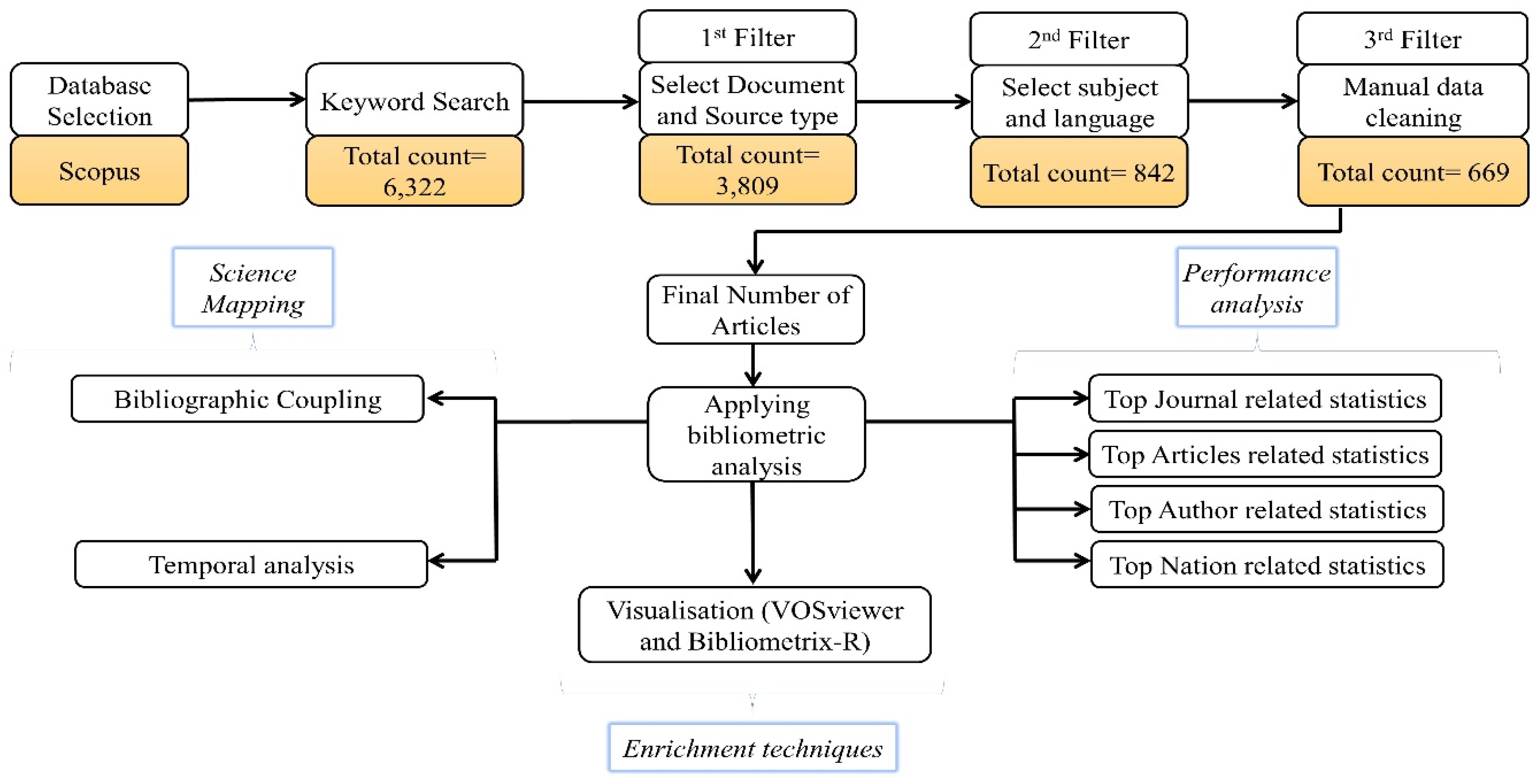

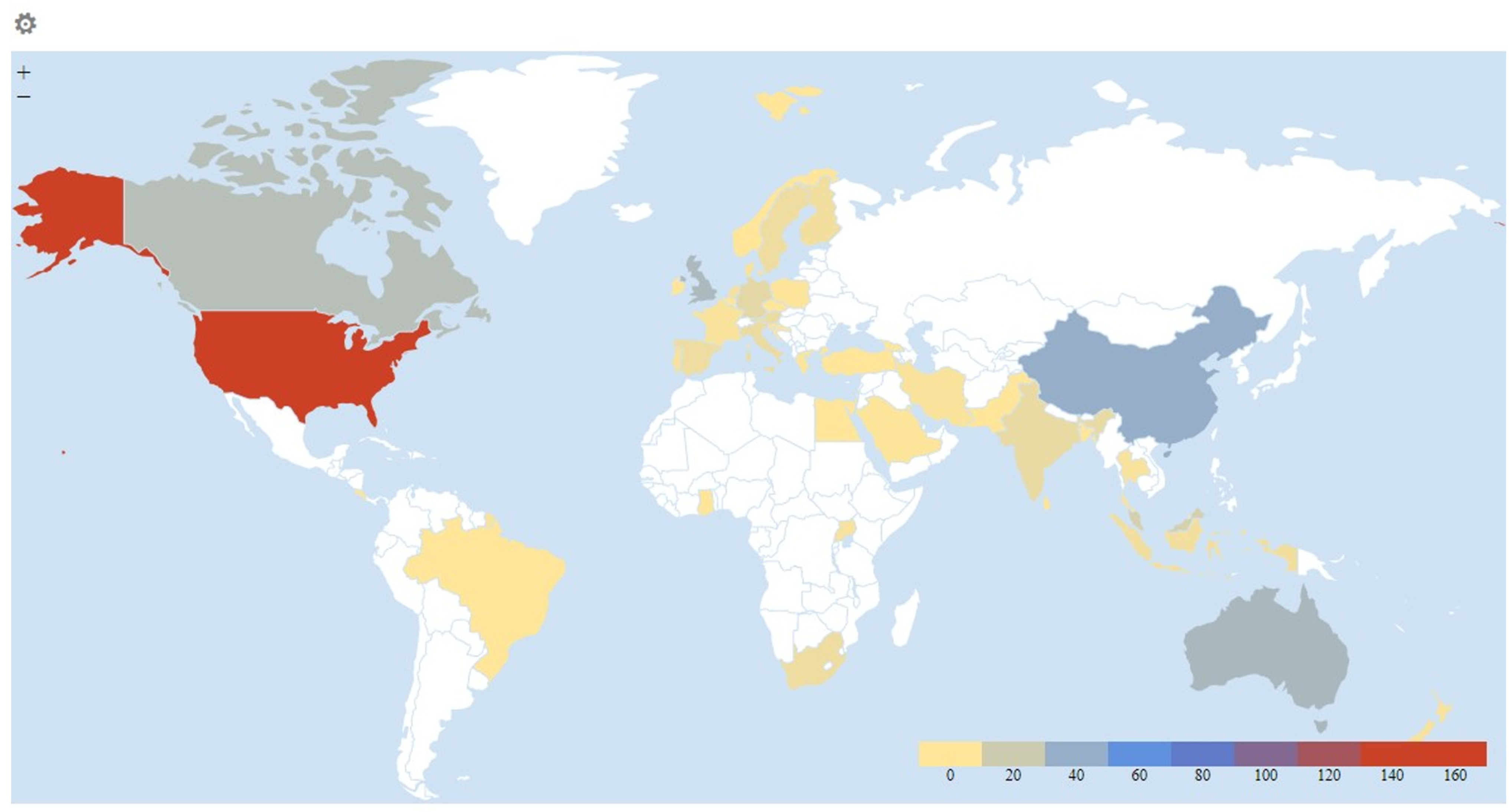

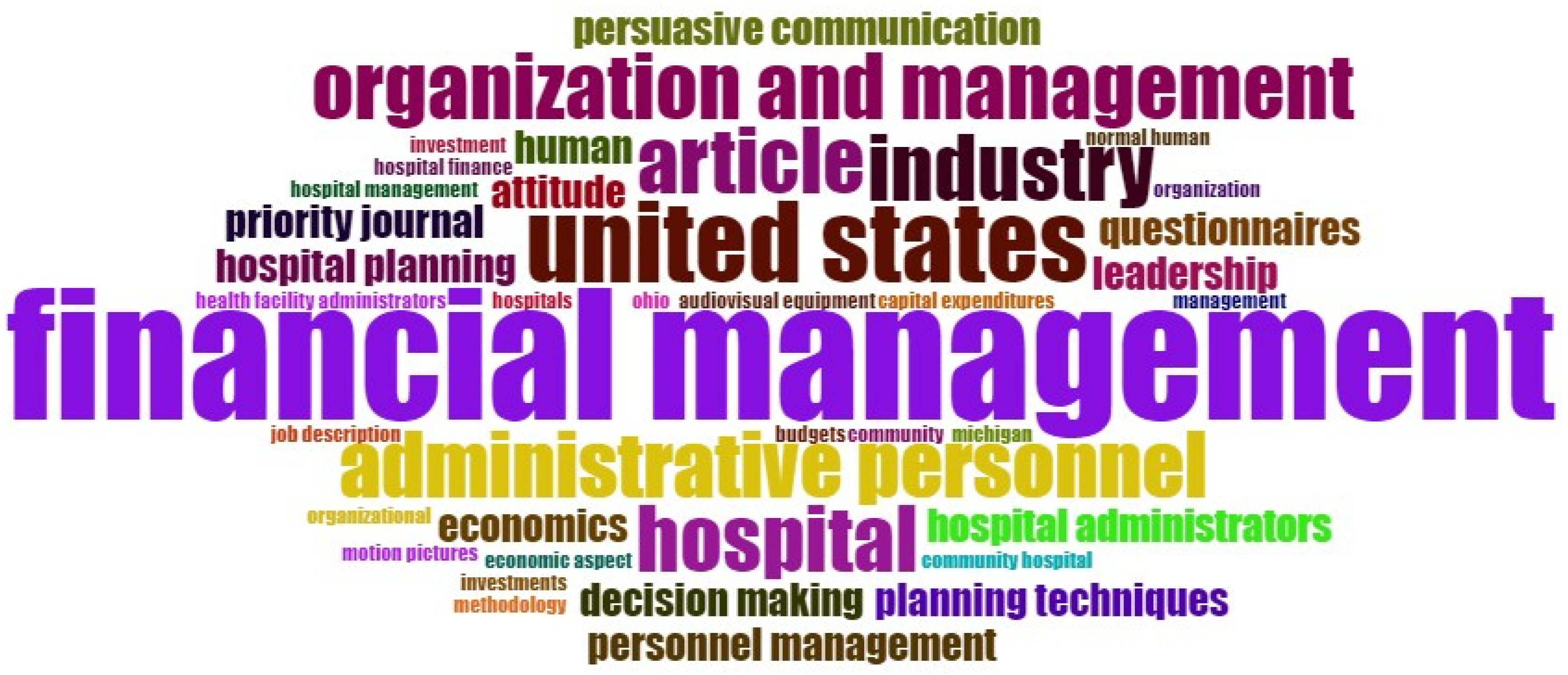
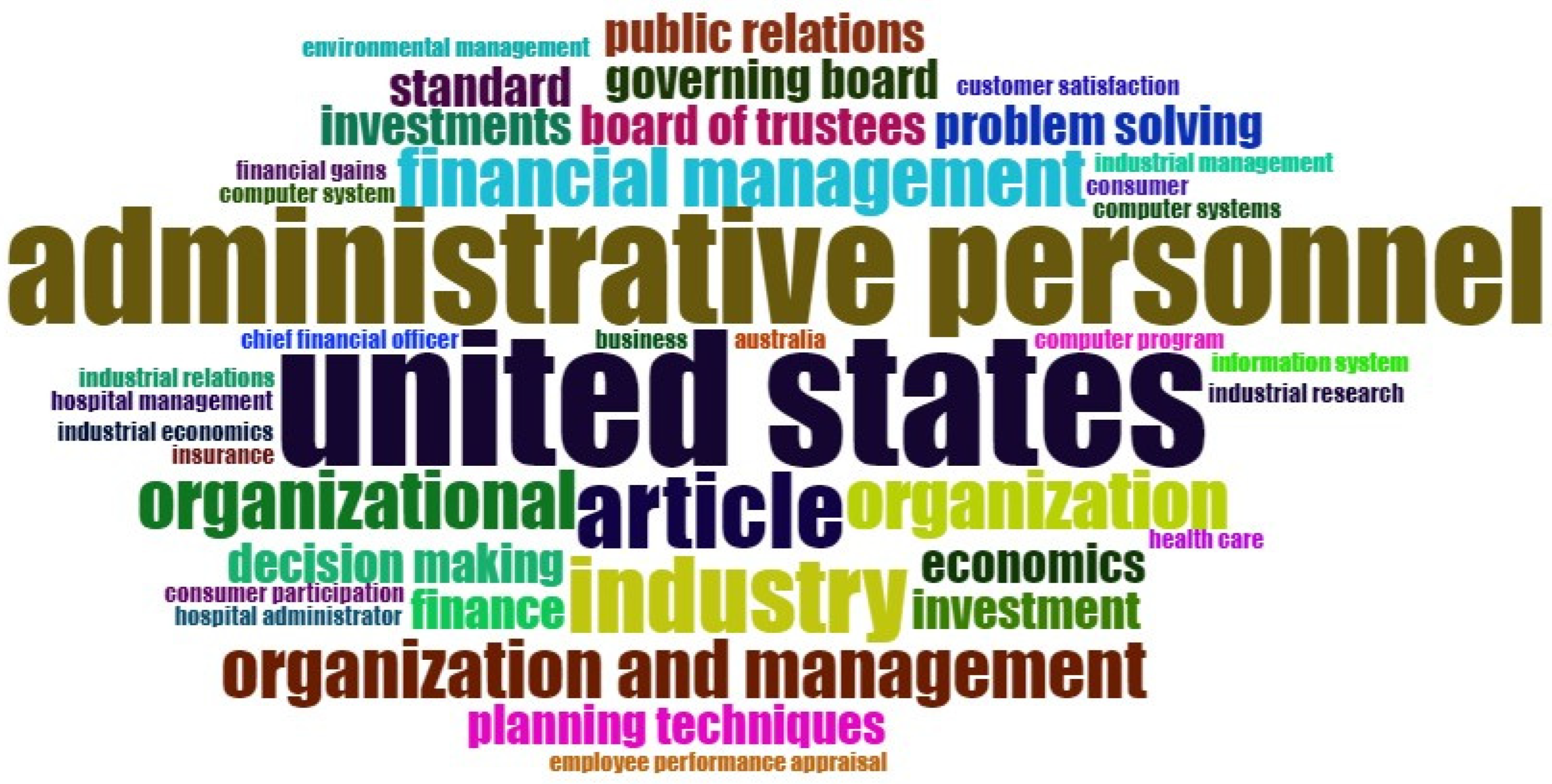

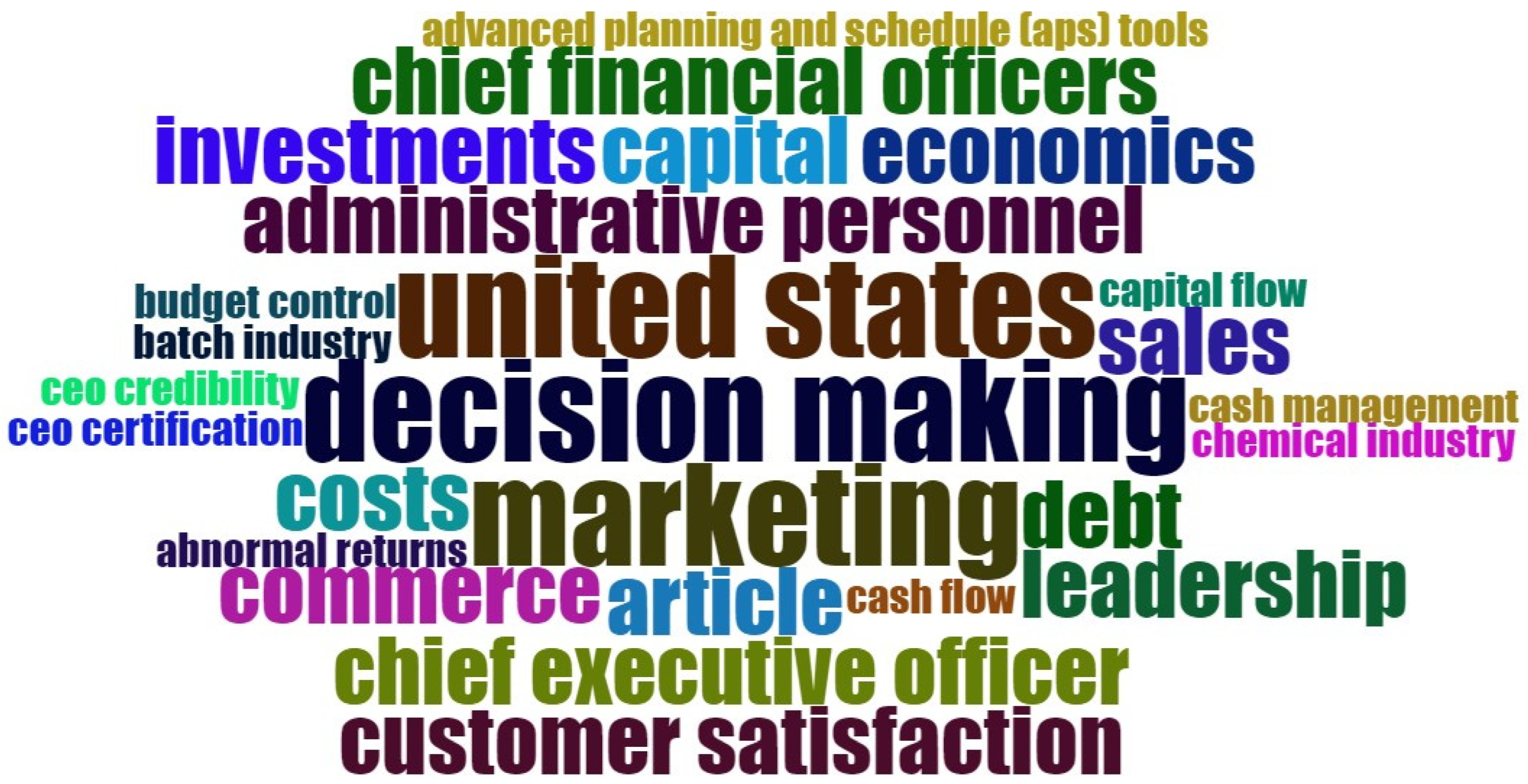

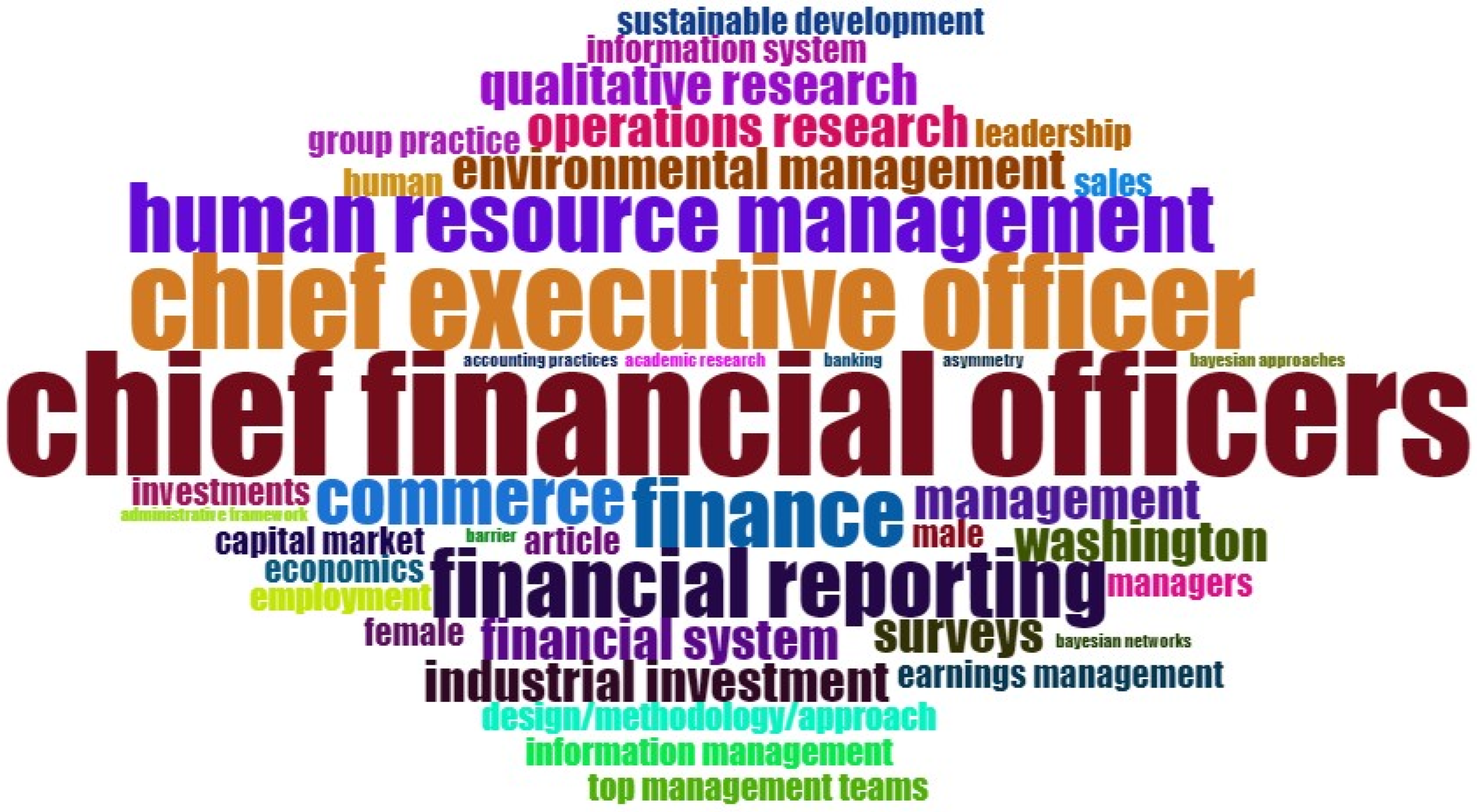

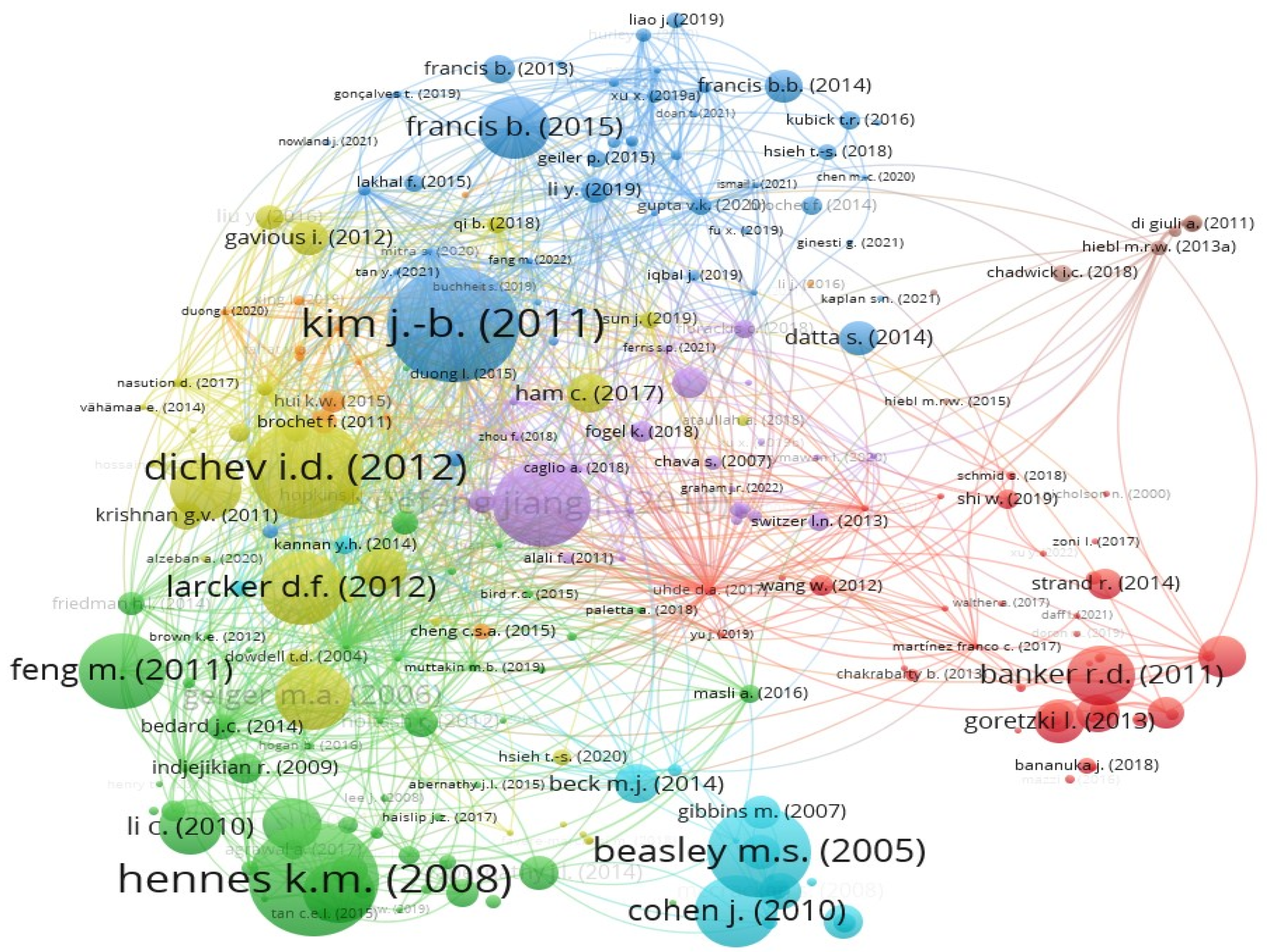

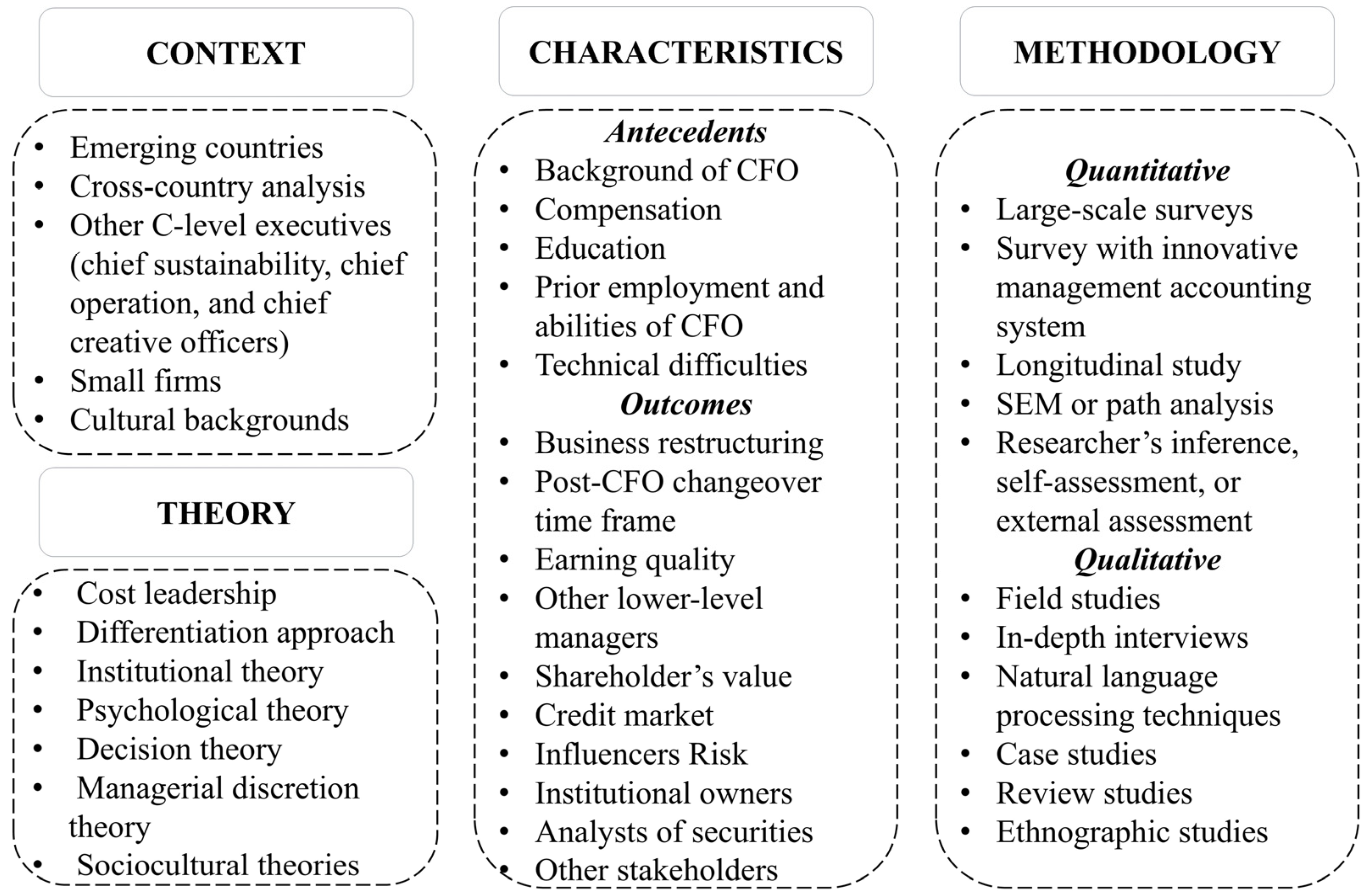

Disclaimer/Publisher’s Note: The statements, opinions and data contained in all publications are solely those of the individual author(s) and contributor(s) and not of MDPI and/or the editor(s). MDPI and/or the editor(s) disclaim responsibility for any injury to people or property resulting from any ideas, methods, instructions or products referred to in the content. |
© 2024 by the authors. Licensee MDPI, Basel, Switzerland. This article is an open access article distributed under the terms and conditions of the Creative Commons Attribution (CC BY) license (https://creativecommons.org/licenses/by/4.0/).