

High Detection Frequency of Enteric Pathogens: Insight from Wastewater-Based Epidemiology (WBE) Surveillance Approach in Dakar, Senegal
 , , , and
Highlights
- Wastewater-Based Epidemiology (WBE) may serve as a complementary tool to clinical surveillance within the Senegalese context.
- WBE facilitates a more comprehensive understanding of pathogen circulation at the community level.
- The findings demonstrate the feasibility and significance of implementing wastewater-based epidemiology (WBE) in Senegal.
- Adoption of this approach would enable surveillance of enteropathogens and other emerging and re-emerging pathogens.
- Wastewater samples contain a large number of pathogens of interest and may influenced by seasonal variations.
- Implementing a WBE program presents an opportunity to strengthen public health strategies, but requires careful consideration of organizational, logistical, and technological factors for effective execution.
Abstract
1. Introduction
2. Materials and Methods
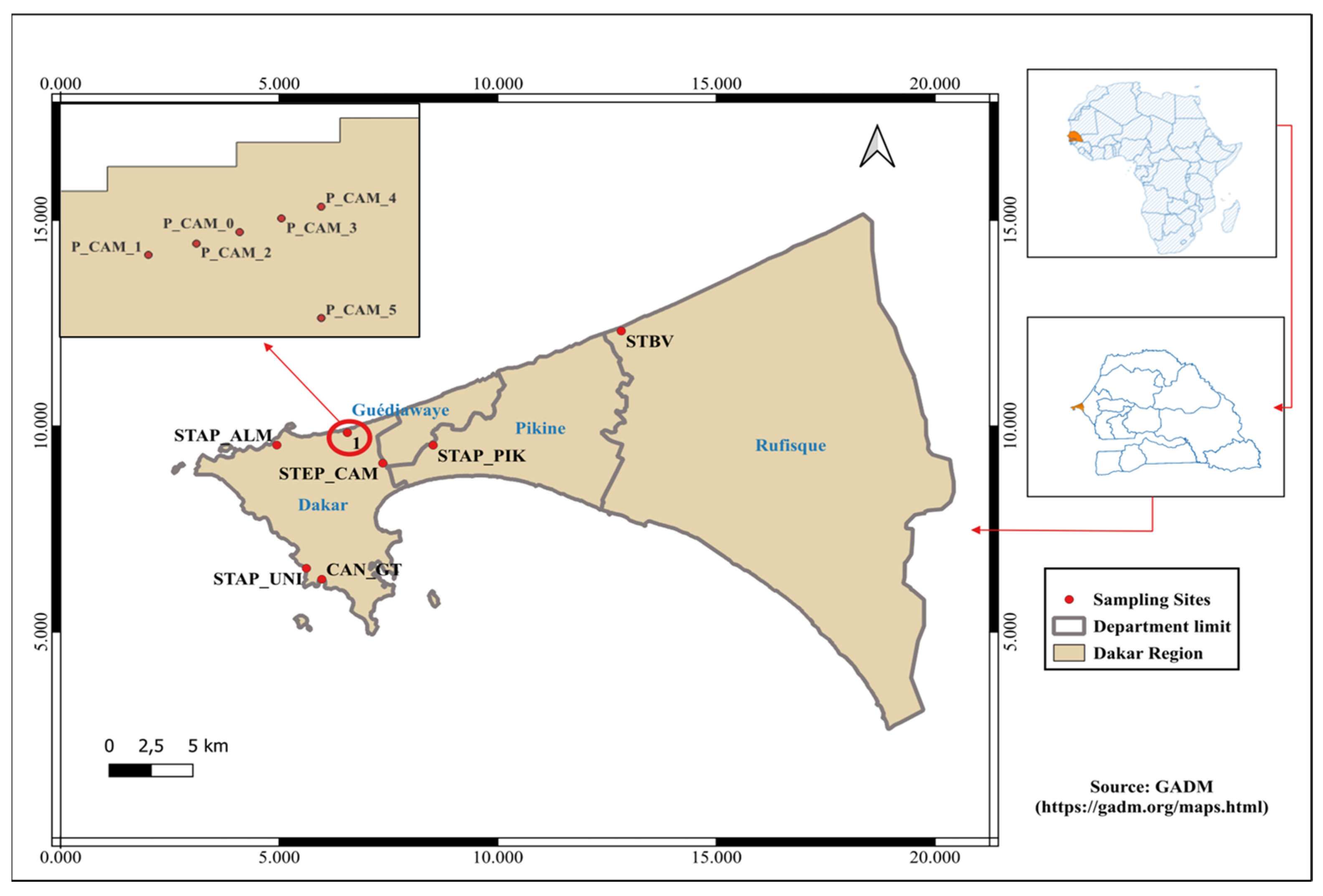
2.1. Wastewater Sampling Sites
2.2. Sample Collection
2.3. Sample Processing
2.4. Statistical Analysis
3. Results
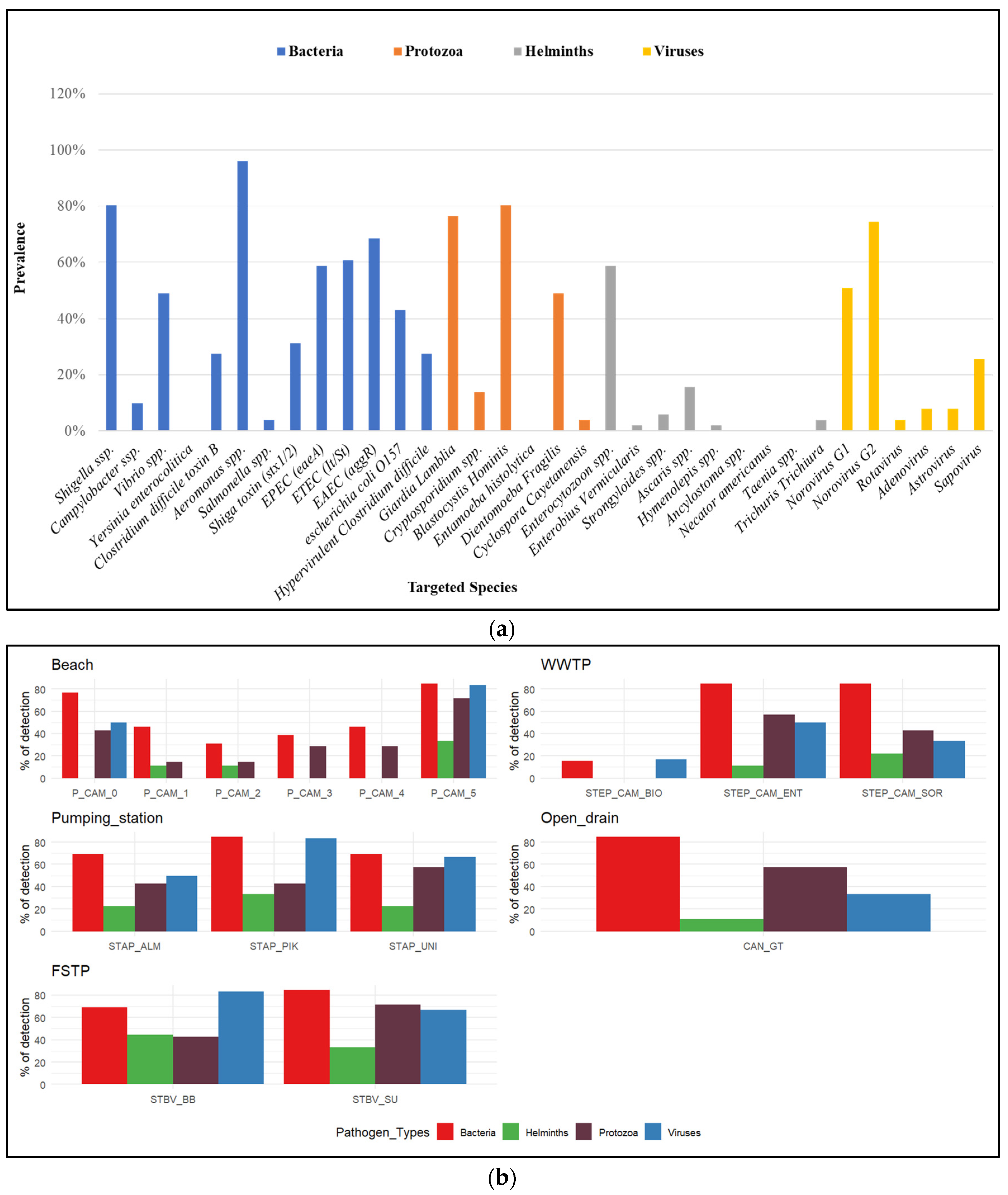
3.1. Descriptive Statistics
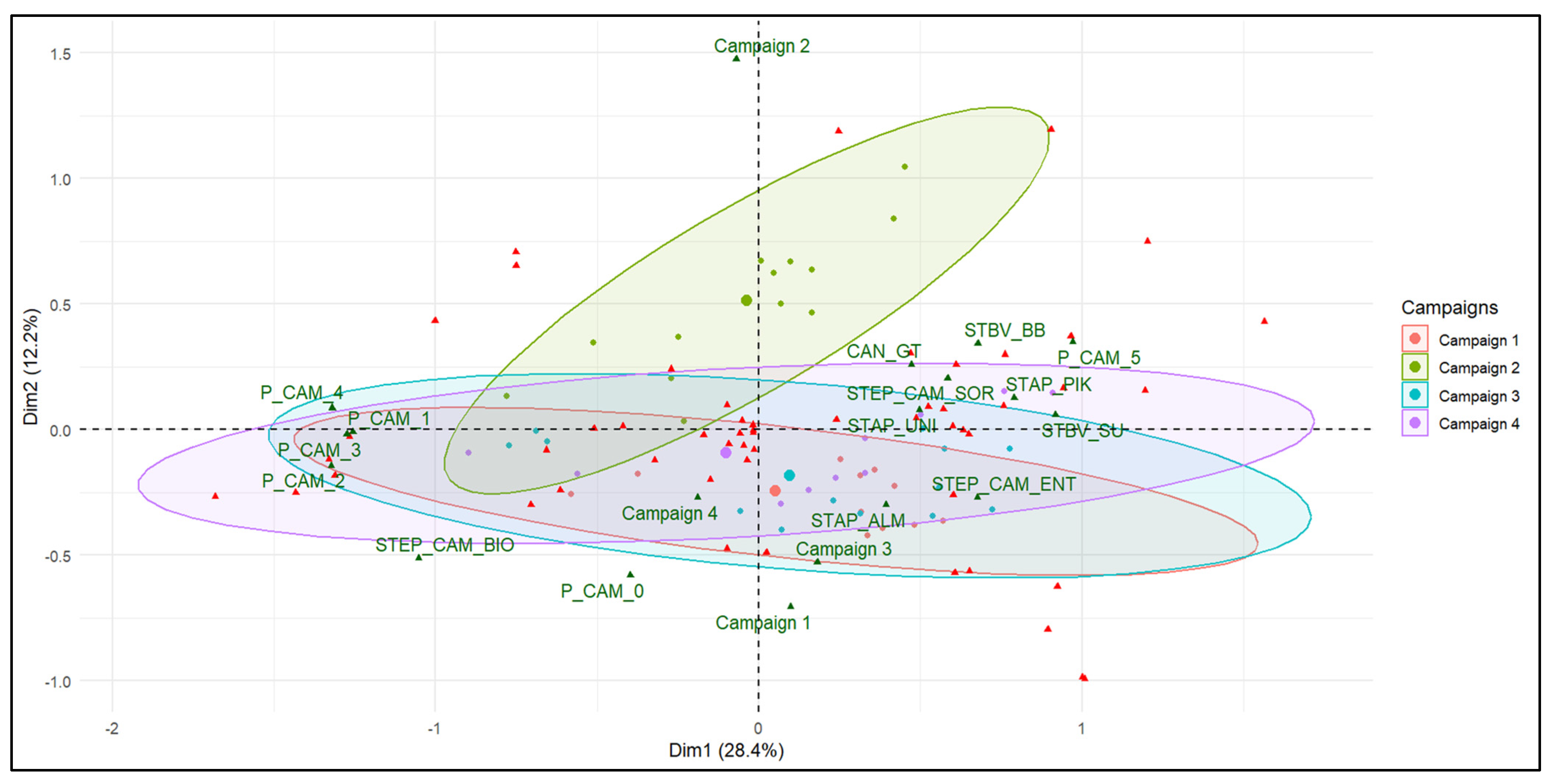
3.2. Multiple Correspondence Analysis
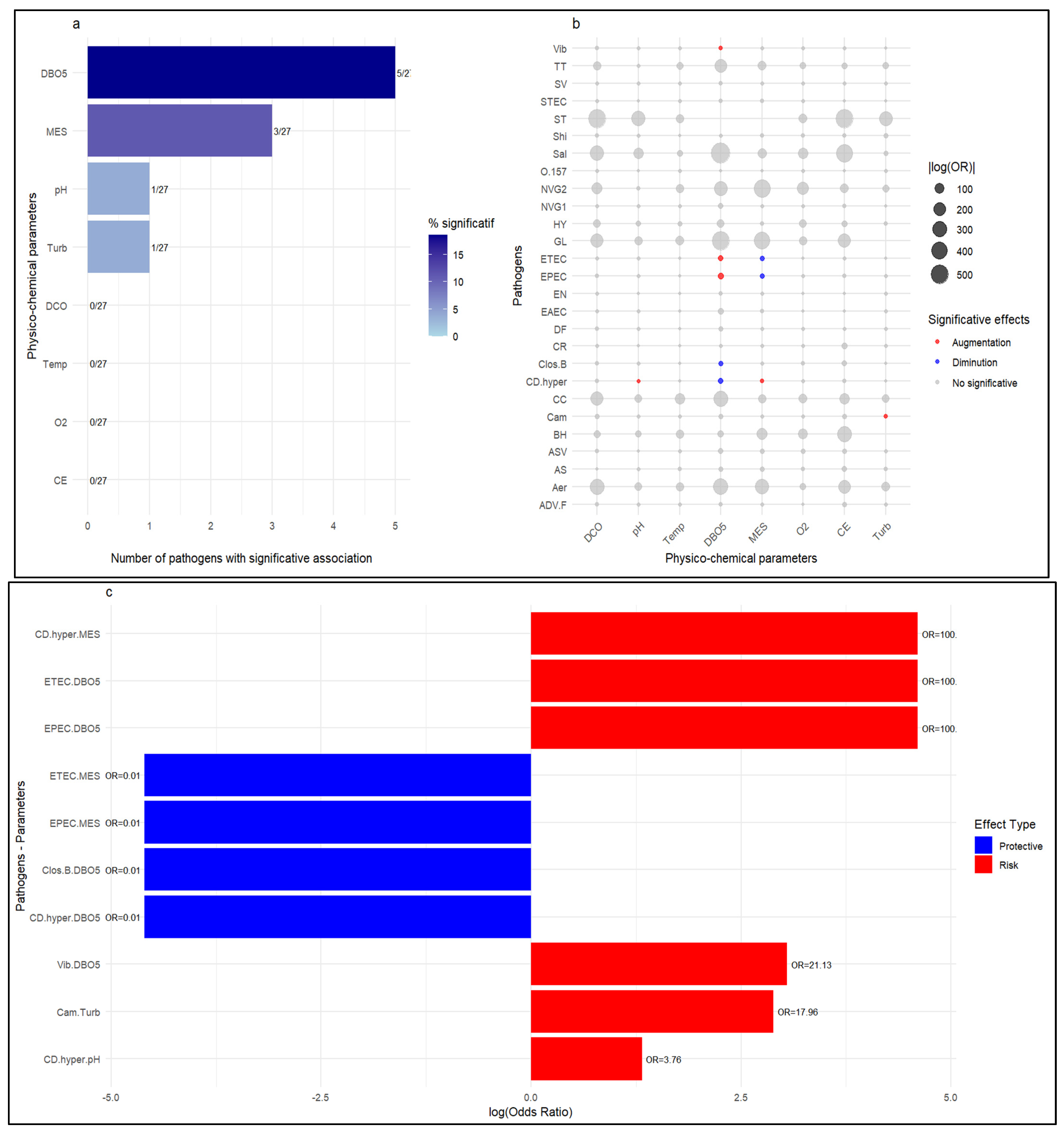
3.3. Regression Analysis Fundings
4. Discussion
4.1. Pathogen Detection
4.2. Seasonality and Spatial Detection
4.3. Logistic Regression Findings
4.4. Public Health Implications
4.5. Limitations
5. Conclusions
Author Contributions
Funding
Institutional Review Board Statement
Informed Consent Statement
Data Availability Statement
Acknowledgments
Conflicts of Interest
Abbreviations
| FIB | Faecal Indicator Bacteria |
| PS | Pumping Station |
| WWTP | wastewater treatment plant |
| FSTP | Faecal Sludge Treatment Plant |
| OD | Open Drain |
| LATEU | Wastewater Treatment Laboratory |
| TNA | Total Nucleic Acid |
| PCR | Polymerase Chain Reaction |
| CE | Electrical conductivity |
| pH | Hydrogen Potential |
| Temp | Temperature |
| MES | Suspended Solids |
| Turb | Turbidity |
| COD | Chemical Oxygen Demand |
| BOD | Biochemical Oxygen Demand |
| MCA | Multiple Correspondence Analysis |
| GLM | Generalized Linear Models |
| QMRA | Quantitative Microbial Risk Assessment |
References
- Bej, S.; Swain, S.; Bishoyi, A.K.; Mandhata, C.P.; Sahoo, C.R.; Padhy, R.N. Wastewater-Associated Infections: A Public Health Concern. Water Air Soil Pollut. 2023, 234, 444. [Google Scholar] [CrossRef]
- Fuhrimann, S.; Winkler, M.S.; Stalder, M.; Niwagaba, C.B.; Babu, M.; Kabatereine, N.B.; Halage, A.A.; Utzinger, J.; Cissé, G.; Nauta, M. Disease Burden Due to Gastrointestinal Pathogens in a Wastewater System in Kampala, Uganda. Microb. Risk Anal. 2016, 4, 16–28. [Google Scholar] [CrossRef]
- Machdar, E.; van der Steen, P.; Raschid-Sally, L.; Lens, P.N.L. Application of Quantitative Microbial Risk Assessment to Analyze the Public Health Risk from Poor Drinking Water Quality in a Low Income Area in Accra, Ghana. Sci. Total Environ. 2013, 449, 134–142. [Google Scholar] [CrossRef]
- WHO. Guidelines for the Safe Use of Wastewater, Excreta and Greywater—Volume 4. In Excreta and Greywater Use in Agriculture; WHO: Geneva, Switzerland, 2013. [Google Scholar]
- Kesari, K.K.; Soni, R.; Jamal, Q.M.S.; Tripathi, P.; Lal, J.A.; Jha, N.K.; Siddiqui, M.H.; Kumar, P.; Tripathi, V.; Ruokolainen, J. Wastewater Treatment and Reuse: A Review of Its Applications and Health Implications. Water Air Soil Pollut. 2021, 232, 208. [Google Scholar] [CrossRef]
- Levy, J.I.; Andersen, K.G.; Knight, R.; Karthikeyan, S. Wastewater Surveillance for Public Health. Science 2023, 379, 26–27. [Google Scholar] [CrossRef] [PubMed]
- Aguiar-Oliveira, M.d.L.; Campos, A.; Matos, A.R.; Rigotto, C.; Sotero-Martins, A.; Teixeira, P.F.P.; Siqueira, M.M. Wastewater-Based Epidemiology (WBE) and Viral Detection in Polluted Surface Water: A Valuable Tool for COVID-19 Surveillance-A Brief Review. Int. J. Environ. Res. Public Health 2020, 17, 9251. [Google Scholar] [CrossRef]
- Asghar, H.; Diop, O.M.; Weldegebriel, G.; Malik, F.; Shetty, S.; El Bassioni, L.; Akande, A.O.; Al Maamoun, E.; Zaidi, S.; Adeniji, A.J.; et al. Environmental Surveillance for Polioviruses in the Global Polio Eradication Initiative. J. Infect. Dis. 2014, 210, S294–S303. [Google Scholar] [CrossRef] [PubMed]
- Hamouda, M.; Mustafa, F.; Maraqa, M.; Rizvi, T.; Aly Hassan, A. Wastewater Surveillance for SARS-CoV-2: Lessons Learnt from Recent Studies to Define Future Applications. Sci. Total Environ. 2021, 759, 143493. [Google Scholar] [CrossRef]
- Randazzo, W.; Cuevas-Ferrando, E.; Sanjuán, R.; Domingo-Calap, P.; Sánchez, G. Metropolitan Wastewater Analysis for COVID-19 Epidemiological Surveillance. Int. J. Hyg. Environ. Health 2020, 230, 113621. [Google Scholar] [CrossRef]
- Medema, G.; Been, F.; Heijnen, L.; Petterson, S. Implementation of Environmental Surveillance for SARS-CoV-2 Virus to Support Public Health Decisions: Opportunities and Challenges. Curr. Opin. Environ. Sci. Health 2020, 17, 49–71. [Google Scholar] [CrossRef]
- Tiwari, A.; Kurittu, P.; Al-Mustapha, A.I.; Heljanko, V.; Johansson, V.; Thakali, O.; Mishra, S.K.; Lehto, K.-M.; Lipponen, A.; Oikarinen, S.; et al. Wastewater Surveillance of Antibiotic-Resistant Bacterial Pathogens: A Systematic Review. Front. Microbiol. 2022, 13, 977106. [Google Scholar] [CrossRef]
- Groseclose, S.L.; Buckeridge, D.L. Public Health Surveillance Systems: Recent Advances in Their Use and Evaluation. Annu. Rev. Public Health 2017, 38, 57–79. [Google Scholar] [CrossRef]
- Child, H.T.; Airey, G.; Maloney, D.M.; Parker, A.; Wild, J.; McGinley, S.; Evens, N.; Porter, J.; Templeton, K.; Paterson, S.; et al. Comparison of Metagenomic and Targeted Methods for Sequencing Human Pathogenic Viruses from Wastewater. mBio 2023, 14, e01468-23. [Google Scholar] [CrossRef]
- Adebayo, F.; Smart, O. Microorganisms in Waste Management. Res. J. Sci. Technol. 2018, 10, 28. [Google Scholar] [CrossRef]
- Sunger, N.; Hamilton, K.; Morgan, P.; Haas, C. Comparison of Pathogen-Derived ‘Total Risk’ with Indicator-Based Correlations for Recreational (Swimming) Exposure. Environ. Sci. Pollut. Res. 2019, 26, 30614–30624. [Google Scholar] [CrossRef] [PubMed]
- Ruzante, J.M.; Olin, K.; Munoz, B.; Nawrocki, J.; Selvarangan, R.; Meyers, L. Real-Time Gastrointestinal Infection Surveillance through a Cloud-Based Network of Clinical Laboratories. PLoS ONE 2021, 16, e0250767. [Google Scholar] [CrossRef] [PubMed]
- Levantesi, C.; La Mantia, R.; Masciopinto, C.; Böckelmann, U.; Ayuso-Gabella, M.N.; Salgot, M.; Tandoi, V.; Van Houtte, E.; Wintgens, T.; Grohmann, E. Quantification of Pathogenic Microorganisms and Microbial Indicators in Three Wastewater Reclamation and Managed Aquifer Recharge Facilities in Europe. Sci. Total Environ. 2010, 408, 4923–4930. [Google Scholar] [CrossRef]
- Grijalva, L.M.; Seck, A.; Roldan-Hernandez, L.; Graham, K.E.; Boehm, A.B.; Tarpeh, W.A. Persistence of Respiratory, Enteric, and Fecal Indicator Viruses in Fecal Sludge from on-Site Sanitation in Dakar, Senegal. J. Water Sanit. Hyg. Dev. 2024, 14, 916–928. [Google Scholar] [CrossRef]
- United States Environmental Protection Agency. Guidelines for Water Reuse 2019. Available online: https://archive.iwmi.org/assessment/files/Synthesis/LowQWater/USEPA%20Chapter%208.pdf (accessed on 22 February 2026).
- Ahmad, W.; Nguyen, N.H.; Boland, B.S.; Dulai, P.S.; Pride, D.T.; Bouland, D.; Sandborn, W.J.; Singh, S. Comparison of Multiplex Gastrointestinal Pathogen Panel and Conventional Stool Testing for Evaluation of Diarrhea in Patients with Inflammatory Bowel Diseases. Dig. Sci. 2019, 64, 382–390. [Google Scholar] [CrossRef]
- Kim, L.H.; Mikolaityte, V.; Kim, S. Establishment of Wastewater-Based SARS-CoV-2 Monitoring System over Two Years: Case Studies in South Korea. J. Environ. Chem. Eng. 2023, 11, 110289. [Google Scholar] [CrossRef]
- Gholipour, S.; Ghalhari, M.R.; Nikaeen, M.; Rabbani, D.; Pakzad, P.; Miranzadeh, M.B. Occurrence of Viruses in Sewage Sludge: A Systematic Review. Sci. Total Environ. 2022, 824, 153886. [Google Scholar] [CrossRef]
- Chacón, L.; Morales, E.; Valiente, C.; Reyes, L.; Barrantes, K. Wastewater-Based Epidemiology of Enteric Viruses and Surveillance of Acute Gastrointestinal Illness Outbreaks in a Resource-Limited Region. Am. J. Trop. Med. Hyg. 2021, 105, 1004–1012. [Google Scholar] [CrossRef]
- Klein, E.J.; Boster, D.R.; Stapp, J.R.; Wells, J.G.; Qin, X.; Clausen, C.R.; Swerdlow, D.L.; Braden, C.R.; Tarr, P.I. Diarrhea Etiology in a Children’s Hospital Emergency Department: A Prospective Cohort Study. Clin. Infect. Dis. 2006, 43, 807–813. [Google Scholar] [CrossRef]
- Villena, C.; El-Senousy, W.M.; Abad, F.X.; Pintó, R.M.; Bosch, A. Group A Rotavirus in Sewage Samples from Barcelona and Cairo: Emergence of Unusual Genotypes. Appl. Environ. Microbiol. 2003, 69, 3919–3923. [Google Scholar] [CrossRef]
- Koo, H.L.; Ajami, N.; Atmar, R.L.; DuPont, H.L. Noroviruses: The Principal Cause of Foodborne Disease Worldwide. Discov. Med. 2010, 10, 61–70. [Google Scholar]
- Huang, Y.; Zhou, N.; Zhang, S.; Yi, Y.; Han, Y.; Liu, M.; Han, Y.; Shi, N.; Yang, L.; Wang, Q.; et al. Norovirus Detection in Wastewater and Its Correlation with Human Gastroenteritis: A Systematic Review and Meta-Analysis. Environ. Sci. Pollut. Res. Int. 2022, 29, 22829–22842. [Google Scholar] [CrossRef]
- Hall, A.J.; Wikswo, M.E.; Manikonda, K.; Roberts, V.A.; Yoder, J.S.; Gould, L.H. Acute Gastroenteritis Surveillance through the National Outbreak Reporting System, United States. Emerg. Infect. Dis. 2013, 19, 1305–1309. [Google Scholar] [CrossRef] [PubMed]
- Hotta, C.; Fujinuma, Y.; Ogawa, T.; Akita, M.; Ogawa, T. Surveillance of Wastewater to Monitor the Prevalence of Gastroenteritis Viruses in Chiba Prefecture (2014–2019). J. Epidemiol. 2023, 34, 195–202. [Google Scholar] [CrossRef] [PubMed]
- Lee, L.E.; Cebelinski, E.A.; Fuller, C.; Keene, W.E.; Smith, K.; Vinjé, J.; Besser, J.M. Sapovirus Outbreaks in Long-Term Care Facilities, Oregon and Minnesota, USA, 2002–2009. Emerg. Infect. Dis. 2012, 18, 873–876. [Google Scholar] [CrossRef] [PubMed]
- Hachich, E.M.; Galvani, A.T.; Padula, J.A.; Stoppe, N.C.; Garcia, S.C.; Bonanno, V.M.S.; Barbosa, M.R.F.; Sato, M.I.Z. Pathogenic Parasites and Enteroviruses in Wastewater: Support for a Regulation on Water Reuse. Water Sci. Technol. 2013, 67, 1512–1518. [Google Scholar] [CrossRef]
- Mormeneo Bayo, S.; López González, E.; Bellés Bellés, A.; Bernet Sánchez, A.; Aramburu Arnuelos, J.; Jiménez Pérez de Tudela, I.; Prats Sánchez, I.; García González, M. Detection and Pathological Role of Intestinal Protozoa in Children. Parasitol. Int. 2022, 88, 102558. [Google Scholar] [CrossRef]
- Kim, M.; Kienast, Y.; Hatt, J.K.; Kirby, A.E.; Konstantinidis, K.T. Metagenomics Indicate That Public Health Risk May Be Higher from Flooding Following Dry versus Rainy Periods. Environ. Microbiol. Rep. 2022, 14, 265–273. [Google Scholar] [CrossRef]
- Ross, A.G.; Rahman, M.; Alam, M.; Zaman, K.; Qadri, F. Can We “WaSH” Infectious Diseases out of Slums? Int. J. Infect. Dis. 2020, 92, 130–132. [Google Scholar] [CrossRef]
- Brandão, J.; Valério, E.; Weiskerger, C.; Veríssimo, C.; Sarioglou, K.; Novak Babič, M.; Solo-Gabriele, H.M.; Sabino, R.; Rebelo, M.T. Strategies for Monitoring Microbial Life in Beach Sand for Protection of Public Health. Int. J. Environ. Res. Public Health 2023, 20, 5710. [Google Scholar] [CrossRef]
- Halliday, E.; McLellan, S.L.; Amaral-Zettler, L.A.; Sogin, M.L.; Gast, R.J. Comparison of Bacterial Communities in Sands and Water at Beaches with Bacterial Water Quality Violations. PLoS ONE 2014, 9, e90815. [Google Scholar] [CrossRef]
- Smyth, K.; Elliott, M. Effects of Changing Salinity on the Ecology of the Marine Environment. In Stressors in the Marine Environment: Physiological and Ecological Responses; Societal Implications; Solan, M., Whiteley, N., Eds.; Oxford University Press: Oxford, UK, 2016; pp. 161–174. ISBN 978-0-19-871882-6. [Google Scholar]
- Reddy, S.; Osborne, W.J. Chapter 1—Effect of Pollution on Sediments and Their Impact on the Aquatic Ecosystem. In Relationship Between Microbes and the Environment for Sustainable Ecosystem Services; Samuel, J., Kumar, A., Singh, J., Eds.; Elsevier: Amsterdam, The Netherlands, 2022; Volume 2, pp. 1–16. ISBN 978-0-323-89937-6. [Google Scholar]
- Jouanneau, S.; Recoules, L.; Durand, M.J.; Boukabache, A.; Picot, V.; Primault, Y.; Lakel, A.; Sengelin, M.; Barillon, B.; Thouand, G. Methods for Assessing Biochemical Oxygen Demand (BOD): A Review. Water Res. 2014, 49, 62–82. [Google Scholar] [CrossRef] [PubMed]
- Buddle, J.E.; Fagan, R.P. Pathogenicity and Virulence of Clostridioides Difficile. Virulence 2023, 14, 2150452. [Google Scholar] [CrossRef] [PubMed]
- Baudart, J.; Paniel, N. Sources et Devenir Des Micro-Organismes Pathogènes Dans Les Environnements Aquatiques. Rev. Francoph. Lab. 2014, 2014, 29–39. [Google Scholar] [CrossRef]
- Fumian, T.M.; Fioretti, J.M.; Lun, J.H.; dos Santos, I.A.L.; White, P.A.; Miagostovich, M.P. Detection of Norovirus Epidemic Genotypes in Raw Sewage Using next Generation Sequencing. Environ. Int. 2019, 123, 282–291. [Google Scholar] [CrossRef] [PubMed]



| Sites | Samples | Origins | Sample ID | Geographical Coordinates |
|---|---|---|---|---|
| Camberene beach | Sea-water | Seawater/wastewater inter-face | P_CAM_0 | 14°45′57.78″ N, 17°26′50.38″ W |
| Camberene beach | Sea-water | 200 m left of meeting point | P_CAM_1 | 14°45′56.86″ N, 17°26′53.91″ W |
| Camberene beach | Sea-water | 100 m left of meeting point | P_CAM_2 | 14°45′57.31″ N, 17°26′52.06″ W |
| Camberene beach | Sea-water | 200 m right of meeting point | P_CAM_3 | 14°45′58.34″ N, 17°26′48.77″ W |
| Camberene beach | Sea-water | 100 m right of meeting point | P_CAM_4 | 14°45′58.78″ N, 17°26′50.33″ W |
| Camberene beach | Wastewater | Wastewater Outfall | P_CAM_5 | 14°45′54.26″ N, 17°26′47.23″ W |
| Camberene | Wastewater | Wastewater Treatment Plant (WWTP) | STEP_CAM | 14°44′49.57″ N, 17°25′36.48″ W |
| Pikine | Wastewater | Pumping Stations (PS) | STAP_PIK | 14°45′27.66″ N, 17°23′56.02″ W |
| Almadies | Wastewater | Pumping Stations (PS) | STAP_ALM | 14°45′27.96″ N, 17°29′08.06″ W |
| Fann-Point E-Amitié | Wastewater | Pumping Stations (PS) | STAP_UNI | 14°41′06.82″ N, 17°28′09.08″ W |
| Gueule Tapée | Wastewater | Open Drain (OD) | CAN_GT | 14°40′43.59″ N, 17°27′38.34″ W |
| Tivaouane Peulh | Sewage Sludge | Fecal Sludge Station (FSTP) | STBV_BB | 14°49′29.70″ N, 17°17′40.46″ W |
| Tivaouane Peulh | Sewage Sludge | Fecal Sludge Station (FSTP) | STBV_SU | 14°49′29.70″ N, 17°17′40.46″ W |
| Bacteria | Protozoa | Helminths | Viruses |
|---|---|---|---|
| Campylobacter spp. | Blastocyctis homonis | Ascaris spp. | Norovirus GI |
| Aeromonas spp. | Giardia lamblia | Taenia spp. | Norovirus GII |
| Salmonella spp. | Cyclospora cayetanensis | Strongyloides spp. | Sapovirus |
| Hypervirulent clostridium difficile | Dientamoeba fragilis | Necator americanus | Rotavirus |
| Shigella spp./EIEC (Sh/EI) | Entamoeba histolytica | Hymenolepis spp. | Astrovirus |
| Vibrio spp. | Cryptosporidium spp. | Enterocytozoon spp. | Adenovirus |
| Clostridium difficile toxin B | - | Trichuris trichiura | - |
| Enterotoxigenic E. coli (ETEC) | - | Enterobius vermicularis | - |
| Enteroaggregative E. coli (EAEC) | - | Ancylostoma spp. | - |
| Enteropathogenic E. coli (EPEC) | - | - | - |
| Shiga toxin-producing E. coli (STEC) | - | - | - |
| Escherichia coli O157 | - | - | - |
| Yersinia enterocolitica | - | - | - |
| Taxonomic Category | Combination | Number of Samples |
|---|---|---|
| Bacteria | Shi + Aer + EAEC | 32 |
| Bacteria | Aer + ETEC + EAEC | 31 |
| Bacteria | Shi + Aer + EPEC | 29 |
| Protozoa | GL + BH + DF | 25 |
| Protozoa | GL + CR + BH | 7 |
| Protozoa | GL + CR + DF | 6 |
| Helminths | EN + AS + TT | 2 |
| Helminths | EN + ST + AS | 1 |
| Viruses | NVG1 + NVG2 + SV | 10 |
| Viruses | NVG1 + NVG2 + ADV.F | 4 |
| Viruses | NVG1 + NVG2 + ASV | 4 |
Disclaimer/Publisher’s Note: The statements, opinions and data contained in all publications are solely those of the individual author(s) and contributor(s) and not of MDPI and/or the editor(s). MDPI and/or the editor(s) disclaim responsibility for any injury to people or property resulting from any ideas, methods, instructions or products referred to in the content. |
© 2026 by the authors. Licensee MDPI, Basel, Switzerland. This article is an open access article distributed under the terms and conditions of the Creative Commons Attribution (CC BY) license.
Share and Cite
Coundoul, S.; Diaby, N.; Tène, S.D.; Sané, S.; Souaré, M.; Sylla, A.S.; Dieng, M.; Grijalva, L.M.; Diop, B.S.; Diop, P.S.; et al. High Detection Frequency of Enteric Pathogens: Insight from Wastewater-Based Epidemiology (WBE) Surveillance Approach in Dakar, Senegal. Int. J. Environ. Res. Public Health 2026, 23, 320. https://doi.org/10.3390/ijerph23030320
Coundoul S, Diaby N, Tène SD, Sané S, Souaré M, Sylla AS, Dieng M, Grijalva LM, Diop BS, Diop PS, et al. High Detection Frequency of Enteric Pathogens: Insight from Wastewater-Based Epidemiology (WBE) Surveillance Approach in Dakar, Senegal. International Journal of Environmental Research and Public Health. 2026; 23(3):320. https://doi.org/10.3390/ijerph23030320
Chicago/Turabian StyleCoundoul, Seynabou, Nouhou Diaby, Sophie Déli Tène, Sarbanding Sané, Mohamed Souaré, Auriza Sophia Sylla, Modou Dieng, Lorelay Mendoza Grijalva, Becaye Sidy Diop, Papa Samba Diop, and et al. 2026. "High Detection Frequency of Enteric Pathogens: Insight from Wastewater-Based Epidemiology (WBE) Surveillance Approach in Dakar, Senegal" International Journal of Environmental Research and Public Health 23, no. 3: 320. https://doi.org/10.3390/ijerph23030320
APA StyleCoundoul, S., Diaby, N., Tène, S. D., Sané, S., Souaré, M., Sylla, A. S., Dieng, M., Grijalva, L. M., Diop, B. S., Diop, P. S., Sarr, S. C., Tall, H., Niang, S., Tarpeh, W. A., & Diouara, A. A. M. (2026). High Detection Frequency of Enteric Pathogens: Insight from Wastewater-Based Epidemiology (WBE) Surveillance Approach in Dakar, Senegal. International Journal of Environmental Research and Public Health, 23(3), 320. https://doi.org/10.3390/ijerph23030320