Impact of Occupational Noise Exposure on Physical and Mental Health of Water Pumping Station Operators in Lebanon


Highlights
- Exposure to occupational noise adversely affects the physical and mental health of workers in the water sector, representing a significant public health concern.
- Workers in the public water sector in Lebanon constitute a vital part of the Lebanese workforce, responsible for the operation of an important public service. Their health protection and safety are essential and form an integral part of the overall public health protection.
- This study is the first to assess the effect of occupational noise on workers in the Lebanese water sector, showing a gap in safety control measures and occupational health protection policies, and providing evidence for policymakers on occupational health.
- The findings of this study reveal adverse effects of noise on hearing, general stress level, sleep, and cognitive behavior, addressing the need for occupational health protection measures.
- Lebanese policymakers can use the results to develop protective policies and implement noise reduction strategies to provide a safe working environment in water pumping stations.
- South Lebanon Water Establishment, with the collaboration of the Ministry of Public Health, can use the findings to implement a comprehensive monitoring program that includes regular audiometric testing and mental health screening for workers, supplemented by training and awareness programs to ensure their long-term safety.
Abstract
1. Introduction
- Measure and evaluate noise exposure levels at selected water pumping stations and classify them against occupational safety standards.
- Assess the physical (hearing ability) and psychological (stress, sleep disturbances, concentration, communication, and emotional state) health status of operators working in water stations.
- Analyze the relation between health status, sound levels, age, and duration of exposure to noise
- Propose recommendations and practical measures to minimize health risks and improve workplace safety.
2. Materials and Methods
2.1. Study Design
2.2. Participants
2.3. Assessments and Measurements
2.3.1. Noise Measurement
2.3.2. Hearing Assessment
2.3.3. Psychological Health Assessment
2.4. Statistical Analysis
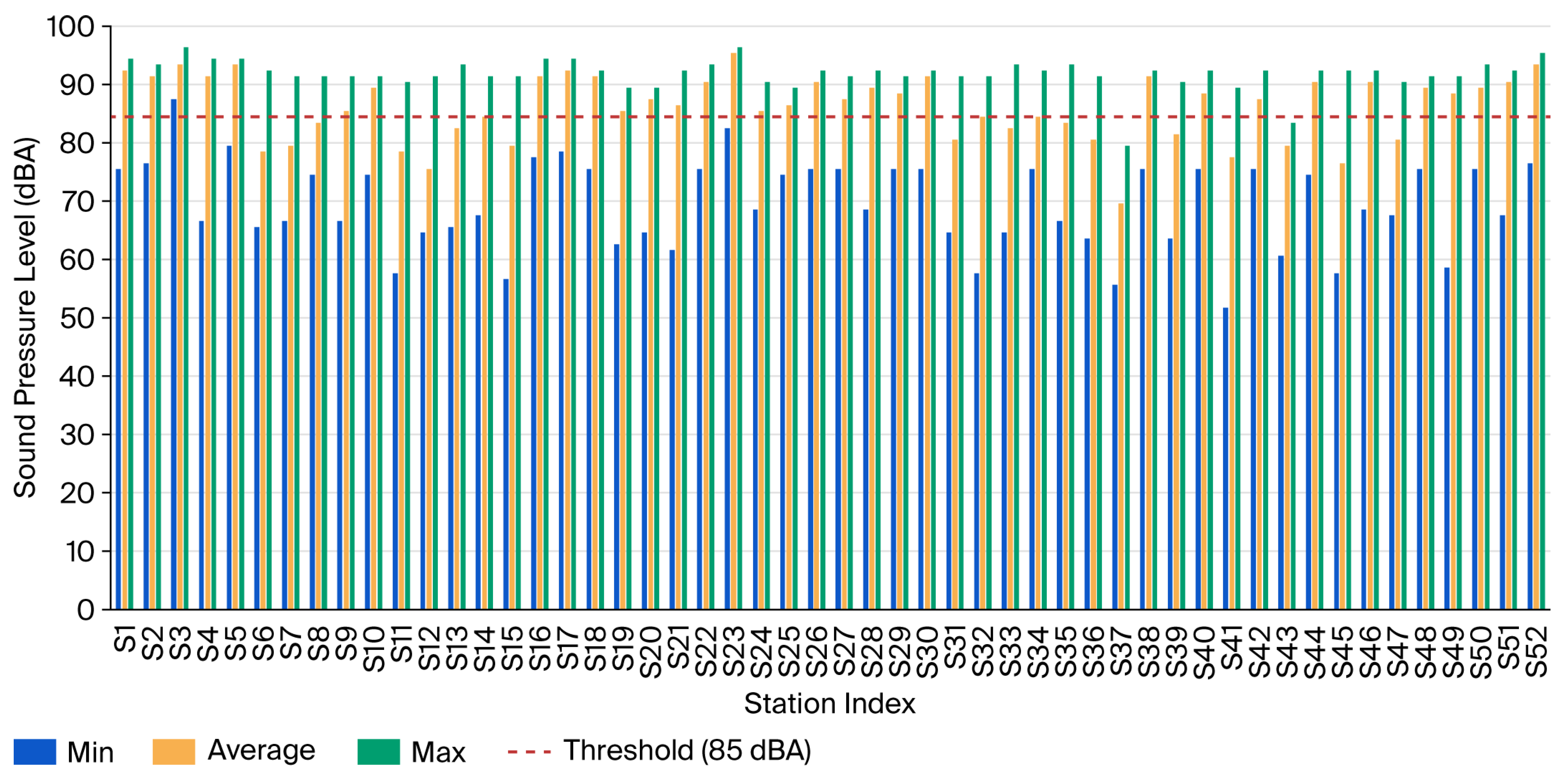
- Hypothesis-testing for noise level assessment: A one-sample t-test was conducted to test whether the average noise level in a particular water pumping station, during diesel generator operation, significantly exceeds 85 dBA. The National Institute for Occupational Safety and Health (NIOSH) recommends an occupational noise exposure limit of 85 dBA over an eight-hour workday with a 3 dBA exchange rate to minimize the risk of hearing loss [25], a threshold also reflected in the WHO guidance and the European Union (EU)’s more protective regulatory framework [26,27]. In contrast, the U.S. Occupational Safety and Health Administration (OSHA) permits a higher exposure limit of 90 dBA over eight hours using a 5 dBA exchange rate, indicating less stringent protection [28]. Table 2 provides a comparative summary of the OSHA, NIOSH, WHO, and EU standards and guidelines. The 85 dBA and 90 dBA thresholds are widely used as benchmarks in occupational noise research [8,29,30]. The NIOSH limits, being more conservative and health protective, will be used as the threshold for this study. Although an average sound level was calculated for each station, the 85 dBA threshold will be used as the benchmark for assessing noise exposure in this environment.
- The objective of this statistical evaluation was to determine whether the average noise level within the working environment of water pumping stations in South Lebanon exceeds the 85 dBA limit, thus justifying the implementation of a comprehensive noise control protocol. Null hypothesis: μ = 85 dBA; Alternative hypothesis: μ > 85 dBA; Significance level: α = 0.05 (one-tailed).
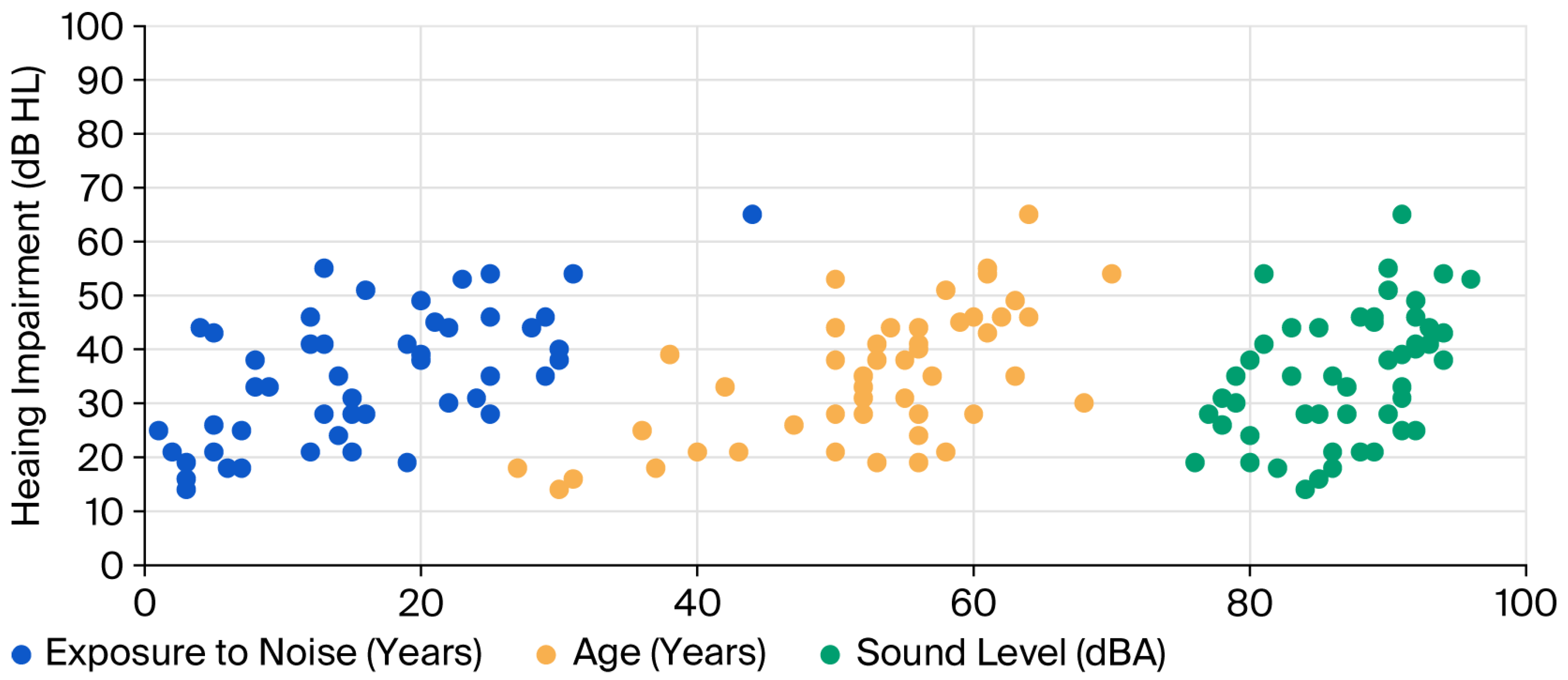
- Regression Model-Hearing Impairment Assessment: Linear regression analysis was conducted to examine the relationship between exposure to noise, age, and noise level as independent variables and hearing impairment as the dependent variable. Model assumptions were tested: normality of residuals (Shapiro–Wilk test, p > 0.05), homogeneity of variance (visual inspection of residual plots), independence of observations (Durbin–Watson statistic, 1.5–2.5), and multicollinearity (variance inflation factor, VIF < 2.5). Model fit was assessed using R2 and F-statistic at a 5% significance level. The primary analysis focused on the worse-ear PTA hearing impairment metric, incorporating the three independent variables and then stratifying the model by age groups above and below the mean. As the primary objective of this study is to determine the hearing damage resulting from noise exposure, the maximum hearing impairment (worse-ear impairment) has been used in the subsequent analysis. This methodology ensures that the results reflect the extent of hearing loss and capture the maximum degree of occupational hearing loss experienced. A sensitivity analysis for the better-ear PTA and binaural average metrics is provided in Appendix A.
- Psychological Assessment: Psychological health impacts of noise exposure were assessed using the 14-item binary questionnaire developed for this study. As this instrument has not been validated, analysis was limited to descriptive statistics, reporting the prevalence of endorsement for each item.
3. Results
3.1. Noise Level Assessment
3.2. Physical and Psychological Health Assessment
3.2.1. Physical Health Assessment: Hearing Conditions
3.2.2. Psychological Health Assessment
3.3. Awareness
4. Discussion
- Implementing engineering noise controls (e.g., silencers, enclosures);
- Enforcing mandatory use of hearing protection devices (HPDs);
- Conducting regular health monitoring and awareness campaigns;
- Provide regular audiometric testing and mental health screening;
- Develop occupational health policies at the institutional and governmental levels;
- Integrating noise control in station design and operations;
- Adopting administrative measures such as rotating workers to minimize their exposure to noise.
5. Conclusions
Author Contributions
Funding
Institutional Review Board Statement
Informed Consent Statement
Data Availability Statement
Acknowledgments
Conflicts of Interest
Abbreviations
| NIHL | Noise-induced hearing loss |
| SLWE | South Lebanon Water Establishment |
| EDL | Electricity du Liban |
| dBA | A-weighted decibels |
| WHO | World Health Organization |
| dB HL | Decibels hearing level |
| NIOSH | The National Institute for Occupational Safety and Health |
| EU | The European Union |
| OSHA | The Occupational Safety and Health Administration |
| TWA | Time-weighted average |
| SPL | Sound pressure level |
| PTA | Pure-tone average |
Appendix A

| R | R2 | Adjusted R2 | Std. Error of the Estimate | |||
| 0.738 | 0.545 | 0.515 | 7.738 | |||
| F-Statistic, p-Value | F = 18.384, p-value < 0.001 | |||||
| Predictor | B | SE | β | t-Statistic | p | 95% CI |
| Average sound level (dBA) | 0.624 | 0.198 | 0.319 | 3.144 | 0.002 | (0.23, 1.03) |
| Age (years) | 0.523 | 0.138 | 3.786 | 3.786 | <0.001 | (0.25, 0.80) |
| Exposure to noise (years) | 0.297 | 0.144 | 2.068 | 2.067 | 0.044 | (0.008, 0.58) |
| Constant | −54.583 | 18.617 | −2.931 | 0.005 | (−92.05, −17.11) | |
| R | R2 | Adjusted R2 | Std. Error of the Estimate | |||
| 0.624 | 0.3897 | 0.349 | ||||
| F-Statistic, p-Value | F = 9.794, p-value < 0.001 | |||||
| Predictor | B | SE | β | t-Statistic | p | 95% CI |
| Average sound level (dBA) | 0.478 | 0.23 | 0.245 | 2.080 | 0.043 | (0.015, 0.94) |
| Age (years) | 0.476 | 0.16 | 0.420 | 2.981 | 0.005 | (0.15, 0.79) |
| Exposure to noise (years) | 0.230 | 0.166 | 0.198 | 1.384 | 0.173 | (−0.104, 0.56) |
| Constant | −41.413 | 21.5 | −1.926 | 0.06 | (−84.69, 1.86) | |
References
- Berglund, B.; Lindvall, T.; Schwela, D.H. Guidelines for Community Noise. World Health Organization 1999. Available online: https://iris.who.int/handle/10665/66217 (accessed on 6 September 2025).
- Fasola, A.C.; Osisanya, A. Industrial noise exposure and work-related stress as predictors of auditory performance and psychological well-being of industrial workers in Ibadan, Oyo State, Nigeria. Turk. Int. J. Spec. Educ. Guid. Couns. 2022, 11, 149–161. [Google Scholar]
- Fada, P.O.; Osisanya, A. Effects of industrial noise pollution on the auditory performance and health status of industrial workers in Oluyole Industrial Estate, Ibadan, Nigeria. Acad. J. Educ. Res. 2017, 5, 92–100. [Google Scholar]
- Omari, S.; De-Veer, A.; Amfo-Out, R. The silent killer: An assessment of level of industrial noise and associated health effects on workers. Int. J. Basic Appl. Sci. 2013, 2, 165–169. [Google Scholar] [CrossRef]
- Chen, K.-T.; Su, S.-B. A review of occupational noise-induced hearing loss: Focus on mechanisms and preventive measures. Br. Med. Bull. 2025, 156, ldaf020. [Google Scholar] [CrossRef] [PubMed]
- Lie, A.; Skogstad, M.; Johannessen, H.A.; Tynes, T.; Mehlum, I.S.; Nordby, K.C.; Engdahl, B.; Tambs, K. Occupational noise exposure and hearing: A systematic review. Int. Arch. Occup. Environ. Health 2016, 89, 351–372. [Google Scholar] [CrossRef] [PubMed]
- Elshaer, N.; Meleis, D.; Mohamed, A. Prevalence and correlates of occupational noise-induced hearing loss among workers in the steel industry. J. Egypt Public Health Assoc. 2023, 98, 11. [Google Scholar] [CrossRef] [PubMed]
- Jo, H.; Baek, E.M. Impacts of noise-induced hearing loss on sleep, health, and workplace: Multi-group analysis. Heliyon 2024, 10, e30861. [Google Scholar] [CrossRef]
- Kujawa, S.G.; Liberman, M.C. Acceleration of age-related hearing loss by early noise exposure: Evidence of a misspent youth. J. Neurosci. 2006, 26, 2115–2123. [Google Scholar] [CrossRef]
- Monazzam Esmaielpour, M.R.; Zakerian, S.A.; Abbasi, M.; Ábbasi Balochkhaneh, F.; Mousavi Kordmiri, S.H. Investigating the effect of noise exposure on mental disorders and the work ability index among industrial workers. Noise Vib. Worldw. 2021, 53, 3–11. [Google Scholar] [CrossRef]
- Febriyanto, K.; Rahman, F.F.; Cristina, J. The physical and psychological effects of occupational noise among seafarers: A systematic review. Int. J. Environ. Health Res. 2023, 34, 2674–2686. [Google Scholar] [CrossRef]
- Dean, J.T. Noise, Cognitive Function, and Worker Productivity. Am. Econ. J. Appl. Econ. 2024, 16, 322–360. [Google Scholar] [CrossRef]
- Kerns, E.; Masterson, E.A.; Themann, C.L.; Calvert, G.M. Cardiovascular conditions, hearing difficulty, and occupational noise exposure within US industries and occupations. Am. J. Ind. Med. 2018, 61, 477–491. [Google Scholar] [CrossRef] [PubMed]
- Abbasi, A.M.; Motamedzade, M.; Aliabadi, M.; Golmohammadi, R.; Tapak, L. Study of the physiological and mental health effects caused by exposure to low-frequency noise in a simulated control room. Build. Acoust. 2018, 25, 227–236. [Google Scholar] [CrossRef]
- Abbasi, M.; Monazzam, M.R.; Ebrahimi, M.H.; Zakerian, S.A.; Dehghan, S.F.; Akbarzadeh, A. Assessment of noise effects of wind turbine on the general health of staff at wind farm of Manjil Iran. Low Freq. Noise Vib. Act. Control 2016, 35, 91–98. [Google Scholar] [CrossRef]
- del Pozo, D.; Valle, B.; Aguilar, S.; Donoso, N.; Benítez, Á. Noise Pollution from Diesel Generator Use During the 2024–2025 Electricity Crisis in Ecuador. Environments 2025, 12, 435. [Google Scholar] [CrossRef]
- South Lebanon Water Establishment (SLWE) Website. Available online: https://www.slwe.gov.lb (accessed on 27 January 2026).
- Seabrook, J.A. Powering Nutrition Research: Practical Strategies for Sample Size in Multiple Regression. Nutrients 2025, 17, 2668. [Google Scholar] [CrossRef]
- ISO 9612:2025; International Organization for Standardization. Acoustics—Determination of Occupational Noise Exposure—Methodology. ISO: Geneva, Switzerland, 2025. Available online: https://www.iso.org/standard/81317.html (accessed on 28 January 2026).
- Hearing Test A e-Audiologia. Available online: https://www.e-audiologia.pl/ (accessed on 10 September 2025).
- Masalski, M. The Hearing Test App for Android Devices: Distinctive Features of Pure-Tone Audiometry Performed on Mobile Devices. Med. Devices 2024, 17, 151–163. [Google Scholar] [CrossRef]
- Masalski, M.; Grysiński, T.; Kręcicki, T. Hearing Tests Based on Biologically Calibrated Mobile Devices: Comparison With Pure-Tone Audiometry. JMIR Mhealth Uhealth 2018, 6, e10. [Google Scholar] [CrossRef]
- Anka, M.H.; Danjuma, S.A.; Abdulrazak, A.; Ghazali, H.M.; Adebola, S.N.; Yunusa, S.I.; Adamu, A. Accuracy of smartphone hearing tests: A comparative study with traditional pure tone audiometry. Egypt. J. Otolaryngol. 2024, 40, 171–179. [Google Scholar] [CrossRef]
- World Health Organization (WHO). World Report on Hearing. World Health Organization 2021. Available online: https://www.who.int/publications/i/item/9789240020481 (accessed on 27 January 2026).
- National Institute for Occupational Safety and Health (NIOSH). Criteria for a recommended standard: Occupational noise exposure. DHHS (NIOSH) Publication No. 98-126. 1998. Available online: https://www.nonoise.org/library/niosh/criteria.htm (accessed on 6 September 2025).
- Concha-Barrientos, M.; Campbell-Lendrum, D.; Steenland, K. Occupational Noise: Assessing the Burden of Disease from Work-related Hearing Impairment at National and Local Levels. Environ. Burden Dis. Ser. 2004. Available online: https://www.who.int/publications/i/item/9241591927 (accessed on 6 September 2025).
- European Parliament and Council. Directive 2003/10/EC on the minimum health and safety requirements regarding the exposure of workers to the risks arising from physical agents (noise). Off. J. Eur. Union 2003, L42, 38–44. Available online: https://eur-lex.europa.eu/LexUriServ/LexUriServ.do?uri=OJ:L:2003:042:0038:0044:EN:PDF (accessed on 29 August 2025).
- Occupational Safety and Health Administration (OSHA). OSHA Technical Manual (OTM) Section III: Chapter 5. 2022. Available online: https://www.osha.gov/otm/section-3-health-hazards/chapter-5 (accessed on 29 August 2025).
- Mancilla, O.M. Impact assessment of workers on short term exposure within the recommended permissible noise exposure limit (85–90 dBA). Open Access Libr. J. 2021, 8, 1–12. [Google Scholar] [CrossRef]
- Sayapathi, B.; Koh, A.S. Mean hearing threshold levels upon adopting 85 and 90 dBA as permissible exposure limits over six months. World Appl. Sci. J. 2014, 30, 205–213. [Google Scholar]
- Humes, L.E. The World Health Organization’s hearing-impairment grading system: An evaluation for unaided communication in age-related hearing loss. Int. J. Audiol. 2019, 58, 12–20. [Google Scholar] [CrossRef]
- Rosenhall, U. The influence of ageing on noise-induced hearing loss. Noise Health 2003, 5, 47–53. [Google Scholar]


| Category | Question | Aim | |
|---|---|---|---|
| Stress | Q1 | Would you say exposure to noise increases your stress levels? | General assessment of the relationship between noise exposure and stress levels. |
| Q2 | Do you feel more stressed after spending time in a noisy environment? | Short-term effect of being in a noisy environment | |
| Q3 | Do you notice physical reactions in your body (e.g., increased heart rate, tension) during moments of high noise exposure? | Assess the long-term impact of noise on stress levels | |
| Anxiety | Q4 | Do you feel worried in no time due to workplace noise? | Direct impact of workplace noise on feelings of worry |
| Sleep Quality | Q5 | Have you experienced sleep disturbance since working here? | Experience with sleep disturbances related to the work environment. |
| Q6 | Does noise in your work environment affect your ability to sleep well at night? | Explicitly links noise in the work environment to sleep quality | |
| Q7 | Is it easy for you to fall asleep in a completely silent environment? | Highlight the broader impact of workplace noise on health. | |
| Concentration | Q8 | Would you say noise affects your ability to concentrate in your tasks? | General effect of noise on concentration. |
| Q9 | Do you find it harder to complete tasks accurately when there is noise in your work environment? | Address the quality of work done. | |
| Q10 | Do you often find yourself needing to revise information or repeat steps due to distractions from noise in your environment? | Cognitive/Intellectual effects of noise. | |
| Communication | Q11 | Does workplace noise affect your ability to communicate with colleagues? | Overall impact of noise on communication |
| Q12 | Does noise make it difficult for you to hear and understand conversations at work? | Listening challenges posed by noise | |
| Emotional State | Q13 | Do you often feel irritated after being in a noisy setting? | Immediate emotional responses |
| Q14 | Have you noticed any prolonged mood fluctuations that you associate with noise exposure? | Long-term impacts of noise on mood. |
| Feature | OSHA | NIOSH | WHO | EU |
|---|---|---|---|---|
| Legal Status | Enforceable federal regulation | Recommendation | Guidance | Binding directive |
| Exposure Limit | 90 dBA (8 h Time-Weighted Average (TWA) with action level at 85 dBA for hearing conservation | 85 dBA (8 h TWA) | Methodologies for disease burden (85–90 dBA, >90 dBA) Community guidelines include 70 dBA (24 h) for industrial areas | 87 dBA with upper action level at 85 dBA and lower action level at 80 dBA |
| Exchange Rate | 5 dB | 3 dB | 3 dB |
| Question | Aim |
|---|---|
| How old are you? | To collect the age of each worker. |
| How long have you been working in this environment? | To collect data concerning the job experience. |
| How many hours per day do you spend in the water pumping station? | To determine the number of hours per day each worker works in the station. |
| R | R2 | Adjusted R2 | Std. Error of the Estimate | |||
| 0.789 | 0.623 | 0.598 | 7.64 | |||
| F-Statistic, p-Value | F(3, 46) = 25.326, p-value < 0.001 | |||||
| Predictor | B | SE | β | t-Statistic | p | 95% CI |
| Average sound level (dBA) | 0.772 | 0.196 | 0.363 | 3.932 | <0.001 | (0.38, 1.17) |
| Age (years) | 0.571 | 0.137 | 0.463 | 4.178 | <0.001 | (0.29, 0.85) |
| Exposure to noise (years) | 0.366 | 0.142 | 0.289 | 2.569 | 0.014 | (0.08, 0.65) |
| Constant | −67.752 | 18.396 | −3.683 | <0.001 | (−104.78, −30.72) | |
| Younger Group (Age < 53 Years, n = 21) | |||||
| R | R2 | Adjusted R2 | Std. Error of the Estimate | ||
| 0.806 | 0.65 | 0.611 | 6.105 | ||
| F-Statistic, p-Value | F(2, 18) = 16.714, p-value < 0.001 | ||||
| Predictor | B | SE | β | t-Statistic | p |
| Average sound level (dBA) | 0.459 | 0.227 | 0.282 | 2.024 | 0.058 |
| Exposure to noise (years) | 0.911 | 0.169 | 0.751 | 5.383 | <0.001 |
| Constant | −21.781 | 19.626 | −1.11 | 0.282 | |
| Older Group (Age ≥ 53 Years, n = 29) | |||||
| R | R2 | Adjusted R2 | Std. Error of the Estimate | ||
| 0.599 | 0.359 | 0.310 | 9.475 | ||
| F-Statistic, p-Value | F(2, 26) = 7.295, p-value = 0.003 | ||||
| Predictor | B | SE | β | t-Statistic | p |
| Average sound level (dBA) | 0.932 | 0.337 | 0.447 | 2.768 | 0.01 |
| Exposure to noise (years) | 0.373 | 0.196 | 0.307 | 1.903 | 0.068 |
| Constant | −48.644 | 28.728 | −1.693 | 0.102 | |
| Category | Question | Proportion of Workers Saying “Yes” | Average per Category |
|---|---|---|---|
| Stress | Q1 | 0.64 | 0.55 |
| Q2 | 0.48 | ||
| Q3 | 0.54 | ||
| Anxiety | Q4 | 0.6 | 0.60 |
| Sleep Disturbance | Q5 | 0.74 | 0.75 |
| Q6 | 0.7 | ||
| Q7 | 0.8 | ||
| Concentration | Q8 | 0.32 | 0.53 |
| Q9 | 0.56 | ||
| Q10 | 0.7 | ||
| Communication | Q11 | 0.56 | 0.57 |
| Q12 | 0.58 | ||
| Emotional Status | Q13 | 0.68 | 0.67 |
| Q14 | 0.66 |
| Question | Aim | |
|---|---|---|
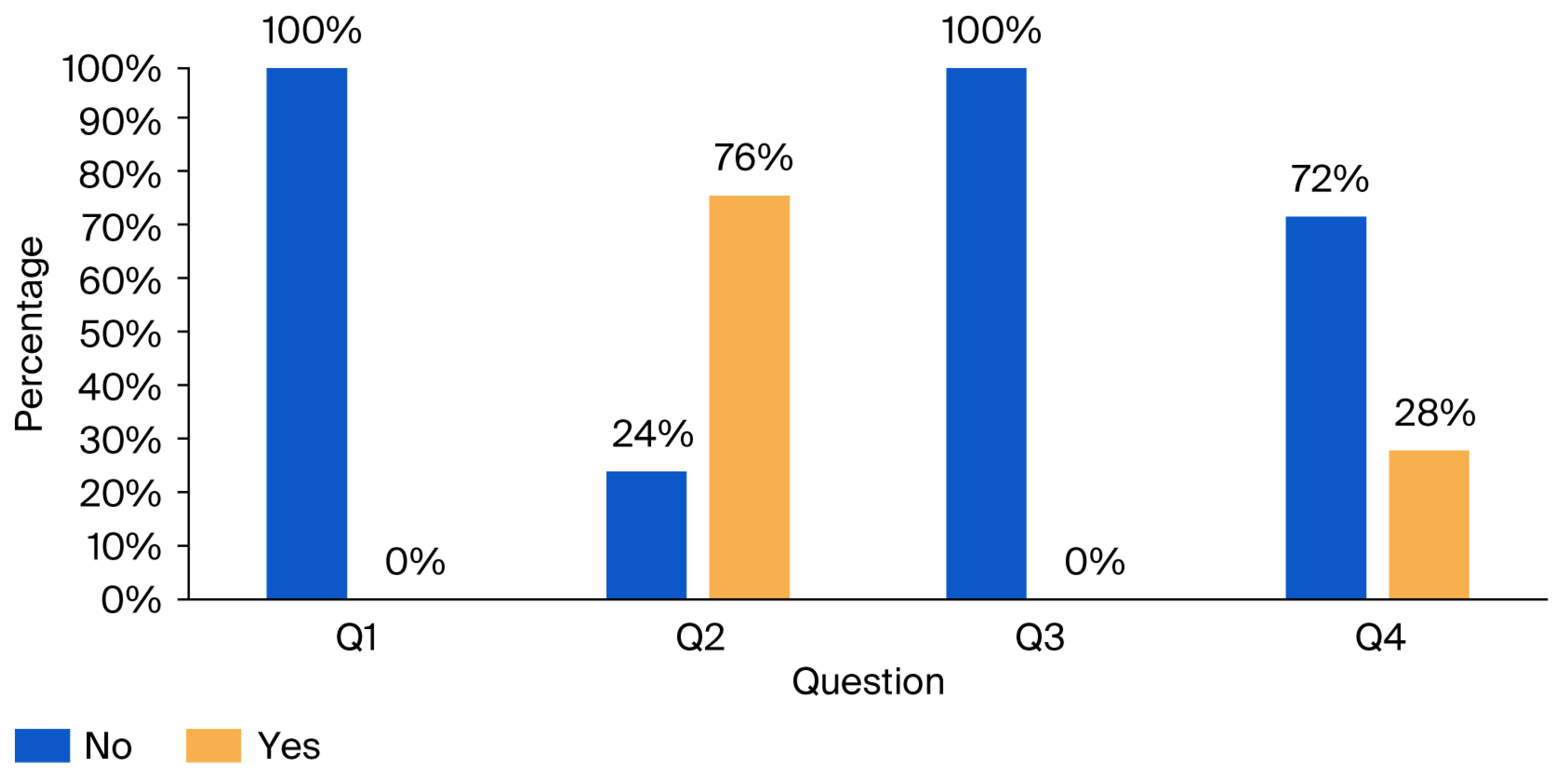
| Q1 | Do you use any form of hearing protection in noisy areas of your workplace? | To gauge the use of hearing protection. |
| Q2 | Are you aware of the potential health risks associated with prolonged exposure to loud noise? | To assess baseline awareness of noise-related health risks |
| Q3 | Has there been training, or information provided about noise and hearing protection? | To determine awareness and educational efforts regarding noise hazards. |
| Q4 | Have you had your hearing tested by a professional? | To check for proactive health monitoring related to noise exposure. |
Disclaimer/Publisher’s Note: The statements, opinions and data contained in all publications are solely those of the individual author(s) and contributor(s) and not of MDPI and/or the editor(s). MDPI and/or the editor(s) disclaim responsibility for any injury to people or property resulting from any ideas, methods, instructions or products referred to in the content. |
© 2026 by the authors. Licensee MDPI, Basel, Switzerland. This article is an open access article distributed under the terms and conditions of the Creative Commons Attribution (CC BY) license.
Share and Cite
Sammoura, R.; Tannir, A.E. Impact of Occupational Noise Exposure on Physical and Mental Health of Water Pumping Station Operators in Lebanon. Int. J. Environ. Res. Public Health 2026, 23, 262. https://doi.org/10.3390/ijerph23020262
Sammoura R, Tannir AE. Impact of Occupational Noise Exposure on Physical and Mental Health of Water Pumping Station Operators in Lebanon. International Journal of Environmental Research and Public Health. 2026; 23(2):262. https://doi.org/10.3390/ijerph23020262
Chicago/Turabian StyleSammoura, Rola, and Akram El Tannir. 2026. "Impact of Occupational Noise Exposure on Physical and Mental Health of Water Pumping Station Operators in Lebanon" International Journal of Environmental Research and Public Health 23, no. 2: 262. https://doi.org/10.3390/ijerph23020262
APA StyleSammoura, R., & Tannir, A. E. (2026). Impact of Occupational Noise Exposure on Physical and Mental Health of Water Pumping Station Operators in Lebanon. International Journal of Environmental Research and Public Health, 23(2), 262. https://doi.org/10.3390/ijerph23020262