


Highlights
Public health relevance—How does this work relate to a public health issue?
- Midwestern farmers face significant barriers to mental health care, which vary by demographic and attitudinal factors.
Public health significance—Why is this work of significance to public health?
- Understanding which populations are least open to mental health information helps prioritize outreach to those at greatest risk of unmet needs.
Public health implications—What are the key implications or messages for practitioners, policy makers and/or researchers in public health?
- Public health education and health promotion efforts should be tailored to encourage openness to information and help-seeking.
Abstract
Agricultural producers experience elevated stress, limited mental health access, and cultural norms that can discourage help-seeking. This study examined farmers’ preferences for receiving mental health information and the barriers that impede care. Data came from a regional needs assessment of 1024 producers across 12 Midwestern states who completed online or paper surveys, including questions on willingness to seek or receive information and the 30-item Barriers to Access to Care Evaluation. Analyses included descriptive, bivariate, and multivariate methods to explore demographic and behavioral predictors. Results indicated that while 74.1% were open to receiving mental health information, notable proportions were unwilling to seek (27.8%) or receive (28.4%) it, and 18.7% were unwilling to do either. Preferred sources were medical providers, mental health professionals, and family members, with agricultural retailers least favored. Women, younger producers, veterans, those with mental health symptoms, and individuals with higher education, anxiety, or depression showed distinct patterns of openness and barrier endorsement. Attitudinal barriers were the most common across groups. Findings highlight the importance of culturally relevant approaches that leverage trusted messengers, reduce stigma, and tailor interventions to specific subgroups to strengthen mental health outreach in agricultural communities.
1. Introduction
Agricultural producers experience significantly poorer mental health outcomes compared to the general population, with elevated rates of both anxiety and depression. Prevalence estimates for anxiety and depression among this population range from 18.7% to 71% and 13.2% to 53%, respectively, with one study reporting that approximately one in eight producers (13.2%) met the clinical threshold for depression and nearly one in five (18.7%) met criteria for generalized anxiety disorder [1,2,3,4,5].
Despite the documented need, agricultural producers face barriers to mental health support. Cultural norms that emphasize independence, toughness, and self-reliance remain deeply rooted in farming communities and discourage help-seeking [6,7,8]. Public and self-stigma around mental illness, especially among older adults and men, continues to act as an obstacle [9]. Barriers to care include fear of peer judgment, concerns about social image, and limited trust in available services [10,11]. Structural and logistical challenges compound these issues, including shortages of rural providers, lack of anonymity, limited mental health literacy, long travel distances, and time constraints driven by farming’s demanding schedule [12,13,14]. Researchers have also found that this stigma can be further compounded by a misalignment with federally qualified health centers’ locations and farming regions and limited culturally responsive programs for some communities in Hawai‘i [15]. Farmers frequently express that the farm must come first, and the perception that mental health professionals do not understand agricultural life only deepens the divide between need and access [11,16]. Recent literature has found that these barriers may come from farmers putting their farming operations before their own physical and mental health. In Belgium, Flemish farmers were rooted in a cultural pattern called “passive endurance,” a mix of hard work, toughness, self-reliance, resignation, powerlessness, and a belief that challenges must be endured. This outlook discouraged help-seeking, as many preferred to “just keep working” and doubted the usefulness of aid, especially mental health services [17]. Although digital tools offer new pathways for support, challenges such as low internet access, limited digital literacy, and discomfort with virtual platforms persist [14,18]. Despite increasing attention to mental health in agriculture, a complex web of personal, social, and structural barriers continues to impede access to care.
Many outreach efforts seek to improve mental health outcomes in agricultural communities by enhancing mental health literacy, promoting awareness of symptoms, communication strategies, and referral resources. These include the availability of telephone helplines and hotlines [19], training programs aimed at increasing mental health literacy among agricultural community members [20,21], and programs to reduce stress and improve coping skills among agricultural producers. Researchers often suggest improving mental healthcare delivery to farming populations by addressing accessibility, stoicism, stigma, dual roles, and community trauma [22].
However, less is known about farmers’ openness to receiving mental health information from various sources, or how they perceive barriers to accessing care. In particular, it is unclear who farmers prefer to receive such information from, how they want it delivered, and what barriers might prevent it from being effectively shared. This study addresses these gaps by examining both the willingness of Midwestern farmers to engage with mental health information across different sources and the barriers they experience in seeking care.
2. Materials and Methods
This study utilized data from a regional needs assessment of agricultural producers across the Midwestern region of the United States, conducted by the North Central Farm and Ranch Stress Assistance Center. The goal of the regional needs assessment was to examine the prevalence and patterns of physical health, mental health, and substance use, of Midwestern agricultural producers. This study received approval from the Institutional Review Board of the University of Illinois Urbana-Champaign (protocol number 21640, 2 April 2021).
2.1. Participants
Potential respondents were eligible to participate in the study if they were at least 18 years of age, resided in one of 12 Midwestern states, and were actively farming and/or ranching at the time of data collection.
2.2. Recruitment & Data Collection
US Farm Data (formerly Farm Market iD), which is an organization that houses information regarding the addresses of farms and farmer demographics collected from USDA Census of Agriculture surveys, as well as from publicly and privately sourced data [23], provided the addresses of 15,000 randomly selected agricultural producers in the Midwestern region. Paper surveys were then mailed to these addresses in three steps, using a modified Dillman approach to encourage survey response [24]. The first step included mailing an introductory letter that included the study’s objectives, commonly asked questions about the research, and contact information for the study team and the Institutional Review Board. The initial mailing, sent in the summer of 2021, included the survey, a list of mental health resources (talk and text hotlines, crisis line numbers, and websites aiding individuals in crisis or distress), and a postage-paid return envelope. Approximately six weeks after first contacting agricultural producers, postcard reminders about the survey were mailed. Six weeks after the reminder postcards were mailed, a final mailing included a revised introductory letter, another copy of the survey, and a postage-paid return envelope was sent to agricultural producers. Of the 15,000 agricultural producers contacted, 254 mailings were returned as undeliverable, 180 individuals were determined to be ineligible, and 36 actively refused participation. The remaining non-responses were from individuals who did not reply. A total of 1110 eligible and complete responses were included in the final sample. No participants requested to withdraw after submission. A team of trained undergraduate and graduate students entered responses from the paper surveys into a data management system to facilitate data cleaning and analysis.
2.3. Measures
2.3.1. Openness to Mental Health Information
The survey included one question about how open participants were to receiving mental health information overall, with response options of “very open,” “somewhat open,” and “not at all open.” Participants were asked whether they were interested in receiving mental health information from 19 specific sources, with “yes” and “no” response options, as well as whether they were likely to seek out mental health help or assistance from each of the 19 sources. Those sources included agricultural bankers, retailers, commodity groups, licensed medical providers, licensed mental health providers, mental health organizations, friends, family, and spiritual leaders.
2.3.2. Barriers to Care
The Barriers to Access to Care Evaluation (BACE; [25]) asked participants to rate how much each of the 30 items had ever stopped, delayed, or discouraged them from seeking mental health care. Response options were on a four-point scale from “not at all” to “a lot.” The items create one overall BACE score (α = 0.95) as well as three subscales for attitudinal (α = 0.87), instrumental (α = 0.82), and stigma-related (α = 0.93) barriers. Attitudinal barriers included statements like “thinking that professional care probably would not help.” Instrumental barriers included statements such as “having no one who could help me get professional care.” Stigma-related barriers included the statement “concern that I might be seen as ‘crazy,’” among others.
2.3.3. Mental Health
The survey included the PHQ-4 to measure anxiety and depression symptoms. Participants responded on a four-point scale from “not at all” to “nearly every day” considering their experience over the past two weeks, including “feeling nervous, anxious, or on edge,” and “feeling down, depressed, or hopeless.” Participants were also asked whether they had ever been diagnosed with anxiety or depression.
2.3.4. Physical Health
Participants were asked whether they had ever been diagnosed with each of 12 physical health conditions, including asthma, arthritis, cancer, chronic pain, COPD, dementia and/or Alzheimer’s, diabetes, hearing loss, heart condition, high blood pressure, high cholesterol, and obesity.
2.4. Data Analysis
We conducted descriptive statistics to summarize key variables and used chi-square tests to examine associations between categorical variables. Given that the dependent variables were not normally distributed, we employed non-parametric methods to assess group differences. Specifically, Kruskal–Wallis H tests were used to determine whether statistically significant differences existed between groups. Analyses were conducted using SPSS Version 29.
3. Results
The sample was predominantly male (92.1%), white (98.8%), and heterosexual (99.2%). Most respondents were married (83.9%), and about one-third (35.6%) had earned a bachelor’s degree or higher. Approximately 17.1% were military veterans, and a majority (82.4%) identified as moderately to very religious. Most participants (87.7%) were involved in conventional farming, 2.2% reported practicing organic farming, and 10.1% engaged in both. Nearly three-quarters (74.6%) identified themselves as their farming operation’s principal or primary owner/operator. Field crops were the most common primary commodity (69.4%), followed by beef (16.2%), dairy (3.0%), and other commodities (11.4%). Participants reported a range of chronic health conditions. The most common diagnoses included high blood pressure (44.7%), high cholesterol (36.2%), hearing loss (28.8%), and arthritis (26.0%). Other frequently reported conditions were obesity (10.1%), chronic pain (16.3%), and diabetes (13.4%). Mental health conditions were also reported, with 8.0% of participants indicating a diagnosis of anxiety and 8.2% reporting depression. Fewer participants reported asthma (6.9%), cancer (15.4%), heart conditions (15.1%), or COPD (3.6%).
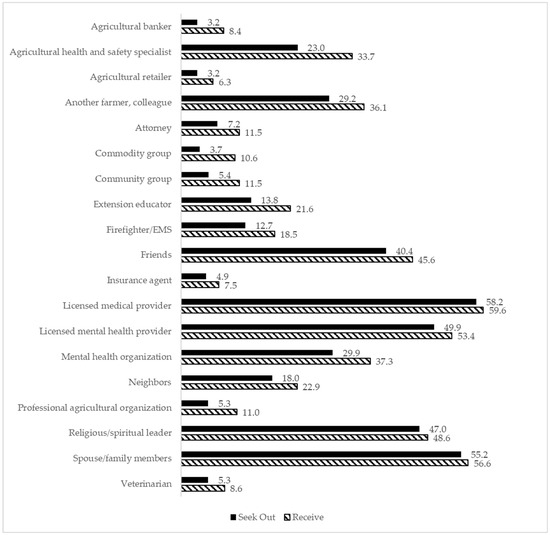
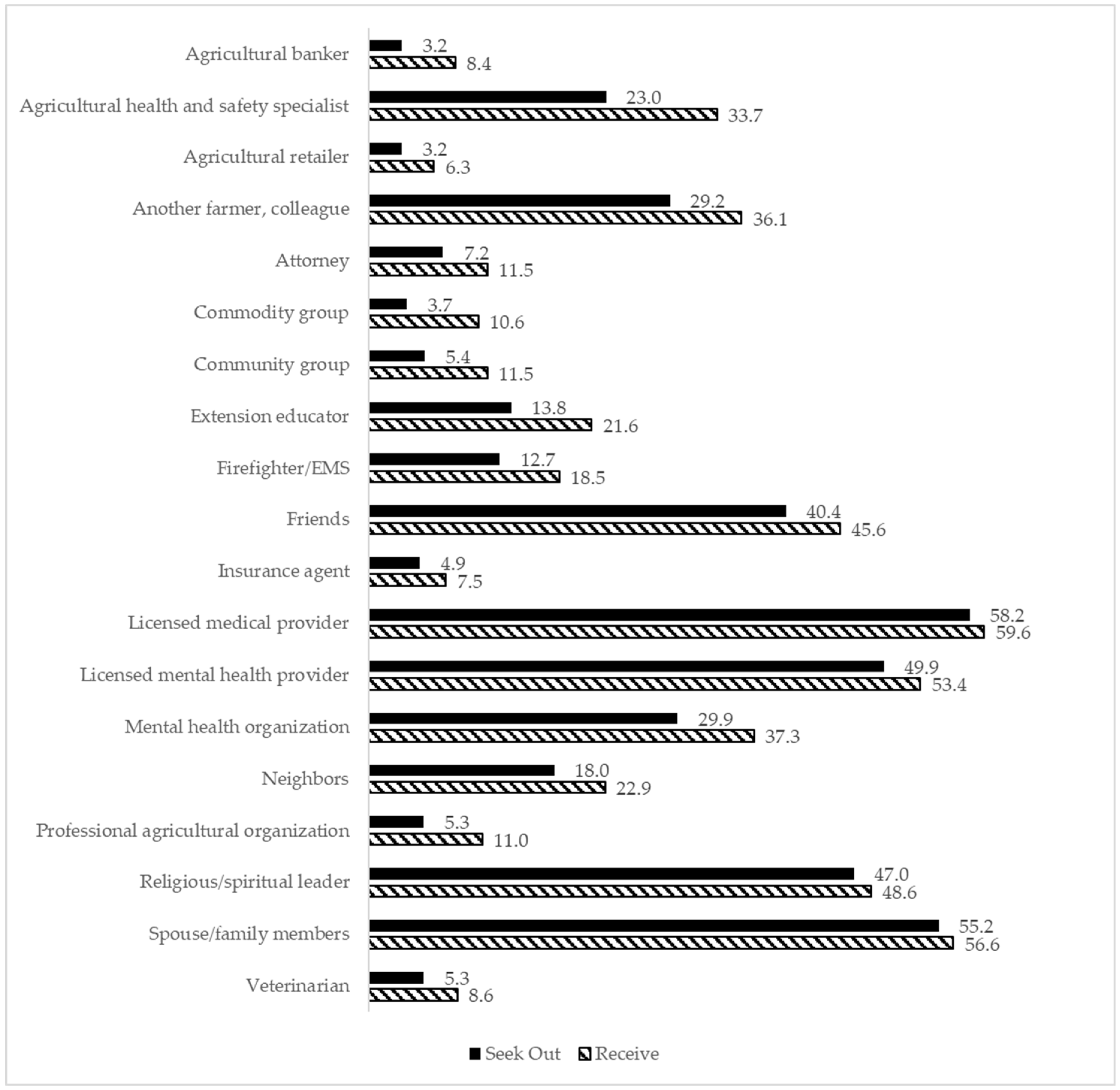
Regarding openness to receiving mental health information, 19.6% of participants indicated in general they were very open, compared to 55.3% who said somewhat open, and 25.1% who said they were not at all open. Results indicated that while 74.1% were open to receiving mental health information, notable proportions were unwilling to seek (27.8%) or receive (28.4%) it, and 18.7% were unwilling to do either. Participants reported the least willingness to receive and to seek information from agricultural retailers (6.3% and 3.2%, respectively), and the most willingness from licensed medical professionals (59.6% and 58.2%, respectively). Spouse or family was the second highest, with 56.6% willing to receive and 55.2% willing to seek mental health information from these sources. A notable portion of the sample reported unwillingness to engage with mental health information: 28.4% were not willing to receive it from any source, and 27.8% were not willing to seek it out. Additionally, 18.7% expressed no willingness to either receive or seek out mental health information. Figure 1 displays a chart of willingness to receive and seek information from each of the 19 sources.
Figure 1.
Percent of participants willing to seek out and receive mental health information from each of 19 sources.
Openness to receiving mental health information was associated with gender as a significantly higher proportion of men were not open at all to receiving mental health information (25.7%) compared to women (14.9%; χ2 = 3.826, p = 0.05). A greater proportion of participants with a bachelor’s degree or more education (82.6%) was somewhat or very open compared to 70.8% of participants with up to an associate’s degree (χ2 = 14.960, p < 0.001). Religiosity was significantly associated with openness to receiving mental health information, with 80.5% of participants who were very religious being somewhat or very open compared to 72.9% of participants who were not religious (χ2 = 6.195, p = 0.013). Having an anxiety diagnosis was significant (χ2 = 9.30, p = 0.002) as 90.3% of those diagnosed were somewhat or very open to receiving mental health information, a higher proportion compared to those without an anxiety diagnosis (74.1%). Having a depression diagnosis was similar; 94.2% of those with a depression diagnosis were somewhat or very open to receiving mental health information compared to 73.8% of those without a depression diagnosis (χ2 = 14.226, p < 0.001). Age, being married, being a veteran, having a disability, farm role, anxiety symptoms, and depression symptoms were not significant.
Mean total BACE scores are presented in Table 1. The overall barriers to care mean score was 0.257 (SD 0.42). Barriers to care include subscales for stigma-related (Table 2), instrumental (Table 3), and attitudinal barriers (Table 4). The mean for attitudinal barriers (0.338, SD 0.49) was highest, followed by stigma-related barriers (M 0.248, SD 0.48), and instrumental barriers (M 0.146, SD 0.33). Perceived barriers to mental health care varied significantly across several participant characteristics. Women in the sample reported significantly greater instrumental and attitudinal barriers to care compared to men. Higher levels of alcohol use were associated with greater perceived barriers to care, particularly attitudinal barriers. Participants whose symptoms met criteria for anxiety disorder or major depressive disorder, as well as those diagnosed with either condition, reported significantly higher perceived barriers across all subscales. In contrast, individuals who were not open at all to receiving mental health information perceived significantly fewer barriers than those who were somewhat or very open. No significant differences were found in perceived barriers to care based on farm role or marital status.
Table 1.
Associations with Barriers to Care average score.
Table 2.
Associations with Barriers to Care—Stigma subscale.
Table 3.
Associations with Barriers to Care—Instrumental subscale.
Table 4.
Associations with Barriers to Care—Attitudinal subscale.
4. Discussion
The goal of this study was to examine Midwestern farmers’ openness to mental health information and their perceived barriers to accessing mental health care. This study found that participants were most willing to both receive and seek out mental health information from medical providers, spouses/family members, mental health providers, religious leaders, and friends. It is notable that participants’ preferred sources of mental health information were community members and people close to them. Additionally, across all sources of mental health information, participants were more willing to receive information than to seek it out. Together, these findings suggest that an approach to farmers’ mental health care that sends information through farmers’ social networks would be especially beneficial.
Examining demographic patterns of openness to mental health information demonstrated that participants with diagnosed anxiety or depression were more open to receiving and seeking out mental health information. This finding may be attributed to the likelihood that receiving a diagnosis for a mental health condition inherently requires an individual to interact with mental health providers and information. Furthermore, individuals with diagnosed mental health conditions are likely more motivated to access information about mental health to address their known mental health needs. Participants who endorsed higher levels of religiosity were also more open to receiving and seeking out mental health information. This finding may be attributed to perceptions of topics such as mental and emotional well-being as more appropriate to address in religious settings, which could create more comfort in receiving or seeking out mental health information. Studies have found that religion may offer positive long-term mental health effects through participation in public religious activities and the importance of religion to oneself [26]. Although more research is needed to determine the nature of the relationship between religiosity and openness to mental health information among farmers, this finding suggests a promising avenue for providing mental health support for farmers in religious settings. This includes USDA faith-based initiatives and opportunities within the Regional Farm and Ranch Stress Assistance Network. In addition, men and participants with less education were less open to receiving or seeking out mental health information. A review by Seidler et al. (2016) found that greater conformity to traditional masculine norms is associated with reduced help-seeking behavior in men, which may influence how individuals recognize and express symptoms, their attitudes toward seeking help, and how they manage mental health challenges [27].
A notable proportion of the sample were not willing to either receive or seek out mental health information from any source. Additionally, participants who were not open to receiving or seeking out mental health information reported fewer barriers to accessing mental healthcare. These findings elicit the question of how to provide mental health support for farmers unwilling to receive the information. Research suggests creating community-based programming to accommodate farmers’ specific occupational and cultural needs [28]. More qualitative studies on farmers’ perceptions of stress and mental health are needed to understand their needs and how to address them, and deliver mental health services and education to meet farmers where they are.
Some groups of participants reported greater perceived barriers to accessing mental healthcare. Barriers to accessing mental healthcare were organized into three categories according to the BACE measurement, which included stigma-related, attitudinal, and instrumental barriers. Stigma-related barriers refer to concerns someone may have about how others may negatively perceive their accessing of mental healthcare, attitudinal barriers refer to discomfort with discussing mental health with others, and instrumental barriers refer to tangible obstacles in obtaining mental healthcare. Women indicated experiencing more instrumental barriers and attitudinal barriers in accessing mental healthcare than men. The concept of emotional labor in local food systems offers a valuable lens for understanding this disparity in agricultural settings. As Som Castellano (2016) explains, women are often expected to care for their families and the emotional well-being of others in their community, all while contributing to or managing farm operations [29]. These multiple demands create a layered emotional strain that can make it especially difficult for women to prioritize their mental health, which can be further compounded by limited resources, geographic isolation, and competing responsibilities in farming contexts. Such conditions may reinforce instrumental barriers (e.g., lack of time, transportation, or service availability) and attitudinal barriers (e.g., guilt over self-care, discomfort with mental health conversations). Women’s experiences in agriculture are often shaped by intersecting responsibilities and identities, suggesting the need for further research that captures the layered nature of their roles [30,31,32].
Additionally, participants who reported higher recent alcohol use reported higher attitudinal barriers. This finding may be attributed to the use of alcohol as a coping strategy. If participants avoid seeking mental healthcare due to discomfort with discussing their emotions, they may turn to alcohol as an alternative coping mechanism [33,34,35,36]. Finally, participants who experienced anxiety or depression symptoms that met the diagnosis threshold or had diagnosed anxiety or depression reported greater instrumental, attitudinal, and stigma-related barriers to accessing mental healthcare. Participants experiencing more frequent or severe symptoms of depression or anxiety may be more likely to seek mental health care, yet they could also encounter greater barriers to accessing it. Individuals experiencing depression and/or anxiety may face barriers to accessing mental health care due to limited social functioning, lack of a usual source of care, or insurance coverage, which are factors shown to impact utilization of mental health services [37].
Agricultural producers face many barriers to accessing care, particularly for mental health issues. The findings indicate a significant variance in openness to receiving mental health information, highlighting a hesitancy that may stem from the cultural norms of stoicism and self-reliance. Such values, while fostering a sense of resilience and independence, may simultaneously discourage help-seeking behaviors and the acknowledgment of mental health struggles [8]. Barriers to mental health support include strong norms of self-reliance and a tendency to downplay or distance oneself from mental health concerns [38]. Hopkins et al. (2023) identified cultural norms, normative beliefs about healthcare, and stigma surrounding mental health as key barriers inhibiting farmers from seeking the help they need [6]. This may reflect what Hopkins et al. (2024) describe as “farm identity,” a deep-rooted connection to farm work that often leads farmers to prioritize their operations over their own physical and mental well-being [30]. Stigma surrounding mental health is especially pronounced in rural communities, where close social networks heighten privacy concerns. Such stigma operates on multiple levels, including internally, by discouraging individuals from recognizing their own need for support, and externally, through community attitudes toward those who pursue mental health services. Among farmers, a preference for face-to-face interactions combined with distrust of health professionals further compounds these barriers to help-seeking [10,11,14,18]. In addition to stigma and provider distrust, some agricultural producers may perceive mental health care differently due to the stressors they face, such as weather variability, high input costs, or fluctuations in commodity markets. This may interact with perceptions that providers lack the lived experience to understand the agricultural context [14,18]. As a result, farmers often rely on alternative coping strategies shaped by both individual characteristics and broader community norms, particularly where stigma makes accessing formal treatment less acceptable [33,34,35,36].
Limitations
This study has several limitations. First, findings are based on responses from agricultural producers in a 12-state region and may not apply to all people who work in agriculture. The sample also lacks diversity in terms of race/ethnicity, gender, and sexual orientation. The response rate was also lower than rates typically reported in mailed surveys targeting agricultural producers [2,39,40,41]. Nonetheless, many recent cross-sectional studies on stress, mental health, and substance use in farming populations have employed convenience, online, or snowball sampling techniques [42,43], which do not permit calculation of response rates or support generalizability. Moreover, lower response rates are a common challenge in agricultural research settings [44,45].
In addition to these concerns, there may be some sampling bias, as individuals who experience shame, distrust of healthcare systems, or mental health stigma may have chosen not to participate. Others who did respond may have done so with limited openness. Furthermore, the survey utilized Likert-scale items, which limited the depth of insight into participants’ experiences and perceptions and did not allow for open-ended responses that could facilitate qualitative analysis. Another limitation is the imbalance in distribution, with a larger number of male participants compared to female participants. Lastly, seasonal timing may have influenced the data, as symptoms of stress, anxiety, and depression—as well as perceptions of mental health—can fluctuate throughout the year based on environmental conditions, such as weather, planting and harvest cycles, and other seasonal stressors commonly experienced in agricultural communities.
5. Conclusions
Understanding how producers engage with mental health information is essential. This study highlights the variability in receptiveness among agricultural producers and the importance of trusted sources. Findings suggest that dissemination strategies should be tailored to reflect producers’ preferences and existing trust networks. By aligning outreach efforts with these insights, programs can more effectively connect producers to the needed resources, reducing barriers to support and fostering a more supportive agricultural community.
Author Contributions
Conceptualization, C.C. and J.R.; methodology, J.R. and C.C.; software, C.C. and J.R.; validation, all authors.; formal analysis, C.C., A.B. and S.I.; investigation, J.R. and C.C.; resources, J.R. and C.C.; data curation, J.R. and C.C.; writing—original draft preparation, C.C., A.B. and S.I.; writing—review and editing, all authors; visualization, C.C. and S.I.; supervision, C.C. and J.R.; project administration, J.R.; funding acquisition, J.R. and C.C. All authors have read and agreed to the published version of the manuscript.
Funding
This research was supported by the U.S. Department of Agriculture, National Institute of Food and Agriculture, under agreement number 2020-70028-32728. The findings and conclusions in this preliminary publication have not been formally disseminated by the U.S. Department of Agriculture and should not be construed to represent any agency determination or policy.
Institutional Review Board Statement
The study was approved by the Institutional Review Board of the University of Illinois Urbana-Champaign (protocol number 21640, 2 April 2021).
Informed Consent Statement
Informed consent was obtained from all participants in the study.
Data Availability Statement
Data is not available to the public due to confidentiality.
Conflicts of Interest
The authors do not have any conflicts of interest.
Abbreviations
The following abbreviations are used in this manuscript:
| BACE | Barriers to Access to Care Evaluation |
| COPD | Chronic Obstructive Pulmonary Disease |
| AUD | Alcohol Use Disorder |
| PHQ-4 | Patient Health Questionnaire-4 (PHQ-4) |
| USDA | United States Department of Agriculture |
| MH | Mental Health |
| Info | Information |
References
- Bjornestad, A.; Brown, L.; Weidauer, L. The Relationship between Social Support and Depressive Symptoms in Midwestern Farmers. J. Rural Ment. Health 2019, 43, 109–117. [Google Scholar] [CrossRef] [Scilit]
- Rudolphi, J.M.; Cuthbertson, C.; Kaur, A.; Sarol, J. A Comparison between Farm-Related Stress, Mental Health, and Social Support between Men and Women Farmers. Int. J. Environ. Res. Public Health 2024, 21, 684. [Google Scholar] [CrossRef] [Scilit]
- Thompson, R.; Hagen, B.N.M.; Lumley, M.N.; Winder, C.B.; Gohar, B.; Jones-Bitton, A. Mental Health and Substance Use of Farmers in Canada during COVID-19. Int. J. Environ. Res. Public Health 2022, 19, 13566. [Google Scholar] [CrossRef] [Scilit] [PubMed]
- Rudolphi, J.M.; Berg, R.L.; Parsaik, A. Depression, Anxiety and Stress Among Young Farmers and Ranchers: A Pilot Study. Community Ment. Health J. 2020, 56, 126–134. [Google Scholar] [CrossRef] [Scilit]
- Cuthbertson, C.; Rudolphi, J. Depression, Anxiety, and Self-Rated Mental Health in the Agricultural Community during COVID-19. J. Rural Ment. Health 2025, 49, 21–32. [Google Scholar] [CrossRef] [Scilit]
- Hopkins, N.; Proctor, C.; Muilenburg, J.L.; Kershaw, T. “It’s Easier to Go to the Beer Store than Ask for Help”: A Qualitative Exploration of Barriers to Health Care in Rural Farming Communities. J. Rural Ment. Health 2023, 47, 104–113. [Google Scholar] [CrossRef] [Scilit]
- Stewart, H.; Jameson, J.P.; Curtin, L. The Relationship between Stigma and Self-Reported Willingness to Use Mental Health Services among Rural and Urban Older Adults. Psychol. Serv. 2015, 12, 141–148. [Google Scholar] [CrossRef] [Scilit]
- Firnhaber, J.; Malone, S.M.; O’Hagan, A.D.; O’Keefe, S.; McNamara, J.; O’Connor, S. ‘You Don’t Want to Be Seen to Be Struggling’; Identifying Sociocultural Barriers and Facilitators for Irish Farmers’ Mental Health Help-seeking. Sociol. Rural. 2024, 64, 353–375. [Google Scholar] [CrossRef] [Scilit]
- Vayro, C.; Brownlow, C.; Ireland, M.; March, S. A Thematic Analysis of the Personal Factors Influencing Mental Health Help-Seeking in Farmers. J. Rural Health 2023, 39, 374–382. [Google Scholar] [CrossRef] [Scilit] [PubMed]
- Staniford, A.K.; Dollard, M.F.; Guerin, B. Stress and Help-seeking for Drought-stricken Citrus Growers in the Riverland of South Australia. Aust. J. Rural Health 2009, 17, 147–154. [Google Scholar] [CrossRef] [Scilit]
- Hull, M.J.; Fennell, K.M.; Vallury, K.; Jones, M.; Dollman, J. A Comparison of Barriers to Mental Health Support-seeking among Farming and Non-farming Adults in Rural South Australia. Aust. J. Rural Health 2017, 25, 347–353. [Google Scholar] [CrossRef] [Scilit]
- Brew, B.; Inder, K.; Allen, J.; Thomas, M.; Kelly, B. The Health and Wellbeing of Australian Farmers: A Longitudinal Cohort Study. BMC Public Health 2016, 16, 988. [Google Scholar] [CrossRef] [Scilit]
- Hull, M.J.; Gunn, K.M.; Smith, A.E.; Jones, M.; Dollman, J. “We’re Lucky to Have Doctors at All”; A Qualitative Exploration of Australian Farmers’ Barriers and Facilitators to Health-Related Help-Seeking. Int. J. Environ. Res. Public Health 2022, 19, 11075. [Google Scholar] [CrossRef] [Scilit]
- Vayro, C.; Brownlow, C.; Ireland, M.; March, S. “Don’t … Break Down on Tuesday Because the Mental Health Services Are Only in Town on Thursday”: A Qualitative Study of Service Provision Related Barriers to, and Facilitators of Farmers’ Mental Health Help-Seeking. Adm. Policy Ment. Health Ment. Health Serv. Res. 2021, 48, 514–527. [Google Scholar] [CrossRef] [Scilit] [PubMed]
- Jain, S.; Souza, J., Jr.; Le, T.N. Mental Health Equity for Culturally and Linguistically Diverse Farmers in Hawai‘i. J. Health Care Poor Underserved 2025, 36, 160–182. [Google Scholar] [CrossRef] [Scilit]
- Hagen, B.N.M.; Sawatzky, A.; Harper, S.L.; O’Sullivan, T.L.; Jones-Bitton, A. “Farmers Aren’t into the Emotions and Things, Right?”: A Qualitative Exploration of Motivations and Barriers for Mental Health Help-Seeking among Canadian Farmers. J. Agromed. 2022, 27, 113–123. [Google Scholar] [CrossRef] [Scilit]
- Adam, J.; Messely, L.; Prové, C.; Sanders, A. Passive Endurance: An Analysis of Barriers to Aid among Flemish Farmers. Sociol. Rural. 2025, 65, e12502. [Google Scholar] [CrossRef] [Scilit]
- Skaczkowski, G.; Hull, M.; Smith, A.E.; Dollman, J.; Jones, M.; Gunn, K.M. Understanding Farmers’ Barriers to Health and Mental Health-Related Help-Seeking: The Development, Factor Structure, and Reliability of the Farmer Help-Seeking Scale. J. Rural Health 2024, 40, 64–74. [Google Scholar] [CrossRef] [Scilit]
- Hughes-Barton, D.; Skaczkowski, G.; Starick, H.; Gunn, K.M. Mental Health and Wellbeing Helplines for Farmers: A Scoping Review of Usage, Acceptability, and Effectiveness of Those Currently in Operation Around the World. J. Agromed. 2025, 30, 640–663. [Google Scholar] [CrossRef] [Scilit] [PubMed]
- Cuthbertson, C.; Brennan, A.; Shutske, J.; Zierl, L.; Bjornestad, A.; Macy, K.; Schallhorn, P.; Shelle, G.; Dellifield, J.; Leatherman, J.; et al. Developing and Implementing Farm Stress Training to Address Agricultural Producer Mental Health. Health Promot. Pract. 2022, 23, 8–10. [Google Scholar] [CrossRef] [Scilit] [PubMed]
- Cuthbertson, C.; Brennan, A.; Shutske, J.; Leatherman, J.; Bjornestad, A.; Zierl, L.; Macy, K.; Skidmore, M.; Schallhorn, P.; Dellifield, J.; et al. An Effective Mental Health Literacy Program for Farm Financial Service Providers. J. Agromed. 2023, 28, 127–135. [Google Scholar] [CrossRef] [Scilit]
- Purc-Stephenson, R.; Roy, N.; Chimaobi, A.; Hood, D. An Evidence-Based Guide for Delivering Mental Healthcare Services in Farming Communities: A Qualitative Study of Providers’ Perspectives. Int. J. Environ. Res. Public Health 2024, 21, 791. [Google Scholar] [CrossRef] [Scilit] [PubMed]
- Farm Market iD. Objective Insights on Both Growers & Farms. 2020. Available online: https://www.farmmarketid.com/data/ (accessed on 1 January 2020).
- Dillman, D.A.; Smyth, J.D.; Christian, L.M. Internet, Phone, Mail, and Mixed-Mode Surveys: The Tailored Design Method, 4th ed.; Wiley: Hoboken, NJ, USA, 2014; ISBN 978-1-118-45614-9. [Google Scholar]
- Clement, S.; Brohan, E.; Jeffery, D.; Henderson, C.; Hatch, S.L.; Thornicroft, G. Development and Psychometric Properties the Barriers to Access to Care Evaluation Scale (BACE) Related to People with Mental Ill Health. BMC Psychiatry 2012, 12, 36. [Google Scholar] [CrossRef] [Scilit]
- Garssen, B.; Visser, A.; Pool, G. Does Spirituality or Religion Positively Affect Mental Health? Meta-Analysis of Longitudinal Studies. Int. J. Psychol. Relig. 2021, 31, 4–20. [Google Scholar] [CrossRef] [Scilit]
- Seidler, Z.E.; Dawes, A.J.; Rice, S.M.; Oliffe, J.L.; Dhillon, H.M. The Role of Masculinity in Men’s Help-Seeking for Depression: A Systematic Review. Clin. Psychol. Rev. 2016, 49, 106–118. [Google Scholar] [CrossRef] [Scilit]
- Malone, S.M.; Firnhaber, J.; O’Hagan, A.D.; O’Keeffe, S.; McNamara, J.; O’Connor, S. “Lacking the Rural Empathy”; Irish Farmers’ and Stakeholders’ Opinions on Current Mental Health Services and Preferences for Support. J. Rural Stud. 2025, 114, 103508. [Google Scholar] [CrossRef] [Scilit]
- Som Castellano, R.L. Emotional Labor, Food Provisioning and Local Food System Engagement. In Gender and Food: From Production to Consumption and After; Emerald Group Publishing Limited: Leeds, UK, 2016; Volume 22, pp. 193–215. ISBN 978-1-78635-054-1. [Google Scholar]
- Hopkins, N.; Griffeth, L.L.; Reece, C.; Proctor, C. “They Can’t Possibly Understand What I’m Going Through”: Female Farmers’ Perspectives on Barriers to Care in Georgia. Int. J. Environ. Res. Public Health 2024, 21, 1130. [Google Scholar] [CrossRef] [Scilit] [PubMed]
- Doss, C.; Meinzen-Dick, R.; Quisumbing, A.; Theis, S. Women in Agriculture: Four Myths. Glob. Food Secur. 2018, 16, 69–74. [Google Scholar] [CrossRef] [Scilit]
- Pilgeram, R.; Dentzman, K.; Lewin, P. Women, Race and Place in US Agriculture. Agric. Hum. Values 2022, 39, 1341–1355. [Google Scholar] [CrossRef] [Scilit] [PubMed]
- Proctor, C.; Hopkins, N. Examining the Relationship Between Stress, Barriers to Healthcare, and Alcohol Use in the US Agricultural Community. J. Agromed. 2024, 29, 605–614. [Google Scholar] [CrossRef] [Scilit] [PubMed]
- Ewert, R. “A Country Boy Can Survive:” Rural Culture and Male-Targeted Suicide Prevention Messaging. Soc. Sci. Med. 2021, 289, 114439. [Google Scholar] [CrossRef] [Scilit]
- Chennapragada, L.; Kandlur, R.; Pushpanadh, S.; Aragula, S.S.; Kilby, D.J.; Richardson-Vejlgaard, R. A Study of Attitudes and Experiences Relating to Alcohol Use in a Community of Family Farmers from Southern India. J. Ethn. Subst. Abuse 2025, 24, 533–555. [Google Scholar] [CrossRef] [Scilit]
- Cuthbertson, C.; Billington, A.; Rudolphi, J. Substance Use Among Illinois Farmers. Subst. Use Misuse 2024, 59, 1812–1819. [Google Scholar] [CrossRef] [Scilit] [PubMed]
- Lee, Y.J.; Palmer, J.; Cline, A.C.; Lee, H. Factors Influencing the Health Care Utilization Among People With Depression and/or Anxiety Symptoms. J. Am. Psychiatr. Nurses Assoc. 2024, 30, 858–867. [Google Scholar] [CrossRef] [Scilit] [PubMed]
- Billington, A.; Cuthbertson, C.; Iwinski, S.; Hu, Y.; Krishnaswamy, M.; Rudolphi, J. “Move Forward”: A Marginalia Analysis of Farmers’ Mental Health Management Strategies. J. Rural Stud. 2025, 117, 103649. [Google Scholar] [CrossRef] [Scilit]
- Chengane, S.; Beseler, C.L.; Duysen, E.G.; Rautiainen, R.H. Occupational Stress among Farm and Ranch Operators in the Midwestern United States. BMC Public Health 2021, 21, 2076. [Google Scholar] [CrossRef] [Scilit] [PubMed]
- Johnson, A.; Baccaglini, L.; Haynatzki, G.R.; Achutan, C.; Loomis, D.; Rautiainen, R.H. Agricultural Injuries among Farmers and Ranchers in the Central United States during 2011–2015. J. Agromed. 2021, 26, 62–72. [Google Scholar] [CrossRef] [Scilit]
- Rudolphi, J.M.; Cuthbertson, C.; Keller, K.; Mott, R. North Central Farm and Ranch Stress Assistance Center: 2020–2023: Outcomes, Lessons Learned, and Recommendations for the Future. OBM Integr. Complement. Med. 2024, 9, 1–14. [Google Scholar] [CrossRef] [Scilit]
- Jones-Bitton, A.; Best, C.; MacTavish, J.; Fleming, S.; Hoy, S. Stress, Anxiety, Depression, and Resilience in Canadian Farmers. Soc. Psychiatry Psychiatr. Epidemiol. 2020, 55, 229–236. [Google Scholar] [CrossRef] [Scilit]
- Grocke-Dewey, M.; Brennan, A.; Freeman, B.; Weas, H.; Gutheil, J.; Stallones, L.; McMoran, D. Perceived Stress, Stressors, and Preferred Stress Management Strategies among Western Agricultural Producers. J. Rural Ment. Health 2023, 47, 152–162. [Google Scholar] [CrossRef] [Scilit]
- Pennings, J.M.E.; Irwin, S.H.; Good, D.L. Surveying Farmers: A Research Note; University of Illinois at Urbana-Champaign, Department of Agricultural and Consumer Economics: Urbana, IL, USA, 1999. [Google Scholar] [CrossRef]
- Pennings, J.M.E.; Irwin, S.H.; Good, D.L. Surveying Farmers: A Case Study. Appl. Econ. Perspect. Policy 2002, 24, 266–277. [Google Scholar] [CrossRef] [Scilit]

Disclaimer/Publisher’s Note: The statements, opinions and data contained in all publications are solely those of the individual author(s) and contributor(s) and not of MDPI and/or the editor(s). MDPI and/or the editor(s) disclaim responsibility for any injury to people or property resulting from any ideas, methods, instructions or products referred to in the content. |
© 2025 by the authors. Licensee MDPI, Basel, Switzerland. This article is an open access article distributed under the terms and conditions of the Creative Commons Attribution (CC BY) license.