


Association of Physical and Emotional Parameters with Performance of Firefighters: A Systematic Review


 , , and
Abstract
1. Introduction
2. Materials and Methods
2.1. Search Procedures
2.2. Eligibility Criteria
2.3. Data Extraction
2.4. Quality Assessment
3. Results
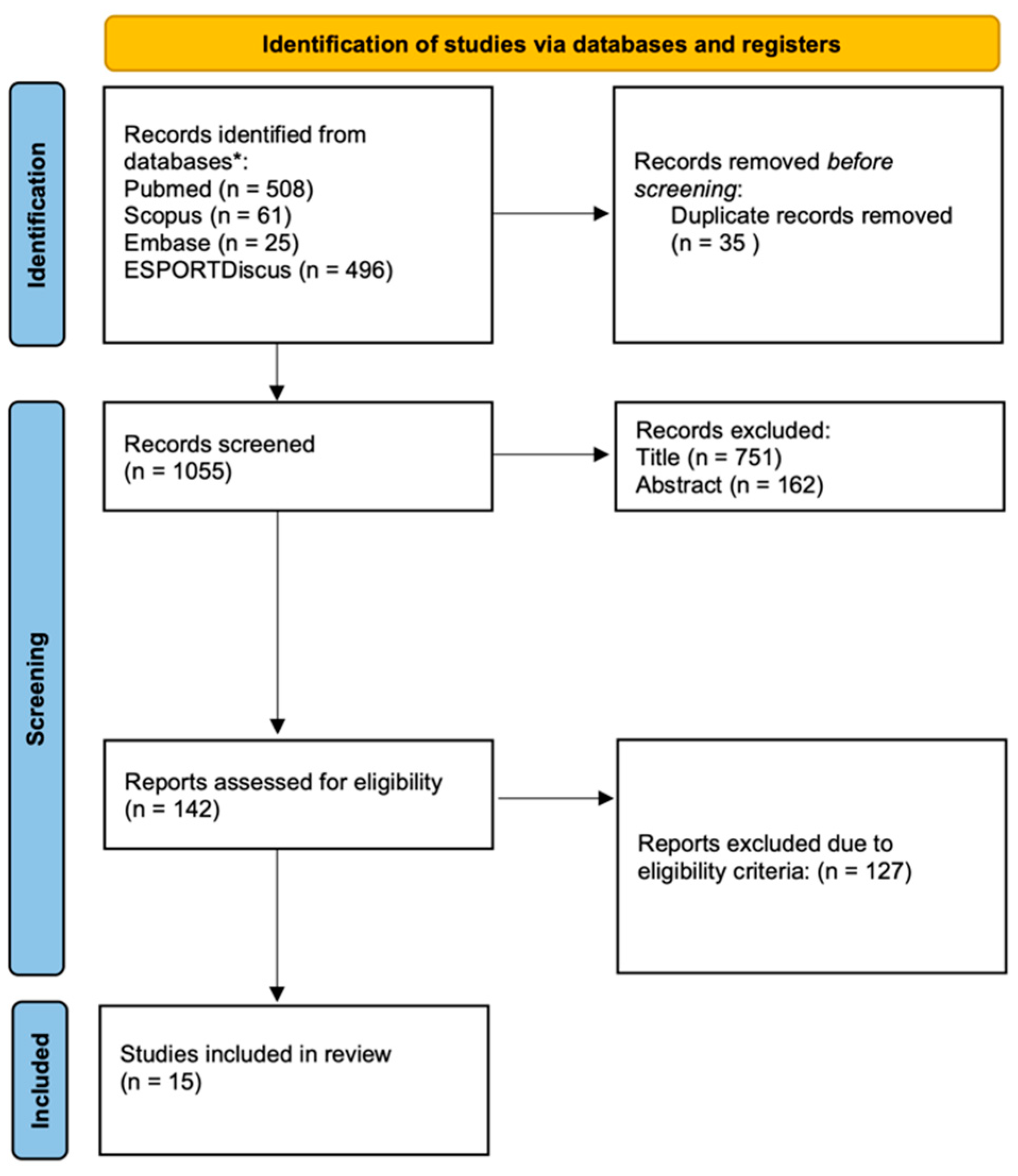
3.1. Search Results
3.2. Fitness Tests
3.3. Performance Tests
3.4. Correlations between Fitness Tests and Performance Firefighting Tests
4. Discussion
4.1. Mental and Emotional Aspects
4.2. Physical Aspects
5. Conclusions
Practical Applications
Supplementary Materials
Author Contributions
Funding
Data Availability Statement
Acknowledgments
Conflicts of Interest
References
- Sheaff, A.K.; Bennett, A.; Hanson, E.D.; Kim, Y.-S.; Hsu, J.; Shim, J.K.; Edwards, S.T.; Hurley, B.F. Physiological Determinants of the Candidate Physical Ability Test in Firefighters. J. Strength Cond. Res. 2010, 24, 3112–3122. [Google Scholar] [CrossRef]
- Canetti, E.F.D.; Gayton, S.; Schram, B.; Pope, R.; Orr, R.M. Psychological, Physical, and Heat Stress Indicators Prior to and after a 15-Minute Structural Firefighting Task. Biology 2022, 11, 104. [Google Scholar] [CrossRef] [PubMed]
- Antolini, M.R.; Weston, Z.J.; Tiidus, P.M. Physical Fitness Characteristics of a Front-Line Firefighter Population. Acta Kinesiol. Univ. Tartu. 2015, 21, 61–74. [Google Scholar] [CrossRef]
- Donovan, K.J.; McConnell, A.K. Do Fire-Fighters Develop Specific Ventilatory Responses in Order to Cope with Exercise Whilst Wearing Self-Contained Breathing Apparatus? Eur. J. Appl. Physiol. Occup. Physiol. 1999, 80, 107–112. [Google Scholar] [CrossRef] [PubMed]
- MacDermid, J.C.; Tang, K.; Sinden, K.E.; D’Amico, R. Work Functioning among Firefighters: A Comparison between Self-Reported Limitations and Functional Task Performance. J. Occup. Rehabil. 2019, 29, 194–204. [Google Scholar] [CrossRef]
- CBMDF. Estatuto dos Bombeiros-Militares do Corpo de Bombeiros do Distrito Federal; Lei No 7.479; CBMDF: Vancouver, BC, Canada, 1986. [Google Scholar]
- Smith, D.L.; Petruzzello, S.J.; Chludzinski, M.A.; Reed, J.J.; Woods, J.A. Selected Hormonal and Immunological Responses to Strenuous Live-Fire Firefighting Drills. Ergonomics 2005, 48, 55–65. [Google Scholar] [CrossRef] [PubMed]
- Waldman, H.S.; Bryant, A.R.; Shepherd, B.D.; Egan, B.; McAllister, M.J. No Effect of a Ketone Monoester on Markers of Stress and Performance in a Live-Burn Search and Rescue in Firefighters. J. Strength Cond. Res. 2022, 36, 763–771. [Google Scholar] [CrossRef] [PubMed]
- Smith, D.L.; DeBlois, J.P.; Kales, S.N.; Horn, G.P. Cardiovascular Strain of Firefighting and the Risk of Sudden Cardiac Events. Exerc. Sport Sci. Rev. 2016, 44, 90–97. [Google Scholar] [CrossRef]
- Hauschild, V.D.; DeGroot, D.W.; Hall, S.M.; Grier, T.L.; Deaver, K.D.; Hauret, K.G.; Jones, B.H. Fitness Tests and Occupational Tasks of Military Interest: A Systematic Review of Correlations. Occup. Environ. Med. 2017, 74, 144–153. [Google Scholar] [CrossRef]
- Boyd, L.; Rogers, T.; Docherty, D.; Petersen, S. Variability in Performance on a Work Simulation Test of Physical Fitness for Firefighters. Appl. Physiol. Nutr. Metab. 2015, 40, 364–370. [Google Scholar] [CrossRef]
- Dwyer, J.W. The Validity of a Simulated Forcible Entry Test for Fire Fighters; Microform Publications, Int’l Inst for Sport & Human Performance, University of Oregon: Eugene, OR, USA, 1997. [Google Scholar]
- Davis, P.O.; Dotson, C.O. Job Performance Testing: An Alternative to Age Discrimination. Med. Sci. Sports Exerc. 1987, 19, 179–185. [Google Scholar] [CrossRef]
- Kim, J.-B.; Kim, C.-B.; Xiang, Y.-Y.; Dong-Il, S.; Wook, S.; Lee, H.-J.; Kang, H.-J.; Lee, C.-G.; Ahn, Y.S.; Park, J.-J. Development of the Korean Firefighter Performance Battery: Job-Related Physical Fitness Assessment. J. Occup. Environ. Med. 2023, 65, e346–e350. [Google Scholar] [CrossRef] [PubMed]
- IAFF. The Fire Service Joint Labor Management Wellness-Fitness Initiative Candidate Physical Ability Test; International Association of Fire Fighters: Washington, DC, USA, 2007. [Google Scholar]
- Von Heimburg, E.; Ingulf Medbø, J.; Sandsund, M.; Reinertsen, R.E. Performance on a Work-Simulating Firefighter Test versus Approved Laboratory Tests for Firefighters and Applicants. Int. J. Occup. Saf. Ergon. 2013, 19, 227–243. [Google Scholar] [CrossRef] [PubMed]
- Lord, C.; Netto, K.; Petersen, A.; Nichols, D.; Drain, J.; Phillips, M.; Aisbett, B. Validating ‘Fit for Duty’Tests for Australian Volunteer Fire Fighters Suppressing Bushfires. Appl. Ergon. 2012, 43, 191–197. [Google Scholar] [CrossRef]
- Dreger, R.W.; Petersen, S.R. Oxygen Cost of the CF–DND Fire Fit Test in Males and Females. Appl. Physiol. Nutr. Metab. 2007, 32, 454–462. [Google Scholar] [CrossRef] [PubMed]
- Michaelides, M.A.; Parpa, K.M.; Henry, L.J.; Thompson, G.B.; Brown, B.S. Assessment of Physical Fitness Aspects and Their Relationship to Firefighters’ Job Abilities. J. Strength Cond. Res. 2011, 25, 956–965. [Google Scholar] [CrossRef] [PubMed]
- Fyock-Martin, M.B.; Erickson, E.K.; Hautz, A.H.; Sell, K.M.; Turnbaugh, B.L.; Caswell, S.V.; Martin, J.R. What Do Firefighting Ability Tests Tell Us about Firefighter Physical Fitness? A Systematic Review of the Current Evidence. J. Strength Cond. Res. 2020, 34, 2093–2103. [Google Scholar] [CrossRef] [PubMed]
- Williford, H.N.; Duey, W.J.; Olson, M.S.; Howard, R.; Wang, N. Relationship between Fire Fighting Suppression Tasks and Physical Fitness. Ergonomics 1999, 42, 1179–1186. [Google Scholar] [CrossRef] [PubMed]
- Rhea, M.R.; Alvar, B.A.; Gray, R. Physical Fitness and Job Performance of Firefighters. J. Strength Cond. Res. 2004, 18, 348–352. [Google Scholar]
- Siddall, A.G.; Stevenson, R.D.M.; Turner, P.J.F.; Bilzon, J.L.J. Physical and Physiological Performance Determinants of a Firefighting Simulation Test. J. Occup. Environ. Med. 2018, 60, 637–643. [Google Scholar] [CrossRef] [PubMed]
- Myhre, L.G.; Tucker, D.M.; Bauer, D.H.; Fisher, J.R., Jr.; Grimm, W.H. Relationship between Selected Measures of Physical Fitness and Performance of a Simulated Fire Fighting Emergency Task; Armstrong Laboratory: Brooks AFB, TX, USA, 1997. [Google Scholar]
- Perroni, F.; Tessitore, A.; Cortis, C.; Lupo, C.; D’artibale, E.; Cignitti, L.; Capranica, L. Energy Cost and Energy Sources during a Simulated Firefighting Activity. J. Strength Cond. Res. 2010, 24, 3457–3463. [Google Scholar] [CrossRef] [PubMed]
- Davis, P.O.; Dotson, C.O.; Santa Maria, D.L. Relationship between Simulated Fire Fighting Tasks and Physical Performance Measures. Med. Sci. Sports Exerc. 1982, 14, 65–71. [Google Scholar] [CrossRef] [PubMed]
- Tod, D.; Hardy, J.; Oliver, E. Effects of Self-Talk: A Systematic Review. J. Sport Exerc. Psychol. 2011, 33, 666–687. [Google Scholar] [CrossRef]
- McCormick, A.; Meijen, C.; Marcora, S. Psychological Determinants of Whole-Body Endurance Performance. Sports Med. 2015, 45, 997–1015. [Google Scholar] [CrossRef]
- Chang, C.J.; Putukian, M.; Aerni, G.; Diamond, A.B.; Hong, E.S.; Ingram, Y.M.; Reardon, C.L.; Wolanin, A.T. Mental Health Issues and Psychological Factors in Athletes: Detection, Management, Effect on Performance, and Prevention: American Medical Society for Sports Medicine Position Statement. Clin. J. Sport Med. 2020, 30, e61–e87. [Google Scholar] [CrossRef]
- Barwood, M.J.; Corbett, J.; Wagstaff, C.; McVeigh, D.; Thelwell, R.C. Motivational Self-Talk Improves 10 Km Time Trial Cycling Compared to Neutral Self-Talk. Int J Sports Physiol Perform 2015, 10, 166–171. [Google Scholar] [CrossRef]
- Wilczyńska, D.; Qi, W.; Jaenes, J.C.; Alarcón, D.; Arenilla, M.J.; Lipowski, M. Burnout and Mental Interventions among Youth Athletes: A Systematic Review and Meta-Analysis of the Studies. Int. J. Environ. Res. Public Health 2022, 19, 10662. [Google Scholar] [CrossRef] [PubMed]
- Rasteiro, A.; Santos, V.; Massuça, L.M. Physical Training Programs for Tactical Populations: Brief Systematic Review. Healthcare 2023, 11, 967. [Google Scholar] [CrossRef]
- Xu, J.; Haigney, M.C.; Levine, B.D.; Dineen, E.H. The Tactical Athlete: Definitions, Cardiovascular Assessment, and Management, and “Fit for Duty” Standards. Card. Electrophysiol. Clin. 2024, 16, 93–105. [Google Scholar] [CrossRef]
- Ras, J.; Kengne, A.P.; Smith, D.L.; Soteriades, E.S.; November, R.V.; Leach, L. Effects of Cardiovascular Disease Risk Factors, Musculoskeletal Health, and Physical Fitness on Occupational Performance in Firefighters—A Systematic Review and Meta-Analysis. Int. J. Environ. Res. Public Health 2022, 19, 11946. [Google Scholar] [CrossRef]
- Page, M.J.; Moher, D.; Bossuyt, P.M.; Boutron, I.; Hoffmann, T.C.; Mulrow, C.D.; Shamseer, L.; Tetzlaff, J.M.; Akl, E.A.; Brennan, S.E.; et al. PRISMA 2020 Explanation and Elaboration: Updated Guidance and Exemplars for Reporting Systematic Reviews. BMJ 2021, 372. [Google Scholar] [CrossRef]
- Moher, D.; Liberati, A.; Tetzlaff, J.; Altman, D.G. Preferred Reporting Items for Systematic Reviews and Meta-Analyses: The PRISMA Statement. BMJ 2009, 339, b2535. [Google Scholar] [CrossRef] [PubMed]
- McKenzie, J.E.; Brennan, S.E.; Ryan, R.E.; Thomson, H.J.; Johnston, R.V.; Thomas, J. Defining the Criteria for Including Studies and How They Will Be Grouped for the Synthesis. In Cochrane Handbook for Systematic Reviews of Interventions; Cochrane: London, UK, 2019; pp. 33–65. [Google Scholar]
- Kümmel, J.; Kramer, A.; Giboin, L.-S.; Gruber, M. Specificity of Balance Training in Healthy Individuals: A Systematic Review and Meta-Analysis. Sports Med. 2016, 46, 1261–1271. [Google Scholar] [CrossRef] [PubMed]
- Elkins, M.R.; Herbert, R.D.; Moseley, A.M.; Sherrington, C.; Maher, C. INVITED COMMENTARY: Rating the Quality of Trials in Systematic Reviews of Physical Therapy Interventions. Cardiopulm. Phys. Ther. J. 2010, 21, 20–26. [Google Scholar] [CrossRef] [PubMed]
- Schoenfeld, B.J.; Grgic, J.; Ogborn, D.; Krieger, J.W. Strength and Hypertrophy Adaptations between Low-vs. High-Load Resistance Training: A Systematic Review and Meta-Analysis. The Journal of Strength & Conditioning Research 2017, 31, 3508–3523. [Google Scholar]
- Schmidt, C.; Mckune, A. Association between Physical Fitness and Job Performance in Fire-Fighters. Ergon. SA J. Ergon. Soc. S. Afr. 2012, 24, 44–57. [Google Scholar]
- Nazari, G.; MacDermid, J.C.; Sinden, K.E.; Overend, T.J. The Relationship between Physical Fitness and Simulated Firefighting Task Performance. Rehabil. Res. Pract. 2018, 2018, 3234176. [Google Scholar] [CrossRef]
- Schmit, M.; Debeliso, M. The Relationship between Firefighters’ Physical Performance Characteristics and Simulated Firefighting Demands. Turk. J. Kinesiol. 2019, 5, 63–75. [Google Scholar] [CrossRef]
- Stevenson, R.D.M.; Siddall, A.G.; Turner, P.J.F.; Bilzon, J.L.J. Validity and Reliability of Firefighting Simulation Test Performance. J. Occup. Environ. Med. 2019, 61, 479–483. [Google Scholar] [CrossRef]
- Lessa, R.; da Silva, N.C.; Korpalski, T.; Correia, C.K.; Carminatti, L.J.; de Oliveira, F.R.; Pazin, J. Aptidão Aeróbia e Anaeróbia de Bombeiros Militares e Relações Com a Atividade de Combate a Incêndios Simulada. Rev. Bras. Prescrição Fisiol. Exerc. (RBPFEX) 2020, 14, 73–81. [Google Scholar]
- Saari, A.I.; Renz, G.; Davis, P.; Abel, M.G. The Influence of Age on Firefighter Combat Challenge Performance and Exercise Training Habits. J. Strength Cond. Res. 2020, 34, 2500–2506. [Google Scholar] [CrossRef] [PubMed]
- Skinner, T.L.; Kelly, V.G.; Boytar, A.N.; Peeters, G.G.; Rynne, S.B. Aviation Rescue Firefighters Physical Fitness and Predictors of Task Performance. J. Sci. Med. Sport 2020, 23, 1228–1233. [Google Scholar] [CrossRef]
- Ras, J.; Smith, D.L.; Kengne, A.P.; Soteriades, E.S.; Leach, L. Physical Fitness, Cardiovascular and Musculoskeletal Health, and Occupational Performance in Firefighters. Front. Public Health 2023, 11, 1241250. [Google Scholar] [CrossRef] [PubMed]
- Coehoorn, C.J.; Neary, J.P.; Krigolson, O.E.; Stuart-Hill, L.A. Firefighter Pre-Frontal Cortex Oxygenation and Hemodynamics during Rapid Heat Stress. Brain Res. 2023, 1798, 148156. [Google Scholar] [CrossRef]
- Smith, D.L.; Petruzzello, S.J. Selected Physiological and Psychological Responses to Live-Fire Drills in Different Configurations of Firefighting Gear. Ergonomics 1998, 41, 1141–1154. [Google Scholar] [CrossRef]
- Smith, D.L.; Petruzzello, S.J.; Kramer, J.M.; Misner, J.E. The Effects of Different Thermal Environments on the Physiological and Psychological Responses of Firefighters to a Training Drill. Ergonomics 1997, 40, 500–510. [Google Scholar] [CrossRef]
- Zhang, Y.; Balilionis, G.; Casaru, C.; Geary, C.; Schumacker, R.E.; Neggers, Y.H.; Curtner-Smith, M.D.; Richardson, M.T.; Bishop, P.A.; Green, J.M. Effects of Caffeine and Menthol on Cognition and Mood during Simulated Firefighting in the Heat. Appl. Ergon. 2014, 45, 510–514. [Google Scholar] [CrossRef]
- Greenlee, T.A.; Greene, D.R.; Kaim, R.M.; Chizewski, A.; Rougeau, K.M.; Horn, G.P.; Petruzzello, S.J. Firefighting Influences Cognitive Performance: The Heart of the Matter: 2972 Board# 255 June 1 3: 30 PM-5: 00 PM. Med. Sci. Sports Exerc. 2018, 50, 738. [Google Scholar]
- Huang, C.-J.; Webb, H.E.; Garten, R.S.; Kamimori, G.H.; Acevedo, E.O. Psychological Stress during Exercise: Lymphocyte Subset Redistribution in Firefighters. Physiol. Behav. 2010, 101, 320–326. [Google Scholar] [CrossRef]
- Huang, C.-J.; Webb, H.E.; Garten, R.S.; Kamimori, G.H.; Evans, R.K.; Acevedo, E.O. Stress Hormones and Immunological Responses to a Dual Challenge in Professional Firefighters. Int. J. Psychophysiol. 2010, 75, 312–318. [Google Scholar] [CrossRef]
- Mattila, T.A.; Petruzzello, S.J.; Horn, G.; Smith, D.L. Cognitive Behavior on a Continuous Performance Task Following Short-Term Firefighting Activity: 2567: Board# 175 June 3 8: 00 AM-9: 30 AM. Med. Sci. Sports Exerc. 2011, 43, 707. [Google Scholar]
- Perroni, F.; Tessitore, A.; Cibelli, G.; Lupo, C.; D’Artibale, E.; Cortis, C.; Cignitti, L.; De Rosas, M.; Capranica, L. Effects of Simulated Firefighting on the Responses of Salivary Cortisol, Alpha-Amylase and Psychological Variables. Ergonomics 2009, 52, 484–491. [Google Scholar] [CrossRef]
- Sünram-Lea, S.I.; Owen-Lynch, J.; Robinson, S.J.; Jones, E.; Hu, H. The Effect of Energy Drinks on Cortisol Levels, Cognition and Mood during a Fire-Fighting Exercise. Psychopharmacology 2012, 219, 83–97. [Google Scholar] [CrossRef] [PubMed]
- Zare, S.; Hemmatjo, R.; Allahyari, T.; Hajaghazadeh, M.; Hajivandi, A.; Aghabeigi, M.; Kazemi, R. Comparison of the Effect of Typical Firefighting Activities, Live Fire Drills and Rescue Operations at Height on Firefighters’ Physiological Responses and Cognitive Function. Ergonomics 2018, 61, 1334–1344. [Google Scholar] [CrossRef]
- Das, B.M.; Worley, J. Law Enforcement And Firefighter Physical Activity Study: 898. Med. Sci. Sports Exerc. 2022, 54, 218. [Google Scholar] [CrossRef]
- Orysiak, J.; Młynarczyk, M.; Piec, R.; Jakubiak, A. Lifestyle and Environmental Factors May Induce Airway and Systemic Inflammation in Firefighters. Environ. Sci. Pollut. Res. 2022, 29, 73741–73768. [Google Scholar] [CrossRef]
- Wolffe, T.A.M.; Robinson, A.; Clinton, A.; Turrell, L.; Stec, A.A. Mental Health of UK Firefighters. Sci. Rep. 2023, 13, 62. [Google Scholar] [CrossRef] [PubMed]
- Toczko, M.; Fyock-Martin, M.; McCrory, S.; Martin, J. Effects of Fitness on Self-Reported Physical and Mental Quality of Life in Professional Firefighters: An Exploratory Study. Work 2023, 76, 1589–1596. [Google Scholar] [CrossRef]
- Harvey, S.B.; Milligan-Saville, J.S.; Paterson, H.M.; Harkness, E.L.; Marsh, A.M.; Dobson, M.; Kemp, R.; Bryant, R.A. The Mental Health of Fire-Fighters: An Examination of the Impact of Repeated Trauma Exposure. Aust. N. Z. J. Psychiatry 2016, 50, 649–658. [Google Scholar] [CrossRef]
- Wallace-Webb, J.; Coehoorn, C.J.; Stuart-Hill, L.A. Subjective and Objective Cognitive Fatigue in Wildland Firefighting: 967. Med. Sci. Sports Exerc. 2022, 54, 239. [Google Scholar] [CrossRef]
- Young, P.M.; Partington, S.; Wetherell, M.A.; St Clair Gibson, A.; Partington, E. Stressors and Coping Strategies of UK Firefighters during On-duty Incidents. Stress Health 2014, 30, 366–376. [Google Scholar] [CrossRef] [PubMed]
- Berger, W.; Coutinho, E.S.F.; Figueira, I.; Marques-Portella, C.; Luz, M.P.; Neylan, T.C.; Marmar, C.R.; Mendlowicz, M.V. Rescuers at Risk: A Systematic Review and Meta-Regression Analysis of the Worldwide Current Prevalence and Correlates of PTSD in Rescue Workers. Soc. Psychiatry Psychiatr. Epidemiol. 2012, 47, 1001–1011. [Google Scholar] [CrossRef] [PubMed]
- Creamer, M.; Burgess, P.; McFarlane, A.C. Post-Traumatic Stress Disorder: Findings from the Australian National Survey of Mental Health and Well-Being. Psychol Med 2001, 31, 1237–1247. [Google Scholar] [CrossRef] [PubMed]
- Martin, K.; Meeusen, R.; Thompson, K.G.; Keegan, R.; Rattray, B. Mental Fatigue Impairs Endurance Performance: A Physiological Explanation. Sports Med. 2018, 48, 2041–2051. [Google Scholar] [CrossRef]
- Batista, M.M.; Paludo, A.C.; MP, D.A.S.; Martins, M.V.; Pauli, P.H.; Dal’maz, G.; Stefanello, J.M.; Tartaruga, M.P. Effect of Mental Fatigue on Performance, Perceptual and Physiological Responses in Orienteering Athletes. J. Sports Med. Phys. Fit. 2021, 61, 673–679. [Google Scholar] [CrossRef] [PubMed]
- Campos, B.T.; Penna, E.M.; Rodrigues, J.G.S.; Mendes, T.T.; Maia-Lima, A.; Nakamura, F.Y.; Vieira, É.L.M.; Wanner, S.P.; Prado, L.S. Influence of Mental Fatigue on Physical Performance, and Physiological and Perceptual Responses of Judokas Submitted to the Special Judo Fitness Test. J. Strength Cond. Res. 2022, 36, 461–468. [Google Scholar] [CrossRef] [PubMed]
- Gnacinski, S.L.; Meyer, B.B.; Cornell, D.J.; Mims, J.; Zalewski, K.R.; Ebersole, K.T. Tactical Athletes: An Integrated Approach to Understanding and Enhancing the Health and Performance of Firefighters-in-Training. Int. J. Exerc. Sci. 2015, 8, 4. [Google Scholar]
- Wynn, P.; Hawdon, P. Cardiorespiratory Fitness Selection Standard and Occupational Outcomes in Trainee Firefighters. Occup. Med. 2012, 62, 123–128. [Google Scholar] [CrossRef]
- Siddall, A.G.; Stevenson, R.D.M.; Turner, P.F.J.; Stokes, K.A.; Bilzon, J.L.J. Development of Role-Related Minimum Cardiorespiratory Fitness Standards for Firefighters and Commanders. Ergonomics 2016, 59, 1335–1343. [Google Scholar] [CrossRef]
- Gledhill, N.; Jamnik, V.K. Development and Validation of a Fitness Screening Protocol for Firefighter Applicants. Can. J. Sport Sci. 1992, 17, 199–206. [Google Scholar]
- Jamnik, V.; Gumienak, R.; Gledhill, N. Developing Legally Defensible Physiological Employment Standards for Prominent Physically Demanding Public Safety Occupations: A Canadian Perspective. Eur. J. Appl. Physiol. 2013, 113, 2447–2457. [Google Scholar] [CrossRef] [PubMed]
- Bilzon, J.L.J.; Scarpello, E.G.; Smith, C.V.; Ravenhill, N.A.; Rayson, M.P. Characterization of the Metabolic Demands of Simulated Shipboard Royal Navy Fire-Fighting Tasks. Ergonomics 2001, 44, 766–780. [Google Scholar] [CrossRef] [PubMed]
- Sköldström, B. Physiological Responses of Fire Fighters to Workload and Thermal Stress. Ergonomics 1987, 30, 1589–1597. [Google Scholar] [CrossRef]
- Gledhill, N.; Jamnik, V.K. Characterization of the Physical Demands of Firefighting. Can. J. Sport Sci. 1992, 17, 207–213. [Google Scholar]
- Falch, H.N.; Haugen, M.E.; Larsen, S.; van den Tillaar, R. Association of Strength Performance in Bench Press and Squat with Anthropometric Variables between Resistance-Trained Males and Females. J. Funct. Morphol. Kinesiol. 2023, 8, 19. [Google Scholar] [CrossRef]
- Ryman Augustsson, S.; Svantesson, U. Reliability of the 1 RM Bench Press and Squat in Young Women. Eur. J. Physiother. 2013, 15, 118–126. [Google Scholar] [CrossRef]
- Korak, J.A.; Bruininks, B.D.; Paquette, M.R. The Influence of Normalization Technique on Between-Muscle Activation during a Back-Squat. Int. J. Exerc. Sci. 2020, 13. [Google Scholar]
- Abel, M.G.; Palmer, T.G.; Trubee, N. Exercise Program Design for Structural Firefighters. Strength. Cond. J. 2015, 37, 8–19. [Google Scholar] [CrossRef]
- Kibler, W.B.; Press, J.; Sciascia, A. The Role of Core Stability in Athletic Function. Sports Med. 2006, 36, 189–198. [Google Scholar] [CrossRef]
- Leetun, D.T.; Ireland, M.L.; Willson, J.D.; Ballantyne, B.T.; Davis, I.M. Core Stability Measures as Risk Factors for Lower Extremity Injury in Athletes. Med. Sci. Sports Exerc. 2004, 36, 926–934. [Google Scholar] [CrossRef] [PubMed]
- Smith, D.L. Firefighter Fitness: Improving Performance and Preventing Injuries and Fatalities. Curr. Sports Med. Rep. 2011, 10, 167–172. [Google Scholar] [CrossRef] [PubMed]
- Miller, T.A. NSCA’s Guide to Tests and Assessments; Human Kinetics: Champaign, IL, USA, 2012; ISBN 1492582786. [Google Scholar]
- Fehling, P.C.; Liebig, J.P.; Ormsbee, L.H.; Smith, D.L. Cardiovascular Responses to Firefighting Duties: A Field Study: 2561: Board# 169 June 3 8: 00 AM-9: 30 AM. Med. Sci. Sports Exerc. 2011, 43, 705. [Google Scholar]
- Hunter, A.L.; Shah, A.S.V.; Langrish, J.P.; Raftis, J.B.; Lucking, A.J.; Brittan, M.; Venkatasubramanian, S.; Stables, C.L.; Stelzle, D.; Marshall, J. Fire Simulation and Cardiovascular Health in Firefighters. Circulation 2017, 135, 1284–1295. [Google Scholar] [CrossRef] [PubMed]
- Park, G.-J.; Kong, S.Y.; Shin, D.-M.; Lee, D.I.; Ku, B.-S.; Oh, J.-H.; Kim, S.-C. Acute Physiological Response of Live-Fire Simulation Activities Affecting Cardiovascular Health in Live-Fire Instructors: A Randomized Controlled Simulation Study. J. Occup. Environ. Med. 2022, 64, 46–51. [Google Scholar] [CrossRef]
- Cornell, D.J.; Gnacinski, S.L.; Zamzow, A.; Mims, J.; Ebersole, K.T. Measures of Health, Fitness, and Functional Movement among Firefighter Recruits. Int. J. Occup. Saf. Ergon. 2017, 23, 198–204. [Google Scholar] [CrossRef]
- Michaelides, M.A.; Parpa, K.M.; Thompson, J.; Brown, B. Predicting Performance on a Firefghter’s Ability Test from Fitness Parameters. Res. Q. Exerc. Sport 2008, 79, 468–475. [Google Scholar] [CrossRef] [PubMed]
- Abel, M.G.; Mortara, A.J.; Pettitt, R.W. Evaluation of Circuit-Training Intensity for Firefighters. J. Strength Cond. Res. 2011, 25, 2895–2901. [Google Scholar] [CrossRef] [PubMed]

| Study | (N) | Characteristics | Fitness Tests | Performance Tests | Description | Turnout Gear | Statistics |
|---|---|---|---|---|---|---|---|
| Davis et al., 1982 [26] | n = 100 Gender: not informed Age (y): 33.1, range: 21–57 Height (cm): 179.69, range 163.1–190.0 Mass (Kg): 83.44, range 60.2–114.4 Body composition (BF %): 21.1 Years of service: N/A | Experienced professionals | AF = 5 min step test; Balke treadmill test (Beckman Metabolic Measurement) UBe = chin ups (maximum reps) UBs = hand grip strength LBe = N/A LBs = N/A ANc = N/A ANp = N/A ABe = sit ups in 2 min FL = sit and reach BF% = estimated (Zuti and Golding) | 1. Ladder extension 2. Standpipe carry 3. Hose pull 4. Simulated rescue 5. Simulated forcible entry | Tasks were performed in the sequence as quickly and as efficiently as possible, each subject breathing from the SCBA and avoiding rests between tasks. The elapsed time to complete each task and the total time to complete all tasks were obtained. | Complete protective equipment ensemble (weighing a total of 24 kg), consisting of helmet, Mine Safety Appliance (MSA) self-contained breathing apparatus (SCBA), boots, and turnout coat. | Six variables of performance (split time for five tasks and average heart rate) were selected through a matrix of correlations. For the six criteria and 20 variables, eigenvalues, canonical correlations, and Chi-square statistics were applied. Two dimensions were found plausible that underlay the six criteria and were interpreted as physical work capacity (factor 1) and resistance to fatigue (factor 2). |
| Myhre et al., 1997 [24] | n = 222 Gender: 218 male; 4 female Age (y): 30.4 ± 9.3 Height (cm): 178.6 ± 7.6 Mass (Kg): 83.5 ± 13.1 Body composition (BF %): 20.1 ± 6.9 Years of service: N/A | Career fire- fighters representing one Army and seven Air Force Base fire departments | AF = sub-maximal cycle ergometry (estimated from heart rate response) UBe = bench press (80 lb, rate 30/min, maximum reps) UBs = bench press 1RM; upright forearm curl 1RM; upright rowing 1RM; LBe = N/A LBs = leg press 1 RM ANc = N/A ANp = N/A ABe = N/A FL = N/A BF% = hydrostatic weighing | 1. Structural search and rescue | The task was performed continuously, and performance time constituted the primary criterion of the simulated rescue task performance. Exercise heart rate (Exersentry or Polar chest electrodes); respiration rate and ventilation were also assessed. | Day uniform: 3.31 Kg. Turnout coat, trousers, helmet, hood, gloves, and boots: 7.58 Kg SCBA (fully charged): 11.34 Kg. Total of 22.23 Kg. | Pearson product-moment correlations were computed to evaluate the relationship between each selected measure and the time required to complete a standardized simulation of a fire fighter rescue task. Least squares multiple regression analysis was used to develop a prediction model for task completion time. |
| Williford et al., 1999 [21] | n = 91 Gender: male Age (y): 31.69 ± 7.39 Height (cm): 177.29 ± 6.38 Mass (Kg): 83.97 ± 10.86 Body composition (BF %): 13.78 ± 4.31 Years of service: N/A | Professionals | AF = 1.5 mile run UBe = push-ups, pull-ups (maximum reps) UBs = hand grip strength LBe = N/A LBs = N/A ANc = N/A ANp = N/A ABe = sit-ups (maximum reps in 60 s) FL = sit and reach BF% = skin-caliper (3-site) | 1. Stair climb 2. Hoisting hose in high 3. Forcible entry 4. Hose advance 5. Victim rescue | Circuit of five job-simulated tasks arranged in the following order: stair climb, hoisting, forcible entry, hose advance, and victim rescue. | Helmet, gloves, boots, turnout coat and pants, and self-contained breathing apparatus (SCBA). The weight of the protective clothing and SCBA was ~ 23 kg. | Pearson product-moment correlation coefficients were calculated between the following: (1) total and individual times and (2) descriptive characteristics and physical fitness measures. Stepwise multiple regression analyses were employed to develop linear equations that would best predict the criterion measures of total obstacle course time (PPA). |
| Rhea et al., 2004 [22] | n = 20 Gender: 17 male, 3 female Age (y): 34.5 ± 6.1 Height (cm): not informed Mass (Kg): not informed Body composition (BF %): 16.6 ± 3.9 Years of service: 6.1 ± 5.2 | Professionals | AF = 12 min run Ube = row endurance (20.5 kg, maximum reps, dominant hand); bench press endurance (45.5 kg, maximum reps); bicep curl endurance (13.6 kg, maximum reps); seated shoulder press endurance (11.4 kg, maximum reps); hand grip endurance (maintain ≥ 25.0 kg, s) UBs = bench press 5RM; hand grip strength LBe = squat endurance (61.4 kg, maximum reps) LBs = back squat 5RM; ANc = 400 m run (s) ANp = N/A ABe = ab curls (maximum reps, no time limit, 30 rep per minute cadence) FL = N/A BF% = bodpod | 1. Hose Pull 2. Stair Climb 3. Simulated Victim Drag 4. Equipment Hoist | Four separate job performance tasks were performed, each as quickly as possible and timed for performance score. | Turnout clothing, including boots, pants, coat, and helmet. A standard self-contained breathing apparatus (SCBA) tank (25 kg) was worn during each test; however, the face mask was removed for testing. | Fitness measures were combined into one grand fitness score by adding all test scores together (excluding the 400 m sprint time and percent body fat, which were subtracted) so that higher scores represented greater fitness. The performance measures were also added together to create one grand performance time with lower scores representing superior performance. Pearson product-moment correlation coefficients were calculated between the grand scores as well as each separate test score. |
| Perroni et al., 2010 [25] | n = 20 Gender: male Age (y): 32 ± 6 Height (cm): 177 ± 6 Mass (Kg): 77.2 ± 8.7 Body composition (BF %): N/A Years of service: N/A | Professionals with minimum 3 years of service | AF = graded incremental treadmill test to exhaustion wearing SCBA (K4b2, Cosmed, Rome, Italy; Accusport Lactate Analyser, Roche, Basel, Switzerland) UBe = N/A UBs = N/A LBe = N/A LBs = N/A ANc = N/A ANp = N/A ABe = N/A FL = N/A BF% = N/A | 1. Climb a firemen’s ladder and descend a 3-floor building carrying a 20 kg child dummy (child rescue) 2. Run for 250 m 3. Complete a maze in a dark chamber (find an exit) 4. Run for 250 m | Four tasks were included in the simulated intervention to be completed as quickly as possible and energy cost was evaluated using a portable metabolimeter (K4b2, Cosmed, Rome, Italy). | Complete National Fire Protection Agency standard protective firefighting garments. The total weight of the ensemble was approximately 23 kg. | The individual’s VO2max was correlated to the time required to complete the four firefighting tasks and the whole intervention. |
| Michaelides et al., 2011 [19] | n = 90 (23 failed to complete) Gender: male Age (y): 33 ± 7 Height (cm): 181.16 ± 6.62 Mass (Kg): 97.04 ± 15.51 Body composition (BF %): 23.05 ± 5.58 Years of service: N/A | Professionals | AF = N/A UBe = push-ups (maximum reps) UBs = bench press 1RM; hand grip strength LBe = N/A LBs = back squat 1RM ANc = step test (60 s) ANp = vertical jump Abs * = isometric device (ABMED) ABe = sit-ups (maximum reps in 60 s) FL = sit and reach BF% = bioelectrical Impedance * unique study that measured abdominal strength | 1. Stair Climb 2. Rolled Hose Lift and Move 3. Keiser Sled 4. Hose Pull and Hydrant Hookup 5. Rescue Mannequin Drag 6. Charged Hose Advance | The total time to complete the battery of 6 tests included the time between each task; time started when the firefighters began task 1 and stopped when they finished task 6. Individual task completion times were also recorded. The AT test was administered to all firefighters by the same trained instructors. | Protective gear with a total weight of 22.68 kg. | Pearson product-moment correlation coefficients were calculated among the fitness variable scores and the AT time. In addition, Pearson product-moment correlation coefficients were calculated among the fitness parameters and the individual AT tasks in an attempt to identify their importance on each firefighting task. |
| Schmidt et al., 2012 [41] | n = 48 Gender: 43 male; 5 female Age (y): 30.15 ± 7.24 Height (cm): 1.71 ± 0.08 Mass (Kg):76.96 ± 12.48 Body composition (BF %): 12.60 ± 6.11 Years of service: N/A | Experienced professional firefighters | AF = Léger UBe = bench press (45 Kg, maximum reps); bent-over row (20 kg, dominant hand, maximum reps); bicep curls (14 kg, maximum reps); seated shoulder press (12 kg, maximum reps); hand grip endurance (25 kg, s) UBs = bench press 1RM; hand grip strength LBe = leg press (50% of 1-RM, maximum reps) LBs = deadlift 1 RM; leg press 1 RM ANc = 400-m run (s) ANp = N/A ABe = abdominal curl (maximum reps in two minutes) FL = N/A BF% = Harpenden caliper | 1. Hose pull 2. Stair climb 3. Simulated victim drag 4. Simulated ladder raise 5. Equipment hoist Revised Grinder test: 1. Simulated ladder raise 2. Hose pull 3. Static Jaws-of-Life hold 4. Tyre and sledgehammer test 5. Stair climb 6. Attic Craw 7. Simulated victim drag | Five separate job performance tasks followed by a combination of the tasks (the Revised Grinder Test) were tested. The time (seconds) to complete the Revised Grinder Test was recorded and used as an overall job performance score. A minimum of five minutes rest was allowed between the individual job tasks and a minimum of ten minutes rest before the start of the Revised Grinder Test. | The participants completed all tasks in their specified fire-fighting turnout clothing (9.6 kg), including boots, pants, coat, gloves, and helmet. | Significance of associations between physical fitness measures and the job performance measures were determined using Pearson product-moment correlation coefficients and multiple linear regression (stepwise method). For the multiple linear regression, the Revised Grinder test was set as the dependent variable and the independent variables included the descriptive and physical fitness measures. |
| Siddall et al., 2018 [23] | n = 68 Gender: 63 male, 5 female Age (y): 41 ± 8 Height (cm): 178 ± 6 Mass (Kg): 85.7 ± 12.9 Body composition (BF %): 19.7 ± 5.6 Years of service: N/A | Operational firefighters | AF = graded uphill running protocol (Cosmed K4 B2) UBe = N/A UBs = N/A LBe = N/A LBs = N/A ANc = N/A ANp = N/A ABe = N/A FL = N/A BF% = bioelectrical impedance | 1. Equipment carry 2. Casualty evacuation 3. Hose run | Continuous circuit of three tasks completed on a 25 m shuttle course. Participants were asked to complete test with maximal effort, as quickly as possible while adhering to normal safety regulations. Completion time and rating of perceived exertion were taken at the end of exercise using the Borg scale. | Full personal protective clothing consisting of helmet, shirt, tunic, leggings, boots, and gloves (mass of ensemble: ~8.2 kg). A self-contained breathing apparatus (SCBA; mass: 12.1 kg) was donned for the casualty evacuation section of the simulation and removed prior to the hose run. | Pearson correlation coefficients were used to assess the prediction performance time from VO2ABS andVO2REL. Stepwise multiple regression analysis was conducted to determine which combination(s) of selected variables (age, sex, body mass, height, BF%, FM, LBM/FM) alongside VO2 max best predicted FFST completion time. |
| Nazari et al., 2018 [42] | n = 49 Gender: 46 male, 3 female Age (y): 33.66 ± 9.19 Height (cm): 1.81 ± 0.08 Mass (Kg): 90.35 ± 13.22 Body composition (BF %): N/A Years of service: N/A | Male and female firefighters: recruits = 5; volunteer = 2; professional = 22; 1st rank firefighter = 10; captain = 10 | AF = Modifed Canadian Aerobic Fitness Test’s (mCAFT) UBe = N/A UBs = hand grip strength LBe = N/A LBs = NIOSH lower limb strength ANc = N/A ANp = N/A ABe = N/A FL = N/A BF% = N/A | 1. Hose drag 2. Stair Climb with a High-Rise Pack | Firefighters were timed while performing each task using a stopwatch and were asked to carry out both tasks at a work rate typically utilized at a fire scene. Heart rate (bpm), respiratory rates (breaths/min), time (s), rating of perceived exertion (0–10) were collected. | Full personal protective equipment (22.7 kg) and the self-contained breathing apparatus (SCBA) (18.1 kg). | Pearson’s correlation coefficients (r) were calculated between firefighters’ physical fitness parameters and simulated functional task completion times. To predict functional task completion times (our dependent variable) in firefighters, we conducted two separate multivariable enter regression analyses: one for hose drag task and the second for the stair climb with a high-rise pack task. |
| Schmit et al., 2019 [43] | n = 20 Gender: male Age (y): 37.8 ± 8.4 Height (cm): 182.1 ± 7.0 Mass (Kg): 95.6 ± 8.9 Body composition (BF %): N/A Years of service: N/A | Career firefighters between the ages of 24–55 | AF = 3 Min Step Test HR UBe = N/A UBs = bench press 1 RM; grip strength LBe = N/A LBs = back squat 1 RM ANc = N/A ANp = vertical jump ABe = N/A FL = N/A BF% = N/A | 1. Stair Climb with high-rise pack 2. Charged Hose Advance 3. Victim Rescue Randy | Individual and total time tasks were measured. Tasks were performed sequentially. | Full firefighting gear consisting of helmet, hood, pants, coat, gloves, boots, and air pack (22.7 kg). | The association between the fitness variables and the performance variables were conducted with Pearson correlation coefficients (r). |
| Stevenson et al., 2019 [44] | n = 69 Gender: 64 male; 5 female Age (y): 48 ± 8 Height (cm): 178 ± 6 Mass (Kg): 85.8 ± 12.8 Body composition (BF %): 19.7 ± 5.5 Years of service: N/A | Operational firefighters from seven UK Fire and Rescue Services (FRS) | AF = maximal treadmill protocol with portable breath-by-breath gas analyzer UBe = N/A UBs = N/A LBe = N/A LBs = N/A ANc = N/A ANp = N/A ABe = N/A FL = N/A BF% = bioelectrical impedance | 1. Equipment carry 2. Casualty evacuation 3. Hose run | Participants were asked to complete the test in the fastest time possible while adhering to standard operating procedures, manual handling, and safety regulations. The time taken to complete each of the three stages/tasks was recorded, as well as perceived exertion at the end. | Full firefighting ensemble (i.e., tunic, leggings, boots, flash hood, helmet, gloves [total mass 8.2 kg]), while carrying, but not breathing on, a self-contained breathing apparatus (SCBA) set (total mass 12.0 kg) during the casualty evacuation component of the simulation. | Pearson correlation coefficient was used to determine the relationship between the performance time and VO2 max. Standard error of estimate (SEE) statistics were calculated to determine the size of the mean error from the estimation plot. |
| Lessa et al., 2020 [45] | n = 10 Gender: male Age (y): 34,2 ± 5,8 Height (cm): 175,9 ± 6,9 Mass (Kg): 78,7 ± 6,8 Body composition (BF %): 13,2 ± 3,3 Years of service: N/A | Male firefighters within the age range between 28 and 50 years old who have experience in firefighting activities | AF = maximum incremental test (Léger) UBe = N/A UBs = N/A LBe = N/A LBs = N/A ANc = 300 m run (s) ANp = N/A ABe = N/A FL = N/A BF% = Cescorf caliper | 1. Tower climbing 2. Hoisting hose 3. 40 m run 4. Forced entry and rescue 5. Use of the hose | Firefighter Combat Challenge composed of five sequential stages (Tsim). The total time to execute the test was timed from the sound signal to start the specific exercise until the firefighter dropped the target. Maximum heart rate at the end of the specific simulated test (HRpeakTsim); the total time of the test and the blood lactate concentration level ([Lac]Tsim) three minutes after the end of the Tsim were collected. | Personal and respiratory protective equipment, weight not informed. | The associations between the aerobic and anaerobic fitness assessment variables versus the specific simulated test variables were tested using the Pearson correlation coefficient. |
| Saari et al., 2020 [46] | n = 64 (stratified by age) Gender: male Age (y): younger 31.8 ± 3.42; older 44.65 ± 5.18 Height (cm): younger 179.85 ± 6.32; older 182.23 ± 5.57 Mass (Kg): younger 92.61 ± 8.73; older 89.77 ± 23.06 Body composition (BF %): younger 15.94 ± 4.31; older 19.49 ± 4.58 Years of service: N/A | Structural firefighters | AF = N/A UBe = N/A UBs = N/A LBe = N/A LBs = N/A ANc = N/A ANp = N/A ABe = N/A FL = N/A BF% = bioelectric impedance | 1. The High-Rise Pack Carry 2. Hose Hoist 3. Forcible Entry 4. Hose Advance 5. Victim Rescue | Scott Firefighter Combat Challenge. The tasks were performed sequentially and without recovery. | Personal protective equipment, including a helmet, pants, overcoat, gloves, and boots. A self-contained breathing apparatus was used. | The median age (37 years) within the sample was used to stratify the firefighters into old vs. young cohorts. If significant differences were identified between age cohorts, Pearson product-moment correlation analysis was used to support the differences identified between groups. obs.: Two variables were correlated with performance time, since they were the only ones that presented significant differences between groups: age and body fat percentage. |
| Skinner et al., 2020 [47] | n = 42 Gender: male Age (y): 38.4 ± 7.6 Height (cm): 180.2 ± 6.6 Mass (Kg): 81.9 [78.1–99.2] Body composition (BF %): 21.5 ± 4.6 Years of service: N/A Mass data presented as median [interquartile range]. | Aviation Rescue Firefighters (ARFF) | AF = Incremental exercise on a motorized treadmill UBe = push-ups (maximum reps) UBs = bench press 3 RM; grip strength LBe = N/A LBs = leg press 3 RM ANc = anaerobic step test ANp = N/A ABe = abdominal curl (maximum reps) FL = sit and reach BF% = dual energy X-ray absorptiometry | 1. Hose drag 2. Dummy drag 3. Stihl saw hold 4. Stair climb 5. Simulated ARFF emergency protocol | Each task was completed in accordance with established ARFF procedures and separated by a 5 min rest period. Time was used to measure performance. | Full turnout gear, which included 4.5 kg of clothing and 12 kg of breathing apparatus. | Pearson’s or Spearman’s correlation coefficients were used to examine the correlation between measures of physical fitness and test performance. Linear regression was used to estimate the explained variance in the outcome for each of the explanatory variables. To explore which combination of variables best explained the variance in the performance test, a stepwise approach was used, in which the variable with the highest correlation was added first. |
| Ras et al., 2023 [48] | n = 268 Gender: 239 male; 29 female Age (y): 36 (p25, 29.0–p75, 46.0) Height (cm): 173.5 (p25, 169.1–p75, 178.3) Mass (Kg): 81.0 (p25, 72.5–p75, 89.9) Body composition (BF %): 19.5 (p25, 14.3–p75, 26.1) Years of service: 12.0 (p25, 4.0–p75, 19.0) p25 = 25° percentile p75 = 75° percentile | Full time firefighters | AF = estimated (age, resting heart rate, body mass) UBe = push-ups (maximum reps in 60 s) UBs = grip strength LBe = N/A LBs = back and leg strength dynamometer ANc = N/A ANp = N/A ABe = sit-ups (maximum reps in 60 s) FL = sit and reach BF% = bioelectric impedance | 1. Step-ups 2. Charged hose drag and pull 3. Forcible entry 4. Equipment carry 5. Ladder raise and extension 6. Rescue drag | Firefighters were allowed 20 s of recovery between tasks. The timer was restarted once the recovery period had elapsed, regardless of whether the firefighter was in the starting position. | Full personal protective equipment and breathing apparatus. | Univariable and multivariable linear regressions were performed to determine the independent variables associated with test performance as an outcome. Standardized beta coefficients were used to interpret the strength of the association. Univariable and multivariable logistic regressions were performed to determine the independent variables associated with PAT pass rates. Backward stepwise linear regression models were performed to determine the factors contributing most to performance test completion time. |
Disclaimer/Publisher’s Note: The statements, opinions and data contained in all publications are solely those of the individual author(s) and contributor(s) and not of MDPI and/or the editor(s). MDPI and/or the editor(s) disclaim responsibility for any injury to people or property resulting from any ideas, methods, instructions or products referred to in the content. |
© 2024 by the authors. Licensee MDPI, Basel, Switzerland. This article is an open access article distributed under the terms and conditions of the Creative Commons Attribution (CC BY) license (https://creativecommons.org/licenses/by/4.0/).
Share and Cite
Farinha, V.M.; Borba, E.F.d.; Santos, P.P.d.; Ulbrich, A.Z.; Ribeiro, E.J.F., Jr.; Tartaruga, M.P. Association of Physical and Emotional Parameters with Performance of Firefighters: A Systematic Review. Int. J. Environ. Res. Public Health 2024, 21, 1097. https://doi.org/10.3390/ijerph21081097
Farinha VM, Borba EFd, Santos PPd, Ulbrich AZ, Ribeiro EJF Jr., Tartaruga MP. Association of Physical and Emotional Parameters with Performance of Firefighters: A Systematic Review. International Journal of Environmental Research and Public Health. 2024; 21(8):1097. https://doi.org/10.3390/ijerph21081097
Chicago/Turabian StyleFarinha, Vinícius Montaguti, Edilson Fernando de Borba, Poliana Piovezana dos Santos, Anderson Zampier Ulbrich, Evaldo José Ferreira Ribeiro, Jr., and Marcus Peikriszwili Tartaruga. 2024. "Association of Physical and Emotional Parameters with Performance of Firefighters: A Systematic Review" International Journal of Environmental Research and Public Health 21, no. 8: 1097. https://doi.org/10.3390/ijerph21081097
APA StyleFarinha, V. M., Borba, E. F. d., Santos, P. P. d., Ulbrich, A. Z., Ribeiro, E. J. F., Jr., & Tartaruga, M. P. (2024). Association of Physical and Emotional Parameters with Performance of Firefighters: A Systematic Review. International Journal of Environmental Research and Public Health, 21(8), 1097. https://doi.org/10.3390/ijerph21081097

