
Article

Does Long-Term Training in a Water Immersion Environment Change Interoception?
1
Department of Health and Sports, Niigata University of Health and Welfare, 1398 Shimamicho, Kita-Ku, Niigata 950-3198, Japan
2
Major in Health and Welfare, Graduate School of Niigata University of Health and Welfare, 1398 Shimamicho, Kita-Ku, Niigata 950-3198, Japan
3
Institute for Human Movement and Medical Sciences, Niigata University of Health and Welfare, 1398 Shimamicho, Kita-Ku, Niigata 950-3198, Japan
4
Department of Physical Therapy, Niigata University of Health and Welfare, 1398 Shimamicho, Kita-Ku, Niigata 950-3198, Japan
*
Author to whom correspondence should be addressed.
Int. J. Environ. Res. Public Health 2021, 18(19), 10259; https://doi.org/10.3390/ijerph181910259

Submission received: 17 August 2021 / Revised: 17 September 2021 / Accepted: 25 September 2021 / Published: 29 September 2021
(This article belongs to the Topic Emerging Solutions for Water, Sanitation and Hygiene)

Abstract

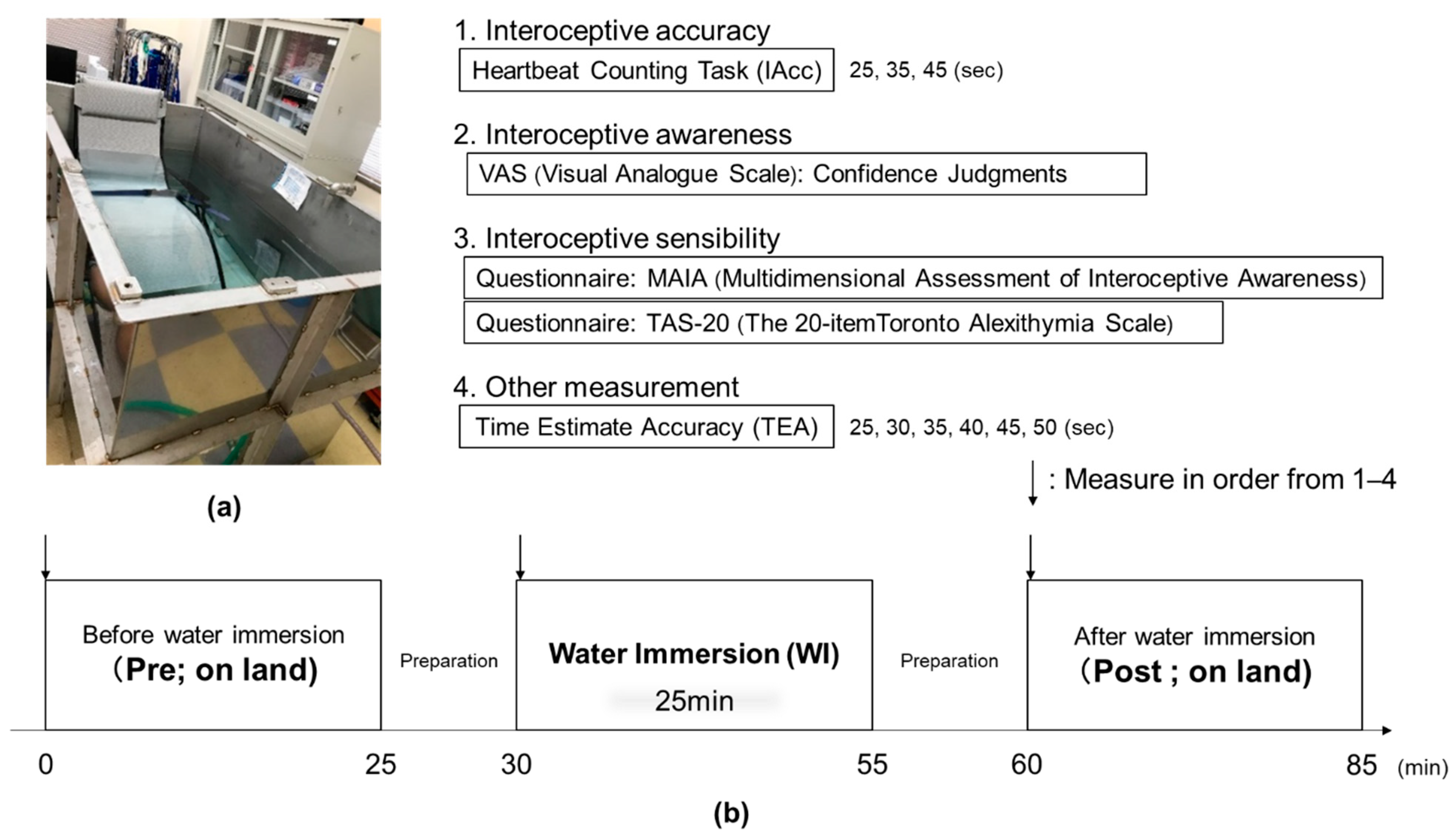
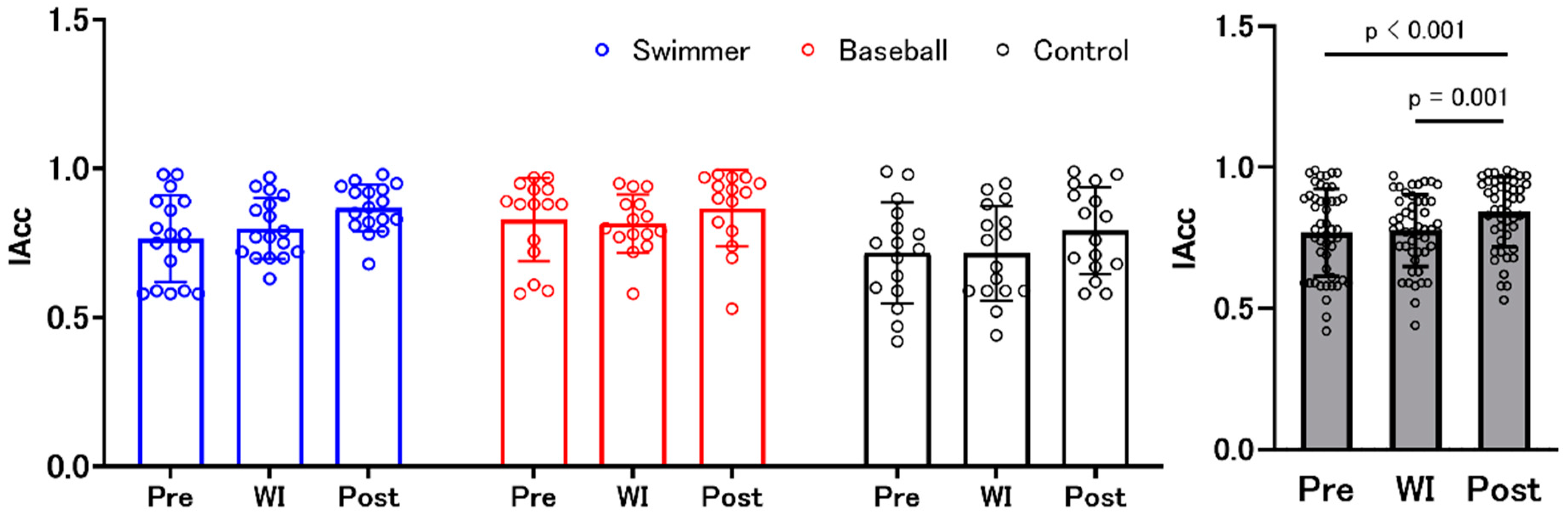
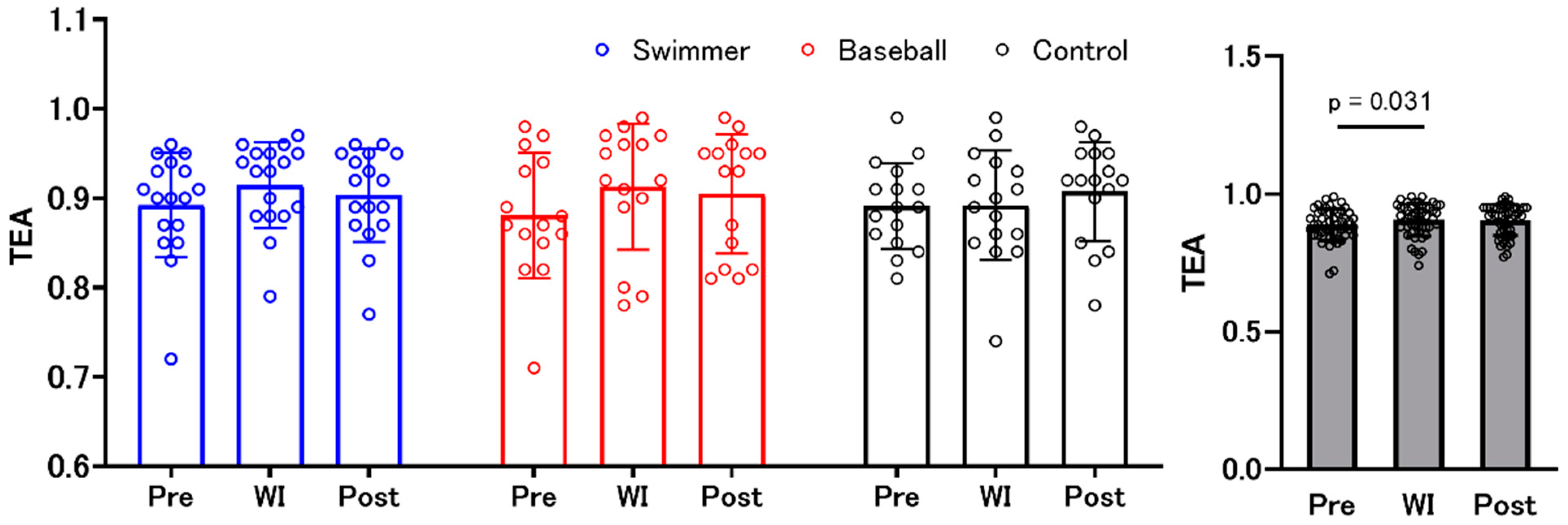
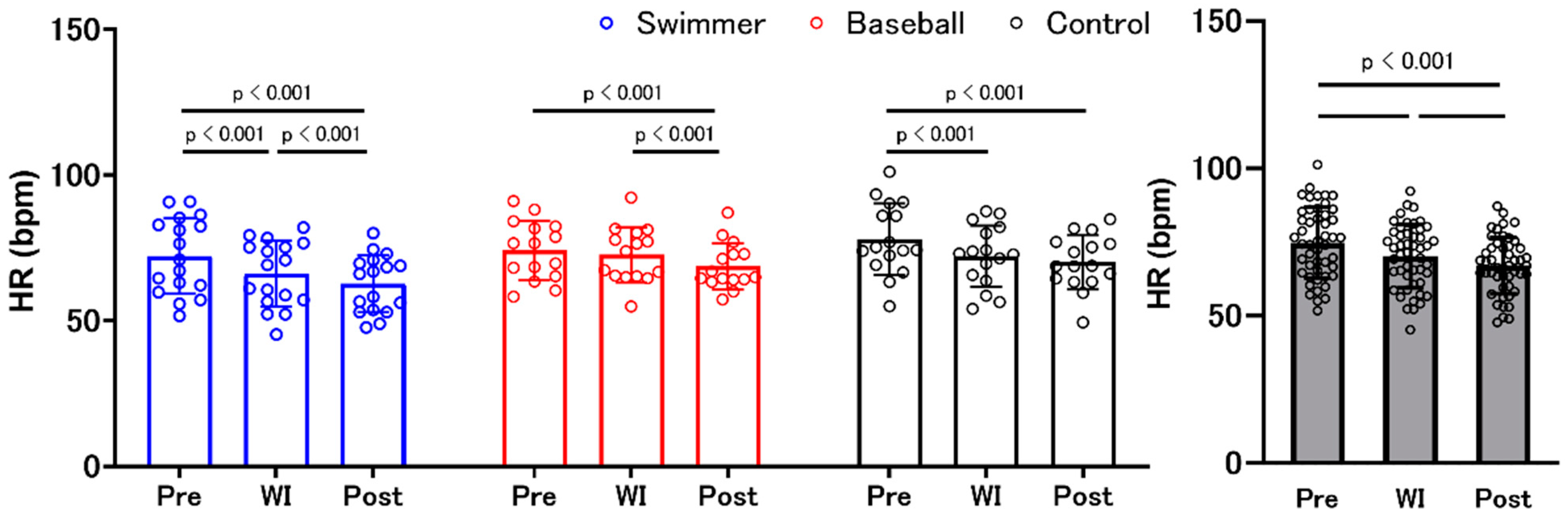
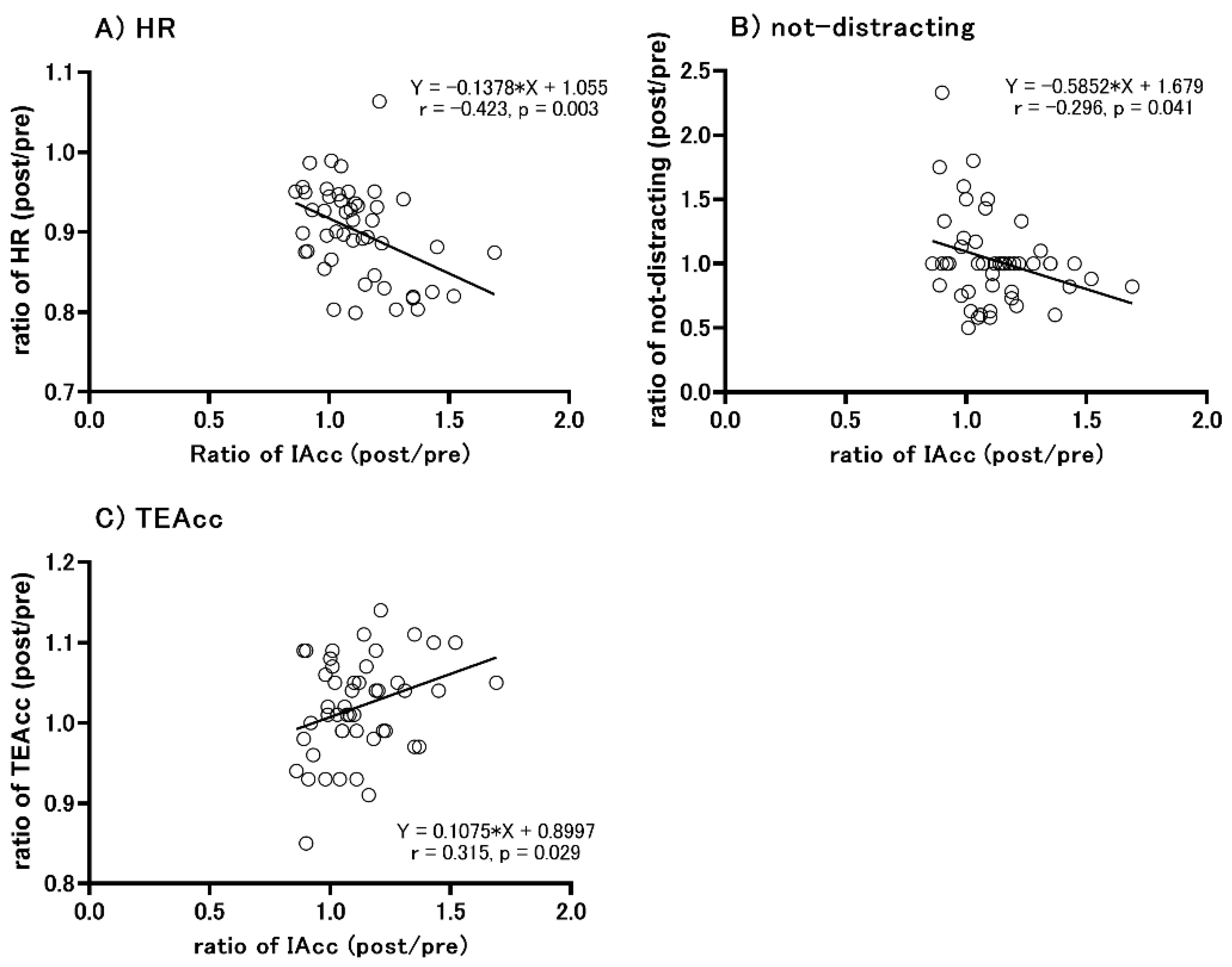
The aim of this study was to investigate individual interoception by comparing the responses of swimmers and baseball players when exposed to specific water environments, depending on training content and environment. Forty-eight healthy male university students were evaluated for their interoceptive response (accuracy, sensibility, and awareness) and heart rate following 25 min of water immersion (WI) at 35 °C. We assessed three conditions: pre-WI, during WI, and post-WI. The results indicated that interoceptive accuracy (IAcc) did not differ between groups because both swimming and baseball do not require emotional expression, as opposed to an activity such as dance. The heart rate was significantly decreased at post-WI compared to that at pre-WI. The IAcc of post-WI presented as higher than that of pre-WI. In addition, there was a significant negative correlation between the ratio of IAcc and that of HR among subjects. Moreover, the attention regulation subscale of the MAIA changed in the WI environment and the ratio of IAcc was negatively correlated with that of the not-distracting subscale of the MAIA. These results suggested that interoception did not differ among the athletes who had long-term training, which enabled them to acquire multi-modal sensorimotor integration, compared to that of non-athlete control participants. We conclude that interoception did not differ among athletes who had long-term training compared to that of non-athlete control participants.
Keywords: interoceptive accuracy; water immersion; heart rate; heartbeat counting task; swimmer; baseball player; interoception interoceptive accuracy; water immersion; heart rate; heartbeat counting task; swimmer; baseball player; interoception