


Abstract
In the past century, dramatic shifts in demographics, globalization and urbanization have facilitated the rapid spread and transmission of infectious diseases across continents and countries. In a matter of weeks, the 2019 coronavirus pandemic devastated communities worldwide and reinforced the human perception of frailty and mortality. Even though the end of this pandemic story has yet to unfold, there is one parallel that is undeniable when a comparison is drawn between the 2019 coronavirus and the 1918 influenza pandemics. The public health response to disease outbreaks has remained nearly unchanged in the last 101 years. Furthermore, the role of environments and human behaviors on the effect and response to the coronavirus pandemic has brought to light many of the historic and contemporaneous inequalities and injustices that plague the United States. Through a reflection of these pandemic experiences, the American burden of disparity and disproportionality on morbidity, mortality and overall social determinants of health has been examined. Finally, a reimagination of a post-coronavirus existence has also been presented along with a discussion of possible solutions and considerations for moving forward to a new and better normal.
1. Introduction
Pandemics: Environments, Behaviors, and Inequalities
“An epidemic erodes social cohesiveness because the source of your danger is your fellow human beings, the source of your danger is your wife, children, parents and so on. So, if an epidemic goes on long enough, and the bodies start to pile up and nobody can dig graves fast enough to put the people into them, then morality does start to break down.” [1]Dr. Alfred CrosbyAmerica’s Forgotten Pandemic: The Influenza of 1918
Across millennia, disease outbreaks have impacted societies and reinforced the human perception of frailty and mortality [2]. Dramatic demographic shifts in the past century have escalated the difficulty in containing a pandemic and the rise of globalization and urbanization have facilitated the rapid spread of pathogens from one continent to another in a flight of just a few hours. Yet, when a comparison is drawn between the 2019 coronavirus pandemic and the 1918 influenza pandemic, the most widely available tools to respond to these disease outbreaks have remained nearly the same. Public health interventions have been and are still the first line of defense against a pandemic in the absence of a vaccine [3]. Understanding that the environment plays a significant role in disease dynamics and in determining the health of individuals has always been an essential aspect to controlling and managing infectious diseases. For example, the history of urban planning in the past century has highlighted how built environments can have an effect on preventing both chronic and infectious diseases [4]. However, the function of human behaviors and social ideologies stemmed from the darker side of humanity must also be acknowledged as an important component to determining who lives and who survives during the deadliest periods of disease pandemics.
2. The 1918 Influenza Pandemic in the United States
2.1. Influenza Pandemic: An Epidemiological Overview
In the midst of World War I, the influenza pandemic spread worldwide during 1918-1919 and was outstanding in its lethality [5]. While there is not a universal consensus on the pandemic’s origin it is understood to have been was caused by a H1N1 subtype of an influenza A virus with avian and swine genetic origins [6,7,8]. Over the course of the pandemic, an estimated one third of the world’s population, approximately 500 million persons, became infected and the total deaths were estimated at 50 million or arguably as high as 100 million [7]. Historically, the curve of influenza deaths in humans has been U-shaped, with peaks among infants and the elderly. Nevertheless, this 1918 influenza pandemic exhibited a W-shape age-related fatality with the addition of a third peak among young adults [7,9]. As such, death rates for individuals 15 to 34 years of age were 20 times higher than in previous years [7,10].
The influenza pandemic occurred in three distinctive waves over a 12-month period in Europe, Asia and North America. The first wave of the pandemic, which began in spring 1918 and lasted approximately six months, was not particularly virulent and mimicked typical seasonal flu symptomology and mortality [7,8,11]. However, due to a possible viral mutation over the course of the summer and wartime troop movements, this first wave was then followed by a rapid succession of more fatal second and third waves in the autumn of 1918 (September–November) and the winter and spring of 1919 (January-May), respectively [7,12,13,14,15]. In the United States, the first outbreak of flu-like illnesses was detected in March 1918 with more than 100 cases at Camp Funston in Fort Riley, Kansas [16,17]. Within a week, the number of influenza cases quintupled throughout the army installation [16]. By the end of the month, approximately 1100 soldiers were hospitalized and 38 had died after developing pneumonia [18]. Nevertheless, thousands of soldiers were continually deployed for World War I and traveled across the Atlantic Ocean. In Europe, the disease first appeared in April 1918 among American soldiers in a military camp near Bordeaux, France [5,17]. The influenza presentation was in the form of a benign fever accompanied by cold-like symptoms and the attending American doctors believed the underlying cause was Haemophilus influenzae, a pathogenic bacterium formally called Pfeiffer’s bacillus [19]. The spring 1918 wave of influenza affected nearly 15,000 soldiers from April to July, but only five American soldiers died [19]. Although the mortality of this first pandemic wave was minor in comparison to the waves to come, Spain was the first European country in which the disease spread to wide sectors of the population, thus causing a significant level of mortality. In May and June 1918, there were 276 influenza deaths in Madrid, which represented a mortality rate of 0.42 deaths per 1000 people [19]. During this same period, another 852 unconfirmed influenza deaths were attributed to different respiratory system pathologies. If these unconfirmed deaths were combined with the confirmed influenza deaths, the mortality rate would have been 1.31 per 1000 people, the highest mortality figure traceable to this pandemic [19]. Up until this point, very little was written or documented about the strain of the outbreak or its epidemiologic indications due to wartime censorship, however this mortality rate from one single etiological agent could not be overlooked. In May 1918, the Spanish newspaper El Sol first published a report about a “sickness which ha[d] not yet been diagnosed by doctors” and headlines around the world labeled this as one of the worst pandemics in human history [19,20]. Thus, the derivation of “Spanish Influenza” was conceived [5].
In September 1918, the second, and most deadly, wave of the pandemic emerged within the United States [21]. Soldiers at Camp Devens, an army training camp just outside of Boston, Massachusetts, and sailors aboard the Receiving Ship at Commonwealth Pier in Boston began reporting flu-like symptoms [16,22]. By month’s end, more than 14,000 cases were reported at Camp Devens, approximately one-quarter of the total camp, and 757 soldiers succumbed to influenza [16]. The Massachusetts Department of Health informed local newspapers of the epidemic and stated that, “unless precautions are taken the disease in all probability will spread to the civilian population of the city” [22]. At the nearby Navy Radio School within Harvard University in Cambridge, Massachusetts, cases of influenza were reported among the group of 5000 young men studying radio communications. As 1918 concluded, Cambridge experienced 3014 cases of influenza among its meager population of 109,000 residents, ultimately leading to a mortality rate of 541 per 100,000 [23]. During this time in New York State, the Board of Health in New York City, added influenza to the list of reportable diseases, and required all cases to be isolated at home or in a city hospital [16]. Moreover, in a document entitled “Fighting Influenza with Transit Systems”, the Board of Health adopted a plan to set operation schedules for many business, which would then elongate the time window for transit service and reduce congestion [24,25]. In lieu of subway suspension, Royal Copeland, the City Health Commissioner “staggered workdays by industry, so that instead of everyone arriving at work at 9:00 [am], some were to come in later or earlier” [26]. Other cities, such as Seattle, Washington, followed suit in controlling the transmission of influenza within public transit environments by requiring passengers to wear face masks before boarding streetcars (Figure 1) [27].
Figure 1.
Seattle (Washington) streetcar conductor checks passenger face masks during the 1918 influenza pandemic (source: Library of Congress) [28].
Interestingly, Commissioner Copeland did not issue an order to close schools or the prohibition of public gatherings at theaters in New York City. He stated that his rational to not “[issue] general closing orders and making a public flurry over the situation was to keep down the danger of panic” and that he “wanted people to go about their business without constant fear and hysterical sense of calamity” [29]. Unlike New York City, public gatherings were prohibited and social distancing was encouraged with the closure of theaters, movie houses and night schools in other cities, namely Chicago, Illinois; Reno, Nevada; and Madison, Wisconsin [30,31]. There was also a call for volunteers to help nurse the infirmed in Chicago and other cities throughout the United States due to the severe deficit of professional nurses, a shortage resulting from the deployment of nurses to military camps and the failure to use trained African American nurses [16]. Despite the social distancing efforts employed in New York City and Chicago, Philadelphia, Pennsylvania choose to ignore these initiatives. On September 28, 1918, the city held its Fourth Liberty Loan Drive, a parade that gathered over 200,000 Philadelphians. Within days after the parade, over 1000 people were dead, another 200,000 cases of influenza were reported, every bed in the city’s 31 hospitals was filled, and the city was forced to close churches, schools, theaters and all other places of “public amusement” [22,32,33]. A week after the parade, 2600 Philadelphians had died [34]. With the pile up of corpses in Philadelphia, cold-storage plants were used as temporary morgues and a trolley car manufacturer donated 200 packing crates to be used as coffins [16]. By early October, single day influenza deaths reached record numbers in Philadelphia (289 deaths–October 6, 1918) and New York City (851 deaths–October 15, 1918) [22]. The virus continued to journey westward to Louisiana, Texas, New Mexico, Utah, California, and Washington. The wearing of six-ply gauze masks became mandatory in Washington and parts of California [16,22]. For example, in San Francisco, California, individuals were fined $5 U.S. dollars (USD), an equivalent of approximately $85 USD today, if they were seized in public without face masks [33]. In Salt Lake City, Utah, officials placed quarantine signs on the doors of 2000 homes where occupants had been infected with influenza [16]. The end of the second wave, which left its mark as being the deadliest of all three waves, coincided with the end of World War I on November 11, 1918 [11,21]. As people celebrated Armistice Day with parades and large gatherings, a public health calamity was lurking with an influenza resurgence in some cities [16,22]. By December 1918, the second wave of the pandemic had passed, but the health threat was far from over.
In Australia, a third wave erupted in January 1919 and eventually drifted back to Europe and the United States [18]. There were 1800 cases and 101 deaths reported in the first five days of January in San Francisco and on the other side of the country in New York City, 706 cases and 67 deaths were reported [16]. Even though eradication of influenza appeared in Louisiana and Washington, many residents in San Antonia, Texas began complaining that a new surge of influenza cases were not being reported [16,22]. As a precautionary measure, states like Massachusetts and Illinois began to request special appropriations for the study of influenza treatment and to train women as “practical nurses” in response to the nursing shortage [16]. The nursing shortage was so dire in some areas of the country that the American Red Cross asked local businesses to grant workers a day off if they volunteered in the hospitals at night [35]. The mortality rate of the third wave was just as high as the second wave, but the end of the war eliminated the conditions that enabled the rapid and widespread transmission of the virus. Deaths from the third wave paled in comparison to the annihilation during the second wave [18]. With one-quarter of the American population infected with influenza, the pandemic was affecting everyone. It was believed that President Woodrow Wilson contracted the virus in April 1919 while negotiating the Treaty of Versailles to end World War I [18]. The pandemic finally came to an end during the summer of 1919, although a very minor fourth wave appeared in spring 1920 throughout isolated areas of New York City. The pandemic ended simply because individuals who were infected either died or developed immunity. With an estimated death toll of 675,000 people in the United States, the pandemic lowered the average life expectancy by more than 12 years [10].
2.2. Influenza Pandemic: Environments and Behaviors
During World War I, the worst cases of the influenza pandemic came from overcrowded military barracks and ships with poor ventilation [36]. It was quickly found that one way to heal infected wounds was to expose patients to sunlight and open-air. In June 1915, Sir Arthur Everett Shipley, an eminent scientist of the time, determined that open-air treatment of infirmed and wounded soldiers at the First Eastern General Hospital was a success, particularly for those with influenza related pneumonia [37,38]. When the pandemic clinched the United States, health officials converted schools, halls, and large private houses to emergency and open-air hospitals [37]. As such, open-air hospitals became a common practice by the time of the 1918 pandemic [39,40]. A combination of outdoor air and sunlight reduced the number of infections and deaths reported at open-air hospitals. Specifically, medics found that regular meals, warmth, and plenty of fresh air and sunlight helped severely ill patients recover better than indoor nursed patients [41]. Researchers also revealed that healthcare facilities designed with high ceilings and large windows had the same effect as open-air hospitals [42]. Accordingly, natural ventilation and fresh air was the best way to prevent the transmission of influenza as well as other infectious diseases [43]. Open-air therapy was one of the popular techniques in dealing with common and often deadly respiratory infections of the time until antibiotics replaced it in the 1950s [44].
In the absence of a vaccine for novel pathogens and antibiotics to protect against influenza secondary bacterial infections, many authorities suggested non-pharmaceutical interventions for the control of a pandemic [45,46]. Social distancing had become the most well-established non-pharmaceutical public health measure to slow the spread of communicable diseases. Social distancing measures were implemented through the closing of schools, restaurants, and theaters as well as the banning and restriction of public gatherings and transportation among cities in the United States during the 1918 pandemic [3]. The point of initiation, duration and decision to relax social distancing measures profoundly impacted mortality rates during this period [47]. For example, cities such as Philadelphia (748 deaths per 100,000 at 24 weeks), that initiated social distancing measures later and for shorter periods tended to have spikes in deaths and overall higher death rates (Figure 2) [3,48]. In Philadelphia, the first cases of the influenza appeared on September 17, 1918 [47]. However, the Philadelphia Public Health Director, Dr. Wilmer Krusen, understated the risk of disease transmission. Dr. Krusen assured people that sick soldiers were suffering from casual seasonal influenza, which could be avoided by staying warm. He allowed large public gatherings, notably the Fourth Liberty Loan Drive parade on September 28, 1918 as mentioned previously. As a result, Philadelphia experienced a mortality acceleration that was 360% higher than the average American city [49]. In comparison, cities, such as Minneapolis, Minnesota (267 deaths per 100,000 at 24 weeks), that ordered social distancing measures sooner and for longer periods slowed the transmission rate and lowered overall death rates [3,48]. Furthermore, cities that relaxed social distancing measures prematurely, experienced multiple spikes in deaths. This was observed in St. Louis, Missouri. Due to its low death rate, the city lifted restrictions on public gatherings less than two months after the influenza outbreak began. However, a sharp and higher spike of new cases soon followed [3,48]. Research comparing 17 American cities has suggested that the implementation of early interventions to control the spread of influenza may have significantly decreased the rate of transmission and mortality observed [47]. Cities across the United States, including Milwaukee, Wisconsin and Indianapolis, Indiana, had the most effective interventions and reduced transmission rates by up to 30–50% [50]. The lower level of mortality was due to the quick public health response in the first days of the epidemic and the introduction of broad measures designed to promote social distancing [47,50].
Figure 2.
Death rates from 1918 influenza pandemic and duration of social distancing.
Initially, the American medical community minimized the scale and scope of the influenza pandemic to create a false sense of security in the country’s largest cities, including Philadelphia [11]. Yet, this was an issue beyond the medical community; this was a public health crisis that brought to light urban environment deficiencies, namely the proliferation of municipal waste and unsanitary living conditions [51]. While not always well understood, the presence and threat of infectious diseases has shaped urban planning in the United States. During this early 20th century pandemic, urban environments in New York City, Chicago and other American cities were densely populated and characterized by crowded tenement housing in proximity to factories, animal yards, and slaughterhouses with little airflow or light [4,52]. Even before the 1918 influenza outbreak, cities were plagued with cholera, tuberculosis and typhoid epidemics [4]. Medical models, specifically the miasma theory, an idea that diseases were caused by a noxious form of “bad air”, prevailed, but there was also a sense that the congestion, pollution, lack of sunshine and poor airflow contributed to illness [4,52]. In response, urban planning efforts introduced zoning to spatially segregate residential, commercial and industrial uses and housing regulations to require light and airflow in order to improve overcrowding and unsanitary urban living conditions [4,52]. During the 1918 pandemic, urban reformers and engineers again tried to prevent infection by improving waste removal and housing quality and creating technological enhancements to control environmental nuisances and hazards, but trivial cooperation from municipal government leadership and interference of the private interest sector often blocked immediate and effective action [51]. As a result, the “schism in the public health community” ultimately impacted the lives of millions [53].
2.3. Influenza Pandemic: Societal Norms of Inequality
“Epidemic diseases [have not been] random events that afflicte[d] societies capriciously and without warning”; they typically unfold across a wide spectrum of communities that are diverse by race, age, gender, and socioeconomic status [54,55]. The 1918 pandemic affected the youngest and wealthiest people without any boundaries. Racially, the composition of the country during this time was predominately “black and white” and up until this point, medical and public health reports had documented that African Americans suffered higher morbidity and mortality rates for several diseases in comparison to White Americans [56]. Specifically, W.E.B. Du Bois, a prominent sociologist and civil rights activist, found through an analysis of the 1900 U.S. Census that the African American mortality rates were two to three times higher for several diseases, including tuberculosis, pneumonia, and diarrheal disease, in comparison to the White American mortality rates [57]. DuBois argued that these disparities reflected social conditions and not racial susceptibilities [57]. In poor and working-class urban neighborhoods, social conditions, like overcrowded housing, poor sanitation service, and unsafe drinking increased the vulnerability of influenza [51]. In 1910, the U.S. Census set 2500 as the minimum population threshold for the urban category and by the 1920 U.S. Census over 50% of the American population was defined as urban [58]. Before the onset of the pandemic, urban environments within American cities were composed of a predominantly (93.45%) White population [59]. During this period, more than 90% of the African American population lived in southern parts of the United States, but millions began migrating to the north in search of better job opportunities and living conditions [60]. With this First Great Migration from the rural south to northern cities, starting in 1910, a larger share of African Americans lived in urban areas during the 1918 pandemic [61]. Still, on average and in comparison to White Americans, fewer African Americans, less than 5%, lived in high population density urban areas, which were the epicenters of the outbreak [62]. Hence, the norms of disease morbidity and mortality for African Americans changed during the pandemic. During the second wave in fall 1918, African Americans had lower influenza morbidity and mortality rates, but a higher case fatality rate, in comparison to the White population [63]. This was an unexpected phenomenon as African Americans were expected to have higher influenza morbidity and mortality. Explanations for this 1918 pandemic norm crossover have included: (1) an unequal exposure based on where African Americans lived (e.g., urban vs. rural environments); (2) a higher exposure to the less virulent spring wave, which provided some African Americans with immunity; (3) a military segregation, which allowed for less crowding among African American soldiers; and (4) an underreporting of influenza cases and deaths for African Americans [63]. While there has been no evidence that the first spring wave was especially rampant in the south to induce a higher influenza exposure among the majority of African Americans living in rural southern areas, there has been a clear understanding that the First Great Migration left a large portion of African Americans in cramped, dilapidated, impoverished and segregated conditions with less access to sanitation and urban social programs in northern cities. The segregated African American neighborhoods may have functioned as a makeshift quarantine. Yet, in cities, such as Baltimore, Maryland and Detroit, Michigan, the segregation created crowded urban ghettoes where tuberculosis became one of the top three causes of death among urban African Americans [64]. Individuals with tuberculosis lung damage were more susceptible to influenza, which would explain why a higher proportion of African American influenza cases developed pneumonia and also had higher case fatality rates during the second wave [63]. The entrenched racial and economic discrimination within the United States seemed to have both protected and endangered African Americans to the 1918 pandemic.
Throughout World War I, many doctors had been called into military service and the shortage of the doctors, nurses, and medical staff caused hospitals to reject patients, particularly African Americans [56]. The American Red Cross served as the recruiter of nurses for the army. With the racial discriminatory practices of the American Red Cross, African American women who tried to gain entry as nurses were rebuffed. While the devastation of the pandemic forced the army to drop its ban on African American nurses, the racial discrimination still surpassed the need for healthcare in some areas. The November 2, 1918, edition of The Chicago Defender reported that the Dean of Ohio’s Hiram College refused to allow an African American nurse named Olive Walker to care for influenza patients at the college [56,65]. African American doctors also found the color line to be rigid in trying to care for White Americans during this time [66]. Racism and legalized segregation restricted African Americans and other non-White Americans access to healthcare professionals and facilities. In cities across the nation, African Americans received substandard care in segregated hospitals or in confined hospitals that served only African Americans. Many infected people died without seeing a doctor due to the sheer number of bodies that overwhelmed the capacity of hospitals and the heavy burden of the medical staff [67]. African American influenza patients exceeded the limit of the Frederick Douglass Memorial Hospital, one of Philadelphia’s two African American hospitals, and pushed the medical director to establish an “emergency annex” in an African American parochial school [56]. In Richmond, Virginia, African American patients received care in a hospital basement until the city opened a separate hospital staffed by African Americans at an elementary school [56,68]. The Baltimore Afro-American newspaper criticized Provident Hospital, the only African American facility in the city, for turning patients away [56,69]. A prohibition on public gatherings that included funerals and wakes prevented families from properly grieving. Many victims were buried without coffins or were thrown into unmarked burial grounds. Native Americans, who practiced different burial practices, became exposed to the virus at alarming rates. In September 1918, more than 2000 Navajos died of influenza in Apache County, New Mexico [22]. Across the country, mass graves were dug to accommodate the pile of corpses [36]. African American bodies, in particular, were neglected by the general public infrastructure. In Baltimore, sanitation department employees refused to dig graves for African American influenza victims after the city’s only African American cemetery could not accommodate any more graves [65].
The 1918 pandemic took a heavy human toll on entire families and communities. With the devastation and bereavement, violence erupted in some areas. People were shot for not wearing masks and rates of homicides and suicides skyrocketed [22]. White supremacist ideologies and racist scientific theories advanced bigoted and false notions of the biological, physiological, and moral inferiority of African Americans when they were blamed for the pandemic [56]. Throughout the First Great Migration period, African Americans were highly visible and thought of as “diseases”. The 1918 pandemic heightened these existing prejudices, which were further reinforced by contemporary newspaper headlines, such as “Rush of Negroes to City Starts Health Inquiry”; “Negros Arrive by Thousands—Peril to Health”; or “Negro Influx Brings Disease” [70]. The memory of the 1918 pandemic left a lasting blemish on public health planning and practice and reflected the moral relationships and deterioration of humanity during that period. The magnitude of events and death with the influenza pandemic have served as a reference point and hopefully as a severe, if not, “worst-case” scenario.
4. Creating a Post-COVID-19 New Normal
Reflecting and Reimagining a New Post Pandemic Normal
“Epidemics are a category of disease that seem to hold up the mirror to human beings as to who we really are. That is to say, they obviously have everything to do with our relationship to our mortality, to death, to our lives. They show the moral relationships that we have toward each other as people, and we’re seeing that today” [86]. While there are distinct similarities and differences when comparing the 1918 and 2019 pandemics, the historical accounts of the influenza pandemic and the current coronavirus pandemic have demonstrate that poverty, inequality, and social determinants of health create and support the conditions for disease transmission and the exacerbation of existing health conditions and disparities (Table 2) [175]. Interestingly, the public health response to both pandemics, albeit tempered by varying levels of political resistance, impacted human behavior through mandated social distancing or the use of face masks. However, unlike the influenza pandemic, widespread daily protests and demonstrations within at least 140 American cities and throughout the world completely eclipsed and overshadowed public health orders for social distancing and public gathering prohibition during the coronavirus pandemic [176,177]. These protests rallied against the systemic police brutality of African Americans, specifically the killing of George Floyd by Minneapolis police, and in support of the Black Lives Matter movement [176,177]. This unique moment in history has illustrated the convergence of two public health crises ((1) coronavirus pandemic; (2) African American genocide), both of which are impacted by the annihilation of institutional, structural, systematic and systemic racism within the United States. As a new normal for post COVID-19 is reimagined the fundamental dynamics and entrenched ideologies of “acceptable living” and “equality for all” need to be addressed and strongly reexamined in order for the country to move forward.
Table 2.
Comparison of the 1918 and 2019 pandemics in the United States.
Social distancing and shelter-in-place orders have been in place throughout the country since approximately the middle of March 2020. This has bought the country some time to curb the spread of the virus, limit the number of COVID-19 cases and deaths, reduce the healthcare system strain, and allow a reflection for the preparation of the next phase [178]. Following the pandemic containment and mitigation phases, the third suppression phase, which allows for a slow emergence from the quarantine status, requires essential elements in order to prevent an ascent of COVID-19 infections [178]. The elements include measurable benchmarks with surveilling epidemiological trends (e.g., decline in COVID-19 deaths for 14 days), fortifying the healthcare system (e.g., sufficient personal protective equipment for all healthcare workers) and transforming public health infrastructure (e.g., demonstrated ability to convey social distancing recommendations that change behavior in most residents) [178,179]. Once these elements have been implemented, aspects of social distancing can be relaxed. Yet, the old normal of living still cannot return and most likely will not return. During the initial reopening of establishments, gatherings should still be capped at 10 people and restaurants will need to adopt social distancing seating to welcome patrons. However, it is recommended by governmental and public health officials that individuals over 60 years of age and those who are medically vulnerable continue to shelter-in-place until the final phase of reopening [180]. A staggered or partial reopening approach with new environmental safeguards, such as temperature and ventilation checks and mandatory handwashing/sanitizing at every entry and periodically throughout the day may be used for schools and businesses [179]. There also may need to be a quarantine of travelers from high prevalence COVID-19 areas. Governmental regulations may institute proof of immunity documentation or spending fourteen days in isolation before entering a new country for travelers. Beyond a successful initial reopening and after at least four weeks of no significant increase in new COVID-19 cases, the six feet social distancing measure may be paused, but there should still be a ban on gatherings which exceed 50 people until four months after the initial reopening [179]. Throughout these phase transitions, it is critical for all public health leaders, political administrators, and the overall general public to work together in order to control, mitigate and eradicate COVID-19. As stated by Secretary-General António Guterres of the United Nations, the coronavirus pandemic is a public health emergency that became an economic, social and human rights crisis. Specifically, by working together and “respecting human rights in this time of crisis more effective and inclusive solutions for the emergency of today and the recovery for tomorrow” can be achieved [181].
Even with a new kind of normalcy, everyone may still practice consistent and better hygiene with handwashing, coughing, and sneezing, and greet and interact with each other differently [178]. People may need to create new ways of meeting with friends and colleagues. Impressively, within the past couple of decades, the sharing economy has expanded and created environments with new components of how multiple people share the same spaces. These shared spaces, including co-work environments (e.g., WeWork), rooms in homes (e.g., Airbnb), cars (e.g., Uber), bikes (e.g., Capital Bikeshare), and other elements of the built environment, which can increase the potential and opportunities for environmentally mediated pathways of pathogen exposure, will need to be reexamined [182]. The coronavirus pandemic also may accelerate the development of risk-mitigating efforts designed to reduce human-to-human interactions, upgrade building ventilation and physical barriers, and adopt automation technologies such as robotics and artificial intelligence vision systems [183]. Given the severity of the pandemic and in compliance with social distancing directives, many American cities significantly reduced public transit service as mentioned previously. While agencies, like the Chicago Transit Authority, implemented sanitation regimes to minimize the spread of the COVID-19, many transit agencies may move to a new standard where face masks will always be required once anyone boards a train or bus [99]. While social distancing measures prompted organizations to embrace videoconferencing, virtual classrooms and telemedicine, these types of interactions may become more of the norm moving forward. With the fear of contagion, companies have shifted their protocols of operation. Prior to the coronavirus pandemic, many businesses were already abandoning cash payments and in the wake of the outbreak, many more may permanently switch to digital only payments.
Structural building modifications (e.g., voice-activated elevators) or environmental adjustments (e.g., telework capabilities) may be a much easier acclimatization for many Americans in the wake of a post COVID-19 existence. Yet, changing perceptions, attitudes and behaviors that have been deeply entrenched in the American way of living will be a much more challenging hill to climb. Issues surrounding injustices related to many social determinants of health are not new and this pandemic has just illuminated these issues. The overwhelmingly disproportion COVID-19 mortality rates of African Americans only highlights the need to address longstanding inequalities. Racism in the United States has created inequality in access to healthcare, housing, wealth, education, and employment, all of which are social determinants of health that can either promote or undermine one’s health and longevity. In order to move forward, racism needs to be addressed and there needs to be new and tailored approaches to reach those who have been disadvantaged as well as the circumstances that have been generated through racist ideologies, practices and politices. For instance, when Louisiana initially launched drive-through testing, an African American 90-year-old woman walked a mile in the heat to get tested [184]. This demonstrated that this COVID-19 testing site was not accessible to many individuals who do not have cars or who live in transit deserts or who cannot afford private transit. Upon learning this, public health officials targeted zip codes with the highest rates of COVID-19 reported deaths and deployed testing in those areas. Population-based testing and contact tracing during this pandemic has been vital in order to predict where to allocate resources, control the spread of the virus and implement evidence-based interventions to high-risk areas. However, evidence-based interventions are only achievable when there are accurate data and evidence. It was not until early April 2020, that the CDC began including race and ethnicity data in its Morbidity and Mortality Weekly Report [85]. Many states have yet to release demographic data on deaths. While SARS-CoV-2 may be exploiting inequalities in the United States, this virus, similar to past as well as future pathogens, does not discriminate by race or any other social construct that man has created. If COVID-19 is not contained in the most vulnerable populations, it will continue to spread to all communities and alter the future of human existence.
“This pesky flu’s all over town! And white and black and rich and poor are all included in its tour.” [185]Author UnknownProse Poem on the 1918 Influenza Pandemic
5. Conclusions
For thousands of years disease outbreaks have devastated societies and the 2019 coronavirus pandemic is no different. As densely populated and urban environmental conditions shaped the 1918 influenza pandemic, the experience of the current day coronavirus pandemic is quite similar. While the influenza and coronavirus pandemics occurred nearly a century apart, there is one similarity of these events that is undeniable; the public health response to disease outbreaks has remained virtually unchanged with social distancing and face covering efforts. Unfortunately, the role of human behaviors and social ideologies stemmed from the darker side of humanity on the effect and response to the coronavirus pandemic has also not progressed considerably. This review has revealed how the American burden of inequalities and injustices, as related to environments and human behavior, significantly impacts morbidity and mortality rates among the most vulnerable communities. As observed with the 1918 influenza pandemic, the present-day coronavirus pandemic has revealed and exposed the many inequalities that inhabit the United States. However, an opportunity has been presented which can allow for improvements, advancements, and an overall social uplift of our society.
Author Contributions
J.D.R. conceived the idea of the manuscript. J.D.R. and S.O.T. wrote and edited the manuscript. J.D.R. provided consultation and mentorship for the manuscript throughout the entire process. All authors have read and agree to the published version of the manuscript.
Funding
This research received no external funding.
Acknowledgments
The authors would like to acknowledge the Agents of Change (AOC) Writing Group at the University of Maryland, School of Public Health, Center for Health Equity.
Conflicts of Interest
The authors declare no conflict of interest.
References
- PBS. American Experience—Influenza 1918: Dr. Alfred Crosby. Public Broadcasting Service. Available online: https://www.pbs.org/wgbh/americanexperience/features/influenza-author-interview-dr-alfred-crosby/ (accessed on 21 April 2020).
- Cowell, A. Photos from a Century of Epidemics—March 20, 2020. New York Times. Available online: https://www.nytimes.com/2020/03/20/world/europe/coronavirus-aids-spanish-flu-ebola-epidemics.html (accessed on 20 May 2020).
- Strochlic, N.; Champine, R.D. How Some Cities ‘Flattened the Curve’ During the 1918 Flu Pandemic—March 27, 2020. National Geographic. Available online: https://www.nationalgeographic.com/history/2020/03/how-cities-flattened-curve-1918-spanish-flu-pandemic-coronavirus/#close (accessed on 24 April 2020).
- Pinter-Wollman, N.; Jelic, A.; Wells, N.M. The impact of the built environment on health behaviours and disease transmission in social systems. Philos. Trans. R. Soc. Lond. B Biol. Sci. 2018, 373. [Google Scholar] [CrossRef] [Scilit] [PubMed]
- Holtenius, J.; Gillman, A. The Spanish flu in Uppsala, clinical and epidemiological impact of the influenza pandemic 1918–1919 on a Swedish county. Infect. Ecol. Epidemiol. 2014, 4, 21528. [Google Scholar] [CrossRef] [Scilit]
- CDC. 1918 Pandemic (H1N1 virus). U.S. Centers for Disease Control and Prevention. Available online: https://www.cdc.gov/flu/pandemic-resources/1918-pandemic-h1n1.html (accessed on 20 April 2020).
- Taubenberger, K.J.; Morens, D.M. 1918 Influenza: The mother of all pandemics. Emerg. Infect. Dis. 2006, 12, 15–22. [Google Scholar] [CrossRef] [PubMed]
- Taubenberger, J.K. The origin and virulence of the 1918 “Spanish” influenza virus. Proc. Am. Philos. Soc. 2006, 150, 86–112. [Google Scholar] [PubMed]
- Viboud, C.; Eisenstein, J.; Reid, A.H.; Janczewski, T.A.; Morens, D.M.; Taubenberger, J.K. Age- and sex-specific mortality associated with the 1918–1919 influenza pandemic in Kentucky. J. Infect. Dis. 2013, 207, 721–729. [Google Scholar] [CrossRef] [Scilit]
- CDC. The Deadliest Flu: The Complete Story of the Discovery and Reconstruction of the 1918 Pandemic Virus. U.S. Centers for Disease Control and Prevention. Available online: https://www.cdc.gov/flu/pandemic-resources/reconstruction-1918-virus.html (accessed on 21 April 2020).
- Crosby, A.W. America’s Forgotten Pandemic: The Influenza of 1918, 2nd ed.; Cambridge University Press: Cambridge, UK, 2003. [Google Scholar]
- Barry, J.M. How the Horrific 1918 Flu Spread Across America—November 2017. Smithsonian Magazine. Available online: https://www.smithsonianmag.com/history/journal-plague-year-180965222/ (accessed on 20 April 2020).
- Martini, M.; Gazzaniga, V.; Bragazzi, N.L.; Barberis, I. The Spanish Influenza Pandemic: A lesson from history 100 years after 1918. J. Prev. Med. Hyg. 2019, 60, E64–E67. [Google Scholar]
- Humphreys, M. The influenza of 1918: Evolutionary perspectives in a historical context. Evol. Med. Public Health 2018, 2018, 219–229. [Google Scholar] [CrossRef] [Scilit]
- Jordan, E. Epidemic Influenza: A Survey; American Medical Association: Chicago, IL, USA, 1927; p. 355. [Google Scholar]
- CDC. 1918 Pandemic Influenza Historic Timeline. U.S. Centers for Disease Control and Prevention. Available online: https://www.cdc.gov/flu/pandemic-resources/1918-commemoration/pandemic-timeline-1918.htm (accessed on 20 April 2020).
- Vaughan, W.T. An Epidemiologic Study. Am. J. Hyg. 1921, 7, 65–78. [Google Scholar]
- Roos, D. Why the Second Wave of the 1918 Spanish Flu Was So Deadly. History Channel. Available online: https://www.history.com/news/spanish-flu-second-wave-resurgence (accessed on 20 April 2020).
- Erkoreka, A. The Spanish influenza pandemic in occidental Europe (1918–1920) and victim age. Influenza Other Respir. Viruses 2010, 4, 81–89. [Google Scholar] [CrossRef] [Scilit]
- Trilla, A.; Trilla, G.; Daer, C. The 1918 “Spanish flu” in Spain. Clin. Infect. Dis. 2008, 47, 668–673. [Google Scholar] [CrossRef] [Scilit]
- Nickol, E.M.; Kindrachuk, J. A year of terror and a century of reflection Perspectives on the great influenza pandemic of 1918–1919. BMC Infect. Dis. 2019, 19, 117. [Google Scholar] [CrossRef] [Scilit] [PubMed]
- Milsten, A. 1918 Influenza Pandemic: A United States Timeline. American College of Emergency Physicians. Available online: https://www.acep.org/how-we-serve/sections/disaster-medicine/news/april-2018/1918-influenza-pandemic-a-united-states-timeline/ (accessed on 20 April 2020).
- UMCHM. Influenza Encyclopedia: The American Influenza Epidemic of 1918–1919—Cambridge, Massachusetts. University of Michigan Center for the History of Medicine, Michigan Publishing. Available online: https://www.influenzaarchive.org/cities/city-cambridge.html# (accessed on 20 April 2020).
- Fighting Influenza with Transit Systems—November 1918. The American City. Available online: https://quod.lib.umich.edu/cgi/t/text/idx/f/flu/0600flu.0016.060/1/--fighting-influenza-with-transit-systems?rgn=full+text;view=image;q1=Place+--+New+York%2C+New+York (accessed on 8 June 2020).
- Sheidlower, N. How NYC Survived the 1918 Spanish Flu Pandemic. Untapped New York. Available online: https://untappedcities.com/2020/03/17/how-nyc-survived-the-1918-spanish-flu-pandemic (accessed on 20 June 2020).
- Poon, L. Remembering the ‘Mother of All Pandemics,’ 100 Years Later. City Lab. Available online: https://www.citylab.com/life/2018/09/spanish-flu-outbreak-1918-new-york-city-public-health-germ-city-museum/569947/ (accessed on 9 June 2020).
- Editorial: Americans Didn’t Like Wearing Masks in 1918—April 7, 2020. The Roanoke Times. Available online: https://www.roanoke.com/opinion/editorials/editorial-americans-didnt-like-wearing-masks-in-1918/article_ce966fa7–2655–53c7-ac37-c97719e985f3.html (accessed on 9 June 2020).
- Taylor, A. Photos of the 1918 Flu Pandemic—April 10, 2018. The Atlantic. Available online: https://www.theatlantic.com/photo/2018/04/photos-the-1918-flu-pandemic/557663/ (accessed on 9 June 2020).
- Poon, L. The Flu Epidemic of 1918. NYC Department of Records and Information Services. Available online: https://www.archives.nyc/blog/2018/3/1/the-flu-epidemic-of-1918 (accessed on 9 June 2020).
- Malewitz, J. The State’s 1918 Pandemic Shutdown Worked—May 1, 2020. Urban Milwaukee. Available online: https://urbanmilwaukee.com/2020/05/01/the-states-1918-pandemic-shutdown-worked/ (accessed on 9 June 2020).
- Marcus, E. Echoes of the Past: The 1918 Influenza Epidemic in Nevada—April 11, 2020. Reno Gazette Journal. Available online: https://www.rgj.com/story/news/2020/04/11/coronavirus-1918-reno-took-similar-quarantine-measures-stem-flu-epidemic/2975837001/ (accessed on 9 June 2020).
- Flynn, M. What Happens if Parades Aren’t Canceled During Pandemics? Philadelphia Found Out in 1918, with Disastrous Results—March 12, 2020. The Washington Post. Available online: https://www.washingtonpost.com/nation/2020/03/12/pandemic-parade-flu-coronavirus/ (accessed on 21 April 2020).
- History.com. Spanish Flu. A&E Television Networks. Available online: https://www.history.com/topics/world-war-i/1918-flu-pandemic (accessed on 21 April 2020).
- Roos, D. How U.S. Cities Tried to Halt the Spread of the 1918 Spanish Flu. History Channel. Available online: https://www.history.com/news/spanish-flu-pandemic-response-cities (accessed on 20 April 2020).
- Leer, T.V. Flu Epidemic Hit Utah Hard in 1918, 1919. Deseret News. Available online: https://www.deseret.com/1995/3/28/19166723/flu-epidemic-hit-utah-hard-in-1918–1919 (accessed on 21 April 2020).
- Klein, C. Construction Worker Finds 1918 Flu Pandemic Mass Grave. History.com. A&E Television Networks. Available online: https://www.history.com/news/construction-worker-finds-1918-flu-pandemic-mass-grave (accessed on 24 April 2020).
- Hobday, A.R.; Cason, J.W. The open-air treatment of pandemic influenza. Am. J. Public Health 2009, 99 (Suppl. 2), S236–S242. [Google Scholar] [CrossRef] [Scilit] [PubMed]
- Shipley, A.E. The Open-Air Treatment of the Wounded (The First Eastern General Hospital), 2nd ed.; Country Life Library: London, UK, 1915. [Google Scholar]
- St Clair Strange, F.G. The History of the Royal Sea Bathing Hospital Margate 1791–1991; Meresborough Books: Rainham, UK, 1991. [Google Scholar]
- Jones, E.R. Lettsom and the Royal Sea Bathing Hospital. Trans. Med. Soc. Lond. 1973, 89, 285–287. [Google Scholar]
- Anonymous. Influenza at the Camp Brooks Open Air Hospital. J. Am. Med. Assoc. 1918, 71, 1746–1747. [Google Scholar]
- Hobday, R.A. The open-air factor and infection control. J. Hosp. Infect. 2019, 103, e23–e24. [Google Scholar] [CrossRef] [Scilit] [PubMed]
- Hill, L. The Defence of the Respiratory Membrane against Influenza. Etc. Br. Med. J. 1919, 1, 238–240. [Google Scholar] [CrossRef] [Scilit]
- Editorial. Weapons against Influenza. Am. J. Public Health 1918, 8, 787–788.
- IOM. Modeling Community Containment for Pandemic Influenza: A Letter Report. Committee on Modeling Community Containment for Pandemic Influenza Institute of Medicine of the National Academies. Available online: https://doi.org/10.17226/11800 (accessed on 24 April 2020).
- WHOWG. Nonpharmaceutical Interventions for Pandemic Influenza, National and Community Measures. Emerg. Infect. Dis. 2006, 12, 88–94. [Google Scholar]
- Hatchett, R.J.; Mecher, C.E.; Lipsitch, M. Public health interventions and epidemic intensity during the 1918 influenza pandemic. Proc. Natl. Acad. Sci. USA 2007, 104, 7582–7587. [Google Scholar] [CrossRef] [Scilit]
- Markel, H.; Lipman, H.B.; Navarro, J.A.; Sloan, A.; Michalsen, J.R.; Stern, A.M.; Cetron, M.S. Nonpharmaceutical interventions implemented by US cities during the 1918–1919 influenza pandemic. JAMA 2007, 298, 644–654. [Google Scholar] [CrossRef] [Scilit]
- Higgins, J. An Epidemic’s Strawman: Wilmer Krusen, Philadelphia’s 1918–1919 Influenza Epidemic, and Historical Memory. Pa. Mag. Hist. Biogr. 2020, 144, 61–88. [Google Scholar] [CrossRef] [Scilit]
- Bootsma, M.C.; Ferguson, N.M. The effect of public health measures on the 1918 influenza pandemic in U.S. cities. Proc. Natl. Acad. Sci. USA 2007, 104, 7588–7593. [Google Scholar] [CrossRef] [Scilit] [PubMed]
- Wirth, T. Urban Neglect: The Environment, Public Health, and Influenza in Philadelphia, 1915–1919. Pa. Hist. J. Mid Atl. Stud. 2006, 73, 316–342. [Google Scholar]
- Hu, M.; Roberts, J.D. Connections and Divergence between Public Health and Built Environment—A Scoping Review. Urban Sci. 2020, 4, 12. [Google Scholar] [CrossRef] [Scilit]
- Melosi, M.V. The Sanitary City: Urban Infrastructure in America from Colonial Times to the Present; The Johns Hopkins University Press: Baltimore, MD, USA, 1999. [Google Scholar]
- Stern, M.A.; Cetron, M.S.; Markel, H. The 1918–1919 influenza pandemic in the United States: Lessons learned and challenges exposed. Public Health Rep. 2010, 125 (Suppl. 3), 6–8. [Google Scholar] [CrossRef] [Scilit]
- Snowden, F.M. Epidemics and Society: From the Black Death to the Present; Yale University Press: New Haven, CT, USA, 2019. [Google Scholar]
- Gamble, V.N. ”There wasn’t a lot of comforts in those days:” African Americans, public health, and the 1918 influenza epidemic. Public Health Rep. 2010, 125 (Suppl. 3), 114–122. [Google Scholar] [CrossRef] [Scilit]
- Du Bois, W.E.B. The Health and Physique of the Negro American; Atlanta University Press: Atlanta, GA, USA, 1906. [Google Scholar]
- U.S. Census. Urban and Rural Areas. U.S. Census Bureau. Available online: https://www.census.gov/history/www/programs/geography/urban_and_rural_areas.html (accessed on 25 April 2020).
- Garrett, T.A. Pandemic Economics: The 1918 Influenza and Its Modern-Day Implications. Federal Reserve Bank of St. Louis Review. Federal Reserve Bank of St. Louis. Available online: https://files.stlouisfed.org/files/htdocs/publications/review/08/03/Garrett.pdf (accessed on 25 April 2020).
- U.S. Census. We the America: Blacks. U.S. Census Bureau. Available online: https://www.census.gov/prod/cen1990/wepeople/we-1.pdf (accessed on 25 April 2020).
- U.S. Census. The Great Migration, 1910 to 1970. U.S. Census Bureau. Available online: https://www.census.gov/dataviz/visualizations/020/ (accessed on 25 April 2020).
- Hobbs, F.; Stoops, N. Demographic Trends in the 20th Century. U.S. Census Bureau, 2002. Available online: https://www.census.gov/prod/2002pubs/censr-4.pdf (accessed on 25 April 2020).
- Okland, H.; Mamelund, S.E. Race and 1918 Influenza Pandemic in the United States: A Review of the Literature. Int. J. Environ. Res. Public Health 2019, 16, 2487. [Google Scholar]
- Roberts, S.K. Infectious Fear: Politics, Disease, and the Health Effects of Segregation; University of North Carolina Press: Chapel Hill, NC, USA, 2009. [Google Scholar]
- McDonald, S.N. In 1918 and 2020, Race Colors America’s Response to Epidemics: A Look at How Jim Crow Affected the Treatment of African Americans Fighting the Spanish Flu. The Undefeated. Entertainment and Sports Programming Network. Available online: https://theundefeated.com/features/in-1918-and-2020-race-colors-americas-response-to-epidemics/ (accessed on 26 April 2020).
- Schlabach, E. The Influenza Epidemic and Jim Crow Public Health Policies and Practices in Chicago, 1917–1921. J. Afr. Am. Hist. 2019, 104, 31–58. [Google Scholar] [CrossRef] [Scilit]
- Starr, I. Influenza in 1918: Recollections of the epidemic in Philadelphia. Ann. Intern. Med. 1976, 85, 516–518. [Google Scholar] [CrossRef] [Scilit]
- Total of 1,000 Patients Expected at Hospital. Richmond Times Dispatch, 25 October 1918.
- Influenza and Pneumonia Claims Many Victims. Baltimore Afro-American, 18 October 1918; p. 1.
- Washington, S.H. Packing Them In: An Archaeology of Environmental Racism in Chicago, 1865–1954; Lexington Books: Lanham, MD, USA, 2004. [Google Scholar]
- Wang, C.; Horby, P.W.; Hayden, F.G.; Gao, G.F. A novel coronavirus outbreak of global health concern. Lancet 2020, 395, 470–473. [Google Scholar] [CrossRef] [Scilit]
- Ghinai, I.; McPherson, T.D.; Hunter, J.C.; Kirking, H.L.; Christiansen, D.; Joshi, K.; Rubin, R.; Morales-Estrada, S.; Black, S.R.; Pacilli, M.; et al. First known person-to-person transmission of severe acute respiratory syndrome coronavirus 2 (SARS-CoV-2) in the USA. Lancet 2020, 395, 1137–1144. [Google Scholar] [CrossRef] [Scilit]
- Phan, T.L.; Nguyen, T.V.; Luong, Q.C.; Nguyen, T.V.; Nguyen, H.T.; Le, H.Q.; Nguyen, T.T.; Cao, T.M.; Pham, Q.D. Importation and Human-to-Human Transmission of a Novel Coronavirus in Vietnam. N. Engl. J. Med. 2020, 382, 872–874. [Google Scholar] [CrossRef] [Scilit]
- Holshue, L.M.; DeBolt, C.; Lindquist, S.; Lofy, K.H.; Wiesman, J.; Bruce, H.; Spitters, C.; Ericson, K.; Wilkerson, S.; Tural, A.; et al. Washington State -nCo. First Case of 2019 Novel Coronavirus in the United States. N. Engl. J. Med. 2020, 382, 929–936. [Google Scholar] [PubMed]
- CDC. CDC Confirms Person-to-Person Spread of New Coronavirus in the United States. U.S. Department of Health and Human Service, Centers for Disease Control and Prevention. Available online: https://www.cdc.gov/media/releases/2020/p0130-coronavirus-spread.html (accessed on 5 April 2020).
- Worldometers. Coronavirus Worldwide Graphs. Worldometers. Available online: https://www.worldometers.info/coronavirus/worldwide-graphs/#total-cases (accessed on 27 April 2020).
- NYT. Coronavirus in the U.S.: Latest Map and Case Count—June 21, 2020. New York Times. Available online: https://www.nytimes.com/interactive/2020/us/coronavirus-us-cases.html (accessed on 21 June 2020).
- CDC. Public Health Responses to COVID-19 Outbreaks on Cruise Ships—Worldwide, February–March 2020. Centers for Disease Control and Prevention. Morb. Mortal. Wkly. Rep. 2020, 69, 347–352. [Google Scholar] [CrossRef] [Scilit] [PubMed]
- CDC. Severe Outcomes Among Patients with Coronavirus Disease 2019 (COVID-19)—United States, February 12–March 16, 2020. Centers for Disease Control and Prevention. Morb. Mortal. Wkly. Rep. 2020, 69, 343–346. [Google Scholar] [CrossRef] [Scilit] [PubMed]
- CDC. Coronavirus Disease 2019 in Children—United States, February 12–April 2, 2020. Centers for Disease Control and Prevention. Morb. Mortal. Wkly. Rep. 2020, 69, 422–426. [Google Scholar] [CrossRef] [Scilit]
- CDC. COVID-19 in a Long-Term Care Facility—King County, Washington, February 27–March 9, 2020. Centers for Disease Control and Prevention. Morb. Mortal. Wkly. Rep. 2020, 69, 339–342. [Google Scholar] [CrossRef] [Scilit]
- CDC. Geographic Differences in COVID-19 Cases, Deaths, and Incidence—United States, February 12–April 7, 2020. Centers for Disease Control and Prevention. Morb. Mortal. Wkly. Rep. 2020, 69, 465–471. [Google Scholar]
- LDH. Coronavirus (COVID-19). Louisiana Department of Health. Available online: http://ldh.la.gov/Coronavirus/ (accessed on 23 April 2020).
- Chandler, C. Mayor Perkins Identifies 5 Hot Spots in Shreveport for Coronavirus—April 2, 2020. KTBS. Available online: https://www.ktbs.com/news/mayor-perkins-identifies-5-hot-spots-in-shreveport-for-coronavirus/article_368892a2–7546–11ea-9a73–7f2a04d71133.html (accessed on 16 May 2020).
- CDC. Hospitalization Rates and Characteristics of Patients Hospitalized with Laboratory-Confirmed Coronavirus Disease 2019—COVID-NET, 14 States, March 1–30, 2020. Centers for Disease Control and Prevention. Morb. Mortal. Wkly. Rep. 2020, 69, 458–464. [Google Scholar]
- Chotiner, I. How Pandemics Change History. An Interview with Dr. Frank M. Snowden—March 3, 2020. The New Yorker. Available online: https://www.newyorker.com/news/q-and-a/how-pandemics-change-history (accessed on 28 April 2020).
- D’Angelo, M. Tactics for Minimizing COVID-19 Transmission in the Built Environment. Journal of the American Institute of Architects. Architect Magazine. Available online: https://www.architectmagazine.com/practice/tactics-for-minimizing-covid-19-transmission-in-the-built-environment_o (accessed on 30 April 2020).
- Barlow, J. UO’s Indoor Research Center Takes Aim at COVID-19 Risks. University of Oregon. Available online: https://around.uoregon.edu/content/uos-indoor-research-center-takes-aim-covid-19-risks (accessed on 30 April 2020).
- CDC. Preliminary Estimates of the Prevalence of Selected Underlying Health Conditions Among Patients with Coronavirus Disease 2019—United States, February 12–March 28, 2020. Centers for Disease Control and Prevention. Morb. Mortal. Wkly. Rep. 2020, 69, 382–386. [Google Scholar] [CrossRef] [Scilit] [PubMed]
- NYT. CDC Gives New Guidelines, New York to Close Restaurants and Schools and Italian Deaths Rise—March 15, 2020. New York Times. Available online: https://www.nytimes.com/2020/03/15/world/coronavirus-live.html (accessed on 5 April 2020).
- Lee, A. These States Have Implemented Stay-at-Home Orders. Here’s What That Means for You—April 7, 2020. CNN. Available online: https://www.cnn.com/2020/03/23/us/coronavirus-which-states-stay-at-home-order-trnd/index.html (accessed on 30 April 2020).
- Gershman, J. A Guide to State Coronavirus Reopenings and Lockdowns—May 20, 2020. The Wall Street Journal. Available online: https://www.wsj.com/articles/a-state-by-state-guide-to-coronavirus-lockdowns-11584749351?mod=theme_coronavirus-ribbon (accessed on 30 April 2020).
- Tyko, K. Starbucks Closing Some Locations and Moving to a ‘To Go’ Model at Other Stores Due to Coronavirus—March 15, 2020. USA Today. Available online: https://www.usatoday.com/story/money/food/2020/03/15/starbucks-coronavirus-changes-mobile-orders-drive-thru-closing-locations/5055192002/ (accessed on 30 April 2020).
- Target, Lowe’s, Home Depot to Limit the Number of Customers Inside to Combat Spread of COVID-19—April 4, 2020. WDRB.com. Available online: https://www.wdrb.com/news/target-lowes-home-depot-to-limit-the-number-of-customers-inside-to-combat-spread-of/article_ac5e4948–761a-11ea-b0ce-47befba7acaa.html (accessed on 30 April 2020).
- Tyko, K. Dollar General Cuts Store Hours, Dedicates Hour to Senior Shoppers During Coronavirus Pandemic—March 16, 2020. USA Today. Available online: https://www.usatoday.com/story/money/2020/03/16/coronavirus-seniors-dollar-general-dedicates-hour-senior-shoppers/5065594002/ (accessed on 30 April 2020).
- Giacobbe, A. How the COVID-19 Pandemic Will Change the Built Environment. Architectural Digest. Available online: https://www.architecturaldigest.com/story/covid-19-design (accessed on 30 April 2020).
- MTA. MTA Essential Service During the Coronavirus Pandemic. Metropolitan Transportation Authority. Available online: https://new.mta.info/precautions-against-coronavirus (accessed on 13 April 2020).
- NORTA. Coronavirus (COVID-19) Service Reduction. New Orleans Regional Transit Authority. Available online: https://www.norta.com/About/Coronavirus-Response (accessed on 13 April 2020).
- CTA. CTA: Coronavirus Info (COVID-19). Chicago Transit Authority. Available online: https://www.transitchicago.com/coronavirus/ (accessed on 13 April 2020).
- Levenson, M. 11 Days After Fuming About a Coughing Passenger, a Bus Driver Died From the Coronavirus—April 4, 2020. New York Times. Available online: https://www.nytimes.com/2020/04/04/us/detroit-bus-driver-coronavirus.html (accessed on 9 June 2020).
- Caswell, M. Coronavirus: Amtrak to reduce Northeast Corridor services by 60 per cent—March 16, 2020. Business Traveller. Available online: https://www.businesstraveller.com/business-travel/2020/03/16/coronavirus-amtrak-to-reduce-northeast-corridor-services-by-60-per-cent/ (accessed on 9 June 2020).
- Clabaugh, J. Amtrak Now Requires Passengers to Wear Face Masks–May 7, 2020. WTOP News. Available online: https://wtop.com/business-finance/2020/05/amtrak-now-requires-passengers-to-wear-face-masks/ (accessed on 9 June 2020).
- DHS. Fact Sheet: DHS Notice of Arrival Restrictions on China, Iran and Certain Countries of Europe. Department of Homeland Security. Available online: https://www.dhs.gov/news/2020/03/17/fact-sheet-dhs-notice-arrival-restrictions-china-iran-and-certain-countries-europe (accessed on 9 June 2020).
- DOS. Global Level 4 Health Advisory—Do Not Travel. U.S. Department of State. Available online: https://travel.state.gov/content/travel/en/traveladvisories/ea/travel-advisory-alert-global-level-4-health-advisory-issue.html (accessed on 9 June 2020).
- Bolashikov, D.Z.; Melikov, A.K. Methods for air cleaning and protection of building occupants from airborne pathogens. Build. Environ. 2009, 44, 1378–1385. [Google Scholar] [CrossRef] [Scilit] [PubMed]
- Neal, T. COVID-19 and the Built Environment. Colin, Biggers and Paisley Lawyers. Available online: https://www.cbp.com.au/insights/insights/2020/march/covid-19-and-the-built-environment (accessed on 30 April 2020).
- LaForce, F.M. Airborne infections and modern building technology. In Proceedings of the 3rd International Conference on Indoor Air Quality and Climate, Stockholm, Sweden, 20–24 August 1984; pp. 109–127. [Google Scholar]
- Kowalski, J.W.; Bahnfleth, W.P. Immune-Building Technology, and Bioterrorism Defense. HPAC Eng. 2003, 75, 57–62. [Google Scholar]
- Li, Y.; Leung, G.M.; Tang, J.W.; Yang, X.; Chao, C.Y.; Lin, J.Z.; Lu, J.W.; Nielsen, P.V.; Niu, J.; Qian, H.; et al. Role of ventilation in airborne transmission of infectious agents in the built environment—a multidisciplinary systematic review. Indoor Air 2007, 17, 2–18. [Google Scholar] [CrossRef] [Scilit] [PubMed]
- ASHRAE. Method of Testing General Ventilation Air-Cleaning Devices for Removal Efficiency by Particle Size; ANSI/ASHRAE Standard 52.2–1999; American Society of Heating, Refrigerating and Air-Conditioning Engineers: Atlanta, GA, USA, 1999. [Google Scholar]
- ISO. Clean Rooms and Associated Controlled Environment—Part 1: Classification of Air Cleanliness, 1st ed.; ISO 14644–1; International Organization for Standardization: Geneva, Switzerland, 1999. [Google Scholar]
- Kowalski, J.W.; Bahnfleth, W.P. Airborne Respiratory Diseases and Mechanical Systems for Control of Microbes. HPAC Eng. 1998, 70, 34–48. [Google Scholar]
- Luckiesh, M. Applications of Germicidal, Erythemal and Infrared Energy; D. Van Nostrand Company: New York, NY, USA, 1946. [Google Scholar]
- Ko, G.; First, M.W.; Burge, H.A. The characterization of upper-room ultraviolet germicidal irradiation in inactivating airborne microorganisms. Environ. Health. Perspect. 2002, 110, 95–101. [Google Scholar]
- Xu, P.; Kujundzic, E.; Peccia, J.; Schafer, M.P.; Moss, G.; Hernandez, M.; Miller, S.L. Impact of environmental factors on efficacy of upper-room air ultraviolet germicidal irradiation for inactivating airborne mycobacteria. Environ. Sci. Technol. 2005, 39, 9656–9664. [Google Scholar] [CrossRef] [Scilit]
- Jensen, M.M. Inactivation of Airborne Viruses by Ultraviolet Irradiation. Appl. Microbiol. 1964, 12, 418–420. [Google Scholar] [CrossRef] [Scilit]
- Scott, D. Coronavirus is Exposing All of the Weaknesses in the US Health System—March 16, 2020. Vox. Available online: https://www.vox.com/policy-and-politics/2020/3/16/21173766/coronavirus-covid-19-us-cases-health-care-system (accessed on 30 April 2020).
- AHA. Fast Facts on U.S. Hospitals, 2020. American Hospital Association. Available online: https://www.aha.org/statistics/fast-facts-us-hospitals (accessed on 30 April 2020).
- Ellison, A. Cash-Strapped Rural Hospitals Brace for Surge of COVID-19 Patients. Becker’s Hospital Review. Available online: https://www.beckershospitalreview.com/finance/cash-strapped-rural-hospitals-brace-for-surge-of-covid-19-patients.html (accessed on 30 April 2020).
- Post, N.M. Health Care Designers Educate, Advise, Warn During COVID-19 Crisis. Engineering News Record. Available online: https://www.enr.com/articles/48999-health-care-designers-educate-advise-warn-during-covid-19-crisis (accessed on 16 May 2020).
- CDC. Interim Infection Prevention and Control Recommendations for Patients with Suspected or Confirmed Coronavirus Disease 2019 (COVID-19) in Healthcare Settings. U.S. Centers for Disease Control and Prevention. Available online: https://www.cdc.gov/coronavirus/2019-ncov/hcp/infection-control-recommendations.html?CDC_AA_refVal=https%3A%2F%2Fwww.cdc.gov%2Fcoronavirus%2F2019-ncov%2Finfection-control%2Fcontrol-recommendations.html#collection (accessed on 20 April 2020).
- Stevens, P. Studio Prototype Designs Prefabricated ‘Vital House’ to Combat COVID-19. Designboom. Available online: https://www.designboom.com/architecture/studio-prototype-vital-house-virus-hotel-covid-19–03–25–2020/ (accessed on 16 May 2020).
- Loehrke, J.; Petras, G. Coronavirus Hospitals in the Field: How the Army Corps of Engineers Fights COVID-19 with Tents—April 17, 2020. USA Today. Available online: https://www.usatoday.com/in-depth/news/2020/04/16/coronavirus-covid-19-field-hospital-army-corps-of-engineers-samaritans-purse-central-park-tcf-center/5119808002/ (accessed on 30 April 2020).
- Black, J. Duke Health Triage Tents Provide COVID-19 Care—April 8, 2020. Duke Today. Available online: https://today.duke.edu/2020/04/duke-health-triage-tents-provide-covid-19-care (accessed on 30 April 2020).
- Brown, E.N. 3 Things Hospitals Can Do Right Now to Prepare for COVID-19. Fast Company. Available online: https://www.fastcompany.com/90480139/3-things-hospitals-can-do-right-now-to-prepare-for-covid-19 (accessed on 16 May 2020).
- McMichael, M.T.; Currie, D.W.; Clark, S.; Pogosjans, S.; Kay, M.; Schwartz, N.G.; Lewis, J.; Baer, A.; Kawakami, V.; Lukoff, M.D.; et al. Epidemiology of Covid-19 in a Long-Term Care Facility in King County, Washington. N. Engl. J. Med. 2020, 382. [Google Scholar] [CrossRef] [Scilit]
- CDC. Asymptomatic and Presymptomatic SARS-CoV-2 Infections in Residents of a Long-Term Care Skilled Nursing Facility—King County, Washington, March 2020. Centers for Disease Control and Prevention. Morb. Mortal. Wkly. Rep. 2020, 69, 377–381. [Google Scholar] [CrossRef] [Scilit]
- Spolidoro, B. How Architecture Can Defend Us from Germs, Bacteria, and Viruses Like COVID-19. Fisher Architecture. Available online: https://fisherarch.com/healthy-buildings-well/ (accessed on 16 May 2020).
- Kearney, A.; Muñana, C. Taking Stock of Essential Workers. Kaiser Family Foundation. Available online: https://www.kff.org/coronavirus-policy-watch/taking-stock-of-essential-workers/ (accessed on 14 May 2020).
- Cooper, D. Balancing Paychecks and Public Assistance: How Higher Wages Would Strengthen What Government Can Do. Economic Policy Institute. Available online: https://www.epi.org/publication/wages-and-transfers/ (accessed on 14 May 2020).
- Lowrey, A. Don’t Blame Econ 101 for the Plight of Essential Workers—May 13, 2020. The Atlantic. Available online: https://www.theatlantic.com/ideas/archive/2020/05/why-are-americas-most-essential-workers-so-poorly-treated/611575/ (accessed on 14 May 2020).
- Watkins, S. Kroger Ranks Among Top Employers of Workers on Food Stamps—September 12, 2018. Biz Journals. Available online: https://www.bizjournals.com/cincinnati/news/2018/09/12/kroger-ranks-among-top-employers-of-workers-on.html (accessed on 14 May 2020).
- CDC. COVID-19 Among Workers in Meat and Poultry Processing Facilities—19 States, April 2020. Centers for Disease Control and Prevention. Morb. Mortal. Wkly. Rep. 2020, 69, 557–561. [Google Scholar]
- Undetected: Lack of Access to Testing Among Minorities Keeps Virus Alive—May 10, 2020. Tampa Bay Times. Available online: https://www.tampabay.com/news/health/2020/05/10/undetected-lack-of-access-to-testing-among-minorities-keeps-virus-alive/ (accessed on 10 June 2020).
- Farmer, B. Long-Standing Racial And Income Disparities Seen Creeping Into COVID-19 Care. Kaiser Health News. Available online: https://khn.org/news/covid-19-treatment-racial-income-health-disparities/ (accessed on 10 June 2020).
- Livingston, D. Coronavirus Testing Is Lacking in Black Ohio Communities—May 11, 2020. Akron Beacon Journal. Available online: https://www.governing.com/now/Coronavirus-Testing-Is-Lacking-in-Black-Ohio-Communities.html (accessed on 10 June 2020).
- Coronavirus in Texas: Testing Sites Lacking in Black and Hispanic Neighborhoods, NPR finds—May 27, 2020. Eagle Pass Business Journal. Available online: https://www.epbusinessjournal.com/2020/05/coronavirus-in-texas-testing-sites-lacking-in-black-and-hispanic-neighborhoods-npr-finds/ (accessed on 10 June 2020).
- Mtshali, M. How Medical Bias Against Black People is Shaping Covid-19 Treatment and Care. Vox. Available online: https://www.vox.com/2020/6/2/21277987/coronavirus-in-black-people-covid-19-testing-treatment-medical-racism (accessed on 10 June 2020).
- Frye, J. On the Frontlines at Work and at Home: The Disproportionate Economic Effects of the Coronavirus Pandemic on Women of Color. Center for American Progress. Available online: https://www.americanprogress.org/issues/women/reports/2020/04/23/483846/frontlines-work-home/ (accessed on 15 May 2020).
- Quick Facts About the Gender Wage Gap. Center for American Progress. Available online: https://www.americanprogress.org/issues/women/reports/2020/03/24/482141/quick-facts-gender-wage-gap/ (accessed on 15 May 2020).
- IPUMS. Center for American Progress Calculations are Based on an Analysis of Employed Workers by Sex, Race, Ethnicity, and Occupation Using Data From Steven Ruggles and Others, “Integrated Public Use Microdata Series U.S. Census Data for Social, Economic, and Health Research, 2014–2018 American Community Survey: 5-Year Estimates: Version 10.0” (Minneapolis: Minnesota Population Center, 2020). IPUMS USA. University of Minnesota. Available online: https://usa.ipums.org/usa/ (accessed on 15 May 2020).
- DOL. U.S. Bureau of Labor Statistics, “News Release: Unemployment Insurance Weekly Claims”. U.S. Department of Labor. Available online: https://www.dol.gov/ui/data.pdf (accessed on 15 May 2020).
- Elflein, J. Death Rates from Coronavirus (COVID-19) in the United States as of May 13, 2020, by State. Statista. Available online: https://www.statista.com/statistics/1109011/coronavirus-covid19-death-rates-us-by-state/ (accessed on 16 May 2020).
- Tehrani, O.S.; Wu, S.J.; Roberts, J.D. The Color of Health: Residential Segregation, Light Rail Transit Developments, and Gentrification in the United States. Int. J. Environ. Res. Public Health 2019, 16, 3683. [Google Scholar] [CrossRef] [Scilit] [PubMed]
- Census Reporter. Louisiana. U.S. Census Bureau. Available online: https://censusreporter.org/profiles/04000US22-louisiana/ (accessed on 13 April 2020).
- Zanolli, L. Data from US South Shows African Americans Hit Hardest by Covid-19—April 8, 2020. The Guardian. Available online: https://www.theguardian.com/world/2020/apr/08/black-americans-coronavirus-us-south-data (accessed on 16 May 2020).
- APM. The Color of Coronavirus: COVID-19 Deaths by Rave and Ethnicity in the U.S. APM Research Lab. Available online: https://www.apmresearchlab.org/covid/deaths-by-race (accessed on 21 June 2020).
- Moore, N. In Chicago, COVID-19 Is Hitting The Black Community Hard—April 6, 2020. NPR. Available online: https://www.npr.org/sections/coronavirus-live-updates/2020/04/06/828303894/in-chicago-covid-19-is-hitting-the-black-community-hard (accessed on 7 April 2020).
- Williams, J.P. Black People Are Disproportionately Getting and Dying From COVID-19—April 7, 2020. U.S. News. Available online: https://www.usnews.com/news/healthiest-communities/articles/2020–04–07/black-people-are-disproportionately-dying-from-coronavirus (accessed on 7 April 2020).
- CDC. COVID-19 in Racial and Ethnic Minority Groups. Centers for Disease Control and Prevention. Available online: https://www.cdc.gov/coronavirus/2019-ncov/need-extra-precautions/racial-ethnic-minorities.html (accessed on 16 May 2020).
- Swalec, A. Black DC Residents Make Up Most Coronavirus Deaths Thus Far—April 8, 2020. NBC Washington. Available online: https://www.nbcwashington.com/news/local/black-dc-residents-make-up-most-coronavirus-deaths-thus-far/2267854/ (accessed on 16 May 2020).
- DHHS. Obesity and African Americans. U.S. Department of Health and Human Services. Office of Minority Health. Available online: https://minorityhealth.hhs.gov/omh/browse.aspx?lvl=4&lvlid=25 (accessed on 7 April 2020).
- DHHS. Diabetes and African Americans. U.S. Department of Health and Human Services. Office of Minority Health. Available online: https://minorityhealth.hhs.gov/omh/browse.aspx?lvl=4&lvlid=18 (accessed on 7 April 2020).
- DHHS. Asthma and African Americans. U.S. Department of Health and Human Services. Office of Minority Health. Available online: https://minorityhealth.hhs.gov/omh/browse.aspx?lvl=4&lvlid=15 (accessed on 7 April 2020).
- Nicholas, B.S.; Kalantar-Zadeh, K.; Norris, K.C. Racial disparities in kidney disease outcomes. Semin. Nephrol. 2013, 33, 409–415. [Google Scholar] [CrossRef] [Scilit] [PubMed]
- Covert, B. Race Best Predicts Whether You Live Near Pollution Environmental Racism Extends far Beyond Flint—May 15, 2020. The Nation. Available online: https://www.thenation.com/article/politics/trump-gop-coronavirus-fascism/ (accessed on 16 May 2020).
- Thibodeaux, J. City racial composition as a predictor of African American food deserts. Urban Stud. 2016, 53, 2238–2252. [Google Scholar] [CrossRef] [Scilit]
- Williams, D.R.; Collins, C. Racial Residential Segregation a Fundamental Cause of Racial Disparities in Health. Public Health Rep. 2001, 116, 404–416. [Google Scholar] [CrossRef]
- Allen, D.J. Lost in the Transit Desert: Race, Transit Access, and Suburban Form; Routledge: New York, NY, USA, 2017. [Google Scholar]
- Austin, A. African Americans are Still Concentrated in Neighborhoods with High Poverty and Still Lack Full Access to Decent Housing. Economic Policy Institute. Available online: https://www.epi.org/publication/african-americans-concentrated-neighborhoods/ (accessed on 16 May 2020).
- Livingston, G. About One-Third of U.S. Children are Living with an Unmarried Parent. Pew Research Center. Available online: https://www.pewresearch.org/fact-tank/2018/04/27/about-one-third-of-u-s-children-are-living-with-an-unmarried-parent/ (accessed on 16 May 2020).
- Ellis, E.G. Covid-19 Is Killing Black People Unequally—Don’t Be Surprised—May 2, 2020. Wired. Available online: https://www.wired.com/story/covid-19-coronavirus-racial-disparities/ (accessed on 16 May 2020).
- Watson, B.; Robinson, D.H.; Harker, L.; Arriola, K.R. The Inclusion of African-American Study Participants in Web-Based Research Studies: Viewpoint. J. Med. Internet Res. 2016, 18, e168. [Google Scholar] [CrossRef] [Scilit]
- National Institutes of Health. Pathways to Prevention Workshop: Methods for Evaluating Natural Experiments in Obesity. December 5–6, 2017 in Natcher Conference Center, NIH Campus, Bethesda, Maryland. Available online: https://prevention.nih.gov/p2p-workshop/2017/methods-evaluating-natural-experiments-obesity (accessed on 11 November 2017).
- Terrell, F.; Moseley, K.L.; Terrell, A.S.; Nickerson, K.J. The relationship between motivation to volunteer, gender, cultural mistrust, and willingness to donate organs among Blacks. J. Natl. Med. Assoc. 2004, 96, 53–60. [Google Scholar]
- Richardson, A.; Allen, J.A.; Xiao, H.; Vallone, D. Effects of race/ethnicity and socioeconomic status on health information-seeking, confidence, and trust. J. Health Care Poor Underserved 2012, 23, 1477–1493. [Google Scholar] [CrossRef] [Scilit]
- Harmon, B.E.; Kim, S.H.; Blake, C.E.; Hebert, J.R. Health care information in African American churches. J. Health Care Poor Underserved 2014, 25, 242–256. [Google Scholar] [CrossRef] [Scilit]
- CDC. Recommendation Regarding the Use of Cloth Face Coverings, Especially in Areas of Significant Community-Based Transmission. Centers for Disease Control and Prevention. Available online: https://www.cdc.gov/coronavirus/2019-ncov/prevent-getting-sick/cloth-face-cover.html (accessed on 7 April 2020).
- Alfonso, F., III. Why Some People of Color Say They Won’t Wear Homemade Masks—April 7, 2020. CNN. Available online: https://www.cnn.com/2020/04/07/us/face-masks-ethnicity-coronavirus-cdc-trnd/index.html (accessed on 7 April 2020).
- Stephens, J. Video: Wood River Officer Made Black Men Leave Walmart Because they Wore Masks—March 24, 2020. The Telegraph. Available online: https://www.thetelegraph.com/news/article/Video-Wood-River-officer-has-men-leave-Walmart-15154393.php (accessed on 7 April 2020).
- Thomas, A. I’m a Black Man in America. Entering a Shop With a Face Mask Might Get Me Killed—April 7, 2020. The Guardian. Available online: https://www.theguardian.com/commentisfree/2020/apr/07/black-men-coronavirus-masks-safety (accessed on 7 April 2020).
- Park, E. Confronting Anti-Asian Discrimination During the Coronavirus Crisis—March 17, 2020. The New Yorker. Available online: https://www.newyorker.com/culture/culture-desk/confronting-anti-asian-discrimination-during-the-coronavirus-crisis (accessed on 17 May 2020).
- Connolly, G. Coronavirus: FBI Director Warns of Potential for Spike in Hate Crimes as Anti-Asian Incidents Surge. The Independent. Available online: https://www.independent.co.uk/news/world/americas/us-politics/coronavirus-hate-crimes-anti-asian-attacks-fbi-us-cases-a9479191.html (accessed on 17 May 2020).
- Liu, E. Covid-19 Has Inflamed Racism Against Asian-Americans. Here’s How to Fight Back—April 11, 2020. CNN. Available online: https://www.cnn.com/2020/04/10/opinions/how-to-fight-bias-against-asian-americans-covid-19-liu/index.html (accessed on 17 May 2020).
- Quinn, S.C.; Kumar, S. Health Inequalities and Infectious Disease Epidemics: A Challenge for Global Health Security. Biosecur. Bioterror. 2014, 12, 263–273. [Google Scholar] [CrossRef] [Scilit]
- Harmon, A.; Rojas, R. A Delicate Balance: Weighing Protest Against the Risks of the Coronavirus—June 7, 2020. New York Times. Available online: https://www.nytimes.com/2020/06/07/us/Protest-coronavirus-george-floyd.html (accessed on 8 June 2020).
- Taylor, A. Images From a Worldwide Protest Movement—June 8, 2020. The Atlantic. Available online: https://www.theatlantic.com/photo/2020/06/images-worldwide-protest-movement/612811/ (accessed on 11 June 2020).
- Frieden, T. A New Normal With COVID-19: The Next Steps We Must Take. Think Global Health. Council on Foreign Relations. Available online: https://www.thinkglobalhealth.org/article/new-normal-covid-19-next-steps-we-must-take (accessed on 17 May 2020).
- RTSL. When and How to Reopen After COVID-19. Resolve to Save Lives. Vital Strategies. Available online: https://preventepidemics.org/wp-content/uploads/2020/04/COV020_WhenHowLoosenFaucet_v4.pdf (accessed on 17 May 2020).
- Guidelines for Opening Up America Again. U.S. Centers for Disease Control. Available online: https://www.whitehouse.gov/openingamerica/ (accessed on 11 June 2020).
- Guterres, A. We are all in this Together: Human Rights and COVID-19 Response and Recovery. United Nations. Available online: https://www.un.org/en/un-coronavirus-communications-team/we-are-all-together-human-rights-and-covid-19-response-and (accessed on 11 June 2020).
- Dietz, L.; Horve, P.F.; Coil, D.A.; Fretz, M.; Eisen, J.A.; van den Wymelenberg, K. 2019 Novel Coronavirus (COVID-19) Pandemic: Built Environment Considerations To Reduce Transmission. mSystems 2020, 5. [Google Scholar] [CrossRef] [Scilit]
- EYQ. While Addressing the Now and Planning the Next, Organizations Must Also Consider the Lasting Shifts That Could Be the Legacy of COVID-19. Ernst & Young Global Limited. Available online: https://www.ey.com/en_gl/covid-19/will-you-define-the-new-normal-or-watch-it-unfold (accessed on 17 May 2020).
- Hlavinka, E. COVID-19 Killing African Americans at Shocking Rates—Wildly Disproportionate Mortality Highlights Need to Address Longstanding Inequities. Medpage Today. Available online: https://www.medpagetoday.com/infectiousdisease/covid19/86266 (accessed on 17 May 2020).
- Anonymous. A Prose Poem on the Epidemic. Am. J. Nurs. 1919, 19, 718. [Google Scholar]
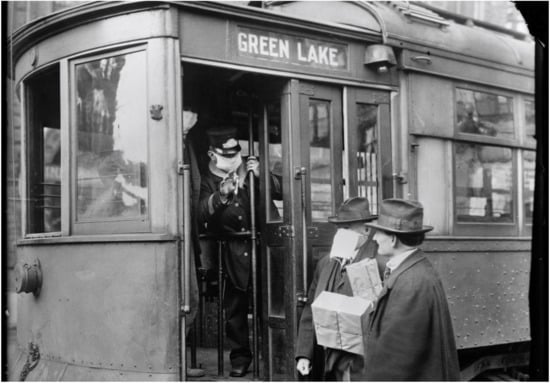
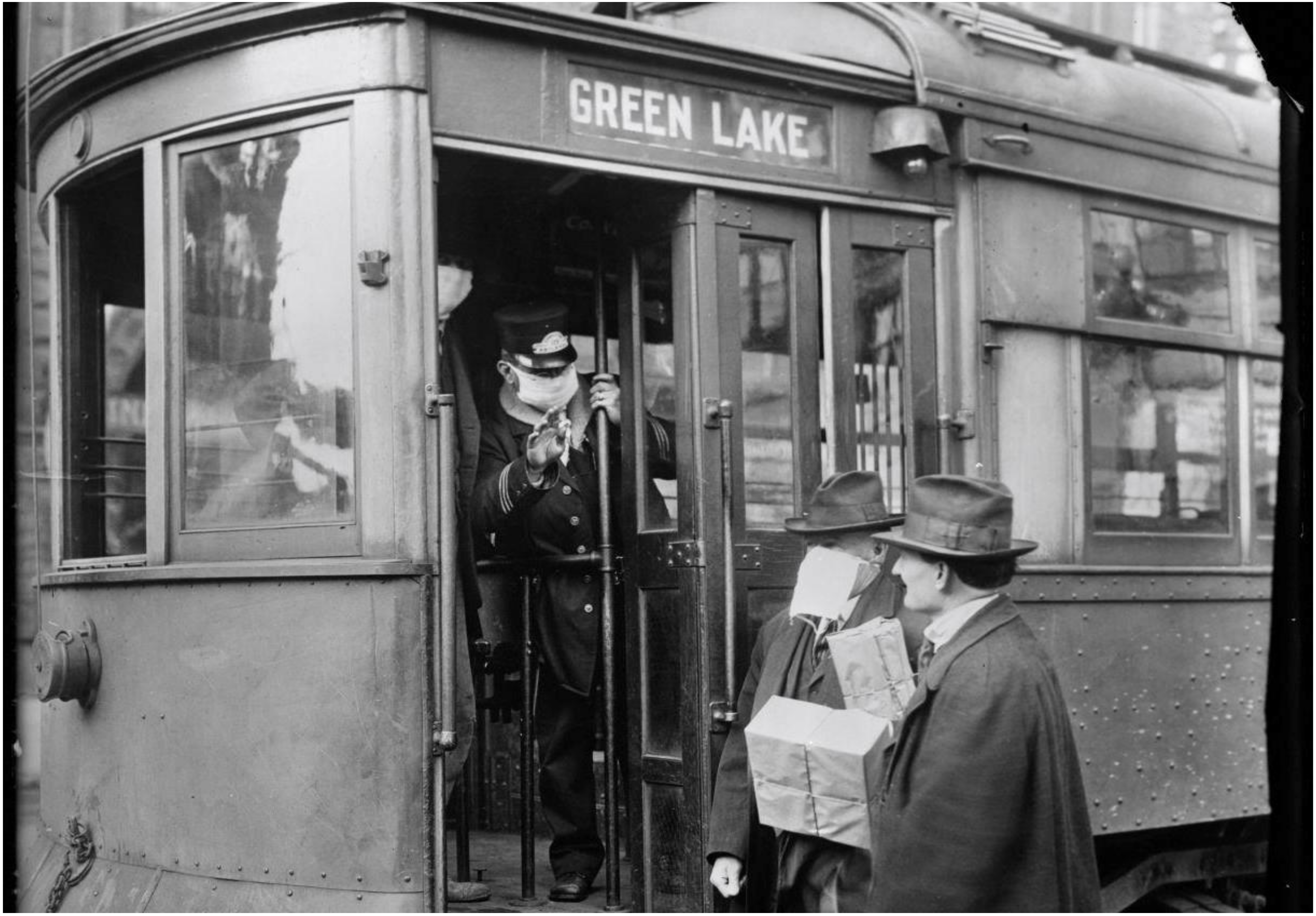
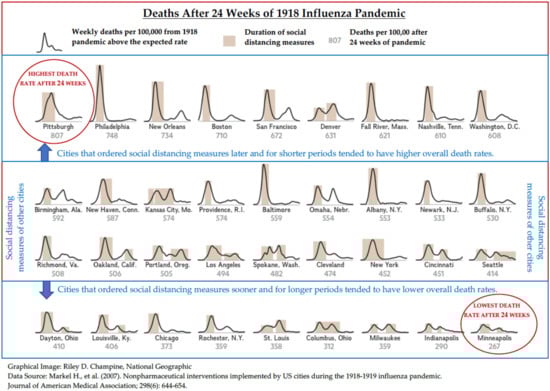
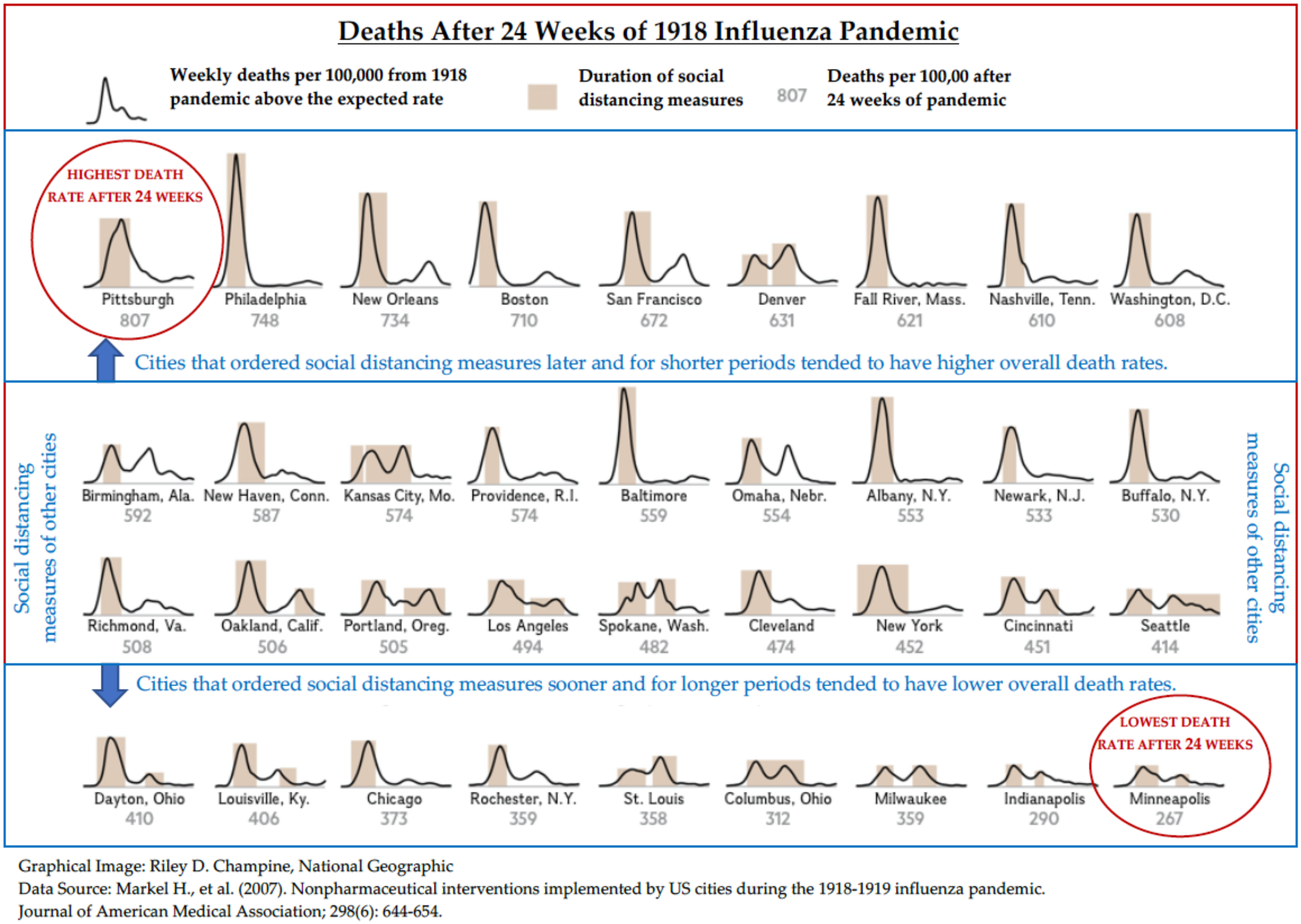

© 2020 by the authors. Licensee MDPI, Basel, Switzerland. This article is an open access article distributed under the terms and conditions of the Creative Commons Attribution (CC BY) license (http://creativecommons.org/licenses/by/4.0/).