

Structural Characterization and Anti-Inflammatory Properties of an Alginate Extracted from the Brown Seaweed Ericaria amentacea

 , , , , ,
  ,
,  , and
, and 
Abstract
1. Introduction
2. Results
2.1. Chemical Composition
2.2. Chemical Analyses
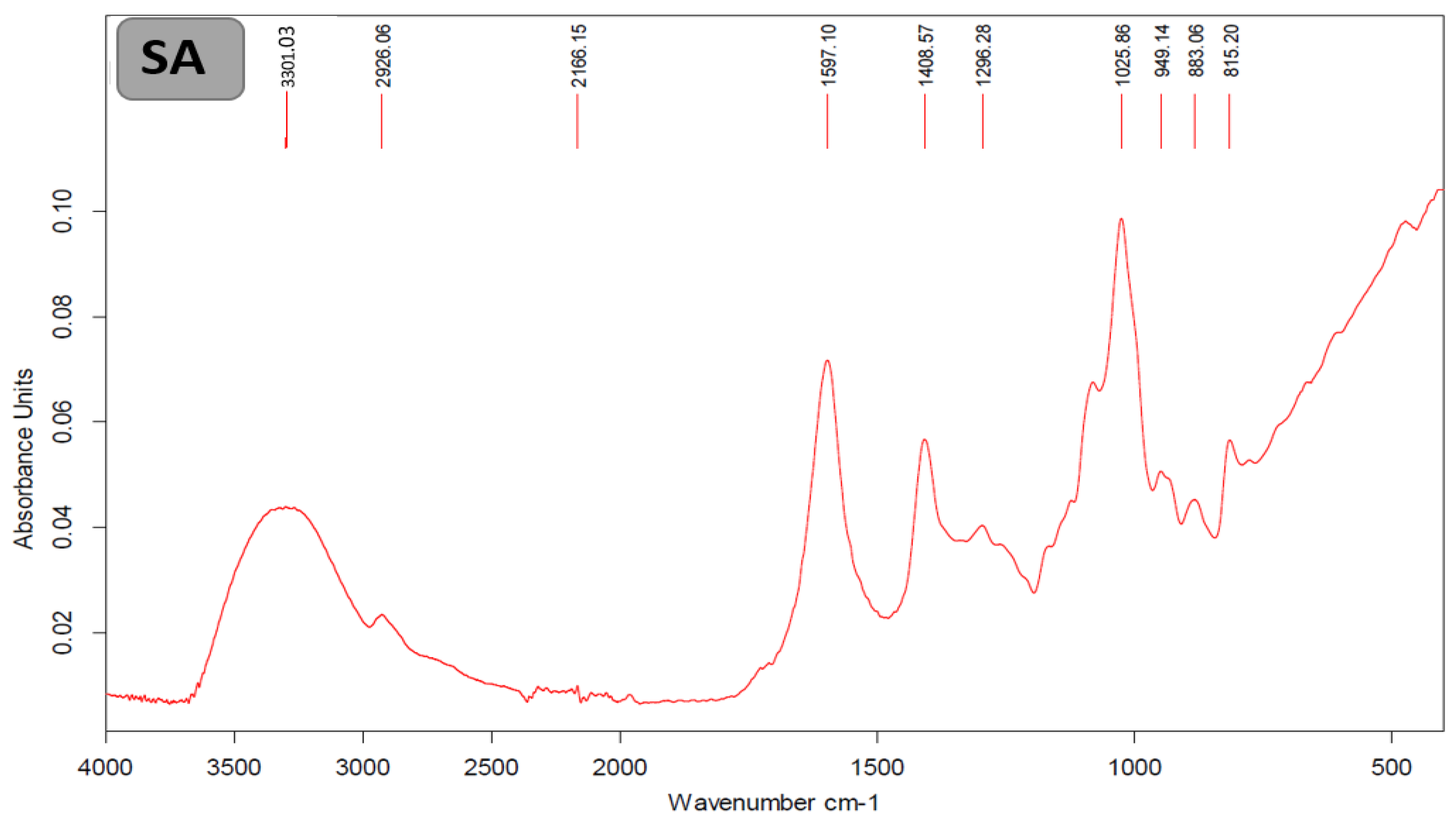
2.2.1. Fourier-Transform Infrared Spectroscopy
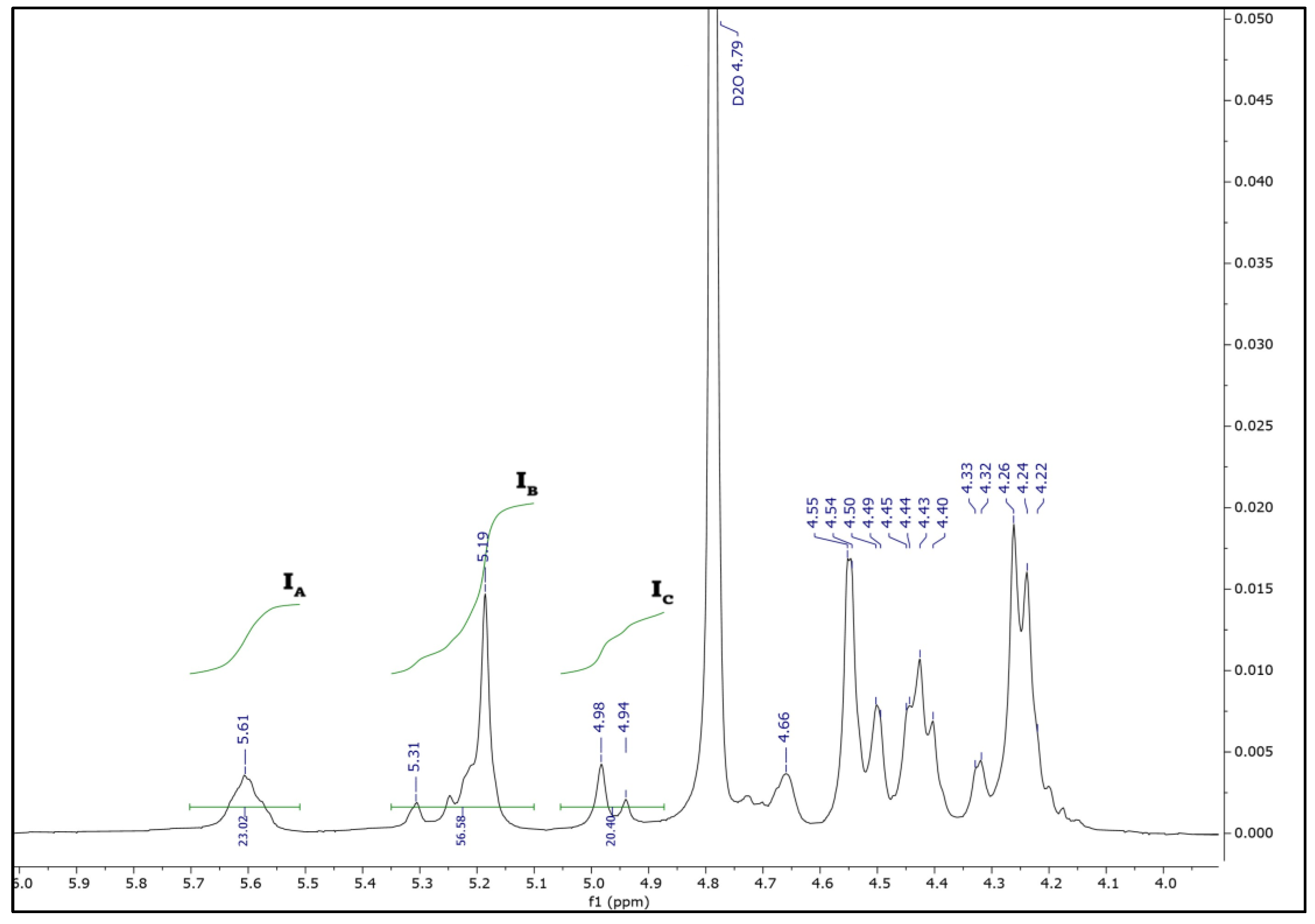
2.2.2. NMR Spectroscopy
2.3. Molecular Weight Determination
2.4. Biological Properties
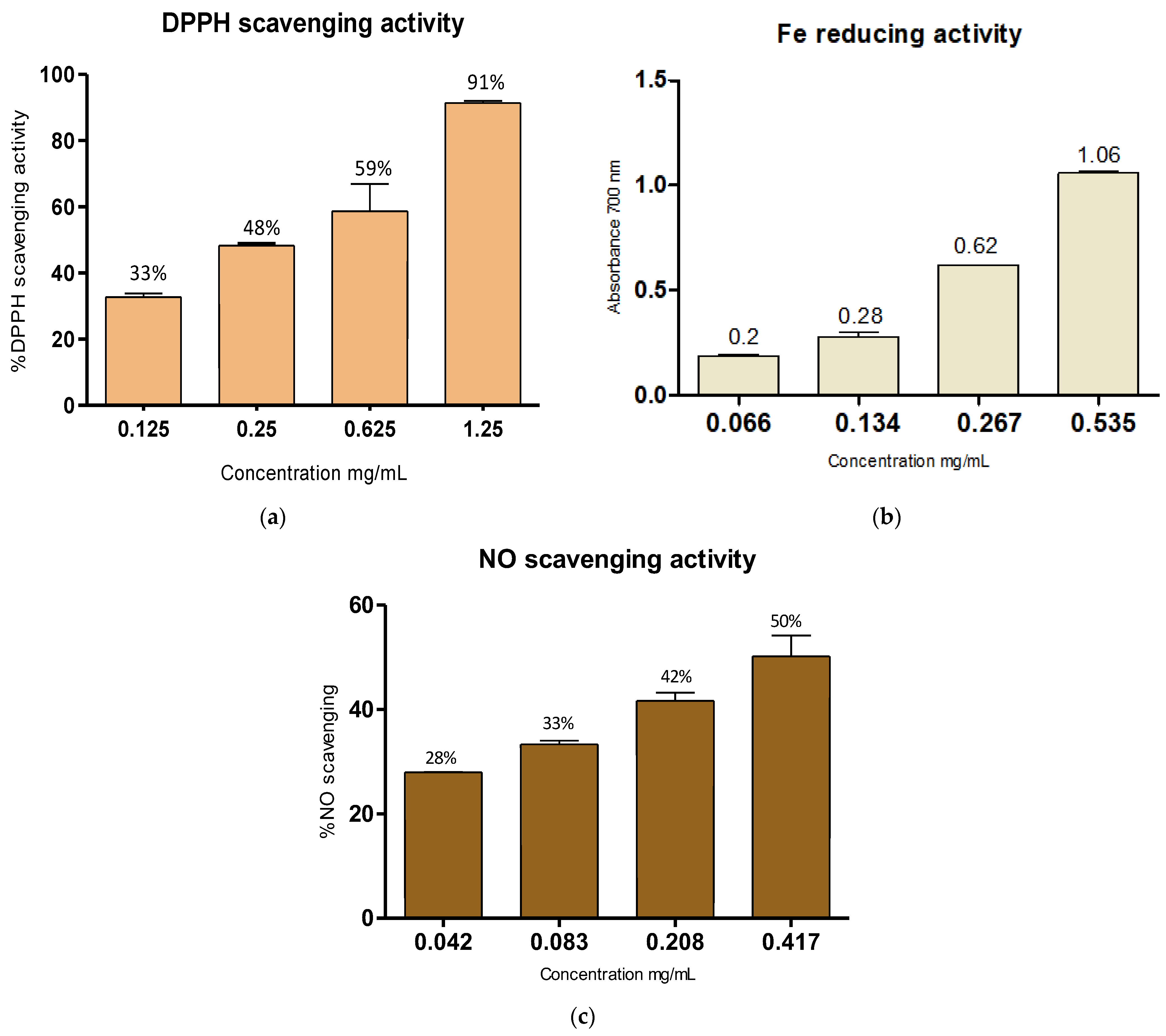
2.4.1. Antioxidant Potential DPPH Radical-Scavenging Activity
- Reducing Fe (III) Power Assay
- NO-Scavenging Activity
2.4.2. Anti-Inflammatory Potential
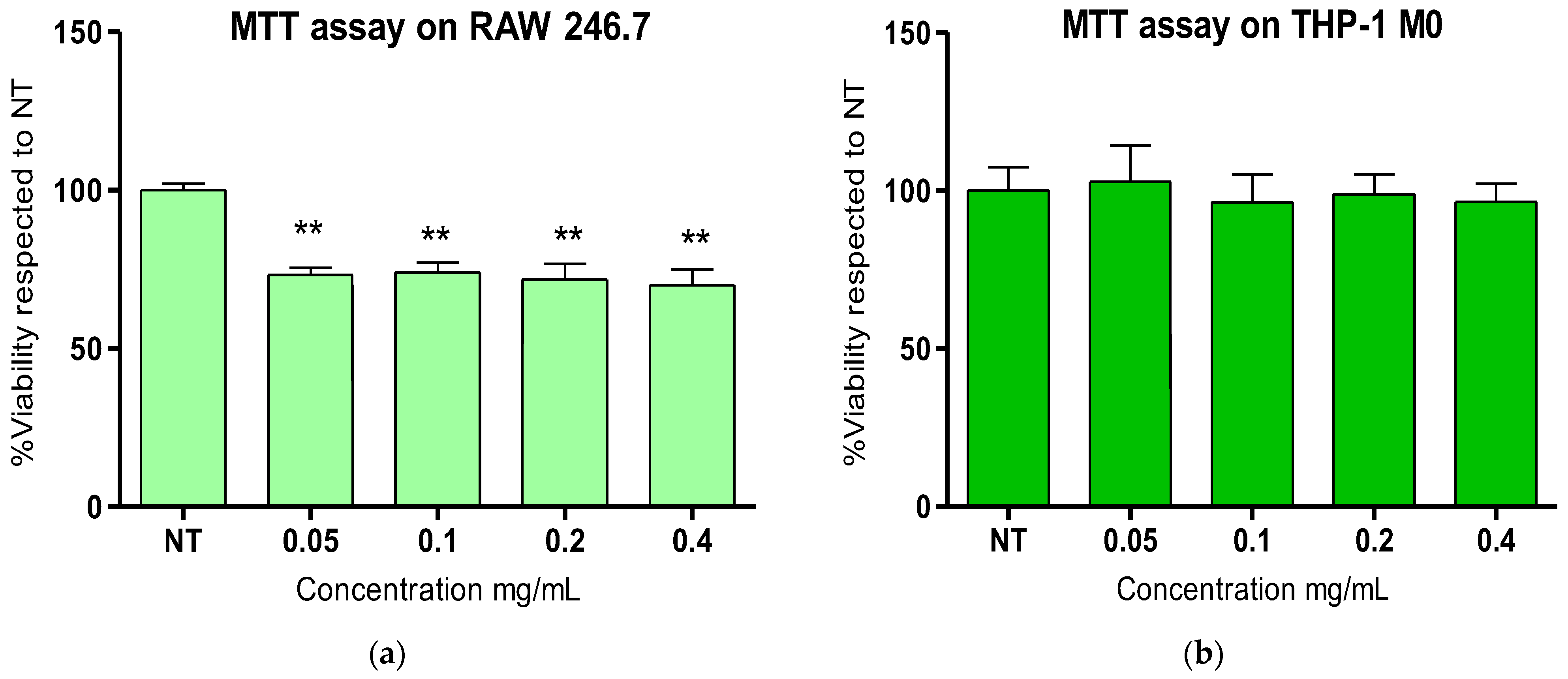
- Cytotoxicity test
- Gene expression analysis for LPS-activated RAW 264.7 macrophages
- Gene expression analysis of LPS-activated THP-1 M0
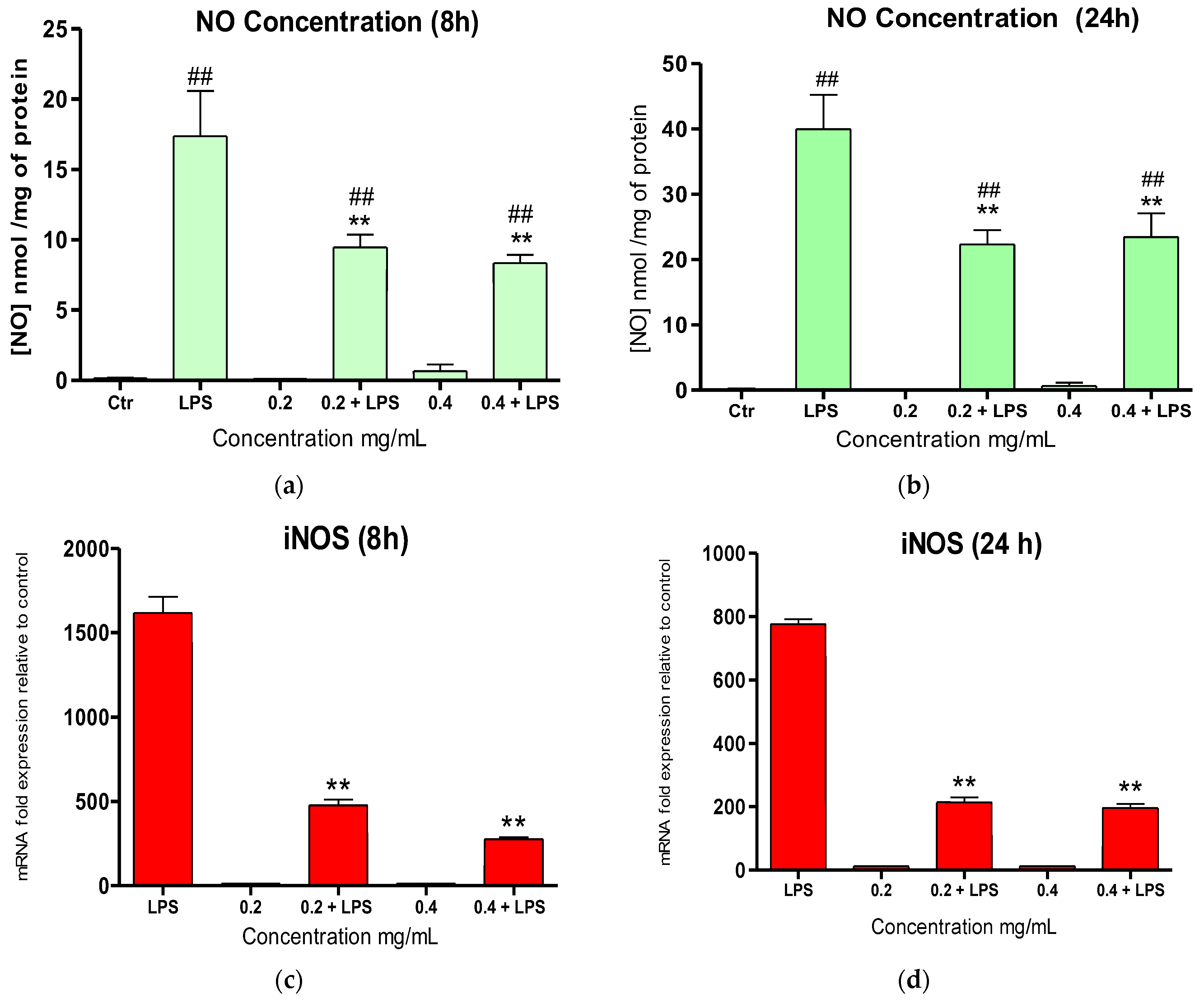
- NO-Scavenging activity and iNOS gene expression in LPS-Activated RAW 264.7 Macrophages
3. Discussion
4. Materials and Methods
4.1. Chemicals
4.2. Raw Material
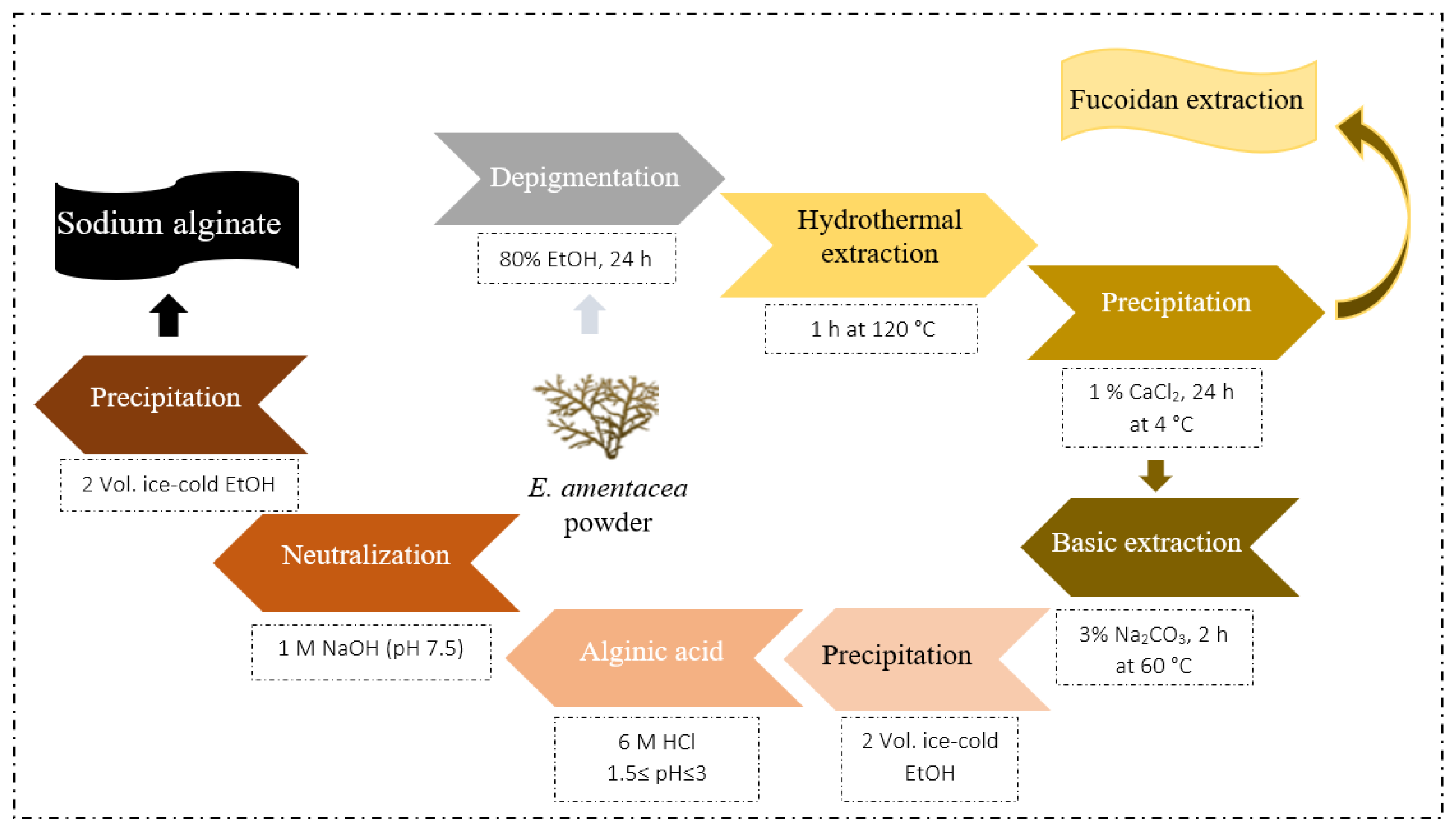
4.3. Sodium Alginate Extraction
4.4. Physicochemical Characterization
4.4.1. Centesimal Composition
4.4.2. Spectral Analyses
- Fourier-transform infrared spectroscopy
- NMR spectroscopy
4.4.3. Molecular Weight, Viscosity, and Polydispersity Determination
4.5. Biological Activities
4.5.1. Antioxidant Activity
- DPPH radical-scavenging activity
- Reducing Fe (III) Power Assay
- NO-Scavenging Activity
4.5.2. Anti-Inflammatory Activity
- Cell culture
- Cytotoxicity assay
- NO-Scavenging in LPS-Treated RAW 264.7 Macrophages
- Gene expression analysis of inflammatory mediators
4.6. Statistical Analysis
5. Conclusions
Supplementary Materials
Author Contributions
Funding
Institutional Review Board Statement
Data Availability Statement
Acknowledgments
Conflicts of Interest
Abbreviations
| ANOVA | Analysis of variance |
| COX-2 | Cyclooxygenase-2 |
| CXCL5 | C-X-C Motif Chemokine Ligand 5 |
| DNA | Deoxyribonucleic acid |
| DPPH | 2,2-diphenyl-1-picrylhydrazyl |
| FTIR | Fourier-transform infrared |
| GAPDH | Glyceraldehyde 3-phosphate dehydrogenase |
| HPRT-1 | Hypoxanthine-guanine phosphoribosyltransferase 1 |
| IL-1β | Interleukin 1 beta |
| IL-6 | Interleukin 6 |
| IL-8 | Interleukin 8 |
| iNOS | Inducible nitric oxide synthase |
| LPS | Lipopolysaccharide |
| MCP-1 | Monocyte chemoattractant protein-1 |
| MTT | 3-(4,5-dimethyl-2-yl)-2,5- diphenyltetrazolium bromide |
| NMR | Nuclear Magnetic Resonance |
| NO | Nitric oxide |
| PMA | Phorbol myristate acetate |
| qPCR | Quantitative polymerase chain reaction |
| RNA | Ribonucleic acid |
| ROS | Reactive oxygen species |
| SA | Sodium alginate |
| TNF-α | Tumor necrosis factor alpha |
| UV | Ultraviolet |
References
- Draget, K.I.; Moe, S.T.; Skjåk-Bræk, G.; Smidsrød, O. Alginates. In Food Polysaccharides and Their Applications; Stephen, A.M., Phillips, G.O., Williams, P.A., Eds.; CRC Press: Boca Raton, FL, USA, 2006; pp. 159–178. [Google Scholar]
- Stengel, D.B.; Connan, S. Marine algae: A source of biomass for biotechnological applications. In Natural Products from Marine Algae: Methods and Protocols; Springer: New York, NY, USA, 2015; pp. 1–37. [Google Scholar] [CrossRef]
- FAO. Capture and Global Production Databases; FAO United Nations: Rome, Italy, 2021. [Google Scholar]
- Twigg, G.; Fedenko, J.; Hurst, G.; Stanley, M.S.; Hughes, A.D. A review of the current potential of European brown seaweed for the production of biofuels. Energy Sustain. Soc. 2024, 14, 21. [Google Scholar] [CrossRef]
- Mahmoud, M.S.; Mohamed, S.A. Calcium alginate as an eco-friendly supporting material for Baker’s yeast strain in chromium bioremediation. HBRC J. 2017, 13, 245–254. [Google Scholar] [CrossRef]
- Rinaudo, M. Main properties and current applications of some polysaccharides as biomaterials. Polym. Int. 2008, 57, 397–430. [Google Scholar] [CrossRef]
- Stanford, E.C.C. Improvements in the Manufacture of Useful Products from Seaweeds. British Patent 142, 12 January 1881. [Google Scholar]
- Kloareg, B.; Quatrano, R.S. Structure of the cell walls of marine algae and ecophysiological functions of the matrix polysaccharides. Oceanogr. Mar. Biol. Annu. Rev. 1988, 26, 259–315. [Google Scholar]
- Larsen, B.; Salem, D.M.; Sallam, M.A.; Mishrikey, M.M.; Beltagy, A.I. Characterization of the alginates from algae harvested at the Egyptian Red Sea coast. Carbohydr. Res. 2003, 338, 2325–2336. [Google Scholar] [CrossRef] [PubMed]
- Yang, J.S.; Xie, Y.J.; He, W. Research progress on chemical modification of alginate: A review. Carbohydr. Polym. 2011, 84, 33–39. [Google Scholar] [CrossRef]
- Hachemi-Benmalek, N.; Nouani, A.; Benchabane, A. Valorization of brown algae (Cystoseira caespitosa) from local region in Algeria for sodium alginate extraction and their application in the immobilization of microbial pectinases. Alger. J. Environ. Sci. Technol. 2019, 5, 1155–1162. [Google Scholar]
- Lee, K.Y.; Mooney, D.J. Alginate: Properties and biomedical applications. Prog. Polym. Sci. 2012, 37, 106–126. [Google Scholar] [CrossRef]
- Li, Y.; Hu, M.; Du, Y.; Xiao, H.; McClements, D.J. Control of lipase digestibility of emulsified lipids by encapsulation within calcium alginate beads. Food Hydrocoll. 2011, 25, 122–130. [Google Scholar] [CrossRef]
- Hecht, H.; Srebnik, S. Structural characterization of sodium alginate and calcium alginate. Biomacromolecules 2016, 17, 2160–2167. [Google Scholar] [CrossRef]
- Kokova, V.; Lukova, P.; Baldzhieva, A.; Katsarov, P.; Delattre, C.; Molinié, R.; Apostolova, E. Extraction, structural characterization, and in vivo anti-inflammatory effect of alginate from Cystoseira crinita (Desf.) Borry harvested in the Bulgarian Black Sea. Mar. Drugs 2023, 21, 245. [Google Scholar] [CrossRef]
- Ricker, M.A.; Haas, W.C. Anti-inflammatory diet in clinical practice: A review. Nutr. Clin. Pract. 2017, 32, 318–325. [Google Scholar] [CrossRef]
- Ferrero-Miliani, L.; Nielsen, O.H.; Andersen, P.S.; Girardin, S. Chronic inflammation: Importance of NOD2 and NALP3 in interleukin-1β generation. Clin. Exp. Immunol. 2007, 147, 227–235. [Google Scholar] [CrossRef] [PubMed]
- Sanada, F.; Taniyama, Y.; Muratsu, J.; Otsu, R.; Shimizu, H.; Rakugi, H.; Morishita, R. Source of chronic inflammation in aging. Front. Cardiovasc. Med. 2018, 5, 12. [Google Scholar] [CrossRef] [PubMed]
- Valentine, J.S.; Wertz, D.L.; Lyons, T.J.; Liou, L.L.; Goto, J.J.; Gralla, E.B. The dark side of dioxygen biochemistry. Curr. Opin. Chem. Biol. 1998, 2, 253–262. [Google Scholar] [CrossRef] [PubMed]
- Circu, M.L.; Aw, T.Y. Reactive oxygen species, cellular redox systems, and apoptosis. Free Radic. Biol. Med. 2010, 48, 749–762. [Google Scholar] [CrossRef]
- Stadtman, E.R.; Levine, R.L. Protein oxidation. Ann. N. Y. Acad. Sci. 2000, 899, 191–208. [Google Scholar] [CrossRef]
- Marnett, L.J. Oxyradicals and DNA damage. Carcinogenesis 2000, 21, 361–370. [Google Scholar] [CrossRef]
- Ylä-Herttuala, S. Oxidized LDL and atherogenesis. Ann. N. Y. Acad. Sci. 1999, 874, 134–137. [Google Scholar] [CrossRef]
- Nordberg, J.; Arnér, E.S. Reactive oxygen species, antioxidants, and the mammalian thioredoxin system. Free Radic. Biol. Med. 2001, 31, 1287–1312. [Google Scholar] [CrossRef]
- Falace, A.; Marletta, G.; Savonitto, G.; Candotto Carniel, F.; Srijemsi, M.; Bevilacqua, S.; Alongi, G. Is the South-Mediterranean canopy-forming Ericaria giacconei (= Cystoseira hyblaea) a loser from ocean warming? Front. Mar. Sci. 2021, 8, 760637. [Google Scholar] [CrossRef]
- De La Fuente, G.; Chiantore, M.; Asnaghi, V.; Kaleb, S.; Falace, A. First ex situ outplanting of the habitat-forming seaweed Cystoseira amentacea var. stricta from a restoration perspective. PeerJ 2019, 7, e7290. [Google Scholar] [CrossRef]
- Clausing, R.J.; De La Fuente, G.; Falace, A.; Chiantore, M. Accounting for environmental stress in restoration of intertidal foundation species. J. Appl. Ecol. 2023, 60, 305–318. [Google Scholar] [CrossRef]
- Falace, A.; Kaleb, S.; De La Fuente, G.; Asnaghi, V.; Chiantore, M. Ex situ cultivation protocol for Cystoseira amentacea var. stricta (Fucales, Phaeophyceae) from a restoration perspective. PLoS ONE 2018, 13, e0193011. [Google Scholar] [CrossRef]
- Belattmania, Z.; Kaidi, S.; El Atouani, S.; Katif, C.; Bentiss, F.; Jama, C.; Vasconcelos, V. Isolation and FTIR-ATR and 1H NMR characterization of alginates from the main alginophyte species of the Atlantic coast of Morocco. Molecules 2020, 25, 4335. [Google Scholar] [CrossRef] [PubMed]
- Grasdalen, H.; Larsen, B.; Smidsrød, O. A PMR study of the composition and sequence of uronate residues in alginates. Carbohydr. Res. 1979, 68, 23–31. [Google Scholar] [CrossRef]
- Ilmi, Z.N.; Wulandari, P.A.C.; Husen, S.A.; Winarni, D.; Alamsjah, M.A.; Awang, K.; Pudjiastuti, P. Characterization of alginate from Sargassum duplicatum and the antioxidant effect of alginate–okra fruit extracts combination for wound healing on diabetic mice. Appl. Sci. 2020, 10, 6082. [Google Scholar] [CrossRef]
- Zrid, R.; Bentiss, F.; Ali, R.A.B.; Belattmania, Z.; Zarrouk, A.; Elatouani, S.; Sabour, B. Potential uses of the brown seaweed Cystoseira humilis biomass: 1-Sodium alginate yield, FT-IR, 1H NMR and rheological analyses. J. Mater. Environ. Sci. 2016, 7, 613–620. [Google Scholar]
- Sellimi, S.; Younes, I.; Ayed, H.B.; Maalej, H.; Montero, V.; Rinaudo, M.; Nasri, M. Structural, physicochemical and antioxidant properties of sodium alginate isolated from a Tunisian brown seaweed. Int. J. Biol. Macromol. 2015, 72, 1358–1367. [Google Scholar] [CrossRef]
- Hadj Ammar, H.; Hafsa, J.; Le Cerf, D.; Bouraoui, A.; Majdoub, H. Antioxidant and gastroprotective activities of polysaccharides from the Tunisian brown algae (Cystoseira sedoides). J. Tunis. Chem. Soc. 2016, 18, 80–88. [Google Scholar]
- Hentati, F.; Delattre, C.; Ursu, A.V.; Desbrières, J.; Le Cerf, D.; Gardarin, C.; Pierre, G. Structural characterization and antioxidant activity of water-soluble polysaccharides from the Tunisian brown seaweed Cystoseira compressa. Carbohydr. Polym. 2018, 198, 589–600. [Google Scholar] [CrossRef]
- Manns, D.; Nielsen, M.M.; Bruhn, A.; Saake, B.; Meyer, A.S. Compositional variations of brown seaweeds Laminaria digitata and Saccharina latissima in Danish waters. J. Appl. Phycol. 2017, 29, 1493–1506. [Google Scholar] [CrossRef]
- Westermeier, R.; Murúa, P.; Patiño, D.J.; Muñoz, L.; Ruiz, A.; Müller, D.G. Variations of chemical composition and energy content in natural and genetically defined cultivars of Macrocystis from Chile. J. Appl. Phycol. 2012, 24, 1191–1201. [Google Scholar] [CrossRef]
- Kaidi, S.; Bentiss, F.; Jama, C.; Khaya, K.; Belattmania, Z.; Reani, A.; Sabour, B. Isolation and structural characterization of alginates from the kelp species Laminaria ochroleuca and Saccorhiza polyschides from the Atlantic Coast of Morocco. Colloids Interfaces 2022, 6, 51. [Google Scholar] [CrossRef]
- Draget, K.; Smidsrod, O.; Skjak-Bræk, G. Alginates from algae. In Biopolymers Online; Wiley-VCH Verlag GmbH & Co. KGaA: Weinheim, Germany, 2005; pp. 1–30. [Google Scholar] [CrossRef]
- Lorbeer, A.J.; Charoensiddhi, S.; Lahnstein, J.; Lars, C.; Franco, C.M.; Bulone, V.; Zhang, W. Sequential extraction and characterization of fucoidans and alginates from Ecklonia radiata, Macrocystis pyrifera, Durvillaea potatorum, and Seirococcus axillaris. J. Appl. Phycol. 2017, 29, 1515–1526. [Google Scholar] [CrossRef]
- García-Ríos, V.; Ríos-Leal, E.; Robledo, D.; Freile-Pelegrín, Y. Polysaccharides composition from tropical brown seaweeds. Phycolog. Res. 2012, 60, 305–315. [Google Scholar] [CrossRef]
- El-Sheekh, M.; Kassem, W.M.; Alwaleed, E.A.; Saber, H. Optimization and characterization of brown seaweed alginate for antioxidant, anticancer, antimicrobial, and antiviral properties. Int. J. Biol. Macromol. 2024, 278, 134715. [Google Scholar] [CrossRef] [PubMed]
- Panikkar, R.; Brasch, D.J. Composition and block structure of alginates from New Zealand brown seaweeds. Carbohydr. Res. 1996, 293, 119–132. [Google Scholar] [CrossRef]
- Kelly, B.J.; Brown, M.T. Variations in the alginate content and composition of Durvillaea antarctica and D. willana from southern New Zealand. J. Appl. Phycol. 2000, 12, 317–324. [Google Scholar] [CrossRef]
- Rioux, L.E.; Turgeon, S.L.; Beaulieu, M. Characterization of polysaccharides extracted from brown seaweeds. Carbohydr. Polym. 2007, 69, 530–537. [Google Scholar] [CrossRef]
- Krumhansl, K.A.; Demes, K.W.; Carrington, E.; Harley, C.D. Divergent growth strategies between red algae and kelps influence biomechanical properties. Am. J. Bot. 2015, 102, 1938–1944. [Google Scholar] [CrossRef]
- Beuder, S.; Braybrook, S.A. Brown algal cell walls and development. Semin. Cell Dev. Biol. 2023, 134, 103–111. [Google Scholar] [CrossRef]
- Craigie, J.S.; Morris, E.R.; Rees, D.A.; Thom, D. Alginate block structure in phaeophyceae from Nova Scotia: Variation with species, environment and tissue-type. Carbohydr. Polym. 1984, 4, 237–252. [Google Scholar] [CrossRef]
- Gheorghita Puscaselu, R.; Lobiuc, A.; Dimian, M.; Covasa, M. Alginate: From food industry to biomedical applications and management of metabolic disorders. Polymers 2020, 12, 2417. [Google Scholar] [CrossRef]
- Jiao, W.; Chen, W.; Mei, Y.; Yun, Y.; Wang, B.; Zhong, Q.; Chen, W. Effects of molecular weight and guluronic acid/mannuronic acid ratio on the rheological behavior and stabilizing property of sodium alginate. Molecules 2019, 24, 4374. [Google Scholar] [CrossRef]
- Deng, Y.; Yang, N.; Okoro, O.V.; Shavandi, A.; Nie, L. Alginate-based composite and its biomedical applications. In Properties and Applications of Alginates; IntechOpen: London, UK, 2021. [Google Scholar] [CrossRef]
- Rey-Rico, A.; Klich, A.; Cucchiarini, M.; Madry, H. Biomedical-grade, high mannuronic acid content (BioMVM) alginate enhances the proteoglycan production of primary human meniscal fibrochondrocytes in a 3-D microenvironment. Sci. Rep. 2016, 6, 28170. [Google Scholar] [CrossRef]
- Zhang, S.; Dong, J.; Pan, R.; Xu, Z.; Li, M.; Zang, R. Structures, properties, and bioengineering applications of alginates and hyaluronic acid. Polymers 2023, 15, 2149. [Google Scholar] [CrossRef] [PubMed]
- Zhang, X.; Liu, L.; Zhang, C.; Zhu, Y.; Zhao, H.; Zhao, L. Adsorption mechanisms of alginate oligosaccharides with specific degree of polymerizations on a novel ion-exchange resin: Experiments and simulations. Chem. Eng. J. 2023, 460, 141717. [Google Scholar] [CrossRef]
- El-Sheekh, M.M.; El-Shenody, R.A.E.K.; Bases, E.A.; El Shafay, S.M. Comparative assessment of antioxidant activity and biochemical composition of four seaweeds, Rocky Bay of Abu Qir in Alexandria, Egypt. Food Sci. Technol. 2020, 41, 29–40. [Google Scholar] [CrossRef]
- Duan, X.J.; Zhang, W.W.; Li, X.M.; Wang, B.G. Evaluation of antioxidant property of extract and fractions obtained from a red alga, Polysiphonia urceolata. Food Chem. 2006, 95, 37–43. [Google Scholar] [CrossRef]
- Yu, H.; Liu, X.; Xing, R.; Liu, S.; Li, C.; Li, P. Radical scavenging activity of protein from tentacles of jellyfish Rhopilema esculentum. Bioorg. Med. Chem. Lett. 2005, 15, 2659–2664. [Google Scholar] [CrossRef]
- Ye, S.; Xie, C.; Agar, O.T.; Barrow, C.J.; Dunshea, F.R.; Suleria, H.A.R. Alginates from brown seaweeds as a promising natural source: A review of its properties and health benefits. Food Rev. Int. 2024, 40, 2682–2710. [Google Scholar] [CrossRef]
- Weidinger, A.; Kozlov, A.V. Biological activities of reactive oxygen and nitrogen species: Oxidative stress versus signal transduction. Biomolecules 2015, 5, 472–484. [Google Scholar] [CrossRef] [PubMed]
- De La Fuente, G.; Fontana, M.; Asnaghi, V.; Chiantore, M.; Mirata, S.; Salis, A.; Scarfì, S. The remarkable antioxidant and anti-inflammatory potential of the extracts of the brown alga Cystoseira amentacea var. stricta. Mar. Drugs 2020, 19, 2. [Google Scholar] [CrossRef]
- Zhou, R.; Shi, X.Y.; Bi, D.C.; Fang, W.S.; Wei, G.B.; Xu, X. Alginate-derived oligosaccharide inhibits neuroinflammation and promotes microglial phagocytosis of β-amyloid. Mar. Drugs 2015, 13, 5828–5846. [Google Scholar] [CrossRef] [PubMed]
- Fernando, I.S.; Jayawardena, T.U.; Sanjeewa, K.A.; Wang, L.; Jeon, Y.J.; Lee, W.W. Anti-inflammatory potential of alginic acid from Sargassum horneri against urban aerosol-induced inflammatory responses in keratinocytes and macrophages. Ecotoxicol. Environ. Saf. 2018, 160, 24–31. [Google Scholar] [CrossRef]
- Sharma, J.N.; Al-Omran, A.; Parvathy, S.S. Role of nitric oxide in inflammatory diseases. Inflammopharmacology 2007, 15, 252–259. [Google Scholar] [CrossRef]
- Calder, P.C.; Albers, R.; Antoine, J.M.; Blum, S.; Bourdet-Sicard, R.; Ferns, G.A.; Zhao, J. Inflammatory disease processes and interactions with nutrition. Br. J. Nutr. 2009, 101, 1–45. [Google Scholar] [CrossRef]
- Pawelec, G.; Goldeck, D.; Derhovanessian, E. Inflammation, ageing and chronic disease. Curr. Opin. Immunol. 2014, 29, 23–28. [Google Scholar] [CrossRef] [PubMed]
- McInturff, J.E.; Modlin, R.L.; Kim, J. The role of toll-like receptors in the pathogenesis and treatment of dermatological disease. J. Investig. Dermatol. 2005, 125, 1–8. [Google Scholar] [CrossRef]
- Bianchi, M.E.; Manfredi, A.A. How macrophages ring the inflammation alarm. Proc. Natl. Acad. Sci. USA 2014, 111, 2866–2867. [Google Scholar] [CrossRef] [PubMed]
- Levy, E.; Xanthou, G.; Petrakou, E.; Zacharioudaki, V.; Tsatsanis, C.; Fotopoulos, S.; Xanthou, M. Distinct roles of TLR4 and CD14 in LPS-induced inflammatory responses of neonates. Pediatr. Res. 2009, 66, 179–184. [Google Scholar] [CrossRef]
- Kammerlander, G.; Eberlein, T. An assessment of the wound healing properties of Algisite M dressings. Nurs. Times 2003, 99, 54–56. [Google Scholar]
- Ohsumi, H.; Hirata, H.; Nagakura, T.; Tsujii, M.; Sugimoto, T.; Miyamoto, K.; Uchida, A. Enhancement of perineurial repair and inhibition of nerve adhesion by viscous injectable pure alginate sol. Plast. Reconstr. Surg. 2005, 116, 823–830. [Google Scholar] [CrossRef]
- Hori, Y.; Winans, A.M.; Huang, C.C.; Horrigan, E.M.; Irvine, D.J. Injectable dendritic cell-carrying alginate gels for immunization and immunotherapy. Biomaterials 2008, 29, 3671–3682. [Google Scholar] [CrossRef]
- Yang, D.; Jones, K.S. Effect of alginate on innate immune activation of macrophages. J. Biomed. Mater. Res. A 2009, 90, 411–418. [Google Scholar] [CrossRef] [PubMed]
- Otterlei, M.; Østgaard, K.; Skjåk-Bræk, G.; Smidsrød, O.; Soon-Shiong, P.; Espevik, T. Induction of cytokine production from human monocytes stimulated with alginate. J. Immunother. 1991, 10, 286–291. [Google Scholar] [CrossRef]
- Son, E.H.; Moon, E.Y.; Rhee, D.K.; Pyo, S. Stimulation of various functions in murine peritoneal macrophages by high mannuronic acid-containing alginate (HMA) exposure in vivo. Int. Immunopharmacol. 2001, 1, 147–154. [Google Scholar] [CrossRef]
- Viswanathan, S.; Nallamuthu, T. Extraction of sodium alginate from selected seaweeds and their physicochemical and biochemical properties. Int. J. Pharm. Sci. Res. 2014, 3, 10998–11003. [Google Scholar]
- Rashedy, S.H.; Abd El Hafez, M.S.; Dar, M.A.; Cotas, J.; Pereira, L. Evaluation and characterization of alginate extracted from brown seaweed collected in the Red Sea. Appl. Sci. 2021, 11, 6290. [Google Scholar] [CrossRef]
- Michalak, K.P.; Michalak, A.Z. Understanding chronic inflammation: Couplings between cytokines, ROS, NO, Ca2+, HIF-1α, Nrf2 and autophagy. Front. Immunol. 2025, 16, 1558263. [Google Scholar] [CrossRef] [PubMed]
- Iles, K.E.; Forman, H.J. Macrophage signaling and respiratory burst. Immunol. Res. 2002, 26, 95–105. [Google Scholar] [CrossRef]
- Mirshafiey, A.; Rehm, B.H. Alginate and its comonomer mannuronic acid: Medical relevance as drugs. In Alginates: Biology and Applications; Springer: Berlin/Heidelberg, Germany, 2009; pp. 229–260. [Google Scholar] [CrossRef]
- Wu, A.; Gao, Y.; Kan, R.; Ren, P.; Xue, C.; Kong, B.; Tang, Q. Alginate oligosaccharides prevent dextran-sulfate-sodium-induced ulcerative colitis via enhancing intestinal barrier function and modulating gut microbiota. Foods 2023, 12, 220. [Google Scholar] [CrossRef]
- Du, Y.; Jiang, Y.; Song, Y.; Chen, J.; Wu, Y.; Guo, R.; Huang, Y. Alginate/silk fibroin/Zn2+ composite microspheres for site-specific delivery for enhanced ulcerative colitis therapy. Chem. Eng. J. 2024, 495, 153441. [Google Scholar] [CrossRef]
- Abramowitz, L.; Weyandt, G.H.; Havlickova, B.; Matsuda, Y.; Didelot, J.M.; Rothhaar, A.; Wiesel, P. The diagnosis and management of haemorrhoidal disease from a global perspective. Aliment. Pharmacol. Ther. 2010, 31, 1–58. [Google Scholar] [CrossRef] [PubMed]
- Hasegawa, T.; Takahashi, T.; Inada, Y.; Yamada, C.; Tanaka, Y. Reparative effects of sodium alginate (Alloid G) on radiation stomatitis. Nippon Acta Radiol. 1989, 49, 1047–1051. [Google Scholar] [PubMed]
- Rajauria, G.; Ravindran, R.; Garcia-Vaquero, M.; Rai, D.K.; Sweeney, T.; O’Doherty, J. Purification and molecular characterization of fucoidan isolated from Ascophyllum nodosum brown seaweed grown in Ireland. Mar. Drugs 2023, 21, 315. [Google Scholar] [CrossRef] [PubMed]
- DuBois, M.; Gilles, K.A.; Hamilton, J.K.; Rebers, P.T.; Smith, F. Colorimetric method for determination of sugars and related substances. Anal. Chem. 1956, 28, 350–356. [Google Scholar] [CrossRef]
- Bitter, T.; Muir, H.M. A modified uronic acid carbazole reaction. Anal. Biochem. 1962, 4, 330–334. [Google Scholar] [CrossRef]
- Bradford, M.M. A rapid and sensitive method for the quantitation of microgram quantities of protein utilizing the principle of protein–dye binding. Anal. Biochem. 1976, 72, 248–254. [Google Scholar] [CrossRef]
- Biju, J.; Sulaiman, C.T.; Sateesh, G.; Reddy, V.R.K. Total phenolics and flavonoids in selected medicinal plants in Kerala. Int. J. Pharm. Pharm. Sci. 2014, 6, 406–408. [Google Scholar]
- Masuelli, M.A.; Illanes, C.O. Review of the characterization of sodium alginate by intrinsic viscosity measurements: Comparative analysis between conventional and single-point methods. Int. J. Biomater. Sci. Eng. 2014, 1, 1–11. [Google Scholar]
- Clementi, F.; Mancini, M.; Moresi, M. Rheology of alginate from Azotobacter vinelandii in aqueous dispersions. J. Food Eng. 1998, 36, 51–62. [Google Scholar] [CrossRef]
- Kirby, A.J.; Schmidt, R.J. The antioxidant activity of Chinese herbs for eczema and of placebo herbs—I. J. Ethnopharmacol. 1997, 56, 103–108. [Google Scholar] [CrossRef]
- Sampath Kumar, N.S.; Nazeer, R.A.; Jaiganesh, R. Purification and identification of antioxidant peptides from the skin protein hydrolysate of two marine fishes, horse mackerel (Magalaspis cordyla) and croaker (Otolithes ruber). Amino Acids 2012, 42, 1641–1649. [Google Scholar] [CrossRef] [PubMed]
- Xu, Y.; Zhao, H.; Zhang, M.; Li, C.J.; Lin, X.Z.; Sheng, J.; Shi, W. Variations of antioxidant properties and NO scavenging abilities during fermentation of tea. Int. J. Mol. Sci. 2011, 12, 4574–4590. [Google Scholar] [CrossRef]
- Pozzolini, M.; Vergani, L.; Ragazzoni, M.; Delpiano, L.; Grasselli, E.; Voci, A.; Giovine, M.; Scarfì, S. Different reactivity of primary fibroblasts and endothelial cells towards crystalline silica: A surface radical matter. Toxicology 2016, 361, 12–23. [Google Scholar] [CrossRef] [PubMed]



| Sample | Yield (%) | Total Sugar (%) | Uronic Acid (%) | Total Polyphenols (%) | Protein (%) |
|---|---|---|---|---|---|
| SA | 3 ± 0.78 | 44.25 ± 4 | 49 ± 2.2 | 0.93 ± 0.08 | 0.52 ± 0.04 |
| Fraction | FG 1 | FM 2 | FGG 3 | FGM or FMG 4 | FMM 5 | M/G 6 | η 7 |
|---|---|---|---|---|---|---|---|
| SA | 0.30 | 0.70 | 0.26 | 0.04 | 0.66 | 2.33 | 0.160 |
| Sample | MW (g/mol) | Mn (g/mol) | q (Mw/Mn) | [η] (mL/g) |
|---|---|---|---|---|
| SA | 1 × 10⁴ | 2.9 × 10³ | 3.5 | 36.8 |
| Gene | GenBank (a.n.) | Forward | Reverse | Product Size (bp) |
|---|---|---|---|---|
| h-IL-1β | NM_000576.3 | TgATggCTTATTACAGTggCAATg | gTAgTggTggTCggAgATTCg | 140 |
| h-IL-6 | NM_001318095.2 | CAgATTTgAggTAgTgAggAAC | CgCAgAATgAgATgAgTTgTC | 194 |
| h-IL-8 | NM_000584.4 | AATTCATTCTCTgTggTATC | CCAggAATCTTgTATTgC | 127 |
| h-MCP-1 | NM_002982 | CTTCTgTgCCTgCTgCTC | CTTgCTgCTggTgATTCTTC | 156 |
| h-TNF-α | NM_000594.4 | gTgAggAggACgAACATC | gAGCCAgAAgAggTTgAg | 113 |
| h-HPRT-1 | NM_000194.3 | ggTCAggCAgTATAATCCAAAg | TTCATTATAgTCAAgggCATATCC | 144 |
| m-IL-1β | NM_008361.4 | gCAgCACATCAACAAgAg | CAgCAggTTATCATCATCATC | 184 |
| m-IL-6 | NM_031168.2 | ACCTgTCTATACCACTTC | gCATCATCgTTgTTCATA | 117 |
| m-CXCL5 | NM_009141.3 | TgCTTAACCgTAACTCCAA | ATCCAgACAgACCTCCTT | 129 |
| m-iNOS | NM_010927.4 | CCgCCgCTCTAATACTTA | TTCATCAAggAATTATACAggAA | 121 |
| m-TNF-α | NM_013693.3 | CCACCATCAAggACTCAA | ATCTTATCCAgCCTCATTCT | 120 |
| m-COX-2 | NM_011198.5 | CCAgCAAAgCCTAgAgCAAC | AgCACAAAACCAggATCAgg | 127 |
| m-GAPDH | NM_001289726.1 | TCTCCCTCACAATTTCCATCCCAg | gggTgCAGCgAACTT TATTgATgg | 99 |
Disclaimer/Publisher’s Note: The statements, opinions and data contained in all publications are solely those of the individual author(s) and contributor(s) and not of MDPI and/or the editor(s). MDPI and/or the editor(s) disclaim responsibility for any injury to people or property resulting from any ideas, methods, instructions or products referred to in the content. |
© 2026 by the authors. Licensee MDPI, Basel, Switzerland. This article is an open access article distributed under the terms and conditions of the Creative Commons Attribution (CC BY) license.
Share and Cite
Moussa, M.; Mirata, S.; Moni, L.; Asnaghi, V.; Alloisio, M.; Pettineo, S.; Castellano, M.; Vicini, S.; Chiantore, M.; Scarfì, S. Structural Characterization and Anti-Inflammatory Properties of an Alginate Extracted from the Brown Seaweed Ericaria amentacea. Mar. Drugs 2026, 24, 41. https://doi.org/10.3390/md24010041
Moussa M, Mirata S, Moni L, Asnaghi V, Alloisio M, Pettineo S, Castellano M, Vicini S, Chiantore M, Scarfì S. Structural Characterization and Anti-Inflammatory Properties of an Alginate Extracted from the Brown Seaweed Ericaria amentacea. Marine Drugs. 2026; 24(1):41. https://doi.org/10.3390/md24010041
Chicago/Turabian StyleMoussa, Maha, Serena Mirata, Lisa Moni, Valentina Asnaghi, Marina Alloisio, Simone Pettineo, Maila Castellano, Silvia Vicini, Mariachiara Chiantore, and Sonia Scarfì. 2026. "Structural Characterization and Anti-Inflammatory Properties of an Alginate Extracted from the Brown Seaweed Ericaria amentacea" Marine Drugs 24, no. 1: 41. https://doi.org/10.3390/md24010041
APA StyleMoussa, M., Mirata, S., Moni, L., Asnaghi, V., Alloisio, M., Pettineo, S., Castellano, M., Vicini, S., Chiantore, M., & Scarfì, S. (2026). Structural Characterization and Anti-Inflammatory Properties of an Alginate Extracted from the Brown Seaweed Ericaria amentacea. Marine Drugs, 24(1), 41. https://doi.org/10.3390/md24010041