Article

Lowly Expressed Toxin Transcripts in Poorly Characterized Myanmar Russell’s Viper Venom Gland

1
Experimental Medicine Research Division, Department of Medical Research, Yangon 11191, Myanmar
2
Biology Department, Florida Southern College, Lakeland, FL 33801, USA
3
Institute of Integrative Biology, University of Liverpool, Liverpool L69 7ZB, UK
4
Excellence Center in Translational Hematology, Department of Medicine, Faculty of Medicine, Chulalongkorn University, Bangkok 10330, Thailand
*
Authors to whom correspondence should be addressed.
BioTech 2025, 14(4), 96; https://doi.org/10.3390/biotech14040096 (registering DOI)
Submission received: 16 September 2025 / Revised: 17 November 2025 / Accepted: 1 December 2025 / Published: 4 December 2025

Abstract

In Myanmar, Russell’s viper (Daboia siamensis) bite is a significant public health problem. In this study, we expend upon our previous RNA-sequencing approach to characterize candidate toxin genes encoding D. siamensis toxins. The mRNA was extracted from Myanmar Russell’s viper venom glands. The RNAseq was performed using Illumina next-generation sequencing. Subsequently, candidate toxin transcripts were recognized by the Venomix pipeline. This study focused on 29 unique cDNA sequences representing eight newly identified venom gene families with low-to-moderate expression levels. These transcripts represented 0.088% of the total number of transcripts in the dataset. The translated protein sequences were analyzed for their conserved motifs and domains to predict their functions. They were neprilysins (bioactive peptide inactivators), cystatins (protease inhibitors with anti-metastatic activities), waprin and vipericidin (antimicrobial peptides), veficolin (platelet and complement activation), vespryns and three-finger toxins (elapid toxin homologs causing neurotoxic activity and tissue damage), and endothelial lipases (unknown function). Their functional activities should be further investigated for potential therapeutic applications, for example, in cancer or antibiotic-resistant infections.
Key Contribution: Analysis of lowly expressed toxin transcripts from Myanmar Russell’s viper venom glands identified putative toxin proteins for potential therapeutic and biotechnological applications.

1. Introduction

Russell’s viper (Daboia siamensis) is a widespread species found in South and Southeast Asia. In Myanmar, it is responsible for 8000–10,000 venomous snake bites from 2016 to 2019, with 5% of those resulting in mortalities [1]. More recent reports estimate mortality rate as high as 8–10% [2,3]. Hemostatic and renal abnormalities are common in patients bitten by Myanmar Russell’s viper, and the most common cause of death are coagulopathy and acute kidney injury [2,3]. The venom composition of D. siamensis varies significantly across its geographic range and is further influenced by factors such as age, sex, diet, season, and frequency of venom extraction [4,5,6,7,8]. Their venom consists primarily of protein-based toxins that work synergistically to immobilize, kill, and begin the digestion of prey. In humans, these proteins often cause severe hemostatic and renal disturbances, which are among the leading causes of death following envenomation by D. siamensis in Myanmar [2,3].
The clinical manifestations of envenomation are characterized by the toxin components in the venom [9]. Snake venom contains a diverse array of peptides, which display diverse biochemical and pharmaceutical properties [10]. Moreover, toxin families exhibit synergistic interactions that amplify systemic and local envenomation. For example, the combined action of snake venom metalloproteinases (SVMPs) and phospholipases (PLA2) showed amplification of individual toxin effects and enhanced the overall toxicity of D. russelli venom [11]. In addition, a minor amount of hyaluronidase was shown to intensify the overall toxicity of Naja naja venom [12]. Thus, it is worthwhile to study even lowly expressed toxins, as some may behave synergistically.
The complexity of venom is better explored using a combination of omics technologies such as genomics, transcriptomics, and proteomics [13]. Among these, transcriptomics offers insight into venom content and its predicted physiological and biochemical roles. Additionally, this approach facilitates the identification of transcript domains, infers evolutionary patterns, and quantification and characterization of venom composition and function [14]. An integrated multi-omics study of Daboia siamensis from Thailand found numerous previously unreported venom proteins [15]. Only two deduced toxin sequences, D. siamensis apoptosis-inducing protein (DSAIP) and waprin, were analyzed for structure–function prediction in that study. Myanmar and Thailand DSAIP showed divergence in amino acids in the sequence alignment.
Comparative venom gland transcriptomics of snakes from different countries elucidated geographical venom variation and novel sequences, which are important for regional next-generation antivenom and novel therapeutic development [15,16]. In addition to biomedical application, transcriptomic studies are applicable to evolutionary studies. A comparative transcriptomic study involving various tissues from Bothrops jararaca demonstrated the complex process of recruitment and production of venom in snakes [17]. Mechanisms surrounding venom evolution occurred at multiple genome levels under strong selection revealed in an integrated genomic, transcriptomic, and proteomic study of the king cobra [18].
In our previous study, we used comparative transcriptomics to characterize the venom composition from four adult D. siamensis species. Putative venom transcripts were classified into 23 distinct toxin gene families, yielding 53 unique full-length transcripts [8]. Although we focused on the most abundantly expressed toxins, i.e., C-type lectins (CTLs), Kunitz-type serine protease inhibitors, disintegrins, and bradykinin-potentiating peptide/C-type natriuretic peptides (BPP-CNP) precursors, the rare components and lowly expressed components of their venoms remained overlooked despite having incredible medical potential. For example, lowly expressed protease inhibitors used in self-preservation have the potential to be antivenom therapy or as inhibitors of protease-mediated processes like tumor metastasis in humans [19,20]. Other constitutes are antimicrobial peptides that may be employed by snakes to fight against microbes present in the prey they consume. These peptides might have capabilities to become clinical treatments for drug-resistant organisms in the future [21]. Finally, various peptides in the elapid toxin families have been found in vipers as residuals of evolution [22]. The activities of these proteins in vipers remain to be investigated.

2. Materials and Methods

Venom glands were dissected from four adult D. siamensis specimens (two adult males and two adult females) provided by a local Myanmar snake farm. The venom was extracted four days before gland dissection to stimulate toxin transcription. The venom glands were removed under anesthesia, and the tissues were then cut into 5 × 5 mm pieces and kept in RNAlater solution at −80 °C. Total RNA was extracted using a Total RNA Purification Kit (Jena Bioscience GmbH, Jena, Germany). Then, the mRNA was isolated using a FastTrack MAG mRNA Isolation Kit (Invitrogen, Carlsbad, CA, USA) and sequenced on the Illumina HiSeq platform at Macrogen Inc. Geumchun-gu, Seoul, Republic of Korea.
The quality of the raw data from the Illumina platform was checked with FastQC (version 0.11.9) and cleaned up using Trimmomatric (0.32). The transcriptomes were then assembled de novo using the Trinity software version 2.13.2 [23]. Candidate toxin genes were identified using the Venomix pipeline, and their expression levels were calculated in transcripts per million (TPM) using RSEM software version 1.33 [24]. The annotation of generated transcript sequences was aligned by standalone BLASTP (v. 2.10.0) to the UniProtKB/Swiss-Prot. The identified toxin candidates were aligned with previously described venom proteins using Clustal Omega Online from EMBL-EBI [25]. The transcripts from this study were named as “c” (component/contig), “g” (subgraph/trinity gene), and “i” (path sequence/trinity isoform) followed by numbers. The letter “F” stood for female, “M” for male, “PL” for partial-length, and “FL” for full-length transcripts. Within each toxin group, the number of mature toxins with signal regions were determined using SignalP [26], as well as the number of unique nucleotide sequence ORFs.

3. Results and Discussion

3.1. Classification and Expression Profile of Venom Gland Transcripts

In this study, we further explored the lowly expressed transcripts and characterized their potential functions and biomedical applications. Among the preciously overlooked candidate venom transcripts, we were able to classify 53 unique transcripts into 23 toxin gene families representing eight protein families: neprilysin (2), cystatin (5), waprin (1), vipericidin (1), veficolin (2), endothelial lipase (9), vespryn (ohanin) (8), and three-finger toxin (1). The expression levels of these transcripts were found to be moderate to low (TPM = 1.49 to 213.37). The majority of the toxin candidates resembled toxins originally isolated from elapids, which usually exhibit neurological toxicities and local tissue damage. Some toxin transcripts were predicted to display antimicrobial activity and anti-metastatic effects (Table 1).
The expression levels of these minor toxin transcripts were also found to be varied between males and females, as seen in major toxin transcripts (Table S1). Three-finger toxin and vipericidin transcripts were only identified in male transcriptomes. In Figure 1, the cystatin, endothelial lipase, and vespryn transcripts were more highly expressed in female than male samples, while neprilysin and veficolin transcripts were more highly expressed in male than female snakes. This result showed that both major and minor toxin transcripts were sex-specifically expressed in their venom glands. In Daboia palaestinae (Palestine viper) species, a highly similar abundance of venom transcripts across the left and right venom glands of an individual snake was seen, indicating no partitioning in venom production [27]. The expression levels related to individual and condition-specific factors still need to be examined in this species.

3.2. Neprilysins

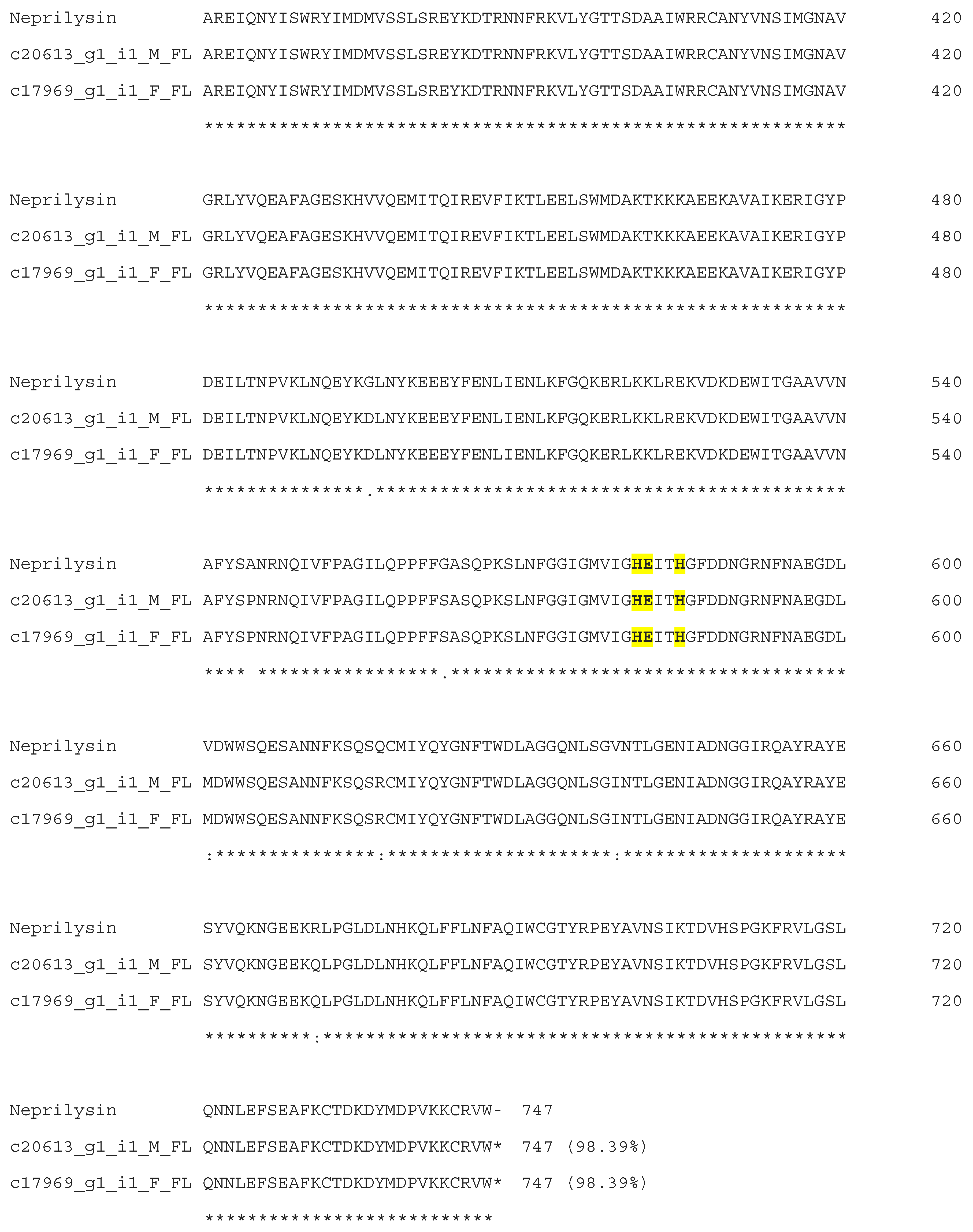
Neprilysins (NEPs) are zinc metalloendopeptidase of approximately 750 amino acids (~110 kDa) having an active site with the HExxH motif [28]. Our analysis of the Myanmar Russell’s viper transcriptomes revealed two full-length predicted neprilysin transcripts with TPM values of 64.38 and 213.37, sharing 98.39% identity with Neprilysin 1 (QHR82779.1) from the Anatolian meadow viper (Vipera anatolica senliki) (Figure 2). NEPs are synthesized as integral membrane thermolysin-like proteins but can released into the extracellular space. In humans, NEPs digest natriuretic peptide hormones, providing a new perspective for NEP inhibitors and their application towards the clinical treatment of heart failure [29]. Although their functions in snake envenoming have not been elucidated, they are found in the venoms of Echis pyramidum leakeyi, Ophiophagus hannah, and Naja kaouthia [16,30,31]. It has been suggested that NEPs from the spider Avicularia juruensis are synergistic, as they degrade the extracellular matrix, facilitating access of other toxins and aiding prey digestion [32]. NEPs interact with a variety of peptides, such as natriuretic, vasodilatory, and neuropeptides, suggesting potential roles in neurological and circulatory toxicities [30].

3.3. Snake Venom Cystatins

Snake venom cystatin (sv-cystatin) are cysteine protease inhibitors belonging to subfamily 2 of the cystatin family. They have 120 amino acid residues with two disulfide bonds [33]. The sv-cystatin isolated from Naja naja atra exhibits a shorter sequence than other type-2 cystatins [20] and has an anti-metastatic effect on tumor cells [34]. Our analysis recovered a total of five putative transcripts across three isoforms, specifically cystatin-1 (Type-1 cystatin), cystatin-2 (Type-2 cystatin), and cystatin-B (Type-1 cystatin) (Table 2). The conserved QXVXG region was identified in all three isoforms and the PW motif in two of the isoforms (Figure 3). Both Type-1 and Type-2 cystatins are key regulators of various cancer cells associated with cathepsins and affect tumor cell invasion and metastasis [35]. These conserved regions are essential for the protease inhibitory action of cystatin [36]. Type-2 cystatin isolated from N. naja atra, containing the QxVxG motif, showed anti-invasion and anti-metastasis effects in a lung-metastasis mouse model through the reduction in proteinases activity and Epithelial–Mesenchymal Transition (EMT) [37]. Its recombinant sv-cystatin protein also suppressed mouse melanoma invasion, metastasis, and growth in vitro and in vivo [38], and therefore has potential pharmaceutical applications as an antiangiogenic and anti-metastatic therapeutic agent [39].

3.4. Waprins

Waprins possess WAP (whey acidic proteins) domains, each consisting of 50 amino acid residues that contain eight conserved cysteine residues forming four disulfide bonds [33,40]. Waprin transcripts encoding one or two WAP domain proteins have been reported in elapid and colubrid snake venoms [41]. Proteins containing a WAP domain have diverse functions. For example, omwaprin isolated from Oxyuranus microlepidotus lyses bacteria membrane without hemolytic activity on human erythrocytes [42], suggesting potential antimicrobial properties. We recovered a single full-length hypothetical transcript with a TPM of 10.34 and 77.86% sequence identity to WAP1 (A7X4K1) from Philodryas olfersii. There were two WAP domains with a four-disulfide core structure (Figure 4). This disulfide-bond-constrained tertiary structure is essential for the antibacterial function of the protein by the localization of important positively charged functional residues on the surface of the protein [43].

3.5. Cathelicidins

Cathelicidins are one of the main families of antimicrobial peptides (AMPs), with an important role in host defense based on their broad antimicrobial activity. The primary structure of cathelicidins contains a conserved N-terminus a signal peptide and a cathepsin L inhibitor (cathelin) domain precedeing a C-terminal region. Cathelicidins possess amphipathic hydrophilic–hydrophobic helices that can disrupt microbial membranes [44]. Snake venom cathelicidin-related antimicrobial peptides (CRAMPs) have been identified from three Asian elapids and four South American pit vipers (Table 3) [45]. Our transcriptome analysis identified one full-length predicted CRAMP transcript with 64.12% identity to the cathelicidin-related peptide Vipericidin (A0A6P9AP78) from Pantherophis guttatus (Figure 5). Cathelicidin-BF purified from Bungarus fasciatus venom efficiently kills bacteria and some fungi, as well as antibiotic-resistant microorganisms [46]. A cathelicidin-derived peptide from king cobra (OH-CATH30) exerts antimicrobial activity against a multitude of virulent bacteria from human sources and has potential for treating various bacterial infections [47]. The hypothetical vipericidin from Myanmar Russell’s viper should be further studied for its potential antimicrobial properties.

3.6. Veficolins

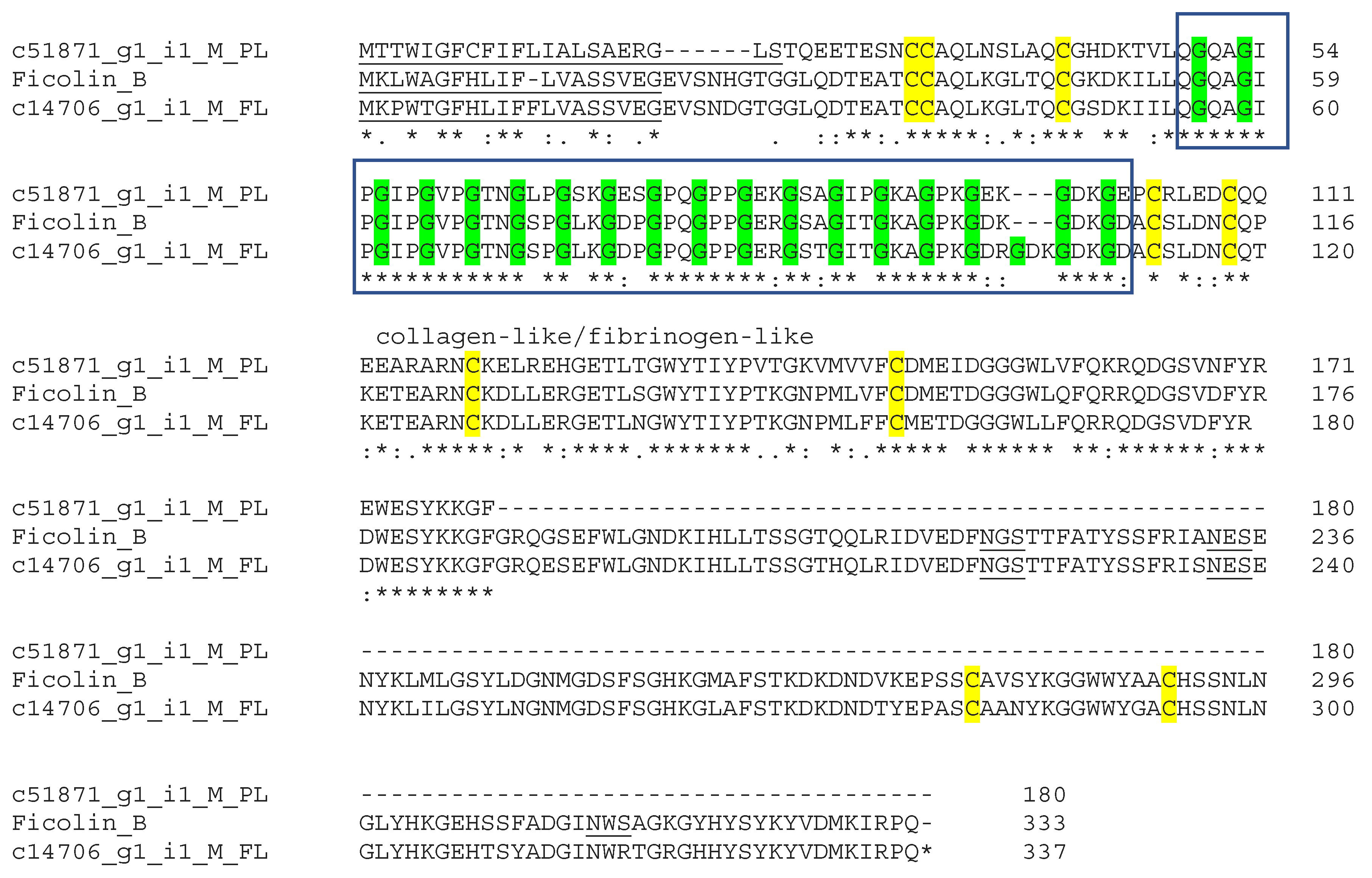
Veficolins (venom ficolin) are structurally similar to ficolins, which are mammalian proteins with collagen-like and fibrinogen-like domains [48]. Veficolins (ryncolin 1 and ryncolin 2) have been identified in Ceberus rynchops (dog-faced water snake). They may induce platelet aggregation and/or complement activation [49]. Two predicted veficolin transcripts (one partial and one full-length) were identified, sharing 68.65% and 90.50% sequence identity to Ficolin B (A0A098LYG5) from Pantherophis guttatus (Figure 6). Their biological activities need further evaluation to determine whether their role during envenomation involves platelet consumption and/or immune activation.

3.7. Endothelial Lipases

Endothelial lipases (ELs) are members of the triglyceride lipase family and synthesized by endothelial cells [50]. Among lipases, they have the typical Ser–His–Asp catalytic triad and a very short lid, as well as a deletion of a loop (the β9 loop) in contrast with pancreatic lipases [51,52]. ELs display primarily phospholipase A1 (PLA1) activity [49,50], hydrolyze triglycerides and phosphatidylcholine at the Sn-1 position [53], and play an essential role in regulating lipid metabolism and inflammatory responses in humans [54]. We identified nine full-length hypothetical EL transcripts with 98.86 to 99.37% sequence identity to EL proteins from Vipera analotica senliki (A0A6G5ZW01) [55] (Figure S1). Lipases are rarely identified in snake venom [56], probably due to their low expression among other toxins, and their functional roles should be further investigated.

3.8. Vespryns

Venom PRY-SPRY domain-containing proteins (Vespryns) is a new family of venom proteins, comprising ohanin from Ophiophagus hannah. Ohanin was purified from crude Ophiophagus hannah (king cobra) venom. It has a molecular weight of 12 kDa with 107 amino acid residues and a unique single cysteine residue. Ohnanin induces hypolocomotion and hypernociception in mice [57]. Other members of this protein family have been identified as Thai cobrin from Naja kaouthia and ohanin-like proteins from Naja naja atra, Lachesis muta, and Tropidechis carintus [58]. From the current transcriptomes, we identified eight full-length putative transcripts containing PRY-SPRY domain, six from male transcriptomes and two from female transcriptomes. Their length varied from 286 to 549 amino acids with TPM values of 2.25 to 12.14. Two putative transcripts have three conserved LDP, WEVE, and LDYE motifs of the B30.2-like domain, while others showed variations in amino acids at those regions (Table 4). Their B30.2-like domains shared 31–35% sequence similarity with the ohanin precursor (AAR07992.2) from O. hannah (Figure S2). Ohanin and ohanin-like proteins are the shortest members of the B30.2 family, and their conserved motifs are responsible for their main activities [59]. Moreover, the length and distinctive N-terminal domains are also responsible for their various activities [22]. So, the currently identified putative vespryns with different lengths and various functional motifs remain to be further studied for their activities.

3.9. Three-Finger Toxins

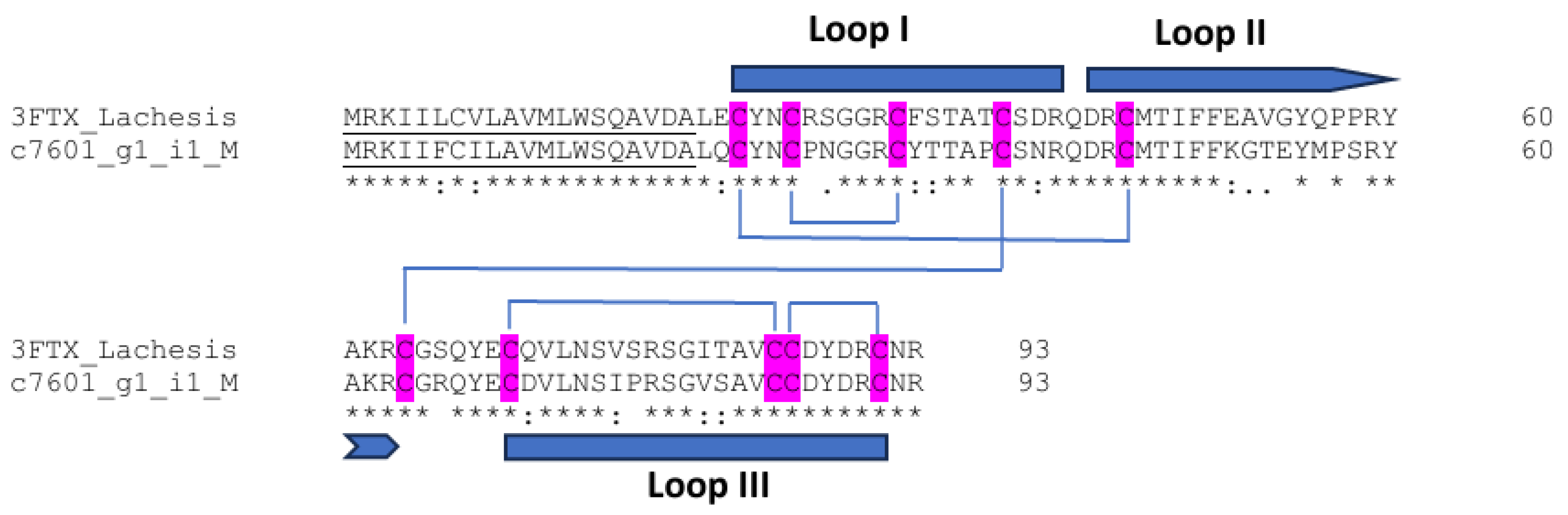
Three-finger toxins (3FTXs) contain nonenzymatic polypeptides with 60–74 amino acid residues. They exhibit three β-stranded loops extending from a small, globular hydrophobic core that contains four conserved disulfide bridges (short-chain neurotoxins). They are generally monomers, and their various functions are due to the robust and highly versatile three-finger protein scaffold [60]. The positively charged residues located at the tip of loop II in non-conventional 3FTXs recognize various respective cholinergic receptors [61]. Candoxin, a non-conventional 3FTX from the Malayan krait (Bungarus candidus) (Elapidae) venom, produces reversible neuromuscular blockage at presynaptic nicotinic acetylcholine receptors (nAChRs) [62]. Denmotoxin, a 3FTX from the colubrid snake Boiga dendrophilia, displays potent irreversible postsynaptic neuromuscular activity with bird-specificity [63]. 3FTXs are the main venom components of elapid snakes [61,64], whereas 3FTX mRNAs and corresponding proteins of viperid snake venoms are poorly characterized [65]. Among these, a short-chain neurotoxin-like protein was isolated from Indian Russell’s viper (Daboia russelli russelli) (Viperidae) (DNTx I) with postsynaptic neurotoxic and cytotoxic properties [66]. From the current transcriptomes, one full-length hypothetical 3FTX transcript was identified containing 73 amino acids with five possible disulfide bridges (Figure 7) and 77.42% identity to 3FTX from Lachesis muta (ABD52883). To date, 3FTXs have only been identified at the transcript level within two viperid species, TFT-AF from Azemiops feae and VN-TFT from Vipera nikolskii, functioning as antagonists of nAChRs of neuronal- and muscle-type [67]. Among elapids, 3FTXs such as mambalgins from Dendroaspis polylepis and the cobra cardiotoxin CTX-I from Naja kaouthia serve as prototypes for new therapeutic agents for pain and type 2 diabetes, respectively [64]. The finding of 3FTXs at the transcript level in Viperidae indicates their minor contribution to venom composition compared with elapids. This may be due to 3FTX genes in Viperidae snakes evolving under the constraints of negative selection pressure, resulting in ancillary rather than major role in envenomation [68]. The biological functions of the currently deduced non-conventional 3FTX from Myanmar Russell’s viper transcriptomes deserve further investigation.
Our previous venom gland transcriptome profile showed the abundance of C-type lectins (CTLs) (26%), Kunitz-type protease inhibitors (KSPIs) (19%), disintegrins (18%), and bradykinin-potentiating peptide/C-type natriuretic precursors (BPP-CNPs) (16%), PLA2 (5.5%), and serine proteases (SVSPs) (5%) [8]. In a proteomic study, six venom protein families were identified from the Myanmar D. siamensis venom: serine proteinases, metalloproteinases, PLA2, LAAOs, VEGF, and C-type lectin-like proteins. The discrepancy between the snake venom gland transcriptome and proteome has also been reported in D. palaestinae [27], Vipera ammodytes ammodytes [69], Bothropoides pauloensis [70], and Echis ocellatus [71]. These findings suggest that venom composition is influenced by complex transcriptional and translational mechanisms and indicate importance of combining transcriptomic and proteomic approaches to understand the precise composition of venom proteins.
Different types of minor toxin transcripts were identified in transcriptomes of different snake species. In D. palaestinae, LAAOs, disintegrin, VEGF, Kuntiz, PLB, hyaluronidase, PDE, 5′-NT, natriuretic peptide, Kazal-type serine proteases inhibitor, CRISPs, cobra venom (CVPF), neprilysin, waprin, and NGF constituted < 10% of the transcriptomes [27]. In Vipera ammodytes ammodytes, serine protease inhibitors, VEGF, CRISPs, LAAOs, and venom nerve growth factors (VNGFs) accounted for <5% of the transcriptome [69]. The transcripts encoding aspartic proteinases, snake venom growth factors (VEGF and NGF), and hyaluronidases attributed for 4.5%, 2.9%, and 0.3% of the Echis ocellatus transcriptome, respectively [71]. The interaction of lowly expressed toxins transcripts with the expression of major toxin transcripts in venom production should be studied further.
Proteomic studies of Russell’s viper venom have demonstrated variation in abundant toxin families across geographical regions [72], supporting the variation in hemotoxic clinical features [73]. Envenoming by Russell’s vipers is characterized by local edema, tissue necrosis, hemorrhage, coagulopathy, and nephrotoxicity. C-type lectins act on platelets, contributing to thrombus formation [74]. The Kunitz-type serine protease inhibitors in Daboia species exhibit anticoagulant effect [75]. Disintegrins act on specific integrin receptors of platelets and extracellular matrix proteins, probably contributing to bleeding pathology [76]. Bradykinin-potentiating peptides and natriuretic peptides released from BPP-CNP transcripts may play a role in hypotension during snake envenomation.
PLA2 from Myanmar Russell’s viper showed neurotoxic, myotoxic, cytotoxic, edema-inducing, and indirect hemolytic activities [77]. SVMPs, especially RVV-X, activate factor X in the coagulation cascade, leading to formation of thrombin and fibrin clots [78]. Moreover, SVSPs play an important role in blood coagulation system, particularly RVV-V, which specifically acts on factor V to activate blood coagulation [79]. The most hemotoxic effects of the Myanmar Russell’s viper among other regional Russell’s viper may be contributed by the different isoforms within toxin groups and different compositions of toxin families in the venom acting individually as well as synergistically.
Synergism between different toxins and toxin complexes gives significant toxicity to the snake venom. The predominant toxins, PLA2, SVMPs, SVSPs, and 3FTXs, play essential roles in synergistic processes [80]. The toxin synergy of two major families in D. russelii venom, PLA2 and SVMPs, results in more cytotoxic and hemorrhagic effects than either toxin group alone [11].
The quantitatively minor venom component hyaluronidase potentiates toxicity of crotoxin from Crotalus durissus terrificus venom [81]. Similarly, some minor toxin groups participate synergistically in the deleterious effects of major toxin groups in D. siamensis species. L-amino acid oxidase and PDE, together with PLA2 and SVMPs, alter renal function by promoting platelet-activating factor in the isolated perfused rabbit kidney (IPK) model [82]. The aforementioned four toxin groups synergistically induce renal tubular toxicity by increasing oxidative stress production and elevating inflammatory cytokines in the same IPK model [83]. The roles of lowly transcribed toxins in venom toxicity should be further investigated.

4. Conclusions

This study was a continuation of our previous work [8], allowing us to expand our investigation of Myanmar Russell’s viper venom diversity by more extensively exploring toxin candidates expressed at low levels. The expression profiles of both major and minor transcripts are sex-specific. Putative protease inhibitors, antimicrobial peptides, and proteins of unknown functions with elapid toxin scaffolds were newly identified from the Myanmar Russell’s viper transcriptomes. This study highlights the importance of diving deep into comparative transcriptomics studies for a thorough analysis of venom gland composition and for the discovery of new venom components with potential pharmaceutical and other applications. The present results make an important contribution toward elucidating the structures of individual toxins and pave the way for new therapeutic and/or biotechnological applications for snake venoms.

Supplementary Materials

The following supporting information can be downloaded at https://www.mdpi.com/article/10.3390/biotech14040096/s1; Table S1: Expression profile of toxin groups between male and female Russell’s viper venom glands; Figure S1: Sequence alignment of putative endothelial lipases from Myanmar Russell’s viper transcriptomes and that from V. a. senliki (A0A6G5ZW01). The signal peptide is underlined. The catalytic serine (GxSxG motif) of the active site is highlighted in green. The aspartic acid (D) and histidine (H) residues are in blue and Ca2+ binding sites in yellow. (*) fully conserved residues; (:) strongly similar residues; and (.) weakly similar residues; Figure S2: Sequence alignment of B30.2-like domains of putative Vesprys from Myanmar Russell’s viper transcriptomes and that of Pro-ohanin (AAR07992.2) from O. hannah. The LDP motif, WEVW motif, and LDYE motif are highlighted in green, yellow, and pink, respectively. (*) fully conserved residues; (:) strongly similar residues; and (.) weakly similar residues.

Author Contributions

Conceptualization, P.R. and K.T.Y.; methodology, P.R., K.T.Y., and J.M.; software, J.M. and O.V.; validation, P.R., J.M. and O.V.; formal analysis, K.T.Y., J.M. and O.V.; investigation, K.T.Y.; resources, P.R.; data curation, J.M. and O.V.; writing—original draft preparation, K.T.Y.; writing—review and editing, K.T.Y., J.M. and O.V.; visualization, P.R., J.M. and O.V.; supervision, P.R. and O.V.; project administration, P.R. All authors have read and agreed to the published version of the manuscript.

Funding

This research received no external funding.

Institutional Review Board Statement

The study was approved by the Animal Care and Use Committee, Chulalongkorn University (CU-ACUC) (Protocol code 17/2552) on 28 July 2015.

Informed Consent Statement

Not applicable.

Data Availability Statement

The original contributions presented in this study are included in the article/Supplementary Material. Further inquiries can be directed to the corresponding authors.

Acknowledgments

We would like to thank administrative persons and snake handlers from the Snake Farm, Myanmar Pharmaceutical Factory, Yangon, Myanmar and Lawan Chanhome, Formal Head of Snake Farm, QSMI, Bangkok, Thailand, for help in the collection of snakes and removal of venom glands. This work used Bridges-2 at the Pittsburgh Supercomputing Center (PSC) through allocation bio210089p from the Advanced Cyberinfrastructure Coordination Ecosystem: Services & Support (ACCESS) program.

Conflicts of Interest

The authors declare no conflicts of interest.

References

  1. Ministry of Health. Republic of the Union of Myanmar, Ministry of Health. Public Health Statistics 2017–2019; Ministry of Health: Nay Pyi Taw, Myanmar, 2021.
  2. Aye, K.-P.; Thanachartwet, V.; Soe, C.; Desakorn, V.; Chamnanchanunt, V.; Sahassananda, D.; Supaporn, T.; Sitprija, V. Predictive factors for death after snake envenomation in Myanmar. Wilderness Environ. Med. 2018, 29, 166–175. [Google Scholar] [CrossRef]
  3. White, J.; Alfred, S.; Bates, D.; Mahmood, M.A.; Warrell, D.; Cumming, R.; Thwin, K.T.; Thein, M.M.; Thant, M.; Naung, Z.M.; et al. Twelve month prospective study of snakebite in a major teaching hospital in Mandalay, Myanmar; Myanmar Snakebite Project (MSP). Toxicon X 2019, 1, 100002. [Google Scholar] [CrossRef]
  4. Risch, M.; Georgieva, D.; von Bergen, M.; Jehmlich, N.; Genov, N.; Arni, R.K.; Betzel, C. Snake venomics of the Siamese Russell’s viper (Daboia russelli siamensis)—Relation to pharmacological activities. J. Proteom. 2009, 72, 256–269. [Google Scholar] [CrossRef]
  5. Tan, K.Y.; Tan, N.H.; Tan, C.H. Venom proteomics and antivenom neutralization for the Chinese eastern Russell’s viper, Daboia siamensis from Guangxi and Taiwan. Sci. Rep. 2018, 8, 8545. [Google Scholar] [CrossRef]
  6. Pla, D.; Sanz, L.; Quesada-Bernat, S.; Villalta, M.; Baal, J.; Chowdhury, M.A.W.; Leόn, G.; Gutiérrez, J.M.; Kuch, U.; Calvete, J.J. Polyvenomics of Daboia russelii across the Indian subcontinent. Bioactivities and comparative in vivo neutralization and in vitro third-generation antivenomics of antivenoms against venoms from India, Bangladesh and Sri Lanka. J. Proteom. 2019, 207, 103443. [Google Scholar] [CrossRef]
  7. Thomas, R.; Alfred, S.; Zaw, A.; Gentili, S.; Chataway, T.; Peh, C.A.; Hurtado, P.; White, J.; Wiese, M.A. A demonstration of variation in venom composition of Daboia russelii (Russell’s viper), a significantly important snake of Myanmar, by tandem mass spectrometry. Toxicon 2019, 158, S44–S45. [Google Scholar] [CrossRef]
  8. Yee, K.T.; Macrander, J.; Vasieva, O.; Rojnuckarin, P. Exploring toxin genes of Myanmar Russell’s viper, Daboia siamensis, through de novo venom gland transcriptomics. Toxins 2023, 15, 309. [Google Scholar] [CrossRef] [PubMed]
  9. Warrell, D.A.; Williams, D.J. Clinical aspects of snakebite envenoming and its treatment in low-resource settings. Lancet 2023, 401, 1382–1398. [Google Scholar] [CrossRef] [PubMed]
  10. Calvete, J.J.; Juárez, P.; Sanz, L. Snake venomics. Strategy and applications. J. Mass Spectrom. 2007, 42, 1405–1414. [Google Scholar] [CrossRef] [PubMed]
  11. Rudresha, G.V.; Bhatia, S.; Samanta, A.; Nayak, M.; Sunagar, K. Dissecting Daboia: Investigating synergistic effects of Russell’s viper venom toxins. Int. J. Biol. Macromol. 2025, 321, 146533. [Google Scholar] [CrossRef] [PubMed]
  12. Girish, K.S.; Shashidharamurthy, R.; Nagaraju, S.; Gowda, T.V.; Kemparaju, K. Isolation and characterization of hyaluronidase a “spreading factor” from Indian cobra (Naja naja) venom. Biochimie 2004, 86, 193–202. [Google Scholar] [CrossRef]
  13. Modahl, C.M.; Brahma, R.K.; Koh, C.Y.; Shioi, N.; Kini, R.M. Omics Technologies for profiling toxin diversity and evolution in snake venom: Impacts on the discovery of therapeutic and diagnostic agents. Annu. Rev. Anim. Biosci. 2020, 8, 91–116. [Google Scholar] [CrossRef]
  14. Sunagar, K.; Morgenstern, D.; Reitzel, A.M.; Moran, Y. Ecological venomics: How genomics, transcriptomics and proteomics can shed new light on the ecology and evolution of venom. J. Proteom. 2016, 135, 62–72. [Google Scholar] [CrossRef]
  15. Saethang, T.; Somparn, P.; Payungporn, S.; Sriswasdi, S.; Yee, K.T.; Hodge, K.; Knepper, M.A.; Chanhome, L.; Khow, O.; Chaiyabutr, N.; et al. I dentification of Daboia siamensis venom using integrated multi-omics data. Sci. Rep. 2022, 12, 13140. [Google Scholar] [CrossRef]
  16. Tan, K.Y.; Tan, C.H.; Chanhome, L.; Tan, N.H. Comparative venom gland transcriptomics of Naja kaouthia (monocled cobra) from Malaysia and Thailand: Elucidating geographical venom variation and insights into sequence novelty. PeerJ 2017, 5, e3142. [Google Scholar] [CrossRef]
  17. Junqueira-de-Azevedo, I.L.M.; Bastos, C.M.V.; Ho, P.L.; Luna, M.S.; Yamanouye, N.; Casewell, N.R. Venom-related transcripts from Bothrops jararaca tissues provide novel molecular insights into the production and evolution of snake venom. Mol. Biol. Evol. 2014, 32, 754–766. [Google Scholar] [CrossRef]
  18. Vonk, F.J.; Casewell, N.R.; Henkel, C.V.; Heimberg, A.M.; Jansen, H.J.; McCleary, R.J.R.; Kerkkamp, H.M.E.; Vos, R.A.; Guerreiro, I.; Calvete, J.J.; et al. The king cobra genome reveals dynamic gene evolution and adaptation in the snake venom system. Proc. Natl. Acad. Sci. USA 2013, 110, 20651–20656. [Google Scholar] [CrossRef] [PubMed]
  19. Jain, D.; Kumar, S. Mini-Review, Snake venom: A potent anticancer agent. Asian Pac. J. Cancer Prev. 2012, 13, 4855–4860. [Google Scholar] [CrossRef] [PubMed]
  20. Shanbhag, V.K.L. Applications of snake venoms in treatment of cancer. Asian Pac. J. Trop. Biomed. 2015, 5, 275–276. [Google Scholar] [CrossRef]
  21. Oguiura, N.; Sanches, L.; Duarte, P.V.; Sulca-Lόpez, M.A. Past, present, and future of naturally occurring antimicrobials related to snake venoms. Animals 2023, 13, 744. [Google Scholar] [CrossRef] [PubMed]
  22. Junqueira-de-Azevedo, I.L.M.; Ching, A.T.C.; Carvalho, E.; Faria, F.; Nishiyama, M.Y.; Ho, P.L.; Diniz, M.R.V. Lachesis muta (Viperidae) cDNAs reveal diverging pit viper molecules and scaffolds typical of cobra (Elapidae) venoms: Implications for snake toxin repertoire evolution. Genetics 2006, 173, 877–889. [Google Scholar] [CrossRef]
  23. Grabherr, M.G.; Haas, B.J.; Yassour, M.; Levin, J.Z.; Thompson, D.A.; Amit, I.; Adiconis, X.; Fan, L.; Raychowdhury, R.; Zeng, Q.; et al. Full-length transcriptome assembly from RNA-Seq data without a reference genome. Nat. Biotechnol. 2011, 29, 644–652. [Google Scholar] [CrossRef]
  24. Macrander, J.; Panda, J.; Janies, D.; Daly, M.; Reitzel, A.M. Venomix: A simple bioinformatic pipeline for identifying and characterizing toxin gene candidates from transcriptomic data. PeerJ 2018, 6, e5361. [Google Scholar] [CrossRef]
  25. Madeira, F.; Pearce, M.; Tivey, A.R.N.; Basutkar, P.; Lee, J.; Edbali, O.; Madhusoodanan, N.; Kolesnikov, A.; Lopez, R. Search and sequence analysis tools services from EMBL-EBI in 2022. Nucleic Acids Res. 2022, 50, W276–W279. [Google Scholar] [CrossRef]
  26. Teufel, F.; Almagro Armenteros, J.J.; Johansen, A.R.; Gίslason, M.H.; Pihl, S.I.; Tsirigos, K.D.; Winther, O.; Brunak, S.; von Heijne, G.; Nielsen, H. SignalP 6.0 predicts all five types of signal peptides using protein language models. Nat. Biotechnol. 2022, 40, 1023–1025. [Google Scholar] [CrossRef]
  27. Laxme, R.R.S.; Khochare, S.; Attarde, S.; Kaur, N.; Jaikumar, P.; Shaikh, N.Y.; Aharoni, R.; Primor, N.; Hawlena, D.; Moran, Y.; et al. The Middle Eastern cousin: Comparative venomics of Daboia palaestinae and Daboia russelii. Toxins 2022, 14, 725. [Google Scholar] [CrossRef] [PubMed]
  28. Kerr, M.A.; Kenny, A.J. The purification and specificity of a neutral endopeptidase from rabbit kidney brush border. Biochem. J. 1974, 137, 477–488. [Google Scholar] [CrossRef] [PubMed]
  29. Bozkurt, B.; Nair, A.P.; Misra, A.; Scott, C.Z.; Mahar, J.H.; Fedson, S. Neprilysin inhibitors in heart failure: The science, mechanism of action, clinical studies, and unanswered questions. JACC Basic. Transl. Sci. 2023, 8, 88–105. [Google Scholar] [CrossRef]
  30. Casewell, N.R.; Harrison, R.A.; Wüster, W.; Wagstaff, S.C. Comparative venom gland transcriptome surveys of the saw-scaled vipers (Viperidae: Echis) reveal substantial intra-family gene diversity and novel venom transcripts. BMC Genom. 2009, 10, 564. [Google Scholar] [CrossRef] [PubMed]
  31. Kunalan, S.; Othman, I.; Hassan, S.S.; Hodgson, W.C. Proteomic characterization of two medically important Malaysian snake venoms, Calloselasma rhodostoma (Malayan pit viper) and Ophiophagus hannah (king cobra). Toxins 2018, 10, 434. [Google Scholar] [CrossRef]
  32. do Nascimento, S.M.; de Oliveira, U.C.; Nishiyama-Jr, M.Y.; Tashima, A.K.; da Silva Junior, P.I. Presence of a neprilysin on Avicularia juruensis (Mygalomorphae: Theraphosidae) venom. Toxin Rev. 2022, 41, 370–379. [Google Scholar] [CrossRef]
  33. Inagaki, H. Snake venom protease inhibitors: Enhanced identification, expanding biological function, and promising future. In Snake Venoms, Toxinology, Dordrecht; Inagaki, H., Vogel, C.-W., Mukherjee, A.K., Rahmy, T.R., Gopalakrishnakone, P., Eds.; Springer: Dordrecht, The Netherlands, 2017; pp. 161–186. [Google Scholar] [CrossRef]
  34. Urra, F.A.; Araya-Maturana, R. Targeting metastasis with snake toxins: Molecular mechanisms. Toxins 2017, 9, 390. [Google Scholar] [CrossRef]
  35. Cox, J.L. Cystatins as regulators of cancer. Med. Res. Arch. 2017, 5, 1–11. [Google Scholar] [CrossRef][Green Version]
  36. Dickinson, D.P. Salivary (SD-type) cystatins: Over one billion years in the making—But to what purpose? Crit. Rev. Oral Biol. Med. 2002, 13, 485–508. [Google Scholar] [CrossRef] [PubMed]
  37. Tang, N.; Xie, Q.; Wang, X.; Li, X.; Chen, Y.; Lin, X.; Lin, J. Inhibition of invasion and metastasis of MHCC97H cells by expression of snake venom cystatin through reduction of proteinases activity and epithelial-mesenchymal transition. Arch. Pharm. Res. 2011, 34, 781–789. [Google Scholar] [CrossRef]
  38. Xie, Q.; Tang, N.; Lin, Y.; Wang, X.; Lin, X.; Lin, J. Recombinant adenovirus snake venom cystatin inhibits the growth, invasion, and metastasis of B16F10 cells in vitro and in vivo. Melanoma Res. 2013, 23, 444–451. [Google Scholar] [CrossRef]
  39. Xie, Q.; Tang, N.; Wan, R.; Qi, Y.; Lin, X.; Lin, J. Recombinant snake venom cystatin inhibits tumor angiogenesis in vitro and in vivo associated with downregulation of VEGF-A165, Flt-1 and bFGF. Anticancer Agents Med. Chem. 2013, 13, 663–671. [Google Scholar] [CrossRef]
  40. Torres, A.M.; Wong, H.Y.; Desai, M.; Moochhala, S.; Kuchel, P.W.; Kini, R.M. Identification of a novel family of proteins in snake venoms. Purification and structural characterization of nawaprin from Naja nigricollis snake venom. J. Biol. Chem. 2003, 278, 40097–40104. [Google Scholar] [CrossRef] [PubMed]
  41. Jackson, T.N.W.; Sunagar, K.; Undheim, E.A.B.; Koludarov, I.; Chan, A.H.C.; Sanders, K.; Ali, S.A.; Hendrikx, I.; Dunstan, N.; Fry, B.G. Venom down under: Dynamic evolution of Australian elapid snake toxins. Toxins 2013, 5, 2621–2655. [Google Scholar] [CrossRef]
  42. Nair, D.G.; Fry, B.G.; Alewood, P.; Kumar, P.P.; Kini, R.M. Antimicrobial activity of omwaprin, a new member of the waprin family of snake venom proteins. Biochem. J. 2007, 402, 93–104. [Google Scholar] [CrossRef]
  43. Zhao, B.-C.; Lin, H.-C.; Yang, D.; Ye, X.; Li, Z.-G. Disulfide bridges in defensins. Curr. Top. Med. Chem. 2015, 16, 206–219. [Google Scholar] [CrossRef]
  44. de Barros, E.; Goncalves, R.M.; Cardoso, M.H.; Santos, N.C.; Franco, O.L.; Cândido, E.S. Snake venom cathelicidins as natural antimicrobial peptides. Front. Pharmacol. 2019, 10, 1415. [Google Scholar] [CrossRef]
  45. Carrera-Aubesart, A.; Defaus, S.; Pérez-Peinado, C.; Sandín, D.; Torrent, M.; Jiménez, M.A.; Andreu, D. Examining topoisomers of a snake-venom-derived peptide for improved antimicrobial and antitumoral properties. Biomedicines 2022, 10, 2110. [Google Scholar] [CrossRef]
  46. Wang, Y.; Hong, J.; Liu, X.; Yang, H.; Liu, R.; Wu, J.; Wang, A.; Lin, D.; Lai, R. Snake cathelicidin from Bungarus fasciatus is a potent peptide antibiotics. PLoS ONE 2008, 3, e3217. [Google Scholar] [CrossRef]
  47. Zhao, F.; Lan, X.-Q.; Du, Y.; Chen, P.-Y.; Zhao, J.; Zhao, F.; Lee, W.-H.; Zhang, Y. King cobra peptide OH-CATH30 as a potential candidate drug through clinic drug-resistant isolates. Zool. Res. 2018, 39, 87–96. [Google Scholar] [CrossRef] [PubMed]
  48. Kakinuma, Y.; Endo, Y.; Takahashi, M.; Nakata, M.; Matsushita, M.; Takenoshita, S.; Fujita, T. Molecular cloning and characterization of novel ficolins from Xenopus laevis. Immunogenetics 2003, 55, 29–37. [Google Scholar] [CrossRef] [PubMed]
  49. Ompraba, G.; Chapeaurouge, A.; Doley, R.; Devi, K.R.; Padmanaban, P.; Venkatraman, C.; Velmurugan, D.; Lin, Q.; Kini, R.M. Identification of a novel family of snake venom proteins veficolins from Cerberus rynchops using a venom gland transcriptomics and proteomics approach. J. Proteome Res. 2010, 9, 1882–1893. [Google Scholar] [CrossRef] [PubMed]
  50. Choi, S.Y.; Hirata, K.; Ishida, T.; Quertermous, T.; Cooper, A.D. Endothelial lipase: A new lipase on the block. J. Lipid Res. 2002, 43, 1763–1796. [Google Scholar] [CrossRef]
  51. Maria, L.D.; Vind, J.; Oxenbøll, K.M.; Svendsen, A.; Patkar, S. Phospholipases and their industrial applications. Appl. Microbiol. Biotechnol. 2007, 74, 290–300. [Google Scholar] [CrossRef]
  52. Darrow, A.L.; Olson, M.W.; Xin, H.; Burke, S.L.; Smith, C.; Schalk-Hihi, C.; Williams, R.; Bayoumy, S.S.; Deckman, I.C.; Todd, M.J.; et al. A novel fluorogenic substrate for the measurement of endothelial lipase activity. J. Lipid Res. 2011, 52, 374–382. [Google Scholar] [CrossRef][Green Version]
  53. Griffon, N.; Jin, W.; Petty, T.J.; Millar, J.; Badellino, K.O.; Saven, J.G.; Marchadier, D.H.; Kempner, E.S.; Billheimer, J.; Glick, J.M.; et al. Identification of the active form of endothelial lipases, a homodimer in a head-to-tail conformation. J. Biol. Chem. 2009, 284, 23322–23330. [Google Scholar] [CrossRef] [PubMed]
  54. Yu, J.E.; Han, S.-Y.; Wolfson, B.; Zhou, Q. The role of endothelial lipase in lipid metabolism, inflammation, and cancer. Histol. Histopathol. 2018, 33, 1–10. [Google Scholar]
  55. Hempel, B.-F.; Damm, M.; Mrinalini; Göçmen, B.; Karış, M.; Nalbantsoy, A.; Kini, R.M.; Sűssmuth, R.D. Extended snake venomics by top-down in-source decay: Investigating the newly discovered Anatolian meadow viper subspecies, Vipers anatolica senliki. J. Proteome Res. 2020, 19, 1731–1749. [Google Scholar] [CrossRef] [PubMed]
  56. Corrêa-Netto, C.; Junqueira-de-Azevedo, I.L.M.; Silva, D.A.; Ho, P.L.; Leitão-de-Araújo, M.; Alves, M.L.M.; Sanz, L.; Foguel, D.; Zingali, R.B.; Calvete, J.J. Snake venomics and venom gland transcriptomic analysis of Brazilian coral snakes, Micrurus altirostris and M. corallinus. J. Proteom. 2011, 74, 1795–1809. [Google Scholar] [CrossRef]
  57. Yuh, F.P.; Wong, P.T.H.; Kumar, P.P.; Hodgson, W.C.; Kini, R.M. Ohanin, a novel protein from king cobra venom, induces hypolocomotion and hyperalgesia in mice. J. Biol. Chem. 2005, 280, 13137–13147. [Google Scholar] [CrossRef]
  58. Boldrini-França, J.; Cologna, C.T.; Pucca, M.B.; Bordon, K.C.F.; Amorim, F.G.; Anjolette, F.A.P.; Cordeiro, F.A.; Wiezel, G.A.; Cerni, F.A.; Pinheiro-Junior, E.L.; et al. Minor snake venom proteins: Structure, function and potential applications. Biochim. Biophys. Acta-Gen. Subj. 2017, 1861, 824–838. [Google Scholar] [CrossRef]
  59. Pung, Y.F.; Kumar, S.V.; Rajagopalan, N.; Fry, B.G.; Kumar, P.P.; Kini, R.M. Ohanin, a novel protein from king cobra venom: Its cDNA and genomic organization. Gene 2006, 371, 246–256. [Google Scholar] [CrossRef]
  60. Kini, R.M. Evolution of three-finger toxins—A versatile mini protein scaffold. Acta Chim. Slov. 2011, 58, 693–701. [Google Scholar]
  61. Utkin, Y.N. Three-finger toxins, a deadly weapon of elapid venom—Milestones of discovery. Toxicon 2013, 62, 50–55. [Google Scholar] [CrossRef]
  62. Nirthanan, S.; Charpantier, E.; Gopalakrishnakone, P.; Gwee, M.C.E.; Khoo, H.E.; Cheah, L.S.; Kini, R.M.; Bertrand, D. Neuromuscular effects of candoxin, a novel toxin from the venom of the Malayan krait (Bungarus candidus). Br. J. Pharmacol. 2003, 139, 832–844. [Google Scholar] [CrossRef] [PubMed]
  63. Pawlak, J.; Mackessy, S.P.; Fry, B.G.; Bhatia, M.; Mourier, G.; Fruchart-Gaillard, C.; Servent, D.; Ménez, R.; Stura, E.; Ménez, A.; et al. Denmotoxin, a three-finger toxin from the colubrid snake Boiga dendrophila (mangrove catsnake) with bird-specific activity. J. Biol. Chem. 2006, 281, 29030–29041. [Google Scholar] [CrossRef]
  64. Utkin, Y.N. Last decade update for three-finger toxins: Newly emerging structures and biological activities. World J. Biol. Chem. 2019, 10, 17–27. [Google Scholar] [CrossRef]
  65. Fry, B.G.; Wüster, W.; Kini, R.M.; Brusic, V.; Khan, A.; Venkataraman, D.; Rooney, A.P. Molecular evolution and phylogeny of elapid snake venom three-finger toxins. J. Mol. Evol. 2003, 57, 110–129. [Google Scholar] [CrossRef] [PubMed]
  66. Shelke, R.R.J.; Sathish, S.; Gowda, T.V. Isolation and characterization of a novel postsynaptic/cytotoxic neurotoxin from Daboia russelli russelli venom. J. Pept. Res. 2002, 59, 257–263. [Google Scholar] [CrossRef] [PubMed]
  67. Makarova, Y.V.; Kryukova, E.V.; Shelukhina, I.V.; Lebedev, D.S.; Andreeva, T.V.; Ryazantsev, D.Y.; Balandin, S.V.; Ovchinnikova, T.V.; Tsetlin, V.I.; Utkin, Y.N. The first recombinant viper three-finger toxins: Inhibition of muscle and neuronal nicotinic acetylcholine receptors. Dokl. Biochem. Biophys. 2018, 479, 127–130. [Google Scholar] [CrossRef] [PubMed]
  68. Sunagar, K.; Jackson, T.N.W.; Undheim, E.A.B.; Ali, S.A.; Antunes, A.; Fry, B.G. Three-fingered RAVERs: Rapid accumulation of variations in exposed residues of snake venom toxins. Toxins 2013, 5, 2172–2208. [Google Scholar] [CrossRef]
  69. Leonardi, A.; Sajevic, T.; Pungerčar, J.; Križaj, I. Comparative study of the proteome and transcriptome of the venom of the most venomous European viper: Discovery of a new subclass of ancestral snake venom metalloproteinases precursor-derived proteins. J. Proteome Res. 2019, 18, 2287–2309. [Google Scholar] [CrossRef]
  70. Rodrigues, R.S.; Boldrini-Franҫa, J.; Fonseca, F.P.P.; de la Torre, P.; Henrique-Silva, F.; Sanz, L.; Calvete, J.J.; Rodrigues, V.M. Combined snake venomics and venom gland transcriptomic analysis of Bothropoides pauloensis. J. Proteom. 2012, 75, 2707–2720. [Google Scholar] [CrossRef]
  71. Wagstaff, S.C.; Sanz, L.; Juárez, P.; Harrison, R.A.; Calvete, J.J. Combined snake venomics and venom gland transcriptomic analysis of the ocellated carpet viper, Echis ocellatus. J. Proteom. 2009, 71, 609–623. [Google Scholar] [CrossRef]
  72. Srinivasan, K.; Nampoothiri, M.; Khandibharad, S.; Singh, S.; Nayak, A.G.; Hariharapura, R.C. Proteomic diversity of Russell’s viper venom: Exploring PLA2 isoforms, pharmacological effects, and inhibitory approaches. Arch. Toxicol. 2024, 98, 3569–3584. [Google Scholar] [CrossRef]
  73. op den Brouw, B.; Coimbra, F.C.P.; Casewell, N.R.; Ali, S.A.; Vonk, F.J.; Fry, B.G. A genus-wide bioactivity analysis of Daboia (Viperinae: Viperidae) viper venoms reveals widespread variation in haemotoxic properties. Int. J. Mol. Sci. 2021, 22, 13486. [Google Scholar] [CrossRef]
  74. Zhong, S.R.; Jin, Y.; Wu, J.B.; Chen, R.Q.; Jia, Y.H.; Wang, W.Y.; Xiong, Y.L.; Zhang, Y. Characterization and molecular cloning of dabocetin, a potent antiplatelet C-type lectin-like protein from Daboia russellii siamensis venom. Toxicon 2006, 47, 104–112. [Google Scholar] [CrossRef] [PubMed]
  75. Mukherjee, A.K.; Mackessy, S.P. Pharmacological properties and pathophysiological significance of a Kunitz-type protease inhibitor (Rusvikunin-II) and its protein complex (Rusvikunin complex) purified from Daboia russelii russelii venom. Toxicon 2014, 89, 55–66. [Google Scholar] [CrossRef] [PubMed]
  76. Vasconcelos, A.A.; Estrada, J.C.; David, V.; Wermelinger, L.S.; Almeida, F.C.L.; Zingali, R.B. Structure-function relationship of the disintegrin family: Sequence signature and integrin interaction. Front. Mol. Biosci. 2021, 8, 783301. [Google Scholar] [CrossRef] [PubMed]
  77. Thwin, M.-M.; Gopalakrishnakone, P.; Yuen, R.; Tan, C.H. A major lethal factor of the venom of Burmese Russell’s viper (Daboia russellil siamensis): Isolation, n-terminal sequencing and biological activities of daboiatoxin. Toxicon 1995, 33, 63–76. [Google Scholar] [CrossRef]
  78. Mizuno, H.; Fujimoto, Z.; Atoda, H.; Morita, T. Crystal structure of an anticoagulant protein in complex with the Gla domain of factor X. Proc. Natl. Acad. Sci. USA. 2001, 98, 7230–7234. [Google Scholar] [CrossRef]
  79. Thakur, R.; Mukherjee, A.K. A brief appraisal on Russell’s viper venom (Daboia russelii russelii) proteinases. In Snake Venoms; Inagaki, H., Vogel, C.W., Mukherjee, A., Rahmy, T., Eds.; Springer: Dordrecht, The Netherlands, 2017; pp. 123–144. [Google Scholar]
  80. Xiong, S.; Huang, C. Synergistic strategies of predominant toxins in snake venoms. Toxicol. Lett. 2018, 287, 142–154. [Google Scholar] [CrossRef]
  81. Bordon, K.C.; Perino, M.G.; Giglio, J.R.; Arantes, E.C. Isolation, enzymatic characterization and antiedematogenic activity of the first reported rattlesnake hyaluronidase from Crotalus durissus terrificus venom. Biochimie 2012, 94, 2740–2748. [Google Scholar] [CrossRef]
  82. Chaiyabutr, N.; Chanhome, L.; Vasaruchapong, T.; Laoungbua, P.; Khow, O.; Rungsipipat, A.; Sitprija, V. The pathophysiological effects of Russell’s viper (Daboia siamensis) venom and its fractions in the isolated perfused rabbit kidney model: A potential role for platelet activating factor. Toxicon X 2020, 7, 100046. [Google Scholar] [CrossRef]
  83. Chaiyabutr, N.; Noiprom, J.; Promruangreang, K.; Vasaruchapong, T.; Laoungbua, P.; Khow, O.; Chanhome, L.; Sitprija, V. Acute phase reactions in Daboia siamensis venom and fraction-induced acute kidney injury: The role of oxidative stress and inflammatory pathways in in vivo rabbit and ex vivo rabbit kidney models. J. Venom. Anim. Toxins Incl. Trop. Dis. 2024, 30, e20230070. [Google Scholar] [CrossRef]
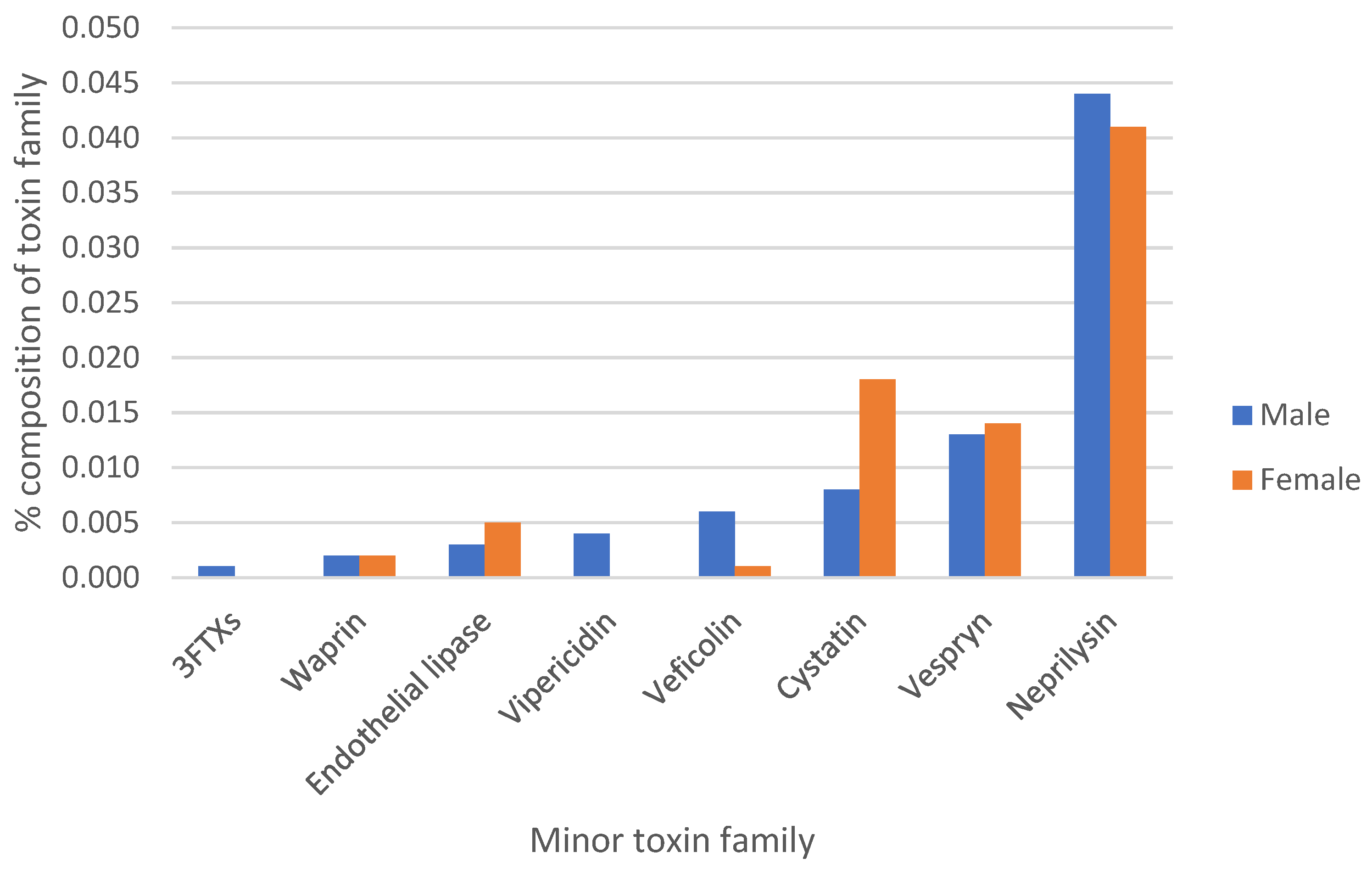
Figure 1. Comparison of minor toxin transcript compositions (the lowly expressed toxin families) of male and female snakes.
Biotech 14 00096 g001
Figure 2. Alignment of Neprilysin 1 (QHR82779.1) sequences from Anatolian meadow viper (Vipera anatolica senliki) with deduced sequences of Myanmar Russell’s viper neprilysin annotated transcripts (c20613_g1_i1_M_FL and c17969_g1_i1_F_FL) from the Myanmar Russell’s viper transcriptomes. The predicted transmembrane domain was underlined. The conserved zinc-binding (HExxH) motif are in bold and highlighted in yellow. (*) fully conserved residues; (:) strongly similar residues; and (.) weakly similar residues.
Biotech 14 00096 g002aBiotech 14 00096 g002b
Figure 3. Alignment of deduced amino acid sequences of Myanmar Russell’s viper cystatin homologs with Cystatin-1 (XP_015672096.1) from Protobothrops mucrosquamatus; Cystatin-2 (J3SE80.1) from Crotalus adamanteus; and Cystatin-B (XP_015667611.1) from Protobothrops mucrosquamatus. The signal peptide is underlined. The conserved QxVxG and PW motif were highlighted in yellow and green, respectively. (*) fully conserved residues; (:) strongly similar residues; and (.) weakly similar residues.
Biotech 14 00096 g003aBiotech 14 00096 g003b
Figure 4. Sequence alignment of putative waprin from Myanmar Russell’s viper transcriptome with Waprin-Phil (A7X4K1) from Philodryas olfersii. The signal peptide is underlined. The cysteine residues are highlighted in yellow. Identical residues are marked in green. The lines connecting corresponding cysteine pairs show the disulfide-bonding pattern. (*) fully conserved residues; (:) strongly similar residues; and (.) weakly similar residues.
Biotech 14 00096 g004
Figure 5. Sequence alignment of putative CRAMP transcript from Myanmar Russell’s viper transcriptomes with CAMP Vipericidin (A0A6P9AP78) from P. guttatus. The Cathelicidin domains are highlighted in yellow. Signal peptide is underlined. (*) fully conserved residues; (:) strongly similar residues; and (.) weakly similar residues.
Biotech 14 00096 g005
Figure 6. The putative veficolin toxin sequences from Myanmar Russell’s viper transcriptomes. The signal peptides are underlined. The amino acid glycines are in green color. The G-X-Y collagen-like repeats are included in the boxes. The conserved cysteines are highlighted in yellow. The putative N-linked glycosylation sites (N-X-S/T) are underlined. (*) fully conserved residues; (:) strongly similar residues; and (.) weakly similar residues.
Biotech 14 00096 g006
Figure 7. Sequence alignment of full-length hypothetical 3FTXs transcript from Myanmar Russell’s viper transcriptomes with respective homologs from Lachesis muta (ABD52883). The leader sequences are underlined. Cysteine residues are highlighted in pink. (*) fully conserved residues; (:) strongly similar residues; and (.) weakly similar residues.
Biotech 14 00096 g007
Table 1. Rare and newly found toxin genes in Myanmar Russell’s viper transcriptome.
FamilyPredicted FunctionNo. of Sequences/No. of Mature/
No. of Unique ORF
Amino AcidDomain StructureConserved Motifs
NeprilysinVasoactive peptide inactivation2/2/1750Zinc Metalloendopeptidases and N-terminal Transmembrane DomainHExxH active site
CystatinProtease inhibition
Anti-metastatic effect
5/5/3175Cysteine Protease InhibitorQxVxG and PW
WaprinAntibacterial activity Protease inhibition1/1/1133Two Whey Acid Protein (WEP) DomainsEight disulfide bonds
KxGxCP motif
VipericidinAntimicrobial activity1/1/1172Cathelicidin (Antimicrobial Peptide) Domain Amphiphile peptide causing membrane disruption
VeficolinPlatelet aggregation
Complement activation
2/1/2337Collagen-like Domain
Fibrinogen-like Domain
Gxx collagen-like repeat
Vespryn (Ohanin)Neurotoxicity8/0/7256–549PRY-SPRY DomainLPD, WEVE, and LDYE motif
Three-finger toxinsNeurotoxicity
Tissue damage
1/1/193Three Loops Extending From The CoreFive disulfide bridges for central core stabilization
Endothelial lipasesUnknown9/1/4316–493Triglyceride lipaseS-(GxSxG)-H-D catalytic triad
RxDxxD Ca2+ binding
Table 2. Transcripts with annotation of cystatins.
NoContig IDAnnotationAccession No.SpeciesAmino Acid LengthTPM Value
1c4051_g2_i1_F_FLcystatin-2J3SE80.1Crotalus adamanteus137137
2c8190_g1_i1_M_FLcystatin-2J3SE80.1Crotalus adamanteus13719.77
3c17744_g1_i1_F_FLcystatin-1XP_015672096.1Protobothrops mucrosquamatus1758.99
4c12696_g1_i1_M_FLcystatin-AXP_015667611.1Protobothrops mucrosquamatus98113.67
5c7765_g2_i1_F_FLcystatin-AXP_015667611.1Protobothrops mucrosquamatus9836.79
Table 3. Snake venom cathelicidin-related antimicrobial peptides from some snake species.
Antimicrobial PeptidesSpeciesCommon NameAccession No.
NA-CATHNaja atraChinese cobraB6S2X0
OH-CATHOphiophagus hannahKing cobraB6S2X2
BF-CATHBungarus fasciatusBanded kraitB6D434
Pt-CRAMP1Pseudonaja textilisEastern brown snakeU5KJJ1
Pt-CRAMP2Pseudonaja textilisEastern brown snakeU5KJM6
Crotalicidin (Ctn)Crotalus durissus terrificusEastern brown snakeU5KJM4
Bastroxicidin (BatxC)Bothrops atroxSouth American pit viperU5KJC9
LutzicidinBothrops lutziSouth American pit viperU5KJT7
Table 4. Amino acid residues variation in three conserved motif regions of the vespryn deduced amino acids of Myanmar Russell’s viper transcriptome.
No.Contig IDAmino Acid LengthLDP MotifWEVE MotifLDYE MotifTPM
1.c18829_g1_i1_M_FL549LDPWEVELDYE12.14
2.c11270_g2_i1_F_FL493LDPWEVELDYE5.70
3.c18865_g3_i1_M_FL255LDPWELELDYV9.30
4.c19046_g2_i2_M_FL516IDGWQVFLDYK2.32
5.c10539_g2_i1_F_FL516IDGWQVFLDYK2.25
6.c17242_g1_i1_M_FL286LDPWVVELEF5.78
7.c17242_g1_i2_M_FL302LDPWVVELKH4.66
8.c20069_g2_i1_M_FL482LDPWEVTLSF6.05
Disclaimer/Publisher’s Note: The statements, opinions and data contained in all publications are solely those of the individual author(s) and contributor(s) and not of MDPI and/or the editor(s). MDPI and/or the editor(s) disclaim responsibility for any injury to people or property resulting from any ideas, methods, instructions or products referred to in the content.